Posted tagged ‘Obama and Iran’

Laugh While You Can

January 25, 2017

RIGHT ANGLE: Laugh While You Can, Bill Whittle Channel via YouTube, January 24, 2017

(This video was recorded and aired for members only shortly before Obama ceased to be President. It deals with the US Military and Iran under Obama and the differences to be expected under President Trump. — DM)

What Obama Owes Putin—and Why Donald Trump Is Left Holding the Bag

January 17, 2017

What Obama Owes Putin—and Why Donald Trump Is Left Holding the Bag, Tablet MagazineLee Smith, January 17, 2017

(A long but fascinating analysis of Obamas’ Middle East policy, of which a strong Iran was the centerpiece and in which Putin was his tool, ally and master. — DM)

The Obama administration’s dual-track diplomacy was different because the public track was intended to cover for the real show going on behind the scenes. For instance, if it looked like Obama was at odds with Putin over Russia’s destructive escalation in Syria and its role in crushing the rebels and killing civilians, nothing could have been further from the truth. Yet Obama needed Putin to rescue Iran and save its regional position. So while Obama was denouncing Putin in public, his White House errand boys were actually meeting in private with Putin’s errand boys, helping the Russians to accomplish the very things that the administration—especially the State Department—then publicly denounced. On bad days, it could look like there were actually two U.S. governments, pursuing policies that were diametrically opposed to each other. In fact, there was only one government, led by Obama—and the policy of that government was entirely coherent, although not necessarily wise.

For what mattered most to Obama wasn’t Syria, nor even was it the Joint Comprehensive Plan of Action, which is typically referred to as Obama’s signature foreign-policy initiative. Even that was a feint, cover for a larger strategy that entailed a realignment of interests in the Middle East and a new form of foreign-policy “realism” that would get American troops out of the Middle East—and put America in the same column as Iran and its allies, including Vladimir Putin.

How could Obama cover America’s retreat, yet ensure a certain amount of stability in the Middle East? Israel was too small for the role of regional policeman, and besides, its policies toward the Palestinians pointed toward instability. The Sunni Arab states were fractious and incapable of working together, and their own internal problems gave rise to extremism. That left Iran.

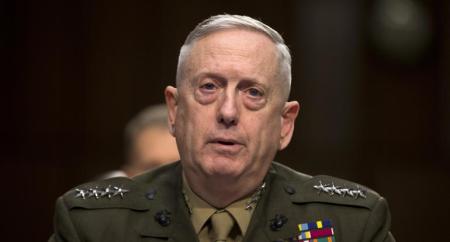
Trump’s nominee for defense secretary, Gen. James Mattis, . . . thought crushing Assad would be a huge strategic setback for Iran. And that’s just what worried Obama, who hardly needed the Iranians to warn him that realignment would collapse if America targeted the Syrian regime. After all, realignment was predicated on the idea of a strong Iran with a can-do Quds Force that could act as the region’s new policeman. An Iran knocked back down to size, and where the country’s internal opposition would be emboldened, would be of no use to a White House keen to hand over the keys to the Middle East and get out. Obama needed a big Iran, a “successful regional power,” as he’s put it.

***************************

Is Donald Trump a Russian secret agent? Did he pay FSB hookers to pee on the bed the Obamas slept in at the Ritz in Moscow, overlooking the Kremlin? It’s silly season, so any drunk on a fat oppo-research expense account can write down any crazy foolishness they want and Buzzfeed will let you decide if it’s true because that, as Buzzfeed’s editor, Ben Smith, solemnly explained to The New York Times, is where American journalism is at in 2017. Duly noted, Buzzfeed. Enjoy the golden showers.

What’s being obscured by this grotesquerie is the origin and the actual substance of U.S. foreign policy toward Russia, which in turn affects the lives of hundreds of millions of people living in Syria, Iraq, Ukraine, and elsewhere. Or, to put it another way: Is Donald Trump likely to continue the policies of his predecessor, which set the Middle East on fire and led to 500,000 deaths in Syria, and to Putin biting off large chunks of the sovereign nation of Ukraine? Or is he likely to reverse those policies? Or can he, even if he wanted to?

The single-mindedness with which the White House and the remnants of the Clinton campaign have pursued the idea that Donald Trump is a pawn of Vladimir Putin is not based on silly stories about peeing prostitutes or secret computer servers that connect the Trump organization to the Kremlin. Rather, it’s an attempt to manufacture more smoke to obscure the reality of Obama’s own determination to collaborate with a hostile Russian leader in Syria, and elsewhere in the Middle East.

Sure, Obama recently sent 35 Russian diplomats packing and shuttered Russian diplomatic facilities in Maryland and New York, but this was after seven years of looking the other way while Russia seized Crimea, then Donbass; waged cyberattacks on the Baltic countries; brought down a passenger jet over Ukraine; sheltered Edward Snowden; and bombed schools and hospitals in Syria. All of these actions threatened global stability and American interests, yet Obama only puffed his chest after the cyberattacks on the Democratic National Committee and Clinton Campaign Chairman John Podesta’s emails—long after it mattered, and after the moving vans have already started to haul his stuff out of the White House.

The reason top national-security journalists, policy mandarins, and much of the Washington establishment can’t fathom Obama’s relationship with Putin is only partly due to partisanship. The real reason it’s so hard to see how much room the outgoing president gave Putin is because misdirection has been Obama’s guiding principle for seven years.

The president made it look like he was at odds with Putin for much of his two terms—for instance, loudly poo-pooing the Russian campaign in Syria and warning of Vietnam-style “quagmires,” dismissing Russia as a weak country, sending an LGBT delegation to the Sochi Olympics to underscore his differences with Russia’s treatment of the LGBT community. All this helped obscure the fact that when it really counted, Obama took special care to signal the Russian strongman that their interests were aligned. That wasn’t because he has a man-crush on Putin, but because he had a larger purpose in view—securing the Iran nuclear deal.

The point isn’t that Obama lied. Sure, he lied. All politicians lie all the time, right and left, Republican and Democrat. All governments lie, perhaps especially liberal democracies, which don’t have the luxury afforded authoritarian regimes to do whatever they want at no cost to their approval ratings, which hardly matter. Liberal democracies lie especially when they’re crafting policies that would make many of their constituents queasy.

For two terms the Obama White House staged a foreign-policy puppet show, while the real drama took place far from the spotlight—a mutant variation of dual-track diplomacy. Policy is often conducted along two tracks—maybe military and diplomatic, or hard power and soft power, like development assistance or cultural-exchange programs. Diplomacy is almost always conducted on two tracks. Track-two diplomacy is a term of art that refers to the nonofficial meetings held by private individuals or groups that give the official parties the nonofficials represent enough room to disclaim ownership if or when it blows up. The Oslo peace process began as track-two diplomacy, for example, as have plenty of other major diplomatic initiatives. The point is that whether we’re talking about foreign aid or political pressure, military force or moral suasion, the two tracks of dual-track diplomacy are almost always pointed in the same general direction, with the aim of securing the same outcome.

The Obama administration’s dual-track diplomacy was different because the public track was intended to cover for the real show going on behind the scenes. For instance, if it looked like Obama was at odds with Putin over Russia’s destructive escalation in Syria and its role in crushing the rebels and killing civilians, nothing could have been further from the truth. Yet Obama needed Putin to rescue Iran and save its regional position. So while Obama was denouncing Putin in public, his White House errand boys were actually meeting in private with Putin’s errand boys, helping the Russians to accomplish the very things that the administration—especially the State Department—then publicly denounced. On bad days, it could look like there were actually two U.S. governments, pursuing policies that were diametrically opposed to each other. In fact, there was only one government, led by Obama—and the policy of that government was entirely coherent, although not necessarily wise.

For what mattered most to Obama wasn’t Syria, nor even was it the Joint Comprehensive Plan of Action, which is typically referred to as Obama’s signature foreign-policy initiative. Even that was a feint, cover for a larger strategy that entailed a realignment of interests in the Middle East and a new form of foreign-policy “realism” that would get American troops out of the Middle East—and put America in the same column as Iran and its allies, including Vladimir Putin.

Yes, as Obama believed, Americans were sick of the problems and psychoses of the Middle East, and angry that George W. Bush failed to win his two Middle East wars. But neither Congress nor the U.S. foreign-policy establishment was keen to see the United States dismantle a regional security architecture it took 70 years to build, and which Obama and his young aides saw as a guarantee of future friction, and future U.S. military engagement. Someone needed to smash that architecture with a hammer.

So the Obama White House made stuff up. No one wanted to side with Iran and downgrade traditional allies like Israel. And so the Obama administration said that wasn’t happening. And the way it obscured the truth was to stage a dog-and-pony show with familiar Beltway names and faces to keep the Buzzfeed kids busy pondering the complexities of U.S. foreign policy while the adults went about their deadly serious business. What looked like the president of the United States pulling a rabbit out of his hat was actually Obama sawing a woman in half—and drawing blood.

***

Is that really what happened? Some former Obama officials, like the administration’s onetime Syria point man, Frederic Hof, argue that the reason the administration’s foreign policy is a mess is because the president and his men in the White House lacked experience in the federal bureaucracy. In this view, the Obama team—namely, National Security Adviser Susan Rice—didn’t know how to manage what people in the know call the “interagency process,” or how the various institutions, like the National Security Council staff, State Department, Pentagon, and intelligence community process policy.

The reality is that Obama and his closest aides were contemptuous of the institutions, staffed by those very same Beltway bureaucrats that collectively make up what Obama deputy Ben Rhodes disparagingly called “The Blob.” As both Obama and Rhodes have explained, the mediocrities worthy of contempt included members of Obama’s cabinet. The reason for tapping figures like Leon Panetta, Robert Gates, David Petraeus, Hillary Clinton, John Kerry, and Samantha Power was to use the establishment as cover, while the real players, like Obama and Rhodes, Rob Malley, and a few select others, maneuvered in the shadows, and spun covering fictions. By 2012, as Gates and Panetta detailed in their memoirs, the Wise Men came to understand they were simply pawns in the president’s larger game, and quit before the real bloodshed started.

Hillary Clinton, with an eye to her presidential campaign, was not about to cross Obama in public, as Gates, Panetta, Chuck Hagel, and others did, but she knew she was window dressing, too. Her State Department was surprised when John Kerry, then head of the Senate Foreign Relations Committee, was tasked to open a channel with the Iranians through Oman. The concessions Kerry offered Iran, especially the right to enrich uranium, angered Clinton’s staff. Kerry was screwing up badly, they leaked to reliable press contacts, they’d never have blundered like that.

Was the Clinton team really shocked and outraged? No, it was just cranking up its own fog machine, lest anyone realize the White House had done the worst thing anyone can do to someone else in Washington—make them irrelevant. Hillary Clinton’s job wasn’t to make policy—it was to rack up frequent-flier miles and stay out of the way while the White House handled the big-ticket items like Israel, Iran, China, and every other issue of any major importance. Nor did she particularly want the responsibility for decisions that she and her coterie may have opposed, and which certainly were likely to anger many of her prominent traditional liberal supporters. “The president,” as one official from a pro-Israel organization in Washington told me, “leapfrogged the State Department.”

Clinton’s successor, John Kerry, was either less ambitious or more vain than Clinton, or maybe both. He was the electronic rabbit while the real work of shaping the world was done by much younger men who represented the will of the president of the United States. What Kerry did in public, all those marathon negotiating sessions, all those windy speeches, was a sideshow. The fact that his tremendous vanity made him think that it was real only added conviction to his performance—all the better to generate buzz among 27-year-old reporters at Buzzfeed and their instant-foreign-policy-expert buddies at the newly-minted Washington “think tanks” led by Democratic political operatives like Neera Tanden, whose actual experience of any particular part of the world or area of human endeavor—warfare, diplomacy, nuclear engineering, you name it—was nil.

So while Buzzfeed—and the New Yorker—wrote articles about how John Kerry was manfully negotiating cease-fires in Syria with his Russian counterpart, Sergei Lavrov, it was, in fact, Obama’s own Middle East point man, Robert Malley, who conveyed the president’s real policy. Almost as soon as Obama called for Assad to step aside in August 2011, the administration came to regret that bit of grandstanding, and walked it back. As Tony Badran, a research fellow at the Foundation for the Defense of Democracies told me, “The administration went from ‘transitioning away from Assad’ to ‘de-escalating’ the conflict, or stopping the bloodshed. The White House used a veneer of humanitarian concern to elide the fact that removing Assad was no longer a part of the equation. It was now about shutting down the war against Assad.”

It wasn’t long before foreign officials came to understand that Obama was working two seemingly opposing channels—the trick was figuring out which channel was real. As a source close to the Turkish government explained to me, Turkey’s former prime minister, Ahmet Davutoglu, eventually concluded that Obama was using Clinton as a prop. Whatever promises she might make on Syria, for instance, were worthless. They were also often actively misleading, as they were unconnected to what the Americans were actually doing on the ground. The White House had sent its top diplomat out to lie, and without informing her she was lying.

No one saw more of the administration’s shell game than Israel. The White House reassured Jerusalem that it wasn’t going to sell Iran the farm—Israel was their ally, and Iran was the enemy. As one former senior U.S. official told me, “The Bush administration and Israel had developed a pressure track on Iran, primarily through the intelligence community. This was the track that produced Stuxnet. But Obama shut down the pressure track with the opening of the Oman channel since they didn’t believe that pressure and diplomacy work together. But the Obama White House couldn’t tell the Israelis they were shutting down the pressure track. So the president wrapped them up in planning, promising, for instance, a Stuxnet 2.0. So you have emissaries going back and forth, planning and planning and planning, which was actually just stalling.”

Moreover, said the former U.S. official, the Israelis knew that Obama was lying about the Oman channel. He added that the head of the U.S. team negotiating with Iran, Wendy Sherman, “would meet openly with the Iranians as part of the P5+1 talks, then fly to Jerusalem, and tell the Israelis, ‘We got your back.’ But the Israelis knew the Americans were meeting with Iran because they had the tail numbers of planes going to Oman. The Israelis went to Obama’s then national security adviser, Thomas Donilon, and said, ‘We know what’s going on.’ ”

In fact, the Israelis didn’t understand. They thought, like most critics of the Iran deal, that the administration was just flubbing negotiations and needed help. But the White House didn’t care that much about the particulars because the JCPOA was simply a device to allow for a larger, even more historic play—Obama wanted to get America out of the Middle East, and realigning with Iran was America’s exit strategy.

For the big problem with the region, from Obama’s perspective, is the lure of the “Washington playbook,” a set of guiding principles that typically point to the use of force, which was passed down by generations of government grandees—the kind he used as rodeo clowns. The question was: How could Obama cover America’s retreat, yet ensure a certain amount of stability in the Middle East? Israel was too small for the role of regional policeman, and besides, its policies toward the Palestinians pointed toward instability. The Sunni Arab states were fractious and incapable of working together, and their own internal problems gave rise to extremism. That left Iran.

Clearly, there are plenty of Obama administration officials enamored with the Islamic Republic, whether they’re attracted to the vintage patina of late 20th-century Third Worldism or classic Persian culture. What was most appealing to Obama, as he told a meeting of Gulf Arab officials at Camp David in 2015, was simply that the Iranians are capable of getting things done—a sentiment that he expressed in the context of his admiration for the Revolutionary Guards Corps’ expeditionary unit led by Qassem Soleimani. However, he also realized that this conviction and the policy it undergirded would have grossed out a large number, likely a majority, of Americans, and their elected representatives. So he lied, or misled and misdirected—and said the JCPOA was about stopping Iran from getting a nuclear weapon, and nothing more.

***

All the major foreign-policy issues of the Obama presidency (the fraying of the bilateral relationship with Israel, the withdrawal from Iraq, Russia, etc.) were subsets of realignment policy—including the administration’s management of the single largest strategic, political, and humanitarian catastrophe of the 21st century, the Syrian conflict. Obama’s cabinet held the mainstream view of the Syrian war—Panetta, Clinton, Kerry, Petraeus, and Power all supported arming the rebels to defeat Assad, or at least compel him to negotiate under harder circumstances. But that was exactly the opposite of what Obama wanted to do.

A more hawkish position was expressed by the U.S. officials like then-head of CENTCOM and now Trump’s nominee for defense secretary, Gen. James Mattis, who thought crushing Assad would be a huge strategic setback for Iran. And that’s just what worried Obama, who hardly needed the Iranians to warn him that realignment would collapse if America targeted the Syrian regime. After all, realignment was predicated on the idea of a strong Iran with a can-do Quds Force that could act as the region’s new policeman. An Iran knocked back down to size, and where the country’s internal opposition would be emboldened, would be of no use to a White House keen to hand over the keys to the Middle East and get out. Obama needed a big Iran, a “successful regional power,” as he’s put it.

A victory for the Syrian opposition—whom the White House could not help but disparage even as the president and his aides honored the victims of Assad’s depredations, i.e., the opposition—would have been a disaster for the Obama administration. It would have not only cashiered Obama’s hopes for a hegemonic Iran capable of managing American regional interests but would have required Washington to manage the varied and often conflicting interests of its regional allies, Israel, Jordan, Saudi Arabia, Turkey, etc. In other words, an opposition victory would have demanded more American involvement in the Middle East—more time, attention, energy, money, and perhaps blood.

The structural problem with Obama’s grand realignment is that Iran simply can’t handle the load. Obama should have understood this every time he had to tip the scales on behalf of the Iranians. When the administration leaked that Israel struck Iranian arms convoys headed to Hezbollah, Obama should’ve understood that he was tipping the scales, but it still wasn’t working. Qassem Suleimani turned out to be less than impressive, for his Quds Force couldn’t even tackle ISIS without the U.S. providing air support in Tikrit. The much-heralded operation to take back Mosul before Obama left office is such a mess that the White House simply doesn’t talk about it anymore.

When the Russians escalated in Syria in September 2015, Obama should have seen it as a clear sign he’d been wrong about Iran: The IRGC couldn’t even put down the farmers and carpenters the American president repeatedly disparaged. They needed the Russians to do it for them.

The White House said Putin’s action caught them by surprise, but that is unlikely to be true. The Russians were moving men and materiel for months through the Bosphorus—under the control of NATO member Turkey—at least since Suleimani’s July 2015 trip to Moscow to ask for Russian intervention.

The reality is that the Russian campaign in Syria served vital Obama interests. There was no point in realigning with Iran if Tehran’s regional position collapsed. Putin saved not only Assad and Iran, but Obama’s realignment policy. It was the second time the Russian president rescued Obama’s realignment policy—the first being when he offered the deal over Assad’s chemical weapons that allowed the commander-in-chief to walk back his red line.

Obama owes Putin, which is why he let the Russians get away with nearly everything it chose to do the last seven years, including its attacks on the American political system. What’s left for Trump is to manage the Russia policy he inherited from Obama—or overturn the table.

Obama’s Transparent Presidency

January 13, 2017

Obama’s Transparent Presidency, Front Page MagazineCaroline Glick, January 13, 2017

barack_obama_discusses_ukraine_with_national_security_staff

[During Obama’s Cario speech], he turned his attention to Israel and the Palestinians. Obama opened this section by presenting his ideological framework for understanding the conflict. Israel he insisted was not established out of respect of the Jews’ national rights to their historic homeland. It was established as a consolation prize to the Jews after the Holocaust.

That is, Israel is a product of European colonialism, just as Iran and Hamas claim.

In contrast, the Palestinians are the indigenous people of the land. They have been the primary victims of the colonial West’s post-Holocaust guilty conscience. Their suffering is real and legitimate.

Hamas’s opposition to Israel is legitimate, he indicated. Through omission, Obama made clear that he has no ideological problem with Hamas – only with its chosen means of achieving its goal.

***********************************

Originally published by the Jerusalem Post

President Barack Obama promised that his would be the most transparent administration in US history.

And the truth is, it was. At least in relation to his policies toward the Muslim world, Obama told us precisely what he intended to do and then he did it.

A mere week remains of Obama’s tenure in office.

But Obama remains intent on carrying on as if he will never leave power. He has pledged to continue to implement his goals for the next week and then to serve as the most outspoken ex-president in US history.

In all of Obama’s recent appearances, his message is one of vindication. I came. I succeeded. I will continue to succeed. I represent the good people, the people of tomorrow. My opponents represent the Manichean, backward past. We will fight them forever and we will prevail.

Tuesday Obama gave his final interview to the Israeli media to Ilana Dayan from Channel 2’s Uvda news magazine. Dayan usually tries to come off as an intellectual. On Tuesday’s show, she cast aside professionalism however, and succumbed to her inner teenybopper. Among her other questions, she asked Obama the secret to his preternatural ability to touch people’s souls.

The only significant exchange in their conversation came when Dayan asked Obama about the speech he gave on June 4, 2009, in Cairo. Does he still stand by all the things he said in that speech? Would he give that speech again today, given all that has since happened in the region, she asked.

Absolutely, Obama responded.

The speech, he insisted was “aspirational” rather than programmatic. And the aspirations that he expressed in that address were correct.

If Dayan had been able to put aside her hero worship for a moment, she would have stopped Obama right then and there. His claim was preposterous.

But, given her decision to expose herself as a slobbering groupie, Dayan let it slide.

To salvage the good name of the journalism, and more important, to understand Obama’s actual record and its consequences, it is critical however to return to that speech.

Obama’s speech at Cairo University was the most important speech of his presidency. In it he laid out both his “aspirational” vision of relations between the West and the Islamic world and his plans for implementing his vision. The fundamentally transformed world he will leave President-elect Donald Trump to contend with next Friday was transformed on the basis of that speech.

Obama’s address that day at Cairo University lasted for nearly an hour. In the first half he set out his framework for understanding the nature of the US’s relations with the Muslim world and the relationship between the Western world and Islam more generally. He also expressed his vision for how that relationship should change.

The US-led West he explained had sinned against the Muslim world through colonialism and racism.

It needed to make amends for its past and make Muslims feel comfortable and respected, particularly female Muslims, covered from head to toe.

As for the Muslims, well, September 11 was wrong but didn’t reflect the truth of Islam, which is extraordinary. Obama thrice praised “the Holy Koran.” He quoted it admiringly. He waxed poetic in his appreciation for all the great contributions Islamic civilization has made to the world – he even made up a few. And he insisted falsely that Islam has always been a significant part of the American experience.

In his dichotomy between two human paths – the West’s and Islam’s – although he faulted the records of both, Obama judged the US and the West more harshly than Islam.

In the second half of his address, Obama detailed his plans for changing the West’s relations with Islam in a manner that reflected the true natures of both.

In hindsight, it is clear that during the seven and a half years of his presidency that followed that speech, all of Obama’s actions involved implementing the policy blueprint he laid out in Cairo.

He never deviated from the course he spelled out.

Obama promised to withdraw US forces from Iraq regardless of the consequences. And he did.

He promised he would keep US forces in Afghanistan but gave them no clear mission other than being nice to everyone and giving Afghans a lot of money. And those have been his orders ever since.

Then he turned his attention to Israel and the Palestinians. Obama opened this section by presenting his ideological framework for understanding the conflict. Israel he insisted was not established out of respect of the Jews’ national rights to their historic homeland. It was established as a consolation prize to the Jews after the Holocaust.

That is, Israel is a product of European colonialism, just as Iran and Hamas claim.

In contrast, the Palestinians are the indigenous people of the land. They have been the primary victims of the colonial West’s post-Holocaust guilty conscience. Their suffering is real and legitimate.

Hamas’s opposition to Israel is legitimate, he indicated. Through omission, Obama made clear that he has no ideological problem with Hamas – only with its chosen means of achieving its goal.

Rather than fire missiles at Israel, he said, Hamas should learn from its fellow victims of white European colonialist racists in South Africa, in India, and among the African-American community.

Like them Hamas should use nonviolent means to achieve its just aims.

Obama’s decision attack Israel at the UN Security Council last month, his attempts to force Israel to accept Hamas’s cease-fire demands during Operation Protective Edge in 2014, his consistent demand that Israel renounce Jewish civil and property rights in united Jerusalem, in Judea and Samaria, his current refusal to rule out the possibility of enabling another anti-Israel resolution to pass at the Security Council next week, and his contempt for the Israeli Right all are explained, envisioned and justified explicitly or implicitly in his Cairo speech.

One of the more notable but less discussed aspects of Obama’s assertion that the Palestinians are in the right and Israel is in the wrong in the speech, was his embrace of Hamas. Obama made no mention of the PLO or the Palestinian Authority or Fatah in his speech. He mentioned only Hamas – the Palestinian branch of the Muslim Brotherhood, which shares the Brotherhood’s commitment to annihilating Israel and wiping out the Jewish people worldwide.

Sitting in the audience that day in Cairo were members of Egypt’s Muslim Brotherhood.

Then-Egyptian president Hosni Mubarak rightly viewed Obama’s insistence that the brothers be invited to his address as a hostile act. Due to this assessment, Mubarak boycotted the speech and refused to greet Obama at the Cairo airport.

Two years later, Obama supported Mubarak’s overthrow and the rise of the Muslim Brotherhood to replace him.

Back to the speech.

Having embraced the Muslim Brotherhood and its Palestinian branch, branded Israel a colonial implant and discredited the US’s moral claim to world leadership, Obama turned his attention to Iran.

Obama made clear that his intention as president was to appease the ayatollahs. America he explained had earned their hatred because in 1953 the CIA overthrew the pro-Soviet regime in Iran and installed the pro-American shah in its place.

True, since then the Iranians have done all sorts of mean things to America. But America’s original sin of intervening in 1953 justified Iran’s aggression.

Obama indicated that he intended to appease Iran by enabling its illicit nuclear program to progress.

Ignoring the fact that Iran’s illegal nuclear program placed it in material breach of the Nuclear Non-Proliferation Treaty, Obama argued that as an NPT signatory, Iran had a right to a peaceful nuclear program. As for the US and the rest of the members of the nuclear club, Obama intended to convince everyone to destroy their nuclear arsenals.

And in the succeeding years, he took a hacksaw to America’s nuclear force.

After Obama’s speech in Cairo, no one had any cause for surprise at the reports this week that he approved the transfer of 116 tons of uranium to Iran. Likewise, no one should have been surprised by his nuclear deal or by his willingness to see Iran take over Iraq, Syria, Lebanon and Yemen. No one should be surprised by his cash payoffs to the regime or his passivity in the face of repeated Iranian acts of aggression against US naval vessels in the Strait of Hormuz.

Everything that Obama has done since he gave that speech was alluded to or spelled out that day.

Certainly, nothing he has done was inconsistent with what he said.

The consequences of Obama’s worldview and the policies he laid out in Cairo have been an unmitigated disaster for everyone. The Islamic world is in turmoil. The rising forces are those that Obama favored that day: The jihadists.

ISIS, which Obama allowed to develop and grow, has become the ideological guide not only of jihadists in the Middle East but of Muslims in the West as well. Consequently it has destabilized not only Iraq and Syria but Europe as well. As the victims of the Islamist massacres in San Bernardino, Boston, Ft. Hood, Orlando and beyond can attest, American citizens are also paying the price for Obama’s program.

Thanks to Obama, the Iranian regime survived the Green Revolution. Due to his policies, Iran is both the master of its nuclear fate and the rising regional hegemon.

Together with its Russian partners, whose return to regional power after a 30-year absence Obama enabled, Iran has overseen the ethnic cleansing and genocide of Sunnis in Syria and paved the way for the refugee crisis that threatens the future of the European Union.

Recep Tayyip Erdogan, Turkey’s Islamist leader, was a principle beneficiary of Obama’s admiration of Islamism. Erdogan rode Obama’s wave to destroy the last vestiges of the secular Turkish Republic.

Now he is poised to leave NATO in favor of an alliance with Russia.

Obama and his followers see none of this. Faithful only to their ideology, Obama and his followers in the US and around the world refuse to see the connection between the policies borne of that ideology and their destructive consequences. They refuse to recognize that the hatred for Western civilization and in particular of the Jewish state Obama gave voice to in Cairo, and his parallel expression of admiration for radical Islamic enemies of the West, have had and will continue to have horrific consequences for the US and for the world as a whole.

Cairo is Obama’s legacy. His followers’ refusal to acknowledge this truth means that it falls to those Obama reviles to recognize the wages of the most transparent presidency in history. It is their responsibility to undo the ideological and concrete damage to humanity the program he first unveiled in that address and assiduously implemented ever since has wrought.

Obama’s Enabling of Palestinian Terror

January 11, 2017

Obama’s Enabling of Palestinian Terror, Front Page MagazineJoseph Puder, January 11, 2017

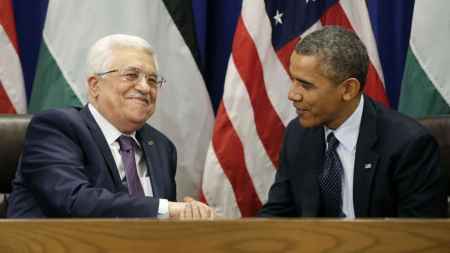
abbasobama

When we consider last month’s United Nations Security Council resolution (UNSC) 2334 that passed with deliberate U.S. abstention and later, justified in a speech by U.S. Secretary of State John Kerry, it makes the adage below come to mind. The Midrash (commentary on part of the Hebrew Scriptures) tells us, “He who becomes compassionate to the cruel will ultimately become cruel to the compassionate.”  Maimonides wrote in The Guide of the Perplexed that “the wicked and calculating person who killed intentionally and was sentenced to death – if he seeks sanctuary among us, we must not provide him with asylum, and not have mercy upon him, because compassion toward the wicked is cruelty to all beings.

In supporting the Palestinian regime that seeks the destruction of the Jewish State as its ultimate goal, the Obama administration is being compassionate toward the wrong party.  The Obama administration is knowingly and deliberately supporting the creation of another unstable Arab authoritarian regime that has failed its people.  Mahmoud Abbas, like Arafat before him, albeit more subtle, seeks the same goal: undermining the Jewish state, and replacing it with an undemocratic Palestinian state.  Abbas wouldn’t return to the negotiating table unless he is heavily bribed, and like Arafat, at the crucial moment when all reasonable concessions had been made, he walked out.

At their September 16, 2008 meeting in Jerusalem, Israeli Prime Minister Olmert agreed to forgo sovereignty over the Temple Mount in Jerusalem, Judaism’s holiest site, and proposed that in the framework of the peace agreement, the area containing the religious sites in Jerusalem would be managed by a special committee consisting of representatives from five nations: Saudi Arabia, Jordan, Palestinians, the U.S. and Israel.  The advisors and Fatah officials heard that Olmert laid out for Abbas not only the details of the agreement but also a large map upon which he outlined the borders of the future Palestinian state.  Abbas, like Arafat in July, 2000, walked out.

Considering Palestinian terrorism incited by Hamas and the Palestinian Authority against Jewish civilians and soldiers alike, it becomes clear that the Obama administration has shown compassion toward Palestinian aspirations and contempt for Jews aspiring to settle in their ancestral regions of Judea and Samaria.  The Administration would be quite content on a “judenrein” West Bank.   In fact, the U.S. and its European allies support the PA with huge grants, portions of which goes to pay salaries to Palestinian terrorists with blood on their hands and their families.  They have likewise funded Palestinian-Arab construction projects, built illegally throughout the West Bank and Jerusalem.

The Obama administration has also shown compassion for the Iranian regime by ending the economic sanctions against the radical Islamic Iranian regime, which hangs gays and lesbians as well as juveniles.  Amnesty International reported on January 26, 2016, that “Iran remains the leading executioner of juvenile offenders.”  The New York Post reported on August 3, 2016 that “The Obama administration quietly shipped $400 million stacked on wooden pallets in an unmarked plane to Iran in January – just as Tehran was releasing four Americans who had been detained there.”  This was done to appease the Islamic Republic, which is the leading state sponsor of terror around the world, and that has taken Americans in Iran as hostages.

U.S. Mideast mediator Dennis Ross pointed out that the Obama administration was so enamored with the so-called “moderate” Iranian President Rouhani, that it “showed readiness to accept an industrial-scale Iranian nuclear program and not to roll it back.”  The Obama administration was willing to bend its principles in order to foster a relationship and perhaps an alliance of sorts (against the Islamic State in Iraq) with the Ayatollahs regime that promised “to wipe Israel off the map.”

In the summer of 2009, the Iranian people voted for freedom and against the choices of the theocratic regime that oppressed them. They demonstrated in the millions with signs that read “Obama, are you with them or with us.”  Obama did not respond. He proved to have little compassion for the oppressed.

In Syria, the Shiite-Iranian Revolutionary Guards and their supported Iraqi-Shiite militias, as well as the Lebanese-Shiite terrorist group Hezbollah, are murdering hundreds of thousands of innocent Syrian Sunni Muslims, Christians, and others civilians with impunity.  They are bolstering the dictatorship of the Alawi (offshoot of Shiite Islam) minority ruler Bashar Assad.  The Russians have also joined in the killing of Syrian civilians in the name of combatting so-called “terrorists.”

The Palestinians of Hamas and the PA raise their children on hate and expound on the destruction of the Jewish state in schools, mosques, in the media, and in their policy directives.  The Palestinian intolerance towards Jews and Christians is deeply embedded, but due to political correctness, it has never been sufficiently reported in the western media, or by western governments.  Under the Palestinian regime, Christian Arabs have been victims of frequent human rights abuse by Muslims. There are many examples of intimidation, beatings, land theft, firebombing of churches and other Christian institutions, denial of employment, economic boycotts, torture, kidnapping, forced marriage, sexual harassment, and extortion. Palestinian Authority (PA) officials are directly responsible for many of the human rights violations. Muslims who have converted to Christianity are in the greatest danger. They are often left defenseless against cruelty by Muslim fundamentalists. Some have been murdered.

There is a clear dichotomy in determining who the compassionate side is, and who is the cruel. It comes together perfectly clear in the Syrian civil war arena.  Thousands of Palestinians are fighting on behalf of the Syrian dictator, and help in slaughtering the Syrian people who are fighting for their freedom.  The Palestinian radical group, the Popular Front for the Liberation of Palestine-General Command (PFLP-GC) led by Ahmed Jibril, provided the Assad war machine with intelligence and ground support, when he laid siege to the Palestinian populated Yarmouk refugee camp.  The PFLP-GC, once a member of the Palestinian Liberation Organization (PLO) joined the Assad troops in killing fellow Palestinians.

Conversely, Israel has opened its hospital gates to wounded Syrians, both civilians and soldiers.  Prime Minister Netanyahu announced last month “We are prepared to take in wounded women and children, and also men if they are not combatants. Bring them to Israel, we will take care of them in our hospitals as we have done with thousands of Syrian civilians. We are looking into ways of doing this. It is being explored as we speak.”  Netanyahu added, “The suffering is great, and the one initiative we took is to help – as I said – thousands of Syrians who are sometimes mutilated beyond belief. We help them. I offered to do more today. I don’t know if we can resolve [the crisis in] Syria, but we can help mitigate some of the suffering. That is the best that Israel can do.”

Being compassionate toward the Palestinian’s aspirations to destroy the Jewish state in stages by forming a terrorist supporting state, the Obama administration is being cruel toward the Jewish state, which seeks to defend its people from the ongoing Palestinian terror.

Iran Demands ‘Compensation’ for U.S. Breach of Nuke Deal

January 11, 2017

Iran Demands ‘Compensation’ for U.S. Breach of Nuke Deal, Washinton Free Beacon, , January 10, 2017

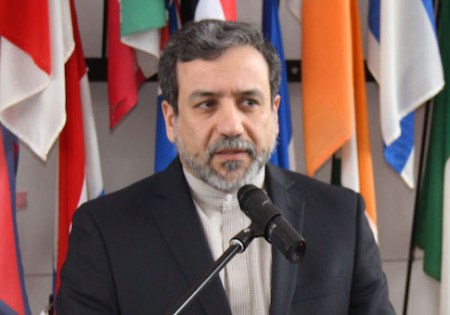
Abbas Araqchi, Iran's deputy foreign minister for legal and international affairs and top nuclear negotiator, meets the press in Vienna, Austria, on Feb. 24, 2015, after talking with International Atomic Energy Agency chief Yukiya Amano on Tehran's nuclear program. (Kyodo) ==Kyodo

Abbas Araqchi, Iran’s deputy foreign minister for legal and international affairs and top nuclear negotiator. (Kyodo)

The call for further compensation comes just days after the Obama administration was forced to admit that it had been providing Iran with around $700 million in assets every month since the nuclear deal was approved.

*******************************

Iran is demanding further “compensation” from the United States following claims America violated the nuclear agreement by passing new sanctions on the Islamic Republic, according to comments by senior Iranian officials following meetings with the Obama administration in Vienna.

The demand for further concessions by the Obama administration comes on the heels of reports that the United States has deflated the total amount of cash, gold, and other assets provided to the Islamic Republic during the past several years. The sum is believed to be in excess of $10 billion.

Iran has threatened to retaliate against the United States in recent weeks following the passage late last year by Congress of the Iran Sanctions Act, or ISA, which will continue to economically penalize Iran for the next 10 years.

The call for further compensation comes just days after the Obama administration was forced to admit that it had been providing Iran with around $700 million in assets every month since the nuclear deal was approved.

Ahead of a series of meetings Tuesday with senior U.S. officials, Iranian Deputy Foreign Minister Abbas Araqchi again accused the United States of violating the nuclear agreement and demanded compensation for the purported breach.

“The extension of the ISA is a breach of the U.S. obligations under the Joint Comprehensive Plan of Action (JCPOA) and must be compensated in an effective way,” Araqchi was quoted as telling reporters in Vienna.

The latest meetings about the nuclear deal were orchestrated by Iranian officials, who remain angry about the passage of new sanctions.

Araqchi made clear on Monday that Tehran is “serious” about retaliating against the United States for its passage of new sanctions, stating the Islamic Republic has already made moves to restart contested work on nuclear powered submarines and other weapons.

The Washington Free Beacon reported on Monday that official estimates about the amount of money awarded to Iran by the Obama administration are actually higher than previously known.

A State Department official told the Free Beacon that it would not prejudge its meetings with Iran when asked if further concessions are on the table.

“While we are not going to prejudge the outcome of any meeting, we will discuss ongoing implementation of the JCPOA as we always do,” the official said.

The total worth of the cash, assets, gold, and bullion given to Iran is in excess of $10 billion, according to Bahram Ghasemi, the spokesman for Iran’s Foreign Ministry.

“I will not speak about the precise amount,” Ghasemi was quoted as saying in Persian language reports independently translated for the Free Beacon.

The $10 billion figure is actually a “stingy” estimate, Ghasemi claimed, adding that the cash and gold sent by Washington to Iran’s Central Bank was subsequently “spent.”

“This report is true but the value was higher,” Ghasemi was quoted as saying.

“After the Geneva conference and the resulting agreement, it was decided that $700 million dollars were to be dispensed per month” by the United States, according to Ghasemi. “In addition to the cash funds which we received, we [also] received our deliveries in gold, bullion, and other things.”

The Madness of King Barry (or not)

January 10, 2017

The Madness of King Barry (or not), Power Line, Scott Johnson, January 9, 2017 

If one hypothesized that President Obama’s object in entering into the JCPOA was to block Iran from acquiring a nuclear arsenal, one might conclude that the man is madder than King George III in the Regency Crisis. Indeed, so it seems, more evidence emerges every day to support the hypothesis. You begin to think you might be on to something.

In the alternative, one might hypothesize that President Obama seeks to facilitate and finance Iran’s acquisition of a nuclear arsenal, and to protect its program from disruption until such team as Iran seeks to go for it forthrightly. In this case, although one shrinks from the conclusion, Obama’s actions appear rationally calculated to achieve their objective.

Today’s news brings us additional evidence in the form of the AP exclusive reporting that Iran is to obtain a massive batch of natural uranium from Russia with the blessing of President Obama. The AP reports:

Two senior diplomats said the transfer recently agreed by the U.S. and five other world powers that negotiated the nuclear deal with Iran foresees delivery of 116 metric tons (nearly 130 tons) of natural uranium. U.N. Security Council approval is needed but a formality, considering five of those powers are permanent Security Council members, they said.

The AP helpfully explains:

Uranium can be enriched to levels ranging from reactor fuel or medical and research purposes to the core of an atomic bomb. Iran says it has no interest in such weapons and its activities are being closely monitored under the nuclear pact to make sure they remain peaceful.

Tehran already got a similar amount of natural uranium in 2015 as part of negotiations leading up to the nuclear deal, in a swap for enriched uranium it sent to Russia. But the new shipment will be the first such consignment since the deal came into force a year ago.

The AP adds this for those of us trying to sort out the madness or not of King Barry:

The natural uranium agreement comes at a sensitive time. With the incoming U.S. administration and many U.S. lawmakers already skeptical of how effective the nuclear deal is in keeping Iran’s nuclear program peaceful over the long term, they might view it as further evidence that Tehran is being given too many concessions.

The diplomats said any natural uranium transferred to Iran after the deal came into effect would be under strict surveillance by the U.N.’s International Atomic Energy Agency for 25 years after implementation of the deal.

Let me add: “…for 25 years after implementation of the deal or until such time as Iran chooses to pull the plug on the phony baloney JCPOA.”

Back to the diplomats speaking to the AP:

They said Tehran has not said what it would do with the uranium but could choose to store it or turn it into low-enriched uranium and then export it for use as reactor fuel.

Despite present restrictions on its enrichment program, the amount of natural uranium is significant should Iran decide to keep it in storage, considering its potential uses once some limits on Tehran’s nuclear activities start to expire in less than a decade.

Here the AP goes outside Obama’s circle of love for informed comment:

David Albright, whose Institute of Science and International Security often briefs U.S. lawmakers on Iran’s nuclear program, says the shipment could be enriched to enough weapons-grade uranium for more than 10 simple nuclear bombs, “depending on the efficiency of the enrichment process and the design of the nuclear weapon.”

Omri Ceren adds these comments by email (footnotes omitted):

The 2015 nuclear deal obligated Iran to keep no more than 130 metric tonnes of heavy water, a material used in the production of weapons-grade plutonium.

But the Iranians have continued to produce heavy water, and they exceeded the cap in February and November. The violations functionally blackmailing the Obama administration: either someone would purchase the excess heavy water, allowing Iran to literally profit from violating the deal, or the Iranians would go into formal noncompliance, endangering the deal.

After the Iranians violated the deal in February the Obama administration purchased the excess heavy water for $8.6 million. After they violated the deal in November State Department spokesperson Toner refused to call the overproduction a violation — “I’m not going to use the V word necessarily in this case” — and the Iranians eventually found someone else to purchase the excess.

The Associated Press just revealed that in addition to getting millions of dollars, the Iranians are also getting 116 metric tons of uranium in exchange for their heavy water. That’s enough for more than 10 nuclear bombs. The Obama administration has approved those terms [reported in the AP story]…

There are no diplomatic or technical reasons Iran needs to sell excess heavy water to avoid violating the deal: the Iranians could 1st, stop producing heavy water or 2nd, dump the excess in a river, since it’s just water. Obama officials have separately suggested that Iranian over-production is a win-win because there are shortages in the global market, but: there are no shortages, even if there were the Iranians are substandard suppliers, and using the Iranians may create actual shortages by kneecapping the existing legitimate suppliers.

We report, you decide.

Straun Stevenson Blames President Obama for the Legacy of Death and Destruction in Middle East

January 8, 2017

Straun Stevenson Blames President Obama for the Legacy of Death and Destruction in Middle East, Iran News Update, January 8, 2017

(Please see also, In its Last Days, Obama Administration Clings to Hope of a Positive Role for Iran. — DM)

obama-750

Struan Stevenson, president of the European Iraqi Freedom Association, former member of the European Parliament representing Scotland (1999-2014), president of the Parliament’s Delegation for Relations with Iraq (2009-14) and chairman of Friends of a Free Iran Intergroup (2004-14), writes in his January 6, 2017 article for UPI, that the legacy of President Barack Obama will be death and destruction in the Middle East. His vision cooperation between  the United States and Iran “has unlocked a Pandora’s box of conflict and sectarian strife across the zone.”

During the closing days of the Obama administration the controversial nuclear deal with Iran and his policies regarding that ruthless regime have allowed the mullahs to threaten the security of the Middle East, and perhaps, while Saudi Arabia, the Gulf states and Turkey have tried to prevent Iran’s aggressive expansionism in the region.

The U.S. and other countries is the West failed the Syrian opposition and allowed a civil war to continue into its seventh year, costing hundreds of thousands of lives, and setting off the huge migration crisis in Europe.

$150 billion of frozen assets were released to Iran by the U.S. as part of the nuclear deal, which the Tehran government was expected to use to shore up their economy, on the brink of collapse. Instead, the regime redouble its spending the Islamic Revolutionary Guards Corps and Quds Force, both of which are listed terrorist organizations in the West and are involved in many conflicts in the Middle East. Not only does Iran support Bashar al-Assad in Syria, and Yemen’s Houthi rebels, it funds and supplies Hezbollah in Lebanon and the brutal Shi’ia militias in Iraq.

The nuclear deal has been breached, which Stevenson says demonstrates Iran’s complete disdain for the West. Two Qadr-H missiles were fired last March, in defiance of a U.N. Security Council resolution tied to the agreement. “Israel must be wiped out” was marked on the missiles, and the test firing took place on the day that the U.S. Vice President Joe Biden was visiting Israel. Vladimir Putin sent the first shipment of Russian S-300 surface-to-air missiles to Iran last August.

President Obama attempted to make deals with the so-called “moderate” and “smiling” Iranian President Hassan Rouhani, which he interpreted as having a green light for Tehran’s expansionist policy. Rouhani is in fact in charge of a government which has executed around 3,000 people since he took office in 2013, ten just this year. Mass hangings are now carried out in public, even in football stadiums. Many of the officials in his government were complicit in the 1988 massacre of some 30,000 political prisoners, most of whom were part of the opposition People’s Mojahedin of Iran. In fact, it was supervised by Mostafa Pour-Mohammadi, who is Rouhani’s justice minister.

Obama began his administration by agreeing with Iran, and backing Nouri al-Maliki as prime minister in Iraq. Stevenson writes, “Maliki was a puppet of the mullahs, doing their bidding by opening a direct route for Iranian troops and equipment heading to Syria to bolster the murderous Assad regime. Iran’s support for Maliki in Iraq and for Assad in Syria, two corrupt dictators who repressed and brutalized their own people, resulted in the rise of Daesh, also known as the Islamic State.Thanks to U.S. acquiescence over Tehran, Daesh grew and became a threat to the whole world.”  He continues, “Obama compounded this grievous mistake by providing American military support and air cover for the genocidal campaign being waged by pro-Iranian Shi’ia militias in Iraq. Once again Iran exploited its role in ousting Daesh as a means for implementing its ruthless policy of ethnic cleansing to annihilate the Sunnis in Iraq’s al-Anbar Province. Horrific sectarian atrocities were committed during the so-called “liberation” of the ancient cities of Fallujah and Ramadi. The Shi’ia militias, who formed the main part of the force fighting to recapture these cities from Daesh and are now engaged in the battle to recapture Mosul, are led by Gen. Qasem Soleimani, commander of the Iranian terrorist Quds Force. Soleimani has also played a key role in Syria and the massacre in Aleppo.”

Tehran is gaining strength in Iraq. The Iraqi army is poorly trained, and the Iranian has Prime Minister Haider al-Abadi’s agreement to allowing Iranian-funded militias to take control of military operations. Political disarray in Baghdad, has paved the way for Iran to consolidate its hold in Iraq.

The unenviable task of trying to sort out the Middle East mess will be left to President-elect Donald Trump. Many people on his team believe that Iran is the main source of conflict in the Middle East and poses a greater threat to the West than North Korea or even Russia. It will be interesting to see how Trump will fare.


Mike Huckabee: Obama’s legacy is to ‘embrace Iran’ and ‘reject Israel’

December 27, 2016

Mike Huckabee: Obama’s legacy is to ‘embrace Iran’ and ‘reject Israel’, Washington Times, December 27, 2016

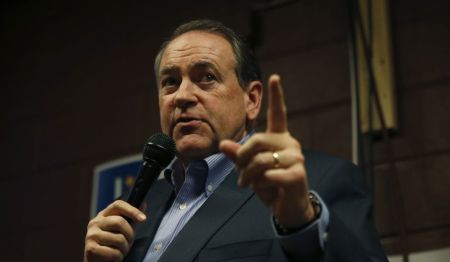
mikehuckabee_c0-0-4080-2378_s885x516Republican presidential candidate and former Arkansas Gov. Mike Huckabee speaks at Inspired Grounds Cafe in West Des Moines, Iowa. (Associated Press)

Former Arkansas Gov. Mike Huckabee said Tuesday he’s not sure there’s any value to the United Nations, after the United States abstained from a vote last week on a resolution condemning Israeli settlements.

“We provide most of the funding for the U.N. and it’s time for us to re-evaluate,” Mr. Huckabee, a former 2016 GOP presidential candidate, said on Fox Business Network. “I’m not sure there’s any value to the U.N. It’s a joke.”

“If I were Obama, I probably wouldn’t plan a vacation to Tel Aviv anytime soon,” said Mr. Huckabee, who has traveled to Israel on a fairly regular basis and is leaving for another trip there soon.

 “It certainly forever damages his legacy. His legacy is to embrace Iran — the biggest sponsor of terrorism in the world — and to reject Israel, the only democracy that exists in the entire Middle East,” he said.

On Friday, the U.S. declined to veto a resolution from the U.N. Security Council in a move that critics saw as a slap at Israel. The resolution said Israel was violating international law by building settlements on territory Palestinians want as part of a future independent state.

The situation drew intense criticism from Israeli Prime Minister Benjamin Netanyahu and bipartisan criticism from U.S. lawmakers.

“This has been condemned by Democrats as well as Republicans. This transcends party,” Mr. Huckabee said.

Bye Bye, Obama

December 26, 2016

Bye Bye, Obama, PJ Media, Michael Ledeen, December 25, 2016

(Please see also, Is real change coming to Iran? Get ready for March 15, 2017. — DM)

maddog

What would President Trump do if Khamenei passed from the scene, and millions of Iranians took to the streets again?  The president-elect has said he’s not a great enthusiast of regime change, but it’s hard to imagine he’d abandon the Iranians as Obama did seven years ago.  He ought to be thinking it through.

Yes, I know good news is hard to swallow, but we are living in a revolutionary moment, of which the Trump election is a dramatic symptom.  The crisis of the Islamic Republic would be a fitting end to the Obama era. He dreamt of a glorious strategic alliance with Iran, and a definitive lethal blow against Israel. How fitting with the Divine sense of humor to have the Palestinians and Iranians to wreck their own enterprises.

***********************

As I promised, as the days of Obama draw down, the jihadis are stepping up the terror tempo.  They know that there will be no reprisals from the Oahu links, and they fear Trump’s lineup of tough guys in the cabinet, so they’re in a hurry to kill infidels while the killing’s good. Therefore we, along with the other Western nations, are at maximum risk right now, until roundabouts January 20th.

And the killing’s plenty good, isn’t it?  Berlin,  Zurich, Ankara, Moscow, with a very nasty plot uncovered in Melbourne, and yet another involving terrorists in Detroit, Maryland, and Virginia.  Not to mention the ongoing slaughter in Syria, and, on Christmas day, Cameroon.

What does the “western world” do in response?  Declare the Western Wall “occupied territory.” This is no accident, since the jihadis believe that they have unleashed holy war against infidels.  That war will not end, in their view, until we infidels have been crushed and subjected to the will of a caliph.  They’ve got plenty of support from the Russians, without whom thousands of Iranians and Iranian proxies would have been killed in Syria and Iraq, and the Assad regime would have been destroyed.

That would have been a better world, but Obama did not want that world.  Nor did the feckless Europeans, who act as if profits on Iran trade compensate for the open subversion of public order.  Indeed, as Christmas arrived we were treated to the spectacle of the bishop of Rome—aka Pope Francis–blaming material misery for the jihadist assault on the West. Thus the first Jesuit pontiff surrenders the moral high ground to his mortal enemies.

Maybe Obama should convert and run for pope.

Paradoxically, the jihadis and their secular allies are launching their new assault just as they are suffering systematic setbacks on the battlefield, their own internal conflicts are intensifying, and there are signs of a religious and patriotic revival within the boundaries of their archenemy, the United States. Walter Russell Mead neatly catches the irony that, just as Obama handed the Palestinians a resounding political victory, a sober look at the situation suggests that the Palestinians have not been this weak, this divided, or this helpless in many decades.

In like manner, the Iranian regime, flush with its success in Aleppo, is increasingly riven.  Supreme Leader Ali Khamenei has had two medical events in the past 10 days, and the scrambling for the succession has resumed.  You may have noticed that General Qasem Soleimani has returned to the front pages, which invariably happens when the leader is ill; the Revolutionary Guards want him as the strongman of the next regime (he can’t be supreme leader for lack of theological standing, but he could still be a dominant figure). And it isn’t all peaches and cream for Soleimani, as recent demonstrations in Tehran against the rape of Aleppo make clear. Iranian apologists love to tell us that Persian nationalism  overwhelms internal tribal and sectarian divisions, but Iran has lost thousands in Syria, and the Persian nationalists don’t like their husbands and sons dying to save Bashar Assad.

What would President Trump do if Khamenei passed from the scene, and millions of Iranians took to the streets again?  The president-elect has said he’s not a great enthusiast of regime change, but it’s hard to imagine he’d abandon the Iranians as Obama did seven years ago.  He ought to be thinking it through.

Yes, I know good news is hard to swallow, but we are living in a revolutionary moment, of which the Trump election is a dramatic symptom.  The crisis of the Islamic Republic would be a fitting end to the Obama era. He dreamt of a glorious strategic alliance with Iran, and a definitive lethal blow against Israel. How fitting with the Divine sense of humor to have the Palestinians and Iranians to wreck their own enterprises.

You never know. Life is full of surprises.

How Iran actually lost in Aleppo

December 26, 2016

How Iran actually lost in Aleppo, American ThinkerHeshmat Alavi, December 26, 2016

For 16 years America has failed to adopt a correct policy in the Middle East despite having huge opportunities to make significant changes. The 2003 war literally gift-wrapped Iraq to Iran, parallel to the highly flawed mentality of preferring Shiite fundamentalism to Sunni fundamentalism. This allowed Iran take full advantage of such failures and resulting voids.

Aleppo will be a short-lived success story for Iran. The tides are changing across the globe and Iran will no longer enjoy opportunities from West rapprochement. Understanding this very well, this is exactly why Tehran has resorted to such atrocities and sought to massacre all in Aleppo.

In contrast to how the U.S. handed Iraq in  a silver plate to Iran, Russia never entered the Syria mayhem to hand it over to Iran. The roots of Aleppo remain in the hearts of all Syrians. As world powers, especially the U.S. and Russia review their future objectives, Iran will be the first and ultimate party to suffer.

***********************************

Following a historic period of perseverance, Syrian rebels and their families were forced to evacuate eastern Aleppo after its liberation back in 2012. An unjust, intense war was launched upon Aleppo by Iran’s Revolutionary Guards (IRGC) and its proxy forces on the ground: Russia with its indiscriminate air strikes, and a lame-duck Syrian army of less than 20,000 deployable forces.

After more than 15 months continuous air raids and a long-lasting inhumane siege, Syrian rebels and civilians sealed an international agreement to depart Syria’s once economic and cultural hub.

In the past few weeks widespread bombing campaigns continued relentlessly on civilian areas. No Aleppo hospital was spared. The IRGC and its foot-soldiers, numbering at the tens of thousands, spearheaded the military of Syrian dictator Bashar Assad in horrific mass executions of innocent people. The United Nations reported 82 individuals, including women and children, were murdered on the spot in the streets and in their homes. God knows how many more incidents have gone unreported.

The amazing perseverance shown by Aleppo locals for years now in the face of atrocious airstrikes and artillery shelling is unprecedented to say the least. Amidst all this, the silence and inaction seen from the West, especially the United States, will remain forever a source of shame.

Conflict of Interests

In the pro-Assad camp there are three decision-makers. First Russia, second Iran, and third the Syrian regime. The role played by Assad and his military in such scenes is next to nothing.

The West and Turkey became frantic for a ceasefire in Aleppo in the early days of the war due to the negative public opinion resulting from shocking crimes. They sought to have the rebels and remaining civilians transferred to other Syrian opposition controlled areas.

On December 13th, Washington and Moscow reached what can be described a ceasefire agreement. Intense negotiations between Turkey and Russia were started afterwards, resulting in an agreement between the Syrian opposition with Russia and Turkey to evacuate Aleppo. Practically, the parties involved in the talks were Aleppo representatives and Russia, hosted by Turkey. All necessary preparations were made to begin evacuating the city from the morning of Wednesday, December 14th.

However, Iran disrupted this agreement and the IRGC hindered the evacuation process. It was crystal clear Russia and Iran were pursuing different objectives and sets of interests. Iran sought not to have Aleppo evacuated but to exterminate all Syrian rebels and civilians.

Twenty-four hours later, pressure from the international community forced the implementation of the Russia-Syrian rebel agreement on December 15th. On the morning of that day the first convoy carrying the wounded exited Aleppo, only to face roadblocks imposed by Iran-backed forces and the Assad military.

Iran raised certain conditions for the evacuation. Russia later threatened to airstrike any party hindering the evacuation, an obvious warning to Iran. Tehran was forced to wind back under Moscow pressure.

As a result, the last phase of this war and the method chosen to evacuate Aleppo was a defeat for Iran and a victory for the Syrian opposition. Especially since the conflict of interest between Iran/Assad and Russia became crystal clear. Politically speaking, Iran has become a secondary party in Syria.

“For Putin, a political settlement now makes sense. Staying involved in an ongoing insurgency does not. But for that, he needs the opposition — which is fractured — to accept a political outcome, and there is little prospect of that so long as Assad remains in power,” as explained by Dennis Ross, who served as the Director of Policy Planning in the State Department under President George H. W. Bush, the special Middle East coordinator under President Bill Clinton, and was a special adviser for the Persian Gulf and Southwest Asia (which includes Iran) to the former Secretary of State Hillary Clinton.

Is this the end?

The turn of events does not spell the end of the Syrian opposition. The opposition controls large swathes of Syria, with areas over ten times larger than Aleppo and millions of residents. Idlib Province has at a three million strong population; the western coast of the Euphrates in the Turkish border, recently liberated by the Free Syrian Army from Daesh (ISIS/ISIL); large portions of Deraa Province neighboring Jordan; a strategically important section in the north in Latakia Province on the Turkish border; large portions of areas in the Damascus vicinity and large portions in the Aleppo vicinity.

In contrast to Western mainstream media reporting, the Syrian opposition enjoys the capability to rise once again.

Despite all its differences, a comparison made to the Iran-Iraq War may help. In 1986, Iran made significant advances taking control over the Faw peninsula in southern Iraq. Western media and think-tanks all forecasted further advances by Iran and a defeat for Iraq. In 1988 Iran was forced into a U.N.-brokered ceasefire agreement.

Deep divisions between the Syrian nation and the Assad regime have reached the point of no return. Nearly 500,000 have been killed and more than half of the Syrian population displaced. The Syrian nation will never accept the continuation of this regime. Despite sporadic military advances, Assad has no place in Syria’s future.

Where Iran stands in Syria

Iran will not be the final victor in Syria.

First — For Iran, it is vital to maintain Assad in power. His fall will mark the end of Iran’s crusades in Syria. Even if the Syrian opposition becomes weaker, the overall crisis will continue while Assad remains in power. Assad is no longer acceptable in the international stage with an international consensus over his resort to war crimes and crimes against humanity.

Second — While Iran is financing and providing the ground forces, in this war, it no longer enjoys the first and final word. Russia calls the shots now with stark differences in interest, as seen in Aleppo.

Trump’s America

U.S. President Barack Obama’s weak foreign policy, especially the failed engagement with Iran, prolonged the Syrian crisis, allowed Tehran to take advantage, Russia to take the helm and America be sidelined.

Where will developments lead with Donald Trump in the White House? What will be the new U.S. foreign policy vis-à-vis Syria, Iran and the Middle East? How can we define Washington’s relationship with Moscow, and what practical measures will Trump take against Daesh (ISIS/ISIL)? Time will tell.

Good relations between the U.S. and Russia will at least not have a negative impact on the region, and this is good news for the Syrian opposition. Russia has weighable interests in Syria. However, what will Trump do with Iran? Considering Trump’s harsh tone on Iran to this day, far more positive outcomes can be forecasted for the Syrian opposition.

Second, Trump and secretary of state nominee Rex Tillerson have the potential of eventually convincing Russia to provide concessions. This is not in Iran’s interests, as Tehran remembers Russia ditching Libyan the dictator Muammar Qaddafi.

Lesson learned in Syria

For 16 years America has failed to adopt a correct policy in the Middle East despite having huge opportunities to make significant changes. The 2003 war literally gift-wrapped Iraq to Iran, parallel to the highly flawed mentality of preferring Shiite fundamentalism to Sunni fundamentalism. This allowed Iran take full advantage of such failures and resulting voids.

Aleppo will be a short-lived success story for Iran. The tides are changing across the globe and Iran will no longer enjoy opportunities from West rapprochement. Understanding this very well, this is exactly why Tehran has resorted to such atrocities and sought to massacre all in Aleppo.

In contrast to how the U.S. handed Iraq in a silver plate to Iran, Russia never entered the Syria mayhem to hand it over to Iran. The roots of Aleppo remain in the hearts of all Syrians. As world powers, especially the U.S. and Russia review their future objectives, Iran will be the first and ultimate party to suffer.