Posted tagged ‘Obama and Iran’

Congress Seeks Fight Over Obama Effort to Give Iran Access to US Markets

March 28, 2016

Congress Seeks Fight Over Obama Effort to Give Iran Access to US Markets, Washington Free Beacon, March 28, 2016

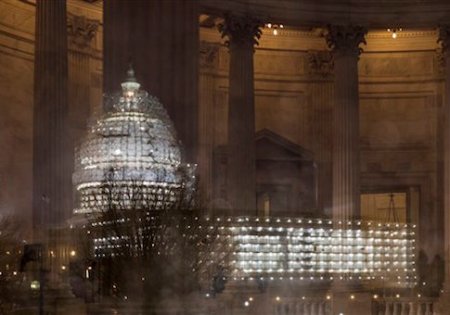
The Capitol in Washington is illuminated during a thunderstorm with the rotunda of the Russell Senate Office Building reflected on the rain-covered windows, late Wednesday afternoon, Feb. 24, 2016. (AP Photo/J. Scott Applewhite)

The Capitol in Washington is illuminated during a thunderstorm with the rotunda of the Russell Senate Office Building reflected on the rain-covered windows, late Wednesday afternoon, Feb. 24, 2016. (AP Photo/J. Scott Applewhite)

Leading foreign policy voices in Congress say they are preparing to fight against an Obama administration effort to provide Iran unprecedented access to U.S. financial resources as part of an expanded package meant to address new demands from the Islamic Republic’s for greater economic concessions, according to several conversations between the Washington Free Beacon and top lawmakers.

The Obama administration is currently exploring new options to grant Iran more sanctions relief than promised under the comprehensive nuclear agreement reached last year, just days after Iran’s Supreme Leader gave a speech accusing the United States of interfering with Iranian banking.

Top foreign policy voices in Congress told the Free Beacon in recent days that they are exploring a range of responses if the Obama administration goes through with reported plans to grant Iran further concessions beyond the purview of the nuclear deal, which dismantled key nuclear-related U.S. sanctions against Iran. At least part of this action could violate current U.S. laws, they said.

The planned concessions could include access to the U.S. dollar and financial markets, which the Obama administration promised would never take place under the deal, according to recent disclosures first reported by the Associated Press.

The Iranian government has recently heightened complaints that it is not being granted enough relief from international economic sanctions as a result of the recently implemented nuclear deal.

The Obama administration’s latest move to placate the Iranians comes on the heels of a Free Beacon report last week disclosing that U.S. officials engaged in secret talks with Iran for years before agreeing in January to pay it nearly $2 billion in taxpayer funds.

The reports have generated harsh responses from lawmakers, who say that the administration’s plans would endanger American economic influence and put the entire international financial system at risk from Iran’s illicit finance and money laundering activities.

“Any administration effort to get foreign financial institutions or foreign-based clearing houses to enable Iran’s terror-sponsoring regime to conduct transactions in U.S. dollars ignores American laws and the Financial Action Task Force,” Sen. Mark Kirk (R., Ill.) told the Free Beacon.

“Such an effort would benefit Iran’s terror financiers while fundamentally undermining the USA PATRIOT ACT 311 finding that Iran’s entire financial sector is a jurisdiction of primary money laundering concern,” Kirk said.

It would also undermine “the Financial Action Task Force’s ongoing calls for international countermeasures to protect financial sectors from Iran’s terrorist financing,” explained Kirk, who is backing a new effort in Congress to increase sanctions on Iran as a result of its recent ballistic missile tests, which violate United Nations resolutions.

Rep. Mike Pompeo (R., Kan.), a member of the House Permanent Select Committee on Intelligence, warned that the Obama administration’s latest move could set the stage for the Iranian Revolutionary Guards Corps, or IRGC, to gain a foothold in the U.S. economy.

“As if a windfall of over $100 billion in sanctions relief was too small, and the massive cash influx into Iran from new business deals too paltry, President Obama appears to be looking for ways to make further concessions to Iran,” said Pompeo, who also has backed new legislation to sanction Iran. “This would be comical if it wasn’t so dangerous.”

“American and international businesses can’t ignore the Islamic Revolutionary Guard Corps’ vast control of the Iranian economy and the threat Iranian banks pose to the international financial system,” Pompeo continued in a statement to the Free Beacon.

“In contrast with the absurd policies of the Obama administration, I work with my colleagues in Congress to protect America’s national security interests—just as we have in response to Iran’s recent ballistic missile tests.”

Pompeo is independently investigating the Obama administration’s recent $1.7 billion payment to Iran, which he and others viewed as a “ransom payment” for the Islamic Republic’s recent release of several captured Americans.

Other longtime Iran critics in Congress also expressed concern over administration efforts to provide Iran with even more economic freedom.

“Further sanctions relief would mark the death knell for U.S. sanctions and would represent a boon to the Iranian regime and its Revolutionary Guard Corp,” Rep. Ron DeSantis, a member of the House Foreign Affairs Committee, told the Free Beacon. “The lengths to which the Obama administration is willing to go to empower Iran is breathtaking.”

Rep. Peter Roskam (R., Ill.) explained that the “administration has lost all credibility on Iran” as a result of its efforts to accommodate Iranian demands.

“President Obama and Secretary Kerry have played the pied piper so many times now,” Roskam told the Free Beacon. “Western companies have to make the determination themselves whether or not they want to make their employees and shareholders complicit in funding terrorism.”

When asked to comment on concerns in Congress, a State Department official told the Free Beacon that it is aware of lawmaker requests for more information on “additional sanctions relief.”

The official added that as long as Iran continues to adhere to the nuclear agreement, the United States “will continue” to do the same.

Obama administration officials first guaranteed last year that Iran would not be permitted to conduct foreign transactions in dollars. This promise, however, is being reevaluated as the administration seeks to keep Iran from walking away from the nuclear deal.

Op-Ed: Obama’s public face – a political theater of distraction and deception

March 20, 2016

Op-Ed: Obama’s public face – a political theater of distraction and deception, Israel National News, Jeffrey Ludwig, March 20, 2016

In his article “Iran’s Diplomacy for Dummies,” Jonathan Tobin, a totally reasonable individual, again misses the perfidy of Obama’s policies, towards Iran.  We brought to the UN our concerns about Iran testing ballistic missiles being a violation of the Iran deal.  Russia stated flatly that they “would not permit sanctions to be [re-] imposed because Iran’s actions did not violate UN Security Council resolutions.”  Samantha Powers expressed frustration and dismay at the Russian reaction to our concerns.

However, Amb. Powers’ comments against the Russians in the UN were nothing more than a charade. Her comments were a pretense of being offended by Russia.  The Obama administration was just playing politics with the issue, and using Samantha as the actress to give voice to our “concern” in this one-act political theater. We pretend to be standing up for real-time enforcement of the Iran deal, and then blame the Russians when enforcement is prevented. Whereas the truth is there was no real expectation or desire for enforcement by Obama and his lady advisors from day one of the negotiations or our sign-off.  Powers and Obama are merely trying to appear earnest in their implementation of the treaty (which they falsely called an agreement).

The charade (i.e., playacting) can be seen at work over a variety of political scenarios.  These bits of play acting are the modus operandi of the Obama administration.  They seek to reverse the idea found in Shakespeare’s drama “Hamlet.”  There we find the line, “The play’s the thing. Wherein [to] catch the conscience of the king.”   For the Obama inner clique, the principle is “the play’s the thing” to deflect our understanding of the king’s dereliction of duty for God and country.

We see this playacting during a recent interview.  During the course of the interview, Obama tried to appear measured and sincere in his thinking.  For example, he says to the interviewer, “Real power means you can get what you want without having to exert violence.”  He presented himself as a wise Solon who prefers negotiation to force. Here he may not be completely duplicitous but simply be in denial.

Many so-called peaceniks on the left fail to see the cowardly and traitorous underpinnings (motives) of their pseudo-pacifism. Thus, seen in a more honest light, we need to understand that preference for negotiation over force is, in reality, a preference for capitulation and a policy of fear. Capitulation is then interpreted as being wise and detached, whereas it is actually a flight from reality and the unpleasant experiences that accompany any of life’s confrontations.

He also pretended to be detached in the Shiite-Sunni conflict. According to Obama, the two sides “need to find an effective way to share the neighborhood.”  Bret Stephens of the Wall Street Journal tags this remark as sounding more “like Mr. Rogers.” However, this writer finds it to be more duplicitous and sinister than Mr. Stephens thinks.   In reality Obama has taken the side of the Shiites and of the Muslim Brotherhood wing of the Sunnis.  He has decided to reject Sunni leadership that is not rooted in Muslim Brotherhood ideology — in Libya (overthrew Qaddafi), Egypt (overthrew Hosni Mubarak and is not working cooperatively with General Abdel el-Sisi, but did send F-16s to el-Sisi’s predecessor Muslim Brotherhood President Mohamed Morsi), and Yemen (allowed a pro-Iranian Shiite faction to overthrow the pro-Saudi government).

Further, the U.S. has not lifted a finger to prevent Iranian-backed Hezbollah from taking over Lebanon.

Lastly, and most important from a Jewish perspective, he has justified U.S. funding of Hamas via their alliance with the PLO in 2014.   And we know that Hamas is a Shiite (Iranian-backed) organization with Muslim Brotherhood backing as well. Thus by saying to Goldberg that Shiites and Sunnis will just have to learn to get along, Obama was feigning a neutrality that in practice he totally rejects.  His remarks are pure political theater, totally divorced from the policies and practices of his administration.

Although Bret Stephens characterizes Obama’s thinking as shallow, it seems to this writer that Obama’s playacting is not rooted in shallowness, but simply in his being wrong. His underlying principles are ultimately harmful.  He is identified with left-wing pseudo pacifism (“pseudo” because violence is justified, but only for leftist ideals), a Marxist-derived anti-American bias that would portray the U.S. as an exploitative society, a bitter anti-Israel bias derived from his Muslim roots, and a false universalism (“false” because it is not God-centered).

His playacting is thus an attempt to distract from his deep ideological commitments. In Hamlet, the play was intended to reveal the hidden murderous action of the King of Denmark.  With the present U.S. executive branch, the intent of the playacting is to hide the murderous intent.

President Obama’s Nowruz Message to the Iranian People

March 19, 2016

President Obama’s Nowruz Message to the Iranian People, The White House via You Tube, March 19, 2016

(Ain’t he Special! — DM)

Iran’s Free Hand in Testing Ballistic Missiles

March 16, 2016

Iran’s Free Hand in Testing Ballistic Missiles, Front Page MagazineJoseph Klein, March 16, 2016

rg

The United Nations Security Council met in an “emergency” closed door session on Monday March 14th to discuss Iran’s recent testing of ballistic missiles reportedly designed to be capable of delivering nuclear weapons. The words “Israel must be wiped out” were written in Hebrew on the side of the missiles. These most recent tests followed in the wake of missile tests conducted last fall, which the Security Council did nothing about at the time.

While North Korea was finally hit with more UN sanctions for its nuclear and missile tests, North Korea’s nuclear weapons collaborators in Iran continue to be let off the hook without even a slap on the wrist.

U.S. Ambassador to the UN Samantha Power told reporters, after the March 14th meeting produced no concrete results, that she will keep trying “no matter the quibbling that we heard today about this and that.” She said that Iran’s missile tests were “in defiance of provisions of UN Security Council Resolution 2231, the resolution that came into effect on January 16, on Implementation Day for the JCPOA [Joint Comprehensive Plan of Action].”

The quibbler in chief is Russia. Its UN ambassador said that Iran has not violated the resolution and that there was no need for any punitive measures against Iran.

The truth is that the Obama administration is now hoisted with its own petard. Ambassador Power complained that “Russia seems to be lawyering its way to look for reasons not to act rather than stepping up and being prepared to shoulder our collective responsibility.” Yet that would not have been as easy for Russia to do if the Obama administration had not allowed a loophole in the nuclear deal wide enough for Iran to fire a whole bunch of missiles through.

President Obama wanted the nuclear deal with Iran so badly that he gave in to Iran’s last minute demands to preserve its missile program. Iran insisted that all prior UN Security Council resolutions which had unambiguously prohibited Iran’s development, testing or procurement of ballistic missiles designed to be capable of delivering nuclear weapons must be terminated. Otherwise, Iran would not go forward with the JCPOA. To make matters worse, even though Iran had held the JCPOA hostage to its missile demands, the Obama administration also bowed to Iran’s insistence that its missile program would not be covered by the JCPOA itself. Thus, Iran would not be subject to the automatic “snap back” of sanctions when Iran is found to have violated the JCPOA, because its missile tests would be outside the scope of the JCPOA. In fact, the Obama administration agreed to language in the JCPOA to clarify that such separation of Iran’s missile program from the JCPOA was the intent. All reliance for dealing with Iran’s missile tests would be placed on the much weaker Security Council Resolution 2231.

The new Security Council Resolution 2231, which endorsed the JCPOA but drafted as separate from the JCPOA, used weaker language than the outright prohibition that had existed under the prior resolutions that were now superseded. Calling upon Iran to refrain from doing something is not the same as an enforceable ban. Moreover, even this insipid “call upon” language is included in an annex to the resolution. This annex is little more than a statement of intent by the parties negotiating with Iran, which Iran does not consider binding on itself.

The Obama administration missed the window of opportunity to clamp down on Iran’s missile testing when those tests were being conducted last fall. The previous Security Council resolutions that prohibited Iran’s missile program outright, and the sanctions regime against Iran, were then still in effect. Those resolutions were referenced in the JCPOA itself as still being binding until the JCPOA was actually implemented. Implementation in turn was dependent on verification of Iran’s compliance with certain commitments set forth in the JCPOA having to do with its enrichment and plutonium programs. Until the JCPOA’s formal implementation date of January 16, 2016, when those resolutions were terminated, the missile program ban had not been technically untethered from the JCPOA.

All the Obama administration had to do last fall was to declare Iran in breach of the JCPOA because the missile ban under those resolutions that Iran breached were effectively incorporated into the JCPOA until terminated. The sanctions were still in place. Iran’s assets were still frozen. Russia’s “lawyering” would have done it little good last fall when the United States still had the upper hand both legally and in practical terms. But President Obama frittered away the last real chance to hold Iran’s feet to the fire before the sanctions were lifted. He wanted the nuclear deal to go forward as a centerpiece of his “legacy” and let the next president worry about its fallout.

In fact, instead of pressing the case against Iran and threatening to walk away from the JCPOA when he had the leverage, Secretary of State John Kerry actually defended Iran’s position on its missile tests. “The issue of ballistic missiles is addressed by the provisions of the new United Nations Security Council Resolution (UNSCR), which do not constitute provisions of the Joint Comprehensive Plan of Action (JCPOA),” Kerry wrote in a letter to Senator Marco Rubio last September.  “Since the Security Council has called upon Iran not to undertake any activity related to ballistic missiles designed to be capable of delivering nuclear weapons, including launches using such ballistic missile technology, any such activity would be inconsistent with the UNSCR and a serious matter for the Security Council to review.”

Rubio raised his concern with Kerry that the language in the new Security Council resolution did not appear to require Iran to refrain from pursuing its ballistic missile tests. Rubio seized upon the weak “call upon” language discussed earlier as the basis for his concern. Kerry’s response was that “if Iran were to undertake them it would be inconsistent with the UNSCR and a serious matter for the Security Council to review.”

Senator Rubio had a right to be concerned. Kerry had deliberately agreed to a circular process to deal with Iran’s missile program violations, which was doomed to fail. To placate Iran, he kicked the can down the road until the JCPOA was actually implemented and the prior, much stronger Security Council missile resolutions that were initially tied into the JCPOA by reference went away. The separation of the JCPOA and the new Security Council resolution was completed as of the formal implementation date. Kerry had to know that once the JCPOA was implemented and in full force, with sanctions lifted and the missile program separated out from the JCPOA with its automatic “snap back” provisions, Russia would likely veto any separate sanctions resolution against its ally and missile purchaser based on Iran’s missile tests. The American people got suckered by President Obama’s reckless concessions.

Iran not only will have a pathway to nuclear enrichment sufficient to produce nuclear weapons when the deal’s restrictions sunset – if not before. Thanks to the Obama administration, Iran presently has a free hand to develop and test ballistic missiles capable of delivering those nuclear weapons along any pathway of attack it chooses.

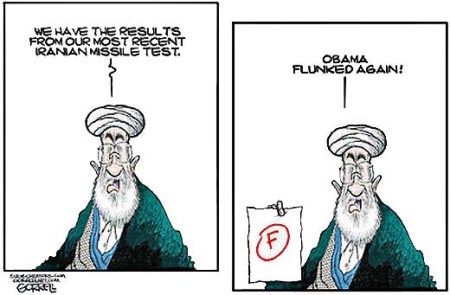
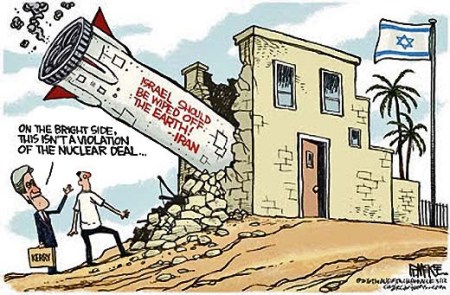
Cartoons of the Day

March 13, 2016

H/t Vermont Loon Watch

a-test
treaty

How Obama made Iran’s Latest “Destroy Israel” Missile Launches Possible

March 10, 2016

How Obama made Iran’s Latest “Destroy Israel” Missile Launches Possible, Front Page Magazine, Daniel Greenfield, March 10, 2016

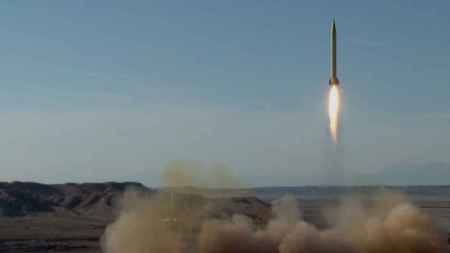
Iran rocket takes off

Back in the Senate, Obama was a fierce opponent of classifying Iran’s IRGC, the core organizing point for Iran’s national and international terror network, as a terror group. He complained that such a move would be provocative. The worthless Iran nuke deal didn’t apply to Iran’s ballistic missile program. And the sanctions relief brought an economic windfall to the IRGC.

So this is the inevitable outcome, not just of Obama’s deal with Iran, but of his entire policy history on Iran even before he took office.

For the second day in a row, Iranian state television has broadcast propaganda videos that show the launch of several ballistic missiles with anti-Israel intent.

A video released Tuesday shows the inside of an underground tunnel used for launching the missiles. It features an Israeli flag painted on the ground which Islamic Revolutionary Guard Corps, or IRGC, members are meant to walk over on their way to launch.

Wednesday’s video shows another two missiles labeled with “Israel must be wiped off the Earth” in Hebrew. Persian-language media headlines included the Hebrew message in order to emphasize the IRGC’s anti-Israel intentions. The missiles were reportedly precision-guided Qadr missiles that put Israel within striking range.

Amir Ali Hajizadeh, commander of the IRGC aerospace division, said that the tests were meant to intimidate Israel.

“The reason we designed our missiles with a range of 2,000 km (1,200 miles) is to be able to hit our enemy the Zionist regime from a safe distance,” Hajizadeh said. “Israel is surrounded by Islamic countries and it will not last long in a war. It will collapse even before being hit by these missiles.”

Before this, the media ran a blitz about “moderates” winning in Iran. As with most terrorist organizations, the term “moderates” is completely meaningless.

Tehran’s show of force—it also tested missiles on Tuesday—are not the work of the usual “hardline” suspects. Iran tested ballistic missiles last fall in violation of a U.N. Security Council resolution, and in January Mr. Rouhani publicly ordered his defense minister to speed up missile testing and production… The tests appear to be timed to coincide with Vice President Joe Biden’s visit to Israel.

So there’s a clear message. It continues Iran’s pattern of slapping Obama across the face and seeing how far back he runs.

Part of the problem is that Secretary of StateJohn Kerry bowed to Iranian demands during the nuclear negotiations not to include ballistic missiles as part of the final deal, though missiles are an essential component of any nuclear program.

Instead, the U.S. pushed a weak resolution through the Security Council, which “called upon” Iran to wait eight years before building or fielding missiles “designed to be capable of delivering nuclear weapons.” Tehran insists that, since it has supposedly abandoned its nuclear program, the current tests cannot violate the resolution.

So either Iran is pursuing a ballistic missile program for no particular reason or it’s continuing its nuclear weapons program while deliberately mocking Obama. Two guesses which one it is.

Jewish voters who believed Obama have been shown up once again. But it isn’t likely that they will learn. The cults of personality that drive people to support candidates, even when their views sharply contradict their supposed deeply held values, are fiercely powerful. And no amount of evidence can dissuade Jewish voters caught up in a cult of personality from voting for anti-Israel candidates.

Obama has effectively allowed Iran’s nuclear weapons program to proceed under the cloak of plausible deniability in which he pretends to believe Iran’s lies so that it can advance toward war.

Dangerous illusions about Iran

March 10, 2016

Dangerous illusions about Iran, Israel Hayom, Elliott Abrams, March 10, 2016

Last year’s Iran nuclear agreement was sold with several powerful arguments, and among the most important were these: that the agreement would strengthen Iranian “moderates” and thus Iran’s external conduct, and that it would allow us unparalleled insight into Iran’s nuclear program.

Both are now proving to be untrue, but the handling of the two differs. The “moderation” argument is being proved wrong but the evidence is simply being denied. The “knowledge” argument is being proved wrong but the fact is being met with silence. Let’s review the bidding.

The idea that the nuclear agreement was a reward for Iran’s “moderates” and would strengthen them is a key tenet of the defense of the agreement. If Iran remains the bellicose and repressive theocracy of today when the agreement ends and Iran is free to build nukes without limits, we have entered a dangerous bargain. It is critical that Iran change, so defenders of the agreement adduce evidence that it has. And the new evidence is Iran’s recent elections. Those elections were a great victory for “moderates” and hard-liners, it is said, and they help to prove that the nuclear deal was wise.

The problem here is that those elections were anything but a victory for Iran’s reformers. As Mehdi Khalaji wrote about the Assembly of Experts election, “If one understands ‘reformist’ as a political figure who emerged during the reform movement of the late 1990s and is associated with the parties and groups created at that time, then neither the candidates on the ‘reformist’ list nor the winners of Tehran’s sixteen assembly seats can credibly be called by that name.” To take one of the examples Khalaji cites, Mahmoud Alavi ran on what has been called a reformist ticket but he “is the current intelligence minister, and Supreme Leader Ali Khamenei appointed him as head of the military’s Ideological-Political Organization from 2000 to 2009.” Khalaji concludes that “no new prominent reformists won seats, and the proportion of hardliners remained the same.”

Ray Takeyh and Reuel Gerecht draw a stark conclusion: This year’s elections “spelled the end of Iran’s once-vivacious reform movement” which has simply been crushed by the regime. “The electoral cycle began with the usual mass disqualification of reformers and independent-minded politicians,” they remind us. I’d cite another fact: that reformers of past election years, presidential candidates Mir-Hossein Mousavi and Mehdi Karoubi, have remained under house arrest for five years now, during the entire Rouhani presidency, demonstrating the true fate of reformers of even a mild variety.

What’s the point of the “reformist” charade? As Takeyh and Gerecht note, “Foreigners don’t have to confess that they are investing in an increasingly conservative and increasingly strong theocracy; rather, they are aiding ‘moderates’ at the expense of hardliners.” But this charade has in fact worked well, producing headline after headline in the Western media about “reformist” victories. You can fool most of the people some of the time, or at least most of the people who have a strong desire to be fooled — because they wish to protect the nuclear deal and its authors.

Iran’s conduct certainly suggests radicalization rather than moderation, and the past weeks have seen repeated ballistic missile tests. Ballistic missiles are not built and perfected in order to carry 500 pound “dumb” bombs; they are used to carry nuclear weapons. So Iran’s continued work on them suggests that it has never given up its nuclear ambitions, not even briefly for the sake of appearances.

The American response has been anemic, even pathetic; we threaten to raise the issue at the United Nations. Two missiles were test-fired today, with the phrase “Israel must be wiped out” written on them. These tests violate U.N. Security Council resolutions, but the American reaction is cautious: a speech, a debate in New York, perhaps some sanctions, but nothing that could possibly lead Iran to undo the nuclear deal. Because Iran knows that this will be the Obama administration’s reaction, expect more and more ballistic missile tests. Expect more conduct like the interception, capture, and humiliation of American sailors in the Gulf. Expect more Iranian military action throughout the region.

Some moderation.

The head of CENTCOM, Gen. Lloyd Austin, put it this way: “We see malign activity, not only throughout the region, but around the globe as well. … We’ve not yet seen any indication that they intend to pursue a different path. The fact remains that Iran today is a significant destabilizing force in the region. … Some of the behavior that we’ve seen from Iran of late is certainly not the behavior that you would expect to see from a nation that wants to be taken seriously as a respected member of the international community.”

Are we now, to turn to the second matter, gaining unparalleled insight into the Iranian nuclear program? Is this one of the achievements of the agreement? On the contrary, it seems. As the Associated Press put it, “The four Western countries that negotiated with Iran — the U.S., Britain, France and Germany — prefer more details than were evident in last month’s first post-deal [International Atomic Energy Agency] report. In contrast, the other two countries — Russia and China — consider the new report balanced, while Iran complains the report is too in-depth. IAEA chief Yukiya Amano feels he has struck the right balance, considering Iran is no longer in violation of U.N. and agency demands to curb its nuclear program. His report was much less detailed than pre-nuclear deal summaries.”

Much less detailed? Sure, because the U.N. Security Council resolutions under which the IAEA provided the detail, are gone, wiped out by the nuclear deal. The IAEA’s February 26 report was its first since the nuclear deal went into effect, and lacked details on matters such as uranium stockpiles, production of certain centrifuge parts, and progress by Iran toward meeting safeguard obligations. The Obama administration has wavered, sometimes saying there was enough detail, but then demanding more. The deal was sold, in part, as a way of providing transparency, but that does not appear to be accurate: it may in fact legitimize opacity. Earlier this week came a remarkable exchange between a reporter and State Department spokesman John Kirby, who defended the degree of knowledge we have.

Kirby said, “So we now know more than we’ve ever known, thanks to this deal, about Iran’s program.” The reporter, Matt Lee of AP, asked “How much near-20% highly enriched uranium does Iran now have?” Kirby replied, “I don’t know.” To which Lee noted, “You don’t know because it’s not in the IAEA report.”

So, the bases on which the nuclear agreement with Iran was sold appear to be crumbling. Moderates are not gaining power, Iran is not moderating its behavior, and we know less rather than more about what it is actually doing in its nuclear program. Some of those conclusions are denied by the administration and by credulous portions of the press, and others are ignored. But all those verbal games will not make us any safer.

From “Pressure Points” by Elliott Abrams. Reprinted with permission from the Council on Foreign Relations.

Fundamentalists and Revolutionary Guards steal Iran’s elections

February 26, 2016

Fundamentalists and Revolutionary Guards steal Iran’s elections, DEBKAfile, February 26, 2016

Rafsanjani_RouhaniOpposition leaders to Khamenei Hashemi Rafsanjani (l.) and President Hassan Rouhani

US President Barack Obama and Secretary of State Kerry fondly hoped that the nuclear agreement signed with Iran would bring to the surface a new type of leader – more liberal and less liable to restart the nuclear program – in the twin elections taking place in the Islamic Republic Friday, Feb. 26.

They are in for a disappointment, say DEBKAfile’s Iran analysts.

But one change is almost certain. The Iranian voter will be choosing for the first time on one day a new parliament (Majlis) and the Assembly of Experts, the only body competent to choose the republic’s next supreme leader. The incumbent, 75-year-old Ayatollah Ali Khamenei, is not expected to outlast the four-year term of the next Assembly of Experts. He has been struggling with prostate cancer for more than five years. Treatment and surgery have failed to halt its spread to other parts of his body. And strong medication is necessary to keep him looking alert and vigorous in his public appearances.

Speculation is already rife in Tehran about who the next Assembly of Experts will choose as his successor.

Seen from the perspective of Iran’s Islamic regime, the supreme leader’s overarching duty is to continue the legacy of its revolutionary founder, Ayatollah Ruhollah Khomeini and his successor, Ali Khamenei.

Rather than meeting the expectations of the US president, his main job is to continue strengthening Iran on its path of religious extremism, ideological subversion, export of the Shiite revolution (by terror) and the continuation of the nuclear program.

The biggest political bombshell of the election campaign was a proposal by former President Hashemi Rafsanjani to establish a national leadership council now, instead of choosing a new leader later. This was intended to replace the single dictatorial rule of the supreme leader by a collective leadership.

Iran’s fundamentalists, especially the powerful Revolutionary Guards Corps (IRGC), were in uproar about a proposal they viewed as so dangerous for the regime that they threatened to confiscate the Rafsanjani clan’s extensive property and put him on trial for corruption and fraud.

His beloved son Mahdi has already been in jail for months on those charges.

But Rafsanjani is not easily cowed. He knew that if he backed down, the extremists would crack down on him still harder.

So this week, he announced that he had pulled the strings which gave Hassan Rouhani victory in the last presidential election. And, in the campaign leading up to the Assembly of Experts vote, he threw his support behind a moderate cleric, Hassan Khomeini, who happens to be the grandson of the Islamic regime’s iconic founder.

The IRGC and radical mullahs thereupon launched an offensive to thwart what they believed to be Rafsanjani’s dangerous plan to establish a triumvirate with Rouhani and Khomeini Junior to head a future government.

Senior radical clerics, such as ayatollahs Ahama Alam-Alhoda, Mohammad Mesbah-Yazdi, Ahmad Jannati, and Mohammad Yazi, slandered him and fought to remove his candidates for the twin slates.

They branded the former president and members of a “reformist” list as British agents, a particularly malicious charge because the UK is still seen in Iran as a symbol of colonialism and meddler in foreign politics.

Ayatollah Khamenei himself harshly denounced “foreign agents” as “addicted to foreign influence,” who should be barred from the Assembly of Experts.

Young Khomenei saw the light and withdrew his candidacy for its membership. But Rafsanjani stood out to the last as a central figure in the two campaigns, even after a majority of the candidates condemned as “moderates and reformists” were barred from the elections.

In the end, the two slates were left with no more than 30 moderate candidates out of a total of 3,000 vying for the 375 seats in the two bodies.

Their defeat as a group was predestined, and the two elections leave Iran more politically and religiously radicalized than before.

A key figure expected to take center stage in the new parliament is Gholam-Ali Haddad-Adel, whose daughter is married to Khamenei’s mover-and-shaker son. Another is Haddad-Adel, one of Khamenei’s top advisers, who heads a faction of religious fundamentalists and IRGC officers. He is the frontrunner to succeed Ali Larijani as Speaker of the next Majlis.

They are all expected to gang up to prevent President Rouhani from running for a second term when it runs out in two years – contrary to the Obama administration’s hopes. They will also do their best to make him a lame duck and whipping boy for all the country’s economic ills for the remainder of his presidency.

He will find the new parliament less cooperative than the outgoing House under Larijani when he tries to introduce liberal policies.

Unofficial results of the two elections are expected to be released Friday night. The extremists and hardliners have engineered them so that they will win big and set Iran on a course that it is even more radical than before on such key issues as its nuclear weapons program and intervention in Syria and other Middle East conflicts. They will keep the feud with Saudi Arabia alive and pursue every possible means of venting their bottomless hatred of Israel and seeking its destruction.

What to Expect in Iran

February 22, 2016

What to Expect in Iran, Gatestone InstituteJagdish N. Singh, February 22, 2016

♦ “The destruction of Israel is non-negotiable.” — Mohammad Neza Naghdi, Commander of Iran’s Basij paramilitary force.

♦ Sanctions relief will mainly benefit Ayatollah Khamenei and members of the Revolutionary Guards: they control up to one-third of Iran’s economy.

♦ Part of the Iranian regime’s grand strategy is to inflict “death to America” and replace it with its own radical version of Islamic governance. Ayatollah Khamenei himself called for America’s destruction amid nuclear negotiations.

♦ Officials also believe Iran is indirectly funding the Islamic State (IS) in the Sinai. “Suitcases of cash” are sent directly to Hamas officials in the Gaza Strip; part of the money is then transferred to IS.

♦ Iran now poses an even greater threat. If democracies today continue their present policies towards Iran, it will only embolden Iran’s regime to continue its quest to obtain nuclear weapons as well as its terrorism and human rights violations.

Humanity seldom seems to learn its lessons. The governments of the world’s leading democracies appear to be suffering from this predicament in their nuclear dealings with the Islamic Republic of Iran. To avoid catastrophe, democracies need quickly to correct their course.

One of the fatal blunders of Western democracies is their repeated commitment to appeasing and delaying action against aggressive regimes. Between the two World Wars, despite plenty of evidence of the widely-declared global racist agenda of Germany’s Adolf Hitler, democratic powers waited to take action until it was too late. Hitler was able to carry out a genocide that continues to haunt many nations.

Today, Western democratic governments, with their Eastern counterparts such as India, seem on a similar course in dealing with the Islamic Republic of Iran.

The domestic and international agenda of the Khomeinist government is publicly documented. Since the Iranian Revolution of 1979, part of the regime’s open grand strategy is to inflict “death to America,” the leader of the free world, and replace it with its own radical version of Islamic governance. Under the current Supreme Leader Ayatollah Ali Khamenei and his Islamic Revolutionary Guards Corps (IRGC), Iran has been gaining influence across the Middle East, Latin America, the Caribbean and South Asia. Despite nuclear talks with the West, Iran’s goal of “death to America” remains. The Ayatollah himself even called for America’s destruction amid nuclear negotiations.

Currently, Iran is a major player in aiding the autocratic regime of Basher al-Assad in Syria, the Houthis in Yemen, Hezbollah in Lebanon, Palestinian Islamic Jihad and Hamas in the West Bank and Gaza and the Islamic State (IS) in Egypt’s Sinai Peninsula.

To advance its imperial agenda, Iran has proceeded to develop its conventional and nuclear ballistic missile program. According to Director of National Intelligence James Clapper, Iran has “one of the largest inventories of ballistic missiles in the Middle East.”

In line with Iran’s missile development program, Iran’s Revolutionary Guard Navy Rear Commander, Ali Fadavi, announced: “Based on the fifth five-year plan, we should materialize our objective of mass-producing military speedboats with the speed of 80 knots per hour… and are equipped with missiles with a range of 100km; the vessels no one can catch.”

Aside from its military aspirations, since the fall of the Shah in 1979, successive Iranian governments have voiced their plans to annihilate the State of Israel, the only pluralist democracy in the Middle East, and an effective military deterrent to Iran’s designs in the region.

Hostile messages have been pouring forth from Iran. Mohammad Neza Naghdi, Commander of the Basij paramilitary force, stated in clear terms in April 2015, that, “The destruction of Israel is non-negotiable.”

Major General Yahya Rahim Safavi, a former IRGC commander and a top military aide to Khamenei, warned in May 2015, that “More than 80,000 missiles are ready to rain down on Tel Aviv and Haifa.”

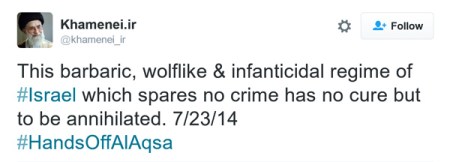
As late as November, Iran’s Supreme Leader Khamenei himself tweeted, “This barbaric, wolflike & infanticidal regime of #Israel which spares no crime has no cure but to be annihilated.”
1477

Bewilderingly, Western democracies have chosen to overlook Iran’s speeches and actions. They chose instead to appease the regime. Last July, despite genuinely serious reservations expressed by international strategic and military experts (including retired American military officers), the United States, United Kingdom, France and Germany – the four democracies in the P5+1 — concluded a nuclear deal with themselves that they proposed to Iran. Iran so far has not signed the deal, and apparently even if it did, according to the U.S. Department of State, the deal would not be legally binding.

Tehran will greatly benefit financially from the terms of the nuclear agreement in the months to come. Under the administration of President Barack Obama, nuclear sanctions against Iran have been lifted. To advance the deal and make it more appealing to Iran, the president has also agreed to pay Iran a $1.7 billion settlement for $400 million in “frozen” assets held in the United States since 1981.

The Society for Worldwide Interbank Financial Telecommunication (SWIFT), “the electronic bloodstream of the global financial system,” had disconnected 15 Iranian banks from its system in 2012. after coming under pressure from both the United States and the European Union at the height of efforts to curb Iran’s nuclear ambitions. Today, SWIFT is ready to let those banned banks, including the Central Bank of Iran, use its system once again. Iran now has an even greater ability to fund its terrorist proxies around the world.

European political and business leaders have been rushing to Tehran to sign new agreements. On January 28, in Paris, Iran’s President Hassan Rouhani and France’s President Francois Hollande signed major business deals, including a joint venture between car-makers PSA Peugeot Citroen and Iran’s Khodro. Iran is in the process of buying 118 Airbus passenger planes to update its aging fleet. The construction group Bouygues and the French airport operator ADP are now set to build an extension for Tehran’s airport, while Vinci, another construction firm, has been commissioned to design, build and operate new terminals for the Mashhad and Isfahan airports. The French oil company Total has agreed to buy Iranian crude oil, and agreements in shipping, health, agriculture and water provision have also been signed.

Democratic India is also cultivating relations with Iran. In a meeting in May, India’s Minister of Road Transport and Highways, Nitin Gadkari, and Iranian Transport and Urban Development Minister, Abbas Ahmad Akhoundi signed a Memorandum of Understanding on India’s participation in the development of the Chabahar Port in Iran.

The Chabahar project will impart strategic leverage to India and its access to Afghanistan and energy-rich Central Asia by bypassing Pakistan. The distance between the Chabahar Port and Gujarat – India’s westernmost state, located near the Persian Gulf, is less than the distance between Delhi and Mumbai. Transit times are estimated to be reduced by a third. Indian firms have already agreed to lease two existing berths at the port and operate them as container and multi-purpose cargo terminals.

The Chabahar project, New Delhi calculates, will be highly beneficial. As India has invested over $2 billion in Afghanistan, the Indian government plans to link the Chabahar port with the Zaranj-Delaram road it built in Afghanistan, thereby opening alternative routes to Afghanistan and enhancing access to regional and global markets.

Russia and China, permanent members of the UN Security Council, are also strengthening their cooperation with Iran. Both Russia and China adopted a policy of ambivalence towards Iran and saw to it that sanctions imposed by the West were not too tough. They also repeatedly blocked attempts at sanctioning Iran’s ally, the current Syrian regime, out of concern over financial ties in the region.

China is also capitalizing on the lifting of sanctions against Iran. Chinese President Xi Jinping rushed to Iran after the so-called nuclear agreement to discuss a 25-year strategic cooperation plan. In a landmark deal worth up to $600 billion, Xi committed to increase trade between the two nations during the next decade. Beijing and Tehran also agreed to enhance security cooperation through intelligence-sharing, counter-terror measures, military exchanges and coordination. Incidentally, despite international sanctions, China-Iran trade increased from $3 billion in 2001 to more than $50 billion in 2014.

Given its fanatical and sectarian ideological agenda, Iran is likely to use the new funds to boost its armament program and ongoing clandestine terror acts. Sanctions relief will mainly benefit Khamenei and members of the IRGC: they control up to one-third of Iran’s economy.

Iran now poses an even greater threat to the entire civilized world. The pattern of Tehran’s behavior shows the government can never be trusted on any promises it makes not to advance its nuclear weapons program. Khamenei has made an open declaration that Tehran will not allow effective inspections of its military sites or interviews with its nuclear scientists.

The links of the IRGC’s Qods Force with Hezbollah, Hamas, Palestinian Islamic Jihad, the Houthis and other terror militias pose a major threat to peace and stability in the Middle East.

Hezbollah’s networks have expanded over the years, infiltrating Latin America and the Caribbean through Shiite cultural centers in the region. According to an official Argentine report, Tehran has established its terrorist, intelligence and operational networks throughout Latin America as far back as the 1980s. Iran’s intelligence activities in the region are being conducted directly by Iranian officials or through its proxy, Hezbollah. Criminal activity may already be underway in Brazil, Colombia, Chile, Paraguay, Uruguay, Suriname and Trinidad and Tobago. Iran’s involvement in the cocaine trade has bolstered the regimes regional access and strengthened ties with its allies in Venezuela, Ecuador, Bolivia and elsewhere.

According to senior Western intelligence officials, the IRGC has transferred tens of millions of dollars to Hamas to be used for weapons, military equipment and training, and that Iran also delivers arms and funds to Hamas through the Red Sea and the Sinai. Officials also believe Iran is indirectly funding the Islamic State (IS) in the Sinai. “Suitcases of cash” are sent directly to Hamas officials in the Gaza Strip; part of the money is then transferred to IS.

Tehran’s links with Hamas and IS are part of a grander strategy of using proxy forces to gain hegemony over the Middle East and undermining American allies such as Egypt and Israel. In Lebanon, Iraq and Syria, Iran seeks to preserve its influence. By fighting IS, Iran strengthens existing pro-Iran regimes and maintains its relevance in the region.

While Iran does support IS indirectly in the Sinai, the government’s goal is to weaken the current Egyptian regime and the Sunni Arab alliance between Egypt, Saudi Arabia and Jordan. It has no problem with IS gaining strength in the Sinai right now. If IS does gain more power in the Sinai, Iran can use it to impose its own agenda in the future. Tehran evidently wants to use IS victories against Sunni states as an opportunity to take over.

Iran also supports the Gaza-based terror group al-Sabireen [“The Patient Ones”], established in the wake of previous tensions between Iran, Hamas and Islamic Jihad. The group has about 400 followers and its emblem is identical to that of Hezbollah. Each member receives a monthly salary of $250-$300, while senior members receive at least $700. Annually, the terror group receives a budget of $10 million from Iran, smuggled in suitcases through tunnels along the border with Egypt. Potential members are wooed by al-Sabireen through familiar channels of philanthropy and education. The group’s publications refer to the United States as “the source of superpower terrorism,” and its slogan is, “The road to the liberation of Palestinian goes through Karbala” — a Shiite holy city in Iraq.

Al-Sabireen has extended its operations from the Gaza Strip to the West Bank and Jerusalem with Iran’s backing. Hisham Salim, the founder of al-Sabireen, admitted that his group is directly financed by Iran. “We have an armed branch whose goal is to wage war on the Israeli occupation everywhere,” Salim said. “Within this framework we have members in the West Bank and Jerusalem.”

The Obama administration has forged ahead with its Iran policies despite knowing the regime’s support of global terrorism. U.S. President Barack Obama himself spoke about Iran’s terror activities in a press conference last year. “Now, we’ll still have problems with Iran’s sponsorship of terrorism; its funding of proxies like Hezbollah that threaten Israel and threaten the region; the destabilizing activities that they’re engaging in, including place like Yemen,” he said, adding that the nuclear “deal is not contingent on Iran changing its behavior. Its not contingent on Iran suddenly operating like a liberal democracy.”

History urges those living in democracies today to rein in their governments and correct their fatal Iran policies. The world cannot afford to overlook the damage of these governments. If democracies today continue their present policies towards Iran, it will only embolden Iran’s regime to continue its quest to obtain nuclear weapons as well as its terrorism and human rights violations.
Sean Hannity Full One-on-One Interview with Donald Trump (2/18/2016)

February 19, 2016

Sean Hannity Full One-on-One Interview with Donald Trump (2/18/2016), Fox News via You Tube, February 18, 2016

(Trump discusses the Israel – “Palestine” situation and the mess Obama has made beginning at 11:05 during the interview. The rest is very good too. — DM)

https://www.youtube.com/watch?v=4rcALd00L5k