Posted tagged ‘Obama and Iran’

The Mr. Rogers Doctrine

April 27, 2016

The Mr. Rogers Doctrine, Israel Hayom, Clifford D. May, April 27, 2016

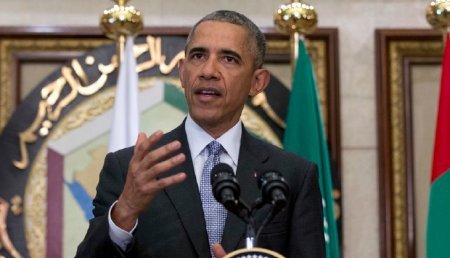
U.S. President Barack Obama last week visited Saudi Arabia, an unusual nation with which the United States has had a relationship that can be accurately characterized as both strategic and strange — and one that is now severely strained. To understand how we got to this juncture requires at least a smattering of modern history.

It’s polite to say that Ibn Saud, in the first third of the 20th century, united most of the tribes living on the Arabian Peninsula. It’s more accurate to say he defeated those tribes, conquering their lands, along with a source of enormous future wealth that lay under some of them.

Ibn Saud allied with the British against the Ottoman Empire whose sultan, based in Istanbul, also had been proclaimed caliph — ruler of all the world’s Muslims. That would have undercut the legitimacy of the House of Saud had a deal not been struck with the Wahhabis, until then a tiny, fundamentalist sect. The Wahhabis blessed the Saudis and granted them governing authority. In exchange, they would be well-funded and their reading of Islam would become the state religion.

In 1932, Ibn Saud gave his dominions a name: The Kingdom of Saudi Arabia. After World War II, a time when the sun was setting on the British Empire, the Saudis turned to the United States. The oil the Saudis had appropriated would now be extracted and sold to those in the West who had developed productive uses for it. In exchange, the United States would serve as Saudi Arabia’s defender and protector.

For a few decades, this arrangement worked reasonably well. Then, in 1979, two pivotal events occurred. The first was the overthrow of the Shah of Iran, an uprising that, under the leadership of the Ayatollah Ruhollah Khomeini, became an Islamic Revolution. That meant that the first modern state committed to waging global jihad was majority Shia and Persian — a shock and a humiliation to many in the Sunni and Arab worlds.

Then, in November of that year, around the same time as students loyal to the Aytollah were taking over the U.S. Embassy in Tehran, the Grand Mosque in Mecca was seized by what might be called ultra-Wahhabis. Putting down this rebellion was a bloody affair. But because of a Saudi information blockade, most of the world heard only vague and often incorrect details.

The full story would be told in 2007 by Yaroslav Trofimov in his indispensable book, “The Siege of Mecca.” In the aftermath of the 9/11/01 attacks, he recognized the episode as “the first large-scale operation by an international jihadi movement in modern times.”

In response to the 1979 upheavals, the Saudis might have been expected to oppose if not suppress fundamentalists eager to fight holy wars. Instead, they attempted to demonstrate their jihadi bona fides by installing Wahhabi clerics in mosques around the world, establishing madrasas that prepared young people to kill and die to defend and/or spread the “true” Islam, and funding mujahedeen in Afghanistan.

From these seeds would grow al-Qaida, and the fruits of al-Qaida — the Islamic State group among them. Such jihadis despise the Saudis and other Muslims who, they believe, are shirking their duty to smite infidels, apostates and heretics.

At least some Saudis were later to recognize their error. Trofimov quotes Prince Khaled al Faisal saying in 2004 that while those who seized the Grand Mosque were eliminated, “we have overlooked the ideology that was behind the crime. We’ve let it spread in the country, ignoring it as if it did not exist.” Nevertheless, Saudi-appointed clerics continue to this day to preach hate and incite violence.

As for Iran’s rulers, they have two large axes to grind with the Saudis. One traces back to the 7th century when a dispute arose within the newly created Muslim community over who was to succeed the Prophet Muhammad. Since then, the theological schism has only widened. The Shia mullahs of Iran believe no Sunnis should be custodians of the holy cities of Mecca and Medina — least of all the descendants of a warrior tribe who drink and gamble in Europe while insisting that royal blood flows through their veins.

A less ancient Iranian grievance: Most of Arabia’s oil lies in the Eastern Province where the majority of the population is Shia. These Arabians are hardly “Saudis,” having been conquered by them in 1913 and suffering discrimination and persecution at their hands ever since. In January, Nimr al-Nimr, a Shia cleric from the Eastern Province who had been critical of the Saudi government, was executed.

President Obama’s policy response to this complicated and fraught reality: He recently told a reporter that Saudis and Iranians need to “share the neighborhood.” It’s tempting to call that the “Mr. Rogers Doctrine” and imagine what was said about it within the palaces of Riyadh — and those of Tehran. Also worth pondering: the message that phrase sends to the neighborhood’s minorities — the Christians now under genocidal assault, the Kurds, the Druze and, of course, the Israelis.

The Saudis have never been America’s friends in the sense of having common values or mutual affection. But they have been America’s allies in the sense of having common enemies and some common — and vital — interests. Now the Saudis face what they see as an existential threat from Iranian theocrats who proudly proclaim their abhorrence of America.

Yet, the American president is enriching those Iranian theocrats, strengthening them and making concession after concession without demanding reciprocity. It’s reasonable to guess that the Saudis are feeling puzzled and perhaps betrayed. If so, they are not alone.
A policy of hypocrisy

April 25, 2016

A policy of hypocrisy, Israel Hayom, Dr. Haim Shine, April 25, 2016

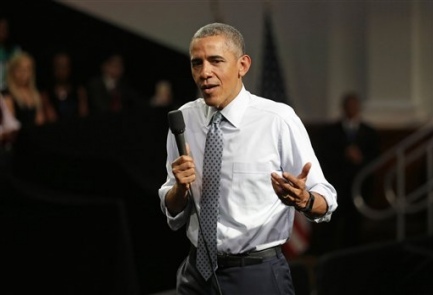
Judging by his approach to complex national and international issues, U.S. President Barack Obama is very frustrated. The frustration is natural for someone who made big promises, almost messianic ones, and is now leaving behind nothing more than a trail of shattered dreams. During his eight years in office, the United States has gone from being a leading superpower, a pillar of Western civilization, to a state that is hesitant, indecisive and alarmingly slow to respond. Its domestic economy is faltering, sowing uncertainty and insecurity among the large middle class.

Needless to say, the success enjoyed by Republican presidential candidate Donald Trump is an expression of a great number of Americans who grew up hearing about how their flag was raised on Japan’s Mount Suribachi on the island of Iwo Jima toward the end of World War II, and who are now watching with heartache as their beloved flag is being lowered to half-mast before being taken down altogether.

In an effort to gather up the pieces of his crumbling legacy, Obama set out on his final trip to the Middle East and Europe. America’s long-time allies feel betrayed. Their resentment is clear. Relationships between countries are not disposable. The Obama administration’s deference to Iran has had major implications on its ties with Saudi Arabia and the Gulf States. A divided Egypt is still paying the price for Obama’s support for the Muslim Brotherhood.

The state of Israel, which has led the struggle against a nuclear Iran for a long time, has by now come to terms with the fact that the United States was duped by the fake smiles of Iranian Foreign Minister Mohammad Javad Zarif and his friends in Tehran. Singing Passover songs in Hebrew won’t change the fact that Obama has not changed, after having sided entirely with the mendacious Palestinian narrative of victimhood.

Leaders in the Middle East cannot decide whether Obama is a naive president or one who is willing to sacrifice his fundamental values and his credibility just so he can leave behind what he sees as a positive sentence in the books of history — a sentence that will be erased with record speed.

Europe is also discouraged by the United States. Obama’s indecisiveness regarding the madness in Syria has allowed Russia to take significant steps in the Middle East and Europe. The failed efforts to confront the Syrian problem have contributed to the tsunami of migrants flooding Europe and all the resulting consequences for European society and its security. Add to this, of course, the financial crisis currently threatening to destroy the European Union, the seeds of which were sown in 1992 with the signing of the Maastricht Treaty in 1992.

It is against this backdrop that the British are expected to decide via referendum whether or not to remain a part of the European Union. During his recent visit to England, Obama spoke out strongly against Britain’s potential separation from the EU. This was a crude and disproportionate effort to meddle in another state’s affairs — an expression of his desire to evade blame for the collapse of the European Union. In his mind, British citizens are expected to forgo their opinions and best interests in favor of his legacy.

It is therefore unclear why Obama unleashed his fury at Prime Minister Benjamin Netanyahu when the latter made tireless efforts to convince Congress and the American public not be deceived by the dangerous nuclear deal. How much hypocrisy does it take to allow yourself to do things that you reprimand others for doing? Immanuel Kant saw this kind of behavior as a basic moral failure. Luckily for Britain’s citizens, Obama cannot veto their decision.

Obama’s theater of the absurd

April 24, 2016

Obama’s theater of the absurd, Israel Hayom, Boaz Bismuth, April 24, 2016

Obama theatreU.S. President Barack Obama | Photo credit: AP

Imagine that the U.S. buys a nuclear weapon from Iran. Sounds crazy? Maybe not. When it comes to the Obama administration and Iran, it is like Pablo Picasso once said: “Everything you can imagine is real.”

The relationship between the Obama administration and the Islamic Republic of Iran continues to live in the theater of the absurd. If William Shakespeare had not died 400 years ago, he could have penned new successful plays with titles such as “Obama and Khamenei” (a modern version of “Romeo and Juliet”) and “The Merchant of Tehran” (a remake of “The Merchant of Venice,” with Iranian President Hassan Rouhani playing the role of Shylock).

Over the weekend, The Wall Street Journal reported that the U.S. would buy 32 tons of heavy water from Iran for $8.6 million. The main problem here is not the amount of money. Rather, it is the fact that the U.S. is rewarding Iran for the sale of a key component in the production of nuclear weapons.

The U.S. is not boycotting Iran, it is not destroying Iran’s nuclear program and it is not worried about third-party deals with Iran that will have negative consequences for the Middle East. The U.S. is showing that it has turned a new page in its relationship with Iran. And the turning of that page began in November 2008, when Barack Obama was elected president.

A play about this absurdly comical saga could begin with the mishandling of the talks in Turkey, Switzerland, Iraq and Kazakhstan. Or perhaps it could start with the final nuclear deal itself, which in effect legitimized Iran as a future nuclear power. We could also focus on the fact that international trade with Iran is returning to normal, as if we have gone back in time to the era when the shah was in power. Money is flowing into Iran, despite the fact that the Iranian regime is a certified pimp of terrorism. And we could further enrich the absurdness of the play by mentioning that the nuclear deal includes a clause that world powers, including the U.S., must defend Iran’s nuclear sites from attack (maybe even from Israeli planes).

In other words, there is no lack of comedic material here. But why hurry to write the play now? It is very likely that the peak of the absurdity is still ahead of us. Imagine that in a few years the U.S. buys a nuclear weapon from Iran. Sounds crazy? Maybe not.

A decade ago, we would have read this script and thought it was written by a science fiction author like Bruce Sterling or Stephen Baxter. But when it comes to the Obama administration and Iran, it is like Pablo Picasso once said: “Everything you can imagine is real.”

OMRI CEREN: Analyze This,

April 22, 2016

OMRI CEREN: Analyze This, Power LineScott Johnson, April 22, 2016

Omri Ceren writes from The Israel Project with the latest development in our partnership with the Islamic Republic of Iran. Omri writes:

Heavy water is a relatively rare form of water that is used to produce weapons-grade plutonium. The nuclear deal forbids Iran
from stockpiling more than 130 tonnes of heavy water at any given time.

But the Iranians have been overproducing. In February they violated the nuclear deal by going over the 130 ton cap, and they had to ship out their excess material to get back into compliance [a][b]. Instead of halting heavy water production in the aftermath of the violation, they continued producing and now may be in danger of violating the deal again.

So – per the Wall Street Journal this morning – the Obama administration will buy the heavy water from Iran in order to “safeguard its landmark nuclear agreement.” The Iranians will be saved from their own overproduction causing them to violate the deal. Some things to look out for:

1) The purchase will almost certainly involve dollars, and therefore indirect access to the U.S. financial system. The administration is refusing to clarify that:

U.S. law still bans Iran from entering the American financial system or conducting business in dollars. The Obama administration is deliberating ways to help Iran conduct dollarized trade without allowing it to directly access the U.S. system, according to U.S. officials. U.S. officials wouldn’t specify how the Department of Energy would pay Iran for the heavy water.

2) The money will almost certainly be taxpayer money, and it may be going to fund terrorism. Congress is trying to get answers on those questions from the administration:

The chairman of the House Foreign Relations Committee, Rep. Ed Royce (R., Calif.), wrote Mr. Moniz on April 18 to seek clarity on the terms of the deal. He specifically asked how the U.S. would pay for the heavy water and what guarantees the administration had that the funds wouldn’t be used by Tehran to fund its military or terrorist groups.

3) The Obama administration will be keeping alive a part of Iran’s nuclear program that can be turned around and used for producing nuclear weapons:

Some nuclear experts said the U.S. move comes close to subsidizing Iran’s nuclear program in a bid to keep the agreement alive. They said Tehran’s production of heavy water will remain a concern, especially when the constraints on its nuclear program are lifted after 10 to 15 years as part of the agreement. “We shouldn’t be paying them for something they shouldn’t be producing in the first place,” said David Albright, head of the Institute for Science and International Security, a Washington think tank.

4) The administration’s broader goal for the sale is to mainstream Iran’s nuclear program and encourage other countries to begin relying on Iran for nuclear materials. That’s not extrapolation. It’s their actual spin, which is already appearing elsewhere this morning in sympathetic articles: that thanks to this purchase, Iran’s nuclear program will no longer be an international pariah and other countries will begin purchasing nuclear material from Iran [c]. Those countries will potentially be beyond future U.S. pressure, should a future administration want to limit Iran’s heavy water production:

The U.S. hopes its initial purchase will give other countries the confidence to purchase Iran’s heavy water in the coming years… U.S. Energy Secretary Ernest Moniz said… “That will be a statement to the world: ‘You want to buy heavy water from Iran, you can buy heavy water from Iran. It’s been done. Even the United States did it.’”

[a] https://www.iaea.org/sites/default/files/gov-2016-8-derestricted.pdf
[b] http://www.reuters.com/article/us-iran-nuclear-idUSKCN0VZ2D1
[c] http://www.sciencemag.org/news/2016/04/us-goes-shopping-iran-s-nuclear-bazaar-will-buy-heavy-water-science

Video and Cartoon of the day

April 21, 2016

(Please see also, Obama in Riyadh: Iran nuclear deal sign of ‘strength, not weakness’. — DM)


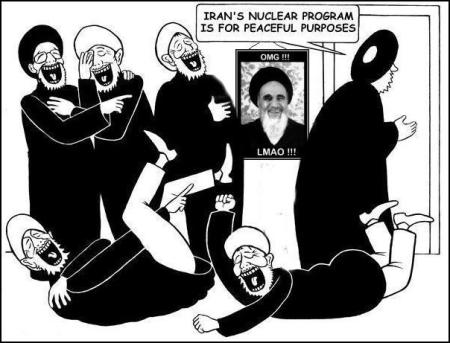
Peaceful Iran


Obama in Riyadh: Iran nuclear deal sign of ‘strength, not weakness’

April 21, 2016

Obama in Riyadh: Iran nuclear deal sign of ‘strength, not weakness’ Washington ExaminerSusan Crabtree, April 21, 2016

Obama in Saudi ArabiaPresident Obama said, “Even as Iran is calling us the great Satan, we were able to get a deal done that reduces their nuclear stockpiles. That’s not a sign of weakness, that’s a sign of strength.” (AP Photo/Carolyn Kaster)

President Obama vigorously defended his nuclear negotiations at the end of a summit of Persian Gulf state leaders and a rocky visit to Saudi Arabia aimed at reassuring the anxious ally and seeking more support for the fight against the Islamic State.

While the president acknowledged Saudi concern that the United States should not be “naïve” when dealing with Iran, he cited previous presidents’ willingness to engage in talks with Russia during the height of the Cold War as models to follow.

“John F. Kennedy and Ronald Reagan still negotiated with the Soviet Union even when the Soviet Union was threatening the destruction of the U.S.,” he said.

“That’s the same approach we have to take. Even as Iran is calling us the great Satan, we were able to get a deal done that reduces their nuclear stockpiles. That’s not a sign of weakness, that’s a sign of strength.”

Obama said he told Gulf leaders that the U.S. has to operate on a “dual track” with Iran in order to “be effective in our defense and hold Iran to account.

“But we also have to have the capacity to enter into a dialogue to reduce tensions and identify ways in which we [can engage] more reasonable forces inside of Iran and negotiate with the countries in the region so we don’t see an escalation and proxy fight across the region.”

Obama’s statement came the day after tensions flared between Obama and Saudi King Salman during a meeting Wednesday night that lasted more than two hours.

Afterward, the White House tried to tamp down talk of the frayed relationship by saying the meeting helped “clear the air” between the two leaders.

“I think it was a very open and honest discussion where they were able to address a whole range of issues … some of which we have been in agreement on and some [which have been] a source of tensions,” said Deputy National Security Adviser Ben Rhodes.

OMRI CEREN: Dollarizing Iran (2)

April 21, 2016

OMRI CEREN: Dollarizing Iran (2), Power LineScott Johnson, April 21, 2016

(Please see also, U.S., Iran Are Negotiating An Obama-Rohani Meeting. Here’s a key point from the article:

Following Khamenei’s recent harsh attacks on what he termed the U.S. administration’s misconduct and its failure to implement the economic and banking aspects of the JCPOA,[4] Khamenei’s representatives from Iran’s pragmatic camp have been openly talking with U.S. officials in order to extract from the U.S. more concessions that are not part of the JCPOA.

— DM)

On Tuesday Eli Lake reported on the State Department’s letter to the governors of all 50 states as well as some local officials asking them to reconsider any laws on the books that called for divesting state funds from businesses interacting with Iran’s economy, or laws that would deny contracts to companies that do business with Iran. Following up on Lake’s report, Seth Lipsky noted that the “delicate wording — the wheedling tone — of the administration letter suggests that Secretary of State Kerry knows he has no authority to demand that states retreat from their laws against the Iranian regime.” It is imperative in the view of the Obama administration that we fund and otherwise facilitate Iran’s ventures. Now Omri Ceren writes from the Israel Project to update readers on developments in our unfolding partnership with the Islamic Republic of Iran:

On Monday Secretary Kerry met with Iranian FM Zarif in New York. His comments after the meeting suggest that he and Zarif are preparing this Friday to announce new American concessions facilitating Iranian access to the U.S. dollar [a]:

QUESTION: Mr. Secretary, did you reach any agreement (inaudible) with the dollar issue and the (inaudible) sanctions issue?

SECRETARY KERRY: We agreed to – we’re both working at making sure that the JCPOA, the Iran agreement – nuclear agreement – is implemented in exactly the way that it was meant to be and that all the parties to that agreement get the benefits that they are supposed to get out of the agreement. So we worked on a number of key things today, achieved progress on it, and we agreed to meet on Friday. After the signing of the climate change agreement, we will meet again to sort of solidify what we talked about today.

Note specifically Kerry’s claim that the Iranians are entitled to the concession under the terms of the deal: “the benefits that they are supposed to get out of the agreement.” He made the same claim two weeks ago, in comments that were promptly picked up by Iranian state media [b]. That’s not how the deal was sold last summer. Back then top Treasury officials explicitly and repeatedly declared that prohibitions on Iranian dollar access would remain in place to maintain U.S. leverage on Iranian terrorism, human rights violations, ballistic missile development, etc. [c].

But then a month ago the Iranians started declaring that they weren’t getting the relief they’re entitled to because of banking sanctions, and they demanded dollar access lest they walk away from the deal [d][e][f][g]. Within weeks of the new Iranian demands the AP and WSJ confirmed that the administration was planning to offer dollar-related concessions, which the AP noted “would reverse a ban that… the administration had vowed to maintain” [h][i][j]. That triggered a Congressional backlash, forcing the administration to publicly declare that no new concessions were planned [k].

Now it looks like concessions are back on the agenda, and so are Secretary Kerry’s claims that the Iranians are entitled to them. On Monday evening – few hours after his meeting with Zarif – Kerry again suggested that the Iranians aren’t getting all the relief they’re due, saying they’ve only gotten $3 billion of $55 billion in escrowed oil funds [m]:

Do you remember the debate over how much money Iran was going to get?… We calculated it to be about $55 billion when you really take a hard look at the economy and what is happening. Guess what, folks; you know how much they have received to date as I stand here tonight? About $3 billion.

That’s a strange claim to make. 1st, there’s no reason it would be true: during the 17 month JPOA negotiation period the Iranians repatriated $700 million of escrowed oil funds per month, or $11.9 billion total. So a mechanism exists for getting Iran those funds. 2nd, statements from Iran suggest it’s false: the Iranians declared in February that they had been given full access to $100 billion in escrowed reserves [l]. The State Department’s Marie Harf responded by blaming Treasury for underestimating the windfall at $50 billion – an estimate that Kerry repeated – but she didn’t suggest that the Iranians were wrong about having been given access to their escrowed funds [n].

Journalists spent Tuesday trying to figure out what Kerry could have been suggesting, and if he was intentionally echoing the Iranian position. The debate spilled into the State Department press briefing [o]. The AP’s Matt Lee: “he’s making the Iranians’ argument here, right?… saying that the Iranians are correct when they complain… that the Iranians have a point here.” CNN’s Elise Labott: “he’s trying to tell the Iranians they’re going to get their money?” Reuters’s Lesley Wroughton: “Is it because of the financial restrictions that the Iranians are arguing about?”

State Department spokesman Kirby repeatedly denied that Kerry had intended to echo Iranian talking points.

[a] http://www.state.gov/secretary/remarks/2016/04/255977.htm
[b] http://www.presstv.ir/Detail/2016/04/06/459389/Kerry-Iran-US-dollar/
[c] http://www.foreign.senate.gov/imo/media/doc/07-23-15%20Lew%20Testimony.pdf%5D%5Bhttp://www.washingtoninstitute.org/uploads/Documents/other/SzubinTranscript20150916-v2.pdf
[d] https://twitter.com/khamenei_ir/status/707981817434009600
[e]http://www.al-monitor.com/pulse/originals/2016/03/iran-sanctions-jcpoa-banking-khamenei-nowruz-speech.html
[f]http://www.reuters.com/article/us-iran-trade-finance-idUSKCN0WO1Y3
[g] http://thediplomat.com/2016/03/the-real-threat-to-the-iran-deal-tehrans-banking-system/%5D
[h] http://bigstory.ap.org/article/b2c1eb1820154a518deb12b85882536e/gop-worries-obama-leaving-door-open-new-iran-relief
[i]http://hosted.ap.org/dynamic/stories/U/US_UNITED_STATES_IRAN?SITE=AP&SECTION=HOME&TEMPLATE=DEFAULT
[j] http://www.wsj.com/articles/u-s-moves-to-give-iran-limited-access-to-dollars-1459468597%5D
[k] http://www.jta.org/2016/04/13/news-opinion/politics/amid-rumors-white-house-rules-out-giving-iran-access-to-us-dollar
[l] https://www.washingtonpost.com/world/iran-claims-100-billion-now-freed-in-major-step-as-sanctions-roll-back/2016/02/01/edfc23ca-c8e5-11e5-a7b2-5a2f824b02c9_story.html
[m] http://www.state.gov/secretary/remarks/2016/04/255951.htm
[n] https://twitter.com/marieharf/status/694371008459988992
[o] http://www.state.gov/r/pa/prs/dpb/2016/04/255961.htm#IR

U.S., Iran Are Negotiating An Obama-Rohani Meeting

April 21, 2016

U.S., Iran Are Negotiating An Obama-Rohani Meeting, MEMRI, April 20, 2016

Following Khamenei’s recent harsh attacks on what he termed the U.S. administration’s misconduct and its failure to implement the economic and banking aspects of the JCPOA,[4] Khamenei’s representatives from Iran’s pragmatic camp have been openly talking with U.S. officials in order to extract from the U.S. more concessions that are not part of the JCPOA.

***************************

Intense U.S.-Iran negotiations appear to be underway at this time, on various levels. They have included meetings this week in New York between Iranian Foreign Minister Zarif and U.S. Secretary of State Kerry, and an April 14 Washington meeting between Central Bank of Iran governor Valiollah Seif and U.S. Secretary of the Treasury Jack Lew.[1]

According to an April 19 report on the Iranian website Sahamnews.org, which is affiliated with Iran’s Green Movement, President Obama asked to meet with Iranian President Hassan Rohani in two secret letters sent in late March to both Iranian Supreme Leader Ali Khamenei and President Rohani.

According to the report, Obama wrote in the letters that Iran has a limited-time opportunity to cooperate with the U.S. in order to resolve the problems in Syria, Iraq, and Yemen, and promised that if Iran agreed to a meeting between him and Rohani, he would be willing to participate in any conference to this end.

The Sahamnews report further stressed that Supreme Leader Khamenei discussed the request with President Rohani, that Rohani said that Iran should accept the request and meet with Obama, and that such a meeting could lead to an end to the crises in the region while increasing Iran’s influence in their resolution. Rohani promised Khamenei that any move would be coordinated with him and reported to him. According to the report, Khamenei agreed with Rohani.

The Sahamnews report also emphasized that Khamenei’s recent aggressively anti-U.S. speeches were aimed at maintaining an anti-U.S. atmosphere among the Iranian public, whereas in private meetings he expresses a different position.

Further hints regarding Obama’s wish to meet with Iranian officials could be found in both American[2] and Iranian[3] media.

Following Khamenei’s recent harsh attacks on what he termed the U.S. administration’s misconduct and its failure to implement the economic and banking aspects of the JCPOA,[4] Khamenei’s representatives from Iran’s pragmatic camp have been openly talking with U.S. officials in order to extract from the U.S. more concessions that are not part of the JCPOA.

After Secretary of State Kerry’s April 19 New York meeting with Foreign Minister Zarif, the two announced that their discussions would continue on April 22. Zarif said that the meeting had been aimed “to ensure that Iran obtains the interests that it anticipates [receiving] from the JCPOA… The main focus of the talks concerned the correct implementation of the JCPOA so that the sides, especially the Iranian people, will receive what is coming to them under this agreement.”[5]

Secretary of State Kerry said that progress had been made in several issues, and that the two would meet again on April 22: “We agreed to – we’re both working at making sure that the JCPOA, the Iran agreement – nuclear agreement – is implemented in exactly the way that it was meant to be and that all the parties to that agreement get the benefits that they are supposed to get out of the agreement. So we worked on a number of key things today, achieved progress on it, and we agreed to meet on Friday. After the signing of the climate change agreement, we will meet again to sort of solidify what we talked about today.”[6]


Endnotes:

[1] Wall Street Journal, April 15, 2016.

[2] See, for instance, an article in Foreign Affairs, March 7, 2016, by a representative of the National Iranian American Council.

[3] Kayhan (Iran), April 3, 2016. See also MEMRI Special Dispatch No. 6373, Power Struggle Between Iranian Supreme Leader Khamenei’s Ideological Camp And Rafsanjani’s Pragmatic Camp Intensifies – Part III: Iranian Supreme Leader Ali Khamenei Speaks Out Against Pragmatic Camp Leaders Rafsanjani, Rohani, April 5, 2016.

[4] See MEMRI Special Dispatch No. 6373, Power Struggle Between Iranian Supreme Leader Khamenei’s Ideological Camp And Rafsanjani’s Pragmatic Camp Intensifies – Part III: Iranian Supreme Leader Ali Khamenei Speaks Out Against Pragmatic Camp Leaders Rafsanjani, Rohani, April 5, 2016.

[5] ISNA (Iran), April 20, 2016.

[6] State.gov, April 19, 2016.

Iran Vows ‘Serious Reaction’ If U.S. Violates Nuke Deal

April 20, 2016

Iran Vows ‘Serious Reaction’ If U.S. Violates Nuke Deal, Washington Free Beacon , April 20, 2016

Iran's President Hassan Rouhani stands in his office ahead of a meeting with German Vice Chancellor and Economy Minister Sigmar Gabriel in Tehran, Iran, Monday, July 20, 2015. Germany and Iran soon will hold their first economic conference in a decade in the wake of Iran's nuclear deal with world powers, Iran's state-run news agency reported Monday. The announcement came after Iranian Oil Minister Bijan Zanganeh met Gabriel in Tehran. (AP Photo/Ebrahim Noroozi)

Iran’s President Hassan Rouhani stands in his office ahead of a meeting with German Vice Chancellor and Economy Minister Sigmar Gabriel in Tehran, Iran, Monday, July 20, 2015.  (AP Photo/Ebrahim Noroozi)

“The IRGC’s might and power has grown to the extent that the Americans are terrified when they come across our vessels and this powerful presence exists in the sea, sky, space and land,” General Mansour Ravankar, an IRGC Navy commander, was quoted as telling the state-controlled Fars News Agency.

************************

Iranian President Hassan Rouhani warned the United States on Wednesday that there would be a “serious reaction” from the Islamic Republic if the Obama administration does not make good on promises to grant the country expanded sanctions relief under the recently implemented nuclear agreement, according to regional reports.

Rouhani’s warning comes as the Iranian military boosts its presence in the Persian Gulf, with senior leaders declaring that the United States is “terrified” of Iranian military prowess in the region.

“We should monitor and verify the other side’s performance,” Rouhani was quoted as saying by Iranian state-controlled media following a cabinet meeting in Tehran focused on the nuclear agreement. “If we see any lagging and shortages from the other side, we should certainly show serious reaction.”

Rouhani issued the warning after Iranian Foreign Minister Javad Zarif and Secretary of State John Kerry held a meeting in New York to discuss Iran’s frustration over what it claims is a lack of access to international markets following the nuclear deal.

Iranian leaders in recent weeks have begun working with European partners to pressure the Obama administration into grating Iran access to the U.S. financial system and dollar. The Obama administration moved to reassure Congress that this type of access will not be granted to Iran as part of the nuclear deal.

Iran’s foreign ministry said that Kerry and Zarif discussed these issues during their powwow in New York on Tuesday.

“Different issues related to the implementation of the U.S. undertakings and removal of obstacles to Iran to fully use the nuclear deal’s advantages were discussed during the Tuesday meeting,” Hossein Ansari, Iran’s foreign ministry spokesman, was quoted as saying Wednesday morning.

Kerry and Zarif are expected to meet again on Friday to hash out outstanding differences regarding the nuclear deal.

Meanwhile, Iranian military leaders on Wednesday touted the Revolutionary Guard Corps intelligence and combat abilities in the Persian Gulf region.

“The IRGC’s might and power has grown to the extent that the Americans are terrified when they come across our vessels and this powerful presence exists in the sea, sky, space and land,” General Mansour Ravankar, an IRGC Navy commander, was quoted as telling the state-controlled Fars News Agency.

“The IRGC Navy is present in the Persian Gulf and the Strait of Hormuz region with full power,” he said.

Our World: Obama’s nuclear contrition

April 12, 2016

Our World: Obama’s nuclear contrition, Jerusalem Post, Caroline B. Glick, April 4, 2016

On Monday, State John Kerry visited Hiroshima. While there meeting with this G-7 counterparts, Kerry strongly hinted that his visit was a precursor to a visit to the site of the first nuclear bombing by President Barack Obama next month.

The irony of course is that for all his professed commitment to ridding the world of nuclear weapons, Obama is responsible for drastically increasing the chance of nuclear war. Indeed, Obama’s own actions lend easily to the conclusion that he wishes to do penance for America’s decision to attack Hiroshima and Nagasaki with nuclear bombs, (and so end World War II with far fewer dead than a land invasion of Japan would have required), by enabling America’s enemies to target the US and its allies with nuclear weapons.

Obama views his nuclear deal with Iran – the so-called Joint Comprehensive Plan of Action – as his greatest foreign policy achievement.

Unfortunately for his legacy building and for global security, for the past several weeks news stories have made clear that critics of Obama’s nuclear deal with Iran – who claimed that far from preventing Iran from acquiring nuclear weapons, the deal would enable Iran to develop them in broad daylight, and encourage Iran to step up its support for terror and regional aggression – were entirely correct.

All of the warnings sounded by Prime Minister Binyamin Netanyahu and other leaders have been borne out. All of the warnings sounded by the leaders of the Persian Gulf kingdoms were correct.

Every major commitment Obama made to Congress and to US allies in the wake of the deal have been shown in retrospect to have been false.

Obama told Congress that while the deal did require the US to drop its nuclear sanctions against Iran, the non-nuclear sanctions would remain in place. In recent weeks, media reports have made clear that the administration’s commitment to maintain non-nuclear sanctions on Iran has collapsed.

This collapse is most immediately apparent in the administration’s helpless response to Iran’s recent tests of ballistic missiles.

When Obama and his advisers sold the nuclear deal to Congress last summer, they promised that the binding UN Security Council resolution that Ambassador Samantha Power rushed to pass to anchor the nuclear deal maintained the previous UN ban on Iranian ballistic missile development.

This, it works out, was a lie. The resolution significantly waters down the language. Given the weak language, today the Russians convincingly argue that Iran’s recent tests of ballistic missiles did not violate the UN resolution.

Then and now, Obama and his advisers argued that ballistic missiles are not part of the mullahs’ nuclear project. This claim, which made little sense at the time, makes no sense whatsoever today.

Ballistic missiles of course are the Iranians’ delivery systems of choice for their nuclear warheads.

This fact was driven home last week when the Iranian media reported the opening of a high explosives factory in Tehran. Iranian Defense Minister Hossein Dehgan participated in the opening ceremony.

According to nuclear experts, HMX or octogen high explosives are suitable for building nuclear triggers. In other words, Tehran just built, in a very public manner, a new facility for its military nuclear program. As Iran’s Tasnim news service explained, HMX is a “high explosive used almost exclusively in military applications, including as a solid rocket propellant.”

Last week at his nuclear conference, Obama said that Iran has been abiding by the letter, but not the spirit of the nuclear deal. But this is another lie. Last summer Obama insisted that the deal would prevent Iran from developing and building nuclear weapons by imposing an intrusive, unlimited inspections regime on all of Iran’s nuclear sites.

But this was a lie. As Eli Lake noted in Bloomberg News last week, in contravention of Obama’s explicit commitments to Congress, Iran is refusing to permit UN nuclear inspectors access to its military nuclear sites.

Not only were UN inspectors barred last fall from visiting the Parchin nuclear military site where the Iranians are suspected of developing nuclear warheads. The UN’s International Atomic Energy Agency admitted recently that far from expanding its access to Iran’s nuclear sites, the deal severely limited it. Out of fear that Iran will walk away from the deal, the US is allowing Iran to block IAEA inspectors.

So while the US gave up its right to unlimited inspection of Iran’s nuclear installations, and consequently has little way of knowing what is happening inside them, the US stands back and allows Iran to develop the means to deliver nuclear warheads which the US cannot know whether or not Iran possesses because it cannot access Iran’s nuclear facilities.

But for Obama, none of this is a reason to stop canceling the sanctions on Iran’s nuclear program. Indeed, as Obama sees things, Iran’s non-compliance with the letter of the deal seems to be a reason to cancel the non-nuclear sanctions as well.

Take the dollarization of the Iranian economy.

Obama administration officials pledged to Congress that in the aftermath of the deal, Iran would remain barred from using US financial institutions and so barred from trading in the dollar.

Yet, in what Omri Ceren from the Israeli Project refers to as a “one-hop, two-hops” process, the administration is allowing Iran to use foreign banks to gain access to the US dollar and dollarize is transactions.

Following his visit to Hiroshima, Kerry traveled to the Persian Gulf where the US’s spurned Arab allies and commanders of the US navy’s Fifth Fleet demonstrated to him how Iran has been emboldened by the deal.

Since it was concluded, they noted, Iran has stepped up its support for terrorism and its regional aggression. The leaders of Saudi Arabia, Bahrain, the UAE and other states told Kerry that since the deal was concluded Iran’s support for terrorism and insurgencies has expanded in Yemen and Syria. Naval commanders reported on the four shipments of illicit Iranian arms the navy commandeered en route to Yemen.

Although slightly embarrassed, Kerry was unmoved. He merely maintained Obama’s line that Iran is keeping the letter of the agreement if ignoring its spirit. He insisted that there are moderates in the regime that support the deal – although they have no power.

Then, as The New York Times reported, Kerry said the US would “continue to lift the economic sanctions against Iran that it agreed to as part of the nuclear accord, even while imposing new ones to counter Tehran’s missile launches, an effort now underway at the UN Security Council.”

But again, Russia has blocked further sanctions against Iran. Moreover Russia is doubling down on its deal to sell advanced SU-30 fighters to the Iranian air force. With the S-30, Iran will be able to end Israel’s air superiority and threaten all of its neighbors in the Persian Gulf.

As to air forces, Iran’s Hezbollah proxy have inherited a US-trained one.

According to testimony Middle East expert Tony Badran gave before the House Foreign Affairs Committee last week, the Lebanese Military Forces, generously supported by the US, is now a junior partner to Hezbollah.

As Badran put it, “The partnership between the Lebanese Armed Forces (LAF) and Hezbollah has grown to such an extent that it is now meaningful to speak of the LAF as an auxiliary force in Hezbollah’s war effort.”

At Hiroshima Monday, Kerry and his fellow foreign ministers signed a declaration reaffirming their “commitment to seeking a safer world for all and to creating the conditions for a world without nuclear weapons.”

They went on to pat themselves on the back for their nuclear deal with Iran, which they insisted showed that the Nuclear Non-Proliferation Treaty – which the Iran deal effectively gutted – remains “the cornerstone of the international non-proliferation architecture.”

Several commentators have urged Obama not to visit Hiroshima. But really, what would it matter? Obama’s lies about his nuclear deal launched the world on a course where the worst regimes now know that all they need to do to get immunity for their aggression is to develop nuclear weapons while the Obama administration hectors US allies to deplete their own nuclear arsenals.

Visiting Hiroshima and symbolically apologizing for the US strikes that ended World War II would be far less devastating to the cause of international peace than the war Obama ensured by permitting the world’s most prolific sponsor of terrorism to acquire a nuclear arsenal.