Posted tagged ‘Middle East’

The Iran Nuclear Deal: What the Next President Should Do

October 2, 2015

The Iran Nuclear Deal: What the Next President Should Do, Heritage Foundation, October 2, 2015

(But please see, The Elephant In The Room. — DM)

The failure of Congress to halt the implementation of the Obama Administration’s nuclear agreement with Tehran means that the U.S. is stuck with a bad deal on Iran’s nuclear program at least for now. Iran’s radical Islamist regime will now benefit from the suspension of international sanctions without dismantling its nuclear infrastructure, which will remain basically intact. Iran’s path to a nuclear weapon is unlikely to be blocked by the Administration’s flawed deal, any more than North Korea was blocked by the Clinton Administration’s 1994 Agreed Framework.

The next President should not passively accept Obama’s risky deal with Tehran as a fait accompli. Instead, he or she should immediately cite any violations of the agreement by Iran, its continued support for terrorism, or other hostile policies as reason to abrogate the agreement. The Bush Administration, faced with bad deals negotiated by the Clinton Administration, eventually withdrew from both the Agreed Framework and the Kyoto Protocol.

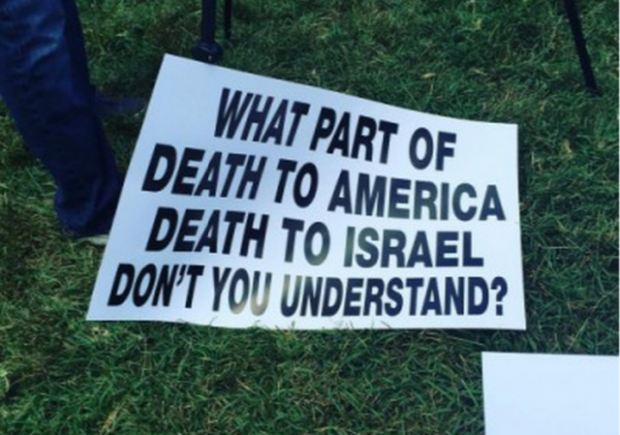
Rather than endorsing a dangerous agreement that bolsters Iran’s economy, facilitates its military buildup, and paves the way for an eventual Iranian nuclear breakout, the next Administration must accelerate efforts to deter, contain, and roll back the influence of Iran’s theocratic dictatorship, which continues to call for “death to America.”

How the Next President Should Deal with Iran

Upon entering office, the next Administration should immediately review Iran’s compliance with the existing deal, as well as its behavior in sponsoring terrorism, subverting nearby governments, and attacking U.S. allies. Any evidence that Iran is cheating on the agreement (which is likely given Iran’s past behavior) or continuing hostile acts against the U.S. and its allies should be used to justify nullification of the agreement.

Regrettably, Tehran already will have pocketed up to $100 billion in sanctions relief by the time the next Administration comes to office because of the frontloading of sanctions relief in the early months of the misconceived deal. Continuing to fork over billions of dollars that Tehran can use to finance further terrorism, subversion, and military and nuclear expansion will only worsen the situation.

In place of the flawed nuclear agreement, which would boost Iran’s long-term military and nuclear threat potential, strengthen Iran’s regional influence, strain ties with U.S. allies, and diminish U.S. influence in the region, the new Administration should:

1. Expand sanctions on Iran. The new Administration should immediately reinstate all U.S. sanctions on Iran suspended under the Vienna Agreement and work with Congress to expand sanctions, focusing on Iran’s nuclear program; support of terrorism; ballistic missile program; interventions in Syria, Iraq, and Yemen; human rights violations; and holding of four American hostages (Washington Post reporter Jason Rezaian, Christian pastor Saeed Abedini, former U.S. Marine Amir Hekmati, and former FBI agent Robert Levinson, who has been covertly held hostage by Iran since 2007).

The new Administration should designate Iran’s Islamic Revolutionary Guard Corps (IRGC) as a foreign terrorist organization and apply sanctions to any non-Iranian companies that do business with the IRGC’s extensive economic empire. This measure would help reduce the IRGC’s ability to exploit sanctions relief for its own hostile purposes.

Washington should also cite Iranian violations of the accord as reason for reimposing U.N. sanctions on Iran, thus enhancing international pressure on Tehran and discouraging foreign investment and trade that could boost Iran’s military and nuclear programs. It is critical that U.S. allies and Iran’s trading partners understand that investing or trading with Iran will subject them to U.S. sanctions even if some countries refuse to enforce U.N. sanctions.

2. Strengthen U.S. military forces to provide greater deterrence against an Iranian nuclear breakout.Ultimately, no piece of paper will block an Iranian nuclear breakout. The chief deterrent to Iran’s attaining a nuclear capability is the prospect of a U.S. preventive military attack. It is no coincidence that Iran halted many aspects of its nuclear weapons program in 2003 after the U.S. invasion of and overthrow of hostile regimes in Afghanistan and Iraq. Libyan dictator Muammar Qadhafi, motivated by a similar apprehension about the Bush Administration, also chose to give up his chemical and nuclear weapons programs.

To strengthen this deterrence, it is necessary to rebuild U.S. military strength, which has been sapped in recent years by devastating budget cuts. The Obama Administration’s failure to provide for the national defense will shortly result in the absence of U.S. aircraft carriers from the Persian Gulf region for the first time since 2007. Such signs of declining U.S. military capabilities will exacerbate the risks posed by the nuclear deal.

3. Strengthen U.S. alliances, especially with Israel. The nuclear agreement has had a corrosive effect on bilateral relationships with important U.S. allies in the Middle East, particularly those countries that are most threatened by Iran, such as Israel and Saudi Arabia. Rather than sacrificing the interests of allies in a rush to embrace Iran as the Obama Administration has done, the next Administration should give priority to safeguarding the vital security interests of the U.S. and its allies by maintaining a favorable balance of power in the region to deter and contain Iran. Washington should help rebuild security ties by boosting arms sales to Israel, Saudi Arabia, and other members of the Gulf Cooperation Council (GCC) that are threatened by Tehran, taking care that arms sales to Arab states do not threaten Israel’s qualitative military edge in the event of a flare-up in Arab–Israeli fighting.

To enhance deterrence against an Iranian nuclear breakout, Washington also should transfer to Israel capabilities that could be used to destroy hardened targets such as the Fordow uranium enrichment facility, which is built hundreds of feet beneath a mountain. The only non-nuclear weapon capable of destroying such a target is the Massive Ordnance Penetrator (MOP), a precision-guided, 30,000-pound “bunker buster” bomb. Giving Israel these weapons and the aircraft to deliver them would make Tehran think twice about risking a nuclear breakout.

The U.S. and its European allies also should strengthen military, intelligence, and security cooperation with Israel and the members of the GCC, an alliance of Bahrain, Kuwait, Oman, Qatar, Saudi Arabia, and the United Arab Emirates, founded in 1981 to provide collective security for Arab states threatened by Iran. Such a coalition could help both to contain the expansion of Iranian power and to facilitate military action (if necessary) against Iran.

4. Put a high priority on missile defense. Iran’s ballistic missile force, the largest in the Middle East, poses a growing threat to its neighbors. Washington should help Israel to strengthen its missile defenses and help the GCC countries to build an integrated and layered missile defense architecture to blunt the Iranian missile threat. The U.S. Navy should be prepared to deploy warships equipped with Aegis ballistic missile defense systems to appropriate locations to help defend Israel and the GCC allies against potential Iranian missile attacks as circumstances demand. This will require coordinating missile defense activities among the various U.S. and allied missile defense systems through a joint communications system. The U.S. should also field missile defense interceptors in space for intercepting Iranian missiles in the boost phase, which would add a valuable additional layer to missile defenses.

5. Deter nuclear proliferation. For more than five decades, Washington has opposed the spread of sensitive nuclear technologies such as uranium enrichment, even for its allies. By unwisely making an exception for Iran, the Obama Administration in effect conceded the acceptability of an illicit uranium enrichment program in a rogue state. In fact, the Administration granted Iran’s Islamist dictatorship better terms on uranium enrichment than the Ford and Carter Administrations offered to the Shah of Iran, a U.S. ally back in the 1970s.

The Obama Administration’s shortsighted deal with Iran is likely to spur a cascade of nuclear proliferation among threatened states such as Saudi Arabia, Turkey, Egypt, and the United Arab Emirates. Such a multipolar nuclear Middle East, on hair-trigger alert because of the lack of a survivable second-strike capability, would introduce a new level of instability into an already volatile region. To prevent such an outcome, the next Administration must reassure these countries that it will take military action to prevent Iran from gaining a nuclear capability as well as to deter Iranian military threats to their interests.

6. Expand domestic oil and gas production and lift the ban on U.S. oil exports to put downward pressure on world prices. In addition to sanctions, Iran’s economy has been hurt by falling world oil prices. Its oil export earnings, which constitute more than 80 percent of the regime’s revenue, have been significantly reduced. By removing unnecessary restrictions on oil exploration and drilling in potentially rich offshore and Alaskan oil regions, Washington could help to maximize downward pressure on long-term global oil prices. Lifting the ban on U.S. oil exports, an obsolete legacy of the 1973–1974 energy crisis spawned by the Arab oil embargo, would amplify the benefits of increased oil and gas production. Permitting U.S. oil exports not only would benefit the U.S. economy and balance of trade, but also would marginally lower world oil prices and Iranian oil export revenues, thereby reducing the regime’s ability to finance terrorism, subversion, and military expansion.

7. Negotiate a better deal with Iran. The Obama Administration played a strong hand weakly in its negotiations with Iran. It made it clear that it wanted a nuclear agreement more than Tehran appeared to want one. That gave the Iranians bargaining leverage that they used shrewdly. The Administration made a bad situation worse by downplaying the military option and front-loading sanctions relief early in the interim agreement, which reduced Iran’s incentives to make concessions.

The next Administration should seek an agreement that would permanently bar Iran from acquiring nuclear weapons. At a minimum, this would require:

  • Banning Iran from uranium enrichment activities;
  • Dismantling substantial portions of Iran’s nuclear infrastructure, particularly the Fordow and Natanz uranium enrichment facilities and Arak heavy water reactor;
  • Performing robust inspections on an “anytime anywhere” basis and real-time monitoring of Iranian nuclear facilities;
  • Linking sanctions relief to Iranian compliance;
  • Ensuring that Iran comes clean on its past weaponization efforts; and
  • Determining a clear and rapid process for reimposing all sanctions if Iran is caught cheating.

The Bottom Line

The nuclear deal already has weakened relationships between the U.S. and important allies, undermined the perceived reliability of the U.S. as an ally, and helped Iran to reinvigorate its economy and expand its regional influence. After oil sanctions are lifted, Iran will gain enhanced resources to finance escalating threats to the U.S. and its allies. The next Administration must help put Iran’s nuclear genie back in the bottle by taking a much tougher and more realistic approach to deterring and preventing an Iranian nuclear breakout.
Benjamin Netanyahu • United Nations Address • 10/1/15

October 1, 2015

Benjamin Netanyahu • United Nations Address • 10/1/15 via You Tube, October 1, 2015


According to the blurb at You Tube,

October 1st, 2015 • Israeli Prime Minister Benjamin Netanyahu renewed his warning that the Iranian nuclear deal threatens to destabilize the Middle East and will make a war more likely. He cautioned that already Iran is ramping up efforts to fund terror cells worldwide, while also arming Islamists in Syria, Yemen, Lebanon, and the Palestinian territories.

Netanyahu told that Iran was already building up its own armament stockpiles and that billions of dollars in sanctions relief would only fuel the effort. He reminded the nations of the world that Iran already has the capability to target Israel with ballistic weapons and that it’s current ballistic efforts can only be meant to threaten Europe and the United States.

The Prime Minister chastised the member states of the U.N. for their failure to speak out against Iranian threats to destroy Israel, and that the silence was deafening. Netanyahu emphasized the point by staring at the delegates in silence for 45 seconds.

Netanyahu responded to Palestinian Authority President Mahmoud Abbas’s declaration the previous day that it would no longer honor the Oslo Peace Accords by offering to reopen peace talks with the PA without any conditions. He also rejected the assertion by Abbas that Israel intended to change the status of the al-Asqa Mosque on the Temple Mount in Jerusalem, a Palestinian allegation that has recently fomented violent incidents.

Prime Minister Netanyahu pleaded with U.N. member states to cease decades of anti Israeli rhetoric, and to undertake an honest effort to work toward an Israeli – Palestinian peace agreement.

He also urged the United Nations to advance peace in the Middle East after decades of the UN working against Israeli interests.

‘Yesterday Russia Turned A New Page In The History Of The World’

October 1, 2015

Chairman Of The Hizbullah-Affiliated ‘Al-Akhbar’ Daily On Russian Air Campaign In Syria: ‘Yesterday Russia Turned A New Page In The History Of The World,’ Middle East Media Research Institute, October 1, 2015

In an article published in the Hizbullah-affiliated Lebanese daily Al-Akhbar on October 1, 2015, the chairman of the newspaper’s board of directors, Ibrahim Al-Amin, predicted that Russia’s air campaign in Syria will be merely a prelude to a larger military offensive involving ground operations by the Syrian Army, Iran, Hizbullah, and even the Iraqi Popular Mobilization Forces. Al-Amin is known to have close ties to Hizbullah, and in the past he has proven a reliable source on matters relating to the Iran-Syria-Hizbullah axis.

24967Ibrahim Al-Amin (source: Siyese.net)

The following is the translation of the article:

“…This is the first test for the granddaughter of the Eastern dynasty [i.e. Russia] since World War II, and it is the first field test of whether America’s unipolar position in the world over the past quarter century has truly been broken. Above all, this is a repositioning of Russian military force in the direct labor market of the regions of ‘cold’ confrontation with the U.S.-led West… Today we find ourselves before the best opportunity of putting Syria on a path to a true solution, even if it be prefaced by fire.

“As for the facts, the Russian air force carried out the first missions of a working program laid out in detailed form in an existing plan of cooperation between Moscow and its allies in the war in Syria and Iraq. This is a plan that is coordinated down to the finest details with the two allies Syria and Iran, and consequently with Hizbullah [as well]… What happened yesterday, and which will soon reach its culmination, is a necessary preface to a larger military action that will include a land component undertaken by other forces in the alliance. To put it more directly, [Russia’s] aerial bombardment of [the rebels’] command and control centers, major weapons arsenals, and artillery positions will be a preface to a military operation carried out by the Syrian army on the ground, with direct support from Iran and Hizbullah, and even from the Iraqi Popular Mobilization Forces… It may be emphasized that Russia’s activity yesterday means clearly that all the discussions in New York didn’t change an iota in the military plan of action…

“The signs of surprise and astonishment on [the faces of] the Americans, the Westerners, the Israelis, the Turks, and the Saudis are an additional proof of the weakness of the prior coordination regarding the fate of the initiatives surrounding the Syria crisis. In fact, the step taken by Russia is a kind of dare to all those who employed every violent means they could against the Syrian regime. If they decide to broaden the confrontation, they will be forced to deal with the new realities, which today are openly represented by the Russian military presence, and tomorrow will be represented by an open Iranian military presence as well…

“This must not hide from our eyes the picture of the complicated reality, which tells us that the joy felt by the regime elements in Syria must not turn into any slackening, not on the part of the regime itself, and not on the part of all those who fight alongside it. It would be naive to consider the Russian strikes sufficient to counter the enemies. It would rather be realistic to profit from the support of Russia – which is a supporting actor, and is not [itself] a member of the axis of resistance – in order to prepare to wage harsh and decisive battles in a number of places in Syria. This is a matter that requires raising the level of readiness and mobilization, and the creation of operative means of benefitting from the Russian military arsenal that is present in or coming to Syria.

“Yesterday Russia turned a new page in the history of the world. However far its military action in the field reaches, it is the political and strategic results that will remain more important. These results will invite those who delude themselves in thinking that America is still the leader of the world and controller of its fate to revise their stance. Those who do not want to change their minds, let them stay as they wish, but they should take into account that they must rely on themselves more than at any time in the past. This goes for Syria, Iraq, Palestine, and even the Arabian Peninsula and North Africa!”

Russia and Iran, the UN’s darlings

September 29, 2015

Russia and Iran, the UN’s darlings, Israel Hayom, Boaz Bismuth, September 29, 2015

The situation in the Middle East is very complicated these days, particularly when it comes to the ongoing strife in Syria. On Monday, Russian President Vladimir Putin and Iranian President Hassan Rouhani both gave speeches at the U.N. General Assembly in New York that in normal times could have been dismissed as amusing. But in the era of Islamic State, everyone is suddenly trying to appear to be righteous, including Putin and Rouhani.

Putin, for example, believes that Syria’s future must include Bashar Assad, the tyrant who is responsible for the deaths of 250,000 of his own people. As Putin said, “Only Assad is fighting against Islamic State.” Meanwhile, Rouhani declared, “No country should use terrorism to interfere in another country’s affairs.” Let us remember that these were addresses delivered to the world, rather than jokes uttered on a satire program. What a farce.

The sad reality that exists in the Middle East these days is what allowed these two leaders to make such “comical” statements. The growth of Islamic State and the failure of the U.S.-led coalition against it have given Russia and Iran a great opportunity to bolster their international status.

For the Russians, this is a chance to erase memories of their actions in Ukraine and the Crimean Peninsula. For the Iranians, this provides an opening to deflect attention away from 35 years of exporting terrorism around the globe. Russia and Iran are both fortunate that Islamic State exists.

Putin met with U.S. President Barack Obama on Monday to tell him that the purpose of Russia’s increased military presence in Syria was to fight Islamic State. He also told Obama that the rebuilding of Syria would require the rebuilding of the Assad regime.

Obama was right on Monday when, in his own address to the U.N. General Assembly, he said that Assad must have no political future in Syria. Unfortunately, there are two small things that contradict Obama’s view of the situation. First, the pre-civil war Syria no longer exists. And second, all reconstruction proposals for Syria include a transition period during which a role for Assad would be necessary. And who knows how many years this transition would take?

Obama may not want Assad in power, but in reality, an Assad regime backed by Russia and Iran is what there is in Syria. Since Obama reiterated on Monday that the U.S. cannot solve global problems by itself, perhaps he should have added how wonderful it is to have Russia and Iran to help him. This is the woeful state of our world today.

Obama’s General Assembly address was his second-last before he leaves the White House in January 2017. In Monday’s speech, he tried to outline what his legacy will be. One must give Obama credit for adhering to his outlook, even after all of the mishaps he has been personally responsible for.

Russia and Iran were the big winners in New York on Monday. Putin, who was ostracized after Russia’s annexation of Crimea last year, is now the world’s great hope in the fight against Islamic State. And Iran is already talking about a “new world order,” thanks to the nuclear deal it signed with world powers in July.

And what does this all mean for Israel? “The Zionist regime is the root of all terrorism,” Rouhani said in his speech on Monday. How hopeful!

What is the solution for all this? Who knows? Perhaps we will get the answer at the U.N. General Assembly in 2016.

At the U.N., Obama refuses to see the chaotic world he has made,

September 29, 2015

At the U.N., Obama refuses to see the chaotic world he has made, BreitbartJohn Hayward, September 28, 2015

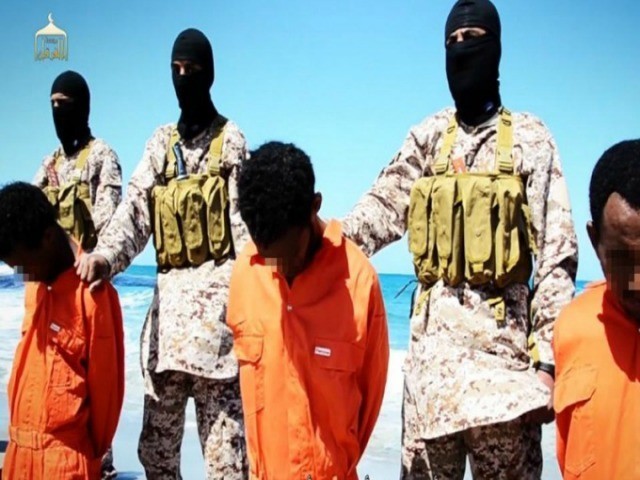
ISIS-beheading-Christians-Libya-ap-640x480

President Obama’s address to the U.N. General Assembly on Monday morning was a rambling journey through a fantasy world where his foreign policy hasn’t been an unmitigated disaster.

Perhaps the most bizarre moment came when he tried to tout his Libyan adventure as a success.

There was plenty of tough-guy posturing that intimidated absolutely no one.  The Russian and Iranian delegations were especially good at looking bored and unimpressed when he called upon them to do this-or-that because The World supposedly demanded it. Obama hasn’t figured out he’s the only leader at the U.N. eager to sacrifice his nation’s interests to please The World.

Obama made the weird decision to vaguely threaten Russia over its invasion of Ukraine by claiming that The World would not stand idly by and allow it… when that’s exactly what The World, and especially First Citizen of the World Barack Obama, has been doing.  He essentially pleaded with Iran to stop supporting terrorist proxies and pursuing its aggressive regional ambitions, and focus on their economy instead.  (Of course, in Obama’s vigorous imagination, the U.S. has been enjoying an economic boom under his stewardship, instead of an endless grinding non-recovery and limp, sporadic growth, after Obama’s spending doubled the national debt in a single presidency.)

It was bad enough that the President talked about American troops coming home from Iraq and Afghanistan as the triumphant conclusion of an effective policy, rather than the hideous blunder that allowed ISIS to create a terror state, al-Qaeda to rise from the ashes, and the Taliban to begin planning its return to power.  At the same moment Obama was speaking, the Taliban was conducting a major offensive in Afghanistan, on par with the importance of ISIS taking Mosul in Iraq.  Obama’s pitifully small “New Syrian Force” of U.S.-backed rebels just handed a good deal of its American equipment over to al-Qaeda, and no one really knows what became of the unit itself.  Their predecessors were destroyed by al-Qaeda’s Nusra Front in Syria, with less than half a dozen survivors still on the field.

When Obama boasted of the Libyan operation as the successful removal of a tyrant, jaws must have hit the floor around the room.  Libya is an unholy disaster, a wasteland of warlords fighting to keep ISIS off their turf.  It’s a key gateway for the incredible migratory tide blasting out of Africa and the Middle East and now surging across Europe.  And yet, Obama portrays it as [a] laudable example of tyrant removal… while modestly admitting that “our coalition could have, and should have, done more to fill a vacuum left behind.”

Of course he blamed everyone else in the “coalition” for the disaster in Libya. He’s Barack Obama.  The day may come when he takes responsibility for something, but today is not that day, and tomorrow isn’t looking good either.

The scary thing about Obama is that he believes so completely in the power of his own rhetoric.

He thinks he can reshape reality with his words.  When he scolds the Iranians for their “Death to America!” rhetoric by saying bloodthirsty chants don’t create jobs, he’s asking Iran to live up to the silly talking points he foisted off on the American people to cover the Iranian nuclear deal.  He’s commanding Iran to act like the enlightened, responsible nation-state he gambled the future of Israel, America, and much of the Western world on.

The Iranians, on the other hand, see no reason to knock off the “Death to America!” chants, disband their theocracy, and begin spending their days arguing about stimulus bills.  Belligerence has gotten them everything so far.  They’ve been rewarded for it… by Barack Obama.  They’ve got $150 billion in sanctions relief coming their way.  They can afford to send a few guys to sit in the U.N. General Assembly with pissy expressions on their faces while Obama rambles on about how geo-political crime does not pay.  They know for a fact it pays, quite handsomely.  The Iranians are already using their Obama loot to reinforce terror proxies like Hamas and Hezbollah, and secure Bashar Assad in power.

Ah, yes, Bashar Assad… the dictator Obama still blathers on about removing from power, even as his own diplomatic apparatus gets used to the idea Assad is not going anywhere.  The only really good part of Obama’s speech was when he spent five seconds glaring at the Syrian ambassador before launching into his denunciation of barrel bombs and chemical weapons.  But you know what?  That Syrian ambassador gets paid enough to take a few seconds of hairy eyeball from the ineffectual American president.  The Russians are smoothly replacing American influence across the Middle East, in partnership with Iran.  The new order is taking shape.  Obama isn’t going to reverse that process by telling aggressive, bare-knuckle conquerors they should be ashamed of themselves.

The other dangerous thing about this delusional President is his belief in the “judgment of history.”

He’s constantly hitting on the idea that all of the world’s villains are on the wrong side of history, and will find themselves buried in the sands of time any day now.  It’s a dodge, a way of Obama evading responsibility.  Bashar Assad is going to remerge from the Wrong Side of History in pretty good shape.  ISIS is very comfortable there, as is Iran.  Qaddafi didn’t assume room temperature because History caught up with him. Vladimir Putin has a lovely view of Crimea from the wrong side of history.  The history of Europe is being reshaped by the tramping of a million “refugee” feet.

In every example, Obama clings to the idea that he can change the world by talking and scoring debate points, while his adversaries seize territory and control the course of events.  It’s not as though Obama has some deep-seated reluctance to use deadly force – there have been a lot of deaths by drone strike since he won that Nobel Peace Prize.  What Obama lacks is commitment.  His foreign policy is all about gestures and distractions.  He cooks up half-baked plans that will blow up a terrorist here and there, so he can’t be accused of doing “nothing,” but he won’t do anything that could cost him political capital at home.  Even Libya was half-hearted and calculated for minimum risk, which is why the place went to an even deeper Hell after Qaddafi was overthrown.

Obama talks as if he’s taken action against numerous crises, but all he ever did was talk about them.  The men of action are stacking up bodies, and raising flags over conquered cities, while this President is writing speeches and trying to win applause from editorial boards.  The men of action know that Obama’s promises all have expiration dates, his vows of action always have escape clauses, and no matter how he loves to boast that he heads up the most powerful military the world has ever seen, he’s done everything he can to make it weaker.

President Obama is still clinging to a romantic vision of the “Arab Spring” as a flourishing of democracy, despite all evidence to the contrary.  He’s giving the same foreign policy speeches he gave in 2009 because he can’t bear to live in the world he made.  He talks about filling vacuums and voids… but those voids are already filled, by hard characters with plans to make the most of the extraordinary opportunity Barack Obama afforded them.

(Video of Obama’s UN address — DM):


Finally, A Plan To Defeat the Islamic State

September 28, 2015

Finally, A Plan To Defeat the Islamic State, Town HallJim Hanson, September 28, 2015

(Obama would need the approvals of Putin, Xi, Rouhani, Assad, Erdogan and “our” other “peace partners” as well as his trained seals at the Department of Defense. Then, and only then, could General Bowie Bergdahl lead his march to victory. Or something. —  DM)

Black flag

What if there was an actual strategy to defeat ISIS and stop their reign of terror? The state of affairs and the very existence of IS as a governing entity is intolerable so we developed a strategy called Cut Down the Black Flag – A Plan to Defeat the Islamic State, the second book in the Secure Freedom Strategy series.

President Obama has failed to articulate or implement anything resembling a strategy during his time in office. This fact is even more painful when considering the rise of the Islamic State (IS) occurred on his watch and was largely due to his shortsighted and foolish decision to cut and run from Iraq. He lost the peace after our troops won the war.

Unlike the President, we’re not interested in token gestures doomed to failure as IS kills, rapes, and tortures on ground won for freedom just a few short years ago. We will not stand on the sidelines as an Inter-Continental Caliphate calls for “Death to all Infidels.” We have a plan to win and cut down their blood-soaked, Black Flag of Jihad.

It will not be easy but it is an essential part of the war for the free world. If we do not make a full faith effort to destroy IS, we will have done a disservice to all who gave their lives and limbs to free Iraq from tyranny. We will also be leaving millions to suffer the chaos and killing fields created when the inevitable vacuum of our withdrawal was filled by IS and Iran.

This book details a strategy focused on victory, aimed for stability in the region with the possibility of actual peace. It recognizes this action must be part of a greater “long war” against the whole of the Global Jihad Movement (GJM). They are the collection of groups who, while not officially associated, share a belief in Islamic Supremacy and are working actively to achieve it.

The Violent Jihadists like the Islamic State, Al Qaeda and others are easily identifiable as our enemies. The Civilization Jihadists of the Muslim Brotherhood and the groups it has spawned such as Council on American-Islamic Relations (CAIR) and the Islamic Society of North America (ISNA) are less overt but perhaps even more dangerous. Our overall strategy to defeat the Global Jihad Movement with a whole of government and culture approach is detailed in the Secure Freedom Strategy.

Our plan to defeat the Islamic State is a complete departure from the dismal failures of the current Commander in Chief leading from behind. The military might and will to win of the United States are vital to any chance of success. This does not mean we propose rolling tanks in a thunder run from Baghdad to Damascus. But we must take the handcuffs off the forces we already have deployed by allowing them to participate in combat missions with the forces they have trained to provide command and control and direct fire support. We must remove the cumbersome and overly risk-averse process for airstrikes that leave most of our aircraft returning to base with all munitions unused.

We must also work with the Sunni tribes who helped us defeat the precursor to IS; and, arm the Kurds who are our best friend and truest ally in the region. Both of these groups were left to the mercy of a central Iraqi government when U.S. forces withdrew and Iranian influence became dominant. We must look to a future where they govern by self-determination rather than remain forced into artificial borders established nearly 100 years ago; and, that have been largely erased over the recent war-torn years.

Our strategy is ambitious, but it does not require large deployments of U.S. troops or the expectation we will be the sole guarantor of security going forward. We aim to cut off the head of the jihadist snake by empowering the indigenous people who have suffered the most from its actions and then let them govern themselves. This strategy vigorously executed can do what the current half-hearted efforts never will: Defeat the Islamic State.


Germany segregating Christians as migrant violence escalates

September 28, 2015

Germany segregating Christians as migrant violence escalates, Breitbart, Liam Deacon, September 28, 2015

Screen-Shot-2015-09-28-at-12.58.45-640x480Sean Gallup/Getty

(Video at link.– DM)

Christian migrants in German asylum centres are living under persistent threat, with many fearing for their lives as the hardline Sunni majority within the migrant population attempts to enforce Sharia law in their new host nation. The situation is so bad that Christians claim they live like “prisoners” in Germany, and some have even returned to Middle East.

In the German state of Thuringia, Prime Minister Bodo Ramelow, one of the multiculturalists driving and celebrating the migrant crisis, has been forced to initiate a policy of separating and segregating different cultures as soon as they arrive in Europe.

“In Iran, the Revolutionary Guards have arrested my brother in a house church. I fled the Iranian intelligence, because I thought in Germany I can finally live freely according to my religion,” says Said, a Christian who fled persecution in his native country.

“But I can not openly admit that I am a Christian in my home for asylum seekers. I will be threatened,” he told Germany language paper Die Welt.

This year Germany prepares to absorb a million people in just twelve months – one per cent of its entire population – from numerous, diverse and alien cultures.

“We must rid ourselves of the illusion that all those who arrive here are human rights activists,” says Max Klingberg of the International Society for Human Rights (ISHR), who has worked with refugees for 15 years. “Among the new arrivals is not a small amount of religious intensity, it is at least at the level of the Muslim Brotherhood,” he said.

Said is living in an asylum centre in southern Brandenburg, near the border with Saxony. “They wake me before dawn during Ramadan and say I should eat before the sun comes up. If I refuse, they say I’m a kuffar, an unbeliever. They spit at me… They treat me like an animal. And threaten to kill me.”

“… They are also all Muslims,” he adds.

Gottfried Martens, a pastor of the Evangelical Lutheran Church Trinity in Berlin-Steglitz, has around 600 Afghanis and Iranians in his church, most of whom he baptised himself. “Almost all have big problems in their homes,” says Martens. “Devout Muslims teach their view, that here [in Germany] there is the Sharia, and then there is our law.”

He told Die Welt that the Christian refugees are often stopped from using kitchens to prepare food in asylum centres, and are constantly bullied for not praying five times a day to Mecca. Martens continues:

“And [the Christians] ask the question: What happens when the devout Muslim refugees leave the refugee center, must we continue hiding ourselves as Christians in the future in this country?”

Said’s fear is not unfounded. On the 14th of September German police in the town of Hemer revealed in a statement that an Eritrean Christian and his wife – who was eight months pregnant – had been hospitalised after being brutally attacked with a glass bottle by Algerian Muslims. The man had been wearing a wooden crucifix, which had “insulted” the Algerians.

In September, Syrian refugees rioted in the town of Suhl when an Afghan man tore a few pages out of the Koran. Last week during Ramadan, in Baden-Württemberg Ellwangen, there was a mass brawl between Christians, Yazidis and Muslims, and just this weekend migrant violence erupted as hundreds fought in the city of Kassel, leaving 14 injured.

A young Syrian from Erstaufnahmelager in Giessen, who has reported threats against him, said he is concerned that among the refugees are followers of the Islamic State (IS): “They shout Quranic verses. These are words that IS shouts before they cut off people’s heads. I cannot stay here. I am a Christian,” he said

Die Welt even reports a case of a Christian family from Iraq who was housed in a refugee camp in Bavarian Freising. The family lived like “prisoners” in Germany, they said, so returned to Mosul in Iraq. The father told a TV crew how Syrian Islamists had attacked them in Germany: “You have my wife yelled at and beaten. My child they say… We will kill you and drink your blood.”

Simon Jacob of the Central Council of the Eastern Christians said that stories like this no longer surprise him: “I know a lot of reports of Christian refugees who are under attack. But that’s just the tip of the iceberg.”

“The number of unreported cases is high. We must expect further conflicts that bring the refugees from their homeland to Germany. Between Christians and Muslims. Between Shiites and Sunnis. Between Kurds and extremists. Between Yazidis and extremists,” he said.

The Invasion of Europe

September 28, 2015

The Invasion of Europe, Pat Condell via You Tube, September 28, 2015


Migration Crisis: “Islam Will Conquer Europe Without Firing a Shot”

September 28, 2015

Migration Crisis: “Islam Will Conquer Europe Without Firing a Shot” Gatestone Institute, Bassam Tawil, September 28, 2015

(The principal focus of the article in on Israel and the Palestinians. — DM)

  • The failed foreign policies of the EU and the US under President Obama, have brought the Arabs to the brink of chaos, and destroyed regimes which, even though they were not democratic utopias, at least provided governance and public order. These failed policies have abandoned the Arabs to the atrocities of the Sunni Islamists and to the murderous proxies of the Iranian Islamic Revolution — and are ultimately the cause of the tsunami of refugees beating at the gates of Europe.
  • Now the EU and Obama want to bring the catastrophe of Gaza to the West Bank.
  • The American FDA is more careful with experiments on animals than the White House is with experiments on the people of the Middle East.
  • Every time the Palestinians have taken steps against the Israelis, we have hurt no one but ourselves, and are left with — nothing.
  • The Arabs living in Israel and the Palestinian Authority territories know, although it is a bitter pill to swallow, that we have been favored by fortune, because under the State of Israel we live in security.
  • In the face of ongoing mass murder in the Middle East, what arcane consideration, apart from Federica Mogherini being a racist, could possibly bring the EU to deal with something as marginal to global issues as boycotting Israeli face-cream and cookies?

With the anniversary of Al-Qaeda’s September 11, 2001 terrorist attacks in the United States, internal Palestinian discourse revolves around radical Islam and America’s actions. It relates to the slaughter, rape and millions of refugees who have fallen victim to Al-Qaeda, humanitarian calamity of and the Islamist terrorist organizations to which it gave birth, such as ISIS. Today an apocalyptic proportions is unfolding in territories that used to be Arab states but are now the battle grounds for feuding Arab tribes, whose only objective is to destroy one another.

In their heart of hearts, the Arabs living in Israel and the Palestinian Authority territories know, although it is a bitter pill to swallow, that we have been favored by fortune because under the State of Israel we live in security. This reality is brought home to us by the feeble international response and the strange behavior of U.S. President Barack Obama and the leaders of the Western world who have abandoned the Arabs to the atrocities of the Sunni Islamists (and their supporters in Turkey, Saudi Arabia and Qatar), and to the murderous proxies of the Iranian Islamic Revolution (mainly in Syria, Iraq, Yemen and Lebanon).

In view of what is happening in neighboring countries, it is clear to us what will happen if Israel is in danger of destruction: no Western state will come to its aid and no Arab state will come to our aid. Our fate will be the same as that of our brothers beyond Israel’s borders. It is hard not to identify and sympathize with Israel’s efforts to fight terrorism and with its objections to the nuclear agreement with Iran.

Despite the chaos and worse than chaos in the Middle East, the EU’s foreign minister, Federica Mogherini, recently announced that the EU had decided to mark products made in the Israeli settlements. That is mind-boggling, so say the least. In the face of the ongoing mass murders in the Middle East, what arcane consideration, apart from Mogherini being a racist, could possibly bring the EU, now, to deal with something as blatantly marginal to global issues as the provenance of face cream and cookies?

In the final analysis, if the Europeans harm Israel’s ability to market goods manufactured in the West Bank, the first victims will be the Palestinian workers in the Israeli settlement factories. Every time the Palestinians have taken steps against the Israelis, we have hurt no one but ourselves. The last time we boycotted Israeli products we wound up buying them on the black market at double and triple the price. When we refused to work on construction sites, the Israelis switched to modular, prefabricated units, and the Palestinian construction workers who went on strike are unemployed to this day. When we refused to work in Israeli agriculture, they brought in workers from Thailand, who took our jobs and left us with — nothing.

The Western pressure on Israel and the Palestinians to establish a Palestinian state as soon as possible, when viewed through the prism of the mass murders and uncertainty in the Middle East, is incomprehensible. The initiative, and the obsession, to promote such a dangerous project at a time when everyone understands that the conditions on both sides are not yet ripe is dangerous; and the motives involved, whatever they really are, are suspicious. The Israeli-Palestinian conflict is not new, it has been waged in an atmosphere of terrorism and violence and hostility and complete lack of trust for a hundred years. So why exert pressure now?

Everyone, at least everyone living in the Middle East, knows full well that the conflict will not end with a “peace for our time” agreement forced on the two sides and accompanied by a handful of empty, meaningless documents; the dynamics are too dangerous. For both us and the Israelis it is a matter of life and death, not semantics; and it will probably take another hundred years before enough trust can be built on both sides to find a just solution.

The irony is staggering. At a time when the Arab states that were artificially created after the First World War crumble to dust, the EU is pressing for the creation of another artificial Arab state, this one called “Palestine,” to be carved out of territories once belonging to Jordan and Egypt. If “Palestine” is granted the status of statehood, it will force not only Israel but the rest of the world to grant it complete control over its borders, airports and a seaport. That will expose the new weak “state” to a rapid and certain takeover by Hamas, ISIS and various other terrorist organizations. Given the current situation in the West Bank, the elected government of “Palestine” will be controlled by Hamas. It will overthrow the Palestinian Authority, the way it did in the Gaza Strip, take over the West Bank, use its airports and seaport to import missiles, various other weapons and Islamist terrorists, and help Islamist terrorism in general, and ISIS in particular, to operate from its territory. The Islamists will proceed to attack Israel and Jordan the way ISIS is currently attacking Egypt in the Sinai Peninsula. Worse, the Palestinian Islamic Jihad will enter the new “Palestine” and strengthen its relations with Iran, just as it has in the Gaza Strip and Syria, and with Hezbollah in Lebanon.

Evidently the Israeli withdrawal in 2005, which led directly to Hamas’s bloodbath and takeover of the Gaza Strip, the expulsion of the Palestinian Authority and the entrenchment of Islamist terrorism, was not enough for Europe. Now the EU and U.S. President Barack Obama want to bring the catastrophe of the Gaza Strip to the West Bank. The American Food and Drug Administration is more careful with experiments on animals than the White House is with experiments on the people living in the Middle East.

In view of the events in the Arab countries, it is clear to the Palestinians that American and European actions in the Middle East are the direct result of stupidity and complete ignorance of the Middle Eastern mindset, if not outright racism and malevolence. What is inescapable is that under Obama, both America and Europe brought the Arabs to the brink of chaos and beyond, destroyed regimes which, even though they were not democratic utopias like the United States, at least provided governance and public order. That is ultimately the cause of the tsunami of refugees beating at the gates of Europe, all of it caused by the United States and its failed foreign policy.

All the signs indicate that the Middle East disaster is hardly far from over. It is actually just beginning. it will get worse because of the tens of billions that will now pour into the Ayatollahs’ coffers from the insane agreement with Iran. Much of this money will go directly not only to the Iranian Islamic Revolutionary Guards’ Qods Force, Iran’s arm of international terrorism, but to the various proxy terrorist organizations Iran supports, thus hastening the total destruction of the Middle East and eventually large swaths of Africa.

The wave of refugees will increase, and the price will be paid by the Europeans, already faced with legions of refugees and no plan for dealing with them. Eventually Gaddafi’s prophecy will come true: Islam will conquer Europe without firing a shot.

Iran Bolsters Itself with UN Resolution Condemning Sanctions

September 27, 2015

Iran Bolsters Itself with UN Resolution Condemning Sanctions, Legal Insurrection, September 26, 2015

(Please see also, Iran Openly Declares That It Intends To Violate UNSCR 2231 That Endorses The JCPOA — DM)

Protest-Sign-Against-Iran-Nuclear-Deal-Death-to-America-e1441978760141-620x435


I think we all know what Iran means when it speaks of political free will. In the wake of the adoption of the Iran nuclear deal, conversations about nightmare “what if” scenarios focused on America’s ability to “snap” sanctions against Iran back into place; now, Iran is trying to reframe the conversation about the use of sanctions by arguing that the use of sanctions at all will constitute a greater violation than what the sanctions are meant to punish.

***************************

This week, Iran used its considerable muscle to launch an attack on US efforts to tamper its nuclear program and otherwise belligerent conduct in the Middle East. These efforts took the form of a proposed resolution in the United Nations Human Rights Council (UNHRC) that condemns the use of sanctions against misbehaving nations as a violation of international law and fundamental human rights.

You won’t see the word “sanctions” more than three times in the resolution; instead, the drafters used the phrase “unilateral coercive measures.” From the proposed resolution:

Recognizing the universal, indivisible, interdependent and interrelated character of all human rights and, in this regard, reaffirming the right to development as a universal and inalienable right and an integral part of all human rights,

Expressing its grave concern at the negative impact of unilateral coercive measures on human rights, development, international relations, trade, investment and cooperation,

Reaffirming that no State may use or encourage the use of any type of measure, including but not limited to economic or political measures, to coerce another State in order to obtain from it the subordination of the exercise of its sovereign rights and to secure from it advantages of any kind,

Recognizing that unilateral coercive measures in the form of economic sanctions have far-reaching implications for the human rights of the general population of targeted States, disproportionately affecting the poor and the most vulnerable classes,

Recalling also article 1, paragraph 2, common to the International Covenant on Civil and Political Rights and the International Covenant on Economic, Social and Cultural Rights, which provides that, inter alia, in no case may a people be deprived of its own means of subsistence,

1. Calls upon all States to stop adopting, maintaining or implementing unilateral coercive measures not in accordance with international law, international humanitarian law, the Charter of the United Nations and the norms and principles governing peaceful relations among States, in particular those of a coercive nature with extraterritorial effects, which create obstacles to trade relations among States, thus impeding the full realization of the rights set forth in the Universal Declaration of Human Rights and other international human rights instruments, in particular the right of individuals and peoples to development;

The writing goes on to demand that member states ignore calls for sanctions, and condemns the use of such “as tools of political or economic pressure against any country, particularly against developing countries, with a view to preventing these countries from exercising their right to decide, of their own free will, their own political, economic and social systems.”

I think we all know what Iran means when it speaks of political free will. In the wake of the adoption of the Iran nuclear deal, conversations about nightmare “what if” scenarios focused on America’s ability to “snap” sanctions against Iran back into place; now, Iran is trying to reframe the conversation about the use of sanctions by arguing that the use of sanctions at all will constitute a greater violation than what the sanctions are meant to punish.

This isn’t a one-off finger-in-the-air from Iran to the US. The UNHRC is a dysfunctional land of multilingual politicking, and now the most dangerous players are using their influence with the greater UN body to bolster the worst violators at the expense of what should be common sense.

More from UN Watch [emphasis mine]:

Earlier this year, the UNHRC’s infamous Consultative Group, with Saudi Arabia’s Faisal Trad then serving merely as Vice-President, successfully picked Algerian hardliner Idriss Jazairy — famous for his efforts as a former diplomat to enact a UNHRC “code of conduct” to intimidate independent human rights experts — as the new “Special Rapporteur on the negative impact of the unilateral coercive measures.”

Jazairy has already accused the U.S. and Europe of being leading human rights violators due to their use of sanctions against countries like Iran and Zimbabwe.

Indeed, many of the resolutions adopted at each session of the UNHRC are sponsored by Cuba, Iran, Pakistan, Algeria, and other non-democracies, and are designed to demonize the West, free market economies, individual rights, or Israel, as part of a strategy to deflect attention from council members who are guilty of subjugating women, trampling religious freedom, persecuting gays, oppressing ethnic minorities and promoting relgious extremism.

This is clever, and part of a bigger strategy meant to counter American and Israeli efforts to speak out against the Iran nuclear deal. Even in the US, the media’s narrative has taken a subtle shift, away from the back and forth in Congress and toward an optic that frames the deal in terms of what it can do to encourage the advent of greater global cooperation. WaPo on Friday published an article needling the Republican Congress’ apparent rejection of “multilateralism”; meanwhile, the NYT editorial board executed a hard pivot away from the political theatre of the moment and toward What We Really Need to be Talking About© in terms of America’s participation in Gulf state politics.

The United Nations itself isn’t necessarily an important player in the American political conversation; international law is obscure, and multilateral relationships are [a] complication and confusing at best. However, if this resolution is adopted (and even if it isn’t) I can just about guarantee that the pro-Iran Deal crowd will use it as a weapon against anti-Deal candidates (primary season doesn’t go away just because we’re dealing with something happening in Geneva) currently warning their colleagues against the folly of attempting to deal with a nation that has proven itself more than adept at sidestepping the rules.

In this case, they’ve taken it upon themselves to rewrite them.

You can read the full proposed resolution here.