Hillary Clinton Lying For 13 Minutes Straight 100% EXPOSED (Redsilverj) via YouTube, February 25, 2016
Hillary Clinton Lying For 13 Minutes Straight 100% EXPOSED (Redsilverj) via YouTube, February 25, 2016
Madam Hillary is on the right side of herstory, Dan Miller’s Blog, October 25, 2015
(The views expressed in this article are mine, and do not necessarily reflect those of Warsclerotic or its other editors.– DM)
Lies are good and truth is bad because truth would damage Madam Hillary’s and even Imam Obama’s sterling images. Both, bravely and proudly, try to feed us what is “good.” Their people love it, so what difference does it make?
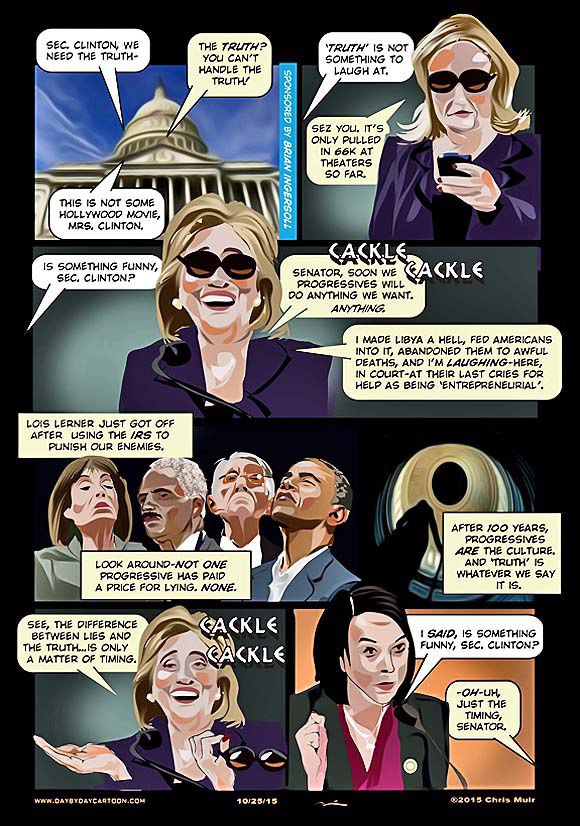
According to John Hinderaker at Power Line, Madam Hillary
lies…it’s not exactly a news flash. On the contrary, based on the liberal media’s reaction to her Benghazi testimony, her willingness to lie, brazenly, is a positive virtue.
There’s always an excuse for having “misspoke.” It need not be a credible excuse, because an incredible excuse works just fine. Anyway, whatever happened was in the past and therefore doesn’t matter now:
What has Imam Obama lied about? Plenty. Here’s an incomplete list: Islam, the nuke “deal” with Iran, Libya, His strength and Putin’s weakness in the Middle East, Israel, Immigration, Crime, Obamacare, race relations and on and on and on. As with Madam Hillary’s spewings, the “legitimate media” generally love it.
Madam Hillary blamed the video repeatedly
According to an article titled “I didn’t blame the video,” Madam Hillary did just that while also managing to lie about substantially more than that.
Hillary simply adores arguing and lawyering.
She lives for it and has at least since she was fired from the House Judiciary Committee during its investigation of the Watergate scandal that eventually brought down President Richard M. Nixon in 1974. Hillary’s then-supervisor, lifelong Democrat Jerry Zeifman, said he canned the 27-year-old attorney “because she was a liar … an unethical, dishonest lawyer. She conspired to violate the Constitution, the rules of the House, the rules of the committee and the rules of confidentiality.” [Emphasis added.]
No lie is too big or too small for Hillary, whether it’s a concocted tale of being under enemy fire at an airport in Bosnia, the existence of a “vast right-wing conspiracy” to undermine her husband’s presidency, that she was named after Mt. Everest climber Sir Edmund Hillary even though he rocketed to fame by accomplishing the feat when she was a six-year-old, or that the Clintons were “dead broke” when they exited the White House.
Meanwhile, at the Thursday hearing, Rep. Jim Jordan (R-Ohio) demolished Clinton’s apparently fresh assertion at the hearing that she didn’t actually claim an obscure anti-Islam movie trailer posted on YouTube prompted the terrorist assault in Benghazi on the eleventh anniversary of the 9/11 attacks. She now takes a more nuanced, twisted-like-a-pretzel position in which maybe some non-terrorist Muslims were suddenly stirred to violence in Libya by the video, but really at the same time it was a terrorist attack, something she testified Thursday has been her position the whole time. She talked about the video publicly not to point fingers but as a warning, she testified, to those who might attack U.S. interests in the region. In other words, like a good defense lawyer, Hillary was trying to confuse the issues and muddy the waters. [Emphasis added.]
. . . .
While she was informing the American public that the anti-Islam video was what caused the attack, at the same time she emailed her daughter Chelsea and the governments of Libya and Egypt to pin the blame on Muslim militants, Jordan explained. Around the same time the White House, in the closing weeks of a heated presidential election campaign, was pushing the line that what transpired in Benghazi was a spontaneous demonstration turned violent, but terrorism was not a factor.
“We know that the attack in Libya had nothing to do with the film,” Clinton wrote Egypt’s prime minister the night of the attack. “It was a planned attack, not a protest.” But in public Clinton continued to blame the “offensive” video. The U.S. government acquired $80,000 worth of commercial airtime in Pakistan to apologize for the YouTube clip. [Emphasis added]
Jordan pointed out that there was no video-inspired protest over in Benghazi on Sept. 11, 2012, but there was one in Cairo, Egypt. The same day State Department spokeswoman Victoria Nuland said “Benghazi has been attacked by militants. In Cairo, police have removed demonstrators.”
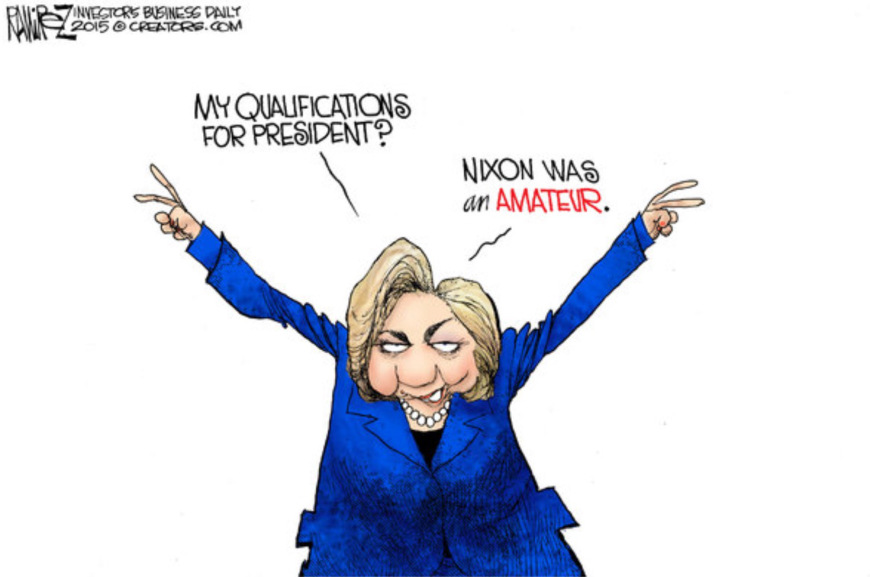
You want to talk about Madam Hillary’s lies? She didn’t lie, of course, but let’s change the subject to something more important. Right now.
Conclusions
“Her people” not only don’t care, they are delighted with Madam Hillary’s numerous lies. Again, “what difference does it make?” Plenty.
Please think about Madam Hillary’s and Imam Obama’s impunity — and readiness — to lie, violate laws and do pretty much whatever they please. We have become a nation without law enforcement where we need it most and very much where enforcement of Obama’s executive decrees harms us greatly (climate change and immigration for example). Do we want a nation the governance of which is increasingly based on, and perpetuated through, lies to “We the people?” Do we want Madam Hillary or another Obama clone as the next Commander in Chief?
Here’s what “Commander in Chief” Obama has done with his our military:
Do you approve of those and the other things He has done to our military? Want more of the same? Or even worse? If not, what can we do about it? Supporting Donald Trump may or may not be what we should do, but I think the songs in the video are superb. Back in September, I wrote an article titled To bring America back we need to break some stuff. We still do, and if someone other than Trump is ready, willing and able he (or, of course, she) should also be considered, very seriously.;
Ben Carson exposes Islamic taqiyya and gets attacked for it by leftist media, Front Page Magazine, Raymond Ibrahim, September 25, 2015
Originally published by PJ Media.
Raymond Ibrahim is a Shillman Fellow at the David Horowitz freedom Center.
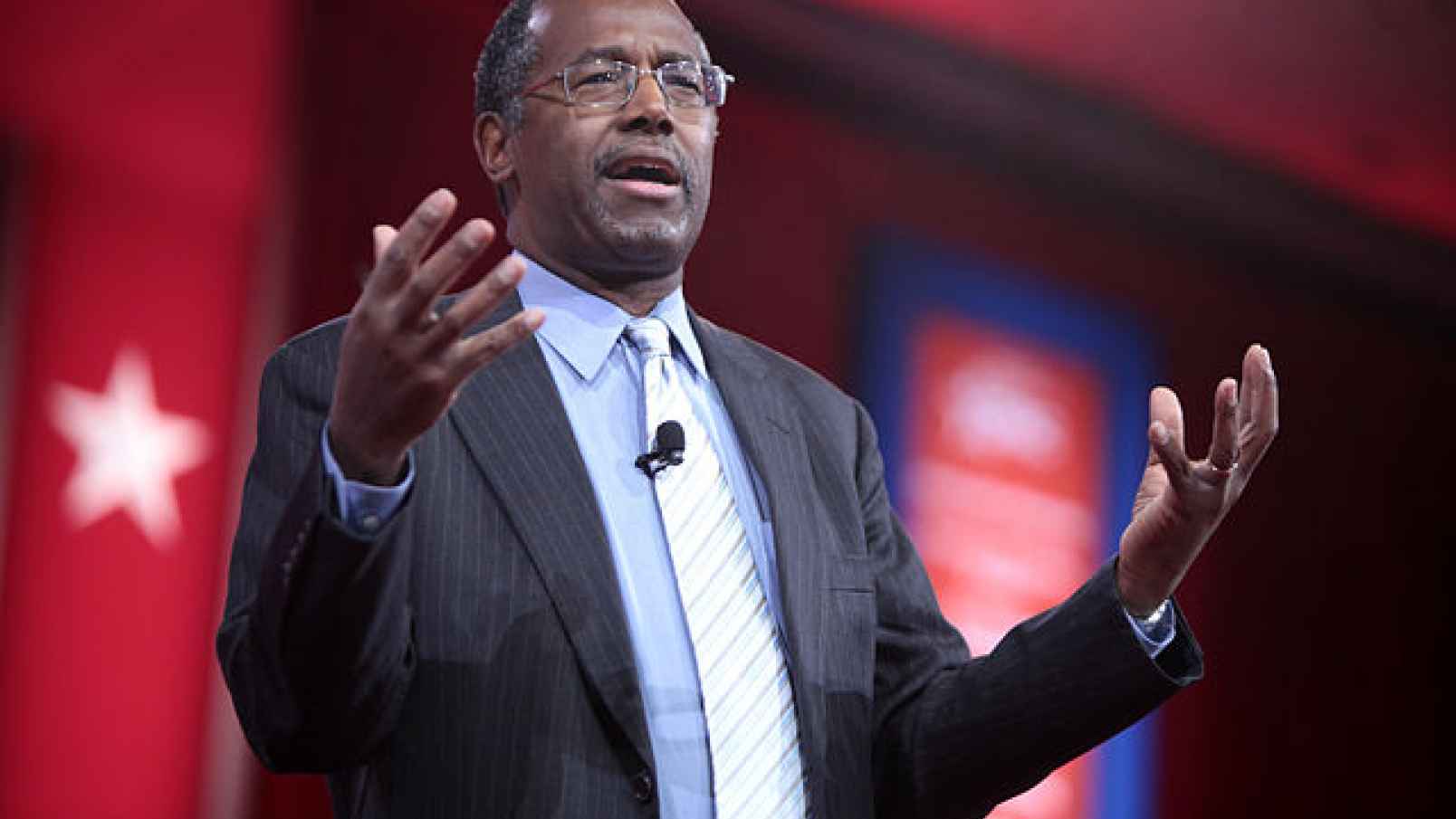
Of all the points presidential candidate Ben Carson made in defense of his position that he “would not advocate that we put a Muslim in charge of this nation,” most poignant is his reference to taqiyya, one of Islam’s doctrines of deception.
According to Carson, whoever becomes president should be “sworn in on a stack of Bibles, not a Koran”:
“I do not believe Sharia is consistent with the Constitution of this country,” Carson said, referencing the Islamic law derived from the Koran and traditions of Islam. “Muslims feel that their religion is very much a part of your public life and what you do as a public official, and that’s inconsistent with our principles and our Constitution.”
Carson said that the only exception he’d make would be if the Muslim running for office “publicly rejected all the tenants of Sharia and lived a life consistent with that.”
“Then I wouldn’t have any problem,” he said.
However, on several occasions Carson mentioned “Taqiyya,” a practice in the Shia Islam denomination in which a Muslim can mislead nonbelievers about the nature of their faith to avoid religious persecution.
“Taqiyya is a component of Shia that allows, and even encourages you to lie to achieve your goals,” Carson said.
There’s much to be said here. First, considering that the current U.S. president has expunged all reference to Islam in security documents and would have Americans believe that Islamic doctrine is more or less like Christianity, it is certainly refreshing to see a presidential candidate referencing a little known but critically important Muslim doctrine.
As for the widely cited notion that taqiyya is a Shia doctrine, this needs to be corrected, as it lets the world’s vast majority of Muslims, the Sunnis, off the hook. According to Sami Mukaram, one of the world’s foremost authorities on taqiyya,
Taqiyya is of fundamental importance in Islam. Practically every Islamic sect agrees to it and practices it … We can go so far as to say that the practice of taqiyya is mainstream in Islam, and that those few sects not practicing it diverge from the mainstream … Taqiyya is very prevalent in Islamic politics, especially in the modern era.
Taqiyya is often associated with the Shias because, as a persecuted minority group interspersed among their Sunni rivals, they have historically had more reason to dissemble. Today, however, Sunnis living in the West find themselves in the place of the Shia. Now they are the minority surrounded by their historic enemies—Western “infidels”—and so they too have plenty of occasion to employ taqiyya.
Nor would making Muslims swear on Bibles be very effective. As long as their allegiance to Islam is secure in their hearts, Muslims can behave like non-Muslims—including by praying before Christian icons, wearing crosses, and making the sign of the cross—anything short of actually killing a Muslim, which is when the taqiyya goes too far (hence why Muslims in the U.S. military often expose their true loyalties when they finally reach the point of having to fight fellow Muslims in foreign nations).
For those with a discerning eye, taqiyya is all around us. Whether Muslim refugees pretending to convert to Christianity (past and present), or whether an Islamic gunman gaining entrance inside a church by feigning interest in Christian prayers—examples abound on a daily basis.
Consider the following anecdote from Turkey. In order to get close enough to a Christian pastor to assassinate him, a group of Muslims, including three women, feigned interest in Christianity, attended his church, and even participated in baptism ceremonies.
“These people had infiltrated our church and collected information about me, my family and the church and were preparing an attack against us,” said the pastor in question, Emre Karaali: “Two of them attended our church for over a year and they were like family.”
If some Muslims are willing to go to such lengths to eliminate the already downtrodden Christian minorities in their midst—attending churches and baptisms and becoming “like family” to those “infidels” they intend to kill—does anyone doubt that a taqiyya-practicing Muslim presidential candidate might have no reservations about swearing on a stack of Bibles?
Precedents for such treachery litter the whole of Islamic history—and begin with the Muslim prophet himself: During the Battle of the Trench (627 AD), which pitted Muhammad and his followers against several non-Muslim tribes collectively known as “the Confederates,” a Confederate called Naim bin Masud went to the Muslim camp and converted to Islam. When Muhammad discovered the Confederates were unaware of Masud’s deflection to Islam, he counseled him to return and try somehow to get his tribesmen to abandon the siege. “For war is deceit,” Muhammad assured him.
Masud returned to the Confederates without their knowledge that he had switched sides and began giving his former kin and allies bad advice. He also intentionally instigated quarrels between the various tribes until, thoroughly distrusting each other, they disbanded and lifted the siege, allowing an embryonic Islam to grow. (One Muslim website extols this incident for being illustrative of how Muslims can subvert non-Muslims.)
In short, if a Muslim were running for president of the U.S. in the hopes of ultimately subverting America to Islam, he could, in Carson’s words, easily be “sworn in on a stack of Bibles, not a Koran” and “publicly reject all the tenants of Sharia.” Indeed, he could claim to be a Christian and attend church every week.
It speaks very well about Carson that he is aware of—and not hesitant to mention—taqiyya. But that doctrine’s full ramifications—how much deceiving it truly allows and for all Muslim denominations, not just the Shia—needs to be more widely embraced.
The chances of that happening are dim. Already “mainstream media” like the Washington Post are taking Carson to task for “misunderstanding” taqiyya—that is, for daring to be critical of anything Islamic. These outlets could benefit from learning more about Islam and deception per the below links:
Have the media become selectively “Islamophobic?” Dan Miller’s Blog, September 20, 2015
(The views expressed in this article are mine and do not necessarily reflect those of Warsclerotic or its other editors. — DM)
Although claiming repeatedly that Islam is the religion of peace, tolerance, otherwise good and therefore welcome in America, the media are horrified that Donald Trump failed to “correct” the “highly offensive” claim by a member of the audience at a New Hampshire rally that Obama is a Muslim.
The media and others also seem to be offended by the parallel claim that Obama is not a Christian. However, Islam and Christianity have very different theological foundations and share very few beliefs. Hence, if Obama is a Muslim, He cannot also be a Christian.
True, Obama has occasionally claimed to be a Christian; if He is instead a Muslim He has lied about being a Christian. He has also lied about many other things, including Obamacare and, more recently, the nuke “deal” with Iran.

The claim that Obama is a Muslim seems to have produced significantly more media outrage than claims that He lied about Obamacare, the nuke “deal” and other topics. Perhaps in Obama’s America presidents are expected to lie as a matter of routine. Had Trump’s questioner merely claimed that Obama is not a Christian, without also claiming that He is a Muslim, would the outrage have been less? It seems to me that the major problem is that Trump’s questioner claimed that Obama is a Muslim.
If what we read in the press and hear on television is true (and I don’t think it is), being a Muslim is per se good. According to Obama, Islam helps to make His America great. Is it among the very few aspects of American exceptionalism of which He is proud?
Muslims don’t generally live in flyover regions (except in some jihad training compounds), clinging to their guns and bibles. Would Obama think better of Christians in flyover regions if they were to cling instead to their beheading implements and Qurans? What if they dealt with homosexuals (and political dissidents of all types) as do Iran (the peace partner featured in Obama’s nuke “deal”) and other Islamic countries?
Clerks of court in Iran don’t refuse to issue marriage licenses to homosexuals; torturing and hanging them (along with other regime opponents) must be politically correct and, therefore, acceptable.
Islamic reality, on which Obama and the media are generally silent aside, why should Trump be disparaged for failing to come to Obama’s defense by denying that He is a Muslim? What sort of defense would that be? Hasn’t Obama told us that Christians (unlike Muslims) are warlike and bad (please see the next to last video at the end of this post.)
Is being called a Muslim worse than being called a sexual predator?
Sometimes, presidents are accused of doing very bad things. President Clinton was accused of being a sexual predator. In western countries, sexual predation of any sort is often considered undesirable — although less so when the predators are Muslims who believe that Mohamed had the right ideas about sex.
Please see also Ayan Hirsi Ali’s autobiography, Infidel. Much of it is about sex in the Muslim world where women are born to be submissive to men, who own them.
Hillary immediately came to her husband’s defense and blamed the accusations of sexual predation on a vast right wing conspiracy.
For some, former President Clinton remains a highly respected Democrat.
Are claims that Obama is a Muslim also part of a vast right-wing conspiracy, which all right-thinking people, Republicans as well as Democrats, should publicly reject, admonish and silence? Jeb Bush and several other RINOs seem to think so.
Is Obama a Muslim?
I don’t know whether Obama is a Muslim. I do understand that He appears to have substantially more affinity for that religion than for any other and is far more likely to defend Islam than to defend Christianity, Judaism or any other religion.
Is many Islamic countries, Christians, Muslims and the few remaining Jews are being persecuted in the most vicious ways conceivable by Muslims. Why are the asylum and immigration policies of Obama’s America so different for Christians, Jews and Muslims?
Might the differences be on account of Obama’s destructively great affinity for Islam? Does He agree with this preacher that Muslim males who migrate to previously non-Islamic countries should help to make them Islamic by breeding with local women to produce Muslim children? Wouldn’t that make Obama even more proud of His America?
I guess we can’t permit Obama to be insulted. Right? Wrong!
Recent Iranian disclosures highlight the perversity of the Iran “deal,” Dan Miller’s Blog, August 13, 2015
(The views expressed in this article are mine and do not necessarily reflect those of Warsclerotic or its other editors. — DM)
In 2011, well before the multilateral P5+1 “negotiations” with Iran began in February of 2013, Obama put Senator John Kerry in charge of “secret bilateral negotiations on the [Iranian] nuclear dossier.” Kerry then advised Iranian officials that “we are definitely and sincerely willing, and we can resolve the issues” — including Uranium enrichment and the Possible Military Dimensions (PMDs) of Iran’s nuclear program. Iran’s nuclear weaponization and missile development programs have been substantially ignored ever since.
Ernest Moniz, who was to become Kerry’s technical adviser, was brought into the P5+1 negotiations at the specific request of the Iranian official — Moniz’ former MIT classmate — who was to be his counterpart.
The Iran – North Korea nuclear axis, through which the rogue nations cooperate on nuke and missile development, continues to be ignored.
In earlier articles, beginning shortly after the Joint Plan of Action was published in November of 2013, I attempted to show that the focus was on pretending to curtail Iran’s Uranium enrichment programs as they expanded and then granting sanctions relief, while substantially ignoring the program’s “possible military dimensions” (PMDs). Followup articles are here, here and elsewhere. The PMDs have yet to be explored seriously and evidently will not be under the current “comprehensive” joint plan and the secret side deals between the International Atomic Energy Agency (IAEA) and Iran.
Any pretense that the IAEA will have “any time, anywhere” access to Iran’s military sites was mere rhetoric, as acknowledged by US Under Secretary of State Wendy Sherman on July 16th
“I think this is one of those circumstances where we have all been rhetorical from time to time,” Sherman said in a conference call with Israeli diplomatic reporters. “That phrase, anytime, anywhere, is something that became popular rhetoric, but I think people understood that if the IAEA felt it had to have access, and had a justification for that access, that it would be guaranteed, and that is what happened.” [Emphasis added.]
Ms. Sherman was right about the rhetorical nature of administration assertions, but wrong about IAEA access, of which there will apparently be little or none pursuant to the secret deals between Iran and the IAEA.
I. Here’s some background on Kerry

Reporting for duty with Iran
During his 2004 campaign for president, Kerry said if he were the president he would
have “offered the opportunity to provide the nuclear fuel” to Iran, to “test them, see whether or not they were actually looking for it for peaceful purposes.” Mr. Kerry’s words brought comfort to Tehran’s top mullahs, who have been seeking to buy time from the international community for the past two years while they continue perfecting their nuclear weapons capabilities. [Emphasis added.]
. . . .
Top among the pro-regime fund-raisers who have contributed to the Kerry campaign is a recent Iranian immigrant in California named Susan Akbarpour.
. . . .
The Kerry campaign credits Miss Akbarpour and her new husband, Faraj Aalaie, with each raising $50,000 to $100,000 for the presidential campaign. Mr. Aalaie is president of Centillium Communications, a Nasdaq-listed software firm.
These contributions continue . . . even though Miss Akbarpour was not a permanent U.S. resident when she made her initial contribution to Mr. Kerry on June 17, 2002, as this reporter first revealed in March. (To be legal, campaign cash must come from U.S. citizens or permanent residents).
On August 10th of this year, the Middle East Media Research Institute (MEMRI) published a lengthy article quoting Iranian officials on their dealings with Senator Kerry. Obama had put Senator John Kerry in charge of “secret bilateral negotiations on the [Iranian] nuclear dossier” well before the multilateral P5+1 “negotiations” with Iran began in February of 2013.
The MEMRI article states that Kerry had representatives of The Sultanate of Oman deliver a letter he had written to Iranian officials recognizing Iran’s Uranium enrichment rights and suggesting secret negotiations. Omani officials discussed the letter with Iranian officials and, when the Iranians appeared skeptical, the Omani official suggested,
Go tell them that these are our demands. Deliver [the note] during your next visit to Oman.’ On a piece of paper I wrote down four clearly-stated points, one of which was [the demand for] official recognition of the right to enrich uranium. I thought that, if the Americans were sincere in their proposal, they had to accept these four demands of ours. Mr. Souri delivered this short letter to the mediator, stressing that this was the list of Iran’s demands, [and that], if the Americans wanted to resolve the issue, they were welcome to do so [on our terms], otherwise addressing the White House proposals to Iran would be pointless and unjustified. [Emphasis added.]
“All the demands presented in this letter were related to the nuclear challenge. [They were] issues we had always come up against, like the closing of the nuclear dossier, official recognition of [the right to] enrichment, and resolving the issue of Iran’s past activities under the PMD [possible military dimensions] heading. After receiving the letter, the Americans said, ‘We are definitely and sincerely willing, and we can resolve the issues that Iran mentioned.’” [Emphasis added.]
The texts of the November, 2013 Joint Plan of Action, as well as the July 14, 2015 “deal,” could easily have been predicted based on Kerry’s 2011 response to the Iranians.
“After Rohani’s government began working [in August 2013] – this was during Obama’s second term in office – a new [round of] negotiations between Iran and the P5+1 was launched. By this time, Kerry was no longer a senator but had been appointed secretary of state. [But even] before this, when he was still senator, he had already been appointed by Obama to handle the nuclear dossier [vis-à-vis Iran] and later [in December 2012] he was appointed secretary of state. Before this, the Omani mediator, who was in close touch with Kerry, told us that Kerry would soon be appointed secretary of state. In the period of the secret negotiations with the Americans in Oman, there was a more convenient atmosphere for obtaining concessions from the Americans. After the advent of the Rohani government and the American administration [i.e., after the start of Obama’s second term in office], and with Kerry as secretary of state, the Americans expressed a more forceful position. They no longer displayed the same eagerness to advance the negotiations. Their position became more rigid and the threshold of their demands higher. But the situation on the Iranian side changed too, since a very professional team was placed in charge of the negotiations with the P5+1…”
Perhaps Kerry had found it more congenial, and certainly more consistent with his and Obama’s own intentions, to be eager to help Iran during secret negotiations and to appear modestly resistant during the P5+1 sessions; they were at least slightly more in public view. Even so, according to Amir Hossein Motagh, a former aide to President Rouhani,
The US negotiating team are mainly [in Lausanne] to speak on Iran’s behalf with other members of the 5+1 countries and convince them of a deal. [Emphasis added.]
. . . .
French Foreign Minister Laurent Fabius, for example, has long been insisting that Iran come clean on its previous military activities, something we are now told that the American delegation, led by Secretary Kerry, wants to leave out of the negotiation. Why? Because the Iranians have said they will not come clean. [Emphasis added.]
That was too much even for the normally pro-Democrat Washington Post, which wrote in a column attributed to its Editorial Board last Friday that the deal was “a reward for Iran’s noncompliance.”
According to the article linked above,
Some Iranian-Americans believe that Secretary Kerry should have recused himself from the negotiations at the very outset because of his long-standing relationship to his Iranian counter-part, Mohammad Javad Zarif.
The two first met over a decade ago at a dinner party hosted by George Soros at his Manhattan penthouse, according to a 2012 book by Hooman Majd, who frequently translates for Iranian officials.
Iranian-American sources in Los Angeles tell me that Javad Zarif’s son was the best man at the 2009 wedding between Kerry’s daughter Vanessa and Behrouz Vala Nahed, an Iranian-American medical doctor.
The newlyweds went to Iran shortly after their wedding to met Nahed’s family. Kerry ultimately revealed his daughter’s marriage to an Iranian-American once he had taken over as Secretary of State. But the subject never came up in his Senate confirmation hearing, either because Kerry never disclosed it, or because his former colleagues were too polite to bring it up.
Why did Obama designate Kerry to deal with Iran in 2011? Andrew C. McCarthy, writing at The Center for Security Policy, offers this:
Clearly, there are two reasons: Obama needed someone outside the administration, and Kerry’s status and track record made him a natural.
Remember, Obama was running for reelection in 2011–12. Public opposition to Iran’s acquisition of nuclear weapons and, therefore, to Iran’s enrichment of uranium was very strong — and, indeed, remains so. Consequently, Obama pretended on the campaign trail that he would vigorously oppose Iran’s uranium-enrichment efforts . . . even as he was covertly signaling to the jihadist regime that he was open to recognizing Iran as a nuclear power. [Emphasis added.]
As my friend Fred Fleitz of the Center for Security Policy has noted, Obama asserted in the lead-up to the 2008 election that “the world must work to stop Iran’s uranium-enrichment program.” So too, in the run-up to the 2012 election, did Obama continue assuring voters that Iran “needs to give up its nuclear program and abide by the U.N. resolutions that have been in place.” Those U.N. resolutions prohibit Iran’s enrichment activities. Thus did the president proclaim, in seeking reelection, that the only deal he would accept would be one in which the Iranians “end their nuclear program. It’s very straightforward.” [Emphasis added.]
With Obama out feigning opposition to Iran’s enrichment activities, it would not do to have a conflicting message communicated to Iran by his own administration. What if Iran, to embarrass Obama, were to go public about an administration entreaty that directly addressed enrichment? It would have been hugely problematic for the president’s campaign. Obama thus needed an alternative: someone outside the administration whom Obama could trust but disavow if anything went wrong; someone the Iranian regime would regard as authoritative. [Emphasis added.]
John Kerry was the perfect choice.
I agree, but Mr. McCarthy does not address this exchange, quoted above but worth repeating here:
“All the demands presented in this letter were related to the nuclear challenge. [They were] issues we had always come up against, like the closing of the nuclear dossier, official recognition of [the right to] enrichment, and resolving the issue of Iran’s past activities under the PMD [possible military dimensions] heading. After receiving the letter, the Americans said, ‘We are definitely and sincerely willing, and we can resolve the issues that Iran mentioned.’” [Emphasis added.]
II. Ernest Moniz
Moniz, the U.S. Energy Secretary, was asked to join the P5+1 technical discussions at the request of Ali Akbar Salehi, head of Iran’s Atomic Energy Organization.
Salehi said that he was asked to join the nuclear talks when the discussions on the Natanz enrichment facility reached a dead end. Salehi said he would only join the talks if Moniz, his American counterpart, did as well. According to Salehi, this was approved by Undersecretary Wendy Sherman and Deputy Foreign Minister Abbas Araghchi, which he described as “the communications link between America and Iran.” [Emphasis added.]
Salehi said he and Moniz did not know each other well when they were at MIT, but when they first met during the talks, “there was a feeling that he has known me for years.” Salehi added, “A number of my classmates are now Mr. Moniz’s experts.” [Emphasis added.]
According to Salehi, Moniz entering the talks was important because Salehi expressed that he had been sent with “full authority” to sign off on all technical issues in the nuclear negotiations and Moniz had told him that he had the same authority. He added, “If the negotiations did not take place with the Americans, the reality is that it would not have reached a conclusion. No [other] country was ready to sit with us and negotiate for 16 days with their foreign minister and all of its experts.”
Salehi said that one of the more difficult times negotiating with Moniz was after they reached an agreement on a particular issue. Moniz would take it to the other members of P5+1, who would then make their own requests.
Moniz was likely as forthcoming with the non-US members of P5+1 as he was with members of the U.S. Congress; not at all.
North Korea and Iran, partners in crime
This is a drum I have been beating for years. Recent articles are available here and here. The Obama Administration persists in covering up what it knows on the subject and the current “deal” with Iran is silent on the matter. So, of course, was the November 2013 Joint Plan of Action.
Forbes published an article by Claudia Rosett today (August 13th) on the subject and, beyond noting that Douglas Frantz is Kerry’s Assistant Secretary in charge of the Bureau of Public Affairs, she observes that in his former capacity as a journalist for the Washington Post and New York Times, he wrote about the nature and perils of the axis.
Frantz’ duties under Kerry include
engaging “domestic and international media to communicate timely and accurate information with the goal of furthering U.S. foreign policy and national security interests as well as broadening understanding of American values.”
But it appears that as a State Department advocate of a free and well-informed press, Frantz himself is not free to answer questions from the press about his own reporting on North Korea’s help to Iran in designing a nuclear warhead. The State Department has refused my repeated requests to interview Frantz on this subject. Last year, an official at State’s Bureau of Public Affairs responded to my request with an email saying, “Unfortunately Assistant Secretary Frantz is not available to discuss issues related to Iran’s nuclear program.” This June I asked again, and received the emailed reply: “This is indeed an important topic for Doug, but he feels that speaking about his past work would no longer be appropriate, since he is no longer a journalist.”
The real issue, of course, is not the career timeline of Douglas Frantz, but the likelihood, past and future, of nuclear collaboration between Iran and North Korea. Frantz may no longer be a journalist, but it’s hard to see why that should constrain him, or his boss, Secretary Kerry, from speaking publicly about important details of Iran’s illicit nuclear endeavors — information which Frantz in his incarnation as a star journalist judged credible enough to publish in a major newspaper.
. . . .
President Obama has been telling Congress and the American public that the Iran nuclear deal — the Joint Comprehensive Plan of Action — “cuts off all Iran’s pathways to the bomb.” That’s not true. One of the most dangerous aspects of this deal is that it does not sever the longtime alliance between Tehran and Pyongyang. If there has indeed been cooperation between these two regimes on nuclear weapons, it’s time not only for Iran to come clean, but for the Obama administration to stop covering up. [Emphasis added.]
Although that’s not the only dangerous aspect which the Obama Administration has covered up and lied about cutting off “all [of] Iran’s pathways to the bomb” it is an important one. Meanwhile, it has been reported that
Fresh satellite images suggest North Korea is expanding its uranium extraction capacity, possibly with a view to increasing its stockpile of nuclear weapons.
The images taken in Pyongyang show Kim Jong-un has begun to refurbish a major mill that turns uranium ore into yellowcake – a first step towards producing enriched uranium.
A recent report by U.S. researchers warned that Kim was poised to expand his nuclear programme over the next five years and, in a worst-case scenario, could possess 100 atomic weapons by 2020.
Conclusions
“Negotiations” involving hostile foreign nations such as Iran are easier when led by friendly “negotiators” with compatible interests. At least since his failed 2004 campaign for the presidency, Kerry has been on Iran’s side and has favored it over the United States. While pretending for political purposes to be against Iran’s nuclear program, Obama was and remains in favor of it, pretenses to the contrary notwithstanding.
Obama, Kerry and Moniz got the deal they wanted. They, along with their P5+1 partners, richly deserve their resultant legacy of empowering Iran as an anti-American, anti-Israel, anti-Western civilization, Islamist hegemonic nuclear power with a disgraceful human rights record comparable to that of its partner, North Korea.
The Iran – North Korea nuclear axis has helped both rogue nations to develop and create nuclear bombs and the means to deliver them, with very little in the way of “adult supervision.” The failure to deal with even tangentially, or even to mention, the axis will likely become a significant part of Obama’s legacy. Ours as well.
Bringing Obama’s vision of stability to the Middle East, Allah willing.
This video is from August 2010. Now it may well be too late to stop Iran.
Column One: Obama’s enemies list, Jerusalem Post, Caroline Glick, August 6, 2015
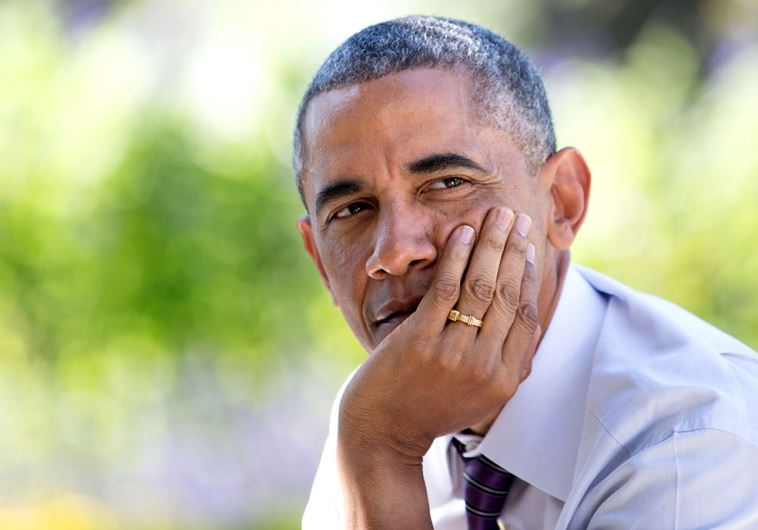 US President Barack Obama at the Rose Garden of the White House. (photo credit:OFFICIAL WHITE HOUSE PHOTO / PETE SOUZA)
[T]he real question lawmakers need to ask is whether the deal is good for America. Is Obama right or wrong that only partisan zealots and disloyal Zionists could oppose his great diplomatic achievement? To determine the answer to that question, you need to do is ask another one. Does his deal make America safer or less safe? The best way to answer that question is to consider all the ways Iran threatens America today, and ask whether the agreement has no impact on those threats, or whether it mitigates or aggravates them.
***********************
In President Barack Obama’s defense of his nuclear deal with Iran Wednesday, he said there are only two types of people who will oppose his deal – Republican partisans and Israel- firsters – that is, traitors.
At American University, Obama castigated Republican lawmakers as the moral equivalent of Iranian jihadists saying, “Those [Iranian] hard-liners chanting ‘Death to America’ who have been most opposed to the deal… are making common cause with the Republican Caucus.”
He then turned his attention to Israel.
Obama explained that whether or not you believe the deal endangers Israel boils down to whom you trust more – him or Prime Minister Benjamin Netanyahu. And, he explained, he can be trusted to protect Israel better than Netanyahu can because “[I] have been a stalwart friend of Israel throughout my career.”
The truth is that it shouldn’t much matter to US lawmakers whether Obama or Netanyahu has it right about Israel. Israel isn’t a party to the deal and isn’t bound by it. If Israel decides it needs to act on its own, it will.
The US, on the other side, will be bound by the deal if Congress fails to kill it next month.
So the real question lawmakers need to ask is whether the deal is good for America. Is Obama right or wrong that only partisan zealots and disloyal Zionists could oppose his great diplomatic achievement? To determine the answer to that question, you need to do is ask another one. Does his deal make America safer or less safe? The best way to answer that question is to consider all the ways Iran threatens America today, and ask whether the agreement has no impact on those threats, or whether it mitigates or aggravates them.
Today Iran is harming America directly in multiple ways.
The most graphic way Iran is harming America today is by holding four Americans hostage. Iran’s decision not to release them over the course of negotiations indicates that at a minimum, the deal hasn’t helped them.
It doesn’t take much consideration to recognize that the hostages in Iran are much worse off today than they were before Obama concluded the deal on July 14.
The US had much more leverage to force the Iranians to release the hostages before it signed the deal than it does now. Now, not only do the Iranians have no reason to release the hostages, they have every reason to take more hostages.
Then there is Iranian-sponsored terrorism against the US.
In 2011, the FBI foiled an Iranian plot to murder the Saudi ambassador in Washington and bomb the Saudi and Israeli embassies in the US capital.
One of the terrorists set to participate in the attack allegedly penetrated US territory through the Mexican border.
The terrorist threat to the US emanating from Iran’s terrorist infrastructure in Latin America will rise steeply as a consequence of the nuclear deal.
As The Wall Street Journal’s Mary Anastasia O’Grady wrote last month, the sanctions relief the deal provides to Iran will enable it to massively expand its already formidable operations in the US’s backyard. Over the past two decades, Iran and Hezbollah have built up major presences in Cuba, Venezuela, Nicaragua, Ecuador and Bolivia.
Iran’s presence in Latin America also constitutes a strategic threat to US national security. Today Iran can use its bases of operations in Latin America to launch an electromagnetic pulse attack on the US from a ballistic missile, a satellite or even a merchant ship.
The US military is taking active steps to survive such an attack, which would destroy the US’s power grid. Among other things, it is returning the North American Aerospace Defense Command (NORAD) to its former home in Cheyenne Mountain outside Colorado Springs.
But Obama has ignored the findings of the congressional EMP Commission and has failed to harden the US electronic grid to protect it from such attacks.
The economic and human devastation that would be caused by the destruction of the US electric grid is almost inconceivable. And now with the cash infusion that will come Iran’s way from Obama’s nuclear deal, it will be free to expand on its EMP capabilities in profound ways.
Through its naval aggression in the Strait of Hormuz Iran threatens the global economy. While the US was negotiating the nuclear deal with Iran, the Revolutionary Guards unlawfully interdicted – that is hijacked – the Marshall Islands-flagged Maersk Tigris and held its crew hostage for weeks.
Iran’s assault on the Tigris came just days after the US-flagged Maersk Kensington was surrounded and followed by Revolutionary Guards ships until it fled the strait.
A rational take-home message the Iranians can draw from the nuclear deal is that piracy pays.
Their naval aggression in the Strait of Hormuz was not met by American military force, but by American strategic collapse at Vienna.
This is doubly true when America’s listless response to Iran’s plan to use its Houthi proxy’s takeover of Yemen to control the Bab el-Mandab strait is taken into consideration. With the Bab el-Mandab, Iran will control all maritime traffic from the Persian Gulf and the Red Sea. Rather than confront this clear and present danger to the global economy, America abandoned all its redlines in the nuclear talks.
Then there is Iran’s partnership 20-year partnership with al-Qaida.
The 9/11 Commission found in its report that four of the 9/11 terrorists transited Iran before traveling to the US. As former Defense Intelligence Agency director Lt.-Gen. (ret.) Mike Flynn told Fox News in the spring, Iranian cooperation with al-Qaida remains deep and strategic.
When the US Navy SEALs killed Osama bin Laden in 2011, they seized hard drives containing more than a million documents related to al-Qaida operations. All but a few dozen remain classified.
According to Flynn and other US intelligence officials who spoke to The Weekly Standard, the documents expose Iran’s vast collaboration with al-Qaida.
The agreement Obama concluded with the mullahs gives a tailwind to Iran. Iran’s empowerment will undoubtedly be used to expand its use of al-Qaida terrorists as proxies in their joint war against the US.
Then there is Iran’s ballistic missile program.
The UN Security Council resolution passed two weeks ago cancels the UN-imposed embargoes on conventional arms and ballistic missile acquisitions by Iran. Since the nuclear deal facilities Iranian development of advanced nuclear technologies that will enable the mullahs to build nuclear weapons freely when the deal expires, the Security Council resolution means that by the time the deal expires, Iran will have the nuclear warheads and the intercontinental ballistic missiles required to carry out a nuclear attack on the US.
Obama said Wednesday that if Congress votes down his nuclear deal, “we will lose… America’s credibility as a leader of diplomacy. America’s credibility,” he explained, “is the anchor of the international system.”
Unfortunately, Obama got it backwards. It is the deal that destroys America’s credibility and so upends the international system which has rested on that credibility for the past 70 years.
The White House’s dangerous suppression of seized al-Qaida-Iran documents, like its listless response to Iran’s maritime aggression, its indifference to Iran’s massive presence in Latin America, its lackluster response to Iran’s terrorist activities in Latin America, and its belittlement of the importance of the regime’s stated goal to destroy America – not to mention its complete collapse on all its previous redlines over the course of the negotiations – are all signs of the disastrous toll the nuclear deal has already taken on America’s credibility, and indeed on US national security.
To defend a policy that empowers Iran, the administration has no choice but to serve as Iran’s agent. The deal destroys America’s credibility in fighting terrorism. By legitimizing and enriching the most prolific state sponsor of terrorism, the US has made a mockery of its claimed commitment to the fight.
The deal destroys the US’s credibility as an ally.
By serving as apologists for its worst enemy, the US has shown its allies that they cannot trust American security guarantees. How can Israel or Saudi Arabia trust America to defend them when it is endangering itself? The deal destroys 70 years of US nonproliferation efforts. By enabling Iran to become a nuclear power, the US has made a mockery of the very notion of nonproliferation and caused a nuclear arms race in the Middle East.
The damage caused by the deal is already being felt. For instance, Europe, Russia and China are already beating a path to the ayatollahs’ doorstep to sign commercial and military deals with the regime.
But if Congress defeats the deal, it can mitigate the damage. By killing the deal, Congress will demonstrate that the American people are not ready to go down in defeat. They can show that the US remains committed to its own defense and the rebuilding of its strategic credibility worldwide.
In his meeting with Jewish leaders Tuesday, Obama acknowledged that his claim – repeated yet again Wednesday – that the only alternative to the deal is war, is a lie.
Speaking to reporters after the meeting, Greg Rosenbaum, chairman of the National Democratic Jewish Council, which is allied with the White House, said that Obama rejected the notion that war will break out if Congress rejects the deal with veto-overriding majorities in both houses.
According to Rosenbaum, Obama claimed that if Congress rejects his nuclear deal, eventually the US will have to carry out air strikes against Iran’s nuclear facilities in order to prevent them from enriching uranium to weapons-grade levels.
“But,” he quoted Obama as saying, “the result of such a strike won’t be war with Iran.”
Rather, Obama said, Iran will respond to a US strike primarily by ratcheting up its terrorist attacks against Israel.
“I can assure,” Obama told the Jewish leaders, “that Israel will bear the brunt of the asymmetrical responses that Iran will have to a military strike on its nuclear facilities.”
What is notable here is that despite the fact that it will pay the heaviest price for a congressional defeat of the Iran deal, Israel is united in its opposition to the deal. This speaks volume about the gravity with which the Israeli public views the threats the agreement unleashed.
But again, Israel is not the only country that is imperiled by the nuclear deal. And Israelis are not the only ones who need to worry.
Obama wishes to convince the public that the deal’s opponents are either partisan extremists or traitors who care about Israel more than they care about America. But neither claim is true. The main reason Americans should oppose the deal is that it endangers America. And as a consequence, Americans who oppose the deal are neither partisans nor turncoats.
They are patriots.
Know Comment: American-Iranian fairy tales, Jerusalem Post, David M. Weinberg, July 30, 2015
 iran. (photo credit:REUTERS)
An updated list of the fictions peddled by the Obama administration in support of its pact with Iran.
Here is an updated scorecard of the misrepresentations advanced by the Obama administration in defense of its concordat with Iran. The list grows every day.
1. Iran will be motivated to keep the agreement.
False. Iran already may be plotting its escape from the agreement. Dr. Emily Landau of the Institute for National Security Studies points out that Iran has twice bolted – in 2004 and again in 2005 – when it felt that the agreements it concluded with the EU-3 were no longer serving its interests.
Lo and behold, the Joint Comprehensive Plan of Action has an explicit defection clause, which allows Tehran to exit the deal without any deliberations or warning if it feels that any of the P5+1 countries is reintroducing any form or degree of sanction against Iran.
So, Iran will pocket hundreds of billions of dollars in (almost-immediate and unconditional) sanctions relief, then sign hundreds of billions of dollars in investment and business partnership deals with the major French and German companies that are now in on the gold rush to Iran. Then it can accuse Congress or the next US president of being nasty and use that as the pretext for its “nuclear snapback.”
2. In case of Iranian violations, America can “snapback” sanctions.
The opposite is true. The agreement intentionally embeds the US in a web of time-consuming and complex multilateral processes that place significant and perhaps insuperable obstacles to both a snapback of economic sanctions and resort to an American military strike. Prof. Jeffrey Herf of the University of Maryland has detailed how the deal places sky-high barriers in the way of American enforcement in the event of Iranian violations.
Claudia Rosett of the Foundation for Defense of Democracies has shown that the nitty-gritty of the so-called sanction snapback provisions actually provide disincentives for the US and its partners to confront Iran in the event that Iran does cheat (which it has a long record of doing, and has done even during the recent nuclear talks). Moreover, Iran is supposed to get Western help and technology for defense against nuclear sabotage. So the US is essentially deterring itself from ever acting against Iran, no matter what. Which apparently is exactly what President Obama was after.
3. The deal will moderate or contain Iran’s aggressive ambitions in the Middle East.
Not at all. The nuclear deal seems to be just the first act in a longer drama of American retreat, retrenchment and accommodation as Obama hands the keys to the Persian Gulf and beyond to his new Shia friends.
Obama says that he “hopes” that “we can continue to have conversations with Iran that incentivize them to behave differently in the region, to be less aggressive, less hostile, more cooperative, to operate the way we expect nations in the international community to behave.” But, he adds, “We’re not counting on it. So this deal is not contingent on Iran changing its behavior.”
What a damning self-indictment. Is it believable that “conversations” are going to change or contain Iran? What is really needed, instead, says Prof. Walter Russell Mead of the New America Foundation, is a tough regional strategy to counter Iran’s rush for hegemony; an aggressive, anti- IRGC, anti-Assad, anti-Hezbollah policy.
But the White House never intended to contain Iran, says Dr. Michael Doran of the Hudson Institute. It has consistently displayed an aversion to countering Iran. America’s allies in the Middle East (and this list of allies supposedly still includes Israel) “have time and again begged the president to help them curtail Iranian influence in Iraq, Syria, Lebanon and Yemen, and time and again Obama has refused.”
Maj.-Gen. (res.) Yaakov Amidror of the Begin-Sadat Center for Strategic Studies expands on this in an-depth study published on Thursday.
Under cover of this accord, Iran is likely to greatly strengthen its grip on the Middle East, he writes. It will solidify its control of Yemen, including developing the capacity to block the Bab el-Mandeb strait in the Red Sea and thus threaten global trade and the Suez Canal, Egypt’s lifeline. It will take complete control of Lebanon.
With the help of other countries (perhaps even including the US) it will “save” the region by fighting ISIS, to become the true ruler of Iraq and of what would remain of Alawite Syria. Hezbollah will be given thousands of precise missiles, while enjoying Iranian backing and silent American approval.
Amidror: “There is little chance that America will follow through on its promise that after signing the agreement it will be more determined in its efforts to contain Iran. This claim is unrealistic and illogical, since once a rival state becomes a partner to an agreement, one does not increase efforts taken against it in other realms. It is the nature of agreements that cover a certain area of relations that they prevent pressure being applied in other areas, rather than increasing pressure. No one in the West will now be interested in jeopardizing either the agreement or trade relations with Iran. It is therefore likely that, despite the messages of reassurance coming from Washington, Iran will become much stronger over the next 15 years, internally, regionally, economically and militarily, with no opposition from the US.”
4. There was no better deal, and the alternative to this deal is war.
Both assertions are absolutely fallacious. More coercive diplomacy could have delivered a better deal. However, Obama refused to put maximum pressure on Iran. He was not willing to impose additional sanctions on Iran (as Prime Minister Netanyahu suggested and Congress wanted), or to threaten the use of military force. When you are in talks with a genocidal, terrorism-sponsoring regime and claim that you have no viable military option, you are not negotiating.
You are begging.
Prof. Fred Kagan of the American Enterprise Institute points out that there is a historical precedent for tougher diplomacy that works. The US Senate refused to ratify SALT II, ending the SALT process, but war between the US and the Soviet Union did not ensue. Both Jimmy Carter and Ronald Reagan instead increased the pressure on the Soviet Union dramatically. The lesson is that walking away from bad deals does not inevitably lead either to war or to the end of negotiations.
Iran: Obama Admin Lying About Nuclear Deal for ‘Domestic Consumption’ Washington Free Beacon,
( It’s clear that the Obama administration is lying, but what lies do the Iranian officials claim are being told? Do they involve the secret deals? — DM)
 AP
AP
Senior Iranian officials are accusing the Obama administration of lying about the details of the recent nuclear accord in order to soothe fears among U.S. lawmakers and Americans about the implications of the deal, which will release billions of dollars to the Islamic Republic while temporarily freezing its nuclear program, according to reports from Iran’s state-controlled media.
As Secretary of State John Kerry and other senior Obama administration figures launch a full-court press to convince Congress to approve the deal, Iranian leaders are dismissing the rhetoric as “aimed at domestic consumption.”
Kerry and other top administration officials have been defending the deal on Capitol Hill in recent days, claiming that it will rein in the Islamic Republic’s contested nuclear program and fix its nuclear “breakout” period, the time required for it to obtain the amount of highly enriched uranium necessary for a nuclear weapon, at one year.
Critics have noted that the deal provides Iran with billions of dollars in sanctions relief that could be spent on terrorism and lifts bans on Iran’s export of weapons and construction of ballistic missiles.
When addressing claims this week by the administration that the deal shuts down Tehran’s nuclear infrastructure, Iranian officials scoffed and said that the Obama administration is misleading the public in order to sell the deal.
Hamid Baeidinejad, an official in the Iranian foreign ministry and one of the country’s nuclear negotiators, scoffed on Wednesday at the Obama administration’s comments, saying that they were meant to placate an American domestic audience.
“The remarks by the western officials are ambiguous comments which are merely uttered for domestic use and therefore we should say that there is no ambiguity in this (nuclear) agreement,” the Fars news agency quoted Baeidinejad saying in an interview with state-controlled radio.
Baeidinejad said that the Obama administration is misleading Americans about the deal in order to “calm opponents in the Congress and Zionist lobbies to soothe the internal conditions prevailing over debates on the nuclear agreement in that country,” Fars, which is also run by the Iranian state, reported.
As Congress spends 60 days reviewing the deal, which it may reject, the Iranian parliament is undertaking the same task.
During a meeting on Wednesday with Laurent Fabius, the French foreign minister, President Hassan Rouhani of Iran urged world powers to keep its commitments under the deal.
These includes lifting sanctions on the nearly $100 billion dollar financial empire of the Iranian Supreme Leader Ali Khamenei and agreeing to bar American inspectors from all Iranian nuclear sites.
“The Iranian government is standing strong on the path of (implementing) the agreement and we will remain committed to our undertakings as long as the other side remains loyal to its obligations,” Rouhani was quoted as saying during a meeting in Tehran with Fabius, who served as a key negotiator for the French.
Rouhani said the agreement could help Iran become a key player on the international stage.
“This agreement is not against any country and our cooperation and consultations to settle the regional problems, including fight against terrorism, humanitarian aids, and materialization of nations’ demands can prove it,” Rouhani was quoted as saying.
Meanwhile, Fabius was met at the airport by Iranian protestors who accused him of serving as an Israeli spy.
“The protesters chanted slogans such as ‘Aids, A French Gift to Iran’, ‘We Neither Forgive nor Forget’, ‘Fabius, Servant of the US, Spy of Israel’ and ‘No Welcome to Aids Lord,’” according to Fars.
Into the fray: Iran- Reaping the storm that Barack sowed…, Jerusalem Post, MARTIN SHERMAN,July 16, 2015
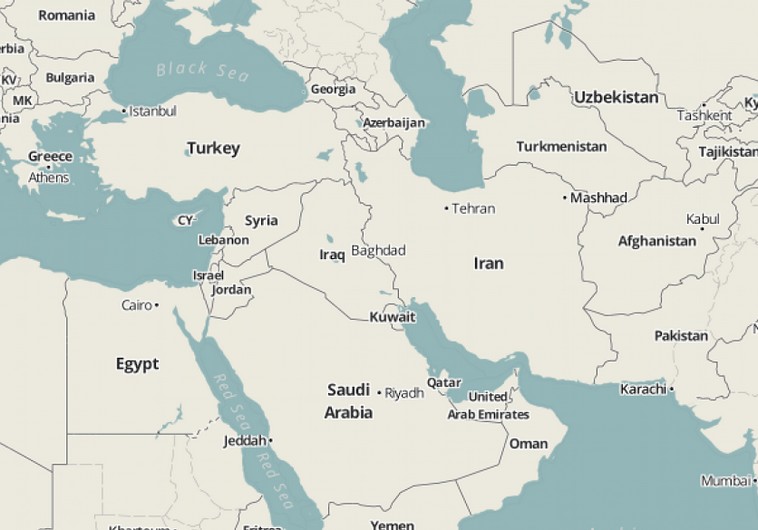 Map of Middle East. (photo credit:Courtesy)
It is through this Islamo-philic prism that the Obama administration’s attitude to, and execution of, its foreign policy must be evaluated – including its otherwise incomprehensible capitulation this week on Iran’s nuclear program.
********************
Obama is the first US president who genuinely conceives of Islam as not inherently opposed to American values or interests.
You’re absolutely right that John McCain has not talked about my Muslim faith – Barack Hussein Obama to ABC’s George Stephanopoulos, September 7, 2008
I also know that Islam has always been a part of America’s story – Barack Hussein Obama, Cairo, June 4, 2009
Islam has always been part of America – Barack Hussein Obama, the White House, August 11, 2010
Islam has been woven into the fabric of our country since its founding – Barack Hussein Obama, the White House, February 18, 2015
A question of cultural affinity?
It is through this Islamo-philic prism that the Obama administration’s attitude to, and execution of, its foreign policy must be evaluated – including its otherwise incomprehensible capitulation this week on Iran’s nuclear program.
Almost two years ago, I wrote a column titled, “Will the West withstand the Obama presidency?” (11/28/2013). In it I warned: “For anyone who understands that the US Constitution is not a Shari’a-compliant document…
it should be alarmingly apparent that the Obama incumbency is a dramatic and disturbing point of inflection in the history of America and its Western allies… whose political practices and societal norms are rooted in Judeo-Christian foundations in a cultural rather than in any religious sense.”
There is little alternative explanation to account for the metamorphosis that has taken place in how the US has approached resolving the impasse with Tehran, as starkly laid out by two former secretaries of state, Henry Kissinger and George Shultz.
In a Wall Street Journal opinion piece, “The Iran Deal and Its Consequences” (April 7), they note that the negotiation has been turned “on its head.” As they point out: “For 20 years, three presidents of both major parties proclaimed that an Iranian nuclear weapon was contrary to American and global interests – and that they were prepared to use force to prevent it. Yet negotiations that began 12 years ago as an international effort to prevent an Iranian capability to develop a nuclear arsenal are ending with an agreement that concedes this very capability.”
Risible inspection mechanism
Even before the specifics of the risible inspection mechanism, which one Israeli minister aptly described as “worse than worthless,” Kissinger and Shultz laid out the difficulties that would render any extended inspection endeavor ineffective: “In a large country with multiple facilities and ample experience in nuclear concealment, violations will be inherently difficult to detect.”
With considerable prescience, they warn: “Devising theoretical models of inspection is one thing. Enforcing compliance, week after week, despite competing international crises and domestic distractions, is another. Any report of a violation is likely to prompt debate over its significance – or even calls for new talks with Tehran to explore the issue.
Envisaging the problems likely to arise in enforcing any agreement, they caution: “Compounding the difficulty is the unlikelihood that breakout will be a clear-cut event.
More likely it will occur… via the gradual accumulation of ambiguous evasions. When inevitable disagreements arise over the scope and intrusiveness of inspections, on what criteria are we prepared to insist and up to what point? If evidence is imperfect, who bears the burden of proof? What process will be followed to resolve the matter swiftly?”
Reminiscent of taqiya?
But even without the daunting generic difficulties described by Kissinger and Shultz, the inspection mechanism provided for in the nascent deal make a mockery of Obama’s contention (July 14): “… this deal is not built on trust; it is built on verification,” and, “Because of this deal, inspectors will also be able to access any suspicious location… [They] will have access where necessary, when necessary.”
One can hardly imagine a more grossly misleading representation of the deal – so much so that it is difficult not to find it strongly reminiscent of the Muslim tactic of taqiya (the religiously sanctioned deception of non-Muslims).
Indeed, immediately following the announcement of the agreement, Ben Rhodes, Obama’s deputy national security adviser, made a stunning admission to CNN’s Erin Burnett. Starkly contradicting the president’s contention of “access where necessary, when necessary,” Rhodes conceded, “We never sought in this negotiation the capacity for so-called anytime, anywhere,” which is diametrically opposed to the impression he conveyed in April this year when queried on this issue.
You couldn’t make this stuff up
For as it turns out, it provides the Iranians with ample warning of impending inspections on any suspected violation, and ample ability to forestall the definition of any given suspicious event as a possible violation.
Thus in the case of a suspected infringement in any undisclosed (to the international community) site, the Iranians will have at least 24 days’ notice. Moreover, inspectors will not be able to conduct surprise visits but will be required to “provide Iran the basis for such concerns and request clarification.” No kidding!!! But wait, there’s more.
If Iran’s explanations do not adequately assuage international concerns, inspectors “may request access to such locations” to make sure no illicit activity has occurred. But first they need to “provide Iran the reasons for access in writing and will make available relevant information.” You can’t make this stuff up.
But here’s the kicker: Should the Iranians and the inspectors prove unable to “reach satisfactory arrangements,” Tehran will resolve any concerns “through necessary means agreed between Iran and the IAEA.” If there is still no agreement two weeks after the initial inquiry is filed, the crisis will be resolved by vote in the so-called Joint Commission – consisting of the six world powers, a representative of EU and – wait for it – Iran.
Like warning drug dealers of a bust
Astonishingly, nearly all the decisions of the Joint Commission, tasked with overseeing/ administering the implementation of the deal, are to be made by consensus – which in effect gives Iran veto power over them. In the case of inspection access, it is sufficient for two of its eight members (say China and Russia) to abstain for Iran to block any decision it dislikes.
It is thus difficult to dispute Benjamin Netanyahu’s characterization of the deal during his address in the Knesset when he likened it to giving drug dealers notice of an impending raid: “It’s like giving a criminal organization that deals drugs a 24-day warning before inspecting its drug lab.”
But worse – the deal requires the international inspectors to expose the sources of intelligence that lead to the detection of the possible infringement – thereby virtually ensuring the termination of their effectiveness.
As Netanyahu remarked: “The agreement also requires the world powers to… show Iran the very intelligence for which they want to conduct the inspections in the first place.”
It is possible that all this could be nothing more than mind-boggling incompetence and blatant lack of foresight? Or are these glaring loopholes the reflection of intent.
Devil not in details
After all, the more you think about the unenforceable, unverifiable agreement just concocted in Vienna, the more implausible it seems. As Alan Dershowitz points out in a Jerusalem Post opinion piece this week, “The devil is not so much in the details as in the broad outlines of this deal.”
Rather than the detailed minutiae of the deal, it is its deeply flawed overall structure that makes it so difficult to comprehend – unless the motives for its conclusion are reexamined.
For unless one is imbued with the child-like naiveté to believe that the tyrannical clergy who head the totalitarian theocracy in Tehran, on seeing their defiant intransigence vindicated and having vast additional resources placed at their disposal, will suddenly change their worldview, the picture of emerging realities is decidedly bleak and bewildering.
The spectacle unfolding before us is almost incomprehensible by any rational criterion.
Virtually the entire developed world, led by the only superpower on the planet, has for all intents and purposes conceded a legitimized path to weaponized nuclear status for a fanatical fundamentalist regime, ideologically bent on the destruction of America and its allies, and a major proliferator of terrorism, committed to attaining regional hegemony at the expense of relatively pro-Western governments.
Despite dwarfing Iran in terms of military might, economic wealth, physical size and population, Tehran’s interlocutors have provided it with vast resources to enormously enhance its nefarious pursuits across the region and beyond.
The New Middle East: Conflicts on steroids
The ominous consequences are not difficult to foresee.
As Ariel Ben Solomon, the Post’s Middle East correspondent, wrote in a recent report, “Iran deal to see Middle East conflicts go on steroids,” “A stronger Iran will translate into a more robust Hezbollah in Lebanon, Houthi movement in Yemen, and Shi’ite forces in Iraq and Syria, and increasing sectarian strife fueled by Shi’ite minorities or Iranian agents throughout the Arab world.” (July 16) There is precious little reason for believing any other outcome is plausible.
In a July 15 interview, New Jersey Democrat Sen. Bob Menendez lamented another aspect of the deal, relating to easing restrictions on conventional weapons to Iran: “When you lift the arms embargo to a country that is the major sponsor of… terrorism in the world and is already destabilizing the region in Yemen, Lebanon, Syria [and] Iraq, to give them – after they are going to get $100 billion-150b. in economic relief – the opportunity to buy conventional weapons and improve their missile technology doesn’t seem to me to be in the national interest of the United States.”
The intriguing question is, of course, does this seem to President Obama to be in the national interest of the United States? And if so, why so? If so, how so?
‘No alternative’: A mindless mendacious mantra
The almost Pavlovian response of the apologists for the Iran deal is that its critics have not offered a feasible alternative. This is a claim – for want of a better word – so feeble that it barely merits a response.
As Sen. Menendez points out: “We never tested the proposition that dismantling elements of Iran’s illicit nuclear infrastructure was possible. It is pretty hard for me to believe that the world powers, sitting on one side of the table, the five permanent members of the Security Council plus Germany and the European Union looking at the Iranians… suffering under staggering sanctions… and falling oil prices couldn’t get a deal that eliminated some of that infrastructure.”
Rebutting John Kerry’s claim that such a goal was achievable only in “a world of fantasy,” Menendez retorted, “I don’t know that that is a ‘world of fantasy.’ Isn’t it possible with all the world on one side of the table, and Iran reeling with economic challenges, that you couldn’t have done better as relates to eliminating that nuclear infrastructure.”
Of course if the underlying assumption is that alternatives are only feasible if Iran deigns to accept them, then the apologists may be right. However, if the rationale were not to accommodate the ayatollahs, but to coerce them, the alternative is clear: Enhanced sanctions backed by the credible threat of military action aimed at destroying Iran’s nuclear facilities and their attendant infrastructure.
Arab arms race or Arab client states
But despite the overwhelming preponderance of power in their favor, the US and its Western allies seem to have forsworn the use of force, or even the credible specter thereof. As Kissinger and Shultz remark: “The threat of war now constrains the West more than Iran.”
This will clearly have a devastating impact on both friend and foe in the region.
It will destroy the confidence of US allies who will therefore be compelled to either acquire their own appropriate arsenals, as they can no longer rely on America for their security, or to become compliant client states of a hegemonic Iran.
For Iran it sends an equivocal message that it can violate the terms of the deal with impunity – for if what it encountered at Vienna is all the West can throw at it, what does it have to fear? There can be little doubt that what happened in Vienna this week has shredded America’s standing in the Middle East.
Some might even suspect that that was the purpose of the exercise.




 anneinpt
 artaxes
 danmillerinpanama
 davidking1530
 Peter Hofman
 Joseph Wouk
 Peter
Peter Louisiana Steve
 WarSclerotic
Recent Comments