Posted tagged ‘International Community’

Obama’s Dangerous Rhetoric

July 24, 2015

Obama’s Dangerous Rhetoric, Hoover Institution, Victor Davis Hanson, July 22, 2015
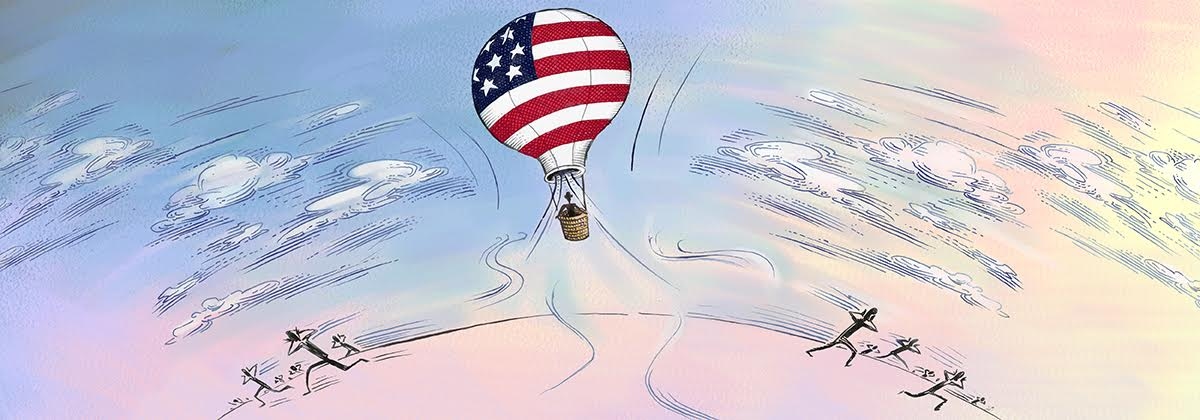
World runs awayImage credit: Barbara Kelley

President Obama has a habit of asserting strategic nonsense with such certainty that it is at times embarrassing and frightening. Nowhere is that more evident than in his rhetoric about the Middle East.

Not long ago, Obama reassured the world that, despite evidence of the use of chemical weapons in Syria, “Chlorine itself is not listed as a chemical weapon.” What could he have meant by that? Obama apparently was referring to the focus on Sarin gas by the Organization for Prohibition of Chemical Weapons, the UN watchdog agency that was supposed to monitor Obama’s Syria red line warnings against further gas attacks. To reassure the public that the United States would not consider chlorine gas a violation of its own red line about chemical weapons use in Syria—and, therefore, to assure the public that his administration would not intervene militarily in Syria—Obama said:  “Chlorine itself, historically, has not been listed as a chemical weapon.”

Nothing could be further from the truth. Chlorine was the father of poison gas, the first chemical agent used in World War I—and it was used to lethal effect by the Germans at the battle of Ypres in April 1915. Subsequently, it was mixed and upgraded with phosgene gas to make an even deadlier brew and employed frequently throughout the war—most infamously at the Battle of the Somme.

The president was clearly bothered that he had boxed himself into a rhetorical corner and might have had to order air strikes against the defiant Assad regime—lest he appear wavering in carrying out his earlier threats. One way out of that dilemma would be to deny that chorine constituted a serious weapon used to kill soldiers and civilians. Another would simply be to claim that he had never issued such a red line to Bashar al-Assad at all. That refuge is exactly what Obama fell back upon at press conference on September 4, 2013: “I didn’t set a red line. The world set a red line.”

Here is what the president had earlier stated on August 20, 2012, in threatening Assad: “We have been very clear to the Assad regime, but also to other players on the ground, that a red line for us is we start seeing a whole bunch of chemical weapons moving around or being utilized. That would change my calculus. That would change my equation.”

The use of the presidential pronouns “we” and “my” are synonymous with the voice of his administration. Indeed, Obama had doubled down on his 2012 red line with the clarification that, “When I said that the use of chemical weapons would be a game-changer, that wasn’t unique to—that wasn’t a position unique to the United States and it shouldn’t have been a surprise.”

In the summer of 2014, Obama had dismissed the emergence of ISIS with colorful language about its inability to project terrorism much beyond its local Iraqi embryo: “I think the analogy we use around here sometimes, and I think is accurate, is if a JV team puts on Lakers uniforms, that doesn’t make them Kobe Bryant. I think there is a distinction between the capacity and reach of a bin Laden and a network that is actively planning major terrorist plots against the homeland versus jihadists who are engaged in various local power struggles and disputes, often sectarian.”

ISIS, remember, had already conducted terrorist operations across the Mediterranean. Both organized and lone-wolf terrorists, with claims of ISIS ties or inspiration, would go on to attack Westerners from France to Texas.

Obama compounded his obfuscations by later claiming to Meet the Press anchor Chuck Todd that he had never said such a thing at all about ISIS—an assertion that was deemed false by even the liberal fact-checking organization PolitiFact. More recently, in July 2015, Obama claimed that the now growing ISIS threat could not be addressed through force of arms, assuring the world that “Ideologies are not defeated with guns, they are defeated by better ideas.”

Such a generic assertion seems historically preposterous. The defeat of German Nazism, Italian fascism, and Japanese militarism was not accomplished by Anglo-American rhetoric on freedom. What stopped the growth of Soviet-style global communism during the Cold War were both armed interventions such as the Korean War and real threats to use force such as during the Berlin Airlift and Cuban Missile Crisis— along with Ronald Reagan’s resoluteness backed by a military buildup that restored credible Western military deterrence.

In contrast, Obama apparently believes that strategic threats are not checked with tough diplomacy backed by military alliances, balances of power, and military deterrence, much less by speaking softly and carrying a big stick. Rather, crises are resolved by ironing out mostly Western-inspired misunderstandings and going back on heat-of-the moment, ad hoc issued deadlines, red lines, and step-over lines, whether to the Iranian theocracy, Vladimir Putin, or Bashar Assad.

Sometimes the administration’s faith in Western social progressivism is offered to persuade an Iran or Cuba that they have missed the arc of Westernized history—and must get back on the right side of the past by loosening the reins of their respective police states. Obama believes that engagement with Iran in non-proliferation talks—which have so far given up on prior Western insistences on third-party, out of the country enrichment, on-site inspections, and kick-back sanctions—will inevitably ensure that Iran becomes “a successful regional power.” That higher profile of the theocracy apparently is a good thing for the Middle East and our allies like Israel and the Gulf states.

In his well-publicized Cairo speech of June 2009, Obama declared that Islam had a hand in prompting the Western Renaissance and Enlightenment, as well as offering other underappreciated gifts to the West, from medicine to navigation. Obama’s tutorial was offered to remind the Muslim Brotherhood members in his audience that the West really does owe much to the Muslim World—and thus by inference should expect reciprocal consideration in the current war on terror.

In his February 2, 2015 outline of anti-ISIS strategy—itself an update of an earlier September 2014 strategic précis—Obama again insisted that “one of the best antidotes to the hateful ideologies that try to recruit and radicalize people to violent extremism is our own example as diverse and tolerant societies that welcome the contributions of all people, including people of all faiths.” The idea, a naïve one, is that because we welcome mosques on our diverse and tolerant soil, ISIS will take note and welcome Christian churches.

One of Obama’s former State Department advisors, Georgetown law professor Rosa Brooks, recently amplified that reductionist confidence in the curative power of Western progressivism. She urged Americans to tweet ISIS, which, like Iran, habitually executes homosexuals. Brooks hoped that Americans would pass on stories about and photos of the Supreme Court’s recent embrace of gay marriage: “Do you want to fight the Islamic State and the forces of Islamic extremist terrorism? I’ll tell you the best way to send a message to those masked gunmen in Iraq and Syria and to everyone else who gains power by sowing violence and fear. Just keep posting that second set of images [photos of American gays and their supporters celebrating the Supreme Court decision]. Post them on Facebook and Twitter and Reddit and in comments all over the Internet. Send them to your friends and your family. Send them to your pen pal in France and your old roommate in Tunisia. Send them to strangers.”

Such zesty confidence in the redemptive power of Western moral superiority recalls First Lady Michelle Obama’s efforts to persusade the murderous Boko Haram to return kidnapped Nigerian preteen girls. Ms. Obama appealed to Boko Haram on the basis of shared empathy and universal parental instincts. (“In these girls, Barack and I see our own daughters. We see their hopes, their dreams and we can only imagine the anguish their parents are feeling right now.”) Ms. Obama then fortified her message with a photo of her holding up a sign with the hash-tag #BringBackOurGirls.

Vladimir Putin’s Russia has added Crimea and Eastern Ukraine to his earlier acquisitions in Georgia. He is most likely eyeing the Baltic States next. China is creating new strategic realities in the Pacific, in which Japan, South Korea, Taiwan, and the Philippines will eventually either be forced to acquiesce or to seek their own nuclear deterrent. The Middle East has imploded. Much of North Africa is becoming a Mogadishu-like wasteland.

The assorted theocrats, terrorists, dictators, and tribalists express little fear of or respect for the U.S. They believe that the Obama administration does not know much nor cares about foreign affairs. They may be right in their cynicism. A president who does not consider chlorine gas a chemical weapon could conceivably believe that the Americans once liberated Auschwitz, that the Austrians speak an Austrian language, and that the Falklands are known in Latin America as the Maldives.

Both friends and enemies assume that what Obama or his administration says today will be either rendered irrelevant or denied tomorrow. Iraq at one point was trumpeted by Vice President Joe Biden as the administration’s probable “greatest achievement.” Obama declared that Iraq was a “stable and self-reliant” country in no need of American peacekeepers after 2011.

Yanking all Americans out of Iraq in 2011 was solely a short-term political decision designed as a 2012 reelection talking point. The American departure had nothing to do with a disinterested assessment of the long-term security of the still shaky Iraqi consensual government. When Senator Obama damned the invasion of Iraq in 2003; when he claimed in 2004 that he had no policy differences with the Bush administration on Iraq; when he declared in 2007 that the surge would fail; when he said in 2008 as a presidential candidate that he wanted all U.S. troops brought home; when he opined as President in 2011 that the country was stable and self-reliant; when he assured the world in 2014 that it was not threatened by ISIS; and when in 2015 he sent troops back into an imploding Iraq—all of these decisions hinged on perceived public opinion, not empirical assessments of the state of Iraq itself. The near destruction of Iraq and the rise of ISIS were the logical dividends of a decade of politicized ambiguity.

After six years, even non-Americans have caught on that the more Obama flip-flops on Iraq, deprecates an enemy, or ignores Syrian redlines, the less likely American arms will ever be used and assurances honored.

The world is going to become an even scarier place in the next two years. The problem is not just that our enemies do not believe our President, but rather that they no longer even listen to him.

The emperor is stark naked

July 22, 2015

The emperor is stark naked, Israel Hayom, Judith Bergman, July 22, 2015

It did not take the Europeans long to approve the Iran nuclear deal. On Monday, less than a week ‎after the deal was finalized, the European Union had already given its blessing. Given the fact that the EU is a massive body consisting of 28 countries that rarely agree on any foreign policy ‎issues, certainly not those of such a magnitude, it is rather noteworthy that they could find such sweet ‎unison over the most infamous political deal since Chamberlain’s deal with Hitler.

‎”It is a balanced deal that means Iran won’t get an atomic bomb,” French Foreign Minister Laurent Fabius ‎said, “It is a major political deal.”

Sure it is.

Especially for the likes of France and Germany, which can barely contain themselves at the ‎prospect of doing business with the Iranian regime. It has been 12 years since the Europeans could legally ‎engage in trade with the genocidal, misogynistic, homophobic and generally murderous regime of the ‎mullahs and they are not wasting any time, now that the opportunity has resurfaced.

In fact, the ink was barely dry on the nuclear deal when German Vice Chancellor Sigmar Gabriel — who ‎also happens to be economy and energy minister and is therefore as senior a German official as Germany could get without ‎actually sending Angela Merkel herself — rushed himself and a group of representatives from German ‎companies and industry groups onto a plane for a three-day visit to Iran. ‎

Trying, yet utterly failing, to make the trip appear a little more dignified than the simple naked greed that ‎it represents, the vice chancellor “urged Iran at the start of [the] three-day visit to improve its relationship ‎with Israel if it wanted to establish closer economic ties with Germany and other Western powers,” ‎according to Reuters.

If Germany wanted Iran to take that poor show of accommodating Israeli concerns seriously, it might ‎have tried to contain itself just a little longer to at least see whether the U.S. Congress approves the ‎deal. However, as we all know, time is money and the Germans are well known for being efficient.

Yet, the Germans are far from the only ones lining up for immediate business with the Iranians. Fabius is due to visit Iran next week. “I find it completely normal that ‎after this historic deal was signed, France and Iran should restart normal relations,” Fabius said. Before ‎the sanctions took effect, French companies Peugeot and Renault were making billions of euros from ‎their involvement with the Iranian auto industry. Similarly, French company Total was heavily involved in ‎the oil sector. France is not missing a beat in bringing this lucrative trade back into la République.

The French employers’ federation, MEDEF, is due to visit Iran in September. So is Austria. The EU, which is ‎eager to find alternative suppliers of energy at a time when relations with Russia are rather tense, may ‎reopen an EU delegation in Tehran.

Notice how the European political elites consider it, in the French foreign minister’s words, “completely ‎normal” to do business with a heinous regime like Iran, which breaks every single rule in the book of human rights, the bible from which the Europeans pedantically lecture Israel ‎on every possible occasion. It is ostensibly in the name of those very same human rights that the EU wants to boycott Israeli products in order to avoid choking on an Israeli orange from beyond the ‎Green Line.‎

Yet these days the streets of Europe are eerily quiet and completely devoid of protests, as the citizens of ‎Europe demonstrably could not care less about the fact that their countries will now once again be trading ‎in a major way with the Iranian regime.

Where is the outrage, as it becomes increasingly clear that the EU, out of commercial ‎considerations for the lucrative trade and oil flowing from such a deal, has supported the agreement with ‎Iran? Where are the boycotts, divestment and sanctions? Where are the flotillas?

What European lawmaker, bureaucrat or ordinary citizen cares at all that women and children, political ‎prisoners and homosexuals are tortured and summarily executed in Iran, when Iranian oil and money will ‎now flow freely into the EU? ‎Is it of any concern to any of the European that Iran is a regime with genocidal intentions toward Israel and cares for ‎nothing but its own survival?‎

The hypocrisy and the double standards have become so thick and obvious that Hans Christian Andersen’s proverbial emperor is walking stark naked through the streets of Europe. However, should a ‎child appear to point out that the emperor is not wearing any clothes, no one would care to listen.

Time wars

June 12, 2015

Time wars, Israel Hayom, Judith Bergman, June 12, 2015

Perhaps one of the greatest, yet least spoken of, misconceptions of the West concerning the ‎Middle East is its failure to understand the radically different concept of time on which it ‎operates. While Israel predominantly ticks on a Western — if Mediterranean — linear clock, ‎which puts a premium on speed and efficiency, this is overwhelmingly not the case in Arab ‎culture. For Muslims in particular, time is the domain of Allah and from this belief follows a ‎fatalism and an immense patience, which could almost be mistaken for resignation, that in ‎time Allah will see to all things.

There could be no greater contrast to the West, which is impatient to the point of ‎hyperventilation, wishing to solve problems that are not always solvable as fast as possible ‎– and preferably yesterday

***********************

In his speech at the 15th annual Herzliya Conference on Tuesday, Prime Minister Benjamin ‎Netanyahu reaffirmed his commitment to a demilitarized Palestinian state that recognizes the ‎Jewish state. Much more important than this reaffirmation, however, was the prime minister’s ‎subsequent realistic estimation of the actual possibility of establishing such a demilitarized ‎state.

Netanyahu described how he had attempted in vain to talk to Palestinian ‎Authority President Mahmoud Abbas over the course of six and a half years. When he finally met him, in Sharm el-Sheikh, they spoke ‎for six hours and the only thing that Abbas had to say during this session was a demand that ‎Israel extend the freeze on settlement construction.‎

‎”So I again call on Abbas to return to the negotiating table without preconditions,” said the ‎prime minister, “but I also know he has very little reason to talk. Why should he talk? He can ‎get by without talking. He can get by with an international community that blames Israel for failing to hold talks. In other words, the Palestinians run from the table. … But the Palestinians have a ‎nifty trick up their sleeve: They refuse to negotiate and then get international pressure, ‎sanctions, boycotts on Israel for there not being negotiations. It’s a perfect catch-22. And there ‎are those who attempt to impose terms on Israel in the U.N. Security Council, because there are ‎no talks, and some of them pretend that the dangers we face are not real dangers at all.”

In fact, the ability of the international community — particularly that of its European members — to ‎willfully close its eyes to the dangers and to the complicated geopolitical circumstances that ‎Israel continues to finds itself in, particularly now, is boundless. The catalogue of malicious ‎actions on the part of the international community, most particularly its European members, to ‎force Israel into acquiescing to concessions is expanding. At the same time, its inability to understand the geopolitical realities of the Middle East grows.‎

Perhaps one of the greatest, yet least spoken of, misconceptions of the West concerning the ‎Middle East is its failure to understand the radically different concept of time on which it ‎operates. While Israel predominantly ticks on a Western — if Mediterranean — linear clock, ‎which puts a premium on speed and efficiency, this is overwhelmingly not the case in Arab ‎culture. For Muslims in particular, time is the domain of Allah and from this belief follows a ‎fatalism and an immense patience, which could almost be mistaken for resignation, that in ‎time Allah will see to all things.

There could be no greater contrast to the West, which is impatient to the point of ‎hyperventilation, wishing to solve problems that are not always solvable as fast as possible ‎– and preferably yesterday. ‎

It is this impatience, bordering on panic, that characterizes the current efforts of the U.S. and ‎the EU to reach a deal with Iran, rushed even more, of course, by U.S. President Barack Obama’s ego-driven ‎desire to have a deal with Iran as part of his legacy.‎

The Western impulse to solve problems that may turn out to be unsolvable, especially ‎according to a Western time schedule, and the impatience that accompanies repeated failures ‎to solve said problems, is nowhere more prevalent than concerning the question of Israel and ‎the Palestinians. In fact, the very actions of the international community create a false sense of ‎urgency that would not necessarily exist among the parties if the West did not insist on ‎constantly meddling in the process.

Yet, the conflicts of the Middle East — and the Israeli-Arab conflict is no different in this respect ‎‎– will not be solved with Western quick fixes, express shuttle diplomacy and emergency ‎meetings in the Security Council, only because the West wishes it to be so. While Israel’s clock ‎may tick on a Western time continuum, its security does not, because its security is tightly ‎connected to its Arab and Persian neighbors, who operate on a ‎different time continuum. During a lecture about the Islamic State group, Dr. Eitan Azani, ‎deputy executive director of the Institute for Counter-Terrorism at the IDC Herzliya, mentioned ‎that this organization — which contrary to popular belief is highly organized, with former Iraqi ‎colonels and intelligence officers at the top — operates under a 100-year plan.

One example of a centuries old conflict in the Middle East, which continues unresolved without ‎enjoying a fraction of the sense of urgency that the West bestows on the Israeli-Palestinian ‎conflict, is the persecution of Christians in the Muslim world, including the PA-controlled ‎territories, where their numbers have dwindled dramatically since the Oslo Accords. Most ‎urgent in this respect is the ethnic cleansing of Christians going on in Iraq, which until now has ‎barely caused Western powers to bat an eye.

Similarly, the Yazidis, an ancient people who live in northern Iraq, have suffered persecution ‎throughout their history, but the current ethnic cleansing of the group by Islamic State has not created any sense of ‎urgency in the West, to put it mildly.

Another example is the persecution of the Kurds, an ancient nation comprising roughly 30 million people, and the blatant denial of national self-‎determination for them. Western ‎powers brutally let them down in their quest for national self-determination after World War I ‎and subsequently conveniently ignored them, as if they had disappeared from history ‎altogether. Instead, Arab, Turkish and Persian rulers have persecuted them, most infamously ‎perhaps Saddam Hussein, who used chemical weapons against them. In the Kurds’ ‎current battle against Islamic State, the West has not exactly been rushing to aid them. ‎

Finally, the internal Muslim conflict between Shiites and Sunnis is also one that has existed for ‎centuries and will probably continue for centuries to come. The West has never felt any urge to ‎resolve this bitter conflict, not when the Sunni Saddam was murdering Shias in the south of Iraq ‎and not now, when Sunni Islamic State murders Shias — and also any Sunnis who do not adhere to its ‎particular teachings of Islam.‎

Only one conflict out of the many currently burning in the Middle East has been specifically selected for ‎intense scrutiny and resolution by the West — the Israeli-Palestinian conflict. Further, as the ‎prime minister said, it is Israel, not the Palestinians, that is blamed for not resolving this ‎conflict, despite the fact that the Palestinians have run away from every negotiation table that ‎they have ever seen. This should have caused great concern and outrage among ‎decent people a long time ago and a public debate about the rationale for such skewed and ‎slanted Western policies, but the world remains silent and unquestioning on this and instead ‎rages with fury at Israel.

Israel does not have the luxury of dealing with the rose-tinted, imaginary Middle East of the ‎West, where everybody would get along just fine, swaying to the tune of John Lennon’s ‎‎”Imagine,” if only Israel would give in to every single demand. Israel must stick to the harsh ‎realities on the ground and deal with the region, as tough, difficult and dangerous as it actually ‎is. This is the important message that the prime minister communicated in his speech, and it ‎would be most helpful if the West would listen — for once.

Liberating Our Jerusalem

May 18, 2015

Liberating Our Jerusalem, Sultan Knish Blog, Daniel Greenfield, May 17, 2015

[T]here are still Jews in the West Bank and they have to be gotten rid of. Once enough Jews have been expelled, there will be peace. That’s not a paragraph from Mein Kampf, it’s not some lunatic sermon from Palestinian Authority television– it is the consensus of the international community. This consensus states that the only reason there still isn’t peace is because enough Jews haven’t been expelled from their homes. The ethnic cleansing for peace hasn’t gone far enough.

There will be peace when all the Jews are gone.

Jerusalem Day is a reminder of what the real problem is and what the real solution is. Muslim occupation of Israel is the problem. The Islamization of Jerusalem is the problem. Muslim violence in support of the Muslim occupation of Israel and of everywhere else is the problem. Israel is the solution. Only when we liberate ourselves from the lies, when we stop believing that we are the problem and recognize that we are the solution. Only then will we be free of the Joe Bidens and the Peter Beinarts, the Jimmy Carters and Barack Obamas, the Gilad Atzmons and Jeremy Ben Amis. Only then will the liberation that began in 1967 be complete.

**********************

When Jordan’s Arab Legion seized half of Jerusalem, ethnically cleansed its Jewish population and annexed the city– the only entity to recognize the annexation was the United Kingdom which had provided the officers and the training that made the conquest possible. Officers like Colonel Bill Newman, Major Geoffrey Lockett and Major Bob Slade, under Glubb Pasha, better known as General John Bagot Glubb, whose son later converted to Islam, invaded Jerusalem and used the Muslim forces under their command to make the partition and ethnic cleansing of Jerusalem possible.

MigdalDavid0002

Since then, the annexation and ethnic cleansing has become an international mandate. It would be absolutely inconceivable for the international community to denounce an ethnically cleansed group which survived attempted genocide for moving back into a city where they had lived. It is, however, standard policy at the State Department and the Foreign Office to denounce Jews living in those parts of Jerusalem that had been ethnically cleansed by Muslims, as “settlers” living in “settlements,” and describe them as an “obstruction to peace.” Peace being the state of affairs that sets in when an ethnic cleansing goes unchallenged.

Describing Jewish homes in Jerusalem, one of the world’s oldest cities, a city that all three religions in the region associate with Jews and Jewish history, as “settlements” is a triumph of distorted language that Orwell would have to tip his hat to. How does one have “settlements” in a city older than London or Washington D.C.? To understand that, you would have to ask London and Washington D.C., where the diplomats insist that one more round of Israeli compromises will bring peace to the region.

They say that there are three religions in Jerusalem, but there are actually four. The fourth religion is the true Religion of Peace, the one that demands constant blood sacrifices to make peace possible, that insists that there will be peace when the Jews have been expelled from Judea and Samaria, driven out of their homes in Jerusalem, and made into wanderers and beggars once again. Oddly enough, this religion’s name isn’t even Islam– it’s diplomacy.

Diplomacy says that the 1948 borders set by Arab countries invading Israel should be the final borders and that, when Israel reunified a sundered city in 1967, it was an act of aggression, while, when seven Arab armies invaded Israel in 1948, it was a legitimate way to set boundaries. When Jordan ethnically cleansed East Jerusalem, it set a standard that Israelis are obligated to follow to this day by staying out of East Jerusalem.

Vice President Biden was so upset that the Jerusalem municipality had partially approved some buildings in the city during his visit that he threw a legendary hissy fit. Hillary Clinton stopped by MSNBC to tell Andrea Mitchell that, “It was insulting. And it was insulting not just to the Vice President who didn’t deserve that.” David Axelrod browsed through his thesaurus and emerged on the morning shows calling it an “affront” and an “insult.” Two for the price of one.

Editorials in newspapers denounced the Israeli government for this grave insult to the Obama Administration.”Israel’s Provocation”, the Chicago Tribune shrieked in bold type, describing it as a “diplomatic bomb” that went off in Biden’s face. The Atlantic, eager to get in on the action metaphors, described Israel slapping Biden in the face. A horde of other columnists jumped in to depict the Israelis kicking and bashing the poor Vice-President, while holding his head in the toilet.

Whether Joe Biden was the victim of the Jews or the Jews were the victims of Joe Biden is all a matter of perspective. The Hitler Administration was quite upset to find that Jewish athletes would be competing in the 1936 Munich Olympics. When you ethnically cleanse people, they are supposed to stay ethnically cleansed. It’s in poor taste for them to show up and win gold medals at the Olympics or rebuild their demolished synagogues. It’s insulting to the ethnic cleansers and their accomplices.

That sounds like a harsh accusation, but it’s completely and undeniably true.

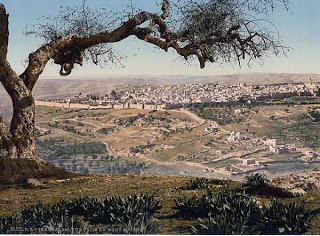
bauernfeind-mur-lamentation-jerusalem

When Muslims move into a Jewish town, poor Joe doesn’t come crying that he’s been bombed with a diplomatic affront and slapped with a Menorah. When Muslim countries fund Muslim housing in Israel, there are no angry statements from Clinton and no thesaurus bashing from David Axelrod. Muslim housing in Jerusalem or anywhere in Israel is not a problem. Only Jewish housing is. The issue is not Israel. If it were, then Arabs with Israeli citizenship would get Biden to howl as loudly. It’s only the Jews who are the problem.

The entire Peace Process is really a prolonged solution to the latest phase of the Jewish Problem. The problem, as stated by so many diplomats, is that there are Jews living in places that Muslims want. There were Jews living in Gaza before 1948, but they were driven out, they came back, and then they were driven out again by their own government in compliance with international demands. Now only Hamas lives in Gaza and it’s as peaceful and pleasant without the Jews as Nazi Germany.

But there are still Jews in the West Bank and they have to be gotten rid of. Once enough Jews have been expelled, there will be peace. That’s not a paragraph from Mein Kampf, it’s not some lunatic sermon from Palestinian Authority television– it is the consensus of the international community. This consensus states that the only reason there still isn’t peace is because enough Jews haven’t been expelled from their homes. The ethnic cleansing for peace hasn’t gone far enough.

There will be peace when all the Jews are gone. That much is certainly undeniable. Just look at Gaza or Egypt or Iraq or Afghanistan, which has a grand total of two Jews, both of them in their seventies. Or Pakistan, Saudi Arabia and Syria where peace reigns now that the Jews are gone. Some might say that violence seems to increase proportionally with the number of Muslims, but we all know that would be a racist thing to say. On the other hand suggesting that violence increases with the number of Jews living on land that Muslims want, that’s just diplomacy. A common sense fact that everyone who is anyone in foreign policy knows to be true.

How will we know when the Muslims have gotten all the land that they want? When the violence stops. Everyone knows that agreements mean nothing. No matter how many pieces of paper are signed, the bombs and rockets still keep bursting; real ones that kill people, not fake ones that upset Vice Presidents. The only way to reach an agreement is by groping blindly in the dark, handing over parcel after parcel of land, until the explosions stop or the Muslims fulfill their original goal of pushing the Jews into the sea.

That’s the wonderful thing about diplomacy if you’re a diplomat and the terrible thing about it if you are anyone else without a secure way out of the country when diplomacy fails. And diplomacy in the region always fails. Camp David and every single agreement Israel has signed with Muslim countries aren’t worth the paper they’re written on. The only peace treaty that counts is the one made by tanks and rifles. It’s the one made by Israeli planes in Egyptian skies and Israeli soldiers walking the border. It’s the one made by Jewish farmers and ranchers, tending their sheep and their fields, with rifles strung over their backs. The only peace that’s worth anything is the peace of the soldiers and settlers.

In 1966, Jerusalem was a city sundered in two, divided by barbed wire and the bullets of Muslim snipers. Diplomacy did not reunite it. Israel pursued diplomacy nearly to its bitter end until it understood that it had no choice at all but to fight. Israel did not swoop into the fight, its leaders did their best to avoid the conflict, asking the international community to intervene and stop Egypt from going to war. Read back the headlines for the last five years on Israel and Iran, and you will get a sense of the courage and determination of the Israeli leaders of the day.

When Israel went to war, its leaders did not want to liberate Jerusalem, they wanted Jordan to stay out of the war. Even when Jordan entered the war, they did not want to liberate the city. Divine Providence and Muslim hostility forced them to liberate Jerusalem and forced them to keep it. Now some of them would like to give it back, another sacrifice to the bloody deity of diplomacy whose altar flows with blood and burnt sacrifices.

As we remember Yom Yerushalayim, Jerusalem Day, it is important to remember that the city is united and free because diplomacy failed. The greatest triumph of the modern state happened only because diplomacy proved hopeless and useless in deterring Muslim genocidal ambitions. Had Israel succumbed to international pressure and had Nasser been as subtle as Sadat, then the Six-Day War would have looked like the Yom Kippur War fought with 1948 borders– and Israel very likely would not exist today.

Jerusalem-Scopus

Even as Jews remember the great triumph of Jerusalem Day, the ethnic cleansers and their accomplices are busy searching for ways to drive Jews out of Jerusalem, out of towns, villages and cities. This isn’t about the Arab residents of Jerusalem, who have repeatedly asserted that they want to remain part of Israel. It’s not about peace, which did not come from any previous round of concessions, and will not come from this one either. It’s about solving the Jewish problem.

As long as Jews allow themselves to be defined as the problem, there will be plenty of those offering solutions. And the solutions invariably involve doing something about the Jews. It only stands to reason that if Jews are the problem, then moving them or getting rid of them is the solution. The bloody god of diplomacy always assumes that they are the problem. There is less friction in defining Jews as the problem, than in defining Muslims as the problem. The numbers alone mean that is so.

Jerusalem Day is a reminder of what the real problem is and what the real solution is. Muslim occupation of Israel is the problem. The Islamization of Jerusalem is the problem. Muslim violence in support of the Muslim occupation of Israel and of everywhere else is the problem. Israel is the solution. Only when we liberate ourselves from the lies, when we stop believing that we are the problem and recognize that we are the solution. Only then will we be free of the Joe Bidens and the Peter Beinarts, the Jimmy Carters and Barack Obamas, the Gilad Atzmons and Jeremy Ben Amis. Only then will the liberation that began in 1967 be complete.

Only then will we have liberated our Jerusalem. The Jerusalem of the soul. It is incumbent on all of us to liberate that little Jerusalem within. The holy city that lives in all of us. To clean the dross off its golden gates, wash the filth from its stones and expel the invaders gnawing away at our hearts until we look proudly upon a shining city. Then to help others liberate their own Jerusalems. Only then will we truly be free.

Iran and suspension of disbelief

May 8, 2015

Iran and suspension of disbelief, Israel Hayom, Yoram Ettinger, May 8, 2015

The term “suspension of disbelief” — coined in 1817 by the philosopher Samuel Taylor Coleridge — refers to a willingness to suspend one’s critical faculties and believe the unbelievable; sacrificing reality, common sense, doubt and complexity on the altar of a pretend reality, convenience and oversimplification; infusing a semblance of truth into an untrue narrative.

U.S. President Jimmy Carter’s policy toward Iran in 1977-1979 was characterized by suspension of disbelief: energizing the Ayatollah Ruhollah Khomeini while ignoring or underestimating his track record and his radical, supremacist and violent worldview. The betrayal of the Shah transformed Tehran from “the U.S. policeman in the Gulf” to the worst enemy of the U.S.

Currently, the suspension of disbelief undermines the U.S. posture of deterrence and vital U.S. national security and commercial interests. It was demonstrated by U.S. President Barack Obama, who — irrespective of Middle East reality — referred to the brutally intolerant, terror-driven, anti-U.S., anti-infidel, repressive, tumultuous Arab tsunami as the “Arab Spring.” He said it was “casting off the burdens of the past,” “a story of self-determination,” “a democratic upheaval,” “a peaceful opposition,” “rejection of political violence” and “a transition toward [multi-sectarian, multi-ethnic] democracy.”

Suspension of disbelief, coupled with the ayatollahs’ mastery of ‘taqiyya’ (Islam-sanctioned double-talk and deception), is what led U.S. Secretary of State John Kerry to assert on November 24, 2013 that “Iran’s Foreign Minister [Mohammad Javad] Zarif emphasized that they don’t intend to acquire nuclear weapons, and Iran’s supreme leader has indicated that there is a ‘fatwa’ [an authoritative religious ruling] which forbids them to do this.”

In an April 7, 2015 NPR interview, Obama made a reality-stretching assumption which underlines the Iran policy: “If in fact Iran is engaged in international business … then in many ways it makes it even harder for them to engage in behaviors that are contrary to international norms. … It is possible that if we sign this nuclear deal, we strengthen the hand of the more moderate forces in Iran.”

Rebutting Obama’s remarks, Amir Taheri, a leading authority on Iran, wrote: “Hope is not a sufficient basis for a strategy. … [The relatively moderate former President Akbar Hashemi] Rafsanjani has little chance of surviving a direct clash with [Supreme Leader Ayatollah Ali] Khamenei.

The Saudi frustration with U.S. policy on Iran — shared by all pro-U.S. Arab regimes — was expressed on April 25, 2015 by the opinion editor of the prestigious Saudi daily Asharq Al-Awsat, which echoes the position of the House of Saud: “While the U.S. considers the ayatollahs a legitimate partner to negotiation, Saudi Arabia and other Persian Gulf states are in a state of war with Iran, which is the main source of chaos in the region.” The editor-in-chief of the Saudi daily added: “Has the axis of evil collapsed to the extent that President Obama is courting one of its key members?! Isn’t this the same Tehran that has posed a clear and present danger to the Gulf states for the past 36 years?!”

• An agreement is not the goal, but a tool to achieve the real goal.

• Transforming an agreement to a goal undermines the real goal.

• Details of an agreement are less critical than the details of the ayatollahs’ 36-year track record of supremacist, apocalyptic and megalomaniacal violence, martyrdom, sponsorship of global Islamic terrorism, subversion of pro-U.S. Arab regimes, repression, anti-U.S. hate education- and policies, a systematic noncompliance with agreements and mastery of concealment.

• Such a track record warrants a “guilty until proven innocent” approach.

• Preconditioning an agreement upon a dramatic change in the conduct of the rogue, anti-U.S. ayatollahs would be “a poison pill” to a bad deal, but a vitamin to a good deal.

• A “bad deal” would nuclearize Iran; “no deal” would allow the U.S. to choose the ways and means to prevent Iran’s nuclearization.

• Nuclear capabilities would extend the life of the repressive, rogue ayatollah regime, precluding any hope for civil liberties or home-induced regime change.

• An agreement — not preconditioned upon the transformation of the ayatollahs — would compound their clear and present threat to vital U.S. interests.

• The transformation of the nature of the ayatollahs — as a precondition to an agreement — would prevent the nuclearization of the ayatollahs.

• Precluding the option of military pre-emption has strengthened and radicalized the rogue ayatollahs, and could lead to a nuclear war.

• Misrepresenting the option of military pre-emption as war defies reality, since it should be limited to surgical — no troops on the ground — air and naval bombings of critical parts of Iran’s nuclear infrastructure from U.S. bases in Bahrain, Qatar, Saudi Arabia, Oman and the Indian Ocean, or aircraft carriers.

• A U.S. military option forced Iran to end the 1980-1988 war against Iraq, convinced Libya to give away its nuclear infrastructure in 2003, and led Iran to suspend its nuclear development in 2003.

• “Ironclad” supervision and intelligence failed to detect the nuclearization of the USSR, China, Pakistan, India and North Korea.

• Unlike the USSR, which was deterred by Mutual Assured Destruction, the apocalyptic ayatollahs would be energized by MAD-driven martyrdom.

• The zeal to strike a deal has led to a U.S. retreat from six U.N. Security Council Resolutions, which aimed to prevent Iran’s nuclearization.

• A nuclear Iran, which celebrates “Death to America Day,” would devastate cardinal U.S. interests: toppling the oil-producing Arab regimes (impacting supply and price of oil) and other pro-U.S. Arab regimes; intensifying Islamic terrorism, globally and on the U.S. mainland; agitating Latin America; collaborating with North Korea; cooperating with Russia and destabilizing Africa and Asia.

• The track record of the ayatollahs on the one hand, and compliance with agreements on the other hand, constitute an oxymoron.

• Suspension of disbelief, in the case of Iran’s nuclearization, entails overlooking facts that highlight the implausibility of a viable agreement with the ayatollahs, thus damaging crucial U.S. interests and fueling a nuclear war.

Exclusive: Obama to back Palestinian state at Security Council – payback for Israel’s right-wing cabinet

May 7, 2015

Exclusive: Obama to back Palestinian state at Security Council – payback for Israel’s right-wing cabinet, DEBKAfile, May 6, 2015

Net-0b_clash_5.15Barack Obama plans to punish Israel again

DEBKAfile reports exclusively from Washington: US President Barack Obama did not wait for Binyamin Netanyahu to finish building his new government coalition by its deadline at midnight Wednesday, May 6, before going into action to pay him back for forming a right-wing cabinet minus any moderate figure for resuming negotiations with the Palestinians.

Banking on Netanyahu’s assertion while campaigning for re-election that there would be no Palestinian state during his term in office, Obama is reported exclusively by our sources to have given the hitherto withheld green light to European governments to file a UN Security Council motion proclaiming an independent Palestinian state. Although Netanyahu left the foreign affairs portfolio in his charge and available to be filled by a suitably moderate figure as per the White House’s expectations did not satisfy the US President.

The White House is confident that, with the US voting in favor, the motion will be passed by an overwhelming majority and therefore be binding on the Israeli government.

To show the administration was in earnest, senior US officials sat down with their French counterparts in Paris last week to sketch out the general outline of this motion. According to our sources, they began addressing such questions as the area of the Palestinian state, its borders, security arrangements between Israel and the Palestinians and whether or not to set a hard-and-fast timeline for implementation, or phrase the resolution as  a general declaration of intent.

Incorporating a target date in the language would expose Israel to Security Council sanctions for non-compliance.

It was indicated by the American side in Paris that the Obama administration would prefer to give Netanyahu a lengthy though predetermined time scale to reconsider his Palestinian policy or even possibly to broaden and diversify his coalition by introducing non-aligned factions or figures into such key posts as foreign affairs.

At the same time, both American and French diplomats are already using the club they propose to hang over the Netanyahu government’s head for gains in other spheres.

French President Francois Hollande, for instance, the first foreign leader ever to attend a Gulf Council of Cooperation summit, which opened in Riyadh Tuesday to discuss Iran and the Yemen war, used the opportunity to brief Gulf Arab rulers on Washington’s turnaround on the Israeli-Palestinian issue.

And US Secretary of State John Kerry plans to present the Obama administration’s new plans for Palestinian statehood to Saudi leaders during his visit to Riyadh Wednesday and Thursday, May 6-7. Kerry will use Washington’s willingness to meet Palestinian aspirations as currency for procuring Saudi and Gulf support for a Yemen ceasefire and their acceptance of the nuclear deal shaping up with Iran.

Nuclear Iran’s “Spillover Effects”

April 14, 2015

Nuclear Iran’s “Spillover Effects” Gatestone InstituteVijeta Uniyal, April 13, 2015

As President Obama tries to sell the world his mysterious nuclear “framework agreement,” India’s defense establishment is just not buying it. The U.S. and Western commentators might be expecting “peace dividends” from Iran, but India cannot afford to harbor such illusions.

The Iranians have already announced that they plan to sell “enriched uranium” in the international marketplace, and will be “hopefully making some money” from it. To whom will they sell?

A nuclear Iran would be able to hold the world hostage by blocking one-third of the world’s oil supply at the Strait of Hormuz. Iranian proxies have also been trying to seize control of the Bab-el-Mandeb Strait, the maritime choke point of the Suez Canal.

The only question is whether the West would rather have an adversary such as Iran before it has nuclear weapons or after.

When the West and Iran agreed — or not, depending on whether one believes the U.S. version or Iran’s — on the parameters of a supposed nuclear “framework,” India’s foreign office hailed the agreement as a “significant step.”

India’s foreign office might have joined the international chorus welcoming the deal, but as U.S. President Barack Obama aggressively tries to sell the world his mysterious nuclear “framework,” India’s defense establishment is just not buying it.

India’s defense establishment seems to be having acute qualms about this “framework.”

One day after the P5+1’s mysterious “agreement” with Iran, India began gearing up for a more effective nuclear defense, and unveiled plans to equip the country’s capital, New Delhi, with a comprehensive missile defense shield to avert a nuclear attack.

Once in place, the shield could intercept missiles fired from a range of 5,000 km, roughly double the aerial distance between New Delhi and Tehran.

The first step would be to install the long-range “Swordfish” radars, developed with the help of Israel. They can track missiles from a range of 800 km.

India’s missile interceptor capability is expected to be functional by 2016. India also plans to set up a missile shield for its commercial capital, Mumbai.

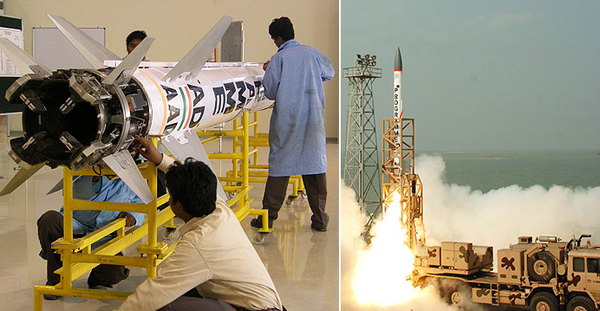
1020At left, Indian defense contractors work on an Advanced Air Defence (AAD) interceptor missile. At right, an Indian AAD missile is test-launched.

On April 4, India’s Defence Research and Development Organisation (DRDO) also reiterated the country’s ability to hit targets well beyond its adjoining region.

India has always been seriously concerned about prospect of nuclear proliferation in the Middle East. If Arab and Muslim countries decide to counter the Iranian nuclear threat with nuclear arsenal of their own, India’s hostile neighbor, Pakistan, is likely to want to play a crucial role.

India is not only vulnerable to nuclear threats from Pakistan. Both the Islamic State (ISIS) and Al-Qaeda have also openly declared hostility toward it. India has long been concerned about nuclear capabilities or materiel falling into the hands of Islamists in Pakistan. By now, it is no secret that if Iran acquires nuclear weapons capability, nuclear proliferation in the Middle East will increase exponentially. The Iranians have already announced that they plan to sell “enriched uranium” in the international marketplace and will be “hopefully making some money” from it. To whom will they sell?

President Obama and Western commentators might be expecting “peace dividends” from this “historic reconciliation” and be awaiting all sorts of positive “spillover effects” as a result of lifting sanctions — from changing Iran’s attitude towards Israel to democratizing the Iranian regime — but India cannot afford to harbor such illusions. Islamist terror has claimed more than 30,000 Indian lives in just the last two decades.

Indians are now bracing for the real spillover effects of a nuclear Iran.

Thanks to Washington’s indifference, Iran now controls four Arab capitals — Damascus, Baghdad, Beirut, and now Sana’a, while the U.S. has retreated from three: in Libya, Yemen and Iraq. If Iran can hold the Obama administration hostage without any leverage, a nuclear Iran would be able to hold the whole world hostage by blocking one-third of the world’s oil supply at the Strait of Hormuz — with impunity. Iranian proxies have also been trying to seize control of the Bab-el-Mandeb Strait, the maritime choke point of the Suez Canal.

European leaders who failed to show any resoluteness in face of Russian aggression against Ukraine, and even failed to vote against a “framework” that threatens global security, can hardly be expected to stand up to Tehran. The only question is whether the West would rather have an adversary such as Iran before it has nuclear weapons or after.

Once major European powers such as Russia, France and Germany start investing in Iranian infrastructure and entangling themselves with Iran economically, one can forget about rolling back sanctions.

Western leaders can spin the “framework” agreement all they want to cover up their abysmal diplomatic failure, but as Tehran’s centrifuges keep spinning as a result of the deal, the region turns more and more volatile.

Regardless of the diplomatic chorus and the media circus, the defense planers in New Delhi are just not buying this agreement. Other countries that care about the free world would be wise not to buy it, too.

King Abdullah II: We’re War With “Outlaws Of Islam” – Special Report

April 14, 2015

King Abdullah II: We’re War With “Outlaws Of Islam” – Special Report via You Tube, April 13, 2015

(He seems quite diplomatic, but what does he actually think? — DM)


Ayatollah Khamenei Outlines Requirements of Final Iran Nuclear Deal

April 9, 2015

Ayatollah Khamenei Outlines Requirements of Final Iran Nuclear Deal, Tasnim News Agency (Iranian), April 9, 2015

(All bold face print is from the original. — DM)

139401201524404185070453

TEHRAN (Tasnim) – Supreme Leader of the Islamic Revolution Ayatollah Seyed Ali Khamenei on Thursday defined the main points that a final nuclear deal between Iran and world powers should involve, but refused to adopt a stance on the Lausanne statement that entails no binding commitment.

Addressing a gathering in Tehran on Thursday, Ayatollah Khamenei said he has not taken a position on a statement released by Iran and the Group 5+1 (Russia, China, the US, Britain, France and Germany) after the most recent round of nuclear talks in the Swiss city of Lausanne, because nothing has been still agreed upon, nor have the parties reached any binding agreement.

“What has happened so far does not guarantee either the principle of an agreement, or the negotiations that lead to an agreement or even the content of an agreement, and it does not even guarantee that these talks would result in a deal, so congratulation has no meaning,” the Leader said.

The comments came after Iran and the six powers on April 2 reached a framework nuclear agreement after more than a week of intensive negotiations in Lausanne, Switzerland, with both sides committed to push for a final, comprehensive accord until the end of June.

Ayatollah Khamenei then reaffirmed strong support for a deal that respects the Iranian nation’s dignity, and rejected as “untrue” the reports on his opposition to any agreement.

The Leader, however, underlined that “no deal is better than a bad deal.”

Imam Khamenei then explained that he has only outlined the “general issues, the main guidelines, frameworks and red lines” regarding the nuclear talks and has not specified the details.

“I am not indifferent to the negotiations, but have not interfered in the details of the talks so far, and will not interfere in future either,” the Leader stressed.

The Supreme Leader then pointed to the unreliable nature of the US, an obvious sign of which he said was a biased fact sheet that Washington issued only two hours after the Lausanne statement was declared.

“Drafting such a statement (fact sheet) within two hours is not possible, so they (Americans) had been busy preparing a flawed and wrong statement contrary to the content of the talks at the same time that they were negotiating with us.”

The Leader further called on the country’s negotiators to hold consultations with the critics of the Lausanne statement to better deal with the talks, something known as “rapport” among Iranians.

Imam Khamenei once again made it clear that the talks with the US revolve only around the nuclear issue and nothing else, but at the same time noted that such nuclear negotiations provide an experience to test the possibility of talking on other subjects if Washington puts aside objections.

But, the Leader added, if the US keeps raising objections, Iran’s experience of mistrust of the US will be corroborated.

Commenting on the main points that have to be stipulated in a possible final nuclear deal, Ayatollah Khamenei pointed to the removal of anti-Iran sanctions all at once, adding, “This issue is very important and the sanctions should be completely terminated at the very day of the agreement.”

“If the removal of sanctions is to be conditioned by a new process, the fundamental of negotiations will be nonsense, because the purpose of the talks is lifting of the sanctions,” the Leader said.

The Supreme Leader also categorically rejected foreign access to the country’s “security and defensive” sectors under the pretext of nuclear monitoring.

Imam Khamenei said Iran’s military capabilities must be upheld and strengthened day by day, stressing that Iran’s backing for its “brothers” in the resistance front in different regions should never be diminished.

Moreover, the Leader voiced opposition to any deal that subjects Iran to “unconventional” monitoring and would make it a special case in the world, underlining that monitoring of Iran’s peaceful nuclear program should be conventional, like the other countries.

Iran’s “scientific and technical developments in different dimensions” was another requirement that the Leader emphasized a deal must include.

Ayatollah Khamenei finally said the responsibility lies with the country’s negotiators to fulfill those necessary demands in the talks, calling on them to “find the correct ways of negotiations” by using the view points of the informed and reliable individuals and listening to the critics.

The Lausanne deal: Exercise in spin and counter-spin

April 4, 2015

The Lausanne deal: Exercise in spin and counter-spin, DEBKAfile, April 4, 2015

Iranian_Fact_Sheet_3.4.15Iran’s counters US fact sheet on Lausanne deal

Hours after Washington published a “fact sheet” in Lausanne Thursday, April 2 – which enumerated “the parameters of the agreed framework” hammered out by the US world powers and Iran – Tehran countered with its own version the next day, after the lead Iranian negotiator Foreign Minister Mohammed Javad Zarif, dismissed the American accounting as “spin.”

The Iranian version departs substantially from President Barack Obama’s assurance of “a deal that meets our core objections,” and statement,: “There is no way Iran can get around it to build a bomb or produce plutonium at its Arak plan…verification mechanisms built into the agreed framework will ensure that if Iran cheats, the world will know it.”

Tehran’s version had two objects: 1) To refute Obama’s presentation of the outcome of the Lausanne talks, and 2) To show the Iranian people how successful its negotiating team had been in defending its national interest.

DEBKAfile reports that the battle of versions, fought just hours after both sides claimed victory in the diplomatic contest played out at Lausanne, makes it obvious that the gaps between the world powers and Iran are far wider than admitedt. They could not even find a common definition of what if anything was achieved in the talks: “a framework deal” in US terms; or “a package of solutions leading up to a future Comprehensive Plan of Joint Action” – in Iranian parlance.

The gaps on such key issues as enrichment, sanctions, research and development, means of verifying compliance (described by Obama as intrusive”) could no longer be papered over after Tehran issued its version. It was a short document and here are its main points:

Iran’s version of the Lausanne deal

  • Iran’s nuclear program including enrichment will continue.
  • None of Iran’s nuclear facilities or related activities will be stopped or shut down or suspended and activities will continue at Natanz, Fordow, Isfahan and Arak.
  • There is no confirmation of Obama’s claim that the Arak plant will not be allowed to produce plutonium. The Iranians say: The Arak heavy water research reactor will remain – enhanced and updated with re-modifications as a joint international project. In addition to decreasing the amount of plutonium production, the efficiency of the Arak reactor will be increased significantly.
  • After the implementation of the Comprehensive Plan of Joint Action, all the UN Security Council resolutions will be revoked, and all the multilateral economic and financial sanctions of the EU and the unilateral ones of the US (which are detailed) immediately removed.
  • After the preparatory phase and the start of Iran’s nuclear-related implementation work, all the sanctions will be automatically annulled on a single specified day. Furthermore, all P5-1 members are committed to restrain from imposing new nuclear-related sanctions.
  • There is no word in the entire Iranian document on inspections of any kind, which counters the “verification mechanisms built into the agreed framework” referred to by President Obama.
    Instead, the Iranian version says that violations “by any one party” will have “predetermined mechanisms of response.”
  • Sanctions were ruled out by the previous point.

The devil is in the equivocations

According to the US version, Iran’s preparatory work must include the de-tuning of Fordow and Arak, reducing the Natanz centrifuges down to 6,000, with 5,000 working, uranium stocks reduced from 10,000 kilos to 300 and the Additional Protocol activated.

Iran’s version:

  • Fordow will be converted into an advanced nuclear and physics center and keep more than 1,000 centrifuges – in line with the US perception except for the word “more.” But then Iran adds …and all relating infrastructure, out of which two centrifuge cascades will be in operation.
  • The Iranian version also agrees up to a point with the US assertion that 5,000 machines will continue enriching 3.67 percent grade uranium at Natanz. But this too is qualified: Additional machines will not be disabled but held ready to replace any that are damaged – contrary to the US version which places them under IAEA supervision or dismantled.
  • Iran will continue its research and development of advanced centrifuges and the initiation and completion phases of the process for IR-4, IR-5, IR-6 and IR-8 centrifuges during the 10-year period of the Comprehensive Plan of Action.
  • It is claimed by Washington that the new deal binds Iran to stop developing or holding advanced centrifuges (that would speed up uranium enrichment many times over.)
  • Iran will implement the Additional Protocol on a voluntary and temporary basis for the sake of transparency and confidence-building.

A non-binding package

  • The Islamic Republic of Iran declares formally that the package contained in the solutions necessary to attaining the Comprehensive Plan of Joint Action agreed with the P5+1 countries, China, Russia, France, the United States, England and Germany, “does not have legal binding” and will only provide a “conceptual guide for calibrating and assessing the Comprehensive Plan. On these grounds the drafting of this plan will begin in the near future.”
  • The Iranian document ends by saying: “It is far too early to tell if the compromises will survive the next final negotiating round, or review by Washington and Tehran. The timing of sanctions relief remains unresolved, for example, and already the two sides are describing it in different terms.”