‘We Call Them Palestinians Because…’

Posted February 24, 2017 by danmillerinpanama
Categories: "Palestinian" history

Tags:

‘We Call Them Palestinians Because…’, American Thinker, Sha’i ben-Tekoa, February 24, 2017

During the joint White House press conference on February 15 featuring President Trump and Israeli Prime Minister Netanyahu, the latter said, “The Chinese are called Chinese because they are from China. The Japanese are called Japanese. And the Jews are called Jews because they came from Judea.”

Not surprisingly, a columnist in Israel’s hard-left newspaper Haaretz, Carolina Landsmann, sarcastically fired back in print, “Maybe at the next press conference Netanyahu will be so kind as to explain why the Palestinians are called Palestinians.”

Since that is not likely to happen, I will answer her for him. We call the Palestinians “Palestinians” because it is basic to this generation’s politically correct way, post-Holocaust, of hating Jews, and here’s why:

In every generation, people hate Jews because they are believed to commit evil deeds, and their current crime is the theft of Palestine from the Palestinians. And never mind that these “Palestinians” were never mentioned in the documentation of the League of Nations (1920-1945) that in its 1922 Mandate for Palestine explicitly identified the country as the “historic homeland of the Jewish people.” In its three decades of existence, the League referred only to Jews and Arabs, never “Palestinians.”

Then, after WWII, when the League morphed into the United Nations Organization, for the UN’s first quarter-century no document referenced any “Palestinians” either.

This should not surprise, because for a Biblical generation of forty years after the Mandate kicked in, the Arabs themselves said there was no such country as Palestine and no such people as “Palestinians.” Only the Zionist Jews in this period happily called themselves Palestinians. The Arabs’ leader. the Grand Mufti of Jerusalem Haj Amin al-Husseini, said that what Jews and Christians called “Palestine” was for Muslims “Bilad a-Sham,” historic Syria and had always been that.

Indeed, when in early 1919 the post-WWI Paris Peace Conference created the League of Nations and incorporated the Balfour Declaration into its Mandate for Palestine, Haj Amin fought back by launching a newspaper in Jerusalem he called Al-Suria al-Janubia/Southern Syria, whose purpose was to oppose the creation of a jurisdiction called Palestine that had never existed in fourteen centuries of Islam.

Muslims never had an outline of such a country in their heads called Falastin — as they call this land today. There never was a government of Palestine led by a king or sultan, pasha or president. No one ever called himself a “Palestinian” or was called that by others. There never was a Palestinian language. No “Palestinians” ever minted their own money. No army of “Palestinians” ever defended “their” country from enemy invaders.

And this denial of the existence of a country called Palestine was the official Arab position into the 1960s. Not until March 29, 1959, in a meeting of the Arab League of States, was the idea of a kiyan falastini/“Palestinian entity” raised by Arab League Chairman Gamal Abdel Nasser of Egypt when discussing the ten-year-old cease-fire with Israel. He proposed a new conceptual framework for, as they were called at that time “the Arab refugees.” His suggestion was to imitate what was going on in Algeria at the moment where the Muslims there were in their fifth year of a terror war to drive out the French colonial regime that had ruled since 1830. Nasser was an active supporter of Algeria’s Muslim rebels by hosting their leaders of the FLN (Front de Liberation National) in Cairo, providing them with radio facilities to broadcast instructions and coded messages into Algeria, allowing them to smuggle weapons and ammunition across to the Sahara to the terrorists.

Nasser also was aware of the FLN’s success in winning political support in France among the intellectuals by couching their struggle in political terms as a “war of national liberation,” when among themselves they identified not as “Algerians” but Muslims. To this day, their official newspaper is El Moudjahid.

So Nasser proposed that henceforth the generic label “the Arab refugees” from Israel, which was accurate because most of them were not natives of Palestine but a mixed bag of migrant workers from all over the Middle East in the country a short time when they fled the fighting, be rebranded the “Palestinian nation” — and never mind there was nothing “Palestinian” about most of them.

Coincidently that fall, in a similar and competing effort, eight of these “Arab refugees,” all raised in the Muslim Brotherhood, met in Kuwait to form their own imitation FLN to fight Israel. All had been born in Mandatory Palestine except for one. He was not a refugee but a native Egyptian named Rahman al-Qudwa, who would nonetheless emerge as their leader. Later, Rahman would be known to the world by his nom de guerre, Yasir Arafat.

After these eight Muslim Brothers in their thirties decided to create their own anti-Zionist terror cell, they searched for a name. Half wanted something like Algeria’s “National Liberation Front”; the others preferred something Islamic. Arafat led this faction and in the end a clever verbal compromise was reached. They chose Fatah, the name of the forty-eighth sura/chapter of the Koran’s 114. It means “conquest” but really in context “conquest of the infidel,” and in this case the Zionists who were in revolt against their age-old, oppressed status. The Koran dictates that Jews living in Dar al-Islam must be “oppressed and humiliated,” and so they were for most of Islam’s fourteen centuries. The very idea of a state of Jews living free of Islamic domination was blasphemous. The choice of Fatah thus had nothing to do with “Palestinian” nationalism and everything to do with religion.

And it was a clever choice because it satisfied the other half that preferred a non-religious, nationalist name. Reading the consonants of fatah backward, they could stand for “Palestine Liberation Organization.”

And the rest is history.

Today’s “Palestinian” national identity was therefore not conceived until a decade after Israel came into being in imitation of Algeria’s FLN (that still rules that country) and other post-WWII, Third World “wars of national liberation”– and never mind that its invention constituted a complete, 180-degree U-turn in Arab propaganda and public diplomacy. No self-respecting Arab 1920-1960 would have been caught dead calling himself a “Palestinian.” Only Zionist Jews did that. Today, though, the Arab-Muslims insist they are the ancient “Palestinian people” — and never mind there was no mention of them in any UN document until the 1970s.

Ironically, the “Palestinian” identity was also coinvented by post-religious, dejudaized Israelis a.k.a. Leftists who refused to acknowledge the religious dimension of the Arab-Muslim war against them. Israel’s leftists had long preached that if the terror in Israel and threats from a nuclear Iran were perceived as religion-based, then there is no hope for peace. Therefore, they remain adamant on using nationalist terms so that the conflict can be seen as a struggle between two “normal” nations over some real estate that can be solved by compromise, goodwill and mutual respect. There are no greater “Palestinian patriots” than the Jewish Left who gave birth to the Rosemary’s Baby of the delusional Oslo Peace Process that produced not peace but the bloodiest wave of terror in Israel’s history.

In sum, people call the Palestinians “Palestinians” as way of perpetuating the eternal hatred of Jews via this generation’s central anti-Semitic myth: that the Jews’ stole Palestine, the ancient homeland of the indigenous, putatively Paleolithic “Palestinian” people, and refuse to return even a small part of it so the “Palestinians” can have the state they have been dreaming about since the dawn of Man.

Palestinian Nationalism has replaced anti-Semitism as this generation’s kosher way of lying about and hating Jews enough to justify slaughtering them in terrorist atrocities.

Sha’i ben-Tekoa’s PHANTOM NATION: Inventing the “Palestinians” as the Obstacle to Peace is available at Amazon.com.

Pat Condell – Singling Out A Billion Muslims – YouTube

Posted February 24, 2017 by Joseph Wouk
Categories: Uncategorized

Off Topic | Wayne Barrett, Donald Trump, and the Death of the American Press

Posted February 23, 2017 by danmillerinpanama
Categories: Media, Media and Obama, Media and Trump, media bias, Trump and media, Trump and Putin, Trump and Russia

Tags: , , , , , ,

Wayne Barrett, Donald Trump, and the Death of the American Press, Tablet Magazine, Lee Smith, February 23, 2017

(Please see also, Off Topic:  A Purblind Press, Unable To Admit Error, Boycotts the President. — DM)

How did we get from ‘Village Voice’ reporters digging up everything there is to know about a flashy New York real estate salesman to not knowing anything about the President of the United States and his ties to Russia?

So when does the other shoe drop? Who’s going to break the story proving beyond a shadow of a doubt that the president of the United States is so deeply connected to Russian President Vladimir Putin that the White House has become a Muscovite colony in all but name?

Time to use some common sense—it’s not going to happen, there is no story. The narrative that Donald Trump is effectively Putin’s prison wife is an information operation orchestrated by Democratic hands, many of whom served in the Obama administration, sectors of the intelligence community, and much of the American press. The purpose of the campaign is to delegitimize Trump’s presidency by continuing to hit on themes drawn from the narrative that Russia “hacked” the election and stole it away from Clinton.

The narrative is contorted because it’s not journalism. It’s a story that could only make sense in a profoundly corrupted public sphere, one in which, for instance, Graydon Carter is celebrated for speaking truth to power with an editor’s letter critical of Trump in a magazine that has no other ontological ground in the universe except to celebrate power.

Oh, sure, there are regular hints that there’s still more to come on Trump and his staff’s ties to Russia—the big one is about to hit. But the steady sound of drip-drip-drip is the telltale sign of a political campaign, where items are leaked bit by bit to paralyze the target. Journalists, on the other hand, have to get their story out there as quickly, and as fully, as possible because they’re always worried the competition is going to beat them to it.

No, if Trump really was in bed with the Russians, the story would already be out there, and I’m pretty sure it would have had a Wayne Barrett byline.

When I worked at the Village Voice in the mid-1990s, my office was right around the corner from Barrett’s and his bullpen of interns, a team that kept the heat on local politicians like Rudy Giuliani, Ed Koch, and others. Barrett was the first journalist who wrote at length about Trump, starting in the mid-1970s. His biography, Trump: The Deals and the Downfall, was published in 1992, and reissued in 2016 as Trump: The Greatest Show on Earth: The Deals, the Downfall, the Reinvention.

When Trump won the nomination and the pace of Trump stories picked up, Barrett became something of an official archivist, with reporters visiting his Brooklyn house to go through his files in the basement. Anyone who wanted to know what Trump’s deal with Russia was, for instance, would want to talk to Barrett because either he or his team of interns, 40 years’ worth, would have it. After all, New York City is the world capital for information on Russians, even better than Israel—because even though the city got a smaller number of post-Cold War immigrants, New York got a higher percentage of mobsters.

Let’s compare the institution of Wayne Barrett, a subset of the institution of journalism, to the so-called Russia dossier, the document placing Trump in a shady underworld governed by Putin and other Russian thugs. The former includes not only Barrett’s body of work over nearly half a century, but that of the hundreds of journalists he trained, and many thousands of sources whose information is, therefore, able to be cross-checked.

The latter, a congeries of preadolescent pornographic fantasy and spy tales, was authored by a British intelligence officer who has gone to ground since the dossier was made public. The dossier started as work made for hire, first paid for by Republican opponents of Trump and then the Clinton camp, and is sourced to Russian “contacts” who are clearly using the document as an opportunity to proliferate an information operation for perhaps various and as yet unknown purposes. The former is journalism. The latter, part oppo research and part intelligence dump, is garbage. Clearly, it is also the new standard in the field, which is why journalists on both sides of the political spectrum are boasting about their willingness to let their bylines be used as bulletin boards for spy services and call it a “scoop.”

Barrett had Trump on a whole variety of issues, but check the records yourself—up until the day of his death, the day before Trump’s inauguration, there’s nothing on Trump and Putin. Does this mean Trump is totally clean? Who knows? But the journalists now clamoring like maniacs about Trump’s ties sure aren’t going to find it. They’re thin-skinned hacks outraged that Trump dared violate the inherent dignity of that most important of American political institutions, the presidential press conference. And as we all know, this is the apex of real journalism, where esteemed members of the press sit side by side with other masters of the craft to see who gets their question televised.

Does Trump really believe the media are “an enemy of the people”? Please. Let’s remember how he rode his wave to fame on the back of the New York Post’s Page Six (and Graydon Carter’s Spy magazine). He still speaks regularly to the head of CNN (aka “Fake News”), Jeff Zucker, who put him on The Apprentice and Celebrity Apprentice at NBC, where Trump sat atop the Nielsens for 13 years. Trump uses his Twitter feed to boost his replacement Arnold Schwarzenegger’s ratings because the president still has a credit as executive producer. No, Trump, doesn’t hate the media. Like Howard Stern, he sees himself as the king of all media. What he’s doing here is playing gladiator in front of an audience that wants to see the lions slain.

Maybe Trump deserves the heat with the fake Russia stories. He backed the Obama birth certificate story, and what goes around comes around. But the American public sure doesn’t deserve a press like this.

Trump adviser Steve Bannon calls the media the opposition party, but that’s misleading. Everyone knows that the press typically tilts left, and no one is surprised, for instance, that The New York Times has not endorsed a Republican candidate since 1956. But that’s not what we’re seeing now—rather, the media has become an instrument in a campaign of political warfare. What was once an American political institution and a central part of the public sphere became something more like state-owned media used to advance the ruling party’s agenda and bully the opposition into silence. Russia’s RT network, the emir of Qatar’s Al Jazeera network—indeed, all of the Arab press—and media typically furnished by Third World regimes became the American press’ new paradigm; not journalism, but information operation.

How did this happen? It’s not about a few journalists, many of whom still do honor to the profession, or a few papers or networks. It’s a structural issue. Much of it is because of the wounds the media inflicted on itself, but it was also partly due to something like a natural catastrophe that no one could have predicted, or controlled.

***

I was at the Voice when the meteor hit. Like many papers back then, dailies and weeklies, the Voice made its money on classified advertising. The New York Times, for instance, had three important classifieds sections—employment, automotive, and housing—but if New Yorkers really wanted to find a great apartment, they’d line up at the newsstand on 42nd Street to get a copy of the Voice hot off the press.

And then the internet came along, and it was all there in one place—for free. The press panicked. The Voice’s publisher at the time, David Schneiderman, announced to the staff that the paper was going free. It made no sense, he argued, to keep charging $1 for what consumers could get on the internet for nothing.

Here’s how the staff heard it: Who would want to pay $1 a week to read Nat Hentoff on civil liberties, Robert Christgau on music, Michael Musto on New York nightlife—or Wayne Barrett on the follies of real-estate mogul Donald Trump? That is, who would want to pay $1 a week to feel themselves a part of what the Village Voice had made them feel part of for decades? But at the time, devaluing content was in fashion—which meant, as few saw back then, the profession was digging its own grave.

The American press’ new paradigm: not journalism, but information operation.

In midtown, Tina Brown had taken The New Yorker, a notoriously sleepy rag that entry-level assistants stacked in a corner of their studio apartments to spend a rainy Saturday with a 10,000-word Ved Mehta article, and turned it into a hot book that everyone from Bill and Hillary Clinton to Harvey and Bob Weinstein was talking about. “Buzz” was Tina’s catchword, and she made her writers stars. But something else was happening on the business side that wasn’t good for the content providers.

Before Brown, The New Yorker made its money by selling the magazine to readers who wanted to feel like a part of the world only The New Yorker made available, a cozy world reflected by the modest, but very profitable, number of subscriptions, which hovered around 340,000. Advertising was an afterthought. It may have been the only magazine in history at which the business side held ads because there wasn’t space for them, or because, well, Mr. Shawn might not like them.

Condé Nast owner Si Newhouse, who bought The New Yorker in 1985, and publisher Steve Florio turned the business model on its head when Brown came on in 1992. Forget about making readers pay for content; instead, bill advertisers for access to your readers—charge them for eyeballs. They slashed the subscription price dramatically and readership swelled by many hundreds of thousands. This enabled the sales team to bump up ad rates to levels on par with other Condé Nast glossies, essentially fashion catalogs, that enjoyed much larger readerships, like Vogue, GQ, and Glamour.

The paradox was that The New Yorker lost money because each of the new subscriptions was costly. Paper, printing, and postage are expensive, and even the new ad rates couldn’t cover the costs now that circulation had grown to something like 800,000—not monthly like Vogue, but weekly.

Instead of paying for the cost of high-level reporting and editing, subscribers now cost The New Yorker money. In Brown’s last year at the magazine, The New Yorker lost $10 million—a giant black hole that her successor would endeavor mightily to fill while retaining the magazine’s new subscribers, who had little knowledge of or attachment to the magazine’s prior mix of literary reporting and sophisticated whimsy. If the subscribers didn’t feel interested and flattered, the magazine was sunk.

With a new media model that devalued content, no one had a very clear picture of the problems ahead. The future was further obscured by what seemed to be an astonishing reflorescence of the press, with tiny internet startups throwing lavish parties in Manhattan bistros and paying writers Condé Nast-level fees. The internet was the messiah, everything was great—until the IT bubble burst and media giants like TimeWarner stopped throwing money at a platform they didn’t understand. So now who was going to pay?

For the next decade, the media couldn’t decide which slogan of the moment carried more weight—“content is king” or “information wants to be free.” Sure, you can give away “information,” but someone has to find some way to cover expenses, and yet no one had figured out how to make internet advertising work. Maybe you really could charge for content. Of course you could—The New Yorker had done it for decades.

Even if you bring your own glass to a lemonade stand, there is no 8-year-old entrepreneur who is not going to charge you for his product. Why didn’t media grandees get it? When they saw their ad-based business model collapse, why didn’t they do the logical thing and raise the price on consumers? Sure, they’d lose some readers and have to cut some staff and departments, but they’d have established a fundamental defense of the product, the industry, and the institution itself—news is worth paying for.

As the old Chinese saying has it, the first generation builds the business, the second generation expands it, and the third spends it all on Italian shoes, houses in the Hamptons, and divorces. For the most part, the people inheriting these media properties didn’t know what they were doing. It took The New York Times more than a decade to settle on billing consumers for its product—after giving it away, charging for it, giving it away again, then billing for “premium content,” etc. By then, it was too late. Entire papers went under, and even at places that survived, the costliest enterprises, like foreign bureaus and investigative teams, were cut. An entire generation’s worth of expertise, experience, and journalistic ethics evaporated into thin air.

In January, Bannon told the Times that the press doesn’t “understand this country. They still do not understand why Donald Trump is the president of the United States.” But the Times had already acknowledged its blunder in a letter to its readers after the election. However, neither Bannon nor the Times seemed to grasp the logistical reasons for the failure—it wasn’t because the paper of record slants left, or because it was too caught up in its own narrative. It’s in large part because it had long ago cut the regional bureaus in the South, the Midwest, etc., that would’ve forced reporters to speak to Americans outside the urban bubble and thereby explain to readers what the world looks like once you wander off the F train.

By the time two planes brought down the World Trade Center towers in September of 2001, everyone in the industry knew the media was in big trouble. The Iraq War partially hid and then later amplified that fact. The media spent millions it didn’t have for coverage it gave away free of a war that the press first supported and then turned against. If journalists prided themselves on their courageous about-faces, to much of their audience it further discredited a press whose main brief is not to advocate for or against, but to report facts.

This is the media environment that Barack Obama walked into—where Post columnist David Ignatius was no more important a media figure than Zach Galifianakis, on whose precious and often funny internet show Between Two Ferns the president marketed the Affordable Care Act. I suspect the Obama White House was a little sad that the press we’d all grown up with was basically dead. As Ben Rhodes, former national security adviser for strategic communications, told The New York Times Magazine, “I’d prefer a sober, reasoned public debate, after which members of Congress reflect and take a vote. But that’s impossible.”

He was right. What was once known as the prestige media became indistinguishable from the other stuff that Facebook gives away. Was it The New York Times or BuzzFeed that published that video about cats terrorized by cucumbers? Or was it Fake News because, in fact, cats aren’t scared of vegetables? It doesn’t matter where it came from, because there is no longer any hierarchy in the press. The media, as Thomas Friedman might say, is flat.

Obama didn’t kill journalism, but he took advantage of it in its weakness, because he knew the press would do anything to feel relevant again. All those 27-year-olds at the Times, the Washington Post and others hired as bloggers—“who literally know nothing,” as Rhodes told the Times Magazine—when the foreign and national bureaus were closed, they didn’t know it wasn’t OK to be a journalist and a political operative at the same time. They thought it made them more valuable, even patriotic, to put themselves in the service of a historic presidency. And they’d replaced for pennies on the dollar all the adults who could have taught them otherwise.

That’s the raw material out of which the Obama administration built its echo chamber, the purpose of which was to drown out the few remaining vestiges of journalism in order to sell the president’s policies. And there really were real journalists still putting in the hours, still doing the work, but the echo chamber, a relentless, frenzied chorus of incoherent and nearly illiterate prose, shouted them down.

Yes, it would have been nice if the American public had a chance to discuss a policy of vital importance to our national security, like the Iran nuclear deal, but the press congratulated itself for silencing those who dissented from Obama’s signature foreign-policy initiative. These weren’t simply critics or opponents of the White House, they weren’t just wrong; no, they were warmongers, beholden to donors and moneyed interests and lobbies, they were dual loyalists.

But it was all OK for the press to humiliate and threaten Obama’s opponents in accordance with the talking points provided by Obama administration officials—they were helping the president prevent another senseless war. That’s for history to decide. What everyone saw at the time was that the press had put itself in the service of executive power. This was no longer simply tilting left, rather, it was turning an American political institution against the American public.

Now with Trump in the White House, commentators on the right are critical of those angry with the press for calling out Trump on the same stuff that Obama got away with. Let’s be above it, they argue. Just because Obama did it doesn’t make it OK for Trump to do it. Fine, obviously, call out Trump—but this isn’t about playing gotcha. It’s about a self-aggrandizing press corps gaslighting the electorate. The public is astonished and appalled that the media has now returned after an eight-year absence to arrogate to itself the role of conscience of the nation.

It’s not working out very well.

Consider the Washington Post, whose new motto is “Democracy Dies in Darkness,” which presumably was OK’d by owner Jeff Bezos, the man who closed virtually every independent bookstore in America. Here’s a recent story about riots in Sweden:

Just two days after President Trump provoked widespread consternation by seeming to imply, incorrectly, that immigrants had perpetrated a recent spate of violence in Sweden, riots broke out in a predominantly immigrant neighborhood in the northern suburbs of the country’s capital, Stockholm.

You’ve probably never seen the phrase “seeming to imply” in the lede of a story in a major American newspaper before—a news story. So did Trump imply, or seem to imply? How are readers supposed to parse “incorrectly” if the story is about the reality of riots in a place where Trump “seemingly” “implied” there was violence? So what’s the point—that Trump is a racist? Or that Trump can see the future?

The press at present is incapable of reconstituting itself because it lacks the muscle memory to do so. Look at the poor New Yorker. During the eight years of the Obama administration, it was best known not for reported stories, but for providing a rostrum for a man to address the class that revered him as a Caesar. Now that the magazine is cut off from the power that made it relevant, is it any wonder that when it surveys the post-Obama landscape it looks like Rome is burning—or is that the Reichstag in flames?

The Russia story is evidence that top reporters are are still feeding from the same trough—political operatives, intelligence agencies, etc.—because they don’t know how to do anything else, and their editors don’t dare let the competition get out ahead. Why would the Post, for instance, let the Times carve out a bigger market share of the anti-Trump resistance? And what’s the alternative? Report the story honestly? Don’t publish questionably sourced innuendo as news?

And still, you ask, how could the Russia story be nonsense? All the major media outlets are on it. Better to cover yourself—maybe it’s true, because the press can’t really be this inept and corrupt, so there’s got to be something to it.

I say this not only out of respect for a late colleague, but in the hope that journalism may once again merit the trust of the American public. Wayne Barrett had this file for 40 years, and if neither he nor the reporters he trained got this story, it’s not a story.
Off Topic:  A Purblind Press, Unable To Admit Error, Boycotts the President

Posted February 23, 2017 by Joseph Wouk
Categories: Uncategorized

Source: A Purblind Press, Unable To Admit Error, Boycotts the President – The New York Sun

Iran’s Regime of Terror by the Numbers

Posted February 23, 2017 by danmillerinpanama
Categories: Iran - human rights, Iranian economy

Tags: ,

Iran’s Regime of Terror by the Numbers, Clarion Project, Heshmat Alavi, February 23, 2017

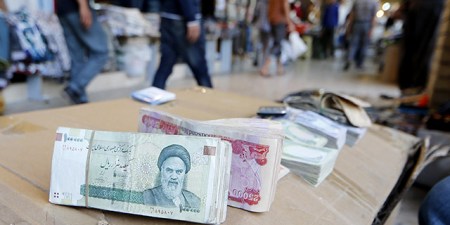
Iranian rial banknotes bearing a portrait of the late founder of the Islamic Republic of Iran, Ayatollah Ruhollah Khomeini, sit on the stand of an Iraqi money dealer on June 19, 2014, in Arbil, the capital of the autonomous Kurdish region of northern Iraq. President Hassan Rouhani said on June 18 Iran would do whatever it takes to protect revered Shiite shrines in Iraq against Sunni militants fighting the Baghdad government. AFP PHOTO/KARIM SAHIB (Photo credit should read KARIM SAHIB/AFP/Getty Images)

Iranian rial banknotes bearing a portrait of the late founder of the Islamic Republic of Iran, Ayatollah Ruhollah Khomeini, sit on the stand of an Iraqi money dealer on June 19, 2014, in Arbil, the capital of the autonomous Kurdish region of northern Iraq. (Photo credit should read KARIM SAHIB/AFP/Getty Images)

The mullahs now ruling Iran were able to hijack the revolution that sacked the U.S.-backed Shah regime back in February 1979. However, the 38-year report card left by the mullahs has only raised extreme anger throughout the Iranian society.

Numbers are very vivid in revealing the undeniable atrocities caused by the mullahs’ disastrous policies.

The daily trend of continuous executions in Iran has raised anger amongst the international community for years. Iran is considered the number one executioner per capita.

The number of executions in Iran “paints a sinister picture of the machinery of the state carrying out premeditated, judicially-sanctioned killings on a mass scale,” according to Amnesty International.

Suicides are also on the rise, especially amongst women, ranking Iran first in the Middle East and third in the world. There are also reports of a growing number of teenagers committing suicide.

Drug addiction is yet another disastrous result of the mullahs’ rule in Iran. The amount of drugs spreading amongst women and teenagers is skyrocketing and state-run media are citing experts estimating at least 8 million Iranians are suffering from this dreadful phenomenon.

Iran’s roads are even considered very dangerous, as the mullahs refuse to allocate the necessary budget to provide safe passages. 20,000 people die each year in Iran and 300,000 injured (150% more than the global average). Iran’s annual road accident casualty statistics are even compared to an all-out war.

Poverty has increased to an extent that many Iranians have resorted to gathering recyclable products, food stuffs and other trash to make ends meet, and the homeless sleeping in pre-dug graves.

All the while Iran is a country sitting on a vast sea of crude oil and natural gas, with new reports of 2 billion barrels of shell oil discovered in western Iran.

The country’s economy, however, has nosedived to such an extent that more than 50% of the industrial units have gone bankrupt or are on the verge of bankruptcy.

Unemployment is now a critical and increasing crisis. Nearly 15 million people are unemployed in Iran, according to an Iranian economy expert.

The mullahs’ policies have literally destroyed the entire “middle class” in Iran, leaving the population divided between a small percentage with massive riches, and a high percentage living in poverty.

“30% of the country’s population is hungry and have no bread to eat,” said Ali Akbar Sayari, Deputy Health Minister in the cabinet of Iranian President Hassan Rouhani.

Iran has an urban population of 65 million, of which one third live in city outskirts comparable to shacks and slums.

“Around 20 million people are living in 53,000 hectares (204 square miles) of non-official residential areas,” according to Mohammad Saeed Izadi, Iran’s Deputy Minister of Road and Construction.

Financial corruption is spreading throughout society like cancer. The numbers have become massive and even unimaginable. Above all is the apparatus linked to Iranian Supreme Leader Ali Khamenei, whose riches value at $95 billion.

Iran’s environment is also on the verge of complete annihilation.

“If the water crisis in Iran continues, the country will soon become very similar to Somalia and 50 million Iranians will be forced to leave the country,” said Isa Kalantari, Rouhani’s advisor in water and agricultural matters.

Even the workplace is considered unsafe under the mullahs’ rule, as Iran ranks first in the world in workplace incidents.

“Iran is the world record holder in construction accidents,” said Akbar Shokat, head of the Construction Workers’ Guild Center in an interview with the state-run ISNA news agency.

Illiteracy is plaguing millions of Iranian children, depriving them of education due to their family’s economic and social problems. Iran has a population of 10 million illiterates and 10 million low-literates, according to Rouhani’s Deputy Education Minister.

Yet another repulsive custom rendered from the mullahs’ regime has been child marriages. Poverty forces families to give off their young daughters, leaving them to face unthinkable spiritual and physical damages from arranged marriages.

“43,000 girls between the ages of 10 to 15 are currently married in Iran,” according to regime officials.

This is merely a tip of the iceberg of the mullahs’ horrific track record in the past 38 years, making serious measures against this regime and in support of the Iranian people all the more necessary.

New Iron Dome interceptor tests successfully, ministry says

Posted February 23, 2017 by Joseph Wouk
Categories: Uncategorized

Source: Israel Hayom | New Iron Dome interceptor tests successfully, ministry says

Tamir interceptor, whose components are produced in a joint Israeli-American venture, is tested as part of the anti-rocket system’s ongoing upgrade, Defense Ministry says • “This significantly enhances Israel’s air defenses,” official says.

Lilach Shoval

Saudi spy chief visits Israel, Ramallah

Posted February 22, 2017 by danmillerinpanama
Categories: Iran - Saudi Arabia, Iran and Israel, Iranian missiles, Israeli security, Palestinian Authority, Ramallah, Saudi intelligence

Tags: , , , , , ,

Saudi spy chief visits Israel, Ramallah, DEBKAfile, February 22, 2017

riadhmissileseng_480

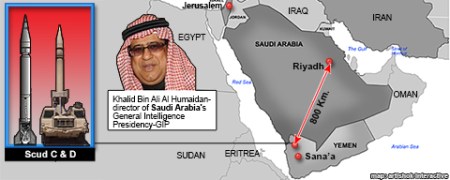
The director of Saudi Arabia’s General intelligence agency, Khalid Bin Ali Al Humaidan, paid surprise visits to Ramallah and Jerusalem on Tuesday and Wednesday, Feb. 21-22. Neither Palestinian nor Israeli officials have confirmed that the visit took place.

Last week, DEBKA Weekly carried an exclusive report that Iranian engineers were working round the clock on a project dubbed “Riyadh First,” for adding an extra 100km to the intermediate range of the Scud-C (600km) and Scud-D (700km) surface missiles, to enable them to reach the Saudi capital and explode in the center of Riyadh. The project, which is going forward at the Al Ghadi base in Big Ganesh, 48km west or Tehran, was ordered by supreme leader Ayatollah Ali Khamenei and President Hassan Rouhani.

This plan was behind the threat made by IRGC Air Force Commander Gen. Amir Ali Hajizadeh on Saturday, Feb. 11, at the start of an Iranian military exercise: “Should the enemy make a mistake, our roaring missiles will rain down on them,” he said.

Gen. Hajizadeh, who is in charge of the missile testing site, ordered all other work halted in order to concentrate on the fast-track “Riyadh First” Scud development project.

On Feb. 4, Iranian-backed Yemeni Houthis fired a missile which they claimed was a homemade Borkan with a range of 800km into Saudi Arabia. It struck the al-Mazahimiyah military camp west of Riyadh.

According to our military sources, the Houthis don’t possess a missile of that range. Their attack was in fact the first test of the newly-extended Iranian Scud, as a dress rehearsal for the real strike.

If the visit by the Saudi spy chief is confirmed, he will have come for several missions. In Ramallah, he would have warned the Palestinians not to go through with their bid to strengthen direct ties with Tehran (which was first revealed by DEBKAfile on Feb. 13). The first meeting of Iranian and Palestinian delegations has already taken place in Brussels.

In Jerusalem, Al-Huymaidan may have explored security issues related to the US-Israeli-Arab regional conference proposed by US President Donald Trump and Prime Minister Binyamin Netanyahu when they met in Washington on Feb. 15.

DEBKAfile’s sources note that the Saudi spy chief is a professional soldier and the first commoner to hold the post of Director of Saudi General Intelligence. Among his predecessors were high-ranking princes such as Bandar Bin Sultan, Turki Bin Faisal and Muqrin Bin Abdul Aziz.

Young Iranian chess grandmaster expelled from national team for not wearing hijab

Posted February 22, 2017 by danmillerinpanama
Categories: Chess, Iran - human rights, Iran and Israel, Iranian Islam

Tags: , , ,

Young Iranian chess grandmaster expelled from national team for not wearing hijab, Jihad Watch, 

Her brother Borna, 15, has also been banned after competing against Israeli player Alexander Huzman in the same tournament.

********************************

Dorsa Derakhshani is part of a new and growing movement within some Sharia states that is daring to challenge the brute strictures of Sharia, including the inferior status of women. The hijab is, of course, a symbol of that oppression and by law in the Islamic Republic of Iran, women must wear it.

The head of Iran’s Chess Federation, Mehrdad Pahlevanzadeh, was quoted as saying the Chess Federation will deal with the siblings in the “severest way possible.”

“The first step in dealing with them would be to deprive them from playing in Iran, and they won’t have a chance to be in the national team,” Pahlevanzadeh said, Azerbaijani news outlet Trend News Agency reported

dorsa-derakhshani

“Young Iranian chess grandmaster expelled from national team for not wearing hijab,” RT News, February 21, 2017:

Iran has banned 18-year-old chess grandmaster Dorsa Derakhshani from competing for the national chess team for not wearing a hijab – obligatory dress for women under Iranian law.

Derakhshani was expelled for not covering her hair with the garment – compulsory wear for women since the Islamic Revolution in 1979 – while competing as an independent player in the 2017 Tradewise Gibraltar Chess Festival.

Her brother Borna, 15, has also been banned after competing against Israeli player Alexander Huzman in the same tournament.

The siblings have subsequently been precluded from competing in future international competitions for the Islamic Republic. Dorsa obtained her International Master and Woman Grandmaster titles last year and currently lives in Barcelona, Spain, after taking up the offer of a year’s residency.

The head of Iran’s Chess Federation, Mehrdad Pahlevanzadeh, was quoted as saying the Chess Federation will deal with the siblings in the “severest way possible.”

“The first step in dealing with them would be to deprive them from playing in Iran, and they won’t have a chance to be in the national team,” Pahlevanzadeh said, Azerbaijani news outlet Trend News Agency reported.

Belgium-based Iranian gender discrimination activist Darya Safai tweeted a negative reaction about the move with the hashtag “forced hijab”

“Dorsa to me is the true feminist, not the Swedish government parading with the headscarf with [President of Iran Hassan] Rouhani,” Safai said in a Facebook post.

Safai was referring to members of the Swedish government – many of whom self-identify as feminists – who visited Iran in February.

The Swedish delegation received criticism from many observers who saw the move as a legitimization of an enforced law that violates women’s rights in Iran.

Under Iranian law, women are required to cover their hair and wear loose-fitting clothes when they appear in public and foreigners are obliged to dress modestly when entering the Islamic Republic for whatever length of time.

“By actually complying with the directives of the Islamic Republic, Western women legitimize the compulsory hijab law,” Masih Alinejad, CEO of human rights group UN Watch, wrote on Facebook.

It is the not the first time Iran’s insistence on female competitors to wear the hijab has caused controversy.

In September 2016, female players accused the World Chess Federation (FIDE) of failing to stand up for women’s rights after it said competitors must accept local law and wear hijabs during the world championship in Tehran, Iran.

Female grandmasters risked arrest if they did not cover their hair during the tournament…….

Trump’s Immigration Guidance: The Rule of Law Returns

Posted February 22, 2017 by danmillerinpanama
Categories: Immigration law enforcement, Obama and illegal immigration, Obama and law enforcement, Rule of Law, Trump agenda, Trump and immigration, Trump and law enforcement

Tags: , , , , , ,

Trump’s Immigration Guidance: The Rule of Law Returns, PJ Media, Andrew C. McCarthy, February 22, 2017

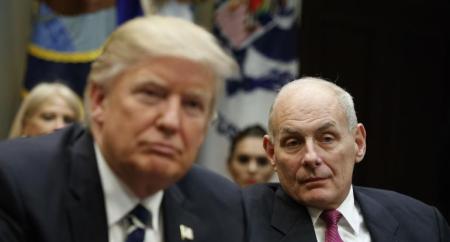
homelandsecheadHomeland Security Secretary John Kelly, right, watches during President Donald Trump’s meeting on cyber security in the Roosevelt Room of the White House in Washington, Tuesday, Jan. 31, 2017. (AP Photo/Evan Vucci)

On Tuesday, John Kelly, President Trump’s secretary of Homeland Security, published a six-page, single-spaced memorandum detailing new guidance on immigration enforcement. Thereupon, I spent about 1,500 words summarizing the guidance in a column at National Review. Brevity being the soul of wit, both the memo and my description of it could have been reduced to a single, easy-to-remember sentence:

Henceforth, the United States shall be governed by the laws of the United States.

That it was necessary for Secretary Kelly to say more than this — and, sadly, that such alarm has greeted a memo that merely announces the return of the rule of law in immigration enforcement — owes to the Obama administration abuses of three legal doctrines: prosecutorial discretion, preemption, and separation of powers (specifically, the executive usurpation of legislative power).

To the extent President Obama declined to enforce immigration law (notwithstanding his constitutional obligation to execute the laws faithfully), he did so under the guise of prosecutorial discretion. In the pre-Obama days, prosecutorial discretion was an unremarkable, uncontroversial resource-allocation doctrine. It simply meant that since resources are finite, and since it would be neither possible nor desirable to prosecute every crime, we target law-enforcement resources to get the most crime-fighting bang for the taxpayer buck. That means prioritizing enforcement action against (a) the worst offenders and (b) the unlawful causes of the activity.

This is easily illustrated by federal drug enforcement. There are comparatively few federal narcotics agents, compared, say, to police in a major city. But while both feds and cops have authority to arrest traffickers and consumers of illegal drugs, only federal jurisdiction is interstate and international. Consequently, the best use of finite federal enforcement resources is to limit them to prosecutions of significant felony importation and distribution offenses, leaving it to the states and municipalities to handle street pushers and misdemeanor violations involving the use of drugs.

Significantly, the fact that federal enforcement policy, which is made by the executive branch, does not target lesser felons or users does not mean this policy effectively repeals federal drug laws, which are written by Congress.

The non-targeted crimes are still crimes, and the feds reserve the right to prosecute them in appropriate cases (e.g., if they encounter these offenses in the course of carrying out other criminal enforcement missions).

In the area of immigration enforcement, Obama contorted this resource allocation doctrine into a de facto immunity scheme. That is, the Obama Homeland Security Department announced what it labeled enforcement “priorities.” If an illegal alien did not fit into the priorities, it was as if the alien were insulated against prosecution — effectively, it was as if there was nothing illegal about being an alien unlawfully present in the United States; it was as if Obama’s policies were a legal defense against Congress’s duly enacted laws.

This was complemented by a second legal distortion: Obama’s mangling of the so-called preemption doctrine. As we’ve noted, there are certain areas of law — like immigration and narcotics enforcement — in which the federal and state governments have concurrent jurisdiction: both are permitted to regulate and prosecute. This can work well (it generally does in drug enforcement); but it can be counterproductive if the dual sovereigns work at cross-purposes.

In some areas, like immigration, the courts have ruled that the federal government is supreme (on the dubious but now well-rooted theory that immigration law enforcement is primarily a federal responsibility). This means that the federal government has the power to preempt state action. Importantly, preemption is a power of Congress. That is, in an area of federal supremacy, states are prohibited to act in a manner that would contravene federal law.

Obama, to the contrary, took the position that states were forbidden to take action that contravened Obama immigration policy.

This was brought into sharp relief by the administration’s conflict with the state of Arizona. Far from seeking to countermand federal law, Arizona sought to enforce Congress’s statutes. Yet, Obama took the position that the state was bound not by Congress’s statutes but by Obama’s proclaimed enforcement policies — even if those amounted to non-enforcement of Congress’s statutes.

This was a perversion of both preemption and prosecutorial discretion. As long as Arizona was taking action consistent with federal law, its enforcement measures could not be preempted. Moreover, even if Arizona’s enforcement policy was broader than Obama’s, that should not have mattered: as we’ve seen, a federal exercise of prosecutorial discretion just means lesser crimes are not targeted, not that they are no longer crimes. If Arizona took action against those lesser crimes, that was completely appropriate; it was filling a gap in federal enforcement, not defying federal law.

The obstacles imposed by Obama’s immigration proclamations bring us to the third legal abuse: the usurpation of legislative authority. In effect, Obama’s announced priorities became not guidelines for immigration enforcement but new federal laws. According to the administration, only those aliens who fit Obama’s guidelines could be prosecuted. The Homeland Security Department was instructed to halt enforcement action at the earliest possible stage — i.e., once it was understood that an illegal alien did not fit a priority category, all investigative activity was to stop, even though it was known that the alien was acting illegally.

In effect, the Obama priorities operated like law. They controlled what federal investigators and prosecutors could do, and they were used to block states from enforcing their own laws. In this, at least for as long as Obama was president, they supplanted Congress’s laws — a clear violation of separation of powers.

All the Trump guidance announced in Secretary Kelly’s memo really does is repeal Obama’s decrees. The memo essentially says: the law of the United States is back to being the law of the United States. That’s the way it’s supposed to be.

Sweden: Hate Speech Just for Imams

Posted February 22, 2017 by danmillerinpanama
Categories: Freedom of speech, Hate speech, Islam - submission, Islam and homosexuals, Islam and human rights, Islam and Jews, Islamic invasion, Islamisation, Sweden

Tags: , , , , , , , ,

Sweden: Hate Speech Just for Imams, Gatestone Institute, Judith Bergman, February 22, 2017

In Sweden, comments that object to sexual violence against women in the Quran are prosecuted, but calling homosexuality a “virus” is fine.

Antisemitism has become so socially acceptable in Sweden that anti-Semites can get away with anything, and no one even notices, as Nima Gholam Ali Pour reports.

One of Sweden’s main news outlets, in fact, described anti-Semitism as simply a different opinion. Clearly, in the eyes of Swedish authorities, neither homosexuals nor Jews count for much.

Swedish authorities also give large sums of money to organizations that advocate violence and invite hate preachers who support terrorist organizations such as ISIS. One of the speakers SFM hired was Michael Skråmo, who has publicly called on his fellow Muslims to join ISIS and has appeared in propaganda videos, posing with assault rifles alongside his small children.

Are some individuals receiving preferential treatment under Sweden’s “hate speech” laws? It seems that way.

Under the Swedish Penal Code, a person can be held responsible for incitement if a statement or representation made “threatens or disrespects an ethnic group or other such group of persons with regards to race, color, national or ethnic origin, religious belief or sexual orientation”.

In 2015, the imam at Halmstad mosque, Abu Muadh, said that homosexuality was a “virus” from which parents were obliged to protect their children.

The Swedish Federation for Lesbian, Gay, Bisexual, Transgender and Queer Rights (RFSL) filed a legal complaint in October 2015. “[M]any people are listening [to the imam] and there is a risk that the opinions and other expressions of homophobia will spread among believers, as they attach great importance to their representatives’ words”, said Ulrika Westerlund, chairman of RFSL.

The Swedish legal establishment however, seemed entirely unconcerned; the imam was not prosecuted.

“[F]or something to be incitement, it needs to reach a certain level and in this context, the assessment is that this statement does not reach that level”, said Martin Inglund, acting investigation officer at Halmstad police. He added that an assessment had been made based on freedom of religion, as well as the European Convention on Human Rights. It took the police only one week to make the decision not to prosecute the imam.

“It is a strange decision, said Jonnié Jonsson, chairman of RFSL Halland, “I do not think anyone has the right to violate other people in the name of religion”.

Then there is the recent case of Stefan Vestling, a local politician from the Sweden Democrat Party. He was recently prosecuted and convicted for “incitement against an ethnic group”, when he wrote the following comment on the official Facebook page of the Sweden Democrats Party in Norberg in December 2014:

“Muslims who have ended up in the ‘diaspora’ are at war. A Muslim who lives in Sweden is thus living in a war zone, where it is allowed to rape a woman, as this is a Muslim right according to the Quran. [A Muslim] is allowed to have sex with women who have been conquered in war… that is to say the infidels’ women (Quran Sura 4:3, 4:24). Easiest for ‘Swedish’ horny Muslims is of course to join ISIS where they can have their sick, devilish desires fully satisfied”.

The prosecutor failed to convince the district court that Vestling had committed a crime. “Freedom of expression includes the right to convey such information and opinions and ideas that offend shock or disturb” the court wrote in its ruling. However, at the Court of Appeals in Svea, in December 2016, the court found that Vestling’s post had been offensive to Muslims. The appeals court seemingly had no problem with the first part of Vestling’s post. It was the last sentence, “Easiest for ‘Swedish’ horny Muslims is of course to join ISIS where they can have their sick, devilish desires fully satisfied”, which was considered to be in violation of the Penal Code. Vestling was handed a suspended jail sentence and a fine. He has appealed the verdict to the Supreme Court.

Both the statements made by Abu Muadh and the statements made by Stefan Vestling were offensive; yet the Swedish authorities ended up protecting the imam from legal repercussions, even though prosecuting him would send an important signal to other Muslim preachers who view homosexuality in a similar way. That they do has been documented by a Swedish-Muslim blogger, who wrote:

During my years as a Muslim, I have visited several Swedish mosques from north to south. In all the mosques, homophobia was the norm. I have heard worse things than “homosexuality is a virus.” In no mosque, I repeat not one, have I come across teachings that tolerate homosexuality… The fact that the media act as if they were astonished [at Abu Muadh’s statement] shows how little contact they have with Muslim environments in Sweden. For those who have been on the “inside”, who have visited mosques and spent time with Muslims who are active in the mosques, the imam’s views [sound] completely mainstream.

Swedish experts largely consider Abu Muadh a radical, who moves in Salafist circles and has encouraged jihad, glorifying martyrdom in the battle to spread Islam. In a video clip on YouTube, he urges people who have “sinned” to wage jihad to be forgiven by God. In an interview with Hallandsposten in June 2016, he said that Muslims should not befriend unbelievers. He has argued that Muslims must not emulate the dress and haircuts of “kuffars” (infidels) and has declared 95% of all TV programs “haram” (forbidden).

In Sweden, comments that object to sexual violence against women in the Quran are prosecuted, but calling homosexuality a “virus” is fine.

Homosexuals are not the only ones to find themselves among those groups that Swedish society apparently no longer count as minorities worthy of protection. Anti-Semitism has become so socially acceptable in Sweden that anti-Semites can get away with anything, and no one even notices, as Nima Gholam Ali Pour reports. One of Sweden’s main news outlets, in fact, described antisemitism as simply a different opinion. Clearly, neither homosexuals nor Jews count for much in the eyes of Swedish authorities.

In addition, Swedish authorities give large sums of money to organizations that invite hate preachers who support terrorist organizations such as ISIS and Al Qaeda.

The Gothenburg-based nonprofit organization, Swedish Federation of Muslims (SFM,) was handed a government subsidy of 535,200 SEK [$60,000] in 2016. This is in addition to 150,000 SEK [$17,000] that SFM received from the city of Gothenburg.

SFM applied for the money “to combat Islamophobia”, which the organization considers “one of the biggest problems in Sweden right now”. One of the speakers SFM hired was Michael Skråmo, who has publicly called on his fellow Muslims to join ISIS. Now, calling himself Abdul Samad al Swedi, he has appeared in propaganda videos, posing with Kalashnikov assault rifles alongside his small children, outside Kobane in Syria. Abu Muadh is also a regular speaker.

1149Michael Skråmo, a Swedish convert and ISIS jihadist, brought his family to Syria. He has also urged Muslims in Sweden to bomb their workplaces.

Terror researcher Magnus Ranstorp said that he was surprised that SFM had been awarded state grants. “I see lots of question marks. We’re talking about a group that invited hate preachers, whose Salafist orientation is in many ways the opposite of tolerance”, he said. The decision to award SFM government subsidies also runs counter to the government’s agreement with the four conservative Alliance parties that no public money should go to advocate violence.

What is the Swedish authorities’ response to the official granting of money to organizations that host extremists? “Of course this is serious, and it is our view that this must be factored into future contribution assessments”, said Daniel Norlander, chief secretary of the National Authority Against Violent Extremism. The authority apparently does not think that the money should be returned or that there should be any sanctions. After all, we are only talking about preachers of violent jihad.