‘Abd Al-Rahman Al-Rashed: We Must Form ‘Arab NATO’ To Confront Iran

Posted February 22, 2017 by danmillerinpanama
Categories: Arab nations, Iran - Saudi Arabia, Iran and Iraq, Iran and Syria, Iran scam, Iranian ideology, Iranian military, Iranian provocations, Iranian proxies, Obama and Iran, Trump and Iran

Tags: , , , , , , , , , ,

‘Abd Al-Rahman Al-Rashed: We Must Form ‘Arab NATO’ To Confront Iran, MEMRI, February 22, 2017

In February 2017, prominent Saudi journalist ‘Abd Al-Rahman Al-Rashed, the former editor of Al-Sharq Al-Awsat and former director of Alarabiya TV, published two articles calling to take a firm position vis-à-vis Iran and even form an “Arab NATO” to confront the alliance Iran has formed with Iraq and Syria.

The following are excerpts from the articles, as published in English by Al-Sharq Al-Awsat and Alarabiya, respectively:
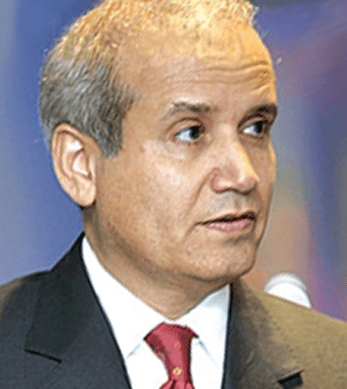
alrashed‘Abd Al-Rahman Al-Rashed (image: alarabiya.net)

In one article,[1] Al-Rashed criticized the claim that U.S. President Donald Trump’s declarations against the Iran agreement strengthen the radicals there. He argued that Iran’s belligerence since the signing of the agreement proves that openness and flexibility towards it, like the policy pursued by Obama, only encourage it to escalate its aggression. He added that the radical camp in Iran has controlled the country since the Islamic Revolution, while the moderate camp is merely a front used to encourage the West to be lenient with Iran. Hence, policy towards Iran should be firm:

“Nothing happened during three decades to prove that there’s real competition between radicals and moderates inside the [Iranian] ruling command. Major events rather confirmed that the authority was in fact under the control of the radicals, while moderates were just front men. President Hassan Rouhani and his FM Zarif both represented the moderates and they succeeded [in] winning over the administration of former president Barack Obama. They also managed to convince the administration that lifting sanctions and encouraging Iran’s openness were [in] the interest of moderate figures, the region and the whole world.

“Once again, evidence suggested this assumption was wrong. [The] Iranian leadership became more aggressive than ever and for the first time since the establishment of the Islamic Republic, the regime dared to expand its military activity outside its borders. It is currently participating in and funding four wars outside of Iran. All of this was possible due to the nuclear deal that paved the way for better relations, trade and activity and kept silent over Iran’s threats to the region.

“Trump’s extremist rhetoric is a natural outcome of the disappointment [that] prevailed [in] Washington due to Iran’s behavior after signing the deal. Things will keep on getting worse unless a strict international position against Iran’s adventures is taken and unless Iran is forced to end the chaos it is funding in the region and the world.

“Those familiar with the Iranian regime’s [actions] cannot believe the excuses being made by Iran’s allies which stipulate that being lenient with Iran [may cause it to have a] positive [attitude to] the rest of the world. The nature of the regime in Tehran is religious with a revolutionary ideology. It has a political agenda that has not changed much since it attacked the American embassy in Tehran and held diplomats hostage [in 1979]. The same logic leads us to conclude that Iran will dominate [by] using power via its proxies and militias across the region and [by] encouraging and supporting the rebellious behavior of certain local parties in neighboring countries.

“Iran has not changed much since it announced it plans to export revolutions to the world. The only change that happened is that its financial and military situations improved a lot thanks to the nuclear deal it signed with the West.”

In another article,[2] Al-Rashed wrote that Iran has exploited the political vacuum that formed in the region in recent years, as well as the Obama administration’s policy, including the nuclear agreement with it, to expand its influence in Iraq, Syria and Yemen. In light of this, he advised: “Military cooperation, under any umbrella, is a good idea and a necessary step, especially if expanded beyond [military cooperation]. Establishing an alliance to confront Iran is an essential balance to respond to its military alliance that includes Iraq and Syria.

“Iran also cooperates with Russia and the latter has a military base in Iran. The Russians strongly participate in the war in Syria alongside this Iranian alliance. Tehran has strengthened its alliance by bringing armed militias from Pakistan, Iraq, Lebanon and other countries into Syria and they are fighting there under its banner. Iranian forces, in the guise of ‘experts,’ are fighting in Iraq and to some extent manage the conflict there. Therefore, establishing an Arab NATO… remains a natural reaction to Iran’s ‘Warsaw Pact.'”


[1] For the Arabic version of this article see: Al-Sharq Al-Awsat (London), February 12, 2017; for the English version see: english.aawsat.com, February 13, 2017. The English text has been lightly edited for clarity.

[2] For the Arabic version of the article see: -Sharq Al-Awsat (London), February 20, 2017; for the English version see: alarabiya.net, February 21, 2017. The English text has been lightly edited for clarity.

An Émigré Explains Why The U.S. Should Want Russia As An Ally

Posted February 22, 2017 by danmillerinpanama
Categories: Cold war, Democrats and Russia, FDR and Stalin, Foreign policy, History, Hypocrisy, Leftists, Michael Flynn, President Trump, Putin, Russia, Russia and Islamic terrorism, Russia and U.S., Trump agenda, Trump and Islamic terrorism, Trump and Russia

Tags: , , , , , , , , , , , , , , ,

An Émigré Explains Why The U.S. Should Want Russia As An Ally, TheFederalist, , February 22, 2017

(Please see also, Is a Trump-Putin Detente Dead? — DM

I am a Russian-born U.S. citizen. Since my old country is all in the news now, unsurprisingly, several people have asked me about the latest spat between the two countries. I have rounded up a few frequently asked questions (FAQ) in no particular order, and here they are.

Question: Is Russia our foe or ally?

Answer: Neither. Lord Palmerston famously quipped, “Great Britain has no friends, only interests,” and the same applies to other countries. The United States and the Union of Soviet Socialist Republics (USSR) were geopolitical adversaries during the Cold War. Prior to that, they were allies in World War II when both faced an existential threat from Nazi Germany and Japan. Now both Russia and the United States are facing a threat of radical Islam, which may bring the two countries together again.

Q: But can we cooperate with the Russians after they captured large chunks of Ukraine and Georgia?

A: Well, the Soviet Union captured Lithuania, Latvia, and Estonia in 1939, yet Franklin Delano Roosevelt and Winston Churchill cooperated with Joseph Stalin and actively supported his war efforts. The West never recognized the annexation of the Baltic republics; it just put that matter on the back burner for the sake of a more urgent goal. Henry Kissinger calls this realpolitik.

Q: Donald Trump has picked Rex Tillerson, the former CEO of Exxon Mobile, as his secretary of State. Tillerson has warm relations with Russian President Vladimir Putin. How do we know which side Tillerson is on?

A: Let me cite a historical precedent. Another famous American oil executive was friendly with Soviet leaders. His name was Armand Hammer. He had numerous personal and business ties with the USSR, starting in the 1920s. In 1957, Hammer became president and CEO of Occidental Petroleum. He used his connections to end the Cold War between the two countries. According to his biographer, Hammer was “a go-between for five Soviet General Secretaries and seven U.S. Presidents.” Paradoxically, Hammer’s efforts on behalf of the USSR made him a darling of the American Left, even though he supported the Republican Party.

Q: Has Putin ordered the murder of Russian journalists and other political opponents?

A: That has not been proven conclusively, but is plausible. Regardless of whether that is the case, it should not determine American foreign policy. That was clear to FDR and Churchill, who were well aware of Stalin’s atrocities.

Q: Did Russia side with Trump in the 2016 U.S. presidential race?

A: Of course, it did. Nations do take sides and interfere in other nations’ internal affairs all the time. For example, the United States actively encouraged the Arab Spring in several countries and even supported Syrian and Libyan “moderate” rebels. It was the job of the sitting U.S. president to prevent any Russian interference in U.S. elections.

Q: Is Russian spying on U.S. institutions a new phenomenon?

A: Absolutely not! However, things change. Between the 1940s and the 1960s, it was the conservative Right that was alarmed by Russian spying and Communist infiltration of the federal government. The Left dismissed that concern, mocking it as looking for “reds under the beds.” Julius and Ethel Rosenberg, who were convicted of spying for Russia and executed, became martyrs of the Left. Even in the 1970s when I arrived in the United States, the Left’s favorite motto was “it’s better be red than dead.” Things really changed in the 1980s.

Q: What happened in the 1980s?

A: When Ronald Reagan became president, he faced fierce opposition from the Left. The media elite ridiculed him as an unsophisticated cowboy and right-wing warmonger for calling the USSR an evil empire. The opposition became violent when Reagan proposed an anti-missile defense system, which the media dismissed as a “star wars” program. However, when an opportunity came up, Reagan held productive summits with former Russian President Mikhail Gorbachev. These summits eventually led to the end of the Cold War.

Q: Is Putin a reincarnation of Stalin?

A: The two leaders represent two different generations separated by a period of 70 years. During those 70 years, the world has changed, and so has Russia. Stalin ruled Russia with an iron fist, while today’s Russians enjoy a degree of freedom. Putin is more pragmatic than Stalin. Yet contemporary Russian society is still quite different from its Western European counterparts, which is perhaps just fine, given that the latter are in a deep crisis now.

Q: Can the United States rely on Russia in the war on radical Islamic terrorism?

A: If it were a matter of life or death, I would always choose to have Russia on my side, rather than a Western ally, such as France. When Russians wage a war, they do it to win, not to satisfy lawyers by following every rule specifying acceptable ways of killing the enemy.

Here is an example. Somalian pirates threatened international shipping in the Indian Ocean between 2005 and 2013 by taking hostages. The American, French, Italian, and other navies rescued many hostages, caught pirates, and sent them to their countries. The arrests, trials, appeals, and imprisonment cost hundreds of millions of dollars. According to a Guardian report, there was a fear that “trials in European courts would encourage, rather than deter, pirates from committing crimes of piracy.”

In contrast, when a Russian destroyer rescued a Russian tanker with its crew from pirates in 2010, they did not arrest the pirates. They disarmed the pirates and set them adrift in an inflatable boat. The released pirates did not reach the coast. Rumor has it that the rescuers made a hole in the boat before releasing it.

The ‘deep state’ is real. The ‘alt right’ is fake. – The Washington Post

Posted February 22, 2017 by Joseph Wouk
Categories: Uncategorized

Source: The ‘deep state’ is real. The ‘alt right’ is fake. – The Washington Post

February 21 at 4:32 PM

Here’s a fact for the media to chew on: The “deep state” is here. As outlined in Foreign Policy, the concept of the deep state is nothing new.

But the Trump presidency may serve as the galvanizing force that links some of the formal established Democratic opposition forces, including MoveOn.org, government unions and Black Lives Matter with the informal deep-state cadre of disgruntled liberal bureaucrats, the hostile mainstream media and the usual suspects on the left. It’s a troubling phenomenon, with anti-Trump organizations and Democratic-aligned civil servants conspiring to actively work against the incumbent government.

There might not be any central command guiding the deep-state actions, but it’s not hard for card-carrying Democratic party members, the mainstream media, liberal think tanks, government unions and other anti-Republican liberals of various stripes to naturally form into a collective grain that runs contrary to whatever elected Republicans in Congress and now in the White House want to accomplish. It’s just like when a school of fish move in unison, choreographed not because of some planned effort, but because it is in their nature. The bias against President Trump has become frantic, and the Democrats and their allies in the media overreach almost daily in attacking the president and Republicans in general.

“Deep state” is a sexy new label being used in Washington to describe embedded anonymous bureaucratic bias against President Trump and Republican rule. Specifically, the deep state is leaking documents, making confidential conversations public, pushing rogue social media accounts and otherwise acting in an underhanded manner to discredit the president, his Cabinet and the policy objectives of the Republicans. The use of encrypted chat programs to communicate and the continued leaks to various media outlets are just the start. Their tactics are beginning to spread to other Democratic sympathizers and form a continuous partisan assault both from within the government and from outside groups.

At some level, this shouldn’t be surprising. The 2016 election was so vitriolic, and the Democrats’ belief that Hillary Clinton would be the next president was so strong, that their defeat carried extra weight. Members of the Democratic coalition are already firmly entrenched within the federal government and among the surrounding intelligentsia. They have the ability to feed their supporters information, giving the activists more reason to protest, which in turn conflates the liberal hype around the actions of the Trump administration and Republicans in Congress. It’s a vicious cycle.

At the same time all this is going on, the left has taken to painting Republicans with a broad brush as the “alt-right.” Well, as best I can tell, the alt-right is just a new way for the left to call Republicans racists and Nazis without actually having to say those terms out loud. To me, the deep state is real. The alt-right is not. The deep state may not be fully developed quite yet, but as the Democrats regain their footing and begin to coordinate and try to further and further damage the president’s credibility, it will have a detrimental impact on how our democracy functions and will further erode the public’s trust in government.

Hezbollah, Hamas have no fight in them, IDF chief says

Posted February 22, 2017 by Joseph Wouk
Categories: Uncategorized

Source: Hezbollah, Hamas have no fight in them, IDF chief says | The Times of Israel

Gadi Eisenkot says recent threats by Lebanese terror group meant to conceal its ‘morale crisis’; Gazans ‘unwilling’ to launch new war

February 22, 2017, 5:21 pm
IDF Chief of Staff Gadi Eisenkot attends a Defense and Foreign Affairs Committee meeting at the Knesset, on February 22, 2017. (Yonatan Sindel/Flash90)

IDF Chief of Staff Gadi Eisenkot attends a Defense and Foreign Affairs Committee meeting at the Knesset, on February 22, 2017. (Yonatan Sindel/Flash90)

IDF Chief of Staff Gadi Eisenkot downplayed the chances for a fresh war with either the Hezbollah or Hamas terror groups in the near future, saying they were both uninterested in a new conflict and, in the Lebanese group’s case, demoralized as well.

Speaking at a closed-door meeting of the Knesset’s Foreign Affairs and Defense Committee, Eisenkot said that despite having gained battlefield experience as a result of its military invention in Syria on behalf of the regime of Bashar Assad, Lebanese terror group Hezbollah had been left significantly weakened the fighting in Syria.

“Hezbollah’s [military] operations in Syria have brought about a morale and financial crisis within its ranks,” the Hebrew-language Ynet news site quoted him as saying.

Eisenkot’s comments regarding Hezbollah’s intentions were made following a number of hawkish statements from the Shiite organization’s leader Hassan Nasrallah in the past week, including a threat Monday that the group will not abide by any “red lines” in a future war with Israel.

Hezbollah head Hassan Nasrallah speaking to Iranian state television, in a clip broadcast on February 20, 2017. (screen capture: Twitter)

Hezbollah head Hassan Nasrallah speaking to Iranian state television, in a clip broadcast on February 20, 2017. (screen capture: Twitter)

“In the face of Israel’s threats to destroy Lebanon’s infrastructure, we will not abide by red lines, especially regarding Haifa’s ammonia and the nuclear reactor in Dimona. Hezbollah possesses the full courage for this,” he said, according to an English translation of his comments reported by the Naharnet website.

Nasrallah also threatened to strike the nuclear facility in the southern Israeli city of Dimona during a speech last week and claimed credit for a decision to shut down the ammonia facility, which could cause thousands of deaths if hit by a missile.

During Wednesday’s Foreign Affairs and Defense Committee session, Eisenkot also addressed the threat posed by Hamas on Israel’s southern border, saying he does not believe the terror group has any “willingness” to launch an offensive against Israel at the current time.

IDF Chief of Staff Gadi Eisenkott (C), Chairman of the Foreign Affairs and Defense Committee Avi Dichter (R) and Opposition Leader Isaac Herzog attend a committee meeting at the Knesset, on February 22, 2017. (Yonatan Sindel/Flash90)

IDF Chief of Staff Gadi Eisenkott (C), Chairman of the Foreign Affairs and Defense Committee Avi Dichter (R) and Opposition Leader Isaac Herzog attend a committee meeting at the Knesset, on February 22, 2017. (Yonatan Sindel/Flash90)

Eisenkot’s comments on Hamas were made in regards to the implications of Yahya Sinwar, a senior official in the group’s military wing the Izz a-Din al-Qassam Brigades, becoming Hamas’s new leader in the Gaza Strip.

“The separation of the political and military leadership in Hamas is blurred to the point of being eliminated altogether,” Channel 10 quoted the IDF chief of staff as saying. “I don’t see a willingness in Gaza to launch a campaign against us.”

Since Sinwar was selected as Hamas leader in Gaza in secret internal elections earlier this month, there has been speculation that the terror group may become more unrestrained in its approach toward Israel militarily, as even by the standards of the Islamist organization he is considered an extremist.

However, senior Hamas official Mousa Abu Marzouk told the pan-Arab news channel al-Araby that despite the election of Sinwar, the policies of Hamas will not undergo any “radical change.”

Then-Hamas leader Ismail Haniyeh (L) and freed Palestinian prisoner Yahya Sinwar, a founder of the terror group's military wing, wave as supporters celebrate the release of hundreds of inmates in a swap for captured IDF soldier Gilad Shalit, in Khan Yunis, southern Gaza on October 21, 2011. (AFP/Said Khatib)

Then-Hamas leader Ismail Haniyeh (L) and freed Palestinian prisoner Yahya Sinwar, a founder of the terror group’s military wing, wave as supporters celebrate the release of hundreds of inmates in a swap for captured IDF soldier Gilad Shalit, in Khan Yunis, southern Gaza on October 21, 2011. (AFP/Said Khatib)

Sinwar, sentenced to life in 1989 for murdering Palestinian collaborators with Israel, spent 22 years in Israeli prisons before being released in the 2011 prisoner exchange deal for IDF soldier Gilad Shalit.

Despite being released under the terms of the deal, Sinwar was one of the main opponents of the Shalit exchange deal that saw him freed because he regarded the terms, one Israeli soldier for 1,027 prisoners, as a surrender to Israel’s conditions.

Since his release, he has managed to amass a great deal of political power in Hamas, and was already widely considered the strongest man in Gaza even though he was not the head of Hamas’s military or political wing.

In September 2015, Sinwar was added to the US terrorism blacklist alongside two other members of Hamas’s military wing.

Times of Israel staff and AFP contributed to this report.

Iran ready to give U.S. ‘slap in the face’: commander

Posted February 22, 2017 by Joseph Wouk
Categories: Uncategorized

Source: Iran ready to give U.S. ‘slap in the face’: commander

Reuters

Head of Iran's Revolutionary guards ground forces Pakpour attends a funeral ceremony in Tehran
Head of Iran’s Revolutionary guards ground forces Mohammad Pakpour (C) attends a funeral ceremony in Tehran October 20, 2009. REUTERS/Morteza Nikoubazl

DUBAI (Reuters) – The United States should expect a “strong slap in the face” if it underestimates Iran’s defensive capabilities, a commander of the elite Revolutionary Guards said on Wednesday, as Tehran concluded war games.

Since taking office last month, U.S. President Donald Trump has pledged to get tough with Iran, warning the Islamic Republic after its ballistic missile test on Jan. 29 that it was playing with fire and all U.S. options were on the table.

“The enemy should not be mistaken in its assessments, and it will receive a strong slap in the face if it does make such a mistake,” said General Mohammad Pakpour, head of the Guards’ ground forces, quoted by the Guards’ website Sepahnews.

On Wednesday, the Revolutionary Guards concluded three days of exercises with rockets, artillery, tanks and helicopters, weeks after Trump warned that he had put Tehran “on notice” over the missile launch.

“The message of these exercises … for world arrogance is not to do anything stupid,” said Pakpour, quoted by the semi-official news agency Tasnim.

“Everyone could see today what power we have on the ground.” The Guards said they test-fired “advanced rockets” and used drones in the three-day exercises which were held in central and eastern Iran.

As tensions also mounted with Israel, a military analyst at Tasnim said that Iran-allied Hezbollah could use Iranian made Fateh 110 missiles to attack the Israeli nuclear reactor at Dimona from inside Lebanon.

Hezbollah leader Sayyed Hassan Nasrallah said last Thursday that his group, which played a major role in ending Israel’s occupation of Lebanon, could strike Dimona.

“Since Lebanon’s Hezbollah is one of the chief holders of the Fateh 110, this missile is one of main alternatives for targeting the Dimona installations,” Hossein Dalirian said in a commentary carried by Tasnim.

Iran says its missile program is defensive and not linked to its 2015 nuclear deal with world powers. During the U.S. election race, Trump branded the accord “the worst deal ever negotiated”, telling voters he would either rip it up or seek a better agreement.

(Reporting by Dubai newsroom; Editing by Sami Aboudi and Alison Williams)

Benjamin Netanyahu lauds Trump for taking ‘strong stand against antisemitism’

Posted February 22, 2017 by Joseph Wouk
Categories: Uncategorized

Source: Benjamin Netanyahu lauds Trump for taking ‘strong stand against antisemitism’ – Israel News – Jerusalem Post

By
February 22, 2017 13:40
In Australia, PM also says the Golan “will never go back to Syria, it will always remain a part of Israel.”

Netanyahu Trump

 PM Netanyahu and President Trump. (photo credit:AVI OHAYON – GPO)

SYDNEY — Prime Minister Benjamin Netanyahu on Wednesday commended US President Donald Trump for taking “a strong stand against antisemitism.”

Netanyahu, who started a five day-visit to Australia on Wednesday, made the remarks to loud applause in a packed synagogue in Sydney regarding comments Trump made the day before about a resurgence of antisemitism in the US.

“The antisemitic threats targeting our Jewish community and community centers are horrible, and are painful, and a very sad reminder of the work that still must be done to root out hate and prejudice and evil,” Trump said.

Trump says antisemitism is ‘horrible’ and has to stop (credit: REUTERS)

Netanyahu, during his speech that extolled the tremendous relations between Israel and Australia, received equally fervent applause when he said that the Golan “will never go back to Syria, it will always remain a part of Israel.”

Earlier on Wednesday, Australia rolled out a warm, red-carpet, 21-gun-salute welcome Netanyahu, the first ever sitting prime minister to visit this country whose friendship toward Israel and the Zionist cause dates back a century.

Using words like “miracle” and “envy of the world” to describe Israel, Prime Minister Malcolm Turnbull greeted Netanyahu and his wife Sara on the lush lawns of Admiralty House in Sydney, the residence of Australia’s Governor-General.

With the beautiful backdrop of the harbor and the iconic Sydney Opera House in sight, an honor guard greeted Netanyahu and Turnbull and played the Israeli anthem Hatikva twice.

The warmth of Turnbull’s reception was not relegated to the ceremonious welcome, as the Australian prime minister also penned an op-ed in Wednesday’s edition of The Australian under the headline, “Israeli PM visit cements a warm, old friendship.”

An excerpt from the strongly pro-Israel piece appeared as well on the paper’s front page, titled “Turnbull blasts UN over vote on Israel.”

“My government will not support one-sided resolutions criticizing Israel of the kind recently adopted by the UN Security Council and we deplore the boycott campaigns designed to delegitimize the Jewish state,” he wrote.

Turnbull echoed these sentiments during the two public appearances he had with Netanyahu in the first eight hours of his arrival — at a press conference following an initial 90-minute meeting, and at a large event with some 400 Israeli and Australian business people.

At the press conference Turnbull reiterated Australia’s long-standing support for a two-state solution, but said that it must come as a result of direct negotiations. At the same time, the prime minister said Israel cannot be expected to put its security at risk, and that the first duty of any prime minister — both himself and Netanyahu included — is the security of his people.

Speaking about a possible resolution to the Arab-Israeli conflict, Netanyahu said that Israel wants the Palestinians to have all the power to govern themselves, but not the military of physical power to threaten it. The question of a Palestinian state, he said, repeating his statement from last week’s visit to Washington, was not over “labels,” but rather over substance.

The premier added that a Palestinian state must recognize Israel as a Jewish state, and that Israel must retain final security control over the territory west of the Jordan River.

Both Netanyahu and Turnbull were each asked what could have been perceived as embarrassing questions: Netanyahu was asked about his relationship with Australian billionaire Packer whose name has been tied to one of the affairs for which he is under investigation, and Turnbull was asked about the now famously difficult first telephone conversation he had with Trump.

Netanyahu said that he was not at all concerned about the investigation into his relationship with Packer, and he repeated in English the Hebrew mantra he has been using since the affairs first broke: “I think nothing will come of it because there is nothing there, except friendship, which is a good thing.”

Regarding the phone call with Trump, Turnbull chuckled when asked whether Netanyahu might help repair the relationship between the US and Australia after that call.

“You really shouldn’t believe everything you read in the newspapers,” he said of the infamous call, about which it was reported that Trump allegedly hung up on Turnbull.

“That is absolutely not true,” he said, adding that the call was courteous,  “frank and forthright,” and ended with Turnbull thanking Trump for “his commitment to the arrangements [regarding taking in refugees} that had been entered into by his predecessor.”

Statements by PM Netanyahu and Australian PM Turnbull – YouTube

Posted February 22, 2017 by Joseph Wouk
Categories: Uncategorized

PM Turnbull: “Israel is a miraculous nation…”


US torpedoed regional peace bid by trying to impose terms, Israeli official says

Posted February 22, 2017 by Joseph Wouk
Categories: Uncategorized

Source: US torpedoed regional peace bid by trying to impose terms, Israeli official says | The Times of Israel

Secret effort to solve Israeli-Palestinian conflict, which saw a Feb. 2016 Aqaba summit with Netanyahu, Kerry, Sissi, Abdullah, was doomed by US, official close to PM claims

February 22, 2017, 1:09 am
Benjamin Netanyahu, center, at the weekly cabinet meeting  in Jerusalem on February 19, 2017. (Olivier Fitoussi/POOL)

Benjamin Netanyahu, center, at the weekly cabinet meeting in Jerusalem on February 19, 2017. (Olivier Fitoussi/POOL)

The administration of former US president Barack Obama ruined the chance for a regional peace deal to solve the Israeli-Palestinian conflict last year by trying to impose its terms for the accord, a senior Israeli official reportedly said late Tuesday.

Prime Minister Benjamin Netanyahu reportedly confirmed on Sunday that he attended a secret US-led summit with Arab leaders in early 2016 meant to jumpstart efforts toward a regional peace push, but told Likud ministers that he, and not then-US secretary of state John Kerry, was the initiator of the meeting.

The February 21, 2016 meeting in the Jordanian port city of Aqaba was attended by the prime minister, Kerry, Egyptian President Abdel-Fattah el-Sissi and Jordan’s King Abdullah.

The first report about the summit, published in Haaretz Sunday, said Kerry had started the ball rolling with a US-crafted two-state proposal for ending the conflict, which would include broad Arab recognition of Israel as a Jewish nation-state, a key demand Netanyahu has sought in peace talks with Palestinian Authority leaders.

Netanyahu ultimately expressed doubts over Kerry’s plan and presented his own, which would have brought Gulf states into the bargain alongside Jordan and Egypt, but the initiative never got off the ground, according to that report.

The revelations of the year-old initiative came just days after Netanyahu called for such an initiative at his first meeting with US President Donald Trump in Washington.

The new comment by a senior official close to Netanyahu was reported late on Tuesday by Israel Radio. According to this source, the regional peace effort failed because the Obama administration sought to impose the terms of an agreement, and “Netanyahu could not agree to this,” the radio report said.

In public comments Sunday ahead of the weekly cabinet meeting, Netanyahu did not mention the report on the regional initiative, but said he and the new US president agreed on the need for regional partners to be involved in any possible future negotiations.

“We see the possibility of trying to provide a basis for the growing regional interests that are forming between Israel, the US and countries of the region both to rebuff Iran and to develop other opportunities and normalization,” Netanyahu said. “In the end we hope to achieve peace. This is a fundamental change and, I would say, has accompanied all of our discussions and has formed the infrastructure of all the agreements between us.”

In the Sunday report, sourced to former Obama administration officials involved in the discussions last year, Netanyahu is said to have told Kerry he would not be able to get approval for the US-proposed framework from his hawkish coalition partners.

Following the Haaretz report, lawmakers from both sides of the political spectrum criticized Netanyahu either for not pursuing the chance for peace, or for going down the two-state track in the first place.

Prime Minister Benjamin Netanyahu, center, meets with US Secretary of State John Kerry, left, and Jordanian King Abdullah II in Amman, November 13, 2014. (AFP/Jordainian Royal Palace/Ho/Yousef Allan)

Prime Minister Benjamin Netanyahu, center, meets with US Secretary of State John Kerry, left, and Jordanian King Abdullah II in Amman, November 13, 2014. (AFP/Jordanian Royal Palace/Ho/Yousef Allan)

Opposition leader Isaac Herzog, who heads the Zionist Union faction, criticized Netanyahu, writing on his Twitter account that “history will definitely judge the magnitude of the opportunity as well as the magnitude of what was missed.”

The report noted that this initiative was the basis for coalition talks between Netanyahu and Herzog at the time over the possibility that the center-left Zionist Union would join the Likud-led government in order to pursue the regional talks.

Public Security Minister Gilad Erdan (Likud) tweeted that Netanyahu “was right when he raised reservations to the ‘Arab initiative’ in the Obama-Kerry era (if there was one). Why would Israel enter discussions on the basis of the ’67 lines?” Erdan asked. “And with Kerry as the initiator and mediator? To our sorrow, Kerry did not display a deep understanding of the region and of the Israeli interest (even if his intentions were good). The words ‘regional initiative’ do not mandate automatic agreement by Israel to every demand and condition.”

Jewish home lawmaker MK Bezalel Smotrich tweeted that his pro-settlement Jewish Home party, which opposes the two-state solution, will continue to “safeguard the State of Israel and Zionism and prevent political adventurism.”

Zionist Union MK Omer Bar-Lev, referring to the recently passed Regulation Law that enables the legalization of unauthorized settler outposts built on privately held Palestinian land, wrote that the prime minister was hiding behind the excuse of a lack of sufficient coalition support, noting that “he has a coalition for an anti-constitutional law, but can’t proffer one as a response for a regional initiative,” Haaretz reported.

Head of the dovish Meretz party MK Zehava Galon tweeted that Netanyahu has demonstrated that ending the conflict and recognition of Israel as a Jewish state are not what really interests the prime minister.

“The goal is always the same: to buy time,” she wrote. “The problem has always been Netanyahu, not the lack of opportunities” to make peace.

Leader of opposition MK Isaac Herzog of the Zionist Union addresses the Knesset in Jerusalem, February 6, 2017. (Yonatan Sindel/Flash90)

Leader of opposition MK Isaac Herzog of the Zionist Union addresses the Knesset in Jerusalem, February 6, 2017. (Yonatan Sindel/Flash90)

Kerry had organized the summit after complex bargaining with both Israel’s regional neighbors and its internal political players. Details of the proposal and the secret meeting came from former senior officials in the Obama administration who asked to remain anonymous, Haaretz said.

The Prime Minister’s Office has refused to comment publicly on the report.

Immediately after the February 2016 summit meeting, Netanyahu reportedly called opposition leader Herzog to update him on the talks in an attempt to persuade Herzog to join to coalition. That conversation developed into weeks of talks between Netanyahu’s Likud party and Herzog’s Zionist Union.

Despite intense efforts by an alliance of foreign leaders to secure a national unity government, talks fell apart when it was revealed that the right-wing party Yisrael Beytenu would join the governing coalition, with its leader, Avigdor Liberman, taking the Defense Ministry portfolio.

Last week, at a joint news conference with Trump, Netanyahu said some Arab countries see Israel “increasingly as an ally,” suggesting they are driven by concern over Iranian expansionism and the spread of Islamic militancy. “This change in our region creates an unprecedented opportunity to strengthen security and advance peace,” he said in urging Trump to “seize this moment together.”

AP contributed to this report.

Islamic State affiliate in Sinai claims rocket fire on Israel

Posted February 22, 2017 by Joseph Wouk
Categories: Uncategorized

Source: Islamic State affiliate in Sinai claims rocket fire on Israel | The Times of Israel

Jihadist group says it fired two projectiles Monday at ‘southern Palestine,’ posts photos of launch

February 22, 2017, 12:02 pm
One of two rockets fired at southern Israel from the Sinai Peninsula on February 20, 2017. It struck in an open field near the Naveh community. (Israel Police)

One of two rockets fired at southern Israel from the Sinai Peninsula on February 20, 2017. It struck in an open field near the Naveh community. (Israel Police)

The Islamic State affiliate in the Sinai Peninsula took responsibility on Tuesday night for firing two rockets into Israel a day earlier.

The terror group posted photos on Twitter showing jihadists preparing the projectiles for launch.

The two rockets, which struck an open field in southern Israel and did not cause any damage or injuries, were fired shortly after the group accused Israel of killing five of its operatives in an airstrike Saturday.

In a statement on social media, the group said it had fired two Katyusha rockets at “southern Palestine,” according to the Walla news site.

Defense Minister Avigdor Liberman on Monday dismissed the threat posed by the Islamic State terror organization’s affiliate in the Sinai Peninsula.

Liberman said that while IS in Sinai is “annoying” and “hindersome,” it does not possess the means to pose a serious threat to Israel’s security.

“If you are talking about Hamas and Hezbollah, then [IS’s Sinai force] is not even a terror group,” he told Army Radio, describing the group’s capabilities as “random [amateurs] who decide to build themselves an army.”

Illustrative: smoke rises after an airstrike in the Sinai city of Rafah as seen from Gaza on July 1, 2015. (Abed Rahim Khatib/Flash90)

Illustrative: Smoke rises after an airstrike in the Sinai city of Rafah as seen from Gaza on July 1, 2015. (Abed Rahim Khatib/Flash90)

“We need to see everything in proportion,” he added.

Asked if Israel was behind the Saturday airstrike in the Sinai, Liberman responded sarcastically.

“Like always, the special forces of Lichtenstein probably took out a few terrorists from Daesh in Sinai,” he said, using the Arabic name for the Islamic State. “We do not let anything go without a response,” he declared.

The reported drone strike Saturday came after the Islamic State fired four rockets earlier this month at the Red Sea resort city of Eilat in southern Israel. Three of those four rockets were intercepted by the Iron Dome missile defense system, seeming to indicate they would have struck the city, as the IDF’s policy is to only shoot down rockets headed toward population centers and infrastructure.

The fourth rocket landed in an open field.

Illustrative. Islamic State's affiliate Sinai Province at weapons training, February 6, 2016. (Telegram.me/HaiAlaElJehad5 via MEMRI)

Illustrative. Islamic State’s affiliate Sinai Province at weapons training, February 6, 2016. (Telegram.me /HaiAlaElJehad5 via MEMRI)

Despite having focused the vast majority of its efforts waging a bloody insurgency against the Egyptian Army in recent years, the Sinai Province has long used threats and small-scale attacks against Israel to boost its credentials.

The group was formerly known as Ansar Bait al-Maqdis — meaning “Supporters of Jerusalem,” highlighting the importance the group places on railing against Israel as part of its propaganda efforts — before switching its allegiance from al-Qaeda to the Islamic State in 2014 and changing its name to Sinai Province.

KUMAR: Trump’s New Alliance to End Islamic Terrorism

Posted February 22, 2017 by Joseph Wouk
Categories: Uncategorized

Source: KUMAR: Trump’s New Alliance to End Islamic Terrorism – Breitbart

Terror mastermind Hafiz Muhammad Saeed was placed under house arrest in Lahore on January 30, less than ten days after Donald Trump took office. For years, Saeed had been living in the open in Pakistan in spite of a $10 million American bounty for information leading to his arrest and conviction. And yet it took new leadership in Washington D.C. to force the Pakistani government’s hand in getting serious about fighting Islamic extremism.

Lost in the misleading reports about “Muslim bans” and debates about much-needed vetting on refugees from the Middle East has been the Trump administration’s quiet but successful effort behind the scenes to advance policies that crack down on terrorism and the Islamist ideology that fuels it. On the campaign trail, Donald Trump vowed to take a new line toward Pakistan – the Islamist government that actively backed the Taliban in its infancy and, in turn, was pivotal in the fundamentalist movement’s ascent in Afghanistan. And Americans won’t soon forget that Osama bin Laden, once the world’s number one terrorist, was found in a conspicuous, $1 million compound in Abbottabad, only hundreds of yards away from a prestigious training center for Pakistani army officers.

Though Saeed isn’t a name known widely in the United States and though his arrest barely registered in Western headlines, he was the chief planner behind the 2008 Bombay attacks that killed dozens of Indians. In 1990, he founded Lashkar-e-Taiba (Army of the Pure), deemed by terrorist experts as “probably the most dangerous terror group in the world.” The group, among other horrific exploits, orchestrated “India’s 9/11”: the 2008 rampage on the Taj Hotel and the Jewish Chabad House in Mumbai, which left 166 people dead and more than 600 injured.

Up until the inauguration of Donald Trump, Pakistani officials considered Saeed a quasi-official state hero because of his willingness to attack Pakistan’s longtime nemesis, India. What changed? “It is (Indian Prime Minster Narenda) Modi’s insistence and Trump’s instigation,” Saeed himself asserted. Islamabad, he added, “is helpless before the pressure of Trump and Modi.” On this issue, the terrorist is right. The Pakistani government correctly appreciates that, not only there’s a new and tough sheriff in town, but that he’s got a skilled and receptive partner: a new U.S.-India alliance is a mortal threat to Islamist terrorism everywhere.

President Donald J. Trump and Prime Minister Modi together are the worst enemies of terrorists. The two are kindred spirits: committed nationalists and willing to forego the niceties of the political elites in both countries to get things done on behalf of a population eager for more jobs and economic growth. I introduced Mr. Trump and Mr. Modi for their first meeting in July 2016.

 A deepened relationship between the US and India is already advancing the war against Islamic extremism by leaps and bounds. India is literally on the front line of the defense of freedom; it shares a 1,800-mile border with Pakistan, a nuclear weapons nation and one of the world’s leading state sponsors of terrorism. (By contrast, the Texas-Mexico border is roughly 1,255 miles.) Moreover, 84 percent of Pakistan’s 180 million Muslims support sharia law as official law while only 28 percent hold an “unfavorable” view of ISIS.

Trump and Modi, both proud unapologetic patriots and champions of entrepreneurialism, have been friendly for a while. This has become especially apparent though within the past several months. On October 15, the Republican Hindu Coalition held the Humanity United Against Terror charity event at the New Jersey Convention & Expo Center in Edison, New Jersey. In his speech, then-presidential candidate Trump promised India and the US would be “best friends.” He continued, “There won’t be any relationship more important to us.” After the election, he – revealingly – reached out to Modi before contacting the head of any major European nation. The White House subsequently issued a statement, stressing, “the United States considers India a true friend and partner in addressing challenges around the world.” Quartz heralded the arrival of a “bromance.”

Robust and enduring is the bond between America, the world’s oldest democracy, and India, the world’s most populous democracy. It was from the very beginning forged by a mutual reverence for liberty and constitutional republicanism. It was quickly reinforced by a mutual passion for industry and innovation. And today it is further bolstered by a shared yearning to eliminate, once and for all, the scourge of Islamic extremism.

We must rejoice that the people replaced an Apologizer-In-Chief with a Commander-In-Chief. We ought to celebrate the fact that, finally, the international relationship exists to strike at the heart of an enemy that Obama’s administration refused to even name. And, out of an unending love of freedom, we should welcome strengthened ties between Washington and New Delhi.

Given its long overdue crackdown, Pakistan clearly recognizes the dynamics have fundamentally changed. If Islamic extremists didn’t also realize this after 10,000 Indian Americans rose to their feet and loudly cheered Trump in October and more than two million Hindus voted for Trump in November, then they soon will.

Shalabh “Shalli” Kumar is Chairman and CEO of Chicago-based AVG Advanced Technologies. He was a member of Trump’s Transition Finance and Inauguration Committee and founding chairman of the Republican Hindu Coalition. You can follow him on Twitter @iamshalabhkumar.