Trump’s McMasterpiece

Posted February 25, 2017 by Joseph Wouk
Categories: Uncategorized

Source: Trump’s McMasterpiece

Meet the new National Security Adviser. There is a lot to like.
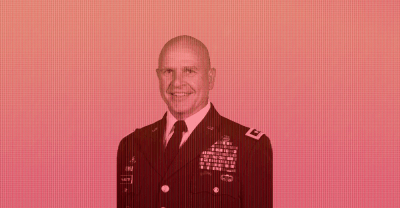
 

President Trump announced that H. R. McMaster will be his new National Security Adviser, replacing Michael Flynn.

Removing Flynn was already addition by subtraction, and adding one of the military’s foremost intellectuals will strengthen the administration’s foreign policy team. But how much influence McMaster will have remains to be seen.

To counterinsurgency wonks like me, McMaster is a living legend. In Iraq, he stabilized Tal Afar, a city of 200,000, with 5,200 soldiers.

For states fighting an asymmetric campaign against non-state actors, as in post-Saddam Iraq, there are essentially two available strategies: counterterrorism (CT) and counterinsurgency (COIN).

CT is terrorist hunting. Locate enemies and kill or capture them. But insurgencies are fluid, willing to flee areas where the military is concentrated. Critics deride CT as whack-a-mole, since the military kills insurgents in one place only for them to pop up elsewhere.

COIN addresses this shortcoming with a strategy known as clear, hold, build.

The first part is similar to counterterrorism: clear an area of enemy fighters. But unlike CT, forces continue holding the territory so insurgents cannot return. This provides security, sending a signal to the population that they should side with the counterinsurgents. Then, in the build phase, the military partners with locals, earning their trust, developing basic services such as water and electricity, and training local forces so they can eventually provide security themselves.

The downside is that it’s more resource intensive. COIN campaigns require a sustained commitment, and put soldiers in vulnerable positions. Holding territory and working with local forces leaves counterinsurgents exposed. They have to go on patrol, openly protect infrastructure projects, and take risks to establish relationships. The strategy is expensive, and leads to more casualties than CT.

McMaster’s Tal Afar campaign is already a textbook example of successful counterinsurgency. The clear phase demonstrated his tactical prowess, and the partnerships he established with local leaders facilitated both security and economic development, further building trust.

McMaster recognizes that war, especially asymmetric war, is fundamentally political. Force plays an important role, but popular sentiment is a key component. In Tal Afar, McMaster made humane treatment of detainees and respect for Iraqi culture and religion central to his strategy. He will be a valuable addition to a White House that appears tone deaf about how much al-Qaeda and ISIS gain from the perception that the United States is making war on Islam in general, rather than jihadists specifically.

McMaster made his name speaking truth to power. His dissertation, later turned into a book called Dereliction of Duty, challenged the U.S. military’s belief that Vietnam was everyone else’s fault.

Dereliction doesn’t spare politicians, especially the Johnson administration, but denounces military leaders for failing to provide advice that could have led the war in a better direction. In a memorable phrase, McMaster called LBJ’s Joint Chiefs of Staff “the five silent men.”

This instinct might seem like a bad fit for a president known to bristle at criticism, but Trump appears open to disagreement from prominent military officers. For example, Secretary of Defense James Mattis got Trump to change his public stance on torture.

McMaster’s appointment means the Mattis camp will likely gain influence over foreign and security policy relative to the radical revisionists led by chief political strategist Steve Bannon. How much, however, is unclear. McMaster will chair the National Security Council, but Bannon set up what amounts to a shadow NSC, called the Strategic Initiatives Group. The SIG is light on foreign policy and national security experience, and heavy on anti-Muslim sentiment. The poorly designed, strategically counterproductive travel/refugee ban came from them.

To gauge how much McMaster’s appointment reduces the SIG’s influence, keep your eye on senior NSC staff, especially Deputy National Security Adviser K.T. McFarland. McFarland’s previous experience in national security was speechwriting and public relations jobs in the 1980s. In recent years, she was a commentator for FOX news.

Trump’s original replacement for Flynn, retired Vice Admiral Robert Harward, turned down the job because the president denied Harward’s request to bring in his own staff (among other reasons). Unlike Harward, McMaster is active duty, and couldn’t really say no to the Commander in Chief. If McFarland stays on, that’s a sign McMaster’s influence is limited.

My McMaster Story

When I was in graduate school, I worked on a project with my adviser George Quester on preemptive warfare. In 2008, Quester took me with him to present our results to the Office of Net Assessment, the Pentagon’s internal think tank, which focuses on long-term grand strategy. I expected a moderately sized audience, but it ended up being just me and Quester in a room with the Director of Net Assessment, Andrew Marshall.

Marshall is the most powerful person the public hasn’t heard of. His influence-to-fame ratio is off the charts. When the Pentagon set up Net Assessment in 1973, Nixon tapped Marshall to run it, and he remained director until retiring in 2015.

Military strategists nicknamed him Yoda. The Chinese military translated all his public writing (and presumably some classified writing if they could get their hands on it). When I later told a former Undersecretary of State about my presentation to Net Assessment, he responded “you met God? Circle that date and save the calendar.” Marshall is, to quote Ron Burgundy, kind of a big deal.
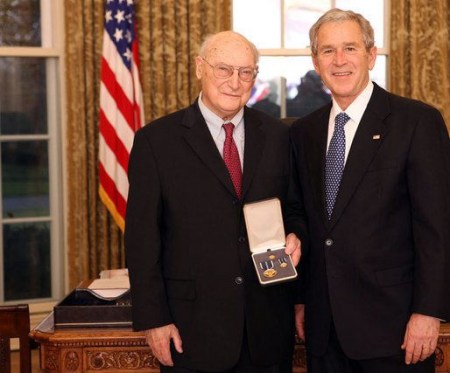
Andrew Marshall, receiving the Presidential Citizens Medal from George W. Bush in 2008.

He might not be a public figure, but he’s not a secret, and as someone in grad school for security studies I knew who he was. I didn’t expect the opportunity to meet him, and I wasn’t going to squander it.

Right after the presentation, I launched into a conversation. In one of his questions, Marshall lamented that the United States wasn’t as strategic as it used to be, and I argued there were two positive recent developments:

  1. The nuclear deal with India. If China is America’s long-term rival, then India is our natural ally. By normalizing nuclear relations with India — even though it remains outside the Nuclear Non-Proliferation Treaty — the Bush administration cultivated India as a balancer in Asia.
  2. The McMaster promotion.

Advancing McMaster from colonel to brigadier general was a watershed moment for the Army. After his successful Tel Afar campaign, McMaster, along with John Nagl and other COIN experts, worked with David Petreaus to revise the Counterinsurgency Field Manual. Under Petreaus, American strategy in Iraq shifted from counterterrorism to counterinsurgency, yielding greater success.

This was popularly known as “the Surge,” because the United States deployed over 20,000 additional soldiers. However, the biggest reason violence decreased was the shift to a population-centric strategy, especially cooperation with Sunni Arab tribes in what came to be known as the Sunni Awakening.

Given his successes in Iraq, many believed McMaster’s advancement was a sure thing. But the Army promotions board passed over him in 2006, and then again in 2007. Board members tend to promote officers like themselves, which meant WWII tank commanders promoted tank commanders, who, in turn, promoted more tank commanders rather than counterinsurgents. This institutional sclerosis got bad enough that Secretary of the Army Pete Geren took the unusual step of asking Petreaus to come home from Iraq to oversee promotions.

The Army announced McMaster’s promotion in July 2008. In 2014 he earned his third star, becoming Deputy Commanding General of the Training and Doctrine Command, shaping how the Army fights.

In my one opportunity with Andrew Marshall, that’s what I talked about: how promoting McMaster indicated the Army finally recognized the importance of asymmetric warfare to America’s 21st century security challenges.

And now he’s National Security Adviser. I hope the president listens to him.
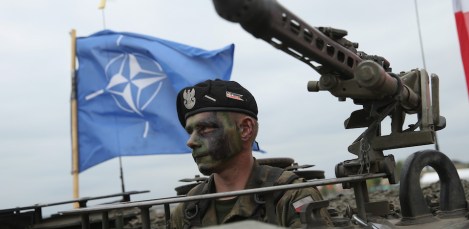
It’s Time for Europe’s Militaries to Grow Up | Foreign Policy

Posted February 25, 2017 by Joseph Wouk
Categories: Uncategorized

Source: It’s Time for Europe’s Militaries to Grow Up | Foreign Policy

It’s Time for Europe’s Militaries to Grow Up

The transatlantic partnership between the United States and Europe has been the linchpin of U.S. grand strategy for more than half a century. It is also in deep trouble. During the 2016 presidential campaign, Donald Trump repeatedly suggested that NATO was obsolete, accused U.S. allies in Europe of “not paying their fair share,” and said “the U.S. must be prepared to let these countries defend themselves.”

Not surprisingly, his election rang alarm bells in Europe, and his erratic behavior since taking office has only intensified European concerns. How can America’s European partners be confident in their most important ally when the U.S. president lives in an alternative reality derived from Breitbart, Fox News, and whatever dark conspiracies he’s being fed by Steve Bannon? Would you trust a president who prefers to rely on shady Ukrainian politicians, convicted fraudsters, and his own personal lawyer to deal with sensitive diplomatic matters, instead of the normal channels of statecraft?

Secretary of Defense James Mattis and Vice President Mike Pence spent last week trying to reassure U.S. allies at the Munich Security Conference, but their efforts were only partly successful. Each made strong pro-NATO statements — and Pence even said the U.S. commitment was “unwavering” — but their message wasn’t unambiguous. In particular, Mattis warned his NATO counterparts that the United States might moderate its commitment to Europe if they didn’t ramp up their defense spending to roughly 2 percent of GDP.

This recurring concern with European defense spending is understandable, but it mostly misses the point. Why? Because the fundamental problem isn’t inadequate latent capacity or even a lack of mobilized resources. The only “clear and present” military threat Europe faces today is a resurgent Russia (though this threat may not be nearly as great as alarmists maintain), and NATO’s European members possess the wherewithal to deal with the challenge on their own. Leaving the United States and Canada out of the equation, NATO’s European members have nearly four times Russia’s population, and their combined GDP is more than 12 times greater. More importantly, even at today’s supposedly “inadequate” spending levels, every year NATO’s European members (again: not counting the United States and Canada) spend at least five times more on defense than Russia does.

The problem, in other words, is not the amount of money that European countries devote to national security. The problem rather is that they don’t spend these funds very effectively and don’t coordinate their defense activities as well as they could. Despite numerous attempts, Europe’s long-promised “Common Foreign and Security Policy” remains an aspiration, not a reality. This failure isn’t at all surprising, because CFSP is an EU initiative and the EU is still more of a collection of nation-states rather than a fully integrated community. The key point, however, is that throwing more euros (or kroner or zlotys) at the problem won’t fix it.

Among other things, this situation tells you that if NATO were to meet U.S. demands and get all of its members up to the canonical target of 2 percent of GDP, it wouldn’t do all that much to improve the overall balance of power unless they started spending the money more effectively. In short, the narrow focus on “defense spending as a percentage of GDP” is a red herring.

U.S. efforts to pressure Europe into spending more by threatening to reduce its own commitment to Europe are also inherently contradictory. When he warned that the United States might “moderate” its support, Secretary of Defense Mattis was telling his European counterparts that they might not be able to count on the United States if they didn’t start spending more. The flip side of the coin, however, is an implicit pledge that if they do start hitting that 2 percent target, then Washington will stay “all in,” too. But that’s a recipe for Europe doing just enough to keep Uncle Sam happy while Washington remains its protector of first and last resort.

From a broader strategic perspective, getting Europe to bear more of the burden of its own defense is meaningful only if it allows the United States to reduce the resources it devotes to European security so that it can focus more attention on other theaters, such as Asia. And given the enormous imbalance between Europe’s military potential and those of its potential foes, that formula should be relatively easy to negotiate. Instead of the familiar kabuki dance where Americans threaten to do less but don’t really intend to, the United States and its European partners ought to be developing a long-term plan to reduce the U.S. commitment more or less permanently (or until such time as there is a serious threat to the European balance of power). As John Mearsheimer and I explained last summer, as long as there is no potential hegemon in Europe — and Russia doesn’t qualify — it is not necessary for the United States to take the lead in defending it.

In short, the hype devoted to relative defense spending levels is mostly just symbolic politics. What American politicians are really saying is that it looks bad when Americans spend 3.5 percent of GDP on defense and our relatively wealthy allies in Europe (or Asia, for that matter) spend less than 2 percent. And they’re right: It does look bad. But if U.S. officials can somehow convince those same allies to boost their spending a bit, they can go back to American voters and claim success, even if it doesn’t reduce U.S. defense burdens or make Europe any safer.

Finally, constantly harping about burden sharing distracts attention from the more serious challenges that threaten the transatlantic partnership. The first challenge is the lack of a compelling strategic rationale for it. Much as I hate to admit it,

Trump was not entirely wrong to suggest NATO was obsolete — at least in its current form — because it was created to deal with a problem (the Soviet Union) that no longer exists.

Trump was not entirely wrong to suggest NATO was obsolete — at least in its current form — because it was created to deal with a problem (the Soviet Union) that no longer exists. It is harder to justify an expensive U.S. commitment to defend Europe when there is no potential hegemon there and the new missions that NATO has taken on after the Cold War ended (Afghanistan, Libya, etc.) have fared rather poorly. (NATO’s other implicit purpose — “to keep the Germans down” — isn’t relevant either, despite Germany’s central role in the EU. With a declining and rapidly aging population, Germany today could never aspire to European hegemony.)The second challenge is European disunity itself, especially in the wake of the 2008 financial collapse, eurozone crisis, and Brexit decision. Centrifugal forces in Europe make it even less likely that its member states will create effective all-European defense forces, even if individual countries do manage to boost their own spending levels a bit. And they certainly won’t do the hard work to create a genuine pan-European defense capability if they remain convinced Uncle Sam will always be there to bail them out.

Then throw in various right-wing populist politicians who are either ruling or contending for power in France, the Netherlands, Hungary, Poland, and Turkey. Many of these would-be leaders are openly hostile to the idea of European unity, and Trump has made this problem worse by embracing Brexit and giving rhetorical support to right-wing xenophobes like Marine Le Pen.

This approach is exactly what Washington should not be doing today. If you want Europe to take on more responsibility for its own security, the last thing you’d want to do is undermine Europe’s increasingly delicate political order. A Europe led by politicians like Le Pen or Geert Wilders is not a Europe that will stable and secure enough to take care of itself so that the United States could focus its energies and resources elsewhere. If Trump really wanted to get the United States out of the business of protecting Europe, backing European xenophobes and coddling Vladimir Putin is not the way to go. But you weren’t expecting clear, coherent, or consistent strategic thinking from this president, were you?

Gorka & Jasser: We Are Fighting ‘Not a War with Islam, but a War Inside Islam’

Posted February 24, 2017 by danmillerinpanama
Categories: Islamist infiltration, Islamist objectives, Islamist organizations, Islamist terror attacks, Islamist terror groups, Islamists and the media, Islamists in America, Islamists vs Islam, Islamophobia, Muslim Reform Movement, Obama and Islamists, Sebastian Gorka, Trump agenda, Trump and Islamists, Zuhdi Jasser

Tags: , , , , , , , , , , , , , ,

Gorka & Jasser: We Are Fighting ‘Not a War with Islam, but a War Inside Islam’, Breitbart, John Hayward, February 24, 2017

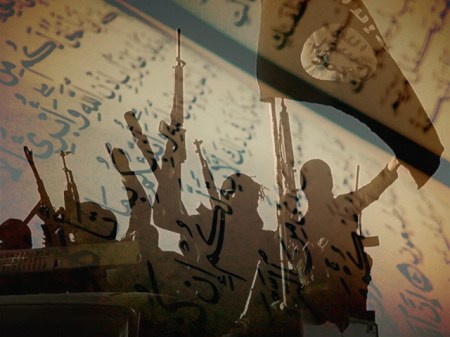
isis-koran-640x480Flickr/AFP

Broadcasting live from CPAC 2017, SiriusXM host Alex Marlow spoke with Dr. Sebastian Gorka and Dr. Zuhdi Jasser about national security, Islamist terrorism, and their panel discussion, “When Did World War III Begin?”

(Audio at the link. — DM)

Marlow began by asking his guests what they expected from the national security segment of President Donald Trump’s scheduled address to the Conservative Political Action Conference.

“Exactly what we’ve heard before,” Gorka replied. “If you really want to understand the direction of the White House and how much everything changed at 12:01 on January the 20th, you look at two things: you look at a speech that really wasn’t carefully addressed or really paid enough attention to, that’s the Youngstown campaign speech, which was about the threat of jihad in general and what we’re going to do about ISIS.”

“Specifically, it really bears repeating, the inauguration, the address that the president gave at the inauguration, was explicit,” he continued. “Number one, we are going to eradicate the Islamic State – not degrade, not manage, not ameliorate – eradicate. And secondly, words have meaning. When he says our enemy is ‘radical Islamic terrorism,’ that is a 180 degree  change from the last eight years, when we weren’t allowed to even say who the enemy was.”

“Zuhdi knows it better than anybody because he understands that this isn’t about poverty or lack of education. It’s about people who are fighting for the soul of Islam – not a war with Islam, but a war inside Islam; as King Abdullah, as General Sisi has said, for which version is going to win,” Gorka said.

Marlow asked Dr. Jasser about the topic of language control Gorka touched upon and the previous administration’s reluctance to use explicit language like “radical Islamic jihad” to describe the enemy.

“We got to this point because we had an administration who was being whispered to by Muslim Brotherhood sympathizers, by apologists, by governments that might be our allies against al-Qaeda and ISIS, but they love a whack-a-mole program. They don’t want to treat the disease, which is not ‘violent extremism’ but violent Islamism,” Jasser charged.

“We have to start focusing on our own values,” he urged. “There’s nothing more American than fighting theocracy, and yet the Left for the last eight years has invoked blasphemy laws in America by telling us we can’t criticize Islamist political movements.”

Jasser predicted the new administration would succeed in destroying ISIS but warned that “it will come back in another form – two, three, four years later – unless we engage Muslim reformists, like our Muslim reform movement, to treat the underlying theocracy.”

Marlow complained that the mainstream media swiftly denounce candid talk about the problem of radical Islam as “hate speech” even when confined to straightforward reporting without editorial opinion, making it difficult to have a constructive discussion about the problem.

“I think this is exactly what the Saudi regime, the Iranian Khomeinists, the Brotherhood want, is they want to dominate what Islam means,” Jasser said. “And yes, it’s not my Islam, but we have to thread that needle. Because if you don’t call it political Islam or Islamism as the threat, you’re not going to be able to figure out who to engage. We want to engage anti-Caliphate, anti-violent jihad Muslims who are pro-freedom, pro-equality of men and women, who share our values. If we don’t do that discernment in our verbiage, we’re going to miss it and actually end up helping our enemies and end up actually not only being the firefighters, but the arsonists. We have to stop that cycle.”

“Let’s just take it one level deeper. It’s not just empowering our enemies, which would be bad enough,” Gorka added. “If you don’t talk truthfully about who the enemy is, how are you going to win? What we saw in the last eight years is a policy that actually weakened our most important allies.”

“So when you’ve got the president of the most populous Arab nation in the world say this is a war for the heart of Islam, General Sisi, when you’ve got King Abdullah with his Amman statement saying, ‘Look, we have to stop the jihadis hijacking the religion’ – we have a president here who stands up and says, ‘No, no, no, these are not the droids you’re looking for, the religion has nothing to do with this,’” he elaborated, referring to the Obama administration’s insistence on framing the war as a struggle against generic violent extremism.

“Do you know who we hurt the most? Those Muslims who are on the front lines with the jihadis, who understand this isn’t about poverty or lack of education; it’s about an ideology. So we’ve actually hurt the people who are on the front line the most. We’re not prepared to do that anymore. This administration’s going to help the Jordanians, help the Egyptians, help them fight this war,” Gorka vowed.

“I think we have to own what it means to be diverse,” Jasser suggested. “What is ‘diversity’ in the Muslim community? It’s not ethnic diversity. Being Muslim is not an identity movement of a monolithic homogenous group. It is a diverse ideological movement that has fundamentalist, orthodox, liberal, secularists that are all in this Muslim diverse group. So if the Left actually believes in diversity different from what Pelosi whispered into Andre Carson’s ear – ‘Tell them you’re Muslim’ – Islam is not a race. They’re racializing the faith. That’s the biggest obstacle.”

“I think the other thing I hope to see is not only us being against jihadists, but what are we for,” he added. “I think that will be the difference between some of the dictators in the Middle East, that yes, some of them have been on our side against jihad, the militants, but we are the adults in the world, in being for liberty and freedom. I hope that will be part of a Trump Doctrine.”

Gorka agreed, saluting Jasser as “the point man here in America for sense, for common sense in this battle.”

“The saddest part is there are people like him in the Middle East. There are people every day risking their lives on their blog sites, in North Africa, in the Middle East pushing back on this, saying, ‘I’m a Muslim, but I don’t think an infidel needs to be killed.’ That means he’s put the crosshairs on his chest,” Gorka noted. “In some parts of the Muslim world, that’s an instant death sentence.”

“That’s why the four million Muslims in America need to step up and act because we can do things here that you just can’t do in the Middle East,” Jasser said. “They end up in prison. They end up slaughtered, tortured.”

Marlow proposed that “the stifling of speech in the Muslim world is really what has allowed a lot of the jihadist movements to flourish.”

“Why do you think they use the term ‘Islamophobia’ instead of talking about, yes, there might be some bigotry against Muslims in the West?” Jasser asked. “They use the term Islamophobia because they want to anthropomorphize Islam so that you don’t criticize it, and they suppress free speech. That’s how they invoke blasphemy laws in the West.”

“You’re absolutely right. The freedom of speech issue is huge in the Middle East because it’s a life and death issue in many cases,” Gorka said. “But here, it’s almost as important. It’s not life and death, but it is closing down the discussion.”

“You look at what’s happened in the last four weeks with this administration,” he said. “There’s a phrase in soccer: you play the man on the ball. We’re not going to talk about policies; we’re going to attack individuals, whether it’s Kellyanne, the president, myself, Steve Bannon. They do that how? ‘We don’t want to talk about the threat to America. You’re a racist. You’re an Islamophobe. You’re a xenophobe. Oh, well, in that case, we can’t talk to you.’ That’s as dangerous as just the constant ad hominem attacks because then there is no discussion.”

Jasser said his message to CPAC was that “there is hope” for a lasting victory in the long war against Islamist extremism.

“The first step is to defeat the militants, which this president will finally do,” he said. “The second step is to go back to our American roots and defeat theocracy, work with Muslims and our Muslim reform movement. We have a two-page declaration that can be used, I hope, not only to vet refugees, to figure out which groups are with us and against us. I hope we start doing security clearances through those who share our values.”

“There are so many that are – not in this administration, but that are in the government from the previous administration – that I think are Islamists, that might not be violent extremists, but we need to shift the axis of the lens of Homeland Security, foreign policy, to countering violent Islamism. There’s nothing this group here and the country can do to better empower reform-minded Muslims that share our values than to shift from this blasé CVE to CVI,” Jasser said, lampooning the Obama administration’s acronym for “Countering Violent Extremism.”

Gorka referred to CVE as “garbage from the last eight years that obfuscated the threat.”

He said the most important step taken by the new administration was President Trump’s executive order to temporarily limit immigration from the most unsecure Middle Eastern nations.

“Whatever the final version of the reform measures are, the fact is, when an Iraqi collars me in the halls of Congress and says, ‘My friends back home in Iraq applaud this measure because they know how many bad guys are in Iraq that want to come over here, so do it. Thank you,’” Gorka said.

Dr. Sebastian Gorka is deputy assistant to President Trump and was formerly national security editor for Breitbart News. He is the author of Defeating Jihad: The Winnable War. Dr. Zuhdi Jasser is the founder and president of the American Islamic Forum for Democracy and author of A Battle for the Soul of Islam: An American Muslim Patriot’s Fight to Save His Faith.


Egypt: Thousands screaming “Allahu akbar” mourn Blind Sheikh, mastermind of 1993 WTC jihad bombing

Posted February 24, 2017 by danmillerinpanama
Categories: Blind Sheikh funeral, Egypt

Tags: ,

Egypt: Thousands screaming “Allahu akbar” mourn Blind Sheikh, mastermind of 1993 WTC jihad bombing, Jihad Watch, 

(Please see also, Blind Sheikh Dead But His Network Lives On in America and ‘We’re Totally Not Terrorists’ Muslim Brotherhood Mourns Terror Leader Who OK’d NYC Bombings. — DM)

Those who favor jihad and Sharia are just a tiny minority of extremists, right?

“If he were a bad man, people from all over the country wouldn’t have came to attend his funeral.”

Exactly so.

egypt-prayers-before-blind-sheikh-funeral

“Thousands mourn ‘blind sheikh’ convicted in 1993 World Trade Center bombing,” by Amina Ismail and Arwa Gaballa, Reuters, February 22, 2017:

Thousands of mourners gathered in a small Egyptian town on Wednesday for the funeral of the Muslim cleric known as “the blind sheikh” who was convicted of conspiracy in the 1993 World Trade Center bombing in New York.

Omar Abdel-Rahman, who was also convicted of planning a broader “war of urban terrorism” in the United States, died on Saturday in a North Carolina prison aged 78.

Movements across the Islamist spectrum from the Muslim Brotherhood to al Qaeda issued statements mourning him, and several leaders from Egypt’s Islamic Group, which views the sheikh as a spiritual leader and renounced violence in 1997, attended.

Carrying signs that read “we will meet in heaven” and chanting “we will defend you with blood and soul, Islam,” hundreds of mourners gathered at Al-Gamaliya, his hometown in Egypt’s Nile Delta province of Dakahlia, to wait for Abdel-Rahman’s body as it made its way back from the U.S. via Cairo.

The Egyptian-born Abdel-Rahman, who lost his eyesight due to childhood diabetes and grew up studying a Braille version of the Koran, remained a spiritual leader for radical Muslims even after more than 20 years in prison.

As an adult he became associated with the fundamentalist Islamic Group and was imprisoned and accused of issuing a fatwa leading to the 1981 assassination of Egyptian President Anwar al-Sadat, against whom he had railed for years.

Abdel-Rahman was still an important figure in radical Islam even after years in prison. A year before his al Qaeda followers pulled off the most destructive assault on U.S. soil, the Sept. 11, 2001, attacks, Osama bin Laden had pledged a jihad to free Abdel-Rahman from prison.

When Mohammed Mursi, a leader of the Muslim Brotherhood, began his short-lived presidency of Egypt in 2012, he said winning the sheikh’s freedom would be a priority. The jihadists who attacked an Algerian oilfield and took hostages in 2013 also demanded his release.

Yet supporters paint him as a revered scholar who faced injustice and torture at the hands of the Egyptian and U.S. governments for sticking by his principles.

Mourners chanted “God is great” and cheered as his body, draped in a brown blanket inside a wooden coffin, was brought out to be washed at his brother’s house before the burial.

“If he were a bad man, people from all over the country wouldn’t have came to attend his funeral,” said Mostafa al-Wakeel, a 40-year-old lawyer who traveled around 175 kilometers (110 miles) from Cairo….

Newly Installed NSA McMaster Reassures National Security Staff: No Witch Hunts Coming

Posted February 24, 2017 by danmillerinpanama
Categories: Foreign policy, Lt. Gen. H.R. McMaster, Michael T. Flynn, National secuity, National Security Council, Trump agenda, Trump appointments

Tags: , , , , , ,

Newly Installed NSA McMaster Reassures National Security Staff: No Witch Hunts Coming, Washington Free Beacon, , February 24, 2017

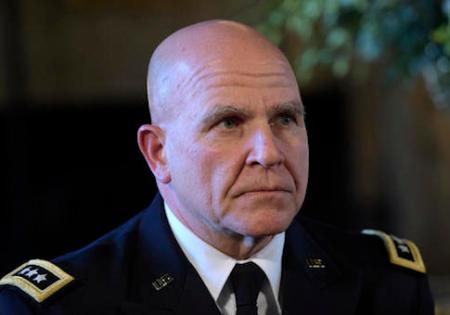
Army Lt. Gen. H.R. McMaster listens as President Donald Trump makes the announcement at Trump's Mar-a-Lago estate in Palm Beach, Fla., Monday, Feb. 20, 2017. McMaster will be the new national security adviser. (AP Photo/Susan Walsh)

Army Lt. Gen. H.R. McMaster listens as President Donald Trump makes the announcement at Trump’s Mar-a-Lago estate in Palm Beach, Fla., Monday, Feb. 20, 2017. McMaster will be the new national security adviser. (AP Photo/Susan Walsh)

To help with this effort, McMaster recommended several books meant to help current White House officials understand his own foreign policy vision.

One senior White House official who spoke to the Free Beacon described the reading list as pleasantly surprising and a vast departure from the former Obama administration’s own national security vision.

***************************

Incoming White House National Security Adviser Lt. Gen. H. R. McMaster sought to reassure senior Trump administration officials during his first “all hands” staff meeting Thursday, according to those who attended the get together and told the Washington Free Beacon that McMaster informed staffers he does not intend to pursue a major shakeup of President Donald Trump’s national security team.

McMaster, who replaced Michael Flynn following his resignation last week, plans to navigate a vast departure from the Obama administration’s foreign policy vision, according to senior White House officials who described the meeting as “reassuring.” McMaster emphasized that he will not dismantle the team that Flynn had built.

As part of his discussion with White House national security staff, McMaster recommended a comprehensive reading list that included President Trump’s book, “The Art of the Deal,” and several other tomes by leading historians about how to get the upper hand on America’s enemies. White House staff are said to have been mostly “thrilled” when hearing about the book list.

Sources who spoke to the Free Beacon about McMaster’s vision, as laid out in the Thursday meeting, expressed optimism about his appointment and pushed back on what they described as false media narratives centered around White House disarray following Flynn’s departure.

“It’s no secret we’ve had a few more all-hands meetings than we intended in our first month—but General McMaster used this event to both reassure the NSC staff and to give us the tools to continue the mission,” said one senior White House National Security Council official who requested anonymity while discussing internal White House meetings.

McMaster explicitly told White House officials that he does not aim to dismantle Trump’s foreign policy team or push out those perceived as still loyal to Flynn. These comments run counter to a recent New York Times report claiming that McMaster is pursuing a massive reorganization of the president’s national security team.

“He made it clear he wasn’t there to grind a political axe or engage in a witch hunt,” the senior White House official said. “He was there to provide leadership, including direction on how to think about the task in front of us.”

To help with this effort, McMaster recommended several books meant to help current White House officials understand his own foreign policy vision.

One senior White House official who spoke to the Free Beacon described the reading list as pleasantly surprising and a vast departure from the former Obama administration’s own national security vision.

In addition to Trump’s “Art of the Deal,” McMaster recommended reading his own book, “Dereliction of Duty,” which catalogues the mistakes that led the United States into a quagmire in Vietnam.

He also requested that White House staffers read Peter Rodman’s “Presidential Command,” which McMaster reportedly referred to as the “gold standard” in foreign policy history. Rodman was an top official in the Richard Nixon, Gerald Ford, Ronald Reagan, and both Bush administrations.

Senior White House staff are said to have found the mention of the book “very reassuring.”

“It’s certainly encouraging to see General McMaster highlighting his legacy,” one source said.

McMaster went on to further recommend two books by Zachary Shore, a historian and international conflict expert who teaches at the Naval Postgraduate School.

One Shore book, “Blunder: Why Smart People Make Bad Decisions,” was described as “a cautionary tale for the staff” at the White House. The other, “A Sense of the Enemy,” examines methods to overtake rival forces.

Lastly, McMaster recommended staff read an essay by Canadian historian Margaret MacMillan titled, “The Rhyme of History,” which tackles lessons from World War I.

Senior White House officials who took part in the meeting described the reading list as encouraging and part of an effort to restore conservative principals focused primarily on defending the U.S.’s best interests.

The mention of MacMillan’s essay in particular “suggests General McMaster does not consider the 21st century a sort of post-historical bubble, but rather that there is a great deal to be learned from history as we chart our path forward,” said one official who described McMaster as advocating a wholesale reversal from the Obama administration’s vision.

Several historians currently serve on the White House’s national security team, including Col. Derek Harvey, a former advisor to Gen. David Petraeus; Michael Anton, a former speechwriter for George W. Bush, and Victoria Coates, a former top aide to Sen. Ted Cruz (R., Texas) and art historian.

Extremist Muslims’ One-Way Street

Posted February 24, 2017 by danmillerinpanama
Categories: "Muslim ban", "Muslim Registry", Anti-Zionism, Antisemitism, Bans on non-Muslims, Executive order, Hypocrisy, Muslim nations

Tags: , , , , , , ,

Extremist Muslims’ One-Way Street, Gatestone Institute, Burak Bekdil, February 24, 2017

Extremist Muslims’ understanding of freedom is a one-way street: Freedoms, such as religious rights, are “good” and must be defended if they are intended for Muslims — often where Muslims are in minority. But they can simply be ignored if they are intended for non-Muslims — often in lands where Muslims make up the majority.

Many Muslim countries, apparently, already have travel bans against other Muslims, in addition to banning Israelis.

Look at Saudi Arabia. Deportation and a lifetime ban is the minimum penalty for non-Muslims trying to enter the holy cities of Mecca and Medina.

Given the state of non-Muslim religious and human rights, and the sheer lack of religious pluralism in most Muslim countries, why do Muslim nations suddenly become human rights champions in the face of a ban on travel to the U.S.?

Meanwhile, Muslims will keep on loving the “infidels” who support Muslim rights in non-Muslim lands, while keeping up intimidation of the same “infidels” in their own lands.

President Donald Trump’s executive order of January 27, 2017, temporarily limiting entry from seven majority-Muslim countries – Iran, Iraq, Libya, Somalia, Sudan, Syria and Yemen — for 90 days, until vetting procedures can be put in place — has caused international controversy, sparking protests both in the Western and Islamic worlds, including in increasingly Islamist Turkey.

This article does not intend to discuss whether Trump’s ban is a racist, illegal order, or a perfectly justified action in light of threatened American interests. The ban, right or wrong, has once again unveiled the hypocrisy of extremist Muslims on civil liberties and on what is and what is NOT racist. Extremist Muslims’ understanding of freedom is a one-way street: Freedoms, such as religious rights, are “good” and must be defended if they are intended for Muslims — often where Muslims are in minority. But they can simply be ignored if they are intended for non-Muslims — often in lands where Muslims make up the majority.

Muslims have been in a rage across the world. Iran’s swift and sharp answer came in a Tweet from Foreign Minister Javad Zarif who said that the ban was “a great gift to extremists.” A government statement in Tehran said that the U.S. travel restrictions were an insult to the Muslim world, and threatened U.S. citizens with “reciprocal measures.” Many Muslim countries, apparently, already have travel bans against other Muslims, in addition to banning Israelis.

2097

Sudan, host and supporter of various extremist Muslim terror groups including al-Qaeda, said the ban was “very unfortunate.” In Iraq, a coalition of paramilitary groups called on the government to ban U.S. nationals from entering the country and to expel those currently on Iraqi soil.

In Turkey where the extremist Islamic government is unusually soft on Trump’s ban — in order not to antagonize the new president — a senior government official called the order “a discriminative decision.” Deputy Prime Minister and government spokesman Numan Kurtulmus said:

“Unfortunately, I am of the opinion that rising Islamophobia, xenophobia and anti-immigrant feelings have a great weight on this decision. Taking such a decision in a country such as America, where different ethnic and religious groups are able to co-exist, is very offensive.”

The ruling party’s deputy chairman, Yasin Aktay, called the ban “racist,” and said: “This is totally against human rights, a big violation of human rights.” Aktay also said that he had started to “worry about the future of the U.S.”

Turkey’s top Muslim cleric, Mehmet Gormez, praised the Americans who rushed to the airports to protest the ban. “[This] is very important. It gives us hope,” he said — presumably meaning that non-Muslim protestors will continue to advocate for Muslim rights in non-Muslim lands.

Turkish government bigwigs and the top Islamic authority seem not to have heard of their own country’s dismal human rights record when it comes to non-Muslim minorities. Most recently, Turkey’s Association of Protestant Churches noted in a report that hate speech against the country’s Christians increased in both the traditional media and social media. It said that hate speech against Protestants persisted throughout 2016, in addition to physical attacks on Protestant individuals and their churches.

Nevertheless, the Islamist’s one-way sympathy for human rights (for Muslims) and his one-way affection for discrimination (against non-Muslims) is not just Turkish, but global. What is the treatment of non-Muslim (or sometimes even non-extremist Muslim) visitors to some of the Muslim cities and sites in the countries that decry Trump’s “racist,” and “discriminative” ban that “violates human rights?”

In a 2016 visit to the Al Aqsa Mosque in Jerusalem, the Muslim custodians of the site did not allow entry to this author, despite the Turkish passport submitted to them, saying “you do not look Muslim enough.” And Muslims now complain of “discrimination?” Incidentally, Al Aqsa Mosque is, theoretically at least, open to visits from non-Muslims, except on Fridays.

Look at Saudi Arabia. Deportation and a lifetime ban is the minimum penalty for non-Muslims trying to enter the holy cities of Mecca and Medina. In 2013, the Saudi Minister of Justice, Mohamed el-Eissi, insisted that “the cradle of the Muslim sanctities will not allow the establishment of any other places of worship.”

The Saudi ban on other religious houses of worship comes from a Salafi tradition that prohibits the existence of two religions in the Arabian Peninsula. In the Saudi kingdom, the law requires that all citizens must be Muslims; the government does not provide legal protection for freedom of religion; and the public practice of non-Muslim religions is prohibited.

In Iran, where even non-Muslim female visitors must wear the Islamic headscarf, the government continues to imprison, harass, intimidate and discriminate against people based on religious beliefs. A 2014 U.S. State Department annual report noted that non-Muslims faced “substantial societal discrimination, aided by official support.” At the release of the report, then Secretary of State John Kerry said: “Sadly, the pages of this report that are being released today are filled with accounts of minorities being denied rights in countries like Burma, Iran, Pakistan, Russia, Saudi Arabia, many others”.

In Iran, marriages between Muslim women and non-Muslim men are not recognized unless the husband produces proof that he has converted to Islam. The mullahs’ government does not ensure the right of citizens to change or renounce their religious faith. Apostasy, specifically conversion from Islam, can be punishable by death. In 2013, 79 people from religious minorities were sentenced to a total of 3,620 months in prison, 200 months of probation, 75 lashes and 41 billion rials in fines [approximately $1.3 million].

That being the state of non-Muslim religious and human rights, and the sheer lack of religious pluralism in most Muslim countries, why do Muslim nations suddenly become human rights champions in the face of a ban on travel to the U.S.? Why, for instance, does Turkey never criticizes the extreme shortcomings of freedoms in the Muslim world but calls the U.S. ban “racist?”

Why does the Iranian government think that Trump’s ban is a “gift to the [Muslim] extremists?” In claiming that travel bans would supposedly fuel extremism, how come Iran does not think that its own persecution of religious minorities is a “gift” to non-Muslims?

Such questions will probably remain unanswered in the Muslim world. Meanwhile, Muslims will keep on loving the “infidels” who support Muslim rights in non-Muslim lands, while keeping up intimidation of the same “infidels” in their own lands.

Nigel Farage CPAC 2017 FULL Speech

Posted February 24, 2017 by danmillerinpanama
Categories: 2016 elections, BREXIT, BREXIT and Trump, CPAC, Europe, Europe and BREXIT, Nigel Farage

Tags: , , , , , ,

Nigel Farage CPAC 2017 FULL Speech Via YouTube, February 4, 2017

Farage on Trump: The EU Is ‘Absolutely Terrified of Him – Good’

Posted February 24, 2017 by danmillerinpanama
Categories: CPAC, European Union, Marine Le Pen, Nigel Farage, President Trump, Trump and Europe, Trump and Putin, Trump's America

Tags: , , , , , , ,

Farage on Trump: The EU Is ‘Absolutely Terrified of Him – Good’, PJ Media, Nicholas Ballasy, February 24, 2017

farageatcpacNigel Farage at the UKIP spring conference Feb. 17, 2017, in Bolton, UK. (Rex Features via AP Images)

“You know, with 34 days in I think that he clearly has the intention of a man who intends to put into place the ticket on which he was elected, and how refreshing is that in a democracy? We are not used to it,” he said. “My guess is he’ll be feeling a bit frustrated with the judges and other people; I would just like to see him to stock to what he’s doing. I mean, maybe he is going to have to box clever to get some of his stuff through, but basically don’t change.”

**********************************

NATIONAL HARBOR, Md. – Nigel Farage, former leader of the UK Independence Party, told PJM that there is “nothing to be lost” with President Trump meeting Russian President Vladimir Putin, saying that Trump has to show he’s “not going to be a pushover.”

“Well, he has to show he wants to have a better relationship with Russia. He believes we have shared common interests in dealing with Islamic terrorism and issues like that but he’s not going to be a pushover — that’s what you’ve got to show,” Farage said during an interview Thursday at the Conservative Political Action Conference outside Washington.

“He’s going to say, ‘Look, you’ve behaved badly but we want to form a grown-up relationship with you.’ One thing is for certain, there’s nothing to be lost with him meeting Putin. Nothing at all,” he added.

Farage rejected the notion that the U.S. cannot make a good deal with Russia.

“They are small-minded, very silly people who don’t understand there is a thing in life called human chemistry. Trump himself said ‘I may not get along with him,’ but the very fact he is prepared to meet is grown-up policy. The great Winston Churchill said jaw-jaw is better than war-war and I’m with that,” he said.

Farage told PJM that Trump should “stick” to what he has been doing in office and not change anything.

“You know, with 34 days in I think that he clearly has the intention of a man who intends to put into place the ticket on which he was elected, and how refreshing is that in a democracy? We are not used to it,” he said. “My guess is he’ll be feeling a bit frustrated with the judges and other people; I would just like to see him to stick to what he’s doing. I mean, maybe he is going to have to box clever to get some of his stuff through, but basically don’t change.”

British lawmakers recently debated whether they should withdraw a state visit invitation to Trump. Some European leaders have voiced opposition to Trump’s travel ban that covers seven Muslim-majority countries. Farage was asked if Trump should tweak any of his policy positions given the criticism he has faced from some world leaders.

“Obviously, the world is watching on the Russian stuff to see exactly where this goes. On issues like that people will be looking for a bit more clarity because he wants to have better relations – what exactly does that mean?” he said. “And the world will be looking for that and the European Union are terrified of him, absolutely terrified of him. Good.”

During the interview, Farage shared his reaction to far-right French presidential candidate Marine Le Pen recently refusing to wear a headscarf in Lebanon in order to meet with the Grand Mufti.

“Listen, good for her. You know, she’s a strong woman. It remains to be seen what the runoff is going to be, it’s going to be fascinating. France is where the action is going to be. The global revolution of ’16 could keep rolling,” said the leader of the 2016 Brexit movement.

How Pakistani Law Enshrines Extremism and Weakens Counter-Terror Efforts

Posted February 24, 2017 by danmillerinpanama
Categories: Ahmadis, Blasphemy laws, Islamist objectives, Islamist Tyrannies, Pakistan

Tags: , , , ,

How Pakistani Law Enshrines Extremism and Weakens Counter-Terror Efforts, Investigative Project on Terrorism, Ammar Anwer, February 24, 2017

985

Pakistani extremists have killed nearly 50,000 people since 9/11. But government ineffectiveness has stymied efforts to contain terrorist violence. The government and military often are not on the same page, or have chosen a narrow and selective approach towards extremism, fighting one outfit and at the same time supporting the other.

For instance, former President Pervez Musharraf acknowledged that Pakistan cultivated and possessed a soft spot for the Afghan Taliban. In addition, Pakistan has failed to take a firm stand against Lashkar-e-Tayyiba, a radical outfit famous for its hateful rhetoric against India. The U.S. designated the organization as a Foreign Terrorist Organization in 2001, and the United Nations designated it as a terrorist outfit in 2005.

Lately, signs of hope have started to emerge. Prime Minister Nawaz Sharif and Army Chief of Staff General Raheel Sharif seem to agree about extremism and also seem to lack the selective approach that their predecessors had often adopted. As evidence, more than 250 people have been arrested for propagating hate speech, and a ban has been imposed on loudspeakers, which were often used to promote sectarian violence.

In addition, Pakistan launched a host of military operations against militants, including 2014’s Operation Zarb-e-Azb, which targeted militant groups including the Tehrik-e-Taliban Pakistan (TTP) and the Haqqani Network. As a result, most of North Waziristan is now controlled by the military.

The Global Terrorism Index (GTI) 2015, complied by the international research group the Institute for Economics and Peace, analyzes the impact of terrorism on the global community. The report conceded success of Zarb-e-Azb and stated, “Pakistan was the only country in the ten most impacted countries that saw a decline in deaths” but still ranked third in the world.

Pakistan still has a long way to go to eradicate Islamist extremism.

Pakistani law remains an obstacle to accomplishing this goal. Its constitution paves the way for religious intolerance as the following examples show:

Declaration of Ahmadis as non-Muslims

Discrimination against Ahmadis began shortly after Pakistan’s inception in 1947. In 1953, a series of violent attacks was instigated against the Ahmadiyya community in Lahore. The Lahore riots resulted in the deaths of hundreds of Ahmadi Muslims.

In 1974, due to the strong pressure from fundamentalists, Ahmadis were officially declared non-Muslims in Pakistan. To this day Ahmadis suffer religious discrimination and persecution while the state shows no inclination toward amending the law or eradicating the discrimination.

Ehtaram-e-Ramadan Ordinance

The Ehtaram-e-Ramadan ordinance was passed in 1981 during the tenure of General Zia-Ul-Haq, and is part of the constitution. It prohibits public eating during Ramadan’s fasting hours. It is a blatant violation of religious freedom for non-Muslims and secular Muslims. The ordinance requires that restaurants remain closed during fasting hours. Violations are punishable by up to three months in prison or a fine.

But vigilantes often take this law into their own hands. During the last Ramadan, an elderly Hindu man was badly beaten for eating publicly.

Pakistan’s contentious blasphemy law

Blasphemy is the act of insulting, showing contempt or a lack of reverence for God or that which is considered sacred. The blasphemy laws are now enshrined in section 295 A, B and C of the Penal Code, with their focus to protect Islam.

Pakistan uses this controversial law at a level unparalleled in any other country. The law has had a disproportionate impact on minority communities. Minorities, which comprise just 4 percent of Pakistan’s population, are targeted in more than half of the 702 total blasphemy law cases. The laws routinely are used to target religious minorities like Hindus or Christians for personal or political motives.

This action contradicts Pakistan’s constitution which guarantees the right to profess religion, equality of citizens and protection of minorities.

The law perpetuates an environment of intolerance and discrimination. To guarantee equal treatment and fundamental rights, the blasphemy laws must be eliminated or dramatically changed. Without this improvement, the state will never be able to achieve peace, tolerance and equal human rights.

Conclusion

The facts are before us, though they might be difficult to face. However, as Aldous Huxley said, “Facts do not cease to exist because they are ignored.”

We in Pakistan cannot claim that we are fighting a war against extremism if there are extremist tenets within our constitution. Until we change those laws, the fight can never be won.

Toward a True US-Israel Partnership

Posted February 24, 2017 by danmillerinpanama
Categories: Foreign policy, Israeli military, Israeli technology, U.S. - Israeli partnership, U.S. military technology

Tags: , , , ,

Toward a True US-Israel Partnership, Front Page Magazine, Caroline Glick, February 24, 2017

us_israeli_flags_wikimedia_commons

Originally published by the Jerusalem Post. 

Unlike the US, Israel has used the past generation to develop cutting edge technological capabilities in almost all of the areas where the Americans are lagging behind their competitors. Under these circumstances, Obama’s military assistance is exposed not merely as bad for Israel. It is bad for the US as well.

Israel can help the US compensate for its current scientific disadvantages. Israeli technological innovations can help the US to rebuild its independent capabilities and leapfrog its competitors far more rapidly than it can do on its own today.

An R&D partnership with Israel is also aligned with Trump’s vision for a renewed role for the US in global affairs. As Defense Secretary James Mattis told the US’s NATO allies this week, the US will not continue carrying the load of protecting the West on its own. It wants its allies to be its partners, not its dependents.

In Mattis’s words, “America will meet its responsibilities, but if your nations do not want to see America moderate its commitment to the alliance, each of your capitals needs to show support for our common defense.”

*****************************

In his speech before the members of the Conference of Presidents of Major Jewish American Organizations in Jerusalem this week, President Reuven Rivlin said that Israel has three overriding foreign policy concerns: “Number 1: Relations with America. Number 2: Relations with America. Number 3: Relations with America.”

There is a lot of truth in Rivlin’s hyperbolic statement.

Israel’s security depends on its relationship with the US. After all, the Russians and the Chinese won’t sell Israel fighter planes. Russia couldn’t develop strategic ties with Israel even if it wanted to. Its Iranian ally wouldn’t let it.

As for China, its mercantilist view of the Middle East makes it indifferent to the power balances in the region. Beijing may not harbor hostile intentions toward Israel, but it will act in a hostile fashion if it views China’s interests as advanced by such hostility.

While Israel rightly is working to diversify its foreign ties to move beyond the narrow scope of its alliance with the US, the fact is that with or without Australia and sub-Saharan Africa, the US remains Israel’s irreplaceable ally.

Unfortunately, today even the friendliest US administration cannot be relied on to secure Israel’s long-term capacity to defend itself. Israel faces enemy forces equipped with Russian and Chinese technologies – including Russian forces in Syria – that are rapidly challenging American systems in key areas. So long as the US remains behind the technological eight ball, Israel’s long-term reliance on its military ties to the US is a dangerous proposition.

Things didn’t use to be this way. At the start of the 21st century, America’s military power was unrivaled. From the end of the Cold War until the turn of the century, neither Russia nor China could challenge the US and its status as the sole global superpower.

That is no longer the case.

In a distressing article published this week in the American Affairs Journal, David Goldman details the technological crisis the US is steeped in today.

Goldman notes that the US is lagging behind the Russians and the Chinese in air defense systems and technologies, missile technology, particularly hypersonic missile technologies, submarine warfare, cyber warfare technologies and satellite interdiction capabilities.

To bridge the gap and outpace the Chinese and the Russians, Goldman argues that the US needs to initiate massive government-funded research and development programs.

In the post-Cold War era, Goldman notes ruefully, Americans have forgotten that they were ever vulnerable, that their victory against the USSR was anything but preordained.

The actual history, Goldman reminds us, was quite different. The US victory in the Cold War was the result of conscious decisions by US leaders to outstrip Soviet technology after American technology was shown to be lagging behind.

In 1957, the Americans reacted to the Soviet Union’s launch of Sputnik with a crash program in space exploration. That program, which benefited from lavish federal funding, ended the Soviets’ advantage in aerospace technology inside of a decade.

During the 1973 Yom Kippur War, the Americans realized that the Egyptian success in downing Israeli jets over Sinai in the early days of the war meant that the Soviet surface-to-air missiles Egypt fielded had neutralized US air superiority. The Americans realized that the Soviets’ technological advantage meant that they would win a land war in Europe.

Consequently, Goldman explains, the US initiated détente to avert a war in Europe. At the same time, the Americans began to develop the technologies to defeat the Soviets. Massive public investments in defense R&D followed. A decade later, Ronald Reagan announced the Strategic Defense Initiative; the Soviets realized they couldn’t compete, and eight years later, the USSR collapsed.

The Americans weren’t the only ones to respond to Israel’s air losses in 1973 with a massive investment in defense R&D aimed at destroying Russia’s technological advantage with its surface-to-air missiles.

Israel responded to its exposed vulnerabilities by developing the electronic warfare capabilities to neutralize Soviet SAM batteries. As Goldman recalls, in 1982, Israel matched US air platforms – the F-16 and F-15 – used in combat for the first time in the Lebanon War – with its own homegrown computer- based electronic warfare systems. So equipped, Israel eliminated Syria’s Soviet-built surface-to-air batteries and its Soviet-supplied air force, in a stunning air victory.

Whereas in the 1950s and the 1970s, the US had the domestic scientific capacity to quickly regroup in the face of Soviet technological advances, today the US’s path to rebuilding its technological advantage is less clear. Since the Cold War, the US government slashed its investment in military R&D.

According to Goldman, as a percentage of GDP, today US government investment in R&D is barely half of what it was in 1978.

Goldman bemoans the self-imposed evisceration of America’s capacity to develop the knowledge it requires to regain the technological advantage over the Chinese and the Russians.

In his words, “The national laboratories are hollowed out, and the major corporate laboratories (at IBM, the Bell System, General Electric, and RCA among others) that contributed significantly to defense R&D during the Cold War no longer exist. Within the shrinking defense R&D budget, a disproportionate share has been squandered on the F-35, a poorly conceived and executed weapons system with the highest price tag in defense history.”

And it won’t be easy to rebuild them. For 25 years, the US has not only shut down its own laboratories, it has done little to encourage its citizens to acquire the knowledge they need to rebuild that capacity.

Goldman notes for instance that currently, China graduates twice the number of STEM PhDs from its universities as the US.

This brings us back to Israel. In the 1980s, the US regarded the stunning technological advances Israel had made with suspicion. America feared that Israel’s growing technological capabilities would diminish its dependence on the US, at a time when the US was most concerned with keeping the Arab states inside the anti-Soviet bloc and keeping the Soviets out of the Middle East.

Last year, then-president Barack Obama forced Israel to agree to a multi-year military assistance package that if implemented will diminish Israel’s independent technological capabilities while expanding Israel’s technological dependence on the US.

While the aid package increases the amount of US funds Israel is permitted to spend on US systems from $3.1 billion to $3.3b. per year, the deal phases out Israel’s right to use a quarter of the funds on its domestically built systems.

Obama’s aid package also denies Israel and Congress the ability to initiate joint projects to meet new challenges as they arise.

In short, Obama’s deal ensures Israel will be incapable of acting on its own and will remain dependent on US goodwill and technologies for the foreseeable future.

This then brings us back to the US’s swiftly vanishing technology advantage.

Unlike the US, Israel has used the past generation to develop cutting edge technological capabilities in almost all of the areas where the Americans are lagging behind their competitors. Under these circumstances, Obama’s military assistance is exposed not merely as bad for Israel. It is bad for the US as well.

Israel can help the US compensate for its current scientific disadvantages. Israeli technological innovations can help the US to rebuild its independent capabilities and leapfrog its competitors far more rapidly than it can do on its own today.

An R&D partnership with Israel is also aligned with Trump’s vision for a renewed role for the US in global affairs. As Defense Secretary James Mattis told the US’s NATO allies this week, the US will not continue carrying the load of protecting the West on its own. It wants its allies to be its partners, not its dependents.

In Mattis’s words, “America will meet its responsibilities, but if your nations do not want to see America moderate its commitment to the alliance, each of your capitals needs to show support for our common defense.”

Earlier this month, Prof. Hillel Frisch published a short paper for Bar-Ilan University’s BESA Center showing the utter dishonesty of the claim that Israel is the largest recipient of US military aid. Frisch noted that US military assistance to Japan, Germany, Italy and South Korea far outstrips its assistance to Israel. All of those states receive US military assistance in the form of US forces permanently deployed to their territory to protect them. Israel, on the other hand, receives aid in military equipment only. No US assets are endangered, no US forces are required to defend Israel. And the financial burden of the former is far great than that of the latter.

Trump is interested in states like Japan and Germany transforming their strategic relations with the US from relationships based on dependency to partnerships by increasing their military spending.

What Israel’s technological and innovation prowess shows is that as far as Israeli defense assistance is concerned, the US should base its relations with Jerusalem on each sides’ complementary capabilities.

America and Israel should abrogate Obama’s military assistance package and replace it with a partnership based on US finance of Israeli R&D projects geared toward developing weapons systems and technologies that both the US and Israel require.

The deal should stipulate the modalities for both sides sharing the technologies with third parties, and their rights to use the technologies developed by Israel with US capital for civilian commercial purposes. Israel should be permitted to purchase US platforms based on Israeli-developed technologies.

Such a partnership would enable Israel to ensure that its continued dependence on the US won’t place it at a disadvantage vis-à-vis its enemies such as Iran, which are able to purchase advanced weapons systems from Russia and China. Such a partnership would ensure that both the US and Israel have the systems they need to outpace Chinese and Russian technological advances and develop the weapons systems they need to win tomorrow’s wars.

In his remarks before the Conference of Presidents, Rivlin voiced concern at the fact that Israel has become a partisan football in US politics. His concern is well placed.

Assuming that Israel’s dependence on the US will be a fixed variable for the foreseeable future, Israel needs to consider the best way of ensuring that the alliance will persevere regardless of the partisan attachments of future presidents.

The best way to ensure the resilience of the US-Israel alliance over time is for Israel to transform its military dependence into a mutually beneficial alliance with the US. A new military relationship based on joint technology development rather than Israeli purchase of US platforms is the best way to accomplish that goal, for the benefit of both countries.