Archive for the ‘United Nations’ category

Report: Obama to use UN to divide Jerusalem

March 8, 2016

Report: Obama to use UN to divide Jerusalem, Israel National News, David Rosenberg, March 8, 2016

Senior US officials revealed that the President is looking to initiate a final negotiated settlement between Israel and the Palestinian Authority using United Nations Security Council resolutions, a step that would obligate not only Israel and the Palestinian Authority, but effectively determine the direction of US policy for the president’s successor as well.

The report comes ahead of Vice President Joe Biden’s visit to Israel on Tuesday, where he is scheduled to meet with Israeli Prime Minister Binyamin Netanyahu and senior Palestinian Authority officials.

On Monday, the Prime Minister’s Office reported that Netanyahu’s annual trip to the US, planned for later this month, had been cancelled. Israeli officials remarked that the cancellation was in part due to President Obama’s refusal to schedule a meeting with the Prime Minister. Later on Monday, the White House issued a statement denying those claims, asserting that the president had in fact invited the Israeli leader to talks during his visit.

According to the plan described by senior US officials, Obama is considering reviving the dormant Middle East Quartet, a diplomatic body including the US, UN, EU, and Russia, to apply pressure to Israel and the Palestinian Authority to resume active negotiations.

The President is also considering use of a United Nations Security Council resolution to forcibly extract concessions from Israel and the PA. The US has until now vetoed any such resolutions, though Mr. Obama has in the past threatened to allow them to pass.

A Security Council resolution would be binding upon all parties, unlike General Assembly measures which are non-obligatory recommendations. Such a resolution would remain in force even after the president leaves office next January, effectively shaping the future of American policy in the region for Mr. Obama’s successors.

The resolution would require Israel cease construction over the Green Line and would force Israel to recognize eastern Jerusalem as the capital of Palestine.

At the same time, the Palestinian Authority would be obliged to officially recognize Israel as a Jewish state and would be pressured to give up the long-standing demand for a right of return.

IAEA: Iran Nuke Deal Limits Public Reporting on Possible Violations

March 7, 2016

IAEA: Iran Nuke Deal Limits Public Reporting on Possible Violations, Washington Free Beacon, , March 7, 2016

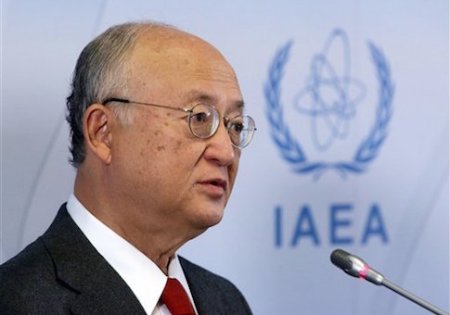
Director General of the International Atomic Energy Agency, IAEA, Yukiya Amano of Japan addresses the media during a news conference after a meeting of the IAEA board of governors at the International Center in Vienna, Austria, Monday, March 7, 2016. (AP Photo/Ronald Zak)

Director General of the International Atomic Energy Agency, IAEA, Yukiya Amano of Japan addresses the media during a news conference after a meeting of the IAEA board of governors at the International Center in Vienna, Austria, Monday, March 7, 2016. (AP Photo/Ronald Zak)

The head of the international community’s nuclear watchdog organization disclosed Monday that certain agreements reached under the Iran nuclear deal limit inspectors from publicly reporting on potential violations by the Islamic Republic.

Yukiya Amano, chief of the International Atomic Energy Agency, or IAEA, which is responsible for ensuring Iran complies with the agreement, told reporters that his agency is no longer permitted to release details about Iran’s nuclear program and compliance with the deal.

Amano’s remarks come on the heels of a February IAEA oversight report that omitted many details and figures related to Iran’s nuclear program. The report sparked questions from outside nuclear experts and accusations from critics that the IAEA was not being transparent with its findings.

Amano disclosed in response to questions from reporters that the last report was intentionally vague because the nuclear agreement prohibits the IAEA from publishing critical data about Iran’s program that had been disclosed by the agency in the past.

“The misunderstanding is that the basis of reporting is different,” Amano said. “In the previous reports, the bases were the previous [United Nations] Security Council Resolutions and Board of Governors. But now they are terminated. They are gone.”

Most U.N. measures pertaining to Iran—including its military buildup and illicit work on nuclear technology—were removed following the nuclear agreement, which essentially rewrote the organization’s overall approach to the country.

The IAEA, which operates under the U.N. umbrella, must now follow the new resolutions governing the implementation of the nuclear pact, Amano said.

“These two resolutions and the other resolutions of the Security Council and Board are very different,” he said. “And as the basis is different, the consequences are different.”

Amano said that going forward, the agency would only release reports that are consistent with the most recent Security Council resolutions on Iran, meaning that future reports are likely to impact the international community’s ability to determine if Iran is fully complying with its end of the agreement.

Last month’s report was viewed as particularly significant because it allowed the nuclear agreement to proceed to its implementation stage. However, the dearth of information in it has angered some experts.

The latest report “provides insufficient details on important verification and monitoring issues,” Olli Heinonen, the IAEA’s former deputy director general, stated in a policy brief.

“The report does not list inventories of nuclear materials and equipment or the status of key sites and facilities,” Heinonen said in his analysis, which was published by the Foundation for Defense of Democracies. “Without detailed reporting, the international community cannot be sure that Iran is upholding its commitments under the nuclear deal.”

The IAEA’s latest report also failed to disclose information about Iran’s stockpiles of low-enriched uranium, which is supposed to be significantly reduced as part of the nuclear deal.

Additional information about Iran’s nuclear centrifuges, the machines responsible for enriching uranium, also was withheld by the IAEA.

Other critics accused the Obama administration of misleading Congress during negotiations over the deal. White House officials maintained at the time that the agreement would provide increased transparency into Iran’s nuclear endeavors.

“When nuclear negotiations began in late 2013, the administration asked Congress to stand down on pressuring the Iranians, and promised to force the Iranians to dismantle significant parts of their nuclear program if Congress gave negotiators space,” Omri Ceren, an official with The Israel Project, which works with Congress on the Iran issue, wrote in an analysis sent to reporters on Monday.

“U.S. negotiators eventually caved on any demands that would have required the destruction of Iran’s uranium infrastructure, and instead went all-in on verification and transparency: Yes, the Iranians would get to keep what they’d built, and yes, their program would eventually be fully legal, but the international community would have full transparency into everything from uranium mining to centrifuge production to enriched stockpiles,” Ceren explained.

However, “now Amano has revealed that the nuclear deal gutted the ability of journalists and the public to have insight into Iran’s nuclear activities,” he said. “In critical areas, it’s not even clear that the IAEA has been granted the promised access.”

Report: Israel’s northern border violated daily

February 28, 2016

Report: Israel’s northern border violated daily, Israel National News, David Rosenberg, February 28, 2016

Lebanon borderIDF patrol along border with Lebanon Flash 90

Israel’s border with Lebanon is violated on a daily basis, according to a new report by the Israeli Mission to the United Nations.

The report also shows the degree to which UN resolutions are ignored and even tolerated – despite the presence of United Nations observers. In 2015 alone, there were fully 2,374 documented violations of the most recent UN ruling on the Israel-Lebanon border, UN Security Council Resolution 1701.

Israel’s Ambassador to the UN, Danny Danon, conveyed the statistics to the UN Secretary General and Security Council. Danon condemned the rampant violations of the border area and the UN’s tacit acceptance of Hezbollah control.

“The government of Lebanon is not acting and armed Hezbollah operatives are roaming freely throughout the south Lebanon in violation of the UN,” Danon said. “Hezbollah has free reign in South Lebanon and instead of reacting forcefully to their violations, the UN is ignoring the problem.”

Hezbollah, which has de facto autonomy in southern Lebanon, maintains regular armed patrols along the Blue Line – the UN’s demarcation between Israel and Lebanon – well within the United Nations Interim Force in Lebanon (UNIFIL) security zone. The number of Hezbollah patrols along the border in 2015 was estimated at 653.

More disturbing, the report revealed that Israel’s northern border is violated on a daily basis. During 2015 alone, infiltrators breached the border 589 times.

Another 1,079 incidents of armed individuals – presumably Hezbollah fighters – openly operating in the UNIFIL security zone were recorded.

The report noted two Hezbollah terror attacks on Israel in 2015, and 51 violent protests targeting Israeli forces along the border.

Exclusive: Obama Refuses to Hit ISIS’s Libyan Capital

February 18, 2016

Exclusive: Obama Refuses to Hit ISIS’s Libyan Capital, Daily Beast, Nancy A. Youssef, February 18, 2016

(Please see also, ISIS Leader Moves to Libya. — DM)

Islamic State in Libya

Despite the growing threat from the self-proclaimed Islamic State in Libya, the Obama administration has turned down a U.S. military plan for an assault on ISIS’s regional hub there, three defense officials told The Daily Beast. 

In recent weeks, the U.S. military—led by its Africa and Special Operations Commands—have pushed for more airstrikes and the deployment of elite troops, particularly in the city of Sirte. The hometown of former Libyan leader Muammar Gaddafi, the city is now under ISIS control and serving as a regional epicenter for the terror group.

The airstrikes would target ISIS resources while a small band of Special Operations Forces would train Libyans to eventually be members of a national army, the officials said.

Weeks ago, defense officials told The New York Times that they were crafting military plans for such strikes, but needed more time to develop intelligence so that they could launch a sustained air campaign on ISIS in Sirte.

But those plans have since been put on the back burner.

“There is little to no appetite for that in this administration,” one defense official explained.

Instead, the U.S. will continue to do occasional strikes that target high-value leaders, like the November drone strike that killed Abu Nabil al-Anbari, the then-leader of ISIS in Libya.

“There’s nothing close to happening in terms of a major military operation. It will continue to be strikes like the kind we saw in November against Abu Nabil,” a second defense official explained to The Daily Beast.

The division over what action the U.S. and the international community should take in Libya speaks to the uncertainty about when and where ISIS should be countered.

For Europe, Libya is uncomfortably close and already a jumping off point for migrants willing to take on the rough Mediterranean waters in search of asylum. ISIS pronouncements have previously pointed out that Rome is nearby.

For the United States, there are major concerns about allowing another ISIS hub to emerge in the region. The Libyan city of Sirte is under ISIS control and some believe the terror group seeks to turn Sirte into a center of operations, like Raqqa in Syria and Mosul in Iraq.

Leaders across Europe have hinted that more should be done in Libya but have fallen short on specifics. In an interview with Der Spiegel last month, the German envoy to Libya said: “We simply cannot give up on Libya.”

According to U.S. military figures, there are roughly 5,000 ISIS fighters in Libya, a spike from 1,000 just a few months ago. Defense officials believe that ISIS supporters are moving toward Libya, having found it increasingly difficult to travel to Iraq and Syria.

Perhaps because of that, Sirte, and areas around it, are increasingly falling victim to ISIS’s barbaric practices. And some are urging the international community not to wait until Sirte falls further under ISIS control, and filled with fighters mixed in with civilians.

According to this report, residents there cannot leave the city freely as ISIS fighters—many of them from Egypt, Chad, Niger, and Tunisia—inspect cars for signs of residents trying to escape. As in Raqqa and Mosul, residents do not have access to cellphone or Internet networks and live under an ISIS judicial system that issues death sentences to those who do not practice the terror group’s brand of Islam.

Moreover, in nearby cities like Ras Lanouf, ISIS is destroying oil installations, cutting off a key potential source of revenue for any newly cobbled unified Libyan government. ISIS has set its sights across the country, from Misrata in the west to Derna in the east.

Some fear the terror group is hunkering down in places like Sirte in preparation for a potential U.S. offensive.

The administration had said that it would not intervene until Libya, which now is governed by two rival governments on opposite sides of the country, had created a single entity to govern the state.

At a press conference Tuesday, during this year’s summit of the Association of Southeast Asian Nations, President Obama referred to United Nations efforts to help build a government in Libya, suggesting any military effort could create even more political fractures. On Sunday, a member of Libya’s Presidential Council announced that a list of 13 ministers and five ministers of state had been sent to Libya’s eastern parliament for approval.

But while the president said the U.S. would go after ISIS “anywhere it appeared,” he stopped short of saying the U.S. would expand its effort in Libya unilaterally.

“We will continue to take actions where we’ve got a clear operation and a clear target in mind. And we are working with our other coalition partners to make sure that as we see opportunities to prevent ISIS from digging in, in Libya, we take them. At the same time, we’re working diligently with the United Nations to try to get a government in place in Libya,” the president said. “And that’s been a problem.”

Some military officials believe Obama feels that France and Italy, which both have hinted at intervention, should take the lead on any military effort. Both countries were key to the NATO-led campaign in 2011 that led to Gaddafi’s fall. Still others believe the United States wants to limit its war against the Islamic State to Iraq and Syria.

Since Gaddafi’s death in October 2011, the state has become especially susceptible to outside extremists. With no tradition of an independently strong state military, militias have served as security forces and now are unwilling to disarm.

With no stable government or security forces, parts of Libya have become vulnerable to groups like ISIS looking for territory to set up a self-described caliphate.

As many as 435,000 of the country’s 6 million people are internally displaced, according a recent UN report. An estimated 1.9 million require some kind of humanitarian aid. And as of August, 250,000 migrants had entered, turning Libya into a key hub for those seeking to enter Europe.

Tuesday marked the five-year anniversary of Libya’s Arab Spring. It’s now considered a bittersweet day, rather than the beginning of a democratic movement the protests launched that day once promised.

Saudi Arabia, Yemen and the Politicized UN

February 16, 2016

Saudi Arabia, Yemen and the Politicized UN, Gatestone InstituteRichard Kemp and Jasper Reid, February 16, 2016

♦ The UN’s assertion that the Saudi-led coalition has committed war crimes in Yemen is unlikely to be true. UN experts have not been to Yemen, depending instead on hearsay evidence and analysis of photographs.

♦ The UN has a pattern of unsubstantiated allegations of war crimes against the armed forces of sovereign states. Without any military expertise, and never having visited Gaza, a UN commission convicted the Israel Defense Force of deliberately targeting Palestinian civilians in the 2014 conflict. It was an assessment roundly rejected by America’s most senior military officer, General Martin Dempsey, and an independent commission.

♦ The Houthis have learned many lessons from Hamas and Islamic Jihad in Gaza, groups also supported by Iran. Those lessons include the falsification of civilian casualty figures and their causes. The UN swallowed the fake Gaza figures hook, line and sinker, and are now making the same error in Yemen.

♦ The Houthis exploit gullible or compliant reporters and human rights groups to facilitate their propaganda, including false testimony and fabrication of imagery.

♦ Forensic analysis shows that rather than deliberately targeting civilians, the Saudis and their allies have taken remarkable steps to minimize civilian casualties.

The United Nations, Amnesty International and other groups have accused the Saudi-led coalition of war crimes in Yemen. A leaked UN report claims the bombing campaign against Iranian-supported Houthi insurgents seeking violently to topple the legitimate government of Yemen has conducted deliberate, widespread and systematic attacks on civilian targets.

If the UN’s assertion is true, and the coalition is deliberately and disproportionately killing thousands of innocent civilians, it is a war crime. But it is unlikely to be true. The UN has produced no actual evidence of war crimes. None of their allegations is based on investigation on the ground. Their experts have not been to Yemen, depending instead on hearsay evidence and analysis of photographs.

The UN has a pattern of unsubstantiated allegations of war crimes against the armed forces of sovereign states. Only last year, without any military expertise, and never having visited Gaza, a UN commission convicted the Israel Defense Force of deliberately targeting innocent Palestinian civilians in the 2014 conflict. It was an assessment roundly rejected by America’s most senior military officer, General Martin Dempsey, the Chairman of the Joint Chiefs of Staff.

Dempsey’s own findings were confirmed by an independent commission of experienced senior military officers and officials from nine countries. The High Level Military Group found that Israel had not committed war crimes, but had in fact set a bar for avoiding civilian casualties so high that other armed forces would struggle to reach it.

Moreover, last September the UN said that a US airstrike against a hospital in Kunduz, Afghanistan, was “inexcusable” and “possibly a war crime.” Few military forces in the world take greater precautions to prevent civilian casualties on the battlefield than the US. Anyone who has actually experienced combat knows that while such incidents are tragic, when carried out by Western forces, they are far more likely to be the result of human error or the chaos of battle than deliberate war crimes.

There is every reason to believe that the UN is again crying wolf. There is no doubt that thousands are dying in Yemen in horrific circumstances. But we cannot just accept the UN’s figures and its attribution of the proportion of deaths being inflicted by the Saudi coalition. Most of the data comes from the Houthi insurgents, either directly or via non-governmental organizations (NGOs), and is simply accepted as fact. The Houthis have learned many lessons from Hamas and Palestinian Islamic Jihad in Gaza, groups also supported by Iran. Those lessons include the falsification and distortion of civilian casualty figures and their causes. The UN swallowed the fake Gaza figures hook, line and sinker, and are now making the same error in Yemen.

As with Israel’s defensive campaign in Gaza in 2014, and the continued U.S. military support to the Afghan regime, the Saudis’ war to defend the government of Yemen and curb Iranian aggression in the region is lawful and legitimate. Therefore, the illegality of civilian deaths must be assessed according to the laws of armed conflict, in particular whether adequate precautions were taken to avoid them, whether they were proportionate to the military objectives and whether they were necessary to achieve legitimate military goals. The UN cannot possibly make such judgements without a more far-reaching and thorough investigation, and especially not on the basis of information provided by Saudi Arabia’s enemies and by interpreting photographs.

Most of us do not like the way that the Saudi regime runs their country according to the strict application of Islamic Sharia law, and we abhor their record on human rights. But the Saudi military ethos is well known and understood by Western military leaders, including from the U.S. and UK, who have worked closely with them for many years. The reality is, as our officers currently serving alongside them will attest, that the Saudis and their allies are not deliberately trying to kill innocent civilians. Indeed, they are doing their best to minimize civilian casualties. The question is whether their best is good enough.

Saudi Arabia and its coalition allies have the most sophisticated Western combat equipment, including planes, attack helicopters, drones and precision-guided munitions. But they lack battle experience. The exception to this is the Emirati forces within the coalition. They have had many years of combat experience alongside Western militaries, including in Somalia, Kosovo, Libya and Afghanistan. Because of that, they have acquitted themselves in Yemen with great professionalism and effectiveness at sea, on the ground and in the air.

But the lack of experience of the other coalition members puts them many years behind our own forces in wielding the highly complex 21st century capabilities of intelligence, surveillance, reconnaissance, communication and targeting.

Yet the coalition faces the same tough challenges that we face on battlefields everywhere. Their Houthi adversaries fight according to the well-developed doctrine of their backers, the Iranian Quds Force. Like Hizballah, Hamas, the Taliban, Al Qaeda and the Islamic State, their techniques include deliberately killing civilians, fighting from within the population and forcing innocents to become human shields.

1474

Completely ignoring the laws of war, they exploit their enemies’ adherence to them. They lure their opponents to attack and kill civilians. They exploit gullible or compliant reporters, international organizations and human rights groups to facilitate their propaganda, including false testimony and systematic fabrication of imagery. The aim is to instigate international condemnation in order to constrain their militarily superior enemies.

We have seen credible forensic analysis of strikes in Yemen that directly contradict the findings of the UN. Forensic analysis shows that rather than deliberately targeting civilians, the Saudis and their allies have taken remarkable steps to minimize civilian deaths. Of note, they have learned much from Israel’s conduct of operations in Gaza. This has included the use of guided munitions to conduct precision attacks against insurgents while seeking to reduce collateral damage.

Why would coalition forces spend vast amounts of money in a cripplingly expensive conflict firing precision strike munitions, and put their valuable pilots at risk, if they wanted to massacre civilians? Why not use much cheaper unguided munitions or Assad’s indiscriminate barrel-bombs?

The overwhelming majority of civilian deaths caused by the Saudi-led coalition have been due not to deliberate targeting, but to inexperienced pilots and unsophisticated intelligence and targeting capabilities in the face of an enemy that fights from within the civilian population. And to that the friction, confusion, stress and fog of war that leads even the most sophisticated, experienced and restrained military forces, such as American, British and Israeli, to sometimes kill civilians unintentionally. Contrary to the UN’s claim, this is unlikely to amount to war crimes.

Like every conflict in the Middle East, the war in Yemen is almost intractable, takes a heavy toll on innocent civilians, and is unlikely to end in anything approaching a perfect solution. But Saudi Arabia and its allies are making considerable efforts to restore stability to the country and its legitimate government.

Instability in Yemen undermines Western interests, including oil supplies. Instability also allows Al Qaeda and the Islamic State — proven and lethal threats to the US and the West — to flourish there.

By confronting the Houthis in Yemen, Saudi Arabia is also confronting Iran, which represents an even greater threat to the region and to the world. Emboldened by U.S. President Barack Obama’s nuclear deal, enriched by the release of billions of dollars of previously frozen funds, encouraged by the imminent boost in oil revenues, Iranian imperial aggression is today rampant in Iraq, Syria, Lebanon and Yemen.

However unpalatable to many, Saudi Arabia is and will remain a vital ally of the West. We must continue to support them in the fight in Yemen. We must not allow the false, ill-informed and increasingly shrill condemnations by the UN, human rights groups and the media to undermine Saudi’s fighting effectiveness as they have sought to do against other legitimate government forces fighting lawless insurgents in so many other places.

United Nations: ISIS Has 34 Affiliates Worldwide

February 7, 2016

United Nations: ISIS Has 34 Affiliates Worldwide, Clarion Project, February 7, 2016

ISIS-youth

By the end of last year, 34 organizations had sworn allegiance to the Islamic State, United Nations Secretary-General Ban Ki-moon said February 5. That number will continue to rise in 2016, he warned.

“The recent expansion of the [Daesh] sphere of influence across west and north Africa, the Middle East and south and southeast Asia demonstrates the speed and scale at which the gravity of the threat has evolved in just 18 months,” he said.

The secretary general added ISIS is the wealthiest terrorist organization, with revenues of up to $500 million in 2015.

The private counter-terrorism company IntelCenter puts the number of affiliates and supporters at 43:

1.       al-I’tisam of the Koran and Sunnah [Sudan] – 1 Aug. 2014 – Support

2.       Abu Sayyaf Group [Philippines] – 25 Jun. 2014 – Support

3.       Ansar al-Khilafah [Philippines] – 14 Aug. 2014 – Allegiance

4.       Ansar al-Tawhid in India [India] – 4 Oct. 2014 – Allegiance

5.       Bangsamoro Islamic Freedom Fighters (BIFF) [Phillippines] – 13 Aug. 2014 – Support

6.       Bangsmoro Justice Movement (BJM) [Phillippines] – 11 Sep. 2014 – Support

7.       Jemaah Islamiyah [Philippines] 27 Apr. 2015 – Allegiance

8.       al-Huda Battalion in Maghreb of Islam [Algeria] – 30 Jun. 2014 – Allegiance

9.       The Soldiers of the Caliphate in Algeria [Algeria] – 30 Sep. 2014 – Allegiance

10.   al-Ghurabaa [Algeria] – 7 Jul. 2015 – Allegiance

11.   Djamaat Houmat ad-Da’wa as-Salafiya (DHDS) [Algeria] 19 Sep. 2015 – Allegiance

12.   al-Ansar Battalion [Algeria] 4 Sep. 2015 – Allegiance

13.   Jundullah [Pakistan] – 17 Nov. 2014 – Support

14.   Islamic Movement of Uzbekistan (IMU) [Pakistan/Uzbekistan] Video – 31 Jul. 2015 – Allegiance

15.   Tehreek-e-Khilafat [Pakistan] – 9 Jul. 2014 – Allegiance

16.   Leaders of the Mujahid in Khorasan (ten former TTP commanders) [Pakistan] – 10 Jan. 2015 – Allegiance

17.   Islamic Youth Shura Council [Libya] – 22 Jun. 2014 – Support

18.   Jaish al-Sahabah in the Levant [Syria] – 1 Jul. 2014 – Allegiance

19.   Martyrs of al-Yarmouk Brigade [Syria] – Dec. 2014 – Part of IS – Allegiance

20.   Faction of Katibat al-Imam Bukhari [Syria] – 29 Oct. 2014 – Allegiance

21.   Jamaat Ansar Bait al-Maqdis [Egypt] – 30 Jun. 2014 – Allegiance

22.   Jund al-Khilafah in Egypt [Egypt] – 23 Sep. 2014 – Allegiance

23.   Liwa Ahrar al-Sunna in Baalbek [Lebanon] – 30 Jun. 2014 – Allegiance

24.   Islamic State Libya (Darnah) [Libya] – 9 Nov. 2014 – Allegiance

25.   Lions of Libya [Libya] (Unconfirmed) – 24 Sep. 2014 – [Support/Allegiance]

26.   Shura Council of Shabab al-Islam Darnah [Libya] – 6 Oct. 2014 – Allegiance

27.   Jemaah Anshorut Tauhid (JAT) [Indonesia] – Aug. 2014 – Allegiance

28.   Mujahideen Indonesia Timor (MIT) [Indonesia] – 1 Jul. 2014 – Allegiance

29.   Mujahideen Shura Council in the Environs of Jerusalem (MSCJ) [Egypt] – 1 Oct. 2014 – Support

30.   Okba Ibn Nafaa Battalion [Tunisia] – 20 Sep. 2014 – Support

31.   Jund al-Khilafah in Tunisia [Tunisia] – 31 Mar. 2015 – Allegiance

32.   Central Sector of Kabardino-Balakria of the Caucasus Emirate (CE) [Russia] – 26 Apr. 2015 – Allegiance

33.   Mujahideen of Tunisia of Kairouan [Tunisia] 18 May 2015 – Allegiance

34.   Mujahideen of Yemen [Yemen] – 10 Nov. 2014 – Allegiance

35.   Supporters for the Islamic State in Yemen [Yemen] – 4 Sep. 2014 – Allegiance

36.   al-Tawheed Brigade in Khorasan [Afghanistan] – 23 Sep. 2014 – Allegiance

37.   Heroes of Islam Brigade in Khorasan [Afghanistan] – 30 Sep. 2014 – Allegiance

38.   Supporters of the Islamic State in the Land of the Two Holy Mosques [Saudi Arabia] – 2 Dec. 2014 – Support

39.   Ansar al-Islam [Iraq] – 8 Jan. 2015 – Allegiance

40.   Boko Haram [Nigeria] – 7 Mar. 2015 – Allegiance

41.   The Nokhchico Wilayat of the Caucasus Emirate (CE) [Russia] – 15 Jun. 2015 – Allegiance

42.   al-Ansar Battalion [Algeria] – 4 Sep. 2015 – Allegiance

43.   al-Shabaab Jubba Region Cell Bashir Abu Numan [Somalia]- 7 Dec. 2015 – Allegiance

Here Ban Ki-moon summarizes the U.N.’s position on ISIS:


The Really Insane Thing About Ban Ki-Moon’s Speech

January 28, 2016

The Really Insane Thing About Ban Ki-Moon’s Speech, AlgemeinerElder of Ziyon, January 27, 2016

(H/t The Jewish Press

Ban-Ki-Moon-two-state-solution

— DM)

Ban-Ki-Moon-270x300United Nations Secretary-General Ban Ki-moon, pictured, this week addressed the Security Council “on the situation in the Middle East.” Photo: World Economic Forum.

Yes, it is outrageous that Ban Ki Moon essentially called terror attacks a natural result of “occupation,” and Netanyahu was right in slamming him for it.

But that wasn’t the strangest part of the speech.

The title of Ban Ki-Moon’s talk was “Secretary-General’s remarks to the Security Council on the Situation in the Middle East.”

There were 52 paragraphs in the speech according to the official UN record.

Of those 52, three were about Lebanon. Two referred to Syria – one about refugees and one about the Golan.

The entire rest of the speech was about Israel and the Palestinians.

The Secretary General of the UN gives an overview of the Middle East without mentioning Syrian atrocities, without mentioning Iraqi instability, without even mentioning ISIS.

Nothing about Iran. Nothing about Saudi Arabia, which is killing more civilians in Yemen than Israel did in Gaza. Nothing about Egypt or Libya. Not a word about Kurds.

On the contrary – Ban Ki Moon implied that if only Israel would just give some more concessions, then the rest of the region would be inspired to make peace. “As the wider Middle East continues to be gripped by a relentless wave of extremist terror, Israelis and Palestinians have an opportunity to restore hope to a region torn apart by intolerance and cruelty.”

The word “obsession” hardly does justice to the single-minded Israel fetish at the UN.

But, yes, we must also be angry at the Secretary General’s justification for terror.

UN Plan to Prevent “Violent Extremism” Ignores its Primary Cause

January 19, 2016

UN Plan to Prevent “Violent Extremism” Ignores its Primary Cause, Front Page MagazineJoseph Klein, January 19, 2016

cx

United Nations Secretary General Ban Ki-moon is operating from the same playbook as President Obama when it comes to addressing the threat of global jihad. They both deny that such a religiously-based threat exists. Just like Obama, Ban Ki-moon uses the euphemism “violent extremism,” without linking it to its primary ideological source – Islam.

The global terrorist scourge is driven by Islamic supremacy and the jihadist war against the “infidels” that are embedded in sharia law. That is not to say that the jihadists are the only terrorists in the world. However, to diffuse responsibility by contending that violent extremism is found in all faiths ignores the fact that the only global terrorist network threatening our way of life today is bound together by the teachings of Islam.

In the Secretary General’s remarks to the UN General Assembly on January 15th introducing his “Plan of Action to Prevent Violent Extremism,” he said that “the vast majority of victims worldwide are Muslims.” Obama said essentially the same thing last February at his Summit on Countering Violent Extremism, lamenting that it is “especially Muslims, who are the ones most likely to be killed.”

Both Ban Ki-moon and President Obama omitted to say that the killers are also primarily Muslims. Moreover, they left out entirely any mention of the ongoing genocide being conducted by Muslims in the name of Allah against Christians and Yazidis in the Middle East.

When I asked the spokesperson for the Secretary General why the Secretary General did not acknowledge the fact that the vast majority of global terrorists today are Islamists, the spokesperson responded that “the Secretary‑General’s focus is not on targeting or pointing finger at one ethnic group, one religious group, or people who claim to act in the name of a particular religion.”

This begs the question as to why the Secretary General took pains to assert that Muslims constitute the majority of terrorists’ victims but refused to acknowledge that the vast majority of perpetrators are also Muslims.

The Secretary General’s Plan of Action to Prevent Violent Extremism describes what it calls the “drivers of violent extremism.”  These drivers include, according to the UN document, lack of socioeconomic opportunities, marginalization and discrimination, poor governance and violations of human rights, prolonged and unresolved conflicts, radicalization in prisons, collective grievances, and exploitation of social media.

Obama offered essentially the same explanation for the growth of violent extremism put forth by Ban Ki-moon. A key problem, he said, was lack of economic opportunity that trapped people –especially young people – “in impoverished communities.”

Obama added: “When people are oppressed, and human rights are denied — particularly along sectarian lines or ethnic lines — when dissent is silenced, it feeds violent extremism.”

Ban Ki-moon and President Obama both have argued that Islam itself is blameless. It is, in Ban Ki-moon’s words, the “distortion and misuse of beliefs” that are to blame. At his February 2015 Summit on Countering Violent Extremism, President Obama called out what he described as “the warped ideologies espoused by terrorists like al Qaeda and ISIL, especially their attempt to use Islam to justify their violence.”

However, the truth is that Islam itself contains the seeds for the violence that is such a prominent part of jihad. Jihadists using violence as a tactic to impose Islam as the world’s only “legitimate” belief system are following the path laid down by Prophet Muhammed himself and his early followers, according to their literal words and acts.

The proposed actions to address the problem of “violent extremism,” both Ban Ki-moon and Obama agree, include better education, more opportunities for women, better governance, and respect for human rights including freedom of expression and freedom of religious belief.  The UN Secretary General and President Obama base their common strategy on their shared utopian belief that peoples from every country and culture embrace a common set of “universal” human rights, as expressed in the United Nations Universal Declaration of Human Rights. The Universal Declaration’s preamble states:  “recognition of the inherent dignity and of the equal and inalienable rights of all members of the human family is the foundation of freedom, justice and peace in the world.”

However, the Universal Declaration of Human Rights, despite its enlightened vision of the inherent dignity and fundamental rights of all human beings, is far from being a truly universally accepted creed. Muslims reject it to the extent that it conflicts with sharia law.

While Muslim member states of the United Nations, with the notable exception of Saudi Arabia, signed the Universal Declaration, they disavow its Western, secular-based principles. Islamists refuse to be ruled by any human rights document that deviates from what they regard as the divinely-inspired sharia law.

As the Islamic response to the United Nations Universal Declaration of Human Rights, the Organization of Islamic Cooperation foreign ministers adopted The Cairo Declaration on Human Rights in Islam in 1990. After reciting a litany of human rights that it pledges to protect, the Cairo Declaration subjects all of its protections to the requirements of sharia law. “The Islamic Shari’ah is the only source of reference for the explanation or clarification to any of the articles of this Declaration.” (Article 25)

By making Islamic law the sole authority for defining the scope of human rights, the Muslims’ Cairo Declaration sanctions limits on freedom of expression, discrimination against non-Muslims and women, and a prohibition against a Muslim’s conversion from Islam. Such restrictions on freedoms directly contradict the Universal Declaration of Human Rights.

Saudi Arabia and Iran, the leading Muslim majority countries today representing the Sunni and Shiite branches of Islam respectively, may be at odds with one another regarding certain sectarian and geopolitical issues. However, they both purport to govern according to sharia law, which is used to justify their religious intolerance, brutal suppression of dissent, misogyny and capital punishment for blasphemy, apostasy, adultery and homosexuality. It is Saudi Arabia’s Wahhabism which has helped fuel the jihadists inside and outside of Saudi Arabia seeking to forcibly purify Islam from the influence of “infidels.” And Iran is the world’s leading state sponsor of terrorism, as it seeks to fulfill the vision of Ayatollah Khomeini, the late founder of the Iranian Islamic revolution, to kill the infidels and ensure “that the writ of Islam is obeyed in every country in the world.”

Iran’s current Supreme Leader Ayatollah Khamenei has rejected the Universal Declaration of Human Rights, which he claims is reflective of a “culture of dominance.” Instead, he said “the answer is return to Islam, and recourse to Divine revelation.” He called for the use of “Islamic sources (the Quran and the Sunnah) in legal matters.” Presumably, what the Supreme Leader described as the “Islamic mode of thinking in society” would explain the Islamic Republic of Iran’s arbitrary imprisonment, torture and the killing of political dissidents and members of minority groups. The “Islamic sources in legal matters” evidently serve as the basis for the regime’s discriminatory laws against women, among other repressive laws.

In 2013, Iran was rewarded by the UN for its vows of global conquest with a seat on the General Assembly’s disarmament committee. Last year Iran was rewarded for its horrendous record of abuses against women with membership on the executive board of the UN Entity for Gender Equality and the Empowerment of Women. And as of January 16, 2016, Iran has been welcomed back into the international community with the lifting of sanctions and the unfreezing of assets worth approximately $150 billion.

The Saudi Sheikh Saleh Al-Lehadan, head of the Supreme Judiciary Council, expressed back in 2008 the religious intolerance that lies at the heart of the leading Sunni country’s practice of Islam: “After getting rid of the Jews in our Arab land, we must turn to the Christians. They have three options: either they convert to Islam, or leave, or pay Jizia (protection taxes).” With the help of the Islamic State and al Qaeda that receive funding from Saudi Arabia, this ambition is on its way to being realized, and even expanded to reach throughout the Middle East and beyond.

The same Saudi sheikh and head of the Supreme Judiciary Council also said: “Women who are raped by men are themselves to blame. They provoke men by the way they dress or walk.”

Last year Saudi Arabia was rewarded for its horrendous human rights record with a seat and leadership position on the UN Human Rights Council.

Coddling the leading jihad exporting countries and pretending that sharia law can ever be reconciled with so-called “universal” human rights values will render all plans of action to prevent “violent extremism” an utter failure.

North Korea and Iran: The Nuclear Duo

January 8, 2016

North Korea and Iran: The Nuclear Duo, Front Page MagazineJoseph Klein, January 8, 2016

(With the Iran Scam’s sanctions relief, Iran will soon have lots more money to outsource development of nuclear weapons to North Korea. North Korea desperately needs foreign currency and will be delighted to help, as it has done in the past and, apparently, continues to do. — DM)

pl (1)

There is no reason to believe that, as a result of the deal Iran is already sidestepping, Iran will suddenly stop all dealings with North Korea with regard to both countries’ nuclear programs. The Obama administration and the United Nations upon which it relies ignore the close relationship between the two rogue nations at the world’s peril.

********************************

North Korea conducted its fourth nuclear test on January 6th, which it claimed was a hydrogen bomb. Despite some skepticism as to North Korea’s claim that it had actually tested a hydrogen bomb, the Obama administration acknowledged that North Korea had indeed tested some sort of nuclear device. The administration condemned North Korea’s latest testing as a violation of a series of past United Nations Security Council resolutions.

“We do not and will not accept North Korea as a nuclear armed state, and actions such as this latest test only strengthen our resolve,” declared Secretary of State John Kerry.

Mr. Kerry is a bit late with his declaration. North Korea has had an active nuclear arms program for nearly a decade and has conducted three of its four nuclear tests during President Obama’s time in office. None of the sanctions contained in the Security Council resolutions have stopped North Korea from thumbing its nose at the so-called “international community” and conducting as many nuclear and missile tests as it wishes. Kerry’s declaration begs the question – “resolve” to do what? Pass yet another Security Council resolution with a few more symbolic sanctions and some additional travel restrictions on senior North Korean officials?

The Obama administration’s claim of “resolve” in dealing effectively with nuclear threats rings hollow. Its idea of what “resolve” means was demonstrated by the loophole-ridden nuclear deal with Iran, which contains no safeguards against Iran’s cooperation with North Korea on nuclear technology and development. No doubt the administration would offer North Korea a similar deal if its leader Kim Jong-un were as crafty as Iranian President Hassan Rouhani in lulling President Obama and Kerry into a false sense of security.

Moreover, rather than work closely with China to maximize its leverage in defusing North Korea’s nuclear threat, the administration chose to prioritize climate change in its relationship with China above all other issues.

The administration’s solution to the North Korea problem is to double down on its failed strategy of relying principally on the UN for concerted “international” action. It joined Japan, a non-permanent member of the Security Council, in calling for the December 6th emergency session. After about two hours of closed door consultations, the Security Council issued a press statement condemning the test and vowing further unspecified measures in response:

“The members of the Security Council strongly condemned this test, which is a clear violation of Security Council resolutions1718 (2006), 1874 (2009), 2087 (2013), and 2094 (2013) and of the non-proliferation regime, and therefore a clear threat to international peace and security continues to exist. The members of the Security Council also recalled that they have previously expressed their determination to take ‘further significant measures’ in the event of another DPRK nuclear test, and in line with this commitment and the gravity of this violation, the members of the Security Council will begin to work immediately on such measures in a new Security Council resolution.”

Even if Russia and China were to come around and support another resolution under the enforcement provisions of Chapter 7 of the UN Charter, it is hard to believe that it will make any difference. Before the emergency Security Council meeting even began, Russian UN Ambassador Churkin was already lowering expectations, saying softly to reporters: “Cool heads, cool heads” and “proportionate response.”

North Korea regards the UN Security Council, and the Obama administration for that matter, with about as much contempt as Iran does. Indeed, all North Korea’s leaders have had to do is look at how Iran has been treated when it behaves badly. Iran was rewarded with a deal that merely postpones its nuclear arms program in return for the lifting of sanctions and unfreezing of many billions of dollars. Moreover, Iran suffered no consequences to speak of from its recent violations of the Security Council resolutions prohibiting it from developing or testing ballistic missiles capable of carrying nuclear weapons. The Security Council held meetings but did nothing. As U.S. ambassador to the United Nations Samantha Power told the Senate Foreign Relations Committee last December, “Beyond having Security Council discussions on the matter there’s been no follow-on action. Discussions are a form of U.N. action.”

For its part, the Obama administration put off the imposition of any separate U.S. sanctions it had been considering in response to Iran’s missile launchings as soon as the Iranians claimed that any such sanctions would violate President Obama’s “holy grail” nuclear deal.

The United Nations Security Council, as well as the Obama administration, tend to compartmentalize flashpoints erupting in different regions of the world. They refuse to acknowledge that Iran and North Korea have long been joined at the hip when it comes to the development of nuclear material for bombs and ballistic missiles capable of delivering them.

The Security Council holds separate meetings on Iran and North Korea, as if their respective nuclear activities have been completely unrelated to each other. And, as demonstrated by the following exchange between a correspondent and White House Press Secretary Josh Earnest at the January 6th daily press briefing, the Obama administration is turning a blind eye to the dangerous risk of continuing cooperation between Iran and North Korea:

“Q: You mentioned Iran earlier, and I’m wondering if there’s a bit of sleight of hand there from the Iranians’ perspective — meaning they’re trying to, on the one hand, work with the international community to have sanctions relief, but on the other hand, it’s been widely reported that they’ve been working with the North Koreans, perhaps even using them as a proxy to continue development of their own nuclear ambition. Does the White House understand that view?

MR. EARNEST:  I can’t speak to the veracity of those claims.

Iran and North Korea have been cooperating for decades on nuclear technology. As Ilan Berman, a leading expert on the Middle East and Iran, wrote last August in the National Journal, “over the past three decades, Iran and the Stalinist regime of the Kim dynasty in North Korea have erected a formidable alliance—the centerpiece of which is cooperation on nuclear and ballistic-missile capabilities.”

Secretary of Defense Ashton Carter stated during an April 2015 interview that North Korea and Iran could still be cooperating to develop a nuclear weapon. Moreover, according to an assessment of “Iran-North Korea-Syria Ballistic Missile and Nuclear Cooperation” published by the Congressional Research Service last May, “U.S. intelligence officials have expressed concern that North Korea might export its nuclear technology or fissile material.”

Iran “may still rely on Pyongyang for certain materials for producing Iranian ballistic missiles, Iran’s claims to the contrary notwithstanding,” the Congressional Research Service report added.

North Korea has also conducted several tests involving nuclear explosive devices, a technology in which Iran has reportedly shown interest and would be in a position to procure from North Korea.

In short, rebutting the claims by the Obama administration that its nuclear deal with Iran cuts off all its pathways to the achievement of a nuclear weapon capability, the title of Mr. Berman’s National Journal article says it all – “North Korea: Iran’s Pathway to a Nuclear Weapon.”

There is no reason to believe that, as a result of the deal Iran is already sidestepping, Iran will suddenly stop all dealings with North Korea with regard to both countries’ nuclear programs. The Obama administration and the United Nations upon which it relies ignore the close relationship between the two rogue nations at the world’s peril.

Iran Executes Three Iranians Every Day; The West Rewards It.

December 30, 2015

Iran Executes Three Iranians Every Day; The West Rewards It. Gatestone InstituteJudith Bergman, December 30, 2015

♦ “Death sentences in Iran are particularly disturbing because they are invariably imposed by courts that are completely lacking in independence and impartiality. They are imposed either for vaguely worded or overly broad offences, or for acts that should not be criminalized at all, let alone attract the death penalty. Trials in Iran are deeply flawed, detainees are often denied access to lawyers in the investigative stage, and there are inadequate procedures for appeal, pardon and commutation” — From a July 2015 Amnesty International report.

♦ How ironic that Europeans have no problem stuffing themselves with syrupy Iranian dates exported by this regime, knowing full well that there are thousands of prisoners are being tortured in Iran while awaiting their executions.

♦ Amnesty International reports that in the fall of 2015, cartoonist Atena Farghadani was forced to undergo a “virginity and pregnancy test” prior to her trial. The charge? “Illegitimate sexual relations,” for having shaken hands with her lawyer.

♦ Iran nevertheless won a top seat on the U.N.’s Commission on the Status of Women in April 2014. Not a single UN member, not even the US, objected.

On the UN’s Human Rights Day, observed December 10, an Iranian woman was sentenced to death by stoning in the Islamic Republic of Iran.

Since the Islamic Revolution in 1979, Iran is believed to have imposed death by stoning on at least 150 people, according to the International Committees against Execution and Stoning.

“Stoning,” Iranian human rights activist Shabnam Assadollahi said, “is an act of torture. There are 15 countries in which stoning is either practiced and authorized by law or tolerated. One of those 15 countries is Iran. The last known execution by stoning was in 2009. In Iran under the Islamic law, stonings, hangings, and executions are legal torture.

“In Islam under Sharia law, the stoning (Rajm) is commonly used as a form of capital punishment, called Hudud,” Assadollahi explained.

“Under the Islamic Law, it is the ordained penalty in cases of adultery committed by a married man or married woman with others who are not her/his legal partner. Stoning is carried out by a crowd of Muslims who follow the Sharia law by throwing stones (small and large) at a convicted person until she or he is killed. The international community must pressure Iran, Afghanistan, Saudi Arabia, Yemen, Sudan, Somalia, Pakistan, and other countries where stoning is legally carried or tolerated. Why cannot the public loudly cry out and advocate for women oppressed by those regimes?”

Instead of cries of outrage, the West, in the wake of the nuclear “deal” Iran has not even signed, has been scrambling to ingratiate itself with the Iranian regime. Countries such as France, Germany, Austria and Switzerland have barely been able to contain themselves at the prospect of doing business with them. It has been years since the Europeans could legally engage in trade with the murderous regime of the mullahs, who still cry, “Death to Israel, Death to America” — the “Little Satan” and the “Great Satan’ — and they have not been wasting time.

In fact, the P5+1 negotiators (the five permanent members of the UN Security Council plus Germany) had just finished signing the “deal” with themselves, when Germany’s Vice Chancellor, Sigmar Gabriel, hurried himself and a group of representatives from German companies and industry groups onto a plane for a visit to Iran.

The French Foreign Minister, Laurent Fabius, who usually knows better, likewise, found it “… completely normal that after this historic deal was signed, France and Iran should restart normal relations.”

1407French Foreign Minister Laurent Fabius said that it is “completely normal that after this historic [nuclear] deal was signed, France and Iran should restart normal relations.” Left, Iranian Foreign Minister Javad Zarif hugs Fabius at the close of nuclear talks in Geneva, Nov. 23, 2014. Right: A public execution in Iran.

Before the sanctions took effect in 2011, French companies such as Renault and Peugeot were making billions of euros from their involvement with Iran’s auto industry. Similarly, the French company Total was heavily involved in the oil sector. France was evidently not going to miss a beat in bringing this lucrative trade back to la République.

How ironic that the country of “liberté, egalité and fraternité” finds it “completely normal” to have normal diplomatic and trade relations with a country that treats its own citizens, especially women, worse than the mud under the mullah’s feet; that executes whoever disagrees with the regime, and that hangs homosexuals from cranes. How ironic that Europeans have no problem stuffing themselves with syrupy Iranian dates exported by this smiling regime, knowing full well that there are thousands of Iranian prisoners being tortured in Iranian prisons while awaiting their execution day.

Iranian authorities are believed to have executed 694 people between January 1 and July 15, 2015 — an average of three executions a day. Since the election of the “moderate” President Hassan Rouhani in 2013, the number of executions has markedly gone up. According to a July 2015 Amnesty International report:

“Death sentences in Iran are particularly disturbing because they are invariably imposed by courts that are completely lacking in independence and impartiality. They are imposed either for vaguely worded or overly broad offences, or for acts that should not be criminalized at all, let alone attract the death penalty. Trials in Iran are deeply flawed, detainees are often denied access to lawyers in the investigative stage, and there are inadequate procedures for appeal, pardon and commutation.”

The report goes on to state that the majority of those put to death in 2015 were people from disadvantaged backgrounds, who were convicted on drug charges. “This is in direct breach of international law, which restricts the use of the death penalty to only the ‘most serious crimes’ – those involving intentional killing. Drug-related offences do not meet this threshold.”

Among those executed in Iran this year are members of ethnic and religious minorities convicted of “enmity against God” and “corruption on earth.” These include Kurdish political prisoners and Sunni Muslims. On August 26, 2015, Behrouz Alkhani, a 30-year-old man from Iran’s Kurdish minority, was executed despite awaiting the outcome of a Supreme Court appeal.

Iran is the second most prolific executioner in the world after China, according to Amnesty International’s latest global death penalty report.

Iran also tops the global list statistically for executioners of juvenile offenders, even though it is a state party to the Convention on the Rights of the Child and the International Covenant on Civil and Political Rights, both of which prohibit the imposition of the death penalty against persons who were below 18 years of age at the time of the crime, without exception. (Of course Iran was also a signatory to the nuclear Non-Proliferation Treaty, which it also violated repeatedly.) Iran continues to impose the death penalty against juvenile offenders, frequently deferring the execution until after they pass the age of 18. In 2015, at least four juvenile offenders are believed to have been executed: Javad Saberi, Vazir Amroddin, Samad Zahabi and Fatemeh Salbehi.

Iran is scheduled to be reviewed by the Committee on the Rights of the Child on January 11-12, 2016. The Committee has already expressed deep concerns about the use of death penalty against juvenile offenders and asked Iran to provide information on the progress and outcome of the cases of juvenile offenders undergoing re-trial.

Despite all the atrocities that Iran commits towards its citizens, women hold a special place of denigration and humiliation in Iranian society. Young women are reported brutally arrested by the thousand every week for not wearing a “proper hijab.” A woman in Iran is de facto first her father’s property, then after marriage, her husband’s property. According to the UN Secretary General’s February 2015 Report on the Situation of Human Rights in Iran, child marriage is prevalent. The legal age of marriage for girls is 13; some as young as 9 may be married by permission of the court. In 2011, about 48,580 girls between the age of 10 and 14 were married; in 2012, there were at least 1,537 girls under the age of 10 who were reportedly married. Pedophilia is thereby widespread and legal.

Married women may not work, attend sporting events or leave the country without their husband’s permission. When arrested, they suffer unspeakable torture in prison. Rape is commonly used as torture in prison against both women and men.

Forced “virginity testing” is also commonly used in prison, a serious violation of international law. It violates women’s and girls’ human rights to physical integrity, dignity, privacy and right to be free from torture and cruel and inhuman and degrading treatment. According to Amnesty International, satirical cartoonist Atena Farghadani, held in prison since January 2015, was sentenced in June 2015 to twelve years and nine months in prison for her peaceful activism, including meeting with families of political prisoners, and for drawing a satirical cartoon depicting legislators as monkeys, cows, and other animals. The cartoon was to protest a bill that sought to criminalize voluntary sterilization and restrict access to contraception and family planning services.

In December 2014, when Farghadani was out on bail, she released a video message on YouTube, detailing how female prison guards at Evin prison had beaten her, verbally abused her and forced her to strip naked for body searches. She was rearrested in January 2015, and in the fall of 2015 she was forced to undergo a “virginity and pregnancy test” prior to her trial. The charge? “Illegitimate sexual relations” for having shaken hands with her lawyer.

Iran nevertheless won a top seat on the U.N.’s Commission on the Status of Women in April 2014. Not a single UN member, not even the US, objected, to that election.

An exhaustive account of the atrocities that the Iranian regime continues to commit against its own people would require volumes. Nevertheless, the West, seems to remain unfazed in furthering its lucrative relations with the murderous regime.

Those politicians and executives scrambling to do business with the mullahs should realize that Iran’s intercontinental ballistic missiles can tomorrow be aimed at them. Those who comfort themselves with the thought that Iran only wants to annihilate Israel might do well to think again. Iran has tested a two-stage solid-fuel missile, the Sejjil-2, with a range of more than 2,000 km, allowing it to target southeastern Europe. In addition, Iran recently unveiled the Soumar cruise missile, reportedly a reverse-engineered version of the Russia’s Raduga Kh-55 — which was designed as a nuclear delivery system. It has a claimed range of 2,500-3,000 km.

Nevertheless, the International Atomic Energy Agency (IAEA) has acceded to Iran’s demands toclose its 12-year investigation into whether Iran had a secret nuclear weapons program. The IAEA produced a report earlier this month that strongly suggested Iran did have a nuclear weapons program for the years up until 2003.

The West clearly not only fails to care about the plight of the Iranians — it does not even care about its own populations being within Iranian missile range.