Archive for the ‘Trump and Israel’ category

The Limits of Israeli Power

June 2, 2017

The Limits of Israeli Power, Front Page MagazineCaroline Glick, June 2, 2017

(As to Jerusalem, please see Turkish takeover in Jerusalem. — DM)
Originally published by the Jerusalem Post

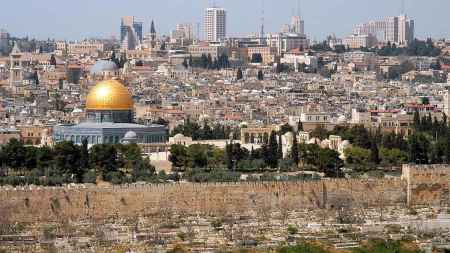
Washington and the rest of the governments of the world know that their refusal to recognize Israel’s capital does not endanger Israel or its control of Jerusalem. They are free to bow to Arab pressure, safe in the knowledge that Israel will continue to protect the unified city.

The time has come, at the outset of the second 50 years of Israeli control over Judea and Samaria, for Israel to take matters into its own hands. Our leaders must stop beating around the bush. They need to use the powers they have to secure Israel’s military and civilian interests in Judea and Samaria for the next 50 years as best they can. And they need to stop waiting for someone else to solve our problems for us.

*********************************

On Thursday, US President Donald Trump bowed to the foreign policy establishment and betrayed his voters. He signed a presidential waiver postponing the transfer of the US Embassy to Jerusalem for yet another six months.

Ahead of Trump’s move, Prime Minister Benjamin Netanyahu made a last-ditch bid to convince Trump to move the embassy to Jerusalem. But it was not to be.

Israel’s failure to convince Trump to do what he repeatedly promised US voters he would do during his presidential campaign shows the disparity in power between Israel and the US.

Israel lacks the power to convince foreign nations to recognize its capital – much less to locate their embassies there. The US, on the other hand, not only has the power to recognize Jerusalem and transfer its embassy to Israel’s capital whenever it wishes to do so, it also has the ability to convince dozens of other countries to immediately follow its lead.

The disparity between what the Americans can do and what Israel can do was on display on Monday evening in a glittering hall at the King David Hotel in Jerusalem. There, Bar-Ilan University conferred its Guardian of Zion award on former US ambassador to the UN John Bolton. In his acceptance speech, Bolton presented his vision for the resolution of the Palestinian conflict with Israel.

Bolton’s views are important not merely because his past work at the State Department and the UN brought the US some of its only diplomatic victories in recent decades. His views are important as well because of his close relationship with Trump.

Bolton began his discussion Monday evening by rejecting the “two-state solution.” The two-state model, he noted, has been tried and has failed repeatedly for the past 70 years. There is no reason to believe that it will succeed now. This is particularly true, he said, given the lack of Palestinian social cohesion.

Hamas controls Gaza. The PLO, which is supposed to be Israel’s peace partner, barely controls parts of Judea and Samaria. At a time when more cohesive Arab societies are unraveling, the notion that a Palestinian state would survive and advance regional peace and stability is laughable, Bolton argued.

Bolton then turned to his preferred policy for resolving the Palestinian conflict with Israel, which he dubbed “the three-state solution.” Under his plan, Egypt and Jordan would work with Israel to solve the Palestinian conflict. Egypt would take over the Gaza Strip and Jordan would negotiate the status of Judea and Samaria with Israel.

The crowd at the King David responded enthusiastically to Bolton’s proposal. This is not surprising.

Since 1967, Israelis have hoped for Jordan and Egypt to work with them to solve the problem of the Arabs of Judea, Samaria and Gaza who lived under Jordanian and Egyptian occupation from 1949-1967.

Unfortunately, Israel’s support for Bolton’s plan is irrelevant. Israel is powerless to advance it. Israel cannot convince Arab nations to help it resolve the Palestinian conflict any more than it can convince the PLO to cut a peace deal with it.

Like PLO leaders, the leaders of the Arab world know that they cannot help Israel with the Palestinians.

Doing so would involve disowning the Palestinian narrative.

The Palestinian narrative claims that the Jews of Israel are colonialist interlopers who stole the land from the Palestinians, its rightful owners. The narrative makes no distinction between Tel Aviv and Hebron. All of Israel is a crime against the Arab world. All of Israel is illegitimate.

The overwhelming majority of the Arab world believes the Palestinian narrative. For an Arab leader to walk away from it or even to signal an attenuation of his fealty to it in the interest of regional peace would be the riskiest of moves.

Israel has nothing to offer Arab leaders that could induce them to take that risk.

Although it is far from certain, the US may very well have the ability to convince Arab leaders to do so. If Trump decided that this is the way to advance peace in the Arab world, chances are he would make some headway. In other words, Bolton’s three-state plan is a plan that only America can adopt. It cannot be an Israeli plan no matter how enthusiastically the public supports involving Jordan and Egypt in solving the conflict.

Given Israel’s inability to offer the Arabs anything valuable enough for Arab leaders to risk life and limb to accept in exchange for helping to solve the Palestinian conflict, as Israel considers its own options in relation to the Palestinians, it needs to limit its goals to things that it can achieve without them. In other words, the only steps that Israel can take in relation to the Palestinians are unilateral steps.

For the past 50 years, hoping that the Arabs – and since 1993, the PLO – would finally make peace with it and so settle the permanent status of Judea and Samaria, Israel refused to take any unilateral actions in relation to its permanent interests in Judea and Samaria. Rather than apply its legal code to Judea and Samaria, it opted for the stop-gap measure of installing a military government to run the areas on the basis of Jordanian law.

Between 1994 and 1996, Israel canceled the military government in the Palestinian population centers in Judea and Samaria and Gaza. In 2005, when it withdrew, it canceled the residual military government in the rest of Gaza. Since then, the only area that remains under the Israeli military government is Area C in Judea and Samaria. Area C includes all of the Israeli communities in Judea and Samaria, and strategically critical areas including the Jordan Valley, the Samaria mountain range and the south Hebron Hills.

On Tuesday, Prime Minister Netanyahu gave an interview with Army Radio where he set out part of his vision for the permanent status of Judea and Samaria. He limited his statement to the military status of the areas. He said that under any possible future scenario, Israel must retain full security control of the areas. This, he said, is the lesson of Israel’s 2005 withdrawal from the Gaza Strip.

That pullout led to the transformation of Gaza into a Hamas-controlled hub of global jihad. Moreover, under Hamas, the Palestinians turned Gaza into one big, densely populated missile-launching pad against Israel.

While justified, Netanyahu’s position obscures more than it illuminates about his long-term vision for Judea and Samaria.

What does he mean by security control? Would the IDF remain in sole control over Israel’s eastern boundaries or would it serve as an overall coordinator of foreign forces operating along the border? Would IDF forces be confined to fortified positions while the Palestinians reign free in the open areas, as was the case in southern Lebanon in the years leading up to Israel’s disastrous withdrawal in 2000? Or would the IDF have freedom of action and maintain the initiative throughout Judea and Samaria? Moreover, does Netanyahu envision the IDF remaining the only military organization operating in Judea and Samaria in the long term? Beyond the security issues that require clarification, Netanyahu’s statements make no mention of the rights of Jews to live in Judea and Samaria.

Does he believe that Jews should be permitted to live permanently in the areas that Israel controls? If so, why are they subjected to the Jordanian legal code used by the military government and which proscribes their right to purchase land and register land sales? This brings us to the issue of governance. What does Netanyahu think about the military government in Area C? Does he believe that the 50-year reign of generals should continue until the Arabs choose to resolve the Palestinian conflict with Israel? What if this means that the generals will continue to rule over hundreds of thousands of Israeli citizens for another 50 or 100 or 150 years? Does he, on the other hand, prefer to transfer governance responsibility in Area C to the Palestinians and place the nearly 500,000 Israelis in the area under Palestinian control? In the course of his remarks, Bolton noted that if Jordan is responsible for the Palestinians of Judea and Samaria, the issue of Jerusalem will be removed from the equation. After all, if their capital is Amman, Israel has no reason to divide its capital city.

And this brings us back to Jerusalem, which Trump spurned on Thursday.

As is the case today, 50 years ago, Israel had no power to influence the positions of foreign governments regarding its capital city. But in contrast to its decision to establish a military government in Judea and Samaria, Israel didn’t wait for foreigners to give it permission to act where it had the power to act in order to change the status of the city and ensure its ability to govern and control its capital for generations to come.

In 1967, the government voted to expand the municipal boundaries of Jerusalem to include the eastern, northern and southern quarters that had been under Jordanian occupation since 1949.

Everyone benefited from the move – including the foreign powers that still refuse to recognize the simple fact that Jerusalem is Israel’s capital.

Washington and the rest of the governments of the world know that their refusal to recognize Israel’s capital does not endanger Israel or its control of Jerusalem. They are free to bow to Arab pressure, safe in the knowledge that Israel will continue to protect the unified city.

Trump’s decision to sign the waiver delaying the embassy move is a betrayal of his campaign promise, but it doesn’t change the situation in Jerusalem. Last week, Israel celebrated 50 years of sovereignty over its united capital. Jerusalem will be neither more nor less united if and when the US moves its embassy to the capital.

Perhaps Trump will eventually keep his word and move the embassy. Perhaps he will continue to breach his promise. And as far as the Palestinians are concerned, perhaps Trump adopts Bolton’s three-state plan in relation to Judea, Samaria and Gaza. Perhaps he will maintain his predecessors’ slavish devotion to the establishment of a PLO state.

Israel can’t control what Trump will do any more than it can influence what the Arabs will do. And so it needs to take a lesson not only from its bitter experience of withdrawing from Gaza, but from its positive experience of taking matters into its own hands in Jerusalem.

The time has come, at the outset of the second 50 years of Israeli control over Judea and Samaria, for Israel to take matters into its own hands. Our leaders must stop beating around the bush. They need to use the powers they have to secure Israel’s military and civilian interests in Judea and Samaria for the next 50 years as best they can. And they need to stop waiting for someone else to solve our problems for us.

The Trump-Haley Effect at the United Nations

June 1, 2017

The Trump-Haley Effect at the United Nations, Front Page MagazineAri Lieberman, June 1, 2017

Judging by this past week’s swift action by the UN Secretary General and Norway, it appears that the Trump-Haley, one-two combo is having the desired effect. Haley’s continued pressure at the UN is all but certain to produce more positive outcomes but it is still an uphill battle given the level of long-standing and embedded vitriol which still prevails in that cesspool of depravity. 

*****************************

It has become routine for Palestinians to name public places, including streets, schools, parks and public squares after hard core terrorists convicted of the most heinous offenses. Over the years, Israel has vigorously protested these outrages to the European Union, the United Nations, and the United States. The latter, particularly under the Obama administration, offered faux sympathy and little else, while the UN and EU were routinely dismissive of Israel’s objections. In the eyes of the UN and EU, the Palestinians could do no wrong and the Obama administration, by its deafening silence, gravitated toward this obscene position. This shocking inaction further encouraged the Palestinians to engage in what can only be described as depraved and aberrant behavior.

But on May 28, something strange but surprisingly decent happened at the UN. UN Secretary-General António Guterres issued a stinging rebuke to the Palestinian Authority for naming a women’s center after Dalal Mughrabi, a notorious terrorist. In 1978, Mughrabi along with seven other Arab terrorists commandeered a bus packed with civilians and mercilessly murdered 37 people, including 12 children.

For the Palestinians, this act of debauchery warranted praise and Mughrabi was elevated to the status of heroine and martyr. On May 26, the watchdog group, Palestinian Media Watch revealed that a women’s center named after Mughrabi in the Arab town of Burqa was constructed with funds provided by the UN and Norway. A prominent sign posted on the building bore the logos of the Palestinian Authority, the UN and Norway. Worse yet, PMW quoted a village council member who stated that “the center will focus especially on the history of the struggle of Martyr Dalal Mughrabi and on presenting it to the youth groups, and…constitutes the beginning of the launch of enrichment activities regarding the history of the Palestinian struggle.”

Upon learning of the outrage, a spokesperson for Guterres released a statement that termed the naming “offensive” and “unacceptable” and described it as a “glorification of terrorism” and an “obstacle to peace.” Guterres also demanded the immediate removal of the UN’s logo. Just two days prior, Norway issued a similar rebuke to the Palestinian Authority demanding not only the removal of the Norwegian logo but the return of all Norwegian funds earmarked for the project.

A statement released by Borge Brende, Norway’s Minister of Foreign Affairs, was unusually harsh in tone and content. It called the Palestinian “glorification of terrorist attacks…completely unacceptable” and noted that “Norway will not allow itself to be associated with institutions that take the names of terrorists in this way [and] will not accept the use of Norwegian aid funding for such purposes.”

So what led to this sudden, drastic change in attitude? There are likely three causes.

Unlike his predecessor Ban Ki-moon, Guterres has made statements and taken actions demonstrating a more balanced, nuanced approach to the Arab-Israeli conflict. For example in March, he rejected a UN report authored by an Israel-hating conspiracy theorist that peddled the banal and false claim that Israel practices apartheid and had the report removed from the UN’s website. Shortly thereafter, a top official that headed the commission which issued the report resigned. That same month, he publicly reiterated recognition of ancient historical and religious Jewish ties to Jerusalem. This was seen as a rebuke to UN bodies like UNESCO, which had sought to sever that nexus. In an address to the World Jewish Congress in April, Guterres stated that “Israel needs to be treated like any other UN member state,” and tellingly noted that, “the modern form of anti-Semitism is the denial of the existence of the State of Israel.”

In addition, the relentless surge of radical Islamic terrorism in Europe has likely produced an increased level of empathy with Israel. Moreover, nations affected by terrorism have reached out to Israel and sought its expertise. Only the most radical and anti-Semitic of Europe’s leaders, like Sweden’s Deputy Prime Minister Margot Wallström and British Labor Party head, Jeremy Corbyn, still differentiate between Israeli blood and blood spilled in Western Europe.

But perhaps the single most influential factor for the positive change in attitude lies with President Donald Trump and America’s ambassador to the UN, Nikki Haley. From the moment he was elected, Trump made clear that he would no longer tolerate the UN’s inequitable practices and shoddy treatment of Israel. He could not have picked a better emissary than Nikki Haley to carry out America’s new and robust approach toward rectifying a long-standing, systemic UN problem.

At every opportunity and in every forum and venue, Haley has made clear that the United States will not sit idly by while one of its most important allies and only Mideast democracy is mercilessly attacked and vilified by assorted despots and dictators, while other nations with abysmal human rights records are allowed to go unchallenged. Haley has made clear to UN member states that “there’s a new sheriff in town” and that sheriff is “taking names.”

Judging by this past week’s swift action by the UN Secretary General and Norway, it appears that the Trump-Haley, one-two combo is having the desired effect. Haley’s continued pressure at the UN is all but certain to produce more positive outcomes but it is still an uphill battle given the level of long-standing and embedded vitriol which still prevails in that cesspool of depravity.

Words and silence matter: Trump vs. Obama

June 1, 2017

Words and silence matter: Trump vs. Obama, Israel Hayom, Dr. Manfred Gerstenfeld, June 1, 2017

Trump did not mention the two state ‘solution’ in his speeches. Why should a U.S president preclude the outcome of direct Israeli-Palestinian negotiations? Or promise the creation of a second Palestinian state in addition to Jordan? Under Palestinian Authority leadership this state would be another corrupt Arab entity with substantial chances of failing. Yet another logical reason not to mention the two state ‘solution’ is that the PA does not control the Gaza Strip.

Nor did Trump mention “settlements.” There was no reason to do so. The central topic in Trump’s speeches in the Middle East focused on the fight against terror. It is worth noting that Trump did mention to the Palestinians that they should stop glorifying terrorist murderers of civilians, which sometimes also include Americans.

*************************************

The current President’s  statements and omissions are all the more important in contrast to those of Obama.

U.S President Donald Trump’s public statements during his visit to Israel are of importance irrespective of what he said in private to Israel’s Prime Minister Benjamin Netanyahu and Palestinian Authority’s Mohammed Abbas. This is even more the case because of the damage a variety of statements — and lack of them — by his predecessor Barack Obama and the previous U.S administration have caused Israel.

There is much criticism in the U.S of President Trump and his unpredictability. It comes mainly from those who wanted and expected his opponent Hillary Clinton to win the election. The attacks on the current president however do not diminish the importance of his words in Israel. The current President’s  statements are all the more important as — contrary to the case with his predecessor — one “gets what one sees” with Trump.

Obama’s distorted, overly positive view of the Muslim world was already apparent early in his presidency. In his first trip abroad in 2009 he travelled to the non-democratic state of Egypt where he was received by President Husni Mubarak. The 2008 report of Freedom House ranked Egypt as a non-free country with a rating of 5.5 on a scale from 1 as best to 7 as worst. The report stated: “Egypt received a downward trend arrow due to its suppression of journalists’ freedom of expression, repression of opposition groups, and the passage of constitutional amendments that hinder the judiciary’s ability to balance against executive excess. “

On that trip Obama intentionally bypassed U.S ally Israel, the only democracy in the Middle East. The American president did not berate the undemocratic character of the Egyptian regime. Instead in his 2009 Cairo speech Obama apologized for Western “colonialism.” His sympathy did not help U.S. ally Mubarak during the Arab spring, when Obama stabbed him in the back and pressured him to make concessions.

Obama hypocritically argued that his criticism of Netanyahu gave him credibility when defending the Jewish state in the world arena. But the Obama administration also regularly criticized Israel for “settlement building” as well as other issues and this stands in sharp contrast to Obama’s avoidance of linking terrorist acts to Islam. Nor did he mention the wide support for undemocratic behavior in the Muslim world.

Obama admitted that he refrained from using the words “Islamic terror” in describing Middle East extremism. The Obama administration referred to terror attacks by Muslims as “lone wolf attacks” and refused to use the term “radical Islam.” The terms “Islam” and “jihad,” “Islamic extremism,” radical Islamic terrorism,” and “radical Islam” were banned from US Security documents.

The U.S has for a long time been Israel’s main ally. If a U.S administration is repeatedly so critical of Israel while remaining silent about the criminal behavior of its enemies, this can be interpreted as a signal to other countries. It has a negative multiplier effect. The Europeans were most probably encouraged by Obama’s biased attitude to go beyond just criticizing Israel. Their labelling of goods from the territories while not doing the same for other similar areas in the world is an example. When Trump had already been elected as President, Obama let Israel down in yet another signal of encouragement to its enemies. The U.S abstained on Security Council resolution 2334 demanding an end to Israeli settlements. Trump had asked him to veto the resolution.

One would have expected international media to analyze these matters in some detail after the Trump Middle East visit. If one checks Google on this subject many reports focus on a comparison of the notes the two presidents wrote at Yad Vashem. This marginal subject became the first significant topic in a lengthy article in the Washington Post. It was titled “The huge contrast between Obama’s and Trump’s visits to Israel’s Holocaust memorial.”

Trump did not mention the two state ‘solution’ in his speeches. Why should a U.S president preclude the outcome of direct Israeli-Palestinian negotiations? Or promise the creation of a second Palestinian state in addition to Jordan? Under Palestinian Authority leadership this state would be another corrupt Arab entity with substantial chances of failing. Yet another logical reason not to mention the two state ‘solution’ is that the PA does not control the Gaza Strip.

Nor did Trump mention “settlements.” There was no reason to do so. The central topic in Trump’s speeches in the Middle East focused on the fight against terror. It is worth noting that Trump did mention to the Palestinians that they should stop glorifying terrorist murderers of civilians, which sometimes also include Americans.

During his visit to Europe Trump continued to set the record straight. He reprimanded NATO leaders in Brussels, saying that 23 out of 28 did not meet their financial commitments to the organization. He said: “This is not fair to the people and taxpayers of the United States.” This was a euphemism for saying that they are parasites relying on the U.S.

The EU and several European states have been arrogantly telling Israel for many years how it should run its internal affairs. The idea that EU leaders are being told to own up to their commitments is considered unpleasant by many European leaders. From an Israeli viewpoint it is very positive that Trump told them off on their failures.

After Trump’s visit many European leaders may be nostalgic for Obama, who was partly responsible for letting the Middle East chaos develop and the diminishment of U.S standing in the world. Yet as Alan Dershowitz said about his fellow Harvard law graduate Barack Obama: He will be remembered as “one of the worst presidents in the foreign policy arena,’ who created a ‘terrible conflict’ for people who share other tenets of his ideology.”

Lapid’s cynical Saudi blunder

May 30, 2017

Lapid’s cynical Saudi blunder, Israel Hayom, Jonathan S. Tobin, May 30, 2017

The point of the transaction is an attempt to preserve the Saudi monarchy from falling victim to radical foes. More importantly, it’s intended to bolster Riyadh against the main threat to both Sunni Arab regimes and Israel: Iran.

That the man who is seen as a serious candidate for prime minister is oblivious to the imperative for Israel to make common cause with the Saudis against an Iranian foe committed to the destruction of both countries is a shocking indictment of Lapid’s strategic vision. Lapid is trying to divide Israel and the United States at a time when former President Barack Obama’s efforts to increase the “daylight” between the countries is being reversed.

The last thing Israel needs right now is to push away Sunni Arabs who have finally realized that the Jewish state is an asset to the region rather than a threat or to pick a fight with Trump.

********************

It’s hard to beat a man by agreeing with him. That’s why Prime Minister Benjamin Netanyahu’s most credible foe is struggling to find a way to distinguish his own views from those of the man he wishes to replace. Polls show that Yesh Atid Chairman Yair Lapid is the man Netanyahu needs to watch out for in the next election. But after proclaiming earlier this year that a two-state solution must wait another 20 years for the Palestinians to show that they want peace, it’s hard to see how Lapid can possibly gain an edge over the prime minister on the most important issue facing the Jewish state.

That’s why Lapid is attempting to make an issue of Netanyahu’s apparent acceptance of a massive $110 billion arms deal concluded between Saudi Arabia and the Trump administration, without so much as a whisper of protest. In a recent interview, Lapid noted that the entire Israeli security establishment was deeply concerned about the transaction, which will place a wide array of sophisticated weaponry in Saudi hands. In doing so, Lapid is not just trying to goad Netanyahu into a suicidal spat with Trump but also demonstrating how ignorant he is of American Jewish history.

Lapid’s broadside aims to imply that the prime minister is so afraid of U.S. President Donald Trump and so dependent on his good will that he won’t speak up for Israel’s interests. But his main point of concern is that giving such weapon systems to Saudis means they are “one inch away” from falling in the hands of Sunni terrorists.

Perhaps Lapid will get some traction with the charge but for anyone who’s been following the news in the region in recent years, it’s fairly obvious that he’s woefully behind the times. The point of the transaction is an attempt to preserve the Saudi monarchy from falling victim to radical foes. More importantly, it’s intended to bolster Riyadh against the main threat to both Sunni Arab regimes and Israel: Iran.

That the man who is seen as a serious candidate for prime minister is oblivious to the imperative for Israel to make common cause with the Saudis against an Iranian foe committed to the destruction of both countries is a shocking indictment of Lapid’s strategic vision. Lapid is trying to divide Israel and the United States at a time when former President Barack Obama’s efforts to increase the “daylight” between the countries is being reversed.

Lapid is also forgetting an important precedent: In 1981, the Reagan administration wanted to sell five sophisticated AWACS (Airborne Warning and Control System) airplanes to the Saudis. Like the far larger sale just concluded, the AWACS deal was an effort to shore up the Saudi regime against an Islamist regime in Iran. But since the Saudis were then a key player in the effort to isolate and demonize Israel as well as part of a potential eastern front against it, friends of the Jewish state, led by the American Israel Public Affairs Committee, denounced the transaction as a blow to Israel’s military qualitative edge. Unfortunately, it was a bitter fight and one the pro-Israel lobby lost ignominiously.

That defeat led AIPAC to reassess its former emphasis on the executive branch and replace it with one that sought to ensure congressional support for Israel regardless of who was in the White House. But while AIPAC licked its wounds and began preparing to win future fights, friends of Israel generally forgot about what happened to the planes they had warned would be so dangerous to place in the hands of the Saudi state.

But, contrary to the predictions of those who worried that the AWACS planes would coordinate attacks on Israel rather than defending Riyadh against Iran or the Soviets, nothing of the kind every happened. The AWACS planes did nothing to harm Israel. Saudi Arabia may be the source of an ocean of anti-Western and anti-Israel propaganda but its leaders were never interested in fighting Israel. Moreover, three decades later, what was once covert security coordination between the Saudis and Israel is now an open secret and the basis upon which Trump’s hopes of an “outside-in” strategy for peace rests.

The Saudis are allies of convenience rather than conviction. It is wise to be skeptical about whether their goodwill extends beyond mutual antipathy for Iran. But the moral of the story is that nations have permanent interests not permanent allies or enemies. The last thing Israel needs right now is to push away Sunni Arabs who have finally realized that the Jewish state is an asset to the region rather than a threat or to pick a fight with Trump. Talking about the Saudis in this manner may have given Lapid a momentary edge but urging a repeat of AIPAC’s historic blunder is no way for him to prove his security chops. On the contrary, it seems to suggest that he is still not ready for power.

Jonathan S. Tobin is the opinion editor of JNS.org and a contributing writer to National Review. Twitter @jonathans_tobin.

Palestinian Authority’s Fatah Faction Appoints Israeli Arab Terrorist to Central Committee Upon Recommendation of Mahmoud Abbas

May 29, 2017

Palestinian Authority’s Fatah Faction Appoints Israeli Arab Terrorist to Central Committee Upon Recommendation of Mahmoud Abbas, The Jewish PressHana Levi Julian, May 29, 2017

(Please see also, Palestinians: Abbas Immediately Breaks Promises to Trump. — DM)

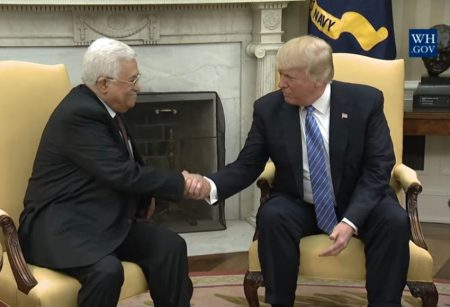
Palestinian Authority leader Mahmoud Abbas sits with US President Donald Trump at the White House, May 3 2017

Fatah has appointed terrorist murderer Karim Younes to its Central Committee upon the personal recommendation of Palestinian Authority leader Mahmoud Abbas, the Palestinian Media Watch reported this week.

Karim Younes and his cousin Maher Younis are two Israeli Arabs who together kidnapped and murdered Israeli soldier Avraham Bromberg in 1980.

The two killers have been presented by the Palestinian Authority government as role models for PA children. Public squares were recently named after each, to further glorify them, by the Palestinian Authority government.

The PLO Director of Prisoner’s Affairs said in a statement that he sees the appointment of Younes as proof that “our prisoners are not terrorists.”

“It is also noteworthy that Abbas has chosen an Israeli citizen to be among Fatah’s decision-makers,” Itamar Marcus and Nan Jacquest Zilberdik said in an article on the PMW website. “This is consistent with the Palestinian Authority message to Israeli Arabs to see themselves as part of the Palestinian national movement, and to view all of the land of the State of Israel as part of a future Palestinian state that will replace Israel.

“This new appointment of a terrorist was announced right after Abbas sent a message to Israelis demonstrating on Saturday for “Two states – One hope” at Rabin Square in Tel Aviv, in which he stated, ‘The opportunity [for peace] still exists, and it cannot be missed when our hand is extended in peace that is created between those who are brave.’” [Ha’aretz, May 27, 2017]

Significantly, “[PA] Minister of Justice Ali Abu Diyak emphasized that the decision of the Fatah Movement leadership – led by President Mahmoud Abbas – to appoint the veteran prisoner Karim Younes to the Fatah Central Committee is the clearest and severest response to the campaign being led by Israel to accuse the prisoners, Martyrs (Shahids), and the Palestinian struggle of terror.” [Official PA daily Al-Hayat Al-Jadida, May 28, 2017]

PLO’s Director of Prisoners’ Affairs Issa Karake welcomed the appointment, claiming it proof that the Palestinian prisoners are not criminals:
“I want to note an additional achievement, which was a political response by the Palestinian leadership when the Fatah Revolutionary Council made a decision to appoint prisoner Karim Younes, the most veteran of the prisoners, as a member of the Fatah Movement Central Committee.

“I think that this is a very great and significant political response, [which says] that our prisoners are not terrorists and are not criminals. They are freedom prisoners and fighters who enjoy an important national, human, and legal status among their leadership and among their Palestinian people.”
[Official PA TV, Palestine This Morning, May 28, 2017]

As part of the PA’s campaign to present terrorists as heroes and role models, the PA recently named two town squares after Karim and Maher Younes.

In his statement regarding the appointment of Younes, the Minister of Justice further glorified all terrorist prisoners:

“The prisoners and Martyrs are the spearhead of the freedom fighters, symbols of our legitimate national struggle, and conscience of the Palestinian people…”
[Official PA daily Al-Hayat Al-Jadida, May 28, 2017]


The onus is on us

May 25, 2017

The onus is on us, Israel Hayom, Isi Leibler, May 25, 2017

(Iran is the greatest threat to Israel; it has or will have nukes and the means of delivering them to obliterate the “little Satan.” The Palestinians don’t and, at least in the foreseeable future, are unlikely to. By working with the Saudis, et al, to defang Iran, President Trump rejected Obama’s policy of yielding to Iran and thereby benefitted both the Saudis, et al, and Israel. — DM)

Trump did not try to force unreasonable concessions. A Palestinian state is not ‎even on the horizon. Neither is there any indication of a return to former President Barack ‎Obama’s policy of freezing all settlement construction.‎

In King Salman’s ‎statement outlining the Saudi position, rather than condemning Israel, he merely expressed the ‎hope that peace will be achieved. This was a clear message, as was the fact that Trump flew to ‎Israel on the first openly direct flight from Riyadh to Tel Aviv.‎

According to The Wall Street Journal, the Saudis no longer demand a complete ‎settlement freeze. Instead, they propose that Israel restrict construction outside the ‎settlement blocs and provide additional humanitarian aid in Gaza. ‎

In return, the Saudis would inch toward normalization by allowing ‎Israeli aircraft to fly over their territory, set up direct telephone connection and even provide ‎tourist visas for Israelis. While this was not officially confirmed, there were no denials, which ‎tends to confirm the veracity of the report. ‎

************************

U.S. President Donald Trump has delivered. He will not have satisfied the delusional ‎aspirations of Israel’s radical right but, despite some missteps before he arrived, the Trump visit was favorable for Israel and outlined ‎parameters of what can be achieved with the Palestinians.‎

It was disappointing that he postponed transferring the U.S. Embassy to Jerusalem, but we appreciate that he is the first sitting ‎American president to visit the Western Wall. ‎

He should have been more explicit about the extent of terrorism in Israel in his ‎address to the Muslim world. But he more than compensated in his extraordinarily warm ‎address at the Israel Museum.‎

There is also some concern that the substantial commercial and defense relationship with the ‎Saudis ($380 billion in deals, including $110 billion in arms purchases) might impact Israel and ‎will require steps to ensure that we maintain our qualitative military edge.‎

Trump did not try to force unreasonable concessions. A Palestinian state is not ‎even on the horizon. Neither is there any indication of a return to former President Barack ‎Obama’s policy of freezing all settlement construction.‎

Indeed, the president expressed support for Israel in a far more open and ‎positive manner than his predecessors. In his address to the leaders of 55 Muslim-‎majority countries, he reversed Obama’s moral equivalence approach and described the ‎conflict as being between the forces of decency on the one hand, and an evil death cult on the ‎other. He urged the Arab and Muslim states to actively eradicate terrorism and extremism ‎from within their ranks. He specifically condemned Hamas and ‎Hezbollah together with ISIS and al-Qaida. And he explicitly called on Arab and Muslim ‎leaders to combat anti-Semitism. ‎

For the first time, the Saudis, backed by the Egyptians and Gulf states, appear to be promoting ‎peace or at least easing the tension between the Palestinians and the Israelis. In King Salman’s ‎statement outlining the Saudi position, rather than condemning Israel, he merely expressed the ‎hope that peace will be achieved. This was a clear message, as was the fact that Trump flew to ‎Israel on the first openly direct flight from Riyadh to Tel Aviv.‎

According to The Wall Street Journal, the Saudis no longer demand a complete ‎settlement freeze. Instead, they propose that Israel restrict construction outside the ‎settlement blocs and provide additional humanitarian aid in Gaza. ‎

In return, the Saudis would inch toward normalization by allowing ‎Israeli aircraft to fly over their territory, set up direct telephone connection and even provide ‎tourist visas for Israelis. While this was not officially confirmed, there were no denials, which ‎tends to confirm the veracity of the report. ‎

Whether this was the outcome of discussions with Trump’s representatives, or ‎because the Saudis recognize the value of Israel’s support against Iran’s efforts to achieve ‎regional hegemony, is irrelevant. There have already been widespread rumors attesting to ‎covert Saudi cooperation with Israel against Iran and similarly with Egypt against ISIS.‎

Trump demanded that the Palestinians cease incitement and stop ‎rewarding terrorists murderers and their families, and avoided suggesting that Israel cease settlement activity. But he undoubtedly pressed Prime ‎Minister Benjamin Netanyahu for confidence-building measures such as ‎improving Palestinian economic conditions.‎

At this potentially historic turning point, Netanyahu must stand firm against the radicals in his ‎coalition and impose a limited freeze beyond the settlement blocs. Most Israelis ‎would endorse this, and if it brings down the government, and forces elections, the ‎nation will support Netanyahu.‎

At this crucial time, decision-making must reflect ‎the views of the centrist majority. No minority groups should ‎be able to veto our national interest.‎

Yesh Atid and elements in Labor embrace this centrist view, and should either join the ‎government or support it on this issue. ‎

Of course, this is only the beginning. Before we engage in negotiating details, ‎Palestinian Authority President Mahmoud Abbas must make some concessions. Let him recognize ‎Israel as a Jewish state and abrogate the Palestinian right of return. Then we can ‎discuss borders and a demilitarized state. For now, we must demonstrate to the ‎world and to Trump that we are reasonable and respond positively to genuine Arab ‎gestures.‎

Despite these efforts, Abbas is probably unwilling or unable to ‎change. He is unlikely to make genuine efforts to stem incitement ‎or cease awarding lavish pensions to murderers and their families. Should that be the case, ‎most of the world, especially the Europeans, will still automatically blame Israel for failure to ‎advance the peace negotiations.‎

Trump’s determination will then be put to test. If, to appease the Saudis, he was to continue to ‎make believe that Abbas is a moderate peace partner and extend the fake “peace process ‎negotiations” we have endured under Obama, we would justly feel betrayed. ‎

However, if the Trump administration performs as an honest broker and recognizes Israel’s ‎efforts and genuine desire for peace, it will conclude that in the absence of a Palestinian ‎negotiating partner, all we can achieve is an improvement in Palestinian quality of life under ‎their own autonomy while we maintain our security. At the same time, as has been hinted by ‎Trump, he may then look more seriously at alternative solutions in cooperation with Egypt and ‎Jordan and backed by the moderate Arab States, which do not involve a two state solution. It ‎is no coincidence that Trump failed to explicitly refer to a Palestinian State while visiting the ‎region. It is this veiled threat that Trump is hoping will entice the Palestinian leadership to ‎conduct bona fide negotiations for the first time.‎

We are today in an exceedingly strong position. Israel has never been so powerful militarily, ‎economically and socially.‎

Israel has never had such widespread international recognition. Whether you adore or loathe ‎Netanyahu, nobody can deny that he has been an outstanding statesman in the international ‎arena. He has a unique relationship with the Americans and with Russian President Vladimir ‎Putin, and has built up relations with India, China, Japan, Southeast Asia, Australia, Eastern ‎Europe and now Africa. ‎

The extraordinary opportunities of today may never be replicated. We must demonstrate ‎restraint and ensure that our elected representatives neither undermine us nor project the ‎image of extremists by engaging in foolish or intemperate outbursts primarily designed for ‎personal political promotion. ‎

Today, we have in our grasp this remarkable opportunity to genuinely move toward ‎improving and stabilizing our relationship with our Arab neighbors. ‎

Trump’s Middle East Trip Was a Big, Surprising Success—and the Iranian Regime is Nervous

May 24, 2017

Trump’s Middle East Trip Was a Big, Surprising Success—and the Iranian Regime is Nervous, Tablet MagazineLee Smith, May 23, 2017

The Obama administration moved quietly behind the scenes to reorient American policy toward Iran, while it pulled the rug out from under traditional American allies. Among other things, the Obama White House leaked Israeli strikes against Hezbollah convoys, it coordinated operations with Iranian-backed militias in Iraq, and it stood aside as Bashar al-Assad waged a genocidal campaign in Syria so as not to affect the prospects of the nuclear deal with Iran.

The Iranians know how much they owe the Obama administration—whether it was air support for Qassem Soleimani in Tikrit, legitimization of Iranian interests in Yemen, deterring Israel from striking their nuclear facilities, turning a blind eye as they built a highway from Tehran to Baghdad to Damascus to Beirut.

Now the Americans are dancing with the Arabs and praying with the Jews, and Iran is on its own again.

***************************

“I want to tell you,” Israeli Prime Minister Benjamin Netanyahu said to President Donald Trump during a joint press conference Monday, “how much we appreciate the reassertion of American leadership in the Middle East.”

So how is Trump’s first foreign trip as president playing out? Suddenly, the scandal-mired President seems like a plausible world leader. He is certainly a more welcome guest in the capitols of America’s traditional allies than his predecessor, President Barack Obama. In addition to enjoying the show, viewers at home—the ones who voted for Trump last fall—likely appreciate the $110 billion arms deal Trump struck with Saudi Arabia. With another $350 billion to come over the next decade, those contracts will certainly help put assembly-line Americans back to work.

Trump’s speech before a worldwide audience about terrorism and Islam was a useful initiative that will also put some of the dozens of Muslim leaders who attended the speech on notice. Acknowledging that Jerusalem is in Israel is a break with strict Obama policy. Trump became the first sitting U.S. president to visit the Western Wall.

But having spent nearly a decade living in Cairo and Beirut, and traveling throughout the Middle East, I can easily imagine the spin that the region’s intellectuals are putting on the trip as they sit in their coffee houses and smoke Gitanes:

Habibi, the Saudis just paid the Americans nearly half a trillion dollars to keep them safe from Iran, right? But Iran was nothing before Obama built them up with $150 billion. It’s only because Obama kept paying Iran—first to stay in negotiations over the nuclear program and then as a reward for signing the deal—that Iran was empowered. Obama and his pallets of cash helped Iran extend its reach from the Persian Gulf to the eastern Mediterranean.

Iran thought that it got the better of the Americans, but the Americans played them for suckers! The CIA had something up their sleeves the whole time! They just wanted the Arabs to pay even more to defend them from Iran. So the Americans created this Iranian bogeyman and then they sent the Arabs a bill to make the Iran problem go away. They drove up the price!

It’s a protection racket, don’t you see? And the Americans cleared nearly $300 billion. Oh man, you can be sure Trump and Netanyahu are laughing it up in Jerusalem. Very clever, those Americans!

No, of course it wasn’t really a CIA shakedown orchestrated over two presidencies. And yet Trump’s maiden foreign presidential venture, or at least the first two stops, is indeed all about the new Administration’s determined recalibration of American Middle East policy after eight years of Obama’s adventurism—especially regarding Iran.

Trump made his intentions toward Iran pretty clear in his Riyadh speech. “For decades, Iran has fueled the fires of sectarian conflict and terror,” said Trump. “It is a government that speaks openly of mass murder, vowing the destruction of Israel, death to America, and ruin for many leaders and nations in this room.”

The visuals from Riyadh and Jerusalem were even more important than the speeches. After all, you can reassure your allies on the phone—to scare your shared adversaries, you create a photo album and broadcast it on Facebook and Twitter.

Here’s the president of the United States being celebrated in Saudi Arabia with a sword dance. And clearly, this is not the secretary of state’s first ardha. As a famous oil man who is always welcome to visit the global swing producer of oil, Rex Tillerson knows all the steps already. See him dancing with Wilbur Ross? The Americans and Saudis are like family.

And look—the president of the United States actually has Jews in his family. Here is a picture of his daughter praying at the Western Wall. Here is a picture of the president also at the Western wall wearing a kippah. And oh, look—Trump has made it his status picture on Twitter.

The Iranian regime isn’t very happy. Trump’s photo ops stole the entire foreign policy news cycle from an Iranian regime that wanted a few days of good press after its rigged presidential elections last Friday. The message that Tehran received from the presidential pomp and circumstance in Riyadh is that things are different now.

The Obama administration moved quietly behind the scenes to reorient American policy toward Iran, while it pulled the rug out from under traditional American allies. Among other things, the Obama White House leaked Israeli strikes against Hezbollah convoys, it coordinated operations with Iranian-backed militias in Iraq, and it stood aside as Bashar al-Assad waged a genocidal campaign in Syria so as not to affect the prospects of the nuclear deal with Iran.

The Iranians know how much they owe the Obama administration—whether it was air support for Qassem Soleimani in Tikrit, legitimization of Iranian interests in Yemen, deterring Israel from striking their nuclear facilities, turning a blind eye as they built a highway from Tehran to Baghdad to Damascus to Beirut.

Now the Americans are dancing with the Arabs and praying with the Jews, and Iran is on its own again.


Trump’s new deal

May 24, 2017

Trump’s new deal, Israel Hayom, Boaz Bismuth, May 24, 2017

(The “nattering nabobs of negativism” are still numerous. No matter what happens it will be bad, they say. — DM)

Trump, it turns out, is not going to make the improvement of U.S.-Israel ties contingent on warmer relations between Israel and the Arabs. In his way, he apparently understands the Middle East better than most of the pundits analyzing him. He knows that in this part of the world, people respect you if you are strong; if you weaken your allies you are looked at with scorn. The players in the region respect his decision to stand by Israel — because they know this means he will keep his promises to them as well.

I have long said that Trump was good for the Jews. I said it as soon as he entered the 2016 race. I have long maintained that Trump’s new deal is actually going to be more pressure — on the Palestinians.

*****************************

Over the past several years, conventional wisdom among pundits was that Israel had lost America. They tried to drive home this argument even forcefully after Barack Obama became president.

They told us that Israel was losing its No. 1 ally because it was not relinquishing land; because it insisted that the Arabs recognize it as a Jewish state, and because it was not in a hurry to see a Palestinian state be established. Prime Minister Benjamin Netanyahu’s personal relations with Obama were thrown into the mix as well, and the bottom line was that Israel and the U.S. are no longer friends. Israel, so their thinking went, could only pine for Christopher Columbus.

And then Donald Trump came along. As Secretary of State Rex Tillerson said the other day, “America is back.”

It is also back in Israel. But the truth of the matter is that it never really went anywhere. It was Obama and its administration that went off course, not Israel. The experts said Israel must do a mea culpa and expected Obama to change the world, and Israel.

Ahead of Trump’s visit, this chorus of experts decided they would sing the same song they sang during the 1990s, using the same lyrics: “Palestinian state”; “ending the occupation is a prerequisite for ending Israel’s state of despair.” We all know how well things turned out during the 1990s.

They were willing to swear that as soon as Trump came to Israel, he would apply pressure on Israel and present demands. They said Netanyahu was nervous from what may come. They warned a diplomatic tsunami was making its way to Israel’s shores.

Some even borrowed medical lingo, saying Trump the candidate put some cotton wool on our skin to prepare from the shot, and now he was going to administer it.

What ultimately unfolded? It turned out that the president who visited Israel this week is the most pro-Israel we have seen in several decades. This man likes us, period. He repeatedly mentions the strong ties between Jerusalem and the Jewish people.

He has promised to protect Israel and to eradicate terrorism, and on the way he said he was determined to make sure Iran would not obtain nuclear weapons and that he would not let anyone hurt Israel. During his visit here he has repeatedly called Netanyahu “my good friend,” as if to make the point that he was not Obama.

How is that possible, the experts wondered. Hasn’t he visited Saudi Arabia on his way? Hasn’t he delivered a speech in front of some 50 Arab and Muslim leaders while he was there? Hasn’t he visited the Palestinian Authority during his trip?

And what about Tillerson, the former head of an energy giant? He cannot possibly be pro-Israel because he is a known wheeler and dealer in the Arab world, they warned.

They also noted that Trump promised to move the U.S. Embassy to Jerusalem but has not done so in the first 120 days of his presidency. Undoubtably, that period is eternity. Not only that, they continued, Trump considered visiting the Western Wall with the prime minister but ultimately decided it would be a private visit. This, they insist, proves that he is actually Obama in Trump clothes.

But lo and behold, Trump’s visit actually ended well, and he had us asking for more. It feels good to have that genuine embrace of a U.S. administration once again. Yes, Israel was deeply loved in America even before Trump came to power, but in recent years this was manifested in Congress, in the public opinion polls in America, among American Christians and among taxi drivers. That’s it.

The Obama White House turned its back on Israel and helped, albeit indirectly, the boycott, divestment and sanctions movement flourish on U.S. campuses.

In the wake of the visit, I dared to think that maybe those experts don’t really know him. After all, the same Trump who was accused of being anti-Muslim got the royal treatment when he arrived in Saudi Arabia, meeting with some 50 Muslim leaders who know full well that he is in love with Zionism.

Trump, it turns out, is not going to make the improvement of U.S.-Israel ties contingent on warmer relations between Israel and the Arabs.. In his way, he apparently understands the Middle East better than most of the pundits analyzing him. He knows that in this part of the world, people respect you if you are strong; if you weaken your allies you are looked at with scorn. The players in the region respect his decision to stand by Israel — because they know this means he will keep his promises to them as well.

I have long said that Trump was good for the Jews. I said it as soon as he entered as the 2016 race. I have long maintained that Trump’s new deal is actually going to be more pressure — on the Palestinians.

Trump in Israel

May 23, 2017

Trump in Israel, Front Page Magazine, Daniel Greenfield, May 23, 2017

Every act of Islamic terror educates us. It is a difficult and bloody education. We graduate when we realize who our enemies are and how impossible it is to achieve any peace with them.

President Trump’s walk to the Church of the Holy Sepulchre required thousands of police officers, closed stores and houses filled with snipers while their residents were evacuated. 

That is life under the shadow of terrorism.

It’s not only presidents who have to live this way. It’s all of us in Jerusalem and Paris, in Manchester and in Rome where there are soldiers in the street and cries of “Allah Akbar” in the air. And then a car speeds up, a knife slashes, a plane crashes or a bomb goes off. 

And the education continues.

************************************

When President Trump and Prime Minister Netanyahu met on the tarmac, they and their spouses chatted easily. The two conservative leaders have much in common. They are political insurgents who draw their support from a rougher working class overlooked and despised by leftist elites.

The polls said that Netanyahu and Trump would lose their respective elections. Instead they won big. They prevailed despite accusations of bigotry, attacks by celebrities and a torrent of fake media scandals. The media decided that the big story of Trump’s arrival in Israel would be their claim that Melania Trump had swatted her husband’s hand away. A few months ago, Netanyahu was in court testifying against a lefty journalist for spreading fake news that his wife had kicked him out of the car.

Like so much of the fake media news aimed at Trump, it was sourced from an anonymous source through another anonymous source who knew someone’s dog.

And, sure enough, Sara Netanyahu and Melania Trump bonded on the tarmac over the media’s hatred.

Trump and Netanyahu are political pragmatists with a strong economic focus who run to the right. Trump is a developer. Netanyahu has a degree in architecture. Trump has a Queens accent and Netanyahu still has his Philly accent.  And they prevail despite the opposition of leftist elites.

Subtract the geography and this news story from Netanyahu’s victory would sound familiar to Trump. “Leftist, secular Tel Aviv went to sleep last night cautiously optimistic only to wake up this morning in a state of utter and absolute devastation.”

But there is one difference between the two men.

An hour before President Trump landed in Israel, a car struck people in Tel Aviv. Usually when a car hits people, it’s an accident. But in Israeli and in European cities, car ramming has become a terrorist tactic.

And so the incident was one of the first things that Trump heard about when he landed.

Police decided that it was an accident, but as the presidential visit got underway, there was the usual litany of violence; stonings, a fatality and a stabbing. And the question that so many of us now ponder across the civilized world rose unspoken each time blood was shed. Was it Islamic terrorism?

The efforts of conservative Israeli prime ministers to contain the fallout of a disastrous peace process with terrorists set into motion by leftist prime ministers have reduced the violence so that it no longer touches the lives of most Israelis on a regular basis. But it is always there. And it never truly goes away.

That is what must be understood when we talk about “peace”.

No amount of outreach to Muslim terrorists ends the violence. Not in Europe or America. And not in Israel; the country that has become the test case for whether Muslims and non-Muslims can coexist.

President Trump’s itinerary of Saudi Arabia, Israel and Rome is a gamble that “the three Abrahamic Faiths” will join in a coalition to take on Iran and ISIS. It’s a better plan than Bush’s push for regional democracy or Obama’s violently destructive backing for Islamist political takeovers in the Arab Spring. A common enemy is more likely to get different groups behind the same cause. But having a common enemy should not be confused with having peace. At best it means a very temporary truce.

Netanyahu understands this because he has far more experience with Islamic terrorism. When it comes to Islamic terrorism, there are few countries that have faced it as consistently and constantly as Israel.

Muslim terrorists have struck America before. But only in the last decade were the Islamic colonies in the United States large enough and young enough to mount a constant drumbeat of attack plots.

Thousands of terrorism investigations are still new to America. They’re a way of life in Israel.

Terrorism is a bloody education. Trump knows far more about Islamic terrorism than Bush did. And Bush knew far more than his father. Most Americans still can’t conceive of the idea that peace is impossible. It’s too grim and hopeless. We’ve come a long way since the Obama years. But we aren’t there yet.

In the spring of his first year, Obama traveled to the Middle East to seek a “new beginning” with the Muslim world. He stopped off first in Saudi Arabia, but saved his speech calling for political change until his arrival in Egypt. Trump delivered his key speech in Saudi Arabia disavowing calls for political change. Instead America’s relationship with the Muslim world would be defined by its national security needs.

Obama blamed colonialism for the poor relations between the West and the Muslim world. His solution was to dismantle Western power. Trump defined Islamic terrorism as the problem and unity against it as the solution. Obama had bypassed Israel and traveled on to Germany making a heavily publicized visit to the Buchenwald concentration camp. Trump continued on to Israel instead.

The difference was profound.

Obama was more comfortable engaging with Jews as victims and, in a typically egotistical manner, envisioning what the victims of the Holocaust might have made of his visit. “They could not have known that one day an American President would visit this place and speak of them.” His Cairo speech reduced Israel to a byproduct of the Holocaust. If so, Israel’s capital might as well be in Buchenwald.

Trump however is ready to interact with the living Jewish present in Israel. His trip to the Western Wall, the first by a sitting president, and a cancelled visit to Masada, sought to engage with Israel’s national and religious identity. They signify a recognition that Obama never offered to Israel.

In Saudi Arabia, President Trump rolled out a vision of relationships based on national interest. And no such relationship can be built without recognizing national identity. Trump’s recognition of Israel’s national identity adds a note of respect. But Israel is one of the few nations in the region.

Nations can make peace. They can put aside their bloody past and at least learn to ignore each other. And in the West, religion has come to act as a moral operating system within the infrastructure of nations. Religion provides guidelines that transcend the law. The legal system can only tell us what we must do or may not do to each other. Religion tells us what we ought to do or not do to each other. It is a personal conscience and a relationship to a higher authority than mere government.

Saudi Arabia isn’t a nation. Neither is “Palestine”. They’re powerful extended families whose form of worship is terrorism. Islamic terrorism isn’t a perversion of Islam. It’s the implementation of Islam.

Islam provides the morale and motive for the conquest. And once the conquest is complete, it provides the framework for the kingdom. Islam’s message is the inferiority of Muslims to non-Muslims. War affirms the message. Oppression internalizes it. Islam is meaningful only when it is killing and oppressing infidels. It is not a religion of the persecuted, but the persecutors. Its theology is violent supremacism.

President Trump deserves credit for refusing to let the Saudis pretend that some Islamic terror groups are more legitimate than others by classing together ISIS with Hamas. But the only Islamic terrorism that the Saudis will reject is that which does not serve their interests. And even if they wanted to, they could no more end popular support for Islamic terrorism than Iraq could become a multicultural utopia through the magic of democracy.

Nor can Israel make peace with Islamic terrorists no matter how many more concessions Prime Minister Netanyahu offers them. President Trump calls it a tough deal. But you can only make a deal with someone who follows some of the same rules you do. You can’t make a deal with Islamic terrorists whose only rules are that the Koran lets them [say] anything they want to you.

President Trump called Islamic terrorism evil. And it is. But it’s not just evil. Its codes and ethics are utterly incompatible with our own. The only way to negotiate is through threats. And even threats only go so far with fanatics who believe that if they die, they will earn 72 virgins in paradise.

Islamic entities will tell any lie and commit any crime to accelerate their objective of conquering us. Whether they tell a lie or commit a crime depends on whether they’re moderates or extremists.

Yesterday, I heard Geert Wilders speak. And I recognized a leader who understands this grim reality. Few of his fellow Europeans do. Even fewer American politicians share that understanding. Europe is facing a deeper threat than America. And Israel has been confronting a bigger threat than Europe.

Every act of Islamic terror educates us. It is a difficult and bloody education. We graduate when we realize who our enemies are and how impossible it is to achieve any peace with them.

President Trump’s walk to the Church of the Holy Sepulchre required thousands of police officers, closed stores and houses filled with snipers while their residents were evacuated.

That is life under the shadow of terrorism.

It’s not only presidents who have to live this way. It’s all of us in Jerusalem and Paris, in Manchester and in Rome where there are soldiers in the street and cries of “Allah Akbar” in the air. And then a car speeds up, a knife slashes, a plane crashes or a bomb goes off.

And the education continues.

Trump Breaks the Diplomatic Mold

May 23, 2017

Trump Breaks the Diplomatic Mold, Commentary Magazine. May 22, 2017

President Donald Trump walks with Saudi King Salman at the Arab Islamic American Summit, at the King Abdulaziz Conference Center, Sunday, May 21, 2017, in Riyadh. (AP Photo/Evan Vucci)

Upon arrival, Trump received a royal welcome. Saudi King Salman braved the 101-degree heat of the tarmac to greet the presidential plane personally. A brass band serenaded the two world leaders as cannons issued celebratory volleys and seven Saudi jets streamed trails of red, white, and blue overhead. The president and the king joined one another in the presidential limo and rode off together to an extravagant ceremony at the Saudi Court, where attention was even lavished upon the president’s aides.

The intentional contrast this reception struck with Barack Obama’s 2014 trip to the Saudi Kingdom was stark. Upon Obama’s arrival, King Salman dispatched only his distant nephew, the provincial governor of Riyadh, to meet the leader of the free world. The Obama White House did its best to save face, but the snub was a clear indication that tensions surrounding Iran nuclear deal, the ongoing bloodshed in Syria, and Obama’s explicit antipathy toward the Saudi Kingdom as a nation unworthy of an alliance with America.

As COMMENTARY’s Evelyn C. Gordon discussed, in exchange for Israeli technology and intelligence, a relaxation of the Gaza blockade, and the cessation of settlement construction in “some areas,” this Sunni alliance would “establish direct telecommunication links with Israel, let Israeli aircraft overfly their countries, lift certain trade restrictions and perhaps grant visas to Israeli athletes and businessmen.” And all of this would occur with existing Palestinian realities utterly unchanged. Even if no further progress toward peace in the region is secured, that bell cannot be un-rung.

A truly successful presidency in the Middle East may begin first with the abandonment of that burdensome, dog-eared diplomatic playbook.

************************

There is perhaps nothing a global class of calcified diplomatic professionals appreciates more than subtlety and nuance. Donald Trump’s tour of the world’s three major religious capitals is about as unsubtle and unnuanced as you can get. To many seasoned diplomats, this administration’s naïve effort to forge peace in this fashion is downright dangerous—possibly more than the administration even knows. Maybe. Or maybe the president and his team are dispensing with ossified convention in a field that could desperately use some fresh thinking. With the first leg of Trump’s world theological tour complete, it is not impossible that something new is taking shape.

In Saudi Arabia this weekend, Donald Trump danced with swords, touched an ominous glowing orb, and delivered a narrowly tailored and reasonably well-received speech on radical Islamic terrorism in the heart of the Islamic world. Among many other regional power brokers, the president also met with the leaders of Egypt, Kuwait, Qatar, and Bahrain. What Trump did in the Saudi Kingdom is, however, less interesting than how the Saudis responded to him.

Upon arrival, Trump received a royal welcome. Saudi King Salman braved the 101-degree heat of the tarmac to greet the presidential plane personally. A brass band serenaded the two world leaders as cannons issued celebratory volleys and seven Saudi jets streamed trails of red, white, and blue overhead. The president and the king joined one another in the presidential limo and rode off together to an extravagant ceremony at the Saudi Court, where attention was even lavished upon the president’s aides.

The intentional contrast this reception struck with Barack Obama’s 2014 trip to the Saudi Kingdom was stark. Upon Obama’s arrival, King Salman dispatched only his distant nephew, the provincial governor of Riyadh, to meet the leader of the free world. The Obama White House did its best to save face, but the snub was a clear indication that tensions surrounding Iran nuclear deal, the ongoing bloodshed in Syria, and Obama’s explicit antipathy toward the Saudi Kingdom as a nation unworthy of an alliance with America.

From Saudi Arabia, Trump traveled directly to Israel—itself a shift in convention—where he was also greeted warmly. Prime Minister Benjamin Netanyahu and his wife met the president and first lady at Ben Gurion International Airport in Tel Aviv. Using his remarks alongside Trump to issue a veiled rebuke of Obama, Netanyahu noted: “We appreciate the reassertion of American leadership in the Middle East.”

President Obama entered office with the objective of creating a new power balance in the region that would allow the United States to withdraw confidently. The former president’s stated belief that America’s alliance toward Israel “erodes our credibility with the Arab states” in combination with his mistrust toward Sunni Arab states like Saudi Arabia and Egypt left him with few ways of achieving that goal. There’s a cosmic irony in the fact that Obama’s navel-gazing paved the way for a radically new and promising dynamic to emerge in the Middle East. Conceptually, the strategy Trump is pursuing in the Middle East is wildly divergent from his predecessors. He is effectively abandoning the idea that there can be no resolution of the Arab World’s hostility toward Israel without first creating a Palestinian state.

As recently as February, administration sources began providing details to the press about a proposed pan-Sunni military alliance designed to both counter Islamist extremism and a resurgent Iran. That alliance would include states with unfrozen relations with Israel, like Egypt and Jordan, and nations like Saudi Arabia and the United Arab Emirates, which do not recognize the Jewish state. According to a recent bombshell report, however, the prospect of a radical relaxation in tensions between Israel and the Arab World is real.

As COMMENTARY’s Evelyn C. Gordon discussed, in exchange for Israeli technology and intelligence, a relaxation of the Gaza blockade, and the cessation of settlement construction in “some areas,” this Sunni alliance would “establish direct telecommunication links with Israel, let Israeli aircraft overfly their countries, lift certain trade restrictions and perhaps grant visas to Israeli athletes and businessmen.” And all of this would occur with existing Palestinian realities utterly unchanged. Even if no further progress toward peace in the region is secured, that bell cannot be un-rung.

Donald Trump isn’t the first American president to benefit from warm feelings solely because he isn’t the last guy to have occupied the Oval Office. When it comes to the Middle East, crises and chaos have a habit of scuttling even the best-laid plans. Iranian power projection into places like Iraq, Yemen, and Syria has, however, created new avenues of cooperation between adversarial powers with a common enemy in Tehran. If Trump can translate this new reality into tangible accomplishment (a big “if”), he will have the makings of a potent argument for his presidency and a second term.

On foreign affairs, in particular, President Donald Trump has invited the wrath of the critics. He is “the world’s most undiplomatic” diplomat who has embraced illiberal and strategically inept “lame-stream diplomacy.” Indeed, his “rejection of traditional diplomacy for his own distinctive, brusque style has incurred costs without any visible offsetting benefits.” In his article “Is This the End of the Free World,” Abe Greenwald demonstrated that Trump has an appalling and lamentably familiar habit of alienating America’s natural allies. It’s a nasty feature of a distorted worldview, and it may result in the continued loss of allied faith in American vision and authority. For now, however, not only is the Middle East obviously thrilled for the Obama era to be over but that has provided Donald Trump with the opportunity for a real diplomatic triumph. A truly successful presidency in the Middle East may begin first with the abandonment of that burdensome, dog-eared diplomatic playbook.


