Archive for the ‘Terrorism’ category

Exclusive: Freed Al Qaeda Agent Was Part of Proposed Swap for Jailed Americans

January 26, 2015

Exclusive: Freed Al Qaeda Agent Was Part of Proposed Swap for Jailed Americans, Daily Beast, January 25, 2015

(Please see also Analysis: Former al Qaeda operative freed, sent home to Qatar, a January 20th article from Long War Journal which also raises questions about the release of Al-Marri and notes the grand reception given him as a hero upon arrival in Qatar. Among other points, it states:

According to The Guardian (UK), al Marri’s nephew revealed that upon arrival in Doha, his uncle “was greeted by representatives from the Qatari interior and foreign ministries” and is now in “high spirits.” He thanked Qatari officials for exerting “tremendous efforts” for his uncle’s release.

— DM)
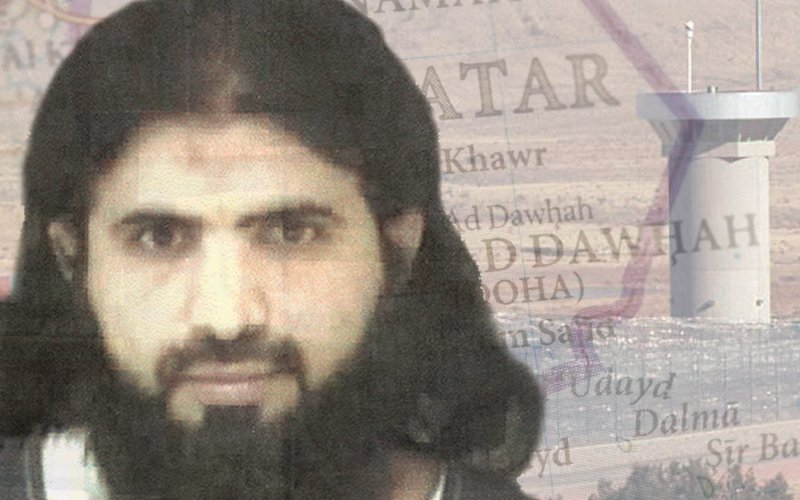
1422235859979.cachedThe Daily Beast

An American couple’s freedom may have come at a steep price: the release of a convicted terrorist from Supermax prison.

Before he was released from a U.S. maximum-security prison last week, a confessed al Qaeda sleeper agent was offered up in a potential prisoner swap that would have freed two Americans held abroad.

The Daily Beast has learned that the proposal was floated in July 2014 to the then-U.S. ambassador in Qatar by an individual acting on behalf of that country’s attorney general. According to two individuals with direct knowledge of the case, the proposition was made shortly after the Obama administration traded five Taliban fighters for Army Sgt. Bowe Bergdahl. Those fighters were also sent to Qatar, where they’re to remain under government watch until later this year. U.S. officials have said they’re at risk of plotting further attacks against the United States.

The proposed swap involving the al Qaeda agent, Ali Saleh Al-Marri, raises troubling questions about whether the Bergdahl trade opened a kind of Pandora’s box, signaling to foreign governments that they can pressure the United States to make concessions on terrorism by trading American prisoners abroad for dangerous extremists held in the United States.

“I believe we must examine the administration’s decision in the case of Al-Marri and determine if his release is connected to negotiations of any kind,” Rep. Duncan Hunter, a frequent critic of the Obama administration’s hostage negotiations, wrote Thursday in a letter to Rep. Mac Thornberry (R-TX), the House Armed Services Committee chairman, obtained by The Daily Beast.

Governments’ hostage negotiations policies are once again taking center stage after ISIS released a photograph Saturday showing the apparent beheading of Haruna Yukawa, one of two Japanese men the group is holding. Unexpectedly, ISIS has now dropped an earlier demand of $200 million ransom and says it will free the remaining hostage, journalist Kenji Goto, in exchange for the release of Sajida Mubarak al-Rishawi, a failed suicide bomber who’s imprisoned in Jordan for her role in an attack on three hotels in Amman in 2005, which killed 60 people.

ISIS has made other demands for freeing prisoners, including a Pakistani woman held in the United Sates, Aafia Siddiqui, known in counterterrorism circles as “Lady Al Qaeda,” who was convicted in 2010 of attempting to kill Americans in Afghanistan. Siddiqui has been used as a bargaining chip in other negotiations, as well. In 2012, Pakistani officials offered to try and win the release of Bergdahl if the United States would free Siddiqui. The Obama administration quickly rejected the idea because releasing her would be seen as offering concessions to terrorist groups and put a potentially dangerous woman back on the streets, according to current and former administration officials.In his letter, Hunter accused the administration of failing to pursue other avenues for freeing Americans abroad and relying on prisoner releases or exchanges, “which are often counter to U.S. security interests, for leverage in negotiations.” The congressman also alluded to other potential swaps, saying it’s his understanding that “other foreign nationals” who are still in U.S. custody “have also been named as potential figures of interest in other cases, with Qatar at the forefront.”

1422235139852.cachedTara Todras-Whitehill/The New York Times, via Redux

Qatar has emerged as a go-between in various hostage negotiations. It agreed to take custody of the five Taliban fighters for a period of one year after Bergdahl’s release. And sources close to efforts to free other Americans held abroad said that Qatar facilitated a ransom payment to help free journalist Peter Theo Curtis, who was held for two years by al Qaeda’s branch in Syria.

Hunter helped spur the administration to review its hostage negotiation policy, which is widely seen by experts and family members of Americans held abroad as dysfunctional.

The proposal to trade Al-Marri came from an individual described by one source as a “government contractor” and close friend of Qatar’s attorney general, Ali Bin Mohsen Bin Fetais Al Marri, who is said to be a relative of the confessed terrorist. The emissary met with the then-U.S. ambassador to Qatar, Susan Ziadeh, and raised the idea of trading Al-Marri for Matthew and Grace Huang, an American couple who’d been living in Qatar and were convicted in the still-unexplained death of their adopted daughter, in what was widely criticized by human-rights groups and legal experts as an unfair show trial.

“Qatari government officials told the Huang team that they floated the idea of a prisoner swap to the U.S. ambassador,” Richard Grenell, a former U.S. diplomat who worked on the Huang case, told The Daily Beast. That account was corroborated by a second source.

A State Department spokesman said that “no such proposal was ever on the table,” and noted that Al-Marri was eventually released from prison and sent home to Qatar as scheduled “and not as the result of any U.S.-Qatari agreement.” Asked for further clarification on whether the swap was raised as described and what the U.S. reaction was, the spokesman declined to comment further. The Qatari embassy in Washington didn’t respond to inquiries from The Daily Beast.

A second administration official pushed back on the idea that Al-Marri’s release was a quid pro quo for freeing the Huangs, who were eventually allowed to leave Qatar in December after their conviction was overturned.

“Al-Marri’s release happened as a matter of course, as a result of his court-imposed sentence being completed,” the administration official said. Al-Marri was given a “good conduct release” from the “supermax” facility in Florence, Colorado, on Jan. 16, after serving 87 percent of his 100-month sentence, said a spokesperson for the Bureau of Prisons. He’d accumulated credit for good behavior while in prison and time already served in jail while awaiting trial, which is why he didn’t serve the remainder of his time.

Administration officials characterized Al-Marri’s release as routine. But Al-Marri was no ordinary prisoner. At one time, he was the only so-called enemy combatant being held on U.S. soil, a status that treated him more like solider in a war than an ordinary criminal. Al-Marri’s release—timely or otherwise—has led to criticism that the Obama administration is repatriating a dangerous man who could help plan more attacks. An individual with knowledge of Al-Marri’s release said President Obama played no role in the process.

Al-Marri was first detained by U.S. authorities in December 2001 at his home in Peoria, Illinois, having arrived in the U.S. on a student visa. Authorities suspected that Al-Marri, who has dual citizenship in Qatar and Saudi Arabia, had ties to al Qaeda. But his future dramatically changed when was declared an enemy combatant in June 2003 and then transferred into military custody.

It turns out that Al-Marri may have been more valuable as a source of intelligence about other terrorist plots than for anything he knew about the 9/11 attacks. Much of the information that U.S. officials have on his plans came from the brutal interrogation of Khalid Sheikh Mohammed, the 9/11 mastermind, which included waterboarding. “Over three quarters of the intelligence reports that the FBI cited in a paper assessing the activities of [Al-Marri] and explaining the reach of al Qaeda’s network in the U.S. were sourced to” Mohammed, the CIA stated in its written response to a blistering report by the Senate Intelligence Committee on the so-called torture program. “Prior to [Mohammed’s] information, CIA and the FBI were aware of Al-Marri’s links to al Qaeda but lacked the detail to more fully understand al Qaeda’s plans for him.”

1422235139631.cachedAli Saleh Kahlah al-Marri, former graduate student at Bradley University, Peoria, Illinois, is photographed in this booking photo at Peoria County Sheriff’s Office in Illinois on May 20, 2003. (Peoria County Sheriff’s Office/Reuters)

That may explain why U.S. officials were reluctant to give Al-Marri a criminal trial, where he could have questioned the credibility of the evidence Mohammed provided while being tortured and exposed the details of the CIA’s interrogation program.

Al-Marri was held in a naval brig for more than five years, and his lawyers have claimed he was subjected to harsh and intimidating treatment. Al-Marri’s case took yet another odd turn when, early in the Obama administration, he was transferred back into federal court and pleaded guilty to conspiracy to aid al Qaeda.

Back in Qatar, where Al-Marri has been reunited with his family, he’s being given a hero’s welcome. Members of the public have been invited to a celebration in Al-Marri’s honor held just down the street from a football stadium that will host the 2022 World Cup, said David Weinberg, a senior fellow at the Foundation for Defense of Democracies.

“Several prominent Qatari personalities welcomed Al-Marri home with open arms. That trend has continued, with a longtime board member of Al Jazeeradeclaring on her personal Twitter page that ‘We congratulate the family of Ali bin Kahlah Al-Marri on his return,’” Weinberg told The Daily Beast.

Al-Marri may have other powerful friends in Qatar, in addition to the attorney general. Weinberg noted that in U.S. court documents, Al-Marri is said to have spent nearly a decade working as a “key person” in the audit department of Qatar Islamic Bank, and then as a senior auditor for the government of Qatar. Sending a known moneyman to a country widely seen as a major financial hub for terrorist groups, instead of to Saudi Arabia, where he also has citizenship, “was a big missed opportunity for U.S. policy,” Weinberg said.

President Obama’s ‘successful’ counterterrorism strategy in Yemen in limbo

January 25, 2015

President Obama’s ‘successful’ counterterrorism strategy in Yemen in limbo, Long War Journal, Thomas Joscelyn & Bill Roggio, January 24, 2015

If this is what a successful counterterrorism strategy looks like, we’d hate to see failure.

**********************

When announcing the US strategy to “degrade and ultimately destroy” the Islamic State in both Iraq and Syria, President Barack Obama said he would model it after America’s counterterrorism strategy in Somalia and Yemen, “one that we have successfully pursued…for years.”

Immediately after Obama’s speech, we at The Long War Journal questioned the wisdom of describing Somalia and Yemen as “successfully pursued” counterterrorism operations. Al Qaeda’s official branches, Shabaab in Somalia and al Qaeda in the Arabian Peninsula (AQAP) in Yemen, remain entrenched in their respective countries, despite some setbacks here and there. AQAP’s core leadership cadre is intact. And both al Qaeda branches continue to control territory while working to conduct attacks outside of their countries. [For details, see LWJ report, US strategy against Islamic State to mirror counterterrorism efforts in Yemen, Somalia.]

In the four plus months since Obama described Yemen as a successful engagement, things have gone from bad to worse. The Iranian-backed Shiite Houthis have broken out from the northern provinces and overran the capital. Just this week, President Hadi, who was perhaps America’s greatest ally on the Arabian Peninsula as he actively endorsed and facilitated US counterterrorism operations, including controversial drone strikes against AQAP, was forced to step down. The prime minister has also resigned and the government has dissolved.

During this timeframe, the US drone program against AQAP has stalled. The last US drone strike in Yemen that has been confirmed by The Long War Journal took place on Nov. 12, 2014. This is especially remarkable given that AQAP has claimed credit for the assault on Charlie Hebdo’s offices in Paris, and the terrorists themselves said that AQAP sent them.

Unsurprisingly, US officials are now telling Reuters that counterterrorism operations in Yemen are “paralyzed” with the collapse of the Hadi government (the long gap in strikes in the face of the Charlie Hebdo attack is a clear indication that US CT operations are in limbo). Yemen’s military is also said to be in disarray.

If US officials expect the Houthis to be willing participants against AQAP, they are mistaken. The Houthis, while enemies of AQAP, are no friends of the US. While their movement was not created by Iran, they have adopted the Iranians’ motto: “Death to America.” Additionally, any action against AQAP only serves to strengthen the Houthis, and by extension, Iran.

Meanwhile, without a central government and effective military, Sunnis may be tempted to back AQAP against the Shiite Houthis, thereby increasing AQAP’s recruiting pool. There is already evidence that this is happening.

If this is what a successful counterterrorism strategy looks like, we’d hate to see failure.


Video: Steve Coughlin Counterterror Training Education and Analysis

January 24, 2015

Video: Steve Coughlin Counterterror Training Education and Analysis, Counter Jihad Report, January 24, 2015

(Long videos, well worth watching at leisure. — DM)

622022286

Center for Security Policy, September 13, 2012

Over more than a decade following 9/11, MAJ Stephen Coughlin was one of the US government’s most astute and objective analysts, and an expert in the connections between Islamic law, terrorism and the jihadist movement around the globe.

Through knowledge of published Islamic law, MAJ Coughlin had a demonstrated ability to forecast events both in the Middle East and domestically and to accurately assess the future threat posture of jihadist entities before they happen.

He has briefed at the Pentagon, for national and state law enforcement and intelligence agencies, and on Capitol Hill for Members of Congress. Today, he is a Senior Fellow at the Center for Security Policy. His book, Catastrophic Failure, will be released in late 2012.

With this series of presentations, the general public has access to a professional standard of intelligence training in order to better understand the jihadist threat.


Part 1: Lectures on National Security & Counterterror Analysis (Introduction)


Part 2: Understanding the War on Terror Through Islamic Law:


Part 3: Abrogation and the ‘Milestones’ Process:


Part 4: Muslim Brotherhood, Arab Spring & the ‘Milestones’ Process:


Part 5: The Role of the OIC in Enforcing Islamic Law:

John Bolton on WMAL 1-22-15

January 23, 2015

John Bolton on WMAL 1-22-15, via You Tube, January 22, 2015

(Audio only. Amb. Bolton speaks of PM Netanyahu’s address to Congress, no-go zones and Obama’s fantasies about Islamic terrorism, the Islamic State and Iran. — DM)


Argentine Prosecutor Death in Iran Terror Case Gets Curiouser

January 23, 2015

Argentine Prosecutor Death in Iran Terror Case Gets Curiouser, Legal Insurrection, January 23, 2015

He documented enough of his charges that Interpol issued “red notices” for seven high-ranking Iranian officials, including Ali Akbar Rafsanjani and Ali Velayati, who were Iran’s president and foreign minister respectively at the time of the AMIA bombing. (Interpol does not have the power to arrest, so a “red notice” is as close as it comes to issuing an arrest warrant) Rafsanjani, despite being implicated in an act of terrorism in another nation is often referred to as a “moderate” nowadays. He is also considered to be a mentor to Iran’s current president, also often referred to as a “moderate,” Hassan Rouhani.

Alberto Nisman’s work exposed the danger that Iran poses to world security. Iran continues to violate international law with impunity and unfortunately there are too few Nisman’s daring to challenge Iran’s brazen misbehavior. His death will make the task of reining in Iran’s ambitions that much more difficult.

****************

2015-01-23_074410_Nisman-620x426

Sunday night Argentinian prosecutor Alberto Nisman was found shot to death in his apartment. Nisman had been scheduled the following day to present his criminal complaint against Argentinian President  Cristina Fernández de Kirchner before a closed session of Argentina’s congress.

The initial claim (one made by Kirchner herself on her Facebook page) that Nisman committed suicide hardly seemed credible at the time. How many people would kill themselves before the high point of their careers? Nisman had spent ten years investigating the 1994 AMIA Jewish center bombing in Buenos Aires and now he was about to charge the president and other officials of his country with conspiring to cover up the Iranian involvement in that attack. (Now Kirchner says he was killed but “suggests that Nisman was murdered on the instructions of his foreign masters in order to create a scandal damaging to her and to her government.”)

Subsequent revelations during the week have made the claim of suicide even less credible now. At Business Insider, Armin Rosen recounted some of those revelations.

The lack of an exit wound suggested the fatal shot was fired at a further distance than Nisman could have managed had the wound been self-inflicted. His last WhatsApp was a photo of stacks of documentation related to the next day’s testimony and Nisman had apparently given his maid a grocery list for the following week. A 10-person government security detail was reportedly pulled off of his apartment the night of his assassination. Most damningly, there was no gunpowder residue found on Nisman’s hands, physical evidence that he didn’t discharge a firearm prior to his death.

Fausta has more, including some gleaned from the Spanish press. Notably despite earlier claims that Nisman’s apartment was locked from the inside, there are reports that there were two other ways into his apartment that were not locked. Fausta is also right that Nisman’s murder is all about Iran. (Rosen also wrote, “no matter who’s responsible for Nisman’s death, the Iranian regime benefits.”)

Nisman’s work on the AMIA case was invaluable in documenting Iran’s efforts to build a terror infrastructure in South America. Matt Levitt, an expert on Hezbollah, who recently published a book about the Iran-backed terror organization, wrote this week, “As I was writing my book, trying to navigate the convoluted details of the AMIA bombing and other Hezbollah plots, Nisman was an invaluable resource.”

Nisman’s work wasn’t just academic though. He documented enough of his charges that Interpol issued “red notices” for seven high-ranking Iranian officials, including Ali Akbar Rafsanjani and Ali Velayati, who were Iran’s president and foreign minister respectively at the time of the AMIA bombing. (Interpol does not have the power to arrest, so a “red notice” is as close as it comes to issuing an arrest warrant) Rafsanjani, despite being implicated in an act of terrorism in another nation is often referred to as a “moderate” nowadays. He is also considered to be a mentor to Iran’s current president, also often referred to as a “moderate,” Hassan Rouhani.

The AMIA bombing was not the only time Iran’s leadership was implicated in an attack on foreign soil. In addition to Rafsanjani and Velayati, a red notice was issued for Ali Fallahian for the AMIA bombing. Rafsanjani, Velayati and Fallahian were all implicated in another terror attack on foreign soil.

A German prosecutor “without naming them … implicated Supreme Leader Ayatollah Khamenei, President Akbar Hashemi Rafsanjani, Foreign Minister Ali Akbar Velayati and Intelligence Minister Ali Fallahian” in the 1992 massacre at the Mykonos restaurant in Berlin.

Iran’s revolutionary government is lawless. The Iranian actors in these foreign terror attackes weren’t rogue operators but members of the country’s political elite. It’s something to keep in mind when the Obama administration insists that it will make a nuclear agreement with Iran that will make everyone safer and more secure.

Even assuming the P5+1 nations can come to an agreement with Iran (an agreement is hardly a foregone conclusion, Iran would probably be very happy with a series of temporary agreements that free up billions and don’t force it to dismantle any element of their nuclear program), what grounds are there to trust Iran to keep its commitments?

Remember that the crisis with Iran over its nuclear program stems from Iran’s violations of the Nuclear Non-Proliferation Treaty that it signed. Six UN Security Council resolutions – three of them unanimous – were passed imposing sanctions on Iran for its violations. Iran isn’t looking to come into compliance but to be granted absolution for its violations.

Alberto Nisman’s work exposed the danger that Iran poses to world security. Iran continues to violate international law with impunity and unfortunately there are too few Nisman’s daring to challenge Iran’s brazen misbehavior. His death will make the task of reining in Iran’s ambitions that much more difficult.

Op-Ed: Is the Middle East on the Verge of Exploding?

January 22, 2015

Op-Ed: Is the Middle East on the Verge of Exploding? Israel National News, Dr. Mordechai Kedar, January 21, 2015

The potential for destruction posed by all these disputes is enormous, and the explosion may shake Europe and even cross the Atlantic when Islamic extremists blow their minds at the deep crisis affecting the entire Middle East.

*************

Five separate sets of potential fireworks have been igniting simultaneously in the Middle East for the last few weeks, each of them adding fuel to the fires caused by the others. If and when these developments reach the kindling point, the entire region may go up in uncontrollable flames.

These are the sources of the fires:

a. the rivalry between Al Qaeda and ISIS

b. the intensifying struggle between the Sunni Jabhat al Nusra and the Shiite Hezbollah.

c. the successes of the Houthis in Yemen

d. Islamic fury at what is happening in Egypt

e. the struggle between Islamic extremists and European regimes

Here are the details::

a. In the militant Sunni arena there is a fierce struggle going on between organizations that identify with Al Qaeda’s ideology, headed by Jabhat al Nusra – and ISIS, which is in control over large swathes of Syria and Iraq and has established the most stringent form of Sharia law in those areas. The rivalry has caused Al Qaeda to increase its attacks on the Yemeni government, abort an American attempt to rescue two hostages from Yemen last December, accept responsibility for the Charlie Hebdo murders in Paris and announce that the brothers who perpetrate the murders received their training in an Al Qaeda camp in Yemen.

b. The war between the Shiite Assad regime and Hezbollah on the one hand and Sunni Jabhat al Nusra on the other is getting more fierce. Jabhat al Nusra managed to cause Hezbollah painful losses  recently, near the Hermon Mountain range and in a daring infiltration into the Bekaa Valley in Lebanon, by way of the city of Arsal. Hezbollah is feeling pressured, leading the Iranian revolutionary guards to send some top officers to help the organization plan its next operation and improve its results.

c. In Yemen, the Shiite Houthi militias have succeeded in taking over the capital city of Sana’a and appear as the winning side in the long, drawn out war the Houthis have been waging against that nation. Iran is backing the Houthis, the US is helping the regime, both against al Qaeda and the Houthis. Without doubt, Yemen is a battlefield where Iran is forcing its enemies to follow its agenda, including nearby Saudi Arabia, which sees the Houthis as a direct threat to its security. Several years ago, the Saudis built a separation fence all along their border with Yemen, in an attempt to keep out Al Qaeda and Houthi militants.

d. There is a fierce struggle in Egypt between the Muslim Brotherhood – the mother of all Sunni Jihad organizations – and the regime of Al Sisi. As far as this struggle goes, Sisi is reinstating the government of Gamal abdel Nasser, Sadat and Mubarak, all of whom waged relentless and bloody war against the “Brothers”.  As of now, Sisi has succeeded in pushing the “Brothers” from positions of rule into jail cells and from the streets to the cemetery. His successes are infuriating his detractors.    The fight is to the finish, and it is also being waged in the Sinai Desert between the government and the militias of Anṣār Bayt al-Maqdis, who recently switched its loyalties from al Qaeda to ISIS.

Europe is a relatively new battleground, but the last few weeks showed mounting escalation, both in jihadist activities against governments (see France) and in governmental activity against jihad cells (Belgium, Germany). Jihad activities in Europe are encouraged by ISIS as well as Al Qaeda, both sides of the rivalry mentioned above. People who return from Jihad in Syria, Iraq and Libya – but not just they – are participating in the heated struggle for Europe’s image.

These struggles are synergetic, they influence one another because an Islamic militant sees what is happening in one area and decides to take revenge for Allah in another. This sinking into chaos can lead to large number of large scale conflicts, with many more participants and deaths, especially if these organizations succeed in drawing Israel and the US into the fray. We have already heard of ground troups from the West fighting ISIS.

Israel must understand the dangers now permeating the atmosphere of the MIddle East with oil vapors that any spark can set on fire and that no one will be able to put out before the entire region is ablaze. The potential for destruction posed by all these disputes is enormous, and the explosion may shake Europe and even cross the Atlantic when Islamic extremists blow their minds at the deep crisis affecting the entire Middle East.

The massive Islamic immigration to Europe turned that continent into a branch of the Middle East’s disputes, so that Europe will not be immune to the many deep seated and broad Middle Eastern problems. And America is on the same planet, so that the Middle East disasters will find their way to its shores as well.


No Room for Parody

January 18, 2015

No Room for Parody, American ThinkerClarice Feldman, January 18, 2015

I was sound asleep when the phone rang and so I cannot be absolutely sure the conversation was not a dream, but it seemed real enough.

“Hello,” the caller began. “My name is Mr. Mensch, I am president of the Parodists of the World, professional comedy writers, and we want to engage you in a suit against the administration for tortious interference with our livelihood.”

“What exactly are you alleging, I mean specifics?” I responded.

He then launched into a litany of grievances against the administration which the Parodists claimed had made it impossible for them to continue making a living.

“First, our country sent no one to the important anti-terrorism demonstration in Paris, and then there’s Valerie Jarrett calling the march against the slaughter of innocents in Paris a ‘Parade’, as if this were some sort of celebration.‘ Certainly We Would Have Loved To Participate In The Parade,” But We “Got The Substance Right”’.” She said and then proceeded to claim that Holder couldn’t attend because he was in a very important terrorism conference at the time, forgetting that we knew everyone else at the conference made it to the march except Holder. So at the time of the march he was meeting with himself, it seems.”

“Well, that was silly, “I agreed.  “And?” I waited for the next item.

“Then our secretary of state, John Kerry, whose entire life has been fashioned around his self-imagined superior diplomatic skills and international affairs expertise, shows up speaking execrable high school level French, accompanied by  an aging ex-druggie who sings to the grieving French ‘You’ve Got a Friend’”

“I have to agree that was preposterous and really embarrassing. One wag suggested the French ought to respond by having Carly Simon sing, ‘You’re so Vain’ to the President and his Secretary of State. ‘Send in the Clowns’ comes to mind.”

“It’s all of a piece you know. It’s cutting substantially into our employment prospects. Let me read this to you,” Mensch said:

“ ‘A scandal has erupted in the American Consulate in Jerusalem, as three Israeli security guards have quit following a plan to hire 35 armed Palestinian guards from East Jerusalem. The Palestinians have been undergoing weapons training in Jericho in recent days. The decision to hire and arm the Palestinian security personnel was made by the consulate’s chief security officer, Dan Cronin. The plan is to employ them mostly as escorts to American diplomats’ convoys in the West Bank. Their operating base will be at the consulate in the city’s west, as well as six other facilities around the city belonging to the consulate, of which five are in western Jerusalem.

The plan is a breach of a 2011 agreement between the consulate and the Israeli government, which determined that only former IDF combat soldiers hired by the consulate would be allowed to carry weapons. That year, Israel gave the consulate approval to keep about 100 guns for its security guards, but only if they’re American diplomats or Israelis who served in the army. While the consulate employs scores of guards from East Jerusalem, they have not been armed up until now.’”

“Sounds like a bad joke to me,” I replied. “With the world’s attention focused on Moslem extremists. New jihadi groups showing up all through Europe, and Palestinians continuing to attack our ally Israel  and we train and arm Palestinian guards to protect us in Jerusalem in violation of  our agreement with Israel?”

“Even the liberal foreign policy pundit Leslie Gelb is concerned that the administration is absolutely clueless,” sputtered Mensch.

“And he keeps releasing men from Gitmo who then return to fight against us. He released Mullah Abdul Rauf and immediately on his return he’s recruiting for the Taliban in Afghanistan.”

By this time Mensch was on a roll.

“The White House spokesman, Josh Earnest is tripping over his own tongue trying not to say the magic words ’Moslem extremist’. Listen to this circumlocution of his: ‘We want to describe exactly what happened. These are individuals who carried out an act of terrorism. And they later tried to justify that act of terrorism by invoking the religion of Islam and their own deviant view of it.’”

“Then there’s the nonsensical negotiations with Iran,” I interjected.

Mensch sputtered, “Thursday Obama announced he would not tighten sanctions on Iran which is violating the sanctions already in place because if we tighten the reins it will only drive them to war. Think about that! If we impose stricter sanctions on them, they’ll go to war, and if we don’t, they’ll go to war with nuclear weapons.”

“That’s nothing to joke about,” I said.

“Precisely! Obama‘s leaving us nothing to parody. We can’t make a living in comedy. He and his administration are themselves the joke. We might as well just send in news clippings to our editors as try to dream up anything wackier than what they’re doing. And, look, it’s not just foreign affairs. Take the Keystone Pipeline — I mean it should be clear to everyone that we are hurting Iran and Russia financially each time we and others increase the supply of gas and oil on the world market and we need jobs badly, so why is he still sitting on this? George Will captured this bit of nuttiness,” he added and I heard the rustle of newspaper as he read this to me.

Actually, there no longer is any reason to think he has ever reasoned about this. He said he would not make up his mind until the Nebraska Supreme Court ruled. It ruled to permit construction, so he promptly vowed to veto authorization of construction.

The more Obama has talked about Keystone, the less economic understanding he has demonstrated. On Nov. 14, he said Keystone is merely about “providing the ability of Canada to pump their oil, send it through our land, down to the gulf, where it will be sold everywhere else. That doesn’t have an impact on U.S. gas prices.” By Dec. 19, someone with remarkable patience had explained to him that there is a world market price for oil, so he said, correctly, that Keystone would have a “nominal” impact on oil prices but then went on to disparage job creation by Keystone. He said it would create “a couple thousand” jobs (the State Department study says approximately 42,100 “direct, indirect, and induced”) and said, unintelligibly, “Those are temporary jobs until the construction actually happens.” Well.

“I understand your distress,” I sympathized, “but to make your case you have to prove that Obama intended to harm your business, and as Will notes it’s just that he isn’t that smart.”

“C’mon,” the parodist, countered, “Almost every professor in America supported and voted for him. Are you calling them all stupid?”


Meet the honor brigade, an organized campaign to silence debate on Islam

January 17, 2015

Meet the honor brigade, an organized campaign to silence debate on Islam, Washington Post, Asra Q. Nomani, January 16, 2015

(It’s encouraging to read that a few actually moderate Muslims are slowly bringing modest changes to a few who practice the Religion of the Perpetually Offended and Violent. However, much more and a long time will be needed before significant numbers of “moderate” and “non-extremist” Muslims begin to accept freedoms for themselves and for others and to reject Sharia law in its present and historic form.  Until then?– DM)

[W]e need a new interpretation of Islamic law in order to change the culture. This would require rejecting the eight schools of religious thought that dominate the Sunni and Shiite Muslim world. I propose naming a new one after ijtihad, the concept of critical thinking, and elevating self-examination over toxic shame-based discourse, laws and rules.

********************

“You have shamed the community,” a fellow Muslim in Morgantown, W.Va., said to me as we sat in a Panera Bread in 2004. “Stop writing.”

Then 38, I had just written an essay for The Washington Post’s Outlook section arguing that women should be allowed to pray in the main halls of mosques, rather than in segregated spaces, as most mosques in America are arranged. An American Muslim born in India, I grew up in a tolerant but conservative family. In my hometown mosque, I had disobeyed the rules and prayed in the men’s area, about 20 feet behind the men gathered for Ramadan prayers.

Later, an all-male tribunal tried to ban me. An elder suggested having men surround me at the mosque so that I would be “scared off.” Now the man across the table was telling me to shut up.

“I won’t stop writing,” I said.

It was the first time a fellow Muslim had pressed me to refrain from criticizing the way our faith was practiced. But in the past decade, such attempts at censorship have become more common. This is largely because of the rising power and influence of the “ghairat brigade,” an honor corps that tries to silence debate on extremist ideology in order to protect the image of Islam. It meets even sound critiques with hideous, disproportionate responses.

The campaign began, at least in its modern form, 10 years ago in Mecca, Saudi Arabia, when the Organization of Islamic Cooperation — a mini-United Nations comprising the world’s 56 countries with large Muslim populations, plus the Palestinian Authority — tasked then-Secretary General Ekmeleddin Ihsanoglu with combating Islamophobia and projecting the “true values of Islam.” During the past decade, a loose honor brigade has sprung up, in part funded and supported by the OIC through annual conferences, reports and communiques. It’s made up of politicians, diplomats, writers, academics, bloggers and activists.

In 2007, as part of this playbook, the OIC launched the Islamophobia Observatory, a watchdog group based in Jiddah, Saudi Arabia, with the goal of documenting slights against the faith. Its first report, released the following year, complained that the artists and publishers of controversial Danish cartoons depicting the prophet Muhammad were defiling “sacred symbols of Islam . . . in an insulting, offensive and contemptuous manner.” The honor brigade began calling out academics, writers and others, including former New York police commissioner Ray Kelly and administrators at a Catholic school in Britain that turned away a mother who wouldn’t remove her face veil.

“The OIC invented the anti-‘Islamophobia’ movement,” says Zuhdi Jasser, president of the American Islamic Forum for Democracy and a frequent target of the honor brigade. “These countries . . . think they own the Muslim community and all interpretations of Islam.”

Alongside the honor brigade’s official channel, a community of self-styled blasphemy police — from anonymous blogs such as LoonWatch.com and Ikhras.com to a large and disparate cast of social-media activists — arose and began trying to control the debate on Islam. This wider corps throws the label of “Islamophobe” on pundits, journalists and others who dare to talk about extremist ideology in the religion. Their targets are as large as Israeli Prime Minister Benjamin Netanyahu and as small as me.

The official and unofficial channels work in tandem, harassing, threatening and battling introspective Muslims and non-Muslims everywhere. They bank on an important truth: Islam, as practiced from Malaysia to Morocco, is a shame-based, patriarchal culture that values honor and face-saving from the family to the public square. Which is why the bullying often works to silence critics of Islamic extremism.

“Honor brigades are wound collectors. They are couch jihadis,” Joe Navarro, a former supervisory special agent in the FBI’s behavioral analysis unit, tells me. “They sit around and collect the wounds and injustices inflicted against them to justify what they are doing. Tragedy unites for the moment, but hatred unites for longer.”

In an e-mail exchange, the OIC’s ambassador to the United Nations denied that the organization tries to silence discussion of problems in Muslim communities.

The attacks are everywhere. Soon after the Islamophobia Observatory took shape, Sheik Sabah Ahmed al-Sabah, the emir of Kuwait, grumbled about “defamatory caricatures of our Master and Prophet Muhammad” and films that smear Islam, according to the OIC’s first Islamophobia report.

The OIC helped give birth to a culture of victimization. In speeches, blogs, articles and interviews widely broadcast in the Muslim press, its honor brigade has targeted pundits, political leaders and writers — from TV host Bill Maher to atheist author Richard Dawkins — for insulting Islam. Writer Glenn Greenwald has supported the campaign to brand writers and thinkers, such as neuroscientist and atheist Sam Harris, as having “anti-Muslim animus” just for criticizing Islam.

“These fellow travelers have made it increasingly unpleasant — and even dangerous — to discuss the link between Muslim violence and specific religious ideas, like jihad, martyrdom and blasphemy,” Harris tells me.

Noticing the beginnings of this trend in December 2007, a U.S. diplomat in Istanbul dispatched a cable to the National Security Council, the CIA, the Defense Intelligence Agency and various State Department offices. The cable said the OIC’s chief called supporters of the Danish cartoons of Muhammad “extremists of freedom of expression” and equated them with al-Qaeda.

Most of the criticism takes place online, with anonymous bloggers targeting supposed Islamophobes. Not long after the cable, a network of bloggers launched LoonWatch, which goes after Christians, Jews, Hindus, atheists and other Muslims. The bloggers have labeled Somali author Ayaan Hirsi Ali, a born Muslim but now an atheist opponent of Islamic extremism, an “anti-Muslim crusader.” Robert Spencer, a critic of extremist Islam, has been called a “vicious hate preacher” and an “Internet sociopath.” The insults may look similar to Internet trolling and vitriolic comments you can find on any blog or news site. But they’re more coordinated, frightening and persistent.

One prominent target of the honor brigade’s attacks was Charlie Hebdo, the French newspaper where several staffers were recently killed by Islamic extremists. According to some accounts, as the killers massacred cartoonists, they shouted: “We have avenged the prophet Muhammad.” The OIC denounced the killings, but in a 2012 report, it also condemned the magazine’s “Islamophobic satires.” Its then-secretary general, Ihsanoglu, said the magazine’s “history of attacking Muslim sentiments” was “an outrageous act of incitement and hatred and abuse of freedom of expression.”

Charlie Hebdo is not the only evidence that, to self-appointed defenders of the faith, a call to kill the message can very easily become a plan to kill the messenger. In January 2011, a security officer for the governor of Pakistan’s Punjab province, Salman Taseer, assassinated him after Taseer defended a Christian woman accused of blasphemy. In court, supporters laid flowers on the shoulders of the assassin in approval.

Murderers like him would be much harder to radicalize in a climate that welcomed debate about Islam rather than seeking revenge on its critics. But in so many Muslim communities now, saving face trumps critical thinking and truth-telling. This is why reform from within Islam is so difficult. In my experience, if you try to hold the community accountable, you’re more likely to be bullied and intimidated than taken seriously.

When Rupert Murdoch recently tweeted, “Maybe most Moslems peaceful, but until they recognize and destroy their growing jihadist cancer they must be held responsible,” he was criticized for indelicately saying all Muslims were responsible for the acts of a few. But I do believe we bear collective responsibility for the problems in our communities.

After my threatening meeting at Panera, I kept advocating for women’s rights in the mosque and in the bedroom. Among other things, I argued that Muslim women have the right to orgasm, an intimacy too often denied in societies with a tradition of female genital mutilation.

Then came the death threats. In the fall of 2004, my parents and my son picked me up after I spoke at a conference. “Somebody wants to kill you,” my father said from behind the wheel of our gold Dodge Caravan, his voice trembling. The death threat was posted on Muslim WakeUp!, a now-defunct progressive Web site. The offender told the FBI that he would stop harassing me, and he did. More prosaic taunts in the past decade have called me a “Zionist media whore,” a “House Muslim” and many other unprintable insults.

Two years ago, Zainab Al-Suwaij, executive director of the American Islamic Congress, was so battered by online attacks aimed at silencing her that she experienced a physical response to the stress and anxiety, and ended up in an emergency room. When I met her in her office near the White House, she pulled up her sleeves to show me the marks left by IV injections that the hospital staff had administered to get her necessary fluids.

“The attacks just killed me,” Al-Suwaij said, wearily.

Bullying this intense really works. Observant members of the flock are culturally conditioned to avoid shaming Islam, so publicly citing them for that sin often has the desired effect. Non-Muslims, meanwhile, are wary of being labeled “Islamophobic” bigots. So attacks against both groups succeed in quashing civil discourse. They cause governments, writers and experts to walk on eggshells, avoiding important discussion.

For my part, I have continued to write, calling on American Muslims to root out extremism in our communities and arguing that certain passages of the Koran are too antiquated for our times. As I see it, the injunction to “stand out firmly for justice even against . . . your kin” is our divine “See something, say something” mandate. But too often, this passage is misused as a justification for attacking our own.

While we still have a long way to go, I have seen progress since I started calling for women’s rights in mosques and challenging the extremism I saw in American Muslim communities. Our mosque in Morgantown, a mostly male congregation, elected its first female president a few years ago, and she was largely accepted as a leader. But most women still shuffle through the back door and pray in a separate balcony.

Four years ago, the Muslim Public Affairs Council, an advocacy group, announced programs to discuss “taboo topics” such as homosexuality, interfaith marriage and extremism. Recently, young Muslim leaders in Northern Virginia started an initiative to create mosques that promote assimilation, interfaith harmony and women’s rights. Later this month, a new group, the Women’s Mosque of America, will hold a female-led prayer service in Los Angeles, a rare event in Muslim communities.

Next month, the Obama administration will hold a conference on challenging violent extremism, and President Obama last year called on Muslim communities to “explicitly, forcefully and consistently reject the ideology of al-Qaeda and ISIL.” But his administration isn’t framing extremism as a problem directly tied to Islam. Last month, by contrast, Egyptian President Abdel Fatah al-Sissi acknowledged that there was an ideology problem in Islam and said, “We need to revolutionize our religion.”

When I heard Sissi’s words, I thought: Finally.

Beyond these statements, though, we need a new interpretation of Islamic law in order to change the culture. This would require rejecting the eight schools of religious thought that dominate the Sunni and Shiite Muslim world. I propose naming a new one after ijtihad, the concept of critical thinking, and elevating self-examination over toxic shame-based discourse, laws and rules. Such a project could take the power out of the hands of the status quo clerics, politicians and experts and replace it with a progressive interpretation of faith motivated not by defending honor but acting honorably.

Don’t ignore the writing on the wall

January 16, 2015

Don’t ignore the writing on the wall, Israel Hayom, Yoram Ettinger, January 16, 2015

(It’s much easier and much less stressful to look forward to hope and change. Briefly. –DM)

Since the 1993 Oslo Accord, Western democracies have refrained from reading the writing on the Palestinian (Mahmoud Abbas and Hamas) wall: hate education in grades K-12; unprecedented terrorism; systematic noncompliance with agreements; naming squares, streets and tournaments after terrorists; monthly allowances for families of terrorists; responding to Israeli withdrawals with intensified terror.

Hitler’s master plan was outlined in 1925-26 in the two volumes of the supremacist, anti-Jewish “Mein Kampf” (“My Struggle”), which is currently a best-seller in the Muslim world, particularly in Iran and the Palestinian Authority.

***************

In 539 B.C.E., Babylonian King Belshazzar ignored the writing on the wall — as interpreted by the Prophet Daniel — and was, therefore, annihilated by the Persians (Daniel 5).

In 2015, Western civilizations must read the writing on the wall, desist from ambiguity, denial and political correctness and embrace clarity, realism and political incorrectness, in order to survive and overcome the clear and present lethal threat of Islamic takeover, which is gathering momentum via demographic, political and terroristic means.

History proves that Western ambiguity and the refusal to identify enemies — due to ignorance, gullibility, oversimplification, appeasement, delusion and wishful thinking — have taken root, yielding major strategic setbacks and painful economic and human losses. When it comes to reading the writing on the wall, Western eyesight has been far from 20:20, dominated by modern day Belshazzars, ignoring modern day Daniels.

For example, during the 1930s, the writing was on the wall in glaring letters: Germany abrogated the Treaty of Versailles, which called for German disarmament, reparations and territorial concessions; German military spending skyrocketed, military conscription was reintroduced and the Rhineland was remilitarized; Germany withdrew from the League of Nations and annexed Austria. Still, on September 30, 1938, British Prime Minister Neville Chamberlain signed the Munich Pact, declaring “peace for our time.” He refused to recognize Hitler’s strategic, global, supremacist goal, assuming that Hitler’s appetite could be satisfied with a tactical, limited gain in Czechoslovakia’s Sudetenland, signing a “peace accord” that triggered the “war of all wars.”

Hitler’s master plan was outlined in 1925-26 in the two volumes of the supremacist, anti-Jewish “Mein Kampf” (“My Struggle”), which is currently a best-seller in the Muslim world, particularly in Iran and the Palestinian Authority.

During 1977-79, U.S. President Jimmy Carter did not read the writing on the wall, supporting the Ayatollah Ruhollah Khomeini’s battle against the Shah of Iran, who was, in fact, the U.S.’s policeman in the Persian Gulf. Overwhelmed by denial and wishful thinking, and heavily influenced by the U.S. foreign policy establishment, Carter ignored the litany of sermons delivered by Khomeini, which exposed the Iranian cleric as an enemy of Western civilization and civil liberties. He despised the U.S. and aligned himself with the enemies of the U.S., while protected by a Palestinian PLO praetorian guard. Thus, the U.S. betrayal of the Shah eliminated a most effective and loyal strategic partner of the U.S., gave rise to the most lethal, conventional and nonconventional threat to vital U.S. interests in the Persian Gulf, the Middle East and beyond and generated a robust tailwind to Islamic terrorism.

In 1990, on the eve of Saddam Hussein’s invasion of Kuwait, the U.S. stated that an Iraq-Kuwait military clash would be an intra-Arab, rather than a U.S., concern. The Bush/Baker administration assumed that “the enemy of my enemy [Iran] is my friend [Iraq],” supplying Saddam with dual-use sensitive systems, providing him with $5 billion loan guarantees and concluding a U.S.-Iraq intelligence sharing agreement. The 1990 policy of denial triggered a conventional conflict, a $1.25 trillion cost to the U.S. taxpayer, 4,500 U.S. military fatalities, a surge of anti-U.S. Islamic terrorism and a dramatic destabilization of the Persian Gulf.

Since the 1993 Oslo Accord, Western democracies have refrained from reading the writing on the Palestinian (Mahmoud Abbas and Hamas) wall: hate education in grades K-12; unprecedented terrorism; systematic noncompliance with agreements; naming squares, streets and tournaments after terrorists; monthly allowances for families of terrorists; responding to Israeli withdrawals with intensified terror.

In 2011, Western democracies denied the eruption of an Arab tsunami, welcoming the violence on the Arab Street as an Arab Spring that would transition the Arabs toward democracy. The Obama administration embraced the Muslim Brotherhood (while giving a cold shoulder to Gen. Abdel-Fattah el-Sissi), refusing to recognize its well-documented intra-Arab terrorism, the offshoot of its motto: “Allah is our objective; the Quran is the constitution; the prophet is our leader; jihad is our way; death for the sake of Allah is our wish.”

The 2015 failure to carefully read the Iranian writing on the wall could produce a nuclear conflict that would cost the U.S. taxpayer trillions of dollars, incur an unprecedented level of fatalities, spark a tidal wave of Islamic terrorism throughout the globe, including in the U.S., decimate the pro-U.S. Arab regimes in the Persian Gulf and Jordan, create an unprecedented disruption of the supply of Persian Gulf oil, further radicalization of the anti-U.S. regime in Venezuela with ripple effects in Latin America, including Mexico, and additional tectonic eruptions of insanity throughout the globe.

At stake is not only freedom of expression and the safety of European Jewry, but the survival of Western democracies.

Solidarity demonstrations and eloquent speeches will not spare Western democracies the wrath of Islamic terrorism and domination, unless accompanied by clarity, realism and the willingness to take military, legislative and political action to thwart the writing on the walls of the mosques: submission of humanity to the Prophet Muhammad; submission of the Christian, Hindu, Buddhist, Sikh and Jewish kuffar (“infidel”) to Muslims and to Shariah laws; jihad — holy war on behalf of Islam — is the duty of Muslims; waqf — Muslim land — is ordained by Allah; Dar al-Islam (the residence of Islam) must take over Dar al-Harb (the residence of war); and Islam-sanctioned taqiyya (dissimulation, deception and concealment of inconvenient data) aimed at shielding Islam and “believers” from “disbelievers.”

Isolated incidents or global war?

January 16, 2015

Isolated incidents or global war? Israel Hayom, Dore Gold, January 16, 2015

[V]irtually all these radical Islamic leaders see themselves as in no less than a civilizational battle with the West. There have been those who do not want to depict this struggle in this way, including those in the West who, out of political correctness, refuse to discuss the threat of radical Islam.

***************

In response to the first attack in Paris on the offices of the French satirical magazine Charlie Hebdo, a member of a jihadi forum, affiliated with ISIS, wrote a very striking explanation as to why France in particular was targeted. As is usual in the jihadi world, which seeks to return to the early days of Islam centuries ago, history played an important role in his thinking: “France was one part of the Islamic land and it will be Islamic again.

What was he talking about? For years, global jihadi organizations have issued calls to retake al-Andalus, the Arabic name for Spain and those parts of the Iberian peninsula when they were held by the Muslims from 711 until 1492. This last summer ISIS members produced a video calling for the liberation of al-Andalus. But, it is often forgotten that shortly after the conquest of Spain, an Arab army crossed the Pyrenees and occupied territories that today are part of France. Having captured Bordeaux, it was met and defeated in 732 by a Frankish army led by Charles Martel at the Battle of Tours — some 200 miles from Paris. Even after this historical battle, Arab armies did not halt their efforts to seize French territory. They in fact reached Lyons and threatened to occupy all of Provence. In fact, parts of France remained under Islamic rule until 759, when Narbonne, the main base of the invading Arab armies, fell.

Whether or not the attack in France was motivated by such historical memories, the passion to recover lost territories that were once under Islamic rule is a theme running through most of the organizations associated with the global jihadist network. It was no less than Hassan al-Banna, the founder of the Muslim Brotherhood, who first articulated this theme: “Andalusia, Sicily, the Balkans, South Italy and Roman Sea Islands were all Islamic lands that had to be restored to the homeland of Islam; the Mediterranean and Red Sea should equally be part of the Islamic Empire as they were before.” Al-Banna’s writings, which are to this day still revered by most of the radical Islamic movements, are available on the internet today in Arabic and even in English.

In recent times, this ideological orientation of the Muslim Brotherhood has been best represented by Sheikh Yusuf Qaradawi, who is based in Qatar. Regarded by many as the highest spiritual authority in the Muslim Brotherhood, Qaradawi appeared on Qatari television in 2007 and declared: “I expect that Islam will conquer Europe without resorting to the sword or fighting. It will do so by means of da’wa (proselytizing) and ideology.” The only geographic points he mentioned in relationship to this expansion of the Islamic realm were as follows: “The conquest of Rome — the conquest of Italy, and Europe — means that Islam will return to Europe once again.”

Qaradawi, who appeared weekly on Al Jazeera, gave his patronage to a Muslim Brotherhood facility in a French chateau where Islamists used to train European Imams. Thousand of young Muslims were bussed into this retreat center. In short, Qaradawi’s ideas had multiple platforms through which they could spread.

There were other organizations that took Qardawi’s declarations a step further. Hamas, which is after all the Palestinian branch of the Muslim Brotherhood, has also made similar statements. Sheikh Younus al-Astal, who has had a leading role within the supreme religious body of Hamas (the Association of the Religious Scholars of Palestine) gave the following sermon in 2008 that was broadcast on Hamas television: “Very soon, Allah willing, Rome will be conquered, just like Constantinople was, as was prophesied by our Prophet Muhammad.” He then spoke about how the “Islamic conquests … will spread through Europe in its entirety” and beyond.

Dabiq, a journal published by ISIS, also deals with the conquest of Rome. The journal recently put on its cover a picture of Saint Peter’s Square in Rome; the editors manipulated the photograph and put the flag of ISIS on the obelisk in the center. The journal also quotes the founder of al-Qaida in Iraq, Abu Musab al-Zarqawi, as saying: “We fight here while our goal is Rome.” Before he led the insurgency in Iraq against the U.S. and its allies, Zarqawi actually set up a terrorist network for operations on European soil.

Recep Tayyip Erdogan’s Turkey, under the ruling AKP Party, has also taken up the cause of recovering lost Islamic lands. In 2004, a U.S. State Department official sent a cable to Washington warning that at an event held at the AKP’s main think tank, he heard the idea voiced that Turkey’s role is to spread Islam in Europe, and “avenge the defeat at the siege of Vienna in 1683.” The cable linked a high level Turkish official with this view. It was made public by WikiLeaks.

What all these statements teach us is that virtually all these radical Islamic leaders see themselves as in no less than a civilizational battle with the West. There have been those who do not want to depict this struggle in this way, including those in the West who, out of political correctness, refuse to discuss the threat of radical Islam. They also cling to the mistaken idea that the Muslim Brotherhood can become an ally against al-Qaida and its affiliates.

Last week, on January 9, the American journal National Review published emails, leaked from an Al Jazeera producer, about the attacks in France. He sought to play down the significance of the terror in Paris, rejecting the notion that this was a “civilizational attack on European values.” He insisted that no one knows the motivation behind the attacks, suggesting perhaps that it was a reaction to France’s military actions against ISIS, or its operations in Libya and Mali.

In other words, the Al Jazeera producer did not want his network to admit that the attack in Paris was motivated by an aggressive Islamist ideology, but rather preferred to blame Western policies, which if it became widely accepted would cripple its leaders and deny them the self-confidence to take any effective action. That is what has largely happened until now. It is no wonder that Al Jazeera, whose headquarters is located in Qatar, has been correctly described as the satellite channel of the Muslim Brotherhood.

In contrast, Ghassan Charbel, the editor-in-chief of Al Hayat, the leading newspaper in the Arab world, on Monday refused to play down the Paris attacks as a unique, one-time event: “No one can disregard the scale of the problem and the extent of the threat any more.” Defying the political correctness of many of the world’s capitals, he bravely told the truth about what was happening: “What is clear is that the Paris attack is just the opening shot of a global war that the Islamist extremists will be waging in the West and the rest of the world.” He had no qualms about saying that the problem was the threat of radical Islam. Until the West internalizes his warning of what it is facing, unfortunately a new wave of attacks in the West will only be a matter of time.


