Archive for the ‘Saudi Arabia’ category

Anti-Trump Saudi Prince Tied to Both Rupert Murdoch And Hillary Aide

February 1, 2016

Anti-Trump Saudi Prince Tied to Both Rupert Murdoch And Hillary Aide, BreitbartLee Stranahan, February 1, 2016

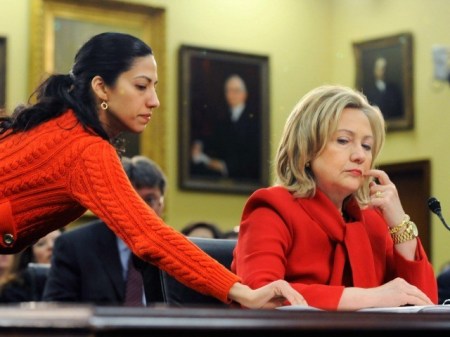
Huma-Abedin-Hillary-Clinton-AFP-640x480Jonathan Ernst/Getty Images/AFP

Fox mogul Rupert Murdoch is partnered in multiple media ventures with Saudi Arabian Prince  Bin Talal, including an Arabic religious TV network with a direct tie to Hillary Clinton’s top aide Huma Abedin.

Both Prince Alwaweed Bin Talal and Murdoch’s Fox News network have become vocal critics of GOP Presidential frontrunner Donald Trump. On December 11, 2015 Bin Tala took to Twitter to savage Trump:

.@realDonaldTrump
You are a disgrace not only to the GOP but to all America.

Withdraw from the U.S presidential race as you will never win.

Iran’s long arm

January 21, 2016

Iran’s long arm, The Jerusalem Post, JPost Editorial, January 21, 2016

(Please see also, New Iranian-Backed Terror Group Makes Inroads in West Bank, Gaza. — DM)

ShowImage (20)Thousand of Basij soldiers stage mock seige of Temple Mount in Iran. (photo credit:FARS)

If anyone needed proof how the lifting of sanctions on Iran will hurt Israel’s security, this week provided two examples.

Just days after implementation of the Joint Comprehensive Plan of Action nuclear agreement, we received a reminder that Iran and its proxies remain dangerous enemies of Israel.

Five Palestinians from the Tulkarm area were arrested for planning to carry out terrorist attacks under instructions from Hezbollah, the Shin Bet (Israel Security Agency) said on Wednesday.

The head of the cell, Mahmoud Za’alul, had been recruited through social media networks. Using encrypted messages, he enlisted five more men from the Tulkarm area; they were ordered to gather intel and plan terrorist attacks, including preparing explosive vests for suicide bombings.

Hezbollah funded their operation by sending them $5,000 through money changers.

Now that the “crippling” economic sanctions on Iran have been removed, the resources at its disposal – and as an extension at Hezbollah’s – will be significantly greater.

In Lebanon, meanwhile, Hezbollah is consolidating its political power. On Monday, in a development that is nothing short of earth shattering, Samir Geagea, leader of the Christian Lebanese Forces party, publicly endorsed his rival, the formal general Michel Aoun, for president of Lebanon.

In so doing, Geagea abandoned his loyalty to Saad Hariri, head of the anti-Syrian Future (Al-Mustaqbal) Movement, for an alliance with the enemy camp headed by Hezbollah, which supports Aoun for president.

This opens the way to the appointment of a pro-Iranian president in Lebanon.

Hezbollah and Iran are undoubtedly pleased with the development. If Aoun is elected president, Hariri’s influence – and the influence of Hariri’s main patron, Saudi Arabia – will be greatly diminished.

Finally, in the Gaza Strip, Iran has over the past few months been providing funding to a new terrorist group called Al-Sabireen Movement for Supporting Palestine. Al-Sabireen, which means “the patient ones” in Arabic, was formed in the wake of a break between Tehran and the two largest terrorist organizations operating in Gaza – Hamas and Islamic Jihad.

Neither organization has acquiesced to Iran’s demand to support President Bashar Assad in Syria.

Both have incensed the Iranians by remaining silent on Saudi attacks in Yemen against the Iranian-backed Houthis. Both face their worst financial crisis in two decades after Iran’s decision to cut off support.

Al-Sabireen’s emblem – a gun sprouting from the center of its name in Arabic – is nearly identical to Hezbollah’s.

So far, the organization has about 400 followers in the Gaza Strip, each one receiving a monthly salary of $250-$300, while the senior officials get at least $700, according to The Jerusalem Post’s Palestinian Affairs correspondent Khaled Abu Toameh. Iran has been supplying Al-Sabireen with weapons used to attack Israel.

The Iranians are believed to have supplied their new terrorist group in the Gaza Strip with Grad and Fajr missiles that are capable of reaching Tel Aviv. Also, Iranian funds channeled through Al-Sabireen are said to be used to support the families of killed or arrested terrorists living on the West Bank.

The Iranian-backed organization is also wooing Fatah members. Scores of militiamen once belonging to Palestinian Authority President Mahmoud Abbas’s Fatah faction in the Gaza Strip have allied themselves with Al-Sabireen. Most were attracted by the money.

The rise of an unshackled Iran’s influence in the region is bad for Israel. But it is also bad for many of the US’s Sunni allies in the region such as Saudi Arabia and the Palestinian Authority. A shared enemy has created a shared interest – the curtailing of Iranian influence.

Implementation of the JCPOA might delay Tehran’s nuclear weapon program. The removal of sanctions, however, has set the stage for the Islamic Republic to increase its destabilizing influence. Iran and its proxies must be stopped.

In Tehran, Iraqi Hizbullah Leader: We Will Retaliate Militarily for Al-Nimr Execution on Saudi Soil

January 21, 2016

In Tehran, Iraqi Hizbullah Leader: We Will Retaliate Militarily for Al-Nimr Execution on Saudi Soil, MEMRI-TV via You Tube, January 21, 2016


According to the blurb following the video,

During a press conference at the Fars News Agency in Tehran, Sheikh Akram Kaabi, Leader of the Hizbullah Al-Iraq (“Al-Nujaba”) militia, threatened Saudi Arabia: “Our retaliation for the blood of Sheikh Al-Nimr will take place on your own turf.” He further said: “When I say that we will retaliate – of course, I mean military retaliation.” The statements were posted on the Internet on January 20, 2016.

Hating Americans Is Official Saudi And Qatari Policy

January 20, 2016

Hating Americans Is Official Saudi And Qatari Policy, Daily CallerRaymond Ibrahim, January 18, 2016

Jihadi hate for non-Muslims is not limited to the Islamic State, which U.S. leadership dismisses as neither a real state nor representative of Islam. Rather, it’s the official position of, among others, Saudi Arabia — a very real state, birthplace of Islam, and, of course, “friend and ally” of America.

Saudi Arabia’s Permanent Committee for Islamic Research and Issuing Fatwas — which issues religious decrees that become law — issued a fatwa, or decree, titled, “Duty to Hate Jews, Polytheists, and Other Infidels.” Written by Sheikh Abd al-Aziz ibn Baz (d. 1999), former grand mufti and highest religious authority in the government, it still appears on the website.

According to this governmentally-supported fatwa, Muslims — that is, the entire Saudi citizenry — must “oppose and hate whomever Allah commands us to oppose and hate, including the Jews, the Christians, and other mushrikin [non-Muslims], until they believe in Allah alone and abide by his laws, which he sent down to his Prophet Muhammad, peace and blessings upon him.”

To prove this, Baz quotes a number of Koran verses that form the doctrine of Loyalty and Enmity — the same doctrine every Sunni jihadi organization evokes to the point of concluding that Muslim men must hate their Christian or Jewish wives(though they may enjoy them sexually).

These Koran verses include: “Do not take the Jews and the Christians for your friends and allies” (5:51) and “You shall find none who believe in Allah and the Last Day on friendly terms with those who oppose Allah and His Messenger [i.e., non-Muslims] — even if they be their fathers, their sons, their brothers, or their nearest kindred” (58:22; see also 3:28, 60:4, 2:120).

After quoting the verses, Baz reiterates:

Such verses are many and offer clear proofs concerning the obligation to despise infidels from the Jews, Christians, and all other non-Muslims, as well as the obligation to oppose them until they believe in Allah alone.

Despite documenting its official hatred for all non-Muslims (albeit on a website virtually unknown in the West), in the international arena, Saudi Arabia claims “to support the principles of justice, humanity, promotion of values and the principles of tolerance in the world,” and sometimes accuses the West for its supposed “discrimination based on religion.”

Such hypocrisy is manifest everywhere and explains how the Saudi government’s official policy can be to hate Christians and Jews — children are taught to ritually curse them in grade school — while its leading men fund things like Georgetown University’s Prince Alwaleed bin Talal Center for Muslim-Christian Understanding (the real purpose of which appears to be to fund influential “Christian” academics to whitewash Islam before the public).

Our other “good friend and ally,” Qatar, also officially documents its hate for every non-Muslim — or practically 100 percent of America’s population. A website owned by the Qatari Ministry of Awqaf and Islamic Affairs published a fatwa titled “The Obligation of Hating Infidels, Being Clean of Them, and Not Befriending Them.”

Along with citing the usual Loyalty and Enmity verses, the fatwa adds that Christians should be especially hated because they believe that God is one of three (Trinity), that Christ is the Son of God, and that he was crucified and resurrected for the sins of mankind — all cardinal doctrines of Christianity that are vehemently lambasted in the Koran (see 5:72-81).

Incidentally, this same Qatari government-owned website once published a fatwa legitimizing the burning of “infidels” — only to remove it soon after the Islamic State justified its burning of a Jordanian pilot by citing several arguments from the fatwa.

In short, it’s not this or that “radical,” who “doesn’t represent Islam,” or isn’t a “real state,” that hates non-Muslim “infidels.” Rather, it’s the official position of the governments of Saudi Arabia and Qatar, which are presented to the American public as “friends and allies.”

Thus, as American talking heads express their “moral outrage” at Donald Trump’s call “for a total and complete shutdown of Muslims entering the United States until our country’s representatives can figure out what is going on,” perhaps they should first consider the official position of foreign Muslim governments — beginning with U.S. “friends and allies” — concerning Americans: unmitigated hate and opposition “until they believe in Allah alone and abide by his laws.”

That might explain why the majority of terrorism is committed by Muslims and why the majority of Americans support Trump’s measures.


Our World: In Pakistan, they trust

January 12, 2016

Our World: In Pakistan, they trust, Jerusalem Post, Caroline Glick, January 11, 2016

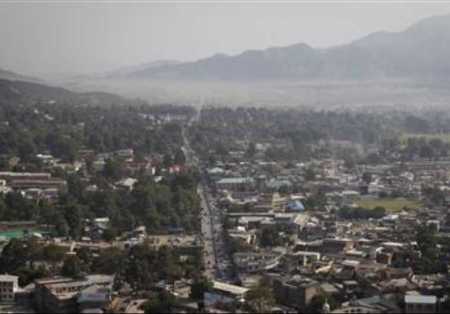
Pakistan viewA general view of houses from a hilltop in Abbottabad, Pakistan. (photo credit:REUTERS)

It is a testament to the precarious state of the world today that in a week that saw North Korea carry out a possible test of a hydrogen bomb, the most frightening statement uttered did not come from Pyongyang.

It came from Pakistan.

Speaking in the military garrison town of Rawalpindi, Pakistani Army chief Gen. Raheel Sharif said that any Iranian threat to Saudi Arabia’s territorial integrity will “wipe Iran off the map.”

Sharif made the statement following his meeting with Saudi Arabia’s defense minister and Deputy Crown Prince Mohammed bin Salman. According to media reports, Salman was the second senior Saudi official to visit Pakistan in the past week amid growing tensions between Iran and the kingdom.

Salman’s trip and Sharif’s nuclear threat make clear that following the US’s all-but-official abandonment of its role as protector of the world’s largest oil producer, the Saudis have cast their lots with nuclear-armed Pakistan.

When last October, the USS Harry Truman exited the Persian Gulf, the move marked the first time since 2007 that the US lacked an aircraft carrier in the region. Nine years ago, the US naval move was not viewed as a major statement of strategic withdrawal, given that back then the US had some one hundred thousand troops in Iraq.

While the USS Truman returned to the Gulf late last month, its return gave little solace to America’s frightened and spurned Arab allies. The Obama administration’s weak-kneed response to Iran’s live-fire exercises on December 26, during which an Iranian Revolutionary Guards vessel fired rockets a mere 1,370 meters from the aircraft carrier as it transited the Straits of Hormuz, signaled that the US is not even willing to make a show of force to deter Iranian aggression.

And so the Saudis have turned to Pakistan.

It would be foolish to view Sharif’s nuclear threat as mere bluster.

By every meaningful measure, Pakistan is little more than a failed state with nuclear weapons. Pakistan appears in every global index of failed or failing states.

To take just a few leading indicators, as spelled out by Basit Mahmood in a report last summer for The Political Domain, barely 1% of Pakistanis pay taxes of any kind. More than half the population lives in abject poverty. The government has no control over most Pakistani territory.

Between 2003 and 2015, more than 58,000 people were killed by terrorism countrywide.

Public health is a disaster. Polio, eradicated throughout much of the world, is now galloping through the country.

Last summer more than 1,300 people died in a heat wave in the supposedly advanced city of Karachi.

These data do not take into account the wholesale slaughter and persecution of minority groups – first and foremost Christians – and the systematic denial of basic human rights and widespread, violent persecution of women and girls.

As for its nuclear arsenal, a 2010 report by the Bulletin of Atomic Scientists estimated that Pakistan possesses between 70 and 90 nuclear warheads. Other credible reports estimate the size of the arsenal at 120.

Pakistan refuses to adopt a no-firststrike policy. In the US and worldwide, it is considered to be the greatest threat to global nuclear security.

Following a Pakistani jihadist assault on the Indian parliament in late 2001, India and Pakistan both deployed forces along their contested border. In the months that followed, due to Pakistani nuclear threats, the prospect of nuclear war was higher than it had ever been.

Cold War nuclear brinksmanship – which reached its high point during the 1962 Cuban missile crisis – paled in comparison.

In 2008, following the Pakistani jihadist assault on Mumbai, India threatened to retaliate against Pakistan.

India’s threats rose as evidence mounted that, as was the case in 2001, the jihadists were tied to Pakistan’s ISI spy service. Once again, rather than clean its own house, Pakistan responded by threatening to launch a nuclear attack against India.

And now, following the unraveling of US-strategic credibility, Pakistan’s aggressive nuclear umbrella is officially coming to the Persian Gulf.

Saudi Arabia’s decision to turn to Pakistan for protection indicates that the second wave of the destruction of the Arab state model is upon us. The notion of Arab states was invented nearly 100 years ago by the British and French at the tail end of World War I. The Sykes-Picot agreement, which partitioned the Arab world into states, rewarded national dominion to the most powerful tribal actors in the various land masses that became the states of the Arab world.

With the possible exception of Egypt, which predated Sykes-Picot, the Arab states formed at the end of World War I were not nation states. Their populations didn’t view themselves as distinct nations. Rather the populations of the Arab states were little more than a hodgepodge of tribes, clans and sectarian and ethnic groupings. In each case, the British and French made their determinations of leadership based on the relative power of the various groups. Those chosen to control these new states were viewed either as the strongest factions within the new borders or as the most loyal allies to the European powers.

The first wave of Arab state collapse began six years ago. It submerged the non-royal regimes, which fell one after the other, like houses of cards.

Syria, Libya, Iraq and Yemen ceased to exist.

Egypt, which in the space of two years experienced both an Islamist revolution and a military counter-revolution, still teeters on the brink of collapse.

Lebanon will likely break apart at the slightest provocation.

Today we are seeing the opening stages of the collapse of the Arab monarchies, and most importantly, of Saudi Arabia.

Most of the international attention to Saudi Arabia’s current threat environment has focused on Iran. The Iranian threat to the Saudis has grown in direct proportion to the Obama administration’s determination to realign the US away from its traditional Sunni allies and towards Iran. The conclusion of the US-led nuclear pact with Tehran has exacerbated Iran’s regional aggression as it no longer fears US retaliation for its threats to the Sunni monarchies.

But Iran is just the most visible of three existential threats now besetting the House of Saud.

The most profound threat to the world’s largest oil power is economic.

The drop in world oil prices has endangered the kingdom.

As David Goldman reported last week in the Asia Times, according to an International Monetary Fund analysis, the collapse in Saudi oil revenues “threatens to exhaust the kingdom’s $700 billion in financial reserves within five years.”

The house of Saud’s hold on power owes to its oil-subsidized economy. As Goldman noted, last month dwindling revenues forced the Saudis to cut subsidies for water, electricity and gasoline.

According to Goldman, Riyadh’s mass execution of 43 long-jailed prisoners at the start of the month was an attempt by the aging royal house to demonstrate its firm control of events. But the very fact the Saudi regime believed it was necessary to stage such a demonstration shows that it is in distress.

The third existential threat the regime now faces is Islamic State. Since 1979, the Saudis have sought to deflect domestic opposition by promoting Wahabist Islam at home and Wahabist jihad beyond its borders.

Now, with Islamic State in control over large swathes of neighboring Iraq, as well as Syria and Libya and threatening the Saudi-supported Sisi regime in Egypt, the Saudi royal family faces the rising threat of blowback. Some analysts argue that given the popular support for jihad in Saudi Arabia, were Islamic State to cross the Saudi border, its forces would be greeted with flowers, not bullets.

If the House of Saud falls, then the Gulf emirates will also be imperiled.

The Egyptian regime, which is bankrolled by the Saudis and its Gulf allies will also be endangered. The Hashemite monarchy in Jordan, which is protected by the US and by Israel, will face unprecedented threats.

The implications of expanding chaos – or worse – in Arabia are not limited to the Middle East. The global economy as well as the security of Europe and the US will be imperiled.

Obviously, the order of the day is for the US security guarantee to Saudi Arabia to be reinforced, mainly through straightforward US action against Iranian naval aggression and ballistic missile development.

Unfortunately, the Obama administration can be depended on to take just the opposite approach. And as a consequence, at least for the next year, the main thing propping up the Gulf monarchies, and with them, the global economy and what passes for global security, is a failed state with an itchy finger on the nuclear trigger.

Pakistan threatens to wipe Iran off the map if Saudi harmed

January 10, 2016

Pakistan threatens to wipe Iran off the map if Saudi harmed, DEBKAfile, January 10, 2016

(Promises, promises. — DM)

In Pakistan’s first transparent nuclear threat to Iran, its chief of army staff, Gen. Raheel Sharif, vowed Sunday to wipe Iran off the face of the earth if any harm came to Saudi Arabia. He gave this pledge to Saudi Deputy Crown Prince and Defense Minister Mohammed bin Salman, who was on a visit to a military base in Rawalpindi.

Israel and the Four Powers

January 9, 2016

Israel and the Four Powers, Algemeiner, Ben Cohen via JNS Org., January 8, 2016

download-4

JNS.org The rulers of the Arab Gulf states are, it seems, increasingly attentive to what Israel has to say about the balance of power in the region. As a rising Shi’a Iran faces off against a Sunni coalition led by Saudi Arabia, the core shared interest between Israel’s democracy and these conservative theocracies — countering Iran’s bid to become the dominant power and influence in the Islamic world — has rarely been as apparent.

Hence the interview given by a senior IDF officer to a Saudi weekly, Elaph, which laid out how Israel analyzes the present wretched state of the Middle East. In the Israeli view, there are, the officer said, four powers that have coalesced in the region. The first power centers on Iran and its allies and proxies, such as the Bashar al-Assad dictatorship in Syria, Shi’a rebels in Yemen and Iraq, and most pertinently for Israel, Hezbollah in Lebanon. The second power contains what the officer called “moderate” states with whom Israel has “a common language” — Egypt, Jordan and the Gulf countries. The third power, one that is obviously waning, is represented in the form of the Muslim Brotherhood, now vanquished in its Egyptian heartland but still reigning in Hamas-controlled Gaza. Finally, the fourth power is another non-state actor, the combined forces of jihadi barbarism like Al-Qaeda and Islamic State.

Israel’s goal in this situation is a modest one. As the IDF officer put it, “There is a danger that the strife will reach us as well if the instability in the region continues for a long time. Therefore, we need to take advantage of the opportunity and work together with the moderate states to renew quiet in the region.”

The key phrase here, it seems to me, is “renew quiet.” Foremost for the Israelis, that means counteracting Iran and especially its Lebanese proxy Hezbollah, and then minimizing the potential for jihadi terrorists to operate on or near Israeli-controlled territory. A broader strategic vision can also be detected here: Ultimately, both Israel and the conservative Arab states share the common interests of neutralizing Iran and eliminating the jihadi groups.

The partnership between Israel and these states is already in operation, at the levels of intelligence sharing and — not for the first time — cautious exploration of trade relations. That there is a strong military dimension as well to all this is entirely conceivable. And for the time being, it seems that neither side wants to expand or contract on their public ties with each other; Israel has long had embassies in Cairo and Amman, but that doesn’t mean there’ll be an Israeli ambassador in Riyadh anytime soon, much less a film festival or trade expo.

There’s another factor that has accelerated the formation of this undeclared, look-the-other-way alliance: the shift in American Middle East policy under President Barack Obama. Some readers will remember that back in 1991, the first Bush administration pointedly left Israel out of the coalition to expel Saddam Hussein from Kuwait, so as not to antagonize the Gulf states. Now, frustration with Obama has compelled these very same states to recognize that they have an existential interest in cooperating with Israel.

You might say that the president deserves credit for bringing about a situation, in the wake of the nuclear deal with Iran, which has compelled the Gulf states to grasp the reality and permanence of Israel as never before. Still, the visions and prophecies of a Middle Eastern equivalent of the European Union, much indulged during the Oslo Accords years in the late 1990s, are not now in evidence, and that’s welcome. For their own reasons, neither Israel nor the Arab states feel obliged to articulate a sense of what their region should look like in the event that the Iranian threat is overcome.

Indeed, there’s a case that doing so would be counterproductive — it would impose political pressures upon a discreet yet strategically vital relationship that above all requires, in the parlance of the IDF officer, the “moderate” states to remain as moderate states. With the reorientation of American policy towards a rapprochement with Tehran, along with Russia’s active involvement in the Tehran-Damascus axis, Israel is the nearest reliable, not to say formidable, power that these countries can turn to.

In the present Middle Eastern context, then, the realism and discretion which has always underwritten Israeli foreign policy continues to prevail. That realism presumably extends to recognizing that regimes like Saudi Arabia and Bahrain might eventually succumb to their internal instabilities, already exacerbated by the further collapse of the price of oil.

When you consider the alternatives, the region’s architecture could be much worse for Israel than it is currently. Long an anomaly as the only open society in the region, the target of Arab military and economic warfare throughout the latter half of the last century, Israel in this century is now a partner in a regional bloc. To be sure, this is a bloc based upon interests, not common values, and is therefore necessarily limited in scope. But in the present storm, and amidst the appalling human suffering generated by the clash of these rival interests in Syria, it’s the closest thing we have to progress.

Iraq Offers To Mediate Fight Raging Between Saudi Arabia and Iran

January 7, 2016

Iraq Offers To Mediate Fight Raging Between Saudi Arabia & Iran, Fox News via You Tube, January 7, 2017

(How about a plague on both their houses? — DM)


A Strategy to Defeat Islamic Theo-fascism

January 7, 2016

A Strategy to Defeat Islamic Theo-fascism, American ThinkerG. Murphy Donovan, January 7, 2016

Surely, whatever passed for American foreign or military policy in the past three decades is not working. Just as clearly, in case anyone keeps score these days, the dark side of Islam is ascendant at home and abroad. What follows here is a catalogue of policy initiatives that might halt the spread of Islamic fascism and encourage religious reform in the Ummah.

Some observers believe that the Muslim problem is a matter of life and death. Be assured that the need for Islamic reform is much more important than either. The choices for Islam are the same as they are for Palestine Arabs; behave or be humbled. Europe may still have a Quisling North and a Vichy South; but Russia, China, and even America, at heart, are still grounded by national survival instincts – and Samuel Colt.

Call a spade a spade

The threat is Islam, both kinetic and passive aggressive factions. If “moderate” Islam is real, then that community needs to step up and assume responsibility for barbaric terror lunatics and immigrants/refugees alike. Neither America nor Europe has solutions to the Islamic dystopia; civic incompetence, strategic illiteracy, migrants, poverty, religious schisms, or galloping irredentism. The UN and NATO have no remedies either. Islamism is an Ummah, Arab League, OIC problem to solve. Absent moral or civic conscience, unreformed Islam deserves no better consideration than any other criminal cult.

Western Intelligence agencies must stop cooking the books too. The West is at war and the enemy is clearly the adherents of a pernicious ideology. A global war against imperial Islam might be declared, just as angry Islam has declared war on civilization.  A modus vivendi might be negotiated only after the Ummah erects a universal barrier between church and state globally. Islam, as we know it, is incompatible with democracy, civility, peace, stability, and adult beverages.

Oxymoronic “Islamic” states need to be relegated to the dustbin of history. If the Muslim world cannot or will not mend itself, Islamism, like the secular fascism of the 20th Century, must be defeated, humbled in detail. Sooner is better.

Answer the Ayatollahs

Recent allied concessions to Tehran may prove to be a bridge too far. If the Persian priests do not abide by their nuclear commitments, two red lines might be drawn around Israel. Firstly, the ayatollahs should be put on notice, publicly, that any attack against Israel would be considered an attack against America — and met with massive Yankee retaliation. Secondly, any future cooperation with NATO or America should be predicated on an immediate cessation of clerical hate speech and so-called fatwas, those arbitrary death sentences.

Clerical threats to “wipe Israel off the face of the earth” and “death to America” injunctions are designed to stimulate jihad and terror globally. The only difference between a Shia ayatollah and a Sunni imam in this regard these days seems to be the torque in their head threads.

Ostracize the Puppeteers

Strategic peril does not emanate from Sunni tacticians like Osama bin Laden, Mullah Omar, or Abu Bakr al-Baghadadi. Nor does the real threat begin with or end with al Qaeda, the Taliban, Hezb’allah, Hamas, or the Islamic State. Lethal threat comes, instead, on four winds: toxic culture, religious politics, fanatic fighters, and furtive finance, all of which originate with Muslim state sponsors. The most prominent of these are Saudi Arabia, the Emirates, Turkey, Iran, and Pakistan.

Put aside for a moment the Saudi team that brought down the Twin Towers in New York. Consider instead, the House of Saud as the most egregious exporter of Salifism (aka Wahabbism) doctrine, clerics, imams, and mosques from which ultra-irredentist ideologies are spread. The Saudis are at once the custodians of Islam’s sacredshrines and at the same time the world’s most decadent, corrupt, and duplicitous hypocrites. Imam Baghdadi is correct about two things: the venality of elites in Washington and Riyadh. The House of Saud, an absolutist tribal monarchy, does not have the moral standing to administer “holy” sites of any description — Mecca, Medina, or Disneyland.

The cozy relationship between Europe, the European Union, and Arabia can be summarized with a few words; oil, money, arms sales, and base rights. This near-sighted blend of Mideast obscenities has reached its sell-by date. The “white man’s burden” should have expired when Edward Said vacated New York for paradise.

Jettison Turkey and Pakistan

What Saudi Arabia is to toxic ideology in North Africa, Turkey and Pakistan are to perfidy in the Levant and South Asia. Turkey and Pakistan are Islam’s most obvious and persistent grifters. Turkey supports the Islamic State and other Sunni terror groups with a black market oil racket. Pakistan supports the Taliban, al Qaeda, and ISIS with sanctuary and tolerance of the world’s largest opium garden. Oil and drug monies from Arabia, Turkey, and South Asia are financing the global jihad. Turkey also facilitates the migration of Muslims west to Europe while sending Islamist fighters and weapons south to Syria and Iraq.

With the advent of Erdogan and his Islamist AKP, Turkey has morphed into NATO’s Achilles Heel, potentially a fatal flaw.  Turkey needs to be drummed out of NATO until secular comity returns to Ankara. Pakistan needs to be restrained, too, with sanctions until it ceases to provide refuge for terrorists. Pakistani troops harassing India could be more prudently redeployed to exterminate jihadists.

Sanctions against Russia and Israel are a study in moral and political fatuity whilst Arabs and Muslims are appeased midst a cultural sewer of geo-political crime and human rights abuses. If NATO’s eastern flank needs to be anchored in trust and dependability, Russia, Kurdistan, or both, would make better allies than Turkey. Ignoring Turkish perfidy to protect ephemeral base rights confuses tactical necessity with strategic sufficiency.

Recognize Kurdistan

Aside from Israel, Kurdistan might be the most enlightened culture in the Mideast. The Kurds are also the largest ethnic group in the world not recognized as a state. While largely Muslim, the Kurds, unlike most of the Ummah, appreciate the virtues of religious diversity and women’s rights. Indeed, Kurdish women fight alongside their men against Turkish chauvinism and Sunni misogyny with equal aplomb. For too long, the Kurds have been patronized by Brussels and Washington.

While Kurdish fighters engage ISIS and attempt to control the Turkish oil black market, Ankara uses American manufactured NATO F-16s to bomb Kurds in Turkey and Syria. Turkish ground forces now occupy parts of Iraq too. In eastern Turkey, Ergdogan’s NATO legions use ISIS as an excuse for bookend genocide, a cleansing of Kurds that might rival the Armenian Christian genocide (1915-1917).

195876_5_Kurdish angel of death

All the while, American strategic amateurs argue for a “no-fly” zone in contested areas south of Turkey. Creating a no-fly zone is the kind of operational vacuity we have come to expect from American politicians and generals. Such a stratagem would foil Kurdish efforts to flank ISIS and allow the Erdogan jihad, arms, and oil rackets to flourish. A no-fly zone is a dangerous ploy designed to provoke Russia, not protect Muslim “moderates.”

Putin, Lavrov, and the Russians have it right this time; Turkish and Erdogan family subterfuges are lethal liabilities, not assets.

Washington and European allies have been redrawing the map in Eastern Europe, North Africa, South Asia, and the Mideast since the end of WWII. The time has come to put Kurdistan on the map too. Kurdistan is a unique and exemplary case of reformed or enlightened Islam; indeed, a nation that could serve as a model for the Muslim world.  If base rights are a consideration, Kurdistan would be an infinitely more dependable ally than Turkey or any corrupt tribal autocracy in Arabia. America has a little in common with desert dictators — and fewer genuine friends there either. Indeed, at the moment America is allied with the worst of Islam.

Create New Alliances

NATO, like the European Union, has become a parody of itself. Absent a threat like the Soviet Union or the Warsaw Pact, Brussels has taken to justifying itself by meddling in East Europe and resuscitating a Cold War with the Kremlin. Indeed, having divided Yugoslavia, NATO now expands to the new Russian border with reckless abandon; in fact, fanning anti-Russian flames now with neo-Nazi cohorts in former Yugoslavia, Georgia, and Ukraine.

NATO support for the Muslims of one-time Yugoslavia is of a piece with support for Islamic troublemakers in Chechnya and China too. Throughout, we are led to believe that jihad Uighurs and caliphate Chechens are freedom fighters. Beslan, Boston, Paris, and now San Bernardino put the lie to any notion that Islamists are “victims” (or heroes). Indeed, the Boston Marathon bombing might have been prevented had Washington a better relationship with Moscow.

Truth is, America has more in common with Russia and China these days than we do with any number of traditional European Quislings. Indeed, it seems that Europe and America can’t take yes for an answer.

The Cold War ideological or philosophical argument has been won. Moscow and Beijing have succumbed to market capitalism. Islamism, in stark contrast, is now a menace to Russian, Chinese, and American secular polities alike. The logic of a cooperative or unified approach to a common enemy seems self-evident. America, China, and Russia, at least on issues like toxic Islam, is a match made in Mecca.

The late great contest with Marxist Russia and China was indeed a revolution without guns. Now the parties to that epic Cold War struggle may have to join forces to suppress a theo-fascist movement that, like its Nazi predecessor, will not be defeated without guns. The West is at war again, albeit in slow motion. Withal, questions of war are not rhetorical. Saying that you are not at war does not make it so. Once declared, by one party or the other, the only relevant question about war is who wins and who loses. Losers do not make the future.

If America and Europe were as committed to Judeo/Christian secular values as Islamists are committed to a sick religious culture, then the war against pernicious Islam would have been won decades ago. Or as Jack Kennedy once put it: “Domestic policy can only defeat us; foreign policy can kill us.

Trump Footnote

Donald Trump made several policy suggestions on the Islamism issue, one on immigration, the other on Mideast oil. On the former, he suggests a hiatus on Muslim immigration until America develops a plan or reliable programs to vet migrants. On Arab oil, he suggests, given the lives and treasure spent liberating Kuwait and Iraqi oil fields, America should have held those resources in trust and use oil revenues to finance the war against jihad, however long that takes. The problem with both Trump ideas is that they come perilously close to common sense, an American instinct in short supply these days.


Islam in our schools

January 6, 2016

Islam in our schools, American ThinkerCarol Brown, January 6, 2016

Creeping sharia infiltrates every nook and cranny of America. Including our classrooms. Among other things, the Muslim Brotherhood (as well as the Saudis) wields enormous influence over curriculum that threatens not only public schools, but private and parochial schools as well.

After reporting on Islamic supremacy in our schools a year ago, I thought it worthwhile to see how things have progressed since then, for better or for worse. (Guess which it is.) When last we left off, here’s where things stood. In most cases, information only came to light because parents stumbled upon homework assignments or their child told them something of concern.

Students learned to recite allegiance to Allah along with Muslim prayers and chants. Students were also taught the Five Pillars of Islam, that Muslims pray to the same God as Christians and Jews, that Mohammed was a man with strong moral values, that terrorists are “freedom fighters,” that Muslims treat those they conquer better than America does, along with the taqiyya version of CAIR’s mission. Sharia law was promoted, Qurans were introduced into classrooms, students studied Arabic, female students wore burqas as part of a lesson on Islam, and special courses on Islam prohibited students from wearing a cross or saying the name “Jesus.”

Homework assignments required students to promote the “Golden Age of Islam” while students also had to write about what it would be like to travel to Mecca. All the while, Muslim students were given special privileges that Christian and Jewish students were not afforded, including time off during the day to pray.

Textbooks whitewashed Islam while diminishing Christians and Jews, videos framed non-Muslims as bigots and validated enforcement of blasphemy laws, a Muslim author gave a lecture that stretched over four days about her Islamic-themed book, and field trips to mosques (including the one the Tsarnaev brothers attended) involved non-Muslim students praying to Allah, with non-Muslim boys joined adult Muslims in prayer while girls were told Islam is pro-woman.

Teachers who spoke out were punished. An elementary school teacher was forced to resign after making critical comments about Islam on a talk radio program, CAIR attempted to smear another teacher by accusing her of being a “racist” after she drew an analogy between the Taliban and Hamas during a lesson on bullying, and Christian teachers were harassed by Muslims in the school hierarchy.

(See here, here, here, here, here, here, here, here, here, here, here, here, here, here, here, here, here, here, here, here, here, here, here, here, here, here, here, here, here, here, here, here, here, here, here, here, here, here, here, and here.)

So where do things stand today? Sadly, we have more of the same. Much more of it, as Islamic supremacy continues to gain ground in our schools. (See here, here, here, here, here, here, here, here, here, here, here, here, and here.)

A workbook for a three-week course on Islam told students that for the duration of the course they will “become Muslim” by selecting Muslim names and wearing them on ID tags around their necks, dressing up as Muslims and acting the part in order to receive a good grade, being told jihad is a struggle against oppression, playing a dice game called Jihad that pits one group of students against another, reading the opening chapter of the Quran and analyzing various other verses, and memorizing the Shahada (the prayer for conversion to Islam).

Students across various school districts were told that Islam had nothing to do with the 9/11 terror attacks, were taught an Islamic fight song that implied that Allah is the only God, completed a project that involved making pro-ISIS propaganda posters, and a Palestinian activist gave a presentation to third graders that urged them to become “freedom fighters for Palestine.”

Homework assignments included analyzing statements by bin Laden, material from an ISIS blog featuring a female recruiter, and statements from Obama’s Cairo speech that demonized the West and framed Muslims as victims. Students also had to write the Shahada (including the oath “There is no God by Allah”) and sing “Allahu Akbar” in an Arabic song. And a Muslim cleric who was a public school teacher peddled sharia and routinely left school early to conduct prayer services at his mosque. (He’s since been fired.)

Meanwhile Muslims continued to press for special accommodations, such as school closures for Muslim holidays. Mind you, federal law allows students of minority religions to take off from school on their religious holidays without any penalty. But this is not good enough for many Muslims who offer all manner of rationales for why they need more. Some cite relatively high (emphasis on relatively) percentages of Muslims who live in certain districts. But even when their numbers are scant the same pressure is applied, as in Baltimore where no tests are scheduled on Muslim holidays, despite the fact that Muslim students comprise a mere two-to-three percent of the student body.

In one case, a Muslim community leader argued that Muslim students don’t want to miss class even if the absence is excused because it would place an undue burden on them to catch up for the day they missed. So he wants school policy to prohibit tests on Muslim holidays and the day after so Muslim students won’t have any pressure to study during their observance. He admits the ultimate goal is for the school district to close schools completely on those days because: “We want our sons and daughters to feel as American as anyone else and to be on equal footing as everyone else.” (Nice try. How about Muslim students cope just like Jewish students and Hindu students and students from other religious minorities who have been faring just fine? Deal with it!)

Another example of we-are-a-tiny-minority-but-you-owe-us rationale can be found in Anne Arundel County, Maryland, where Muslims comprise less than two percent of the population. No matter. Sporting events are banned the night prior to Muslim holidays and no tests are administered on the holidays themselves.

Then there’s this rationale offered up in Burlington, Vermont, where it is being recommended that schools close for Muslim holidays because most Muslim students are recently arrived refugees who don’t speak much English and missing school will have a negative effect on their learning. But as often happens in these cases a domino effect kicks in, and now the small Hindu community in Burlington wants school closures on their holidays. However no accommodations will be made for Hindus.

Here’s another scenario. In Irvington, N.J., where the superintendent had no idea how many Muslim students were in the school system, schools are closed on Muslim holidays based on “inclusion” rather than necessity. Riiiiiiiiight. And what “necessity” could one ever argue in any of these cases?

But who needs “necessity” when you can stand on the soap box of “rights,” as Kaity Assaf, a Muslim teenager in New Jersey did when she claimed it comes to down having the “right” to have the two most important Muslim holidays acknowledged publicly by closing all schools in her district.

Then there are those who claim victimhood and make loud demands, as happened a couple of months ago in Jersey City, NJ, when the school board made a “difficult and gut-wrenching” decision and refused to close schools for Muslim holidays after Muslims in the community requested this accommodation on six days notice. One Muslim in attendance screamed, “My child should be able to celebrate the holiday!” (as if anyone was stopping that from happening) while another stated “We feel alienated!” (what’s new?). Still another stepped up to the microphone and smirked: “We’re no longer the minority. That’s clear from tonight. We’re going to be the majority soon.”

Arrogance, demands, victimhood, threats, and above all, being above all.

Hat tips: Fox News, Counterjihad Report, Breitbart, Jihad Watch, The Clarion Project, Atlas Shrugs, The Right Scoop, Legal Insurrection, Front Page Magazine