Archive for the ‘Saudi Arabia’ category

Turkey and Saudi Arabia hit back for the Obama-Putin Syrian pact

March 5, 2016

Turkey and Saudi Arabia hit back for the Obama-Putin Syrian pact, DEBKAfile, March 5, 2016

Zaman_4.3.16Headline of last issue of Turkey’s Zaman before government takeover

Turkey and Saudi Arabia have taken separate steps to break free from Washington’s dictates on the Syrian issue and show their resistance to Russia’s highhanded intervention in Syria. They are moving on separate tracks to signal their defiance and frustration with the exclusive pact between Presidents Barack Obama and Vladimir Putin which ostracizes Riyadh and Ankara on the Syrian question.

Turkey in particular, saddled with three million Syrian refugees (Jordan hosts another 1.4 million), resents Washington’s deaf ear to its demand for no-fly zones in northern and southern Syria as shelters against Russian and Syrian air raids.

Last year, President Reccep Erdogan tried in desperation to partially open the door for a mass exit of Syrian refugees to Europe. He was aghast when he found that most of the million asylum-seekers reaching Europe were not Syrians, but Muslims from Africa, Afghanistan and Pakistan, in search of a better life in the West. Most of the Syrians stayed put in the camps housing them in southern Turkey.

Even the Turkish intelligence agency MIT was hard put to explain this setback.  According to one partial explanation, organized crime gangs of Middle East dope and arms smugglers, in which ISIS is heavily represented, seized control of the refugee traffic heading to Europe from Libya, Iraq and Syria.
This human traffic netted the gangs an estimated $1 billion.

Turkey was left high and dry with millions of Syrian refugees on its hands and insufficient international aid to supply their needs. No less painful, Bashar Assad was still sitting pretty in Damascus.

Finding Assad firmly entrenched in Damascus is no less an affront for Saudi Arabia. Added to this, the Syrian rebel groups supported by Riyadh are melting away under continuing Russian-backed government assaults enabled by the Obama-Putin “ceasefire” deal’

The oil kingdom’s rulers find it particularly hard to stomach the sight of Iran and Hizballah going from strength to strength both in Syria and Lebanon.

The Turks threatened to strike back, but confined themselves to artillery shelling of Syrian areas close to the border. While appearing to be targeting the Kurdish YPD-YPG militia moving into these areas, the Turkish guns were in fact pounding open spaces with no Kurdish presence. Their purpose was to draw a line around the territory which they have marked out for a northern no-fly or security zone.

Saturday, March 5, President Erdogan proposed building a “new city” of 4,500 square kilometers on northern Syrian soil, to shelter the millions of war refugees. He again tried putting the idea to President Obama.

The Saudi Defense Minister, Deputy Crown Prince Mohammed bin Salman put together a more high-risk and comprehensive scheme. Its dual purpose is to hit pro-Iranian Hizballah from the rear and forcied [Sic] the two big powers to treat Riyadh seriously as a player for resolving the Syrian imbroglio.

The scheme hinged in the cancellation of a $4 billion Saudi pledge of military aid to the Lebanese army, thereby denying Hizballah, which is a state within the state and also dominates the government, access to Saudi funding. But it also pulled the rug from under Lebanon’s hopes for combating ISIS and Al Qaeda’s Nusra Front, which have grabbed a strip of Lebanese territory in the northern Beqaa Valley.

The Saudi action, by weakening the Lebanese military and its ability to shore up central government in Beirut, risks tipping Lebanon over into another civil war.

The London Economist commented that this Saudi step against Lebanon seems “amateurish.” Under the young prince (30), “Saudi Arabia sometimes acts with bombast and violence that makes it look like the Donald Trump of the Arab World,” in the view of the magazine.

But the Saudi step had a third less obvious motive, a poke in the eye for President Obama for espousing Iran’s claim to Middle East hegemony. Resentment on this score is common to the Saudi royal house and the Erdogan government.

As a crude provocation for Washington, the Turkish president ordered police Friday, March 4, to raid Turkey’s largest newspaper Zaman, after an Istanbul court ruling placed it under government control.

The newspaper released its final edition ahead of the raid declaring the takeover a “shameful day for free press” in the country. A group of protesters outside the building was dispersed with tear gas, rubber bullets and water cannons.

Zaman is owned by the exiled Muslim cleric Felhullah Gulen, who heads the powerful Hizmet movement, which strongly contests Erdogan government policies. A former ally of the president, the two fell out years ago. In 1999, after he was accused of conspiring to overthrow the government in Ankara, Gulen fled to the United States.

Today, the exiled cleric runs the Hizmet campaign against the Turkish president from his home in Pennsylvania, for which he has been declared a terrorist and many of his supporters arrested.

The takeover of Zaman was intended both as a blow by Ankara against Muslim circles opposed to the Erdogan regime and as an act of retaliation against the United States, for harboring its opponents and sidelining Turkey from Obama administration plans for Syria.

Oddly enough, the Turkish president finds himself in a position analogous to Egyptian President Abdel-Fatteh El-Sisi, who is at war with the Muslim Brotherhood, a movement which enjoys Obama’s support.

Israeli Prime Minister Binyamin Netanyahu has his own dilemmas. Struggling to keep his balance while walking a tight rope on the Syrian situation between Israel’s longstanding ties with Washington and handling the Russian tiger lurking next door, he is in no hurry to welcome Erdogan’s determined overtures for the resumption of normal relations.

Turkey is in trouble with both major world powers and, after living for five years under hostile abuse from Ankara, Israel does not owe Erdogan a helping had for pulling  him out of the mess.

Saudis ready to give Syrian rebels missiles against Russian warplanes and tanks

March 4, 2016

Saudis ready to give Syrian rebels missiles against Russian warplanes and tanks, DEBKAfile, March 4, 2016

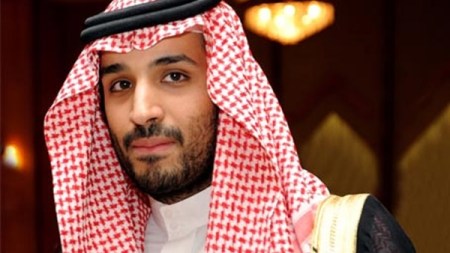
Saudi def minSaudi Defense Minister Prince Mohammed bin Salman

For the first time in the five-year Syrian conflict, Saudi Arabia is preparing to supply Syrian rebel groups with anti-air and anti-tank missiles in an attempt to stall Russia’s military efforts to extend Bashar Assad’s days in power. Deputy Crown Prince Mohammed bin Salman, the defense minister, is choreographing this escalated Saudi intervention in the Syrian war. He plans to arm Syrian rebels militias with missiles capable of striking the new Russian T-90 tanks, which DEBKAfile’s intelligence sources disclose were shipped directly to the Syrian army’s armed divisions in the last two weeks from the Russian Black Sea base of Novorossiysk.

The big Russian landing craft Novocherkassk, which unloaded a further supply of tanks at Tartus port on Thursday, Thursday, March 3, also delivered a consignment of MLRS rocket launchers.

A second Russian vessel is heading for Syria with more hardware.

This is in line with Moscow’s decision to upgrade the Syrian army’s armaments and rebuild the units severely ravaged by five years of combat. For Riyadh, this is tantamount to the indefinite and unacceptable prolongation of Assad’s days in power.

Most Western and Middle East observers think the Saudis may be bluffing about their plan to arm Syrian rebels with missiles, as a ploy to get Washington and Moscow to treat them seriously as a player on the Syrian stage and take their interests into account. Ideally, Riyadh would hope to break up American cooperation with Iran in Iraq and Russian cooperation with Iran in Syria.

The Saudis have so far pitched into this endlessly complex scenario with two tangible steps:

1. The deployment last week of four Saudi Air Force F-15 bomber fighters at the Turkish base of Incirlik near the Syrian border, to be followed by a contingent of ground troops for operations in Syria.

2. A direct challenge to Iran’s fighting arm in Syria, the Lebanese Hizballah and its leader Hassan Nasrallah,  by cancelling the $4 billion defense package Riyadh had pledged for the rehabilitation of Lebanon’s armed forces. The Lebanese high command is collaborating increasingly with Hizballah and a large slice of Saudi assistance funds would most certainly have reached its hands.

According to a high-ranking Saudi source, the decision to arm Syrian rebels with missiles is final. He said, “The Syrian opposition might soon acquire surface-to-air missiles, which will raise the wrath of Russia and Iran.” He added:: “No Saudi official will own up to these consignments but, just as 30 years ago, Saudi Arabia was not deterred from intervening in Afghanistan against the Russian army – and we came out the winners” – we will not hesitate to take on the Russian army in Syria too.

DEBKAfile’s military sources point out that in the Afghan war, the Saudis acted with the full support of the United States, whereas in Syria, the Americans are solidly opposed to any Saudi intervention. That is a huge difference between the two cases.

The introduction of Saudi missiles in support of the anti-Assad opposition would create a new situation in the Syrian conflict, whereby Riyadh also has a say – not just Washington, Moscow and Tehran. And that is exactly what Defense Minister Mohammed was after. Saudi willingness to give the rebels missiles takes the oil kingdom’s intervention in the Syrian conflict a lot farther than Israel, the Gulf emirates, Jordan or Turkey have been ready to go until now.

Expelliarmus! Saudi Police to learn anti-magic tactics

February 18, 2016

Expelliarmus! Saudi Police to learn anti-magic tactics, Jerusalem Post, Zack Pyzer, February 18, 2016

MagicHaifa Magic for Peace event, June 1, 2015 . (photo credit:TZVI ROGER, CITY OF HAIFA)

Saudi Arabia’s new police recruits are now being trained in more than enforcing modesty standards. According to various reports across Arab media, cadets are taking a five-day course in combating wizards, witches and as-of-yet unconfirmed plague of leprechauns blighting the Kingdom.

Saudi media reported that 30 members of the religious police, formally named the Committee for the Promotion of Virtue and the Prevention of Vice (CPV), completed the course in February. Classes educated the officers in how to identify and safely apprehend the dangerous suspects who may be travailing the Arabian desert, such as Sharia-desecrating elves.

This is by no means the first time Saudi Arabia has attempted to get to grips with the occult, with the “anti-witchcraft unit”  formed back in May 2009 for this very purpose.

The Kingdom takes witchcraft so seriously that it has banned theHarry Potter series by British writer J.K. Rowling, rife with tales of sorcery and magic. In 2011, Abdullah Jaber, a political cartoonist at the Saudi daily Al-Jazirah, told The Media Line “In accordance with our Islamic tradition we believe that magic really exists. The fact that an official body, subordinate to the Saudi Ministry of Interior, has a unit to combat sorcery proves that the government recognizes this, like Muslims worldwide.”

There is no shortage of anecdotal evidence to say that the Saudis are right in their convictions. In 2011, the anti-witchcraft unit cracked the case of the cursed wolf’s head wrapped in lingerie, with officers able to break a spell allegedly keeping a family trapped in the cursed head’s power. It was not confirmed whether the officers themselves needed to use magic in breaking the curse, or just regular detective work.

Unfortunately, sorcery is no laughing matter for those accused of the crime, with Saudi Arabia carrying out the death penalty for those convicted. Amina bint Abdul Halim bin Salem Nasser was executed in 2011, having been convicted on charges of “sorcery and witchcraft.”

Special Israeli emissary to Moscow over Russian Syria air strikes near border

February 17, 2016

Special Israeli emissary to Moscow over Russian Syria air strikes near border, DEBKAfile, February 17, 2016

Israel_near_border_16.2.16

In view of the crisis building up on the southern Syrian-Israeli border, Prime Minister Binyamin Netanyahu decided immediately on his return home from Berlin early Wednesday, Feb. 17, to send a special  emissary to Moscow to ask for clarifications. Tuesday, Intensified Russian air strikes came to within 6 km of the Israeli border, sparking a growing exodus of Syrian refugees heading towards the Qoneitra border crossing to Israel.

DEBKAfile’s sources reveal that the envoy is Dr. Dore Gold, director-general of the Foreign Ministry and one of the prime minister’s few trusted confidantes.

It was still not clear whom Gold will meet in the Russian capital, but it is assumed that it will be one of Moscow’s senior decision-makers in the loop on its military operation in Syria.

The fact that Netanyahu decided to dispatch a top diplomat rather than a senior military or intelligence officer is a sign that the prime minister is not of one mind with the IDF’s intelligence assessments of the situation on the ground.

Netanyahu’s concerns grew after after the Russian air force on Tuesday widened its massive bombing of southern Syria from the city of Daraa to the Golan town of Quneitra, in order to help the Syria army’s 7th armored division push the rebels east, so they will not attempt to cross the border and seek shelter in Israel.

DEBKAfile’s military sources report that that 12 of the 15 targets bombed by the Russian air force across from the Israeli border were new rebel positions that had not been attacked before, even by the Syrian army. Military sources monitoring the war said Tuesday night that there is no doubt that the Russians are in the process of wiping out the rebel positions along the Israeli border by means of an offensive comparable to their operations in the northern Aleppo sector.

Our sources report that Israel’s concerns grew when, as the Russians bombing raids neared the Israeli border, Syrian officials threatened Jordan with serious consequences if Amman gave the Saudi air force a base for attacking eastern or southern Syria.

The threats began Tuesday, after Jordanian forces took over the Syrian-Jordanian border crossings formerly held by Syrian rebels, as a measure to stem the volume of Syrian refugees in search of sanctuary in the Hashemite Kingdom. But this step was interpreted by the Syrians and their Russian ally as clearing the way for Saudi intervention in the Syrian conflict using Jordan as a jumping-off base.

Meanwhile, Western military sources reported a sub substantial presence Tuesday of both Russian and Israeli warplanes in the skies over and around southern Syria.

Saudi Arabia, Yemen and the Politicized UN

February 16, 2016

Saudi Arabia, Yemen and the Politicized UN, Gatestone InstituteRichard Kemp and Jasper Reid, February 16, 2016

♦ The UN’s assertion that the Saudi-led coalition has committed war crimes in Yemen is unlikely to be true. UN experts have not been to Yemen, depending instead on hearsay evidence and analysis of photographs.

♦ The UN has a pattern of unsubstantiated allegations of war crimes against the armed forces of sovereign states. Without any military expertise, and never having visited Gaza, a UN commission convicted the Israel Defense Force of deliberately targeting Palestinian civilians in the 2014 conflict. It was an assessment roundly rejected by America’s most senior military officer, General Martin Dempsey, and an independent commission.

♦ The Houthis have learned many lessons from Hamas and Islamic Jihad in Gaza, groups also supported by Iran. Those lessons include the falsification of civilian casualty figures and their causes. The UN swallowed the fake Gaza figures hook, line and sinker, and are now making the same error in Yemen.

♦ The Houthis exploit gullible or compliant reporters and human rights groups to facilitate their propaganda, including false testimony and fabrication of imagery.

♦ Forensic analysis shows that rather than deliberately targeting civilians, the Saudis and their allies have taken remarkable steps to minimize civilian casualties.

The United Nations, Amnesty International and other groups have accused the Saudi-led coalition of war crimes in Yemen. A leaked UN report claims the bombing campaign against Iranian-supported Houthi insurgents seeking violently to topple the legitimate government of Yemen has conducted deliberate, widespread and systematic attacks on civilian targets.

If the UN’s assertion is true, and the coalition is deliberately and disproportionately killing thousands of innocent civilians, it is a war crime. But it is unlikely to be true. The UN has produced no actual evidence of war crimes. None of their allegations is based on investigation on the ground. Their experts have not been to Yemen, depending instead on hearsay evidence and analysis of photographs.

The UN has a pattern of unsubstantiated allegations of war crimes against the armed forces of sovereign states. Only last year, without any military expertise, and never having visited Gaza, a UN commission convicted the Israel Defense Force of deliberately targeting innocent Palestinian civilians in the 2014 conflict. It was an assessment roundly rejected by America’s most senior military officer, General Martin Dempsey, the Chairman of the Joint Chiefs of Staff.

Dempsey’s own findings were confirmed by an independent commission of experienced senior military officers and officials from nine countries. The High Level Military Group found that Israel had not committed war crimes, but had in fact set a bar for avoiding civilian casualties so high that other armed forces would struggle to reach it.

Moreover, last September the UN said that a US airstrike against a hospital in Kunduz, Afghanistan, was “inexcusable” and “possibly a war crime.” Few military forces in the world take greater precautions to prevent civilian casualties on the battlefield than the US. Anyone who has actually experienced combat knows that while such incidents are tragic, when carried out by Western forces, they are far more likely to be the result of human error or the chaos of battle than deliberate war crimes.

There is every reason to believe that the UN is again crying wolf. There is no doubt that thousands are dying in Yemen in horrific circumstances. But we cannot just accept the UN’s figures and its attribution of the proportion of deaths being inflicted by the Saudi coalition. Most of the data comes from the Houthi insurgents, either directly or via non-governmental organizations (NGOs), and is simply accepted as fact. The Houthis have learned many lessons from Hamas and Palestinian Islamic Jihad in Gaza, groups also supported by Iran. Those lessons include the falsification and distortion of civilian casualty figures and their causes. The UN swallowed the fake Gaza figures hook, line and sinker, and are now making the same error in Yemen.

As with Israel’s defensive campaign in Gaza in 2014, and the continued U.S. military support to the Afghan regime, the Saudis’ war to defend the government of Yemen and curb Iranian aggression in the region is lawful and legitimate. Therefore, the illegality of civilian deaths must be assessed according to the laws of armed conflict, in particular whether adequate precautions were taken to avoid them, whether they were proportionate to the military objectives and whether they were necessary to achieve legitimate military goals. The UN cannot possibly make such judgements without a more far-reaching and thorough investigation, and especially not on the basis of information provided by Saudi Arabia’s enemies and by interpreting photographs.

Most of us do not like the way that the Saudi regime runs their country according to the strict application of Islamic Sharia law, and we abhor their record on human rights. But the Saudi military ethos is well known and understood by Western military leaders, including from the U.S. and UK, who have worked closely with them for many years. The reality is, as our officers currently serving alongside them will attest, that the Saudis and their allies are not deliberately trying to kill innocent civilians. Indeed, they are doing their best to minimize civilian casualties. The question is whether their best is good enough.

Saudi Arabia and its coalition allies have the most sophisticated Western combat equipment, including planes, attack helicopters, drones and precision-guided munitions. But they lack battle experience. The exception to this is the Emirati forces within the coalition. They have had many years of combat experience alongside Western militaries, including in Somalia, Kosovo, Libya and Afghanistan. Because of that, they have acquitted themselves in Yemen with great professionalism and effectiveness at sea, on the ground and in the air.

But the lack of experience of the other coalition members puts them many years behind our own forces in wielding the highly complex 21st century capabilities of intelligence, surveillance, reconnaissance, communication and targeting.

Yet the coalition faces the same tough challenges that we face on battlefields everywhere. Their Houthi adversaries fight according to the well-developed doctrine of their backers, the Iranian Quds Force. Like Hizballah, Hamas, the Taliban, Al Qaeda and the Islamic State, their techniques include deliberately killing civilians, fighting from within the population and forcing innocents to become human shields.

1474

Completely ignoring the laws of war, they exploit their enemies’ adherence to them. They lure their opponents to attack and kill civilians. They exploit gullible or compliant reporters, international organizations and human rights groups to facilitate their propaganda, including false testimony and systematic fabrication of imagery. The aim is to instigate international condemnation in order to constrain their militarily superior enemies.

We have seen credible forensic analysis of strikes in Yemen that directly contradict the findings of the UN. Forensic analysis shows that rather than deliberately targeting civilians, the Saudis and their allies have taken remarkable steps to minimize civilian deaths. Of note, they have learned much from Israel’s conduct of operations in Gaza. This has included the use of guided munitions to conduct precision attacks against insurgents while seeking to reduce collateral damage.

Why would coalition forces spend vast amounts of money in a cripplingly expensive conflict firing precision strike munitions, and put their valuable pilots at risk, if they wanted to massacre civilians? Why not use much cheaper unguided munitions or Assad’s indiscriminate barrel-bombs?

The overwhelming majority of civilian deaths caused by the Saudi-led coalition have been due not to deliberate targeting, but to inexperienced pilots and unsophisticated intelligence and targeting capabilities in the face of an enemy that fights from within the civilian population. And to that the friction, confusion, stress and fog of war that leads even the most sophisticated, experienced and restrained military forces, such as American, British and Israeli, to sometimes kill civilians unintentionally. Contrary to the UN’s claim, this is unlikely to amount to war crimes.

Like every conflict in the Middle East, the war in Yemen is almost intractable, takes a heavy toll on innocent civilians, and is unlikely to end in anything approaching a perfect solution. But Saudi Arabia and its allies are making considerable efforts to restore stability to the country and its legitimate government.

Instability in Yemen undermines Western interests, including oil supplies. Instability also allows Al Qaeda and the Islamic State — proven and lethal threats to the US and the West — to flourish there.

By confronting the Houthis in Yemen, Saudi Arabia is also confronting Iran, which represents an even greater threat to the region and to the world. Emboldened by U.S. President Barack Obama’s nuclear deal, enriched by the release of billions of dollars of previously frozen funds, encouraged by the imminent boost in oil revenues, Iranian imperial aggression is today rampant in Iraq, Syria, Lebanon and Yemen.

However unpalatable to many, Saudi Arabia is and will remain a vital ally of the West. We must continue to support them in the fight in Yemen. We must not allow the false, ill-informed and increasingly shrill condemnations by the UN, human rights groups and the media to undermine Saudi’s fighting effectiveness as they have sought to do against other legitimate government forces fighting lawless insurgents in so many other places.

Op-Ed: Contemplating a US/Russia Alliance

February 16, 2016

Op-Ed: Contemplating a US/Russia Alliance, Israel National News, Ted Belman and Alexander Maistrovoy, February 16, 2016

Before Donald Trump’s blowout win in New Hampshire he shocked the world by saying he would allow the Russians to do the “dirty work” and would “let them beat the s*** out of ISIS also.”. Trump went further, “I have always felt that Russia and the United States should be able to work well with each other towards defeating terrorism and restoring world peace, not to mention trade and all of the other benefits derived from mutual respect,”

Putin, responded by saying: “He (Trump) says that he wants to move to another level of relations, to a deeper level of relations with Russia. How can we not welcome that? Of course we welcome it.”

The condemnation of Trump for his remarks was immediate but certainly not universal. Many American’s are beginning to see Russia in a new light.

Until the fall of the USSR, the 20th Century was dominated by an ideological struggle between American capitalism and Russian communism. But now that Russia has abandoned communism and the US is embracing socialism, as seen by the Sander’s victory in the New Hampshire primary, the two powers are more alike than ever before.

Now we have a different ideological struggle to contend with, namely a civilizational war between the Christian/Secular West and the Islamic Caliphate. They are inimical to each other. North America, Europe and Russia are natural allies in this struggle as they are different daughters of one civilization.

In the past, both Russia and the US have backed different Arab states or Muslim groups, including radical Islamists. The end result of this US/Russia enmity was to destabilize the ME and Europe and to allow an Islamic fifth column into America and Europe.

The reality is that Russia, Europe and the US desperately need each other. Together they can withstand the hydra of pan-Islamism with its countless heads (ISIS, al-Qaeda, Jabhat al-Nusra, Salafis, Muslim brothers, etc.), can stabilize the Middle East, the cradle of Islamic fanaticism and can stabilize Europe.

For Russia, the triumph of the Caliphate in any form will be a deadly threat to its “soft underbelly”: the Caucasus and Volga region with Tatarstan.

Penetration of Islamic militancy from Afghanistan into Central Asia means the appearance of the Islamists on the longest and vulnerable southeastern border of Russia.

From Europe’s point of view, a destabilized North Africa and Middle East is resulting in a mass migration of Muslims including radical Islamists which threaten to tear it apart and irreparably change it. This in turn will have dire consequences for both Russia and America.

Both US and Russia are not able to cope with the global “jihad” separately” especially when they are supporting different sides. Russia has no resources for a war against radical Islam made more difficult by western sanctions and pressure. The West, in spite of its material power, lacks the will needed to defeat such a savage and ruthless enemy.

Thus an alliance is imperative.

“New Middle East”

A new Middle East is in the making. It will not look like the “New Middle East” as envisioned by Shimon Peres.  Syria, Iraq and Libya are no more. Lebanon looks like it will also fracture due to the influx of 1.5 million Sunnis, either Palestinian or Syrian. Hezbollah Shia have been reduced from 40% to 25% of the population by this influx so expect a power struggle to ensue there.

Alawite Syria, a strong Kurdish state in the north of former Iraq and Syria, tribal unions in Libya, Druze enclaves in Syria, a Christian enclave in Lebanon and perhaps in Iraq, all will appear on the map of the new Middle East. They will all need the support, both militarily and diplomatically, of either the US or Russia. In this way, the west will be empowered to keep the radical Islamists out.

Russia already has supported the Kurdish PYD (Democratic Union Party) in northern Syria diplomatically (Kremlin insists on PYD’s participation in negotiations about the future of Syria) and by providing them with weapons. The US is also supportive of the Kurds but bas been restrained by Turkey’s insistence that the Kurds be denied independence.  If the US forms an alliance with Russia it no longer needs an alliance with Turkey.

The American embrace of the Muslim Brotherhood and Turkey must be seen as the aberration it is. Rather than support the Islamization of the Middle East and North Africa, America should fight it. Rather than embrace the Muslim Brotherhood and other Islamists, as Obama did, the US should embrace Russia.

Pressure could then be brought to bear on Turkey to change its Islamist allegiances and to allow greater autonomy to its 10 million Kurdish citizens who otherwise will want to join the newly formed Kurdistan.

The US, by destroying Qaddafi and Mubarak, greatly destabilized North Africa. By waging war against Assad, the US has destabilized the Middle East and Europe. What is needed now is that the US and Russia come together to strengthen President al Sisi of Egypt to enable him to defeat ISIS in Sinai and Libya. Russia should be invited back into Libya to assist in its stabilization.  Europe and Tunisia will also benefit from this stabilization as will African states to the south.

In addition, US and Russia should cut a deal for a political solution for Syria in which Syria is divided into three states based on ethnic lines; Alawite Syria in which Russia holds sway, Kurdish Syria which will join with Kurdistan in Iraq and a Sunni state amalgamating the Sunni areas of both Syria and Iraq.

Such a deal will involve cooperation between Russia, US, Turkey and Saudi Arabia. ISIS must be defeated and non-Islamist Sunnis must be put in charge. Saudi Arabia would have a major role in the creation and maintenance of such a state. It is not inconceivable that Jordan would in the end, amalgamate with this state given the number of Sunni refugees it is now host to. This state would serve as a bulwark to an expansionist Iran.

It is in the interest of Russia to placate Saudi Arabia so that Saudi Arabia will cut down on her oil production and allow the price of oil to rise. Saudi Arabia would be agreeable to doing so and to such a division of Syria if Russia would restrain Iran.

Iran

Today, Russia is the de facto ally of Iran and the US is a wannabe.  The Iranian star reached its zenith with the total capitulation of the US in the Iran Deal. Since then it’s been downhill all the way. Without the help of Russia they would have lost Syria as an ally and their connection to Hezbollah. But with that help, Russia is now calling the shots.

It wasn’t so long ago that Russia supported the sanctions on Iran and didn’t want to remove them because it meant the addition of Iranian oil to the world market and the weakening the already weak ruble. Kremlin couldn’t betray its ally but in fact (aside from rhetoric) will not object to a renewal of sanctions. This will save Russia from a powerful competitor in the energy market.

Moscow needs Iran primarily as a means to put pressure on the West but it can quite easily sacrifice it for the sake of strategic considerations. Iran is not a natural ally of Russian for it doesn’t have any historical or cultural connection similar to the connection both Serbia and Armenia have for example.

The View from the Kremlin

Since the 16th century, the main threat to Russia came from the West. Moscow was occupied by Poles in the 17th century and by Napoleon in the 19th century.  In 1941, the troops of the Wehrmacht came within a few kilometers of Moscow.  St. Petersburg was built by Peter Great to resist the invasion of the Swedes.

The collapse of the Soviet Union was a painful blow to Russia and the West took advantage of this collapse. The bombing of Serbia and recognition of Kosovo, the “color revolutions” in the former Soviet Union, NATO’s extension to the Baltic countries, and the constant hectoring of Russia on human rights served to undermine Russia and make her feel threatened. This formed the impetus for the revival of nationalism under the leadership of Vladimir Putin.

The US, Britain and France intervened in Libya in order to both destroy the Gadaffi regime and oust Russia.  Accordingly, they refused Russia’s mediation efforts.  Similarly they tried to oust Assad. But this time, Russia, who had lost its Mediterranean port in Libya was determined to keep its Mediterranean port in Syria.  After many years of death and destruction in Syria brought about by the desire of the US and Saudi Arabia to oust Assad, Assad was on his “death bed”. Russia and Iran doubled down on their efforts to support him. Russia supplied their air force and air defense radar systems and Iran provided more troops. As a result Assad has gained much ground and is in a much better negotiating position today.

During this period, Russia acquired Crimea from the Ukraine and supported an insurgency in eastern Ukraine. A majority of the population of both areas are Russian. The Russians didn’t understand why the West came to the defense of Ukraine. It’s impossible to believe that EU wanted to bring Ukraine into the EU given its large population and systemic corruption.  Moscow believes the West didn’t do so in order to protect the sovereignty of Ukraine but to weaken Russia.  Ukraine, after all, is the backyard of Russia, as Mexica is backyard of US and Corsica is backyard of France.

Last week Russia’s Prime Minister, Medvedev, urged a “more constructive and more cooperative relationship with Russia… I strongly believe that the answer lies with both more defense and more dialogue.”

Last week Henry Kissinger delivered a speech in Moscow in which he began:

“I am here to argue for the possibility of a dialogue that seeks to merge our futures rather than elaborate our conflicts. This requires respect by both sides of the vital values and interest of the other,”

And concluded,

“It will only come with a willingness in both Washington and Moscow, in the White House and the Kremlin, to move beyond the grievances and sense of victimization to confront the larger challenges that face both of our countries in the years ahead.”

Should the West want to pursue such an alliance, it must recognize Russia’s “Near Abroad” – its traditional zone of influence since the 18th century: Ukraine and Belarus, Crimea, whose history is inseparable from Russia, the Caucasus and Central Asia. Russia also seeks influence in Europe and in the Eastern Mediterranean. This is imperial policy but Russia is no longer obsessed with ideological madness.  Thus, it is possible to negotiate a rapprochement and to respect each other’s sphere of influence.

Israel is not an ally of Russia nor its enemy.  Israel and Russia agreed to respect each other’s spheres of interest in Syria. In addition, Moscow mediated in delicate situations between Israel and Hezbollah.  This model can be used on a global scale by the US.

It is of historical note that the Byzantium, otherwise known as the Eastern Roman Empire, fought a sustained battle against the Ottoman Turks, who had invaded, only to finally succumb in 1453.  The Turks changed the name of their capital city, Constantinople, to Istanbul.  The Ottoman Empire succeeded over the years in conquering more of Europe and finally laid an unsuccessful siege to Vienna in 1529. There followed 150 years of bitter military tension and attacks, culminating in the Battle of Vienna of 1683. This battle was won by the Holy Roman Empire of the German Nations in league with the Polish-Lithuanian Commonwealth thereby saving Europe from Islamic conquest.

What is needed today is a similar resolute stand by both east and west against the Islamic Jihad’s attempt to conquer Europe.

Will the old prejudices and enmity focused on Russia prevail over rational considerations and the instinct for self-preservation?

According to the Munich Accords just signed, perhaps not.

It now appears that Russia and the US have come to an agreement for the implementation of a ceasefire and a division of spheres of influence. The document was signed by 17 nations, including Saudi Foreign Minister Adel al-Jubayr for the Syrian opposition and Iran’s top diplomat Muhammed Javad Zarif in the name of the Assad regime.

DEBKA reports:

“The nub of the Munich accord was therefore the parties authorized to name the terrorists. This was spelled out as follows: “The determination of eligible targets and geographic areas is to be left up to a task force of nations headed by Russia and the United States.”

“This puts the entire agreement in the joint hands of the US and Russia. Lavrov emphasized, “The key thing is to build direct contacts, not only on procedures to avoid incidents, but also cooperation between our militaries.”

“The Munich accord therefore provided the framework for expanding the existing US-Russian coordination on air force flights over Syria to cover their direct collaboration in broader aspects of military operations in the war-torn country.

“Lavrov mentioned a “qualitative” change in US military policy to cooperate with Russia in continuing the fight against the Islamic State, but it clearly goes beyond that.”

“This pact as sets out a division of military responsibility between the two powers: The Americans took charge of areas east of the Euphrates, leaving the Russians responsible for the territory east of the river. “

Hopefully, this accord is just the beginning of a new alliance.

Between Putin and Obama

February 7, 2016

Between Putin and Obama, Israel Hayom, Boaz Bismuth, February 7, 2016

The tide has turned in Syria: Aleppo, the rebel stronghold, is on the verge of falling to President Bashar Assad’s army. Hezbollah’s Shiite militias, the Iranian army and the massive Russian air strikes have been the difference.

In contrast to the rebels, Assad can count on his partners. On the Syrian dictator’s side, backed by Russia, action is being taken. On the rebel side, backed by the Americans, there has been a lot of talking. This perhaps explains why in January 2017 U.S. President Barack Obama will exit the White House, and Assad will still be in power. We can add this legacy to the American president’s splendid list of achievements.

And we haven’t even mentioned the millions of Syrian refuges, the terrible migrant crisis in Europe (leading to the rise of far-right parties across the continent), and the escalation of hostilities between Shiites and Sunnis. It’s not a short list.

Since last Monday, Aleppo has been under heavy attack from Assad’s forces. The gains on the ground have been considerable. Russia’s intervention has tipped the balance of power. No one can say this was unexpected. Washington, meanwhile, continues to grumble. U.S. Secretary of State John Kerry lambasted Moscow on Friday for the large number of dead Syrian women and children. Moscow isn’t exactly heeding his criticism. Washington still fails to understand that instead of talking, maybe it would be better to take action already. In August of 2013, however, after Assad had attacked his own people with chemical weapons for the 14th time, the Americans did nothing (red lines, remember?). Why should things be any different today?

Washington, you will say, has worked hard to find a diplomatic solution. This is a good time to remind everyone that the peace talks in Vienna have again hit a dead end. The talks aren’t likely to succeed for a number of reasons, namely that the two main players — Saudi Arabia and Iran — have reached a point of open hostilities, thanks to American foreign policy. Instead of cooperating to resolve the Syrian crisis, these two regional powers are closer than ever to a full-fledged military conflict. Riyadh is threatening to send ground forces into Syria to support the rebels. The commander of Iran’s Revolutionary Guard has already vowed that any such intervention would result in immense casualties for the Saudis. This is where things stand.

Over the weekend Turkey’s foreign minister discussed opening his country’s borders to the steady stream of refugees, but the crossings remain as shut as they were in September, 2014, when thousands of Kurds tried to flee the border town of Kobani. The European Union is trying to remind the Turks that they were given $3 billion for the expressed purpose of absorbing these 2 million refugees. But who expects agreements to be kept in today’s Middle East?

Who does have faith in agreements?

The refugee issue is becoming the hot button topic of the Syrian civil war. “The markets solved the economic crisis, the voters will solve the refugee crisis,” a French lawmaker said a few days ago. In the meantime, as Assad solidifies his power the far-right parties in Germany, Sweden, Denmark and Holland, and of course in France, are all growing in strength. It appears that everyone outside the Obama camp is thriving. And here is yet one more legacy to tell the grandchildren about.

Russian hands-off warning to US, Saudis, Turks amid crucial Aleppo battle

February 6, 2016

Russian hands-off warning to US, Saudis, Turks amid crucial Aleppo battle, DEBKAfile, February 6, 2016

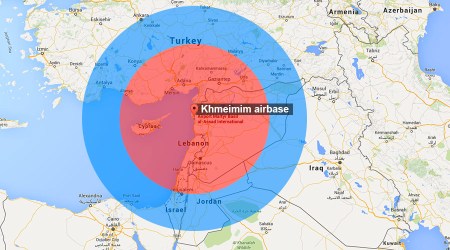
S-400_range_map_25.11.15 (1)

The five-year Syrian civil war, faces its most critical moment. Saturday, Feb. 6, a combined force of Syrian army and Hizballah troops and an Iraqi Shiite militia under Iranian officers, were led by Russian air and Spetsnaz (special forces) officers into pressing forward to encircle 35,000 rebels trapped in Aleppo, the country’s largest city. As they tightened the siege, 400,000 Syrian civilians were also trapped and forced to bear heavy Russian air bombardment and savage artillery fire from the ground forces closing in on the city.

Rebel supply routes were cut off Thursday and Friday when Syrian and Hizballah forces captured the Azaz Corridor connecting Aleppo and all of the northern province of Idlib to the Turkish border.

Tens of thousands of refugees fleeing from the beleaguered town are massing at Bab al-Salama, the last Turkish border crossing to be closed against them. This is the largest Syrian refugee exodus since the start of the civil war.

The rebels under siege are painfully short of weaponry for fighting off the massive, combined offensive, DEBKAfile’s military sources report. Their only remaining recourse is to surrender or be ground into submission as the conquering force knocks over their positions and takes over street after street.

Once the combined forces fighting with Bashar Assad’s army take Aleppo and northern Syria, the opposition will have suffered its heaviest defeat since the war began. The rebels groups’ capacity to continue fighting the regime will be gravely diminished.

Their desperate plight – and the fresh surge of Syrian refugees in unmanageable numbers – cut short the conference in Geneva for a settlement of the Syrian conflict, before it got underway – and prompted reactions from sponsors of rebel groups.

In Riyadh, Brig, Gen. Ahmed Asiri, adviser to Saudi Defense Minister Muhammed Bin Salman, announced Friday that Saudi Arabia is ready “to participate in any ground operations that the international coalition launches against ISIS.” This offer was taken as a veiled response to the SOS from the rebel stronghold in Aleppo.

In Washington, State Department circles, in a briefing to US media, said the time had come to establish a no-fly security zone in northern Syria. They said: “Once a zone were established we do not believe Russia would challenge the stronger US and NATO forces, particularly if they were operating mainly from Turkey.”

The next day, Friday, Moscow came back with a sharp response: Russian Deputy Defense Minister Anatoly Antonov said: “Russian air defense systems enable early detection of threats to Russian aircraft flying combat missions over Syria and provide adequate measures to ensure flight safety.”

This was a reminder of the sophisticated air defense S-400 and S-300 missile systems Russia installed at its Syrian air base after the Turkish air force downed a Russian warplane in November.

Syrian Foreign Minister Walid al-Moallem put it more crudely: “Any foreign troops entering Syria would return home in wooden coffins.”

He advised armed opposition groups fighting the government offensive in the area to lay down their weapons because, he said, “government advances signal that the five-year-old Syria war is nearing its end.”

Saturday, US Secretary of State John Kerry urged Russia to implement a ceasefire in Syria, saying its bombing campaign was killing women and children in large numbers and “has to stop.” He told reporters on his return from a trip to Europe: “Russia has indicated to me very directly they are prepared to do a ceasefire,” adding “The Iranians confirmed in London just a day and a half ago they will support a ceasefire now.”

DEBKAfile’s military sources have seen no sign of any ceasefire or even a slowdown in the Russian-led Syrian-Iranian Aleppo offensive.

Iran and Russia in first major falling-out over Syrian war and Assad

February 5, 2016

Iran and Russia in first major falling-out over Syrian war and Assad, DEBKAfile, February 5, 2016

P.V

While diplomats from 70 countries talked in London about how to raise $9 bn for projects to rehabilitate Syria’s refugees and rebuild their war-ravaged country, its future was further clouded this week by an argument that flared between the main arbiters, Russia and Iran.

Ali Akbar Velayati, Iranian supreme leader Ayatollah Ali Khamenei’s foreign affairs advisor, spent three days in Moscow Feb. 1-4 haranguing Russian leaders, including President Vladimir Putin, whom he saw twice, on the differences that had cropped up in their long political and military cooperation for propping up the Assad regime.

The Iranian official went home without resolving those differences, DEBKAfile’s sources report exclusively. Left pending were not just the next stage of the war but also the fate of President Bashar Assad.

Velayati told Iranian reporters on his plane: “We are against stopping the war,” and “The war must be continued until all (Syrian) terror cells are eradicated.”

He did not elaborate, but DEBKAfile’s Iranian and Moscow sources point out that he was underlining Tehran’s concerns about Moscow’s reported plans for the Assad regime, in which Iran is heavily invested, and the slowdown of Russia’s air campaign against every last rebel group.

Most of all, Iran’s leaders were troubled to find that Russia, by dint of its proactive military intervention, had maneuvered itself into position for calling the shots for Syria.

They are particularly distrustful, according to our sources, over Moscow’s complicated deals with Washington on the Syrian question and the dialogue Russia is holding with the Persian Gulf states, led by Saudi Arabia. The Iranians fear that Putin is calibrating his offensive against rebel groups according to the pace of these interchanges and may therefore scale back strikes on pro-American or “moderate” rebels, or even refrain from subduing them.

Tehran also looks askance at the improved relations Moscow is fostering with its rivals in the region, Riyadh and Abu Dhabi. Last week, Russian Foreign Minister Sergei Lavrov visited the two Arab capitals to allay their concerns for the Syrian rebel groups they support. He promised the Saudis not to harm them, so long as they did not get in the way of the joint Russian-Syrian steps in their country.

Given the Russian moves, the Syrian war looks increasingly to Tehran as unlikely to end in President Assad’s favor.

Lavrov seemed to confirm this Iranian concern on Feb. 2 when, during his visit to Oman he said, “Russian air strikes will not cease until we truly defeat the terrorist organizations ISIL and Jabhat al-Nusra, And I don’t see why these air strikes should stop.”

The Iranians immediately jumped on his omission of all other rebel groups but the two Islamists as the enemy, confirming their suspicions that Moscow was now acting in Syria on its own account. This was the cause of raised tempers in Velayati’s second meeting with the Russian president in Moscow.

The Iranian official demanded the expansion of Russian military operations to cover more inclusive rebel targets. Putin shot back that if Iran wants to ramp up war operations, it should send its own troops into the fray – and not just generals.

He touched on a sore point:  Iran’s Revolutionary Guards Corps don’t have troops available for fighting in Syria. And so, Velayati’s mission to Moscow ended on an acrimonious note.

Op-Ed: ‘Europe, learn from Israel!’: Exclusive interview with Ayaan Hirsi Ali

February 2, 2016

Op-Ed: ‘Europe, learn from Israel!’: Exclusive interview with Ayaan Hirsi Ali, Israel National News, Giulio Meotti, February 2, 2016

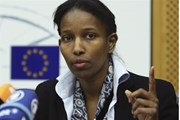
Ayaan Hiri Ali(1)

When Theo van Gogh was murdered by an Islamist on a street in Amsterdam, Ayaan Hirsi Ali could not even attend the funeral because she would have put the lives of others at risk. So the Dutch intelligence agreed to take her to the morgue. The next day, bodyguards accompanied her from her home and gave her three hours to pack and leave. From there she went to the air base at Valkenburg, near The Hague, where she would be embark on a plane. The portholes were closed, they told her not to approach them nor go near the door. The plane was full of soldiers. Hirsi Ali was leaving a country at war. They landed at a military base in Maine, in the United States. This is how the love affair between America and the first refugee from Western Europe since the Holocaust began. A story that continues to this very day.

Ayaan Hirsi Ali is still a shadow. But her voice at the telephone is clear, tough, cool. It is that of a young Somali woman who has undergone genital mutilation, who has lived in Saudi Arabia, Ethiopia, Kenya, before being betrothed to a Canadian cousin she had never seen before. Hirsi Ali escaped from Germany to the Netherlands.

She worked as an interpreter in the Islamic Dutch ghettos, she graduated, became a Liberal MP, helped Van Gogh to make the film “Submission” and then disappeared. Now she talks with me about Europe from her think tank, the American Enterprise Institute. Hirsi Ali recently released her third book on Islam, “Heretic”, an optimistic book on the reform of Islam.

Where does your optimism for a reform of the Islamic world come from?“It is a possibility, not a certainty. But I am optimistic because of the violence committed today in the name of Islam, which is creating so much tension, and it is not just committed by individuals, but by states and organizations. People are more and more afraid of radical Islam. In Egypt, in Tunisia, everywhere, there are large numbers of young Muslims who identify themselves as Muslims, but who do not want sharia, Islamic law. Just as many women do not want sharia.”

On February 1, many feminists around the world will celebrate the World Hijab Day, the International Day of the Islamic veil. “It is multiculturalism, the ideology that eliminates the rights of individuals in favor of groups, communities. Europe is committing a cultural suicide.”

What should happen to kick off a reform? “You must first answer a fundamental question: how can someone be Muslim and be in favor of the separation of mosque and state, freedom of expression, rights of the woman? The attitude towards the Qur’an and Muhammad must change, because the Islamists use the Koran and the texts literally. We need a revolt within the house of Islam, against the culture of death, rejecting Sharia, rejecting the jihad, the killing of non-Muslims.”

You were the first authentic dissident in the Islamic world. “The dissidents of Islam are fundamental, because we are those who ask the critical questions, who pursue the critical thinking. Asking the questions means risking your life. It was the same Imam Qaradawi who recognized the role of dissidents when he said that you can not accept apostasy and it deserves death.”

Your name appears in the same list of targets alongside the late director of Charlie Hebdo, Stephane Charbonnier, and other cartoonists. “My name was on the list of Charlie, so I am not surprised by what happened a year ago. Charbonnier and the other journalists were heroes. Unfortunately, today there is a combination of fear and multiculturalism, moral relativism, the sense of guilt for the Muslim population because of colonialism. When I started going to university in the Netherlands, many did not want to hear about the Holocaust in the classroom, they were told not to speak of the Jews of Israel. This served to suppress criticism of Islamic doctrine. We must stop demonizing Israel and learn from it.”

“Unfortunately, today countries like Saudi Arabia do great missionary work in Europe, trying to suppress dissent. Freedom of expression is therefore fundamental for the opening of the Islamic world to reason. But sometimes I think it’s too late. Think about Italy, France, Germany, England, the whole great tension between Muslims and Europeans. In this context it is becoming difficult, more difficult, to exercise the right to freedom of speech.”

“I am happy in America, but even here there are the Muslim Brotherhood and other Islamist organizations. In ten years I have seen a significant radicalization in America”.

One million immigrants have arrived in Germany this year and another million are expected. Hirsi Ali, who was welcomed by Europe as a refugee from Somalia, now asks Europe to stop immigration. “We are at a critical point in Europe today: the immigration of millions of people must be stopped even before Europe stops the indoctrination in the mosques and imams. If we do not stop the brainwashing, there will be another lost generation in Europe. Muslims must stop Sharia now. I keep repeating it, but who is listening?”.

Since Van Gogh was killed and you fled to America, in the Netherlands nobody longer speaks of Islam. Journalists, cartoonists, intellectuals, have all closed their mouths: “The people in the Netherlands who write and talk about Islam and these issues are tired. In the Netherlands, but also in France, many Jews are leaving. In Los Angeles I have Dutch Jewish friends who fled from the Netherlands. There is a terrible brain drain from Europe. In Europe they are all paralyzed, in Italy, in Germany, in France, but the political leadership must banish sharia, its propagation is not acceptable. Because sharia is the worst violation of human dignity. Sharia is against civilization and European culture”.

So speaks a brave woman who carries on her own body the consequences of that poisonous flower.