Archive for the ‘Saudi Arabia’ category

The Iran Nuclear Deal: What the Next President Should Do

October 2, 2015

The Iran Nuclear Deal: What the Next President Should Do, Heritage Foundation, October 2, 2015

(But please see, The Elephant In The Room. — DM)

The failure of Congress to halt the implementation of the Obama Administration’s nuclear agreement with Tehran means that the U.S. is stuck with a bad deal on Iran’s nuclear program at least for now. Iran’s radical Islamist regime will now benefit from the suspension of international sanctions without dismantling its nuclear infrastructure, which will remain basically intact. Iran’s path to a nuclear weapon is unlikely to be blocked by the Administration’s flawed deal, any more than North Korea was blocked by the Clinton Administration’s 1994 Agreed Framework.

The next President should not passively accept Obama’s risky deal with Tehran as a fait accompli. Instead, he or she should immediately cite any violations of the agreement by Iran, its continued support for terrorism, or other hostile policies as reason to abrogate the agreement. The Bush Administration, faced with bad deals negotiated by the Clinton Administration, eventually withdrew from both the Agreed Framework and the Kyoto Protocol.

Rather than endorsing a dangerous agreement that bolsters Iran’s economy, facilitates its military buildup, and paves the way for an eventual Iranian nuclear breakout, the next Administration must accelerate efforts to deter, contain, and roll back the influence of Iran’s theocratic dictatorship, which continues to call for “death to America.”

How the Next President Should Deal with Iran

Upon entering office, the next Administration should immediately review Iran’s compliance with the existing deal, as well as its behavior in sponsoring terrorism, subverting nearby governments, and attacking U.S. allies. Any evidence that Iran is cheating on the agreement (which is likely given Iran’s past behavior) or continuing hostile acts against the U.S. and its allies should be used to justify nullification of the agreement.

Regrettably, Tehran already will have pocketed up to $100 billion in sanctions relief by the time the next Administration comes to office because of the frontloading of sanctions relief in the early months of the misconceived deal. Continuing to fork over billions of dollars that Tehran can use to finance further terrorism, subversion, and military and nuclear expansion will only worsen the situation.

In place of the flawed nuclear agreement, which would boost Iran’s long-term military and nuclear threat potential, strengthen Iran’s regional influence, strain ties with U.S. allies, and diminish U.S. influence in the region, the new Administration should:

1. Expand sanctions on Iran. The new Administration should immediately reinstate all U.S. sanctions on Iran suspended under the Vienna Agreement and work with Congress to expand sanctions, focusing on Iran’s nuclear program; support of terrorism; ballistic missile program; interventions in Syria, Iraq, and Yemen; human rights violations; and holding of four American hostages (Washington Post reporter Jason Rezaian, Christian pastor Saeed Abedini, former U.S. Marine Amir Hekmati, and former FBI agent Robert Levinson, who has been covertly held hostage by Iran since 2007).

The new Administration should designate Iran’s Islamic Revolutionary Guard Corps (IRGC) as a foreign terrorist organization and apply sanctions to any non-Iranian companies that do business with the IRGC’s extensive economic empire. This measure would help reduce the IRGC’s ability to exploit sanctions relief for its own hostile purposes.

Washington should also cite Iranian violations of the accord as reason for reimposing U.N. sanctions on Iran, thus enhancing international pressure on Tehran and discouraging foreign investment and trade that could boost Iran’s military and nuclear programs. It is critical that U.S. allies and Iran’s trading partners understand that investing or trading with Iran will subject them to U.S. sanctions even if some countries refuse to enforce U.N. sanctions.

2. Strengthen U.S. military forces to provide greater deterrence against an Iranian nuclear breakout.Ultimately, no piece of paper will block an Iranian nuclear breakout. The chief deterrent to Iran’s attaining a nuclear capability is the prospect of a U.S. preventive military attack. It is no coincidence that Iran halted many aspects of its nuclear weapons program in 2003 after the U.S. invasion of and overthrow of hostile regimes in Afghanistan and Iraq. Libyan dictator Muammar Qadhafi, motivated by a similar apprehension about the Bush Administration, also chose to give up his chemical and nuclear weapons programs.

To strengthen this deterrence, it is necessary to rebuild U.S. military strength, which has been sapped in recent years by devastating budget cuts. The Obama Administration’s failure to provide for the national defense will shortly result in the absence of U.S. aircraft carriers from the Persian Gulf region for the first time since 2007. Such signs of declining U.S. military capabilities will exacerbate the risks posed by the nuclear deal.

3. Strengthen U.S. alliances, especially with Israel. The nuclear agreement has had a corrosive effect on bilateral relationships with important U.S. allies in the Middle East, particularly those countries that are most threatened by Iran, such as Israel and Saudi Arabia. Rather than sacrificing the interests of allies in a rush to embrace Iran as the Obama Administration has done, the next Administration should give priority to safeguarding the vital security interests of the U.S. and its allies by maintaining a favorable balance of power in the region to deter and contain Iran. Washington should help rebuild security ties by boosting arms sales to Israel, Saudi Arabia, and other members of the Gulf Cooperation Council (GCC) that are threatened by Tehran, taking care that arms sales to Arab states do not threaten Israel’s qualitative military edge in the event of a flare-up in Arab–Israeli fighting.

To enhance deterrence against an Iranian nuclear breakout, Washington also should transfer to Israel capabilities that could be used to destroy hardened targets such as the Fordow uranium enrichment facility, which is built hundreds of feet beneath a mountain. The only non-nuclear weapon capable of destroying such a target is the Massive Ordnance Penetrator (MOP), a precision-guided, 30,000-pound “bunker buster” bomb. Giving Israel these weapons and the aircraft to deliver them would make Tehran think twice about risking a nuclear breakout.

The U.S. and its European allies also should strengthen military, intelligence, and security cooperation with Israel and the members of the GCC, an alliance of Bahrain, Kuwait, Oman, Qatar, Saudi Arabia, and the United Arab Emirates, founded in 1981 to provide collective security for Arab states threatened by Iran. Such a coalition could help both to contain the expansion of Iranian power and to facilitate military action (if necessary) against Iran.

4. Put a high priority on missile defense. Iran’s ballistic missile force, the largest in the Middle East, poses a growing threat to its neighbors. Washington should help Israel to strengthen its missile defenses and help the GCC countries to build an integrated and layered missile defense architecture to blunt the Iranian missile threat. The U.S. Navy should be prepared to deploy warships equipped with Aegis ballistic missile defense systems to appropriate locations to help defend Israel and the GCC allies against potential Iranian missile attacks as circumstances demand. This will require coordinating missile defense activities among the various U.S. and allied missile defense systems through a joint communications system. The U.S. should also field missile defense interceptors in space for intercepting Iranian missiles in the boost phase, which would add a valuable additional layer to missile defenses.

5. Deter nuclear proliferation. For more than five decades, Washington has opposed the spread of sensitive nuclear technologies such as uranium enrichment, even for its allies. By unwisely making an exception for Iran, the Obama Administration in effect conceded the acceptability of an illicit uranium enrichment program in a rogue state. In fact, the Administration granted Iran’s Islamist dictatorship better terms on uranium enrichment than the Ford and Carter Administrations offered to the Shah of Iran, a U.S. ally back in the 1970s.

The Obama Administration’s shortsighted deal with Iran is likely to spur a cascade of nuclear proliferation among threatened states such as Saudi Arabia, Turkey, Egypt, and the United Arab Emirates. Such a multipolar nuclear Middle East, on hair-trigger alert because of the lack of a survivable second-strike capability, would introduce a new level of instability into an already volatile region. To prevent such an outcome, the next Administration must reassure these countries that it will take military action to prevent Iran from gaining a nuclear capability as well as to deter Iranian military threats to their interests.

6. Expand domestic oil and gas production and lift the ban on U.S. oil exports to put downward pressure on world prices. In addition to sanctions, Iran’s economy has been hurt by falling world oil prices. Its oil export earnings, which constitute more than 80 percent of the regime’s revenue, have been significantly reduced. By removing unnecessary restrictions on oil exploration and drilling in potentially rich offshore and Alaskan oil regions, Washington could help to maximize downward pressure on long-term global oil prices. Lifting the ban on U.S. oil exports, an obsolete legacy of the 1973–1974 energy crisis spawned by the Arab oil embargo, would amplify the benefits of increased oil and gas production. Permitting U.S. oil exports not only would benefit the U.S. economy and balance of trade, but also would marginally lower world oil prices and Iranian oil export revenues, thereby reducing the regime’s ability to finance terrorism, subversion, and military expansion.

7. Negotiate a better deal with Iran. The Obama Administration played a strong hand weakly in its negotiations with Iran. It made it clear that it wanted a nuclear agreement more than Tehran appeared to want one. That gave the Iranians bargaining leverage that they used shrewdly. The Administration made a bad situation worse by downplaying the military option and front-loading sanctions relief early in the interim agreement, which reduced Iran’s incentives to make concessions.

The next Administration should seek an agreement that would permanently bar Iran from acquiring nuclear weapons. At a minimum, this would require:

  • Banning Iran from uranium enrichment activities;
  • Dismantling substantial portions of Iran’s nuclear infrastructure, particularly the Fordow and Natanz uranium enrichment facilities and Arak heavy water reactor;
  • Performing robust inspections on an “anytime anywhere” basis and real-time monitoring of Iranian nuclear facilities;
  • Linking sanctions relief to Iranian compliance;
  • Ensuring that Iran comes clean on its past weaponization efforts; and
  • Determining a clear and rapid process for reimposing all sanctions if Iran is caught cheating.

The Bottom Line

The nuclear deal already has weakened relationships between the U.S. and important allies, undermined the perceived reliability of the U.S. as an ally, and helped Iran to reinvigorate its economy and expand its regional influence. After oil sanctions are lifted, Iran will gain enhanced resources to finance escalating threats to the U.S. and its allies. The next Administration must help put Iran’s nuclear genie back in the bottle by taking a much tougher and more realistic approach to deterring and preventing an Iranian nuclear breakout.
Time to delegitimize the UN

September 24, 2015

Time to delegitimize the UN, Israel Hayom, Judith Bergman, September 24, 2015

(The UN has already made numerous heroic efforts to delegitimize itself. Isn’t it finally time for free world nations to leave the UN, stop paying for it and establish a very different organization dedicated to furthering, rather than destroying, western culture? — DM)

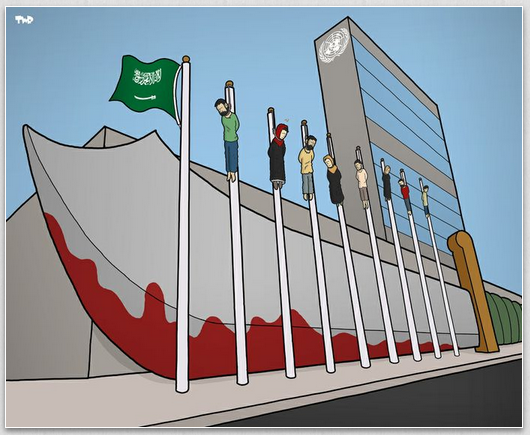
The appointment of Saudi Arabia to head this important U.N. Human Rights Council panel displays, once more, how deeply corrupt and truly meaningless the U.N. system and the U.N. Human Rights Council in particular are in practice.

***********************

It was recently publicized that Saudi Arabia has been elected to chair the U.N. Human Rights Council panel in charge of appointing independent experts. According to the U.N. Watch independent monitoring group, Saudi Arabia was chosen to head the Consultative Group, a five-member group of ambassadors that has the power to select applicants from around the world for more than 77 positions dealing with human rights mandates. These include positions such as the U.N. special rapporteur on violence against women and experts for working groups on the issues of discrimination against women and the rights of migrants and religious minorities.

One does not quite know whether to laugh or cry at the appointment of one of the worst human rights offenders in the world to head the selection of such experts. Indeed, Michael Moller, director-general of the United Nations Office at Geneva, does look a little bit uneasy in the photo taken of him, as he shakes the hand of the Saudi ambassador to Geneva, Faisal bin Hassan Trad, at his appointment. It must have been difficult for this Danish-born diplomat, hailing from a Scandinavian country so intensely committed to the pursuit of justice and human rights, to hide a grimace. After all, he was appointing the ambassador of a country where public beheadings are not the actions of criminals or terrorist organization like Islamic State, but a regular working feature of the legal system, which is modeled according to Shariah law. Perhaps the thought of petrodollars made the handshake easier.

Saudi Arabia was first elected to the Human Rights Council in 2013, without any protests from the U.S. and the European Union.

The appointment of Saudi Arabia to head this important U.N. Human Rights Council panel displays, once more, how deeply corrupt and truly meaningless the U.N. system and the U.N. Human Rights Council in particular are in practice. What does it say about the Human Rights Council that it appoints a country that regularly beheads dozens of its own citizens, as well as several of the 9 million foreign workers who constitute over half the workforce and frequently work in slave-like conditions for their Saudi Arabian masters?

While such an appointment clearly undermines any minuscule remnant of credibility that the U.N. Human Rights Council may have left, it should give pause to those who still believe the U.N. can play any credible role in international relations. More than anything, it shows the depraved state of the self-appointed guardian of world human rights.

Unfortunately, it would appear that most human rights advocates do not care much about this appointment, as there has been precious little reaction from them worldwide. Even more disturbing, the same human rights advocates who are so quiet about this are extremely vocal about perceived human rights violations by Israel. It only proves, once more, that they do not truly care about human rights.

What is the innocent blogger Raif Badawi, who has been sentenced to 1,000 lashes in public and 10 years in a prison in Saudi Arabia, supposed to make of this appointment, other than that the international community apparently approves of such punishment for a man who blogged about freedom of speech?

We in Israel hardly have any illusions left when it comes to the U.N., yet we still expend a lot of effort in responding to various U.N. commissions of inquiry, as if anything they conclude carries any kind of meaning or weight. Perhaps it is finally time to create an alliance of nations, with Israel in its midst, to effectively lead a campaign of delegitimization of the U.N., based on that organization’s blatant depravity and utter moral corruption. This is not something that Israel would be able to carry on its own, but although the number of decent nations in the world is shrinking fast, it is still not too late to find allies who might also have an interest in exposing the true face of the U.N. The organization is an expensive and obsolete bureaucratic monster, and there must be other states who would like to see it exposed and reformed.

Cartoon of the day

September 24, 2015

(Please see also, Saudi Arabia: World’s Human Rights Sewer. — DM)

H/t Joopklepzeiker

screenshot_1119

Saudi Arabia: World’s Human Rights Sewer

September 21, 2015

Saudi Arabia: World’s Human Rights Sewer, Gatestone InstituteDouglas Murray, September 21, 2015

(This must be a premature April Fools Day joke. There have been several others recently, including criticisms of Donald Trump for not rebuking, correcting and silencing someone who claimed that Obama is a Muslim and of Dr. Ben Carson for saying he would not support a Muslim for President. Yeah, they must all be just sick jokes. I wish. — DM)

Saudi Arabia has been appointed as the head of a key UNHRC panel. This panel selects the top officials who shape international standards in human rights; it is intended to report on human rights violations around the world. The five-member group of ambassadors, which Saudi Arabia will now head, is known as the Consultative Group and has the power to select applicants to fill more than 77 positions worldwide that deal with human rights issues.

**********************

  • Ali Mohammed al-Nimr, sentenced to be crucified, was accused of participating in banned protests and firearms offenses — despite a complete lack of evidence on the latter charge, and he was denied access to lawyers. Al-Nimr is also alleged by human rights groups to have been tortured and then forced into signing a confession while in custody.
  • Not only are the Saudi authorities preparing to crucify someone — in 2015 — whom they tortured into making a confession; they are preparing to crucify someone who was a minor at the time of arrest.
  • Alas not a week goes by without Saudi Arabia demonstrating to the world why they retain their reputation as one of the world’s foremost human rights sewers.
  • Crucifixion is a punishment which, it would appear, is not only Sharia-compliant but also — we must assume — Geneva-compliant.

The United Nations Human Rights Council (UNHRC) in Geneva is an organization that may be easy to critique, but it is very hard to satirize. Ordinarily, if you told anyone that there was a place in Switzerland where Sudan, Iran and others of the world’s worst dictatorships and human rights abusers have their views on human rights treated with respect and deference, you would assume the script was written by Monty Python. Idi Amin would make an appearance at some point to share his views on how to improve equal conditions for women in the workplace. Pol Pot would crop up in order to castigate those countries where living standards had not been sufficiently raised in accordance with global averages.

Everything that happens in Geneva is beyond satire. But last week provides a demonstration, outrageous even by the standards of the UN. For this week, it came out – thanks to the excellent organization UN Watch — that Saudi Arabia has been appointed as the head of a key UNHRC panel. This panel selects the top officials who shape international standards in human rights; it is intended to report on human rights violations around the world. The five-member group of ambassadors, which Saudi Arabia will now head, is known as the Consultative Group and has the power to select applicants to fill more than 77 positions worldwide that deal with human rights issues. It appears that the appointment of Saudi Arabia’s envoy to the UNHRC, Faisal Trad, was made before the summer, but that diplomats in Geneva have kept silent on the matter since then.

That this appointment had to leak out months after the event raises the possibility that the UNHRC, contrary to popular perception, actually does have some sense of shame. Otherwise, why not shout from the rooftops that Saudi Arabia has won this prestigious position? Why not distribute a press release? After all, Saudi Arabia — and by extension the UNHRC — have nothing to be ashamed of, do they?

Alas not a week goes by without Saudi Arabia demonstrating to the world why they retain their reputation as one of the world’s foremost human rights sewers. Saudi Arabia may have beheaded more people in the last year than ISIS, but only rarely do any of these cases get more than a flicker of international attention. Occasionally a case breaks above the waves of public opinion. One such case is that of the jailed blogger Raif Badawi, sentenced last year to 10 years in jail and 1000 lashes for “insulting Islam.” The plight of Raif Badawi, who has already been served the first 50 lashes, and is being held in prison while awaiting the rest, has garnered international attention and condemnations of Saudi Arabia. The kingdom’s response has been strongly to denounce “the media campaign around the case.”

But the glare of international opinion clearly disturbs the Saudi authorities — a fact well worth keeping in mind. And it is not as though they have nothing to hide. This week brings a case that should get at least as much attention as that of Raif Badawi.

Ali Mohammed al-Nimr was just 17 when he was arrested by the Saudi authorities in 2012, during a crackdown on anti-government protests in the Shia province of Qatif. He was accused of participating in banned protests and firearms offenses — despite a complete lack of evidence on the latter charge. Denied access to lawyers, al-Nimr is alleged by human rights groups to have been tortured and then forced into signing a confession while in custody. Campaigners say that it seems he has been targeted by authorities because of his family association with Sheikh Nimr al-Nimr, the 53-year-old critic of the Saudi regime who is his uncle. The Sheikh has also been convicted and sentenced to death. After the confession and “trial,” his nephew was convicted at Saudi’s Specialized Criminal Court and sentenced to death. The trial itself failed to meet any international standards. Al-Nimr appealed against his sentence, but this week that appeal was dismissed. It now seems likely that he and his uncle will now be executed. Because charges include crimes involving the Saudi King and the state itself, it seems likely that the method of death will be crucifixion.

1255Imprisoned Saudi dissidents Raif Badawi (left) and Ali Mohammed al-Nimr (right).

If this were in any way to cause a flicker of concern among other participants in the UNHRC farce going on Geneva, they have at least some consolation. For in Saudi Arabia crucifixion is not what it used to be. Indeed, in Saudi Arabia crucifixion begins with the beheading of the victim and only then the mounting of the beheaded body onto a crucifix, to make it available for public viewing. This is a punishment which it would appear is not only Sharia-compliant but also — we must assume — Geneva-compliant.

Of course, Ali Mohammed al-Nimr counts as having been a juvenile at the time of his arrest, so not only are the Saudi authorities preparing to crucify someone — in 2015 — whom they tortured into making a confession – they are preparing to crucify someone who was a minor at the time of arrest. Perhaps the authorities at the UNHRC in Geneva do indeed blush when they appoint Saudi officials to head their human rights panels. But it does not seem to affect their behaviour. Just as Saudi authorities think it is “international attention” rather than flogging people to death or crucifying them after beheading that is the problem, so the UNHRC in Geneva seems to think it is public awareness of their grotesque appointments rather than the appointments themselves that are the problem.

The international attention paid to the case of Raif Badawi has not yet seen him released, but it seems to have delayed the next rounds of lashes. Which suggests the Saudi authorities have the capacity to feel some shame. This should in turn be a cause for some hope among everyone who cares about human rights. It should also provide a reminder to everyone to increase global attention on the case of Ali Mohammed al-Nimr and the many others like him who suffer under a government and judicial system that should utterly shame the world outside Geneva, even if it cannot shame the UN.

Saudi Arabia offers to build 200 mosques for Syrians in Germany

September 10, 2015

Saudi Arabia offers to build 200 mosques for Syrians in Germany, Front Page Magazine, Daniel Greenfield, September 9, 2015

saudiwhitehousegovphoto


Saudi Arabia, which doesn’t permit the construction of churches but finances a mosque construction spree in the land of the infidel, will not be taking in Syrian refugees. Even though they are fellow Muslims. It will however offer to build 200 mosques in Germany for their use.

It’s a kind offer. The only proper way for Europe to reciprocate would be to send a million soccer hooligans to Saudi Arabia and then offer to build facilities to teach them of the importance of trashing the country and abusing any native they come across.

Of course the Saudis aren’t stupid enough to fall for that one. Not even if the soccer hooligans bring along the occasional woman and child to use as emotional human shields while battering their way into a country they hate in every possible way aside from its social services.

Only Westerners are stupid enough to fall for that one.

Saudi mosques have played a key role in the rise of Islamic terrorism in the West. Just think of the explosive wonders that something short of a million migrants and all the mosques they can Allah Akbar in will accomplish in Germany.

Maybe the next Caliph of the Islamic State will even shout Allah Akbar while beheading some local infidel with a German accent. Maybe that Islamic State will even be in Hamburg.

Why is it that so few people ask themselves why the Saudis are willing to build 200 mosques for these “poor, desperate refugees”, yet won’t take a single one in?

It’s the same answer to the question of why so many Muslims claim to care about “Palestinians” to the point of genocide, yet won’t take them in and give them citizenship.

These aren’t refugees. They’re armies.

Don’t take it from me. Take it from Turkey’s Erdogan, the man more popular among German Muslims than he is among his own oppressed people. Here’s the poem that the formerly secular Turkish state sent him to jail for, before it became an Islamist hellhole of minarets, Erdogan palaces and crumbling shopping malls.

“The mosques are our barracks, the domes our helmets, the minarets our bayonets and the faithful our soldiers.”

Saudi Arabia just offered to build 200 barracks for the 800,000 soldiers invading Germany.

Why the Iran nuclear deal will mean war

September 8, 2015

Why the Iran nuclear deal will mean war, Front Page Magazine, Daniel Greenfield, September 8, 2015

mars-mushroom-562873

Iran . . . is not looking for a deterrent weapon against its neighbors. With the fall of Saddam, it faces no serious threat of invasion by Sunni forces. Today its nuclear program can have no other purpose except to expand its power and territory while forcing the United States out of the region. Nuking Israel would help seal its right to rule over the Muslim world while intimidating its enemies.

********************

Like a snake oil salesman trying to move a gallon of lies by promising that it’s either buy the bottle or die, Obama sold the Iran deal as the only alternative to war. In fact the deal is a certain road to war.

Or as Churchill said, “You were given the choice between war and dishonor. You chose dishonor, and you will have war.” Before long, the British and French were facing Czech tanks redesignated as Panzers that had been seized as part of the Nazi spoils of appeasement.

When Obama claimed that the Iran nuclear deal was the only alternative to war, he was lying in more ways than one. The United States has already been dragged into Iran’s war for control of Iraq. That war was one of the levers that Iran exploited to get its way on its nuclear program. Iran also came close to dragging us into its war in Syria and we are hovering on the edge of being dragged into Yemen.

Iran and ISIS have done a thorough job of carving up entire countries into Shiite and Sunni blocs. And there’s no sign that this Islamic realignment of the Sykes Picot borders is going to stop. If the process continues, the scale and scope of the war will expand and transform the region away from nation states.

Everyone will have a choice between backing a Sunni ISIS or a Shiite ISIS. Obama chose the Shiite ISIS.

This would be happening even without the deal, but Iran’s victory and Obama’s appeasement will speed up the process. Russia is blatantly joining the Shiite military coalition as part of Tehran’s victory celebration. And the Russians aren’t there just to protect Assad, but to push America out of the region. As areas of operations overlap, there will be incidents. And Obama will back off once again.

But it’s not just about Syria. Iran promised its Russian and Chinese backers that they will benefit from a major regional realignment. Nations allied with the US will be overthrown or suppressed. And once that process really gets underway and will begin to threaten oil supplies, even a Democrat won’t be able to stay out. But by then America will have little credibility, few allies and major strategic disadvantages.

The real test won’t be in Syria. It has already come and gone in Yemen. It will probably come in Bahrain. Bahrain has a majority Shiite population and is the home of the Fifth Fleet. During the Arab Spring the Saudis put down Iran’s “civilian” uprising in Bahrain using tanks. The next time, it won’t be that easy for the House of Khalifa or the House of Saud. If there’s one thing that Iran knows it’s how to arm and train insurgencies and this time around its bid for a takeover of Bahrain will have Russian backing.

Iran’s Islamic Front for the Liberation of Bahrain played a significant role in the Arab Spring protests under the umbrella of political Islam and human rights organizations. Iran’s ideal game plan would be for its front groups to win Western political backing for a takeover the way that the Muslim Brotherhood did in Egypt. Turning over Bahrain to admirers of the Iranian Revolution would seem insane, but so was turning over Iran to Khomeini or Egypt to Al Qaeda’s parent Muslim Brotherhood organization.

The Saudis have had to consider the possibility that Obama, Hillary or Biden would back Iran over the Saudis in Bahrain as they did in Iraq and Yemen. And they have been making their own plans.

Some months after Iran’s Ahmadinejad visited Cairo and met with the Muslim Brotherhood’s Morsi, the Saudis reversed the Qatari-Obama coup that had put the Muslim Brotherhood in power. As the deadline for last year’s negotiations with Iran approached, the Saudis began dumping oil to hurt Russia and Iran. A similar Saudi move against Iran had helped bring on the Islamic Revolution. The Saudis probably don’t expect to undo that disaster, but they were hoping to offset any Obama-backed Iranian recovery.

Instead of fighting to keep sanctions in place, the Saudis were instead poisoning the well.

Whether he understood it or not, by signing off on Iran’s Shiite bomb, Obama was also signing off on an Egyptian-Saudi Sunni bomb. Israel’s nuclear capability was tacitly understood as a defensive weapon of last resort that would not trigger a regional arms race. Genocidal military invasions of Israel came to an end and any weapons remained under wraps.

Iran however is not looking for a deterrent weapon against its neighbors. With the fall of Saddam, it faces no serious threat of invasion by Sunni forces. Today its nuclear program can have no other purpose except to expand its power and territory while forcing the United States out of the region. Nuking Israel would help seal its right to rule over the Muslim world while intimidating its enemies.

A Middle Eastern MAD with Iranians and Saudis in a nuclear standoff would be bad enough, but both powers have a long history of using terrorists to do their dirty work. And the transfer of nuclear materials to terrorists is a lot harder to track than ICBM launches.

Iran and Saudi Arabia getting the bomb won’t be the end. It will only be the beginning. A decade ago, Iran had already funneled a billion dollars into helping Syria get its own nuclear reactor. A nuclear Iran will expand its points of proliferation to the Shiite regime in Baghdad, to Hezbollah in Lebanon and any other Shiite allied states it can set up. The Saudis will expand their own nuclear capabilities to their GCC allies and Egypt so that instead of two nuclear powers, there may be as many as ten nuclear nations.

Imagine the Cold War in miniature with a lot more proliferation and Jihadists with nukes on both sides.

That is what the Iran nuclear deal really means. Every Sunni kingdom will be glaring out from under its own nuclear shield as petty tyrants keep one finger on the populace and the other on the button. A single popular uprising could see nuclear weapons in the hands of Al Qaeda or ISIS.

On the other side, Iran will be aggressively expanding its influence while engaging in escalating naval confrontations with America and its allies. It’s possible that Obama, Biden or Hillary will be able to run away fast enough to avoid a war, but they won’t be able to avoid the resulting economic chaos. And the war will follow them home as Muslim countries have a history of settling their scores by aiming at more “legitimate” non-Muslim targets. That is how 9/11 happened as part of a Saudi power struggle.

And if the United States stays, our people will be trying to keep the peace in a region gone nuclear where American bases will be prime targets for Iran and its terrorist allies. The United States will retaliate against a nuclear strike directly from Iran, but what if it comes from one of the Hezbollahs?

The question isn’t whether there will be a war. It’s how bad the war will be.

That is what Churchill understood and Chamberlain didn’t. While Churchill had fought in Afghanistan against the forerunners of the Taliban, Chamberlain had run family businesses. He saw the military as an unnecessary expense and war as something that could be negotiated away. Churchill knew better.

We are up against something similar today.

The Middle East has exploded before. It will explode again. All we’ve been doing is keeping the lid on. Obama’s surrender means that we won’t control how that explosion happens, but it won’t stop us from getting dragged in anyway once the bombs start going off.

Obama’s advisers have told him to outsource American foreign policy to Tehran. And that’s what he did. Turning over your power to your enemy won’t make him your friend. It won’t stop a war.

It will make the war much worse.

Should Israel and its Arab neighbors form an alliance against Iran?

September 3, 2015

Should Israel and its Arab neighbors form an alliance against Iran? The Hill, Eli Verschleiser, September 3, 2015

Could a nuclear deal with Iran accomplish more than decades of diplomacy in the Middle East and, rather ironically, create new alliances between Israel and Arab neighbors?

That’s a key question as we gear up for the battle on Capitol Hill over President Barack Obama’s controversial pact with Tehran to limit uranium enrichment in return for lifting of sanctions. Critics say the agreement paves the way for a double reward of Tehran— a huge influx of cash and an eventual, unfettered path toward nuclear arms.

Neither the Saudis, the Kuwaitis, nor the United Arab Emirates or for that matter any of the other Persian Gulf states are too excited about the prospect of a nuclear-armed Iran. The role of Iran in the conflicts in Iraq and Syria, and the rise of Islamic State terror and the Muslim Brotherhood, have become a much bigger problem for Arab leaders than the tired conflict with Israel. Those countries have a Sunni majority, while Persian Iran is led by rival Shia Muslims.

Iran, of course, is also a major oil rival for the Gulf States and became more powerful following the fall of Saddam Hussein’s Iraq.

The Saudis have been publicly moderate on the deal but said to be privately angry over it. Epitomizing the old Middle East adage that the enemy of my enemy is my friend, the Saudis were reported to have offered Israel the ability to use their airspace to strike at Iran. This is a crucial step in keeping a military option on the table as it would save time and fuel if such a strike were necessary. “The Saudi authorities are completely coordinated with Israel on all matters related to Iran,” a European official was quoted as saying in an Israeli TV report.

Clearly momentum for alignment with Israel in some form is building.

“To all those who think the Persian state, and the regime of the Rule of the Imprudent… the dictatorial fascist Persian regime which controls it, is a friendly country, whereas Israel is an enemy country, I say that a prudent enemy is better than an imprudent one.”

Those words were written by Abdallah Al-Hadlaq in the official newspaper of Kuwait, Al-Watan.

It is not the first time the author has expressed support for ties with Israel. As far back as 2009 he called on his government and other Gulf states to put aside their differences with Jerusalem and forge an alliance against Iran.

But the fact that his column was published in a government daily in a country without full press freedom speaks volumes.

“The state of Israel and its various governments have waged more than five wars with the Arabs, yet never in the course of these wars did Israel think to use its nuclear weapons against its Arab enemies,” Al-Hadlaq wrote. “Conversely, if the Persian state, with its stupid, rash and fascist regime that hides behind a religious guise, ever develops nuclear weapons, it will not hesitate to use nuclear bombs against the Arab Gulf states in the first conflict that arises.”

Were the Saudis to show leadership in rallying other Sunni-led states against Iran it could have a significant impact on a new order in the Middle East.

Furthermore the new coalition could collectively work wonders to get rid of ISIS, as Jordan’s King Abdullah recently declared in a CNN interview that the war against ISIS ‘is our war’. The Iranian nuclear threat and the ISIS threat can top the agenda in this new coalition.

“Iran does have enough politico-military and economic potential to counter-balance Saudi led “Sunni” states in the Middle East and beyond,” wrote Salman Rafi Sheikh in an essay for the magazine Eastern Outlook last March. “It is precisely for this very reason that Saudi Arabia’s anxiety about an agreement has fueled a flurry of intense diplomacy in recent days to bolster unity among “Sunni” states in the Middle East in the face of “shared threats”, especially those emanating from Iran.”

Rafi Sheikh, a research-analyst of International Relations and Pakistan’s foreign and domestic affairs, noted that “this deal is most likely to send political jolts across the entire Middle Eastern political landscape, with Saudi Arabia and Israel standing as the most sensitive areas to bear its shocks; and as such, are most likely to clutch their hands into an alliance against Iran, and by default, against the US ambitions as well.”

There is great potential for Saudi Arabia’s King Salman to rally Gulf states as well as Turkey, Egypt and Jordan to stand up to an Iran that will only become more emboldened with the huge influx of post-sanctions billions and new political bona fides that will make Tehran bolder.

Increased security cooperation as Iran bides its time for an eventual bomb –after the agreement period, or in the worst-case scenario, in violation of the agreement — may eventually lead to more nuclear proliferation in the region.

Will that mean a nuclear pact between Israel and its former enemies? That will be a fascinating development that could never have been imagined even a decade ago.

And it will truly be a sad irony if, after nearly 70 years of a solid relationship between the United States and Israel, the Jewish state had to turn to despotic regimes with little or no human rights to solidify its security position, feeling far less than confident that Washington has its back than it has in the past.

However this may simply be the beginning of an Arabic Israeli accord where both groups can begin to understand and accept each other.

Kerry Promises Israel, Saudis Money In Wake of Iran Nuclear Deal

September 2, 2015

Kerry Promises Israel, Saudis Money In Wake of Iran Nuclear Deal, Washington Free Beacon, , September 2, 2015

U.S. Secretary of State John Kerry takes a drink during a news conference after the closed-door nuclear talks with Iran, in Vienna, Austria, Monday, Nov. 24, 2014. Facing still significant differences between the U.S. and Iran, negotiators gave up on last-minute efforts to get a nuclear deal by the Monday deadline and extended their talks for another seven months. The move gives both sides breathing space to work out an agreement but may be badly received by domestic sceptics, since it extends more than a decade of diplomatic efforts to curb Iran's nuclear prowess. (AP Photo/Ronald Zak)  (AP Photo/Ronald Zak)

“No amount of conventional weapons can neutralize the threat posed by the mullahs acquiring nuclear weapons,” the [congressional] source said. “This type of appeasement is a slap in the face to our closets allies and a wink-wink to the dictators in Tehran.”

****************

Secretary of State John Kerry on Wednesday moved to reassure Congress that Israel and America’s Gulf State allies would be fully taken care of in the wake of the Iran nuclear deal, which Kerry acknowledged would not stop Iran’s support for terrorism, according to a letter sent by the secretary of state to lawmakers.

Just moments after the White House secured enough votes to override a congressional veto of the Iran deal, a letter from Kerry appeared in the inboxes of congressional offices across Capitol Hill.

Kerry admits that, despite the deal, Iran will continue to back terrorist groups across the globe and promises to boost military support and funding to Israel and Gulf states such as Saudi Arabia, according to a copy of the letter obtained by the Washington Free Beacon.

The letter comes in response to concerns among lawmakers, Israel, and other Gulf region allies that the nuclear accord will boost the Islamic Republic’s support for terrorism, while leaving traditional U.S. allies on the defense.

“Important questions have been raised concerning the need to increase security assistance to our allies and partners in the region and to enhance our efforts to counter Iran’s destabilizing activities in the region,” Kerry writes. “We share the concern expressed by many in Congress regarding Iran’s continued support for terrorist and proxy groups throughout the region, its propping up of the Assad regime in Syria, its efforts to undermine the stability of its regional neighbors, and the threat it poses to Israel.”

The Obama administration, Kerry claims, is under “no illusion that this behavior will change following implementation of the JCPOA,” or Joint Comprehensive Plan of Action.

“The president has made clear that he views Israel’s security as sacrosanct, and he has ensured that the United States has backed up this message with concrete actions that have increased US military, intelligence, and security cooperation with Israel to their highest levels ever,” the letter states.

Kerry then goes on to outline the ways in which the Obama administration will enhance security cooperation with Israel and Gulf State allies.

Israel, for instance, will be the first country in the region to get a U.S.-made next-generation F-35 fighter aircraft in 2016.

An additional $3 billion in U.S. aid also will go to secure Israel’s missile defense programs, such as the Iron Dome system. The administration also stands ready “to enhance” funding to next-generation missile defense systems, such as Arrow-3 and David’s Sling.

The administration, Kerry writes, recently “offered Israel a $1.89 billion munitions resupply package that will replenish Israel’s inventories and will ensure its long-term continued access to sophisticated, state of the art precision guided munitions.”

The administration will additionally work to secure a new 10-year “Memorandum of Understanding” with the Jewish state that “would cement for the next decade our unprecedented levels of military assistance,” Kerry writes.

Kerry also proposes to collaborate with Israel on “tunnel detection and mapping technologies to provide Israel new capabilities to detect and destroy [terrorist] tunnels before the could be used to threaten Israeli civilians.”

President Barack Obama has further proposed to Prime Minister Benjamin Netanyahu that the two governments “begin the process aimed a further strengthening our efforts to confront conventional and asymmetric threats.”

Gulf States, such as Saudi Arabia and the United Arab Emirates (UAE), also will benefit from increased arms shipments and new security deals, according to Kerry.

The administration is “working to expedite the delivery of capabilities needed to deter and combat regional threats, including terrorism and Iran’s destabilizing activities in the region,” Kerry writes.

In July, for example, the administration notified Congress of new arms sales to Saudi Arabia and the UAE “that will provide long-term strategic defense capabilities and support for their ongoing operations,” the letter states.

Another goal is to strengthen ballistic missile defense capabilities in the region. This goal, Kerry says, “is a strategic imperative and an essential component to deterring Iranian aggression against any GCC member state.”

One senior Congressional aide who received the letter said that it is a clear attempt by the administration to placate regional fears about the deal.

“Let’s not be fooled about what the letter represents. This desperate move to placate Israel and our Gulf partners is a tacit acknowledgment that Iran will expand its international terror regime thanks to the nuclear agreement,” the source said. “If this is such a good deal, why does the administration feel compelled to immediately offer arms packages as compensation to our regional allies?”

“No amount of conventional weapons can neutralize the threat posed by the mullahs acquiring nuclear weapons,” the source said. “This type of appeasement is a slap in the face to our closets allies and a wink-wink to the dictators in Tehran.”

Saudi king wants Obama to tackle Iranian ‘mischief’

August 31, 2015

Saudi king wants Obama to tackle Iranian ‘mischief,’ Al-Monitor, August 31, 2015

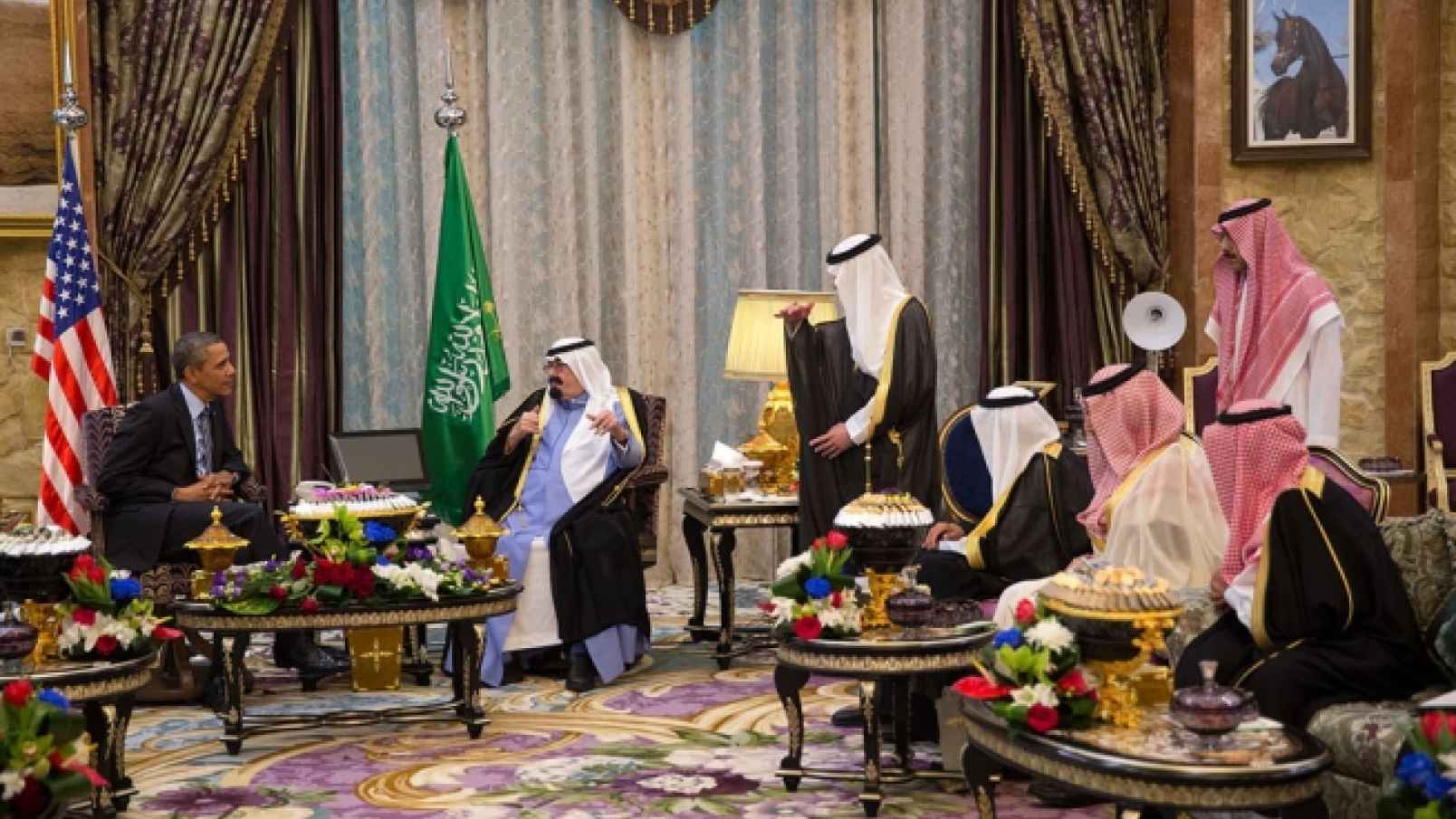
U.S. US Secretary of Defense Ashton Carter meets with Saudi Arabia's King Salman bin Abdul-Aziz Al Saud (R) at Al-Salam Palace in Jeddah, Saudi Arabia, July 22, 2015. (photo by REUTERS/Carolyn Kaster) Read more: http://www.al-monitor.com/pulse/originals/2015/08/saudi-king-washington-visit-iran-deal.html#ixzz3kPeQtHQK width= U.S. Defense Secretary Ash Carter meets with Saudi Arabia’s King Salman bin Abdul Aziz (R) at Al-Salam Palace in Jeddah, Saudi Arabia, Wednesday, July 22, 2015.

King Salman bin Abdul-Aziz Al Saud’s three-day visit, strategically scheduled just days before Congress votes on the agreement, offers the Saudi leader a powerful platform to insist that the United States help combat Iranian “mischief.” The king is seeking assurances in the fight against Iran’s proxies across the region, as well as with elements of the nuclear deal itself.

The visit “underscores the importance of the strategic partnership between the United States and Saudi Arabia,” White House spokesman Josh Earnest said Aug. 27.

“The president and the king will discuss a range of issues and focus on ways to further strengthen the bilateral relationship, including our joint security and counterterrorism efforts,” Earnest said. “They will also discuss regional topics, including the conflicts in Yemen and Syria, and steps to counter Iran’s destabilizing activities in the region.”

Despite deep reservations about the deal, sources close to the Saudi government say that unlike Israel, the kingdom quickly concluded that it could not be defeated in Congress and that no better alternatives were likely to emerge.

Riyadh, however, has repeatedly made clear that its support is conditioned on a tough inspection regime and snapback sanctions. Salman may seek further assurances on those aspects of the deal in light of recent reports that allege that Iran will be allowed an unusual amount of autonomy with regard to inspections of its military installation at Parchin.

“The agreement must include a specific, strict and sustainable inspection regime of all Iranian sites, including military sites, as well as a mechanism to swiftly re-impose effective sanctions in the event that Iran violates the agreement,” the Saudi Embassy in Washington said after the deal was announced.

Most of the discussion is expected to center on non-nuclear issues, however.

Salman and President Barack Obama, who will meet Sept. 4 at the White House, are expected to further flesh out Washington’s promise of increased military support for the Gulf Cooperation Council countries — including a potential missile defense shield — as discussed during the US-GCC Camp David summit in May. That meeting, which was skipped by four of the top six regional leaders — including Salman — aimed to reassure the Gulf nations of America’s commitment to their security amid the perceived rapprochement with Iran.

“This is an opportunity to reset this relationship when there are some pretty considerable concerns on both sides,” said David Weinberg, a Gulf analyst with the Foundation for Defense of Democracies. “It comes in the context of the United States trying to reassure the Gulf states about the Iran deal, as well as to focus on this Camp David agenda in terms of concrete US security assistance. It’s reasonable to assume that that’s going to be a big focus of the trip as well.”

Much of the conversation is expected to focus on military hardware: The Saudis are seeking upgrades to their F-15s along with other advanced weaponry, but Israel is said to have raised concerns during Defense Secretary Ashton Carter’s recent visit to the region. Congress may object to such sales if lawmakers deem that they would undermine Israel’s so-called qualitative military edge.

The Saudis will be interested “in how much the White House will invest itself so that it can get the technology that it wants,” former Obama National Security Council Middle East adviser Prem Kumar told Al-Monitor. They will want to see if the White House “will spend some political capital on the Hill.”

Another topic of interest is the proposed creation of a GCC-wide “rapid reaction force” to take on external threats. The White House paid lip service to the idea in its joint statement from the Camp David summit, but the idea has failed to gain traction among concerns by Qatar and Oman that it would be dominated by the Saudis.

“In terms of GCC-wide reassurance, the Saudis are interested to hear what the US is prepared to do to support the GCC rapid reaction force, the joint Arab defense force, if that is going to materialize,” Kumar said.

Beyond military requests, Salman is likely to seek US backing for his more muscular approach to foreign policy compared with his predecessor. That includes beefed-up US support for his campaign against the Houthis in Yemen and a renewed focus on getting rid of President Bashar al-Assad in Syria.

For Riyadh, said former Saudi Embassy political analyst Fahad Nazer, a nuclear Iran “is more of a long-term issue. They’re concerned about the here-and-now.”

“The Saudis at this point have kind of parted ways with their traditional behind-the-scenes diplomacy and trying to mediate between warring factions,” Nazer said. “[They’ve realized] it’s time for them to take the helm of ensuring their own interests.”

In Yemen, “The Saudis want the US to get more involved, beyond intelligence and logistical support to the Saudi-led coalition,” said Kumar, now vice president with the Albright Stonebridge Group. Already, the Pentagon in recent weeks has more than doubled its advisers on the ground providing targeting intelligence for airstrikes and helping the Saudis roll back the Houthis, according to the Los Angeles Times.

Those battlefield successes have led some Saudi cheerleaders to argue that the intervention in Yemen offers a “template” for similarly emboldened leadership in Syria. While Nazer and others doubt Riyadh will go that far, the Saudis have recently announced their own proposal to withdraw support for Sunni rebels if Iran removes its forces and Hezbollah fighters with a view to parliamentary and presidential elections under UN supervision.

“I think there are a couple concrete things” on the Saudi wish list, Kumar said. “First is to increase support for the Syrian opposition, in some form or other. Safe zones, maybe direct pressure on the [Assad] regime, that would not necessarily undercut diplomatic initiatives.”

The king’s visit isn’t just about politics, however. He will be accompanied by a large entourage of ministers and business executives, and some of them are expected to stay on after the royal visit.

The US-Saudi Arabian Business Council has announced a daylong investment forum with the ministers of finance as well as commerce and industry.


Egypt sends Assad secret arms aid, including missiles, with Russian funding

August 30, 2015

Egypt sends Assad secret arms aid, including missiles, with Russian funding, DEBKAfile, August 30, 2015

( Given that Egypt is heavily reliant on Saudi funding as well as the absence of any other news source beyond “Debka,” I find this article worthy of a generous helping of salt. – JW )

Egyptain_missile_in_Zabadani_25.8.15

Egyptian President Abdel-Fatteh El-Sisi has begun supplying Bashar Assad with arms, including missiles, after concluding a secret deal with Russian President Vladimir Putin and his consent to pick up the tab, DEBKAfile’s military and intelligence sources reveal. The first batch of short-range Egyptian-made surface missiles has reached the Syrian forces fiercely battling rebels for weeks for the recovery of the strategic town of Zabadani without breaking through (See picture showing missile with Egyptian factory markings.) 

It is not clear if the Egyptian missiles have also been passed to the Hizballah forces fighting with the Syrian army, considering that El-Sisi and Hizballah are at daggers drawn.

Our sources also reveal that the Egyptian arms consignments are freighted from Port Said to the Syrian port of Tartus by Ukrainian cargo vessels. These ships are today the most popular means of transport for clandestine and Black Market arms freights across the Mediterranean and Adriatic Seas.

Sums and quantities are yet to be determined, but Western intelligence sources report that Ukrainian vessels called in at Egyptian ports at least three times from July 22 to Aug. 22 and sailed off to Syria laden with weapons.

It is a deal that may affect the fate of the Assad regime from five, often conflicting, perspectives:

1. By providing Assad with an additional source of weapons, Cairo is reducing his dependence on Iran. This suits the Syrian ruler very well at this time, because he is fully aware of Tehran’s latest steps to draw Gulf rulers and Moscow into supporting a plan for ending the Syrian war, by installing a provisional government in Damascus and so easing his exit.

2. A certain parting-of-the ways has developed between Moscow and Tehran on how to terminate the Syrian conflict. By sending Assad arms, Cairo  casts its vote for Moscow’s perspective in preference to Tehran’s.

3. El-Sisi is now diametrically opposed on Syrian policy to the GCC led by Saudi Arabia and the United Arab Emirates who are patrons of the rebel movement dedicated to toppling Assad.

4. He is also on the opposite side to Israel and Turkey. Israel backs the rebels fighting in southern Syria to create a barrier against the encroachment of Hizballah and Iranian Al Qods Brigades up to its northern border and the Golan. Turkey and the US have reached terms on Syrian policy. Saturday, Aug. 30, Turkish jets carried out their first air strikes in Syria against the Islamic State, as part of its deal with the US.

5. The Russian-Egyptian understanding on the Syrian question is a signpost that clearly marks the way to deepening military and strategic relations between Moscow and Cairo.

Taking the lead on a resolution of the Syrian question, the Kremlin staged a discussion last Tuesday, Aug. 18, with three Arab visitors: Jordan’s King Abdullah, UAE Crown Prince Sheikh Mohamed bin Zayed Al Nahyan and the Egyptian president. It was led by Mikhail Bogdanov, Deputy Foreign Minister in charge of Middle East Affairs, and followed by individual tête-à-têtes between Putin and each visitor in turn.

The Russian and Egyptian leaders did their best, according to DEBKAfile’s Moscow sources, to draw the Jordanian and UA rulers over to their pro-Assad policy, or at least accept common ground for a measure of cooperation. In effect, Putin and El-Sisi were out to convince Jordan and the US to back away from the Syrian rebel cause and the Saudi line. Their future actions may indicate how far they succeeded.