H/t Joopklepzeiker
H/t Joopklepzeiker
The irrelevance of Congress, Power Line,
The gambit undermines the Corker bill – to say nothing of American sovereignty – on multiple levels. On a policy level, the UNSCR on its own would compel American action even if Congress rejects the Iran deal. On a political level, the administration intends to take the UNSCR and go to lawmakers while they’re considering the deal and say ‘you can’t reject the agreement because it would put America in violation of international law.’
*********************
Omri Ceren writes to elucidate the unfolding process in the Iran deal brought to us by President Obama. Omni’s message explores the issue I noted yesterday here. This is important. Omni writes:
Lead negotiator Wendy Sherman confirmed for journalists yesterday that the Obama administration will, over the next few days, pursue a binding United Nations Security Council resolution (UNSCR) that will lift sanctions on Iran. The resolution was circulated yesterday by the U.S. and a leaked text is already online [1]. When asked how the move could be reconciled with the 60-day Congressional review period mandated by the Corker legislation, Sherman sarcastically responded that you can’t really say “well excuse me, the world, you should wait for the United States Congress” because there has to be some way for “the international community to speak.” [2]. She noted that at least the UNSCR would have a 90 day interim period before its mandatory obligations kick in.
The gambit undermines the Corker bill – to say nothing of American sovereignty – on multiple levels. On a policy level, the UNSCR on its own would compel American action even if Congress rejects the Iran deal. On a political level, the administration intends to take the UNSCR and go to lawmakers while they’re considering the deal and say ‘you can’t reject the agreement because it would put America in violation of international law.’
The pushback from the Hill yesterday was immediate and furious. Corker: “an affront to the American people… an affront to Congress and the House of Representatives” [3]. Cardin: “it would be better not to have action on the U.N. resolution” [4]. Cruz: “our Administration intended all along to circumvent this domestic review by moving the agreement to the UN Security Council before the mandatory 60-day review period ends” [5]. Kirk: “a breathtaking assault on American sovereignty and Congressional prerogative” [6]. McCarthy: “violates the spirit of the Iran Nuclear Agreement Review Act of 2015, which the President signed into law… inconceivable – yet sadly not surprising” [7].
The Washington Post article [by Karen DeYoung here covers some of those statements and has a bunch of background. The story will develop throughout the day and through the beginning of next week. It’s going to be particularly brutal given that the Corker legislation was created and passed to stop exactly this scenario.
Remember how we got here. The March 9 Cotton letter, signed by 47 Senators, declared that without Congressional buy-in any deal with Iran would not be binding on future presidents [8]. Iranian FM Zarif responded with a temper tantrum in which he revealed that the parties intended to fast-track an UNSCR that would make Congress irrelevant and tie the hands of future presidents: “I wish to enlighten the authors that if the next administration revokes any agreement with the stroke of a pen, as they boast, it will have simply committed a blatant violation of international law”[9]. That created a firestorm of criticism from the Hill [10]. Zarif doubled down from the stage at NYU: “within a few days after [an agreement] we will have a resolution in the security council … which will be mandatory for all member states, whether Senator Cotton likes it or not” [11].
And so Congress responded with the Corker legislation. 98 Senators and 400 Representatives passed the bill with the intention of preventing the Obama administration from immediately going to the U.N. after an agreement and making good on Zarif’s boast. President Obama signed the bill. Now the administration is doing exactly what the legislation was designed to prohibit.
______________________
[1] http://www.scribd.com/doc/271711382/Iran-Deal-Draft-UNSC-Resolution-as-Uploaded-by-Inner-City-Press#scribd
[2] http://www.c-span.org/video/?327147-1/state-department-briefing
[3] http://www.cbsnews.com/news/biden-woos-hill-democrats-on-iran-nuclear-deal/
[4] http://thehill.com/homenews/senate/248228-senators-balk-at-un-action-on-iran
[5] http://www.cruz.senate.gov/files/documents/Letters/20150716_LettertoPOTUSonIranDeal.pdf
[6] http://www.kirk.senate.gov/?p=press_release&id=1474
[7] http://www.majorityleader.gov/2015/07/16/un-not-consider-iran-deal-congress/
[8] http://www.cotton.senate.gov/content/cotton-and-46-fellow-senators-send-open-letter-leaders-islamic-republic-iran
[9] http://www.npr.org/sections/thetwo-way/2015/03/10/392067866/iran-calls-gop-letter-propaganda-ploy-offers-to-enlighten-authors
[10] http://www.thedailybeast.com/articles/2015/03/12/gop-goes-ballistic-over-plan-to-take-the-iran-nuke-deal-to-the-u-n.html
[11] http://freebeacon.com/national-security/zarif-a-few-days-after-deal-un-will-drop-all-sanctions-whether-sen-cotton-likes-it-or-not/
NOTE: Noah Rothman has more here.
Read Chattanooga Shooter’s Blog, Daily Beast, Katie Zavadski, July 16, 2015
(Nothing to do with the Islam with which “we” are not at war? — DM)
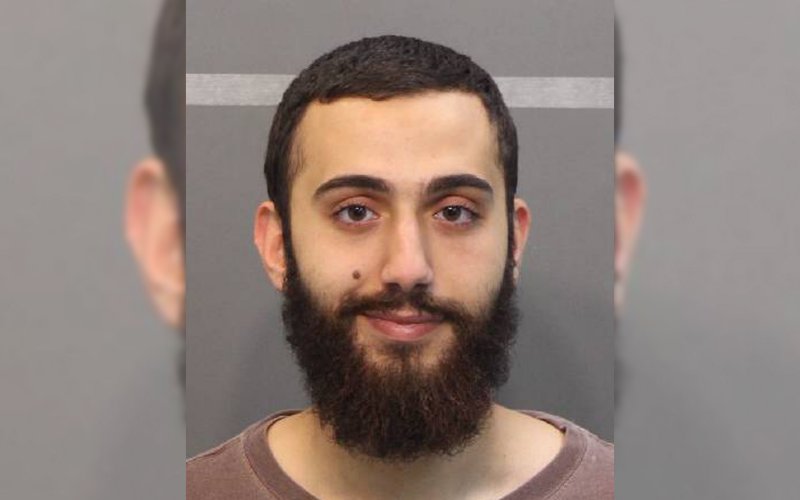 Handout
“We ask Allah to make us follow their path,” Abdulazeez wrote. “To give us a complete understanding of the message of Islam, and the strength the live by this knowledge, and to know what role we need to play to establish Islam in the world.”
***********************
The killer of four U.S. Marines in Chattanooga maintained a short-lived blog that hinted at his religious inner life. Mohammad Youssef Abdulazeez’s blog had only two posts, both published July 13 and written in a popular style of Islamic religious reasoning.
The first post was entitled “A Prison Called Dunya,” referring to the temporal world. In it, Abdulazeez uses the hypothetical example of a prisoner who is told he would be given a test that would either take him out of his earthly prison—or send him into a more restrictive environment.
“I would imagine that any sane person would devote their time to mastering the information on the study guide and stay patient with their studies, only giving time for the other things around to keep themselves focused on passing the exam,” Abdulazeez wrote. “They would do this because they know and have been told that they will be rewarded with pleasures that they have never seen.”
This life is that test, he wrote, “designed to separate the inhabitants of Paradise from the inhabitants of Hellfire.”
The second post is called “Understanding Islam: The Story of the Three Blind Men.” It suggests Abdulazeez felt his fellow Muslims had a “certain understanding of Islam and keep a tunnel vision of what we think Islam is.”
He uses the example of blind men who feel an elephant but can’t quite tell what the creature is. He says Muslims have a similar understanding of the earliest companions of the Prophet Muhammad. That they were “like priests living in monasteries is not true,” he says; rather they were “toward the end of the lives were either a mayor of a town, governor of a state, or leader of an army at the frontlines.”
“We ask Allah to make us follow their path,” Abdulazeez wrote. “To give us a complete understanding of the message of Islam, and the strength the live by this knowledge, and to know what role we need to play to establish Islam in the world.”
Exclusive Interview – Former Israeli Ambassador Michael Oren, Blackfive, July 16, 2015
Why do some in the press want to discredit Oren’s roots? Possibly because the Ambassador is publicly warning that the Obama Administration is setting a dangerous precedent concerning the Iranian nuclear deal. As Daniel Silva profoundly wrote in his latest book, The English Spy, “Now the president’s confronted with a world gone mad, and he doesn’t have a clue as to what to do about it.”
***************************
The following interview and book review is a special for BlackFive readers provided by Elise Cooper. You can read all of our book reviews and author interviews by clicking on the Books category on the right side bar.
Former Israeli Ambassador Michael Oren’s latest book Ally is a riveting description of the relationship between Israel and the United States. Readers get a behind the scenes look at how the Obama Administration has a one sided point of view. Through his numerous notes and direct insight he tells of the struggles Israel has had with the Obama Administration, especially regarding the Iranian nuclear deal. He warns that Israel is in existential danger, that his only agenda is a reality check regarding this administration’s policies toward Israel. Blackfive.net interviewed him about his book and the Iranian nuclear deal.
He gave an exclusive to Blackfive.net, stating that he only tells those people “who come to work with me about this clip. I ask them to watch it so that they will understand me.” The clip (https://www.youtube.com/watch?v=ImtrifoxW4c) is about the Battle of the Bulge with interviews from participants including Oren’s father, Lester Bornstein, a US Army Corps Engineer whose duty was to clear roads and build bridges during World War II. Yet, in the Ardennes Forest in France on December 16, 1944, Lester along with his friend Jimmy Hill became infantrymen to help fend off the German advance, which had taken the American military off guard. He and his friend bravely disabled the first German tank in line, forcing a halt in the advance.
Oren, born in America, feels a kinship with America’s culture, principles, and spirit. He remembers his father telling the family war stories and during his first combat mission in the war, Operation Peace for the Galilee, thought of his father’s experience, wondering “how I would conduct myself under fire.”
Throughout the book Oren emphasizes the closeness he feels with both America and Israel. Yet, some in the media like Newsweek’s Jonathan Broder attempt to discredit him by writing, “The American-born Oren, who renounced his U.S. citizenship and now serves as a lawmaker in Netanyahu’s right-wing coalition, transforms from a measured historian into a breathless polemicist.” This is anything but the truth. Oren noted, “By Federal law any American who officially served a foreign county had to renounce their US Citizenship. My loyalties to the United States and the Jewish State are mutually validating.”
He wrote in the book how his love for America is filled with gratitude. “From the time that all four of my grandparents arrived on Ellis Island, through the Great Depression, in which they raised my parents, and the farm-bound community in which I grew up, America held out the chance to excel. True, prejudice was prevalent, but so, too, was our ability to fight it. Unreservedly, I referred to Americans as ‘we.’ The United States and Israel, are both democracies, both freedom-loving, and similarly determined to defend their independence. One could be — in fact, should be — a Zionist as well as a patriotic American, because the two countries stood for identical ideals.” Except now Israel is being thrown under the bus with the Iranian nuclear deal.
Why do some in the press want to discredit Oren’s roots? Possibly because the Ambassador is publicly warning that the Obama Administration is setting a dangerous precedent concerning the Iranian nuclear deal. As Daniel Silva profoundly wrote in his latest book, The English Spy, “Now the president’s confronted with a world gone mad, and he doesn’t have a clue as to what to do about it.”
Oren noted to blackfive.net about another irrational period in history and compared it to the current situation; “Lets remember one infamous example, when the Nazis pursued their insane ends. Even during the last days of World War II, as the Allied armies liberated Europe, they diverted precious military resources to exterminating Jews. The Israeli position is that this Iranian regime is irrational. Unlike Israel, which is in Iran’s backyard, the US is not threatened by the proximity of national annihilation. This is about our survival as a people. It’s about our children and grandchildren. What may look like an academic debate here in America is for us in Israel a matter of life and death.”
Asked if he agrees with the quote from former CIA Director Michael Hayden, who said of Iran, “the enemy of our enemy is still our enemy,” Oren told blackfive.net, that Americans should not forget that Iran “wants to wipe Israel off the face of the earth, something they have been calling for the last thirty years. Let’s not forget they also attempted to blow up the Israeli Embassy in Washington DC and assassinate the Saudi Ambassador. Iran and its terrorist groups have killed more Americans than any other terrorist group outside of Al Qaeda. This does not even include those in the American military who were killed by Iran during the Iraq War. They are not friends.”
But a true friend, an ally, is defined by Oren as assisting “in saving American lives on and off the battlefield. On an ideological level, an ally is a country that shares America’s values, reflects its founding spirit, and resonates with its people’s beliefs. And an ally stimulates the U.S. economy through trade, technological innovation, and job creation. The two countries I love need to unite on issues vital to both and yet they remain separated ideologically and even strategically. However, on issues of security, anybody in the Israeli military, in the intelligence community, will tell you that security relations between Israel and the United States are better now than probably any other time in the past.”
In the Middle East Israel is America’s staunchest ally. Even though the Obama Administration appears not to recognize this, Americans do. A recent Gallup Poll shows that two out of three Americans sympathize with Israel, with support for Israel in the United States rising, not declining.
Ambassador Oren wrote this book, Ally, to send a clear message, “A friend who stands by his friends on some issues but not others is, in Middle Eastern eyes, not really a friend. In a region famous for its unforgiving sun, any daylight is searing.” Ally is a must read, because it alerts people that Israel faces the greatest challenge they have faced since World War II.
Column One: Obama’s age of nuclear chaos, Jerusalem Post, Caroline Glick, July 16, 2015
 Iranian Foreign Minister Mohammad Javad Zarif gestures as he talks with journalist from a balcony of the Palais Coburg hotel where the Iran nuclear talks meetings are being held in Vienna, Austria. (photo credit:REUTERS)
Not only will the US and its allies remove the sanctions imposed on Iran over the past decade and so start the flow of some $150 billion to the ayatollahs’ treasury. They will help Iran develop advanced centrifuges.
They even committed themselves to protecting Iran’s nuclear facilities from attack and sabotage.
Israel still may have the ability to attack Iran’s nuclear sites. If it does, then it should attack them as quickly and effectively as possible.
*********************
On Tuesday, we moved into a new nuclear age.
In the old nuclear age, the US-led West had a system for preventing the proliferation of nuclear weapons. It had three components: sanctions, deterrence and military force. In recent years we have witnessed the successful deployment of all three.
In the aftermath of the 1991 Gulf War, the UN Security Council imposed a harsh sanctions regime on Iraq. One of its purposes was to prevent Iraq from developing nuclear weapons. After the US-led invasion of Iraq in 2003, we learned that the sanctions had been successful. Saddam largely abandoned his nuclear program due to sanctions pressure.
The US-led invasion of Iraq terrified several rogue regimes in the region. In the two to three years immediately following the invasion, America’s deterrent strength soared to unprecedented heights.
As for military force, the nuclear installation that Syrian dictator Bashar Assad built in Deir a-Zour with Iranian money and North Korean technicians wasn’t destroyed through sanctions or deterrence. According to foreign media reports, in September 2007, Israel concluded that these paths to preventing nuclear proliferation to Syria would be unsuccessful.
So then-prime minister Ehud Olmert ordered the IDF to destroy it. The outbreak of the Syrian civil war three years later has prevented Assad and his Iranian bosses from reinstating the program, to date.
The old nuclear nonproliferation regime was highly flawed.
Pakistan and North Korea exploited the post-Cold War weaknesses of its sanctions and deterrence components to develop and proliferate nuclear weapons and technologies.
Due to American weakness, neither paid a serious price for its actions.
Yet, for all its flaws and leaks, the damage caused to the nonproliferation system by American weakness toward Pakistan and North Korea is small potatoes in comparison to the destruction that Tuesday’s deal with Iran has wrought.
That deal doesn’t merely show that the US is unwilling to exact a price from states that illicitly develop nuclear weapons. The US and its allies just concluded a deal that requires them to facilitate Iran’s nuclear efforts.
Not only will the US and its allies remove the sanctions imposed on Iran over the past decade and so start the flow of some $150 billion to the ayatollahs’ treasury. They will help Iran develop advanced centrifuges.
They even committed themselves to protecting Iran’s nuclear facilities from attack and sabotage.
Under the deal, in five years, Iran will have unlimited access to the international conventional arms market. In eight years, Iran will be able to purchase and develop whatever missile systems it desires.
And in 10 years, most of the limitations on its nuclear program will be removed.
Because the deal permits Iran to develop advanced centrifuges, when the agreement ends in 10 years, Iran will be positioned to develop nuclear weapons immediately.
In other words, if Iran abides by the agreement, or isn’t punished for cheating on it, in 10 years, the greatest state sponsor of terrorism in the world will be rich, in possession of a modernized military, a ballistic missile arsenal capable of carrying nuclear warheads to any spot on earth, and the nuclear warheads themselves.
Facing this new nuclear reality, the states of the region, including Jordan, Egypt, Saudi Arabia, Turkey and perhaps the emirates, will likely begin to develop nuclear arsenals. ISIS will likely use the remnants of the Iraqi and Syrian programs to build its own nuclear program.
Right now, chances are small that Congress will torpedo Barack Obama’s deal. Obama and his backers plan to spend huge sums to block Republican efforts to convince 13 Democratic senators and 43 Democratic congressmen to vote against the deal and so achieve the requisite two-thirds majority to cancel American participation in the deal.
Despite the slim chances, opponents of the deal, including Israel, must do everything they can to convince the Democrats to vote against it in September. If Congress votes down the deal, the nuclear chaos Obama unleashed on Tuesday can be more easily reduced by his successor in the White House.
If Congress rejects the deal, then US sanctions against Iran will remain in force. Although most of the money that will flow to Iran as a result of the deal is now frozen due to multilateral sanctions, and so will be transferred to Iran regardless of congressional action, retaining US sanctions will make it easier politically and bureaucratically for Obama’s replacement to take the necessary steps to dismantle the deal.
Just as the money will flow to Iran regardless of Congress’s vote, so Iran’s path to the bomb is paved regardless of what Congress does.
Under one scenario, if Congress rejects the deal, Iran will walk away from it and intensify its nuclear activities in order to become a nuclear threshold state as quickly as possible. Since the deal has destroyed any potential international coalition against Iran’s illegal program, no one will bat a lash.
Obama will be deeply bitter if Congress rejects his “historic achievement.” He can be expected to do as little as possible to enforce the US sanctions regime against his Iranian comrades. Certainly he will take no military action against Iran’s nuclear program.
As a consequence, regardless of congressional action, Iran knows that it has a free hand to develop nuclear weapons at least until the next president is inaugurated on January 20, 2017.
The other possible outcome of a congressional rejection of the deal is that Iran will stay in the deal and the US will be the odd man out.
In a bid to tie the hands of her boss’s successor and render Congress powerless to curb his actions, the day before the deal was concluded, Obama’s UN Ambassador Samantha Power circulated a binding draft resolution to Security Council members that would prohibit member nations from taking action to harm the agreement.
If the resolution passes – and it is impossible to imagine it failing to pass – then Iran can stay in the deal, develop the bomb with international support and the US will be found in breach of a binding UN Security Council resolution.
Given that under all scenarios, Tuesday’s deal ensures that Iran will become a threshold nuclear power, it must be assumed that Iran’s neighbors will now seek their own nuclear options.
Moreover, in light of Obama’s end-run around the Congress, it is clear that regardless of congressional action, the deal has already ruined the 70-year old nonproliferation system that prevented nuclear chaos and war.
After all, now that the US has capitulated to Iran, its avowed foe and the greatest state sponsor of terrorism, who will take future American calls for sanctions against nuclear proliferators seriously? Who will be deterred by American threats that “all options are on the table” when the US has agreed to protect Iran’s nuclear installations and develop advanced centrifuges for the same ayatollahs who daily chant, “Death to America”? For Israel, the destruction of the West’s nonproliferation regime means that from here on out, we will be living in a region buzzing with nuclear activity. Until Tuesday, Israel relied on the West to deter most of its neighbors from developing nuclear weapons. And when the West failed, Israel dealt with the situation by sending in the air force. Now, on the one hand Israel has no West to rely on for sanctions or deterrence, and on the other hand, it has limited or no military options of its own against many of the actors that will now seek to develop nuclear arsenals.
Consider Israel’s situation. How could Israel take action against an Egyptian or Jordanian nuclear reactor, for instance? Both neighboring states are working with Israel to defeat jihadist forces threatening them all. And that cooperation extends to other common threats. Given these close and constructive ties, it’s hard to see how Israel could contemplate attacking them.
But on the other hand, the regimes in Amman and Cairo are under unprecedented threat.
In theory they can be toppled at any moment by jihadist forces, from the Muslim Brotherhood to ISIS. It’s already happened once in Egypt.
The same considerations apply to Saudi Arabia.
As for Turkey, its NATO membership means that if Israel were to attack Turkish nuclear sites, it would run the risk of placing itself at war not only with Turkey, but with NATO.
Given Israel’s limited military options, we will soon find ourselves living under constant nuclear threat. Under these new circumstances, Israel must invest every possible effort in developing and deploying active nuclear defenses.
One key aspect to this is missile defense systems, which Israel is already developing.
But nuclear bombs can be launched in any number of ways.
Old fashioned bombs dropped from airplanes are one option.
Artillery is another. Even suicide trucks are good for the job.
Israel needs to develop the means to defend itself against all of these delivery mechanisms. At the same time, we will need to operate in hostile countries such as Lebanon, Syria and elsewhere to destroy deliveries of nuclear materiel whether transferred by air, sea or land.
Here is the place to mention that Israel still may have the ability to attack Iran’s nuclear sites. If it does, then it should attack them as quickly and effectively as possible.
No, a successful Israeli attack cannot turn back the clock. Israel cannot replace the US as a regional superpower, dictating policy to our neighbors. But a successful attack on Iran’s nuclear program along with the adoption of a vigilantly upheld strategy of active nuclear defense can form the basis of a successful Israeli nuclear defense system.
And no, Israel shouldn’t be overly concerned with how Obama will respond to such actions.
Just as Obama’s nuclear capitulation to Iran has destroyed his influence among our Arab neighbors, so his ability to force Israel to sit on the sidelines as he gives Iran a nuclear arsenal is severely constrained.
How will he punish Israel for defying him? By signing a nuclear deal with Iran that destroys 70 years of US nonproliferation strategy, allows the Iranian regime to grow rich on sanctions relief, become a regional hegemon while expanding its support for terrorism and develop nuclear weapons? Years from now, perhaps historians will point out the irony that Obama, who loudly proclaims his goal of making the world free of nuclear weapons, has ushered in an era of mass nuclear proliferation and chaos.
Israel can ill afford the luxury of pondering irony.
One day the nuclear Furies Obama has unleashed may find their way to New York City.
But their path to America runs through Israel. We need to ready ourselves to destroy them before they cross our border.
The President Holds a Press Conference on the Nuclear Deal with Iran, The White House, July 15, 2015
(Iran’s centrifuges continue to spin and so does Obama. — DM)
The Deal Wasn’t About Iran’s Nukes, Commentary Magazine, Abe Greenwald, July 15, 2015
If you think the United States just struck a poor nuclear deal with Iran, you’re right; but if that’s your key takeaway, you’re missing the point. Iran’s nuclear program was last on the list of the Obama administration’s priorities in talking to Tehran. The administration readily caved on Iran’s nukes because it viewed the matter only as a timely pretense for achieving other cherished aims. These were: (1) preventing an Israeli attack on Iran; (2) transforming the United States into a more forgiving, less imposing power; (3) establishing diplomacy as a great American good in itself; (4) making Iran into a great regional power; and (5), ensuring the legacies of the president and secretary of state as men of vision and peace.
The administration has always viewed Israel as an intractable troublemaker and the main catalyst for the region’s woes. An Israeli strike on Iran, especially if supported by the United States, would have been yet another display of destabilizing Israeli aggression that put Middle East peace further out of reach. Barack Obama, therefore, repeatedly warned Israel against attacking Iran. Benjamin Netanyahu complied, and for his compliance White House officials taunted him in 2014 as a “chickenshit” whose window of opportunity had closed. That window is now barred. The Iran deal states that the U.S. will train Iranians to counter any sabotage attempts on its nuclear facilities and systems. This is aimed at frustrating Israeli action.
Obama came to office promising to limit American action as well. In his standard progressive view, the United States has been too eager to throw its weight around and impose its norms on other countries without giving sufficient thought to the resentment it might sow. He ended the war in Iraq and sought to remake the United States as a humble power. “Too often the United States starts by dictating,” he told a Saudi news outlet soon after being elected. He, by contrast, would do a lot of “listening.” The Iran negotiations became Obama’s magnum opus on the theme of listening. Americans listened to Iranians dictate terms, shoot down offers, insult the United States, and threaten allies. America has been humbled indeed.
But such humility is necessary if diplomacy is to be made into a nation-defining ethos. And if we could successfully negotiate with theocratic Iran, then surely Americans would see that diplomacy could conquer all. So, for the sake of proving this abstract principle, Obama foreclosed any non-diplomatic approach to Iran before a deal was reached. As he told Tom Friedman in April, “there is no formula, there is no option, to prevent Iran from getting a nuclear weapon that will be more effective than the diplomatic initiative and framework that we put forward — and that’s demonstrable.” So declared, so demonstrated.
Like the preeminence of diplomacy, the notion of Iran’s potential as a levelheaded regional power was a treasured abstract principle Obama hoped to substantiate through the nuclear talks. Once again, first came the declaration. Last December Obama speculated on the outcome of a completed nuclear deal: “There’s incredible talent and resources and sophistication inside of Iran, and it would be a very successful regional power that was also abiding by international norms and international rules, and that would be good for everybody.”
If Iran’s fanatical anti-Semitism called this sanguine view into question, that too could be explained. “Well the fact that you are anti-Semitic, or racist, doesn’t preclude you from being interested in survival,” he told the Atlantic’s Jeffrey Goldberg. “It doesn’t preclude you from being rational about the need to keep your economy afloat; it doesn’t preclude you from making strategic decisions about how you stay in power; and so the fact that the supreme leader is anti-Semitic doesn’t mean that this overrides all of his other considerations.” That the United States and Iran have now come to an agreement—whatever the details—is supposed to demonstrate the soundness of that principle.
As far as legacy, what politician doesn’t want one? For Obama, a nominal nuclear deal may make him feel as if he’s earned the Nobel Prize once furnished him as election swag. John Kerry’s own efforts to earn a Nobel by brokering Middle East peace became another footnote in the story of Palestinian obstinacy. He too had something to prove.
From the administration’s standpoint, the deal was a grand slam. If it left Iran as an official nuclear power on the perpetual verge of a breakout, well, that was always the bargaining chip to get everything else. And with the United States having shown extraordinary cooperation and forgiveness, the thinking goes, even a nuclear Iran will become a less bellicose and more collegial member of the community of nations. What good the deal has already done, the administration believes, will continue to pay dividends. As is his wont, Obama is now declaring as much. But by the time his vision is upended by facts, he’ll be out of office, and we won’t have the luxury of fighting reality with abstractions.
Kerry: Iranian Access to Billions Won’t Affect World Terror, Clarion Project, July 16, 2015
 U.S. Secretary of State John Kerry (L) speaks to Iranian Foreign Minister Mohammad Javad Zarif (R) while (Photo: © Reuters) before the announcement of the nuclear deal in Vienna. Hossein Fereydoun (C), the brother of Iranian President Hassan Rouhani listens.
In its most recent report, the State Department wrote, “Iran has provided hundreds of millions of dollars in support of Lebanese Hezbollah in Lebanon and has trained thousands of its fighters at camps in Iran.”
In 2010 alone, State reported “Iran provides roughly $100-$200 million per year in funding to support Hezbollah.”
*********************
U.S. Secretary of State John Kerry dismissed concerns that Iran will use its newly found billions of dollars in sanctions relief to ramp up its support for international terrorism.
Speaking to the BBC after the nuclear agreement between Iran and six world powers was reached, Kerry said that the more than $100 billion that Iran is set to receive “is going to make all the difference in the world is just – it’s not true.”
Acknowledging Iran is an international player in wreaking terror across the globe, Kerry said, “What Iran has done for years with Hezbollah does not depend on money.” He similarly stated Iran’s support of the Houthi rebels against the government in Yemen has not “depended on money.”
“Sure, something may go additionally somewhere,” Kerry added. “But if President [Hasan] Rouhani and his administration do not [use the money to] take care of the people of Iran, they will have an enormous problem.”
Earlier this year, White House Press Secretary Josh Earnest admitted the U.S. would have no control over Iran’s use of monies freed by sanctions relief. However, he said it was “common sense” Iran would use the money to pump up its economy that was devastated by the international sanctions and not put the money into terrorism.
Still, Earnest said, “I’m not going to make any predictions about what they are going to do, and I’m certainly not going to be in a position to prescribe what they should do,” he said. “This is a sovereign country that will make their own decisions.”
Kerry contended it was the opinion of the U.S. intelligence community that Iranian money “that finds its way somewhere, is not the difference in what is happening in the Middle East.”
However, many contend that Kerry’s prognosis is not rooted in fact. Up until the 9/11 attack on the U.S. by Al Qaeda, the State Department reported Hezbollah was “responsible for more American deaths than any other terrorist group.”
In its most recent report, the State Department wrote, “Iran has provided hundreds of millions of dollars in support of Lebanese Hezbollah in Lebanon and has trained thousands of its fighters at camps in Iran.”
In 2010 alone, State reported “Iran provides roughly $100-$200 million per year in funding to support Hezbollah.”
Efforts by Republicans in Congress to make the current deal contingent on Iran removing its support for terrorism failed earlier this year when U.S. President Barack Obama said he would veto any such legislation.
Meanwhile, Prince Bandar bin Sultan, the former head of the Saudi Arabian intelligence services and the kingdom’s ambassador to the U.S. in Washington, said the current deal will result in Iran acquiring a nuclear weapon and “wreak havoc in the region.”
He also contended America’s traditional allies in the Arab world are now distrustful of the U.S. and looking elsewhere to make alliances. Writing in The Daily Star, a Lebanese newspaper, bin Sultan commented, “People in my region now are relying on God’s will and consolidating their local capabilities and analysis with everybody else except our oldest and most powerful ally.”
Currently, Hezbollah is backing troops loyal to beleaguered Syrian President Bashar Al-Assad who have been trying to recapture the city of Zabadani, located in a hilly region in southwestern Syria.




 anneinpt
 artaxes
 danmillerinpanama
 davidking1530
 Peter Hofman
 Joseph Wouk
 Peter
Peter Louisiana Steve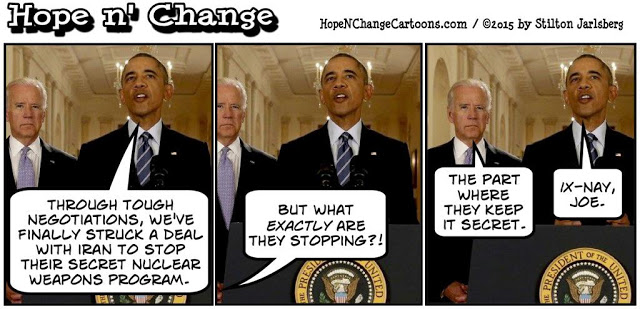
 WarSclerotic
Recent Comments