Archive for the ‘Netanyahu’ category

Obama’s Unraveling Foreign Policy

March 20, 2015

Obama’s Unraveling Foreign Policy, Front Page Magazine, March 20, 2015

Obama-facepalm-485x350-450x325

Secretary of State John Kerry has long been an admirer of Bashar Assad. He absurdly characterized Assad as “a man who wants change” and advocated the return of Israel’s strategic Golan Heights to the Syrian dictator. Of course, had Israel heeded Kerry’s advice, ISIS, Hezbollah or Iran or perhaps all three would today be swimming in Israel’s Sea of Galilee.  In February 2009, in a sickening display of corrupt morals or lack of scruples, or perhaps both, Kerry was photographed having an intimate dinner with Assad and his wife. In 2011, the year that Assad commenced genocide against his people, he described the autocrat as a “very generous” man.

Kerry hasn’t lost a step since that time. His assessment of regional threats continues to be marred by poor judgment and delusion. On Face the Nation Kerry stated that “we have to negotiate with [Assad].” His State Department quickly backpedaled and tried to clean up the mess by issuing a nonsensical clarification but the very fact that such a statement would be uttered speaks volumes of Kerry’s abject lack of understanding. Imagine if a leader of the Allied command had issued a proclamation of willingness to negotiate with Hitler during World War II. Such a scenario of course would have been unthinkable but in the Obama White House, appeasement and vacillation rule the day.

If that wasn’t bad enough, Kerry astounded analysts when he announced that he had “great respect – great respect – for the religious importance of a fatwa.” The alleged fatwa that he was referencing was purportedly issued by Iran’s “Supreme Leader,” Ayatollah Khamenei, opposing acquisition of nuclear weapons. Kerry has now officially incorporated Islamic fatwas into US foreign policy and is relying on the edicts of a medieval mullah as a cornerstone of his ongoing talks with the Islamic Republic.

Moreover, in an effort to appease the mullahs, the Director of National Intelligence, James Clapper, recently issued a report to the Senate which removed Iran and Hezbollah from its list of terrorism threats. Iran is the world’s premier state sponsor of terrorism and employs proxy militias such as Hezbollah to foment regional instability and expand its hegemony. It has either directly or indirectly through its proxies, committed acts of terrorism on five continents. Yet the report is inexplicably devoid of such references. The only logical conclusion that one can draw is that the administration fears alienating Iran during the nuclear negotiations or alternatively, sees Iran as a positive regional force and a potential ally. Either conclusion is frighteningly surreal and demonstrates with utmost clarity how far removed from reality this administration has become.

But while coddling the mullahs, the administration has been busy at work trying to undermine the region’s only democratic leader. A number of high-level Obama campaign operatives worked relentlessly with a left-wing organization called One Voice and its left-wing Israeli affiliate V-15, to unseat Prime Minister Benjamin Netanyahu. One Voice was also the recipient of a State Department grant of $350,000. Though One Voice and the State Department denied that any money was channeled into the campaign, a US Senate panel has commenced an investigation into possible links between the State Department and efforts to meddle in an overseas election campaign of a long-time ally.

Clearly, One Voice is nervous. Shortly after lawmakers began questioning One Voice’s use of State Department funds, the nonprofit organization filed for a new IRS status that would enable it to engage in political activism. Its current status precludes such activity. It would indeed be interesting to see how quickly the IRS moves to grant One Voice’s application given the way the government agency dragged its heels on 501c3 exemptions for groups perceived to be right-wing or pro-Israel. My guess is that the IRS will move rather quickly on this one.

Despite Obama’s best efforts to publicly disparage Netanyahu – who among us can forget “chickensh*tgate” – and the State Department’s covert meddling campaign, Netanyahu secured a clear and decisive victory over his left-wing rivals. Israeli voters, who overwhelmingly distrust Obama, did not take kindly to Obama’s interference and the voting outcome reflected that.

Irrespective of Obama’s personal animus toward Israel’s democratically elected leader, the Israeli-US alliance transcends personality differences and endures because of shared moral values and strategic interests. That used to be the conventional wisdom before Obama’s ascendancy but the president has done all that is within his power to translate his loathing for Netanyahu to wrecking relations with the Jewish State. During Operation Protective Edge, while Hamas was hurling rockets at Israeli civilian population centers, Obama held up shipments of Hellfire missiles to Israel. His Secretary of State in the meantime, was busy adopting the talking points of Israel’s sworn enemies trying to force the Israelis to accept a ceasefire arrangement – unanimously rejected by the Israeli cabinet – that made no mention of Israel’s security concerns.

But the Mideast is not the only place where Obama has fouled things up. In 1994 the United States (along with Great Britain and the Russian Federation) signed a security agreement with Ukraine whereby the signatories would guarantee Ukraine’s territorial sovereignty and Ukraine would in exchange, relinquish its arsenal of nuclear weapons, relics of the Cold War.

The Budapest Memorandum on Security Assurances, as the memorandum of understanding came to be known, proved to be as worthless as the paper it was written on. Russia’s land grab in Crimea as well as its territorial infringements in eastern Ukraine and Obama’s feckless response to this naked aggression has caused great harm to American credibility. The United States still refuses to supply the poorly equipped Ukrainian army with weapons sorely needed to combat a Russian-backed insurgency.

The lack of seriousness in which the administration regards the dire situation in eastern Ukraine was amply demonstrated by National Security Advisor Susan Rice. Appearing on the Charlie Rose show, Rice was asked about military setbacks experienced by Ukrainian forces in the recent fighting. Her response? Uncontrollable laughter as though she was some vapid, giggling high school teen. It was an embarrassing display, even for an Obama official.

We are currently witnessing the unraveling of a pusillanimous American foreign policy marked by vacillation, indecision and naiveté where dictators are coddled and allies are undermined; where sound decisions based on geo-political dictates are substituted by fatwas and other bizarre religious edicts and where discussion on serious foreign policy issues is addressed with laughter and giggles. The Obama administration has substantially undermined the credibility of the United States among friends and enemies alike. The next administration, Democrat or Republican, will be forced to pick up the shattered pieces of a broken, dysfunctional and directionless foreign policy, the sad but natural result of eight years of Obama.

Pres Obama Dismisses Questions About Netanyahu’s Election Win – Cavuto

March 20, 2015

Pres Obama Dismisses Questions About Netanyahu’s Election Win – Cavuto, via You Tube, March 19. 2015


A Statement on the Crisis in the U.S.—Israel Relationship

March 19, 2015

A Statement on the Crisis in the U.S.—Israel Relationship, Commentary Magazine, The Editors, March 19, 2015

(A lengthy but excellent summary, putting the relationship between the U.S. and Israel in perspective. — DM)

After six weeks of madness, Benjamin Netanyahu stood before Congress and delivered a speech about the nuclear threat posed by Iran. It was a terrific speech. It was not a remarkable speech, because nothing the Israeli prime minister said came as news to anyone who has been paying attention to the issue for the past decade.

What made his speech and its occasion of particular note were the atmospherics. It has been years since an address by a politician in the United States had been so hotly anticipated, and it wasn’t even to be delivered by an American. The anticipation was due entirely to Barack Obama’s incendiary response to the speaking invitation extended to Netanyahu in January by the Republican House leader, John Boehner.

The president’s displeasure and rage continued to grow, to the point that a few days before the speech, no less a personage than National Security Adviser Susan Rice said it would be “destructive of the fabric of the relationship” between the United States and Israel. On the day of the speech, the Democratic Middle East operative Martin Indyk declared on CNN that it was “the saddest and most tragic day” for the relationship in all his 35 years as a water-carrier.

In this case, we fear, the wish is father to the threat. Susan Rice and Martin Indyk see the relationship between Israel and the United States on a downward spiral because they and their boss want it so. Obama does not like the special status Israel seems to enjoy in the United States—not only because its particularistic and nationalist claim offends him ideologically, but because Israel’s popularity with the American people limits his freedom of action.

The relationship between the United States and Israel is in jeopardy because, from the moment his administration began, Barack Obama has consciously, deliberately, and with malice aforethought sought to jeopardize it. He did so in part because he is committed to the idea that Israel must retreat to its 1967 borders, dismantle its settlements, and will a Palestinian state into existence. He views Israel’s inability or unwillingness to do these things as a moral stain.

But the depth of Obama’s anger toward Israel and Netanyahu suggests that there is far more to it than that. Israel stands in the way of what the president hopes might be his crowning foreign-policy achievement: a new order in the Middle East represented by a new entente with Iran. Netanyahu’s testimony on behalf of his country and his people is this: A nuclear Iran will possess the means to visit a second Holocaust on the Jews in a single day. His testimony on behalf of everyone else is this: A nuclear Iran will set off an arms race in the Middle East that will threaten world order, the world’s financial stability, and the lives of untold millions. Simply put, Obama finds the witness Israel is bearing to the threat posed by Iran unbearable.

Elliott Abrams has called the speech kerfuffle a “manufactured crisis.” He is right, and the assembly line has been rolling without letup for six years.

Barack Obama came into office determined to put daylight between the United States and Israel. A few months after his inauguration, he met with Jewish leaders to discuss growing concerns about the bilateral relationship. One leader, Malcolm Hoenlein, told the president: “If you want Israel to take risks, then its leaders must know that the United States is right next to them.” Obama responded thus: “Look at the past eight years. During those eight years, there was no space between us and Israel, and what did we get from that? When there is no daylight, Israel just sits on the sidelines, and that erodes our credibility with the Arab states.”

Obama sought to make “daylight” almost immediately by picking fights with the new government of Benjamin Netanyahu, who came into office only weeks after Obama’s inauguration. The administration made no secret of its hopes that Netanyahu’s government would fall and be replaced by the supposedly more pliant opposition leader Tzipi Livni.

While the White House and the State Department have consistently portrayed Netanyahu as a man bent on obstructing Obama’s policies, the record shows otherwise. From the start, Netanyahu has sought to accommodate the Obama administration’s wishes as much as possible without jeopardizing Israel’s security.

In May 2009, Obama met with Netanyahu and told him bluntly that “settlements [on the West Bank] have to be stopped in order for us to move forward.” Israel complied; Netanyahu announced a 10-month settlement freeze, which was supposed to trigger a new round of U.S.-led peace talks. But for nine months Palestinian Authority President Mahmoud Abbas refused all invitations to negotiate. In the 10th month, Abbas sat through exactly two talks before abandoning negotiations once again. Yet Obama offered this assessment in a January 2010 interview with Time: “Although the Israelis, I think, after a lot of time showed a willingness to make some modifications in their policies, they still found it very hard to move with any bold gestures.”

Like all its predecessors, the Obama administration is a stern critic of Israel’s West Bank settlements and sees them as an obstacle to peace. But the administration’s particular obsession was not Jews sitting on remote hilltops or in areas many if not most Israelis saw as expendable—but rather the Jewish presence throughout unified Jerusalem. Though no American government had ever recognized Israeli sovereignty over the capital, the Obama administration was the first to consider normal growth in Jerusalem’s 40-year-old Jewish neighborhoods (in parts of the city that had been illegally occupied by Jordan, from 1949 to 1967) as a deliberate and outrageous provocation.

This came to a head in the spring of 2010 when a routine announcement of a housing project in one of those Jerusalem neighborhoods (which had specifically been exempted from the freeze) coincided with a visit to Israel by Vice President Joe Biden. Netanyahu found himself on the receiving end of a 43-minute telephone tirade from then-Secretary of State Hillary Clinton. She accused Netanyahu of sending a “deeply negative signal” that had “harmed the bilateral relationship.” Such condemnations were repeatedly echoed in the press from multiple administration figures.

The administration clearly hoped its expressions of rage could be leveraged to force Israel to agree to end such construction—and encourage the Palestinians to realize that the United States would back them in negotiations. But rather than isolate Netanyahu, the U.S. attack on Jewish Jerusalem strengthened him, because defending the unity of the city remains one of the few issues on which there is consensus in Israeli politics.

Even as relations continued to deteriorate—Israel’s then-ambassador to the United States, Michael Oren, told a group of Israeli diplomats in 2010 that U.S.–Israel relations were at their lowest point since 1975—Netanyahu moderated construction in settlements. By the first half of 2014, Israel was building at its slowest rate since the 2010 freeze. (Indeed, according to Israeli historian and archivist Yaacov Lozowick, no new settlements have been built since 2003.)

In May 2011, President Obama gave a major address responding to the Arab Spring protests, in which he chose to devote the last third to a plan for a new round of Israeli–Palestinian talks—a non sequitur if ever there has been one. The plan was to set the 1967 lines as the starting point for future negotiations. The speech was timed to be delivered the day before Netanyahu was to arrive in the United States for talks. Obama was attempting to force a fait accompli.

Netanyahu earned applause at home and in the U.S. for pushing back against Obama’s idea, which he rightly saw as an attempt to undermine Israel’s negotiating position. Days later, Netanyahu spoke to a joint session of Congress where both Republicans and Democrats cheered him as if he were the second coming of Winston Churchill, a spectacle that was rightly seen as a rebuke to Obama’s slap at the Israelis. (That episode is crucial to understanding the White House’s bitterness about Netanyahu’s recent speech to Congress.) And like the previous arguments with Israel, this one would yield no benefits to the United States, since not even this tilting of the diplomatic playing field toward the Palestinians would be enough to nudge them to make peace.

The general antipathy toward the Israeli prime minister led Washington Postcolumnist Jackson Diehl to ask, in November 2011, “Why do Sarkozy and Obama hate Netanyahu?” Diehl was writing on the revelation that Obama and then-French President Nicolas Sarkozy had made comments, picked up on a live microphone, about their dislike of the Israeli leader. Diehl pointed out that Obama’s problem with Netanyahu was obviously personal: “Netanyahu has been an occasionally difficult but ultimately cooperative partner. He can be accused of moving too slowly and offering too little, but not of failing to heed American initiatives.”

After this incident, the administration put its campaign against Israel on hold for the duration of the 2012 presidential election campaign. It ceased sparring with Netanyahu and even moved toward Israel on the subject of Iran.

Obama had always stated his opposition to an Iranian bomb, but he had also consistently demonstrated his desire for a rapprochement with Tehran. He was both slow and reluctant to embrace sanctions against the regime. Throughout this period, the administration seemed more anxious about preventing an Israeli strike against Iran’s nuclear facilities than it was about the nuclear threat itself. But in 2012, the president told the American Israel Public Affairs Committee that he would never be willing to merely “contain” a nuclear Iran. And during his foreign-policy debate with Mitt Romney, he pledged that any possible deal with Iran would require it to give up its nuclear program.

Once reelected, Obama reverted. He unleashed John Kerry, his new secretary of state, to pursue yet another futile quest for peace with the Palestinians. Despite

successful American pressure on Israel to agree to a framework that accepted most of the Palestinians’ demands throughout 2013, Abbas wouldn’t take yes for an answer. He eventually blew up the talks. The Obama administration responded by placing the blame for Kerry’s failure on Israel, arguing speciously that the problem was construction in Jerusalem and in the settlement blocs that would be retained by Israel in any peace deal.

This administration’s willingness to blame the Jewish state under virtually any circumstances was on display again, in the summer of 2014, after rocket barrages on Israeli cities prompted Israel to launch a counterattack on Hamas bases in Gaza. Though the chairman of the Joint Chiefs of Staff would later cite Israeli efforts to avoid civilian casualties in the fighting as a model for American troops, the White House and the State Department criticized Israel for the deaths of Palestinians—who were being used as human shields by Hamas. But far worse, and far more suggestive of Obama’s true feelings, was the White House’s decision to try and use arms supplies as a pressure point against Israel.

Throughout the Obama presidency, the president’s defenders (and Netanyahu, in his 2015 address to Congress) have spoken of the strengthening of the so-called strategic relationship with Israel as proof of Obama’s sincere support for the alliance. It is true that Obama continued funding for the Iron Dome missile-defense system initiated under the Bush administration and did not obstruct the fostering of close ties between the two countries’ defense and intelligence establishments. But the Gaza war revealed the president’s discomfort with that closeness. When he realized that the Pentagon, without his express permission, was resupplying Israel with ammunition needed for fighting Hamas, he called a halt to it—supposedly to send a signal he did not think Israel was being surgical enough with its surgical strikes. He denied Israel bullets in the middle of a shooting war.

Meanwhile, the administration’s secret negotiating track with Iran was making progress. And this brings us to the nub of the issue.

The true beating heart of the crisis between Israel and Obama is Iran. The Islamic Republic does not merely harbor genocidal fantasies about annihilating Israel; it boasts of them. The country was founded in 1979 on the theocratic vision of Ruhollah Khomeini, who made the destruction of Israel a defining national objective. More than three decades later, Iran’s leaders remain obsessed with the idea. It is, to their thinking, an unshakable Islamic obligation. As recently as last November, Supreme Leader Ali Khamenei publicly outlined a nine-point plan for eradicating the Jewish state.

More important than Tehran’s declarations are its actions. In 2002, an Iranian dissident revealed two secret Iranian nuclear sites, confirming—for those with eyes to see—the mullahs’ pursuit of a nuclear weapon. In 2010, the International Atomic Energy Agency (IAEA) declared that Iran had worked on, or is working on, the construction of a nuclear warhead and has experimented with detonation methods. IAEA inspectors have also found evidence that the Iranians have clandestinely enriched uranium to levels that exceed those needed for civilian energy and approach those required for a nuclear bomb.

Iran’s religious hatred of the Jewish state combined with its apparent pursuit of a nuclear weapon make it Israel’s chief security concern. The overused term “existential threat” is the only one that applies. As ISIS’s recent establishment of an Islamic caliphate shows, the nightmares of committed Muslim radicals can come true.

Obama came to office declaring he would not permit Iran to build a nuclear weapon and that “all options are on the table” for stopping it. Repeating this assurance, he succeeded in getting Israel to refrain from striking Iran on its own. Obama’s record, however, has discredited the suggestion that he would take military action if necessary. He has demonstrated an unyielding faith in diplomacy and seems to regard the use of force as almost necessarily reckless. What’s more, he hoped—and hopes—to use diplomacy to make the Shia theocracy “a responsible member of the international community,” in Susan Rice’s words. This fanciful goal seems to have become Obama’s priority. As his foreign-policy spokesman, Ben Rhodes, said: “This is probably the biggest thing President Obama will do in his second term on foreign policy. This is health care for us, just to put it in context.”

During his first term, Obama reached out to Tehran repeatedly. He went through several third parties to offer Iran access to civilian-grade nuclear energy. The mullahs rejected every overture. Despite Iran’s obstinacy, Obama began his second term covertly imploring the Iranians to sit down for direct talks with the United States. In 2013, Iran elected President Hassan Rouhani, a regime hardliner who had enjoyed a public-relations makeover as a “moderate.” The administration soon announced direct talks between Washington and Tehran, talks that had been planned behind Israel’s back. Netanyahu has been left to look on while the Obama administration chases a dangerous nuclear deal with Iran.1

As Washington crafted its deal, Obama administration officials took the opportunity to taunt Netanyahu for having complied with the president’s request not to strike Iran. “The thing about Bibi is, he’s a chickenshit,” an administration official told the Atlantic’s Jeffrey Goldberg. “The good thing about Netanyahu is that he’s scared to launch wars. It’s too late for him to do anything. Two, three years ago, this was a possibility. But ultimately he couldn’t bring himself to pull the trigger. It was a combination of our pressure and his own unwillingness to do anything dramatic. Now it’s too late.”

Israel’s prospects for a strike on Iran’s nuclear program have grown dim indeed. First, it’s a technically formidable undertaking. During these past few years, Iran’s nuclear sites have become more diffuse and entrenched. It may well be that the United States alone has the sufficient resources and weaponry to disable Iran’s air defenses and do meaningful damage to its various fortified facilities.

If Israel launches a strike that falls short of disabling the Iranian nuclear program, Israelis would face the same Iranian threat along with grave new problems. In addition to launching direct retaliatory strikes on Israel, Iran might respond by blocking the straits of Hormuz and driving up oil prices. Without the help of the United States, Israel would bear the global outrage (and perhaps punishment) for the resulting destabilization. And although Arab leaders would privately celebrate any blow dealt their Iranian enemy, they too would publicly admonish the Jewish state. This would inevitably further inflame the anti-Semitic and anti-Israel violence that now consumes the Muslim world.

And if the United States has explicitly recognized Iran’s right to enrich uranium, Israel would ostensibly be attacking a “legitimate” nuclear-power state against America’s wishes. With the American–Israeli alliance already at such a precarious point, this final act of Israeli disobedience could tear open an almost unthinkable breach in the bilateral relationship.

The fraying of the relationship has only served Obama’s larger purpose vis-à-vis Iran. As his effort to get Democratic members of the House and Senate to boycott Netanyahu’s speech demonstrates, Obama has spent six years implicitly setting up a loyalty test: Democrats will be showing their disloyalty to him if they show support for Israel as it does whatever it can to prevent Iran from getting the bomb.

The breach with the Obama administration illustrates a basic problem within the pro-Israel coalition inside the United States. During the 2012 campaign, Jewish Democrats were able to say that he had strengthened security cooperation between the two countries. Their argument was shaken during the Gaza war in 2014, when Obama cancelled the ammunition resupply.

Even so, the administration succeeded in the first months of 2015 in distracting many Jewish supporters of Israel from the looming bad deal with Iran by focusing their attention on the supposed breach of protocol represented by Netanyahu’s acceptance of Boehner’s invitation. Since most liberal Jews view Boehner and the GOP Congressional majorities with almost as much disdain as they do Israel’s enemies, and since many are not especially supportive of Netanyahu, they were disinclined to back him against the president.

Netanyahu was accused by the administration of injecting partisanship into the U.S.–Israel relationship, but the true culprit here was Obama. He was playing off the fact that his party’s members are far less supportive of Israel than Republicans are.

According to Gallup, support for Israel among Democrats is currently at almost exactly the same level it was in 1988. Now, as was true a quarter century ago, 47 percent of Democrats sympathize with Israel. That was before Israel signed the Oslo Accords, was subjected to an ongoing terror campaign, withdrew from the Gaza Strip and parts of the West Bank unilaterally, publicly declared support for the establishment of a Palestinian state, and made three separate final-status offers that would have given the Palestinians a state with its capital in Jerusalem. And before Iran began developing the bomb.

Republicans noticed. In 1988, their sympathy for Israel vis-à-vis the Palestinians was at about the same level as the Democrats’; today it’s at 83 percent. Independents noticed as well. In 1988, 42 percent of independents sympathized with Israel; today that number has jumped 17 points to 59.

Israel’s good-faith negotiations and sacrifices for peace in the face of unrelenting terror and incitement won over Republicans and independents. Democrats remain unmoved. That consistency, and the partisan gap it is creating in support for Israel, is far from reassuring.

During the war with Hamas last summer, the Israel Defense Forces uncovered some 30-plus tunnels running from Gaza into population centers in Israel to be used for mass terror attacks against Israeli civilians. The war itself was touched off by steady rocket fire from Gaza into southern Israel. Israel’s goal was to stop the rocket fire and neutralize the tunnels, not to overthrow Hamas or retake the Gaza Strip. When those objectives were reached, Israel withdrew.

Yet a CNN poll found that only 45 percent of Democrats considered Israel’s counteroffensive justified, compared with 56 percent of independents and 73 percent of Republicans. According to Gallup, only 31 percent of Democrats considered Israel’s
actions justified. Astoundingly, a Pew poll recorded that Democrats were evenly divided on whether Israel or Hamas was to blame for the war.

Pro-Israel Democrats don’t simply have an ‘Obama problem.’ The president did not create Israel’s status as a wedge issue for his party. He has only exploited it.

Certainly, the supportive voting record of Democratic members of Congress acts as an important check on the rougher treatment Israel would receive from an unfiltered expression of the party’s activist base. But it also masks the anti-Zionist populism so prevalent on college campuses and among leftist political pressure groups, and the anti-Israel sentiments expressed by many black and Latino activists as well.

That filter can’t catch everything, even in this age of scripted politics. During the 2012 Democratic National Convention, it was revealed that references to God and to Jerusalem as the undivided capital of Israel had been removed from the Democratic Party’s platform. Party officials moved to add the language back in, which required a voice vote from the Democratic Party delegates in the hall. The motion to restore the references was soundly defeated.

Los Angeles Mayor Antonio Villaraigosa, who was emceeing the proceedings, was visibly shocked. He asked for a re-vote. The motion lost again, with the crowd growing more agitated. Villaraigosa looked off stage for direction. He turned back to the audience, held one more vote, and, amid a hail of boos, declared the motion passed—despite its obvious and raucous defeat for the third time in a row.

The incident was important not only because it showed that the party’s delegates were opposed to traditional pro-Israel language in the party’s platform, but also because that language had been removed in the first place either at the behest or approval of the Obama campaign. Obama’s two presidential campaigns have been notable for their ability to tap into the zeitgeist of the party’s core supporters.

“Obviously, this is much bigger than two men,” CNN’s Dana Bash said on March 1, two days before Netanyahu’s address to Congress. Indeed it is. And it puts American Jews in a bind. American Jews still care deeply about Israel—and still vote overwhelmingly Democratic. Recent polls show a subtle rightward shift, but it is far too early to tell if that shift will stay in place in 2016 and beyond. (Jimmy Carter hemorrhaged Jewish votes in 1980; in 1984, Walter Mondale won most of them back.) Nonetheless, the Democrats are expected to nominate Hillary Clinton, who served as Obama’s secretary of state and has had her own share of dustups with Netanyahu. And veterans of the Obama administration will no doubt staff future Democratic White Houses. Is this, then, the shape of things to come? If the answer is to be no, Jewish Democrats are going to have to do more than find presidential nominees who paper over this internal divide with platitudes.

They will have to address the growing conflict between American Zionism and American liberalism. They will need not happy talk but confrontation of hard truths. That will require recognizing that the momentum is with the Occupy Wall Street protesters’ adopting the Palestinian cause as their own, with the American professoriate shaping higher-education curricula along with the minds and worldviews of their students, and with the progressive activists who fill the arena at presidential nominating conventions and seek to remake the Democratic Party platform in their image.

It means American Jewish organizations are going to have to recognize that it will become more and more difficult to square the circle. AIPAC tried just that in 2014, when it acquiesced to Democratic pressure and did not send out its 10,000-strong team of citizen activists to lobby members of Congress to support new sanctions.

AIPAC was caught between a rock and a hard place, but its leaders surely know they made a terrible error in 2014—and have changed their tune this year. Seen from one perspective, the failure to push sanctions decreased the administration’s leverage at the negotiating table; from the other, it gave Obama the freedom to acquiesce to Iran’s own demands.

On Capitol Hill, opposition to a nuclear Iran has always been as bipartisan as support for Israel. Obama is making every effort to turn it into a partisan issue so that he can peel off enough Democrats to sustain a veto of legislation that would block a bad deal. Netanyahu’s triumph before Congress made his job harder. Israel’s prime minister did what he set out to do—to lay before Congress and the American people the nature of the threat and the danger of such a deal.

Americans who care about Israel, and American Jews who care not only about the Jewish state but also the condition of the Jewish soul in the United States, must now follow his example. We cannot relent in our efforts to fight against those who seek to drive a wedge between Israel and America—on campuses, in the media, within elite institutions, and within both the Democratic and Republican parties. The impending end of Obama’s political career should make it easier for Israel’s government to make its case against appeasement in both 2015 and 2016 as well as shore up wavering American Jewish support. The manufactured crisis Barack Obama began in 2009 is not yet a full-bore crisis either within the Democratic Party or within the American body politic. But it will become one—if this existential threat, this spiritual existential threat to American Jewry, is not dismantled.


Footnotes

1 The salient facts are these: First, the Obama administration agreed to Tehran’s demand that the United States ease sanctions on Iran in advance of any confirmed nuclear agreement. Second, the administration recognized Iran’s right to enrich uranium to 5 percent despite the fact that all Iranian enrichment is prohibited by the United Nations Security Council. Third, Iran has ignored negotiation deadlines to win reported concessions that would render the deal pointless. These include the right to 5,000–6,000 working centrifuges, enough to fuel a nuclear bomb within a year. The administration has also reportedly included a “sunset clause,” which could free the Iranians from the strictures of a deal within 10 years.

Hero of the Middle East: The Israeli Messenger

March 18, 2015

Hero of the Middle East: The Israeli Messenger, The Gatestone InstituteBassam Tawil, March 18, 2015

In its evident, inexplicable eagerness to sign just about any deal with Iran to allow it nuclear weapons capability, the U.S. State Department has removed Iran and its proxy, Hezbollah — two of the world most undisguised promoters of terror — from its Foreign Terrorist Organizations List.

Iran’s President, Hassan Rouhani, has even openly admitted that Iran’s diplomacy with the U.S. is an active “jihad.” How much plainer does a message have to get?

The Islamists have nothing but contempt for Europe’s weakness.

The West needs to paralyze Iran, rather than appease it.

A series of significant defeats to Islamist organizations will counter the effects of their efforts to entice young people to join them, especially ISIS.

In these terrible times, critical for the future of our region, Netanyahu spoke to the representatives of the American people, despite the objections of many Israelis and Americans. He was willing to accept personal, political and diplomatic setbacks in order to look after his people’s security.

We are all also hoping that that the government of Israel will focus even more on bringing the Arabs of Israel into the Israeli fold. Otherwise a “fifth column” could form and harden that will drive them into the open and waiting arms of Hamas and other terrorist groups.

Arab-Israeli politicians might also focus more on helping such an effort, rather than, as many Arab politicians do, lash out and blame others for what is wrong — a lazy, destructive substitute for actually helping improve the lives of their people.

Ever since Israel’s Prime Minister, Benjamin Netanyahu, came back from his recent visit to the United States, it has repeatedly been shown that he was right to stand before Congress and issue his warnings. Tehran’s Ayatollahs have not only held a naval exercise in the Strait of Hormuz, where they targeted a simulated a U.S. Navy aircraft carrier, they also displayed new missiles that could paralyze all the shipping in the Gulf.

Iran has already surrounded the oilfields of the Middle East, and is openly increasing its efforts to bring down the “Big Satan,” the United States. Iran’s President, Hassan Rouhani, has even openly admitted that Iran’s diplomacy with the U.S. is an active “jihad.” How much plainer does a message have to get?

Iran has not only taken over Yemen, Lebanon and Syria It is also in the process of taking over — presumably with the help of its negotiations with the U.S. — Bahrain, Iraq, Libya and parts of South America, especially Venezuela, with its vast reserves of uranium, and Bolivia, now with a suspected nuclear installation.

In its evident, inexplicable eagerness to sign just about any deal with Iran to allow it to achieve nuclear capability, the U.S. State Department has removed Iran and its proxy, Hezbollah — two of the world’s most undisguised promoters of terror — from its Foreign Terrorist Organizations List, presumably at Iran’s request.

After Republican Senators sent a letter to Iran warning that any agreement with the U.S. would have to be endorsed by Congress, the Iranians used it to claim that the United States is so weak it is about to fall apart. The king of Saudi Arabia said that if the U.S. did not halt Iran’s nuclear program, Saudi Arabia would begin enriching its own uranium, to acquire a nuclear potential equal to that of Iran.

Ashraf Ramelah, president of the Christian human rights organization Voice of the Copts, asked House Speaker John Boehner to invite Egyptian President Abdel Fattah el-Sisi to address Congress, to warn America of the mistake it clearly intends to make. The members of the Arab League met in Riyadh to warn America of the approaching disaster.

U.S. Secretary of State John Kerry recently hinted that the agreement with Iran was not particularly urgent, and claimed that should the talks fail, the United States had alternatives.

Apparently with the sole objective of embarrassing Netanyahu, no one in the U.S. administration was willing to admit that he was right, or that unfortunately there were many American individuals and organizations actively intervening in the Israeli elections, with the goal of toppling Netanyahu. The U.S. Administration clearly wanted to replace him with Yitzhak Herzog, who is weak — another link in the chain of American foreign policy failures, from Allende and the Shah of Iran to Mubarak, all victims of the political and diplomatic elite’s ignorance and lack of political common sense.

The lesson President Obama has not yet learned from his experience with Arabs is that anyone who deliberately ignores or applauds when his own fanatic Muslim nationals (or guests) kill “infidels” will eventually be repaid with the killing of his own non-extremist Muslims. That is exactly what is going to happen in Iran, Turkey, Qatar, Lebanon and other countries that support terrorism.

The Western world should be wary, and not be tempted into breathing a sigh of relief because the Muslim Brotherhood condemned the burning of the Jordanian pilot. The Muslim Brotherhood, which consistently preaches the murder of innocents of every stripe, is currently trying to cover its tracks regarding murder carried out in the name of Islam through the taqiyya, which permits Muslims to lie to “protect” Islam — in this case against the global wave of outrage against Islamist terrorism. Perhaps they condemn the burning alive of the pilot because, according to Islam, only Allah can burn someone to death. But behind their pious declarations they are overjoyed by his death, and continue inciting their followers to murder more of those they have designated as “infidels,” while every day designating still more.

That Hamas and ISIS identify with one another, collaborate and have almost identical goals was made clear recently by the arrests Hamas operatives in the Palestinian Authority on the grounds that they vandalized the memorial set up in Ramallah for the murdered Jordanian pilot.

In their misguided, fumbling experiments, EU officials, along with the Arab League foreign ministers, are forming a united front to fight Islamist terrorism, while including the very countries known consistently to support it. These include Turkey, which mainly supports ISIS, and Qatar, which supports the Islamist terrorist organizations in the Sinai Peninsula and the Gaza Strip.

Despite the fact that the Muslim Brotherhood and the other Islamist terrorist organizations thrive in Arab states — although in some they have been outlawed — the West, especially the Obama Administration, doggedly refuses to outlaw them and insists they are peace-loving religious organizations. For some intriguing reason, the leaders of the Western world find it impossible to see the relationship between the Muslim Brotherhood and the Islamist terrorist organizations it fosters.

Obama’s behavior underlies the conspiracy theory, common in the Middle East, that he is a Muslim Brotherhood mole.

The U.S. Administration refuses to recognize the dangerous game Turkey is playing by ignoring the West’s sanctions on Iran. Despite the fact that Turkey is a member of NATO, it has, in fact, upgraded and improved its trade agreements with Iran.

The European Union, in its cowardice and folly, has removed Hamas, the Muslim Brotherhood’s Palestinian branch, from its list of designated terrorist organizations. Europe refuses to change its stance, even though barely a week ago, Egypt designated the entire Hamas movement a terrorist organization. Hamas supports ISIS in the Sinai Peninsula and within Egypt itself, as they attack government, security and civilian targets.

The Islamists have nothing but contempt for Europe’s weakness, and in the meantime, ISIS’s wave of success in Iraq and Syria, and its brand as “powerful,” encourage young, impressionable Muslims to join its ranks.

In the meantime, in the wake of rising Islamist sentiment in the Muslim communities of Europe and the U.S., imams and Islamist activists have been falling over themselves to reassure the public. They have opened mosques to casual visitors, in an effort to allay their fears and downplay the threat, as if a Westerner on a guided tour could possibly understand the degree of propaganda and incitement churned out behind closed doors, in classrooms and libraries.

* * *

The wages America pays Iran, in return for questionable aid it may or may not receive in the fight against ISIS, only serve to strengthen the Ayatollahs and their collaborators — Russia, Syria and Hezbollah — and ease the sanctions against Iran to make it stronger, enabling further expansion. And that is before Iran achieves nuclear weapons capability. What about after?

The saga will likely end with an agreement ending the sanctions on Iran, permitting it to build its nuclear bomb “for peaceful purposes,” while in the meantime Iran will have taken over Yemen, completed its new line of “defensive” missiles, of the sort that will be able to reach Europe and be loaded onto submarines.

The soon-to-be-signed agreement between Iran and the United States not only abandons the Sunni Arab states and Israel to their fates; it also paves the way for an inevitable nuclear arms race involving Sunni states, carried out in the vain hope that they will be able to contain the Shi’ites before they launch a nuclear Armageddon on the Middle East.

There is also the rumored approaching death of Iran’s Supreme Leader Ali Khamenei. Thus, any agreement signed with the Iranians won’t be worth the paper it is printed on, because no one knows who will replace him and if his replacement will agree to honor any commitments signed by the previous regime.

Instead of strengthening moderate Sunni states such as Egypt and the Gulf States, both of which are exploring an innovative, moderate, contemporary Islam, America has chosen to support the Muslim Brotherhood, which has fooled it into thinking it is not doing its utmost to weaken those moderate states.

The U.S. is driving a wedge into the unity of the Sunni Arab world and weakening its efforts to counter Iran.

To misrepresent the agreement with Iran, the Obama Administration enlisted European countries to create a smokescreen and media white noise, labeling Israel’s failure to reach a peace agreement with the Palestinians as the only important issue problem the Middle East.

They are using Europe to turn Israel into a leper, as if it is Israel’s bound duty to accept American dictates because of its dependence on the American veto in the UN. Obama’s National Security Advisor, Susan Rice, instead of focusing on the catastrophically serious Iranian threat, recently made the hostile statement that Israel must now resolve the Palestinian issue.

The efforts Israeli Prime Minister Benyamin Netanyahu has made to convince Congress not to support the agreement with Iran were brutally attacked by the White House, which is apparently only open to hearing opinions that agree with it.

968Israel’s Prime Minister Benjamin Netanyahu speaks before the U.S. Congress, March 4, 2015. (Image source: C-SPAN video screenshot)

Despite reservations regarding Netanyahu’s hard line in Israel’s negotiations with Palestinians, many of us in the Middle East are of the opinion that he is another real hero of the Middle East.

Many people here are also hoping that as the Arab Israeli vote was the third largest bloc in the yesterday’s election, perhaps now the government of Israel will focus more on bringing the Arabs of Israel even closer and more comfortably into the Israeli fold. Otherwise, there is the serious possibility that a “fifth column” could form and harden, one that will drive the Arab Israelis into the open and waiting arms of Hamas and other terrorist groups.

We also hope that the Arab Israeli politicians will focus more on such an effort, rather than, as many Arab politicians do, lashing out and blaming others for what is wrong — a lazy, destructive substitute for actually helping improve the lives of their people.

In these terrible times, critical for the future of our region, Netanyahu spoke to the representatives of the American people, despite the objections of many Israelis and Americans. He was willing to accept personal, political and diplomatic setbacks in order look after his people’s security.

Throughout history, prophets have often been without honor in their own countries, and have been rejected by the very people who should pay attention to them. There is, it seems, in every culture, a deep and real wish to kill the messenger.

The West would do well to understand that anyone really interested in fighting terrorism needs to outlaw the Muslim Brotherhood movement — all its branches, wherever they are. Even more, it needs to paralyze Iran, rather than appease it.

The West’s dark, contradictory dealings with Turkey, Qatar, Iran and other shadowy regimes serve the growth of Islamist terrorist organizations. They destroy the chance for any success against radical Islam.

The fight against Islamist organizations needs to be creative, deliberate and continuous, to keep them from gaining even one victory either on the ground or in their propaganda campaigns. The Muslim public must not view them as attractive, or see joining them a sign of success. A series of significant defeats to Islamist organizations will counter the effects of their efforts to entice young people to join them, especially ISIS.

It is sad that in the face of the coming catastrophe, Western leaders — either blind, naïve or malevolent — are going to make a deal and appease Iran, just as a deal was made to appease Hitler in 1938.

Cartoon of the day

March 18, 2015

Obama comments on Netanyahu victory

1291664255_obama-kiks-door-open

Israelis prepare to vote; Palestinians prepare to fight

March 17, 2015

Israelis prepare to vote; Palestinians prepare to fight, The Gatestone InstituteKhaled Abu Toameh, March 16, 2015

For some Palestinians, the election is not about removing Netanyahu from power. Rather, it is about removing Israel from the face of the earth and replacing it with an Islamist empire.

Kerry’s statement about the revival of the peace process shows that he remains oblivious to the reality in the Middle East, particularly with regards to the Palestinians.

Kerry is ignoring the fact that the Palestinians are today divided into two camps; one that wants to destroy Israel through terrorism and jihad and another that is working hard to delegitimize and isolate Israel with the hope of forcing it to its knees.

As Kerry was talking about the revival of the peace process, Hamas announced that it has completed preparations for the next confrontation with Israel.

Abbas will come to the talks with the same demands he and his predecessor have made over the past two decades, namely a full Israeli withdrawal to the pre-1967 lines. And when Israel does not accept all his demands, he will again walk out and demand international intervention to impose a solution on Israel.

Talk about the resumption of the peace process is nothing but a silly joke.

As Israeli voters head to the ballot boxes to elect their new representatives, Palestinians say they are preparing for another war with Israel.

The preparations came even as US Secretary of State John Kerry and some Israeli candidates, especially Zionist Camp leaders Isaac Herzog and Tzipi Livni, continue to talk about the need to revive the Israeli-Palestinian peace process after the election.

For some Palestinians, the election is not about removing Likud leader Binyamin Netanyahu from power. Rather, it is about removing Israel from the face of the earth and replacing it with an Islamist empire.

The next Israeli government will face a two-pronged attack on the Palestinian front — one from the Gaza Strip, where Hamas and Islamic Jihad say they have just completed preparations for the next conflict with Israel, and another from the West Bank, where the Palestinian Authority (PA) says it is determined to pursue its “diplomatic war” against Israel in the international arena.

On the eve of the election, Kerry expressed hope that Israelis will elect a government that “meets the hope for peace.”

Kerry’s statement about the revival of the peace process shows that he remains oblivious to the reality in the Middle East, particularly with regards to the Palestinians.

Kerry is ignoring the fact that the Palestinians are today divided into two camps; one that wants to destroy Israel through terrorism and jihad, and another that is working hard to delegitimize and isolate Israel in the international community with the hope of forcing it to its knees.

Hamas and Islamic Jihad continue to scoff at Kerry’s talk about the resumption of the peace process. The two groups, which control the 1.7 million Palestinians of the Gaza Strip, actually have other plans for the post-election era. Their main plans center around preparing for the next war with Israel.

983Israel’s Prime Minister Binyamin Netanyahu (left) and Hamas leader Ismail Haniyeh (right, in blue shirt).

As Kerry was talking about the revival of the peace process, Hamas’ armed wing, Izaddin al-Qassam, announced that it has completed preparations for the next confrontation with Israel.

These preparations, according to the group, include the reconstruction of Hamas military bases and training centers that were destroyed during the last war, known as Operation Protective Edge. The group says that it has not only rebuilt the destroyed sites, but has also set up new military posts, especially along the border with Israel.

Of course, when Hamas talks about “military bases,” it is also referring to the underground tunnels that it is hoping to use in the next conflict to infiltrate Israel.

Some of the bases are located only a few hundred meters away from the border with Israel, such as the Yarmouk and Palestine posts. Hamas says that the decision to build the military bases so close to the Israeli border is aimed at sending a message of defiance to Israel.

Islamic Jihad also does not seem to be impressed with the recent talk about the resumption of the peace process between Palestinians and Israelis.

Earlier this month, Islamic Jihad too unveiled its preparations for war, by inviting journalists on a tour of its tunnels inside the Gaza Strip.

“We’re on our highest level of alert to counter any attack. We’re used to the occupation breaking its ceasefires,” senior Islamic Jihad commander Abu al-Bara told Agence France Press. “It’s a war that never ends. We’re ready to go to another level against the Zionist occupation and carry out actions we’ve never done before.”

Meanwhile, the Palestinian Authority is also preparing for a confrontation with Israel, albeit one of a different nature.

The PA says it is determined to pursue its effort to seek worldwide support for imposing a solution on Israel. It is hoping to do so with the help of the United Nations, the European Union, the Obama Administration and some Arab countries.

In order to achieve its goal, the Palestinian Authority is currently waging a massive campaign in the international arena whose goal is to delegitimize, isolate and weaken Israel to a point where it would be forced to succumb and make far-reaching concessions, such as a full withdrawal to the pre-1967 lines.

PA President Mahmoud Abbas will find it almost impossible to return to the negotiating table with Israel now that he has told his people that the Palestinians’ next step is to file “war crime” charges against Israel with the International Criminal Court (ICC). Abbas’s aides have even set a date for the filing of the first anti-Israel case with the ICC: April 1.

Even if Abbas does return to the negotiating table — under heavy pressure from the Americans and Europeans — he would be doing so not in order to achieve an agreement with Israel, but to try to show the world that Israel does not want peace.

Abbas will come to the talks with the same demands he and his predecessor have made over the past two decades, namely a full Israeli withdrawal to the pre-1967 lines. When Israel does not accept all his demands, he will again walk out and demand international intervention to impose a solution on Israel. And while he would be waging his diplomatic campaign, Hamas and Islamic Jihad would resume their terror attacks against Israel from the Gaza Strip.

Under the current circumstances, where some Palestinians continue to seek the destruction of Israel and others are unable to make any concessions for peace, any talk about the resumption of the peace process is nothing but a silly joke.

Column One: Israel’s next 22 months

March 15, 2015

Column One: Israel’s next 22 months, Jerusalem Post, Caroline Glick, March 12, 2015

(The article is about more than the elections. The disconnect between Israel and the Obama administration seems likely to continue to worsen regardless of who wins, unless Israel falls completely into line with Obama’s views. — DM)

Given the stakes, the choice of Israeli voters next Tuesday is an easy one.

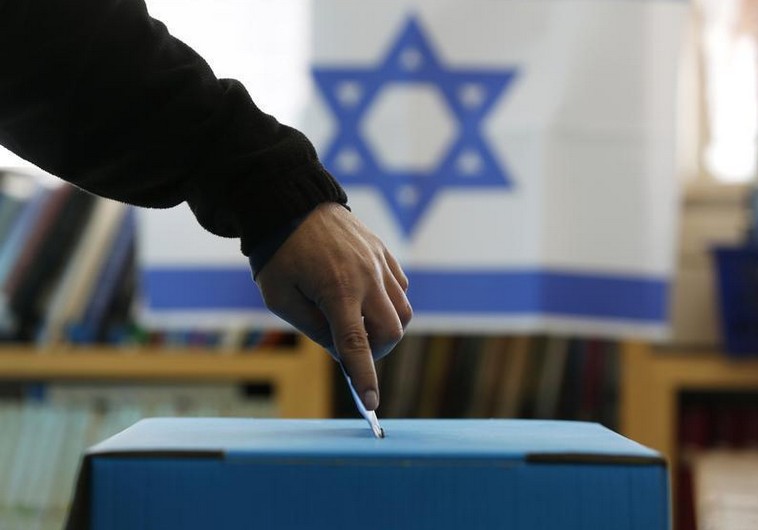
An Israeli flag is seen in the background as a man casts his ballot at a polling in a West Bank Jewish settlement, north of RamallahAn Israeli flag is seen in the background as a man casts his ballot for the parliamentary election at a polling in the West Bank settlement of Ofra. (photo credit:REUTERS)

The next 22 months until President Barack Obama leaves office promise to be the most challenging period in the history of US-Israel relations.

Now unfettered by electoral concerns, over the past week Obama exposed his ill-intentions toward Israel in two different ways.

First, the Justice Department leaked its intention to indict Democratic Sen. Robert Menendez on corruption charges. Menendez is the ranking Democratic member, and the former chairman, of the Senate Foreign Relations Committee. He is also the most outspoken Democratic critic of Obama’s policy of appeasing the Iranian regime.

As former US federal prosecutor Andrew McCarthy wrote this week at PJMedia, “It is perfectly reasonable to believe that Menendez may be guilty of corruption offenses and that his political opposition on Iran is factoring into the administration’s decision to charge him. Put it another way, if Menendez were running interference for Obama on the Iran deal, rather than trying to scupper it, I believe he would not be charged.”

The Menendez prosecution tells us that Obama wishes to leave office after having vastly diminished support for Israel among Democrats. And he will not hesitate to use strong-arm tactics against his fellow Democrats to achieve his goal.

We already experienced Obama’s efforts in this sphere in the lead-up to Prime Minister Benjamin Netanyahu’s speech before the joint houses of Congress on March 3 with his campaign to pressure Democratic lawmakers to boycott Netanyahu’s address.

Now, with his move against Menendez, Obama made clear that support for Israel – even in the form of opposition to the nuclear armament of Iran – will be personally and politically costly for Democrats.

The long-term implications of Obama’s moves to transform US support for Israel into a partisan issue cannot by wished away. It is possible that his successor as the head of the Democratic Party will hold a more sympathetic view of Israel. But it is also possible that the architecture of Democratic fund-raising and grassroots support that Obama has been building for the past six years will survive his presidency and that as a consequence, Democrats will have incentives to oppose Israel.

The reason Obama is so keen to transform Israel into a partisan issue was made clear by the second move he made last week.

Last Thursday, US National Security Adviser Susan Rice announced that the NSC’s Middle East Coordinator Phil Gordon was stepping down and being replaced by serial Israel-basher Robert Malley.

Malley, who served as an NSC junior staffer during the Clinton administration, rose to prominence in late 2000 when, following the failed Camp David peace summit in July 2000 and the outbreak of the Palestinian terror war, Malley co-authored an op-ed in The New York Times blaming Israel and then-prime minister Ehud Barak for the failure of the negotiations.

What was most remarkable at the time about Malley’s positions was that they completely contradicted Bill Clinton’s expressed views. Clinton placed the blame for the failure of the talks squarely on then-Palestinian leader Yasser Arafat’s shoulders.

Not only did Arafat reject Barak’s unprecedented offer of Palestinian statehood and sovereignty over all of Gaza, most of Judea and Samaria and parts of Jerusalem including the Temple Mount, he refused to make a counter-offer. And then two months later, he opened the Palestinian terror war.

As Jonathan Tobin explained in Commentary this week, through his writings and public statements, Malley has legitimized Palestinian rejection of Israel’s right to exist. Malley thinks it is perfectly reasonable that the Palestinians refuse to concede their demand for free immigration of millions of foreign Arabs to the Jewish state in the framework of their concocted “right of return,” even though the clear goal of that demand is to destroy Israel. As Tobin noted, Malley believes that Palestinian terrorism against Israel is “understandable if not necessarily commendable.”

During Obama’s 2008 presidential campaign, then-senator Obama listed Malley as a member of his foreign policy team. When pro-Israel groups criticized his appointment, Obama fired Malley.

But after his 2012 reelection, no longer fearing the ramifications of embracing an openly anti-Israel adviser, one who had documented contacts with Hamas terrorists and has expressed support for recognizing the terror group, Obama appointed Malley to serve as his senior adviser for Iraq-Iran-Syria and the Gulf states. Still facing the 2014 congressional elections, Obama pledged that Malley would have no involvement in issues related to Israel and the Palestinians. But then last week, he appointed him to direct the NSC’s policy in relation to the entire Middle East, including Israel.

The deeper significance of Malley’s appointment is that it demonstrates that Obama’s goal in his remaining time in office is to realign US Middle East policy away from Israel. With his Middle East policy led by a man who thinks the Palestinian goal of destroying Israel is legitimate, Obama can be expected to expand his practice of placing all the blame for the absence of peace between Israel and the Palestinians solely on Israel’s shoulders.

Malley’s appointment indicates that there is nothing Israel can do to stem the tsunami of American pressure it is about to suffer. Electing a left-wing government to replace Prime Minister Binyamin Netanyahu will make no difference.

Just as Malley was willing to blame Barak – a leader who went to Camp David as the head of a minority coalition, whose positions on territorial withdrawals were rejected by a wide majority of Israelis – for the absence of peace, so we can assume that he, and his boss, will blame Israel for the absence of peace over the next 22 months, regardless of who stands at the head of the next government.

In this vein we can expect the administration to expand the anti-Israel positions it has already taken.

The US position paper regarding Israeli-Palestinian negotiation that was leaked this past week to Yediot Aharonot made clear the direction Obama wishes to go. That document called for Israel to withdraw to the indefensible 1949 armistice lines, with minor revisions.

In the coming 22 months we can expect the US to use more and more coercive measures to force Israel to capitulate to its position.

The day the administration-sponsored talks began in July 2013, the EU announced it was barring its member nations from having ties with Israeli entities that operate beyond the 1949 armistice lines unless those operations involve assisting the Palestinians in their anti-Israel activities. The notion that the EU initiated an economic war against Israel the day the talks began without coordinating the move with the Obama administration is, of course, absurd.

We can expect the US to make expanded use of European economic warfare against Israel in the coming years, and to continue to give a backwind to the anti-Semitic BDS movement by escalating its libelous rhetoric conflating Israel with the apartheid regime in South Africa.

US-Israel intelligence and defense ties will also be on the chopping block.

While Obama and his advisers consistently boast that defense and intelligence ties between Israel and the US have grown during his presidency, over the past several years, those ties have suffered blow after blow. During the war with Hamas last summer, acting on direct orders from the White House, the Pentagon instituted a partial – unofficial – embargo on weapons to Israel.

As for intelligence ties, over the past month, the administration announced repeatedly that it is ending its intelligence sharing with Israel on Iran.

We also learned that the vice chairman of the Joint Chiefs of Staff is being fingered as the source of the leak regarding the Stuxnet computer virus that Israel and the US reportedly developed jointly to cripple Iran’s nuclear centrifuges.

In other words, since taking office, Obama has used the US’s intelligence ties with Israel to harm Israel’s national security.*

He has also used diplomacy to harm Israel. Last summer, Obama sought a diplomatic settlement of Hamas’s war with Israel that would have granted Hamas all of its war goals, including its demand for open borders and access to the international financial system.

Now of course, he is running roughshod over his bipartisan opposition, and the opposition of Israel and the Sunni Arab states, in the hopes of concluding a nuclear deal with Iran that will pave the way for the ayatollahs to develop nuclear weapons and expand their hegemonic control over the Middle East.

Amid of this, and facing 22 months of ever more hostility as Obama pursues his goal of ending the US-Israel alliance, Israelis are called on to elect a new government.

This week the consortium of former security brass that has banded together to elect a leftist government led by Isaac Herzog and Tzipi Livni accused Netanyahu of destroying Israel’s relations with the US. The implication was that a government led by Herzog and Livni will restore Israel’s ties to America.

Yet as Obama has made clear both throughout his tenure in office, and, over the past week through Malley’s appointment and Menendez’s indictment, Obama holds sole responsibility for the deterioration of our ties with our primary ally. And as his actions have also made clear, Herzog and Livni at the helm will receive no respite in US pressure. Their willingness to make concessions to the Palestinians that Netanyahu refuses to make will merely cause Obama to move the goalposts further down the field. Given his goal of abandoning the US alliance with Israel, no concession that Israel will deliver will suffice.

And so we need to ask ourselves, which leader will do a better job of limiting the danger and waiting Obama out while maintaining sufficient overall US support for Israel to rebuild the alliance after Obama has left the White House.

The answer, it seems, is self-evident.

The Left’s campaign to blame Netanyahu for Obama’s hostility will make it all but impossible for a Herzog-Livni government to withstand US pressure that they say will disappear the moment Netanyahu leaves office.

In contrast, as the US position paper leaked to Yediot indicated, Netanyahu has demonstrated great skill in parrying US pressure. He agreed to hold negotiations based on a US position that he rejected and went along with the talks for nine months until the Palestinians ended them. In so doing, he achieved a nine-month respite in open US pressure while exposing Palestinian radicalism and opposition to peaceful coexistence.

On the Iranian front, Netanyahu’s courageous speech before Congress last week energized Obama’s opponents to take action and forced Obama onto the defensive for the first time while expanding popular support for Israel.

It is clear that things will only get more difficult in the months ahead. But given the stakes, the choice of Israeli voters next Tuesday is an easy one.

_______________

* Correction: An earlier version of this article incorrectly reported that Hillary Clinton was reportedly involved in leaking sensitive information related to joint Israel-US operations to the media.

Iran’s advances create alarm in Saudi Arabia and the Gulf

March 14, 2015

Iran’s advances create alarm in Saudi Arabia and the Gulf, the Guardian,  March 13, 2015

Arabs believe Baghdad, Damascus, Beirut and Sana’a are in effect under Iranian control – and power may shift further if US sanctions are eased.

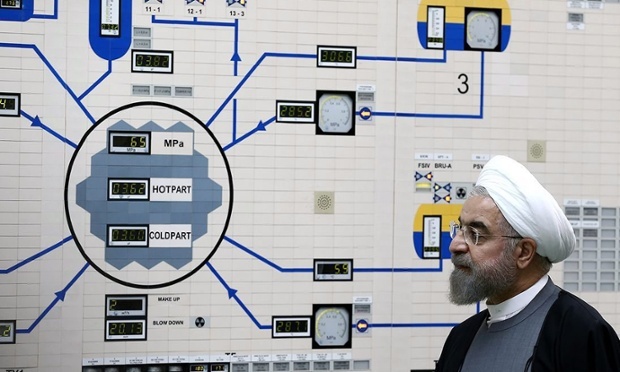
c0ac3569-93da-4ae8-8b51-29dc6991ee13-620x372 Hassan Rouhani, the Iranian president, visiting Bushehr nuclear power plant in southern Iran this year. Photograph: Presidential official handout/EPA

Iran’s great advantage, suggests Emile Hokayem, an analyst, is its commitment and competence, in Syria and beyond. “The expertise, experience and strategic patience it deployed in support of the Syrian regime to a great extent facilitated Assad’s recovery from serious setbacks in 2012. In contrast, the war in Syria has exposed not only the political and operational limitations of the Gulf states, but also the rivalries among them.”

*********************

The commanders of Iran’s Islamic Revolutionary Guard Corps (IRGC) have been working overtime recently, flaunting their achievements across the Middle East and flexing muscles as international negotiations over the country’s nuclear programme enter their critical and perhaps final phase.

On Wednesday it was the turn of Major-General Mohammad Ali Jafari, the IRGC’s most senior officer. “The Islamic revolution is advancing with good speed, its example being the ever-increasing export of the revolution,” he declared. “Not only Palestine and Lebanon acknowledge the influential role of the Islamic Republic but so do the people of Iraq and Syria. They appreciate the nation of Iran.”

Last month a similarly boastful message was delivered by General Qassem Suleimani, who leads the IRGC’s elite Quds force — and who is regularly photographed leading the fightback of Iraqi Shia miltias against the Sunni jihadis of the Islamic State (Isis) as well as against western and Arab-backed rebels fighting Bashar al-Assad in southern Syria. “Imperialists and Zionists have admitted defeat at the hands of the Islamic Republic and the resistance movement,” Suleimani said.

Iran’s advances are fuelling alarm in Saudi Arabia and the Gulf, where Tehran has been a strategic rival since the days of the Shah, and which now, it is said with dismay, in effect controls four Arab capitals – Baghdad, Damascus and Beirut and in the last month Sana’a in Yemen – which is uncomfortably close to home.

Iran’s regional position has certainly improved. Its high-profile role fighting Isis in Iraq, Assad’s retention of control in Syria with the help of its Lebanese ally Hezbollah, and the Houthi rebel takeover in Yemen have all been deeply discomfiting for the Saudis. Anti-government protests in Shia-majority Bahrain are also often blamed on Tehran — though that ignores the domestic roots of the unrest.

In Riyadh King Salman has dropped his preoccupation with the Muslim Brotherhood in favour of building a united Sunni Arab front to confront the Iranians, diplomats say, though translating that strategy into action is another matter. The message from Saudi Arabia and the United Arab Emirates is that whatever the outcome of the nuclear talks, Iran is bent on expanding its power and influence. “The Iranians have scored major victories but only where there are Shia minorities,” a senior Gulf official told the Guardian. “Our concern is that the nuclear issue will become a tool of their foreign policy.”

Arab alarm is shared by Israel. Binyamin Netanyahu used identical arguments in his recent speech to the US Congress, timed to influence next week’s nuclear endgame in Geneva. “The Saudis will be incredibly worried that we are getting close to a point where the Iranians will be players because of the nuclear issue and the way the Americans have effectively ended up on the same side as the Iranians in Iraq,” said one veteran Saudi-watcher. “But the noise they are making is in inverse proportion to their ability to do anything about it.”

Arab governments are not reassured by the promises of John Kerry, the US secretary of state, that Washington is not seeking a “grand bargain” with Tehran that will allow it to “destabilise” the Middle East, bolstered by the easing of economic sanctions. Saud Al Faisal, the Saudi foreign minister, warned of Tehran’s “hegemonic” ambitions as the IRGC supported the military operation to retake the Iraqi town of Tikrit from Isis. In Gulf capitals Hassan Rouhani, the emollient Iranian president, is seen as less important than the hardline supreme leader, Ayatollah Ali Khamenei.

It is hard to disentangle propaganda from reality. But independent analysts argue that Iran is inflating its gains for both foreign and domestic consumption. “If you listen to Suleimani there is a degree of exaggeration,” argues Ali Ansari of St Andrews University. “It’s rhetorical reassurance. He is saying to Iranians: ‘We are powerful and and everyone is worried about this’ – partly to make the point that they are not really under pressure. People outside can see what Iran’s strengths and weaknesses are. But there is this belief that you need to negotiate from a position of strength and that if you are weak you will be trampled on.”

Iran-watcher Hossein Rassam also detects a domestic calculation in the IRGC statements. “Critics of Rouhani’s policy of rapprochement with the international community inside Iran can turn to the supreme leader and say there wasn’t really much need for that softer tone because now we have more bargaining chips in our hands. Iran is the only power in the region which can actually fight Isis and the west needs us for that.”

Meir Litvak, an Israeli expert on Iran, sees both genuine belief and posturing in Tehran’s stance. “The Iranians believe they have been able to save the Assad regime from total collapse and there is at least stalemate in Syria,” he said. “That means they have been able to maintain the link with Hezbollah and maybe open a second front by proxy against Israel on the Golan Heights. The Houthi rebellion in Yemen was initially a genuinely domestic affair but the Iranian regime saw it as an opportunity. And it has become a bonus for it – even if they are not that active inYemen. But if the Saudis are scared that’s a plus for the Iranians.”

Arab diplomatic sources say they expect to see an IRGC and Hezbollah presence in Yemen, helped by a new agreement on regular flights between Tehran and Sana’a.

Iran’s role in Bahrain, where the Shia majority remains locked in confrontation with the Saudi-backed Sunni monarchy, is more about scoring propaganda points than material support – despite claims in Manama about Iran’s sinister role.

Still, in the heartlands of Iranian influence, Iraq and Syria, there have been significant costs as well as benefits, including the deaths of two senior IRGC commanders. Continuing sanctions and low oil prices – seen in Tehran as a deliberate strategy by the Saudis – have also made it harder to shell out billions of dollars to subsidise the Assad regime.

Iran’s great advantage, suggests Emile Hokayem, an analyst, is its commitment and competence, in Syria and beyond. “The expertise, experience and strategic patience it deployed in support of the Syrian regime to a great extent facilitated Assad’s recovery from serious setbacks in 2012. In contrast, the war in Syria has exposed not only the political and operational limitations of the Gulf states, but also the rivalries among them.”

Obama Gives Sisi the Netanyahu Treatment

March 12, 2015

Obama Gives Sisi the Netanyahu Treatment, Commentary Magazine, March 11, 2015

[O]ne of the major changes that took place on President Obama’s watch was a conscious decision to downgrade relations with Cairo, a nation that his predecessors of both parties had recognized as a lynchpin of U.S. interests in the region. The current weapons supply squeeze is not only a blow to the efforts of a nation that is actually willing to fight ISIS and other Islamist terrorists; it’s a statement about what it means to be an American ally in the age of Obama.

******************************

In a Middle East where Islamist terror groups and the Iranian regime and its allies have been on the offensive in recent years, the one bright spot for the West in the region (other, that is, than Israel) is the way Egypt has returned to its old role as a bulwark of moderation and opposition to extremism. The current government led by former general Abdel Fattah el-Sisi has clamped down on Hamas terrorists and has been willing to deploy its armed forces to fight ISIS in Libya while also clamping down on a Muslim Brotherhood movement that seeks to transform Egypt into another Islamist state. Yet despite this, the Obama administration is unhappy with Egypt. Much to Cairo’s consternation, the United States is squeezing its government on the military aid it needs to fight ISIS in Libya and Sinai terrorists. As the Israeli government has already learned to its sorrow, the Egyptians now understand that being an ally of the United States is a lot less comfortable position than to be a foe like Iran.

The ostensible reason for the holdup in aid is that the Egyptian government is a human-rights violator. Those concerns are accurate. Sisi’s government has been ruthless in cracking down on the same Muslim Brotherhood faction that was running the country until a popular coup brought it down in the summer of 2013. But contrary to the illusions of an Obama administration that hastened the fall of Hosni Mubarak and then foolishly embraced his Muslim Brotherhood successors, democracy was never one of the available options in Egypt.

The choice in Egypt remains stark. It’s either going to be run by Islamists bent on taking the most populous Arab country down the dark road of extremism or by a military regime that will keep that from happening. The obvious Western choice must be the latter, and Sisi has turned out to be an even better ally than Washington could have dreamed of, as he ensured that the Brotherhood would not return to power, took on Hamas in Gaza, and even made public calls for Muslims to turn against religious extremists.

But rather than that endearing him to the administration, this outstanding record has earned Sisi the Netanyahu treatment. Indeed, like other moderate Arab leaders in the Middle East, Sisi understands that President Obama has no great love for his country’s allies. Besotted as he is by the idea of bringing Iran in from the cold, the American government has allied itself with Tehran in the conflicts in both Iraq and Syria. He also understands that both of those ongoing wars were made far worse by the president’s dithering for years, a stance that may well have been motivated by a desire to avoid antagonizing Iran by seeking to topple their Syrian ally.

But those issues notwithstanding, one of the major changes that took place on President Obama’s watch was a conscious decision to downgrade relations with Cairo, a nation that his predecessors of both parties had recognized as a lynchpin of U.S. interests in the region. The current weapons supply squeeze is not only a blow to the efforts of a nation that is actually willing to fight ISIS and other Islamist terrorists; it’s a statement about what it means to be an American ally in the age of Obama.

As the Times of Israel reported:

On Monday Sisi was asked what he and the other Arab allies thought of U.S. leadership in the region. It is hard to put his response in words, mainly due to his prolonged silence.

“Difficult question,” he said after some moments, while his body language expressed contempt and disgust. “The suspending of US equipment and arms was an indicator for the public that the United States is not standing by the Egyptians.”

It turns out that although the American administration recently agreed to provide the Egyptian Air Force with Apache attack helicopters; it has been making it increasingly difficult for Cairo to make additional military purchases.

For example, the U.S. is delaying the shipment of tanks, spare parts and other weapons that the army desperately needs in its war against Islamic State.

This development raises serious questions not only about U.S.-Egyptian relations but the administration’s vision for the region.

This is, after all, a time when the administration is going all out to make common cause with Iran, an open enemy that is currently the leading state sponsor of terrorism in the world. President Obama is pursuing a diplomatic arrangement that will strengthen the Iranian regime and guarantee the survival of a nuclear program that moderate Arabs see as being as much of a threat to them as it is to Israel or the West.

The Egyptians understand that Washington isn’t interested in their friendship. Nor is the administration particularly supportive of Cairo’s efforts to rein in Hamas or to fight ISIS. Indeed, the Egyptians are now experiencing the same sort of treatment that has heretofore been reserved for the Israelis. That’s especially true in light of the arms resupply cutoff against Israel Obama ordered during last summer’s war in Gaza.

Despite flirting with Russia, Egypt may, like Israel, have no real alternative to the United States as an ally. Perhaps that’s why Obama takes it for granted. But if the U.S. is serious about fighting ISIS as opposed to just talking about it, Washington will have to start treating Egypt and its military as a priority rather than an embarrassment.

Palestinian forces detain 500 Hamas West Bankers, to thwart coup and Abbas assassination plot

March 10, 2015

Palestinian forces detain 500 Hamas West Bankers, to thwart coup and Abbas assassination plot, DEBKAfile, March 10, 2015

security_forces_in_the_West_Bank_Hamas__10.3.15Palestinian security forces detain Hamas activists

[O]ur sources also reveal that the PA chairman has asked Netanyahu through back-channels for a secret rendezvous somewhere in Europe. He proposed avoiding prominent capitals like London, Paris or Berlin, but meeting at a smaller venue for the sake of confidentiality.

Abbas also insisted that this meeting must be concealed from Washington, especially from Secretary of State John Kerry.

The Israeli prime minister has turned him down – and not just because the Palestinian request finds him in the middle of a tough race for re-election.

*********************

Acting on direct orders from Palestinian Authority Chairman Mahmoud Abbas, Palestinian special forces raided the nine PA-ruled towns of the West Bank in the past 48 hours and detained 500 Hamas suspects, DEBKAfile’s military sources report. Abbas ordered the operation after discovering that Hamas had been hatching a plot for some weeks to stage an armed insurrection against the Palestinian Authority, starting in one of the Palestinian towns – possibly even the PA capital of Ramallah. They would assassinate him in the process of the coup.

Of late, Abbas has kept his distance from Ramallah and his seat of government and spends most of his time traveling in foreign countries, especially Arab capitals, where he feels safer under the protection of foreign security services than he does at home.

The wave of detentions from Sunday to Tuesday (March 9-10) is the most extensive the Palestinian Authority has ever conducted against Hamas’ West Bank cells. Not only prominent figures and known terror activists were taken into custody but also new figures.

Abbas ordered the operation amid a serious dilemma over his personal security.

Before him were reports presented by Palestinian Intelligence chief Maj. Gen. Majed Faraj revealing the preparations in train for his assassination, an event that would signal mass riots orchestrated by Hamas and Jihad Islami, leading up to the seizure of government from the Palestinian Authority – much as they did in the Gaza Strip.

At the same time, Abbas does not entirely trust Palestinian security services or their ability to safeguard him and his regime in Ramallah.

He therefore turned to Israel, touching off an IDF response that had nothing to do with Israel’s forthcoming general election on March 17 – as government opponents have claimed.

The 3,000 IDF soldiers plus 10,000 reservists called up this week were not posted on the West Bank to practice anti-riot tactics for putting down Palestinians disturbances against Jewish settlements – as reported. They were placed on the ready in case it was necessary to go into Palestinian towns and save them from being overrun by the radical Hamas and Jihad Islami.

The Israeli troops also rehearsed a possible scenario that might ensue from the murder of Mahmoud Abbas.

In view of the highly sensitive security situation on the West Bank, Prime Minister Binyamin Netanyahu accompanied by Defense Minister Moshe Ya’alon, paid a rare visit to the IDF’s Judea-Samaria command headquarters Tuesday, March 10, to inspect these preparations.

It was the Hamas conspiracy to seize power in Ramallah that prompted Ya’alon’s enigmatic remark that were it not for preemptive military operations, central Israel might now be under missile and mortar attack.

DEBKAfile’s military sources add that way the Palestinian issue has become a football for kicking around Israel’s election campaign, making it hard to penetrate the fog of anti-government propaganda and establish what is really going on.

For example, Netanyahu is being presented by his rivals as having agreed at a former stage in US-brokered peace negotiations with the Palestinians to withdraw to behind the 1967 lines. They have picked out one of the many papers drawn up by the Americans and discarded in the course of the negotiations – this one was written by a Shiite Iraqi academic in Oxford University and was never approved either by Israel or the Palestinians.

Turning to the real events afoot today, our sources also reveal that the PA chairman has asked Netanyahu through back-channels for a secret rendezvous somewhere in Europe. He proposed avoiding prominent capitals like London, Paris or Berlin, but meeting at a smaller venue for the sake of confidentiality.

Abbas also insisted that this meeting must be concealed from Washington, especially from Secretary of State John Kerry.

The Israeli prime minister has turned him down – and not just because the Palestinian request finds him in the middle of a tough race for re-election.