Archive for the ‘Netanyahu’ category

What information collected by Israeli intelligence reveals about the Iran talks

July 29, 2015

What information collected by Israeli intelligence reveals about the Iran talks, TabletRonen Bergman, July 29, 2015

It is possible to argue about the manner in which Netanyahu chose to conduct the dispute about the nuclear agreement with Iran, by clashing head-on and bluntly with the American president. That said, the intelligence material that he was relying on gives rise to fairly unambiguous conclusions: that the Western delegates crossed all of the red lines that they drew themselves and conceded most of what was termed critical at the outset; and that the Iranians have achieved almost all of their goals.

***********************

On Nov. 26, 2013, three days after the signing of the interim agreement (JPOA) between the powers and Iran, the Iranian delegation returned home to report to their government. According to information obtained by Israeli intelligence, there was a sense of great satisfaction in Tehran then over the agreement and confidence that ultimately Iran would be able to persuade the West to accede to a final deal favorable to Iran. That final deal, signed in Vienna last week, seems to justify that confidence. The intelligence—a swath of which I was given access to in the past month—reveals that the Iranian delegates told their superiors, including one from the office of the Supreme Leader Ayatollah Khamenei, that “our most significant achievement” in the negotiations was America’s consent to the continued enrichment of uranium on Iranian territory.

That makes sense. The West’s recognition of Iran’s right to perform the full nuclear fuel cycle—or enrichment of uranium—was a complete about-face from America’s declared position prior to and during the talks. Senior U.S. and European officials who visited Israel immediately after the negotiations with Iran began in mid 2013 declared, according to the protocols of these meetings, that because of Iran’s repeated violations of the Nuclear Non-Proliferation Treaty, “Our aim is that in the final agreement [with Iran] there will be no enrichment at all” on Iranian territory. Later on, in a speech at the Saban Forum in December 2013, President Barack Obama reiterated that in view of Iran’s behavior, the United States did not acknowledge that Iran had any right to enrich fissile material on its soil.

In February 2014, the first crumbling of this commitment was evident, when the head of the U.S. delegation to the talks with Iran, Wendy Sherman, told Israeli officials that while the United States would like Iran to stop enriching uranium altogether, this was “not a realistic” expectation. Iranian foreign ministry officials, during meetings the Tehran following the JPOA, reckoned that from the moment the principle of an Iranian right to enrich uranium was established, it would serve as the basis for the final agreement. And indeed, the final agreement, signed earlier this month, confirmed that assessment.

The sources who granted me access to the information collected by Israel about the Iran talks stressed that it was not obtained through espionage against the United States. It comes, they said, through Israeli spying on Iran, or routine contacts between Israeli officials and representatives of the P5+1 in the talks. The sources showed me only what they wanted me to see, and in these cases there’s always a danger of fraud and fabrication. This said, these sources have proved reliable in the past, and based on my experience with this type of material it appears to be quite credible. No less important, what emerges from the classified material obtained by Israel in the course of the negotiations is largely corroborated by details that have become public since.

In early 2013, the material indicates, Israel learned from its intelligence sources in Iran that the United States held a secret dialogue with senior Iranian representatives in Muscat, Oman. Only toward the end of these talks, in which the Americans persuaded Iran to enter into diplomatic negotiations regarding its nuclear program, did Israel receive an official report about them from the U.S. government. Shortly afterward, the CIA and NSA drastically curtailed its cooperation with Israel on operations aimed at disrupting the Iranian nuclear project, operations that had racked up significant successes over the past decade.

On Nov. 8, 2013, Secretary of State John Kerry visited Israel. Israeli Prime Minister Benjamin Netanyahu saw him off at Ben Gurion Airport and told him that Israel had received intelligence that indicated the United States was ready to sign “a very bad deal” and that the West’s representatives were gradually retreating from the same lines in the sand that they had drawn themselves.

Perusal of the material Netanyahu was basing himself on, and more that has come in since that angry exchange on the tarmac, makes two conclusions fairly clear: The Western delegates gave up on almost every one of the critical issues they had themselves resolved not to give in on, and also that they had distinctly promised Israel they would not do so.

One of the promises made to Israel was that Iran would not be permitted to stockpile uranium. Later it was said that only a small amount would be left in Iran and that anything in excess of that amount would be transferred to Russia for processing that would render it unusable for military purposes. In the final agreement, Iran was permitted to keep 300kgs of enriched uranium; the conversion process would take place in an Iranian plant (nicknamed “The Junk Factory” by Israel intelligence). Iran would also be responsible for processing or selling the huge amount of enriched uranium that is has stockpiled up until today, some 8 tons.

The case of the secret enrichment facility at Qom (known in Israel as the Fordo Facility) is another example of concessions to Iran. The facility was erected in blatant violation of the Non Proliferation Treaty, and P5+1 delegates solemnly promised Israel at a series of meetings in late 2013 that it was to be dismantled and its contents destroyed. In the final agreement, the Iranians were allowed to leave 1,044 centrifuges in place (there are 3,000 now) and to engage in research and in enrichment of radioisotopes.

At the main enrichment facility at Natanz (or Kashan, the name used by the Mossad in its reports) the Iranians are to continue operating 5,060 centrifuges of the 19,000 there at present. Early in the negotiations, the Western representatives demanded that the remaining centrifuges be destroyed. Later on they retreated from this demand, and now the Iranians have had to commit only to mothball them. This way, they will be able to reinstall them at very short notice.

Israeli intelligence points to two plants in Iran’s military industry that are currently engaged in the development of two new types of centrifuge: the Teba and Tesa plants, which are working on the IR6 and the IR8 respectively. The new centrifuges will allow the Iranians to set up smaller enrichment facilities that are much more difficult to detect and that shorten the break-out time to a bomb if and when they decide to dump the agreement.

The Iranians see continued work on advanced centrifuges as very important. On the other hand they doubt their ability to do so covertly, without risking exposure and being accused of breaching the agreement. Thus, Iran’s delegates were instructed to insist on this point. President Obama said at the Saban Forum that Iran has no need for advanced centrifuges and his representatives promised Israel several times that further R&D on them would not be permitted. In the final agreement Iran is permitted to continue developing the advanced centrifuges, albeit with certain restrictions which experts of the Israeli Atomic Energy Committee believe to have only marginal efficacy.

As for the break-out time for the bomb, at the outset of the negotiations, the Western delegates decided that it would be “at least a number of years.” Under the final agreement this has been cut down to one year according to the Americans, and even less than that according to Israeli nuclear experts.

As the signing of the agreement drew nearer, sets of discussions took place in Iran, following which its delegates were instructed to insist on not revealing how far the country had advanced on the military aspects of its nuclear project. Over the past 15 years, a great deal of material has been amassed by the International Atomic Energy Agency—some filed by its own inspectors and some submitted by intelligence agencies—about Iran’s secret effort to develop the military aspects of its nuclear program (which the Iranians call by the codenames PHRC, AMAD, and SPND). The IAEA divides this activity into 12 different areas (metallurgy, timers, fuses, neutron source, hydrodynamic testing, warhead adaptation for the Shihab 3 missile, high explosives, and others) all of which deal with the R&D work that must be done in order to be able to convert enriched material into an actual atom bomb.

The IAEA demanded concrete answers to a number of questions regarding Iran’s activities in these spheres. The agency also asked Iran to allow it to interview 15 Iranian scientists, a list headed by Prof. Mohsen Fakhrizadeh, whom Mossad nicknamed “The Brain” behind the military nuclear program. This list has become shorter because six of the 15 have died as a result of assassinations that the Iranians attribute to Israel, but access to the other nine has not been given. Neither have the IAEA’s inspectors been allowed to visit the facilities where the suspected activities take place. The West originally insisted on these points, only to retreat and leave them unsolved in the agreement.

In mid-2015 a new idea was brought up in one of the discussions in Tehran: Iran would agree not to import missiles as long as its own development and production is not limited. This idea is reflected in the final agreement as well, in which Iran is allowed to develop and produce missiles, the means of delivery for nuclear weapons. The longer the negotiations went on, the longer the list of concession made by the United States to Iran kept growing, including the right to leave the heavy water reactor and the heavy water plant at Arak in place and accepting Iran’s refusal of access to the suspect site.

It is possible to argue about the manner in which Netanyahu chose to conduct the dispute about the nuclear agreement with Iran, by clashing head-on and bluntly with the American president. That said, the intelligence material that he was relying on gives rise to fairly unambiguous conclusions: that the Western delegates crossed all of the red lines that they drew themselves and conceded most of what was termed critical at the outset; and that the Iranians have achieved almost all of their goals.

Netanyahu avoids committing to Locker Report recommendations

July 28, 2015

Netanyahu avoids committing to Locker Report recommendations

By Tom Dolev Jul 27, 2015 Via Jerusalem Online


Netanyahu will not commit to the Locker Report recommendations Photo Credit: Flash 90 / Channel 2 News

(While Netanyahu urges the US Congress to get tough on Iran to the point of military action, pressure is building back home to cut military spending. – LS)

For the first time since its publication, the Israeli Prime Minister addressed the controversy-sparking report that called for vast reforms in the IDF, claiming that he will study both the Locker Commission’s Report and the IDF’s report before making a decision.

Israeli Prime Minister Benjamin Netanyahu addressed the Locker Commission Report to examine Israel’s security budget for the first time today and did not commit to adopting the report recommendations. “Yohanan Locker did an excellent job, but the IDF also did an important job,” Netanyahu stated. “I will study both reports and will then reach a decision.”

“Yohanan Locker… worked for a year with excellent people in order to examine how best to deal with the IDF’s security problems from a budgetary standpoint and with regards to internal reforms,” Netanyahu stressed. “Meanwhile, the IDF under the Chief of General Staff and with the guidance of Israel’s Defense Minister did a very important job and prepared a plan of its own for a perennial outline.”

“The challenges in the region have changed,” Netanyahu added. “It is true that armies have disappeared and new armies have risen. That is why we must train them [soldiers] in force structure and development, in weaponry and fighting doctrine, in the IDF’s preparation for a new era when we know we have both budgetary needs and budgetary constraints.

Last week, Israeli Defense Minister Moshe (Bogie) Ya’alon attacked the Locker report conclusions. “The Locker Report is superficial, highly unbalanced and completely detached from the reality of the State of Israel,” he emphasized. “If the report’s conclusions are implemented, it would be gambling on the safety of the citizens of Israel. It will make it impossible for the IDF and the security system to deal with the threats facing the State of Israel and its citizens.”

Meanwhile, members of the Locker Commission came to the defense of their report and refuted the claims against it. “We have not come to butt heads with the IDF. We must address the report recommendations practically,” claimed commission member Esther Dominisini last week. “This report is a proper balance between the army’s needs, the market’s capabilities and the level of security the State of Israel will require.”

In the Locker Report, the commission recommended increasing the security budget to a record 59 billion shekels for each year in the next five years, lowering the retirement age from the IDF, converting early pensions to bonuses and shortening male soldiers’ obligatory service to two years.

In addition, the commission recommended making several financial reforms in the military that it claims would save the IDF some 10 billion shekels in the next five years. The committee also recommended reducing the number of reserve units, changing pension packages and hiring civilian companies for different projects in the IDF so that its soldiers can focus on essential issues.

Why Right-Wingers Are So Angry That Israel Hasn’t Bombed Iran Yet

July 28, 2015

Why Right-Wingers Are So Angry That Israel Hasn’t Bombed Iran Yet

By J.J. Goldberg June 12, 2015 Via Forward Dot Com


Image: Jerusalem Post

(Does the fault lie within? – LS)

Amid all the fuss over Treasury Secretary Jack Lew getting heckled at the Jerusalem Post Conference in New York on June 7, you might have missed the day’s biggest bombshell.

I refer to the nasty smackdown that morning between Post columnist Caroline Glick, the poison-pen darling of the pro-Israel far right, and two of the most storied figures in Israeli security, former Mossad director Meir Dagan and former military chief of staff Gabi Ashkenazi.

It happened during a panel discussion on the Iranian nuclear threat. Dagan, Ashkenazi and two other generals who shared the stage all argued that a negotiated agreement is preferable to military action. Then came Glick. Recalling her longtime advocacy of a military strike, she voiced “worry that some of the men on the panel with me have believed we could rely on America.” Then she tore into Dagan and Ashkenazi.

Her charge: The two had caused the current crisis in Israel’s international relations — and cleared Iran’s path to a bomb — by refusing an order in 2010 to prepare the military for an attack.

Glick’s twice-a-week column is one of the Post’s most popular features, beloved on the right for its vitriolic attacks on the likes of President Obama (“ Mainstreaming anti-Semitism ”) and Shimon Peres (“ narcissistic, sociopathic ”). She’s been sniping at Israel’s military leaders for several years, calling them Israel’s “ Achilles’ heel ” and tossing around words like “treason” because of their moderate views on Iran and the Palestinians.

This time, though, she went toe-to-toe with two of the best, and the contest turned out to be a bit lopsided.

Glick: “In 2010, according to a report that came out [in 2012] … we learned that two of the gentlemen on this panel with us were given an order to prepare the military for an imminent strike against Iran’s nuclear installations, and they refused —”

Dagan: “Because it was an illegal order.”

Glick: “What?”

Dagan: “It was an illegal order.”

Glick: “You were the director of Mossad. You were ordered by the Security Cabinet to prepare —”

Dagan: “You don’t know what happened there.”

Glick: “This is certainly a matter of interpretation.”

Dagan: “The prime minister, without the authority of the government —”

Glick: “Had you not brought in your expert legal opinion to determine whether or not the prime minister of Israel and the defense minister of Israel have a right to order Israel to take action in its national defense then we would not be where we are today,” with President Obama preparing to “conclude a nuclear agreement with Tehran that will enable them to acquire the bomb.”

The exchange quickly turned into a shouting match. Glick repeated her charge that the generals’ insubordination had spawned disaster. Dagan countered that Israel is governed by laws and “no one can ignore the legal system, even Netanyahu.” Glick, someone who claims to have learned the lessons of World War II, insisted soldiers aren’t entitled to decide if an order’s legal. As she railed, the audience applauded and cheered her on.

Their debate concerned a secret June 2010 meeting between a small group of security officials and several top government ministers, led by Prime Minister Netanyahu. According to a 2012 documentary that Glick cited as her source, Netanyahu ordered Ashkenazi to mobilize the reserves and put the military on high alert. Ashkenazi and Dagan reportedly told Netanyahu the order was illegal because mobilizing the reserves would set off a chain reaction leading to war, and only the eight-member Security Cabinet is authorized to initiate military action.

Netanyahu reportedly conceded and convened the Security Cabinet, which then asked Dagan, Ashkenazi and several others for their views on military action. The generals argued against it. The cabinet duly voted the action down, infuriating Netanyahu and then-defense minister Ehud Barak. Within a year Ashkenazi, Dagan and their ally, Shin Bet director Yuval Diskin, were all out of a job.

Glick, after citing the documentary and other coverage of the event, seemed flustered when Ashkenazi recalled that the cabinet actually rejected Netanyahu’s call-up order.

In any case, Ashkenazi said, his cadre of commanders “disappeared at the beginning of 2011. All of us. Then there were different people. And they didn’t act either. It’s an insult to say that we stopped the government from acting.”

Glick: “This is not how it played out in the media. And you didn’t deny it.”

Ashkenazi: “Are you saying that everything in the media is correct?”

Glick: “But you didn’t deny it.”

Ashkenazi: “It was speculation, so I didn’t say anything.”

Until now. That’s one of the extraordinary aspects of the June 7 exchange in New York. Many have discussed the 2010 confrontation between Netanyahu and the generals, but this appears to be the first time that Dagan and Ashkenazi have given their version.

Or part of it. As Dagan and Ashkenazi both noted, they didn’t just tell Netanyahu his order was illegal. They also gave him and the cabinet their analysis, as required by law, of how an attack could play out — and their reasons for opposing it. But they didn’t tell the New York audience what the reasons were.

I caught up with Dagan later and asked him about those reasons. He said he couldn’t repeat his confidential conversations with the prime minister. He did say, though, that among the “nonsense” stories circulating about the incident was that it all happened at that single meeting at Mossad headquarters in June 2010. “It was a series of conversations over months, beginning in 2009,” he said. That is, shortly after Netanyahu took office.

Some years back, Uzi Arad, who was Netanyahu’s national security adviser when the events occurred, told me the crux of the argument. Arad explained that a solo Israeli attack would set Iran’s nuclear project back for a while but then would spur the regime to rebuild with renewed urgency. And with greater international legitimacy, since it could now say it was attacked by a real nuclear power. The only way to prevent Iran rebuilding is an attack by an American-led coalition, which could then establish long-term, intrusive inspections.

Arad pointed to the 1981 Israeli attack on Iraq’s nuclear reactor. Often celebrated, it actually spurred Saddam Hussein to rebuild more urgently than ever, as the U.S.-led Gulf War coalition discovered on entering Iraq in 1991. The Israeli attack had backfired. Strict United Nations inspections prevented another Iraqi nuclear effort. That’s why no weapons of mass destruction were found after 2003.

And that suggests the other extraordinary aspect of the debate. Israel faces real threats. It’s blessed with the world’s best military and intelligence, which have managed to navigate the treacherous currents of the region for nearly 70 years. It’s useful for Israel’s friends to recognize that and try to understand the subtle complexities of her situation. It’s astounding that anyone claiming to represent Israel’s best interests would instead traffic in demagoguery and smearing the watchmen.

Netanyahu lost his Iran bet, but his next gamble may be disastrous

July 28, 2015

Netanyahu lost his Iran bet, but his next gamble may be disastrous

By Yossi Verter Jul. 15, 2015 Via Haaretz


Israeli Prime Minister Benjamin Netanyahu addresses a joint meeting of the United States Congress in the House chamber at the U.S. Capitol, March 3, 2015. Photo by AFP

(Israel deserves so much more that just rolling the dice and blaming Obama for the outcome. – LS)

After the deal was announced, the prime minister’s appearance was that of a desperate gambler who had lost everything. But now he wants to wreck what’s left of U.S.-Israel relations.

Prime Minister Benjamin Netanyahu looks defeated. He was ashen-faced on Tuesday next to the Dutch foreign minister at their joint press conference in Jerusalem; his appearance was that of a desperate gambler who had lost everything. The Iranian nuclear agreement, against which he had vigorously and repeatedly warned, had become a fait accompli. The deal over which he had declared political war on the president of the United States, while breaking all the rules of diplomatic relations between friendly countries, had become a reality, for better or worse.

Even before the details of the agreement were known, and without having any idea what was or wasn’t included, senior Likud officials were firing cannon shells through the electronic media. Talking points that had been sent to them in advance contained three main points: 1. The agreement is bad, terrible, and awful; 2. If not for Netanyahu, the situation would have been much worse, much earlier; 3. The opposition is to blame and ought to be ashamed for not being supportive enough/for being critical now/for not standing tensely quiet at the side of the prime minister, meaning the State of Israel.

Obviously. The opposition is to blame for the centrifuges spinning, the uranium being enriched, and the slaughter during the six consecutive years of Netanyahu’s rule.

Netanyahu deserves credit for stubbornly putting the nuclear issue on the global agenda, significantly contributing to the intensified sanctions on Iran. On the other hand, he lost his brakes when he did not hesitate to hook up with the Republican Party in its campaign against U.S. President Barack Obama. Sometimes it’s hard to know where Sheldon Adelson, the biggest Republican donor, ends and Netanyahu begins.

The prime minister himself hastened Tuesday to call on the opposition to “put petty politics aside and unite for the State of Israel’s national interests,” as if the Iranian nukes hadn’t served as an effective political weapon for him during every recent election campaign.

Netanyahu’s spokespeople said he plans to “kill himself” pursuing the last remaining option for scuttling the deal – preventing its ratification by the U.S. House of Representatives – by persuading Democratic congressmen to defect to the Republican camp and vote against their president. The destruction and devastation he avoided inflicting on the nuclear facilities scattered throughout Iran, he now wants to wreck on what’s left of U.S.-Israel relations. Here we again see his compulsive gambler syndrome: After losing his pants, he’s now putting his underwear on the roulette wheel in a move that experts on American politics say hasn’t much of a chance.

In this context, the call by Likud ministers for “internal cohesion that’s been lacking until now” sounds pathetic. Why exactly is Netanyahu demanding that Labor’s Isaac Herzog, Yesh Atid’s Yair Lapid, Meretz’s Zehava Galon and Yisrael Beiteinu’s Avigdor Lieberman join him? So they can share responsibility for the worsening of the fight between Israel and the leader of the free world?

Herzog and Lapid were competing with each other on Tuesdayto show whose patriotism was greater. Lapid drew first with an interview he gave to a foreign television network. But Herzog landed a crushing blow on him by tweeting that he had spoken with the prime minister and would soon be traveling to the United States “to advance a package of security measures to suit the new situation.”

Perhaps Herzog has been named defense minister and nobody told us. Perhaps something else is going on between him and Netanyahu, and under the pretext of the “new situation,” the chairman of Zionist Union plans to bring his party into Netanyahu’s government.

Cartoon of the day

July 28, 2015

H/t Kingjester’s Blog

israel-tied-600-li

U.S., Israel on collision course if Iran deal goes through

July 26, 2015

U.S., Israel on collision course if Iran deal goes through, Breitbart NewsJoel B. Pollak, July 26, 2015

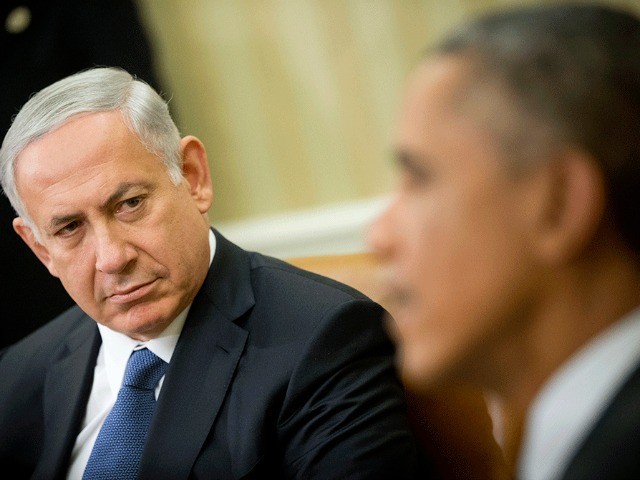
Netanyahu-stares-down-Obama-ap-640x480AP Photo/Pablo Martinez Monsivais

The Iran deal is President Obama’s most important “legacy” achievement. He sees it as the key to his vision of a “new equilibrium” in the region. In the past, he has “preempted” Israel’s preemptive capacity by leaking Israeli attack plans. He may do worse in future–unless Congress defeats the Iran deal and denies him that mandate.

**********************

On his visit to Israel in March 2013, President Barack Obama backed Israel’s right to use force to stop Iran from building a nuclear bomb.

At a joint news conference with Israeli Prime Minister Benjamin Netanyahu, Obama said: “…each country has to make its own decisions when it comes to the awesome decision to engage in any kind of military action, and Israel is differently situated than the United States. And I would not expect that the Prime Minister would make a decision about his country’s security and defer that to any other country…”.

Now, in the wake of the Iran deal, the Obama administration is sending dramatically different signals.On the Today show Friday, Secretary of State Kerry said of a pre-emptive Israeli strike on Iran: “That’d be an enormous mistake, a huge mistake with grave consequences for Israel and for the region, and I don’t think it’s necessary.”

Kerry later tried to deflect concerns that the Iran deal requires world powers to secure Iran’s nuclear facilities, downplaying the chance those clauses could be interpreted as requiring the U.S. to defend Iran against Israel.

Yet faced with a choice between defending Israel and defending the Iran deal, it is become clear that under some circumstances, the Obama administration would choose the latter. That is a radically different position from the one Obama took in public just a short time before formal negotiations began.

True, if Israel were to attack Iran preemptively, it would not be the first time it had done so without U.S. backing. President Ronald Reagan condemned Israel’s attack against Iraq in 1981; George W. Bush said “no” to Israel’s 2007 strike against Syria.

But Obama’s new stance suggests something stronger than mere disapproval.

The Iran deal is President Obama’s most important “legacy” achievement. He sees it as the key to his vision of a “new equilibrium” in the region. In the past, he has “preempted” Israel’s preemptive capacity by leaking Israeli attack plans. He may do worse in future–unless Congress defeats the Iran deal and denies him that mandate.

If the deal holds, Israel may soon face the impossible choice of whether to risk America’s new interests for the sake of its own survival.

Eyes wide shut

July 24, 2015

Eyes wide shut, Israel Hayom, Ruthie Blum, July 24, 2015

On Thursday, U.S. Secretary of State John Kerry spent more than four hours trying to defend the nuclear deal before the Senate Foreign Relations Committee. Grilled by Republicans furious at the Obama administration’s total surrender to Iran, Kerry remained true to character: He doubled down on meaningless platitudes with self-righteous indignation.

In fairness to America’s top diplomat, whose stupidity is only matched by President Barack Obama’s evil, how else could he respond to rational concerns but to get on his high horse? Indeed, all he had at his disposal in the face of the emerging details of the agreement, each more shocking than the next, was a feeble attempt to invert reality and ridicule his critics in the process.

Referring to a “Citizens for a Nuclear Free Iran” commercial aimed at persuading Congress to vote against the agreement and currently airing across the U.S., Kerry argued, “The alternative to the deal we’ve reached isn’t what we’re seeing ads for on TV. It isn’t a better deal, some sort of unicorn arrangement involving Iran’s complete capitulation. That’s a fantasy, plain and simple.

This was Kerry’s way of insisting that he had not been “bamboozled” by his Iranian counterparts, as Sen. Jim Risch (R-Idaho) asserted, nor “fleeced,” as committee chairman Sen. Bob Corker (R-Tenn.) accused.

In other words, no wool was pulled over his eyes. Not by the Iranians, at any rate. They were clear all along. And loud, as Kerry can attest, since he was the target of Iranian Foreign Minister Mohammad Javad Zarif’s repeated abusive outbursts during the negotiations.

No, if Kerry was “bamboozled” or “fleeced” by anyone it was Obama, who told him to secure a deal at any and all cost, because doing so would be better in the short run. As for the long-term repercussions, well, that would be a future administration’s headache.

The way Obama and Kerry both justify the travesty is even less comforting. They claim that since Iran was going to pursue nuclear weapons anyway — and support terrorism anyway, and violate terms anyway, and threaten to wipe Israel off the map anyway, and burn American flags anyway — it would be wiser to join them than beat them.

The logic is mind-boggling. But it does shed light on the administration’s attitude towards Israel.

Obama has been bent on earning the Nobel Peace Prize he was awarded — simply for entering the Oval Office — by completing a contract with Iran. Kerry has been obsessed with procuring a document declaring “peace” between Israel and the Palestinian Authority in order to become a Nobel laureate himself.

His dreams were dashed, however, when Prime Minister Benjamin Netanyahu was unwilling to cross certain red lines. Though Netanyahu did agree to negotiations, the release of well over 1,000 Palestinian terrorists, a halt in settlement construction, groveling before Turkish President Recep Tayyip Erdoğan and a slew of slights from the White House, he refused to commit Israel to suicide.

It is thus that Palestinian Authority President Mahmoud Abbas would not come to the negotiating table. Had the P5+1 countries not given Iran reason to believe that their red lines were merely rhetorical, Ayatollah Ali Khamenei — Iran’s “supreme leader” in every respect — would not have allowed his puppets to parlay with American and European representatives in the first place.

No wonder Obama and Kerry can’t stand Netanyahu. If the president of the United States can roll over and abdicate to a sworn enemy, who does the prime minister of Israel think he is to remain steadfast?

Understanding this is crucial. What it means is that Obama’s camp is right — and Netanyahu’s is wrong — about not having been able to hold out for a “better deal.” Iran, like the Palestinians it supports, has one goal in mind: demolishing the enemy.

It remains to be seen whether Obama will garner enough support in Congress to enable him to veto opposition to the agreement, which gives Iran carte blanche for its genocidal-weapons development and billions of dollars to bolster global terrorism.

At the moment, it’s not looking good. What’s worse is an annex in the agreement that provides for cooperation between the P5+1 and Iran “to strengthen Iran’s ability to protect against, and respond to nuclear security threats, including sabotage, as well as to enable effective and sustainable nuclear security and physical protection systems.”

This clause is causing a stir in Israel. It was also the focus of a question raised by presidential hopeful Marco Rubio (R-Fla.) during the Senate hearing. He wanted to know if it means the U.S. would be required to protect Iran’s nuclear facilities from a potential Israeli military strike.

“No,” retorted Energy Secretary Ernest Moniz, on hand with Treasury Secretary Jack Lew to help Kerry through the ordeal. Rubio was not convinced.

He did issue a warning, however: “The Iranian regime and the world should know that this deal is your deal with Iran … and the next president is under no legal or moral obligation to live up to it.”

What the rest of us need to know is which will come first, an Israeli attack or a Republican in the White House?

Into the fray: Iran- Reaping the storm that Barack sowed…

July 18, 2015

Into the fray: Iran- Reaping the storm that Barack sowed…, Jerusalem PostMARTIN SHERMAN,July 16, 2015

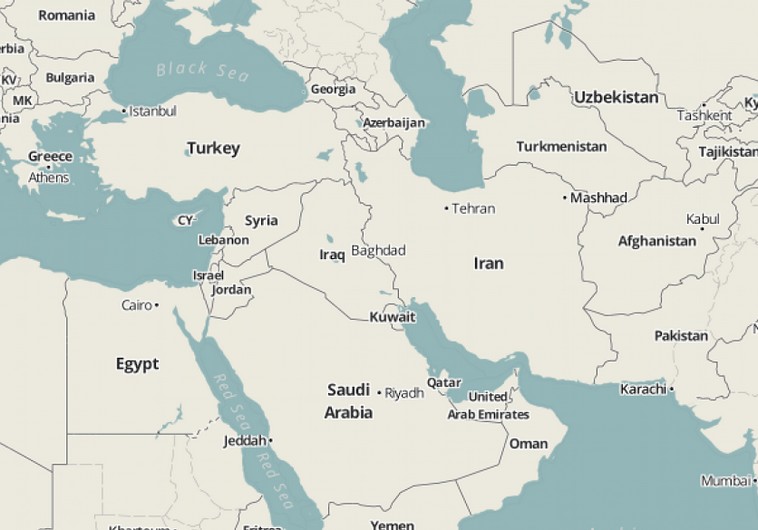
ShowImage (3)Map of Middle East. (photo credit:Courtesy)

It is through this Islamo-philic prism that the Obama administration’s attitude to, and execution of, its foreign policy must be evaluated – including its otherwise incomprehensible capitulation this week on Iran’s nuclear program.

********************

Obama is the first US president who genuinely conceives of Islam as not inherently opposed to American values or interests.

You’re absolutely right that John McCain has not talked about my Muslim faith – Barack Hussein Obama to ABC’s George Stephanopoulos, September 7, 2008

I also know that Islam has always been a part of America’s story Barack Hussein Obama, Cairo, June 4, 2009

Islam has always been part of AmericaBarack Hussein Obama, the White House, August 11, 2010

Islam has been woven into the fabric of our country since its founding Barack Hussein Obama, the White House, February 18, 2015

Barack Hussein Obama is the first US president who is explicitly and overtly unmoored, both cognitively and emotionally, from the moorings of America’s founding Judeo-Christian cultural heritage, and who genuinely conceives of Islam as not inherently opposed to American values or American interests.

A question of cultural affinity?

It is through this Islamo-philic prism that the Obama administration’s attitude to, and execution of, its foreign policy must be evaluated – including its otherwise incomprehensible capitulation this week on Iran’s nuclear program.

Almost two years ago, I wrote a column titled, “Will the West withstand the Obama presidency?” (11/28/2013). In it I warned: “For anyone who understands that the US Constitution is not a Shari’a-compliant document…

it should be alarmingly apparent that the Obama incumbency is a dramatic and disturbing point of inflection in the history of America and its Western allies… whose political practices and societal norms are rooted in Judeo-Christian foundations in a cultural rather than in any religious sense.”

There is little alternative explanation to account for the metamorphosis that has taken place in how the US has approached resolving the impasse with Tehran, as starkly laid out by two former secretaries of state, Henry Kissinger and George Shultz.

In a Wall Street Journal opinion piece, “The Iran Deal and Its Consequences” (April 7), they note that the negotiation has been turned “on its head.” As they point out: “For 20 years, three presidents of both major parties proclaimed that an Iranian nuclear weapon was contrary to American and global interests – and that they were prepared to use force to prevent it. Yet negotiations that began 12 years ago as an international effort to prevent an Iranian capability to develop a nuclear arsenal are ending with an agreement that concedes this very capability.”

Risible inspection mechanism

Even before the specifics of the risible inspection mechanism, which one Israeli minister aptly described as “worse than worthless,” Kissinger and Shultz laid out the difficulties that would render any extended inspection endeavor ineffective: “In a large country with multiple facilities and ample experience in nuclear concealment, violations will be inherently difficult to detect.”

With considerable prescience, they warn: “Devising theoretical models of inspection is one thing. Enforcing compliance, week after week, despite competing international crises and domestic distractions, is another. Any report of a violation is likely to prompt debate over its significance – or even calls for new talks with Tehran to explore the issue.

Envisaging the problems likely to arise in enforcing any agreement, they caution: “Compounding the difficulty is the unlikelihood that breakout will be a clear-cut event.

More likely it will occur… via the gradual accumulation of ambiguous evasions. When inevitable disagreements arise over the scope and intrusiveness of inspections, on what criteria are we prepared to insist and up to what point? If evidence is imperfect, who bears the burden of proof? What process will be followed to resolve the matter swiftly?”

Reminiscent of taqiya?

But even without the daunting generic difficulties described by Kissinger and Shultz, the inspection mechanism provided for in the nascent deal make a mockery of Obama’s contention (July 14): “… this deal is not built on trust; it is built on verification,” and, “Because of this deal, inspectors will also be able to access any suspicious location… [They] will have access where necessary, when necessary.”

One can hardly imagine a more grossly misleading representation of the deal – so much so that it is difficult not to find it strongly reminiscent of the Muslim tactic of taqiya (the religiously sanctioned deception of non-Muslims).

Indeed, immediately following the announcement of the agreement, Ben Rhodes, Obama’s deputy national security adviser, made a stunning admission to CNN’s Erin Burnett. Starkly contradicting the president’s contention of “access where necessary, when necessary,” Rhodes conceded, “We never sought in this negotiation the capacity for so-called anytime, anywhere,” which is diametrically opposed to the impression he conveyed in April this year when queried on this issue.

You couldn’t make this stuff up

For as it turns out, it provides the Iranians with ample warning of impending inspections on any suspected violation, and ample ability to forestall the definition of any given suspicious event as a possible violation.

Thus in the case of a suspected infringement in any undisclosed (to the international community) site, the Iranians will have at least 24 days’ notice. Moreover, inspectors will not be able to conduct surprise visits but will be required to “provide Iran the basis for such concerns and request clarification.” No kidding!!! But wait, there’s more.

If Iran’s explanations do not adequately assuage international concerns, inspectors “may request access to such locations” to make sure no illicit activity has occurred. But first they need to “provide Iran the reasons for access in writing and will make available relevant information.” You can’t make this stuff up.

But here’s the kicker: Should the Iranians and the inspectors prove unable to “reach satisfactory arrangements,” Tehran will resolve any concerns “through necessary means agreed between Iran and the IAEA.” If there is still no agreement two weeks after the initial inquiry is filed, the crisis will be resolved by vote in the so-called Joint Commission – consisting of the six world powers, a representative of EU and – wait for it – Iran.

Like warning drug dealers of a bust

Astonishingly, nearly all the decisions of the Joint Commission, tasked with overseeing/ administering the implementation of the deal, are to be made by consensus – which in effect gives Iran veto power over them. In the case of inspection access, it is sufficient for two of its eight members (say China and Russia) to abstain for Iran to block any decision it dislikes.

It is thus difficult to dispute Benjamin Netanyahu’s characterization of the deal during his address in the Knesset when he likened it to giving drug dealers notice of an impending raid: “It’s like giving a criminal organization that deals drugs a 24-day warning before inspecting its drug lab.”

But worse – the deal requires the international inspectors to expose the sources of intelligence that lead to the detection of the possible infringement – thereby virtually ensuring the termination of their effectiveness.

As Netanyahu remarked: “The agreement also requires the world powers to… show Iran the very intelligence for which they want to conduct the inspections in the first place.”

It is possible that all this could be nothing more than mind-boggling incompetence and blatant lack of foresight? Or are these glaring loopholes the reflection of intent.

Devil not in details

After all, the more you think about the unenforceable, unverifiable agreement just concocted in Vienna, the more implausible it seems. As Alan Dershowitz points out in a Jerusalem Post opinion piece this week, “The devil is not so much in the details as in the broad outlines of this deal.”

Rather than the detailed minutiae of the deal, it is its deeply flawed overall structure that makes it so difficult to comprehend – unless the motives for its conclusion are reexamined.

For unless one is imbued with the child-like naiveté to believe that the tyrannical clergy who head the totalitarian theocracy in Tehran, on seeing their defiant intransigence vindicated and having vast additional resources placed at their disposal, will suddenly change their worldview, the picture of emerging realities is decidedly bleak and bewildering.

The spectacle unfolding before us is almost incomprehensible by any rational criterion.

Virtually the entire developed world, led by the only superpower on the planet, has for all intents and purposes conceded a legitimized path to weaponized nuclear status for a fanatical fundamentalist regime, ideologically bent on the destruction of America and its allies, and a major proliferator of terrorism, committed to attaining regional hegemony at the expense of relatively pro-Western governments.

Despite dwarfing Iran in terms of military might, economic wealth, physical size and population, Tehran’s interlocutors have provided it with vast resources to enormously enhance its nefarious pursuits across the region and beyond.

The New Middle East: Conflicts on steroids

The ominous consequences are not difficult to foresee.

As Ariel Ben Solomon, the Post’s Middle East correspondent, wrote in a recent report, “Iran deal to see Middle East conflicts go on steroids,” “A stronger Iran will translate into a more robust Hezbollah in Lebanon, Houthi movement in Yemen, and Shi’ite forces in Iraq and Syria, and increasing sectarian strife fueled by Shi’ite minorities or Iranian agents throughout the Arab world.” (July 16) There is precious little reason for believing any other outcome is plausible.

In a July 15 interview, New Jersey Democrat Sen. Bob Menendez lamented another aspect of the deal, relating to easing restrictions on conventional weapons to Iran: “When you lift the arms embargo to a country that is the major sponsor of… terrorism in the world and is already destabilizing the region in Yemen, Lebanon, Syria [and] Iraq, to give them – after they are going to get $100 billion-150b. in economic relief – the opportunity to buy conventional weapons and improve their missile technology doesn’t seem to me to be in the national interest of the United States.”

The intriguing question is, of course, does this seem to President Obama to be in the national interest of the United States? And if so, why so? If so, how so?

‘No alternative’: A mindless mendacious mantra

The almost Pavlovian response of the apologists for the Iran deal is that its critics have not offered a feasible alternative. This is a claim – for want of a better word – so feeble that it barely merits a response.

As Sen. Menendez points out: “We never tested the proposition that dismantling elements of Iran’s illicit nuclear infrastructure was possible. It is pretty hard for me to believe that the world powers, sitting on one side of the table, the five permanent members of the Security Council plus Germany and the European Union looking at the Iranians… suffering under staggering sanctions… and falling oil prices couldn’t get a deal that eliminated some of that infrastructure.”

Rebutting John Kerry’s claim that such a goal was achievable only in “a world of fantasy,” Menendez retorted, “I don’t know that that is a ‘world of fantasy.’ Isn’t it possible with all the world on one side of the table, and Iran reeling with economic challenges, that you couldn’t have done better as relates to eliminating that nuclear infrastructure.”

Of course if the underlying assumption is that alternatives are only feasible if Iran deigns to accept them, then the apologists may be right. However, if the rationale were not to accommodate the ayatollahs, but to coerce them, the alternative is clear: Enhanced sanctions backed by the credible threat of military action aimed at destroying Iran’s nuclear facilities and their attendant infrastructure.

Arab arms race or Arab client states

But despite the overwhelming preponderance of power in their favor, the US and its Western allies seem to have forsworn the use of force, or even the credible specter thereof. As Kissinger and Shultz remark: “The threat of war now constrains the West more than Iran.”

This will clearly have a devastating impact on both friend and foe in the region.

It will destroy the confidence of US allies who will therefore be compelled to either acquire their own appropriate arsenals, as they can no longer rely on America for their security, or to become compliant client states of a hegemonic Iran.

For Iran it sends an equivocal message that it can violate the terms of the deal with impunity – for if what it encountered at Vienna is all the West can throw at it, what does it have to fear? There can be little doubt that what happened in Vienna this week has shredded America’s standing in the Middle East.

Some might even suspect that that was the purpose of the exercise.

Column One: Obama’s age of nuclear chaos

July 16, 2015

Column One: Obama’s age of nuclear chaos, Jerusalem Post, Caroline Glick, July 16, 2015

ShowImage (2)Iranian Foreign Minister Mohammad Javad Zarif gestures as he talks with journalist from a balcony of the Palais Coburg hotel where the Iran nuclear talks meetings are being held in Vienna, Austria. (photo credit:REUTERS)

Not only will the US and its allies remove the sanctions imposed on Iran over the past decade and so start the flow of some $150 billion to the ayatollahs’ treasury. They will help Iran develop advanced centrifuges.

They even committed themselves to protecting Iran’s nuclear facilities from attack and sabotage.

Israel still may have the ability to attack Iran’s nuclear sites. If it does, then it should attack them as quickly and effectively as possible.

*********************

On Tuesday, we moved into a new nuclear age.

In the old nuclear age, the US-led West had a system for preventing the proliferation of nuclear weapons. It had three components: sanctions, deterrence and military force. In recent years we have witnessed the successful deployment of all three.

In the aftermath of the 1991 Gulf War, the UN Security Council imposed a harsh sanctions regime on Iraq. One of its purposes was to prevent Iraq from developing nuclear weapons. After the US-led invasion of Iraq in 2003, we learned that the sanctions had been successful. Saddam largely abandoned his nuclear program due to sanctions pressure.

The US-led invasion of Iraq terrified several rogue regimes in the region. In the two to three years immediately following the invasion, America’s deterrent strength soared to unprecedented heights.

As for military force, the nuclear installation that Syrian dictator Bashar Assad built in Deir a-Zour with Iranian money and North Korean technicians wasn’t destroyed through sanctions or deterrence. According to foreign media reports, in September 2007, Israel concluded that these paths to preventing nuclear proliferation to Syria would be unsuccessful.

So then-prime minister Ehud Olmert ordered the IDF to destroy it. The outbreak of the Syrian civil war three years later has prevented Assad and his Iranian bosses from reinstating the program, to date.

The old nuclear nonproliferation regime was highly flawed.

Pakistan and North Korea exploited the post-Cold War weaknesses of its sanctions and deterrence components to develop and proliferate nuclear weapons and technologies.

Due to American weakness, neither paid a serious price for its actions.

Yet, for all its flaws and leaks, the damage caused to the nonproliferation system by American weakness toward Pakistan and North Korea is small potatoes in comparison to the destruction that Tuesday’s deal with Iran has wrought.

That deal doesn’t merely show that the US is unwilling to exact a price from states that illicitly develop nuclear weapons. The US and its allies just concluded a deal that requires them to facilitate Iran’s nuclear efforts.

Not only will the US and its allies remove the sanctions imposed on Iran over the past decade and so start the flow of some $150 billion to the ayatollahs’ treasury. They will help Iran develop advanced centrifuges.

They even committed themselves to protecting Iran’s nuclear facilities from attack and sabotage.

Under the deal, in five years, Iran will have unlimited access to the international conventional arms market. In eight years, Iran will be able to purchase and develop whatever missile systems it desires.

And in 10 years, most of the limitations on its nuclear program will be removed.

Because the deal permits Iran to develop advanced centrifuges, when the agreement ends in 10 years, Iran will be positioned to develop nuclear weapons immediately.

In other words, if Iran abides by the agreement, or isn’t punished for cheating on it, in 10 years, the greatest state sponsor of terrorism in the world will be rich, in possession of a modernized military, a ballistic missile arsenal capable of carrying nuclear warheads to any spot on earth, and the nuclear warheads themselves.

Facing this new nuclear reality, the states of the region, including Jordan, Egypt, Saudi Arabia, Turkey and perhaps the emirates, will likely begin to develop nuclear arsenals. ISIS will likely use the remnants of the Iraqi and Syrian programs to build its own nuclear program.

Right now, chances are small that Congress will torpedo Barack Obama’s deal. Obama and his backers plan to spend huge sums to block Republican efforts to convince 13 Democratic senators and 43 Democratic congressmen to vote against the deal and so achieve the requisite two-thirds majority to cancel American participation in the deal.

Despite the slim chances, opponents of the deal, including Israel, must do everything they can to convince the Democrats to vote against it in September. If Congress votes down the deal, the nuclear chaos Obama unleashed on Tuesday can be more easily reduced by his successor in the White House.

If Congress rejects the deal, then US sanctions against Iran will remain in force. Although most of the money that will flow to Iran as a result of the deal is now frozen due to multilateral sanctions, and so will be transferred to Iran regardless of congressional action, retaining US sanctions will make it easier politically and bureaucratically for Obama’s replacement to take the necessary steps to dismantle the deal.

Just as the money will flow to Iran regardless of Congress’s vote, so Iran’s path to the bomb is paved regardless of what Congress does.

Under one scenario, if Congress rejects the deal, Iran will walk away from it and intensify its nuclear activities in order to become a nuclear threshold state as quickly as possible. Since the deal has destroyed any potential international coalition against Iran’s illegal program, no one will bat a lash.

Obama will be deeply bitter if Congress rejects his “historic achievement.” He can be expected to do as little as possible to enforce the US sanctions regime against his Iranian comrades. Certainly he will take no military action against Iran’s nuclear program.

As a consequence, regardless of congressional action, Iran knows that it has a free hand to develop nuclear weapons at least until the next president is inaugurated on January 20, 2017.

The other possible outcome of a congressional rejection of the deal is that Iran will stay in the deal and the US will be the odd man out.

In a bid to tie the hands of her boss’s successor and render Congress powerless to curb his actions, the day before the deal was concluded, Obama’s UN Ambassador Samantha Power circulated a binding draft resolution to Security Council members that would prohibit member nations from taking action to harm the agreement.

If the resolution passes – and it is impossible to imagine it failing to pass – then Iran can stay in the deal, develop the bomb with international support and the US will be found in breach of a binding UN Security Council resolution.

Given that under all scenarios, Tuesday’s deal ensures that Iran will become a threshold nuclear power, it must be assumed that Iran’s neighbors will now seek their own nuclear options.

Moreover, in light of Obama’s end-run around the Congress, it is clear that regardless of congressional action, the deal has already ruined the 70-year old nonproliferation system that prevented nuclear chaos and war.

After all, now that the US has capitulated to Iran, its avowed foe and the greatest state sponsor of terrorism, who will take future American calls for sanctions against nuclear proliferators seriously? Who will be deterred by American threats that “all options are on the table” when the US has agreed to protect Iran’s nuclear installations and develop advanced centrifuges for the same ayatollahs who daily chant, “Death to America”? For Israel, the destruction of the West’s nonproliferation regime means that from here on out, we will be living in a region buzzing with nuclear activity. Until Tuesday, Israel relied on the West to deter most of its neighbors from developing nuclear weapons. And when the West failed, Israel dealt with the situation by sending in the air force. Now, on the one hand Israel has no West to rely on for sanctions or deterrence, and on the other hand, it has limited or no military options of its own against many of the actors that will now seek to develop nuclear arsenals.

Consider Israel’s situation. How could Israel take action against an Egyptian or Jordanian nuclear reactor, for instance? Both neighboring states are working with Israel to defeat jihadist forces threatening them all. And that cooperation extends to other common threats. Given these close and constructive ties, it’s hard to see how Israel could contemplate attacking them.

But on the other hand, the regimes in Amman and Cairo are under unprecedented threat.

In theory they can be toppled at any moment by jihadist forces, from the Muslim Brotherhood to ISIS. It’s already happened once in Egypt.

The same considerations apply to Saudi Arabia.

As for Turkey, its NATO membership means that if Israel were to attack Turkish nuclear sites, it would run the risk of placing itself at war not only with Turkey, but with NATO.

Given Israel’s limited military options, we will soon find ourselves living under constant nuclear threat. Under these new circumstances, Israel must invest every possible effort in developing and deploying active nuclear defenses.

One key aspect to this is missile defense systems, which Israel is already developing.

But nuclear bombs can be launched in any number of ways.

Old fashioned bombs dropped from airplanes are one option.

Artillery is another. Even suicide trucks are good for the job.

Israel needs to develop the means to defend itself against all of these delivery mechanisms. At the same time, we will need to operate in hostile countries such as Lebanon, Syria and elsewhere to destroy deliveries of nuclear materiel whether transferred by air, sea or land.

Here is the place to mention that Israel still may have the ability to attack Iran’s nuclear sites. If it does, then it should attack them as quickly and effectively as possible.

No, a successful Israeli attack cannot turn back the clock. Israel cannot replace the US as a regional superpower, dictating policy to our neighbors. But a successful attack on Iran’s nuclear program along with the adoption of a vigilantly upheld strategy of active nuclear defense can form the basis of a successful Israeli nuclear defense system.

And no, Israel shouldn’t be overly concerned with how Obama will respond to such actions.

Just as Obama’s nuclear capitulation to Iran has destroyed his influence among our Arab neighbors, so his ability to force Israel to sit on the sidelines as he gives Iran a nuclear arsenal is severely constrained.

How will he punish Israel for defying him? By signing a nuclear deal with Iran that destroys 70 years of US nonproliferation strategy, allows the Iranian regime to grow rich on sanctions relief, become a regional hegemon while expanding its support for terrorism and develop nuclear weapons? Years from now, perhaps historians will point out the irony that Obama, who loudly proclaims his goal of making the world free of nuclear weapons, has ushered in an era of mass nuclear proliferation and chaos.

Israel can ill afford the luxury of pondering irony.

One day the nuclear Furies Obama has unleashed may find their way to New York City.

But their path to America runs through Israel. We need to ready ourselves to destroy them before they cross our border.

‘Terrible’ Iran deal makes Israeli strike inevitable

July 15, 2015

‘Terrible’ Iran deal makes Israeli strike inevitable, BreitbartJoel B. Pollak, July 14, 2015

GettyImages-451830874-640x480

The nuclear deal reached with Iran on Tuesday is clouded by uncertainty about whether the Iranian regime will live up to its relatively weak commitments. One outcome is almost certain, however: Israel will launch a pre-emptive strike against Iran, hoping to weaken the regime and stop, or slow, its nuclear program.

Israel will attack–possibly by year’s end–because there is no other way to disrupt Iran’s advance to regional hegemony, which will become unstoppable once the deal’s provisions–especially the non-nuclear provisions–begin to take effect.

Despite what the Obama administration and its media supporters are saying, there is almost no doubt that the Iran deal, should it survive Congress, will enable Iran to become a nuclear power.

President Barack Obama himself admitted as much in April, when he defended the provisional deal signed in Lausanne by admitting it allowed Iran to reach “breakout” shortly after the ten-year (now eight-year) expiration date. The only question is whether Iran will move that date forward and risk the meager diplomatic consequences of breaking the deal.

There are Israeli analysts–a minority–who believe that Israel can live in the shadow of a nuclear-armed Iran, at least for a while. After all, Israel has developed a lethal “second-strike” capacity, in the form of nuclear missiles aboard Dolphin-class submarines programmed to target Iran. That leaves the Iranian regime to weigh the odds of surviving an Israeli counterattack versus the chances of causing the end of the world as they know it. From a fanatical religious perspective, it is a win-win scenario–but cooler, or less pious, heads may prevail.

The problem is that the Iran deal goes so much further than the nuclear issue alone. The Iranians shrewdly bargained for a host of late concessions: an end to the international arms embargo, the lifting of a ban on ballistic missile technology, and an accelerated schedule of sanctions relief that will pour over $100 billion into depleted Iranian coffers. The regime knew that Obama would not walk away–that he had committed his political career to a deal, and he was already dismissing all other alternatives, severely undermining his own leverage.

Israel just might find a way to live with a nuclear Iran, but it cannot live with a nuclear Iran and an array of turbo-charged Iranian proxies on its borders.

Iran has already renewed its support for Palestinian terror groups in Gaza, and the U.S. has quietly allowed Iranian-backed Hezbollah to regroup in Lebanon, even as it has been weakened by losses in the Syrian civil war. Flush with cash, armed with advanced new weapons, and perhaps equipped with nuclear contaminants, these groups will pose an ever-greater threat to Israel’s security–and soon.

That is why the alternative that Israeli Prime Minister Benjamin Netanyahu presented to Congress–and he did present an alternative to the present deal, though Obama pretended not to notice–included three provisions: “first, stop its aggression against its neighbors in the Middle East; second, stop supporting terrorism around the world; and third, stop threatening to annihilate my country, Israel–the one and only Jewish state.” None of those referred directly to the Iranian nuclear program. Obama ignored Netanyahu’s suggestions and forged ahead.

An Israeli strike might not stop the Iranian nuclear program. But it could stall that program, and create a renewed sense of vulnerability around the regime, which was near collapse as recently as 2009. Israel could also make Iran pay a direct cost for arming Hezbollah, Hamas, and other terror groups–a cost historically borne by the civilians of southern Lebanon or Gaza. It could project a conventional deterrent that would affect Iran here and now, as opposed to a nuclear deterrent whose effect might only be felt after an atomic exchange (i.e. not at all).

For Israel, the costs of such an attack on Iran–even a successful one–could be severe. It would be condemned and isolated internationally. It might suffer thousands of rocket attacks from Lebanon and Gaza. It may lose thousands of soldiers and civilians in a ground war.

Obviously the consequences will be less damaging–or more bearable–if the pre-emptive strike is successful. The reason Israelis are willing to take the risk at all is twofold. First, they have done it before (Iraq 1981; Syria 2007). Second, the alternative–thanks to the Iran deal–looks far worse.

The Obama administration has done all it can to prevent an Israeli pre-emptive strike, from leaking Israeli attack scenarios to denying Israel air space over Iraq. As a result, the only realistic bombing plans–whether Israel targets Iran’s nuclear and political installations directly, or detonates an electromagnetic pulse (EMP) over the country–involve a Doolittle Raid-style attack from which Israel’s pilots will not expect to return, or a landing in Saudi Arabia. The latter was once a non-starter, but–ironically–Obama’s overtures to Iran have made it possible.

The Saudis are expected to respond to the Iran deal by seeking nuclear weapons of their own. But the monarchy could also strike an alliance with Israel–perhaps even a grand bargain.

The Saudis could give Israel landing rights, logistical support, and intelligence. In return, Israel could accept Saudi Arabia’s proposal for a Palestinian state roughly along the “1967 lines”–plus Saudi control of Jerusalem’s Muslim holy sites, which would cement the royal family’s legitimacy. (Ironically, Obama, by provoking war, would enable Arab-Israeli peace.)

The clock is ticking, however. Before the Iran deal, it was thought that Israel could only carry out a pre-emptive strike in the time period before Iran actually became a nuclear power. Now, the deadlines are even shorter, and more complex.

Israel would need to attack before Russian S-300 surface-to-air missiles, already sold to Iran, can be delivered and activated. It would also need to attack while Hezbollah and Hamas are still weak, war-weary and cash-strapped–i.e. before sanctions relief delivers billions to Iran’s regional war and terror efforts.

Israel must also be wary of attacking too soon. It will not attack in the next ten days, for example, because they coincide with a religious period of mourning for historic defeats. It would also make little sense for Israel to attack while Congress is debating the Iran deal.

But Israel will attack before it loses the option. It will do so because the purpose of Israeli statehood is to enable Jews to defend themselves, and not rely on the help or mercy of others.

Obama wants to build a new legacy, but Netanyahu has inherited an old legacy–one he cannot ignore.