Archive for the ‘Middle East’ category

Why Middle Eastern Leaders Are Talking to Putin, Not Obama

May 9, 2016

Why Middle Eastern Leaders Are Talking to Putin, Not Obama, Politico, Dennis Ross, May 8, 2016

John Hinderaker at Power Line writes,

Dennis Ross is a respected, if thoroughly conventional, expert on the Middle East. A Democrat, he has served in both Republican and Democratic administrations as an adviser and envoy. Ross served in the State Department as Hillary Clinton’s Special Advisor for the Persian Gulf and Southwest Asia. Subsequently, he joined President Obama’s National Security Council staff as a Special Assistant to the President and Senior Director for the Central Region, which includes the Middle East, the Persian Gulf, Afghanistan, Pakistan and South Asia. So when Ross writes, in Politico, that Obama’s foreign policy weakness is hurting American interests, we should take notice.

— DM)

Putin and Middle Eastern leaders understand the logic of coercion. It is time for us to reapply it.

*****************************

The United States has significantly more military capability in the Middle East today than Russia—America has 35,000 troops and hundreds of aircraft; the Russians roughly 2,000 troops and, perhaps, 50 aircraft—and yet Middle Eastern leaders are making pilgrimages to Moscow to see Vladimir Putin these days, not rushing to Washington. Two weeks ago, Israeli Prime Minister Benjamin Netanyahu traveled to see the Russian president, his second trip to Russia since last fall, and King Salman of Saudi Arabia is planning a trip soon. Egypt’s president and other Middle Eastern leaders have also made the trek to see Putin.

Why is this happening, and why on my trips to the region am I hearing that Arabs and Israelis have pretty much given up on President Barack Obama? Because perceptions matter more than mere power: The Russians are seen as willing to use power to affect the balance of power in the region, and we are not.

Putin’s decision to intervene militarily in Syria has secured President Bashar Assad’s position and dramatically reduced the isolation imposed on Russia after the seizure of Crimea and its continuing manipulation of the fighting in Ukraine. And Putin’s worldview is completely at odds with Obama’s. Obama believes in the use of force only in circumstances where our security and homeland might be directly threatened. His mindset justifies pre-emptive action against terrorists and doing more to fight the Islamic State. But it frames U.S. interests and the use of force to support them in very narrow terms. It reflects the president’s reading of the lessons of Iraq and Afghanistan, and helps to explain why he has been so reluctant to do more in Syria at a time when the war has produced a humanitarian catastrophe, a refugee crisis that threatens the underpinnings of the European Union, and helped to give rise to Islamic State. And, it also explains why he thinks that Putin cannot gain—and is losing—as a result of his military intervention in Syria.

But in the Middle East it is Putin’s views on the uses of coercion, including force to achieve political objectives, that appears to be the norm, not the exception—and that is true for our friends as well as adversaries. The Saudis acted in Yemen in no small part because they feared the United States would impose no limits on Iranian expansion in the area, and they felt the need to draw their own lines. In the aftermath of the nuclear deal, Iran’s behavior in the region has been more aggressive, not less so, with regular Iranian forces joining the Revolutionary Guard now deployed to Syria, wider use of Shiite militias, arms smuggling into Bahrain and the eastern province of Saudi Arabia, and ballistic missile tests.

Russia’s presence has not helped. The Russian military intervention turned the tide in Syria and, contrary to Obama’s view, has put the Russians in a stronger position without imposing any meaningful costs on them. Not only are they not being penalized for their Syrian intervention, but the president himself is now calling Vladimir Putin and seeking his help to pressure Assad—effectively recognizing who has leverage. Middle Eastern leaders recognize it as well and realize they need to be talking to the Russians if they are to safeguard their interests. No doubt, it would be better if the rest of the world defined the nature of power the way Obama does. It would be better if, internationally, Putin were seen to be losing. But he is not.

This does not mean that we are weak and Russia is strong. Objectively, Russia is declining economically and low oil prices spell increasing financial troubles—a fact that may explain, at least in part, Putin’s desire to play up Russia’s role on the world stage and his exercise of power in the Middle East. But Obama’s recent trip to Saudi Arabia did not alter the perception of American weakness and our reluctance to affect the balance of power in the region. The Arab Gulf states fear growing Iranian strength more than they fear the Islamic State—and they are convinced that the administration is ready to acquiesce in Iran’s pursuit of regional hegemony. Immediately after the president’s meeting at the Gulf Cooperation Council summit, Abdulrahman al-Rashed, a journalist very well connected to Saudi leaders, wrote: “Washington cannot open up doors to Iran allowing it to threaten regional countries … while asking the afflicted countries to settle silently.”

As I hear on my visits to the region, Arabs and Israelis alike are looking to the next administration. They know the Russians are not a force for stability; they count on the United States to play that role. Ironically, because Obama has conveyed a reluctance to exercise American power in the region, many of our traditional partners in the area realize they may have to do more themselves. That’s not necessarily a bad thing unless it drives them to act in ways that might be counterproductive. For example, had the Saudis been more confident about our readiness to counter the Iranian-backed threats in the region, would they have chosen to go to war in Yemen—a costly war that not surprisingly is very difficult to win and that has imposed a terrible price? Obama has been right to believe that the regional parties must play a larger role in fighting the Islamic State. He has, unfortunately, been wrong to believe they would do so if they thought we failed to see the bigger threat they saw and they doubted our credibility.

Indeed, so long as they question American reliability, there will be limits to how much they will expose themselves—whether in fighting the Islamic State, not responding to Russian entreaties, or even thinking about assuming a role of greater responsibility for Palestinian compromises on making peace with Israel. To take advantage of their recognition that they may need to run more risks and assume more responsibility in the region, they will want to know that America’s word is good and there will be no more “red lines” declared but unfulfilled; that we see the same threats they do; and that U.S. leaders understand that power affects the landscape in the region and will not hesitate to reassert it.

Several steps would help convey such an impression:

⧫ Toughen our declaratory policy toward Iran about the consequences of cheating on the Joint Comprehensive Plan of Action to include blunt, explicit language on employing force, not sanctions, should the Iranians violate their commitment not to pursue or acquire a nuclear weapon;

⧫ Launch contingency planning with GCC states and Israel—who themselves are now talking—to generate specific options for countering Iran’s growing use of Shiite militias to undermine regimes in the region. (A readiness to host quiet three-way discussions with Arab and Israeli military planners would signal we recognize the shared threat perceptions, the new strategic realities, and the potentially new means to counter both radical Shiite and Sunni threats.)

⧫ Be prepared to arm the Sunni tribes in Iraq if Prime Minister Haider al-Abadi continues to be blocked from doing so by the Iranians and the leading militias;

⧫ In Syria, make clear that if the Russians continue to back Assad and do not force him to accept the Vienna principles (a cease-fire, opening humanitarian corridors, negotiations and a political transition), they will leave us no choice but to work with our partners to develop safe havens with no-fly zones.

Putin and Middle Eastern leaders understand the logic of coercion. It is time for us to reapply it.
 

GCC leaders reject Obama’s Middle East policy

April 23, 2016

GCC leaders reject Obama’s Middle East policy, DEBKAfile, April 23, 2016

Big Bomber


DEBKAfile’s intelligence sources and its sources in the Gulf report exclusively that US President Barack Obama failed to convince the leaders of the six Gulf Cooperation Council member states, during their April 22 summit in Riyadh, to support his Middle East policy and cooperate with Washington.

Our sources also report that Saudi Arabia, with Turkey’s help, and the US carried out separate military operations several hours before the start of the summit that showed the extent of their differences.

The US on Thursday started to use its giant B-52 bombers against ISIS in an attempt to show Gulf leaders that it is determined to quash the terrorist organization’s threat to Gulf states. The bombers deployed at Qatar’s Al Udeid airbase attacked targets around Mosul in northern Iraq, but the targets were not identified.

Meanwhile, Saudi Arabia and Turkey, which recently established a bloc along with Egypt and Jordan to oppose Obama’s Middle East policy, started to infiltrate a force of 3,500 rebels back into Syria.

The force has been trained and financed by the Saudis at special camps in Turkey and Jordan. Members of the force are now fighting alongside other rebels north of Aleppo, but they are being bombed heavily by the Russian and Syrian air forces.

Riyadh sent the rebels into Syria to demonstrate to Obama that the Saudi royal family opposes the policy of diplomatic and military cooperation between the US and Russia regarding Syria that enables President Bashar Assad to remain in power in Damascus.

Since the war in Syria began in 2011, Obama has promised countless times that Washington would train and arm Syrian rebel forces outside the country, and then deploy them in Syria in order to strengthen rebel forces.

However, it has not done so except for one instance in 2015. The US infiltrated a small force consisting of no more than several dozen fighters, but it was destroyed by the Nusra Front, an affiliate of Al Qaeda, shortly after it crossed the border. The terrorist group had apparently been tipped off about the arrival of the pro-American force.

All of Washington’s efforts to recruit and train Syrian fighters, which have cost close to $1 billion, have failed.

DEBKAfile’s sources report exclusively that the leaders of the six GCC member states put their previous differences aside and presented Obama with four requests aimed at building a new joint policy regarding the region. According to our sources, these requests were:

1. Action by Washington to strengthen the Sunni majority in Iraq and facilitate representation of the Sunnis in the central government in Baghdad. The Gulf rulers told Obama that his policy of trying to win the support of Iraqi Prime MinisterHaider al-Abadi is mistaken.

They also pointed out reports by their intelligence services that al-Abadi is likely to be deposed and be replaced by a pro-Iranian prIme minister in the near future.

Obama rejected the request and said he refuses to change his Iraq policy.

2. Imposition of new US sanctions on Iran over its continuing ballistic missile tests.

On April 19, several hours before Obama’s departure for Riyadh, Iran carried out its latest act of defiance by attempting to launch a satellite into orbit using one of its “Simorgh” intercontinental ballistic missiles. The missile failed to leave the Earth’s atmosphere, fell to earth and crashed along with the satellite.

Obama turned down the Gulf leaders on new sanctions as well.

3. Provision of US-made F-35 fighter-bombers to Saudi Arabia and the UAE so they can take action against the Iranian missile threat. The US president declined the request.

4. Abandonment of Washington’s cooperation with Russia and the UN for political solution in Syria, and instead cooperate with Gulf states and Turkey to end the war and depose President Bashar Assad. Obama refused.

In other words, the summit in Riyadh, Obama’s final meeting with GCC leaders before he leaves the White House next January, ended without a single agreement.

Russian aircraft shot down despite ‘President-S’ system

April 13, 2016

Russian aircraft shot down despite ‘President-S’ system, DEBKAfile, April 13, 2016

Mi-28N_Homs_12.4.16( Russia’s Mi-28H attack helicopter )

There is no doubt that those weapons pose a major and immediate threat to commercial aviation in Israel and throughout the Middle East.

*********************

The Russian Defense Ministry announced on April 12 “the crash of a Russian Mi-28H attack helicopter near the city of Homs“ the previous night. The two pilots were killed in the crash, and their bodies were recovered by Russian special forces who transferred them to Hmeimim airbase in northern Syria. The ministry asserted that “the helicopter was not shot down” but DEBKAfile’s intelligence and aviation sources doubt that claim.
The helicopter that crashed in Homs was the fourth Russian-made military aircraft to be shot down during the last 30 days by advanced shoulder-fired antiaircraft missiles possessed by the Nusra Front, ISIS and other groups of fighters.

The helicopter that crashed in Homs was the fourth Russian-made military aircraft to be shot down during the last 30 days by advanced shoulder-fired antiaircraft missiles possessed by the Nusra Front, ISIS and other groups of fighters.

The speculation that terrorist organizations in Syria, and apparently in Iraq, possess such missiles capable of overcoming the defenses of Russian aircraft became reality when the Mi-28H helicopter was shot down on April 11. The aircraft is equipped with the most advanced defensive system of its kind, the President-S, which is resistant to active and passive jamming.

The system also known as the L370-5 includes a warning system installed on four external points of every aircraft, radar and command and control system that can identify incoming shoulder-fired missiles and cause them to deviate from their paths.

The defense system protects the helicopter from previous generations of such missiles, such as the Strela-2 and Strela-3. But it remains vulnerable to more advanced missiles and that is the reason why the rebels and terror groups have been able to shoot down four Russian-made aircraft in Syria.

On March 12, a MIG-21 of the Syrian air force was shot down with two shoulder-fired antiaircraft missiles that locked onto the heat signature of the plane. Fighters from the Jaysh al-Nasr rebel group operating in the village of Kafr Nabudah, in the area of the city of Hama, downed the plane and then killed the pilots after they ejected and reached the ground.

Another Syrian air force plane, a Sukhoi 22, was shot down on April 5 near Aleppo using a single MANPADS (Man-portable air-defense systems) missile, apparently an advanced one, fired by fighters from Al Qaeda affiliate the Nusra Front. One of the pilots was killed on the ground, while the other, Khaled Saeed, was taken prisoner.

In yet another recent downing of a Russian-made military aircraft, ISIS announced on April 11 that it had shot down a Sukhoi 22 that had taken off from al-Dumayr Airport in the eastern suburbs of Damascus. The fighters used an SA-7 Strela missile with an infrared heat-seeking warhead, considered relatively out of date.

Western intelligence services have no idea how many shoulder-fired antiaircraft missiles are in the arsenals of Syrian rebel groups and terrorist organizations. There is no doubt that those weapons pose a major and immediate threat to commercial aviation in Israel and throughout the Middle East.

Pakistan on the Mediterranean

March 28, 2016

Pakistan on the Mediterranean, Washington Free Beacon, March 28, 2016

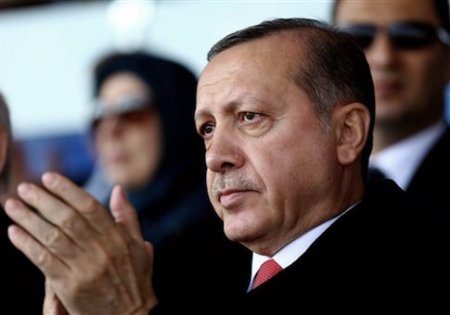
Turkish President Recep Tayyip Erdogan listens during a ceremony to commemorate the 101st anniversary of the Battle of Gallipoli in Canakkale, Turkey, Friday, March 18, 2016. Turkish President Recep Tayyip Erdogan on Friday warned Europe that it, too, could fall victim to attacks by Kurdish militants following a terror attack in Ankara that killed 37 people. (Kayhan Ozer, Presidential Press Service, Pool via AP)

Turkish President Recep Tayyip Erdogan listens during a ceremony to commemorate the 101st anniversary of the Battle of Gallipoli in Canakkale, Turkey, Friday, March 18, 2016. Turkish President Recep Tayyip Erdogan on Friday warned Europe that it, too, could fall victim to attacks by Kurdish militants following a terror attack in Ankara that killed 37 people. (Kayhan Ozer, Presidential Press Service, Pool via AP)

President Obama will welcome Erdoğan to Washington this week for a strategy meeting about countering the ISIS.

**********************

On March 18, European and Turkish diplomats signed off on a comprehensive deal on migrants pouring from Syria, Iraq, and elsewhere in the Middle East through Turkey and into the European Union. Under the terms of the deal, for every illegal migrant the E.U. returns to Turkey, Turkey would send one refugee for resettlement in Europe. Additionally, Turkey and Europe agreed to re-open discussions concerning the Muslim country’s efforts to join the E.U., and Europe agreed to allow Turks visa-free travel throughout the Schengen zone.

Two days after the deal was announced, a Turk who had joined the Islamic State blew himself up among tourists on Istanbul’s Istiklal Street, one of the city’s major shopping and tourism districts. Two days after that, ISIS suicide bombers killed dozens in two separate attacks in Brussels. ISIS called what occurred in Belgium “a drop in the sea” compared with what the terrorists have in store for “nations of disbelief.”

Turkey and its president, Recep Tayyip Erdoğan, have used the growing threat to argue that the West must better conform its policies to Turkey’s desires. In the wake of the Brussels attacks, Prime Minister Ahmet Davutoğlu chided Europe. “Europe has no partner other than Turkey to provide its regional security,” he declared, adding a subtle threat: “They should see this reality and act accordingly.” Meanwhile President Obama will welcome Erdoğan to Washington this week for a strategy meeting about countering the ISIS.

The reality Davutoğlu deliberately ignores, however, is his own country’s role in allowing ISIS to develop and metastasize. The Turkish government is adept at pulling the wool over Western officials’ eyes. Erdoğan pays lip service in meetings with European and American officials to the importance of both democracy and the Turkish partnership with the West, for example, declaring, “Secularism is the protector of all beliefs and religions.” He speaks differently to his Turkish audience. As mayor of Istanbul, he described himself as “the imam of Istanbul” and declared, “Thank God almighty, I am a servant of Shari‘a.” He is famous for his quip, “Democracy is like a streetcar. When you come to your stop, you get off.” In recent years, he has declared his goal to be to “raise a religious generation.”

This “religious generation” is flowing into the cauldron of Syria and Iraq. More than 30,000 foreign fighters from as many as 100 countries now fight with the Islamic State. The bulk of these soldiers—perhaps 90 percent—crossed into the Islamic State from Turkey. Turkish visa policy contributes to the problem. A direct correlation can be drawn between foreign fighters serving ISIS and those nationalities from which Turkish authorities require no visa or provide waivers: Several thousand more Moroccans and Tunisians, who need no visas to transit Turkey, fight with ISIS in Syria and Iraq than Algerians and Libyans, who do. If Erdoğan simply required visas in advance for those under the age of 40 coming from countries like Morocco, Tunisia, Lebanon, and Jordan—or, for that matter, from Russia, the United Kingdom, and Australia—the flood of recruits into the Islamic State would slow to a trickle.

ISIS terrorists regularly traverse the Turkish border, not only for medical care but also for rest and relaxation. Some merchants in Istanbul openly sell ISIS propaganda and promise that proceeds from their sale will benefit the group’s fight in Syria and Iraq. Smugglers peddling contraband oil to fund ISIS rely on Turkey to bring the oil to market, paying off local and perhaps even national officials of the AKP, Turkey’s governing party, along the way.

Turkey has done more than lend passive support to Islamist radicals. In his 13 years in power, Erdoğan has transformed Turkey from a Western-leaning democracy into Pakistan-on-the-Mediterranean. There was, for example,the leak of documents from the Millî İstihbarat Teşkilatı (MİT), Turkey’s intelligence service, showing Turkish support of the Nusra Front, an al Qaeda affiliate operating in Syria. And, rather than give medals to the Turkish soldiers who intercepted truckloads of weaponry destined for Syrian radicals, Erdoğan ordered their arrest.

Likewise, when Turkish journalists exposed—with photographic evidence—the transfer of munitions and other supplies from the Turkish border to ISIS, Erdoğan’s response was not to applaud the media but to seize the newspaper and arrest its editors and many of its reporters.

There is also evidence that, as Kurds fighting ISIS in Kobani in 2014 began to turn the tide against the radical group, Erdoğan and Turkish intelligence officials allowed ISIS fighters to pass through Turkey and attack Kobani from across the border, a flank the town’s largely Kurdish residents assumed was secure.

From the beginning, Erdoğan has looked at the Syrian refugee crisis not as a humanitarian tragedy but an arrow in his quiver. Inside Turkey, he has offered Sunni refugees Turkish citizenship if they settle in Turkish provinces currently dominated by the Shi‘ite offshoot Alevi sect. And, whereas the world condemns ISIS “genocide” against the Yezidi, the Yezidi who sheltered in Turkey were then victimized, again, by local AKP-run municipalities who refused to provide services offered to Sunni refugees.

Allowing Turkey to choose which refugees to send to Europe and promising to eliminate visa restrictions for Turks only rewards Erdoğan for his behavior and gives him additional leverage in his dealings with the West. Nor is this the type of policy Erdoğan’s neighbors would support. Earlier this year, King Abdullah II of Jordan told Congress, “The fact that terrorists are going to Europe is part of Turkish policy and Turkey keeps on getting a slap on the hand, but they are let off the hook.” He added that, “radicalization was being manufactured in Turkey.”

Abdullah’s message fell on deaf in ears in Washington, Brussels, Paris, and Berlin. It is Erdoğan who has the initiative as he pursues the Islamicization of Turkey and neo-Ottoman imperialism. He has built a Pakistan on the Mediterranean: an incubator of terror that markets itself as the only available partner of the West, with tragic results.

Israel’s Christian Minority

March 20, 2016

Israel’s Christian Minority, Gatestone InstituteShadi Khalloul, March 20, 2016

♦ Christians in Israel, as well as all other minorities, understand today that serving in the Israeli military is essential. Many Christians and other minorities in Israel share the same fears: they understand that in this region, Israel is the only island of safety that allows them freedom and democratic rights.

♦ Christians and other minorities in Israel prosper and grow, while in other countries in the Middle East, including the Palestinian Authority, they suffer heavily from the Islamic movement and persecution — until forced to disappear.

♦ Contrary to propaganda, there is no “Apartheid” of any kind in Israel, and no roads on which only Jews may travel.

♦ In Israel, members of the Christian and Muslim minorities fill all types of high positions — just as any Jewish Israeli who wishes to have a successful career. There is the Maronite Christian Supreme Court Judge, Salim Jubran.

♦ Widely discussed in the region is how the Europeans secretly want Israel wiped out, too, and are hoping that their new laws, combined with old Arab violence, will do the trick.

Last year, Israel recognized the existence of a group of Christians — “Arameans” — within its borders; an act that no Arab or Muslim nation from the Middle East has ever done or would ever do. Israel recognized a distinct religious and ethnic group: the indigenous people of the ancient Fertile Crescent.

Their language, Aramaic, was the language spoken by Jesus centuries before Islam came to the region.

Israel not only supports and gives Christians and other minorities — Druze, Muslims, Baha’i, everyone — full civil rights, freedom and legal rights to exist peacefully and practice their faith as they wish, but also to develop themselves as a minority with all the implications of differences in culture. Arabs, for instance, are welcomed into the Israel Defense Forces (IDF), but are not, as opposed to Jews, required to serve. Israel’s founding Prime Minister, David Ben Gurion, humanely did not want Arabs to feel as if they were obliged fight their “brothers.”

In Israel, members of the Christian and Muslim minorities fill all types of high positions — just as any Jewish Israeli who wishes to have a successful career. There is the Maronite Christian Supreme Court Judge, Salim Jubran.

Contrary to propaganda, there is no “Apartheid” of any kind, and no roads on which only Jews may travel. Those roads are in Saudi Arabia, which has real Apartheid roads, since only Muslims may travel to Mecca.

Israel does this, moreover, in a neighborhood where most of its neighbors — often the most brutal enemies of humanity — wish Israel were wiped out and often do their utmost to make this wish come true. Sadly, many Europeans join in. Everyone has seen the recent vicious attempts by the European Union to snuff out Israel economically by labeling goods made in disputed territories. This requirement, made of no other country with a disputed border actually hinders any prospects for peace that working together is meant to bring about.

These Europeans are not fooling anyone. Their slyly sadistic, self-righteous “punishments” meant for Israel will only throw thousands of Palestinians out of well-paying, badly-needed work; these diktats also drive many newly out-of-work Palestinians to the employment bureau of last resort: Islamic extremism and terrorism. Ironically, these Europeans, to satisfy their wish to hurt Jews by pretending to help Palestinians, are actually seeding a new crop of terrorists who will later come to Europe and show them what they think of such hypocrites.

Widely discussed in the region is how the Europeans secretly want Israel wiped out, too, and are hoping that their new laws, combined with old Arab violence, will do the trick. That way, the Europeans can pretend to themselves that they had “nothing to do with it.” These Europeans need to know they are not fooling anyone.

Israel, meanwhile, despite having to deal with the European and American fronts as well as often genocidal Muslim threats, continues actively to strengthen its minority communities through a variety of state-sponsored programs. Among them is a five-year plan to develop Israeli Arab and other minority communities adopted by the government on December 30, 2015, at cost of 15 billion shekels [roughly $4 billion]. Social Equality Minister Gila Gamliel, of the Likud Party is in charge of implementing the plan. Prime Minister Netanyahu, who is unjustly demonized, has for the last several years operated the “Authority for the Economic Development of the Arab, Druze and Circassian Sectors.” It is headed by an Arab Muslim, Aiman Saif, who controls a sizeable budget of 7 billion shekels [roughly $1.8 billion], which has mostly gone to different Arab cities and villages to develop modern infrastructure, industrial zones, employment opportunities, education and other elements. The rest was allocated to helping Christian villages in the Galilee.

Arabs have their own section in the Ministry of Education, headed by an Arab Muslim, Abdalla Khateeb, who is also in charge of a sizeable budget of 900 million shekels [$230 million].

Christians, as well as all other minorities, understand today that serving in the Israeli military is essential for their integration in Israel. Many Christians and other minorities in Israel share the same fears: they increasingly understand that in this region, Israel is the only island of safety that allows them freedom and democratic rights. The Muslim Arab community in Israel, as well as the Christian and other Arabic-speaking communities, see the tragic destiny of their brothers in Syria, Iraq, Lebanon and other Arab countries. Muslims killing Muslims; fanatical Muslim groups killing Christians, uprooting them, slitting their throats, burning them alive, drowning them in cages and of course crucifying them, even little children. Israel’s minorities are very aware of this. They also cannot understand why no one is demonizing those villains. They fear that this devastation will spread, first to the holy land of Israel, and then to Europe.

This fear is one of the reasons there have been increasing numbers of Christians applying to serve in the IDF: 30% recruitment on a voluntary basis; while in general Jewish society, the number stands for 57% on an obligatory basis. Today there are even more than 1000 Muslim Arabs serving in the IDF.

We all know the danger of these fanatic Islamic jihadist groups such as Hamas groups, and feel ever more committed to protect this lone pluralistic state.

The community to which this author belongs, Aramean Christians, is of Aramean-Phoenician ethnic roots and language, and was originally based in Syria, Lebanon and Iraq. Over the 1400 years following the Islamic conquest, Aramean Christians were forced to switch to speaking Arabic, and more recently to flee their homes in Syria and Iraq. They have no status in Arab and Islamic states, most ruled according to Islamic sharia law. Aramean Christians also have no status in the Palestinian Authority, which now rules Judea and Samaria.

We are aware of some Christian groups, such as Sabeel, Kairos Palestine and others under the thumb of the Palestinian Authority, who still feel the need to pay lip-service to the Muslim Arabian lords who have conquered them.

Jerusalem is open to everyone. But it has not always been, especially under the jurisdiction of Jordan, until 1967. Not only were Jews not allowed in, but 38,000 Jewish gravestones were taken from the Mount of Olives cemetery and used as building materials and flooring for Jordan’s latrines.

Muslim Arab members of Israel’s Knesset [parliament] reject the right of Christians to preserve their unique heritage. On February 5, 2014, Knesset member Haneen Zoabi of the United Arab List party threatened the Israeli Christian representatives who lobbied in the Knesset Employment Committee in favor of a law that would add Christian representatives to a committee on employment equality in the Economy Ministry. Zoabi rejected their declaration that they were a separate Aramean Christian ethnicity. She insisted on forcing upon them an Arab and Palestinian identity. This identification was of course, as false as if we Christians had insisted that Muslim Arabs call themselves Native Americans. The law passed despite the efforts of Zoabi and her colleagues, due to a coalition of Knesset members — with vast majority of Jewish MKs voting in favor of it.

This incident illustrates how some of Israel’s Muslim Arabs, while asking their Jewish neighbors for help in preserve their own Muslim-Arab heritage, prohibit other ethnic minorities these same rights.

Instead, they try to impose Arabization and Palestinization by threats and by force. In September 2014, for instance, an Aramean Christian woman, IDF Captain Areen Shaabi, was stalked by Arab Muslim activists in Nazareth. She was threatened with shouts of “Allahu Akbar” [“Allah is Greater!”], and at night her car tires were slashed.

IDF Major Ehab Shlayan, an Aramean Christian in Nazareth and the founder of the Christian Recruitment Forum, awoke on the morning of August 2015 to find that a Palestinian flag had been put in front of his door during the night. On Christmas Eve, December 24, 2014, thirty Muslims throwing stones and glass bottles attacked a Christian soldier, 19-year-old Majd Rawashdi, and his home.

1518IDF Major Ehab Shlayan (far left), is an Aramean Christian from Nazareth and founder of the Christian Recruitment Forum, which encourages Israeli Aramean Christians to serve in the military. Muslim Arab Knesset member Haneen Zoabi (right) recently threatened Israeli Christian representatives, rejecting their declaration that they were a separate Aramean Christian ethnicity and insisting on forcing upon them an Arab and Palestinian identity.

All this is hypocrisy at the highest levels, mixed with racism.

In an official Christmas greeting to Israel’s Christians on December 24, 2012, Prime Minister Netanyahu said:

“Israel’s minorities, including over one million citizens who are Arabs, always have full civil rights. Israel’s government will never tolerate discrimination against women. Israel’s Christian population will always be free to practice their faith. This is the only place in the Middle East where Christians are fully free to practice their faith. They don’t have to fear; they don’t have to flee. At a time when Christians are under siege in so many places, in so many lands in the Middle East, I am proud that in Israel Christians are free to practice their faith, and that there is a thriving Christian community in Israel.”

Christians and other minorities in Israel prosper and grow, while in other countries in the Middle East, including the Palestinian Authority, they suffer heavily from the Islamic movement and persecution — until forced to disappear.

The Israel-Bashing Industry’s “Intellectuals”

March 16, 2016

The Israel-Bashing Industry’s “Intellectuals” Gatestone Institute, Giulio Meotti, March 16, 2016

♦ These novelists hold a deep, uninformed, irrational hatred. Instead of backing the only country that gives full rights to all its citizens, they are instrumental in attacking not only Israel but the Jewish people.

♦ What is notable is that every single time, these most illustrious writers “forget” to say why Israel built those fences, checkpoints and roadblocks in the first place.

♦ Saramago, while he was visiting Ramallah, chose not to see and talk about the Israeli restaurants, malls and hotels turned into carpets of human bodies. The wholesale slaughter of Jews was the only reason Israel had to send tanks and soldiers back into the Palestinian cities after the Oslo Accords. Saramago did not mention the context; he preferred to give credence to a distorted, demonizing vision.

What is the only country about which can be said that its very existence is disputed? Clue: Not Zimbabwe, not Tuvalu, not even overrun Tibet. Which country’s boundaries, bought with blood in wars initiated by others, are challenged by all nations, who now seem determined to destroy it through boycotts, unjust defamation and purported “laws” that are applied to no other nation?

Which country fully respects the rights of women and every kind of ethnic, religious and sexual minorities, notwithstanding that it is condemned at the United Nations for being “the worst violator of women’s rights” — worse than Syria, Afghanistan, Somalia, Pakistan, China, Saudi Arabia, Iran and Sudan?

Which country provides its own enemy with water, electricity, food and medical treatment? Its military, to avoid enemy civilian casualties, warns its enemy to evacuate buildings before attacking them, and — instead of simply carpet bombing the enemy as all other nations do, including most democracies — sends its own soldiers possibly to die in ground operations?

The country is Israel — the only country that even famous writers, intellectuals and Nobel laureates target, demonize and criminalize.

There was a time when Nobel laureates for Literature, such as the German Heinrich Böll, the French Jean-Paul Sartre and the Italian Eugenio Montale, rushed to denounce injustice. Earlier, in the name of best Europe’s values — justice, freedom and solidarity — they condemned the threats to the State of Israel’s existence.

But today, these novelists hold a deep, uninformed, irrational hatred towards the same place. Instead of backing the only country that gives full rights to all its citizens, they are instrumental in attacking not only Israel but the Jewish people. In Germany, Hitler’s Mein Kampf is the new best-seller. In Europe today, you can even find a great number of books that wipe Israel off the map. And a provincial council near Glasgow, West Dunbartonshire, banned Israeli books from local libraries.

In the chorus of those who speak from journals, poems and novels, there have been a few noble exceptions. The Albanian writer Ismail Kadaré, a Muslim candidate positioned every year to win the Nobel Prize for Literature, turned down a request to boycott the tiny Jewish State. Israel, he says, faces “the threat of disappearance,” and he compared Israel to Albania under Nazi occupation. Also the author of the Harry Potter books, JK Rowling, refused to add her name to the list of Israel’s boycotters.

Their brave, solitary gestures highlight the sluggish, uninquiring conformity of the “intelligentsia’s” campaign to pile unmerited calumnies on Israel.

Worse, supposed “intellectuals” often spout raw anti-Semitism while giving a pass to the truly barbarous people among us. If the Nobel Committee had any decency, it would revoke the prizes it awarded for “Peace” to such “humanitarians” as Fidel Castro and Yasser Arafat. It is painful to watch the Nobel Committee make a fool of itself year after year, and it is painful to watch these so-called intellectuals be so unaware and filled with prejudice against the people who least deserve it.

An Italian writer, Dario Fo, a laureate of the Nobel Prize for Literature, just gave an interview to the newspaper, La Repubblica. Fo, talking about the Jewish patriarch, Moses, said: “Moses was killing women and children because they worshiped idols.” Mr. Fo went on blaming “the Jews’ brutality against those who follow other religions, as it happens today.” Excuse me? Is it the Jews who are burning people alive, drowning them in cages, slitting throats or crucifying anyone for following a different religion?

Mr. Fo’s comparison is as wrong as it is ghastly. It is not the Jews who suicide-bomb Palestinian buses, cafes, wedding halls and discotheques. It is not the Jews who now try to mow down Palestinians with cars or stab them in the street. It is the reverse — and has been for years.

The daily newspaper La Stampa charged Dario Fo with “recycling anti-Semitic stereotypes.” Fo is not new at this. In the 1970s, in one of his theatrical operas, “Resistance: Italian and Palestinian people speak,” the future Nobel Prize laureate compared Nazism to Zionism and the Palestinian fedayeen terrorists to the anti-Fascist partisans.

A few days after the 9/11 attacks, Fo also said that,

“the great speculators wallow in an economy that every year kills tens of millions of people with poverty — so what is 20,000 dead in New York? Regardless of who carried out the massacre, this violence is the legitimate daughter of the culture of violence, hunger and inhumane exploitation.”

Who gave this famous writer the right to defame, earlier, not only Israel’s name but also 9/11’s victims?

Another Nobel prize-winning novelist, Mario Vargas Llosa, as well as the Pulitzer Prize winner Dave Eggers, are among a group of international novelists who will contribute to a book of essays next year about “50 years of Israeli occupation” that will be published by Harper Collins, one of the publishers that wiped Israel off the map.

The book is part of an initiative by Breaking the Silence, a non-governmental organization (NGO) which makes sweeping charges against the Israeli army “based on anonymous and unverifiable hearsay ‘testimonies.'” while refusing to disclose the names of the Israeli soldiers who “testified.” Worse, it is being funded specifically “to incriminate the IDF” (Israel Defense Forces) and, was explicitly directed by European charities to prove that Israel acted improperly. In an article entitled, “Europe to Breaking the Silence: Bring Us As Many Incriminating Testimonies As Possible,” the watchdog group NGO Monitor disclosed that:

Contrary to BtS’ claim that “the contents and opinions in this booklet do not express the position of the funders,” NGO Monitor research reveals that a number of funders made their grants conditional on the NGO obtaining a minimum number of negative “testimonies.” This contradicts BtS’ declarations and thus turns it into an organization that represents its foreign donors’ interest, severely damaging the NGO’s reliability and its ability to analyze complicated combat situations.

Are these “prestigious” writers aware of the organization’s predetermined bias which is going to fund their new book?

There is also, of course, the problem of double standards and hypocrisy. These writers did not decide to put their pen at the service of the Syria’s civil war victims or the Christians and Yazidi who are suffering a genocide in Iraq. No, these writers targeted Israel, the only democracy in the Middle East, and its supposed “occupation” — which they fail to disclose was backed by the Palestinians themselves in the Oslo II Accord of 1995, Chapter 3, Article XVII Jurisdiction [1], which in fact turned the Palestinian people into the most protected Arab population in the entire Middle East. Go to Ramallah and Jenin and you will see the difference between how they live compared to the people living in Aleppo, Sana’a and Mosul.

The most prolific novelists in the Israel-Bashing Industry are, sadly, the British. “Sadly,” especially as Iran has within the last month raised the bounty offered on the head of a British citizen, Salman Rushdie, by another $600,000, in addition to the $3 million issued by Ayatollah Khomeini in 1989. That brings the incentive for murdering a novelist to roughly $4 million. About that, the British government has been shamefully silent. The only condemnation so far seems to have come from the Iranian journalist, Amir Taheri, the British journalist, Douglas Murray and from PEN.

Another “intellectual,” John Berger, a Booker Prize winner, called for artists to decline being published by Israeli publishers and to undertake a boycott of the Jewish State. Harold Pinter, the late Nobel Laureate playwright, has gone so far as to declare Israel “the central factor in world unrest,” presumably forgetting about Pakistan, Afghanistan, Iran, and Sudan. Showing how thin is the line separating criticism and anti-Semitism, Tom Paulin, poet, essayist and academic at Oxford, said Jewish “settlers” in Israel “should be shot dead.” A Scottish National Poet, Liz Lochhead, also joined a group calling for the boycott of Israel.

Dozens of the world’s literary stars, including Nobel laureates in literature such as J. M. Coetzee, Herta Mueller, Orhan Pamuk and the late Irish poet Seamus Heaney, added their names to a petition against Israel’s “occupation’s giant, cruel hand.” What is notable is that every single time, these most illustrious writers “forget” to say why Israel built those fences, checkpoints and roadblocks in the first place.

Donald Trump wants to build a wall with Mexico, the Arab sheikhdoms are closing the border with Oman, Spain built fences to keep out Moroccans, India is walling off Bangladesh, South and North Korea share a fortified border, Cyprus is divided by walls and Belfast is a fenced city of barriers.

But only Israel’s fence — built for defensive, humanitarian reasons, merely not to get blown up — is condemned by the International Court of Justice and receives round-the-clock coverage on CNN and front page stories in the New York Times. Why? Because the security barrier that saves lives was perverted by unjust people into an unjust barrier, with no mention of what happened to Israelis before that fence was put up. To paraphrase attorney Alan Dershowitz: If you made a fair and objective list of all the countries in the world that comply with human rights, from best to worst, Israel would have to be near the top, among the best.

One of the most chilling accusations against Israel has come from a northern European writer, Jostein Gaarder, an ostensible humanitarian, whose book, “Sophie’s World,” was translated into 53 languages, and with 26 million copies sold. Penning an article in the Norwegian newspaper Aftenposten, Gaarder wrote:

“If the entire Israeli nation should fall … and part of the population must flee to another Diaspora, then we say: may their surroundings stay calm and show them mercy. Shoot not at the fugitives! Take not aim at them! They are vulnerable now — like snails without shells! … Give the Israeli refugees shelter; give them milk and honey!”

Gaarder envisages the expulsion of the entire Jewish people from their land, and again dependent on European charity — in recent years not exactly a commodity in great supply.

Israel has been humiliated also by a German writer and Nobel Prize for Literature, Günter Grass, who published a poem in several European newspapers, in which he treated Israel as the purveyor of all ills and the instigator of every type of disorder. According to Mr. Grass, it is Israel that threatens Iran with a nuclear genocide, not the reverse.

This sanctimony should not have come from that writer: Grass, in fact, served in Nazi Germany’s armed SS force and defined East Germany’s Communism “a comfortable dictatorship.”

After a visit in the Palestinian Authority’s de facto capital, Ramallah, during the Second Intifada, after there were about 1,500 Jewish dead from terrorism, another winner of Nobel Prize for Literature, José Saramago, stated that the Israeli blockade of Ramallah was “in the spirit of Auschwitz” and “this place is being turned into a concentration camp.” A year later, Saramago commented that the Jewish people no longer deserve “the sympathy for the suffering they went through during the Holocaust.”

1512Nobel laureates who demonized: German novelist Günter Grass (left), who served in Nazi Germany’s armed SS force, claimed that Israel threatens Iran with a nuclear genocide. Portuguese novelist José Saramago (right), gave credence to a distorted, demonizing vision that culminated in the perverse comparison between Hitler and Israel.

Mr. Saramago, while he was visiting Ramallah, chose not to see and talk about the Israeli restaurants, shopping malls and hotels turned into carpets of human bodies. The wholesale slaughter of Jews was the only reason Israel had to send tanks and soldiers back into the Palestinian cities after the Oslo Accords. Saramago did not mention the context; he preferred to give credence to a distorted, demonizing vision that culminated in the perverse comparison between Hitler and Israel, and the transformation of the Jewish State — the historical home of the Jews for nearly 4000 years, and lately the only sanctuary not to turn away Jews being persecuted or rounded up for death — into an “imperialist base.”

It is by repeating lies that Europe even accepted the big Mohammed al-Dura lie: a boy supposedly riddled to death with Israeli bullets, but there was not one drop of blood! Not only that, but after he was dead, he moved his hand to look out. Quite a feat. For a time, the lie even became the favorite table conversation for Europe’s upper classes.

This is how millions of Europeans have been persuaded to see Israel as the aggressor and the Palestinian terrorists as the victims. They read the inverted, Orwellian revision of history every day on the front pages. Look at what is happening now during this “Third Intifada”: it is filled with knives, stabbings of Jews, even charts on the internet showing where to stab a Jew to do the most damage. The many dead Israeli civilians and soldiers have totally disappeared from the television screen, but when Israeli soldiers shoot a Palestinian in the process of stabbing a Jew, they are labelled by a corrupt and racist media as “illegal executioners.”

What would these supposed intellectuals do if citizens were being stabbed in London, Rome or Berlin? The “intellectuals” and the media seem to be trying to make the Jews unable to defend themselves. The “intellectuals” and the media are preaching for Israel’s destruction.

_____________________

[1] From the Oslo II Accord — Israeli-Palestinian Interim Agreement on the West Bank and the Gaza Strip, September 28, 1995, CHAPTER 3 – LEGAL AFFAIRS, ARTICLE XVII
 — Jurisdiction:

4. a. Israel, through its military government, has the authority over areas that are not under the territorial jurisdiction of the Council, powers and responsibilities not transferred to the Council and Israelis.

b. To this end, the Israeli military government shall retain the necessary legislative, judicial and executive powers and responsibilities, in accordance with international law. This provision shall not derogate from Israel’s applicable legislation over Israelis in personam.

Trump and the Left’s Accusations of Fascism

March 16, 2016

Trump and the Left’s Accusations of Fascism, Front Page MagazineBruce Thornton, March 16, 2016

trump

Donald Trump’s success in the primaries and his rhetoric have sparked troubled meditations about an awakening of fascist impulses among his supporters. Bret Stephens has drawn an analogy with the Thirties, “the last dark age of Western politics,” and compared Trump to Benito Mussolini. On the left, Dana Milbank, in a column titled “Trump Flirts with Fascism,” wrote about a campaign rally at which Trump was “leading supporters in what looked very much like a fascist salute,” a scene New York Times house-conservative David Brooks linked to the Nuremberg party rallies.

Much of the rhetoric that links Trump to fascism or Nazism is merely the stale ad Hitlerum fallacy used by progressives to demonize the candidate. They did the same thing when they called George W. Bush “Bushitler.” This slur reflects the hoary leftist dogma that conservatives at heart are repressed xenophobes and knuckle-dragging racists lusting for a messianic leader to restore their lost “white privilege” and punish their minority, immigrant, and feminist enemies. As such, the attack on Trump is nothing new or unexpected from a progressive ideology whose totalitarian inclinations have always had much more in common with fascism than conservatism does.

What Auden called the “low dishonest decade” of the Thirties, however, is indeed instructive for our predicament today, but not because of any danger of a fascist party taking root in modern America. Communism was (and in some ways still is) vastly more successful at infiltrating and shaping American political, cultural, and educational institutions than fascism ever was. But the same cultural pathologies that enabled both fascist and Nazi aggression still afflict us today. These pathologies and their malign effects are more important than the reasons for Trump’s popularity–– anger at elites, economic stagnation, and anti-immigrant passions–– that supposedly echo the “waves of fear and anger” of Auden’s Thirties.

The most important delusion of the Thirties still active today is the idealistic internationalism that had developed over the previous century. A world shrunk by new communication and transportation technologies and linked by global trade, internationalists argued, meant nations and peoples were becoming more alike. Thus they desired the same prosperity, political freedom, human rights, and peace that the West enjoyed. Interstate relations now should be based on this “harmony of interests,” and managed by non-lethal transnational organizations rather than by force. Covenants and treaties like the Hague and Geneva Conventions, and institutions like the League of Nations and the International Court of Arbitration, could peacefully resolve conflicts among nations through diplomatic engagement, negotiation, and appeasement.

The Preamble to the First Hague Convention (1899) captures the idealism that would compromise foreign policy in the Thirties. The Convention’s aims were “the maintenance of the general peace” and “the friendly settlement of international disputes.” This goal was based on the “solidarity which unites the member of the society of civilized nations” and their shared desire for “extending the empire of law and of strengthening the appreciation of international justice.” Two decades later, the monstrous death and destruction of World War I should have shattered the delusion of such “solidarity” existing even among the “civilized nations.” Despite that gruesome lesson, Europe doubled down and created the League of Nations, which failed to stop the serial aggression that culminated in World War II.

But the League wasn’t the only manifestation of naïve internationalism. The Locarno Treaty of 1925 welcomed Germany back into the community of nations with a seat on the League of Nations council. Nobel Peace prizes, and wish-fulfilling headlines like the New York Times’ “France and Germany Bar War Forever,” were all that resulted. The Kellogg-Briand pact of 1928 “condemn[ed] recourse to war for the solution of international controversies, and renounce[d] it as an instrument of national policy” in interstate relations. The signing powers asserted that “the settlement or solution of all disputes or conflicts . . . shall never be sought except by pacific means.”

All the future Axis Powers signed the treaty, and they all soon shredded these “parchment barriers.” In the next few years, Japan invaded Manchuria, Hitler remilitarized the Rhineland in gross violation of the Versailles Treaty, and Italy invaded Ethiopia. By the time Germany annexed Austria, and Neville Chamberlain’s faith in negotiation and appeasement handed Czechoslovakia to Hitler, all these treaties and conventions and conferences were dead letters, and the League of Nations was exposed as a “cockpit in the tower of Babel,” as Churchill suggested after the First World War.

However, such graphic and costly evidence showing the folly of “covenants without the sword,” as Hobbes put it, did not discredit this dangerous idealism over the following decades. Indeed, it lies behind the disasters of Obama’s foreign policy. Just consider his “outreach” to our enemies, his acknowledgement of our own “imperfections,” his reliance on toothless U.N. Security Council Resolutions, his preference for non-lethal economic sanctions to pressure adversaries, and his belief that negotiated settlements and agreements can achieve peace and good relations even with our fiercest enemies. All reflect the same failure to recognize that our adversaries in fact do not sincerely want to reach an agreement, for the simple reason they are not in fact “just like us,” and so they do not want peace and prosperity and good relations with their neighbors and the “world community.”

The catalogue of Obama’s failures is long and depressing. The “reset” with Russia and promise of “flexibility,” the empty “red line” threats against Bashar al Assad, the arrogant dismissal of a metastasizing ISIS as a “jayvee” outfit, the alienation of allies like Egypt, Saudi Arabia, and Israel, the cultivation of the jihadist Muslim Brotherhood, the ill-conceived overthrow of Muammar Ghaddafi, and the rhetoric of guilt and self-abasement are just the most noteworthy failures. The nuclear deal with Iran, of course, is the premier monument to this folly. Yet despite the increasing evidence of its futility­­––Iran’s saber-rattling in the Gulf, capture of U.S. military personnel, genocidal rhetoric, and testing of missiles in blatant violation of a U.N. Security Council resolution–– Obama still clings to this internationalist delusion.

A recent article in The Atlantic on Obama’s foreign policy shows, despite his protestations of hardheaded “realism,” that he has not learned from his failures. Thus he still thinks that the vigorous use of force is usually an unnecessary and dangerous mistake, and that verbal persuasion and diplomatic engagement are more effective. He also still believes that “multilateralism regulates [U.S.] hubris” of the sort that George W. Bush showed when he recklessly invaded Iraq, and that American foreign policy has frequently displayed.

Obama’s delusional faith in rhetoric, especially his own, comes through in his rationale for the infamous 2009 Cairo speech: “I was hoping that my speech could trigger a discussion, could create space for Muslims to address the real problems they are confronting—problems of governance, and the fact that some currents of Islam have not gone through a reformation that would help people adapt their religious doctrines to modernity.” The idea that Obama’s mere words could start a “discussion” that would transform 14-century-old religious doctrines fundamentally inimical to liberal democracy, human rights, and all the other Western goods we live by, is a fantasy. Obama’s self-regard recalls Neville Chamberlain’s boast after his meeting with Hitler at Bad Godesberg that he “had established some degree of personal influence with Herr Hitler.”

Or consider Obama’s take on Vladimir Putin:

He understands that Russia’s overall position in the world is significantly diminished. And the fact that he invades Crimea or is trying to prop up Assad doesn’t suddenly make him a player. You don’t see him in any of these meetings out here helping to shape the agenda. For that matter, there’s not a G20 meeting where the Russians set the agenda around any of the issues that are important.

A “player,” in Obama’s foreign policy universe, is a leader who uses “smart power” like diplomacy and negotiated deals, and recognizes that the use of force will backfire and lead to costly “quagmires.” As Secretary of State John Kerry suggested, Putin is using outdated “19th century” instruments of foreign policy like military force in a world that presumably has evolved beyond it.

In contrast, a genuine “player,” as Obama fancies himself, attends summits and conferences, such as the useless climate change conference in Paris, and “sets the agenda.” And like his rationale for the Cairo speech, as the leader of the world’s greatest power, his rhetoric alone can be a force for change. Thus just saying that Syria’s “Assad must go,” while doing nothing to achieve that end, is still useful, and refusing to honestly identify the traditional Islamic foundations of modern jihadism will build good will among Muslims and turn them against the “extremists.”

Meanwhile, Putin and Iran fight and bomb and kill in Syria and Iraq, and now they are the big “players” in a region that the U.S. once dominated, but that now serves the interests of Russia and Iran. I’m reminded of Demosthenes’ scolding of the Athenians for refusing to confront Phillip II of Macedon: “Where either side devotes its time and energy, there it succeeds the better––Phillip in action, but you in argument.”

In other words, for Obama as for Chamberlain, appeasing words rather than forceful deeds are the key to foreign policy––precisely the belief that led England to disastrously underestimate Hitler until it was too late. And that same belief has turned the Middle East into a Darwinian jungle of clashing tribes, sects, and nations.

Obama wraps his foreign policy of retreat in claims to “realist” calculations of America’s security and genuine interests, and buttresses his claim by citing his strategically inconsequential drone killings. But such rhetoric hides an unwillingness to risk consequential action and pay its political costs. And it reflects a commitment to the internationalist idealism that gives diplomatic verbal processes an almost magical power to transform inveterate enemies into helpful partners. Europe tried that in the Thirties, and it led to disaster. That’s a much more important lesson from that sorry decade’s history than the lurid fantasies about fascism coming to America on the wings of Trump’s rhetoric.

Palestinians: The Right Time to Take Big Steps?

March 4, 2016

Palestinians: The Right Time to Take Big Steps? Gatestone InstituteBassam Tawil, March 4, 2016

♦ Despite the “official” surveys taken among Palestinians, which show support for Hamas, the residents of the West Bank are terrified that Hamas will gain control and destroy our lives and property, the way they did in the Gaza Strip.

♦ The BDS organizations are trying to boycott products made in the West Bank, which only throws masses of Palestinians out of good jobs in an effort to force Israel into a hasty withdrawal that has no chance of taking place. The Israelis and everyone else remember all too well that the last Israeli withdrawals — from southern Lebanon and the Gaza Strip — led to the terrorist takeover of the vacuums created.

♦ Ikrima Sabri, the former Mufti of Jerusalem, often said that Palestinians were better off with the Jews in charge of Al-Aqsa mosque and Jerusalem, because in the future they could be removed and killed off, but if the Crusaders returned to Jerusalem — such as an international commission headed by the French — it would be harder to get rid of them.

During a visit to Berlin, German Chancellor Angela Merkel told Israel’s Prime Minister Benyamin Netanyahu that now is not time to move forward with the “two-state solution” and the establishment of a Palestinian state.

Merkel, evidently seeing Israel as a dam protecting Europe from Islamist extremists, told Netanyahu that while the Germans recognized the terrorist threat faced by Israel, and that a peace process had to be advanced based on two states for two peoples, now was not the right time to take big steps.

1494Agreed: It’s not a good time to establish a Palestinian state. Pictured: Israeli Prime Minister Benjamin Netanyahu and German Chancellor Angela Merkel address a press conference in Berlin, Germany, on February 16, 2016. (Image source: Israel Government Press Office)

The Palestinians living in the Gaza Strip are well aware that they are hostages of the terrorist organizations, in particular Hamas. Jibril Rajoub, a senior official in the Palestinian Authority (PA), told Al-Jazeera TV the same thing just last week.

The Palestinians in the West Bank, regardless of public declarations, also secretly support security collaboration with Israel, which protects us from radical Islamist terrorism. Therefore, despite the “official” surveys taken among Palestinians, which show support for Hamas, the residents of the West Bank are terrified that Hamas will gain control and destroy our lives and property the way they did in the Gaza Strip. We do want a Palestinian state, but one that will preserve the lifestyle and accomplishments we have built over the years — not a state that will have them fall to the horrors of Hamas and ISIS.

In light of the quiet, passive public support for the regime of Mahmoud Abbas, Hamas is inciting Palestinians against it. Hamas, in an attempt to overthrow the Palestinian Authority, is portraying Abbas’s security forces as traitors who transmit information to Israel.

Like Germany — and unlike Sweden and France — Britain has recently instituted a more balanced policy. The UK has begun to fight the anti-Israel BDS (Boycott, Divestment and Sanctions) organizations. Matthew Hancock, Britain’s Minister for the Cabinet Office, who coordinates activities between various government ministries, is advancing protocols to prevent the ongoing boycotts by the British establishment.

These BDS organizations are trying to boycott products made in the West Bank, but the boycott only throws masses of Palestinians out of good jobs and great benefits in an effort to force Israel into a hasty withdrawal that has no chance of taking place. The Israelis and everyone else remember all too well that the last Israeli withdrawals — from southern Lebanon and the Gaza Strip — were nothing more than case-studies for the terrorist takeover of the vacuums created, exactly the same way as the U.S. withdrawal from Iraq made room for the Islamic State (ISIS).

As Palestinians we know that the BDS may or may not harm Israel, but it does untold damage to the Palestinians who support their families by working in the settlement factories and would otherwise be unemployed and then, as a scarcity of jobs will have been created, hired by various terrorists. When the SodaStream factory moved out of the West Bank, 500 Palestinians lost their well-paid jobs.

In view of the current U.S. helplessness in dealing with the Russians, Iranians and Syrians, the Obama administration has now chosen to bare its fangs at Israel. Despite what are apparently his predictable personal objections, U.S. President Barack Obama is expected to sign into law the Trade Facilitation and Trade Enforcement Act, which includes anti-BDS provisions. It introduces new policy language by including all “Israeli-controlled territories” as part of Israel. Meanwhile, the American customs authority is still continuing to enforce a 20-year-old law, marking products made in the West Bank and hurting Palestinians. Labeling products hurts the Palestinians, who then are driven look for work in the eager arms of the terrorist organizations radicalizing the region.

The French, as usual, slither and shift. A number of months ago, they tried to build up steam for an international commission of inquiry into the Al-Aqsa mosque. Both the Israelis and the Palestinians objected.

Ikrima Sabri, the former Mufti of Jerusalem, often said that Palestinians were better off with the Jews in charge of Al-Aqsa mosque and Jerusalem, because in the future they could be removed and killed off, but if the Crusaders returned to Jerusalem through the back door — such as an international commission headed by the French — it would be harder to get rid of them.

The French, fearing for their lives at the hands of their own local Islamist enclaves, are in dire straits and doggedly try one maneuver after another to appease them. In desperation, they have proposed peace negotiations for the Palestinians and Israel “with international mediation.” They even brazenly suggested that if the negotiations failed, they would recognize the Palestinian state. The outcome is written on the wall: the Palestinians, who will have no reason to negotiate, will fall over themselves rushing to the conference, then automatically veto every proposal or possible compromise, and then receive the promised recognition of Palestine.

The French are masters of diplomatic flimflam: on the one hand, they will do anything to appease their own Islamists at the expense of Israel, and on the other, they know full well neither Israel nor any other Western country will accept their self-serving suggestion. The French keep revealing their duplicity again and again. They refuse to designate Iranian-backed Hezbollah as a terrorist organization; they instead call it a “political party,” despite its full participation in slaughtering Sunni Muslims in Syria. Hezbollah is also one of the main actors pushing the countless asylum-seekers (and occasional ISIS operative) flooding Europe, Turkey and Jordan.

The atrocities committed today in the Middle East are the direct result of the refusal of Europe (including France) and the United States to intervene, and the stunning silence of the Arab states. Unwilling to fight ISIS, they are more than willing to condemn, slander and criticize Israel, while the Middle East slips into anarchy.

The result for us Palestinians will be bloodletting, either in the Hamas-Fatah rivalry, or as collateral damage in the Israelis’ war against Islamist terrorism, or, when the Palestinian Authority falls, at the hands of ISIS and Al-Qaeda and the Al-Nusra Front as they sweep through the Jordan Valley on their way to attack Israel.

Al-Jazeera TV is also trying to serve its master, Qatar, radicalize the Palestinians by saying that the Palestinian Authority’s security coordination with Israel, which benefits everyone here by keeping out Islamic terrorists, is betraying the Palestinian cause. In addition, Israeli intelligence, by saying that a seaport for Hamas should be built is, for some mysterious reason, trying to kill off the Palestinian Authority by strengthening Hamas. Both the Egyptians and we Palestinians — and even the Israelis — do not need Hamas strengthened at our expense. Hamas and the many other extremist organizations that have infiltrated the Gaza Strip, including ISIS, are what enable Israelis to justify their security concerns as well as those regarding peace negotiations with the Palestinians, and that prevent a withdrawal from the West Bank. Given the current situation in the Middle East, Angela Merkel was correct. It is not the right time now to take big steps.

Analysis: Iran, ISIS Likely to Unite for WWIII

February 28, 2016

Analysis: Iran, ISIS Likely to Unite for WWIII, The Jewish PressHana Levi Julian, February 28, 2016

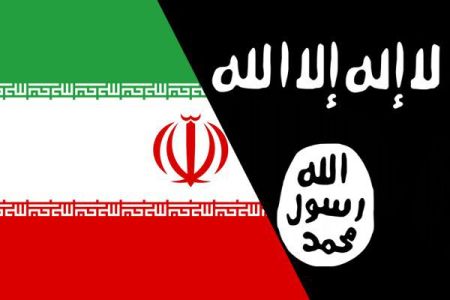
Iran-ISIS-flagPhoto Credit: JP.com graphic

Israeli military analysts are now beginning to prepare top officials, who are in turn beginning to prepare the nation, for what eventually may become the start of World War III.

Most analysts still believe the Syrian crisis is a sectarian conflict between the Sunni, Shi’a and Alawite Muslims. But that time is long gone.

A cataclysmic clash of civilizations is taking place in Syria, one that a number of nations have patiently awaited for decades.

Turkey, so deeply invested in the glorious history of its Ottoman Empire period, would find great satisfaction in stretching its influence with a modern-day “Turkish Islamic Union” that might embrace like-minded nations in the region and perhaps also beyond.

Da’esh, as it is known in the Middle East and which in English calls itself the “Islamic State” (known by others as ISIS or ISIL) is rapidly stretching its influence to build a worldwide Sunni caliphate. It began as a splinter group from the Al Qaeda terrorist organization, and then morphed into the Islamic State in Iraq and Syria (hence “ISIS”) — but at last count had successfully recruited more than 41 other regional Muslim terrorist organizations to its cause from around the world on nearly every continent.

And then there is the Islamic Republic of Iran, a Shi’ite Muslim nation, which is extending its tentacles as rapidly throughout the world as Da’esh, but far more insidiously and certainly more dangerously. If in this world one might define any nation today as Amalek, that ice-cold, black-hearted evil that first picks off the weakest of the Jewish nation, it is Iran, which has quietly extended its influence and control farther and more deeply than any other enemy Israel has ever had. Wealthy, patient, smiling and calculating, Iran acquires new allies each year, even among those Israel once counted as friends. Meanwhile, Iranian officials never forget to keep the home fires burning, to stir the pot and keep it simmering, and always to nurture the various conflicts at home in the Middle East.

This past week, Iran announced the money it donates to families of Arab “martyrs” who murder Israelis will be paid via its own special charity organization, and not through the Palestinian Authority government.

But Tehran has yet to reveal the details of exactly how it intends to pay.

Instead, a high-ranked government official simply made an announcement this weekend saying Iran did not trust the Ramallah government, driving a deeper wedge already dividing the PA’s ruling Fatah faction from Gaza’s ruling Hamas terror organization — Iran’s proxy group.

Hamas has been planting sleeper cells and budding regional headquarters, however, throughout the PA-controlled areas of Judea and Samaria, and it is clear the group’s next goal is an attempt to wrest control of those two regions from the PA, thus completing Iran’s takeover of the PLO — the PA’s umbrella organization and liaison to the United Nations.

Money is always helpful in such an enterprise, and Iran has recently enjoyed a massive infusion of cash that came courtesy of the United States and five other world powers after sanctions were lifted last month as part of last July’s nuclear deal.

Iranian Ambassador to Lebanon Mohammed Fath’ali announced last Wednesday that Iran would pay Arab families for each “martyr” who died attacking Israelis in Jerusalem and each Arab family whose home was demolished by Israel after one of its occupants murdered Israelis in a terror attack.

Iranian Parliament Speaker Ali Larijani last week underlined Tehran’s continued strong support for the wave of terror against Israel.

“The Islamic Republic supports the Palestinian Intifada and all Palestinian groups in their fight against the Zionist regime. We should turn this into the main issue in the Muslim world,” Larijani said in a meeting with a number of “resistance” groups in Tehran,FARS reported Sunday (Feb 28).

But it is clear that Iran is not content solely with a takeover of the PLO.

Tehran has its eye on a much wider goal, now more clearly than ever the resurrection of an updated Persian Empire — in modern parlance military analysts refer to it as an “Axis of Evil” — in much the same manner that Sunni Da’esh (ISIS) is single-mindedly pursuing its goal of rebuilding a worldwide caliphate.

Iranian forces via proxies have already managed to involve themselves in what once were domestic affairs in Yemen, Syria, Lebanon, Egypt, Jordan, Bahrain, Saudi Arabia, Iraq, Israel, Cuba, Mexico, the United States, Afghanistan, Venezuela, Brazil, Argentina, Qatar, Turkey and numerous other nations.

Larijani has at last proclaimed officially that Iran doesn’t differentiate between Shiites and Sunnis since they share many commonalities, adding that Tehran “has supported the Palestinian nation (although they are Sunnis) for the past 37 years.”

The remark is significant in that Iran’s Revolutionary Guard Corps and Lebanese Shi’ite Hezbollah guerrillas – another Iranian proxy – are fighting Sunni opposition forces in Syria on behalf of President Bashar al-Assad. Iranian forces are fighting the Sunni Muslim Da’esh (ISIS) terror organization that seized a significant percentage of territory in Syria.

But south of Israel, Iran’s proxy Hamas, a Sunni Muslim group, has been providing material and technical support to the same Da’esh — but its “Sinai Province” terror group in the Sinai Peninsula.

Here we finally see that Iran is willing to adapt and support terror wherever it can be found, as long as it meets two of three criteria: (1) it furthers its goal to destabilize the region, (2) in the process it works towards the annihilation of Israel, and/or (3) will contribute towards conquest and influence to reach the goal of an ultimate renewed, updated Persian Empire.

How long then until Iran connects the two dots and simply arranges a meeting between its own Supreme Leader Ayatollah Ali Khamenei and the leader of Da’esh, Abu Bakr al-Baghdadi? Hezbollah’s Hassan Nasrallah and Hamas leader Khaled Meshaal will likely be invited for dessert …

The other question is how long until someone strikes the spark that ignites the conflagration — the region is already in chaos.

Between Putin and Obama

February 7, 2016

Between Putin and Obama, Israel Hayom, Boaz Bismuth, February 7, 2016

The tide has turned in Syria: Aleppo, the rebel stronghold, is on the verge of falling to President Bashar Assad’s army. Hezbollah’s Shiite militias, the Iranian army and the massive Russian air strikes have been the difference.

In contrast to the rebels, Assad can count on his partners. On the Syrian dictator’s side, backed by Russia, action is being taken. On the rebel side, backed by the Americans, there has been a lot of talking. This perhaps explains why in January 2017 U.S. President Barack Obama will exit the White House, and Assad will still be in power. We can add this legacy to the American president’s splendid list of achievements.

And we haven’t even mentioned the millions of Syrian refuges, the terrible migrant crisis in Europe (leading to the rise of far-right parties across the continent), and the escalation of hostilities between Shiites and Sunnis. It’s not a short list.

Since last Monday, Aleppo has been under heavy attack from Assad’s forces. The gains on the ground have been considerable. Russia’s intervention has tipped the balance of power. No one can say this was unexpected. Washington, meanwhile, continues to grumble. U.S. Secretary of State John Kerry lambasted Moscow on Friday for the large number of dead Syrian women and children. Moscow isn’t exactly heeding his criticism. Washington still fails to understand that instead of talking, maybe it would be better to take action already. In August of 2013, however, after Assad had attacked his own people with chemical weapons for the 14th time, the Americans did nothing (red lines, remember?). Why should things be any different today?

Washington, you will say, has worked hard to find a diplomatic solution. This is a good time to remind everyone that the peace talks in Vienna have again hit a dead end. The talks aren’t likely to succeed for a number of reasons, namely that the two main players — Saudi Arabia and Iran — have reached a point of open hostilities, thanks to American foreign policy. Instead of cooperating to resolve the Syrian crisis, these two regional powers are closer than ever to a full-fledged military conflict. Riyadh is threatening to send ground forces into Syria to support the rebels. The commander of Iran’s Revolutionary Guard has already vowed that any such intervention would result in immense casualties for the Saudis. This is where things stand.

Over the weekend Turkey’s foreign minister discussed opening his country’s borders to the steady stream of refugees, but the crossings remain as shut as they were in September, 2014, when thousands of Kurds tried to flee the border town of Kobani. The European Union is trying to remind the Turks that they were given $3 billion for the expressed purpose of absorbing these 2 million refugees. But who expects agreements to be kept in today’s Middle East?

Who does have faith in agreements?

The refugee issue is becoming the hot button topic of the Syrian civil war. “The markets solved the economic crisis, the voters will solve the refugee crisis,” a French lawmaker said a few days ago. In the meantime, as Assad solidifies his power the far-right parties in Germany, Sweden, Denmark and Holland, and of course in France, are all growing in strength. It appears that everyone outside the Obama camp is thriving. And here is yet one more legacy to tell the grandchildren about.