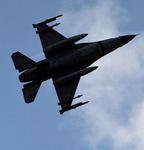
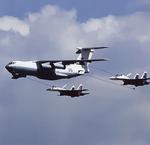
Archive for the ‘Middle East’ category

Column One: Obama strikes again

July 31, 2015

Column One: Obama strikes again, Jerusalem Post, Caroline Glick, July 30, 2015
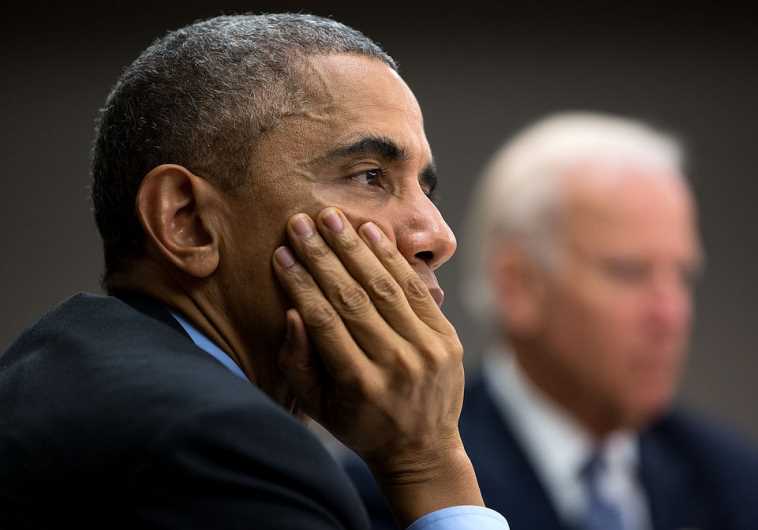
ShowImage (5)US President Barack Obama (L) and Vice President Joe Biden. (photo credit:OFFICIAL WHITE HOUSE PHOTO BY PETE SOUZA)

Most of the antiquities that ISIS plunders in Iraq and Syria make their way to the world market through Turkey. So, too, most of the oil that ISIS produces in Syria and Iraq is smuggled out through Turkey. According to the US Treasury, ISIS has made $1 million-$4m. a day from oil revenue.

Instead of maintaining its current practice of balancing its support for Turkey with its support for the Kurds, under the agreement, the West ditches its support for the Kurds and transfers its support to Turkey exclusively.

************************

While Israel and much of oficial Washington remain focused on the deal President Barack Obama just cut with the ayatollahs that gives them $150 billion and a guaranteed nuclear arsenal within a decade, Obama has already moved on – to Syria.

Obama’s first hope was to reach a deal with his Iranian friends that would leave the Assad regime in place. But the Iranians blew him off.

They know they don’t need a deal with Obama to secure their interests. Obama will continue to help them to maintain their power base in Syria though Hezbollah and the remains of the Assad regime without a deal.

Iran’s cold shoulder didn’t stop Obama. He moved on to his Sunni friend Turkish President Recep Erdogan.

Like the Iranians, since the war broke out, Erdogan has played a central role in transforming what started out as a local uprising into a regional conflict between Sunni and Shiite jihadists.

With Obama’s full support, by late 2012 Erdogan had built an opposition dominated by his totalitarian allies in the Muslim Brotherhood.

By mid-2013, Erdogan’s Muslim Brotherhood- led coalition was eclipsed by al-Qaida spinoffs. They also enjoyed Turkish support.

And when last summer ISIS supplanted al-Qaida as the dominant Sunni jihadist force in Syria, it did so with Erdogan’s full backing. For the past 18 months, Turkey has been ISIS’s logistical, political and economic base.

According to Brett McGurk, the State Department’s point man on ISIS, about 25,000 foreign fighters have joined ISIS in Syria and Iraq. All of them transited through Turkey.

Most of the antiquities that ISIS plunders in Iraq and Syria make their way to the world market through Turkey. So, too, most of the oil that ISIS produces in Syria and Iraq is smuggled out through Turkey. According to the US Treasury, ISIS has made $1 million-$4m. a day from oil revenue.

In May, US commandos in Syria assassinated Abu Sayyaf, ISIS’s chief money manager, and arrested his wife and seized numerous computers and flash drives from his home. According to a report in The Guardian published last week, the drives provided hard evidence of official Turkish economic collusion with ISIS.

Due to Turkish support, ISIS has become a self-financing terrorist group. With its revenue stream it is able to maintain a welfare state regime, attracting recruits from abroad and securing the loyalty of local Sunni militias and former Ba’athist forces.

Some Western officials believed that after finding hard evidence of Turkish regime support for ISIS, NATO would finally change its relationship with Turkey. To a degree they were correct.

Last week, Obama cut a deal with Erdogan that changes the West’s relationship with Erdogan.

Instead of maintaining its current practice of balancing its support for Turkey with its support for the Kurds, under the agreement, the West ditches its support for the Kurds and transfers its support to Turkey exclusively.

The Kurdish peshmerga militias operating today in Iraq and Syria are the only military outfits making sustained progress in the war against ISIS. Since last October, the Kurds in Syria have liberated ISIS-controlled and -threatened areas along the Turkish border.

The YPG, the peshmerga militia in Syria, won its first major victory in January, when after a protracted, bloody battle, with US air support, it freed the Kurdish border town of Kobani from ISIS’s assault.

In June, the YPG scored a strategic victory against ISIS by taking control of Tal Abyad. Tal Abyad controls the road connecting ISIS’s capital of Raqqa with Turkey. By capturing Tal Abyad, the Kurds cut Raqqa’s supply lines.

Last month, Time magazine reported that the Turks reacted with hysteria to Tal Abyad’s capture.

Not only did the operation endanger Raqqa, it gave the Kurds territorial contiguity in Syria.

The YPG’s victories enhanced the Kurds’ standing among Western nations. Indeed, some British and American officials were quoted openly discussing the possibility of removing the PKK, the YPG’s Iraqi counterpart, from their official lists of terrorist organizations.

The YPG’s victories similarly enhanced the Kurds’ standing inside Turkey itself. In the June elections to the Turkish parliament, the Kurdish HDP party won 12 percent of the vote nationally, and so blocked Erdogan’s AKP party from winning a parliamentary majority.

Without that majority Erdogan’s plan of reforming the constitution to transform Turkey into a presidential republic and secure his dictatorship for the long run has been jeopardized.

As far as Erdogan was concerned, by the middle of July the Kurdish threat to his power had reached unacceptable levels.

Then two weeks ago the deck was miraculously reshuffled.

On July 20, young Kurdish activists convened in Suduc, a Kurdish town on the Turkish side of the border, 6 kilometers from Kobani. A suicide bomber walked up to them, and detonated, massacring 32 people.

Turkish officials claim that the bomber was a Turkish Kurd, and a member of ISIS. But the Kurds didn’t buy that line. Last week, HDP lawmakers accused the regime of complicity with the bomber. And two days after the attack, militants from the PKK killed two Turkish policemen in a neighboring village, claiming that they collaborated with ISIS.

At that point, Erdogan sprang into action.

After refusing for months to work with NATO forces in their anti-ISIS operations, Erdogan announced he was entering the fray. He would begin targeting “terrorists” and allow the US air force to use two Turkish air bases for its anti-ISIS operations. In exchange, the US agreed to set up a “safe zone” in Syria along the Turkish border.

Turkish officials were quick to explain that in targeting “terrorists,” the Turks would not distinguish between Kurdish terrorists and ISIS terrorists just because the former are fighting ISIS. Both, they insisted, are legitimate targets.

Erdogan closed his deal in a telephone call with Obama. And he immediately went into action.

Turkish forces began bombing terrorist targets and rounding up terrorist suspects. Although a few of the Turkish bombing runs have been directly against ISIS, the vast majority have targeted Kurdish forces in Iraq and Syria.

Moreover, for every suspected ISIS terrorist arrested by Turkish security forces, at least eight Kurds have been taken into custody.

Then, too, Erdogan has called on AKP lawmakers to begin criminalizing their counterparts from the HDP. Kurdish lawmakers, he urged them, must be stripped of their parliamentary immunity to enable their arrests.

As Erdogan apparently sees things, by going to war against the Kurds, he will be able to reestablish the AKP’s parliamentary majority. Within a few weeks, if the AKP fails to form a governing coalition – and it will – then new elections will be held. The nationalists, who abandoned the AKP in June, will return to the party to reward Erdogan for fighting the Kurds.

As for that “safe area” in northern Syria, as the Kurds see it, Erdogan will use it to destroy Kurdish autonomy. He will flood the zone with Syrian Arab refugees who fled to Turkey, to dilute the Kurdish majority. And he will secure coalition support for the Sunni Arab militias – including those still affiliated with al-Qaida – which will be permitted by NATO to operate openly in the safe area.

Already the Kurds are reporting that the US has stopped providing air support for their forces fighting ISIS in the border town of Jarablus. Those forces were bombed this week by Turkish F-16s.

For their part, despite Erdogan’s pledge to fight ISIS, his forces seem remarkable uninterested in rolling back ISIS achievements. The Turks have no plan for removing ISIS from its strongholds in Raqqa or Haskiyah.

The Obama administration is presenting the deal with Turkey as yet another great achievement.

In an interview with Charlie Rose on Tuesday, McGurk explained that the deal was a long time in the making. It began with a phone conversation between Obama and Erdogan last October and it ended with their phone call last week.

In October, Obama convinced Erdogan not to oppose US air support for the Kurds in Kobani and to enable the US to resupply YPG fighters in Kobani through Turkey. In the second, Obama agreed not to oppose Erdogan’s offensive against the Kurds.

Two years ago, in August 2013, the world held its breath awaiting US action in Syria. That month, after prolonged equivocation amidst mountains of evidence, the Obama administration was forced to acknowledge that Iran’s Syrian puppet Bashar Assad had crossed Obama’s self-declared redline and used chemical weapons against regime opponents, including civilians.

US forces assembled for battle. Everything looked ready to go, until just hours before US jets were scheduled to begin bombing regime targets, Obama canceled the operation. In so doing, he lost all deterrent power against Iran. He also lost all strategic credibility among America’s regional allies.

To save face, Obama agreed to a Russian proposal to have international monitors remove Syria’s chemical weapons from the country.

Last summer, the administration proudly announced that the mission had been completed.

UN chemical weapons monitors had removed Syria’s chemical weapons arsenal from the country, they proclaimed. It didn’t matter to either Obama or Secretary of State John Kerry that by that point Assad had resumed chemical assaults with chlorine-based bombs. Chlorine bombs weren’t chemical weapons, the Americans idiotically proclaimed.

Then last week, the lie fell apart. The Wall Street Journal reported that according to US intelligence agencies, Assad not surrendered his chemical arsenal.

Rather, he hid much of his chemical weaponry from the UN inspectors. He had even managed to retain the capacity to make chemical weapons – like chlorine-based bombs – after agreeing to part with his chemical arsenal.

Assad was able to cheat, because just as the administration’s nuclear deal with the Iranians gives Iran control over which nuclear sites will be open to UN inspectors, and which will be off limits, so the chemical deal gave Assad control over what the inspectors would and would not be allowed to see. So, they saw only what he showed them.

Obama has gone full circle in concluding his deal with Erdogan. Since entering office, Obama has sought to cut deals with both the Sunni jihadists of the Muslim Brotherhood ilk and the Shi’ite jihadists of the Iranian ilk.

His chemical deal with Assad and his nuclear deal with the ayatollahs accomplished the latter goal, and did so at the expense of America’s Sunni Arab allies and Israel.

His deal last week with Erdogan accomplishes the former goal, to the benefit of ISIS, and on the backs of America’s Kurdish allies.

So that takes care of the Middle East. With 17 months left to go till Obama leave office, the time has apparently come for the British to begin to worry.

Know Comment: American-Iranian fairy tales

July 31, 2015

Know Comment: American-Iranian fairy tales, Jerusalem PostDavid M. Weinberg, July 30, 2015

ShowImage (4)iran. (photo credit:REUTERS)

An updated list of the fictions peddled by the Obama administration in support of its pact with Iran.

Here is an updated scorecard of the misrepresentations advanced by the Obama administration in defense of its concordat with Iran. The list grows every day.

1. Iran will be motivated to keep the agreement.

False. Iran already may be plotting its escape from the agreement. Dr. Emily Landau of the Institute for National Security Studies points out that Iran has twice bolted – in 2004 and again in 2005 – when it felt that the agreements it concluded with the EU-3 were no longer serving its interests.

Lo and behold, the Joint Comprehensive Plan of Action has an explicit defection clause, which allows Tehran to exit the deal without any deliberations or warning if it feels that any of the P5+1 countries is reintroducing any form or degree of sanction against Iran.

So, Iran will pocket hundreds of billions of dollars in (almost-immediate and unconditional) sanctions relief, then sign hundreds of billions of dollars in investment and business partnership deals with the major French and German companies that are now in on the gold rush to Iran. Then it can accuse Congress or the next US president of being nasty and use that as the pretext for its “nuclear snapback.”

2. In case of Iranian violations, America can “snapback” sanctions.

The opposite is true. The agreement intentionally embeds the US in a web of time-consuming and complex multilateral processes that place significant and perhaps insuperable obstacles to both a snapback of economic sanctions and resort to an American military strike. Prof. Jeffrey Herf of the University of Maryland has detailed how the deal places sky-high barriers in the way of American enforcement in the event of Iranian violations.

Claudia Rosett of the Foundation for Defense of Democracies has shown that the nitty-gritty of the so-called sanction snapback provisions actually provide disincentives for the US and its partners to confront Iran in the event that Iran does cheat (which it has a long record of doing, and has done even during the recent nuclear talks). Moreover, Iran is supposed to get Western help and technology for defense against nuclear sabotage. So the US is essentially deterring itself from ever acting against Iran, no matter what. Which apparently is exactly what President Obama was after.

3. The deal will moderate or contain Iran’s aggressive ambitions in the Middle East.

Not at all. The nuclear deal seems to be just the first act in a longer drama of American retreat, retrenchment and accommodation as Obama hands the keys to the Persian Gulf and beyond to his new Shia friends.

Obama says that he “hopes” that “we can continue to have conversations with Iran that incentivize them to behave differently in the region, to be less aggressive, less hostile, more cooperative, to operate the way we expect nations in the international community to behave.” But, he adds, “We’re not counting on it. So this deal is not contingent on Iran changing its behavior.”

What a damning self-indictment. Is it believable that “conversations” are going to change or contain Iran? What is really needed, instead, says Prof. Walter Russell Mead of the New America Foundation, is a tough regional strategy to counter Iran’s rush for hegemony; an aggressive, anti- IRGC, anti-Assad, anti-Hezbollah policy.

But the White House never intended to contain Iran, says Dr. Michael Doran of the Hudson Institute. It has consistently displayed an aversion to countering Iran. America’s allies in the Middle East (and this list of allies supposedly still includes Israel) “have time and again begged the president to help them curtail Iranian influence in Iraq, Syria, Lebanon and Yemen, and time and again Obama has refused.”

Maj.-Gen. (res.) Yaakov Amidror of the Begin-Sadat Center for Strategic Studies expands on this in an-depth study published on Thursday.

Under cover of this accord, Iran is likely to greatly strengthen its grip on the Middle East, he writes. It will solidify its control of Yemen, including developing the capacity to block the Bab el-Mandeb strait in the Red Sea and thus threaten global trade and the Suez Canal, Egypt’s lifeline. It will take complete control of Lebanon.

With the help of other countries (perhaps even including the US) it will “save” the region by fighting ISIS, to become the true ruler of Iraq and of what would remain of Alawite Syria. Hezbollah will be given thousands of precise missiles, while enjoying Iranian backing and silent American approval.

Amidror: “There is little chance that America will follow through on its promise that after signing the agreement it will be more determined in its efforts to contain Iran. This claim is unrealistic and illogical, since once a rival state becomes a partner to an agreement, one does not increase efforts taken against it in other realms. It is the nature of agreements that cover a certain area of relations that they prevent pressure being applied in other areas, rather than increasing pressure. No one in the West will now be interested in jeopardizing either the agreement or trade relations with Iran. It is therefore likely that, despite the messages of reassurance coming from Washington, Iran will become much stronger over the next 15 years, internally, regionally, economically and militarily, with no opposition from the US.”

4. There was no better deal, and the alternative to this deal is war.

Both assertions are absolutely fallacious. More coercive diplomacy could have delivered a better deal. However, Obama refused to put maximum pressure on Iran. He was not willing to impose additional sanctions on Iran (as Prime Minister Netanyahu suggested and Congress wanted), or to threaten the use of military force. When you are in talks with a genocidal, terrorism-sponsoring regime and claim that you have no viable military option, you are not negotiating.

You are begging.

Prof. Fred Kagan of the American Enterprise Institute points out that there is a historical precedent for tougher diplomacy that works. The US Senate refused to ratify SALT II, ending the SALT process, but war between the US and the Soviet Union did not ensue. Both Jimmy Carter and Ronald Reagan instead increased the pressure on the Soviet Union dramatically. The lesson is that walking away from bad deals does not inevitably lead either to war or to the end of negotiations.

Iran orders from China 150 J-10 fighter jets that incorporate Israeli technology

July 30, 2015

Iran orders from China 150 J-10 fighter jets that incorporate Israeli technology, DEBKAfile, July 30, 2015

J-10Chinese Chengdu J-10 for Iranian air force

The scale of Iran’s multibillion acquisitions from China and Russia – 550 warplanes in all so far – indicates that Tehran’s top spending priority upon receipt of the funds released by the removal of sanctions, is to be a spanking new air force.

**********************

Iran is about to conclude a transaction with China for the purchase of the Chengdu J-10 multirole jet fighter, known in the West as the Vigorous Dragon, according to an exclusive report from DEBKAfile’s military and intelligence sources. Beijing has agreed to sell Tehran 150 of these sophisticated jets.

While the Chinese J-10 is comparable to the US F-16, our sources report that it is virtually a replica of the Lavi, the super-fighter developed by Israel’s aerospace industry in the second half of the 80s. Israel sold China the technology, after Washington insisted on Its discontinuing the Lavi’s production. The US also objected to the sale of the Lavi’s avionics, claiming that it contained some American components.

The Chinese plane comes in two versions – the multirole single-seat J-10A and the two-seat J-10B, which serves for training, ground assaults and electronic warfare.

Iran has additionally weighing the purchase in Moscow of 250 highly-advanced Sukhoi-Su-30MK1 twinjet multirole air superiority fighters, known in the West as Flanker-H.

On Wednesday, July 29, an Indian Air Force Su-30MK1 took part for the first time in a British air maneuver, Rainbow, where it dueled with the European Typhoon fighter.

The sophisticated Flanker has been found to have a major shortcoming. To carry eight tons of ordnance, it must use both of its AL-31FP engines, and the transition from one to two – and the reverse – often causes engine failure.

The Indian Air Force has reported three such malfunctions in a month, as well another shortcoming: The time needed for making the aircraft serviceable is too long. As a result, only half of the Indian fleet can be airborne at one time.

In a confrontation, the Iranian Air Force may find that, because of these drawbacks, the Chinese Su-30MK1 is outmatched by its American and European counterparts in the service of the Israeli, Saudi and UAE air forces.

On July 22, DEBKAfile revealed that Moscow and Tehran had concluded a giant transaction for the acquisition of a fleet of 100 IL78 MK1 (Midas) in-flight refueling planes for extending the range of its warplanes up to 7,300 km and able to refuel 6-8 planes at once.

DEBKAfile: The scale of Iran’s multibillion acquisitions from China and Russia – 550 warplanes in all so far – indicates that Tehran’s top spending priority upon receipt of the funds released by the removal of sanctions, is to be a spanking new air force.

Op-Ed The consequences of a bad deal with Iran

July 26, 2015

Op-Ed The consequences of a bad deal with Iran, LA Times, John Bolton, July 26, 2015

American weakness has brought us to this difficult moment. While we obsessed about its economic discomfort, Iran wore its duress with pride. It was never an even match. We now have to rely on a tiny ally to do the job for us. But unless we are ready to accept a nuclear Iran (and, in relatively short order, several other nuclear Middle Eastern states), get ready. The easy ways out disappeared long ago.

***************************

President Obama has made an art form of attacking his opponents rather than substantively defending his own policies, most recently regarding the Vienna agreement on Iran’s nuclear program. Essentially, Obama argues that we must either accept his wretched deal or go to war to prevent Iran from acquiring nuclear weapons.

As is typical, Obama posits the wrong choice, apparently to distract from the unpleasant reality that the agreement won’t work. It will not prevent Iran from getting nuclear weapons. So the real choice we are faced with is dealing with the consequences of military action or the consequences of a nuclear Iran. Neither is palatable, but the latter is far worse. If the real objective is stopping Iran from getting nuclear weapons, preemptive military action is now inescapable.

This rock-and-hard-place outcome has long been foreseeable. Iran’s dogged determination to become a nuclear-weapons state was fiercer and stronger than the West’s frail response. Assuming Iran scrupulously complies with every provision agreed to in Vienna — an absurdly unlikely scenario given the ayatollahs’ objectives and history — its ambitions for nuclear weapons will simply have been delayed eight to 10 years.

In all likelihood, the ayatollahs are already at work violating the accords. After all, Iran has systematically breached its voluntarily-assumed obligations under the Nuclear Non-Proliferation Treaty for more than 30 years. Now the president’s deal will allow Iran to keep the fruits of its violations. Yes, the deal includes restrictions on uranium enrichment, but Tehran can retain its enrichment program, with guaranteed international assistance in improving it. These concessions are fatal mistakes.

Moreover, Iran’s ballistic missile efforts — its development of the means to deliver nuclear weapons all over the world — will barely be touched. Nor does the deal in any way address Iran’s clandestine weaponization efforts, which it has denied and hidden from the International Atomic Energy Agency with great skill.

Last week, the news that the administration has not even seen the texts of two agreements between the energy agency and Iran, both crucial to implementation of the Vienna accords, only raises further doubts. President Obama must provide the texts of these “side deals” to Congress before any serious consideration of the overall agreement is possible.

Some critics of Obama’s plan advocate scuttling the deal and increasing economic sanctions against Iran instead. They are dreaming. Iran and the United States’ negotiating partners have already signed the accords and are straining at their leashes to implement them. There will be no other “better deal.” Arguments about what Obama squandered or surrendered along the way are therefore fruitless. As for sanctions, they were already too weak to prevent Iran’s progress toward the bomb, and they will not be reset now. To paraphrase Bruce Springsteen, “These sanctions are going boys, and they ain’t coming back.”

Patrick Clawson, the director for research at the Washington Institute for Near East Policy, provided the most recent thumbs-down assessment of sanctions: “Iran has muddled through the shock of the sanctions imposed in 2012, and its structural [economic] problems are not particularly severe compared to those of other countries.” He estimates Iran’s nuclear and terrorism-support programs to cost only about $10 billion annually. No wonder administration officials have testified that sanctions (including those imposed piecemeal before 2012) did not slow Iran’s nuclear efforts.

Nor will the deal’s “snapback” mechanism (intended to coerce Iran back into compliance if it breaches its obligations) change that reality. Tehran’s belligerent response is expressly stated in the agreement’s text: “If sanctions are reinstated in whole or in part, Iran will treat that as grounds to cease performing its commitments … in whole or in part.” Tehran does risk losing some future economic benefits should sanctions snap back, but by then it will have already cashed in the assets the deal unfreezes and signed new lucrative trade and investment contracts.

Once those benefits begin flowing all around, the pressure on world governments will only increase to ignore Iranian violations, or to treat them as minor or inadvertent, certainly not warranting the reimposition of major sanctions. The ayatollahs have dusted off Lenin’s barb that “the capitalists will sell us the rope with which we will hang them,” and applied it to the age of nuclear proliferation.

If diplomacy and sanctions have failed to stop Iran, diplomacy alone will fail worse. Like it or not, we now face this unpleasant reality: Iran probably will violate the deal; it may not be detected doing so and if detected, it will not be deterred by “snapback” sanctions. So we return to the hard question: Are we prepared to do what will be necessary to stop Iran from getting nuclear weapons?

Obama most certainly is not, which means the spotlight today is on Israel.

If Israel strikes, there will be no general Middle East war, despite fears to the contrary. We know this because no general war broke out when Israel attacked Saddam Hussein’s Osirak reactor in 1981, or when it attacked the North Korean-built Syrian reactor in 2007. Neither Saudi Arabia nor other oil-producing monarchies wanted those regimes to have nuclear weapons, and they certainly do not want Iran to have them today.

However, Iran may well retaliate. At that point, Washington must be ready to immediately resupply Israel for losses incurred by its armed forces in the initial attack, so that Israel will still be able to effectively counter Tehran’s proxies, Hamas and Hezbollah, which will be its vehicles for retaliation. The United States must also provide muscular political support, explaining that Israel legitimately exercised its inherent right of self-defense. Whatever Obama’s view, public and congressional support for Israel will be overwhelming.

American weakness has brought us to this difficult moment. While we obsessed about its economic discomfort, Iran wore its duress with pride. It was never an even match. We now have to rely on a tiny ally to do the job for us. But unless we are ready to accept a nuclear Iran (and, in relatively short order, several other nuclear Middle Eastern states), get ready. The easy ways out disappeared long ago.

Jordan launches war on ISIS in Iraq, Turkish warplanes hit ISIS in Syria. US, Israel involved in both ops

July 24, 2015

Jordan launches war on ISIS in Iraq, Turkish warplanes hit ISIS in Syria. US, Israel involved in both ops, DEBKAfile, July 24, 2015

ISIS_24.7.15F-16 warplane in action against ISIS

The Middle East woke up Friday, July 24, to two new full-fledged wars launched by Jordan and Turkey for cutting down the Islamic State of Iraq and the Levant as is forces advanced on their borders. The United States and Israel are involved in both campaigns. Jordanian armored, commando and air forces are already operating deep inside Iraq, while Friday morning, Turkey conducted its first cross-border air strike against ISIS targets in Syria. Clashes between Turkish troops and Islamic fighters erupted at several points along the border. Both governments also conducted mass arrests of suspected Islamists. The Jordanian police picked up ISIS adherents, while 5,000 Turkish police detained 250 Islamist and outlawed Kurdish PKK suspects in Istanbul, Ankara, Izmir and Saniurta. Jordan Friday shut down its only border crossing with Iraq.

Earlier this week, Turkey permitted US warplanes to us the Incirlik air base in the south for bombing missions against ISIS, and Israel handed over to Jordan 16 Cobra combat helicopters and assured Jordan of air force cover for its anti-ISIS operation.

Read more about this new chapter in the war on ISIS in the DEBKAfile report of Thursday, July 23.

In the first publicized Israeli military hardware transaction with an Arab nation, Israel has handed over “around 16 Cobra” combat helicopters in support of Jordan’s war on the Islamic State. This was confirmed Thursday, July 23, by a US official close to the transfer. It was also the first time US-Jordanian-Israeli military cooperation in the struggle against ISIS was publicly disclosed.

“These choppers are for border security,” said the unnamed US official.DEBKAfile’s military and counter-terror sources disclose that the Cobras are needed for a large-scale Jordanian aerial-commando operation launched in the western Iraqi province of Anbar, which borders on the Hashemite Kingdom. This operation is designed to carve out a security belt tens of kilometers deep inside Iraq as a barrier against Islamic State’s encroachment.

Amman approached Washington for combat helicopters to back the operation and was told that the US is short of these items and would turn Israel to pitch in. The US first provided mechanical overhauls for the aircraft before they were incorporated free of charge in Jordan’s existing Cobra fleet.

The transfer was announced while US Defense Secretary Ashton Carter was touring the Middle East. He arrived in Amman Tuesday, July 21,after talks in Israel, and visited Baghdad unannounced Thursday, July 23 for an update on the war on ISIS

The mounting Islamist threat to Jordan is coming now from two directions – the Iraqi province of Anbar and  Syria. ISIS forces have grabbed positions in southern Syria near the intersection of the Jordanian, Iraqi and Syrian borders. They have also moved up to the eastern Syrian town of Abu Kamal on the Iraqi border and, since mid-May, have gradually detached small groups from the captured central Syrian town of Palmyra and quietly built up positions in the south near Jabal Druze.

This buildup has been tracked by US, Jordanian and Israeli surveillance.

The Islamist domestic threat to the Hashemite Kingdom is no less acute. Jihadist sleeper cells have been planted in Jordan ready to strike strategic targets for a reign of terror to coincide with the onset of external Islamic State attacks staged from Iraq and Syria.

Our military sources report that US-Israeli-Jordanian cooperation is channeled through the US Central Command Forward-Jordan from its headquarters north of Amman. It is staffed by US, British, Jordanian, Saudi and Israeli officers working together to defeat ISIS.

ISIS infiltrates Egyptian special forces, joins with Hamas to occupy N. Sinai, liquidate Sisi

July 23, 2015

ISIS infiltrates Egyptian special forces, joins with Hamas to occupy N. Sinai, liquidate Sisi, DEBKAfile, July 23, 2015

islamic-State-Corvette-AttackThe ISIS Kornet missile attack on Egyptian Navy vessel

Islamic State affiliates in Sinai and Libya have banded together with the Palestinian Hamas rulers of the Gaza Strip for the shared goals of capturing northern Sinai from the Egyptian army and staging an assassination coup against President Abdel-Fatteh El-Sisi, DEBKAfile’s exclusive military and intelligence sources report.

They are in the throes of four steps for promoting their objectives:

1.  Monday, June 29, a rogue group of Egyptian Special Forces accessed the heavily-guarded upscale Cairo district of Heliopolis to plant a bomb car, which they remotely detonated as the convoy of their target, Egypt’s general prosecutor Hisham Barakat, went by. He was killed on the spot. The assassins were members of the Egyptian elite force which had defected to the Islamic State of Iraq and the Levant.

Three weeks later, on July 16, notwithstanding reinforced security in Heliopolis, ISIS killers reached inside the neighborhood once again and planted a roadside bomb. It was detonated as an Interior Ministry special forces security patrol moved past.

Because of the tight official blackout on the event, there are no reliable accounts on casualties. The authorities in Cairo reported that one Egyptian soldier was injured, but this is no doubt only part of the picture.

The following day, July 17, a violent clash erupted In the Talibiya neighborhood of Giza near the pyramids between Egyptian Special Forces and Muslim Brotherhood’s underground cells. Five MB adherents were reported killed, but again no word on military losses.

2. On July 1, ISIS forces launched their most ambitious offensive to date against Egyptian military and police facilities in northern Sinai. Still ongoing three weeks later, the losses the Egyptian military have sustained to date are estimated at 120 dead and hundreds injured. Though fighting fiercely, Egyptian troops have not been able to repel the continuous Islamist assault or contain its advance through the northeastern section of the peninsula.

Tuesday, July 21, Hamas terrorists arrived at ISIS positions in northern Sinai for a joint assault on the base of the Multinational Observer Force at El Gorah, not far from the embattled town of Sheik Zuwaid. It was the first major attack on the US-led force that was installed in Sinai to monitor the 1979 Egyptian-Israeli peace accord – and is still going on..

Here, too, the MFO command and Cairo have combined to impose a blackout on the situation in the camp and the extent of casualties..

3. On July 17, the Islamic state of Sinai sank an Egyptian coast guard vessel with a sophisticated guided Kornet anti-tank missile. The ship was patrolling the Mediterranean shore of Rafah to prevent the smuggling of arms and fighters from Egypt proper and Libya into northern Sinai. This was a landmark incident in that it was the first time ISIS is known to have sunk an adversary’s vessel at sea.

Cairo reported at first that a fire broke out on the ship and there were no casualties.

4.  On July 22, an audio message began making the rounds in Cairo and other Egyptian cities claiming to be the voice of Hisham al-Ashmawy, an Egyptian Special Forces officer who defected to ISIS. He said the country had been “overpowered by the new pharaoh” and called on all Egyptians “to come together to confront the enemy.” The message concluded with the words: “Do not fear them, but fear Allah if you are true believers.”

Western and Middle East counter-terror experts have concluded that it was Hisham al-Ashmawy who orchestrated the assassination of the general prosecutor last month. They tag him as the leader of the group of Egyptian officers and men who defected to ISIS. Egypt’s elite military units would appear therefore to be heavily penetrated by the Islamic State.

For Egyptian rulers this is a recurring menace. Thirty-years ago in October 1981, President Anwar Sadat was assassinated by a senior Egyptian intelligence officer who had secretly joined the radical Egyptian Islamic Jihad, one of Al Qaeda’s two parent groups, and went AWOL a short time earlier.

Op-Ed: Obama’s Deception Set Off a New Era

July 22, 2015

Op-Ed: Obama’s Deception Set Off a New Era, Israel National News, Dr. Joe Tuzara, July 22, 2015

Not surprising, the Obama administration considers both the US and Israel to be key threats to peace in the world.

**********************

President Barack Obama’s strange self-delusion for Iran to become a more “formidable regional power” has already triggered an undeclared new era for nuclear proliferation in the Middle East.

Despite this established ignominy of an emboldened Iran strengthened by Obama’s naive policies at the expense of Israel and Sunni Arab allies, the White House suggestion that they “sought to pursue diplomacy to prevent Iran from obtaining a nuclear weapon that could set off a nuclear arms race” is based on fantasy.

Whichever way they try to spin it, Obama’s rhetoric that the deal “cut off every pathway to nuclear weapons, prevented a nuclear arms race in the Middle East” doesn’t match reality.

The deal explicitly acknowledges that Iran is gaining benefits no other state would gain under the Non-Proliferation Treaty (NPT). In terms of its nuclear development, instead of dismantling Iran’s nuclear program, that program is now protected.

Such a deal, one that allows a leading state sponsor of terror to retain the ability to develop nuclear weapons, threaten Israel, continue their hegemonic ambitions and support for terrorism is a historic nadir of the Obama presidency.

As Obama’s secret letter to Ayatollah Khamenei makes clear, securing the deal simply legitimizes Tehran, a de facto regional US ally standing on the threshold of a nuclear weapon.

It is a shame that the Obama administration’s total capitulations were made in areas that were supposed to prevent Iran from acquiring nuclear weapons. The fake Iran deal does confirm Israeli and Sunni Arab Muslims fears that they can no longer depend on the Obama administration to protect their vital national security interests.

Even worse, Obama had given up on its stated goals of preventing Iran from obtaining a nuclear weapon and his dumb promise to fight a bad deal while underwriting the expansion of Iranian hegemony unquestionably was not just only reckless but cynical.

As it turned out, “détente” with Iran is the main goal of the Obama’s pretend diplomacy. In essence, Obama’s “appeasement” is not diplomacy and his secret back-channel negotiations with the fanatical, corrupt and Machiavellian terrorist regime is treason.

The moment Obama become an advocate for the “Islamic State of Iran” that enjoys the benefits of no real verification regime and no real consequences for serial violations of UN nuclear weapons resolutions, he has lost all credibility to govern our great nation. Similarly, when Obama negotiated away Israel’s existence, he became the real enemy of Israel.

Not surprising, the Obama administration considers both the US and Israel to be key threats to peace in the world. Given that Obama has done all it can to [prevent an Israeli preemptive strike, from leaking Israeli attack scenarios to denying Israel air space over Iraq, the fact that he] coordinated with the Iranian regime –and attempted to cut off weapons shipments to Israel in the midst of its war with Iranian proxy terror group Hamas, his statements about the strength of this deal carry no weight at all.

On the other hand, Obama’s flawed perspective and deception on a grand scale significantly risks the collapse of 50 year US alliance structure in the Middle East, contravenes 70 years of US nonproliferation policy and endangers 45 years of a landmark international treaty (NPT) whose objective is to prevent the spread of nuclear weapons and weapons technology.

Quite unfortunately, the Iran deal set a dangerous precedent that allows rogue states and radical fundamentalist elements in particularly issuing veiled threats to quickly go nuclear. With Iran getting active on the borders of Egypt and Saudi Arabia, those regimes would be foolhardy not to attempt to develop a nuclear capacity –especially given that Obama has shown there are no detriments to doing so.

Equally disturbing, Obama has given all the Sunni Arab Gulf countries the pathways to build civilian nuclear energy programs with possible military dimensions.

Ironically, Obama has created a major void allowing an opening for many potential benefits, that it holds for Russia. In the last six months, Russia has struck three significant nuclear deals with long-time US Middle East allies: Egypt, Jordan and Saudi Arabia.

An unnamed sources told the Al Arabiya TV network that Saudi Arabia and Russia agreed to build 16 nuclear reactors that Russia would play a significant role in operating. France became the first country to sign feasibility studies to build two nuclear reactors in Saudi Arabia potentially worth more than $10 billion.

Now we all know that Sunni Arabs will not sit idly as the world’s largest state-sponsor of terror becomes a nuclear-threshold state. The regional powers know this. Saudi Arabia has already said it will “match the nuclear capabilities Iran is allowed to maintain,” and it is an open secret that the Saudis have a nuke on the shelf in Pakistan.

The Center for Strategic and International Studies (CSIS) also noted that “the Arab Gulf states have acquired and are acquiring some of the most advanced and effective weapons in the world.”

One of many unintended outcomes of the nuclear talks is the emergence of covert Saudi and Gulf State alliance with their former archenemy, Israel. The Saudis and the Israelis have had five “secret” meetings to discuss common defense and intelligence issues related to Obama’s policy of strengthening Iran economically while permitting the terror state to become a potential nuclear power with a breakout capacity that is unknowable.

Tehran’s shocking nuclear bravado aside, the Middle East is going to experience another historic moment with the visit of Saudi Prince Talal bin Waleed  to Israel in what could be the most significant move toward peace between the Arabs and Israelis since Egypt’s Anwar Sadat’s iconic trip to Israel.

Saudi Prince Talal denounced the growing waves of anti-Semitism in the region and praised Israel as the region’s sole democratic entity. Calling for Muslims in the Middle East “to desist from their absurd hostility toward the Jewish people,” the prince went on to announce that Saudi King Salman bin Abdulaziz Al Saud has instructed him to open a direct dialogue with Israel’s intellectuals in pursuit of amicable ties with all of Israel’s Arab neighbors.

Amid the despair in the region generated by Obama’s Iran policy, this could be the most promising breakthrough  toward peace between Arabs and Israelis.

In arrogantly thinking he alone could decide the future of the Middle East, Obama has unleashed the unintended consequences that frequently shape great events: in this instance for the betterment of all the peoples of the Middle East but ultimately to the detriment of America’s interests.

Now, the moment of decision had finally come, Israelis must accept the risks and unintended consequences of preventive war rather than wait until Iran’s nuclear bombs are built.

Either way, for as long as the highly imperfect Iranian accords have not been ratified or rejected by Congress, a preemptive strike of Iran’s nuclear facilities is not an option.

Unless, Iran’s magical collaboration with the Obama administration ends up restocking its Iranian proxies with sophisticated radars and weapons from Russia, China and the United States, or facing the imminent threat of a nuclear attack- Israel will not hesitate  to deploy the “Samson option”.

And as long as the imminent proxy wars in the Golan Heights, Sinai Peninsula, Gaza or Lebanon remain conventional, Israel’s response would remain reciprocally non-nuclear.


Iran buys 100 Russian refueling aircraft for its air force to reach any point in the Mid East

July 22, 2015

Iran buys 100 Russian refueling aircraft for its air force to reach any point in the Mid East, DEBKAfile, July 22, 2015

IL78_MKI-IRAN_B_7.2015Russian IL78 MKI tanker aircraft sold to Iran

The Secretary of State can expect some really hard questions during his trip on exactly how the Vienna accord makes the region safer, when Iran’s first act after signing is to arm itself with a fleet of Russian in-flight fuel tankers to expand and strengthen its range and power for aerial aggression.

*********************

In defiance of the international arms embargo, Iran last week placed an order with Moscow for a huge fleet of 100 Russian IL78 MKI tanker aircraft (NATO: Midas) for refueling its air force in mid-flight, thereby extending its range to 7,300 km. This is reported exclusively by DEBKAfile from its military and intelligence sources. The transaction runs contrary to the terms of the nuclear accord the six world powers and Iran signed in Vienna earlier this month.

These tanker planes can simultaneously refuel six to eight warplanes. Their acquisition brings Israel, 1.200km away – as well the rest of the Middle East – within easy range of Iranian aerial bombardment. It also puts Iran’s air force ahead of Israel’s in terms of the quantity and range of its refueling capacity.

Whereas opponents of the Vienna deal have warned that Tehran will spend the billions of dollars released by sanctions relief as a bonanza for fueling its campaigns of terror in the region, it turns out that Iran’s first post-accord purchase is a heavy investment in the rearmament and upgrade of its armed forces’ aggressive capabilities.

The Israeli air force is familiar with the Russian airborne tanker from its use by the Indian air force with which Israel has close ties of cooperation. Its military engineers have also upgraded the Russian fuel tankers in service with the Uzbekistan air force.

Tuesday, July 21, DEBKAfile uncovered some of the tactics and escape clauses Iran has had built into its nuclear accord with the world powers for circumventing its provisions and commitments. The purchase of Russian refueling craft is a concrete example of this kind of evasion. Because the accord confirms the arms embargo in force until 2020, both Moscow and Tehran can maintain that the Russian aircraft industry will not be able to produce 100 new planes before the five years are up, and so the transaction is not a violation.

The huge Iranian-Russian military transaction therefore stands as the first palpable test of the Vienna accord, depending on whether US President Barack Obama or his Secretary of State John Kerry decides to make an issue of it. If they just let it go, it will set a precedent for the arms embargo clause of the nuclear accord to start unraveling.

Also Tuesday, Kerry gave an interview to the Al Arabia TV to prepare the way for his mission to the Gulf region on Aug. 3, which is to ease its rulers’ extreme unease over the ramifications of the nuclear accord. He asserted strongly to the interviewer: “I am not going to go through in great detail all the ways in which this agreement, in fact, makes the Gulf States and the region safer.”

The Secretary of State can expect some really hard questions during his trip on exactly how the Vienna accord makes the region safer, when Iran’s first act after signing is to arm itself with a fleet of Russian in-flight fuel tankers to expand and strengthen its range and power for aerial aggression.

Will Anyone Help the Kurds?

July 19, 2015

Will Anyone Help the Kurds?, Gatestone InstituteUzay Bulut, July 19, 2015

  • What does the Turkish army — this flamboyant member of the NATO — want from the small Kurdish village of Roboski?
  • The West should apply pressure on Turkey to act humanely, morally and responsibly towards Kurds and other minorities. We all know that the Obama administration will never do that. But there are thousands of activists, academics, and universities who just turn a blind to the plight of Kurds as if their maltreatment is perfectly normal.
  • There are many “activists” like that. Their universities are filled with events bashing Israel. But if you ask them, they do not even know what is done to Kurds by their Turkish rulers. These activists are either ignorant or hypocritical. Their activism has nothing to do with caring about human beings; it is just about hating the Jews. When Turkey condemns Israel for “committing massacres,” Israelis should start lecturing Turkey about tens of thousands of dead Kurds and about how Turkey still treats them.

During Turkey’s elections on June 7, the pro-Kurdish Peoples’ Democratic Party (HDP) won a great victory by securing 13% of the vote, which allowed its candidates to occupy 80 seats in the 550-seat parliament of Turkey — not all of them are Kurdish, some are Turkish or of other ethnic groups. In any normal country, this would be welcomed by state authorities as a potential way to resolve a huge national issue in a non-violent manner for the benefit of both peoples, Kurds and Turks.

Sadly, Turkey does not seem to be about to do so. The recent incidents in which Ferhat Encu, a Kurdish deputy from the HDP, was threatened, insulted and beaten by Turkish soldiers in the Kurdish village of Roboski (Uludere) in the Kurdish-majority province of Sirnak are another manifestation of that. (Video of the incident: here and here, and here.)

For four months, the Turkish army has blockaded the plateaus in Roboski and banned the villagers from going to those places, Ferhat Encu told Gatestone Institute.

Heavy military reinforcements have also been sent to the village, which borders Iraq’s Kurdistan Regional Government, and this has created tension in the village, said Encu.

In 2011, Turkey’s air force killed 34 innocent civilians, including 17 children, in an airstrike on Roboski. Ferhat Encu lost 11 relatives in the massacre, including his brother Serhat Encu.

Between the 2011 massacre and his election to parliament in June 2015, Ferhat Encu had been detained by the police six times under to various pretexts, and then released.

On June 7, Encu travelled to Roboski, his hometown, to observe what was going on and try to ease tensions.

“Roboski is like an open prison,” he said later. “On 6 July, local people started a 2-day protest to end the ban on travel to the plateaus and stop the military reinforcements to the region. But soldiers shot their long barreled weapons [rifles] at the villagers.

“On July 7, about 20 soldiers intercepted us and threw [tear] gas bombs at our car. Then, a reporter from the newspaper Cumhuriyet, Mahmut Oral, got out of his car, introduced himself and asked them not to throw gas bombs, but they threatened him.

“Then, I got out of the car and I told them I am a [parliamentary] deputy. There were about 5 meters between the soldiers and me. At that moment, a few soldiers started shooting their guns randomly.”

Perhaps, they fired their guns up in the air. They may have done this just to scare him and the journalists, not to kill them. Even if they had killed them, they would have never been held accountable for that. There are lots of gunshots in the video.

Encu said that he told the soldiers they were not being resisted, and asked them to stop shooting.

“But they responded: ‘You are not our deputy. You are the deputy of terrorists, traitors, and marauders. And we represent the honor of the state.’

“Then the commander told me to buzz off and walked up to me — I tried to stop him from hitting me. Then soldiers started shooting their guns again while others battered me.”

Mahmut Oral, a reporter from the newspaper Cumhuriyet, who was present during the confrontation, wrote:

“When we got out of the car, saying that we are journalists, we were manhandled by soldiers and threatened with guns. When the situation got more serious, Encu got out the car but soldiers seized him by the collar and surrounded him. The soldiers told Encu that ‘we are the state here. What deputy? You are a terrorist and marauder.’… They kept insulting the journalists who tried to intervene between Encu and the soldiers… They threatened us with breaking our cameras and shooting us if we do not get back on the car.”

The 2011 Roboski Massacre

On December 28, 2011, Turkish F-16 fighter-bombers launched a five-hour long airstrike on Roboski, killing 34 civilians, including 17 children, some of whom were as young as 12.

The victims had been transporting cheap cigarettes, diesel oil and the similar items into Turkey when the bombing started. The bodies of some of the victims were burned beyond recognition or dismembered.

The AKP government has not provided any written or verbal apology for the massacre. Instead, on December 30, 2011, Erdogan, then prime minister, thanked the Turkish general staff for “their sensitivity towards the issue despite the media.”

Some of the victims froze to death, according to a report by human rights activists, doctors and lawyers; after the massacre, aid was not provided for hours and even ambulances were not allowed to enter the area.

878The funeral procession for the victims of the 2011 Roboski massacre in Turkey.

In May 2012, Prime Minister Erdogan said that whoever was trying to keep the Roboski massacre on the agenda was “the terrorist organization and its extensions.”

In June 2012, when families of the victims and representatives of NGOs came out to commemorate the dead, the police turned water cannons on them.

At first, public prosecutors from Diyarbakir were responsible for the investigation on the Roboski killings. But then, in June 2013, they announced that they were not going to deal with the case due to “lack of jurisdiction,” and forwarded the file to military prosecutors.

In January 2014, the Turkish military prosecutor’s office dismissed the investigation into the Roboski airstrike. The 16-page ruling said that “the staff of the Turkish armed forces acted in accordance with the decisions of the Turkish parliament and council of ministers and with the approval of the general staff.” The ruling also stated that Necdet Ozel, chief of the Turkish military’s general staff, gave the order for the airstrike from his home.

Veli Encu, Ferhat Encu’s brother, said that receiving the ruling by the military prosecutors was like having the 34 victims killed all over again:

“We struggled for two years to bring the perpetrators of the massacre to court, but the state officials did not even send the ruling to our lawyers. We learnt it from TV,” he said. “None of those responsible for the massacre have been removed from their posts. The perpetrators of the massacre are rewarded instead of being punished.”

He added that the government is trying to ban villagers from entering the location of the massacre.

“I and my four friends took a writer to the border as she was going to write a book on the massacre. On our way back, the military officers stopped us. They had about 30 dogs with them. They detained us even though we had not crossed the border. And they gave us a fine of 2,000 Turkish liras for border violation.”

Relatives, including children aged 12 and 13, who tried to go to the site to lay flowers to mark 500 days after the attack, were stopped, given fines or asked to report to the police station for “violating the passport law”.

Zeki Tosun, who lost his son in the massacre, said, “We went there to lay 34 cloves. But they gave us a fine of 3000 Turkish liras for each clove. … Here is like a cage. Every step we take is followed [by the Turkish army]. We are already in custody.”

The victims’ relatives were then brought to trial in court, but acquitted in August 2014.

Meanwhile, no perpetrator of the killings has yet been brought to trial, even as a criminal investigation was carried out against the survivors of the massacre, Davut Encu, Servet Encu and Haci Encu. They were interrogated in January 2012.

* * *

Attacks against this small village continue.

In June 2015, Ferhat Encu told the Bianet News Agency that soldiers had attacked people in Roboski for two days and that people were afraid to go outside.

“Soldiers broke into houses and battered women, detained four people and insulted people. A citizen was injured and the vehicle carrying him had an accident. When soldiers departed, everything calmed down.

“In this morning at 5 o’clock, without a warning, soldiers opened fire and killed villagers’ five mules. If people had been outside at that moment, they would have been killed.”

“I cannot comprehend this savageness. What do they want from Roboski?”

That is the question: What does the Turkish army — this flamboyant NATO member — want from this small Kurdish village?

The answer is that the dehumanization of Kurds in Turkey is so intense and widespread that state authorities cannot stand anything related to the Kurdish existence. Not only a Kurdish election victory — even if this election was for the parliament of Turkey, not of Kurdistan — but also Kurds’ demanding punishment for the perpetrators of a massacre is intolerable to them.

Kurds are not to be members of parliament, not to mention patriotic MPs that struggle for national rights. They are to be assimilated into “Turkishness” or be invisible, and if possible, dead. As the infamous saying of Turkish racists goes, “The best Kurd is a dead Kurd.”

Experience has taught us that in the 21st century, there are two ways of dealing with a national problem.

First, there is the right way — the moral, civilized and democratic way — in which you treat peoples under your rule with respect. When an indigenous people say that they are suffering or that they have complaints about or demands from you, you listen to them, try to understand and come terms with them because you regard them as your equals and you know that this indigenous people have been living in their ancient lands for centuries. Actually, you do not treat them as if they are less than fully human in the first place. And you do not put them through huge grievances.

But even then, a disagreement might emerge. On such on occasion, you also clarify your expectations and want that group to recognize your right to life and liberty, as well. And as civilized parties, you might decide to go separate ways and become good neighbors. But if you want to keep that people inside your borders, you at least recognize the national existence of that people. Whatever political and cultural rights you have, you grant those things to them. This is how political leaders with moral considerations would behave.

But then, there is the traditional Turkish-Islamic or Middle Eastern way: In such a political culture, when indigenous peoples or minority groups have complaints or demands, you instantly crush them with your army. You murder them en masse, deny their existence, torture them as you wish, insult them daily and then call them “terrorists”, “traitors” and “marauders”. And you commit all those atrocities based on one thing: your military power. For that is the only “value” you have.

Kurds entering the Turkish parliament by getting so many votes was a huge victory, and should be cherished as an opportunity for achieving democratic peace in the region.

And Kurds have made it clear many times that they wish to live in peace. Before the elections, Selahattin Demirtas, the co-president of the pro-Kurdish Peoples’ Democratic Party (HDP), said that “whether the HDP enters the parliament or not, we will defend peace.”

But if even becoming MPs and demanding a legal way to resolve the Kurdish issue through dialogue and negotiations cannot provide Kurds with political recognition and national rights, what else are they supposed to do?

Is it not high time that the international community heard of the plight of Kurds and supported them? The US helped to liberate Kosovo. The West should now apply pressure on Turkey to act humanely, morally and responsibly towards Kurds and other minorities.

We all know that the Obama administration would never do that. But there are individuals and organizations outside of Turkey. There are thousands of activists, academics, universities who just turn a blind to the plight of Kurds as if their maltreatment is perfectly normal.

If they are ignorant and unaware of the Kurds and other minorities in the region, we need to educate them, and hope that after they learn the truth, they will “act.” If they still do not care, then they are hypocrites. There are many “activists” like that. Their universities are filled with events bashing Israel. But if you ask them, they do not even know what is going on in Kurdistan and what is done to Kurds by their Turkish rulers. These activists are either ignorant or hypocritical. Their activism has nothing to do with caring about human beings; it is just about hating the Jews. When Turkey condemns Israel for “committing massacres,” Israelis should start lecturing Turkey about tens of thousands of dead Kurds and about how Turkey still treats them.

Iran’s supreme leader vows to continue anti-US policies

July 18, 2015

Iran’s supreme leader vows to continue anti-US policies, Ynet News, July 18, 2015

(Please see also, Back in Tehran… Khamenei adds red lines, Rouhani tries to resign, Jaafari hints at “fait accompli” soon. The linked July 12th DEBKAfile article claims that when Rouhani asked Khamenei to back off from some of his “red lines” and threatened to resign as president if he did not, Khamenei reminded him of the unpleasant fates of other presidents who had resigned. He and two other hard liners, Defense Minister Hosseim Dehqan and Revolutionary Guards chief Mohammad Ali Jaafari, told Rouhani 

in the stiffest terms that Tehran must not on any account bow to international pressure for giving up its nuclear program or the development of ballistic missiles.

Although Iran got just about everything it wanted, and forfeited nothing of substance, it remains possible that Iran will reject the “deal” as soon as sanctions are lifted and can not “snap back.”

In addition, please see Into the fray: Iran- Reaping the storm that Barack sowed…, contending that Obama’s affinity for Islam has much to do with the “deal.”– DM)


“If any of our security officials or members of parliament approve or denounce the deal before fully scrutinizing it, they will regret it,” Revolutionary Guard commander and head of Iran’s Basij organization, Mohammad Reza Naghdi told the Fars news agency on Friday.

*****************

Ayatollah Khamenei calls on country’s legislators to examine nuclear deal carefully before deciding whether to approve it, implying the accord has yet to win definitive backing in Tehran.

Supreme Leader Ayatollah Ali Khamenei withheld his verdict on Iran’s nuclear deal on Saturday but in a fiery address vowed enduring opposition to the United States and its Middle East policies, saying Washington sought Iran’s ‘surrender’.

In an speech at a Tehran mosque punctuated by chants of “Death to America” and “Death to Israel”, Khamenei said he wanted politicians to examine the agreement to ensure national interests were preserved, as Iran would not allow the disruption of its revolutionary principles or defensive abilities.

An arch conservative with the last word on high matters of state, Khamenei repeatedly used the phrase “whether this text is approved or not”, implying the accord has yet to win definitive backing from Iran’s factionalized political establishment.

59219580100388640360noIran’s Ayatollah Khamenei (Photo: AP)

“Whether the deal is approved or disapproved, we will never stop supporting our friends in the region and the people of Palestine, Yemen, Syria, Iraq, Bahrain and Lebanon. Even after this deal our policy towards the arrogant US will not change,” he said.

Under the agreement reached on Tuesday, sanctions will be gradually removed in return for Iran accepting long-term curbs on a nuclear program that the West has suspected was aimed at creating a nuclear bomb. Iran denies it seeks a nuclear bomb.

Khamenei’s combative remarks about US policies in the Middle East may sit awkwardly with a diplomatic offensive Foreign Minister Mohammad Javad Zarif plans in coming days in the wake of the deal.

‘Insult’

Iran regards its nuclear program as an emblem of national dignity and dynamism in the face of what it sees as decades of hostility from Western countries that opposed its 1979 Islamic revolution.

Khamenei did not echo criticisms of the deal made on Friday by a top cleric, Ayatollah Mohammad Ali Movahedi Kermani, who said in an address broadcast on radio that it reflected excessive demands by world powers that were an “insult”.

But Khamenei’s remarks radiated a broad mistrust of US intentions, claiming that successive American presidents had sought Iran’s “surrender”, and declaring that if war broke out America would come off worst, nursing “a broken head”.

“The Americans say they stopped Iran from acquiring a nuclear weapon,” Khamenei said.

“They know it’s not true. We had a fatwa (religious ruling), declaring nuclear weapons to be religiously forbidden under Islamic law. It had nothing to do with the nuclear talks.”

61618310100492640360noAnti-US and anti-Israel displays at al-Quds Day commemorations in Tehran (Photo: AFP)

Later on Saturday, the Supreme Leader praised Iranian negotiators who thrashed out the accord in marathon negotiations in Vienna.

“During the nuclear talks, we saw the Americans’ dishonesty over and over, but fortunately our officials fought back and in some cases showed revolutionary reactions,” Khamenei said during meetings with senior Iranian officials and ambassadors from several Muslim states, according to his official website.

But his remarks on Saturday did not shed light on Iran’s procedures for ratifying the accord, which are not known in any detail. Zarif will brief parliament on July 21, Iranian media have said, and the agreement will also be examined by the National Security Council, the country’s highest security body.

Zarif, who plans to visit several countries in the region, told fellow Muslim countries on Friday that Iran hoped the accord could pave the way for more cooperation in the Middle East and internationally.

In a message to Islamic and Arab countries on the Eid al-Fitr holiday at the end of Ramadan, Zarif said: “By solving the artificial crisis about its nuclear program diplomatically, a new opportunity for regional and international cooperation has emerged.”

‘Real terrorists’

Khamenei maintained that the Islamic Republic’s policies in the region would continue to defy the United States, and the nuclear deal was an exceptional instance of dialogue.

“We have repeatedly said we don’t negotiate with the US on regional or international affairs; not even on bilateral issues. There are some exceptions like the nuclear program that we negotiated with the Americans to serve our interests.”

He said US policies in the region were “180 degrees” opposed to Iran’s policies.

“The Americans dub the Lebanese resistance terrorists and regard Iran as a supporter of terrorism because of its support for the Lebanese Hezbollah, while the Americans themselves are the real terrorists who have created Islamic State and support the wicked Zionists,” Khamenei said.

Several Gulf Arab states have long accused Tehran of interference, alleging financial or armed support for political movements in several countries including Bahrain, Yemen and Lebanon. Shi’ite power Iran denies interference but vows undimmed support for the Syrian and Iraqi governments, who are both fighting insurgencies by a variety of Sunni armed groups.

Prominent conservatives have largely kept silent on the deal. Ali Akbar Velayati, a senior advisor to Khamenei, did not mention the agreement in his Eid al-Fitr message.

“If any of our security officials or members of parliament approve or denounce the deal before fully scrutinizing it, they will regret it,” Revolutionary Guard commander and head of Iran’s Basij organization, Mohammad Reza Naghdi told the Fars news agency on Friday.