Archive for the ‘Kerry’ category

Addicted to self-deception

July 13, 2015

Addicted to self-deception, Israel Hayom, Dr. Reuven Berko, July 13, 2015

There is an Arab proverb that says, “What is written on the brow will inevitably be seen by the eye,” meaning that one will inevitably meet one’s destiny.

But the eyes of the West do not see the writing. The negotiators responsible for the talks between Iran and the world powers see the sights and hear the voices, but ignore reality and engage in the wishful thinking of those who sent them to Vienna.

Like failed psychologists, U.S. Secretary of State John Kerry and his team are managing the negotiations with the unquestionably stubborn Iranians as if they were therapy sessions. The Iranians, following the directives of a cynical ayatollah whispering to them from the wings, are deliberately displaying manic personality shifts, up and down, playing the West like a marionette between hope and despair.

The West watches eagerly as Iran continues to develop its missiles and its nuclear program, as the centrifuges constantly whirl throughout this period of intentional procrastination. World leaders hear the threats of Ayatollah Ali Khamenei and his band of clerics, who shun the deal and preach the destruction of Israel, while declaring that the Iranian nation’s struggle against the “boastful” United States will continue and that there will be no access to the sites where the bomb is being developed. If that is what the leader thinks, then the masses will follow. And indeed, the Iranian media, defense establishment, and the crowds in the streets of Tehran parade their zealous hatred and their anti-Western incitement as they demand that sanctions be lifted while American and Israeli flags go up in flames.

It appears the leaders in the talks are using “denial” and “repression” as psychological tricks to delude themselves, and not, God forbid, as negotiation tactics to achieve the desired deal from the enemy. These masters of self-deception respond to threatening declarations from Iran’s supreme leader that his country will never giver up its nuclear achievements by saying that it is his way of preparing the masses in Iran for the concessions to come. This is like saying that the harsh and radical comments repeatedly made are simply a way to “vent” the feelings of rage in the Iranian public and are a sign “from above” of the concession of the nuclear project.

Those who have eyes in their heads understand that things are not going well. Lifting the sanctions will swell Iran’s purse, which funds global terrorism, particularly in Syria, Yemen, Jordan, Lebanon and Iraq, and seeks urgently to import Chinese and Russian weapons. Can the leaders of the negotiations admit that they were mistaken and were led astray by the masters of Iranian diplomacy? Will they be able to take a step back and admit that Prime Minister Benjamin Netanyahu was right to call the deal a disaster? Since we are dealing with deception, it appears that Kerry and his staff are trapped in cognitive dissonance of the same sort as a person who buys a beautiful car and then discovers that he has been deceived and the engine is burned out, yet still takes comfort in the fact that the horn works just fine.

From a psychological perspective, this is the line between the impulse for a collective Shiite suicide mission in the name of Allah and the megalomaniacal desire to control the world at the cost of the lives of everyone who opposes. However, in a Persian bazaar, what you see is what you buy. Iran is declaring, planning and working toward destroying every country in the Middle East — especially Israel — with its nuclear program, and no deal with Kerry will change that. Instead of the simple solution — the complete dismantling of the Iranian nuclear program — the West has become addicted to the process of self-deception and procrastination. At least therapy is discreet.

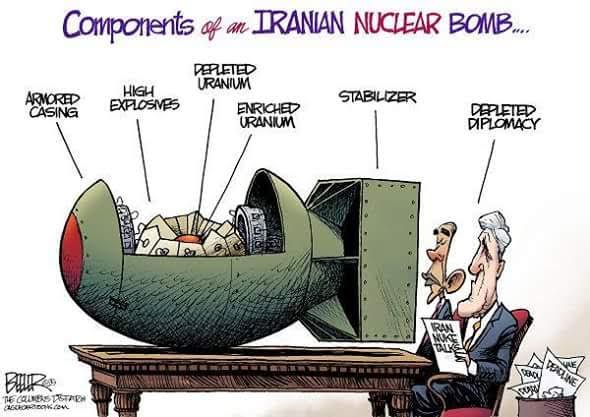
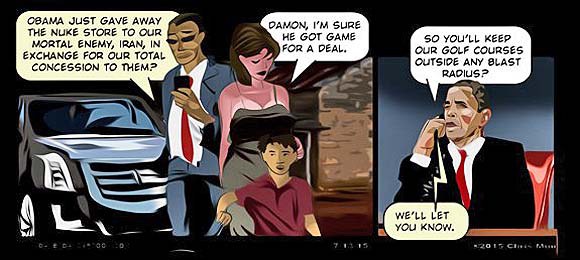
Cartoons of the day

July 13, 2015

H/t Freedom is just another word

depleted


H/t Vermont Loon Watch

071315-575x258


Hillary Clinton is the X-factor for the Iranian nuclear deal’s congressional survival

July 13, 2015

Hillary Clinton is the X-factor for the Iranian nuclear deal’s congressional survival, DEBKAfile, July 13, 2015

Clinton_7.15Hillary Clinton faces tough decision

“A parade of concessions to Iran,” was Israeli Prime Minister Binyamin Netanyahu’s comment on the nuclear accord expected to be announced and fully revealed later on Monday July 13 in Vienna. He underscored his point by playing back President Bill Clinton’s words upon signing the nuclear deal with North Korea 21 years ago: “North Korea will freeze and then dismantle its nuclear program,” Clinton announced then. “South Korea and our other allies will be better protected. The entire world will be safer as we slow the spread of nuclear weapons.”

Despite Bill Clinton’s pledge of carefully monitoring, Pyongyang broke through to a nuclear bomb in October 2006, twelve years later. By comparison; a ten-year limit on the period during which Iran is allowed to develop a bomb is believed to be incorporated in the Vienna accord. Its full text of100 pages plus is still to be fully disclosed.

By playing back the Clinton clip, Netanyahu aimed to place high on Washington’s agenda, the leverage in the hands of his wife, Hillary Clinton, in determining whether the deal survives the US Congress, which will have 60 days to review it.

Hillary is currently rated by the polls with a 62 percent lead in her run for the Democratic nomination in the 2016 presidential election. She tops the lists of alll declared Democratic and Republic contenders combined.

In the first week of July, she is quoted as supporting Obama’s relentless drive for a deal when she said: “I so hope that we are able to get a deal in the next week that puts a lid on Iran’s nuclear weapons program because that’s going to be a singular step in the right direction.”

Before that, she echoed Obama’s words that “no deal is better than a bad deal.”

Now that the accord is in its last stage, she has held back from judging whether it is good or bad – only in private conversations with wealthy Jewish contributors to her campaign, she has promised to be “a better friend to Israel than President Barack Obama.”

But once the final accord is in the bag – expected in the coming hours – Clinton will have to come out in the open, because she holds the key to a Senate majority for blocking it. The 54 Republican senators are committed to voting against it: Senate Majority leader Mitch McConnell told Fox News Sunday: “I think it’s going to be a very hard sell, if it’s completed, in Congress. We already know it’s going to leave Iran as a threshold nuclear state. It appears as if the administration’s approach to this was to reach whatever agreement the Iranians are willing to enter into,” he said.

But the 44 Democratic senators are wobbling between being loyal to the president and their profound misgivings about the deal with Iran. It would take 13 Democrats to cross the floor and join the Republicans to achieve the necessary majority for annulling the promised presidential veto of a negative vote.

A Clinton declaration against the deal could swing those 13 senators against the accord – so painfully crafted in 13 months of agonizing bargaining led by Secretary of State John Kerry – and leave Obama in the position of a lame duck president.

Iran’s leaders, after reading the map in Washington, took the precaution of submitting to the Majlis a motion that would require a parliamentary review every few months of the US performance in complying with the accord with the power to annul it if this performance was judged unsatisfactory.

This pits the Iranian parliament against the US Senate and, by implication, puts Hillary Clinton in the driving seat in Washington versus Ayatollah Ali Khamenei in Tehran.

Whatever she decides now – whether for or against the Iranian deal – will have consequences for her campaign for president. That campaign has almost a year and a half to run before the November 2016 election. If she backs the deal and lets the Democratic senators refrain from voting against it, she will be held accountable – not only by Jewish campaign donors, but, up to a point, the American voter too. Israeli and Saudi intelligence will certainly use a microscope to discover the tiniest particles of evidence of Iran’s non-compliance. They will be thrown in her face.

Republican rivals will certainly fuel their campaigns with allegations of the total surrender to Iran by Obama and Kerry – with consequences for the prospects of Obama’s former secretary of state, Hillary Clinton.
Backing Obama would therefore cast a shadow over her presidential hopes, whereas taking the lead of a   Democratic senatorial mutiny against it may well undo the deal before the year is out.  Either way, Clinton faces one of her toughest decisions since she decided to run as the first American woman president.

Still too eager for a deal

July 12, 2015

Still too eager for a deal, Israel Hayom, Prof. Abraham Ben-Zvi, July 12,2015

(According to an article at the Washington Post, a “deal” is expected today and will be announced tomorrow. — DM)

Russia strengthening its position as an ally and a main weapons supplier to Iran worries the U.S. The 44th president is steadfast on reaching a deal, and even the current dispute won’t prevent him from achieving his dream, even at the price of laying the groundwork for an extremist regional power that would attempt to threaten its strategic environs. There is nothing left to do but hope that the U.S. Senate, which will have 60 days to scrutinize the agreement after it is signed, will meet the challenge it is faced with.

******************

The fact that the latest deadline for a final nuclear deal between Iran and the world powers is behind us, without smoke billowing over the negotiating room in Vienna, is astonishing. After all, there are no signs indicating that Washington’s eagerness for a successful end to the talks has weakened. In fact, it is the opposite. In recent months, it has become clearer that U.S. President Barack Obama has made a deal with Iran a main goal of his legacy. In his view, a deal with Iran will obfuscate all his failures in the Middle East and herald a new regional agenda, with the new partner from Tehran at its center.

Obama seems steadfast in his belief that a conciliatory, compensatory policy based on a range of trust-building economic steps, will quickly set the regime of ayatollahs on a moderate, pragmatic path. The carrot of economic investment and the cancelation of the rule of sanctions will lay the cornerstone for a strong diplomatic and strategic partnership between Washington and Tehran, central to which will be the Iranian regime’s willingness to take on a key role in containing the Islamic State group. To bring that vision to fruition, the Obama administration is charging ahead toward a final nuclear deal at almost any price, while shutting its eyes and continuing to put the agreement together, the ongoing terrorist activity and widespread subversion emanating from the Iranian capital and spreading out over the entire area.

It’s not only that no link whatsoever between nuclear weapons and conventional and semi-conventional weapons exists in the almost final version of the “Vienna Treaty,” but also that the nuclear core of the nascent deal is spotty and full of holes that will give the Iranian regime a golden opportunity to surge ahead toward a nuclear bomb a decade from now, when all oversight of the regime comes to an end.

In light of that, the fact that the official signing ceremony did not take place on July 9 as expected makes one wonder. The explanation, which is only tangentially related to the nuclear issue, does not at all indicate that the American superpower is coming to its senses at last, but is anchored in the web of U.S.-Russian relations. The last pitfall on the way to a deal is basically about Obama’s relations with Russian President Vladimir Putin, which center on the Kremlin’s ongoing military activity in the eastern Ukraine and the economic sanctions the West applied to Russia in response. Given this highly charged relationship, the White House has no interest in any step that could even slightly improve Russia’s grim economic situation. This is the connecting thread between the Russian-American axis and the current field of negotiations with Iran.

Russia, which because of the sanctions in place against it desperately needs foreign currency, wants a fast entry into the Iranian weapons market. So, together with China, it is lending its fervent support to Iran’s demands that the deal also lift the embargo against supplying it with conventional weapons, which the U.N. Security Council decreed in 2006. Especially since a deal for Russia to sell Iran S-300 surface-to-air missiles by 2007 has been frozen since 2010. Thus, Russia’s growing economic distress joins the rest of Putin’s geostrategic considerations and is creating an aggressive Russian position in favor of a quick removal of military sanctions from Iran, which in turn encourages Iranian President Hassan Rouhani and Iranian Foreign Minister Javad Zarif to dig in their heels.

Russia strengthening its position as an ally and a main weapons supplier to Iran worries the U.S. The 44th president is steadfast on reaching a deal, and even the current dispute won’t prevent him from achieving his dream, even at the price of laying the groundwork for an extremist regional power that would attempt to threaten its strategic environs. There is nothing left to do but hope that the U.S. Senate, which will have 60 days to scrutinize the agreement after it is signed, will meet the challenge it is faced with.

Back in Tehran… Khamenei adds red lines, Rouhani tries to resign, Jaafari hints at “fait accompli” soon

July 12, 2015

Back in Tehran… Khamenei adds red lines, Rouhani tries to resign, Jaafari hints at “fait accompli” soon, DEBKAfile, July 12, 2015

(To the extent accurate, this is a fascinating account of what happened on June 29th, when Rouhani returned to Tehran for “consultation.” — DM)

ROUHANI-JAFARIPresident Rouhani vs Ali Jaafari

Iran’s top leaders remain ambivalent about whether or not to sign the comprehensive nuclear accord with the six world powers in Vienna as 22 agonizing months of negotiation falter on the brink. The all-powerful supreme leader Ayatollah Ali Khamenei’s latest comment was far from helpful. Saturday, July 11, he said publicly: “The US is the true embodiment of global arrogance,” the fight against which “could not be interrupted” even after the completion of the nuclear talks. He also boasted that the Islamic Republic had “managed to charm the world” by sticking with those negotiations.

DEBKAfile’s Iranian sources report that Khamenei’s remarks reflect the struggle between the pro- and anti-nuclear deal factions at the highest level of the Iranian leadership. For now, President Barack Obama’s odds of less than 50 percent on a final accord may well describe the balance in Tehran.

On June 29, President Hassan Rouhani was planning to resign when he asked the supreme leader to receive him first. He was upset by Foreign Minister Mohamed Zavad Zarif’s recall from Vienna to Tehran for a tough briefing. Zarif had warned the president that the talks were doomed unless Iran gave some slack. The foreign minister said that the six foreign ministers were preparing to leave Vienna in protest against Iran’s intransigence.

Rouhani when he met Khamenei warned him that Iran was about to miss the main diplomatic train to its main destination: the lifting of sanctions to save the economy from certain ruin.

The supreme ruler was unconvinced: He referred the president to the conditions for a deal he had laid down on June 23 and refused to budge: Sanctions must be removed upon the signing of the final accord; international atomic agency inspectors were banned at military facilities, along with interviews with nuclear scientists; and the powers must endorse Iran’s right to continue nuclear research and build advanced centrifuges for uranium enrichment.

Rouhani hotly stressed that those conditions had become a hindrance to the deal going through and insisted that sanctions relief was imperative for hauling the economy out of crisis.

Khamenei disputed him on that point too. He retorted that the revolutionary republic had survived the eight-year Iranian-Iraqi war (1979-187) with far fewer resources and assets than it commanded at present.

For back-up, the supreme ruler asked two hardliners to join his ding-dong with the president: Defense Minister Hosseim Dehqan and Revolutionary Guards chief Mohammad Ali Jaafari.

Both told Rouhani in the stiffest terms that Tehran must not on any account bow to international pressure for giving up its nuclear program or the development of ballistic missiles.

In a broad hint to President Rouhani to pipe down, Khamenei reminisced about his long-gone predecessor Hassan Bani-Sadr (president in 1980-1981) who was not only forced out of office but had to flee Iran, and the former prime minister and presidential candidate Mir Hossein Moussavi, who has lived under house arrest for six years since leading an opposition campaign.

The supreme leader then set out his thesis that the danger of Iran coming under attack had declined to zero, since Europe was in deep economic crisis (mainly because of Greece) and because the US president had never been less inclined to go to war than he is today.

Jaaafri added his two cents by commenting that after a succession of fiascos, Obama would go to any lengths to reach a nuclear deal with Iran as the crowning achievement of his presidency.  The Revolutionary Guards chief then added obliquely: “Before long we will present the West with a fait accompli.”

He refused to elaborate on this when questioned by the president, but it was taken as a reference to some nuclear event.

Rouhani left the meeting empty-handed, but his letter of resignation stayed in his pocket.

The next day, when Zarif landed in Vienna to take his seat once more at the negotiating table, he learned about a new directive Khamenei had sent the president, ordering him to expand ballistic missile development and add another five percent to its budget – another burden on Iran’s empty coffers.

Khamenei’s office made sure this directive reached the public domain. Zarif too was armed with another impediment to a deal. Khamenei instructed him to add a fresh condition: The annulment of the sanctions imposed against Iran’s missile development and arms purchases.

Goodnight Vienna (9)

July 11, 2015

Goodnight Vienna (9), Power LineScott Johnson, July 11, 2015

Omri Ceren reports by email from Vienna:

Happy Saturday from Vienna, where we continue to slouch towards a deal.

The Iranians went into meetings this morning talking about progress and predicting breakthroughs. Kerry came out of his meetings later and tweeted “Met with @FedericaMog and @JZarif this AM. Still have difficult issues to resolve” [1]. That language was read by some journalists as evidence that the talks remain stalled. Other journalists are passing around rumors that R&D issues have been solved, that the Americans have collapsed on inspections, and that the Iranians have agreed to drop their new demand for ending the United Nations arms embargo. Could be anything.

For his part [U.S.] Energy Secretary Moniz tweeted this last night [2]:

CJkQa3TWoAErjWz
Ernest Moniz

Now back to business. We’re working hard to reach a good deal that is based on hard science.

The big unanswered question about pending Iran deal

July 11, 2015

The big unanswered question about pending Iran deal, Harretz, July 11, 2015

(Harretz includes the obligatory swipes at PM Netanyahu but then backs off, while raising an interesting question: Why does Obama continue to buckle to Iranian demands? Is it more than his need for a legacy, his affection for Islam, the likely that nobody will stop him, incompetence and/or a lack of interest? — DM)

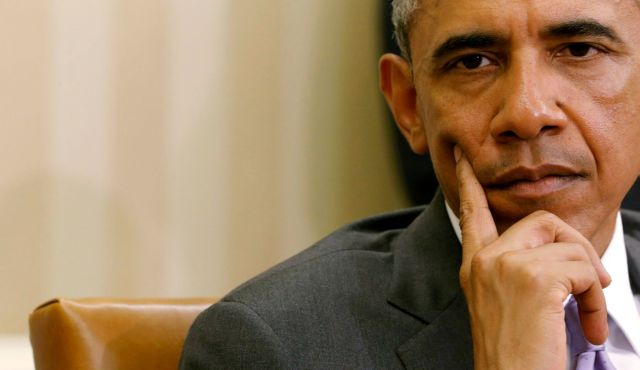
866182083President Barack Obama, July 7, 2015. What is he thinking with his Iranian strategy? Photo by Reuters

It’s hard to overstate the importance of cracking the code that has caused the administration to capitulate. It’s liable to put us, albeit not in the near-future, in a situation where all hope will be lost.

*********************

The inevitable revenge for Prime Minister Benjamin Netanyahu’s deluded flirtation with the Republicans and Congress has arrived. It’s crystal clear: Because of Netanyahu’s contrarian and irresponsible behavior, bridges with the U.S. administration were burned and Israel was ousted from the circle of influence on the pending nuclear deal with Iran. Netanyahu bears part of the responsibility for the bad deal that will be signed with Iran.

If any Israeli figures had a real impact on our inability to prevent a bad deal, however, it was Meir Dagan, Yuval Diskin and Gabi Ashkenazi – the principal opponents who leaked their objections to a military operation. They, along with the noisy chorus of America’s proxies in Israel, torpedoed the credibility of the brinkmanship strategy Netanyahu was leading. Iran, free of Israeli pressure, kept galloping toward the bomb.

True, Netanyahu’s mistakes – even in the area of Iran – are not few in number. However, anyone who assigns him responsibility, even indirect, for the heap of failings of the U.S. administration with regard to Iran discounts the American president and insults the memory and intelligence of the public.

The accusers, whatever their obligations to the United States, have exempted themselves from the need to think more deeply about the interests underlying America’s capitulation to Iranian chutzpah. For the sake of the future, it is dependent upon Israel to solve the big unknown: what motivates President Barack Obama to ease – in reality, cancel – sanctions before the Iranians prove, within a significant time frame, that they have left the path of nuclear arms, terror and fraud. Why is he providing the ayatollahs’ state with economic power – and therefore political and military power – to continue harming its allies in the region. And, finally, why doesn’t the agreement include an explicit demand for Iran to completely turn away from the path of terror?

Cracking America’s unclear, scarcely believable code of conduct is a major challenge. It is simply not logical that the American president, who bears responsibility for the fate of the world, should capitulate to the Iranians – unless he has a decisive reason – and cede effective supervision of nuclear sites.

The Iranians need American benevolence – not the other way around. So why are the Iranians able to bend the Americans, and not vice versa? In any event, the reason for their success does not lie, as many tend to think, in typical American naïveté – and certainly not in weakness or foolishness, as some say about Secretary of State John Kerry.

Israel’s point of departure needs to be – and this is the truth – that the U.S. president is acting in line with his nation’s interests, and that John Kerry is executing his policy. The latter’s behavior, as reflected in caricatures and articles criticizing him, is in accordance with the president’s directives, and not because he is a weak or shallow figure.

It’s hard to overstate the importance of cracking the code that has caused the administration to capitulate. It’s liable to put us, albeit not in the near-future, in a situation where all hope will be lost. Then, we will be forced to make it clear to the Americans: You, who pushed us into a corner, like in the words of the Book of Isaiah – “And I looked, and there was none to help; and I beheld in astonishment, and there was none to uphold” – bear responsibility. In a situation of no choice, we will act – and we will have to act – for as the verse continues, “And My fury, it upheld Me / And I trod down the peoples in Mine anger.”

Cartoon of the day

July 11, 2015

H/t Vermont Loon Watch


tea-nuts

Goodnight Vienna (8)

July 10, 2015

Goodnight Vienna (8), Power LineScott Johnson, July 10, 2015

Here’s the most critical part of Iran’s nuclear program that nobody is talking about

July 7, 2015

Here’s the most critical part of Iran’s nuclear program that nobody is talking about, Business Insider, Michael Eisenstadt, The Washington Institute For Near East Policy, July 7, 2015

(Please see also, Iran’s Rafsanjani Reiterates ‘Israel Will Be Wiped Off The Map.’  — DM)

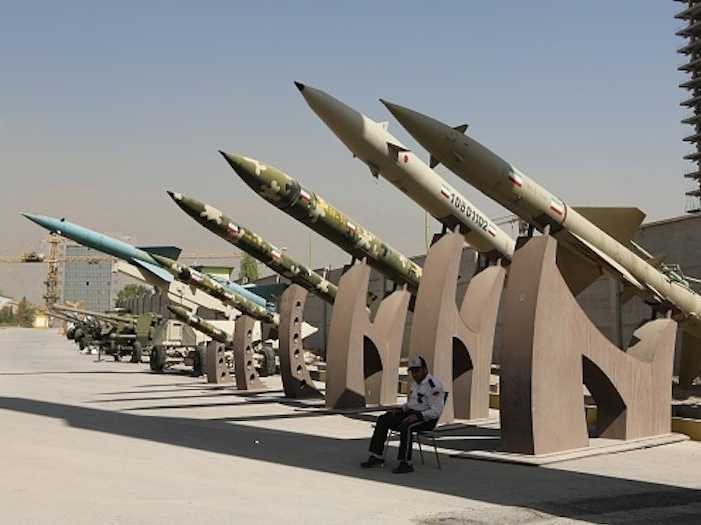
iran-missiles-exhibition-commemorationAtta Kenare/AFP/Getty Images. Missiles are displayed during ‘Sacred Defense Week,’ to commemorate the 1980-88 Iran-Iraq war. Photo taken on Sept. 28, 2014 at a park in northern Tehran.

Early in the P5+1 negotiations, US officials stated that “every issue,” including the missile program, would be on the table. In February 2014, however, Undersecretary of State for Political Affairs Wendy Sherman stated, “If we are successful in assuring ourselves and the world community that Iran cannot obtain a nuclear weapon,” then that “makes delivery systems … almost irrelevant.”

****************

According to the latest reports stemming from the P5+1 talks, Iran is now insisting that UN sanctions on its ballistic missile program be lifted as part of a long-term nuclear accord.

In addition to further complicating already fraught negotiations, this development highlights the importance Tehran attaches to its missile arsenal, as well as the need to answer unresolved questions about possible links between its missile and nuclear programs.

Iran is believed to have the largest strategic missile force in the Middle East, producing short- and medium-range ballistic missiles, a long-range cruise missile, and long-range rockets. Although all of its missiles are conventionally armed at present, its medium-range ballistic missiles could deliver a nuclear weapon if Iran were to build such a device.

Early in the P5+1 negotiations, US officials stated that “every issue,” including the missile program, would be on the table. In February 2014, however, Undersecretary of State for Political Affairs Wendy Sherman stated, “If we are successful in assuring ourselves and the world community that Iran cannot obtain a nuclear weapon,” then that “makes delivery systems … almost irrelevant.”

Yet many observers remain concerned that personnel and facilities tied to Iran’s missile program were, and may still be, engaged in work related to possible military dimensions (PMD) of the nuclear program. These concerns underscore the need to effectively address the missile issue as part of the UN Security Council resolution that will backstop the long-term nuclear accord now being negotiated, if it will not be dealt with in the accord itself.

screen shot 2015-06-11 at 8.47.42 am copyEstimated Range of Iranian Long-Range Missile Forces

Deterrence, warfighting, and propaganda

The Iran-Iraq War convinced Tehran that a strong missile force is critical to the country’s security, and it has given the highest priority to procuring and developing various types of missiles and rockets. Missiles played an important role throughout that war and a decisive role in its denouement.

During the February-April 1988 “War of the Cities,” Iraq was able to hit Tehran with extended-range missiles for the first time. Iranian morale was devastated: more than a quarter of Tehran’s population fled the city, contributing to the leadership’s decision to end the war.

Since then, missiles have been central to Iran’s “way of war,” which emphasizes the need to avoid or deter conventional conflict while advancing its anti-status quo agenda via proxy operations and propaganda activities.

Iran’s deterrence triad rests on its ability to (1) threaten navigation through the Strait of Hormuz, (2) undertake terrorist attacks on multiple continents, and (3) conduct long-range strikes, primarily by missiles (or with rockets owned by proxies such as Hezbollah).

rtr2vqx9REUTERS/Fars News/Hamed Jafarnejad. Iranian military personnel participate in the Velayat-90 war game in unknown location near the Strait of Hormuz in southern Iran December 30, 2011.

Yet the first two options carry limitations.

Closing the strait would be a last resort because nearly all of Iran’s oil exports go through it and Tehran’s ability to wage terror has atrophied in recent years (as demonstrated by a series of bungled attacks on Israeli targets in February 2012). Therefore, Iran’s missile force is the backbone of its strategic deterrent.

Missiles enable Iran to mass fires against civilian population centers and undermine enemy morale. If their accuracy increases in the future, they could further stress enemy defenses (as every incoming missile would have to be intercepted) and enable Iran to target military facilities and critical infrastructure.

Although terrorist attacks afford a degree of standoff and deniability, missiles permit a quicker, more flexible response in a rapidly moving crisis — for example, after an initial series of preplanned terrorist attacks, Tehran or its proxies might need weeks to organize follow-on operations. Missile salvos can also generate greater cumulative effects in a shorter period than terrorist attacks.

Indeed, missiles are ideally suited to Iran’s “resistance doctrine,” which states that achieving victory entails demoralizing one’s enemies by bleeding their civilian population and denying them success on the battlefield. In this context, rockets are as important as missiles, since they yield the same psychological effect on the targeted population.

The manner in which Hezbollah and Hamas used rockets in their recent wars with Israel provides a useful template for understanding the role of conventionally armed missiles in Iran’s warfighting doctrine.

flickr_-_israel_defense_forces_-_damage_caused_by_rockets_fired_from_gaza_(10)Israel Defense Forces via Wikimedia Commons. An apartment building in the town of Kiryat Malachi, damaged as a result of rockets fired from Hamas.

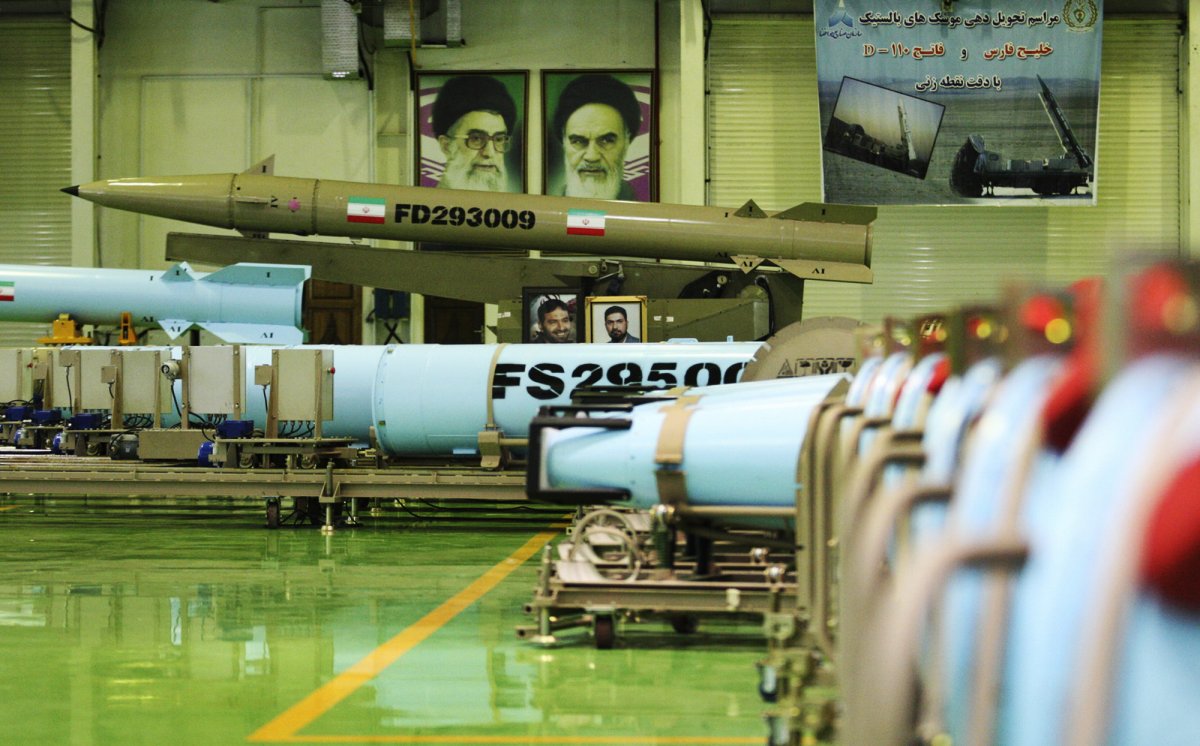
Missiles are also Iran’s most potent psychological weapon. They are a central fixture of just about every regime military parade, frequently dressed with banners calling for “death to America” and declaring that “Israel should be wiped off the map.”

They are used as symbols of Iran’s growing military power and reach. And as the delivery system of choice for nuclear weapons states, they are a key element of Iran’s nascent doctrine of nuclear ambiguity and its attempts at “nuclear intimidation without the bomb.”

Finally, while most nuclear weapons states created their missile forces years after joining the “nuclear club” (due to the significant R&D challenges involved), Iran will already have a sophisticated missile force and infrastructure in place if or when it opts to go that route.

This ensures that a nuclear breakout would produce a dramatic and rapid transformation in Iran’s military stature and capabilities.

Iran’s missle force

Iran has a large, capable missile force, with a likely inventory of more than 800 short- and medium-range ballistic missiles.

These include single-stage liquid-fuel missiles such as the Shahab-1 (300 km range), Shahab-2 (500 km), Qiam (500-750 km), Shahab-3 (1,000-1,300 km), and Qadr (1,500-2,000 km).

Nearly all of them can reach US military targets in the Persian Gulf, and the latter two can reach Israel. These missiles, which include several subvariants, are believed to be conventionally armed with unitary high-explosive or submunition (cluster) warheads.

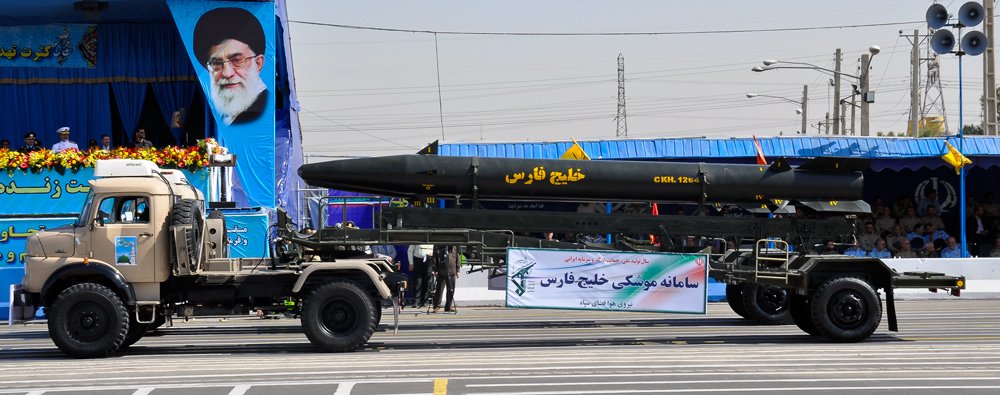
persian-gulf-missileKhalij Fars missile on a transporter.

Additionally, Iran has tested a two-stage solid-fuel missile, the Sejjil-2, whose range of over 2,000 km would allow it to target southeastern Europe — though it is apparently still not operational. In a June 28, 2011, press statement, Tehran claimed that it was capping the range of its missiles at 2,000 km (sufficient to reach Israel but not Western Europe), implicitly eschewing the development of intercontinental ballistic missiles in a presumed bid to deflect US and European concerns.

Yet its Safir launch vehicle, which has put four satellites into orbit since 2009, could provide the experience and knowhow needed to build an ICBM. (According to a May 2010 report by the International Institute for Strategic Studies, the Safir struggled to put a very small satellite into low-earth orbit and has probably reached the outer limits of its performance envelope, so it could not serve as an ICBM itself.) In 2010, Iran displayed a mockup of a larger two-stage satellite launch vehicle, the Simorgh, which it has not yet flown.

Tehran has also claimed an antiship ballistic missile capability that it probably intends for potential use against U.S. aircraft carriers: the Khalij-e Fars and its derivatives, the Hormuz-1/2, each with a claimed range of 300 km. Yet it is not clear that these systems are sufficiently accurate or effective to pose a credible threat to U.S. surface elements in the Gulf.

In addition, Iran recently unveiled the Soumar land-attack cruise missile, which is reportedly a reverse-engineered version of the Russian Raduga Kh-55. It has a claimed range of 2,500-3,000 km, though it may not be operational yet.

The Kh-55 was the Soviet air force’s primary nuclear delivery system.

Iran also fields a very large number of rockets, including the Noor 122 mm (with a range of 20 km), the Fajr-3 and -5 (45 and 75 km), and the Zelzal-1, -2, and -3 (with claimed ranges of 125 to 400 km). During the Iran-Iraq War, rockets played a major role in bombarding Iraqi cities along the border, and they are central to the “way of war” of Iranian proxies and allies such as Hezbollah and Hamas.

Tehran has built this massive inventory so that it can saturate and thereby overwhelm enemy missile defenses in any conflict. It would likely use such tactics whether its missile force remains conventional or becomes nuclear-armed, since conventional missiles could serve as decoys that enable nuclear missiles to penetrate defenses. Numbers would also enable Iran to achieve cumulative strategic effects on enemy morale and staying power by conventional means.

missilesiranAP Photo/Iranian Defense Ministry. To outwork missile defense systems, Iran would use a high volume of missiles.

Finally, many of Iran’s missiles are mounted on mobile launchers, and a growing number are based in silo fields located mainly in the northwest and toward the frontier with Iraq.

This mix of launch options is likely intended to impede preemptive enemy targeting of its missile force. The resources invested in this effort are unprecedented for a conventionally armed force, which indicates that at least some of these missiles would likely be nuclear armed if Iran eventually goes that route.

Nuclear connections

In the annex of a November 8, 2011, report regarding the nuclear program’s possible military dimensions, the International Atomic Energy Agency said it possessed credible information and documents connecting Iran’s missile and nuclear programs. These indicated that, prior to the end of 2003, Iran had:

  • conducted engineering studies on integrating a spherical payload (possibly a nuclear implosion device) into a Shahab-3 reentry vehicle (RV);
  • tested a multipoint initiation system to set off a hemisphere-shaped high-explosive charge whose dimensions were consistent with the Shahab-3’s payload chamber; and
  • worked on a prototype firing system that would enable detonation upon impact or in an airburst 600 meters above a target (a suitable height for a nuclear device).

Moreover, in 2004, Iran began deploying triconic (or “stepped”) RVs — a design almost exclusively associated with nuclear missiles — on its Shahab variants.

Some experts (including Uzi Rubin and Michael Elleman) believe that Iran may have deployed the triconic RV to enhance the stability and thus the accuracy of its conventional warheads, and perhaps to achieve higher terminal velocities that could reduce reaction time for missile defenses.

But if Iran were able to build a miniaturized nuclear device, its experience in designing, testing, and operating missiles with triconic RVs could expedite deployment of this weapon. Indeed, David Albright claimed in his 2010 book Peddling Peril that members of the A. Q. Khan nuclear smuggling network possessed plans for smaller, more advanced nuclear weapon designs that might have found their way to Iran, though most experts doubt the regime’s ability to build such a compact device at this time.

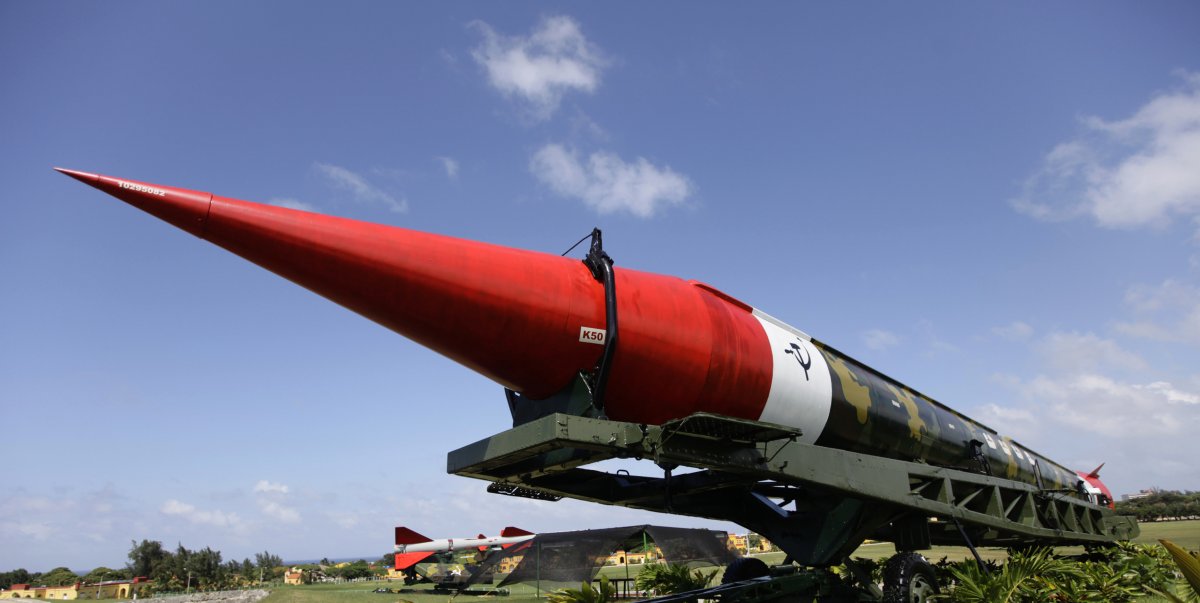
russianukeDesmond Boylan/Reuter

Could Iran have smuggled in a nuclear bomb?

These reports underscore why Washington and its partners must insist that Tehran respond to the IAEA’s questions about past engineering studies, design work, tests, and other elements of the PMD file prior to the lifting of sanctions.

They also highlight the need for a UN Security Council resolution (as called for in the Lausanne parameters) that would impose limitations on Iran’s missile R&D work and threaten real consequences for those who assist Iran’s missile program.

Failure to do so would signal tacit acceptance of activities that could enable Iran to deploy its first nuclear weapon atop a medium-range missile — an achievement that took most nuclear weapons states, including the United States and Soviet Union, about a decade to accomplish.

This development would in turn magnify the destabilizing impact of an Iranian breakout, while incentivizing other regional states to either take preventive action or move toward nuclear capabilities of their own before Iran crosses that threshold.