“Nothing to Do with Islam”? Gatestone Institute via YouTube, October 20, 2016
“Nothing to Do with Islam”? Gatestone Institute via YouTube, October 20, 2016
Europe’s Terror Challenges: The Returnee Threat, Investigative Project on Terrorism, Abigail R. Esman, October 19, 2016
(Please see also, Sweden: Returning Islamic State jihadis to get free housing, driver’s license, tax benefits. — DM)
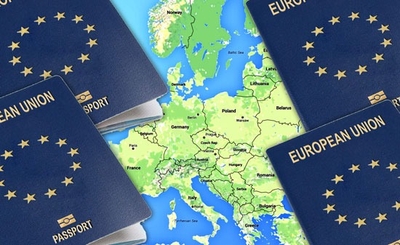
Another week, another barrage of headlines illustrating the depth of Europe’s terror threat. The following examples came during a 24 hour window earlier this month: “Schiphol Airport Was Possibly A Target Of Terror Cell That Attacked Paris;” “Police In Brussels Stabbed In Possible Terror Attack;” and “MI5 Missed Chance To Foil Paris And Brussels Attacks.”
It is news to no one that Islamic terrorism is everywhere now, and principally in Northern and Central Europe. But the three news stories, and the Schiphol and MI5 revelations in particular, demonstrate the enormity of the challenges now facing European counterterrorism officials.
Intelligence and law enforcement continue to fumble in handling the threat, often through no real fault of their own. The perpetrators are slippery and elusive. Sometimes they travel under false names. Some slip in as refugees, using false passports and false histories. Others are returnees from Syria whose activities and encrypted Telegram communications slide beneath the radar, even as they are being watched. And overtaxed law enforcement agencies have made any number of mistakes, overlooking suspicious behavior or releasing suspects without adequate investigation – in part a consequence of political pressures and the fear of being accused of “Islamophobia” by politicians and the press.
As it turned out, the suspect in the Brussels knife attack was a former Belgian military officer already known to the police for his connections to fighters in Syria. To date, officials have not determined whether he has been to Syria or ISIS territory in Iraq.
But the contact with ISIS and other terror groups in the self-declared caliphate is a common link, not only among the known perpetrators of last November’s Paris attacks and the March attacks in Brussels, but among their alleged colleagues planning to attack Schiphol airport. Those two men, identified as the Tunisian Sofien Ayari and Syrian-Swedish Ossama Krayem, traveled by bus from Brussels to Amsterdam on Nov. 13, the day of the Paris massacre. Both used false IDs. They returned, still undetected, the following day.
Four months later, police raided a safe house used by the terror cell in Schaarbeek, a Brussels neighborhood, and retrieved a laptop computer containing files labeled “13 November.” Included in those files were documents referring not only to “Stade de France” and “Bataclan” – both targets in the Paris killings – but also to a “Schiphol group.”
It is not clear why Ayari and Krayem returned to Brussels without executing an attack on the Dutch airport, and the Dutch National Coordinator for Counterterrorism and Security (NCTV) office will not comment on the case, leaving information sketchy.
But there may be clues: Ossama Krayem was also spotted on CCTV at the Brussels Metro station that was bombed on March 22; his lawyers maintain that he decided against detonating his backpack. Did he panic and back out of the Schiphol attack, as well?
Following a worldwide manhunt, Belgian police arrested Salah Abdeslam, one of the few surviving organizers of the Paris attacks, on March 18 in the Brussels district of Molenbeek. Little notice was given at the time to the other man arrested with him: Sofien Ayari. Three weeks later, after the March 22 attack on Zaventem airport and Brussels’ Maalbeek metro station, police also captured Mohamed Abrini, frequently referred to as “the man in the hat” and a key player in the Zaventem bombing. Also arrested, though also little noted at the time, was Ossama Krayem. All four remain in detention.
While it has likely been known for some time by French prosecutors, the connection to the Schiphol airport plot was only released publicly earlier this month.
Indeed, the latest disclosures show that the Paris-Brussels cell reached as far as Amsterdam and the UK, as members traveled back and forth among all four countries. No one even noticed. Worse, UK officials put a stop to an undercover investigation of a British group with connections to Abrini months before the attacks, citing insufficient evidence. Had that probe continued, it may have led them to Abrini – who frequently visited the British group under orders from Syria-based leaders, experts believe.
Why would that have mattered? Because Abrini was allegedly receiving orders from Abdelhamid Abaaoud, the mastermind of the Paris attacks and of “at least four” foiled terror plots across the country, according to French Interior Minister Bernard Cazeneuve. And Abaaoud, said to be one of ISIS leader Abu Bakr al-Baghdadi’s right-hand men, was regularly going back and forth between Syria and France. According to CNN, Abaaoud allegedly bragged in ISIS’s online magazine, Dabiq, “I was able to leave and come to Sham (Syria) despite being chased after by so many intelligence agencies. My name and picture were all over the news yet I was able to stay in their homeland, plan operations against them, and leave safely when doing so became necessary.”
Experts agree that returnees like Abaaoud form the greatest terror threat right now. It isn’t simply a matter of their ability to bring the lessons of the battlefield – bomb-building, sharp-shooting, and an emotional resistance against killing – to Europe’s villages and cities. It is their ability to recruit new “soldiers for ISIS,” some of whom will follow the returnees back to Syria, and others who will be ordered to remain and carry out attacks at home. And while most European countries have severe penalties for those found guilty of aiding terrorist groups, many returnees, like Abaaoud, simply don’t get caught.
Moreover, because there is rarely hard evidence available of violence or terrorist acts in Syria, convicting returning ISIS fighters for their actions there is more difficult than it might seem. Smart-phone data from some returnees, however, has occasionally offered up photographs, videos, and other material that can be used as evidence. Consequently, their sentences can be comparatively light, less than 10 years in Germany and the UK, and usually lower for those who cooperate with authorities.
Others may not face prison at all. A report by the Dutch intelligence service AIVD points out that many returnees come home disappointed by the realities they encountered. Those who were not seen as fit to fight were reduced to menial jobs like housekeeping, and cannot be said to have engaged in terrorist activity, and so, cannot be convicted.
At the same time, often “even those who did not fight continue to be involved in jihadist circles” when they come home, the AIVD reports. Others, according to a separate report published by the NCTV, join criminal groups, possibly as a way to raise money to send back to Syria and Iraq. And while many appear to retreat, having little social interaction, the NCTV says, this does not mean that they have given up their jihadist visions. Quite likely they are encouraging others through social media, in mosques, and in small groups.
And so the cycle continues.
There is some good news. Through new initiatives, European intelligence bureaus aresharing more information, making it less likely that someone like Abaaoud would be able to cross borders undetected. Such alerts would also bring attention to those returnees and other suspected jihadists might meet with, even in a foreign country (as Abrini met with British jihadists before the Paris strike).
More important are de-radicalization programs, which aim to change either the behavior (known as “disengagement”) or the mindsets of jihadists, essentially challenging and discrediting their radical Islamist ideas. How well these programs work is still uncertain, though experts increasingly agree that altering violent behavior alone is not enough.
Because jihadists work by spreading an ideology, it is that ideology that needs to be attacked. And because prisons are often precisely where radical Islamic ideologies are preached and spread, counterterrorist experts are starting to say that sending jihadists to prison is not sufficient.
“We’ve seen in many other countries that when you arrest one, you create three other extremists,” German deradicalization expert David Kohler told Frontline. “It helps to spread the idea, and proves to the movement that they are right, that they are under attack.”
Granted, this is hardly a short-term strategy. But as the number of people returning from Syria to the West grows, and as their reach into the hearts and minds of Western Muslims deepens, it may be the one chance that we have to bring the cycle of Islamist terror to an end.
The big Mosul offensive is stuck, halted by ISIS, DebkaFile, October 19, 2016

Less than a day after its launch, the big Mosul offensive prepared for more than a year by the US, the Iraqi army, Kurdish forces and others, ground to a halt Tuesday Oct. 17, DEBKAfile’s military sources report – although none of the parties admitted as much. Iraqi Prime Minister Haidar Al-Abadi said his troops were busy opening up corridors for some million civilians to escape, while US sources suggested that the Islamic State would use primitive chemical weapons against the advancing Iraqi and Kurdish forces.
Both had the ring of cover stories to account for the spearhead forces, the Iraq army’s 9th Armored Division and the Federal Police special anti-terror units, being thrown back Tuesday on their way to Mosul from the east and the south, while still 10-15km short of the city. They sustained heavy losses in lives and hardware.
The 9th Division and its newly-supplied heavy US Abrahams tanks were stopped at al-Hamdaniyah outside Mosul and retreated, recalling a previous defeat at ISIS hands in June 2014, when troops of the same division fled under Islamist attack, leaving their tanks behind.
The Iraqi anti-terror force withdrew from the village of al-Houd outside Mosul, a move which left the Kurdish Peshmerga no option but to stop its sweep of the villages around the city or expose their flanks to ISIS suicide and car bomb assaults.
Tuesday night, both Iraqi and Kurdish commanders announced a pause in their advance and said they would meet Wednesday to decide how to proceed.
The Kurdish Peshmerga’s role in the battle of Mosul has run into a further major impediment, which likewise has not been publicly aired. It turned out Tuesday that at least 3,000 of the 12,000 Kurdish fighters taking part in the offensive came from the banned Turkish underground PKK (Kurdish Workers Party) which is fighting the Turkish government. They came down from their northern Iraqi strongholds in the Sinjar and Qandil mountains. Ankara thereupon warned Washington and Baghdad in a strong ultimatum that unless those fighters were pulled off the field, Turkish troops would step in to attack them.
A second front within a front would effectively torpedo the entire Mosul liberation campaign against ISIS before it gets underway.
The first bricks of the military Tower of Babel predicted by DEBKAfile in the background report below were set in place sooner than expected.
Sunday night, Oct. 16, Iraqi Prime Minister Haidar al-Abadi, supported by a bevy of generals, announced that the military operation to recapture Mosul from its two-year occupation by the Islamic State had begun.
Three formally approved participants are taking part in the operation, DEBKAfile’s military sources report:
1. American special operations, artillery and engineering units – equipped with floating bridges for crossing the Tigris River – plus the US air force for massive bombardment to crush enemy resistance.
2. Iraqi army armored divisions, special ops forces, regular troops and anti-terror police units.
3. The Iraqi Kurds’ Peshmerga.
The Iraqi prime minister pledged formally that only Iraqi fighters would enter Mosul, i.e. no Americans, Kurds or other non-Iraqi forces.
It was a pledge that neither the Iraqi Sunni and Shiite combatants nor the Kurdish and Turkmen fighters trusted him to uphold, after similar promises went by the wayside in the US-led coalition battles fought in the past two years to retake the Iraqi towns of Ramadi, Tikirit, Baiji and Fallujah from ISIS.
The first forces to enter those cities were by and large pro-Iranian Iraqi Shiite militias, especially the Bader Brigades and the Popular Mobilization Units, under Iran’s supreme Middle East commander Gen. Qassem Soleimani. Nonetheless, despite the ravages they wrought in those Sunni cities, US air support was forthcoming for their advance, while in Washington US officials pretended they were helping Iraqi government army units.
With regard to the Mosul campaign, Obama administration officials and military officers, like the Iraqi prime minister, insist there will be no repetition of the Iranian-backed Shiite invasion and conquest of yet another Sunni city, where a million inhabitants still remain.

They don’t explain how this will be prevented when those same pro-Iranian Iraqi Shiite forces are already massing northeast of Mosul, near the Iraqi-Syria border, and standing by for the order to advance into the city.
Tehran quite obviously has no intention of being left out of the epic capture of Mosul.
Neither is another uninvited party, Turkish President Tayyip Erdogan. He too has positioned a Turkish military concentration in Iraq, in defiance of strong objections from Washington and Baghdad. Turkish troops stand ready to move forward to do Erdogan’s will and achieve three strategic goals:
a) To actively frustrate Kurdish Peshmerga entry to Mosul, although its 15,000 fighters out of the 25,000 invasion force are a vital element of the spearhead thrust into the city. Ankara has warned that if Kurds set foot in Mosul, Turkish troops will follow.
b) To block the path of Syrian Kurdish YPG militiamen from entering Iraq and linking up with their Iraqi brothers-in-arms.
c) To provide backing, including Turkish air support, for the Iraqi Turkmen militias still present in the Turkmen quarter of Mosul.
DEBKAfile’s military sources count six assorted military groupings taking part in the liberation of Mosul. They have nothing in common aside from their determination to drive the Islamic State out.
They are utterly divided on the two main aspects of the offensive: How to achieve their common goal and what happens to Mosul after the Islamist invaders are gone.
The underlying US rationale for embarking on this high-wire operation is President Barack Obama’s aspiration to achieve Mosul’s liberation before his departure from the White House in January, in the hope that this landmark success will provide a major distraction from his administration’s failed policies in Syria.
The Islamic State might have been expected to take advantage of the prior warning of the offensive for a stand in defense of the Iraqi capital of Abu Bakr Al-Baghdadi’s caliphate and so exploit the conflicting interests of the invading force.
But ISIS leaders decided against waiting for the combined offensive. Indeed, according to DEBKAfile’s sources, thousands of jihadis made tracks out of the city two or three months ago, relocating the bulk of their combat strength and institutions in two new locations: in the western Iraqi desert province of Anbar at a site between the Jordanian and Saudi borders and eastern Syria. Several hundred fighters were left behind in Mosul to harass the US-Iraq-Kurdish armies as they advance into the city and exploit the invaders’ discord to retain a foothold in Mosul.
Europe Braces for Post-Mosul Jihadi Onslaught, Investigative Project on Terrorism, John Rossomando, October 18, 2016
(But please see, A ‘lasting defeat’ of the Islamic State will be elusive. — DM)
European leaders fear onslaught of jihadists fleeing from Mosul after Iraq’s government and its allies kick ISIS out of the city.
Last year’s Paris attacks and the Brussels attacks in March brought heightened awareness that ISIS established an underground network to move jihadis in and out of Europe at will. Thousands of European nationals traveled to Syria and Iraq to wage jihad for ISIS. An estimated 2,500 Europeans still belong to ISIS’s fighting force.
“The retaking of (the Islamic State of Iraq and the Levant’s) northern Iraq stronghold, Mosul, may lead to the return to Europe of violent (ISIS) fighters,” European Union Security Commissioner Julian King told The (London) Telegraph. “This is a very serious threat and we must be prepared to face it.”
Iraqi forces, together with Iranian-backed Shiite militia and Kurdish pershmerga, aim to deal a deathblow to ISIS’s caliphate in Mosul.
It is a day ISIS anticipated. In an online publication last December called Black Flags From the Islamic State, ISIS vowed to continue its fight.
“If they win this battle, they will capture a lot (sic) of weapons, and their soldiers morale will be boosted. Now they will have control over land and will be able to train more people to fight the enemy. If they continue the fight, they will keep winning, but if they start to lose and give up, their leadership will hide in the deserts and mountains again, only to start the: Lone wolf -> Clandestine Cells -> Insurgency -> Army technique, all over again,” Black Flags From the Islamic State promised.
Jihadis without a home base pose a direct threat to Europe and menace security officials around the world, warned Raffaello Pantucci, director of the International Security studies at the Royal United Services Institute.
This especially concerns France, which suffered the Paris attacks last November that claimed 130 lives at the hands of ISIS jihadis who fought in Syria. An estimated 400 French nationals are still fighting jihad in warzones.
The number of returnees on watch lists has overstretched European security services, just as ISIS hoped. More than 10 officers try to monitor each returnee around the clock.
“We’ve had hundreds returned to our country [UK.] Some estimates say it’s a thousand. We can’t monitor the people that are here. So, it is really important that they sit round the table, because there are potentially 9,000 ISIS jihadists sitting in Mosul at the moment, who are also looking to move across,” European Parliament member Janice Atkinson told Russia Today.
The conflict against ISIS is moving into a new, unpredictable phase that has Europe on edge worrying about what comes next.
A ‘lasting defeat’ of the Islamic State will be elusive, Long War Journal, Bill Roggio, October 18, 2016
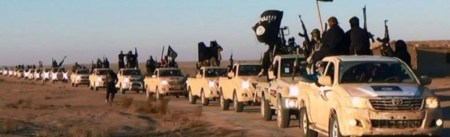
As the Iraqi government and Coalition forces launched the offensive to retake Mosul, the US military has optimistically said that the campaign will deal a “lasting defeat” to the Islamic State. But, if the recent history of the fight against jihadist groups in the Middle East, Africa, and South Asia is any indicator, a lasting defeat of the Islamic State will remain elusive.
On Oct. 16, the US military made the claim that the Mosul operation will “deliver ISIL [Islamic State] a lasting defeat” [emphasis mine]:
Tonight Iraqi Prime Minister Haider al-Abadi announced the start of Iraqi operations to liberate Mosul from ISIL. This is a decisive moment in the campaign to deliver ISIL a lasting defeat. The United States and the rest of the international coalition stand ready to support Iraqi Security Forces, Peshmerga fighters and the people of Iraq in the difficult fight ahead. We are confident our Iraqi partners will prevail against our common enemy and free Mosul and the rest of Iraq from ISIL’s hatred and brutality.
Keep in mind that many analysts were quick to pronounce the Islamic State’s predecessor, al Qaeda’s Islamic State of Iraq, as defeated after the US surge that began in 2007 rooted out the jihadists from its sanctuaries across Iraq. By 2010, Iraqi and US forces killed the Islamic State of Iraq’s emir, Abu Omar al Baghdadi, and War Minister Abu Ayyub al Masri a.k.a. Abu Hamza al Muhajir, and the group was driven underground. But these setbacks did not deter the Islamic State of Iraq. Its new leader, Abu Bakr al Baghdadi rallied the Islamic State of Iraq’s remaining forces and reconstituted the organization. In Syria, the Islamic State of Iraq took advantage of the Syrian civil war to rebuild its strength. By 2012, it created the Al Nusrah Front, its branch in Syria, and was launching large scale raids inside Iraq, such as the one in Haditha in March 2012, that presaged the events of 2014, which saw Iraqi forces defeated in Anbar, Salahaddin, Ninewa, and Diyala.
The Islamic State is not alone in its phoenix-like rebirth after losing ground to local forces backed by the US. Al Qaeda branches in Somalia, Yemen, and Mali, have experienced major setbacks and lost ground it held, only to regroup and retake territory. The same is true with Boko Haram in Nigeria and Taliban branches in Afghanistan and Pakistan. Each of these countries have been in a state of perpetual war for well over a decade due to jihadist insurgencies.
In Iraq, the political and security situation is ripe for an eventual Islamic State (or whatever jihadist entity may follow it) comeback. There are large rural areas in Iraq still under Islamic State control today, and it is highly unlikely that Iraqi forces will root out the Islamic State from all of these areas. Syria remains a security nightmare, and even with recent Islamic State losses, it still controls large areas. Iraq remains a fractured state divided between the Shia-led government, which is under pressure from Iran, the marginalized Sunnis that make up the recruiting base for the Islamic State, and the Kurds, who seek independence. The Islamic State has deftly taken advantage of Iraq’s political and sectarian fault lines to stoke the fires of conflict. Iran’s machinations in Iraq and its Shia militias provide the Islamic State all of the recruiting fodder it needs to convince Sunnis to join the fight.
The fight in Iraq, as in other jihadist theaters, ebbs and flows. For the Islamic State, it is currently retreating from many of the cities and towns in Iraq and Syria that it once held. But do not expect a lasting defeat of the Islamic State. The Islamic State has survived the full might of the US surge, and was able to regroup, wage a terrorist insurgency, and build an army that overran large areas of Iraq and Syria, all over the course of four years.
Kerry: To Avoid ‘Islamic’ or ‘State,’ Call ISIS ‘World’s Most Evil Terrorist Group, PJ Media, Bridget Johnson, October 11, 2016
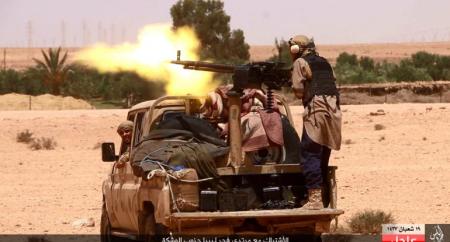
“But it’s just — you kind of resort to the use of those letters because it refers to a state — it’s the Islamic State — and it’s not a state. There’s nothing legitimate about it. There’s nothing Islamic about it. It’s a complete misnomer. It’s their title and we shouldn’t use it and I feel that very strongly,”
*****************
Secretary of State John Kerry suggested referring to ISIS as “the world’s most evil terrorist group” so as to not use the acronym references to “Islamic” or “State.”
Kerry noted at the Virtuous Circle Conference on Monday in Silicon Valley that he “rarely” uses the terms “ISIS” or “ISIL” at all.
“I’ve been on a lot of campaigns to get everybody to say “Daesh” because it’s a pejorative in Arabic — the initials — and I haven’t won that campaign at all,” he added.
“But it’s just — you kind of resort to the use of those letters because it refers to a state — it’s the Islamic State — and it’s not a state. There’s nothing legitimate about it. There’s nothing Islamic about it. It’s a complete misnomer. It’s their title and we shouldn’t use it and I feel that very strongly,” Kerry continued. “But it has gained — it’s the recognized term and if you want people to know what you’re talking about, unfortunately, sometimes you are forced to.”
He stressed that “it would be great if we could get away from that, and the key is the media to begin really to call it something else.”
“The terrorist group Daesh — that would be the best moniker, I think,” he said. “Or the most evil — the world’s most evil terrorist group.”
Daesh also incorporates Islamic State, just in Arabic. It stands for al-Dawla al-Islamiya al-Iraq al-Sham. It’s one letter away from the word “daes,” which means to crush or trample. ISIS hates the Daesh term and has threatened violence against people who use it.
“Anyway, it’s hard,” Kerry added. “Today’s media is so — it’s so labelized and it reduces everything into these simplistic things. It’s very, very hard to break out once something has stuck.”
Kerry also talked at the technology confab about the State Department’s Global Engagement Center “mostly focused on countering violent extremism.”
“And we have 131 employees authorized, I think we’re currently at about 68. Why are we not at full force? Because it’s pretty competitive out here and tough to get people… it’s hard to find the talent and fill the slots, number one. It’s just been a slower growth process than we would have liked,” he said of the department meant to counter terrorist propaganda online.
“We’re messaging and changing the narrative of ISIL, of Daesh. And countering that narrative very forcefully. We use a lot of defectors, a lot of survivors of Daesh’s brutality. And they are the people who are messaging. They are the communicators. They’re the people who are debunking the extraordinary lies of a fairly sophisticated Daesh operation, I might add. It’s quite amazing how effective they’ve been for a while in proselytizing propaganda and so forth,” Kerry said.
“Their narrative is caliphate, we’ve taken territory, we’re the future of true Islam, and on you go. And you have to find a way to counter that that’s effective and I think we’ve gotten pretty good at it. We know we have reduced recruits. We know we have cut financing. And I am absolutely convinced, not any exaggeration, that we are going to destroy ISIL as we know it now, in the sense that there’s still a few al-Qaeda folks around, but there’s not the day-to-day threat that existed. We’re moving on Mosul, we’re moving on Raqqa, we’re shrinking their space significantly. They haven’t taken one piece of territory and held it since May of last year and their leadership is being decimated person by person.”
Al-Qaeda has been growing in the past few years, from the opening of its al-Qaeda in the Indian Subcontinent chapter to numerous attacks by al-Qaeda in the Islamic Maghreb. The Treasury Department recently sanctioned “part of a new generation of al-Qaeda operatives” being sheltered by Iran.
House Intelligence Committee Chairman Devin Nunes (R-Calif.) told CBS on Sept. 11 that al-Qaeda “continues to metastasize” and “is very, very good at seeding people in and waiting. They’re very patient… they’re spreading globally very, very slowly.”
Kerry added that “the problem is there have been thousands of fighters over the course of five years, some of whom have gone back to other countries, where through the Internet they’ve been able to build subgroups of the group, or create affiliations with Boko Haram, with al-Shabaab in Somalia.”
“And so we’re going after them too, and that’s why Somali is one of the languages we’re working in now, and French for Boko Haram,” he said. “And we’re getting pretty good at this.”
Saudi Arabia and Qatar Funding The Islamic State, Understanding the Threat, October 10, 2016
Why wouldn’t Saudi Arabia, Qatar, and all other wealthy Muslim countries fund ISIS, ISIL, or whatever we are calling the leading army of Mohammad this week?
In the latest Wikileaks download, a series of emails between then Secretary of State Hillary Clinton and John Podesta, former Chief of Staff to President Bill Clinton and Counselor to President Obama, dated August and September 2014 reveal Saudi Arabia and Qatar are funding and providing support to ISIS.
In the email Mrs. Clinton states: “We need to use our diplomatic and more traditional intelligence assets to bring pressure on the governments of Qatar and Saudi Arabia, which are providing clandestine financial and logistic support to ISIL and other radical Sunni groups in the region.”

We know from the recently released portions of the 9/11 Report a large volume of evidence exists revealing Saudi Arabia funds jihadi training materials and Islamic Centers/Mosques in the United States, among other direct support to fund the global jihad against the U.S. and the West.
Pakistan provided direct support via their intelligence agency (ISI) to Al Qaeda fighters after the attacks on the United States on 9/11/2001, and, provided safe haven for Osama bin Laden.
Turkey’s policies and open hostility towards the United States make clear they cannot be trusted at all.
Saudi Arabia and Qatar are giving financial and logistical support to ISIS.
The questions that remain:
*Why are key facilities in Saudi Arabia and Qatar not on our target list?
*Which Muslim country in the world is not hostile to the United States and supporting the armies of Mohammad (ISIS, Al Qaeda, Hamas, etc)?
No Where to Go: Pakistani Christians Refused Asylum, Clarion Project, Kaleem Dean, October 6, 2016
 Police in Thailand (Photo: © Getty Images)
A Pakistani Christian pastor forced to flee to Thailand was denied asylum, leaving him with nowhere to turn.
After four years of struggling with the UNHCR (United Nations High Commissioner for Refugees) to prove his case was genuine, Baber Masih said of his plight and that of his wife and three children, “If we return to our country and get arrested due to blasphemy, we are afraid that everything that happens to people who get arrested under blasphemy laws would happen to us. The Muslim extremists of Pakistan could imprison us, kill or even burn us alive.”
Over the last number of months, the UNHRC turned away Pakistani Christians seeking asylum in Thailand. In the last two months alone, the files of more than 20 Christian families were closed, said Baber.
Once their files are closed, the UNHCR office informs the Thai Immigration about their status. Many are then arrested and put behind the bars in deplorable conditions, a fate of which Baber and his family are living in fear.
In addition, Baber reports the seeming arbitrariness of the judgments relating that another Christian was given refugee status whereas Baber’s plea was not considered to be true.
The UNHCR-Thailand uses the British Home Office guidelines to assess Pakistani Christian asylum seekers’ applications in Thailand. An article published by the Church Times notes, “The guidance currently reflects a tribunal ruling that Christians in Pakistan suffer discrimination, but this is not sufficient to amount to a real risk of persecution.” It also states the Pakistani government is “willing and able to provide protection against such attacks, and internal relocation is a viable option.”
However, this assessment is contradicted by the British Foreign Office’s own guidelines, which state there is “not much protection of religious minorities from the government.”
Lord Alton of Liverpool presented his report expressing his deep concern over the treatment the UNHCR gives to Pakistani Christians. In his report, he stated, “The UK’s Home Office guidance on Pakistani Christians and Christian converts is being used to de-prioritize and de-legitimize Christian asylum-seekers’ applications — even if returning these individuals to Pakistan will leave them at a significant and real risk of attack, torture, or being killed.”
Baber further charges that the UNHRC has no parameters to investigate and gauge the depth of the seriousness of threats to Christian individuals and families in Pakistan. Relating his story, Baber said, “On September 16, 2012, about 8 p.m., Muslim clerics/extremists attacked our home. They entered forcefully and started beating us with rods and clubs and abused us, calling us kafir(infidels) and churry (sweepers) and many other bad words.
“It seemed they wanted to burn us alive as they were shouting that they were going to do so. We thank God that many people gathered quickly and rushed to our home because our women and children had locked themselves in a room and were crying and weeping very loudly as they heard us being beaten. Knowing the situation we decided to leave our homeland.
“We applied for asylum with UNHCR and received registrations in December of 2012. We were interviewed in the following year, and the year after our application was refused. We submitted an appeal to the UNHCR through the asylum access in 2014, but now after two years of struggle, the UNHCR has refused our case, closing our file permanently.”
The size of the minority population in Pakistan has decreased, from 25 percent in 1947 to a mere 3% today. The discriminatory laws against ethnic minorities have made their lives almost impossible. For example, since 1974, when Ahmadi Muslims were declared a “minority” in Pakistan, they have been relentlessly persecuted.
Their exodus from Pakistan continues unabated. Similarly, Hindus, Christians and Sikhas never miss an opportunity to flee from Pakistan.
Yet, the world seems to have closed its doors to Pakistani Christians, as Baber Masih and others like him have discovered. Even in America, the latest statistics show that of the 10,801 Syrian refugees accepted in fiscal 2016, only 56 are Christians, a mere 0.5 percent.
While the Islamic State commits genocide against Christians and other minorities, other countries, like Pakistan, wage an unremitting war of attrition against their minority populations. It is imperative that the world wakes up to this slow genocide from within.
Brutal ISIS Executions, Military Weakness, and A New Refugee Crisis, Counter Jihad, October 4, 2016

Increasingly Russia and their Iranian allies are looking likely to dominate the northern Middle East from Afghanistan to the Levant. This President has been badly outmaneuvered. The next President will have to decide how much he or she is willing to risk in order to try to deal with the feeding of “jihadism… by war and state failure.”
******************
The Islamic State (ISIS) has delivered a new propaganda video showing another gruesome mass execution of fellow Muslims. The group proclaims that the video should serve as a warning to any Muslims thinking of coming to join any of the rebel armies fighting against them in the conflict. Amid Nazi salutes, ISIS soldiers clad in stolen American-made 3 color DCU uniforms promised to fight the “apostates” whom they painted as being on the same side as the Americans.
Yet the Americans have done but little to support any allies in the region. As the Economist notes, US President Barack Obama has kept American forces largely out of the conflict except in an advisory role. This is because, they explain, he views an American intervention as likely to cause more harm than good. His policy has been throughout “cool,” “rational,” and “wrong.”
As America has pulled back, others have stepped in—geopolitics abhors a vacuum. Islamic State (IS) has taken over swathes of Syria and Iraq. A new generation of jihadists has been inspired to fight in Syria or attack the West. Turkey, rocked by Kurdish and jihadist violence (and a failed coup), has joined the fight in Syria. Jordan and Lebanon, bursting with refugees, fear they will be sucked in. The exodus of Syrians strengthens Europe’s xenophobic populists and endangers the European Union. A belligerent Russia feels emboldened….
None of this is in America’s interest. Being cool and calculating is not much use if everybody else thinks you are being weak. Even if America cannot fix Syria, it could have helped limit the damage, alleviate suffering and reduce the appeal of jihadism…. Mr Obama says that Mr Assad eventually must go, but has never willed the means to achieve that end. (Some rebel groups receive CIA weapons, but that is about it.)… [J]ihadism is fed by war and state failure: without a broader power-sharing agreement in Syria and Iraq any victory against IS will be short-lived; other jihadists will take its place.
Russia has been building pressure on the Obama administration in other ways. Since the suspending of talks between the US and Russia, the Putin administration has announced major nuclear war games that will move tens of millions of people to civil defense shelters on very short notice. They have suspended nuclear arms deals with the United States involving plutonium cleanup, suggesting that they fear the US will cheat. The Russians have also deployed one of their advanced missile systems outside of their homeland for the first time. The deployment was made without comment, but as one American official noted wryly, ““Nusra doesn’t have an air force do they?” Al Nusra Front is an al Qaeda linked organization that has been sometimes allied with, but more often at war with, the Islamic State.
All of this means that America’s window to take a more aggressive approach may be closing, if it has not already closed. Increasingly Russia and their Iranian allies are looking likely to dominate the northern Middle East from Afghanistan to the Levant. This President has been badly outmaneuvered. The next President will have to decide how much he or she is willing to risk in order to try to deal with the feeding of “jihadism… by war and state failure.”
The threat is very real, as estimates are that the assault on Mosul might produce another million refugees headed for Europe and America, orperhaps half again that many. The failure to take a more aggressive approach may end up bringing a flood tide of human suffering and terror.
The idea that the relentlessly clueless, willfully ignorant Obamoid FBI would be persecuting this man out of “Islamophobia” is ludicrous. We can only hope that the feds don’t decide that it is too “Islamophobic” to continue watching him closely.
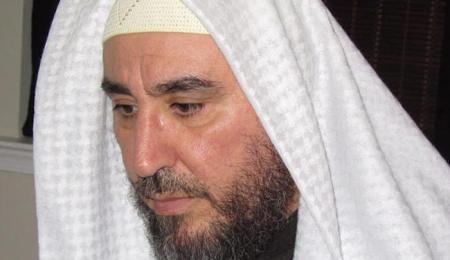
“Extremist Imam Tests F.B.I. and the Limits of the Law,” by Scott Shane and Adam Goldman, New York Times, September 30, 2016 (thanks to The Religion of Peace):
WASHINGTON — For more than a decade, Suleiman Anwar Bengharsa has served as a Muslim cleric in Maryland, working as a prison chaplain and as an imam at mosques in Annapolis and outside Baltimore. He gave a two-week course in 2011 on Islamic teachings on marriage at the Islamic Society of Baltimore, where President Obama made a much-publicized visit this year.
But in the last two years, Imam Bengharsa’s public pronouncements have taken a dark turn. On Facebook, he has openly endorsed the Islamic State, posted gruesome videos showing ISIS fighters beheading and burning alive their enemies and praised terrorist attacks overseas. The “Islamic Jurisprudence Center” website he set up last year has condemned American mosques as un-Islamic and declared that homosexual acts should be punished by death.
That is not all. An affidavit filed in federal court by the F.B.I. says that Imam Bengharsa, 59, supplied $1,300 in June 2015 to a Detroit man who used it to expand his arsenal of firearms and grenades. The man, Sebastian Gregerson, 29, a Muslim convert who sometimes calls himself Abdurrahaman Bin Mikaayl, was arrested in late July and indicted on explosives charges.
Nearly a year ago, in fact, the F.B.I. said in a court filing — accidentally and temporarily made public in an online database — that agents suspected the two men were plotting terrorism. “Based on the totality of the aforementioned information and evidence, there is reason to believe that Bengharsa and Gregerson are engaged in discussions and preparations for some violent act on behalf of” the Islamic State, an agent wrote.
Yet Imam Bengharsa has not been arrested or charged. It appears that the authorities do not have clear evidence that he has broken the law. His inflammatory statements are protected by the First Amendment, and agents appear to have no proof that he knew Mr. Gregerson planned to buy illegal explosives. In his checkbook, next to the notation for the $1,300 check, Imam Bengharsa wrote “zakat,” or charity, the documents show.
The case poses in a striking way the dilemma for the F.B.I. in deciding when constitutionally protected speech crosses into inciting violence or conspiring to commit a terrorist act.
The bureau was sharply criticized for not acting more aggressively on prior warnings about the men who carried out attacks in Orlando, Fla., in June and in New York and New Jersey last month. And in early August, the F.B.I. arrested a transit police officer from Fairfax, Va., after watching him for six years before charging him with providing support to the Islamic State. It was another case that raised questions — even among agents — about why the F.B.I. and federal prosecutors waited so long to act, potentially putting the public at risk.
In testimony before Congress this week, the F.B.I. director, James B. Comey, said the challenge for F.B.I. agents was determining when someone has crossed the line from speech to criminal activity. “It’s even protected speech to say I’m a fan of the Islamic State so-called,” Mr. Comey said.
When the suspect is a cleric, like Imam Bengharsa, the matter is especially delicate.
“It’s very possible that he’s never crossed the legal threshold,” said Seamus Hughes, deputy director of the Program on Extremism at George Washington University, who has closely followed the imam’s story. But Mr. Hughes called the situation “perplexing and concerning.” The imam “can take his supporters right up to the line. It’s like a making a cake and not putting in the final ingredient. It’s winks and nods all the way.”
Imam Bengharsa appears to have plenty of money. Court records say he received $902,710 in wire transfers in 2014 and 2015, possibly an inheritance. He told The Detroit News that he often helped needy people like Mr. Gregerson. “If that individual turns around and wants to use that money for something else that’s illegal, the person who gave the money cannot be held responsible,” Imam Bengharsa said. “It’s pathetic if they are making those connections. If that’s what this country has become, I’d rather be in jail.”
The documents say he transferred money three times to an unnamed person in Yemen.
Investigators are also exploring contacts between Imam Bengharsa and other people suspected of extremism or terrorism. One is Yusuf Wehelie, 25, a Virginia man arrested in July and charged with weapons possession, which would be illegal because he has a previous felony conviction for burglary.
Mr. Wehelie first came to public attention in 2010, when he and his brother, Yahya Wehelie, both American citizens, were temporarily detained in Cairo and prevented by the F.B.I. from flying home. American officials said such delays were sometimes necessary to assess whether a person posed a security threat. The American Civil Liberties Union and the Council on American-Islamic Relations protested that the rights of such travelers were being violated.
At Yusuf Wehelie’s detention hearing in July, the authorities said he had told undercover agents that he supported the Islamic State and that if he couldn’t join it overseas, he would attack a military recruiting center, possibly using explosives. (Mr. Wehelie’s lawyer, Nina Ginsberg, said that in later recorded conversations, he disavowed those statements and later stopped replying to the undercover agents.)
In Baltimore, another young man named Maalik Alim Jones was arrested late last year and charged with joining a terrorist group in Africa. Imam Bengharsa had preached on occasion at a Baltimore mosque Mr. Jones attended, but it is not clear that they knew each other.
The F.B.I. has been closely watching the imam for months, law enforcement officials say. A spokesman for the bureau declined to comment.
The authorities are concerned that Imam Bengharsa, who claims an impressive list of scholarly credentials, may be spreading the Islamic State message that violence can be justified against perceived enemies of the faith. In view of the payment to Mr. Gregerson, they also fear he may be financing other supporters of the Islamic State. The F.B.I. has said in court that he is under investigation for conspiring and providing material support to the Islamic State….




 anneinpt
 artaxes
 danmillerinpanama
 davidking1530
 Peter Hofman
 Joseph Wouk
 Peter
Peter Louisiana Steve
 WarSclerotic
Recent Comments