Archive for the ‘Islamic State’ category

Iranian Rev Guards ready to intervene in Syria to save Assad. Soleimani: Expect major events in Syria

June 3, 2015

Iranian Rev Guards ready to intervene in Syria to save Assad. Soleimani: Expect major events in Syria, DEBKAfile, June 3, 2015

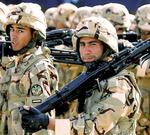
elite_forces_Revolutionary_GuardIranian Revolutionary Guards elite forces

Tehran is believed to be preparing to dispatch a substantial Revolutionary Guards (IRGC) special operations unit to Syria to tackle the separate rebel and ISIS advances closing in on the Assad regime, Western and Arab intelligence sources report. They say the Syrian army is already setting aside an area in northern Syria for the Iranian troops to take up position.

If this happens, DEBKAfile’s military sources note that it would be the Revolutionary Guards first direct intervention in the nearly five-year Syrian war. Up until now, Tehran has carefully avoided putting Iranian boots on the ground in both Syria and Iraq. The only place where Iranian forces are directly engaged in battle is at Iraq’s main refinery town of Baiji, where small infantry and artillery units have been trying – without success thus far – to dislodge ISIS forces from the refinery complex.

In the other Syrian and Iraqi war arenas – and elsewhere – Tehran follows the practice of using local Shiite militias as surrogates to fight its wars, providing them with training and arms. The Guards have also brought Shiite militias over from Pakistan and Afghanistan.

That Tehran is about to change course to save Bashar Assad was indicated in a surprise statement Tuesday, June 2 by Gen. Qassem Soleimani, supreme commander of Iranian forces fighting outside the country. After urgent consultations in Damascus with President Assad and his military chiefs, the Iranian general said enigmatically that “major developments” are to be expected in Syria “in the next few days.” Another source quotes him more fully as saying: “In the next few days, the world will be pleasantly surprised [by the arrangements] we [the IRGC] working with Syrian military commanders are currently preparing.”

DEBKAfile, which Sunday, May 31, exclusively disclosed Soleimani’s post-haste arrival in Damascus, now reports from its military sources that Hizballah military chiefs were summoned to Damascus to attend those consultations. On his way to the Syrian capital, those sources also reveal that the Iranian general stopped over at the Anbar warfront in western Iraq near the Syrian border.

The IRGC expeditionary force, according to Gulf sources, will have to initial objectives to recover Jisr al-Shughour in northwestern Syria and Palmyra. The first has been taken over by Syrian rebels of the Army of Conquest, a band of Sunni militias sponsored by the United States, Saudi Arabia, Turkey and Qatar; the second was captured by the Islamic State last month.

The recovery of the two cities and their return to Syrian government control would deflect the immediate threats posed by opposition and Islamist forces to the highways from Homs to Damascus and the Mediterranean port of Latakia. This, in turn, would relieve the Assad regime of much of the military pressure threatening its survival.

Bombers Return To Base Without Conducting Air Strikes Against ISI.S – Peters

June 1, 2015

Bombers Return To Base Without Conducting Air Strikes Against ISI.S – Peters, America’s News Room, June 1, 2015


ISIS arrives in Gaza: Supporters of the “Islamic State of Jerusalem” sighted on Israeli border

June 1, 2015

ISIS arrives in Gaza: Supporters of the “Islamic State of Jerusalem” sighted on Israeli border, DEBKAfile, June 1, 2015

ISIS-Gaza_5.15ISIS lands in Gaza

Followers of the Islamic State of Iraq and the Levant were spotted for the first time in the Gaza Strip this week, DEBKAfile’s military sources report. Their arrival on Israel’s border was confirmed as a division-strength IDF force launched its large-scale “Turning Point 2015” exercise for repelling Islamist cross-border incursions. The Islamist group which has established a substantial anti-Hamas presence in the Gaza Strip is Ansar al Dawa al-Islamia, renamed “Supporters of the Islamic State of Jerusalem.

Israeli, Egyptian and Hamas’ military sources are all concerned to make light of this development. When asked, they say that the group’s nature and scope have not yet been evaluated. Western and Middle East governments took the same tack two years ago, when ISIS first embarked on its calamitous course in Syria.

DEBKAfile’s military sources point to eight signs of the ISIS presence in the Gaza Strip:

1. In the last 48 hours, Hamas security authorities have suddenly set up scores of roadblocks across the Strip, including Gaza City.

2. They acted after senior Hamas security officer Sabah Siam was murdered Saturday, May 30, by a gang of five gunmen sporting ISIS insignia.

Hamas tried pretending that the officer died in a bomb planted in his vehicle by a local rival faction.  But the attack was too public to be concealed. The ISIS gunmen burst into a shop owned by the officer’s family in the center of Gaza City while he was visiting. They cut him down in front of his relatives and dozens of passersby, none of whom made any move to stop them as they made off in two vehicles.

The terrorists later issued a communiqué saying: “Sabah Siam was liquidated because he was a partner in a war declared against religion and against Muslims working for the heretical government in the Gaza Strip.”
In a declaration of war, ISIS warned the Palestinian Hamas to “end its war against religion in Gaza or face the consequences.”

3. Israeli and Egyptian security services, most likely in conjunction with Hamas, set up a tight ring of bodyguards to protect German Foreign Minister Frank-Walter Steinmeier against possible assassins when he visited Gaza Monday, June 1.  He insisted on going through with his visit in the face of the internecine Islamist fighting which had erupted in the Palestinian-ruled territory.

4.  On the day of the visit, Ansar al Dawa al-Islamia posted a social media notice calling on Gazans to discontinue their cooperation with the “heretical Hamas regime.”

5.  The same group also claimed responsibility for a string of bombings outside Hamas headquarters and offices in Gaza during the month of May.

6.  On May 8, the ISIS Sinai branch Ansar Bait Maqdis shelled the Hamas facility in Khan Younis, in southern Gaza.

7.   On May 28, ISIS-Sinai threatened to “target Eilat Port in the coming days,” as a joint project with the ISIS wing in the Gaza Strip, which would also attack Hamas’s military arm, Ezz e-din Al-Qassam, and take control of the Gaza Strip.

8.  DEBKAfile’s counter-terror sources report that Ansar al Dawa is preparing to declare the Gaza Strip a province of the Islamic State of Iraq and the Levant.

Iranian Regime Gives Green Light to Qods Force, Proxies to Initiate Plans Against US and its Allies

June 1, 2015

Iranian Regime Gives Green Light to Qods Force, Proxies to Initiate Plans Against US and its Allies, ISIS Study Group, June 1, 2015

In Yesterday’s article titled “Arabian Pensinsula Violence Escalates After Second IS Bombing in Saudi Arabia,” we stated that our sources in the region have been reporting back that movement appears to be underway towards targeting westerners – mainly Americans. Specifically, we’ve been informed that the Qods Force may have directed Hezbollah, Kitaib Hezbollah (KH) and the Houthis to begin making plans for conducting William Buckley-style abductions Americans in Iraq, Saudi Arabia and Yemen. Furthermore, reporting from various media outlets have already begun covering the Americans taken hostage by the Houthis and a Hezbollah plot disrupted in Cyprus. None of these are a “coincidence.” Its all by design and timed with the nuclear weapons negotiations. Why do this if the Obama administration is prepared to give them everything without having to sacrifice anything on their end? It all comes down to the fact that the Iranian regime views the US government is weak – and they will be able to be much more “assertive” by escalating their belligerence. Thus far the Obama administration has done nothing to prove otherwise.

Arabian Pensinsula Violence Escalates After Second IS Bombing in Saudi Arabia
http://isisstudygroup.com/?p=6853

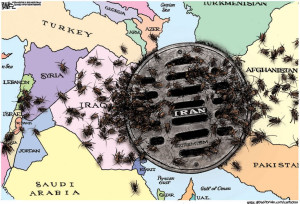
iran_roaches-300x204

The Middle East roach infestation has originated from Iran – so who will turn on the light to make them scatter?
Source: http://www.ibdeditorials.com/cartoons

We’ve been warning about the Qods Force working to expand their influence in Yemen and model the Houthis after Lebanese Hezbollah. In “Iranian Regime Consolidates Yemeni Gains, Begins Work on Forming Houthi Intel Proxy” we laid out how such work has already been underway. Furthermore, a consistent theme we’ve been touching on in our Arabian Peninsula reporting has been how intelligence collection against US State Department (DoS) personnel and American citizens in the country had dramatically increased with the influx of Hezbollah and Iranian military personnel into the country – so none of this is “new,” although the Obama administration would like to make you think it is, and that the Qods Force doesn’t exercise any control over the Houthis. The inconvenient truth is that they do, and the man calling the shots in the country is Qods Force External Operations Division (Department 400) BG Aboldreza Shahlai.

Iranian Regime Consolidates Yemeni Gains, Begins Work on Forming Houthi Intel Proxy
http://isisstudygroup.com/?p=5580

Check out the following links for additional info on the Qods Force/Houthi/Hezbollah targeting of Americans in Yemen and the greater Arabian Peninsula:

GCC SOF Teams Alerted For Deployment, AQAP Gains Strength and Iran Preps For Attacks Against Saudi Arabia
http://isisstudygroup.com/?p=6056

Saudis Begin Yemen Military OPs as the IRGC-Qods Force Prepares For Round 2
http://isisstudygroup.com/?p=5845

Poised to Fill Yemen’s Power Vacuum – Iran Tightens Grip on the Peninsula
http://isisstudygroup.com/?p=4517

IRGC-Qods Force: The Arabian Peninsula Campaign and President Obama’s Failed Foreign Policy
http://isisstudygroup.com/?p=4478

Yemen’s Houthi Rebels: The Hand of Iran?
http://isisstudygroup.com/?p=1992

AQAP vs. Shia Proxy Fighting Intensifies in Yemen
http://isisstudygroup.com/?p=2972

Shia Proxy Threat to US ISIS Strategy in Saudi Arabia
http://isisstudygroup.com/?p=1837

Regarding BG Aboldreza Shahlai, we first introduced him to our readers in our 04 APR 15 article titled, “AQAP and Qods Force Make Their Moves in Yemen as Saudis Struggle to Maintain Coalition.” At the time our sources inside the country had came across information on the presence of a senior Qods Force External Operations Division official had set up shop in the Sadah-area and tasked with overseeing overall operations in the country. We followed this up with an article a month later (“Failed State: Saudi Coaltion Increases Ground Presence as Iran Begins Targeting the Kingdom, US”) revealing his identity. Most westerners have never heard of the guy, but Iranian expats opposed to the regime know all about him. Shahlai was the architect of the Qods Force’s lethal aid program to Shia proxy forces in Iraq during OIF and was also one of the primary planners for the 2007 attack on the Karbala Provincial Joint Coordination Center (PJCC) that killed five US Servicemen. Known as “Suleimani’s Fist,” he holds considerable influence in the Qods Force commander’s inner-circle for advocating “outside the box” solutions to problems – most of which call for directly targeting America and Israel abroad. He was also the mastermind of the plot to assassinate the Saudi Ambassador to the US in New York City that involved his contacts within the Mexican drug cartel known as Los Zetas. His family member Mansur Arbabsiar was the lead-facilitator for the operation. Perhaps more important is Shahlai’s close ties to Abdul Malik al-Houthi and establishment of alternate weapons smuggling routes coming from Africa.

Failed State: Saudi Coaltion Increases Ground Presence as Iran Begins Targeting the Kingdom, US
http://isisstudygroup.com/?p=6410

AQAP and Qods Force Make Their Moves in Yemen as Saudis Struggle to Maintain Coalition
http://isisstudygroup.com/?p=6078

African Nations to Send 7,500 to Combat Boko Haram – Why is Iran so Interested?
http://isisstudygroup.com/?p=4530

qais-300x287

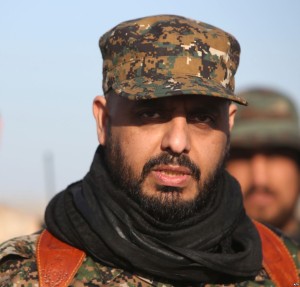
Asaib al-Haq leader Qais al-Khazali worked closely with BG Shahlai during OIF and was a participant in the 2007 attack on the PJCC – he’s now on the front-lines fighting the Islamic State (IS) in Northern Iraq
Source: voanews.com

BG Shahlai’s Yemen assignment is a good indicator that the Iranian regime intends to carry out a campaign targeting American, Israeli and to lesser extent Saudi nationals. With this and Shahlai’s relationship with the Houthis in mind, nobody should be in the least bit surprised that four of our fellow Americans are being held hostage in Yemen. The Houthis have already proven to be very efficient proxies for the Iranians inside Yemen. That said, we will likely see them conducting more operations increasing in complexity and scale within the next 6-9 months across the border into Saudi Arabia itself. They’re already conducting rocket attacks against Saudi border towns and outposts.

Houthi rebels in Yemen are holding multiple Americans prisoner
http://www.washingtonpost.com/world/national-security/houthi-rebels-in-yemen-are-holding-multiple-americans-prisoner/2015/05/29/ac349cc8-0618-11e5-8bda-c7b4e9a8f7ac_story.html

‘Several’ Americans held in Yemen: State Dept
http://news.yahoo.com/several-americans-held-yemen-state-dept-150827072.html

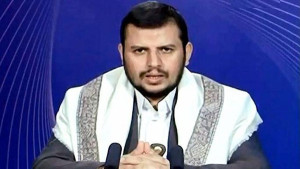
abdul-malik-al-houthi_3-300x169

Abdul Malik al-Houthi: Close personal friend to BG Shahlai
Source: al-Arabiya

Its the same situation in Iraq, where we’ve heard from our Baghdad-based contacts reports of an attack being planned by Kataib Hezbollah (KH) targeting the US Embassy. Again, this should surprise no one with the high concentration of Qods Force personnel and proxy forces present inside the country and the capital in particular. We’ve also heard that KH has sympathizers within the Iraqi Security Force (ISF) ranks who are being tapped to assist in the attack. There’s also a considerable anti-air threat in and around BIAP these days coming from both IS and KH fighters. Fortunately, the American forces on the ground are already well aware of this – whether DoS or the Obama administration actually takes the threat serious is another matter entirely.

ISOF Commandos’ Admiration of Their IRGC-Qods Force Embeds
http://isisstudygroup.com/?p=122

The IRGC-Qods Force
http://isisstudygroup.com/?p=101

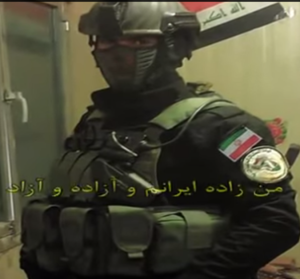
ISOF-and-ramazan-300x279

ISOF troopers don’t even try to hide their support of the IRGC-Qods Force Ramazan Corps anymore – a huge red flag for any US military personnel being deployed to Iraq these days
Source: The ISIS Study Group

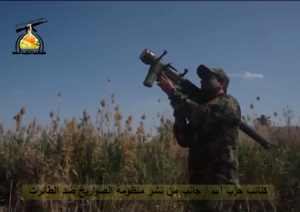
KH_manpads-300x212

Now why would KH need MANPADs since IS has no Air Force? Perhaps the Qods Force supplied them to KH in order to target someone else?
Source: The ISIS Study Group

Unfortunately these operations aren’t limited to just the Middle East. Security forces in Cyprus recently arrested a man reportedly involved in a line of Hezbollah operations targeting Israeli interests in Europe. When the Cypriot police arrested him, they also confiscated close to two tons of “suspicious materials” in his basement. Although no additional details on the materials has been made public as of this writing, our source informed us that the materials are for producing explosives (ammonium nitrate was the he saw mentioned). The guy they detained was born in Lebanon but had a Canadian passport, which tends to fit the profile of the kind of personnel Hezbollah’s special operations wing and the Qods Force prefers to recruit into their ranks.

Cyprus police foil planned Hezbollah attacks against Israeli targets in Europe
http://www.haaretz.com/news/diplomacy-defense/1.658716?utm_source=dlvr.it&utm_medium=twitter

Cyprus arrest of Hezbollah man ‘uncovered large-scale Iranian terror plot across Europe’
http://www.jpost.com/Arab-Israeli-Conflict/Cyprus-arrest-of-Hezbollah-man-uncovered-large-scale-Iranian-terror-plot-across-Europe-404531

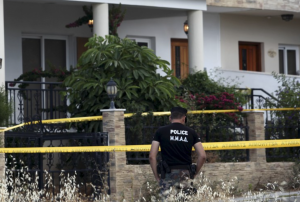
Crime scene

Scene of the crime
Source: Reuters

Qods Force and Hezbollah operations have spiked considerably since 2009 with attacks being executed in places like Bulgaria, India and Thailand along with the disrupted plot that was planned for New York City mentioned earlier. Of these, the NYC and Burgas, Bulgaria plots had the direct involvement of BG Shahlai. The telltale signs are how both plots called for using some of his preferred methods of using third parties to do the dirty work and targeting westerners in areas not known for Iranian activity. In fact, the attack in Burgas also involved a Lebanese Arab in possession of Canadian travel documents. The bombings in New Delhi and Bangkok utilized personnel from the IRGC-Qods Force Department 5000 – which is the equivalent to the US Army’s 1st Special Forces Group in that both units are geographically aligned to the Asia/Pacific region.

Bulgaria Has New Evidence on Hezbollah – Report
http://www.novinite.com/view_news.php?id=151420

Bulgaria names Hezbollah suspects behind bombing of Israeli bus in Burgas
http://www.jpost.com/International/Bulgaria-names-2-suspects-in-Burgas-bus-bombing-321017

Bulgaria says clear signs Hezbollah behind Burgas bombing
http://www.reuters.com/article/2013/07/18/us-bulgaria-hezbollah-idUSBRE96H0XI20130718

Hezbollah Is Blamed for Attack on Israeli Tourists in Bulgaria

Thai Police Widen Search for Iranians
http://www.wsj.com/articles/SB10001424052970204059804577227012899036768

Israel’s Iran warning as police hunt fourth Bangkok bomber with help from prostitute
http://www.telegraph.co.uk/news/worldnews/asia/thailand/9088238/Israels-Iran-warning-as-police-hunt-fourth-Bangkok-bomber-with-help-from-prostitute.html

India names Iranian suspects in Israeli car bombing
http://www.cnn.com/2012/03/15/world/meast/india-iran-israeli-car-bombing/index.html

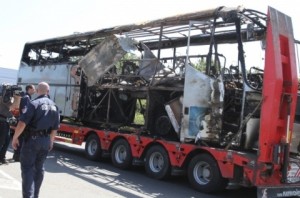
burgas-bombing-300x198

The 2012 Bombing in Burgas, Bulgaria
Source: Reuters

Bibi Netanyahu was absolutely right to visit America and appear before Congress to air his concerns about the Iranian threat. The events that have occurred over the last few months have added strength to his concerns. Unfortunately, the Obama administration has been downplaying the Iranian threat and the American mainstream media let them get away with it by not holding their feet to the same fire that they did to the Bush administration. Sure, a few American media outlets have finally begun asking some national security questions of substance, but far too many seem to be concerned with covering Bruce Jenner’s hormone therapy and President Obama’s March Madness brackets than they are about things that will have a profound impact on our way of life a lot sooner than people think.

The American media needs to start asking the Obama administration, “why are we seeing such a surge in external operations by the IRGC-Qods Force and their proxies if the current engagement strategy with the Iranian regime is “working,” as they claim?” Indeed members of our staff have worked the Iranian problem-set for some time, but it doesn’t require a whole lot in the way of burning calories to connect the dots between this surge in external operations and the ongoing negotiations over Iran’s nuclear weapons program. Had the media truly cared to search for the truth instead of protect an administration they’ve compromised their journalistic integrity for, they would’ve already put out several articles and investigative specials on the subject. If they want to save face and salvage what’s left of their credibility, then we recommend they do some digging on the current threat to the US Embassy in Baghdad coming from KH and their ISF supporters based in the Green Zone. We can assure you that DoS is fully aware of the threat coming from Shia militias that are now being painted to the American people as “the good guys.”

They should also start peppering John Kirby and Marie Harf about the recent counter-terror raid in Cyprus and hammer them about whether the administration ever thought about demanding that the Iranian regime release our citizens in Yemen and US Marine veteran Amir Hekmati during these nuclear weapon talks. We assess that the Qods Force and their proxies are going to continue escalating their actions against our people and our allies for as long as they think they can get away with it. Don’t buy into the Administration’s talk that the regime can’t “control” the Qods Force, because if they say that they’re either lying, extremely ignorant or both. How so? The IRGC as a whole is made up only the most loyal followers of Ayatollah Khameini’s militant ideology. The IRGC-Qods Force are the “most loyal” of those serving in the IRGC – with GEN Suleimani answering only to Khameini. More importantly, the Shia proxy forces won’t take action against the US and its allies unless given authorization to do so by their Qods Force handlers. Make no mistake, this is only the beginning. There will be more attacks coming down the pipe from these guys. Our current national security strategy and foreign policy has set our country on a collision course – is anybody truly paying attention? More importantly, is this administration willing to sacrifice American lives for the appearance of obtaining “peace” with an Iranian regime that has no interest in pursuing normal relations? Something to think about.

hekmati-207x300

Amir Hekmati: Prisoner of Iran
Source: The ISIS Study Group

If you want to know what the Iranian regime is all about, then check out our Inside Iran’s Middle East series:

Inside Iran’s Middle East: the Kurdish Insurgency
http://isisstudygroup.com/?p=4068

Inside Iran’s Middle East: the Southeast Insurgency
http://isisstudygroup.com/?p=2689

Inside Iran’s Middle East: the Charm Offensive
http://isisstudygroup.com/?p=2676

Inside Iran’s Middle East: the “Reformers”
http://isisstudygroup.com/?p=2635

Inside Iran’s Middle East: the Nuclear Weapons Program
http://isisstudygroup.com/?p=2640

Other Related Articles:

Mr. Netanyahu Goes to Washington
http://isisstudygroup.com/?p=5316

Today’s Middle East: The Burning Fuse of the 21st Century’s “Great Game”
http://isisstudygroup.com/?p=6193

The Persian Hustle: How Iran Dupes Clueless US State Dept in Nuke Talks and Moves to Dominate the Middle East
http://isisstudygroup.com/?p=5978

How the North Korean Regime Affects the Middle East
http://isisstudygroup.com/?p=3038

Yemen isn’t on Verge of Civil War, It Already is – And Saudi Arabia Will Get Involved
http://isisstudygroup.com/?p=5810

What Yemen’s Coming Apart at the Seams Means to Arabian Peninsula
http://isisstudygroup.com/?p=5737

The Hezbollah Presence In Iraq
http://isisstudygroup.com/?p=358

Iraq Lost 2,300 Humvees in Mosul, Prime Minister Says

May 31, 2015

Iraq Lost 2,300 Humvees in Mosul, Prime Minister Says, Defense News, May 31, 2015

HumveesMembers of Iraqi security forces gather around a military vehicle on March 28 outside the western entrance of Tikrit during a military operation to retake the northern Iraqi city from Islamic State group jihadists. (Photo: Ahmad Al-Rubaye/AFP)

The militants gained ample arms, ammunition and other equipment when multiple Iraqi divisions fell apart in the country’s north, abandoning gear and shedding uniforms in their haste to flee.

IS has used captured Humvees, which were provided to Iraq by the United States, in subsequent fighting, rigging some with explosives for suicide bombings.

*********************

BAGHDAD — Iraqi security forces lost 2,300 Humvee armored vehicles when the Islamic State jihadist group overran the northern city of Mosul, Prime Minister Haider al-Abadi said on Sunday.

“In the collapse of Mosul, we lost a lot of weapons,” Abadi said in an interview with Iraqiya state TV. “We lost 2,300 Humvees in Mosul alone.”

While the exact price of the vehicles varies depending on how they are armored and equipped, it is clearly a hugely expensive loss that has boosted IS’ capabilities.

Last year, the State Department approved a possible sale to Iraq of 1,000 Humvees with increased armor, machine guns, grenade launchers, other gear and support that was estimated to cost $579 million.

Clashes began in Mosul, Iraq’s second city, late on June 9, 2014, and Iraqi forces lost it the following day to IS, which spearheaded an offensive that overran much of the country’s Sunni Arab heartland.

The militants gained ample arms, ammunition and other equipment when multiple Iraqi divisions fell apart in the country’s north, abandoning gear and shedding uniforms in their haste to flee.

IS has used captured Humvees, which were provided to Iraq by the United States, in subsequent fighting, rigging some with explosives for suicide bombings.

Iraqi security forces backed by Shiite militias have regained significant ground from IS in Diyala and Salaheddin provinces north of Baghdad.

But that momentum was slashed in mid-May when IS overran Ramadi, the capital of Anbar province, west of Baghdad, where Iraqi forces had held out against militants for more than a year.

Cartoon of the day

May 31, 2015

H/t Vermont Loon Watch

border1


European Welfare Systems Milked by Jihadis

May 31, 2015

European Welfare Systems Milked by Jihadis, The Clarion Project, Soeren Kern, May 31, 2015

Khalid-AbdurahmanIPKhalid Abdurahman (center)

The disclosures show that Islamists continue to exploit European social welfare systems to finance their activities both at home and abroad — costing European taxpayers potentially millions of euros each year.

Anjem Choudary, a British-born radical Islamic cleric who lives off the British welfare state, has repeatedly urged his followers to quit their jobs and claim unemployment benefits so they have more time to plot holy war against non-Muslims.

Choudary believes that Muslims are entitled to welfare payments because they are a form of jizya, a tax imposed on non-Muslims in countries run by Muslims, as a reminder that non-Muslims are permanently inferior and subservient to Muslims.

******************

More than 30 Danish jihadists have collected unemployment benefits totaling 379,000 Danish krone (€51,000; $55,000) while fighting with the Islamic State in Syria, according to leaked intelligence documents.

The fraud, which was reported by Television 2 Danmark on May 18, comes less than six months after the Danish newspaperBT revealed that Denmark had paid unemployment benefits to 28 other jihadists while they were waging war in Syria.

The disclosures show that Islamists continue to exploit European social welfare systems to finance their activities both at home and abroad — costing European taxpayers potentially millions of euros each year.

According to Television 2 Danmark, the welfare fraud was discovered after the Danish intelligence agency PET began sharing data about known Danish jihadists with the Ministry of Employment to determine if any of these individuals were receiving unemployment benefits.

As a percentage of the overall population, Denmark is the second-largest European source of foreign fighters in Syria after Belgium. At least 115 Danes have become foreign fighters in Syria and Iraq since Syria’s civil war broke out in March 2011, according to a recent report by the Center for Terrorism Analysis, an agency of PET. The report states:

“CTA assesses that approximately half of those who have gone abroad are now back in Denmark, while a quarter of them remain in the conflict zone. CTA assesses that two thirds of these individuals have been in the conflict zone for more than a year. The remaining travelers are located elsewhere abroad. CTA assesses that at least 19 travelers from Denmark have been killed in Syria and Iraq.”

The CTA admits that, “the number may be higher” than 115. The comment is a tacit recognition that it does not know exactly how many Danes have become jihadists abroad.

In April, it emerged that the parents of Omar Abdel Hamid El-Hussein — a Danish-Jordanian jihadist responsible for the terror attacks in Copenhagen in February 2015 in which two people died — have been welfare recipients in Denmark for more than 20 years. Omar’s parents received a total of 3.8 million krone between 1994 and 2014, amounting to roughly 500,000 euros or $560,000.

Social welfare fraud of the kind perpetrated in Denmark is being repeated throughout Europe.

In Austria, police arrested 13 jihadists in November 2014 who were allegedly collecting welfare payments to finance their trips to Syria. Among those detained was Mirsad Omerovic, 32, an extremist Islamic preacher who police say raised several hundred thousand euros for the war in Syria. A father of six who lives exclusively off the Austrian welfare state, Omerovic has benefited from additional payments for paternity leave (Väterkarenz).

Austrian police also arrested, in August 2014, nine other jihadists who were attempting to join the jihad in Syria. Their trip was being financed by Austrian taxpayers by way of social welfare payments.

In Belgium, 29 jihadists from the Flemish cities of Antwerp and Vilvoorde were prevented from receiving social welfare benefits from the state. The move came after an investigation found that the individuals had been accessing their Belgian bank accounts by withdrawing money from banks in Turkey, just across the Syrian border.

Per capita, Belgium is the largest European source of jihadist fighters going to the Middle East; up to 400 Belgians have become jihadists in Syria and Iraq.

In Britain, Terri Nicholson, an assistant commander at the Metropolitan Police’s counter-terrorism command unit, told the Telegraph newspaper in November 2014 that taxpayers’ money was being claimed fraudulently and used by jihadists in Iraq and Syria. “We are seeing a diverse fraud, including substantial fraud online, abuse of the benefits system, abuse of student loans, in order to fund terrorism,” she said.

Nicholson added that women were increasingly being used to smuggle welfare money out of Britain to fund terrorists abroad, because they supposedly arouse less suspicion.

In November 2014, for example, Amal El-Wahabi, a British mother of two, was jailed for 28 months for trying to arrange to smuggle €20,000 to her husband, a jihadist fighting in Syria. She persuaded her friend, Nawal Msaad, to carry the cash in her underwear in return for €1,000. Msaad was stopped at Heathrow Airport. The money she was carrying is thought to have come from social welfare payments.

Anjem Choudary, a British-born radical Islamic cleric who lives off the British welfare state, has repeatedly urged his followers to quit their jobs and claim unemployment benefits so they have more time to plot holy war against non-Muslims.

Choudary believes that Muslims are entitled to welfare payments because they are a form ofjizya, a tax imposed on non-Muslims in countries run by Muslims, as a reminder that non-Muslims are permanently inferior and subservient to Muslims.

In 2010, The Sun reported that Choudary takes home more than £25,000 ($39,000) a year in welfare benefits. Among other handouts, Choudary receives £15,600 a year in housing benefit to keep him in a £320,000 ($495,000) house in Leytonstone, East London. He also receives £1,820 council tax allowance, £5,200 income support and £3,120 child benefits. Because his welfare payments are not taxed, his income is equivalent to a £32,500 ($50,000) salary. By comparison, the average annual earnings of full-time workers in Britain was £26,936 ($41,000) in 2014.

Although analysts are divided over the question of how many followers Choudary actually has, no one disputes the fact that he is far from alone in exploiting the British welfare system.

British taxpayers have footed the bill for the Moroccan-born Najat Mostafa, the second wife of the Egyptian-born Islamic hate preacher Abu Hamza, who was extradited to the United States in October 2012. She has lived in a £1 million, five-bedroom house in one of London’s wealthiest neighborhoods for more than 15 years, and has raised the couple’s eight children there.

Abu Hamza and his family are believed to have cost British taxpayers more than £338,000 in benefits. He has also received £680,000 in legal assistance for his failed U.S. extradition battle. The cost of keeping him in a British prison since 2004 is estimated at £500,000.

Fellow extremist Islamic preacher Abu Qatada, a Palestinian, has cost British taxpayers an estimated £500,000. He has also won £390,000 in legal aid to avoid deportation to Jordan.

The Islamic preacher Omar Bakri Mohammed, a Syrian, obtained £300,000 benefits before being exiled to Lebanon. The money was provided to raise his six children, including Yasmin Fostok, a single mother who makes a living as a pole-dancer in London nightclubs.

More instances of British welfare abuse can be found here.

In France, the government in March 2015 cut welfare benefits for 290 persons identified as jihadists. French Interior Minister Bernard Cazeneuve downplayed the problem. “We shouldn’t make a controversy of this subject or allow people to think no action has been taken. We’re taking this seriously and will continue to do so,” he said.

In Germany, an analysis of the estimated 450 German jihadists fighting in Syria found that more than 20% of them were receiving welfare benefits from the German state. In addition, the 150 jihadists who have returned to Germany are eligible to begin receiving benefits again.

The Interior Minister of Bavaria, Joachim Herrmann, said:

“It should never come to this. German taxpayers’ money should never directly or indirectly finance Islamist terrorism. The benefits of such terrorist parasites should be eliminated immediately. Not working and spreading terror at the expense of the German state is not only extremely dangerous, it is also the worst provocation and disgrace!”

Separately, a study by the Cologne Institute for Economic Research found that Muslim immigrants were more likely to be unemployed and living off the social welfare state than any other immigrant group in Germany.

According to the study, 55% of the immigrants from Lebanon are unemployed, as are 46% from Iraq, 37.5% from Afghanistan, 37.1% from Iran, 27.1% from Morocco and 21.5% from Turkey. In real terms, immigrants from Turkey (140,000) constitute the largest number of unemployed. The report said the root cause for the high unemployment rates was the lack of educational attainment and job training qualifications.

In the Netherlands, a Dutch jihadist named Khalid Abdurahman appeared in a YouTube video with five severed heads. Originally from Iraq, Abdurahman was living on social welfare benefits in the Netherlands for more than a decade before he joined the Islamic State in Syria. Dutch social services declared him to be unfit for work and taxpayers paid for the medication to treat him for claustrophobia and schizophrenia.

Meanwhile, city councils across the Netherlands are attempting to help rather than to prosecute returning jihadists. In the city of Delft, for example, local politicians are using taxpayer money to “reintegrate” jihadists and to help them “rebuild their lives.” Dutch public television explained it this way: “The idea is that the local authorities do not want to alienate the returnees by means of a repressive approach which might lead to their further radicalization.”

Separately, several Dutch-Moroccan organizations sent a letter to the Labor Party (Partij van de Arbeid, PvdA) in which they threatened to urge Dutch-Moroccans to stop supporting the party if it agreed to a proposal by its Minister of Social Affairs, Lodewijk Asscher, to cut social welfare payments to Moroccans who do not live in the Netherlands. Asscher accused the organizations of using an “improper electoral threat.”

In Spain, police arrested five Muslims in the Basque Country who allegedly pocketed the social welfare payments of Redouan Bensbih, a Moroccan immigrant killed on the battlefield in Syria in March. Despite his no longer living in Spain, Bensbih continued receiving monthly payments of €836 euros ($920), which the suspects are accused of having wired to Morocco.

Meanwhile, a network of more than 250 butcher shops, grocery stores and telephone call centers was accused of financing the Islamic State and al-Qaeda. The network used the so-called hawala system — defined by Interpol as money transfer without money movement — where money is transferred through an informal and virtually untraceable system.

According to the El País newspaper, “the secret hawala network in Spain is comprised of about 300 hawaladars — the majority of them Pakistanis — who run clandestine offices in Barcelona, Tarragona, Lleida, Bilbao, Santander, Valencia, Madrid, Logroño, León, Jaén and Almería, and other cities with large Pakistani communities.” They manage the savings of over 150,000 Muslims, many of whom are believed to be receiving social welfare payments from the Spanish state, without any legal oversight.

The network allegedly paid the salaries of Spanish jihadists in Syria: They received about $800 if they were single and $1,200 if they were married.

In February 2015, a Pakistani couple residing in the Basque capital of Vitoria was accused of falsifying identity documents to fraudulently obtain social welfare payments for 10 fictitious individuals. The man was receiving six different welfare payments and his wife was receiving four. Each welfare payment was between €6,000 ($6,600) and €10,000 ($11,000) per month. Police say that over a period of three years, the couple defrauded the Basque government of more than €395,000 ($453,000).

The Basque Country is known for its liberal social welfare policies; all residents, including illegal immigrants, are eligible to receive welfare payments. In 2012, a massive wave of immigrants from Morocco and Algeria arrived in the Basque Country in order to — in the words of a local politician — “live off of welfare benefits without working.”

According to local observers, more than 65% of the immigrants from Morocco and Algeria are receiving benefits. Auditors found that in 2012 alone the Basque Country made €86 million ($95 million) in dubious welfare payments.

In Sweden, the state employment agency, Arbetsformedlingen, terminated a pilot program aimed at helping immigrants find jobs. Information had emerged that Muslim employees at the agency were helping jobseekers find jobs as jihadists for the Islamic State. Operatives from the Islamic State had also allegedly bribed — and in some cases issued death threats against — agency employees in efforts to recruit fighters from Sweden.

Also in Sweden, the government said it wanted to impose a special tax to finance a jobs program for returning jihadists. The project is based on a scheme in the Swedish city of Örebro, where the city is using taxpayer money to help returning jihadists find employment. Town councilor Rasmus Persson said:

“We have discussed how we should work for these guys who have come back, to ensure that they do not return to the battlefield. They should be helped to process the traumatic experiences they have been through.”

The project was challenged by a Swedish soldier deployed in Afghanistan, who said that he was likely to get less help when he came back to Sweden than returning jihadists were. Soldier Fredrik Brandberg wrote:

“It would be wonderful if I was met with a comparable program after my homecoming, after which I could feel safe in having a regular job, with monthly income and a social stable situation in the society where I wouldn’t need to wonder whether I’m wanted or not.”

A spokesperson for the Swedish Armed Forces said that what happens to soldiers upon their return from war was not an issue that fell under its mandate.
Russia said abandoning Assad as Syria regime collapses further

May 31, 2015

Russia said abandoning Assad as Syria regime collapses further, YNet News, Roi Kais, May 31, 2015

The report also quoted Syrian opposition sources as saying that Hezbollah and Iranian military experts have left Assad’s war room in Damascus, along with Russian experts.

*********************

Asharq Al-Awsat says Moscow has pulled military experts from Assad’s war room in Damascus, evacuated non-essential personnel and stopped declaring there is no alternative to Assad.

Russia is pulling away from its relationship with embattled Syrian President Bashar Assad and withdrawing key personnel from Damascus, the London-based Arabic newspaper Asharq Al-Awsat reported Sunday, citing senior Gulf and Western officials.

“The Kremlin has begun to turn away from the regime,” the newspaper said.

The report also quoted Syrian opposition sources as saying that Hezbollah and Iranian military experts have left Assad’s war room in Damascus, along with Russian experts.

There have been increasing signs in recent days that the Assad regime is disintegrating, four years into the civil war that has engulfed Syria. Last week, the Syrian president lost control of another province, which comes on the heels of previous reports that Islamic State already controls more than 50% of the country.

According to the same Gulf and Western sources, the change in the Russian position takes place against the backdrop of negotiations between the Gulf states and Moscow, a Russian response to economic sanctions imposed on it due to the war in Ukraine.

Syrian opposition sources told Asharq that Russia has evacuated 100 of its senior officials and their families from Syria via the airport in Latakia. They said that those leaving include experts who worked in the war room in Damascus, along with the Iranian experts and Hezbollah officials. According to the report, they have not been replaced.

Putin and AssadPutin and Assad. Allies no more. (Photos: EPA and AFP)

On Thursday, Russia confirmed that an Ilyushin II-76 aircraft took 66 Syrian nationals from Latakia to Moscow airport, as well as a number of citizens from other countries, and at the same time delivered humanitarian aid to the war-torn country. Russia has remained silent on removal of the military experts.

According to Asharq al-Awsat, Russia has in the last three months also cut down the number of employees at its embassy in Damascus, leaving only essential staff. Opposition forces have also claimed that Russia has not been abiding by the maintenance contracts with Syria for the Sukhoi aircraft, leading to a rare visit to Tehran last month by Syrian Defense Minister Fahd Jassem al-Freij, who was forced to ask Iran to intervene with Russia on this matter.

The newspaper, which is notably supportive of the Saudi regime, also quoted an apparently surprising response by the head of the Russian delegation at a meeting last month, when asked by the Western Europe security chiefs for Moscow’s perspective on Syria’s future.

“What matters to Russia is maintaining its strategic interests and ensuring the future of the minorities, the unity of Syria and the struggle against extremists,” the delegation chief said. Western diplomatic sources at the meeting said the unprecedented statement brings to an ends years of the Russian official line that there is no alternative to Assad.

602610501001095640360noThe rebels draw closer to Latakia (Photo: Reuters)

At the same time, there have been growing Arab media reports of a more serious dialogue than ever before between Russia and the United States on an agreement regarding the crisis in Syria. The Lebanese newspaper Al-Nahar quoted diplomatic sources in Geneva on Sunday as saying that the two sides are seeking an arrangement that will take into account the interests of regional and international parties, in particular Turkey, Iran and the Gulf states.

On Thursday, senior diplomatic sources told Al-Hayat that there has been a noticeable change in the Russian position toward Syria that Moscow is for the first time willing to discuss with the Americans the exact details of a transition period for the country, and even raise the names of individual military and political officials to oversee it.

Another sign of Assad’s difficulties comes from the Turkish news agency Anatolia, which cited opposition sources as saying that after four years of war, the regime controls less than 8% percent of the country’s oil and gas fields, while Islamic State controls more than 80% percent.


Western Officials Alarmed as Islamic State Expands Territory in Libya

May 31, 2015

Western Officials Alarmed as Islamic State Expands Territory in Libya, New York Times, 

The continued expansion inside Libya of the group, also known as ISIS or ISIL, has alarmed Western officials because of its proximity to Europe across the Mediterranean.

*********************

TRIPOLI, Libya — The branch of the Islamic State that controls the city of Surt has expanded its territory and pushed back the militia from the neighboring city of Misurata, militia leaders acknowledged Sunday.

In the group’s latest attack, a suicide bomber killed at least four fighters on Sunday at a checkpoint west of Misurata on the coastal road to Tripoli, according to local officials and Libyan news reports.

The continued expansion inside Libya of the group, also known asISIS or ISIL, has alarmed Western officials because of its proximity to Europe across the Mediterranean.

Four years after the removal of Col. Muammar el-Qaddafi, the near collapse of the Libyan government has left no central Libyan authority to check the group’s advance or even partner with Western military efforts against it. Two armed factions, each with its own paper government, are fighting for control, and each has focused more on internal quarrels than on defeating the Islamic State.

The group’s expanding turf in Libya also gives it an alternative base of operations even as it appears to be gaining ground — in Palmyra in Syria and in Ramadi in Iraq. The gains come despite an American-led bombing campaign aimed at rolling back the group’s original territory across the border between those countries.

Suliman Ali Mousa, an officer with the brigade from Misurata, confirmed in a telephone interview on Sunday that over the past two days its forces had retreated in the face of Islamic State advances to the east, south and west of Surt. Islamic State fighters have captured the Gardabya air base, about 20 kilometers south of Surt; it had been all but destroyed by NATO airstrikes during the 2011 campaign against Colonel Qaddafi, but Libyans describe it as a strategic foothold.

Toward the east, Mr. Mousa’s brigade retreated from its base in a water treatment facility, leaving the Islamic State in control as far as the town of Nofilya, another extremist stronghold. And toward the West the Misuratan forces had also pulled back about 20 kilometers toward their home city.

“We left our position and relocated,” Mr. Mousa said. “It was a necessary retreat. Our fighting position did not allow us to stay where we were.” He added that another group of Misurata fighters had abandoned a power station west of Surt and so his group had taken their place.

He said he was unsure why those fighters had pulled out, but “there was a lot of talk about money and unpaid salaries.”

Behind the Lines: Hezbollah – Born in Lebanon, dying in Syria?

May 30, 2015

Behind the Lines: Hezbollah – Born in Lebanon, dying in Syria? Jerusalem PostJonathan Spyer, May 30, 2015

(Please see also, Iran weighs turning Hizballah’s anti-Israel missiles against ISIS to save Damascus and Baghdad. — – DM)

Hezbolla1Hassan Nasrallah talks to his Lebanese and Yemeni supporters via a giant screen during a speech against US-Saudi aggression in Yemen, in Beirut’s southern suburbs on April 17.. (photo credit:REUTERS)

With the minority communities that formed the core of Assad’s support no longer willing or able to supply him with the required manpower, the burden looks set to fall yet further onto the shoulders of Assad’s Lebanese friends.

What this is likely to mean for Hezbollah is that it will be called on to deploy further and deeper into Syria than has previously been the case.

The Israeli assessment is that with its hands full in Syria, Hezbollah will be unlikely to seek renewed confrontation with Israel.

**********************

The latest reports from the Qalamoun mountain range in western Syria suggest that Hezbollah is pushing back the jihadis of Jabhat al-Nusra and Islamic State.

The movement claims to have taken 300 square kilometers from the Sunni rebels.

The broader picture for the Shi’ite Islamists that dominate Lebanon, however, is less rosy.

The Iran-led alliance of which Hezbollah is a part is better-organized and more effectively commanded than its Sunni rivals. The coalition’s ability to marshal its resources in a centralized and effective way is what has enabled it to preserve the Assad regime in Syria until now.

When President Bashar Assad was in trouble in late 2012, an increased Hezbollah mobilization into Syria and the creation by Iran of new, paramilitary formations for the regime recruited from minority communities was enough to turn the tide of war back against the rebels by mid-2013.

Now, however, the numerical advantage of the Sunnis in Syria is once more reversing the direction of the war.

With the minority communities that formed the core of Assad’s support no longer willing or able to supply him with the required manpower, the burden looks set to fall yet further onto the shoulders of Assad’s Lebanese friends.

What this is likely to mean for Hezbollah is that it will be called on to deploy further and deeper into Syria than has previously been the case.

In the past, its involvement was largely confined to areas of particular importance to the movement itself. Hezbollah fought to keep the rebels away from the Lebanese border, and to secure the highways between the western coastal areas and Damascus.

The movement’s conquest of the border town of Qusair in June 2013, for example, formed a pivotal moment in the recovery of the regime’s fortunes at that time.

But now, Hezbollah cannot assume that other pro-regime elements will hold back the rebels in areas beyond the Syria-Lebanese frontier.

This means that the limited achievement in Qalamoun will prove Pyrrhic, unless the regime’s interest can be protected further afield.

Hezbollah looks set to be drawn further and deeper into the Syrian quagmire.

Movement Secretary-General Hassan Nasrallah acknowledged this prospect in his speech last Sunday, marking 15 years since Israel’s withdrawal from southern Lebanon.

In the talk, Nasrallah broadened the definition of Hezbollah’s engagement in Syria.

Once, the involvement was expressed in limited sectarian terms (the need to protect the tomb of Sayyida Zeinab in Damascus from desecration).

This justification then gave way to the claimed need to cross the border precisely so as to seal war-torn Syria off from Lebanon and keep the Sunni takfiris (Muslims who accuse other Muslims of apostasy) at bay.

On Sunday, Nasrallah struck an altogether more ambitious tone. Hezbollah, he said, was fighting alongside its “Syrian brothers, alongside the army and the people and the popular resistance in Damascus and Aleppo and Deir al-Zor and Qusair and Hasakeh and Idlib. We are present today in many places, and we will be present in all the places in Syria that this battle requires.”

The list of locations includes areas in Syria’s remote north and east, many hundreds of kilometers from Lebanon (Hasakeh, Deir al-Zor), alongside regions previously seen as locations for the group’s involvement.

Nasrallah painted the threat of Islamic State in apocalyptic terms, describing the danger represented by the group as one “unprecedented in history, which targets humanity itself.”

This language fairly clearly appears to be preparing the ground for a larger and deeper deployment of Hezbollah fighters into Syria. Such a deployment will inevitably come at a cost to the movement; only the starkest and most urgent threats of the kind Nasrallah is now invoking could be used to justify it to Hezbollah’s own public.

The problem from Hezbollah’s point of view is that it too does not have inexhaustible sources of manpower.

The movement has lost, according to regional media reports, around 1,000 fighters in Syria since the beginning of its deployment there. At any given time, around 5,000 Hezbollah men are inside the country, with a fairly rapid rotation of manpower. Meanwhile, Hezbollah’s entire force is thought to number around 20,000 fighters.

Faced with a task of strategic magnitude and ever-growing dimensions in Syria, there are indications the movement is being forced to cast its net wider in its search for manpower.

A recent report by Myra Abdullah on the Now Lebanon website (associated with anti-Hezbollah elements in Lebanon) depicted the party offering financial inducements to youths from impoverished areas in the Lebanese Bekaa, in return for their signing up to fight for Hezbollah in Syria.

Now Lebanon quoted sums ranging from $500 to $2,000 as being offered to these young men in return for their enlistment.

Earlier this month, Hezbollah media eulogized a 15-yearold youth, Mashhur Shams al-Din, who was reported as having died while performing his “jihadi duties” (the term usually used when the movement’s men are killed in Syria).

All this suggests that Hezbollah understands a formidable task lies before it, and that it is preparing its resources and public opinion for the performance of this task.

As this takes place, Hezbollah seems keen to remind its supporters and the Lebanese public of the laurels it once wore in the days when it fought Israel.

The pro-Hezbollah newspaper As-Safir recently gained exclusive access to elements of the extensive infrastructure the movement has constructed south of the Litani River since 2006. The movement’s Al-Manar TV station ran an (apparently doctored) piece of footage this week purporting to show Hezbollah supporters filming a Merkava tank at Mount Dov. Nasrallah, in his speech, also sought to invoke the Israeli enemy, declaring Islamic State was “as evil” as Israel.

The Israeli assessment is that with its hands full in Syria, Hezbollah will be unlikely to seek renewed confrontation with Israel.

It is worth noting, nevertheless, that a series of public statements in recent weeks from former and serving Israeli security officials have delivered a similar message regarding the scope and depth of the Israeli response, should a new war between Hezbollah and Israel erupt.

Israel Air Force commander Maj.-Gen. Amir Eshel, former IAF and Military Intelligence head Maj.-Gen. (res.) Amos Yadlin, former national security adviser Maj.-Gen. (res.) Giora Eiland and other officials speaking off the record expressed themselves similarly in this regard.

Hezbollah plainly has little choice regarding its deepening involvement in Syria, Nasrallah’s exhortations notwithstanding.

The organization is part of a formidable, if now somewhat overstretched regional alliance, led by Iran.

This alliance regards the preservation of the Assad regime’s rule over at least part of Syria as a matter of primary strategic importance.

Hezbollah and the Shi’ites it is now recruiting are tools toward this end. It would be quite mistaken to underestimate the efficacy of the movement; it is gearing up for a mighty task, which it intends to achieve. Certainly, many more Hezbollah men will lose their lives before the fighting in Syria ends, however it eventually does end.

Given the stated ambitions of the movement regarding Israel and the Jews, it is fair to say this fact will be causing few cries of anguish south of the border.