Archive for the ‘Islamic State’ category

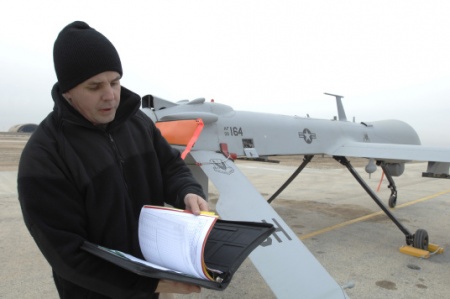
Satire | Drones In Syria ‘Serving Strictly In An Advisory Role’

November 2, 2015

Drones In Syria ‘Serving Strictly In An Advisory Role,’ Duffel Blog, November 2, 2015

Drone-ADvisoryUS AIR FORCE PHOTO.

RAQQA, Syria — Recent increases in the tempo and nature of US operations against the Islamic State do not indicate a change in US policy, according to senior US officials, in spite of criticism that the Obama administration escalated the mission in Syria from an advisory role to a more active combat mission.

“Let me be clear: our brave drones are serving in a non-combat role,” White House Press Secretary Josh Earnest said. “Sure they might deliver sweet justice to our jihadi friends, but that’s just ‘leading by example.’”

A Predator drone operating in Syria who uses the pseudonym “Vengeance of Lindsay Graham,” spoke to Duffel Blog last week. “We’re not doing combat. Well, sort of. I led a patrol last week and we came across some ISIS jack-wagons in the clear, but the rebels I was leading weren’t ready. The training model is crawl, walk, run; they were still in a crawl phase but I was sprinting like Usain Bolt, baby!”

Despite this story, administration officials maintain that the Syrian conflict remains a strict train-and-advise mission. According to one Air Force general, who asked for anonymity because he was not authorized to talk trash on the record, “We’re advising the ISIL fighters to die, and we’re training them very quickly.”

“Besides,” Earnest said, “If we said our drones were in combat we’d probably have to get a new Authorization of Force.”


Russia warns that Syria war could become a ‘proxy war’

November 1, 2015

Russia warns that Syria war could become a ‘proxy war’ BreitbartJohn J. Xenakis, November 1, 2015

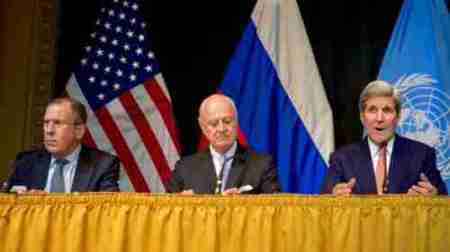
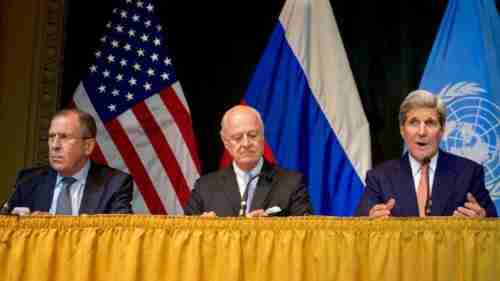
g151031bL-R: Sergei Lavrov, United Nations Special Envoy for Syria Staffan de Mistura, and John Kerry in Vienna on Friday (state.gov)

Russia has poured millions of dollars of heavy weapons into Syria, and is now sending in Russian troops to establish bases there. Recently, Russia launched 27 cruise missiles from the Caspian Sea to targets in Syria. Iran is pouring new troops into Syria. Iran has also given Lebanon’s Hezbollah terrorist group a great deal of money, and Hezbollah has sent thousands of troops into Syria to support Syria’s president Bashar al-Assad.

Al-Assad’s genocidal attacks on innocent Syrian Sunnis, killing hundreds of thousands and forcing millions from their homes, has caused Sunni jihadists from all of the world to fight against al-Assad, Russia, Hezbollah, and Iran in Syria. Along the way, these jihadists formed the so-called Islamic State (IS or ISIS or ISIL or Daesh).

And now, on Friday, Russia’s Foreign Minister Sergei Lavrov made a pronouncement that Barack Obama was going to trigger a “proxy war” in Syria by sending in 50 special operations forces, as we reported yesterday.

You can’t make this stuff up.

Thanks to Iran, Russia, al-Assad and Hezbollah, there are now tens of thousands of foreign troops fighting each other in Syria, with al-Assad in particular supported by massive amounts of foreign weapons.

But somehow, those tens of thousands of foreign fighters don’t make it a “proxy war,” but America’s 50 special forces troops do.

You can’t trust any garbage that comes out of Lavrov’s mouth, or out of al-Assad’s mouth, or out of Vladimir Putin’s mouth, but I listen to BBC, al-Jazeera, FOX, CNN, and other media sources all the time, and I see these news anchors report this crap with a straight face all the time. I don’t know whether it is more sickening to watch those fatuous news anchors, or to watch the fawning Secretary of State John Kerry suck up to Lavrov and Putin, which has happened in issues involving Ukraine, Iran’s nuclear development, and Syria.

All this verbiage is coming out of a meeting in Vienna whose purpose is to find a “political solution” to the Syria problem. With hundreds of thousands of Syrian migrants pouring into Europe, and with hundreds of ISIS militants returning to Russia to fight Putin, there is a lot of pressure to find a “political solution.” But this week’s announcement that Iran will fully enter the war in Syria on the side of the Syrian regime makes any “political solution” farther away than ever. On the contrary, Saudi Arabia and other Gulf countries will never agree to anything like the emerging situation. Actions by Russia and Iran, intervening militarily in Syria, is an emerging disaster, likely triggering a sectarian Sunni versus Shia war throughout the region. BBC and International Business Times and Reuters

Syria’s civil war and Generational Dynamics

In the 12 years that I’ve been doing this, I’ve posted about 4,000 articles with hundreds of Generational Dynamics predictions.

In 2011, when the Syrian civil war began, I said that the war should fizzle within a year or two. Of all the hundreds of Generational Dynamics predictions, this is the one where I’ve clearly been (depending on how you look at it) either wrong or poorly described.

Syria’s last generational crisis war was civil war that climaxed in 1982 with the massacre at Hama. There was a massive uprising of the 400,000 mostly Sunni citizens of Hama against Syria’s president Hafez Assad, the current president’s father. In February, 1982, Assad turned the town to rubble, 40,000 deaths and 100,000 expelled. Hama stands as a defining moment in the Middle East. It is regarded as perhaps the single deadliest act by any Arab government against its own people in the modern Middle East, a shadow that haunts the Assad regime to this day.

(As a related matter, the civil war in Lebanon also climaxed that year, with the bloody massacre at Sabra and Shatila occurring in September 1982. And it occurred as the Iran/Iraq war was ongoing, three years after Iran’s bloody Great Islamic Revolution in 1979. At that time, much of the Mideast was re-fighting World War I and the collapse of the Ottoman Empire, 60 years earlier.)

So, in 2011, I said that the civil war in Syria would fizzle, and could not turn into a crisis civil war. And that’s both wrong and true. There are too many survivors who remember the 1982 slaughter, and do not want to see it repeated. And so there’s been no massive anti-government uprising, as there was in 1982, and Bashar al-Assad’s Shia/Alawite troops have been fighting half-heartedly, with many soldiers defecting or deserting.

But the war did not fizzle.

It should have fizzled in 2011 or 2012, but Hezbollah and Iran starting pouring troops in to support al-Assad. And foreign fighters from around the world arrived to fight al-Assad and to form ISIS. That’s not something that Generational Dynamics could have predicted.

Earlier this year, it looked like al-Assad’s army was near collapse. In July, a desperate al-Assad gave a national speech in which he admitted he was losing. The war should have fizzled this year. But now, Russia and Iran are pouring tens of thousands more troops into Iran to bolster al-Assad. And that also is not something that Generational Dynamics could have predicted.

So the problem for me is: How should I have characterized the situation in 2011? The prediction that it wouldn’t turn into a crisis civil war was correct, but the war did not fizzle, because it turned into a proxy war.

Well, I don’t think there’ll be a next time, but if there is, I’ll try to characterize the situation differently, without simply using the word “fizzle.” NPR (1-Feb-2012)

Generational Dynamics and crisis civil wars

I write about a number of civil wars going on in the world today, so this is a good time to discuss civil wars from the point of view of Generational Dynamics.

Among generational crisis wars, an external war is fundamentally different than a civil war between two ethnic groups. If two ethnic groups have lived together in peace for decades, have intermarried and worked together, and then there is a civil war where one of these ethnic groups tortures, massacres and slaughters their next-door neighbors in the other ethnic group, then the outcome will be fundamentally different than if the same torture and slaughter is rendered by an external group. In either case, the country will spend the Recovery Era setting up rules and institutions designed to prevent any such war from occurring again. But in one case, the country will enter the Awakening era unified, except for generational political differences, and in the other case, the country will be increasingly torn along the same ethnic fault line.

The period following the climax of a crisis war is called the “Recovery Era.” One path that the Recovery Era can take is that the leader of one ethnic group decides that the only way to prevent a new civil war is for him to stay in power, and to respond to peaceful anti-government demonstrations by conducting massive bloody genocide, torture and slaughter of the other ethnic group, in order to maintain the peace. (Dear Reader, I assume you’ve grasped the irony of the last sentence.)

For example, in a July article about Burundi, I described how Burundi’s Hutu president Pierre Nkurunziza was using such violence to quell Tutsi protests, supposedly to avoid a repeat of the 1994 Rwandi-Burundi genocidal war between Hutus and Tutsis.

As another example, in a June article about Zimbabwe, I described how Zimbabwe’s president Robert Mugabe was even worse. His 1984 pacification campaign was known as “Operation Gukurahundi” (The rain that washes away the chaff before the spring rain). During that campaign, accomplished with the help of Mugabe’s 5th Brigade, trained by North Korea, tens of thousands of people, mostly from the Ndebele tribe, were tortured and slaughtered. Later, Mugabe single-handedly destroyed the country’s economy by driving all the white farmers off the farms, resulting in one of the biggest hyperinflation episodes in world history.

That is what Bashar al-Assad is doing in Syria. Fearing a Sunni uprising, like the one in 1982, al-Assad is conducting a massive “peace campaign” by slaughtering and displacing millions of innocent Sunnis. As I wrote above, this should have fizzled in 2011 or 2012, but it’s turned into a proxy war, and it’s a disaster for the Mideast and the world.

But none of the above three examples is a crisis civil war. A crisis war has to come from the people, not from the politicians. So, for example, there’s a massive crisis civil war going on today in Central African Republic (CAR), between the Muslim ex-Seleka militias fighting Christian anti-Balaka militias.

Unlike the previous examples, CAR is in a generational Crisis era. CAR’s last generational crisis war was the 1928-1931 Kongo-Wara Rebellion (“War of the Hoe Handle”), which was a very long time ago, putting CAR today deep into a generational Crisis era, where a new crisis war is increasingly likely. That’s why the CAR is a genuine crisis civil war, and won’t fizzle out. In fact, it won’t end until it has reached some kind of explosive conclusion — of the kind we described in Hama or Sabra and Shatila. ( “2-Oct-15 World View — Violence resurges in Central African Republic crisis war”)

Generational Dynamics and war between Palestinians and Israelis

I’ll discuss one more example — not a civil war, but very similar to a civil war, with the same kinds of issues.

In the last few years, there have been three non-crisis wars between Israelis and Palestinians in Gaza. In each case, the Israelis destroyed Hamas’s infrastructure, ending the war. The war began again each time when Hamas’s infrastructure was rebuilt.

But the point I want to make is that these three non-crisis wars were all directed by politicians. Palestinians attacked when the leadership told them to, and stopped attacking when the leadership told them to stop.

What I have been describing in numerous articles recently is that there is emerging a major, fundamental, historic change.

In the emerging situation, young people today are no longer willing to listen to these leaders. According to the CIA World Fact Book, 20% of Gaza’s population are in the 15-24 age range, and so are 21% of the West Bank — about 200,000 males in each territory, or 400,000 young males total.

On the Israeli side, there are over 600,000 young males in the same age range. There have been unconfirmed reports of young Israelis also disgusted with the leadership. It is possible that, like the young Palestinians, they are willing to take matters into their own hands.

So in this environment, what could happen next? The last three Gaza wars were non-crisis wars, but the next one could be a crisis war between Israelis and Palestinians.

How can a crisis war begin? How about if those 200,000 young male Gazans blow holes in the walls, pour across into Israel and start killing Israeli citizens en masse in their homes and villages? And how about if they are joined by those 200,000 young male Palestinians on the West Bank, who start with the Jewish settlers and continue with the Jews in Jerusalem. And how about if the young Israeli males strike back and start killing Palestinians in their homes and villages?

Israel’s tanks and bombers would not be of much use. You can’t bomb Jerusalem, and you can’t bomb Israeli villages and settlements to kill Palestinians.

That is the difference. That is what a generational crisis war is like. It is not two tanks shooting at each other. It is hand to hand combat in homes, neighborhoods and streets by people armed with sticks and knives. It is what happened in Central African Republic last year, it is what happened in Rwanda in 1994, in Bosnia in 1994, and in Palestine in 1947.

And by the way, that assumes that the bloody mess stays confined to Israel and the Palestinian territories. The Palestinians are likely to be joined by tens or hundreds of thousands from Jordan, Lebanon and Egypt.

The recent widely reported changes in the attitudes and behaviors of young Palestinians is a sign that this kind generational crisis war is coming.
Doomed Russian jet did not issue a distress call: report

November 1, 2015

Doomed Russian jet did not issue a distress call: report, DEBKAfile, November 1, 2015

The Russian passenger plane that crashed in the Sinai Peninsula on Saturday did not send out any distress call, reports said Sunday, meaning that the plane suddenly blew up. A number of Israeli commentators continue to claim, like Egypt, that the pilots reported a technical problem to the Egyptian control tower, and that the plane broke in half during the flight. However, there is no basis to those reports.

Putin has no long term strategy, says administration w/no long term strategy

October 31, 2015

Putin has no long term strategy, says administration w/no long term strategy, Front Page Magazine, Daniel Greenfield, October 31, 2015

hqdefault

This is an administration that believes you win wars with word games

Obama claimed that Putin is acting in Syria out of weakness and is being all reactive. Then he reacted by shipping weapons to Sunni rebels, a move he had originally rejected, and sending American soldiers into combat as boots on the ground.

Now DNI James Clapper is claiming that Putin is being impulsive and has no long term strategy. This comes from an administration that changed its mind several times about intervening in the Syrian Civil War and keeps saying it still doesn’t have a plan for defeating ISIS.

Clapper said Putin was “very impulsive and opportunistic” as he increased Russian support for close ally President Bashar al-Assad in Syria’s roiling civil war.

“I personally question whether he has some long-term strategy or whether he is being very opportunistic on a day-to-day basis,” Clapper told CNN’s Jim Sciutto. “And I think his intervention into Syria is another manifestation of that.”

Being “opportunistic” is actually how real life battles are fought. You have a strategy, but you seize advantages based on the evolving situation on the ground.

So far Putin’s long term strategy has been to expand Russian influence in the region. It’s working really well. Russia is back to being the regional alternative to the US. It’s securing strategic territories and its allies are expanding their sphere of influence.

On top of that, Putin managed to avert US air strikes on Assad with his fake WMD deal. Then he helped Iran secure its nuclear weapons program with the Iran deal. (I’ll grant that he had a lot of help from Obama and Kerry there.) Now he’s angling to get Obama on board a peace deal that keeps Assad in power and ends US support for the rebellion. Considering this administration’s foreign policy track record, he’ll probably get his way. While the administration clown car taunts him as weak and opportunistic and reactive and impulsive.

In the Cold War, the Soviets trash talked while the US got things done. Under Obama, the US talks trash and Russia gets things done. But this is an administration that believes you win wars with word games.

How is that working out for them?

ISIS Threatens Obama With ‘New Lesson’ in Beheading Video

October 31, 2015

ISIS Threatens Obama With ‘New Lesson’ in Beheading Video, Newsmax, Sandy Fitzgerald, October 31, 2015

(Video at the link. Has Obama recently decided that the Islamic State is a greater threat than climate change?– DM)

A horrifying new 15-minute video appears to show Islamic State (ISIS) terrorists beheading four captured Kurdish Peshmerga fighters — and delivering a bold warning to President Barack Obama.

The video claims to be the ISIS response to a Delta Force-Kurdish raid in northern Iraq last week that cost American Master Sgt. Joshua Wheeler his life.

“Obama, you have learned a new lesson,” a masked terrorist warns Obama in what sounds like an American accent. “Six of the soldiers of the caliphate faced 400 of your children; they killed and injured them by Allah’s grace.”

The warning was delivered before the man executes one of the prisoners, reports CNN, and the other three prisoners are also beheaded by the video’s end. Arabic text also appears onscreen, translating as “Peshmerga soldiers that Americans came to rescue.”

The video was released online Friday, and earlier in the clip, ISIS claims to show the aftermath of the raid, in which Kurdish, U.S., and Iraqi forces rescue 70 hostages from an ISIS prison in Hawija, located in Kirkuk, a province located in northern Iraq.

CNN reports that those who were set free included 20 of the Iraqi Security Forces, local residents and several ISIS fighters accused of spying. None of the hostages were Kurds.

As of Saturday morning, there had not been an official response issued from the White House on the video or the threat. But in Kurdistan, regional government spokesman Dindar Zebari told CNN that “ISIS respects no form of human rights. Our message to them is that we will finish them.”

But Kurdistan will not kill ISIS prisoners in response, Zebari said.

“We hold 215 ISIS prisoners and we treat them according to international human rights laws,” he said. “We have also freed 85 prisoners who had been suspected of association with ISIS. We do not kill our prisoners.”

The Kurdistan regional government said that more than 20 ISIS fighters were killed in last week’s raid, and six more were captured.

The Kurdish Peshmerga, which protects an autonomous region in northern Iraq, has been fighting against ISIS and its push to take Iraq and Syria and create a caliphate.

ISIS earlier this week said the Delta Force-Kurdish raid, called for by the Kurds to rescue Peshmerga fighters, was a failure.

The man who issued the threat does not appear to be the infamous “Jihadi John,” the English-speaking jihadist who has appeared in several other ISIS beheading videos.

The terrorist, whose real name is believed to be Mohammed Emwazi, is considered to be a priority target after killing American, Western, and Japanese hostages.

Meanwhile, two Syrian activists have also been killed in recent days in the Turkish town of Urfa, and their deaths are being blamed on ISIS.

According to the groups Raqqa is Being Slaughtered Silently and Eye on Homeland, activists Ibrahim Abdul Qadir and Faris Humadi the men who were shot and beheaded. ISIS has not yet claimed responsibility for their deaths.

Qadir and Humadi worked for Eye on Homeland, a Syrian media group that reports on the civil war, and Qadar also was a founding member of the Raqqa group, which posts photos, video, and other information online from the Raqqa province in Syria.

ISIS Video Shows Downing of Airplane, Contradicting Russian Claims of Technical Fault

October 31, 2015

ISIS Video Shows Downing of Airplane, Contradicting Russian Claims of Technical Fault, The Jewish Press, October 31, 2015

(How persuasive, if at all, is the video? — DM)

ISIS-video-of-downed-plane

Russia’s transport minister Maksim Sokolov on Saturday denied the Islamic State’s claim, that its militants had brought down the Russian charter plane Airbus A321, en route from the south Sinai resort of Sharm el-Sheikh to Saint Petersburg on Saturday. But a videotape released by ISIS possibly refutes the claims, showing a plane as it is being hit, and following its fall from the sky trailed by a tail of smoke.


There were 214 Russian and three Ukranian passengers on board, with a crew of seven. An ISIS affiliate in Egypt claimed that it had downed the plane, without specifying how, but an Egyptian spokesman said the crash was not the result of an attack.

The ISIS tweets describing the attack went: “Soldiers of the Caliphate were able to bring down a Russian plane above Sinai Province with at least 220 Russian crusaders aboard,” followed by: “They were all killed, praise be to God. O Russians, you and your allies take note that you are not safe in Muslims lands or their skies,” and: “The killing of dozens daily in Syria with bombs from your planes will bring woe to you. Just as you are killing others, you too will be killed, God willing.”

But Minister Sokolov tweeted: “Now in various media there is assorted information that the Russian [airplane]… was supposedly shot down by an anti-aircraft missile, fired by terrorists,” and insisted, “This information can’t be considered accurate.”

According to Sputnik, an examination of the Airbus crash site showed the airliner fell due to a technical fault. It was the deadliest air accident in Russian history, worse than the 1985 disaster in Uzbekistan, when 200 people perished. Bodies were found as far as three miles the crashed plane in the Sinai. According to Reuters, the plane fell vertically, which led to large parts of it burning.

According to the Guardian, the ISIS claim does not explain how they were able to bring down the plane, when the most sophisticated, portable surface-to-air missiles can’t reach the high altitude the plane was flying at. These missiles have been proven effective strictly during take-off or landing, but the Russian Airbus came down after having reached its target altitude.

The black box that was onboard the aircraft has been found at the crash site, according to the Egyptian Civil Aviation Ministry. Egypt’s Civil Aviation Minister Hossam Kemal said it was too early to state the cause of the crash, but suggested the plane had not been shot down or blown up.

Meanwhile, European airlines Lufthansa and Air France have announced that they would stop flying over the Sinai Peninsula, until it is made clear what had caused the crash.

crash-site

Hizbullah Sec.-Gen. Nasrallah: The U.S. Supports ISIS, Runs the Entire War in Our Region

October 30, 2015

Hizbullah Sec.-Gen. Nasrallah: The U.S. Supports ISIS, Runs the Entire War in Our Region,Middle East Media Research Institute TV via You Tube, October 29, 2015

(Oh well. — DM)


According to the blurb following the video,

In an October 23 speech at a ceremony marking the ‘Ashura holiday in Beirut, Hizbullah Secretary-General Hassan Nasrallah said that the U.S. “provided ISIS with money, weapons, and aid,” and that “the war raging in our region is actually being led by the US.” The speech aired on the Iranian Al-Alam TV channel.

An Israeli Arab flies paraglider into Syria to join ISIS without being intercepted

October 25, 2015

An Israeli Arab flies paraglider into Syria to join ISIS without being intercepted, DEBKAfile, October 25, 2015

GlyderParchute

In a major security breach, an Israeli Arab, 23, was able to fly by paraglider across into Syria from the southwestern village of Mevo Hama Saturday, Oct. 24, southwestern Golan without being intercepted – although an IDF spotter had reported the event. The pilot came from the Israeli Arab town of Jaljuliya east of Kfar Saba near the West Bank. His defection, apparently to the Islamic State, was clearly organized in advance. His landing in Syria was secured by a party from the jihadist group who came to pick him up.

The massive air-and-ground search operation the Israeli military scrambled came too late.

“We believe he planned this move to the other side, and joined a group there,” Brig.-Gen. Moti Almoz told reporters during a conference call Sunday morning, after a gag order on the story was lifted. Another IDF statement said that Israeli forces are still trying to ascertain the person’s intentions

DEBKAfile’s military sources count this event as a particularly grave security lapse for the following reasons:

1. The Shin Bet was clearly taken unawares of a conspiracy for the Israeli Arab’s flight.

2.  No one discovered that a paraglider was being assembled in secret at Mevo Hama or had it brought there unnoticed. And who helped him launch it?

3. How did he set up communication with ISIS-Syria without being detected by Israeli security?

4. How did the preparations on the Syrian side to receive the pilot escape the attention of IDF military intelligence?

5. Why was no one on the spot authorized to shoot the paraglider shot down before it flew across the border? By the time the report went through channels, the bird had flown.

ISIS claims it has taken an “Israeli pilot” captive.

Our military sources add that the paraglider operation was set up by a hostile element to test Israel’s defenses in three areas:

  • The efficiency of IDF spotter posts across the Golan. The glider was indeed sighted and reported.
  • Israeli Air force operations in Golan – which were indeed found with holes that can be used for penetration.
  • Israel’s air defense on the Golan. This episode exposed the absence of a commander with authority to act with dispatch to foil an unforeseen event.

In other words, Israel’s defenses were wide open to attack Saturday.

ISIS trying to co-opt Palestinian jihad against Israel as part of its own cause

October 24, 2015

ISIS trying to co-opt Palestinian jihad against Israel as part of its own cause, BreitbartEdwin Mora, October 24, 2015

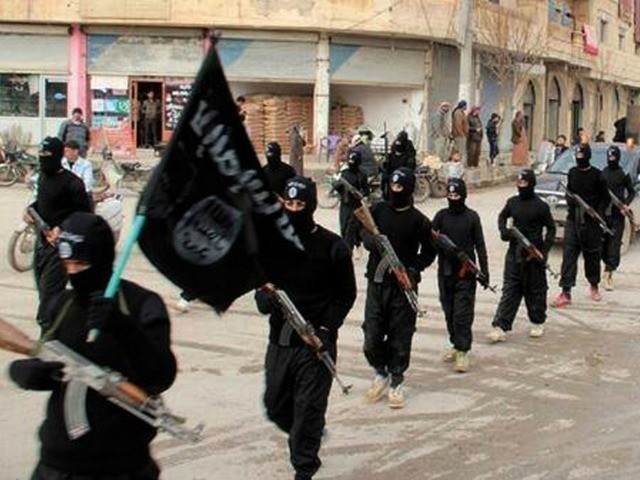
isis-marching-AP-640x480AP Photo/Militant Website, File

The Islamic State (ISIS/ISIL), through several of its media organs, has expressed support for the deluge of Palestinian terrorist attacks currently plaguing Israel, calling for more.

new report by the Washington, D.C.-based Middle East Media Research Institute (MEMRI) Jihad and Terrorism Threat Monitor argues the new outbursts of support for Palestinian terrorism is an attempt to commandeer the cause as part of its own.

ISIS considers itself the authority in political and religious matters for all Muslims, with its Caliphate backing Sunnis who fight its enemies.

ISIS regards the Muslim Brotherhood’s movements and affiliates, such as the terrorist group Hamas, as too pragmatic and not radical enough. “In much of the Islamic world, when there are various approaches, the radical one tends to trump those deemed to be weaker,” notes The Jerusalem Post.

According to a poll conducted by the Arab Center for Research and Policy Studies in Doha, Qatar, late last year, nearly one-quarter of Palestinians had positive views of ISIS. However, “the pro-ISIS presence within the Palestinian territories should not be exaggerated. It is primarily limited to small and divided pro-IS groups in Gaza,” Middle East Forum fellow Aymenn Jawad al-Tamimi told The Jerusalem Post.

That being said, ISIS “does not need to have an operational presence on the ground in Israel to be effective, as its propaganda over the Internet can serve as an incitement tool for more attacks,” declares the Post.

ISIS has embarked upon a media campaign that involves the release of a series of videos in support of the ongoing terrorist attacks in Israel and encouraging the Palestinians to carry out more lone wolf assaults, the new report by MEMRI reveals.

As he congratulates the Palestinian attackers on their recent attacks on the Jews, the narrator of a nine-minute video declares:

Oh mujahideen, we call on you to prepare yourselves spiritually and materially to strike terror and fear into the hearts of the Jews. … Know that the soldiers of Islam are fighting here in Iraq, Syria, Khorasan, and West Africa, but their sights are set on Bayt Al-Maqdis [Jerusalem].

The footage was released by ISIS’ information office in Mosul, Iraq’s second largest city. Mosul fell to ISIS in June 2014. Khorasan is an ancient name for a region that covers large parts of Afghanistan, Pakistan, Iran, India, and other surrounding countries.

The MEMRI report noted that “a substantial part of these videos is dedicated to ideological attacks on Hamas and Fatah.”

“Fatah has become an agent of the infidel Jews and Christians, while Hamas is doing the bidding of the Shi’ites [Iranians] and Alawites [the regime of Syrian dictator Bashar al-Assad],” said the report.

The Middle East Forum’s Tamimi told the The Jerusalem Post that ISIS rhetoric in support of the deteriorating security situation on the ground in Israel fueled by the Palestinian attacks is an effective means to make headlines.

It also “fits in with [the] idea of supporting the cause of Muslims everywhere,” said Tamimi who closely monitors Islamist opposition groups in Iraq and Syria.

ISIS has established a foothold in Iraq, Syria, Libya, Egypt, and other regions and is expanding its presence across the globe, with its affiliates pushing for power as far as its Khorasan ProvinceAfghanistan.

“Arab youth in the Palestinian territories and Israel are influenced by the storm waging in neighboring countries and are willing to join the call to action and seek martyrdom for the sake of their cause,” notes the Post.

“But for now, Islamic State is more of an observer to the violence waging in Israel as local groups such as Hamas have the advantage in claiming the terror as its own because of proximity and its experience waging war against Israel, not only in words,” it adds.

Murder as politics

October 24, 2015

Murder as politics, The Washington Times, Louis Rene Beres, October 22, 2015

Even as growing numbers of Palestinian terrorists stab madly at Israeli men, women, and children, much of the world still endorses creation of “Palestine.” Such mindless support continues, moreover, despite the fact that the Palestinians themselves reject any sort of two-state solution. Indeed, the latest such poll (September 2015), conducted by Palestinian research organizations, concluded that almost half the resident Arabs strongly favor the use of armed force and generalized violence against Israeli noncombatants.

For the most part, western news reports notwithstanding, knife wielding attackers are not “lone wolves.” Rather, they have been conspicuously spurred on by vitriolic PA incitements, and by carefully synchronized calls from the mosques to murder “The Jews.”

The Palestinian Authority shares with Hamas the irredentist vision of a one-state solution. There is nothing hidden or ambiguous about this true plan for Israel’s disappearance. It is plainly codified on the official maps of both factions, where Israel is identified only as “Occupied Palestine.”

For virtually all Arab forces in the Middle East, the conflict with Israel is never about land. It is about God, and about always-related promises of personal immortality. It is about power over death.

For the Palestinians, their carefully sanitized public rhetoric notwithstanding, the enemy is not the Israelis (that term is just subterfuge, for the media), but “The Jews.” The screaming young Palestinian, who strikes indiscriminately with his serrated blade, fully expects to become a “martyr.” He only risks “death” in order not to die.

There is more. A Palestinian state — any Palestinian state — would rapidly be taken over by ISIS, or by related jihadi adversaries. Already, ISIS is operating in parts of Syria that could bring it to the critical borders of Israel’s Golan Heights. Significantly, it has also set recognizable operational sights on Jordan and West Bank (Judea/Samaria).

Over the next several months, and even while the Palestinian Authority continues to orchestrate more “Third Intifada” attacks on Israelis, ISIS will commence its fated march westward, across Jordan, ending up at the eastern boundaries of West Bank. These boundaries, of course, would represent the territorial margins of what PA/Fatah both already affirm as the geographic heart of “Palestine.”

Palestinian forces, primarily Fatah, would then yield to ISIS, and to its local proxies. Fatah would then have to choose between pleading with the Jewish State to become an ally against a now-common foe, or abandoning all its residual military operations to the IsraelDefense Forces directly. Arguably, without IDF assistance in such desperate circumstances, “Palestine” wouldn’t stand a chance.

One additional irony ought to be noted. In Israel, Prime Minister Benjamin Netanyahu has long made acceptance of any Palestinian state contingent upon prior Palestinian “demilitarization.” Should the Palestinian Authority and Hamas somehow accede to this problematic expectation, it could make ISIS’ predictable destructions in the area much easier to carry out. Paradoxically, a “Palestine” that had properly stood by its pre-state legal concessions to Israel, could effectively increase the overall danger posed to both Palestinians and Israelis.

What about Jordan? Under pertinent international law, the Hashemite Kingdom has incurred certain binding obligations regarding joint cooperation with Israel against terrorism. These obligations, as reinforcing complements to more generally binding legal rules, are expressly codified at the 1994 Treaty of Peace Between the State of Israel and the Hashemite Kingdom of Jordan.

Could this treaty still have any palpable effect upon Jordan’s capacity to militarily block anticipated ISIS advances?

Not at all. The more generic problem of enforcing treaties had already been identified back in the 17th century, by Thomas Hobbes. Said the English philosopher, in his “Leviathan,” a work well known to America’s founding fathers: “Covenants, without the Sword, are but words …”

From the 17th century onward, the world political system has been anarchic, or, in Hobbesian terms, a “state of nature.” In the anarchic Middle East, especially, considerations of raw power routinely trump international law. Here, too, truth here may be counter-intuitive. On those endlessly perplexing matters concerning Palestinian statehood, for example, it is finally time to understand that “Palestine‘s” true enemy in the region is not Israel, but rather a hideously sordid amalgam of Islamist Arab forces. Going forward, any further Palestinian advances toward statehood would likely be solely to the longer-term tactical advantage of ISIS.

Is this the sort of statehood cause that should be enthusiastically supported in Washington, and in most European capitals? It is, but only if we should first want to see an expansion of “Third Intifada” terror to the homeland. Not likely.

If you like Syria, Iraq, and Afghanistan, you’ll love “Palestine.”