Archive for the ‘Islamic reformation’ category

Op-Ed: ‘Europe, learn from Israel!’: Exclusive interview with Ayaan Hirsi Ali

February 2, 2016

Op-Ed: ‘Europe, learn from Israel!’: Exclusive interview with Ayaan Hirsi Ali, Israel National News, Giulio Meotti, February 2, 2016
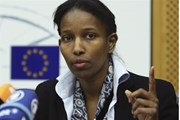
Ayaan Hiri Ali(1)

When Theo van Gogh was murdered by an Islamist on a street in Amsterdam, Ayaan Hirsi Ali could not even attend the funeral because she would have put the lives of others at risk. So the Dutch intelligence agreed to take her to the morgue. The next day, bodyguards accompanied her from her home and gave her three hours to pack and leave. From there she went to the air base at Valkenburg, near The Hague, where she would be embark on a plane. The portholes were closed, they told her not to approach them nor go near the door. The plane was full of soldiers. Hirsi Ali was leaving a country at war. They landed at a military base in Maine, in the United States. This is how the love affair between America and the first refugee from Western Europe since the Holocaust began. A story that continues to this very day.

Ayaan Hirsi Ali is still a shadow. But her voice at the telephone is clear, tough, cool. It is that of a young Somali woman who has undergone genital mutilation, who has lived in Saudi Arabia, Ethiopia, Kenya, before being betrothed to a Canadian cousin she had never seen before. Hirsi Ali escaped from Germany to the Netherlands.

She worked as an interpreter in the Islamic Dutch ghettos, she graduated, became a Liberal MP, helped Van Gogh to make the film “Submission” and then disappeared. Now she talks with me about Europe from her think tank, the American Enterprise Institute. Hirsi Ali recently released her third book on Islam, “Heretic”, an optimistic book on the reform of Islam.

Where does your optimism for a reform of the Islamic world come from?“It is a possibility, not a certainty. But I am optimistic because of the violence committed today in the name of Islam, which is creating so much tension, and it is not just committed by individuals, but by states and organizations. People are more and more afraid of radical Islam. In Egypt, in Tunisia, everywhere, there are large numbers of young Muslims who identify themselves as Muslims, but who do not want sharia, Islamic law. Just as many women do not want sharia.”

On February 1, many feminists around the world will celebrate the World Hijab Day, the International Day of the Islamic veil. “It is multiculturalism, the ideology that eliminates the rights of individuals in favor of groups, communities. Europe is committing a cultural suicide.”

What should happen to kick off a reform? “You must first answer a fundamental question: how can someone be Muslim and be in favor of the separation of mosque and state, freedom of expression, rights of the woman? The attitude towards the Qur’an and Muhammad must change, because the Islamists use the Koran and the texts literally. We need a revolt within the house of Islam, against the culture of death, rejecting Sharia, rejecting the jihad, the killing of non-Muslims.”

You were the first authentic dissident in the Islamic world. “The dissidents of Islam are fundamental, because we are those who ask the critical questions, who pursue the critical thinking. Asking the questions means risking your life. It was the same Imam Qaradawi who recognized the role of dissidents when he said that you can not accept apostasy and it deserves death.”

Your name appears in the same list of targets alongside the late director of Charlie Hebdo, Stephane Charbonnier, and other cartoonists. “My name was on the list of Charlie, so I am not surprised by what happened a year ago. Charbonnier and the other journalists were heroes. Unfortunately, today there is a combination of fear and multiculturalism, moral relativism, the sense of guilt for the Muslim population because of colonialism. When I started going to university in the Netherlands, many did not want to hear about the Holocaust in the classroom, they were told not to speak of the Jews of Israel. This served to suppress criticism of Islamic doctrine. We must stop demonizing Israel and learn from it.”

“Unfortunately, today countries like Saudi Arabia do great missionary work in Europe, trying to suppress dissent. Freedom of expression is therefore fundamental for the opening of the Islamic world to reason. But sometimes I think it’s too late. Think about Italy, France, Germany, England, the whole great tension between Muslims and Europeans. In this context it is becoming difficult, more difficult, to exercise the right to freedom of speech.”

“I am happy in America, but even here there are the Muslim Brotherhood and other Islamist organizations. In ten years I have seen a significant radicalization in America”.

One million immigrants have arrived in Germany this year and another million are expected. Hirsi Ali, who was welcomed by Europe as a refugee from Somalia, now asks Europe to stop immigration. “We are at a critical point in Europe today: the immigration of millions of people must be stopped even before Europe stops the indoctrination in the mosques and imams. If we do not stop the brainwashing, there will be another lost generation in Europe. Muslims must stop Sharia now. I keep repeating it, but who is listening?”.

Since Van Gogh was killed and you fled to America, in the Netherlands nobody longer speaks of Islam. Journalists, cartoonists, intellectuals, have all closed their mouths: “The people in the Netherlands who write and talk about Islam and these issues are tired. In the Netherlands, but also in France, many Jews are leaving. In Los Angeles I have Dutch Jewish friends who fled from the Netherlands. There is a terrible brain drain from Europe. In Europe they are all paralyzed, in Italy, in Germany, in France, but the political leadership must banish sharia, its propagation is not acceptable. Because sharia is the worst violation of human dignity. Sharia is against civilization and European culture”.

So speaks a brave woman who carries on her own body the consequences of that poisonous flower.

The Problem with Islam Is Aggressive Scripture, Not Aggressive ‘Traditionalism’

January 17, 2016

The Problem with Islam Is Aggressive Scripture, Not Aggressive ‘Traditionalism’ National Review, Andrew C. McCarthy via The Counter Jihad Report, January 16, 2016

(Islamic tradition is based on Islamic scripture, which Muslims generally rely on religious authorities to interpret for them. To rely on one’s own lay scriptural interpretations is considered a great sin. Unless Islamic religious authorities are moved to give preference to early verses from the Qu’ran — which were abrogated by later verses — divorcing Islamic tradition from unabrogated scriptures will likely be very difficult if not impossible. — DM)

quranReading the Koran at a mosque in Bahrain. (Mohammed Al-Shaikh/AFP/Getty)

On the Corner this week, the eminent Jim Talent touted (with some reservations) an essay about “moderate Islam” by Cheryl Bernard. A Rand Institute researcher, she is also a novelist, a defender of war-ravaged cultures, and the wife of Zalmay Khalilzad, the former U.S. ambassador to post-Taliban (or is it pre-Taliban?) Afghanistan. With due respect to Dr. Bernard, who does much heroic work, I believe the essay highlights what is wrong with Western academic analysis of Islam.

The problem comes into focus in the very title of Senator Talent’s post, “Aggressive Traditionalism.” That is the attribute of Islamic societies that Dr. Bernard blames for the frustration of her high hopes for “moderate Islam.” In truth, however, the challenge Islam poses for moderation is not its tradition; it is Islamic doctrine — the scriptural support for traditional sharia and Islamic supremacist ideology.

I give Bernard credit. She is the unusual strategist who is willing to admit failure — in this instance, of the strategy of promoting “moderate Islam” as the antidote to “radical Islam.” But even this concession goes off the rails: She maintains that the strategy was somehow “basically sensible” despite being “off track in two critical ways.” The real problem, though, is not the two errors she identifies but the fatal flaw she fails to address: The happenstance that there are many moderate Muslims in the world does not imply the existence of a coherent “moderate Islam.” Try as she might, Bernard cannot surmount this doctrinal hurdle by blithely ignoring the centrality of doctrine to a belief system — without it, there is nothing to believe.

But let’s start with the two critical problems she does cite. The first is the matter of defining what a “moderate” is. Bernard concedes that she and other thinkers adopted a definition that was “too simplistic” — meaning, too broad. It made “violence and terrorism” the litmus test for “moderation.” This enabled what she labels “aggressive traditionalists” to masquerade as moderates.

Who are the “aggressive traditionalists”? Muslims who, though nonviolent themselves, “harbor attitudes of hostility and alienation” against non-Muslims. The failure to account for the challenge that “aggressive traditionalism” poses for moderation led to the second flaw Bernard admits: the undermining of “integration” — a reference to Muslim assimilation (or the lack thereof) in the West.

This is fine as far as it goes. In fact, Bernard is quite correct about the main challenge posed by hostile, alienated, integration-resistant Muslims: Even if they are personally nonviolent, the communities they create become “the breeding ground for extremism and the safe harbor for extremists.”

But “extremism” about what? This is the salient question, and it is one Bernard studiously ducks. The error is implicit from the very start of her essay (my italics):

Over the past decade, the prevailing thinking has been that radical Islam is most effectively countered by moderate Islam. The goal was to find religious leaders and scholars and community ‘influencers’ — to use the lingo of the counter-radicalization specialists — who could explain to their followers and to any misguided young people that Islam is a religion of peace, that the term jihad refers mainly to the individual’s personal struggle against temptation and for moral betterment,and that tolerance and interfaith cooperation should prevail.

Plainly, the “prevailing thinking” casually assumes “facts” not only unproven but highly dubious. Bernard takes it as a given not only that there is an easily identifiable “moderate Islam,” but also that this . . . what? . . . doctrine? . . . attitude? . . . is the most effective counter to “radical Islam.”

But what is moderate Islam? She doesn’t say. She maintains that there are countless moderate Muslims who, by her telling, embrace “Western values, modern life and integration.” In fact, she assumes there are so many such Muslims that they constitute the “mainstream” of Islam. Yet, that proposition is not necessarily true even in the West, where Muslims are a minority who might be expected to assimilate into the dominant, non-Muslim culture; and it most certainly is not true in the Muslim-majority countries of the Middle East.

Even worse is Bernard’s assertion — uncritical, and without a hint that there may be a counter-case — “that Islam is a religion of peace, [and] that the term jihad refers mainly to the individual’s personal struggle against temptation and for moral betterment.”

As is the wont of Islam’s Western apologists, Bernard is attempting to shield from examination what most needs examining. Her reliance on the potential of “moderate Islam” to quell “radical Islam” is entirely premised on the conceit that Islam is, in fact, moderate and peaceful. Her assumption that the vast majority of Muslims can be won over (indeed, have already been won over, she seems to say) to Western values is premised on the conceit that those values are universal and, hence, locatable in the core of Islam — such that “tolerance and interfaith cooperation should prevail” because Islam is all for them.

Islam, however, is not a religion of peace. It is a religion of conquest that was spread by the sword. Moreover, it is not only untrue that jihadrefers “mainly” to the individual’s internal struggle to live morally; it is also untrue that the Islamic ideal of the moral life is indistinguishable from the Western conception.

To be clear, this is not to say that Islam could not conceivably become peaceful. Nor is it to say that jihad could not be reinterpreted such that a decisive majority of Muslims would accept that its actual primary meaning — namely, holy war to establish Islam’s dominance — has been superseded by the quest for personal betterment. To pull that off, though, will require a huge fight. It cannot be done by inhabiting an alternative universe where it has already been done.

That fight would be over doctrine, the stark omission in Bernard’s analysis. I do not think the omission is an oversight. Note her labeling of faux moderates as “aggressive traditionalists.” Citing “tradition” implies that the backwardness and anti-Western hostility she detects, to her great dismay, is a function of cultural inhibitions. But what she never tells you, and hopes you’ll never ask, is where Islamic culture and traditions come from.

Alas, they are direct consequences of Islamic scripture and sharia, the law derived from scripture. She can’t go there. She wants Islam to be moderate, but its scriptures won’t cooperate. She must rely on tradition and culture because traditions and cultures can and do evolve. Scripture, by contrast, does not — not in Islam as taught by over a millennium’s worth of scholars and accepted by untold millions of Muslims. Mainstream Islam holds that scripture is immutable. The Koran, the center of Islamic life, is deemed the “uncreated word of Allah,” eternal. (See, e.g., Sura 6:115: “The Word of thy Lord doth find its fulfillment in truth and justice: None can change His Words: For He is the one Who heareth and knoweth all.”)

Bernard must blame aggressive traditionalism because if the problem is aggressive doctrine rooted in aggressive scripture, then it’s not changing any time soon — or maybe ever. Moreover, she is not in a position to challenge doctrine and scripture without deeply offending the believers to whom she is appealing. They are taught that any departure from centuries-old scholarly consensus is blasphemy.

The story Dr. Bernard tells of Islamic intransigence in her own Northern Virginia neighborhood is instructive. A Muslim-American friend of hers is a social worker who finds jobs for Muslim immigrants. He lands openings for a group of Somali women in a hospital laundry service; but the women first tell him they must check with their imam, then they turn down the jobs because they will not be allowed to wear their hijabs. The social worker and Bernard are exasperated: Why don’t the women and their adviser grasp that because hijabs could get caught in the machinery and cause injury, there is a “pragmatic reason” for departing from the traditional Islamic norm?

Notice: Bernard never considers, or at least never acknowledges, that there is doctrinal support for every decision the Somalis make: The scriptures instruct Muslims to consult authorities knowledgeable in sharia before embarking on a questionable course of conduct; they instruct Muslim women to wear the veil (particularly in any setting where they will be exposed to men who are not their husbands or close relatives). And while pragmatism suggests to the rational Dr. Bernard and her moderate, Westernized social-worker friend an obvious exception to Islam’s usual clothing rule, mainstream Islam in the Middle East and Somalia admonishes that Western reliance on reason and pragmatism is a form of corruption, a pretext for ignoring religious duty.

Doctrine is the answer to virtually every immoderate instance of aggressive “traditionalism” Bernard complains about: the separation of men from women in the mosque, and the decidedly poorer accommodations (“often unacceptable and even insulting,” as Bernard describes them) to which women are consigned; the separation of the sexes in work and social settings; the instructions not to trust or befriend “unbelievers”; the admonitions to resist adopting Western habits and developing loyalty to Western institutions. There is scriptural support for every one of these injunctions.

From the fact that she has moderate, “modernized” Muslim friends, who do not comport themselves in such “traditional” fashion, Bernard extravagantly deduces that tradition is the problem. She never comes close to grappling with doctrine — i.e., the thing that most devout Muslims believe is what makes them Muslims. The closest she comes is the fleeting observation that her moderate social-worker friend “is a scholar [presumably of Islam] and a professor who emigrated from a conservative Muslim country.” The obvious suggestion is that if he is not troubled by the flouting of traditional Islamic mores, surely there must not be any credible scriptural objection. But if it is relevant that her friend is a scholar, is it not also relevant that there are thousands of other scholars — scholars who actually do Islamic jurisprudence rather than social work for a living — who would opine that sharia requires these traditional behaviors and that it is the social worker who is out of touch?

When Dr. Bernard’s husband, Ambassador Khalilzad, served in Kabul, he midwifed the new Afghan constitution that purported to safeguard Western notions of liberty while simultaneously installing Islam as the state religion and sharia as fundamental law. In short order, Afghanistan put former Muslims who had publicly renounced Islam on capital trial for apostasy. Dr. Khalilzad, Secretary of State Condoleezza Rice, and other Western officials and intellectuals pronounced themselves duly shocked and appalled — notwithstanding that anyone with a rudimentary knowledge of Islamic scripture knows that it calls for public apostates to be killed.

To great American embarrassment, the apostates had to be whisked out of the country lest the incompatibility of civil rights and sharia become even more painfully apparent. It is worth acknowledging, however, that what chased them out of Afghanistan was not aggressive traditionalism. It was Islamic doctrine, which simply is not moderate. Looked at doctrinally, the challenge for “moderate Islam” is . . . Islam.

— Andrew C. McCarthy is as senior policy fellow at the National Review Institute and a contributing editor of National Review.

Egyptian Author Sayyid Al-Qemany: Al-Azhar Is a Terrorist Institution

January 13, 2016

Egyptian Author Sayyid Al-Qemany: Al-Azhar Is a Terrorist Institution, MEMRI-TV via You Tube, January 13, 2016


According to the blurb following the video,

In a January 2 interview on the Egyptian ON TV channel, author Sayyid Al-Qemany said that Al-Azhar should be placed on the list of terrorist organizations. “There are people working on this. They will file a suit in the international court, and I will provide them with documentation,” he said. ِFollowing the interview, it was reported in the press that Al-Azhar was planning to file a lawsuit against Al-Qemany for defamation of the institution.

A Strategy to Defeat Islamic Theo-fascism

January 7, 2016

A Strategy to Defeat Islamic Theo-fascism, American ThinkerG. Murphy Donovan, January 7, 2016

Surely, whatever passed for American foreign or military policy in the past three decades is not working. Just as clearly, in case anyone keeps score these days, the dark side of Islam is ascendant at home and abroad. What follows here is a catalogue of policy initiatives that might halt the spread of Islamic fascism and encourage religious reform in the Ummah.

Some observers believe that the Muslim problem is a matter of life and death. Be assured that the need for Islamic reform is much more important than either. The choices for Islam are the same as they are for Palestine Arabs; behave or be humbled. Europe may still have a Quisling North and a Vichy South; but Russia, China, and even America, at heart, are still grounded by national survival instincts – and Samuel Colt.

Call a spade a spade

The threat is Islam, both kinetic and passive aggressive factions. If “moderate” Islam is real, then that community needs to step up and assume responsibility for barbaric terror lunatics and immigrants/refugees alike. Neither America nor Europe has solutions to the Islamic dystopia; civic incompetence, strategic illiteracy, migrants, poverty, religious schisms, or galloping irredentism. The UN and NATO have no remedies either. Islamism is an Ummah, Arab League, OIC problem to solve. Absent moral or civic conscience, unreformed Islam deserves no better consideration than any other criminal cult.

Western Intelligence agencies must stop cooking the books too. The West is at war and the enemy is clearly the adherents of a pernicious ideology. A global war against imperial Islam might be declared, just as angry Islam has declared war on civilization.  A modus vivendi might be negotiated only after the Ummah erects a universal barrier between church and state globally. Islam, as we know it, is incompatible with democracy, civility, peace, stability, and adult beverages.

Oxymoronic “Islamic” states need to be relegated to the dustbin of history. If the Muslim world cannot or will not mend itself, Islamism, like the secular fascism of the 20th Century, must be defeated, humbled in detail. Sooner is better.

Answer the Ayatollahs

Recent allied concessions to Tehran may prove to be a bridge too far. If the Persian priests do not abide by their nuclear commitments, two red lines might be drawn around Israel. Firstly, the ayatollahs should be put on notice, publicly, that any attack against Israel would be considered an attack against America — and met with massive Yankee retaliation. Secondly, any future cooperation with NATO or America should be predicated on an immediate cessation of clerical hate speech and so-called fatwas, those arbitrary death sentences.

Clerical threats to “wipe Israel off the face of the earth” and “death to America” injunctions are designed to stimulate jihad and terror globally. The only difference between a Shia ayatollah and a Sunni imam in this regard these days seems to be the torque in their head threads.

Ostracize the Puppeteers

Strategic peril does not emanate from Sunni tacticians like Osama bin Laden, Mullah Omar, or Abu Bakr al-Baghadadi. Nor does the real threat begin with or end with al Qaeda, the Taliban, Hezb’allah, Hamas, or the Islamic State. Lethal threat comes, instead, on four winds: toxic culture, religious politics, fanatic fighters, and furtive finance, all of which originate with Muslim state sponsors. The most prominent of these are Saudi Arabia, the Emirates, Turkey, Iran, and Pakistan.

Put aside for a moment the Saudi team that brought down the Twin Towers in New York. Consider instead, the House of Saud as the most egregious exporter of Salifism (aka Wahabbism) doctrine, clerics, imams, and mosques from which ultra-irredentist ideologies are spread. The Saudis are at once the custodians of Islam’s sacredshrines and at the same time the world’s most decadent, corrupt, and duplicitous hypocrites. Imam Baghdadi is correct about two things: the venality of elites in Washington and Riyadh. The House of Saud, an absolutist tribal monarchy, does not have the moral standing to administer “holy” sites of any description — Mecca, Medina, or Disneyland.

The cozy relationship between Europe, the European Union, and Arabia can be summarized with a few words; oil, money, arms sales, and base rights. This near-sighted blend of Mideast obscenities has reached its sell-by date. The “white man’s burden” should have expired when Edward Said vacated New York for paradise.

Jettison Turkey and Pakistan

What Saudi Arabia is to toxic ideology in North Africa, Turkey and Pakistan are to perfidy in the Levant and South Asia. Turkey and Pakistan are Islam’s most obvious and persistent grifters. Turkey supports the Islamic State and other Sunni terror groups with a black market oil racket. Pakistan supports the Taliban, al Qaeda, and ISIS with sanctuary and tolerance of the world’s largest opium garden. Oil and drug monies from Arabia, Turkey, and South Asia are financing the global jihad. Turkey also facilitates the migration of Muslims west to Europe while sending Islamist fighters and weapons south to Syria and Iraq.

With the advent of Erdogan and his Islamist AKP, Turkey has morphed into NATO’s Achilles Heel, potentially a fatal flaw.  Turkey needs to be drummed out of NATO until secular comity returns to Ankara. Pakistan needs to be restrained, too, with sanctions until it ceases to provide refuge for terrorists. Pakistani troops harassing India could be more prudently redeployed to exterminate jihadists.

Sanctions against Russia and Israel are a study in moral and political fatuity whilst Arabs and Muslims are appeased midst a cultural sewer of geo-political crime and human rights abuses. If NATO’s eastern flank needs to be anchored in trust and dependability, Russia, Kurdistan, or both, would make better allies than Turkey. Ignoring Turkish perfidy to protect ephemeral base rights confuses tactical necessity with strategic sufficiency.

Recognize Kurdistan

Aside from Israel, Kurdistan might be the most enlightened culture in the Mideast. The Kurds are also the largest ethnic group in the world not recognized as a state. While largely Muslim, the Kurds, unlike most of the Ummah, appreciate the virtues of religious diversity and women’s rights. Indeed, Kurdish women fight alongside their men against Turkish chauvinism and Sunni misogyny with equal aplomb. For too long, the Kurds have been patronized by Brussels and Washington.

While Kurdish fighters engage ISIS and attempt to control the Turkish oil black market, Ankara uses American manufactured NATO F-16s to bomb Kurds in Turkey and Syria. Turkish ground forces now occupy parts of Iraq too. In eastern Turkey, Ergdogan’s NATO legions use ISIS as an excuse for bookend genocide, a cleansing of Kurds that might rival the Armenian Christian genocide (1915-1917).

195876_5_Kurdish angel of death

All the while, American strategic amateurs argue for a “no-fly” zone in contested areas south of Turkey. Creating a no-fly zone is the kind of operational vacuity we have come to expect from American politicians and generals. Such a stratagem would foil Kurdish efforts to flank ISIS and allow the Erdogan jihad, arms, and oil rackets to flourish. A no-fly zone is a dangerous ploy designed to provoke Russia, not protect Muslim “moderates.”

Putin, Lavrov, and the Russians have it right this time; Turkish and Erdogan family subterfuges are lethal liabilities, not assets.

Washington and European allies have been redrawing the map in Eastern Europe, North Africa, South Asia, and the Mideast since the end of WWII. The time has come to put Kurdistan on the map too. Kurdistan is a unique and exemplary case of reformed or enlightened Islam; indeed, a nation that could serve as a model for the Muslim world.  If base rights are a consideration, Kurdistan would be an infinitely more dependable ally than Turkey or any corrupt tribal autocracy in Arabia. America has a little in common with desert dictators — and fewer genuine friends there either. Indeed, at the moment America is allied with the worst of Islam.

Create New Alliances

NATO, like the European Union, has become a parody of itself. Absent a threat like the Soviet Union or the Warsaw Pact, Brussels has taken to justifying itself by meddling in East Europe and resuscitating a Cold War with the Kremlin. Indeed, having divided Yugoslavia, NATO now expands to the new Russian border with reckless abandon; in fact, fanning anti-Russian flames now with neo-Nazi cohorts in former Yugoslavia, Georgia, and Ukraine.

NATO support for the Muslims of one-time Yugoslavia is of a piece with support for Islamic troublemakers in Chechnya and China too. Throughout, we are led to believe that jihad Uighurs and caliphate Chechens are freedom fighters. Beslan, Boston, Paris, and now San Bernardino put the lie to any notion that Islamists are “victims” (or heroes). Indeed, the Boston Marathon bombing might have been prevented had Washington a better relationship with Moscow.

Truth is, America has more in common with Russia and China these days than we do with any number of traditional European Quislings. Indeed, it seems that Europe and America can’t take yes for an answer.

The Cold War ideological or philosophical argument has been won. Moscow and Beijing have succumbed to market capitalism. Islamism, in stark contrast, is now a menace to Russian, Chinese, and American secular polities alike. The logic of a cooperative or unified approach to a common enemy seems self-evident. America, China, and Russia, at least on issues like toxic Islam, is a match made in Mecca.

The late great contest with Marxist Russia and China was indeed a revolution without guns. Now the parties to that epic Cold War struggle may have to join forces to suppress a theo-fascist movement that, like its Nazi predecessor, will not be defeated without guns. The West is at war again, albeit in slow motion. Withal, questions of war are not rhetorical. Saying that you are not at war does not make it so. Once declared, by one party or the other, the only relevant question about war is who wins and who loses. Losers do not make the future.

If America and Europe were as committed to Judeo/Christian secular values as Islamists are committed to a sick religious culture, then the war against pernicious Islam would have been won decades ago. Or as Jack Kennedy once put it: “Domestic policy can only defeat us; foreign policy can kill us.

Trump Footnote

Donald Trump made several policy suggestions on the Islamism issue, one on immigration, the other on Mideast oil. On the former, he suggests a hiatus on Muslim immigration until America develops a plan or reliable programs to vet migrants. On Arab oil, he suggests, given the lives and treasure spent liberating Kuwait and Iraqi oil fields, America should have held those resources in trust and use oil revenues to finance the war against jihad, however long that takes. The problem with both Trump ideas is that they come perilously close to common sense, an American instinct in short supply these days.


Ayaan Hirsi Ali on the Challenge of Radical Islam

January 3, 2016

Ayaan Hirsi Ali on the Challenge of Radical Islam, You Tube, January 3, 2015

(It’s an hour and six minutes long but well worth watching. — DM)


Islamic Reformation and Ayaan Hirsi Ali

January 2, 2016

Islamic Reformation and Ayaan Hirsi Ali, Dan Miller’s Blog, January 2, 2016

(The views expressed in this article are mine and do not necessarily reflect those of Warsclerotic or its other editors. — DM)

In Infidel, Ayaan Hirsi Ali describes her execrable life as a devout Muslim girl in Somalia, Kenya and Saudi Arabia. She explains why she became an Infidel after experiencing freedom in the Netherlands. In Heretic, she seeks a reformation of Islam, with a focus on women’s rights but including tolerance and freedom of thought and speech for all. That will not happen soon, even though there are other current and former Muslims who want it and others who claim to want it. 

Ayaan Hirsi Ali

From the first page of Heretic:

On ______, a group of ______ heavily armed, black-clad men burst into a ______ in ______, opening fire and killing a total of ______ people. The attackers were filmed shouting “Allahu akbar!”

Speaking at a press conference, President ______ said: “We condemn this criminal act by extremists. Their attempt to justify their violent acts in the name of a religion of peace will not, however, succeed. We also condemn with equal force those who would use this atrocity as a pretext for Islamophobic hate crimes.”

. . . .

Let me make my point in the simplest possible terms: Islam is not a religion of peace. For expressing the idea that Islamic violence is rooted not in social, economic, or political conditions— or even in theological error— but rather in the foundational texts of Islam itself, I have been denounced as a bigot and an “Islamophobe.” I have been silenced, shunned, and shamed. In effect, I have been deemed to be a heretic, not just by Muslims— for whom I am already an apostate— but by some Western liberals as well, whose multicultural sensibilities are offended by such “insensitive” pronouncements. [Emphasis added.]

_______________________

Heretic explores differences between political Islam and Islam as a religion. Hirsi Ali tells of some horrors of Islam as currently practiced in Islamic states, officially pursuant to Sharia law but also unofficially and with little or no intervention by those states to prevent or ameliorate it. Here is an example of the latter type of political Islam:

Political Islam is rooted in and, I think, inseparable from, religious Islam as commanded by the Qu’ran, the Hadith and Sharia law. An article titled The Lure of Fantasy Islam disparages hopeful reformers such as Dr. M. Zuhdi Jasser, a self-described “devout Muslim,” as promoting “fantasy Islam” by obscuring the nature of Islam as it has developed over the centuries and as it now is.

Dr. Jasser advocates the separation of mosque and state. He

is the Founder and President of the American Islamic Forum for Democracy (AIFD) and is the author of A Battle for the Soul of Islam: An American Muslim Patriot’s Fight to Save His Faith (Simon & Schuster, June 2012). On March 20, 2012, Dr. Jasser was appointed by Senate Minority Leader Mitch McConnell (R-KY) to the United States Commission on International Religious Freedom (USCIRF) where he currently serves as a Commissioner.

That’s very good; but how can a “devout Muslim” call for the separation of mosque and state? He also appears to pretend that Islam today is something it is not: a peaceful, tolerant religion. Obama and organizations He supports do the same. He and they do not seek Islamic reformation but instead oppose it. Obama apparently believes that Islam is fine as it is. He is not stupid and must know what Islam is now and has long been.

Hirsi Ali does not pretend that today’s Islam is what it is not: she recognizes today’s Islam as a violent, intolerant and otherwise evil religion that seeks civilizational domination. She is the executive producer of, and appeared in, this Clarion Project Honor Diaries Video as well as others:

For producing the Honor Diaries videos, Hirsi Ali is deemed an “Islamophobe.” Although the suffix “phobia” in “Islamophobia” still invokes the notion of irrationality, that seems to have disappeared in current usage. Now, Islamophobia “(or anti-Muslim sentiment) is the prejudice against, hatred towards, or fear of the religion of Islam or Muslims” — regardless of the rationality of such prejudice, hatred or fear.

Along with the Council on American-Islamic Relations (CAIR), Azeezah Kanji — the featured speaker in the above video — has been very active in disparaging Honor Diaries. Like CAIR, she has ties to the Obama White House and was named a “Champion of Change” by the White House in 2011. What changes in Islam does Ms. Kanji champion? None, apparently, of those intrinsic to it.

Ibrahim Hooper, a spokesman for the CAIR, condemned Ayaan Hirsi Ali as “one of the worst of the worst of the Islam haters in America, not only in America but worldwide.”

Please see also my article titled Islam: Hate, Honor, Women’s Rights and Congress. Obama’s “Champion for Change” would most likely agree with the proponents of House Resolution 569 that “Islamophobia” is a hate crime.

What can we do to promote an Islamic reformation?

To a great extent, it’s up to the Muslims. However, Hirsi Ali suggests the following in Heretic:

There is probably no realistic chance that Muslims in countries such as Pakistan will agree to dispense with sharia. However, we in the West must insist that Muslims living in our societies abide by our rule of law. We must demand that Muslim citizens abjure sharia practices and punishments that conflict with fundamental human rights and Western legal codes. Moreover, under no circumstances should Western countries allow Muslims to form self-governing enclaves in which women and other supposedly second-class citizens can be treated in ways that belong in the seventh century. [Emphasis added.]

. . . .

It is no longer plausible to argue that organizations such as Boko Haram— or, for that matter, Islamic State— have nothing to do with Islam. It is no longer credible to define “extremism” as some disembodied threat, meting out death without any ideological foundation, a problem to be dealt with by purely military methods, preferably drone strikes. We need to tackle the root problem of the violence that is plaguing our world today, and that must be the doctrine of Islam itself. [Emphasis added.]

. . . .

[The]  phenomenon of Christophobia (as opposed to the far more widely discussed “Islamophobia”) receives remarkably little coverage in the Western media. Part of this reticence may be due to fear of provoking additional violence. But part is clearly a result of the very effective efforts by lobbying groups such as the Organization of Islamic Cooperation and the Council on American-Islamic Relations. Over the past decade, these and similar groups have been remarkably successful in persuading journalists and editors in the West to think of each and every example of perceived anti-Muslim discrimination as an expression of a deep-rooted Islamophobia. [Emphasis added.]

What does Islam need to reform?

Islam . . . . needs a Voltaire. But I have come to believe it is in dire need of a John Locke as well. It was, after all, Locke who gave us the notion of a “natural right” to the fundamentals of “life, liberty, and property.” But less well known is Locke’s powerful case for religious toleration. And religious toleration, however long it took to be established in practice, is one of the greatest achievements of the Western world.

. . . .

Most Americans, and indeed most Europeans, would much rather ignore the fundamental conflict between Islam and their own worldview. This is partly because they generally assume that “religion,” however defined, is a force for good and that any set of religious beliefs should be considered acceptable in a tolerant society. . . . [Emphasis added.]

But that does not mean we should be blind to the potential consequences of accommodating beliefs that are openly hostile to Western laws, traditions, and values. For it is not simply a religion we have to deal with. It is a political religion many of whose fundamental tenets are irreconcilably inimical to our way of life. We need to insist that it is not we in the West who must accommodate ourselves to Muslim sensitivities; it is Muslims who must accommodate themselves to Western liberal ideals. [Emphasis added.]

Unfortunately, not everyone gets this.

In the fall of 2014, Bill Maher, host of the HBO show Real Time with Bill Maher, held a discussion about Islam that featured the best-selling author Sam Harris, the actor Ben Affleck, and the New York Times columnist Nicholas Kristof. Harris and Maher raised the question of whether or not Western liberals were abandoning their principles by not confronting Islam about its treatment of women, promotion of jihad, and sharia-based punishments of stoning and death to apostates. To Affleck, this smacked of Islamophobia and he responded with an outburst of moralistic indignation. To applause from the audience, he heatedly accused Harris and Maher of being “gross” and “racist” and saying things no different from “saying ‘you’re a shifty Jew.’ ” Siding with Affleck, Kristof interjected that brave Muslims were risking their lives to promote human rights in the Muslim world. [Emphasis added.]

After the show, during a discussion in the greenroom, Sam Harris asked both Ben Affleck and Nick Kristof, “What do you think would happen if we had burned a copy of the Qur’an on tonight’s show?” Sam then answered his own question, “There would be riots in scores of countries. Embassies would fall. In response to our mistreating a book, millions of Muslims would take to the streets, and we would spend the rest of our lives fending off credible threats of murder. But when IS crucifies people, buries children alive, and rapes and tortures women by the thousands— all in the name of Islam— the response is a few small demonstrations in Europe and a hashtag [# NotInOurName].” [Emphasis added.]

Islam is apartheid and should be recognized as such.

Too often, when it comes to women’s rights (and human rights more generally) in the Muslim world, leading thinkers and opinion makers have, at best, gone dark. [Emphasis added.]

I cannot help contrasting this silence with the campaign to end apartheid, which united whites and blacks alike all over the world beginning in the 1960s. When the West finally stood up to the horrors of South African apartheid, it did so across a broad front. The campaign against apartheid reached down into classrooms and even sports stadiums; churches and synagogues stood united against it across the religious spectrum. South African sports teams were shunned, economic sanctions were imposed, and intense international pressure was brought to bear on the country to change its social and political system. American university students erected shantytowns on their campuses to symbolize their solidarity with those black South Africans confined to a life of degradation and impoverishment inside townships. [Emphasis added,]

Today, with radical Islam, we have a new and even more violent system of apartheid, where people are targeted not for their skin color but for their gender, their sexual orientation, their religion, or, among Muslims, the form of their personal faith. [Emphasis added.]

. . . . As I have repeatedly said, the connection between violence and Islam is too clear to be ignored. We do no favors to Muslims when we shut our eyes to this link, when we excuse rather than reflect. We need to ask: Is the concept of holy war compatible with our ideal of religious toleration? Should it be blasphemy— punishable by death— to question the applicability of certain seventh-century doctrines to our own era? Why, when I have made these arguments, have I received so little support and so much opprobrium from the very people in the West who call themselves feminists, who call themselves liberals? [Emphasis added.]

. . . .

A Unique Role for the West

Whenever I make the case for reform in the Muslim world, someone invariably says: “That is not our project— it is for Muslims only. We should stay out of it.” But I am not talking about the kind of military intervention that has got the West into so much trouble over the years. For years, we have spent trillions on waging wars against “terror” and “extremism” that would have been much better spent protecting Muslim dissidents and giving them the necessary platforms and resources to counter that vast network of Islamic centers, madrassas, and mosques which has been largely responsible for spreading the most noxious forms of Islamic fundamentalism. For years, we have treated the people financing that vast network— the Saudis, the Qataris, and the now repentant Emiratis— as our allies. In the midst of all our efforts at policing, surveillance, and even military action, we in the West have not bothered to develop an effective counternarrative because from the outset we have denied that Islamic extremism is in any way related to Islam. We persist in focusing on the violence and not on the ideas that give rise to it. [Emphasis added.]

Are you listening, President Obama? Not at all likely.

Why the Tide Is Turning

Three factors are combining today to enable real religious reform:

• The impact of new information technology in creating an unprecedented communication network across the Muslim world.

• The fundamental inability of Islamists to deliver when they come to power and the impact of Western norms on Muslim immigrants are creating a new and growing constituency for a Muslim Reformation.

• The emergence of a political constituency for religious reform emerging in key Middle Eastern states.

Together, I believe these three things will ultimately turn the tide against the Islamists, whose goal is, after all, a return to the time of the Prophet— a venture as foredoomed to failure as all attempts to reverse the direction of time’s arrow.

. . . .

In November 2014, an Egyptian doctor coined an Arabic hashtag that translates as “why we reject implementing sharia”; it was used five thousand times in the space of twenty-four hours, mostly by Saudis and Egyptians. In language that would have been unthinkable just a few years ago, a young Moroccan named Brother Rachid last year called out President Obama on YouTube for claiming that Islamic State was “not Islamic.”[Emphasis added.]

Here is the referenced video: Please listen. It’s powerful and compelling, albeit “Islamophobic.”

. . . .

I agree with Malala Yousafzai, the Nobel Peace Prize– winning Pakistani schoolgirl whom the Taliban tried to kill:

The extremists are afraid of books and pens. The power of education frightens them. They are afraid of women. The power of the voice of women frightens them. That is why they are blasting schools every day— because they were and they are afraid of change, afraid of the equality that we will bring to our society. They think that God is a tiny, little conservative being who would send girls to the hell just because of going to school.

Here, surely, is the authentic voice of a Muslim Reformation.

Conclusions

Islamic reformation will take a long time. Until there is an Islamic reformation, those who cry “Islamophobe!” — a made-up word intended to box people to keep them “politically correct” — will have won. So will those who despise our freedoms and want to “fundamentally transform” America.

Until we, and our “leaders,” stop damning “Islamophobes” and helping such organizations as CAIR, there will be no significant reformation. If and when we and our “leaders” also begin to take the other steps Hirsi Ali suggests, there may eventually be a reformation that will benefit us as well as Muslims.


It is time for Muslims to begin a deep self-examination

December 31, 2015

It is time for Muslims to begin a deep self-examination, Washington Post, Yasmine Bahrani, December 30, 2015

(Few Muslims speak favorably about an Islamic Reformation and many speak unfavorably about it. Ayaan Hirsi Ali, in Heretic, urges that there be a reformation and points to the voices for and against. I just finished Heretic and plan to write a review. — DM)

In the wake of the Paris bloodbath, the attacks in San Bernardino, Calif., and Bamako, Mali, and murders elsewhere before and since, people desperately want to understand the root cause of all this violence. That’s true not only in the West, where many blame Islam itself. It’s true in the Middle East, too, where we are struggling to come to grips with the carnage and the region’s role in it.

Many of the usual suspects were singled out in the reaction here to the most recent attacks. Various Arab and Muslim writers blame Iran and Israel; others point to the West’s policies in the Middle East and the Muslim world. Of course, some media voices repeat the well-worn view that we Arabs are the victims of hidden conspiracies. But more self-critical voices have arisen as well.

Though their influence might still be minimal, a few journalists are speaking out. In the Arabic newspaper Al-Mada, Iraqi writer Adnan Hussein offered a suggestion: We must overhaul the educational system. In a piece published just two days after the Paris attacks on Nov. 13, he said that from elementary school through university, our young people are taught — sometimes with a stick — that Islam is not only great, but also better than other religions, and that those who are not like us belong in hell. What has emerged, he wrote, is a “savage faith that stirs up decapitation, spills blood, instigates plunder and rape.” As for the real Islam, he lamented: “It has no place in our lives, or in the best of cases, it has a barely audible voice that almost nobody hears.”

On the same day, celebrated Lebanese writer and editor of the Al-Hayat newspaper Ghassan Charbel wrote that to rescue itself, the Arab and Muslim world must participate in the struggle against Islamism. Charbel called for shutting down platforms of hate and said the Middle East needs to undertake “a deep re-examination” of its society. He called for “universities, schools, mosques, TV and electronic sites to reclaim their platforms from that handful” of destructive ideologues who control them. “What threatens the Arab and Islamic world today,” he said, “is no less dangerous than the threat that Nazism posed to Europe.”

Such writers are asking Middle Easterners to examine their institutions and society more broadly for their share of the responsibility for the violence. But this view is not limited to elite journalists; it is one that many of my own students at American University in Dubai share.

Recently, I asked my students what they thought about commentary that appeared in the Guardian newspaper in November suggesting that France and Britain had failed their immigrants through clumsy — and ultimately alienating — efforts to promote multiculturalism (in Britain’s case) and assimilation (in France’s). In this way, author Kenan Malik said, French and British policies gave Islamism an entrée into isolated Muslim communities.

Nearly all my students rejected the premise, arguing that immigrants were responsible for their own actions whether they were isolated or not. Of course, many of these students come from families who fled countries terrorized by Muslim extremists and have no sympathy for them. But they don’t blame Western multiculturalism for the rise of home-grown Islamism. “That’s silly,” shrugged one Syrian girl.

Why, then, I asked them, don’t Muslims march in the streets of London, Paris and New York loudly condemning the Islamic State? Because, they answered, mainstream Muslims are too scared that the extremists would come after them. The class brainstormed about what could be done instead. Most concluded that they, too, would be afraid to call attention to themselves.

When I asked another class what responsibility we have to explain to others that terrorists don’t represent all Muslims, the response was mixed. One Saudi student said it was not at all our responsibility. “If a (Western) person wants to learn about Islam, he should Google it,” she said. Another, an Egyptian, was angered by the question: “If I hear one more time that Muslims have not done enough to condemn terrorists. . . .” Many Muslims are weary of such criticism.

But others emphasize the work that needs to be done, whether it is in coming to terms with their own cultures’ problems, as Hussein and Charbel urge, or through advancing the acculturation of Muslim communities into Western societies. The Jordanian journalist Mousa Barhouma has written about such challenges for years, advising Muslims living in the West to integrate. If you are a Muslim who moves to Holland, he told me, “Don’t act shocked if they serve beer at the local restaurants.”

In a recent piece in Al-Hayat, Barhouma wondered whether anyone was struck by the fact that the carnage at Paris’s Bataclan theater took place on Boulevard Voltaire. Perhaps they were, and perhaps it was in response to this assault against not only life but also against reason itself, that more voices demanding responsibility are beginning to be heard.