Archive for the ‘Islamic invasion’ category

Jostling NATO’s status quo

May 31, 2017

Jostling NATO’s status quo, Washington Times, Robert W. Merry, May 30, 2017
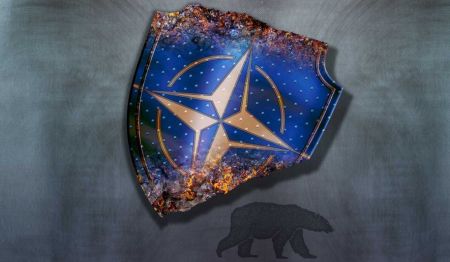
NATO Irrelevance and Russia Illustration by Greg Groesch/The Washington Times

Europe doesn’t need any U.S. umbrella in order to protect itself from external threats because it faces no such threats that require U.S. assistance. Its only serious outside threat is unchecked immigration of such magnitude, and of such cultural challenge, that any smooth assimilation will be extremely difficult, perhaps impossible. We only need to look at what’s roiling European politics these days to see that this threat agitates the European mind far more than any potential Russian hostility.

But don’t expect today’s establishment thinkers to incorporate those realities into their thinking. The status quo is too comfortable, however shattered it may be in the real world.
******************************

ANALYSIS/OPINION:

In politics and geopolitics, people tend to cling to the old ways of thinking like a drowning man in a stormy sea clings to a life preserver. Case in point: NATO. Consider the reaction to President Trump’s performance at last week’s summit of the venerable Atlantic alliance, where he chided the Europeans for not hitting defense spending targets and seemed to avoid — somewhat pointedly, some thought — the standard expressions of devotion to NATO’s Article 5, which commits NATO members to consider an attack on one to be an attack on all.

“Donald Trump,” declared neoconservative thinker David Frum in The Atlantic, “is doing damage to the deepest and most broadly agreed foreign policy interest of the United States.” He called Mr. Trump’s overseas trip “an utter catastrophe.” Henry Farrell, writing in The Washington Post, called it “disastrous.” The New York Times said the president’s “repeated scolds” in Europe “are not just condescending but embarrassing.”

With so many establishment institutions and figures singing the same angry ballad, it must mean something. And it does: that they continue to cling to the old ways of thinking even as events demonstrate that those old ways no longer fit reality. The more that becomes apparent, the more tenaciously they grasp the status quo.

The New York Times gave the game away in calling NATO “an indisputably important alliance that has kept the peace for 70 years.” That’s demonstrably false. NATO kept the peace, brilliantly and heroically, for 41 years — from 1948, when it was established, until 1989, when its reason for existence expired with the downfall of the Soviet Union. Since that time, NATO not only hasn’t kept the peace (peace was largely a result of improved circumstances) but has been fomenting tensions that constitute an ominous flash point of potential war.

Consider the realities of the Cold War, when Bolshevik Russia had 1.3 million Soviet and client-state troops poised on Europe’s doorstep, including 300,000 in East Germany. Now that’s a threat, and NATO was created to deter that threat. That it did so, while the United States pursued its containment policy with varying degrees of sternness and effectiveness but ultimately with success, is a testament to the persistence and boldness of U.S. leadership at a harrowing time.

Those days are long gone. Now it is NATO that is threatening, adding 12 countries since the end of the Cold War and angling to bring in several more. It has pushed right up to the Russian border, a development that any country in Russia’s position would consider incendiary and a security threat. Indeed, in 2008, Russia warned the West about further eastward expansion by NATO, particularly into Ukraine and Georgia. U.S. Ambassador William Burns warned Washington that Russia considered further NATO enlargement to be “a potential military threat an emotional and neuralgic issue.”

Yet just two months later NATO officials declared that the alliance “welcomes Ukraine’s and Georgia’s Euro-Atlantic aspirations for membership in NATO.” Six years after that the United States helped foster a coup against Ukraine’s democratically elected (though corrupt) leader in order to bring to the country a more Western-oriented leadership, more attuned to moving westward into the European orbit.

When Russia responded as it warned it would, preventing Ukraine from being extricated fully from its sphere of influence, the cry went up throughout Europe and America: Russian aggression; it must be stopped; it threatens all of Europe.

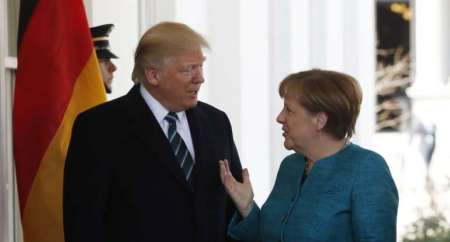
And yet when President Trump last week pressured NATO nations to increase their defense spending to 2 percent of gross domestic product, European leaders reacted as if they had been beset by a menacing dog. German Chancellor Angela Merkel told a crowd in southern Germany, “The times in which we could completely depend on others are on the way out. I’ve experienced that in the last few days. We Europeans truly have to take our fate into our own hands.”

What a thought. It has a ring similar to what Mr. Trump said during the late campaign (which he since has backed away from) — namely, that NATO is obsolete. NATO put all of Europe under an American security umbrella. Now nearly all of Europe and America, having pushed up against Russia, say the West is once again under threat from Russia. But, when Mr. Trump suggests the European powers should bolster their defense spending to meet that threat, the nettled Europeans respond that they can’t take that kind of abuse, they’re just going to have to separate from America.

But what about that Russian threat? Won’t Ms. Merkel want to get back under that security umbrella when the Russian bear growls and gets up on his hind legs with ominous malignity, threatening the Continent as in Cold War days?

The fact is that the Russian bear constitutes no such threat, and Mrs. Merkel knows it. A further fact is that Europe doesn’t need any U.S. umbrella in order to protect itself from external threats because it faces no such threats that require U.S. assistance. Its only serious outside threat is unchecked immigration of such magnitude, and of such cultural challenge, that any smooth assimilation will be extremely difficult, perhaps impossible. We only need to look at what’s roiling European politics these days to see that this threat agitates the European mind far more than any potential Russian hostility.

But don’t expect today’s establishment thinkers to incorporate those realities into their thinking. The status quo is too comfortable, however shattered it may be in the real world.
Trump to Germany: Lead, Follow, or Get Out of the Way

May 29, 2017

Trump to Germany: Lead, Follow, or Get Out of the Way, PJ Media, Michael Walsh, May 28, 2017

(AP Photo/Pablo Martinez Monsivais)

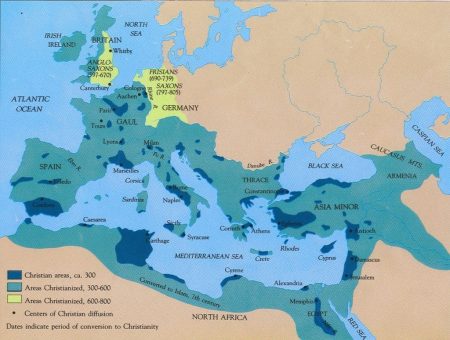
What the president understands, and the Europeans pretend not to, is that Russia is no longer the direct menace it was during the days of the Fulda Gap, and that the real menace to Europe and NATO (which, by the way, includes the Islamicizing state of Turkey) is Islam, and its ongoing invasion of the historic lands of Christendom. If you think that’s a joke, and that it can’t happen in France, Italy or Britain, ask the Anatolians, the north Africans and the Albanians how that worked out for them.

**************************

Quick, name the worst leader in western Europe. Yes, it’s a tough call: it’s either whoever the leader of Italy is this week, plus whichever socialist is temporarily in charge of France, plus the your-name-here chinless wonder domiciled at 10 Downing Street in London. But surely the prize goes to Frau Kartoffel herself, German Kanzlerin Angela Merkel, who’s been in office since 2005 and, alas, shows no signs of leaving any time soon.

On his visit this past week to Europe, President Trump spoke some hard truths to our European allies, but none spat it out more quickly than Merkel, to the absolute delight of the Trump-hating New York Times. It is a cold day in hell when the Times speaks fondly of any German, but here it is:

German Chancellor Angela Merkel, Europe’s most influential leader, has apparently concluded that the United States of President Trump is not the reliable partner her country and continent have automatically depended on in the past.

Clearly disappointed with European leaders’ inability to persuade Mr. Trump to publicly endorse NATO’s doctrine of collective defense — or to agree to common positions on Russia, climate change or global trade — Mrs. Merkel said on Sunday that traditional alliances were no longer as reliable as they once were, and that Europe should pay more attention to its own interests “and really take our fate into our own hands.”

To which let me add: it’s about time. I’ve spent a good deal of my life in Germany, speak the language, and raised my children there; my most recent book, the best-selling The Devil’s Pleasure Palace, concerns not only the Frankfurt School of Marxist philosophers and the cultural havoc they wrought in America, but the musical and literary cornerstones of German culture itself, including Goethe and Wagner.

If it took Trump’s typical bluntness to finally get the message across that the Europeans are now responsible for the mess of their own making, good. Germany in particular has coasted under the American nuclear umbrella for decades, allowing it to a) concentrate entirely on rebuilding its domestic economy, infrastructure and social welfare state and b) thumb its nose at American warmongering imperialism. It’s one of the least attractive aspects of the German character; the gratitude that the immediate postwar generation felt for our having rescued them from Hitler and the love Germans felt for all things American have vanished. In their place has come a churlish, we-can-take-it-from-here mutter that does not become them.

Formerly known as Christendom (Wikipedia)

What the president understands, and the Europeans pretend not to, is that Russia is no longer the direct menace it was during the days of the Fulda Gap, and that the real menace to Europe and NATO (which, by the way, includes the Islamicizing state of Turkey) is Islam, and its ongoing invasion of the historic lands of Christendom. If you think that’s a joke, and that it can’t happen in France, Italy or Britain, ask the Anatolians, the north Africans and the Albanians how that worked out for them.

Speaking on the campaign trail after contentious summit meetings in Belgium and Italy, Ms. Merkel said: “The times in which we could rely fully on others, they are somewhat over. This is what I experienced in the last few days,” she said.

Given this new context for international relations, she said, “that is why I can only say that we Europeans must really take our fate into our own hands — of course in friendship with the United States of America, in friendship with Great Britain and as good neighbors wherever that is possible also with other countries, even with Russia.”

Welcome back to the 19th century! As the gorilla in the middle, Germany has always been forced to deal with the West (in the form of France and French culture) and the East (Russia); the result was two world wars and the deaths of millions. The European Union was essentially a response to the lingering question of how to prevent the great ape from escaping its cage and having dinner in Paris a month or so later. Worse for Merkel, although born in Hamburg, she grew up on the wrong side of the East-West German border and so was raised in a state that was at once a communist dictatorship and a swaddling socialist experiment, one which beat the sense of personal striving out of the people and replaced it with a dull conformity.

That dullness is now embodied by Merkel, a dull, uninspiring leader with no vision for the future and, childless, with no personal stake in it. Somewhere in hell, Walter Ulbricht and Erich Honecker are having a good laugh about their perfect revenge on the capitalist West. Sure, it took their own destruction to pull it off, but what could be more German than that?

France: Macron, President of the Elites and Islamists

May 26, 2017

France: Macron, President of the Elites and Islamists, Gatestone InstituteGuy Millière, May 26, 2017

“Today, Muslims of France are poorly treated … Tomorrow, a new structure will make it possible to relaunch the work sites of the Muslim religion in France: the construction and the improvement of worthy places of worship will take place where their presence is necessary, and the training of imams of France will be organized.”

***************************

French President Emmanuel Macron can only be described as close to the business world if one understands how things work in France. The French economy is a mixed system where it is almost impossible to succeed financially without having close relations with political leaders who can grant favors and subsidies, and either authorize, prohibit or facilitate contracts or hinder them. Macron is not supposed to bring any new impetus to business, but to ensure and consolidate the power of those who placed him where he is.

A deliberate side-effect of Macron’s policies will be population change. Macron wants Islam to have more room in France. Like many European leaders, Emmanuel Macron seems convinced that the remedy for the demographic deficit and the aging of ethnic European populations is more immigration.

The French branch of the Muslim Brotherhood published an official communiqué, saying: “Muslims think that the new President of the Republic will allow the reconciliation of France with itself and will allow us to go farther, together.”

Emmanuel Macron — whose victory in the French presidential election on May 7, 2017 was declared decisive — was presented as a centrist, a newcomer in politics with strong ties to the business world, and a man who could bring a new impetus to a stagnant country.

The reality, however, is quite different.

His victory was actually not “decisive”. Although he received a high percentage of the votes cast (66%), the number of voters who cast a blank ballot or decided to abstain was the highest ever in a French presidential election.

Although his opponent, Marine Le Pen, tried to dissociate herself from the anti-Semitism of her father, Jean-Marie Le Pen, she was treated as a walking horror by almost all politicians and journalists during the entire campaign. That she nevertheless drew 34% of the votes was a sign of the depth of the anger and frustration that has been engulfing the French people. More than half of those who chose Macron were apparently voting against Marine Le Pen, rather than for Macron.

Macron, who won by default, suffers from a deep lack of legitimacy. He was elected because he was the last man standing, and because the moderate right’s candidate, François Fillon, was sabotaged by a demolition operation carried out by the media and by a political use of justice. Significantly, the legal prosecution of Fillon stopped immediately after he was defeated.

Macron is not a centrist: he was discreetly supported throughout the campaign by most of the Socialist Party’s leaders and by the outgoing Socialist President, François Hollande. The day after the election, during a V-E Day ceremony, Hollande could not hide his joy. A few days later, on May 14, when he handed the office of the president over to Macron, Hollande said that what was happening was not an “alternative” but a “continuity”. All Macron’s team-members were socialists or leftists. Macron’s leading political strategist, Ismael Emelien, had worked for the campaign that led to the election of Nicolas Maduro in Venezuela.

Macron’s entire program is socialist. Proposals for additional public expenditures abound. “Climate change” is defined as “the key issue for the future of the world”. The proposed changes to the Labor Code and the tax system are largely cosmetic and seem intended more to give an illusion of change than to bring about real change. While Macron does not reject a market economy, he thinks that it must be placed at the service of “social justice”, and that the government’s role is to “guide”, to “protect”, “to help” — not to guarantee freedom to choose. Significantly, the economists who participated in the elaboration of Macron’s program are those who had drawn up Hollande’s economic program in 2012.

Even if he is young, Macron is not a newcomer to politics and does not embody renewal. He not only worked with Hollande for five years, but those who shaped his political ascent have long careers behind them: Jacques Attali was President François Mitterand’s adviser in the 1980s ; Alain Minc worked with all French Presidents since Valery Giscard d’Estaing was elected in 1974, and Jean-Pierre Jouyet was the cabinet director for Socialist Prime Minister Lionel Jospin in the late 1990s. Just after the election, three documentaries were broadcast on French television explaining in detail how Macron’s campaign was organized. Macron is the pure product of what analysts described as the “French nomenklatura” — an arrogant élite, composed of senior officials, political power-holders and the businessmen working in close collaboration with them.

Macron can only be described as close to the business world if one understands how things work in France. The French economy is a mixed system where it is almost impossible to succeed financially without having close relations with political leaders who can grant favors and subsidies, and either authorize, prohibit or facilitate contracts or hinder them.

During the years he spent at Hollande’s side, Macron helped various French businessmen. They thanked him by massively contributing to his campaign. It would be surprising if they do not expect a “return on investment”. The operation that allowed Macron’s election could be described in business language as a takeover. Almost all French private media outlets belong to those who supported Macron and were part of the takeover.

Macron is not supposed to bring any new impetus to business, but to ensure and consolidate the power of those who placed him where he is. Their goal is to create a large, single, center-left, technocratic political party that will crush the old political parties and that will be installed in a position of hegemony. The party’s slogan, “En Marche!” (“On the Move!”), was established to go forward in that direction; the old political parties have been almost destroyed. The official Socialist Party is dying. The main center-right party, The Republicans, is in disarray. One of its leaders, Edouard Philippe, was appointed Macron’s Prime Minister. Another, Bruno Le Maire, is now Finance and Economy minister: he will have to apply quite a different policy from those defined by his original party. The rightist National Front and the radical left will be treated as receptacles of anger: everything will be done so that they stay marginalized.

Another goal is to entrust ever more power to the technocratic unaccountable, untransparent and undemocratic institutions of the European Union: it is a goal Emmanuel Macron never stopped emphasizing. On May 7, as soon as the election result was known, the leaders of the European Union showed their enthusiasm. The president of the European Commission, Jean-Claude Juncker, spoke of “a signal of hope for Europe”. On May 15, immediately after the inauguration, Macron went to Berlin, met German Chancellor Angela Merkel and said that he hoped for a rapid “strengthening of the Union”. Macron says he wants the creation of an EU Ministry of Finance, whose decisions would have binding force for all member states.

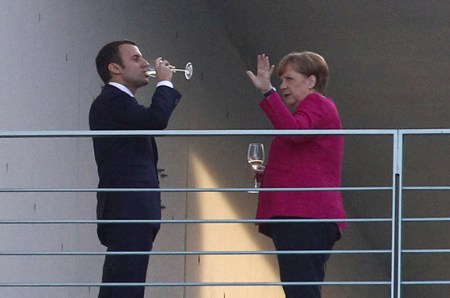
French President Emmanuel Macron and German Chancellor Angela Merkel chat in Berlin on May 15, 2017. (Photo by Michele Tantussi/Getty Images)

A deliberate side-effect of Macron’s policies will be population change. Like many European leaders, Emmanuel Macron seems convinced that the remedy for the demographic deficit and the aging of ethnic European populations is more immigration. On September 6, 2015, he stated that “immigration is an opportunity for all of us”. On February 12, 2017, he said, “I will propose to the Algerian government the creation of a Franco-Algerian Bureau of Youth, to encourage mobility between the two shores of the Mediterranean”. A few weeks later, he declared that “the duty of Europe is to offer asylum to all those who seek its protection” and that “France must take its fair share of refugees”.

Almost all refugees arriving in France are Muslims. France already has the greatest percentage of Muslims in Europe. Macron wants Islam to have more room in France. His position concerning other religions is not known. His position on Islam is clear:

“Today, Muslims of France are poorly treated … Tomorrow, a new structure will make it possible to relaunch the work sites of the Muslim religion in France: the construction and the improvement of worthy places of worship will take place where their presence is necessary, and the training of imams of France will be organized.”

The French branch of the Muslim Brotherhood congratulated Macron on on his victory. It published an official communiqué saying: “Muslims think that the new President of the Republic will allow the reconciliation of France with itself and will allow us to go farther, together.”

Macron’s prime minister, Edouard Philippe, has close ties with the Muslim Brotherhood and favored their installation in the city of which he is the mayor, Le Havre. Richard Ferrand — a Socialist MP, the secretary-general of En Marche! since its inception, and now Minister for the Cohesion of Territories — has been financially contributing to the anti-Israel BDS movement and to “pro-Palestinian” organizations for years. Gerard Collomb, the Socialist Mayor of Lyon, and now Interior Minister, financed the French Institute of Muslim Civilization that will open its doors in December 2017.

In a recent article, Yves Mamou noted that Macron is not “an open promoter of Islamism in France” and could be defined as a “useful idiot.”

In another recent article, Bruce Bawer wondered how the French could have chosen Emmanuel Macron. His answer was that “the mainstream media have played a role”. Evidently, also, “some people do not want to know the truth,” even when the truth is in front of their eyes.

“Some people are accustomed to the idea that there are people above them in the hierarchy whose job is to think about, and take care of the big things while they, the citizens, the mice, take care of their own little lives”.

A majority of the French did not choose Macron but apparently accept that there are people above them. Those who do not accept this fact so easily are many, but in minority, and they are likely to become a smaller minority. Macron is counting on their resignation. It is not certain, however, that the millions of people who voted for Marine Le Pen, despite her extremely problematic closeness to Russia and the harsh campaign against her, or those who voted for the leftist candidates, will so easily give up. It is also not certain — thanks to willful blindness and appeasement — that Islamists will mellow, or that jihadist attacks will stop.

Macron said he was “dismayed” over Manchester Arena terror attack. He added that he was “filled with dread”. He did not express the necessity of confronting the danger. The French have every reason to be nervous.

Counterterror systems are deficient across Europe

May 25, 2017

Counterterror systems are deficient across Europe, DEBKAfile, May 25, 2016

(The U.S. leaks, which President Trump will deal if he isn’t already doing so, provide a welcome diversion from addressing British responsibility for dealing with rampant Islamic terror. — DM)

One of the main reasons the British were so angry over the leaks was that it demonstrated how easy it was to build such bombs as the one used in Manchester, There is no need to manufacture them at secret venues in faraway Yemen, or smuggle them in pieces aboard planes. They can be built in the kitchens of rented apartments in Western Europe’s main cities, as in the case of the Manchester bomb.

***************************

With each passing day since the Manchester suicide bombing, as more details come to light of the terrorist Salman Abedi’s links with a broad ISIS network, it is becoming increasingly clear that the government of British Prime Minister Theresa May, as well as the British secret services, face their biggest security and intelligence crisis in the war on terror.

Their actions on Thursday, May 25, showed that Britain’s political and security authorities were doing their best to avoid being questioned about who deserves blame for allowing the attack, which claimed the lives of 22 people and injured more than 60. One such maneuver was to try and point the finger at President Donald Trump’s administration after photos showing debris from the bomb were leaked to US media from the investigation.

This was followed by expressions of outrage and reports that Britain was halting its intelligence sharing with the US. It was subsequently explained that it was only the Manchester police which had stopped transferring intelligence to their US counterparts, while other sharing continued. President Donald Trump said later the leaks were “deeply troubling” and asked the US Justice Department and other agencies to launch a full investigation.

These events were peripheral to the real question of how 22-year-old Salman Abadi, who had once been on an intelligence watch list, had been able to operate unnoticed by the security authorities, build several bombs, bring one of them to the intended  target – a pop concert at the Manchester Arena – and detonate it without being stopped.

British media Thursday reported police certainty that a terror network operated within Manchester and that Abedi was nothing more than a “mule” whose entire role was to carry the explosive device and detonate it.

But a statement on Wednesday by French Interior Minister Gerard Collomb that Abedi had travelled to Syria to meet with ISIS figures, and leaks on Thursday from German intelligence that the bomber flew from Turkey to the city of Dusseldorf four days before the attack, showed Abedi in a much more central role in a terror network that spanned a number of countries in Europe and the Middle East.

Dusseldorf was also the home of Tunisian terrorist Anis Amri, who carried out the December 2016 truck attack on a Christmas market in Berlin that left 12 dead and 48 wounded.

In that context, the next question is: How did the bomber’s name come to disappear from the terrorist watch list that prevents suspects from boarding international flights?

There is also the question of how the security services failed to notice the ability of the bomber or his network to build a new generation of small but powerful explosives capable of causing massive slaughter.

One of the main reasons the British were so angry over the leaks was that it demonstrated how easy it was to build such bombs as the one used in Manchester, There is no need to manufacture them at secret venues in faraway Yemen, or smuggle them in pieces aboard planes. They can be built in the kitchens of rented apartments in Western Europe’s main cities, as in the case of the Manchester bomb.

Even worse, if Abadi was trained to build bombs, many other members of his network may have received the same training.

The big holes exposed in Britain’s counterterror system undoubtedly beset other European countries laboring to contend with the Islamic terror threat.

The tragedy at Manchester Arena dominated the NATO 28-member summit taking place in Brussels Thursday. There was a minute’s silence for the victims, many of them children, and all-round condemnation by leaders who have no notion when the Islamist terror hammer will descend on their own people.

Obama Praises Globalism in Berlin: ‘We Can’t Hide Behind a Wall’

May 25, 2017

Obama Praises Globalism in Berlin: ‘We Can’t Hide Behind a Wall’, BreitbartVirginia Hale, May 25, 2017

(Will he ever go away?

Last night I saw upon the stair,
A little man who wasn’t there,
He wasn’t there again today
Oh, how I wish he’d go away…

— DM)

Steffi Loos/Getty

“In this new world we live in, we can’t isolate ourselves. We can’t hide behind a wall,” Obama declared from the Brandenburg Gate, as police helicopters patrolled the skies and snipers watched the scene from nearby rooftops.

The former U.S. president told Merkel  — who is often credited with having caused the migrant crisis, which unleashed a flood of millions of migrants to Europe  — that she is “on the right side of history”.

*********************************

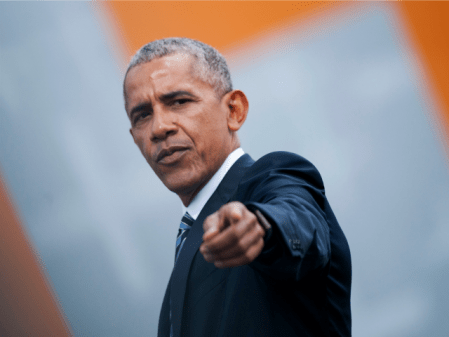
Speaking in Berlin on Thursday, Barack Obama pushed for continued globalism and heaped praise on German Chancellor Angela Merkel.

“There’s a competing narrative of fear and xenophobia and nationalism and intolerance and anti-democratic trends,” said Obama, discussing democracy and global responsibility with the chancellor, at the biennial congress of the German Protestant Church.

“We have to push back against those trends that would violate human rights or suppress democracy or that would restrict individual freedoms of conscience and religion.

“In this new world we live in, we can’t isolate ourselves. We can’t hide behind a wall,” Obama declared from the Brandenburg Gate, as police helicopters patrolled the skies and snipers watched the scene from nearby rooftops.

The former U.S. president told Merkel  — who is often credited with having caused the migrant crisis, which unleashed a flood of millions of migrants to Europe  — that she is “on the right side of history”.

Addressing the question of asylum seekers, Obama said: “In the eyes of God, a child on the other side of the border is no less worthy of love and compassion than my own child.

“You can’t distinguish between them in terms of their worth or inherent dignity.”

Without mentioning Donald Trump by name, the former president took the opportunity to rail against his successor not only with regards to immigration and the ‘liberal international order’ but also healthcare.

“My hope was that I was able to get 100% of people health care while I was president. We didn’t quite achieve that, but we were able to get 20 million people healthcare who didn’t have healthcare,” he said, warning that “progress” towards universal health care in the U.S. is in peril.

Merkel, who the former president told had done “outstanding work”, and who he lauded during his term as “my closest international partner”, is set to fly to Brussels later on Thursday for a meeting with leaders of fellow NATO countries, including President Trump.

Murder in Manchester

May 24, 2017

Murder in Manchester, Bill Whittle Channel via YouTube, May 24, 2017

(Please see also, Manchester: Europe Still ‘Shocked, Shocked’. — DM)

Manchester: Europe Still ‘Shocked, Shocked’

May 24, 2017

Manchester: Europe Still ‘Shocked, Shocked’, Gatestone InstituteJudith Bergman, May 24, 2017

After hearing of the Manchester terrorist attack, politicians once more communicated their by now old-routine of “shock” and “grief” at the predictable outcome of their own policies.

Most dumbfounding of all, German Chancellor Angela Merkel said that she was watching the developments in Manchester “with grief and horror” and that she found the attack “incomprehensible”.

Every time a European leader publicly endorses Islam as a great faith, a “religion of peace”, or claims that violence in Islam is a “perversion of a great faith”, despite massive evidence to the contrary, they signal in the strongest way possible that with every devastating attack, the West is ripe for the taking.

When ISIS attacked the Bataclan Theater in Paris in November 2015, it did so because, in its own words, it was “where hundreds of pagans gathered for a concert of prostitution and vice.” A year earlier, ISIS had forbidden all music as haram (forbidden). Many Islamic scholars support the idea that Islam forbids the ‘sinful’ music of the West.

It should, therefore, not be a surprise to anybody that Islamic terrorists might target a concert by the American pop singer Ariana Grande in Manchester on May 22. In addition, the U.S. Department of Homeland Security warned last September that terrorists are focused on concerts, sporting events and outdoor gatherings because such venues “often pursue simple, achievable attacks with an emphasis on economic impact and mass casualties”.

Islamic State claimed responsibility for the Manchester suicide bombing, in which a device laced with screws and bolts was detonated. Twenty-two people, children and adults, were murdered in the explosion that ripped through the Manchester concert area; more than 50 people were wounded. While the media is describing the use of nail bombs at the concert hall as a new and surprising tactic, it is in fact an extremely old one, practiced by Arab terrorists on Israelis for decades.

MANCHESTER, ENGLAND – MAY 23: A police officer stands guard close to the Manchester Arena on May 23, 2017 in Manchester, England. (Photo by Dave Thompson/Getty Images)

Nevertheless, after hearing of the Manchester terrorist attack, politicians once more communicated their by now old-routine of “shock” and “grief” at the predictable outcome of their own policies. The usual platitudes of “thoughts and hearts” being with the victims of the attack, accompanied professed shock.

President of the European Council Donald Tusk, tweeted: “My heart is in Manchester this night. Our thoughts are with the victims.” Leader of the British Liberal Democrats, Tim Farron, condemned the “shocking and horrific” attack. British Home Secretary Amber Rudd said it was a “tragic incident”, while Labour party leader Jeremy Corbyn called it a “terrible incident”. Canada’s Prime Minister Justin Trudeau said his citizens were “shocked by the news of the horrific attack in Manchester tonight”. Most dumbfounding of all, German Chancellor Angela Merkel said that she was watching the developments in Manchester “with grief and horror” and that she found the attack “incomprehensible”.

After 9/11 in the United States; the 2004 Madrid train bombings, which killed nearly 200 and wounded 2000; the 2005 attacks on London’s transit system where 56 people were killed and 700 wounded; the 2015 attacks in Paris, where ISIS killed 130 people and wounded nearly 400; the March 2016 attacks on the Brussels airport and metro station, where 31 people were killed and 300 wounded; the July 2016 attack in Nice, where 86 people, including ten children, were killed and more than 200 people wounded; the December 2016 attack in Berlin, where 12 people were killed and almost 50 wounded; the March 2017 attack on Westminster that killed three people and wounded more than 20; the April 2017 attack in Stockholm, where 5 people were killed, including one 11-year-old girl; let alone countless attacks in Israel, Western leaders have run out of all conceivable excuses to be shocked and surprised at Islamic terrorism occurring in their cities at ever-increasing frequency.

All the above-mentioned attacks are just the spectacular ones. There have been innumerable others, sometimes at the rate of several attacks per month, which barely made the headlines, such as the Muslim man who, a little over a month ago, tortured and stabbed a 66-year-old Jewish woman in Paris and then, while shouting “Allahu Akbar”, threw her out of the window; or the Paris airport attacker in March, who came “to die for Allah” and accomplished his goal without, miraculously, taking any innocent bystanders with him,

After the last spectacular terrorist atrocity in the UK, which aimed at the very heart of European democratic civilization by targeting the Houses of Parliament and Westminster Bridge, British PM Theresa May said: “It is wrong to describe this as Islamic terrorism. It is Islamist terrorism and the perversion of a great faith”.

It is impossible to fight back against that which you refuse to understand or acknowledge, but then again, European leaders seem to have no intention of fighting back, as they have evidently chosen an entirely different tactic, namely that of appeasement.

Every time a European leader publicly endorses Islam as a great faith, a “religion of peace”, or claims that violence in Islam is a “perversion of a great faith”, despite massive evidence to the contrary — the actual violent contents of the Quran and the hadiths, which include repeated exhortations to fight the “infidels” — they signal in the strongest way possible to organizations such as ISIS, Al Qaeda, Boko Haram, Hezbollah and Hamas, that with every devastating attack, the West is ripe for the taking. The terror organizations and their supporters see European leaders’ immense fear of causing even the slightest offense, despite protestations to the contrary from leaders such as Theresa May.

The fear is accompanied by a persistent resolve to pretend, at whatever cost — even that of the lives of their citizens — that Europe is not at war, even though it is blindingly clear that others are at war with it.

These terrorist organizations perceive that when ministers in countries such as Sweden, where according to news reports, 150 ISIS fighters have returned and are apparently walking around freely, propose the integration of Islamic State jihadists back into Swedish society — as a solution to terrorism! — it will not take much more effort to make these leaders submit completely, as Sweden almost certainly has. This “solution” can only work on terrorists as encouragement to carry out even more terrorism — as is overwhelmingly evident from the increasing frequency of terrorist attacks on European soil.

While European politicians, incredibly, believe that their tactics are preventing terrorism, they are in fact empowering it as much as possible: Terrorists do not react to heartfelt sympathy, teddy bears and candlelit vigils. If anything, it arguably makes them even more disgusted with Western society, which they want to transform into a caliphate under Islamic sharia law.

Politicians seem to lose sight all the time of the Islamist goal of the caliphate. Islamic terrorism is not “mindless violence” but clearly calculated terror to force the eventual submission of the targeted society. So far, with the West inert and in denial, the terrorists seem to be winning.

Poland Says Taking Migrants ‘Much Worse’ Than EU Sanctions

May 17, 2017

Poland Says Taking Migrants ‘Much Worse’ Than EU Sanctions, BreitbartVirginia Hale, May 17, 2017

(The person named beneath the photo is the photographer. — DM)

CHRIS J RATCLIFFE/AFP/Getty Images

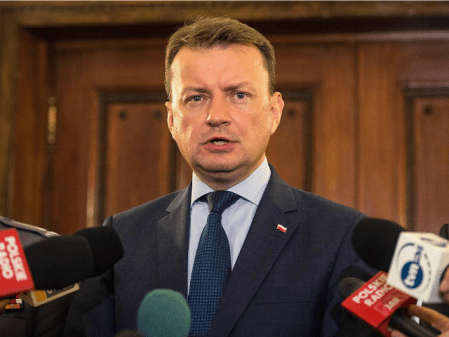
Taking migrants would do more damage to Poland than European Union (EU) sanctions, Interior Minister Mariusz Błaszczak has said, after fresh warnings from Brussels over the country’s refusal to welcome asylum seekers from the third world.

Reacting to the EU setting a June deadline by which Poland and Hungary must take migrants from Italy and Greece or face sanctions, the minister said “the security of Poland and the Poles is at risk” from the bloc’s relocation scheme.

Mr. Błaszczak said giving in to the EU’s demand that Poland welcome more than 6,000 asylum seekers would “certainly be much worse” for the nation than the threat of punishment from Brussels, citing the terror threat in Western Europe as a result of immigration.

“We mustn’t forget the terror attacks that have taken place in Western Europe, and how  — in the bigger EU countries  — these are unfortunately now a fact of life,” said the minister, pointing to demographic change as the cause.

“Remember that the now very numerous Muslim communities (in Western European countries) started out as relatively small numbers.”

The EU quota scheme moving migrants from Italy and Greece  — where asylum seekers from the third world arrive in droves via boat – to other nations in the bloc only exacerbates the continent’s problems with illegal migration according to Błaszczak.

“I tell my counterparts in Western Europe that the relocation strategy only intensifies [illegal migration] because traffickers get even more custom when [would-be migrants] hear people delivered to Europe are being given refuge in EU nations other than Italy and Greece.

“It also risks the lives of people who are trying to reach Europe [on boats],” he added.

On Tuesday, Brussels set a June deadline for Poland and Hungary to start admitting migrants under the EU’s quota scheme.

“I call on Poland and Hungary who have not relocated a single person… to start doing so right now,” EU Migration Commissioner Dimitris Avramopoulos told reporters.

“If no action is taken by them before the next (Commission) report in June, the Commission will not hesitate to make use of its powers under the treaties and to open infringement procedures,” he said.

Sweden: A Qatari Protectorate

May 17, 2017

Sweden: A Qatari Protectorate, Gatestone InstituteJudith Bergman, May 17, 2017

In the former democracy of Sweden, politicians are no longer answerable to the citizens, and can apparently cover up whatever topics they choose, no matter how detrimental to the people who elected them. The mainstream media willingly collude with the authorities by uniformly ignoring the issue.

**********************************

At the opening of the mega-mosque, Malmö City Councilor Frida Trollmyr gave a speech in which she continued to use the term “cultural center”, never using the word “mosque”, as if — Soviet-style — the use of certain words could alter reality.

The mega-mosque was never supposed to be a mosque, according to the Wakf’s own application for building permits, but merely a “cultural center” (the application talks about “an activity center for youth and families in Malmö with a focus on Rosengård”).

When the journalist asked Khaled Assi whether his organization was in fact building a mosque, he told her that “there already is a mosque in Malmö” and that the “cultural center” would just contain a “small prayer room”.

On April 28, the Ministry of Awqaf and Islamic Affairs of the State of Qatar opened the Umm Al-Mu’minin Khadijah Mosque in Malmö, Sweden. Qatar — the epicenter of Muslim Brotherhood and the base of its proselytizing megaphone, Al Jazeera — paid more than 3 million euros to build the mosque, which is almost 2,000 square meters and accommodates up to 2,000 people, making it the largest mosque in Scandinavia.

One astonishing fact about this new mega-mosque is that, according to Swedish mainstream media, the opening never happened. Not a single Swedish news outlet mentioned the opening. Swedish authorities were also completely silent on the topic. On her Facebook and Twitter accounts, Malmö’s Mayor, Katrin Stjernfeldt Jammeh, wrote about the opening of a new office for army recruits in Malmö and the Swedish coast guard moving its activities to Malmö harbor, but failed to mention the opening of the largest mosque in Scandinavia. The website of Malmö municipality was also silent on the topic.

For information on what goes on in Sweden, therefore, one has to turn to Qatar News Agency, which reported:

“Director of the Islamic Affairs Department at the Ministry of Awqaf and Islamic Affairs Khalid Shaheen Al Ghanim said that the mosque was built and furnished by the State of Qatar at a cost of over 3 million euros, under the supervision of the Ministry of Awqaf and in collaboration with the Wakf of Scandinavia in Malmo, Sweden

“He added that the Umm Al-Mu’minin Khadijah Mosque is the largest mosque in Scandinavia and is located on the first and second floors of the four-story building of the Wakf of Scandinavia in Sweden. The mosque is equipped with facilities for people with special needs to perform prayers and others for children and women.

“The opening ceremony was attended by representatives of Swedish local authorities, representatives of Islamic institutions in Sweden and Denmark, as well as a number of businessmen.”

The organization in Sweden behind the mega-mosque is the Swedish Wakf, better known as the Islamic Community of Malmö. In its statutes, the Swedish Wakf describes itself as a “religious and cultural community, registered as an ideal institution”, and “politically independent”.

The neighbors of the mega-mosque, which was never supposed to be a mosque, according to the Wakf’s own application for building permits, but merely a “cultural center” (the application talks about “an activity center for youth and families in Malmö with a focus on Rosengård”), protested when they learned of the plans in 2010. The Malmö municipality brushed them off. “It is like any congregational activity, and I find it hard to see that there should be anything to worry about”, said Dick Johansson, representing Malmö municipality, at the time.

As it turns out, there is a great deal to worry about.

Several of the Swedish Wakf’s members come from the Swedish Islamic Cultural Association, whose spokesman and front figure, Ammar Daoud, was described by Swedish newspaper Sydsvenskan in an article from 2006, as the “apprentice” of the Danish imam Abu Laban. Laban, who died in 2007, was known for his jihadist connections and for instigating riots in the Muslim world against Denmark after the 2005 publication of the Mohammed cartoons in Denmark’s Jyllands-Posten. He led his own Danish Wakf — Danish Islamic community — in Copenhagen.

Laban declared Sayid Qutb, the Muslim Brotherhood’s chief ideologue, to be his role model, and was a frequent guest preacher at one of the basement mosques of the Swedish Cultural Association in Rosengård (a crime-ridden, infamous no-go zone in Malmö).

Already in 2006, Abu Laban told the daily Sydsvenskan that he wanted to “help” his Swedish Muslim friends establish a new mosque. Abu Laban and Ammar Daoud were unhappy with the existing mosque in Malmö, Islamic Center Mosque, which Abu Laban derisively labelled “Islam-light”.

In 2010, Khaled Assi, head of the Swedish Wakf (a position he still holds today), told a Swedish journalist that he was “inspired” by Abu Laban and his Wakf in Denmark. When the journalist asked Khaled Assi whether his organization was in fact building a mosque, he told her that “there already is a mosque in Malmö” and that the “cultural center” would just contain a “small prayer room”. Asked about the financing of the project, Assi said that the Wakf was “unassociated with any organization” and that all financial contributors were “individuals from Malmö and Skåne”, although they would also approach “individuals” abroad.

At the opening of the mega-mosque of the Wakf on April 28, Malmö City Councilor Frida Trollmyr gave a speech in which she continued to use the term “cultural center”, never using the word “mosque”, as if — Soviet style — the use of certain words could alter reality:

“In many ways, this cultural center is unique but at the same time it is one of many meeting places that has contributed to the diversity that has made Malmö into the city it is today. We Malmöites know what this diversity entails and all its strength — it is that which has made Malmö into the city it is today.”

Trollmyr’s speech will go down in history as the moment Malmö municipality finally submitted completely to Islam.

When the Swedish independent news site, Samtiden, tried to reach Trollmyr for comment on how the new gender-separated mosque corresponds to Swedish values about gender equality, about Trollmyr’s views on the financing of mega-mosques by foreign dictatorships, and what this entails for Malmö with regards to radicalization, Trollmyr’s secretary informed Samtiden that the politician did not have time to answer the questions.

In the former democracy of Sweden, politicians are no longer answerable to the citizens, and can apparently cover up whatever topics they choose, no matter how detrimental to the people who elected them. The mainstream media willingly collude with the authorities by uniformly ignoring the issue.

One would have thought, however, that at least one mainstream Swedish journalist would be interested in uncovering the cover-up of the Swedish authorities. Here are some of the many unanswered questions:

How did a project that the Malmö municipality approved as a “cultural center” end up as the largest mosque in Scandinavia?

How did an organization, the Swedish Wakf, which is supposed to be “politically independent”, and which said it was collecting its financing from local Muslims, end up having its mosque bought and paid for by Qatar, the primary exporter — along with Saudi Arabia — of Wahhabism in the world?

When did Sweden become a province of the dictatorship of Qatar, where the presence of Qatari government officials at the opening of a Qatari-funded mosque in a major Swedish city does not elicit the slightest media attention, let alone criticism, as if this kind of occurrence were the most routine order of the day? Instead, the only Swedish reaction is an embarrassingly sycophantic speech by a representative of the Malmö municipality.

In short, when did the Swedish population vote to become a Qatari protectorate?

Malmö, Sweden. (Image source: David Ramos/Getty Images)

Germany Confiscating Homes to Use for Migrants

May 14, 2017

Germany Confiscating Homes to Use for Migrants, Gatestone InstituteSoeren Kern, May 14, 2017

(It’s like watching a corpse rot. Perhaps it’s time to bury it. — DM)

In an unprecedented move, Hamburg authorities confiscated six residential units in the Hamm district near the city center. A trustee appointed by the city is now renovating the properties and will rent them — against the will of the owner — to tenants chosen by the city. District spokeswoman Sorina Weiland said that all renovation costs will be billed to the owner of the properties.

Similar expropriation measures have been proposed in Berlin, the German capital, but abandoned because they were deemed unconstitutional.

Some Germans are asking what is next: Will authorities now limit the maximum amount of living space per person, and force those with large apartments to share them with strangers?

Authorities in Hamburg, the second-largest city in Germany, have begun confiscating private dwellings to ease a housing shortage — one that has been acutely exacerbated by Chancellor Angela Merkel’s decision to allow more than two million migrants into the country in recent years.

City officials have been seizing commercial properties and converting them into migrant shelters since late 2015, when Merkel opened German borders to hundreds of thousands of migrants from Africa, Asia and the Middle East. Now, however, the city is expropriating residential property units owned by private citizens.

In an unprecedented move, Hamburg authorities recently confiscated six residential units in the Hamm district near the city center. The units, which are owned by a private landlord, are in need of repair and have been vacant since 2012. A trustee appointed by the city is now renovating the properties and will rent them — against the will of the owner — to tenants chosen by the city. District spokeswoman Sorina Weiland said that all renovation costs will be billed to the owner of the properties.

The expropriation is authorized by the Hamburg Housing Protection Act (Hamburger Wohnraumschutzgesetz), a 1982 law that was updated by the city’s Socialist government in May 2013 to enable the city to seize any residential property unit that has been vacant for more than four months.

The forced lease, the first of its kind in Germany, is said to be aimed at pressuring the owners of other vacant residences in the city to make them available for rent. Of the 700,000 rental units in Hamburg, somewhere between 1,000 and 5,000 (less than one percent) are believed to be vacant, according an estimate by the Hamburg Senate.

HAMBURG, GERMANY – FEBRUARY 15: A view of the city of Hamburg with the ‘St. Michaelis Church’ on February 15, 2017 in Hamburg, Germany.  (Photo by Morris MacMatzen/Getty Images)

Socialists and Greens in Hamburg recently established a “hotline” where local residents can report vacant properties. Activists have also created a website — Leerstandsmelder (Vacancy Detector) — to identify unoccupied real estate in Hamburg and other German cities.

It remains unclear why the landlord in Hamm left his apartments vacant for more than five years. Some have posited that, given the location of the properties, the renovation costs may have been too high and probably would not have been offset by the rental income.

Others are blaming city officials for not approving more building permits to allow for the construction of new residential units. A study conducted in 2012 — well before the migrant crisis reached epic proportions — forecast that by 2017, Hamburg would have a deficit of at least 50,000 rental properties.

In 2016, however, only 2,433 new residential units came onto the market, while only 2,290 new building permits were approved, according to statistics provided by the City of Hamburg. These numbers were up slightly from 2,192 new units and 2,041 new permit approvals in 2015.

In 2012, Hamburg’s Socialist government presented a plan to build 6,000 new residential units per year. The plan never materialized, however, because prospective builders were constricted by government-imposed rental caps which would have made it impossible for them to even recover their construction costs.

Since then, the city has turned to seizing private property to resolve its self-inflicted housing crisis.

On October 1, 2015, the Hamburg Parliament (Hamburgische Bürgerschaft) approved a new law that allows the city to seize vacant commercial real estate (office buildings and land) and use it to house migrants.

City officials said the measure was necessary because, at the time, more than 400 new migrants were arriving in Hamburg each day and all the existing refugee shelters were full. They said that because the owners of vacant real estate refused to make their property available to the city on a voluntary basis, the city should be given the right to take it by force.

The measure was applauded by those on the left of the political spectrum. “We are doing everything we can to ensure that the refugees are not homeless during the coming winter,” said Senator Till Steffen of the Green Party. “For this reason, we need to use vacant commercial properties.”

Others have argued that efforts by the state to seize private property are autocratic and reek of Communism. “The proposed confiscation of private land and buildings is a massive attack on the property rights of the citizens of Hamburg,” said André Trepoll of the center-right Christian Democratic Union (CDU). “It amounts to an expropriation by the state.” He said the proposed measure is a “law of intimidation” that amounts to a “political dam-break with far-reaching implications.” He added: “The ends do not justify any and all means.”

Katja Suding, the leader of the Free Democrats (FDP) in Hamburg, said that the proposed law is an “unacceptable crossing of red lines… Such coercive measures will only fuel resentment against refugees.”

Similar expropriation measures have been proposed in Berlin, the German capital, but abandoned because they were deemed unconstitutional.

In November 2015, lawmakers in Berlin considered emergency legislation that would have allowed local authorities to seize private residences to accommodate asylum seekers. The proposal would have authorized police forcibly to enter private homes and apartments without a warrant to determine their suitability as housing for refugees and migrants.

The legislation, proposed by Berlin Mayor Michael Müller of the center-left Social Democrats (SPD), would have amended Section 36 of Berlin’s Public Order and Safety Law (Allgemeine Gesetz zum Schutz der öffentlichen Sicherheit und Ordnung, ASOG), which currently allows police to enter private residences only in extreme instances, to “avert acute threats,” that is, to fight serious crime. Müller wanted to expand the scope for warrantless inspections to include “preventing homelessness.”

The proposal was kept secret from the public until the leader of the Free Democrats (FDP) in Berlin, Sebastian Czaja, warned the measure would violate the German constitution. He said:

“The plans of the Berlin Senate to requisition residential and commercial property without the consent of the owner to accommodate refugees is an open breach of the constitution. The attempt by the Senate to undermine the constitutional right to property and the inviolability of the home must be resolutely opposed.”

Since then, both the mayor’s office and the Senate appear to have abandoned their plans.

Following an investigation, Gunnar Schupelius, a columnist with the Berlin newspaper BZ, wrote:

“A strange report made the rounds at the weekend: The Senate would authorize the police to enter private homes to house refugees, even against the will of the owner. I thought it was only satire, then a misunderstanding, because the Basic Law, Article 13, states: ‘The home is inviolable.’

“So I went on a search for the source of this strange report and found it. There is a ‘proposal’ which the Senate Chancellery (Senatskanzlei) has apparently circulated among the senators. The Senate Chancellery is another name for the mayor’s office. The permanent secretary is Björn Böhning (SPD)…

“The proposal is clear: The police can enter private property without a court order in order to search for housing for refugees when these are threatened with homelessness. You can do that ‘without the consent of the owner.’ And not only should the police be allowed to do this, but also the regulatory agencies.

“This delicate ‘proposal’ attracted little public attention. Only Berlin FDP General Secretary Sebastian Czaja spoke up and warned of an ‘open preparation for breach of the constitution.’ Internally, there should have been protests. The ‘proposal’ suddenly disappeared from the table. Is it completely gone or will it return?”

It remains unclear why no one has challenged the constitutionality of Hamburg’s expropriation law.

Meanwhile, some Germans are asking what is next: Will authorities now limit the maximum amount of living space per person, and force those with large apartments to share them with strangers?