Archive for the ‘Islam and women’ category

Sharia in Denmark

March 22, 2016

Sharia in Denmark, Gatestone InstituteJudith Bergman, March 22, 2016

♦ Documentary filmmakers in Denmark conducted an undercover investigation, with hidden cameras, into claims that imams are working towards keeping parallel societies for Muslims within Denmark.

♦ Abu Bilal, imam of the Grimhøj mosque, told Fatma that her husband is entitled to take another wife. Fatma is not allowed to deny her husband his “sexual rights,” even when he is violent.

♦ The imam of the Hamad Bin Khalifa mosque gave Fatma the same answers she had received in all the other mosques: She must not take a job without her husband’s permission, and even if her husband continues to beat her, she must not contact the police.

♦ Umm Abdullah told Fatma that she should only meet with Danish people in order to tell them about Islam. This is necessary, she said, to save the Danes from hell, and the only reason Muslims should interact with Danes.

The issue of parallel Muslim societies has sparked renewed debate in Denmark after a three-part television documentary, “The Mosques Behind the Veil” was aired at the beginning of March on Danish TV2.

The documentary consists of an undercover investigation into claims that Muslim imams are working towards keeping parallel societies for Muslims within Denmark.

The filmmakers had two young Muslims — brought from outside Denmark — go undercover in Gellerupparken, an area best described as a predominantly Muslim ghetto in Aarhus, Denmark’s second city. For three months, the two lived as a fictitious couple, Fatma and Muhammed, while visiting eight different mosques in Aarhus, Odense and Copenhagen — the three largest cities in Denmark — with hidden cameras. The goal was to hear what imams say behind closed doors about Danish law and authorities, gender equality and general contact with Danish society, such as Muslim women participating in the Danish job market. There are approximately 140 mosques in all of Denmark.

The film is similar in concept to the British BBC Panorama documentary, “Secrets of Britain’s Sharia Councils,” which aired in April 2013. The BBC went undercover to document the discrimination practiced in British sharia councils against Muslim women. (The existence of British sharia councils were no secret to the British; the Danish film, it turned out, documented a Danish sharia council for the first time).

For the purpose of the documentary, Fatma was given a personal cover story — based on real-life dilemmas — for which she would seek advice from the different imams: Her husband is violent, and she does not wish to have sex with him. She cannot get pregnant and his family has found a second wife for him. She consulted with a Danish girlfriend about the violence, which has left her bruised, and the girlfriend told her to go to the police.

What do the imams think she should do?

The series begins in the Grimhøj mosque. The mosque has been in the Danish headlines for years, especially since police statistics in 2013 showed that 22 out of the 27 Muslims from Aarhus who left to fight with Islamic State in Syria had frequented it. The head of the mosque, Oussama El Saadi, has, in fact, said that he hopes the Islamic State will win and that there will be an Islamic world government. The imam of the same mosque, Abu Bilal, was sentenced last year in Germany for inciting hatred against both Jews and non-Jews, and fined €10,000.

1520Abu Bilal, imam of the Grimhøj mosque in Denmark, was fined €10,000 last year in Germany, after being found guilty of inciting hatred against both Jews and non-Jews. (Image source: MEMRI video screenshot)

Fatma, during her visits to the mosque, learned from imam Abu Bilal that married women who commit infidelity should be stoned to death, and that Muslims who leave Islam may be killed. He makes no reservations about these teachings. She also learned that young children who refuse to pray should be beaten (a woman asks the imam specifically, how she should conduct those beatings). Fatma was also informed that a woman may not take a job without her husband’s permission.

Abu Bilal further says that her husband is entitled to take another wife. Fatma is not allowed to deny her husband his “sexual rights,” even when he is violent. When she asks the imam if she should involve the police, the answer is an emphatic “no.”

Officially, the spokesman of the Grimhøj mosque, along with spokesmen from three of the eight mosques, professes that the mosque respects Danish law. But behind closed doors — on hidden camera — he advocates polygamy and beating children. He also instructs Fatma to go back to her abusive spouse and to let him commit what amounts to rape.

Fatma attended three other mosques in Aarhus, one of which publicly claims to be “moderate.” All of the clerics gave her the same answers. Some told her that violence is not allowed, but made it clear that there is nothing she can do. The imam at the Fredens mosque added that she might be able to obtain a divorce, if necessary, from their sharia council.

Muhammed, reporting what he experienced in the mosques, told TV2 news that he had been warned in the mosques against the Danes; informed that they were kuffar (unbelievers), and that he should avoid them and their social functions, such as birthday parties. One imam told the couple that they should “not melt into Danish society,” but simply surround themselves with other Muslims.

In Copenhagen, Fatma consulted the leader of the female section of the Islamisk Trossamfund mosque, Umm Abdullah. The claim at Islamisk Trossamfund is that it is in contact with several thousand Muslims every week, and thus among the biggest mosques in Denmark. Umm Abdullah tells Fatma that she must not go to birthday parties; there would be, she says, alcohol and mixed male and female company — and she should only meet with Danish people in order to tell them about Islam. This is necessary, says Umm Abdullah, to save the Danes from hell, and the only reason why Muslims should interact with Danes. When Fatma asks her about her personal problems, Umm Abdullah tells her that she must not contact the police about the violent husband. “Why should you become a laughing stock in front of the infidels?” she rhetorically asks.

Fatma also went to see the imam at the Hamad Bin Khalifa mosque in Copenhagen, better known in Denmark as “Stormoskeen” [“the big mosque”]. Named after the former emir of Qatar and fully sponsored by him, it opened in 2014. The organization behind the Hamad Bin Khalifa mosque, the Danish Islamic Council, has claimed that the people who operate the mosque have chosen a moderate interpretation of Islam that is compatible with Danish society.

On camera, the spokesman from the Hamad Bin Khalifa mosque confidently assured the journalists from TV2 News that the mosque thoroughly respects Danish laws. He even assured them that women enjoy even better rights than men.

When Fatma spoke to the imam of the Hamad Bin Khalifa mosque, however, and filmed it with a hidden camera, she was given the same answers she had received in all the other mosques: She must not take a job without her husband’s permission, and even if her husband continues to beat her, she must not contact the police. This most “moderate” of all the Danish mosques also advocated polygamy, and the right of the husband to his wife’s body, even when she might prefer to refuse him.

One of the questions Danes are asking themselves after viewing the documentary, is whether Danish Muslims actually listen to the imams and do what they say. According to a poll conducted in October 2015, 40% of all Danish Muslims believe that the law in Denmark should be based solely on the words of the Quran and 77% believe that the Quran should be followed to the word. Ten years ago, the figure was 62%. The poll showed that 50% of all Danish Muslims pray five times a day; ten years ago, the figure was 37%.

While the working assumption has been that with time, Muslims would become less, not more, religious, these numbers fly in the face of the wish that Muslims might be comfortably assimilated into Danish culture.

At the end of the documentary, Fatma and Mohammed visit the sharia council — which, since the documentary aired, has been dismantled, but others are believed to exist — at the Fredens mosque in Aarhus. Here, Fatma pleads over ten times for a divorce from her violent husband, but the council refuses, telling her to go back home and try again.

These were exactly the same responses as those given by the imams of the British sharia councils in the BBC Panorama documentary from 2013. Genuinely abused women pleaded in vain for divorce, and sometimes had to wait for ten years to obtain it. The answers they received from the imam were identical with the answers that Fatma heard from the eight different imams in Denmark: Go back to your violent spouse and try to work it out.

TV2 presented the secret recordings to all the mosques that had been investigated, but the mosques refused to comment on them.

Instead, 31 Danish mosques and Islamic organizations decided to react to the exposure of their goings-on by collectively condemning the way that TV2 had portrayed the Islamic organizations in the documentary. The organizations held the TV station responsible for the “way that it was destroying the integration that the organizations had worked on for the past 30 years in Denmark” and claimed that “Danish Muslims are an integral part of Danish society and play a positive role in integrating Muslims into Danish society.” They also reaffirmed that “Muslims have a right to seek advice about Islam, Islamic rules and Islamic sharia in Denmark.”

The ongoing public debate that has followed the broadcast, shows — unsurprisingly — that neither politicians, opinion makers nor so-called “experts” have any workable plans for how to deal with what the TV documentary revealed. Some have suggested that imams get a special university education or go through a licensing process. Others have suggested closing the Grimhøj mosque — an act that would doubtless be regarded as provocation, and one that would not solve anything in other, similar, mosques. Still other observers have suggested looking more closely at possibilities in the Danish constitution for dealing with the problem. One thing is clear: Denmark is as far away from solving this problem as the rest of Europe — and it is not going to get any easier.

Feminist Whores For Islam

March 21, 2016

Feminist Whores For Islam, Pat Condell via You Tube, March 21, 2016

(Please see also, The Democrats’ Soft Spot for Islam. — DM)


Germany’s Merkel to Voters: “No Change to Migration Policy”

March 18, 2016

Germany’s Merkel to Voters: “No Change to Migration Policy” Gatestone InstituteSoeren Kern, March 18, 2016

♦ Chancellor Angela Merkel ‘s migration policy is causing security mayhem in Germany, where mostly Muslim migts are raping and assaulting women and children with virtual impunity.

♦ Merkel’s party was defeated in two out of the three federal states voting in March 13 regional elections. By contrast, the Alternative for Germany (AfD) — an upstart anti-establishment party campaigning against Merkel’s liberal migration policy — surged to double-digit results in all three states.

♦ Political and media elites are ramping up a months-long campaign to delegitimize AfD voters as agitators, arsonists, far-right extremists, fascists, Nazis, populists and xenophobes.

♦ Vice Chancellor Sigmar Gabriel has called on German intelligence to begin monitoring the AfD, presumably in an effort to silence critics of the government’s migration policy. Gabriel has called for Germany to take in even more migrants by airlifting them into the country directly from the Middle East.

German Chancellor Angela Merkel has vowed to continue her open-door migration policy — despite heavy losses in regional elections that were widely regarded as a referendum on that very policy.

Merkel’s Christian Democratic Union (CDU) was defeated in two out of the three federal states voting on March 13. By contrast, the Alternative for Germany (AfD) — an upstart anti-establishment party campaigning against Merkel’s liberal migration policy — surged to double-digit results in all three states: Baden-Württemberg, Rhineland-Palatinate and Saxony-Anhalt.

In a press conference after the election results were in, Merkel remained defiant. She reprimanded German voters for questioning her handling of the migration crisis: “There are people who did not listen to us at all and simply cast protest votes. We need to solve this [migrant] problem, not through theoretical debates, but by finding a [European] solution to the problem.”

The elections were the most important in Germany since Merkel allowed more than one million migrants from Africa, Asia and the Middle East to enter the country in 2015. Merkel’s migration policy is causing security mayhem in Germany, where mostly Muslim migrants are raping and assaulting women and children with virtual impunity.

With immigration now the dominant issue in German politics, Merkel’s refusal to reverse her open-door migration policy has alienated many of her traditional supporters, scores of whom are flocking to the AfD to protest Germany’s pro-immigration, pro-EU political establishment.

The AfD was founded as a Eurosceptic party in 2013 by German economists advocating the abolition of the European single currency, the euro, and opposing financial bailouts of profligate eurozone countries such as Greece, Italy, Portugal and Spain.

At the time, the AfD was widely ridiculed by Germany’s mainstream media. In July 2013, for example, the Rheinische Post published an “analysis” which referred to the AfD as the “unlucky professor’s party” that “does not have many chances” as a political party. Nevertheless, in 2014 and 2015, the AfD secured seats in five of Germany’s 16 regional parliaments, and seven seats in the European Parliament.

After an internal power struggle, Frauke Petry — a 40-year-old chemist, entrepreneur and mother of four who hails from the former East Germany — assumed leadership of the AfD in July 2015. Since then, Petry has broadened the party’s initial focus on economics to immigration.

The AfD — now the third-largest party in Germany — poses a significant challenge to the political status quo in Germany. If its momentum holds, the AfD is on track to cross the 5% threshold in general elections in 2017 to qualify for seats in the national legislature, the Bundestag.

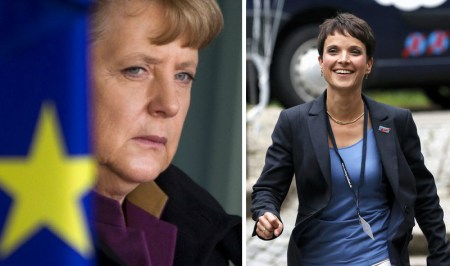
1515In recent regional elections, the CDU party of German Chancellor Angela Merkel (left) suffered heavy losses to the upstart anti-establishment party Alternative for Germany, led by Frauke Petry (right).

The left-leaning German newsmagazine, Der Spiegel, long hostile toward the AfD, acknowledged that the party has achieved a “breakthrough” and called the election result “Black Sunday” for Merkel:

“For a long time she had hoped, despite considerable popular opposition to her refugee policy, to win two chancelleries in the southwest of the country. This has come to nothing. Merkel will now have to live with the accusation that she has allowed the AfD finally to establish itself [as a democratic alternative] to the right of the CDU.”

The leader of the AfD, Frauke Petry, said the fact that her party won big in two states in western Germany — Baden-Württemberg and Rhineland-Palatinate — showed that “the AFD is an all-German party and that citizens in all regions of Germany want a change of politics.” In a Facebook post, she added:

“Yesterday we made a first important step in the right direction to break the cartels of consensus parties. Already, it has been indicated that they [mainstream parties] will not accept the will of the people. We will probably see the most colorful combination of political coalitions, just so they can continue to stay in power and further marginalize voters of the AfD.”

Petry was referring to Merkel’s spokesman, Steffen Seibert, who said that despite her electoral drubbing, Merkel will not reverse course on migration:

“The Federal Government will continue to pursue its refugee policy, with full determination, at home and abroad. At home, we will ease the path to integrate those people who have sought and found protection here. At European level, the goal must be a common, sustainable European solution that leads to a reduction in the number of refugees in all member states of the European Union.”

The CDU’s general secretary, Peter Tauber, echoed the view that there is no alternative to Merkel’s migration policy: “Considering what we have already achieved, I recommend that we continue on the path we are on.”

Some German commentators have tried to downplay the AfD’s gains by arguing that although Merkel lost the election, she actually won the election because the majority of Germans voted for mainstream parties. Bernd Ulrich, editor of Die Zeit, wrote:

“These three elections, which were in fact a plebiscite on the refugee policy, sent an encouraging message of approval. On average, two-thirds of voters cast ballots for parties that support the relatively liberal refugee policies of Angela Merkel.”

Writing in Der Spiegel, columnist Jakob Augstein argued:

“On Sunday Angela Merkel achieved an unlikely feat: her party was trounced, but her refugee policy was confirmed and strengthened… How did the chancellor do on Election Day? In truth, she has been strengthened. The fact is: a large majority of voters support the chancellor.”

According to Augstein, Merkel is “the right woman in the wrong party” because she has moved the center-right CDU to the left on so many issues, including migration policy, that the party is now virtually indistinguishable from its coalition partner, the center-left Social Democratic Party (SPD). What Augstein failed to mention is that Merkel’s move to the left is responsible for creating a political vacuum to the right of the CDU — a vacuum that is now being filled by the AfD.

Other political and media elites are ramping up a months-long campaign to delegitimize AfD voters as agitators, arsonists, far-right extremists, fascists, Nazis, populists and xenophobes.

German media are also churning out stories — many of which are based on hearsay — aimed at discrediting the AfD. The magazine, Stern, published this headline: “Reports of Nazi Songs at AfD-Election Party.” The Berliner Kurier: “Former Teacher Calls AfD Leader Frauke Petry a Liar.”Die Welt: “AfD Candidate Accused of Running Escort Service.” Berliner Morgenpost: “After AfD Coup, Saxony-Anhalt’s Hoteliers Are Anxious.” Stern: “AfD and Donald Trump: Hate is the Main Issue.” Die Zeit: “AfD Principles: Not So Important.”

On Election Day, Die Zeit ridiculed the AfD’s 70-point political platform by using the following bullet points:

“More popular referendums, more monitoring of citizens, stiffer penalties for criminals, dissolve the EU, shrink the state, lower taxes, cut social spending, put women back in the kitchen, ban employment quotas for women, make it harder to file for divorce, abolish abortion, close borders, harass Muslims, ruin the climate, expand nuclear power, expand the military, more private weapons, etc.”

Taxpayer-funded ZDF public television broadcast an interview with Thomas Kliche, a German psychologist, who compared AfD voters to “children who are stubborn and unreasonable.” The only way to deal with such people, he said, is “just have patience, ignore the stupidity, and confront it with rationalism.”

According to Kliche, AfD voters are suffering from “macro-social stress” induced by globalization (i.e., mass migration):

“People react with various forms of shock management. This begins with retrograde, regressive, childish fantasies that everything can be as it was before. Some believe that by shouting ‘We are the People!’ [the main slogan of anti-government demonstrators in East Germany in 1989-1990, reminding their leaders that Germany should be ruled by the people, not by an undemocratic party claiming to represent them], the migrants will disappear…. They have no solutions, just fantasies. Building a fence — this is a fantasy. Separate yourself from the world — that is a fantasy.”

Meanwhile, Vice Chancellor Sigmar Gabriel has called on German intelligence to begin monitoring the AfD, presumably in an effort to silence critics of the government’s migration policy. Gabriel — who leads the SPD, which also suffered significant losses on March 13 — has called the AfD a party of “right-wing extremists” who “use the language of the Nazis.” At the same time, Gabriel has called for Germany to take in even more migrants by airlifting them into the country directly from the Middle East.

By contrast, Horst Seehofer, the head of the Christian Socialist Union (CSU), the CDU’s sister party in Bavaria, said the rise of the AfD amounts to a “tectonic shift in the political landscape of Germany.” He warned that tectonic shifts trigger earthquakes that cause irreversible changes. Seehofer demanded that Merkel reverse course: “It cannot be that after such an election result, the answer to the electorate is: everything will go on as before.”

CSU politician Hans-Peter Uhl summed it up this way: “I expect the chancellor clearly to admit: ‘Yes, we have understood. We are going to return to the voters. Politics must move toward the voter, not the other way around. This is called democracy.'”

Merkel has not said if she plans to run for a fourth term in 2017.

Turkish Gov’t Bans Int’l Women’s Day March Due to ‘Security’

March 7, 2016

Turkish Gov’t Bans Int’l Women’s Day March Due to ‘Security,’ Clarion Project, Meora Svorsly, March 7, 2016

TUrkey-Womens-Day-Protesters-HPTurkish women defying a ban on marching for International Women’s Day are met by police. (Photo: Video screenshot)

Turkish women, defying a ban issued by Istanbul’s governor prohibiting demonstrations marking International Women’s Day demonstrations, took to the streets en masse to call attention to the challenges faced by women in Turkey.

The demonstrations, three days ahead of the official March 8 commemoration, were met by a brutal police force, which fired rubber bullets into the crowd and shoved and arrested demonstrators.

“We have always said that we would never leave the streets for the March 8 demonstration, and we never will. Neither the police nor the government can stop us,” protester Guris Ozen said, speaking to told Reuters. “You see the power of women. We are here despite every obstacle and we will continue to fight for our cause.”

Women also defied the ban in Ankara, where protestors were similarly manhandled by police officers.

The official reason cited for the demonstration ban was security concerns, but with increasing frequency and brutality, Turkey’s Islamist ruling party – under the direction of President (and former prime minister) Recep Tayyip Erdogan – has cracked down on any and all institutions not in line with his Islamist agenda.

In the past, Erdogan has drawn ire for commenting that Islam defines the role of women as motherhood, adding “You cannot explain this to feminists because they don’t accept the concept of motherhood.” In an earlier comment, he told a delegation of women’s rights activists “I don’t believe in equality between men and women.”

His deputy prime minister, Bulent Arinc, was met with derision after saying that women should refrain from laughing in public because it’s immodest.

The current demonstrations sought to call attention to the dire position of women in Turkey, which was ranked 130 out of 145 states in the 2015 Global Gender Gap Index and last in Europe and Central Asia.

In addition, it has been reported that 40% of women in Turkey suffer from violent abuse from a spouse or family member. The report, compiled by Turkey’s Ministry of Family and Social Policy, had been long suppressed.

Violence against women in Turkey has skyrocketed since Erdogan came to power. According to the Turkish Ministry of Justice, from 2003, when Erdogan took power, until 2010, there was a 1,400 percent increase in the number of murders of women.

In 2014, there were at least 287 cases of women being murdered because they asked for a divorce.

According to the U.N., Turkish women are 10 times more likely to be victims of domestic violence than women in any other European country.

Professor Aysel Çelikel, head of the Support for Contemporary Living Association, or ÇYDD, cited the root cause behind the alarming rise in violence against women saying, “Women’s rights are going backward as much as [Islamist] conservatism is increasing in society.”

The sickening footage of women being abused by plain-clothed and uniformed police (see video below) is an indication of how far Turkish women will need to push back to obtain their rights.

In the words of one protester, “You see the power of women. We are here despite every obstacle and we will continue to fight for our cause.”

Turkish women will need to dig in for a long and hard fight.

Watch women defy the ban on demonstrations in honor of International Women’s Day. Note: The plain clothed men in the video footage are almost entirely police. 

https://www.youtube.com/watch?v=Lo66ugJ_2F0

Cleric Sa’d Al-Ateeq Warns Saudis Travelling to the West of the Promiscuity of Modern Girls

March 6, 2016

Cleric Sa’d Al-Ateeq Warns Saudis Travelling to the West of the Promiscuity of Modern Girls, MEMRI-TV, March 6, 2016


https://www.youtube.com/watch?v=AoJxDYXD_3E


According to the blurb following the video,

Saudi cleric Sa’d Al-Ateeq warned young Arab men who travel to the West of the promiscuous ways of Western women. He told a story of a Saudi man who defied his mother when she refused to allow him to travel to the West, and almost fell into a trap set by a Western woman. His comments were made on the Saudi Ahwaz TV on November 23, 2015.

Finland’s Immigration Crisis

March 6, 2016

Finland’s Immigration Crisis, Gatestone InstituteDawid Bunikowski, March 6, 2016

♦ The Tapanila gang-rape shocked the quiet Helsinki suburb, and all of Finland. Many wondered why these second-generation Somalis, citizens of Finland, would carry out such a savage attack.

♦ The rapists were eventually brought to trial. One was sentenced to a year and four months imprisonment, two were given one-year prison sentences and two others were acquitted. Penalties were softened due to the age of the rapists.

♦ “1,010 rapes were reported to the police in 2014, according to the Official Statistics of Finland. The number of suspected immigrants in these cases is about three times higher than of the suspected natives in relation to the population.” – Finland Today.

♦ The criminal law prohibiting blasphemy seem archaic in the eyes of many Finns, especially after the attack on the French satirical magazine, Charlie Hebdo. Unsuccessful attempts to decriminalize blasphemy took place between the 1910s until the 1990s. For many critics the concept of prohibited hate speech is problematic: there is no clear definition, a lapse that leads to confusion and acrimony.

Finland — an open country that prides itself on respecting different ways of life, cultures and religions — is being greatly tested by the wave of Middle Eastern asylum seekers.

Finland is a homogenous country that has roughly 5.5 million inhabitants, about 4% of which are foreign[1]. Twenty years ago, thousands of Somalis immigrated to Finland. In the last decade or so, more international students came to study, and more foreigners came to live and work.

Finnish universities and the academia are of a high level, and most Finns speak some English. But it is not easy for foreigners to find jobs. The barrier is the language: Finnish, like Hungarian, is a part of the Finno-Ugric languages, and difficult to learn.

How many asylum seekers from Syria, Iraq, and Afghanistan arrived in Finland in 2015? The figures keep changing. Authorities estimate between 30,000 and 50,000 — significant numbers in terms of the ratio of migrants to the native population.

Multiculturalism, Migration Policy, and the Law

“Hate speech” (vihapuhe) is defined in Finland as “speech that attacks a person or group on the basis of attributes such as gender, ethnic origin, religion, race, disability, or sexual orientation.” Hate speech is prohibited if such an act is a kind of ethnic agitation. For many critics — including Jussi Kristian Halla-aho, a member of the European Parliament for the True Finns Party — the concept of prohibited hate speech is problematic: there is no clear definition, a lapse that leads to confusion and acrimony.

The criminal law prohibiting blasphemy seem archaic in the eyes of many Finns, especially after the attack on the French satirical magazine, Charlie Hebdo. Many Finns believe that freedom of speech should be absolute. Unsuccessful attempts to decriminalize blasphemy took place between the 1910s until the 1990s. In one extreme case, Halla-aho was fined in 2008 for making links between Islam and paedophilia on his personal blog.

The current immigration situation in Finland is exceptional in nature. Muslims fleeing from the Middle East have opened up a humanitarian crisis the likes of which have not been seen in Europe in a long time. International public opinion and EU policy in the field are being tested. The current flow of Muslims through Sweden to northern Finland is chaotic.

The Ministry of the Interior website states that “Finland is an open and safe country” and explains the country’s policy toward migration:

“The Strategy views migration as an opportunity: mobility creates international networks and brings with it new ways of doing things. Migration will help to answer Finland’s dependency ratio problem, but at the same time, competition for workers between countries will increase. To succeed in this competition, Finland must be able to effectively attract skilled workers who will stay in the country for the longer term. As a responsible member of the international community, Finland is committed to providing international protection to those who need it.”

The ministry also adds that “everyone can find a role to play,” and “diversity is part of everyday life.”

Government officials have taken this strategy personally. Prime Minister Juha Sipilä attracted the attention of the international media last autumn when he offered his second home in Kempele to refugees. He stressed the values of mercy and compassion in the context of immigration.

While the Finnish government can produce liberal policies calling for more openness towards immigration, real politics eventually come into play. When it came time to vote in Brussels on the EU’s quota system for refugees and their relocation in EU countries, Finland abstained.

The ruling center-right political party, the Center Party (Keskusta), is both pragmatic and skeptical towards the European Union. The second most powerful political party, the True Finns (Perussuoamalaiset), is known for its anti-EU, anti-immigration and anti-Muslim rhetoric; its leader, Niko Soini, is the Minister of Foreign Affairs. The political cooperation between the Center Party and the True Finns exemplifies a powerful point on Finnish democracy: consensus is important.

Prior to last year’s election, the True Finns website stated: “Finland is not to make everybody happy in the world. Finland should take care of the Finns first.” The slogan explains much about the seemingly contradictory domestic and international immigration policies of the Finnish government.

The people of Finland have also commented on their government’s stance on immigration by ousting of former Prime Minister Alexander Stubb in the 2015 election.[2] The President of the Republic, Sauli Väinämö Niinistö, said in February 2016 that international commitments are treated too seriously, and that Finland does not the control migration flows. Niinistö’s comments were deemed politically incorrect and censored from public television for two days.

The Rape Problem

With all of Finland’s talk of multiculturalism and immigration, new narratives about the corrosive effects of both multiculturalism and the wave of asylum seekers have surfaced in the media, shocking both the government and the public. News stories discuss the increase in unemployment, the mounting cost of social benefits during the decline of welfare state, problems in educating foreigners, and issues of assimilation with the majority culture, which respects Finnish values and a secular, liberal and open society — all different from traditional Muslim values.

In Finland, more and more cases of Finnish girls and women being raped by asylum seekers are being widely publicized. Much of Finnish society seems shocked, embarrassed and angry because of the increase in rapes perpetrated by asylum seekers. These crimes have provoked many nationalists, and led to the establishment of a paramilitary movement known as the Soldiers of Odin. Members of the movement view themselves as Finnish patriots, roaming the streets of Finland, protecting against Muslim immigrant offenders.

The Soldiers of Odin are accused of being far-right and may de facto be related to previous skinhead movements from the 1990s. Their uniform is all black attire and their symbol makes reference to the ancient Viking god, Odin.

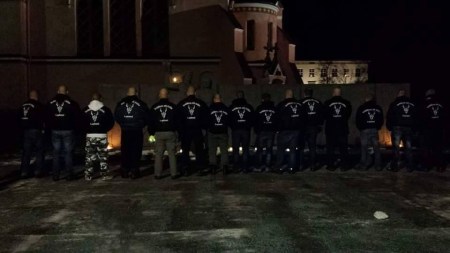
1497 (1)Members of the paramilitary movement known as the Soldiers of Odin view themselves as Finnish patriots, roaming the streets of Finland, protecting against Muslim immigrant offenders. Critics accuse them of being far-right, and they may de facto be related to previous skinhead movements from the 1990s.

The Tapanila Rape

On March 9, 2015, five males gang-raped a young Finnish woman near the Tapanila railway station. The rapists were of Somali heritage and between the ages of 15-18. According to reports, the Somalis boarded the same train as the woman and began harassing her. They followed her off the train and, under cover of darkness, brutally raped her in a nearby park. They were immediately caught.

The Tapanila rape shocked the quiet suburb, which lies on the outskirts of Helsinki, and all of Finland too. Many were left wondering why these second-generation Somali citizens of Finland would carry out such a savage attack.

When news of the attack first came to light, it was published by a far-right website, and many in Finland claimed it was a false report. However, authorities soon confirmed that the rape occurred, and uproar ensued.

According to an article published by Finland Today, the Somali community feared that its members would be unfairly labelled as criminals, and racist attacks would increase. However, the article also noted that

“1,010 rapes were reported to the police in 2014, according to the Official Statistics of Finland. The number of suspected immigrants in these cases is about three times higher than of the suspected natives in relation to the population. There is no unambiguous answer to why this is the case and is yet to be researched.”

The rapists were eventually brought to trial. One was sentenced to a year and four months imprisonment, two were given one-year prison sentences and two others were acquitted. Penalties were softened due to the age of the rapists. Prosecutor Eija Velitski called the sentencing “embarrassing.” The social impact of the attack spread far and wide.

The Kempele Rape

A second attack, the so-called Kempele rape, was met with a reaction by the prime minister himself. Kempele is a small town of roughly 15,000 inhabitants, located near Oulu. It is more famously known for its innovative entrepreneurs and high levels of overall satisfaction and happiness of its residents.

On the evening of November 23, 2015, a 14-year-old girl was walking home in Kempele, when a 17-year-old immigrant from Afghanistan attacked and raped her. She was later found by locals walking through the area.

A police dog led authorities to a nearby refugee center for underage asylum seekers. “The police dog patrol followed the tracks of the suspects, which led to an apartment. From the apartment, the police caught two men who are now suspected of aggravated statutory rape and aggravated child sexual abuse,” the police said in a statement. Police could not immediately interrogate the suspects because a qualified interpreter was unavailable. The 17-year-old denied any involvement in the attack, and the second suspect was eventually freed.

The Kempele rape caused outrage in Finland. Seppo Kolehmainen, the National Police Commissioner, admitted after the attack that Finnish authorities had previously received reports of disturbances, physical altercations, thefts and inappropriate treatment of women from in and around the reception center.

The Soldiers of Odin

The Tapanila and Kempele rape cases became fertile ground for Finnish nationalists. According to their Finnish Facebook page (their website has been taken down), the Soldiers of Odin blame “Islamist intruders” for the “uncertainty, lack of safety and crime in Finland.” The nationalist movement claims that the police have lost control and keeping order on the streets is now up to them. They say that preventing Muslim immigrants from committing crimes, especially rape, is one of their main priorities.

The Soldiers of Odin recently expanded their patrols to the city of Joensuu, in Eastern Finland. Paradoxically, the National Police Commissioner expressed his support for this type of self-organized behavior by the Finnish people. Some liberal Finns have accused the commissioner of racism and have demanded his dismissal.

Next for Finland?

Finland is a peaceful society, and many Finns are afraid of the consequences of the latest wave of immigration. However, due to political correctness and their own national character, most Finns abstain from openly expressing their concerns. But now the curtain of silence and political correctness has been fractured.

Finnish culture, law and policy encourage all people to live together despite cultural or ethnic difficulties. However, this can only go so far. Finns are now demanding action. The government must “do something” to show that Finland is still safe and to limit immigration.

________________________

[1] There is also a minority of the Swedish-speaking Finns (about 5% of the population), as well as a Russian minority (about 1.5%). For five centuries, Finland had been occupied by Sweden (by 1809). Later, it was a part of the Russian Empire (until 1917).

[2] The victory of two EU-skeptic parties over the EU-enthusiastic and pro-immigrant Kokoomus Party says much about the feelings of injustice felt by the Finnish public. But while Stubb’s Kokoomus joined the governmental coalition with Soini and Sipilä, its position is weak. Today, the Finnish government is at a crossroads. Tensions are running high and beginning slowly to fracture the nationalists, led by Soini’s party.

Germany: Migrant Rape Crisis Worsens

March 5, 2016

Germany: Migrant Rape Crisis Worsens, Gatestone Institute, Soeren Kernn, March 5, 2016

♦ Sexual violence in Germany has skyrocketed since Angela Merkel allowed more than one million mostly male migrants from Africa, Asia and the Middle East into the country. The crimes are being downplayed by the authorities, apparently to avoid fueling anti-immigration sentiments.<

♦ “The moment they [male migrants] see a young woman wearing a skirt or any type of loose clothing, they believe they have a free pass.” — Restaurant owner at a mall in Kiel.

♦ “Every police officer knows he has to meet a particular political expectation. It is better to keep quiet [about migrant crime] because you cannot go wrong.” — Rainer Wendt, the head of the German police union.

♦ Police are warning about a potential breakdown of public order this summer, when women who are lightly dressed are confronted by young male migrants.

♦ Jakob Augstein, an influential columnist for the magazine Der Spiegel, says that Germans worried about migrant crimes are motivated by racism. His views shed light on the worldview of German multiculturalism: Migrants who assault German women and children are simply rebelling against German power structures. Germans who criticize such assaults are racists.

♦ Police in Cologne received more than 1,000 complaints from women, including 454 reports of sexual assaults, related to New Year’s Eve. Police in Hamburg received complaints from 351 women, including 218 reports of sexual assault that took place on the same evening.

A mob of asylum seekers from Afghanistan assaulted three teenage girls at a shopping center in the northern German city of Kiel. The attack — which occurred over two-hours on the evening of February 25, and mirrored the mass assaults of German women in Cologne on New Year’s Eve — shows, once again, that public spaces in Germany are becoming increasingly perilous for women and children.

Police reports show that sexual violence in Germany has skyrocketed since Chancellor Angela Merkel allowed more than one million mostly male migrants from Africa, Asia and the Middle East into the country. But the crimes are being played down by German authorities, apparently to avoid fueling anti-immigration sentiments.

Police in Kiel say the assault began at around 5:30 pm, when two Afghan males (aged 19 and 26) began stalking and photographing three girls (aged 15, 16 and 17) at a food court in the Sophienhof, a large shopping center near the city’s central train station.

After posting photographs of the girls on social media, the two men were quickly joined by at least 30 other migrants who began collectively to harass the girls in a Muslim “rape game” known in Arabic as “taharrush” (al-taharrush al-jinsi, Arabic for “sexual harassment”).

When police arrived, the migrants, rather than running way, began verbally and physically abusing the officers, some of whom were injured. It took police two hours to restore order. The initial two perpetrators, asylum seekers from Afghanistan, were arrested; the other migrants involved in the incident remain at large.

At a news conference on February 27, police spokesman Oliver Pohl revealed that more women are now coming forward to report similar experiences at the Sophienhof.

The owner of a restaurant at the mall said:

“Groups of young men gather at the Sophienhof every evening. What they do here is unacceptable. The moment they see a young woman wearing a skirt or any type of loose clothing, they believe they have a free pass. It is about time migrants are made to understand: things in Germany function differently than in their home countries.”

In an interview with Kieler Nachrichten, the local leader of the Free Democrats (FDP), Wolfgang Kubicki, expressed dismay at the deteriorating security situation in Kiel:

“It cannot be that girls and women, as well as their parents or spouses, should be afraid in public spaces. People are asking: If you are no longer safe in Sophienhof, where then?

“The perpetrators must be brought to justice. We must not create the impression that perpetrators will go unpunished for such assaults. … Turning a blind eye to such incidents is the opposite of integration and ultimately leads to the creation of parallel societies.

“It starts with small things. Time and again I keep hearing from the police how disrespectful young migrants are towards the officers. We have to support our security forces and reverse the loss of confidence in the police and judiciary. Otherwise we risk citizens taking the law into their own hands. I do not want to see vigilantes patrolling our streets.”

Kubicki was referring to revelations that politicians in Kiel ordered the city police to overlook many of the crimes perpetrated by migrants. A document leaked to the newspaper Bild in late January showed that the orders were given in October 2015, when more than 10,000 migrants were entering Germany each day. According to Bild, police in North Rhine-Westphalia and Lower Saxony have also been instructed to be lenient to criminal migrants.

Meanwhile, the raping and assaulting of German women and children by migrants and refugees — German police often refer to them by using politically correct euphemisms such as “southerners” (Südländer), men with “dark skin” (dunkelhäutig, dunklere Gesichtsfarbe, dunklem Hauttyp) or a combination of the two: “southern skin color” (südländische Hautfarbe) — continues apace (See Appendix below).

1496Left: At least 30 male migrants assaulted three girls (aged 15, 16 and 17) at the Sophienhof mall in Kiel, Germany, on February 25. Only two of the men were arrested by police. Right: In the first two months of this year alone, there have been dozens of reported cases of migrants sexually assaulting women and children at public swimming pools across Germany. In some areas, authorities have distributed cartoon guides, to “educate” migrants that sexual assault is not acceptable.

Reliable statistics on sexual crimes committed by migrants are notoriously elusive. German authorities have repeatedly been accused of underreporting the true scale of the crime problem in the country. For example, up to 90% of the sex crimes committed in Germany in 2014 do not appear in the official statistics, according to André Schulz, the head of the Association of Criminal Police (Bund Deutscher Kriminalbeamter, BDK).

On February 25, the newspaper, Die Welt, reported that authorities in the German state of Hesse were suppressing information about migrant-related crimes, ostensibly due to a “lack of public interest.”

On January 24, Die Welt reported that the suppression of data about migrant criminality is a “Germany-wide phenomenon.” According to Rainer Wendt, the head of the German police union (Deutschen Polizeigewerkschaft, DPolG), “Every police officer knows he has to meet a particular political expectation. It is better to keep quiet [about migrant crime] because you cannot go wrong.”

On January 22, the newsmagazine Focus reported that the Federal Anti-Discrimination Agency (Antidiskriminierungsstelle des Bundes, ADS) put pressure on police in North Rhine-Westphalia (NRW) to remove a reference to “North African criminal groups” in a press release. According to Focus, the ADS wrote: “There is a danger that people from these countries are placed under a general suspicion. We encourage you to delete the reference to the North African origin from the press release.” NRW Police later removed the offending words because “it could not be excluded that our formulation in the press release could be misunderstood as a discriminatory statement.” Interestingly, the original article by Focus has since been removed from the magazine’s webpage.

Some German commentators are downplaying or rationalizing the growing sexual violence against women and children. According to Jakob Augstein, an influential columnist for the newsmagazine Der Spiegel, Germans worried about migrant crimes are presumably motivated by deep-seated racism.

Shortly after the attacks in Cologne on New Year’s Eve, Augstein ridiculed the idea that Muslim migrants were targeting German women. On his Facebook page, he wrote:

“We are so racist. Everyone immediately wanted to believe that 1,000 North Africans were committing mischief. One thousand: this is a fairy tale figure. Just like the three golden hairs of the devil. Or the seven dwarfs. Or the thirteenth fairy.

“One thousand Tunisians who attacked ‘our’ women. That is just what we needed. The foreigner and his menacing sexuality — this is the oldest prejudice of racism.”

Now Augstein says the sexual assaults committed by migrants are a form of social rebellion.

Writing on his Facebook page on February 23, Augstein argued that the true victims in all of this are the migrants, because of their low rank in Germany’s social hierarchy. He wrote:

“The victims of Cologne were inferior to their perpetrators only in the immediate moment of the attacks. Those women were powerless and helpless at the moment they were assaulted and robbed. But before the attacks and after, they were and are superior to their attackers.

“For the victims of Clausnitz [on February 18, an anti-migrant mob tried to block the arrival of 20 asylum seekers into the town] it is different: they were inferior to their attackers before, during and after the incidents. They are always inferior.

“The lawbreaking in Cologne brought a brief rupture in the established hierarchy, a reversal of the true balance of power. The reason is that in this moment, the relationship between victim and perpetrator was reduced to physical strength. In all other respects, the victims of Cologne are superior to their perpetrators: language, nationality, education, social status, wealth, legal certainty, self-confidence. …

“In Clausnitz, the strong subdued the weak. This makes the attack in Clausnitz so repugnant. And — if you really want to draw such comparisons — this gives the attack on Clausnitz a different moral quality than the attack on Cologne.”

Augstein, whose opinions have not been seriously challenged by the mainstream media, sheds light on the upside-down worldview of German multiculturalism: Migrants who assault German women and children are simply rebelling against German power structures. Germans who dare to criticize such assaults are racists.

Meanwhile, on February 24, a court in Cologne handed down the first sentence related to the mayhem in the city on New Year’s Eve, when more than a thousand migrants sexually assaulted hundreds of German women on a public square in front of the Cologne Cathedral. A 23-year-old Moroccan migrant was given a six-month suspended sentence and fined 100 euros ($108) — for stealing a woman’s cellphone. So far no one has been charged for sexual assault.

In an interview with the television program, Kölnische Rundschau, Cologne’s chief of police, Jürgen Mathies, admitted that most of those who committed the assaults will never be brought to justice. He said the surveillance videos are too fuzzy definitively to identify anyone.

Police in Cologne say they have received more than 1,000 complaints from women, including 454 reports of sexual assaults, related to New Year’s Eve. Police in Hamburg say they have received complaints from 351 women, including 218 reports of sexual assault that took place on the same evening.

Police are now warning about a potential breakdown of public order this summer, when women who are lightly dressed are confronted by young male migrants.

Appendix

Sexual Assaults and Rapes by Migrants in Germany, January-February 2016.

Gatestone Institute first reported about Germany’s migrant rape epidemic in September 2015. The problem has now spread to cities and towns in all 16 of Germany’s federal states. Following are a few cases from just the first two months of 2016:

January 1. More than a thousand migrants sexually assaulted hundreds of German women in the cities of Cologne, Hamburg and Stuttgart.

January 4. A group of migrant youths sexually assaulted a handicapped girl in Bielefeld.

January 5. An Afghan migrant attempted to rape a 15-year-old girl in Burghausen.

January 7. A 36-year-old asylum seeker was arrested for raping a 16-year-old boy inside the city hall of Wolfsburg. A “southerner” (südländisch, arabisch) sexually assaulted a 13-year-old girl near a train station in Ellwangen.

January 8. A 17-year-old Syrian migrant exposed himself to women at a swimming pool in St. Ingbert.

January 9. A 48-year-old woman was raped by three migrants in Dresden. The perpetrators have not been arrested. Also on January 9, a 45-year-old woman was sexually assaulted by an “Arab-speaking” man in Gleidingen, a town near Hanover. A group of five North Africans (Algerians, Moroccans) sexually assaulted five women in Oldenburg. Two North African migrants (Libya, Tunisia) sexually assaulted a 31-year-old woman at the main train station in Leipzig. A migrant attempted to rape a 46-year-old woman in Saarbrücken-Altenkessel.

January 10. A group of “southerners” (südländisches Aussehen) sexually assaulted three girls at a public swimming pool in Ansbach. A 21-year-old West African was arrested for raping a 15-year-old girl at a train station in Wuppertal. A 36-year-old Syrian migrant sexually assaulted a 20-year-old woman in Bornhöved. The woman was showing the man an apartment that had been advertised for rent.

January 11. A 35-year-old migrant from Pakistan sexually assaulted a three-year-old girl at a refugee shelter in Kamen. Eight migrants attempted to rape a woman at a grocery store in Ampfing. She defended herself by using pepper spray. A 20-year-old Moroccan assaulted a 24-year-old woman in Frankenberg.

January 12. A “southerner” (südländisch aussehenden) raped a 16-year-old girl in Wuppertal. Two “Arabic speaking” men assaulted a 37-year-old woman in Fröndenberg.

January 13. Four migrants (südländisch aussehen) attempted to rape a 13-year-old girl inGelsenkirchen. Three migrants sexually assaulted a 31-year-old woman in Oldenburg. A migrant attempted to rape a woman at a train station in Altötting. She defended herself by using pepper spray. Three “southerners” (südländischer oder arabischer Herkunft) assaulted a woman in Bad Münstereifel.

January 14. Three migrants (südländische Hautfarbe) sexually assaulted a 47-year-old woman in the Bavarian town of Dingolfing. Three “southerners” (Südländer) assaulted a 22-year-old women on a train in Bremerhaven.

January 15. A 36-year-old migrant sexually assaulted an eight-year-old girl at a public park in Hilden near Solingen. A 31-year-old migrant from Tunisia was arrested for attempting to rape a 30-year-old woman in Chemnitz. A 31-year-old migrant from Morocco appeared in court for raping a 31-year-old woman in Dresden. A migrant sexually assaulted a 42-year-old woman inMainz. A migrant (dunkleren Teint) sexually assaulted a 32-year-old woman in Münchfeld. An African migrant sexually assaulted a 55-year-old woman in Mannheim.

Also on January 15, all male migrants over the age of 18 were banned from a public swimming pool in Bornheim, near Bonn, after assaults against female patrons at the facility. The measure was branded as racist by German media outlets.

January 16. A migrant from Syria sexually assaulted a 12-year-old girl in Mudersbach. A 36-year-old migrant sexually assaulted an eight-year-old girl in Mettmann. A 36-year-old migrant assaulted an 8-year-old girl in Hilden. A 19-year-old migrant from Afghanistan sexually assaulted four girls between the ages of 11 and 13 at an indoor swimming pool in Dresden. The migrant was arrested but then released. A 25-year-old Moroccan migrant assaulted two woman at a grocery store in Zeithain.

January 17. Three “southerners” (Südländer) attempted to rape a young woman in Kiel. Two migrants (19 and 38 years old) sexually assaulted a 21-year-old woman at a restaurant in the main train station in Nuremberg. A 19-year-old Afghan migrant assaulted four girls (aged 11 to 13) at a public swimming pool in Dresden. Migrants invaded female changing rooms at a swimming pool in Burghausen. Two “southerners” (dunklen/südländischen Typ) attempted to rape a 42-year-old woman at a pharmacy in Altötting.

January 18. A 43-year-old Syrian migrant assaulted a 63-year-old woman in Wetzlar. Police say the man also assaulted two other women (aged 62 and 74) in Wetzlar.

January 19. A 17-year-old Eritrean migrant attempted to rape an 18-year-old woman in a parking garage in Bad Oldesloe. After police intervened, the man head-butted an officer, who was hospitalized.

January 20. Migrants invaded female showers and changing rooms at two public swimming pools in Leipzig.

January 21. A “black skinned” (schwarz glänzende Hautfarbe) man attempted to rape a 13-year-old girl in Langenfeld. Two migrants assaulted an 18-year-old woman in Dingolfing.

January 22. A migrant (südländisches Äußeres) attempted to rape a 16-year-old girl in Feuerbach district of Stuttgart, and in downtown Stuttgart, four “Arabic looking” (arabisches Aussehen) men sexually assaulted a 23-year-old woman. Migrants harassed women at public swimming pools in Zwickau.

January 23. Migrants sexually assaulted two 11-year-old girls at a public swimming pool inWilhelmshaven. Two asylum seekers from Afghanistan assaulted two 17-year-old women at a public swimming pool in Straubing. Three 16-year-old migrants from Afghanistan and Syria assaulted two 13-year-old girls at a public swimming pool in Hachenburg.

Also on January 23, a 35-year-old migrant sexually assaulted a woman in a restroom on a train inDüsseldorf. A 22-year-old Syrian migrant exposed himself on a train in Hanover. An 18-year-old Syrian asylum seeker raped a 17-year-old woman in Straubing. Two unidentified men sexually assaulted an 18-year-old woman in Wiesbaden.

January 24. Two men speaking “broken German” attempted to rape a 25-year-old woman in Lehrte as she was walking home from the train station. The men pulled a knife on the woman and ordered her to “spread your legs.”

January 25. A 30-year-old migrant from “North Africa” (nordafrikanischem Erscheinungsbildexposed himself to a 19-year-old woman on a public bus in Marburg, and then to passersby at the main train station.

January 26. A 35-year-old migrant attempted to rape a young girl in Bochum. Two female passersby intervened and called police.

January 27. Two “southerners” (dunklem Teint) sexually assaulted a 15-year-old girl at a bus stop in Überlingen. A 21-year-old asylum seeker assaulted an 18-year-old woman in a female changing room at a fitness studio in Lahr.

January 28. A migrant from Sudan sexually assaulted a female police officer in Hanover as she was attempting to arrest him for theft. Two “underage refugees” (minderjährige Flüchtlingesexually assaulted a 12-year-old girl at a shelter for children in Düsseldorf. It later emerged that one of the perpetrators was a 22-year-old migrant from Iran who claimed he was 16 years old to gain access to the shelter. A 17-year-old Afghan migrant assaulted a 14-year-old girl in Frankenberg. A “southerner” (Südländer) sexually assaulted an 18-year-old woman in Backnang.

January 31. A 30-year-old German, originally from Turkmenistan, raped a seven-year-old girl inKiel. The man kidnapped the girl from a school playground at 11 AM, took her to his apartment and, after abusing her, set her free. It later emerged that the man had been accused of sexually assaulting a five-year-old girl at another kindergarten in Kiel on January 18, but due to insufficient evidence, the public prosecutors failed to pursue the case.

Also on January 31, four unidentified migrants (ausländischem Aussehen) sexually assaulted a 17-year-old woman in Vilshofen. An unidentified “dark skinned” (dunkelhäutig) man assaulted a woman in Villingen. Two North African migrants sexually assaulted two 15-year-old girls inSalzgitter.

February 1. A 40-year-old asylum seeker from Syria kissed a 7-year-old boy at a bus stop inGaildorf.

February 2. Two “dark skinned” (dunklere Gesichtsfarbe) men assaulted a 31-year-old woman, who was nine months pregnant, in the parking lot of a supermarket in Schweinfurt. A 26-year-old migrant using several different identities assaulted three women on a train in Berlin. Two “dark skinned” (dunklem Hauttyp) men assaulted a 14-year-old girl on a school bus in Eslohe.

February 3. Three Afghan migrants sexually assaulted two 14-year-old girls from France at a public swimming pool in Munich. A 16-year-old migrant assaulted a 16-year-old girl at a swimming pool in Heidenheim. An 18-year-old Libyan migrant attempted to rape a 25-year-old woman in Leipzig. A “southern looking man” (südländisch aussehend) exposed himself to passengers on a regional train in Harburg.

February 4. A 29-year-old migrant from Nigeria raped a 21-year-old woman at a carnival celebration in Schloß Holte-Stukenbrock. A 25-year-old asylum seeker from Syria assaulted  two women at the same carnival. More than 20 women were sexually assaulted during carnival celebrations in Cologne. A Syrian migrant sexually assaulted a 49-year-old woman after a carnival in Bad Reichenhall. A 29-year-old migrant assaulted a woman after a carnival in Dinslaken.

Also on February 4, an African migrant (Schwarzafrikaner) assaulted a woman at a supermarket in Lörrach. When police arrived, the man assaulted the officers, who needed backup to subdue him. Police have been unable to determine the man’s identity; he was carrying a fake ID. An Eritrean migrant who assaulted two women in Zeithain was freed after a judge determined the man was drunk when he committed the crimes. A “southerner” (Südländer) assaulted a young woman in Elsfleth.

February 5. Groups of North African migrants assaulted women at carnival celebrations in downtown Cologne. Two migrants sexually assaulted a 16-year-old girl in Straubing. A migrant assaulted a 19-year-old woman in Villingen-Schwenningen. Two “Arabic looking” (arabisch aussehend) men assaulted a 13-year-old girl in Klietz.

February 6. A group of 30 migrants attempted to rape an 18-year-old woman in Mühldorf am Inn, a town in Bavaria. Three Afghan migrants were arrested for sexually assaulting several women at a carnival celebrations on in Laufenburg. A 28-year-old Iraqi migrant assaulted a woman after a carnival in Bocholt. A 24-year-old migrant assaulted two 15-year-old girls at a carnival celebration in Badorf. A 48-year-old Jordanian migrant assaulted a 16-year-old girl at a carnival parade in Frankfurt. “Five or six” migrants assaulted a 25-year-old woman after carnival celebrations in Cologne. Several “foreigners” (Ausländer) assaulted “numerous” women at a carnival in Konstanz.

Also on February 6, a “southerner” (südländisches Aussehen) sexually assaulted a 19-year-old man in Ravensburg. Four “southerners” (südländisches Aussehen) assaulted and robbed two girls (13 and 14 years old) near the main train station in Bochum. A migrant (dunklen Teint) assaulted a woman in Friedrichstadt. Five migrants sexually assaulted an 11-year-old girl at a public swimming pool in Celle.

February 7. A 24-year-old Algerian migrant assaulted two teenage girls at a carnival in Rietberg. Three “Arab looking” (arabisches Aussehen) men sexually assaulted several women at a carnival in Mainz. Two “dark skinned men” (dunkelhäutige Männer) sexually assaulted a 31-year-old woman at a carnival in Gütersloh. Four Afghan migrants were arrested for assaulting two 14-year-old girls at carnival celebrations in Erfurt. Four Afghan migrants sexually assaulted a 17-year-old woman in Heppenheim. Several women were assaulted at a carnival in Hardheim. A 21-year-old Moroccan migrant sexually assaulted a woman at a carnival in Kranenburg. Two “dark skinned” (dunkelhäutig) men assaulted two women at a carnival in Flieden.

Also on February 7, a 17-year-old Afghan migrant sexually assaulted a 12-year-old girl at a public swimming pool in Landshut. A 16-year-old migrant from Afghanistan sexually assaulted several women at Schillerplatz, a large public square in downtown Mainz. A “dark skinned” (dunklem Hauttyp) man sexually assaulted a 17-year-old woman in Backnang. Three “southern looking” (südländischem Aussehen) assaulted a woman in Offenburg. A group of “dark skinned” (dunklen Teint) migrants sexually assaulted a 16-year-old girl in Ochtrup.

Also on February 7, a “dark skinned” (dunkelhäutig) man sexually assaulted a 24-year-old woman in Mühldorf. Five migrants assaulted a 15-year-old girl in Bernburg. A “southerner” (südländisches Aussehen) assaulted a 37-year-old woman on a bus in Bochum. Two “southerners” (zwei Südländer) sexually assaulted an 18-year-old woman on an express train in Stuttgart. A “southerner” (südländisch Aussehen) assaulted a 39-year-old woman near the train station in Dresden. A migrant assaulted a 46-year-old woman in Eppelheim.

February 8. A 35-year-old migrant sexually assaulted a 15-year-old girl at a carnival in Siegburg. Two Moroccans assaulted a 36-year-old woman at a carnival in Brilon. Three migrants assaulted a 49-year-old woman in Andechs.

February 9. North African migrants assaulted a 19-year-old woman during carnival revelry in Opladen, a district of Leverkusen. Several “southerners” (Südländer) assaulted a 23-year-old woman in a supermarket parking lot in Göttingen. Four migrants sexually assaulted three 13-year-old girls at a public swimming pool in Borghorst.

February 11. A 36-year-old asylum seeker raped a 14-year-old girl in Braunschweig.

February 12. A “dark skinned” (dunkle Teint) sexually assaulted a boy at a swimming pool inNordenham. A migrant assaulted a boy at a swimming pool in Nordenham. Three “dark skinned” (dunkle Hautfarbe) men assaulted a 16-year-old girl in Füssen.

February 13. Several migrants assaulted three girls (aged between 10 and 11) at a swimming pool in Norden. A migrant assaulted a 49-year-old woman in a bakery in Gütersloh.

February 14. Two migrants from Iran and Syria assaulted two girls (aged 10 and 11) at a public swimming pool in Dresden. Four migrants assaulted a 19-year-old woman in Duisburg. Migrants assaulted several women at a discotheque in Mengeringhausen.

February 15. A 17-year-old North African assaulted several women at the main train station inBremen. A 23-year-old Algerian migrant assaulted a 14-year-old girl on metro train in Frankfurt. Four “dark skinned” (Dunkelhäutige) men assaulted a 35-year-old woman in Künzelsau.

February 16. An “Arabic looking” man assaulted a 14-year-old girl on a bus in Dörzbach.

February 17. A man with a “dark complexion” (dunklem Hautteint) exposed himself to passersby in the Biebrich district of Wiesbaden. A “14 or 15-year-old” boy with “dark skin” (dunkler Teintexposed himself to several women at a traffic light in Hörstel. Two “southerners” (südländischem Aussehen) assaulted a 25-year-old woman in Dresden.

February 18. Three “southern looking” (südländische Erscheinung) men attempted to rape a woman in Uelzen. At least one of the men was attacked by the woman’s Rottweiler.

February 20. A 34-year-old Iraqi asylum seeker assaulted two girls, aged 13 and 14, at a supermarket in Rotenburg. Two “dark skinned” (dunklen Teint) men speaking broken German raped a 49-year-old woman near a cemetery in Biberach. A 51-year-old Bosnian migrant was arrested for repeatedly raping a 17-year-old woman in the Feuerbach district of Stuttgart. Two “dark brown skinned” males sexually assaulted a 19-year-old woman in Trier. A 28-year-old Afghan migrant attempted to rape a woman in Blankenburg. A “dark skinned” (dunklen Teint) man sexually assaulted a 23-year-old man in Greven.

February 21. Seven migrants from Afghanistan and Iran invaded female changing rooms at a public swimming pool in Aurich. A 35-year-old Syrian migrant assaulted a 14-year-old girl at a pool in Eckernförde. An unidentified migrant raped a 21-year-old woman at the train station inBad Schwartau. A 44-year-old migrant sexually assaulted a 29-year-old female volunteer at a refugee shelter in Großenlüder. A “southerner” (südländisches Aussehen) assaulted a 14-year-girl on a train in Neubrandenburg. Several days later, the same girl was attacked by the same suspect at a playground in the city.

February 22. A man “speaking German with a foreign accent” sexually assaulted a 20-year-old woman in Asperg. A “southerner” (südländischer Typ) assaulted a 16-year-old girl inFeldkirchen. Two “Turkish or Arab” man attempted to rape a 15-year-old girl in Brandenburg.

February 23. A 16-year-old migrant who raped two boys (9 and 11 years of age) in the town ofGlöwen was released from jail. A judge ruled that because the suspect lives with his parents and has no money, he does not pose a flight risk. A 34-year-old Algerian migrant assaulted two women (17 and 22 years of age) at a subway station in Berlin. A migrant touched himself in front of a 19-year-old woman on a public bus in Chemnitz. A migrant touched himself in front of a 21-year-old woman on a subway train in Chemnitz.

February 24. A 31-year-old Nigerian asylum seeker sexually assaulted a 21-year-old woman in a church in Weilheim. Police say the man previously assaulted another woman in the same church. He also assaulted two women in the town hall and another woman at a nursing home. A “southerner” (südländischem Äußeren) assaulted an 18-year-old woman in Kassel.

February 25. A dark skinned (südländische Hautfarbe) man assaulted two girls (13 and 15 years of age) on a city bus in the Mockau-Nord district of Leipzig. An “African” (afrikanischen Typ) man assaulted a 48-year-old woman on a tram in Leipzig.

February 26. Two Afghan migrants were accused of raping a 24-year-old woman in Magdeburg. A 29-year-old man was arrested for assaulting several women at the train station in Mülheim an der Ruhr. A 20-year-old asylum seeker assaulted a 20-year-old woman in Landau.

February 28. Two Afghan migrants (aged 14 and 34) raped two girls (aged 14 and 18) at a public swimming pool in Norderstedt. Two Afghan migrants sexually assaulted a 19-year-old woman in Mannheim. A “southerner” (südländischer Typ) assaulted a 46-year-old woman in front of the city hall in Schwarzenbach. A 19-year-old Algerian migrant assaulted a 21-year-old woman in Hamm.

The Women-Hunt in Germany

March 3, 2016

The Women-Hunt in Germany, Front Page MagazineStephen Brown, March 3, 2016

germany-cologne-train-station-1000-arab-mobs-molest-rape-sexual-assault-women-illustration1

“If a woman gets raped walking in public alone, then she, herself, is at fault. She is only seducing men by her presence. She should have stayed home like a Muslim woman.” – Dr. Abd Al-Aziz Fawzan Al-Fawzan, Professor of Islamic Law, Saudi Arabia.

Many Germans welcomed with open arms the million, mostly male and Muslim, migrants Federal Chancellor Angela Merkel invited into Germany last September. At train stations, they handed out water bottles to the newcomers, while holding signs stating: “Willkommen!” At first, everything was, as the Germans say, “Friede, Freude, Eierkuchen” (“peace, joy and happiness”).

But the good feeling these greeters created, especially among themselves, has somewhat dissipated, primarily due to the increasing number of reported sexual assaults by migrants against women and children. The best known incident was the sexual molestation of hundreds of women in Cologne on New Year’s Eve by about 1,000, mostly North African men that included migrants.

The latest such multicultural enriching incident to create similar outrage occurred last Thursday in Kiel, a northern German city in Schleswig-Holstein, a state bordering Denmark. Three teenage girls, aged 15, 16 and 17, were visiting a central shopping mall, the Sophienhof, in “broad daylight” when two young Afghan asylum seekers, aged 19 and 26, began to follow and film them with their cell phones.

“Evidently, the criminals then posted these films on their social networks with the result that more and more men came to a restaurant area of the Sophienhof in order to persecute, sneer at them and to frighten them,” reported the newspaper, Die Welt.

Like the women in Cologne and those participating in the anti-Morsi demonstrations on Tahrir Square in Egypt in 2013, the three Kiel teenagers were at first probably unaware they were being hunted, and that a pack of hyenas was slowly surrounding them.

In total, between 20 and 30 men of “migration background,” as German papers described them, were involved. Police report there were no acts of sexual violence, but papers state the teenagers were “very hard pressed.”

But if no sexual molestation did occur, it is probably only because it was in the middle of the day, in the middle of a shopping mall. Outside and at night, this story most likely would have had a much sadder and more tragic outcome. As it was, it was reported the girls received psychological counselling after their ordeal.

The teenagers’ torment finally ended when passersby noticed their plight and notified security, who in turn notified police. Police then took four men, including the two Afghans, into custody, but not without difficulties.

“As a consequence (of their arrest), the suspects fought fiercely, also at the police station,” Die Welt reported. “The talk is of massive insults, threats and bodily injuries. At the suspects’ medical examination, the police doctor was also threatened and insulted.”

However, thanks to Germany’s “cuddly” justice system, as law-and-order Germans derisively call it, all suspects were released by the following day. Police are currently evaluating mall security videos to lay charges.

Perhaps the most surprising aspect surrounding this awful incident is that Germans are so surprised.

But why, one wonders, are they so astonished when such occurrences as this one and the mass sexual assault of women in Cologne have been going on around them for years in Sweden, France and England?

In England, Muslim men associated with the rape of hundreds of girls in Rotherham, were recently given heavy prison sentences. And Muslim rape gangs in Sweden have contributed to giving that country the second highest rape rate per capita in the world. Only one African country, Lesotho, has a higher rate.

The whole world also witnessed this tactic of surrounding women by large numbers of men in order to sexually molest and/or rape them in 2011 on Tahrir Square in Egypt during Arab Spring demonstrations. CBS’s Lara Logan was its most famous victim. Part and parcel of the culture, it even has a name: “taharrush gamea.” So if some Muslim men behave like this in their own countries, why wouldn’t they do so in other countries, especially in ones full of infidel women?

The Cologne police chief called “taharrush gamea,” a completely “new phenomenon,” one never encountered before. Besides terrorizing women, since the Cologne event it is responsible for turning many against Merkel’s migrant policy.

Also unsurprisingly, after the Kiel incident became known in the city, the local newspaper, Kieler Nachrichten, reported more women came forward to state they had had “similar experiences” at the Sophienhof. A police spokesman said this is “quite typical for this kind of crime marked by shame.”

The Nachrichten states, however, that the hunting of girls is “just the tip of the iceberg.”

“Business people in Sophienhof report an increasing number of thefts,” the paper reports. “Again and again customers are bothered.”

A mall worker, who emigrated to Germany “decades ago” from the Arab world, said young migrants are at the mall practically every evening and that he can tell by their accent that “they are almost all Syrians.”

“What they do here is not right,” he complained to the Kieler Nachtrichten. “As soon as they see a young woman wearing a skirt or some way or other open clothing, they believe they have a free pass.”

At a neighbouring department store, the situation is perhaps even worse. A store clerk there states they have been “experiencing difficult situations here since the end of last year.”

“Sometimes, young foreigners jostle old people,” she said. “They bother young women…, grab them, smack their behinds. They have also shouted abuse at people and spit at them. When they appear in a group, they display a disrespectful approach to others.”

Due to their understandable fear, many women in Germany have changed their behaviour since last September. Some do not go out alone, or only in a group with female friends, in the evening any more. The risk of harassment, or worse, by migrant “street terrorists,” as they are called in Holland, is deemed too great.

However, when women disappear more and more from public, this will have the negative effect of gradually giving Germany the appearance of an Islamic society. In some Muslim countries, women can only venture outside properly covered and with a male relative. Which could be Germany’s future, if the current trend is not reversed.

And with women becoming more hesitant to venture evenings from their homes because of fear, more and more German public space, also like in Islamic countries, will be left to men. In this case, Muslim men. All of which represents a further Islamisation of German society and another step downwards toward dhimmitude status.

After the tormenting of the three teenaged girls, a female journalist reported that last summer in Kiel people “smiled mildly” at several young, male migrants who were standing at a tennis court near their refugee hostel, watching the girls training there. This was just something new to them, they thought.

“However, there were larger numbers every day,” she related. “They filmed them (the girls) with their cell phones.”

After last week’s incident at the Sophienhof, it is doubtful anyone is smiling any more.

Gay Rape, Masked Men and Sheep in Restaurants

February 27, 2016

Gay Rape, Masked Men and Sheep in Restaurants, Gatestone Institute, Ingrid Carlqvist, February 27, 2016

♦ So far, nine out of ten people seeking asylum in Sweden have not had identification. You can then adapt your background story to increase your chances of being granted asylum.

♦ Stockholm’s Chief Press Officer had written that the police might be perceived as racist, and therefore should not report physical descriptions to the public. Ironically, it is the journalists who have more or less forced the police to stop using descriptions such as skin color – by labeling the police “racist” every time a person of color appears on a wanted list.

♦ “There are those who wish to make this an issue of ethnicity. It is not. It is an issue that concerns culture and values. Our free and open society is founded on personal freedom, Western humanitarianism and Christian ethics. These values must not only be upheld, they must be defended.” — Ebba Busch Thor, leader of the Christian Democrats party, in Svenska Dagbladet

January 4: After an autumn of chaos, when huge numbers of asylum seekers flooded into Sweden, the government was finally forced to implement border controls on its border with Denmark. Now, only those with valid identification documents are allowed to board trains and ferries to Sweden — effectively keeping people who have destroyed their IDs out of the country. How long it will take before most asylum seekers bring identification papers — genuine or fake — remains to be seen. So far, nine out of ten people seeking asylum in Sweden have not had identification. They can then adapt their background stories to increase their chances of being granted asylum.

January 5: The alternative news site Nyheter Idag reported that two 15-year-old boys living at an asylum house for “unaccompanied refugee children,” in the small town of Alvesta, were detained on suspicion of raping a younger boy. When the victim reported the incident, the police were alerted and the 15-year-olds were brought in for questioning. One of them has confessed to some of the accusations.

January 6: In another case of homosexual child-rape, two men who claiming to be 16-years-old were arrested on suspicion of raping a boy at an asylum house for “unaccompanied refugee children” in Uppsala. The rape was discovered when the younger boy visited a hospital, along with his legal guardian. One of the suspected rapists was released after being questioned by police, but is still under suspicion. The other was remanded into custody.

The most publicized rape of a boy so far is now awaiting a verdict from the Court of Appeals. In December 2015, two 16-year-olds were sentenced by the District Court to juvenile detention for eight and ten months, respectively. The sentences stand out as extremely lenient, considering what was done to the 15-year-old victim. All involved parties came from Afghanistan and lived in the same asylum house for “unaccompanied refugee children.” One day, the older boys asked the 15-year-old if he wanted to come to the store with them. On their way back, the older boys pushed the 15-year-old onto a muddy field, hit and kicked him, shoved mud into his mouth, and then raped him — twice. They warned him that if he told anyone, he would lose his “honor.” That night, however, the boy broke down and told the staff at the asylum house what had happened.

January 9: The alternative news site Nyheter Idag revealed that the respected daily newpaperDagens Nyheter had covered up a story about the sexual assaults of girls and women (mainly by Afghan men) at the “We Are Sthlm” music festival in 2014 and 2015 — after knowing about at least one of the incidents for a year and a half. Dagens Nyheter, which routinely brands alternative media sites “hate sites,” hurried to place the blame on the Stockholm Police — who partly accepted it. National Police Chief Dan Eliasson promised to investigate why the information had been kept secret.

January 10: An opinion poll showed that 59% of the Swedes support the border identity checks implemented a week earlier. Even in the southern province of Skåne, where many commuters are affected by trains delayed to and from work in Denmark, the identity checks have a solid approval rate. 62% of the people polled in Skåne said that they thought the border controls were a good thing.

January 11: The total number of asylum seekers to Sweden in 2015 was made public: close to 163,000. The most common nationalities were Afghan, Iraqi and Syrian. Afghan arrivals increased exponentially, especially in the form of “unaccompanied refugee children.” 7,049 “children” sought asylum in Sweden in 2014. In 2015, that number had exploded to an unfathomable 35,369 — 66% of which came from Afghanistan. Sweden has now decided to start age-testing asylum seekers claiming to be children. Until now, the “child’s” word has been taken at face value. Officials at the Immigration Service were even instructed not to question anyone who appears to be under the age of 40.

January 12: Rumors flew among liberal Swedish editorial writers that it was, in fact, Russian president Vladimir Putin behind Nyheter Idag’s big revelation about the sexual attacks at the music festival in Stockholm. Isobel Hadley-Kamptz, a former employee of the newspaper accused of the cover-up (Dagens Nyheter), tweeted:

“We know that Russia is actively working to spread disinformation in other countries to lower cohesion and trust. We also know that the populist right-wing campaign is operating on the thesis that society is not to be trusted (especially not the media). And yet, when a populist right-wing site with clear connections to Putin starts a campaign against DN [Dagens Nyheter] and the media, reasonable people go along with it?”

The idea of Putin’s supposed involvement in the Swedish media business was apparently not considered strange by either Dagens Nyheter’s editor-in-chief, Peter Wolodarski, or the prominent columnist, Andreas Ekström, of the respected daily newspaper Sydsvenskan, who both lent their support to the claim that Putin is a puppeteer of the Swedish media.

January 12: Middle-aged men pretending to be teenagers have the right to round-the-clock care in Sweden. The cost is astronomical, but never questioned. If you are 103 years old and Swedish, however, you do not have the same right. A woman recently learned this when she asked to be moved into a nursing home. She suffers from heart problems, angina and dizzy spells, and she has a pacemaker. She uses a walker, but because of the dizziness, her balance is off and she frequently falls. When home-care service helpers come in the evenings she feels uneasy: the caregivers are mostly complete strangers to her. But the municipality did not feel that these ailments were enough to allow her into a home with constant supervision. The 103-year-old woman had to sue the municipality in an Administrative Court, where she finally received a favorable verdict.

January 12: Another cherished myth turned out to be true: the one about police covering up crimes committed by immigrants. The Swedish police, when trying to track down criminals, have explicit instructions not to include descriptions of suspects which could be construed as “racist.”Svenska Dagbladet broke the story after a confidential letter was leaked to the newspaper. The letter had apparently gone out to all police personnel in September 2015. Stockholm’s Chief Press Officer had written that the police might be perceived as racist, and therefore should not report physical descriptions to the public. Ironically, it is journalists who have more or less forced the police to stop using descriptions such as skin color, by labeling the police “racist” every time a person of color appears on a wanted list.

January 13: The leader of the Christian Democrat Party (Kristdemokraterna), Ebba Busch Thor, wants to deport asylum seeker who are sex offenders — even if they have grounds to be granted asylum. In an opinion piece in the conservative daily newspaper Svenska Dagbladet, she wrote:

“If asylum seekers to Sweden commit sex crimes, they should have their asylum application rejected and be swiftly dispatched out of the country. Even for people with residence permits, deportation should be a much more common legal effect.

“There are those who wish to make this an issue of ethnicity. It is not. It is an issue that concerns culture and values. Our free and open society is founded on personal freedom, Western humanism and Christian ethics. These values must not only be upheld, they must be defended.”

January 14: An 18-year-old was indicted for a hand grenade attack against a police van in the Stockholm suburb of Tumba last year. He was charged with attempted murder and various other crimes: two aggravated robberies, weapons offenses, harboring a criminal, and one mugging.

1262 (2)On January 14, an 18-year-old was indicted for a hand grenade attack against police in Stockholm last year. Left: A police van is riddled with shrapnel (left) from the hand grenade attack. The four policemen in the vehicle at the time could have been killed if the van had not been armored. At right, the Malmö police bomb squad disarms a hand grenade found in Landskrona, on September 22.

January 16: The issue of possible media cover-ups of important news in Sweden kept engaging people. “The idea that the media covers things up,” stated Jesper Strömbäck, a professor of media and communication studies, “is reminiscent of a conspiracy theory… To deselect, sometimes, certain information is about news values.”

Strömbäck’s statement led columnist Sakine Madon to ask her colleagues on Facebook and Twitter if they had ever been asked to tone down or avoid topics that could “benefit the [immigration-critical party] Sweden Democrats”? One experienced journalist replied that at several news organizations, there had been an unspoken policy not to favor the Sweden Democrats and thus contribute to “xenophobia.”

But one does not reveal editorial secrets and get away scot-free. Ms. Madon had to endure a wave of harsh, and mostly unfair, criticism. She wrote in response:

“Instead of engaging in this childish mudslinging, journalists should ask themselves questions such as: What do we do about this problem? Where do we draw the line between activism and journalism? Should we be openly opposed to SD [Sweden Democrats] , or should we stick to being neutral?”

January 18: Two men were indicted for animal cruelty, after they had slaughtered sheep according to halal slaughter [permitted Islamic method of animal slaughter] at a pizzeria in Falkenberg. Halal slaughter does not allow for stunning the animal, and is illegal in Sweden, so the men tried to sneak the two sheep into the restaurant. They were, however, observed by a witness. When the police arrived, the sheep were already dead and lying on the concrete floor in a pool of blood.

January 18: The number of sexual assaults in public bathhouses skyrocketed in January. Newspapers were filled with stories about “cultural clashes” in bathhouses. Distressed bathhouse staff members called for adults to take responsibility for the “unaccompanied refugee boys” who grope girls. On this particular day, an asylum seeking 16-year-old was arrested by the police when he, along with a gang of other immigrant youths, molested a 15-year-old Swedish girl. “At some point he tried to run his fingers under the bottom of her bathing suit. The youths also touched her breasts over the bathing suit and grabbed her legs,” the county police officer in charge, Kenneth Sundin, told the local daily newspaper Upsala Nya Tidning.

January 18: Female bus drivers in Lessebo felt they had no choice but to call in sick after being harassed by newly-arrived migrants. The altercations have mostly been about migrants trying to use invalid tickets, and not accepting the driver’s refusal to let them on board without proper travel documents. Evenings and nights have been particularly troublesome. According to one bus operator, the problems could have been avoided “if the Immigration Service staff had handed out written information in several languages that explained to the newly arrived immigrants what the rules are.” Some drivers, to avoid trouble, simply let the migrants do as they pleased. One father, for example, demanded that as his wife had an appointment to visit a prenatal care facility, his whole family be allowed to travel for free. The driver was told to shut up, and finally gave in and let them ride the bus for free.

January 18: The National Alliance for Sexual Enlightenment (Riksförbundet för sexuell upplysning), RFSU, demanded mandatory sex education for all “unaccompanied refugee children.” However, the Alliance did not want just any old dusty sex education — it demanded that the classes should be conducted from a “norm-critical gender perspective.”

After the recent reports about sexual assaults against women in Stockholm, Kalmar, Cologne and other places, RFSU said it felt that the time was right for young men from highly patriarchal societies to become “norm-critical.”

In an op-ed, RFSU wrote: “Sex education built on a gender conscious and norm critical foundation has turned out to be a key factor not just to strengthen the youths’ health, but also to counteract gender based violence. This is true of all young people, regardless of background. It is a right and a possibility that Sweden must not neglect.”

January 19: The huge influx of young men to Sweden has given the country a skewed gender balance that is quite unsettling, according to Professor Valerie M. Hudson, of the Program on Women, Peace and Security at Texas A&M University. In the Swedish daily Göteborgs-Posten, she wrote: “My research shows that there are several negative consequences to society when imbalance in the gender distribution increases, something that Sweden needs to have a serious discussion about.”

The imbalance is overwhelmingly due to immigration. The extremely large migration to Sweden in 2015, in which 71% of the immigrants were males, has increased the imbalance in gender distribution significantly. “From official immigration statistics,” she went on, “one can conclude that at the end of 2015 there were 123 16-17-year-old boys for every 100 girls in the same age span.” Comparatively, China, which has one of the world’s largest imbalances in gender distribution, ‘only’ has 117 boys for every 100 girls in the same age group. “Having studied gender distribution in China and India for 15 years, it is amazing to me that Sweden has a worse imbalance than either of these two countries.”

In the article, Professor Hudson also lists several reasons why gender imbalance is dangerous, and wonders: “How is it possible that Sweden, one of the most acknowledged feminist countries in the world, does not seem to care about such sharp fluctuations in gender distribution?”

January 19: At the school Sjumilaskolan in the Biskopsgården area of Gothenburg, anarchy is said to be prevalent. According to a report from the School Board (Skolinspektionen), the school’s teachers are afraid of their own students. At Sjumilaskolan, about 60 languages are spoken; fewer than a third of the students pass all subjects; violence, threats and abuse are commonplace, and no adults at the school dare put a stop to any of the misconduct. Last semester, shootings occurred in the schoolyard, and now several students say that they do not dare to go to school anymore.

The School Board report states:

“Some teachers have told us that they themselves have been in verbal and physical conflicts with students, and that the teachers are sometimes afraid that students will kill each other. The teachers describe a general anxiety at the school, and also tell us that they feel there is a risk that riots will occur in the high school.”

In November 2015, about a week after the School Board’s inspection, there was indeed a riot at the school, during which students smashed chairs, tables and paintings in one of the classrooms, and the teachers had to call the police to stop the unrest. The School Board now demands that Gothenburg municipality immediately address the problems at Sjumilaskolan. If the problems have not been dealt with by April 29, the municipality will face a 700,000 kronor ($82,000) fine.

January 20: Former terror suspect Mutar Muthanna Majid demanded one million kronor ($117,000) in damages from the Swedish government. According to his lawyer, Peter Ataseven,“He was suspected of very serious criminal activity. But above all, he has suffered from the media coverage, since he was depicted as a terrorist and has had his name and picture publicized.”

What prompted the Security Service to arrest Muthanna Majid on November 18 — why he was suspected of preparing terrorist attacks, raising the threat level in Sweden to a four on a five point scale and unleashing a massive manhunt — is still a mystery. The police at the time seemed confident, and most media outlets published the name and photograph of the suspect. The next evening, November 19, a large police force apprehended Majid at the asylum house in Boden where he lived. He was questioned, but three days later, the District Attorney decided to release him; he was no longer suspected of any wrongdoing.

January 24: The Stockholm police warned that they could no longer cope with the pressure of dealing with the Moroccan street kids running wild in the city. There are hundreds of young men from Morocco and other North African countries staying illegally in Sweden, mainly in Stockholm and Gothenburg.

SVT Nyheter, a public television news program, talked to a police officer who asked to remain anonymous:

“These guys are a giant problem to us. They steal things everywhere and beat up the security guards at the central train station. They grab girls between their legs and slap them when they protest. The police all know about this. The situation is abysmal – I would never let my children go to the train station; no policeman would.”

A few days later, some vigilantes seemed to have decided to “clean up” the streets. According to several media sources, a large gang of masked men at the Stockholm central train station handed out flyers that contained messages along the lines of “enough is enough!” The flyers encouraged people to take the law into their own hands, find any street kids in the area and “give them what they deserve.”

When the incident was widely publicized in the mainstream media, suddenly the street kids were renamed “unaccompanied refugee children.” Strangely, the police have yet to receive a single complaint about abuse from the street kids, and there is a question if any attacks ever took place at all.

January 24: Mauricio Rojas, who for many years was the “integration policy” spokesperson for the Liberals, wrote in a column in Svenska Dagbladet:

“A country once characterized by a remarkable sense of solidarity — all the things the Swedish welfare state represented — has in a couple of decades been transformed into a multi ethnic community, where the bonds of fellowship between people have been significantly weakened.”

Rojas, once an immigrant from Chile to Sweden, had been considered too rough on immigrants; he was therefore outmaneuvered by the Liberals. He left the Parliament — and left Sweden — in the fall of 2008, and moved to Spain. Now and again he makes an appearance in the Swedish immigration debate. Few Swedes would have dared write what he wrote:

“These changes raise concerns for many people and pose important questions about the future towards which we are heading, in terms of national fellowship. We know how things were, but no one knows how they will be, and there are many who feel that Sweden has lost its soul and become a multicultural chaos. That is why nostalgia and a painful sense of alienation are growing in this country, but also a desire to pause, or at least slow down, the speed of transformation.”

January 24: Sweden’s universities and colleges had looked forward to a replenishment of their budgets by a total of 303 million kronor (over $35 million), but the money has been withheld. According to Social Democratic Minister for Higher Education and Research, Helene Hellmark Knutsson, the money will instead go to covering the “hugely increased costs in 2016 due to the large number of people fleeing from war and terror, and seeking asylum in Sweden.”

January 24: Another case of homosexual rape was uncovered at an asylum house, this time in the southern town of Ljungby. The police arrested a 22-year-old migrant, suspected of having molested a 15-year-old boy where they both lived.

January 25: 22-year-old Alexandra Mezher was stabbed to death by one of the residents at the asylum house for “unaccompanied refugee children” where she worked. The killer, Youssaf Khaliif Nuur, claimed to be 15 years old and from Somalia, and as in Sweden no medical age determination is routinely performed of those claiming to be children, the man was placed among teenagers. When the British newspaper, the Daily Mail, covered his detention and made fun of the Swedish authorities’ having accepted his claim of being 15 years old, the Swedish mainstream media labeled the Daily Mail a “hate web site,” much like the alternative Swedish media web sites, Avpixlat and Fria Tider. For some reason, the Daily Mail blocked most of their articles about the case for Swedish readers. Legal reasons were cited, but many speculated that government censorship was involved. In February, when the Immigration Service finally concluded that the suspected killer was not 15 but over 18 years of age, the correction was laconically reported by the Swedish media.

January 26: The Svea Court of Appeals increased the sentence for Congolese immigrant Loran Guy Mogi, who murdered his pregnant girlfriend, Therese Eriksson, in the town of Vårgårda. In the District Court, he was sentenced to 18 years in prison and deportation, but the Court of Appeals increased his sentence to life in prison: “Add to this,” the Court of Appeals wrote, “that (the woman) was pregnant and that the pregnancy was rather far gone, which X (the accused) was well aware of. In the Court of Appeals’ estimation this is a highly aggravating factor, because X by strangling the woman not only killed her, but also a budding life. In light of these facts, the court feels that the penalty value is life in prison.”

Caution – Politically Incorrect | The Vicious Snake

February 27, 2016

The Vicious Snake, Donald Trump via You Tube, January 18, 2016

H/t Puma by Design, February 7, 2016 and 1389 Blog, February 26, 2016. I had missed it. According to Puma by Design, “Donald Trump began reciting the lyrics to a song entitled “The Snake” at his rallies, a few weeks back, as not reported by the mainstream media.’  The video is apparently “going viral” in Europe.- DM)

https://www.youtube.com/watch?v=yeJ-iv3MOTo