Archive for the ‘Iran scam’ category

Iranian Exports to Europe Jump by 63% in November

January 18, 2015

Iranian Exports to Europe Jump by 63% in November, Tasnim News Agency [Iranian], January 18, 2015

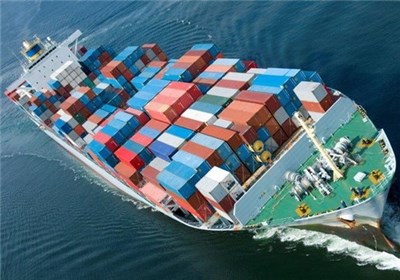
Ship

TEHRAN (Tasnim) – The value of Iran’s exports to the 28 members of the European Union (EU) in November 2014 has witnessed a 63 percent increase, compared to the same month in 2013, data released by the Eurostat showed.

The EU imports from the Islamic Republic in November 2014 reached 134 million euros, showing a 63 percent rise, compared to the same period last year, in which the figure stood at €82 million, according to the Eurostat.

Meanwhile, trade turnover between Iran and the EU member states during November 2014 also jumped by 18 percent hitting €693 million.

The figure in November 2013 had amounted to €585 million, the data indicated.

According to the report, the total value of EU exports to Iran in November 2014 amounted to €559 million, indicating an 11 percent increase compared with November 2013, in which the figure stood at €503 million.

Following the Iranian President Hassan Rouhani’s “constructive interaction” policy with the world since August 2013, a whole host of Western companies have been vying for Iran’s market, particularly after an interim nuclear deal between Tehran and six major world powers.


No Room for Parody

January 18, 2015

No Room for Parody, American ThinkerClarice Feldman, January 18, 2015

I was sound asleep when the phone rang and so I cannot be absolutely sure the conversation was not a dream, but it seemed real enough.

“Hello,” the caller began. “My name is Mr. Mensch, I am president of the Parodists of the World, professional comedy writers, and we want to engage you in a suit against the administration for tortious interference with our livelihood.”

“What exactly are you alleging, I mean specifics?” I responded.

He then launched into a litany of grievances against the administration which the Parodists claimed had made it impossible for them to continue making a living.

“First, our country sent no one to the important anti-terrorism demonstration in Paris, and then there’s Valerie Jarrett calling the march against the slaughter of innocents in Paris a ‘Parade’, as if this were some sort of celebration.‘ Certainly We Would Have Loved To Participate In The Parade,” But We “Got The Substance Right”’.” She said and then proceeded to claim that Holder couldn’t attend because he was in a very important terrorism conference at the time, forgetting that we knew everyone else at the conference made it to the march except Holder. So at the time of the march he was meeting with himself, it seems.”

“Well, that was silly, “I agreed.  “And?” I waited for the next item.

“Then our secretary of state, John Kerry, whose entire life has been fashioned around his self-imagined superior diplomatic skills and international affairs expertise, shows up speaking execrable high school level French, accompanied by  an aging ex-druggie who sings to the grieving French ‘You’ve Got a Friend’”

“I have to agree that was preposterous and really embarrassing. One wag suggested the French ought to respond by having Carly Simon sing, ‘You’re so Vain’ to the President and his Secretary of State. ‘Send in the Clowns’ comes to mind.”

“It’s all of a piece you know. It’s cutting substantially into our employment prospects. Let me read this to you,” Mensch said:

“ ‘A scandal has erupted in the American Consulate in Jerusalem, as three Israeli security guards have quit following a plan to hire 35 armed Palestinian guards from East Jerusalem. The Palestinians have been undergoing weapons training in Jericho in recent days. The decision to hire and arm the Palestinian security personnel was made by the consulate’s chief security officer, Dan Cronin. The plan is to employ them mostly as escorts to American diplomats’ convoys in the West Bank. Their operating base will be at the consulate in the city’s west, as well as six other facilities around the city belonging to the consulate, of which five are in western Jerusalem.

The plan is a breach of a 2011 agreement between the consulate and the Israeli government, which determined that only former IDF combat soldiers hired by the consulate would be allowed to carry weapons. That year, Israel gave the consulate approval to keep about 100 guns for its security guards, but only if they’re American diplomats or Israelis who served in the army. While the consulate employs scores of guards from East Jerusalem, they have not been armed up until now.’”

“Sounds like a bad joke to me,” I replied. “With the world’s attention focused on Moslem extremists. New jihadi groups showing up all through Europe, and Palestinians continuing to attack our ally Israel  and we train and arm Palestinian guards to protect us in Jerusalem in violation of  our agreement with Israel?”

“Even the liberal foreign policy pundit Leslie Gelb is concerned that the administration is absolutely clueless,” sputtered Mensch.

“And he keeps releasing men from Gitmo who then return to fight against us. He released Mullah Abdul Rauf and immediately on his return he’s recruiting for the Taliban in Afghanistan.”

By this time Mensch was on a roll.

“The White House spokesman, Josh Earnest is tripping over his own tongue trying not to say the magic words ’Moslem extremist’. Listen to this circumlocution of his: ‘We want to describe exactly what happened. These are individuals who carried out an act of terrorism. And they later tried to justify that act of terrorism by invoking the religion of Islam and their own deviant view of it.’”

“Then there’s the nonsensical negotiations with Iran,” I interjected.

Mensch sputtered, “Thursday Obama announced he would not tighten sanctions on Iran which is violating the sanctions already in place because if we tighten the reins it will only drive them to war. Think about that! If we impose stricter sanctions on them, they’ll go to war, and if we don’t, they’ll go to war with nuclear weapons.”

“That’s nothing to joke about,” I said.

“Precisely! Obama‘s leaving us nothing to parody. We can’t make a living in comedy. He and his administration are themselves the joke. We might as well just send in news clippings to our editors as try to dream up anything wackier than what they’re doing. And, look, it’s not just foreign affairs. Take the Keystone Pipeline — I mean it should be clear to everyone that we are hurting Iran and Russia financially each time we and others increase the supply of gas and oil on the world market and we need jobs badly, so why is he still sitting on this? George Will captured this bit of nuttiness,” he added and I heard the rustle of newspaper as he read this to me.

Actually, there no longer is any reason to think he has ever reasoned about this. He said he would not make up his mind until the Nebraska Supreme Court ruled. It ruled to permit construction, so he promptly vowed to veto authorization of construction.

The more Obama has talked about Keystone, the less economic understanding he has demonstrated. On Nov. 14, he said Keystone is merely about “providing the ability of Canada to pump their oil, send it through our land, down to the gulf, where it will be sold everywhere else. That doesn’t have an impact on U.S. gas prices.” By Dec. 19, someone with remarkable patience had explained to him that there is a world market price for oil, so he said, correctly, that Keystone would have a “nominal” impact on oil prices but then went on to disparage job creation by Keystone. He said it would create “a couple thousand” jobs (the State Department study says approximately 42,100 “direct, indirect, and induced”) and said, unintelligibly, “Those are temporary jobs until the construction actually happens.” Well.

“I understand your distress,” I sympathized, “but to make your case you have to prove that Obama intended to harm your business, and as Will notes it’s just that he isn’t that smart.”

“C’mon,” the parodist, countered, “Almost every professor in America supported and voted for him. Are you calling them all stupid?”


Obama’s grim warning to Congress: New Iran sanctions will lead to war

January 16, 2015

Obama’s grim warning to Congress: New Iran sanctions will lead to war, Washington Times

(The article does not indicate who Obama thinks might start such a war — Iran, Israel or the United States, for example. — DM)

President Obama warned Congress Friday that new economic sanctions against Iran could lead directly to war, and British Prime Minister David Cameron said he’s personally appealing to top lawmakers to hold off and allow diplomatic negotiations with Iran to play out.

At a news conference in the White House, both leaders pleaded with congressional leaders to wait just a few more months before pursuing new sanctions against Iran. Mr. Cameron said such action would splinter the international community, which right now is unified against Iran’s pursuit of a nuclear weapon.

But Mr. Obama was even more direct, warning the American people that their representatives on Capitol Hill could plunge the U.S. into another war in the Middle East by pushing another round of sanctions.

“I’ve consistently said we leave all options on the table. But Congress should be aware that if this diplomatic solution fails, than the risks and likelihood this ends up at some point a military confrontation is heightened. And Congress will have to own that as well,” the president said. “And we may not be able to rebuild the kind of coalition we need in that context if the world believes we were not serious about negotiations.”

The U.S., Britain and its allies in the so-called P5 plus 1 — Russia, China, France and Germany — in 2013 secured a deal that halted some parts of Iran’s nuclear program in exchange for the lifting of some economic sanctions against the country. The two sides still have not reached a final agreement.

The deadline for a final deal has been extended twice, with the next deadline looming in June.

But some lawmakers believe now is the time to double down on economic sanctions against Iran, even as diplomatic talks continue. There is support in both parties for more sanctions.

While in Washington this week, Mr. Cameron said that he’s personally appealed to members of the Senate to take additional sanctions off the table right now.

“I have contacted a couple of senators this morning and I may speak to one or two more this afternoon — not in any way as the British prime minister to tell the American Senate what it should or shouldn’t do. That wouldn’t be right,” he said. “But simply to make the point that as a country that stands alongside America in these vital negotiations that it is the opinion of the United Kingdom that further sanctions of the further threat of sanctions at this point won’t actually help bring the talks to a successful conclusion and they could fracture the international unity there has been.”


Obama’s ‘Islamic Republic’ Doctrine: Trust in Iran Creates a Dangerous Mess

January 2, 2015

Obama’s ‘Islamic Republic’ Doctrine: Trust in Iran Creates a Dangerous Mess, Algemeiner, Ben Cohen, January 2, 2015

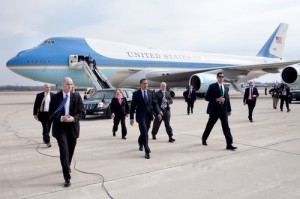
1412799874523-300x199President Barack Obama arrives at Port Columbus International Airport. Photo: White House.

As a senior Iranian military commander said only last week, “There are only two things that would end enmity between us and the United States. Either the U.S. president and EU leaders should convert to Islam and imitate the Supreme Leader, or Iran should abandon Islam and the Islamic revolution.”

***************

JNS.org When Barack Obama began his first term as president almost six years ago, foreign policy chatter was prone to including terms like “regime change” and “axis of evil” in discussions about Iran. But as Obama sought to break decisively with the legacy of his predecessor, George W. Bush, he moved rapidly in the opposite direction, offering an olive branch to the Iranian regime within a few weeks of assuming office.

In March 2009, Obama delivered a message to mark the Persian New Year in which he said, “The United States wants the Islamic Republic of Iran to take its rightful place in the community of nations. You have that right, but it comes with real responsibilities. And that place cannot be reached through terror or arms, but rather through peaceful actions that demonstrate the true greatness of the Iranian people and civilization.”

As a declaration of policy intent, those remarks were refreshingly free of ambiguity. The reference to Iran as an “Islamic Republic” indicated that Washington’s goal from that point forward would not be getting rid of the regime that seized power during the 1979 revolution, but rather stabilizing it and encouraging it to behave more responsibly.

By the close of 2014, though, it was abundantly clear that America’s Iran policy—based on Obama’s “Islamic Republic” doctrine of trust in the regime—was in a dangerous mess. The nuclear negotiations between Iran and Western powers have yielded not a single gain, allowing the Iranians to continue with their uranium enrichment program while the International Atomic Energy Agency frets about the likely prospect that Tehran is continuing to operate clandestine nuclear facilities.

At the same time, the brutal civil war in Syria, which has claimed 200,000 lives and turned more than half the country into refugees, has massively boosted Iran’s regional standing. The Iranian mullahs now stand at the head of a coalition that includes the dictator of Damascus, Bashar al-Assad, the Lebanese terrorist organization Hezbollah, and various Shi’a terror groups from Yemen to Iraq. Yet Western public opinion is continually fed a stream of stories about how “moderate” Iran is under President Hasan Rouhani, and how we have an opportunity here that we cannot afford to lose. When you look at how Iran’s military interventions are destabilizing the region, and when you realize that its human rights record is as lousy as it was last year (and the year before that), one can only conclude that Obama will stick to the policy of turning enemies into friends even when those enemies don’t want to become friends.

Against that backdrop, we come to the president’s recent interview with National Public Radio, in which he restated, when talking about Iran, his conviction that engaging with “rogue regimes” is the right thing to do if it advances American interests.

The question is this: Does Obama still regard Iran as a rogue regime? It would be more accurate to say that he regards it as a regime with rogue elements, but you can only accept that analysis if you share the president’s view that there are moderate parties in Iran whom we can trust. “They have a path to break through that isolation and they should seize it,” Obama declared. “Because if they do, there’s incredible talent and resources and sophistication inside of Iran, and it would be a very successful regional power that was also abiding by international norms and international rules, and that would be good for everybody.”

Everybody? That’s not how the Saudis and the United Arab Emirates, to name just two Gulf states, see it; to the contrary, preventing Iran from becoming a “very successful regional power” is their top priority. Ditto for Egypt, Jordan, Turkey, and a host of other Arab and Muslim states. As for Israel, it is impossible—literally impossible—to imagine how the Jewish state enjoying cordial relations with Iran while the Islamist regime remains in power. Because even if Israel was willing to entertain such an outcome, none of the mullahs—whether we’re talking about Supreme Leader Khamenei or President Rouhani—would do the same.

As for the Iranians “abiding by international norms,” their slippery and dishonest approach to their nuclear negotiations acutely demonstrates what they think of that idea.

It’s therefore tempting to believe that his personal legacy, and not any dispassionate assessment of geopolitics, is what lies at the heart of Obama’s calculations. As Associated Press reporter Matt Lee observed at a White House press briefing, “Since 1979, American foreign policy, with respect to Iran, has been designed to keep it from becoming a successful regional power.” So what has changed? Certainly not the behavior or the stance of the Iranians. As a senior Iranian military commander said only last week, “There are only two things that would end enmity between us and the United States. Either the U.S. president and EU leaders should convert to Islam and imitate the Supreme Leader, or Iran should abandon Islam and the Islamic revolution.”

Yet Obama wants to be remembered as the president who made peace with states that were previously regarded as this country’s implacable enemies. If we can make peace with Cuba, the logic goes, and end a trade embargo that has prevailed for more than 50 years, why can’t we do the same with Iran?

One president’s legacy of peace, however, can quite easily be another president’s inheritance of war and conflict. The present time would have been an ideal opportunity for Obama to get tough with the Iranians, given that oil prices have collapsed and that the Saudis are content for the price to remain at rock bottom if that makes life harder for the Tehran regime. Instead, America is leading the world—from the front, this time—into another series of open-ended negotiations with the mullahs that could well result in the weaponization of Iran’s nuclear program by the time Obama leaves office.

Never did the bitter words of the Hebrew prophet Jeremiah ring truer: “Peace, peace, they say, when there is no peace.”

A Sad State of Affairs: The Kerry Record

January 2, 2015

A Sad State of Affairs: The Kerry Record, World Affairs JournalJoshua Muravchik, November/December, 2014

(Kerry likely agrees with Obama as to his quite foreign foreign policies and, equally likely, we are stuck with both at least until Obama leaves the White House.

Kerry I'm an idiot

The most bothersome current aspects of Obama-Kerry foreign policies are the extent to which they trust Iran and how they deal with it and the P5+1 negotiating group. — DM)

John_Kerry_and_Benjamin_Netanyahu_July_2014 (1)

Although Kerry’s anti-American ideology has moderated to some degree from his fiery days as an antiwar leader, he has misrepresented but never repudiated his past. Especially consistent has been his inclination to see the best in America’s enemies, from Madame Binh to Comandante Ortega to Bashar Assad. Israelis were shocked this summer that Kerry came up with a plan molded by Turkey and Qatar to fit the interests of Hamas at their own expense. Had they known him and his record better, they might not have been.
***************

The Gaza war of July and August 2014 occasioned the sharpest frictions in memory between the United States and Israel, highlighted by a cease-fire proposal offered by Secretary of State John Kerry that Israel’s security cabinet rejected unanimously. Kerry’s plan envisioned a seven-day cease-fire, during which the parties would negotiate “arrangements” to meet each of Hamas’s demands about the free flow of people and goods into Gaza and the payment of salaries of Hamas’s tens of thousands of employees. As for Israel’s demands about destruction of tunnels and rockets and the demilitarization of Gaza, these were not mentioned at all, except in the add-on phrase that the talks would also “address all security issues.”

The document cited the important role to be played by “the United Nations, the Arab League, the European Union, the United States, Turkey, [and] Qatar.” Conspicuous by their absence from this list were Israel, Egypt, and the Palestinian Authority. These three had also not been invited to the Paris meetings where Kerry worked on his ideas with leaders of the countries and bodies mentioned.

Barak Ravid, diplomatic correspondent for the liberal Israeli newspaper Haaretz, wrote that the proposal “might as well have been penned by Khaled Meshal [head of Hamas]. It was everything Hamas could have hoped for.” The centrist Times of Israel’s characteristically circumspect editor, David Horovitz, branded Kerry’s initiative “a betrayal.” And left-leaning author Ari Shavit commented that “Kerry ruined everything. [He] put wind in the sails of Hamas’ political leader Khaled Meshal, allowed the Hamas extremists to overcome the Hamas moderates, and gave renewed life to the weakened regional alliance of the Muslim Brotherhood.”

Turkey and Qatar are the mainstays of that alliance and were chosen by Kerry as his principal interlocutors because they are Hamas’s main backers. This brought protests from the Palestinian Authority, led by President Mahmoud Abbas’s movement, Fatah, the secularist rival to Hamas. That group declared that “whoever wants Qatar and Turkey to represent them can emigrate and go live there. Our only legitimate representative is the PLO.”

The shock of Palestinian and Israeli leaders would have been less, however, if they had been more familiar with the record of John Kerry. Spurning America’s friends in pursuit of deals with their nemeses was perfectly in character for the secretary of state. The hallmark of his career has been to denigrate America itself, while supporting the claims of its enemies.

That career began in 1969, when, months after returning from a tour of duty in Vietnam, Kerry sought and received a military discharge so that he might run for Congress. His campaign as a peace candidate sputtered, but his authenticity as a Vietnam vet established him as a presence in the burgeoning antiwar movement. In May 1970, he traveled to Paris for an unpublicized meeting with Viet Cong representatives, and, perhaps at their suggestion, he joined up upon his return with Vietnam Veterans Against the War. VVAW was headed by Al Hubbard, a former Black Panther. Kerry was instantly given a top role, twinning with Hubbard as the public face of the organization.

At a VVAW protest in Washington, DC, in April 1971, Kerry joined other veterans in throwing away their military medals in front of news cameras. The entire demonstration was punctuated by Kerry’s appearance before the Senate Foreign Relations Committee, where he offered dramatic testimony about American atrocities in Vietnam based on accounts heard at a VVAW inquest a few months earlier. He spoke of veterans who said:

They had personally raped, cut off ears, cut off heads, taped wires from portable telephones to human genitals and turned up the power, cut off limbs, blown up bodies, randomly shot at civilians, razed villages . . . poisoned food stocks, and generally ravaged the countryside.

These acts, Kerry emphasized, “were not isolated incidents but crimes committed on a day-to-day basis with the full awareness of officers at all levels of command.”

When, at the behest of aghast senators, the Naval Criminal Investigative Service conducted a formal inquiry into the stories presented at the VVAW inquest, it reported that many of the VVAW witnesses cited by Kerry refused to cooperate, although promised immunity. Others were clearly crackpots, and several swore, and provided witness corroboration, that they had not participated at the inquest at all and had no idea who had appeared in their names. The entire exercise had been inspired and largely engineered by Mark Lane, whose book on the same subject earlier that year had been panned by New York Times columnist James Reston Jr. as “a hodgepodge of hearsay,” while that paper’s book reviewer, Neil Sheehan, who had reported from Vietnam and would soon break the Pentagon Papers, revealed that some of Lane’s “witnesses” had not served in Vietnam. (The political scientist Guenter Lewy documents these events in his 1978 book America in Vietnam.)

In August 1971, four months after his Senate appearance, Kerry made another trip to Paris, to meet with Madame Nguyen Thi Binh, foreign minister of the Viet Cong, this time in full view, for his first exercise in international diplomacy. He returned touting the “peace plan” of the Viet Cong, explaining: “If the United States were to set a date for withdrawal, the prisoners of war would be returned.” Although he frequently accused American leaders of lying, he took the Communist leaders’ statements at face value, asserting that their peace plan “negates very clearly the argument of the president [Nixon] that we have to maintain a presence in Vietnam to use as a negotiating [chip] for the return of those prisoners.”

Kerry’s dismissal of the statements of US leaders as lies and his credulity toward those of the Vietnamese Communists reflected a broader difference in attitude toward the two sides to the conflict. Ho Chi Minh, who had spent long years as a henchman of Stalin’s, serving the Comintern in several countries, was in Kerry’s admiring eyes “the George Washington of Vietnam” who aimed only “to install the same provisions into the government of Vietnam” that appeared in the American Constitution. America, in contrast, had itself strayed so far from those principles that it needed a “revolution” to restore them.

Kerry’s colleagues in VVAW undoubtedly shared this sentiment, and in November 1971, at a conference of its leadership in Kansas, the group considered just how far down the path of revolution it was willing to go. It debated, although ultimately rejected, a proposal to commence a campaign of terrorist violence and assassination of pro-war US senators. When he ran for president in 2004, Kerry denied he had been present at this conclave, but when FBI files secured by the Los Angeles Times under the Freedom of Information Act placed him there, he retracted that denial in favor of the statement that he had “no personal recollection” of it.

Is this plausible? Gerald Nicosia, author of a highly sympathetic history of the antiwar movement, reported, in May 2004, that “several people at the Kansas City meeting recently said to me or to mutual friends that they had been told by the Kerry campaign not to speak about those events without permission.” Why the urgency to cover up? And how would the campaign know who was there, that is, whose silence to seek, if Kerry had no recollection of the meeting? One of Nicosia’s interviewees, John Musgrave, said “he was asked by Kerry’s veterans coordinator to ‘refresh his memory’ after he told the press Kerry was in Kansas City. Not only is Musgrave outraged that ‘they were trying to make me look like a liar,’ but he also says ‘there’s no way Kerry could have forgotten that meeting—there was too much going on.’”

This puts it mildly: the event was memorably raucous, with debates over the proposals for violence and for napalming the national Christmas tree, furious factional fighting, the discovery of eavesdropping bugs in the building leading to a quick move to another location, and above all an angry showdown between Kerry and Hubbard over revelations that the latter had never been in Vietnam. This particular contretemps was punctuated by Hubbard’s dramatically pulling down his pants to show scars he claimed he sustained in Vietnam. The mayhem culminated in Kerry’s announcing his resignation from the group’s executive. And Kerry had “no personal recollection” of being there?

Although Kerry appeared as a speaker for VVAW for about a year following this resignation, he then faded from national view for a decade, climbing the ladder of local and state politics in Massachusetts before winning election to the US Senate in 1984. The Senate, he later said, “was the right place for me in terms of . . . my passions. The issue of war and peace was on the table again.” What put it on the table were the anti-communist policies of President Ronald Reagan, which Kerry deeply opposed. A year earlier, Reagan had ordered the invasion of Grenada, which Kerry scorned as “a bully’s show of force [that] only served to heighten world tensions and further strain brittle US-Soviet and North-South relations.”

In contrast, Kerry ran on a platform of the Nuclear Freeze, a popular movement opposing US plans to counterbalance a large Soviet nuclear buildup over the previous decade. Kerry made sure to score one hundred percent on a test of candidates’ positions presented by a group called Freeze Voter ’84, and he proposed to cut the defense budget by nearly twenty percent, including “cancellation of twenty-seven weapons systems” and “reductions in eighteen other[s],” according to the Boston Globe. He cited his own work with VVAW as a counterpoint: “We were criticized when we stood up on Vietnam. . . . But we’ve been borne out. We were correct. Sometimes you just have to stand and hold your ground.”

In the Senate, he secured a coveted seat on the Foreign Affairs Committee and turned his attention to the fraught issue of policy toward Central America, a small region that had assumed inordinate geopolitical importance by becoming one of the front lines in the Cold War. A Marxist-Leninist party, the Sandinista National Liberation Front, had seized power in Nicaragua and was aiding likeminded movements in El Salvador and other nearby states while the Reagan administration supported anti-Communist guerrillas inside Nicaragua, the so-called “Contras.”

Kerry lent his name to Medical Aid for El Salvador, which gave non-lethal aid to the Communist side in that civil war. On February 16, 1982, an Associated Press story quoted actor Ed Asner, leader of a Hollywood group that raised much of the funding for this project, as explaining that “medical supplies are to be purchased in Mexico and shipped clandestinely to the Democratic Revolutionary Front in El Salvador.” However, the issue of US aid to El Salvador’s anti-Communist government became overshadowed by debate about aid to the Nicaraguan “Contras.”

As the Senate neared a decisive vote, Kerry and Senator Tom Harkin undertook a dramatic maneuver to try to head off approval of the Reagan administration’s request for Contra funding. They flew to Managua, the Nicaraguan capital, for their own summit meeting with the country’s strongman, “Comandante” Daniel Ortega. The results resembled those of his 1971 meeting with Madame Binh. Ortega handed Kerry a “peace plan” according to which the US would first end all aid to the Contras, and the Sandinistas would then initiate a cease-fire and restore civil liberties. Kerry justified undercutting the US government in this way by faulting Reagan’s failure “to create a climate of trust” with the Sandinistas. He, in contrast, offered them trust in abundance, calling Ortega’s plan “a wonderful opening.” He took to the Senate floor to say, “Here, in writing, is a guarantee of the security interest of the United States.”

A year later, in 1986, in another Senate debate on Contra aid, Kerry voiced one of the odder claims about his Vietnam experience. Warning against the slippery slope of military involvement and against the duplicity of our own government, Kerry delivered a floor speech containing this assertion:

I remember Christmas of 1968, sitting on a gunboat in Cambodia. I remember what it was like to be shot at by Vietnamese and Khmer Rouge and Cambodians, and have the president of the United States telling the American people that I was not there; the troops were not in Cambodia. I have that memory which is seared—seared—in me.

The “seared” part was a nice touch, especially in view of the fact that the whole thing had not happened (although Kerry had been repeating the story since as early as 1979). In the course of Kerry’s 2004 presidential campaign, the Swift Boat Veterans for Truth, former crewmen on the type of vessel on which Kerry served who were angered by his antiwar activities, attacked this claim among other aspects of Kerry’s military history. In this case, however, unlike in response to some points raised by Kerry’s detractors, no shipmate of Kerry’s could be found to corroborate his version. Soon, his spokesmen began to hedge. One aide explained that Kerry’s boat had been “between” Vietnam and Cambodia. But the two countries are contiguous: there is no “between,” so another spokesman backed down further, explaining that Kerry had merely been “near” Cambodia.

Then, Douglas Brinkley, who authored a laudatory history of Kerry’s military service, issued another explanation, apparently at the behest of the campaign. On Christmas 1968, the moment of Kerry’s “seared” memory, he was fifty miles from Cambodia, said Brinkley, but his boat “went into Cambodia waters three or four times in January and February 1969.” Oddly, however, Brinkley’s book, which covered those two months in painstaking detail at a length of nearly one hundred pages, even to the extent of locating the sites of battles, made no mention of Kerry’s having crossed into Cambodia. And the campaign soon pulled the rug from under Brinkley by issuing a new claim, namely, that Kerry’s boat had “on one occasion crossed into Cambodia.” Three of Kerry’s shipmates, two of whom were supporting his campaign, categorically denied even this minimized claim.

In that, they are supported by no less a source than Kerry himself, in the form of a journal he kept while on duty. Substantial passages of it are reproduced in Brinkley’s book, and one of them reads:

The banks of the [Rach Giang Thanh River] whistled by as we churned out mile after mile at full speed. On my left were occasional open fields that allowed us a clear view into Cambodia. At some points, the border was only fifty yards away and it then would meander out to several hundred or even as much as a thousand yards away, always making one wonder what lay on the other side.

He was never to learn the answer because this diary entry was from his final mission.

Kerry was of course right to link Central America to Southeast Asia. They were both nodes in the Cold War, the epic struggle that defined international politics for forty years, including the first two decades of Kerry’s political engagement, from the time he returned from Vietnam in 1969 until the Berlin Wall came down in 1989. Whatever the rights and wrongs of America’s entry into Vietnam, or its actions in Central America or elsewhere, Kerry perverted the basic issue of the Cold War, always viewing America’s actions as bellicose and malign, while casting those of the Communists, like “George Washington” Ho Chi Minh, in the most favorable light.

To many, the Cold War’s benign denouement—the fall of the Wall and the USSR’s disappearance into the ash bin of history—vindicated Reagan’s approach, but Kerry appears to have entertained no second thoughts despite these outcomes. When it came to addressing post–Cold War issues, he remained reflexively averse to the exercise of American power. Kerry had lamented as “not proportional” Reagan’s 1986 bombing of Libyan dictator Muammar el-Qaddafi’s residence in response to a Libyan terror attack on US servicemen in Germany. The Middle East was also the scene of the first military showdown after the Cold War, when Saddam Hussein’s Iraq swallowed whole the neighboring state of Kuwait, in 1990. At the time, Kerry opposed the Bush administration’s request for authorization of military action, saying that those “of the Vietnam generation . . . come to this debate with a measure of distrust [and] a resolve . . . not [to be] misled again.” He concluded his Senate speech by reading a passage from an antiwar novel by the American Communist Dalton Trumbo.

With the Cold War’s end, and America’s demonstration of will and strength in driving Hussein’s forces from Kuwait, the defining issue of the 1990s became the wars of Yugoslavia’s dissolution. Here, the prime issue was whether or not to lift an international arms embargo that rendered Bosnia’s Muslims naked before their predators, the well-armed Serbs. As public opinion reacted to news accounts of the grisly results of this imbalance, the Senate voted to lift the embargo, over the objections of Kerry, who helped to lead the opposition.

With the terrorist attacks of September 11, 2001, the American public was awakened from its post–Cold War indifference toward foreign affairs. A fierce patriotism burst forth, and with it a determination to take down those who had attacked us. Thus, preparing for a 2004 presidential bid, Kerry moved to reconfigure his image. The antiwar veteran was suddenly replaced by the military hero, and the Democratic nominating convention was replete with uniforms and military gestures, highlighted by Kerry’s sharp salute to the assemblage while uttering the words, “reporting for duty.” Already, his rejected service medals had miraculously reappeared mounted and framed on his Senate office wall. Asked how that was possible, as he had been photographed throwing them away, Kerry explained that the medals he tossed were not his own but actually belonged to another veteran.

The dramatic reincarnation did not quite come off, as Kerry was dogged by Vietnam veterans, led by fellow Swift Boat crewmen, still furious at how he had blackened their names. And the awkwardness of his transformation was symbolized by his much-ridiculed explanation of his stance on funding the 2003 US invasion of Iraq: “I actually did vote for the $87 billion before I voted against it.”

In his later years in the Senate, Kerry made the issue of Syria his own. He took several trips to Damascus where, according to a June 2011 account in the Wall Street Journal, he “established something approaching a friendship with [Syrian dictator Bashar] Assad.” When Barack Obama came to office, he made Kerry his point man in efforts to improve US-Syrian relations. Kerry put his endorsement on diplomatic proposals he received in Damascus, including an offer by Assad to engineer a Palestinian unity government embracing Fatah and Hamas. The benefits to the US, not to mention Israel, of such unity were not self-evident, but in any event, talks between the two Palestinian factions were already under way, mediated by Egypt, which was closer to Fatah. Why it would be advantageous to switch the sponsorship to Syria, the ally of Hamas, was hard to grasp. Nonetheless, Kerry saw in Assad’s proposal the prospect of “a major step forward in terms of how you reignite discussions for the two-state solution . . . . Syria indicated to me a willingness to be helpful in that respect.” In all, as the Journal put it, “Kerry . . . became . . . Assad’s champion in the US, urging lawmakers and policymakers to embrace the Syrian leader as a partner in stabilizing the Mideast.”

In sum, although Kerry’s anti-American ideology has moderated to some degree from his fiery days as an antiwar leader, he has misrepresented but never repudiated his past. Especially consistent has been his inclination to see the best in America’s enemies, from Madame Binh to Comandante Ortega to Bashar Assad. Israelis were shocked this summer that Kerry came up with a plan molded by Turkey and Qatar to fit the interests of Hamas at their own expense. Had they known him and his record better, they might not have been.

Thawing U.S. ties: Cuba today, Iran tomorrow?

December 26, 2014

Thawing U.S. ties: Cuba today, Iran tomorrow? Al Arabiya NewsMajid Rafizadeh, December 26, 2014

(Please see also Obama’s Worst Lie About his Dirty Castro Deal is in his First Sentence.

Obama Cuba negotiations

Also, Obama’s need for a legacy consistent with his ideology trumps all else, including Iran’s abysmal human rights record, its theocratic government, its support for terrorism, its hatred for Israel and desire to eliminate her, its duplicity in its P5+1 negotiations and its insistence on getting (or keeping) nukes. True, removal of statutorily based sanctions would require congressional action. However, Obama has little interest in avoiding constitutional irregularities. No congressional approval was granted for the “temporary suspension” of sanctions and laws inconsistent with Obama’s desires can be and are waived. Litigation over the de facto removal of sanctions by executive order would take many years.– DM)

After almost 53 years of Cold War between the U.S. and Cuba, the transformation of ties between these two adversaries has sparked a considerable amount of debate with respect to the normalization of ties with other longstanding rivals. The possibility of resolving other diplomatic imbroglios, specifically the revival of diplomatic ties between the U.S. and Iran is a case that comes to mind.

Some Iranians showed their excitement on Twitter with regards to the Cuban deal. Some showed hope that their government will be next and they could soon see an American embassy in Tehran. However, others thought that an Iran-U.S. deal is an idealistic and unreachable dream.

Indeed, any normalization of diplomatic relationships between the Islamic Republic and the U.S. will likely have significant positive impacts on both nations, leading to a critical strategic and geopolitical shift in the Middle Eastern political chessboard. Currently, both countries have some shared strategic and geopolitical objectives in Iraq and Syria particularly when it comes to fighting ISIS.

A possible Iranian deal will remove the economic sanctions on the Islamic Republic, assisting Tehran to achieve its highest economic potential in exports, imports and wealth. The tourist industry would be revived in Iran, with many European and Americans fond of visiting thousands of years old historical sites in Esfahan Shiraz, Hamadan, and other provinces. Normalization of diplomatic ties will lead to the flow of (primarily) European companies to do business with the Islamic Republic. In addition, as Iranian youth have shown to be in favor of American brands and products, American manufactures will find a share in Iran’s market as well. Further, U.S. airplane companies will begin cooperation with Iranian airlines.

As many people are pondering on the likelihood of a deal similar to the recent Cuba agreement with Iran, the question is whether the executive order to lift the embargo on the Islamic Republic and conducting back channel diplomacy to fully open ties with Tehran is possible?

Iran’s file is more complicated and multilayered

There are some partial similarities between the Obama administration’s method to initiate a deal with Raul Castro’s government and the way it has recently approached the Islamic Republic. The major commonalities are the back channel diplomacy and talks.

Similar to the Cuban deal, the Obama administration has conducted back channel talks with Iranian politicians with respect to Iran’s nuclear program. In addition, President Obama sent a clandestine letter to Iran’s Supreme Leader Ayatollah Ali Khamenei highlighting some of the shared strategic, national and geopolitical interests that both nations have in the Middle East.

Nevertheless, these commonalities in diplomatic approaches have led some scholars, politicians, and policy analysts to jump to the conclusion that the same deal should be applicable to the case of Iran because such an approach was possible with Cuba and the embargo on Cuba was lifted.

But, not too fast.

Iran’s file is much more complicated, multifaceted and multilayered than the Cuban case. While Cuba is a small island close to the state of Florida with a population of approximately 11 million, Iran, with a population of over 80 million, is located in the complex geopolitical chessboard of the Middle East, and entangled among mixture of alliances and enmities in the oil rich region.

Second of all, from Washington’s perspective, Cuba has hardly been a serious threat to American strategic, geopolitical, or economic interests. On the other hand, the Islamic Republic has been a major player in scuttling U.S. foreign policy objectives and opposing its allies (including Israel) in the Middle East.

Third, several crucial regional developments are viewed from the prism of a zero-sum game for both Iranian and American officials. Iranian leaders are less likely to accept any compromises on their top foreign policy priorities, such as: keeping President Bashar al-Assad in power, withdrawing its financial, advisory, intelligence, and military support to the Iraqi and Syrian government, and assisting formidable proxies such as Hezbollah.

Fourth, there was no international consensus on the U.S. embargo and economic sanctions against the Cuban government. As a result, President Obama can issue an executive order to lift the embargo. Many European countries were doing business with the Cuban government and the United Nations repeatedly condemned U.S. sanctions. On the other hand, the four rounds of economic sanctions on Tehran came with the approval of the U.N. Security Council. Unlike Cuba, many regional and global powers are dubious about Iran’s nuclear and regional hegemonic ambitions.

Fifth, several developments in Iran, such as revelations of clandestine nuclear sites, the possibility of testing exploding detonators for nuclear weapons in Parchin military site, and the military dimension of Tehran’s nuclear program, have led to regional and international strain.

Finally, and more fundamentally, unlike Castro, Khamenei has shown no interest in fully normalizing diplomatic ties with the United States. For example, the Obama administration received no positive response from Khamenei through its diplomacy. In addition, there is no official public debate among Iranian politicians, across various spectrums of Iran’s political system, of even allowing the opening of an American embassy in Tehran. The U.S. domestic opposition to normalize ties with Iran, particularly from the Republicans, is much higher in comparison to the Cuban case. Although the Obama administration has taken some back channel steps to negotiate with the Islamic Republic, Iran’s supreme leader has not responded with signs of willingness to normalize relationships and he has been clear in not trusting the “Great Satan. “

The signal that Iranian leaders received from the Cuban deal is not what the Western media depicts- that Iran is optimistic about normalizing ties with the U.S.. The message that Tehran received was that the Islamic Republic has to persist in its policies and that economic sanctions will ultimately fail. As foreign ministry spokeswoman Marzieh Akfham articulated: “The defense by the Cuban government and people of their revolutionary ideals over the past 50 years shows that policies of isolation and sanctions imposed by the major powers against the wishes of independent nations are ineffective.”


Sanction Relief Empowering the Mullahs, Not Citizens

December 26, 2014

Sanction Relief Empowering the Mullahs, Not Citizens, Front Page Magazine, December 26, 2014

(Surprise! And to which P5+1 nations, and to which entities within them, might the benefits of sanctions relief authorizing increased trade between the them and Iran go? — DM)

iran_2677161b-450x350

Four major institutions are benefiting mostly from the economic sanctions relief: Iran’s military-industrial complex, the Office of the Supreme Leader, Ayatollah Ali Khamenei, a few top business figures who are connected with the government, and the Iranian Revolutionary Guard Corps (IRGC), through either legal and illegal imports and exports.

******************

There has always been an argument claiming that economic sanctions normally do not yield any result due to the notion that economic sanctions do not target the ruling elite and governmental official, but the ordinary people. This argument is partially accurate.

Nevertheless, we need to remember that some targeted economic sanctions against the Islamic Republic (particularly the sanctions in oil and gas sectors and financial and bank institutions) did endanger the hold on power of the ruling cleric in Iran, particularly the Supreme Leader, Ayatollah Ali Khamenei. That was the primary reason behind pushing the Iranian politicians to come to the negotiation table in nuclear talks.

On the other hand, the other side of the argument is that if economic sanctions are lifted, the major beneficiaries would be the ordinary people and the civilians. This argument would be accurate if the political and economic system of the given state is democratic, allows open opportunities for all, encourages the private sector, allows transparency, and holds those corrupt officials who commit illegal economic dealings accountable.

The Iranian political and economic system is devoid of the aforementioned standards. In fact, in states which the political system is mainly authoritarian or theocratic, and the economic system is monopolized by few people at top and is state controlled, any increase of wealth or flow of money will inevitably strengthening the ruling elite rather than the ordinary people.

To substantiate this argument, let us take a look on the ground in the Islamic Republic after the sanctions relief.

At the beginning, a majority of Iranian people were hoping that economic sanctions relief would alleviate their suffering, improve their standards of living, and push many families above the poverty line. Almost a year has passed since the Iranian government has been receiving sanctions relief.

After the interim nuclear deal and extension of the negotiations between the six world powers (known as the P5+1: China, France, Germany, Russia, the United Kingdom, and the United States) and the Islamic Republic, the Iranian government had received an estimated $7 billion.  Iran continues to receive approximately $700 million every month under the extension deal.

In addition, there has been some sanction suspension with respects to some of Iran’s major industries, including Iran’s auto sector, gold and precious metals, as well as Iran’s petrochemical exports. The Iranian currency, the rial, has appreciated due to the sanctions relief, Iran’s oil and non-oil exports have increased, its economy is showing signs of stabilization, Tehran’s stock exchange has soared and Iran’s exports and business dealings with several countries have ratcheted up.

The suspension of sanctions has definitely given both psychological and financial support to the Iranian government.  But the real question is how this money is being spent and which institutions benefit primarily from this sanctions relief. Are ordinary people benefiting from these sanctions relief and flow of money?

Nevertheless, some Iranian civilians have begun to believe that even economic sanctions relief or even the lifting of the whole economic sanctions regime from the Iranian government are not going to assist civilians, their financial day-to-day activities, or bring concrete changes on the ground.

Four major institutions are benefiting mostly from the economic sanctions relief: Iran’s military-industrial complex, the Office of the Supreme Leader, Ayatollah Ali Khamenei, a few top business figures who are connected with the government, and the Iranian Revolutionary Guard Corps (IRGC), through either legal and illegal imports and exports.

For example, the IRGC controls and owns a considerable amount of shares in the aforementioned industries which have witnessed sanctions relief. In the petrochemical industry, The IRGC military-industrial complex owns Zagros Petrochemicals; 40% of Pars Petrochemical Company, part of Arak Petrochemicals; 25% of Kermanshah Petrochemicals; as well as 19% of the shares of Maroun Petrochemicals.

This phenomenon of the monopolization of the economy applies in other sectors of Iran’s economy as well.  When it comes to Iran’s economic system, the Supreme Leader and IRGC do have a considerable amount of control and shares in almost all industries including financial institutions and banks, the transportation industry, automobile manufacturing, mining, commerce, and oil and gas sectors.

As a result, these types of sanctions relief will mostly benefit the ruling elite, primarily the Supreme Leader and Iran’s military-industrial complex, IRGC. Iranian people will hardly observe any benefits from this economic sanctions relief or lifting of economic sanctions.

It appears that the easing of sanctions are strengthening the ruling elite without any sign of redistribution of wealth. This is predominantly due to the fact Iran’s economic system is a state and military controlled system, it lacks transparency, as well as the reality that it is crippled with widespread corruption by the ruling elite and few on top.

If the intention of economic sanctions relief is to assist the Iranian people and alleviate their suffering, there ought to be more efficient approaches to develop some types of targeted sanctions relief (for example, being directed at Iran’s educational system, health care, etc.) which aim at empowering Iranian civilians and primarily the middle class.

Iranian Desire to Lift Sanctions Dominates Agenda at Geneva Nuclear Talks

December 17, 2014

Iranian Desire to Lift Sanctions Dominates Agenda at Geneva Nuclear Talks, Algemeiner, Ben Cohen, December 16, 2014

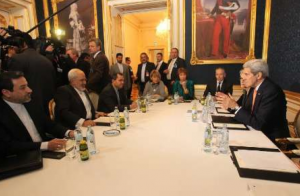
Back where they startedBack where they started: Iranian and American negotiators in Geneva this week. Photo: Twitter

Rouhani’s determination to lift the sanctions has worried some analysts, who posit that the Obama Administration may back down on key verification demands in order to boost the regime’s “moderate” faction.

“[W]e are down to just discussions on how to remove sanctions in exchange for a short term enhanced inspection arrangement that cannot possibly be relied upon to discover undeclared facilities,” Ottolenghi said. “Unfortunately, the Obama Administration is trading long term security for a short term diplomatic victory.”

**************

As nuclear talks between international negotiators and Iranian representatives got underway in Geneva today following two days of direct US-Iranian bilateral negotiations, the Tehran regime again stressed the importance of lifting sanctions against it, leading some analysts to express concern that sanctions relief may be applied even in the absence of a deal that satisfies western powers.

Iranian chief negotiator and deputy foreign minister Abbas Araghchi described the atmosphere at the bilateral negotiations as having “proceeded in a good ambience.” Aragchi stressed that “there were elaborate discussions on all topics, especially sanctions” – the issue that the Iranian regime is most concerned about.

A New York Times report today portrayed the sanctions issue as the dividing line between Iranian conservatives who reject a deal and the putative moderates, led by President Hasan Rouhani, who see a nuclear deal and the lifting of sanctions as the price to pay for Iran’s full participation in international affairs.

“Mr. Rouhani came to office this year promising not just to strike a nuclear deal that would lift economic sanctions but to end Iran’s isolation from the world economy and to promote individual freedoms,” The Timesobserved.

Rouhani’s determination to lift the sanctions has worried some analysts, who posit that the Obama Administration may back down on key verification demands in order to boost the regime’s “moderate” faction.

“Iranian officials have a vested interest in presenting the talks as proceeding according to their list of desiderata,” Michael Doran, a former deputy assistant secretary of defense in the George W. Bush Administration who now works for the Hudson Institute think-tank in Washington DC,  told The Algemeiner. “That said, the Obama administration has shown a disturbing tendency to back away from previous red lines, of which forcing Iran to divulge the possible military dimensions (PMD) of its nuclear program is one of the most important – precisely because it is a prerequisite for effective monitoring.”

Any deal that offered sanctions relief before Iran has satisfied the International Atomic Energy Agency’s (IAEA) concerns about the military aspects of its nuclear program “is a very bad deal,” Doran said.

Emanuele Ottolenghi, a Senior Fellow at the Foundation for Defense of Democracies, told The Algemeinerthat Iran had persuaded the P5+1 – the five permanent members of the UN Security Council plus Germany –”that neither its missile program nor the possible military dimensions of it nuclear research should be part of a final deal.”

“Instead, we are down to just discussions on how to remove sanctions in exchange for a short term enhanced inspection arrangement that cannot possibly be relied upon to discover undeclared facilities,” Ottolenghi said. “Unfortunately, the Obama Administration is trading long term security for a short term diplomatic victory.”

In Nuke Talks, Obama Still Iran’s Best Asset

December 16, 2014

In Nuke Talks, Obama Still Iran’s Best Asset, Commentary Magazine, December 14, 2014

President Obama’s goal is not so much to fulfill his campaign promise about the nuclear threat as it is to launch a new détente with the Iran. This is a crucial point since it not only makes him more reluctant to stick to Western demands about nuclear issues but makes it impossible for him to contemplate abandoning the negotiations.

**************

For the first time since the Iran nuclear talks were extended for the second time last month, the United States and its allies will meet again with Tehran’s negotiators in Vienna on Wednesday. To listen to public statements from the Obama administration, the allied team will be there to insist on a deal that will prevent Iran from getting a nuclear weapon. But the same factors that have tilted these negotiations in Iran’s direction throughout the process still seem to be pushing the outcome toward an agreement that will be touted as a desperately needed foreign-policy triumph for the administration. With both the French becoming more vocal about their dissatisfaction with America’s leadership in the talks and the Islamist regime making no secret of their unwillingness to make more concessions, the question facing the negotiators is not so much whether a deal is possible, but whether the U.S. is able to resist the temptation to continue giving ground to the Iranians in order to get a deal at virtually any price.

As the next round of talks begins, observers need to think back to the allies’ position prior to the signing of the interim deal to understand just how far the U.S. has retreated from its current perilous position. In 2012 when he was running for reelection, President Obama vowed during his foreign-policy debate with Mitt Romney that any deal must end Iran’s nuclear program. The allies were similarly united behind a position that Iran had no right to enrich uranium for nuclear fuel under any circumstances and that its plutonium plant at Arak must be dismantled.

Since then, the U.S. has accepted the notion that Iran has the right to a nuclear program and that its infrastructure will remain largely in place no matter what the terms of an agreement might say. It has also tacitly recognized Iran’s right to enrichment while claiming that the low levels permitted freeze its progress toward a bomb even though everyone knows these restrictions can easily be reversed. The U.S. has also given every indication it will allow Iran to keep its centrifuges as well as showing no sign that it will press Tehran to give up its plutonium option or stop producing ballistic missiles whose only purpose would be to deliver nuclear warheads. Even worse, the administration seems to be giving up any effort to find out just how much progress the Iranians have made toward weaponizing their nuclear project or to force them to admit International Atomic Energy Agency inspectors to get the answers to this vital question.

Based on the experience of the last year and a half of talking with Obama’s envoys, Iran’s negotiators know they only have to stand their ground and it’s only a matter of time until the Americans give in to their demands one by one until they get terms that will let them become a nuclear threshold power as well as lifting the economic sanctions that continue to cripple Iran’s economy.

That the Iranian people are clamoring for an end to the sanctions is clear. As the New York Times reported on Friday, anticipation of the collapse of the restrictions is the talk of Tehran. The eagerness of their would-be European trading partners is just as vocal. In theory, this desire to reconnect Iran to the global economy ought to give the U.S. the leverage to make the Iranians give up their nuclear ambitions. On top of that, the collapse of the price of oil should have Iran even more desperate and the position of the allies even stronger.

But the Iranians know whom they are dealing with. As has become increasingly clear in the last year in which the talks went into two overtime periods despite administration promises that the talks would be finite in length, President Obama’s goal is not so much to fulfill his campaign promise about the nuclear threat as it is to launch a new détente with the Iran. This is a crucial point since it not only makes him more reluctant to stick to Western demands about nuclear issues but makes it impossible for him to contemplate abandoning the negotiations. That means that the Iranians know the president isn’t even thinking, as he should be, of ratcheting up the economic pressure with tougher sanctions, or of making the Islamists fear the possibility that the U.S. would ever use force to ensure the threat is eliminated.

Under these conditions the chances of the U.S. negotiating a deal that could actually stop Iran from ever getting a bomb are slim and none. Instead, the only question remains how far the Iranians are willing to press the president to bend to their will in order to let him declare a victory and welcome this terrorist-sponsoring regime moving closer to regional hegemony as well as a nuclear weapon.

Rather than the renewed diplomacy being a signal for congressional critics from both parties of the president’s policy to pipe down, the new talks should encourage them to work harder to pass the sanctions the president claims he doesn’t need. Unless they act, the path to appeasement of Iran seems to be clear.

Saudi Government Daily: U.S. Secretly Cooperating With Iran At Arabs’ Expense

December 15, 2014

Saudi Government Daily: U.S. Secretly Cooperating With Iran At Arabs’ Expense, MEMRI, December 14, 2014

(Fact, fiction or a mix of both? — DM)

Yousuf Al-Kuwailit, who writes the editorials of the Saudi government daily Al-Rai, opined in a December 7, 2014 editorial that, despite the tension that has ostensibly prevailed between the U.S. and Iran ever since the Islamic Revolution, in practice there is secret cooperation between them. As part of this cooperation, he said, Iraq has become nothing but an arena for assuring the interests of these two countries, and Iran has been granted freedom of action in Syria and Lebanon.

Referring to the U.S.-Iran nuclear talks, he said they were a farce that would end in contracts and deals, and perhaps even an alliance, between the two countries. He therefore called on the Arabs not to regard the U.S. as a reliable ally, and warned that the U.S. may force the Gulf states to reconcile with Iran, to the detriment of their interests.

The following are excerpts from the article: [1]

21428Yousuf Al-Kuwailit

“The U.S. appointed the Shah as policeman of the Arab Gulf, turned Iran into a base for conflict with the USSR, and provided Iran with up-to-date weaponry and a nuclear reactor. [Iran, for its part] attempted to take advantage of this situation, as it saw itself as a superpower. [Only] the strength of the USSR… prevented Iran from undertaking military adventures outside its own borders. With [the rise to power of Ayatollah Ruhollah] Khomeini, despite everything that happened at the U.S. Embassy [in Tehran in 1980], when dozens of its staffers were taken hostage and [then-U.S. president Jimmy] Carter carried out a reckless and unsuccessful operation [in attempt to free them]… [despite all this] nothing spoiled the U.S.’s relationship with this country, which it considers one of its strategic and economic outposts by virtue of its location and its history. So the farce… about Iran’s nuclear reactors and non-conventional weapons has taken a clear and final direction, in the form of several deals [between the two countries]…

“Cyrus [the Great],[2] who attacked and destroyed the Arabs, is the spiritual father of the Nazi trend that has characterized Iran’s governments, whether secular or religious. Racial supremacism vis-à-vis the Arabs is a popular [Iranian] obsession. It exists and it is eternal, and even if the mullahs don black turbans [indicating that they are] descendants of the Prophet and have Arab roots, they do not really recognize these roots, but do this only in order to market their national policy to us, prior to marketing their religious school of thought [i.e. the Shi’a]. Anyone who thinks that diplomatic arrangements are aimed at anchoring coexistence between the Arabs and the Iranian ‘Aryans’ is disregarding the nature of the historical reasons [for the tension between the two sides] and its deep roots in the [Iranian] public mentality.

“In order to better understand the unfolding of events, [we need to realize that]  the U.S. and its allies set out the initial plan to divide the Arab [regions] a long time ago, and that the Sikes-Picot agreement is only the first outcome [of that plan]. [We must also realize] that handing over Iraq [to Iran], and annexing Syria and later Lebanon to it, and the [silent] agreement [between the two countries] that Iran would have a free hand in these countries – all these  are only a prelude to  more dangerous activity.

“[Accordingly], relying on the U.S. or thinking it a reliable ally without properly understanding the strategic changes and aims, place us in a situation [of self-delusion], because all the historic elements of power see how positions and policies change but interests remain. This principle will be ultimately applied to all the countries that have a relationship with the U.S., whether economic or strategic, because the Arabs are part of a geographic area whose borders are changing, including through the disappearance of the centrally[-ruled] state in favor of states [based on] sect or nationality.

“One simple event in recent days is the Iranian Air Force’s incursion into Iraq to attack ISIS positions, which the U.S. confirmed but Iran denied. At the same time, the U.S. also ignores the incursion of [Iranian] ground troops under the command of [IRGC Qods Forces commander] Qassem Soleymani into Iraq, [which has been taking place] ever since the U.S. first started managing [Iraq’s] affairs… [In fact,] U.S. Secretary of State John Kerry stated that any Iranian military attack on ISIS was positive. This exposes the significant coordination between the two countries, and belies the statements of U.S. military circles denying any cooperation or coordination [with Iran] in the war on ISIS…

“In the era of [former Iraqi prime minister Nouri] Al-Maliki, Iraq become nothing but an arena for assuring the interests of two players: Iran and the U.S. This came about as part of an agreement that began with [head of the occupational authority of Iraq after the 2003 invasion Paul] Bremer, and no Iraqi government will put an end to it, unless the Iraqis [dare to] oppose their homeland’s dependence on another country – something that is difficult and complicated to do.

“Ultimately, even if the talk about the American-Iranian hostility is true, everything points towards new contracts between the two which are likely to turn into alliance. We could possibly see catastrophic days if the U.S. forces the Gulf states to reconcile with Iran, which will end in a way that will not serve our interests. This is an outcome that should not surprise us, if the reality of [U.S.-Gulf] friendship evolves into [U.S.] dictates [to the Gulf states].”


Endnotes:

[1] Al-Riyadh  (Saudi Arabia), December 7, 2014.

[2] Cyrus the Great founded the Achaemenid Empire, circa 600 BCE.