Archive for the ‘IDF’ category

The mountainous Arab Israeli gun problem has spiralled beyond control

January 7, 2016

The mountainous Arab Israeli gun problem has spiralled beyond control, DEBKAfile, January 7, 2016

Neshek_ArabsCENTER480

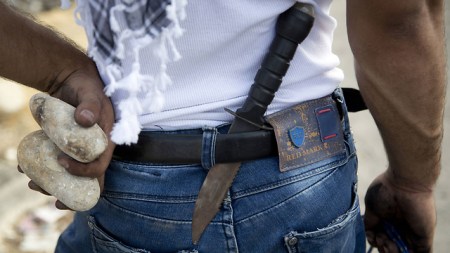
The mountainous quantities of illegal weapons, run-of-the-mill and exotic, in the hands of Israeli Arabs have grown to unmanageable proportions. No Israeli civilian police, or even military force, has the scale of manpower required to mount raids in Israeli Arab population centers – ranging from Galilee in the North, the Triangle and Jaffa in the Center and the Bedouin of the Negev – for a comprehensive campaign to impound them – not even if backed by tanks and commando units.It is pointless to call on all 1.5 million Arab, Bedouin, Druze and Circassian minority citizens to voluntarily surrender their guns. Almost every individual has at least one shooter. The accumulation would not shame any Middle East militia.

The authorities’ inability to deal effectively with this arsenal is not only shocking but has also made the Israeli underworld rich. And even more alarming, it provides a profitable link between terrorist organizations and both Israeli and Palestinian crime mobs and drug dealers. The failure to enforce order in some parts of the population, while other communities abide by the law, has created two parallel societies living by different rules.

The official data on the quantity of guns loose and unaccounted for are sketchy, bu the variety is hair-raising: grenade launchers; AT-3 Sagger and BGM-71 TOW antitank missiles; M-16 and Kalashnikov automatic rifles, submarine guns – mostly Uzis; heavy and light machine guns and mortars; explosive devices for remote detonation;  concussion, gas and stun grenades; diverse ammunition; magazines; IDF uniforms; protective and bulletproof vests; night vision equipment; and much more.

The approximate black market price list we have obtained includes handguns – 15,000 shekels; grenades – 2,500 shekels; M-16 automatic rifles – 50,000 shekels; explosive devices (depending on size and power) 15,000-25,000 shekels; hand grenade – 500 shekels.

Arab Israeli leaders, especially their representatives in the Knesset, have vocally and repeatedly appealed to the police to collect the weapons loose in Arab villages and cities. They see their prevalence as a major cause of the violence and disorder rampant inside those communities. This is no doubt true, but there is also an element of hypocrisy in their demand, in view of their own failure to address – and even exploit – the underlying causes of the epidemic

1. Israeli Arabs customarily resort to the use of guns rather than the law to resolve their disputes and conflicts of interest.

2. It has finally been admitted that 90% of the weapons in illegal hands today were stolen from Israeli army depots, some by traffickers in uniform. Those soldiers were not averse to flogging arms to gangs capable of turning against their own units.

According to DEBKAfile’s defense and counterterrorism sources, the remaining 10 percent, mostly handguns and submachine guns, are manufactured on underground production lines in the West Bank, Gaza or even within the Green Line in Israel. A small amount of the weapons is smuggled by land from the Sinai, Jordan and Lebanon.

Neshek_ArabsNORTH480

3. The IDF’s failure to properly guard its weapons and ammunition depots is stunning, scarcely illuminated by the figures the IDF has presented to various parliamentary committees:  From 2010 to 2015, an average of only 100 weapons per year were officially stolen from army bases, military vehicles and the homes of soldiers.

However, army and police officers familiar with the figures say the number is tenfold, more like 1,000 pieces of weaponry stolen year by year.

Officers and enlisted men whose weapons were stolen receive only light penalties. However, robbing arms depots has become endemic, with Bedouin in the south making the Negev training bases their “home ground.”
They follow IDF units on exercises and steal anything lying about, even cooking utensils and sleeping bags.

There is a sour joke in IDF tank and artillery battalions, that every maneuver has its “camp followers” of Bedouin gun and ammunition thieves.

4.  Internal Security Minister Gilad Erdan, addressing the problem in a Knesset debate on Jan. 6, said that a comprehensive police roundup of illegal guns in Arab communities would immediately raise the charge that Israel was persecuting the Arab minority. He was answering charges of negligence hurled by Arab Knesset Member Ahmad Tibi.

5. The symbiosis that has developed between regular crime mobs and terrorists further boosts the illicit gun traffic. The availability of weapons encourages serious crimes. The “crime families” most notorious for their uncontrolled use of gunfire are to be found embedded in the Arab community, including the mixed towns of Lod, Jaffa and the Arab Triangle towns. Some of these mob chiefs may also contribute their violent services to Palestinian terrorist organizations.

Their activities certainly have a detrimental effect on the majority of their societies who are law abiding and uninvolved in criminal pursuits.

The problem could become more dangerous if the Bedouin, Druze or Circassian communities decided to rise up against Israeli majority rule, because their sons enlist for service in the IDF, the police and the prisons service. They are armed from head to toe, highly trained as soldiers and may be infected with the religious or national fanaticism sweeping the region.

In any case, there is no chance of the illegal guns and arms in every Arab home and gang arsenal being relinquished voluntarily. It is no good looking to national Arab leaders to lead any effort to collect them, because its much more convenient and politically profitable to blame Israel’s national authorities for the violence fostered by a culture that has made gun possession rife and a status symbol.

Did Hizballah dig a special tunnel to get bomb into Israel?

January 6, 2016

Did Hizballah dig a special tunnel to get bomb into Israel?, DEBKAfile, January 6, 2016

Israeli Minister of Defense Moshe 'Boogie' Ya'alon (2R) seen during a visit in the Golan Heights, Northern Israel, on January 5, 2016. Photo by Ariel Hermoni/Ministry of Defense *** Local Caption *** ?? ?????? ??? ????? ???? ??? ????? ??? ?????
Israel’s military chiefs on Golan

The mystery of how Hizballah managed to plant the bomb, which blew up against an IDF patrol, without causing casualties, Tuesday, Jan. 5, in the Shebaa Farms district of Mt Hermon – on the Israeli side of the ceasefire line – is perplexing Israel’s military chiefs. It brought Defense Minister Moshe Yaalon, Deputy Chief of Staff Maj. Gen. Yair Golan (former OC Northern Command) and his successor Maj. Gen. Aviv Kochavi to the Golan the next day for a close inspection of the Syrian and Lebanese border defenses.

They found no fault with the meticulous preparations and counter-measures the contingents on the spot had made for an attack, which Hizballah leader Hassan Nasrallah had said was “inevitable” after the assassination of Samir Quntar in Damascus on Dec. 20.

But, in addition, to the lookout posts scattered along the border, was a countermeasure that had been rated impermeable: an “electronic sterile area” abutting the electronic border fence, which has been strewn with hi-tech sensors and other devices designed to act as tripwires for the smallest intrusion.

The fact that Hizballah was able to plant a bomb on the Israeli side of the border proved that this elaborate system did not work.

The Shiite terrorist group, Iran’s Lebanese proxy, has long been known to maintain a commando unit known as the “Redwan Force,” especially trained for eventual incursions into Israel on missions of assault and the capture of Israeli locales with hostages.

But its ability to outsmart an electronically sterile barrier was quite another matter. It is of the utmost urgency for IDF tacticians to seriously rethink the defensive measures in place on the northern borders with Syria and Lebanon, before Hizballah strikes again.

But first of all, they must find out how it happened. Some Lebanese sources are throwing out hints of a secret tunnel dug by Hizballah, through which the “Quntar Brigade” was able to sneak the bomb onto the IDF patrol route, although it failed to cause casualties. No trace of a tunnel has so far been reported.

At the time of the incident, Israeli public and media attention was wholly taken up with the Dizengoff gunman, who murdered three Israelis on Jan. 1 and is still at large six days later.

Since Hizballah’s Shebaa Farms attack was swiftly countered by massive IDF artillery fire, it was soon over and the episode relegated to back pages. However, the defense minister and IDF chiefs cannot afford to treat it lightly. They are convinced that Hizballah has not concluded its campaign of “revenge” and may reuse the same method for further attacks. No stone is therefore being left unturned to discover how Hizballah smuggled a bomb onto Israeli terrain – over or under the border – and the preparations for an attack remain high.

At the end of his Golan inspection visit, the defense minister said: “The IDF is alert and fully prepared for every eventuality, just as it was for the Mt Dov (part of Mt. Hemon) attack. The forces are ready to respond whenever and however necessary and, if need be, their response will be powerful indeed.”

IDF Commando Brigade unveiled amid threats from Nasrallah and Al-Baghdadi

December 28, 2015

IDF Commando Brigade unveiled amid threats from Nasrallah and Al-Baghdadi, DEBKAfile, December 27, 2015, December 27, 2015

NasrallaBagdadi480

IDF Chief of Staff Lt. Gen. Gady Eisenkott explained why it was necessary to bring forward the launching of the new Commando Brigade by two months, when he addressed the formation ceremony on Sunday, Dec. 27, at the Ein Harod National Park: “The Commando Brigade is more necessary than ever in light of the threats from Hizballah and the Islamic State,” he said, in reference to the boasts heard in the last 48 hours from Hassan Nasrallah and Abu Bakr Al Baghdadi.

The Chief of Staff introduced Col. David Zini as the first commander of the new Brigade.

The ceremony took place shortly after the Hizballah chief Hassan Nasrallah said, “Revenge for the death of Samir Quntar is on the way… The orders have been given and execution is in the hands of resistance fighters on the ground… The Israelis are worried and rightly so – those on the borders [soldiers] and those inside the country…. We shall not let the blood of our Jihadi fighters and brothers to be spilled anywhere in the world,” he said.

DEBKAfile’s military sources report: Analysis of the kinds of threats posed by Hizballah (and ISIS) at this time, which are likely to focus more on terrorism than on tank or infantry border incursions, persuaded IDF leaders of the need for a new framework for bringing under one roof some of the top-notch, highly-trained, experienced, well-armed and determined fighting men who are willing to take on new challenges.

The self-styled Islamic State’s “caliph” Abu Bakr Al-Baghdadi, also devoted special attention to Israel, or rather “the Jews,” in his first audio speech in seven months Saturday, Dec. 26, the day before Nasrallah sounded off. His message was similar to that of his Shiite enemy, albeit in his own inimitable style:

The Islamic State would soon be in Palestine to establish an Islamic state there, he said, “Jews, soon you shall hear from us in Palestine which will become your grave… The Jews thought we had forgotten Palestinian… Not at all, Jews…The pioneers of the jihadist fighters are getting closer every day.”

If and when the Shiite Hizballah and Sunni ISIS make good on their similar but separate threats – or sooner – they will encounter Israel’s new Commando Brigade. Its fighting men are trained for combat in miscellaneous conditions of terrain, day or night, under deep cover. They are equipped with high-tech equipment, most of it classified, for gathering visual and electronic intelligence, communications, photography and targeting. They may either kill terrorists or take them captive.

In a word, these elite troops will hit the enemy in his back yard or at home, and blow the threats heard from Hizballah and ISIS leaders’ back on their own forces.

The 89th Commando Brigade is composed of four battalions:

Duvdevan specializes in operating amidst an Arab population under deep cover for locating and arresting terror suspects.

Egoz is a special kind of infantry battalion, whose commandos operate solo or in very small teams behind enemy lines, especially across the Syrian and Lebanese borders.

Maglan is skilled in the use of weaponry designed for precision operations against high quality enemy targets. These elite fighters go deep inside enemy territory to gather intelligence and use their specialized technology, exclusive for the use of this unit, for devastating assaults.

Rimon members are desert fighters who gained their experience in the terrain of the Gaza Strip and Egypt. Their experience as back-up for operations against drug smugglers is invaluable for urban combat in civilian environments.

Excluded from the new brigade are the separate IDF commando units: Sayeret Matkal, Shayetet 13 (Navy), the Oketz unit which trains dogs for anti-terror work, and Yahalom, of the Engineering Corps.

The Regional Storm Hits Israel

November 5, 2015

The Regional Storm Hits Israel, Israel DefenseAmir Rapaport, November 5, 2015

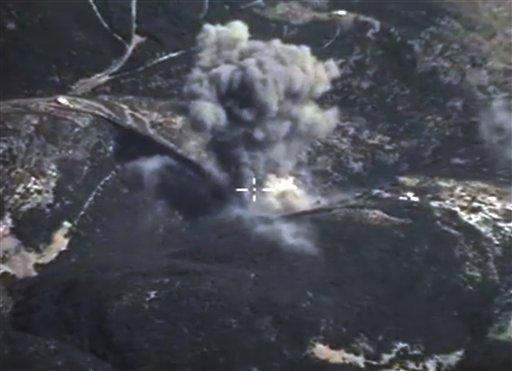
bomb in SyriaAn aerial view of a bomb explosion in Syria (Photo: AP/Russian Defense Ministry Press Service)

1. High Tide/Low Tide. When the “Second Intifada” broke out in October 2000, IDF used to refer to the riots and terrorist attacks in the Judea and Samaria area, as well is inside the territory of the State of Israel as “High Tide/Low Tide”, as each wave of riots was followed by a period of relative quiet, and then a new trigger emerged, leading to a wave of renewed violence, and so on.

Eventually, the “High Tide/Low Tide” incidents assumed a pattern of a murderous terrorist offensive, which took the lives of more than a thousand Israelis through suicide attacks, until the Intifada finally subsided in 2004.

The wave of riots and terrorist attacks that erupted about 15 years later, in the fall of 2015, appears to be connected, in some way or another, to the state of instability that characterizes many areas throughout the Middle East. For the last few years, the lion’s share of the fighting takes place in Syria, where hundreds of thousands of people were killed and millions more became refugees.

The major question that arose within the Israeli defense establishment in the fall of 2015 was whether this latest wave of terrorist attacks marks the outset of a “Third Intifada”. Although outwardly the Israeli interest is to announce “This is not a new Intifada,” in effect, there is talk about a “new situation” and no one knows how it will evolve.

Analyses performed within the defense establishment point to a number of reasons that suggest that this is a significant wave of terrorism which could turn out to be prolonged, as well as to reasons that justify the claim “This is not a new Intifada”.

One of the reasons that this wave of attacks is serious and could be prolonged is the religious motive: the Israeli media does not speak about it too often, but the Arab world is raging around rumors or reports that Israel actually intends to change the status quo on Temple Mount.

Even when one attempts to fish only “comfortable” data out of the statistics of the latest terrorist attacks, it is impossible to ignore the increase, by tens of percent, in the number of violent incidents throughout the Judea and Samaria area as well as within the “Green Line” during the last few weeks.

On the other hand, one significant difference between October 2015 and “Black October” (following the outbreak of the Second Intifada 15 years ago), is that the Israeli security forces are currently operating freely throughout the Judea and Samaria area. Consequently, entering the hospital in Nablus did not call for tactical support by tanks and aircraft. During the Second Intifada, on the other hand, it took the IDF and ISA quite a long time before they succeeded in regaining control over the centers of the Palestinian cities, pursuant to Operation Defensive Shield, and even then, the control achieved was only partial.

The recent events erupted despite the fact that IDF and ISA operate continuously against terrorist detachments. In each of the last few years, 2,000-3,000 Palestinian inhabitants were arrested. 80% of them were sentenced by the courts to prison terms of several months minimum.

It is still difficult to predict how the events will evolve over the next few months, but in any case, it seems that we have “a new security situation” on our hands.

2. Vladimir Putin. Many people regard the regional instability as the direct result of the American strategy of minimizing US involvement in the region, due to separatism processes and shifting the focus of world attention to Eastern Asia and the Pacific region (among other things, owing to the reduced dependence on Arab oil).

The party that stepped very effectively into the vacuum left by the USA was Russian President Vladimir Putin, who currently positions himself as the regional “Sheriff”.

No one can overestimate the importance of the moves made by Russian President Vladimir Putin, who deployed military forces to Syria this fall and continues to position himself as the strong man of the Middle East who never abandons his allies, while the USA has “transmitted” that her allies cannot rely on US support (as the USA had abandoned Egyptian President Hosni Mubarak in 2011).

This fall, the Russians deployed to Syria fighter aircraft that attack targets of the rebels opposing the military of President Bashar al-Assad. These moves were carefully coordinated with Iran, which, for her part, deployed hundreds of troopers (who are currently helping Hezbollah withdraw some of its forces back to Lebanon).

The Russian-Iranian move may have been intended to exert pressure on Saudi Arabia that supports the rebels, as well as to raise the price of oil, which is important to the economies of both countries.

Complicated? Even if there is no connection between the moves in Syria and the energy market, there is a definite connection between the fighting in Syria and the war raging in the southern part of the Arabian Peninsula. A solution in Syria may project on the war over there, as in both regions Iran and Saudi Arabia support opposing sides, with the conflict between the Shi’ite and Sunni factions of Islam as the backdrop.

Behind the scenes of the latest developments in Syria there has always been a Russian plan to bring about the end of the civil war in Syria by dividing it into areas of influence, with about 30% of the territory, in the Tartus and Lattakia area, remaining under control of the Alawite community of the current President, Bashar al-Assad.

Russia is interested in the sea ports in this area, and much less in maintaining Assad in control over a part of the disintegrated country. The Russians will not yield to the American demand to remove Assad from power until they have guaranteed their important interests. The party expected to pay the price is Israel, which may find itself, within a few months, facing a de-facto Iranian and Hezbollah domination on the other side of the border with Syria on the Golan Heights.

This situation could evolve despite the fact that Israel and Russia coordinate some of their respective moves, as indicated by the trip made by Prime Minister Netanyahu’s to Moscow last September, accompanied by the IDF Chief of Staff, Lt. Gen. Gadi Eizenkot, and Head of the IDF Intelligence Directorate, Maj. Gen. Hertzi Halevi, during which they met with “Sheriff” Putin.

3. Meanwhile, in the South. The good news come from the south, where Egypt under Abdel Fattah el-Sisi is determined to defeat the forces of al-Qaeda and the Islamic State that operate throughout the Sinai Peninsula. Egypt, Israel and the USA cooperate closely in the context of this effort, owing to their shared interests.

El-Sisi regards Hamas in the Gaza Strip as an enemy, owing to the cooperation between Hamas and the Egyptian Muslim Brotherhood movement, which is engaged in an on-going conflict with his regime.

Hamas itself is under tremendous pressure from different directions: from Egypt, which cuts off the underground tunnels connecting the Gaza Strip with the Egyptian territory, as well as from al-Qaeda and elements identifying with the Islamic State, who urge the leaders of Hamas to renew the fighting against Israel and occasionally even launch a rocket into Israeli territory in order to motivate Israel (which regards Hamas as the party responsible for such launches) to attack Hamas.

The reality that emerged in the Gaza Strip is yet another example of the complexity in our region. Iran, encouraged by the signing of the nuclear agreement with the superpowers, has renewed its support for Hamas, both financially and militarily (despite the fact that Hamas identifies with the rebels fighting against Bashar al-Assad in Syria and in Iran itself).

The positive bottom line is that Hamas, owing to its own considerations, does its best to maintain the ceasefire agreement reached with Israel following Operation Protective Edge in the summer of 2014. That state of affairs remained in effect until the fall of 2015 but reality, as everyone knows only too well, is highly dynamic.

4. A Small Military. One of the most significant moves expected within IDF in November is the endorsement of the long-term plan for the coming five-year period, and the conversion thereof into an effective order for execution.

“Gideon” is the name of the new multi-year plan led by IDF Chief of Staff, Lt. Gen. Gadi Eizenkot. The plan is intended to rely on the long-term budget allocated to the IDF according to the recommendations of the Locker Committee, and will come into effect in 2016, after five years during which IDF have operated without a long-term plan, as the previous plan had ended as far back as during the tenure of Lt. Gen. Gabi Ashkenazi as Chief of Staff. The Gideon plan is intended to convert the IDF into a technological, cyber-based military organization, possessing fast maneuvering elements equipped with accurate, lethal weapons and enhanced sea and air branches. Above everything else, the most substantial investment will be made in intelligence.

The greatest concern among quite a few elements within the defense establishment pertains to the size of the military, as the new plan calls for the demobilization of quite a few units. One of the principles of Israel’s national security concept since the days of David Ben-Gurion is the need to maintain a strong, substantial military force, based on hundreds of thousands of reservists. The principle is still valid, but in effect, the emphasis is placed on intelligence, air power and commando operations. The substantial ground army, along with its massive tank OrBat, is reduced dramatically – which is inconsistent with the aforesaid principle.

5. Defense Exports. Nearing the end of 2015, the Israel Ministry of Defense and the Israeli defense industries embarked upon a massive sales effort. Between October and December, they will take part in not less than five major defense exhibitions in the USA, South Korea, Japan, Colombia and Thailand.

Even if that effort proves successful, the statistics for 2015 will indicate that Israeli defense exports still follow the downward trend that began in 2014. At best, the defense exports for 2015 will amount to US$ 5 billion, as opposed to US$ 7 billion in 2013.

The main reason for this decrease is the end of the global campaigns in Iraq and Afghanistan. Several major deals that are still on the agenda, mainly in India, can still change the picture before the end of 2015 and lead to a positive trend in terms of the scope of exports. In any case, the contribution made by the defense exports, which amounts to billions of dollars, to the Israeli economy and to the Israeli security resilience is immense. The massive proceeds enable the Israeli defense industries to continue to invest funds in research in order to develop products at the cutting edge of technology.

Our World: Showdown at the OK Corral

November 3, 2015

Our World: Showdown at the OK Corral, Jerusalem Post, Caroline Glick, November 2, 2015

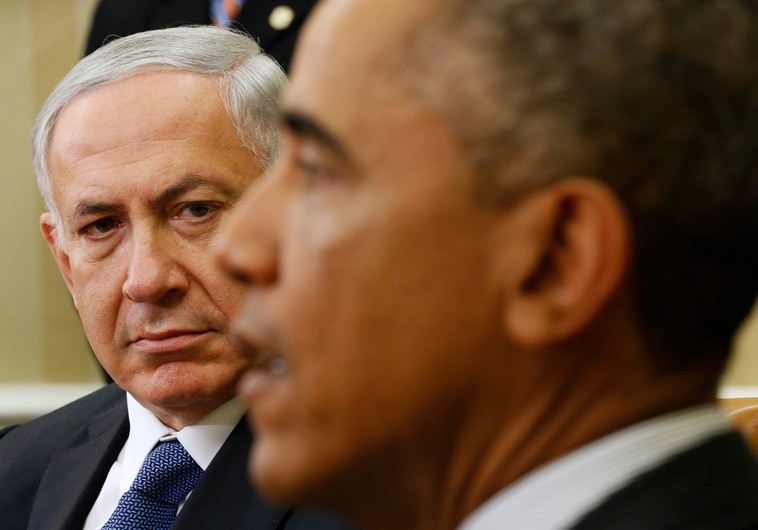
ShowImage (16)US President Barack Obama meets with Prime Minister Benjamin Netanyahu at the White House, October 1, 2014. (photo credit:REUTERS)

Whatever he says before the cameras next week when he meets with Netanyahu, Obama has no intention of letting bygones be bygones.

Prime Minister Benjamin Netanyahu’s meeting with US President Barack Obama next week is likely to look less like a rapprochement than a showdown at the OK Corral.

The flurry of spy stories spinning around in recent weeks makes clear that US-Israel relations remain in crisis.

Two weeks ago, The Wall Street Journal published a fairly detailed account of the US’s massive spying operations against Israel between 2010 and 2012.

Their purpose was to prevent Israel from attacking Iran’s nuclear installations. The Journal report, which was based on US sources, also detailed the evasion tactics the Obama administration employed to try to hide its covert nuclear talks with Iran from Israel. According to the report, the administration was infuriated that through its spy operations against Iran, Israel discovered the talks and the government asked the White House to tell it what was going on.

Over the past several days, the Israeli media have reported the Israeli side of the US spying story.

Friday Makor Rishon’s military commentator Amir Rapaport detailed how the US assiduously wooed IDF senior brass on the one hand and harassed more junior Israeli security officials on the other hand.

Former IDF chiefs of General Staff Lt.-Gens. Gabi Ashkenazi and Benny Gantz were given the red carpet treatment in a bid to convince them to oppose Israeli strikes on Iran’s nuclear installations. More junior officials, including officers posted officially to the US were denied visas and subjected to lengthy interrogations at US embassies and airports in a bid to convince them to divulge information about potential Israeli strikes against Iran.

Sunday, Channel 2 reported that the IDF’s Intelligence Directorate’s information security department just issued guidance to all IDF soldiers and officers warning them about efforts by the CIA to recruit them as US agents.

These stories have been interpreted in various ways. Regardless of how they are interpreted, what they show is that on the one hand, the Obama administration has used US intelligence agencies to weaken Israel’s capacity to harm Iran and to actively protect Iran from Israel. And on the other hand, Israel is wary of the administration’s efforts to weaken it while strengthening its greatest foe.

These stories form the backdrop of next week’s meeting between Netanyahu and Obama – the first they will have held in more than a year. They indicate that Obama remains committed to his policy of weakening Israel and downgrading America’s alliance with the Jewish state while advancing US ties with Iran. Israel, for its part, remains deeply distrustful of the American leader.

This Israeli distrust of Obama’s intentions extends far past Iran. Recent statements by Obama and Secretary of State John Kerry have convinced Israel that during his last 15 months in office, Obama intends to abandon US support for Israel at the UN Security Council, and to ratchet up pressure and coercive measures to force Israel to make irreversible concessions to the Palestinians.

From Netanyahu’s perspective, then, the main strategic question is how to prevent Obama from succeeding in his goal of weakening the country.

The implementation of Obama’s deal with Iran deal will form a central plank of whatever strategy the government adopts.

As far as Obama and his allies see things, the nuclear accord with Iran is a done deal. On October 21, House Minority Leader Nancy Pelosi hosted a reception for Democratic congressmen attended by White House Chief of Staff Denis McDonough to celebrate its official adoption.

Unfortunately for Pelosi and her colleagues, Iran is a far more formidable obstacle to implementing the deal than congressional Republicans. As Yigal Carmon, president of the Middle East Media Research Institute (MEMRI), explained in a report published on his organization’s website last week, at no point has any Iranian governing body approved the nuclear deal. Iran’s parliament, the Majlis, and its Guardians’ Council have used their discussions of the agreement to highlight their refusal to implement it. More importantly, as Carmon explains, contrary to US media reports, in his October 21 letter to Iranian President Hassan Rouhani, Iran’s Supreme leader Ayatollah Ali Khamenei did not give his conditional approval to the deal. He rejected it.

Carmon explained that the nine conditions Khamenei placed on his acceptance of the nuclear deal render it null and void. Among other things, Khamenei insisted that all sanctions against Iran must be permanently canceled. Obama couldn’t abide by this condition even if he wanted to because he cannot cancel sanctions laws passed by Congress.

He can only suspend them.

Khamenei also placed new conditions on Iran’s agreement to disable its centrifuges and remove large quantities of enriched uranium from its stockpiles.

He rejected inspections of Iran’s military nuclear installations. He insisted that Iran’s Arak heavy water reactor must remain capable of producing heavy water in contravention of the deal. And he insisted that at the end of the 15-year lifetime of the deal Iran must have sufficient uranium enrichment capability to enable it to develop bombs at will.

As Carmon noted, the US and EU have announced that they will suspend their nuclear sanctions against Iran on December 15 provided that by that date, the UN’s International Atomic Energy Commission certifies that Iran has upheld its part of the bargain.

By that date, in conformance with their interpretation of the nuclear deal, the US and the EU expect for Iran to have reduced the number of centrifuges operating at the Natanz facility from 16,000 to 5,060 and lower enrichment levels to 3.67%; reduce the number of centrifuges at Fordow to a thousand; remove nearly all its advanced centrifuges from use; permit the IAEA to store and seal its dismantled centrifuges; reduce its stockpile of enriched uranium to 300kg.; remove the core from the Arak reactor and disable it; and submit to agreed monitoring mechanisms of its nuclear sites.

Carmon noted that Iran has taken no steps to fulfill any of these conditions.

With Khamenei’s rejection of the nuclear deal and Iran’s refusal to implement it, there are two possible ways the US and the EU can proceed.

First, as Carmon suggests, Obama and the EU may renew nuclear talks with Iran based on Khamenei’s new position. These talks can drag out past Obama’s departure from office. When they inevitably fail, Obama’s successor can be blamed.

The other possibility is that Iran will implement some component of the deal and so allow Obama and the EU to pretend that it is implementing the entire deal. Given the US media’s failure to report that Khamenei rejected the nuclear pact, it is a fair bet that Obama will be able to maintain the fiction that Iran is implementing the deal in good faith until the day he leaves office.

So what is Israel to do? And how can Netanyahu use his meeting with Obama next week to Israel’s advantage? Israel has two policy options going forward. First, it can highlight the fact that Iran is not implementing the deal, just as Israel took the lead in highlighting the dangers of the nuclear accord with Iran over the past year. This policy can potentially force Obama onto the defensive and so make it harder for him to go on the offensive against Israel at the UN and other venues in relation to the Palestinians.

But then, it is far from clear that Obama will be deterred from adopting anti-Israel positions at the UN even if Israel succeeds making an issue of Iranian noncompliance with the nuclear deal.

Moreover, if Netanyahu leads the discussion of the Iran’s bad faith, as he drove the discussion of the nuclear deal itself, he will reinforce the already prevalent false assessment in the US that a nuclear Iran threatens Israel but is not dangerous for the US.

This incorrect assessment has made a lot of Americans believe that by seeking to prevent Iran from acquiring nuclear weapons, Israel is advancing is own interests at America’s expense.

The other policy option is the one that Defense Minister Moshe Ya’alon indicated Israel is pursuing in his meeting last week with his counterpart Defense Secretary Ashton Carter. At the Pentagon Ya’alon declared, “The Iran deal is a given. Our disputes are over.”

The downside of this position is that it indicates that Israel accepts the legitimacy of a deal that Iran is not implementing and that would imperil Israel’s national security even if Iran were implementing it.

Its upside is that it takes Israel out of the US debate regarding the nuclear deal. To the extent that opponents of Obama’s Iran policy are willing to lead the fight against the deal themselves, Israel could do worse than to take a step back and plot its own course on Iran, independent of the US policy discussion.

It is hard to know which line of action makes more sense. But as the spy stories demonstrated, one thing is clear enough. Whatever he says before the cameras next week when he meets with Netanyahu, Obama has no intention of letting bygones be bygones.

Fatah on the verge of eruption

October 24, 2015

Fatah on the verge of eruption, Ynet News, Alex Fishman, October 23, 2015

As long as Tanzim militants did not walk around brandishing their weapons in public, Israel and the PA turned a blind eye. Now, they are emerging as a significant and central player, fervently courted by the Fatah leadership. Those seeking to inherit Abbas’ seat need the Tanzim divisions on their side. The mounting tensions, the political situation and the anarchy on the street are pushing both Tanzim militants and those courting them to take more extreme positions, and call for an armed conflict against Israel.

***************************************

IDF troops that entered Shuafat refugee camp this week had to withdraw after encountering dozens of armed militants; this is only an example of what might happen when Fatah’s armed wing, Tanzim, joins the fight against Israel. And they won’t do with just knives: There are thousands of weapons all over East Jerusalem.

When senior Palestinian security officials want to mock their Israeli colleagues, they remind them that just in Qalandiya – an area controlled by Israel – there are at least 400 M-16 rifles. That figure does not incluide other weapons – guns, explosives and grenades – that are in the hands of militant groups there.  Some of these groups are affiliated with Fatah’s Tanzim, some are affiliated with other organizations, and others belong to criminal organizations – all operating in this no man’s land, where no law applies.

These militants have no problem with appearing on camera, on Channel 2 for example, just as they had no quams about opening fire at an IDF force that went into Qalandiya last Saturday to arrest a wanted man who already spent a year and a half in prison.

“So are YOU going to go in there and get the weapons out, or are you going to leave it to us?” the Israeli security officials respond in anger whenever anyone accuses them of sitting on their hands and doing nothing – implying that the Israeli security forces are afraid to enter a refugee camp under their control in order to demilitarize the Tanzim.

1_oA Tanzim militant (Photo: AP)

Even Israel admits that there is an arsenal of some 3,000 weapons inside the Shaufat refugee camp. The figure includes M-16 and kalashnikov assault rifles, grenades, and IEDs (improvised explosive devices).

Last Saturday night, an army force entered the camp to take measurements of a home set to be demolished. Several dozen militants surrounded the building and made it abundantly clear that they were willing to die in order to stop the structure from being demolished. This is the mood in Palestinian neighborhoods of Jerusalem. The army will have to come back there, with more forces, in order to complete preparations. And now it’s clear that demolishing terrorists’ homes – a countermeasure promised by the Israeli government – will entail fighting dozens of militants who have been left unchecked for years.

Tanzim power structure

Israeli security officials tend to dismiss the knife-wielding terrorists, presenting them as proof of the weakned status of the more established Palestinian terrorist organizations. Except that for a Muslim, the knife is the symbol of the fight for the holy places, in the spirit of the “sword of Islam.” Muslims don’t view the use of a knife as an act of desperation and wretchedness, but an act of bravery. So the less friction on the Temple Mount – which would lead to the lowering of religious tensions – the less stabbing attacks we’ll have.

In the current wave of violence, the stabbing attacks are just ripples in the ocean. The statistics surrounding these “lone-wolf attacks” don’t accurately reflect the level of violence accumulating on the Palestinian street. Israeli security officials are more concerned with these massive tidal waves that have a far bigger potential of dangerously erupting.

Indeed, when the IDF prepares to face a long-term wave of violence, it takes into consideration the eventuality that at any given moment- and without prior warning – thousands of militants in the West Bank, mostly affiliated with Fatah’s Tanzim, could join the fight.

In its early days, Tanzim was a secret organization compiled of local political activists, students, and released prisoners, which executed Fatah’s policies: Be it social activities, organizing support rallies for the regime, or rioting against Israel. Later, during the second intifada, Tanzim’s militants committed terror attacks against Israeli security forces and civilians, including the terror attack in Kibbutz Metzer, where five people were murdered – including a mother and her two children.

The basic structure of the organization remains, and nowadays it serves as Fatah’s “shadow army” operating on the Palestinian street, alongside the PA’s security forces.

However, the ties between the heads of Tanzim and the Mukataa in Ramallah are growing weaker by the day. Abbas’ security forces can’t enter some of the refugee camps because the Tanzim militants kick them out.
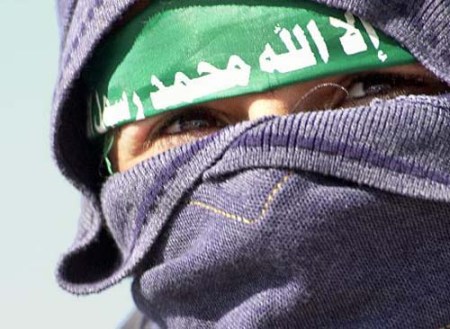
ap_oA Tanzim militant (Photo: AP)

Two months ago, when there was talk of the day after Abbas, Tanzim threatened the heads of Fatah that if it didn’t get its share of the leadership pie, they would launch attacks against Palestinian security facilities and take them by force.

Tanzim’s militants are spread over ten districts of the West Bank. East Jerusalem is one of these districts. Each district is divided into sub-districts, and then further divided into neighborhoods, villages, ect. The smallest unit is the “Jannah,” and it that might also be a bunch of huts outside a village. Every such unit – from the district to the Jannah – has commanders. Today, when these groups sense Abbas’ weakness and the crumbling of his regime, they go out on the street armed, in broad daylight. This is an act of defiance not just against the Palestinian Authority, but also against Israel.

After the second intifada, Israel and the Palestinian Authority, under the auspices of the Americans, signed a pardon agreement for wanted militants. The agreement dictated that the Fatah militants who fought as part of the Al-Aqsa Martyrs’ Brigades during the second intifada would cease their involvement in terrorism and disarm. Israel, in return, would stop pursuing them. It turns out that some of the armed Tanzim militants of today are the same wanted militants from the distant past – the same ones who committed not to carry arms. So even that agreement has fallen apart.

The arson at Joseph’s Tomb last weekend might have been an anti-Jewish provocation, but it also demonstrated how little regard the Palestinian militant groups have for the Palestinian security forces. Joseph’s Tomb is only 400 meters away, in a straight line, from a central Palestinian security forces base. The perpetrators acted against the PA’s interests, and right under its nose. They just don’t give the Palestinian security forces the time of day.

pa (1)Tanzim militants (Photo: AP)

As long as Tanzim militants did not walk around brandishing their weapons in public, Israel and the PA turned a blind eye. Now, they are emerging as a significant and central player, fervently courted by the Fatah leadership. Those seeking to inherit Abbas’ seat need the Tanzim divisions on their side. The mounting tensions, the political situation and the anarchy on the street are pushing both Tanzim militants and those courting them to take more extreme positions, and call for an armed conflict against Israel.

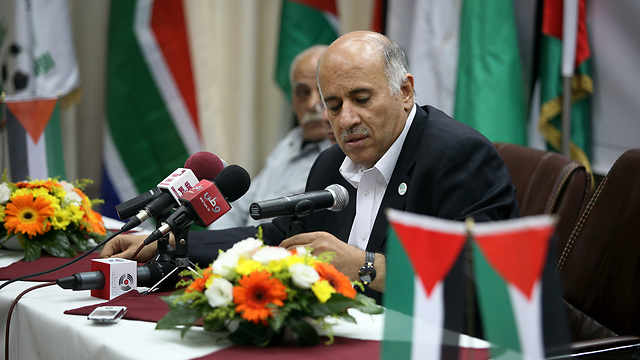
Jibril Rajoub, for example, is one of the ten candidates to succeed Abbas. When this wave of violence just started, Rajoub was still urging the Palestinian security forces to hold a dialogue with Israel and now, this week, he changed his tune to a far more extreme position, encouraging the knife-wielding terrorists, as if he was competing with Hamas over who has the most inflammatory rhetoric. Rajoub wants to win back the hearts and minds of the Palestinian people, Israeli officials explain, and the Palestinian people want blood. Rajoub views himself as one of the leaders of Tanzim, and this kind of rhetoric only serves to increase his popularity on the Palestinian street.

62114480100589640360noJibril Rajoub, rising in popularity on the Palestinian street (Photo: Amit Shabi)

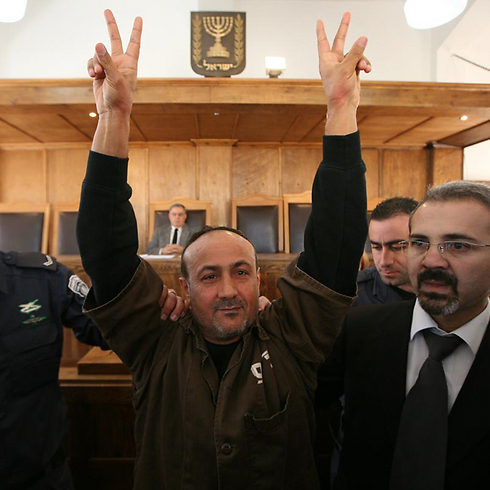
Several of Abbas’ potential successors even formed coalitions to bring Tanzim to their side. For example, the coalition of Abbas’ rivals, headed by Mohammed Dahlan, which also includes Yasser Abed Rabbo (the former secretary-general of Fatah’s executive committee, who was removed from office) and Salam Fayyad (the former Palestinian prime minister who was also removed from office). This coalition seeks to bring in Marwan Barghouti, who is imprisoned in Israel, as a symbol. It also has money, and a lot of it, that Dahlan brought with him from the Gulf monarchies, in order to buy Tanzim’s loyalty.

370098820870100490490noMarwan Barghouti, a symbol (Photo: Gil Yohanan)

Then there’s also the group of Abbas allies, like Majid Faraj, the head of the Palestinian security forces, and Saeb Erekat, the chief negotiator with Israel.

They face other potential candidates to succeed Abbas, like Muhammad al-‘Alul – the former governor of Nablus and one of the more senior members of the Tanzim leadership, who’s been there since the first intifada.

All of these candidates have their sights on the militant organization, trying to appropriate it. The fight for Tanzim creates a kind of conduct and comments that are becoming more and more extreme.

Eisenkot’s West Bank forum

This week, Abbas finally realized the kind of trap he walked into. In a desperate attempt to stop the escalation, he tried to reframe the fight with a new slogan: “Smart Resistance.” Wednesday’s editorial in the PA’s mouthpiece Al-Hayat al-Jadida warns against the situation getting out of control, which could hurt the Palestinian people’s quality of life. The term “third intifada” is not mentioned.

Abbas’ former slogan, “Peaceful Resistance,” is no longer relevant. As long as the resistance only included stone-throwing, rioting, and Molotov cocktails, Abbas would congratulate the “shahids” who committed these actions. He was against terrorism in principle, but not to this kind of activity. But the moment the PA started encouraging violence of any kind – it was inviting that escalation. And when the knives started appearing and Abbas was unwilling to condemn the stabbers, it came back to him like a boomerang. The Palestinian street no longer accepts the PA’s authority. Young rioters don’t heed the calls of the Palestinian security forces, Hamas, or anyone else for that matter. That is why the PA leadership is now talking about a “Smart Resistance”: To bring the knives back into the kitchen, because the Palestinians will pay dearly for this escalation. But it appears Abbas has already missed the train.
stone throwersStone throwers: ‘Peaceful resistance’; Knife-wielding attackers:’Smart resistance’ (Photo: AP)

In war games held by the IDF’s Central Command on the eve of Abbas’ speech at the UN General Assembly meeting last month – with Israeli officials worried about an inflammatory speech that would set the Palestinian street on fire – the army drilled several scenarios of a loss of control over the West Bank.

The first scenario: A wave of lone-wolf attackers dragging the entire Palestinian street into all-out violence. This scenario is defined as low-level violence, and it is unfolding right now.

The second scenario was of a violent outburst inside the refugee camps that would enlist Tanzim to an armed struggle that would set the West Bank on fire. This is the scenario currently worrying Israel’s defense establishment. That is why Defense Minister Moshe Ya’alon instructed the army to prepare for long-term deployment of increased forces in the West Bank, including the possibility of switching out the conscript soldiers in the West Bank with reservists, to allow the army to resume its regular training schedule.

Assignments for the reservists have already been determined, and starting December they too will be deployed in the West Bank. There will be a price to pay for the reservists – there’ll make more mistakes out in the field – but the army has been on high alert in the West Bank for a month now, and it is unclear when that would end. So calling up the reserves at this point appears like a necessary step.

Stone throwers for AbbasAbbas welcomed stone-throwing rioters (Photo: EPA)

Facing constantly increasing levels of terrorism, the IDF’s General Staff is also focusing on preparing long-term plans. Chief of Staff Gadi Eisenkot holds at least three weekly meetings with a team of senior officers who rose up the ranks while fighting terrorism in the West Bank. Among them is Deputy Chief of Staff, Maj.-Gen. Yair Golan, who was the commander of the Judea and Samaria Division; the head of Army Intelligence, Maj.-Gen. Herzl Levy, who was the commander of the Jenin Brigade; the head of the Operations Branch, Maj.-Gen. Nitzn Alon, who was the commander of the Judea and Samaria Division and the GOC Central Command; the current GOC Central Commander, Maj.-Gen. Roni Numa; COGAT Maj.-Gen.

Yoav Mordechai; the head of the Operations Division, Brig.-Gen. Aharon Haliva, who commanded over the Tulkarm-Qalqilya sector; and of course the current Judea and Samaria Division commander, Brig.-Gen. Lior Carmeli, who served in the past as the head of the Jenin Brigade. Not to mention Shin Bet chief Yoram Cohen and the commander of the Shin Bet’s Jerusalem District, in charge of the West Bank, who served in Hebron for 17 years.

The army wants to send a message that it put its best people on the job – senior officers with the most experience fighting against the Palestinians in the West Bank that the army has. There’s more than a subtle hint here to the attempts of politicians to challenge the defense establishment’s judgment with bizarre ideas, meant solely to bring the situation to a boiling point in order to create a new reality on the ground vis-à-vis the Palestinians.

For example, Bayit Yehudi Minister Uri Ariel’s call to stop the transfer of funds to the Palestinian Authority. On paper, this is an innocuous and logical proposal. They owe over NIS 1.5 billion to the Israel Electric Corporation, so why do we need to pay their bills? After all, those funds are also paying the stipends given to families of terrorists.

Except that army officials who are in communication with the Palestinian security forces have received a very clear message from them: Don’t you dare touch our tax money. If the funds don’t come in, there will be no money to pay policemen’s salaries. No salaries? Those policemen won’t be out in the field or worse – they’ll join the ranks of Tanzim or Hamas.

And this is what Minister Ariel and his ilk want: Anarchy.

AnarchyAnarchy (Photo: AFP)

The defense establishment is fighting tooth and nail to stop the approval of a proposal from right-wing ministers to impose a blockade on the West Bank. The government has accepted the defense establishment’s position. The ball is now in the prime minister’s court. The moment Netanyahu caves in and surrenders to the pressure coming from the extreme right – the IDF will no longer be able to stop an all-out armed conflict.

It was no coincidence that the defense minister – in a speech he made this week – chose to speak against the inciters, the “price tag” people, and the like. The defense establishment is aware of the potential threat of Jewish violence. The most effective weapon the defense minister has against Jewish extremists in the West Bank is Israeli public opinion, which won’t accept such conduct from hawkish ministers and settler leaders on the ground.

The heads of the Palestinian security forces are having a hard time keeping their men in line. There were already several “rebellions” by Palestinian security personnel who tried to commit attacks – and were thwarted. The heads of the Palestinian security forces are pleading with Israel to minimize the amount of casualties in clashes with Palestinians, to keep out of Area A, and not deny them the funds to pay salaries.

Snipers instead of aerial fire

On October 16, Palestinian security forces arrested two terror cells: One belonging to Hamas and the other to the Popular Front for the Liberation of Palestine. According to intelligence obtained by the PA, the Hamas cell planned to commit a big terror attack meant to rile up the Palestinian street and weaken the Palestinian Authority.

Israel has no reason to doubt the credibility of this report. A similar incident occurred, on a much larger scale, on the eve of Operation Protective Edge. At the time, the Shin Bet exposed a Hamas plot including dozens of operatives planning to commit several major terror attacks against Israel and the Palestinian Authority in an effort to bring down Abbas.

Hamas is currently fighting on three separate fronts, leading a different policy in each of them. In Jerusalem, Hamas is working to take over the Temple Mount. In the West Bank, it’s making every effort to execute a large-scale terror attack that would serve as the final nail in the coffin for the Palestinian Authority as it is today. The large sums of money feeding the propaganda Hamas is spreading through social media as well as traditional media is coming from Istanbul, from the Hamas headquarters in Turkey.

Gaza border (2)Clashes on the Gaza border (Photo: Reuters)

Saleh Al-Aruri, who was exiled to Qatar by the Turkish government several months ago, has returned to Istanbul with the Turks’ consent, and is leading Hamas’ a campaign of propaganda and incitement under the slogan “Stab, stab!” This message is falling on attentive ears not just in East Jerusalem and among Palestinians illegally staying in Israel, but also in the West Bank, mostly in the Hebron area, where quite a few stabbing attacks occurred over the past week.

In recent days, the incitement coming out of Turkey has been working to change the focus from stabbing attacks to vehicular attacks. Hamas believes the stabbing attacks have exhausted themselves, even though there were quite a few of them taking place in the West Bank this week, mostly in the Hebron area. The vehicular attacks are far more effective. And, indeed, there has been a rise in vehicular attacks in recent days.

In the Gaza Strip, on the other hand, Hamas lets the Palestinians to blow off steam, but keeps it under control, and stops, by all means possible, any rocket fire at Israel. Twelve Gazans have been killed in clashes with IDF forces on the border fence and in airstrikes, without any response from Hamas.

The field is flooded with IDF snipers, and over the past few days protesters have failed to cross the border fence. The IDF is also trying not to give Hamas a reason to change its policy in the Gaza Strip. When snipers fired from inside the Strip, hitting an Israeli vehicle, the army considered a targeted strike from the air. But out of operative considerations, the IDF decided instead to hit back with sniper fire. By the way, these Gazan snipers were part of an organization that broke away from Hamas.

Hamas is playing these three different games with a lot of caution and without any confusion. The organization’s basic assumption is that Israel won’t launch another conflict in the Gaza Strip over a terror attack initiated by Hamas in the West Bank.

The Palestinian security forces were not the only ones arresting Hamas operatives in the West Bank. The IDF conducted its own raids, arresting both military and political figures. One such political figure was Hassan Yousef, who is considered the head of Hamas in the West Bank, and who Israel accuses of incitement. But what these arrests are actually meant to do is signal Hamas that Israel will trample the organization’s presence in the West Bank, just as it did during Operation Brother’s Keeper, after the kidnapping and murder of the three yeshiva students in the summer of 2014.

During a situation assessment meeting held in Israel after the arrests, one of the officers compared dealing with Hamas to going to the family health center. Every once in a while, people like Hassan Yousef need to be brought in to see how much weight he gained, how high he got and check his mental state. A sort of litmus paper for the way the wind blows in the West Bank. The problem is that at this family health center, there are no innocent babies or kind nurses. The players in the triangle of Israel-West Bank-Gaza have already realized that the era of knife-wielding attackers could very well be one day remembered as normal compared to what the Palestinian street knows, could and might do.

Israel’s “Knock on the Keyboard” campaign spies on and subverts terrorist social networks

October 21, 2015

Israel’s “Knock on the Keyboard” campaign spies on and subverts terrorist social networks DEBKAfile, October 21, 2015

Keyboard_Brigades

With this fuel constantly on tap to keep the flames high, diplomatic efforts underway to calm the conflict, such as visits by UN Secretary General Ban Ki-moon or US Secretary of State John Kerry, are no more effective than a small glass of water. The best hope of curbing the violence rests with the new modes of operation which Israeli intelligence has switched into high gear.

*******************

The newest type of Israeli intelligence officer does not require expertise in hand-to-hand combat, shooting or the ability to survive in enemy territory, but rather a keyboard, screen, internet connection and a complete command of Arabic, including idioms, jargon and expressions. The officer goes online under a false name and uses social networks to connect with those about to stab, run down or shoot Israelis. Along with the undercover agents in the field, there is a new generation of Israeli “digital HUMINT” officers who are updated on the latest trends among the Arab youth and spread out in the same digital space as the users in the back alleys of Palestinian refugee camps. Posing as terrorists, they use their fluent Arabic on Facebook or Twitter to request instructions, assistance, information and direction to “carry out attacks.”  

Israeli policymakers and security chiefs have different views on the existence of a central figure or group at the head of the current wave of terror that began with the murder of Na’ama and Itam Henkin on October 1. and for which no end is in sight. But they all agree on the means used to disseminate and scale up the knife attacks, stone throwing, gunfire and hit-and-run attacks, which have killed 11 Israelis and wounded dozens until now.

Those means consist largely of Facebook and Twitter and instant messaging services such as Skype and Whatsapp, which communicate instructions to the terror operatives.

They also serve as mass media for publicizing and glorifying acts of terror, relaying training methods, spreading propaganda, marking targets and post mortems on operations performed.

The social media and instant messaging provide the masters of terror with endless services, such as the transfer of private data, video and images and even chitchat between “friends.” Encrypted information carried thereby can’t be decoded.

The causes of Palestinian terror have not changed fundamentally over the years from one outbreak to the next. The “soldiers of terror” have the same motivations today as yesterday. The only difference is the mode of communication between the rank-and-file terrorists and their handlers.

Land-line and cellular communication, which until a few years ago served security organizations as their primary tools for forestalling terror, are now old hat. Almost extinct too are the costly technological engineering and SIGINT (signal intelligence) equipment and information systems, once used for disrupting and thwarting terror.

The contemporary emphasis on OSINT (open source intelligence), which monitors the mass media, such as television and radio stations, internet sites and newspapers, has given birth to a new branch of intelligence, which harvests critical operational and tactical data from the social networks.   ,

The present-day Israeli intelligence officer is not trained in hand-to-hand combat, marksmanship or methods of surviving in enemy territory. He is armed with a keyboard, screen, internet connection and a complete command of Arabic, including idioms, jargon and expressions. This officer goes online using a false name and accesses the right social networks to connect with those about to stab, run down or shoot Israelis.

HUMINT (human intelligence), classic field intelligence, is taking on a new form. Besides the field commanders and the undercover agents, there is a new generation of Israeli “digital HUMINT” officers, who are updated on the latest trends among young Arabs by invading their digital space. Posing as terrorists, they use their fluent Arabic on Facebook or Twitter to request instructions, assistance, information and direction to “carry out attacks”,

It is an established fact that social networks are a key operational medium in the service fo terrorists for transferring orders and instructions. Israeli intelligence is well prepared to move in on this chink in the terrorists’ defenses, better than their Western counterparts.

Hundreds of male and female soldiers with fluent Arabic, using false names to mingle among Arab web surfers, were first used to good purpose at the outset of the Arab Spring. The project picked up steam as the trend of terror in the Arab and Muslim world grew.

For terrorists, the social networks have both advantages and disadvantages. A young man in Beit Hanina or Issawiyeh, who uploads to Facebook a video praising a Palestinian driver who ran down Jewish pedestrians, or offering guidance on where to thrust a knife to kill a Jew, also gives away his IP address, his e-mail address, and the visitors who post comments and likes.

The vast amount of data garnered from social networks is a gold mine for analysts to draw conclusions, delineate the web of ties among terrorists and home in on orders and instructions passed out to fuel the current wave of terror.

With this fuel constantly on tap to keep the flames high, diplomatic efforts underway to calm the conflict, such as visits by UN Secretary General Ban Ki-moon or US Secretary of State John Kerry, are no more effective than a small glass of water. The best hope of curbing the violence rests with the new modes of operation which Israeli intelligence has switched into high gear.

Even in the midst of serial terror, these cyber warriors are busily sifting through an ocean of information from open sources and making headway towards identifying the chains of command orchestrating the wave of violence, as well as individuals, pairs or groups responsible for carrying out the attacks.

Equally important, they are using the social networks to sow panic and confusion among the terrorists, thus rendering them almost useless as means of furthering terror.

Even as you are reading this article, the Israeli security and law enforcement agencies have been able to pinpoint and make personal calls to the parents or acquaintances of identified rioters and potential terrorists, to warn them in Arabic that they are in for serious consequences – a variety on the “knock on roof” warnings the IDF gave to Gaza households during the last Gaza campaign against terror.

Terror slowdown as Israelis absorb first shock and gear up for the next round

October 14, 2015

Terror slowdown as Israelis absorb first shock and gear up for the next round, DEBKAfile, October 14, 2015

Central_Bus_Station_in_Jerusalem_14.10.15Anti-terror operations in Jerusalem

Israelis have absorbed the first shock of the wave of Palestinian terror unleashed in the last two weeks. The Palestinians are likely absorbing the package of tough penalties for terror and deterrents the Netanyahu government began putting together Tuesday night. Wednesday, Oct. 14, saw relative calm after the deadly violence reached a new peak Tuesday with the first Palestinian shooting attack on a Jerusalem bus – this time by adults.

The relative lull is expected to last only until the Palestinians and their Israeli Arab supporters take stock, before inevitably launching their next round of terror.

Meanwhile, Jerusalem saw “only” two stabbing attacks. In the first, a terrorist wearing army fatigues tried to stab a Border Guardsman at Nablus Gate in Jerusalem, and was shot and killed by policemen and visitors. Two hours later, another terrorist attacked a woman bus passenger at the city’s central station. A police special ops officer ran after him up and shot him dead.

One of the counter-terror measures that went into effect Wednesday morning was the Knesset Foreign Affairs and Security Committee’s approval of Emergency Order 8 authorizing the mobilization of an additional 600 Border Guards combatants from the reserves, over and above the 800 already called up.

DEBKAfile’s military experts note that the rapid processing of this new intake with equipment and operational orders will reduce the need to detach from their regular duties the 500 IDF soldiers allocated for manning the streets of Jerusalem.

That is all to the good, because managing police officers and soldiers in harness is bound to be problematic.

Israel is not the first country to inject military strength into its capital to fight terror. The British and French governments have been known to deploy paratroops and armed personnel carriers into the streets of London and Paris when they were beset by a rising level of terror. This deployment never lasted more than a few days – just enough to calm a terrified citizenry.

But Jerusalem is different. The state of security is such that soldiers once in place may face a long-term stay in the capital to contend with a long-running security threat.

Another difficulty is that the soldiers assigned to this mission have been pulled out of tank, artillery and engineering courses with no training for combating urban terror. Those who come from outside the city will furthermore need to familiarize themselves with a new environment and its rhythms.

The Jerusalem Police are special. They must cope with complex, demanding and multi-tasking challenges to the town’s security. More than one terror attack may take place at different parts of the city. Unlike ordinary soldiers, they are trained and have the experience to quickly spot and take action against a terrorist in ordinary clothes who may pop up suddenly from among a large crowd to sow death.

A seasoned police officer can judge when to cut the assailant down to save lives and when to arrest him.

But the IDF servicemen to be recruited for anti-terror duties in support of security forces are much younger than the average policeman – on average around nineteen years old. Their firearms and kits are designed for conventional warfare on the Golan in the north or the Gaza Strip in the south – not for securing civilian buses or heavy vehicular and pedestrian traffic in a crowded city center.

That Border Guards reservists were hastily mobilized at the same time as the military units indicates that someone had the sense to understand that the presence of IDF troops on the streets and buses was good psychological first aid for people jumping at shadows for fear of a lone terrorist, but hardly an effective operational arm for the war on terror.

New anti-terror measures, hospitals on emergency footing ready for long terror haul

October 13, 2015

New anti-terror measures, hospitals on emergency footing ready for long terror haul, DEBKAfile, October 13, 2015

Ambulance-Jerusalem_Malchei_Yisrael_Street_13.10.15Medical services on terror alert in Jerusalem

After the first shooting in the current wave of Palestinian terror, the Health Ministry Tuesday, Oct. 13, put Israeli hospitals on emergency footing for the potential contingency of multiple casualties. Medical and auxiliary staff and supply centers were put on a state of preparedness. Hospitals in Jerusalem and other parts of the country are already facing a rise in emergency admissions as a result of terrorist attacks.

The security cabinet Tuesday approved a series of anti-terror measures, while warning that the end of the terrorist offensive was not yet in sight and it would take time for the new measures to take effect.

The families of five killer-terrorists were to be notified that their homes are listed for demolition. They were given 48 hours to appeal to decision before Israel’s High Court. The order was cleared with Justice Minister Ayelet Shaked. It was also decided to deploy IDF troops in Israeli cities to boost security and backup for the police. Partial shutdowns is to be imposed on Palestinian residential districts and villages in Jerusalem, where some  80 percent of the terrorists live, with check posts installed to monitor and control their entries and exits.

These measures were introduced shortly after three Israelis were killed, 22 were injured in Jerusalem by three terrorists from the same Palestinian Jebel Mukaber city neighborhood, which has a long history of terror. Armed with a gun and a knife, two terrorists tried to commandeer a bus a bus in the Armon Hanatziv district of Jerusalem, killing one Israeli and injuring 16, at least six seriously. One of the pair was shot dead, the second injured.

This was the first terrorist shooting attack in the current wave of violence. One of the killers was on the payroll of Bezek, Israel’s biggest telecom company.

In downtown Jerusalem, within minutes, a Palestinian ran down a group of pedestrians waiting at the Malchei Israel bus stop. He then jumped out of the car and struck his victims with a cleaver – continuing to strike even after he was shot by a local security guard. He killed 60-year old Rabbi Yeshayahu and injured three injured victims before he was shot dead.

Earlier, five Israelis were injured in two stabbing attacks carried out by a single terrorist in the town of Raanana north of Tel Aviv. He was overpowered by a civilian with a pepper gun and a selfie stick before police shot him dead.

After the Jerusalem attacks, police spokesmen admitted for the first time that they must have been synchronized and deliberately set up, finally abandoning the “lone wolf” theory attributed hitherto by Israeli officials to the current wave of terror.

Jerusalem’s two highway links – Rtes 1 and 443 – were meanwhile briefly shut to traffic in both directions as security forces swept for terrorist cars suspected of mingling with the intercity traffic.

DEBKAfile reported Monday.

The Palestinian knifing spree in Jerusalem Monday, Oct. 12, the day after an Israeli Arab from Umm al-Fham mowed down, then knifed, four Israelis in central Israel, puts the Palestinians on the same bloody course as Israeli Arabs, who launched an anti-Israel general strike Tuesday.

The day began at the Lions Gate, Border Guards police stopped a Palestinian who acted suspiciously. He pulled out a knife and stabbed one of the police men. The blade glanced off his body armor and the terrorist was shot dead.

At noon, a female terrorist inflicted moderate injuries on another two Border Guards officers opposite National Police Headquarters in northern Jerusalem. She was stopped by gun shots and seriously hurt.

A short time later, further north at Pisgat Zeev, two terrorists worked a street in tandem. They knocked a 13-year old Israeli boy off his bike and stabbed him. He is fighting for his life at Hadassah hospital on Mt. Scopus. The terrorist’s partner attacked a second Israeli, inflicting major knife wounds. Police at the scene stopped the rampage by shooting. One was killed.

The Umm al-Fahm assailant, Ali Riyadh Ahmed Ziwad, 20, who had to be restrained by police and passersby, Sunday night, assumed an air of surprised innocence after his arrest. “It was just a traffic accident,” he said, after running over, then critically injuring a 19-year old Israeli girl with a knife and stabbing three others.

He went into an act that is typical of the Palestinian tactic of assuming the role of victim after committing terrorist outrages.

Leaders of the Israeli Arab community (roughly one-tenth of Israel’s population) including its elected members of parliament embark on a general strike Tuesday, Oct. 13, followed Wednesday by a grandstand performance by Arab MKs at Al Aqsa, accompanied by a flock of Israeli and international camera crews.

They will have plenty of microphones to proclaim how badly they are treated and, above all, to continue to spread totally unproven falsehoods about Israeli desecrations of the Muslim Mosque of Al Aqsa, which has provided the Palestinians with their most evocative and unifying emblem for most of the past century.

Seventy-nine years ago, on April 19, 1936 – when Facebook, television and an Israel state were far in the future – the Arab High Command of Palestine declared a general strike which swiftly escalated into terrorist attacks against Jews and the British and evolved into the Great Arab Revolt.

Then, too, the rallying cry was “the Mosque is in danger!” for triggering the order to “burn a thousand buildings in Tel Aviv.” By the time it was over in 1939, 600 Jews, 200 British officials and 5,000 Arabs were dead. Many of the last group died in internecine tribal feuds.

The same rallying cry has ever since fired Palestinian campaigns of terror. The “Al Aqsa Intidafa” called by Yasser Arafat on Oct. 1, 2000, which saw the first intensive use of suicide attacks for terror, cost the lives of 1,178 Israelis and 50 foreigners, injured 8,022 civilians.

The Palestinians lost 3,333 dead and 30,000 injured – many self-inflicted.

No one can tell how the latest Israeli Arab strike will develop. Their leaders are doing their utmost to inflame passions and have already incited the first Israeli Arab stabbing attack in tune with Palestinian terrorists.

Israeli Arab leaders looks as though they have the bit between their teeth and are trying to use the weakness of the Palestinian Authority Chairman Mahmoud Abbas to set the pace of events for the Palestinians as well.
The Israeli government is trying to pour oil on these turbulent waters, turning to the slow-moving legislative process as a means of fighting terror, while beefing up police forces, who are barely able to keep pace with the slashing knives.

Officials and reporters still insist on the absence of a controlling hand behind the violence, despite the evidence of an unfolding stage-by-scale escalation. The policeman injured at Lions Gate Monday told reporters from his hospital bed that, while on duty at various sectors, he had traced systematic organization behind the stabbings;the knife terrorists kept on coming out at a steady, controlled pace, he said.

Israeli strategists are not moving swiftly or unhesitatingly enough to correctly evaluate this enemy and pounce strongly on his weaknesses.

Curfews and Internet restrictions can’t be avoided for reining in Palestinian street terror

October 10, 2015

Curfews and Internet restrictions can’t be avoided for reining in Palestinian street terror, DEBKAfile, October 10, 2015

Nablus_Gate10.10.15Holding the line at Nablus Gate, Jerusalem

After nearly a month of rampant Palestinian violence and murder, Israel’s leaders and its forces of law and order were Saturday, Oct. 10, fast approaching an unavoidable decision to impose a curfew on the Old City of Jerusalem – both to bring the stabbing attacks at every corner under control, and to isolate this source of contagion from the disorders spreading in the West Bank and across Israeli Arab coummunities.

Once a curfew is in place, the security authorities – whose forces are stretched to the limit by the multiple outbreaks proliferating across the country – will be able to deal quietly and systematically with the disorders.

A major hindrance until now has the refusal of the heads of government, especially Prime Minister Binyamin Netanyahu and Defense Minister Moshe Ya’alon, to realistically appreciate the dynamic of the wave of terror, and their insistence on playing down its eruption in one place after another as random and uncontrolled.

They keep on harping on the incitement and lies spread by Mahmoud Abbas and radical Israeli Muslim leaders, although the street has since taken over.

Friday night, Ya’alon commented in a television interview that terrorists had committed “only” four fatal stabbings out of a population of four million.

This challenge was taken up with a vengeance. That night, Israeli Arabs staged riotous disturbances from northern Israel to the south, attacking security forces and blocking highway traffic on Routes 6, 444 and 65, with rocks and burning tires.

The following morning, the focus of violence switched back to Jerusalem and the Palestinians: A 16-year old Palestinian stabbed and badly injured two elderly religious Jews wrapped in prayer shawls.

He was shot dead when he brandished the knife against approaching police officers. A second Palestinian was killed after stabbing three police officers at Damascus Gate.

This sequence of events indicates that, while there is no single controlling hand behind them, they are nonetheless orchestrated in a way that keeps every Israeli constantly looking over his or her shoulder for fear of being taken off guard by the next attack – whether on an Israeli highway or town like Afula or Petach Tikva, or in Judea and Samaria. But Jerusalem remains the constant focal point because it is a powerful unifier.

Official Israeli spokesmen have tried relaying messages to Abbas and putting out reports that he has responded favorably to appeals. Saturday, Netanyahu asked US Secretary of State John Kerry to intercede with the Palestinian leader for help to quieten things down. However, none of the three, any more than Jordan’s Abdullah, holds the levers for controlling current events.

That is because they are being orchestrated to a large extent through messages of incitement and false inflammatory information which bounce back and forth between the cell phones and social media networks of young Palestinian and Israeli Arabs hungry for trouble.

In the latest example, the networks were flooded all day with calls to torpedo the international soccer match between Israel and Cyprus taking place Saturday night at the Teddy stadium in Jerusalem – even to setting the arena on fire.

This move had two objects: to dilute police strength in the Old City in order to reinforce security at the stadium and to terrify the public into staying away from the game.

Israel’s security authorities are finding they can no longer avoid stepped up measures, such as a curfew on the Old City of Jerusalem and blocking selected Palestinian cell phone networks and Internet connections and IPs of known inciters. This method was used by Turkish President Erdogan to stem the rising tide of opposition against him in 2014.

These measures are far from pleasant and will be frowned on by many people including Israelis. But they may possibly calm the turbulence and save Israeli and Palestinian lives.

Time is running out. Wednesday, Oct. 14, members of the Middle East Quartet are due to arrive in Israel. The Netanyahu government can’t afford to be found at a loss in the face of a major threat to its authority in Jerusalem. The ineffectual measures applied till now no longer serve.