Three Muslim Brotherhood supporters who caused a row in Egypt last year after they met with Obama administration officials and members of Congress returned to the U.S. Wednesday, according to the Facebook page of Egyptian Americans for Freedom and Justice (EAFJ).
During their 2015 trip, Brotherhood leader Gamal Heshmat, former Egyptian Judge Waleed Sharaby and Maha Azzam, head of the Egyptian Revolutionary Council (ERC) lobbied State Department and White House officials for help against the government of Egyptian President Abdel Fatal al-Sisi.
The ERC formed in 2014 with the aim of toppling Sisi and bringing the Brotherhood back to power in Egypt. Sisi took power in 2013 after the Egyptian army ousted President Mohamed Morsi, the leader of the Muslim Brotherhood’s Freedom and Justice Party.
Heshmat has a long history of supporting Palestinian terrorists and was photographed in June 2014 with Hamas political chief Khaled Meshaal.
The State Department agreed with the delegation’s position that Sisi had not brought stability to Egypt, and that his removal would pave the way for a transition to democracy, Sharaby told Egypt’s Mekameleen TV in an interview last February. But that has not translated into concrete action to topple Sisi.
EAFJ leaders Mahmoud El-Sharkawy, Hani Elkadi and Aber Mostafa greeted Heshmat, Sharaby and Azzam at New York’s JFK airport and posed for a picture with them displaying the Brotherhood’s four-fingered Rabaa salute which has become representative among those wanting the Brotherhood’s return to power in Egypt.
The three are scheduled to speak Friday at an event titled “Egyptian Revolution from Sacrifices to Victory” in North Bergen, N.J.
The event is timed to commemorate the Jan. 25 anniversary of dictator Hosni Mubarak’s fall from power in 2011. Heshmat wrote that his group had no plans to meet with Obama administration representatives during this visit, due to their “position biased” toward Sisi’s regime. They hope to speak with some congressmen, academics and others.
El-Sharkawy is a Brotherhood member and serves as liaison with Brotherhood members exiled in Turkey, Egypt’s Al-Bawaba newspaper reported last April.
He frequently reposts Muslim Brotherhood communiqués on his Facebook page. In December, El Sharkawy encouraged “all youth and revolutionaries” to distribute the official page of Brotherhood spokesman Muhammad Muntasir.
Elkadi seemed to self-identify as a Brotherhood member in a March 9 Facebook post showing an cartoon of a man holding a sign with the Brotherhood logo and the words which translate to, “I am [Muslim] Brotherhood and I’m not threatened.”
Last year, Elkadi, El Sharkawy and Mostafa posted graphics on their Facebook pages seeming to support violence in Egypt.
El Sharkawy and Elkadi posted a Feb. 10 communiqué from the Popular Resistance Movement (PRM) which has launched attacks against Egyptian police and other targets. It features an image of a blood-red map of Egypt with a fist superimposed over it. It claims responsibility for targeting two police cars. “God, martyrs, Revolution,” it said.
Mostafa posted the personal information of a pro-Sisi owner of an Egyptian soccer team with the word “Attaaack!” the same day.
(The views expressed in this article are mine and do not necessarily reflect those of Warsclerotic or its other editors. — DM)
Obama keeps telling us what America isnot. What does He think she is? Does He think that Obama’s America is America, or that His supporters are what America is? Does He think they make America great? Will America become acceptable to Obama, and hence “who we are,” only after He or His successor finishes her fundamental transformation?
By virtue of the now-implemented Iran nuke “deal,” Iran’s possession of an atomic and/or hydrogen bomb will be delayed for a few years unless she cheats (as in the past), reneges on the “deal” or out-sources nuke development to her long term partner, North Korea.
The Islamic Republic of Iran is now reaping the benefits of more than $100 billion in immediate sanctions relief plus a settlement of Iranian claims amounting to $1.7 billion.
Secretary of State John Kerry said today that the settlement is $400 million debt and $1.3 billion in interest dating back to the Islamic revolution. That’s separate from the sanctions windfall Iran will receive.
Iran will also benefit on a long-term basis from trade with countries formerly prohibited by sanctions.
Back in June 2015, Supreme Leader of the Islamic Revolution Ayatollah Seyed Ali Khamenei had outlined the general policies of the country’s 6th quinquennial development plan.
On defense and security, the proclamation necessitated an increase in Iran’s defense capabilities at the level of a regional power in order to fulfill the national interests by allocating at least 5 percent of the national budget to boosting the defense power. [Emphasis added.]
With increased funding, Iran will be able to increase its already substantial support for Shiite terrorism throughout the Middle East; it will likely do so.
Iranians continue to experience Islamic human rights. Here’s a link to an article titled The Real War on Women in a Nightmarish Islamic Stateby Dr. Majid Rafizadeh. An Iranian-American political scientist and scholar, he is the president of the International American Council and serves on the board of the Harvard International Review at Harvard University.
When it comes to executions, girls are systematically more vulnerable due to the Islamist penal code of Sharia law.
Let’s take a look at the Islamist state of Iran, which creates its laws from the legal codes of Sharia and Quran. The first type of discrimination is related to age: girls are held criminally accountable at the maturity age of 9 Lunar years. (This will automatically put girls at a higher risk of execution by the court.)
Iranian ruling politicians hold the highest record when it comes to the most executions per capita in the world. Intriguingly, in the last two years that the so-called moderate, Hassan Rouhani, has been in office, there have been more than 2000 executions conducted in Iran. That is nearly 3-4 executions a day.
More importantly, Iranian leaders are also the largest executioner of women and female juveniles. Some of these executions were carried out on the mullahs’ charge of ‘Moharebeh’ (enmity with Allah), or waging war against Allah, ifsad-i Fil Arz (Sowing Corruption on Earth), or Sab-i Nabi (Insulting the Prophet). [Emphasis added.]
There are three methods of execution for women and female juveniles: 1. Stoning 2. Public hanging 3. Shooting. Some women are also beaten so severely in the prison that they die before reaching the execution. Shooting, which is the fastest method of the three for execution, has not been used since 2008. Instead, the most common method to execute women is public hanging or stoning. Some of these women are flogged right before they are hanged. Public hanging not only imposes fears in the society but also aims at dehumanizing and controlling women as second-class citizens. According to the Islamist penal code of Iran, women offenses are classified as: Hadd, Diyyih, Ta`zir, and Qisas. [Emphasis added.]
Please read the entire article. Isn’t it heartwarming that “we” are giving even more than a mere $100 billion to Iran? Perhaps some of the new money can be used to buy sharper stones and new devices for hangings. How about some new torture devices?
Islam, The Muslim Brotherhood and its affiliates
The Muslim Brotherhood and Hamas-affiliated Council of American-Islamic Relations (CAIR) claims to represent Muslims in America. They do represent those who favor terrorism and despise human rights (in the name of which they ironically claim to act).
[T]he Council on American-Islamic Relations, is a prominent Islamic group, but which has a long history of involvement with extremist and terrorist causes. In 2009, during the Holy Land Foundation terror financing trial, U.S. District Court Judge Jorge Solis concluded that, “The government has produced ample evidence to establish the associations of CAIR… with the Islamic Association for Palestine, and with Hamas.” [Emphasis added.]
During the trial, CAIR was designated an “unindicted co-conspirator.” As a result of CAIR’s apparent links to a terrorist movement, the Justice Department in 2009 announced a ban on working with CAIR. The FBI also severed relations.
[F]or the past seven years, the Obama White House has opened its doors to the entire spectrum of radical Islamist groups, just like CAIR. These groups have rationalized the actions of Islamic terrorist groups that have killed Americans, warned American Muslims against cooperating with law enforcement, smeared genuine Muslim moderates like Zuhdi Jasser and Asra Nomani as traitors and accused anyone who dared to utter the term “radical Islam” as “Islamophobic.” These are the groups that the White House should have marginalized. The fact that Obama legitimized radical Islamist groups will be his real legacy. [Emphasis added.]
Very few American Muslims, however, seem to feel that CAIR is a legitimate ambassador for American Islam. According to a 2011 Gallup poll, about 88% of American Muslims said that CAIR does not represent them. Muslims all over the world, in fact, apparently do not think CAIR is a moderate or legitimate Muslim group: in 2014, the United Arab Emirates, a pious Muslim state, designated CAIR a terrorist organization, along with dozens of other Muslim Brotherhood organizations.
In reality, American Muslims are extremely diverse, and no single group can claim to speak on their collective behalf. American Islam comprises dozens of different religious sects and political movements, many of which advocate distinctly different ideas. But for Islamist bodies such as CAIR, it suits their agenda if American Muslims are portrayed as a monolithic community. If American Muslims can be seen as homogenous, then a group such as CAIR has a better claim to represent their interests.
Even CAIR’s own research, however, undermines their claim to speak on behalf of American Muslims. A 2011 report reveals that a majority of American mosques are not affiliated with any American Islamic body.
Addressing a conference in 2000, Sheikh Abdul Hadi Palazzi, a Muslim cleric and secretary general of the Italian Muslim Assembly, explained that, “[CAIR] is a Muslim Brotherhood front organization. It works in the United States as a lobby against radio, television and print media journalists who dare to produce anything about Islam that is at variance with their fundamental agenda. CAIR opposes diversity in Islam.”
In truth, CAIR only speaks on behalf of a small extremist ideology that, as discovered by federal prosecutors, emerged across the United States during the 1990s out of the Muslim Brotherhood and Hamas. Although CAIR does not represent American Muslims, it managed, before the Holy Land Foundation terror trial in 2008, to persuade a great many people that it did. Enough time has passed that CAIR seems to believe it can try this move once again.
state that Congress believes the Muslim Brotherhood fits the State Department’s criteria of a Foreign Terrorist Organization. The Secretary of State would be required to designate the Brotherhood within 60 days or to provide a detailed report explaining why it does not. Three U.S.-based Brotherhood entities named in the bill are CAIR, the Islamic Society of North America (ISNA) and the North American Islamic Trust (NAIT). [Emphasis added.]
The House version of the bill (HR3892) was introduced by Rep. Mario Diaz-Balart (R-FL) with Reps. Louie Gohmert (R-TX), Randy K. Weber (R-TX), Diane Black (R-TN) and Mike Pompeo (R-KS) as original cosponsors. They are now joined by Reps. Steve King (R-IA); Steven Palazzo (R-MS); Kay Granger (R-TX); Jim Jordan (R-OH); Steve Stivers (R-OH); Dana Rohrabacher (R-CA); Ilena Ros-Lehtinen (R-FL); Charles W. Dent (R-PA); Bill Johnson (R-OH) and David A. Trott (R-MI).
HR3892 was referred to the Judiciary Committee’s Subcommittee on Immigration and Border Security on December 4, 2015. Two cosponsors, Rep. Gohmert and Rep. Trott, sit on that subcommittee.
The Senate version of the bill (S2230) was introduced by presidential candidate Senator Ted Cruz (R-TX) and later cosponsored by Senator Orrin Hatch (R-UT). It was referred to the Senate Foreign Relations Committee on November 3. Two of Senator Cruz’s presidential rivals, Senator Marco Rubio (R-FL) and Senator Rand Paul (R-KY) sit on that committee and have not taken a position on the bill.
Although the bill has yet to earn bi-partisan support at this early stage, it is supported by members of Congress from different spectrums of the Republican Party. It includes endorsers of the presidential campaigns of Marco Rubio, Jeb Bush and John Kasich and not only supporters of Ted Cruz.
If enacted by the Congress, Obama will almost certainly veto it. If He signs it, He will ignore or bypass it as He often does.
Britain recently declared the Muslim Brotherhood a terrorist organization. Here are thirteen quotes from the British Government’s review and Prime Minister Cameron’s official statement:
1. “The Muslim Brotherhood’s foundational texts call for the progressive moral purification of individuals and Muslim societies and their eventual political unification in a Caliphate under Sharia law. To this day the Muslim Brotherhood characterizes Western societies and liberal Muslims as decadent and immoral. It can be seen primarily as a political project.”
2. “Aspects of Muslim Brotherhood ideology and tactics, in this country and overseas, are contrary to our values and have been contrary to our national interests and our national security.”
3. “From its foundation the Muslim Brotherhood organized itself into a secretive ‘cell’ structure, with an elaborate induction and education program for new members…This clandestine, centralized and hierarchical structure persists to this day.”
4. “The Hamas founding charter claims that they are the Palestinian branch of the Muslim Brotherhood and the Muslim Brotherhood treat them as such. In the past ten years support for Hamas (including in particular funding) has been an important priority for the MB in Egypt and the MB international network.”
5. “From at least the 1950s the Egyptian Muslim Brotherhood also developed an international network, within and beyond the Islamic world. Europe became an important base for the growing Muslim Brotherhood global network.”
6. “The wider international network of the Muslim Brotherhood now performs a range of functions. It promotes Muslim Brotherhood ideology (including through communications platforms), raises and invests funds, and provides a haven for members of the Brotherhood who have left their country of origin to continue promoting Brotherhood activity.”
7. “[F]or the most part, the Muslim Brotherhood have preferred non violent incremental change on the grounds of expediency, often on the basis that political opposition will disappear when the process of Islamization is complete. But they are prepared to countenance violence—including, from time to time, terrorism—where gradualism is ineffective.”
8. “Muslim Brotherhood organizations and associated in the UK have neither openly nor consistently refuted the literature of Brotherhood member Sayyid Qutb which is known to have inspired people (including in this country) to engage in terrorism.”
9. “[The review] concluded that it was not possible to reconcile these [MB] views with the claim made by the Egyptian Muslim Brotherhood in their evidence to the review that ‘the Muslim Brotherhood has consistently adhered to peaceful means of opposition, renouncing all forms of violence throughout its existence.’”
10. “In the 1990s the Muslim Brotherhood and their associates established public facing and apparently national organizations in the UK to promote their views. None were openly identified with the Muslim Brotherhood and membership of the Muslim Brotherhood remained (and still remains) a secret.”
11. “[MB fronts] became politically active, notably in connection with Palestine and Iraq, and promoted candidates in national and local elections…sought and obtained a dialogue with Government….were active members in a security dialogue with the police.”
12. “The Muslim Brotherhood have been publicly committed to political engagement in this country. Engagement with Government has at times been facilitated by what appeared to be a common agenda against al Qaida and (at least in the UK) militant Salafism. But this engagement did not take into account of Muslim Brotherhood support for a proscribed terrorist group and its views about terrorism which, in reality, are quite different from our own.”
13. “Senior Muslim Brotherhood figures and associated have justified attacks against coalition forces in Iraq and Afghanistan.”
The linked article goes on to note that
The U.S. government, without even conducting any kind of review of its own, issued a statement to the Investigative Project on Terrorism rejecting any ban or even any “de-legitimizing” of the Brotherhood at all. [Emphasis added.]
Do the Muslim Brotherhood and its affiliates represent Obama? Are they or Obama “what we are?” I don’t think so and hope not.
Ayaan Hirsi Ali and reformation of Islam
In Heretic (which I reviewed here), Ayaan Hirsi Ali wrote,
For years, we have spent trillions on waging wars against “terror” and “extremism” that would have been much better spent protecting Muslim dissidents and giving them the necessary platforms and resources to counter that vast network of Islamic centers, madrassas, and mosques which has been largely responsible for spreading the most noxious forms of Islamic fundamentalism. For years, we have treated the people financing that vast network — the Saudis, the Qataris, and the now repentant Emiratis — as our allies. In the midst of all our efforts at policing, surveillance, and even military action, we in the West have not bothered to develop an effective counternarrative because from the outset we have denied that Islamic extremism is in any way related to Islam. We persist in focusing on the violence and not on the ideas that give rise to it. [Emphasis added.]
Here is a video of which Hirsi Ali was the executive producer. It features Muslim and former-Muslim women discussing Islam and the Islam-mandated male domination of women.
Here’s Part II of Honor Diaries:
Here’s a video characterizing Hirsi Ali as an “Islamophobe.”
Along with the Council on American-Islamic Relations (CAIR), Azeezah Kanji — the featured speaker in the above video — has been very active in disparaging Hirsi Ali and Honor Diaries. Like CAIR, she has ties to the Obama White House and was named a “Champion of Change” by the White House in 2011. What changes in Islam does Ms. Kanji champion? None, apparently, of those intrinsic to it.
Ibrahim Hooper, a spokesman for the CAIR, condemned Hirsi Ali as “one of the worst of the worst of the Islam haters in America, not only in America but worldwide.”
On becoming a U.S. Citizen
Who better represents American values? Hirsi Ali, once a refugee from Somalia and a proud citizen of the United States since April 25, 2013, or President Obama? In the immediately linked Wall Street Journal article, she offers suggestions on American immigration with which I plan to deal in a subsequent post. In the meantime, here is her 2014 address at the William F. Buckley Program at Yale University on the clash of civilizations. If you have not yet watched it, please do so. If you have watched it, please do so again. I just did. Every time I watch it, there is something I had not previously considered.
Conclusions
To Obama and His acolytes, Islam is the religion of peace and tolerance; the Islamic State, its equally non-peaceful and intolerant franchisees and other comparable terrorist organizations are “not Islamic.” If “not Islamic,” what are they?
Despite Obama’s many statements and gestures, He has yet to convince any Islamic terrorist group that it is not Islamic. He has convinced them only that He is ignorant of Islam, a liar or both. Perhaps He needs a better joke writer.
was very striking for the one-sidedness and disproportion of the president’s concern for religious suffering.
President Obama worried that “politicians insult Muslims, whether abroad or fellow citizens.”
But he couldn’t bring himself to worry aloud about the Christians being driven from Middle Eastern countries, the churches being burned from Nigeria to Malaysia, or the 22 Coptic Christians who were beheaded on video on a beach in Libya by Islamic supremacists.
Will our next president at least make a concerted effort to un-transform Obama’s America? Will he name and fight our enemies, foreign and domestic? Or will he simply “go with the flow” and do none of the above. Much depends on who it is and on the composition of the Congress.
During the Democrat Party debate on January 17th, Hillary Clinton “linked herself to the president again and again. And again.” An Obama clone to continue Obama’s fundamental transformation of America is the opposite of what we need. Nor will merely “fixing” broken parts of the governmental apparatus with duct tape and bailing wire be satisfactory. As I wrote last September, To bring America back we need to break some stuff.
In later posts in this series, I hope to deal with immigration, race relations, the ways in which Obama is distorting the Constitution, the decline of education and Obama’s very foreign foreign policy.
(The “Islamic state” in the article is the Islamic Republic of Iran, our wonderful partner for peace — DM)
When it comes to executions, girls are systematically more vulnerable due to the Islamist penal code of Sharia law.
Let’s take a look at the Islamist state of Iran, which creates its laws from the legal codes of Sharia and Quran. The first type of discrimination is related to age: girls are held criminally accountable at the maturity age of 9 Lunar years. (This will automatically put girls at a higher risk of execution by the court.)
Iranian ruling politicians hold the highest record when it comes to the most executions per capita in the world. Intriguingly, in the last two years that the so-called moderate, Hassan Rouhani, has been in office, there have been more than 2000 executions conducted in Iran. That is nearly 3-4 executions a day.
More importantly, Iranian leaders are also the largest executioner of women and female juveniles. Some of these executions were carried out on the mullahs’ charge of ‘Moharebeh’ (enmity with Allah), or waging war against Allah, ifsad-i Fil Arz (Sowing Corruption on Earth), or Sab-i Nabi (Insulting the Prophet).
There are three methods of execution for women and female juveniles: 1. Stoning 2. Public hanging 3. Shooting. Some women are also beaten so severely in the prison that they die before reaching the execution. Shooting, which is the fastest method of the three for execution, has not been used since 2008. Instead, the most common method to execute women is public hanging or stoning. Some of these women are flogged right before they are hanged. Public hanging not only imposes fears in the society but also aims at dehumanizing and controlling women as second-class citizens. According to the Islamist penal code of Iran, women offenses are classified as: Hadd, Diyyih, Ta`zir, and Qisas.
Some of these women are stoned for adultery. But even in stoning, the Islamists and Sharia law differentiate between men and women. Women are buried to the neck while men are buried to the waist. This allows some men to be capable of running away from the stoning, while women do not have a chance for survival, at all. If women are still alive after hours of stoning, a large block normally is smashed over their head.
Women from ethnic and religious minorities, as well as political dissidents, have also been targets of these executions. Based on the latest report, Ahmed Shaheed, the U.N.’s special “rapporteur” on human rights in Iran, pointed out that executing individuals from religious and ethnic minority groups are carried out because those victims were “exercising their protected rights, including freedom of expression and association…..When the Iranian government refuses to even acknowledge the full extent of executions which have occurred, it shows a callous disregard for both human dignity and international human rights law.”
In the latest report, Amnesty International announced: “Execution of two juvenile offenders in just a few days makes a mockery of Iran’s juvenile justice system.” And the United Nations Secretary-General Ban Ki-moon condemned Iran and warned about the rise of executions in Iran which “reflect a worrying trend in Iran….Over 700 executions are reported to have taken place so far this year, including at least 40 public, marking the highest total recorded in the past 12 years.”
In many of these cases related to women and female juveniles, it is clear that they were executed for either self-defense against forced marriage or a rapist, or for charges such as freedom of expression. They often are forced to marry at a very young age to an older person, or someone they do not like, such as in the case of the child bride, Farzaneh (Razieh) Moradi – who was forced to marry at the age of 15 and was executed in the city of Esfahan. These women were beaten and raped, repeatedly, by their spouses or relatives until they could not take it anymore and defended themselves. Some of these girls are being imprisoned and executed based on the fabricated charges of possessing opium. For example, in the case of the 16-year-old Sogand, the police found opium in her father’s house, but because there was no one at home except her, they arrested her. She is still in prison as none of her family members have come forward to save her life.
Some of these executions are based on the issue of “honor.” For example, some of these girls follow their hearts and fall in love with someone they choose themselves. But since their brothers and fathers disagree with this, the females get punished. For example, in the case of Mahsa, a seventeen-year-old, her brothers are the ones seeking her execution. In addition, if an Iranian Muslim woman has sex with a Christian or Jewish person, she will be executed (but a Muslim man is allowed to have sex with non-Muslim women).
Some of these girls are raped, repeatedly, in the process of investigation and forced into “Sighah”- the Shiite Islamist law of temporary marriage – with a cleric, or a member of Etela’at (intelligence), or Revolutionary Guard Corps before they are executed. Amnesty International previously pointed out that there are a “considerable” number of reports regarding this issue.
While the West is looking to lift sanctions against Iranian leaders in a few days and normalize ties with Iran, it is critical to look at the egregious human rights violations that this country is allowing. Is being silent and turning a blind eye to these human rights abuses appropriate? Doesn’t normalizing ties with the Iranian leaders and releasing billions of dollars to them, facilitate their efforts of executing more people, including women and child girls?
______________________
Dr. Majid Rafizadeh, an Iranian-American political scientist and scholar, is president of the International American Council and serves on the board of the Harvard International Review at Harvard University. Rafizadeh is also a former senior fellow at the Nonviolence International Organization based in Washington, DC and is a member of the Gulf Project at Columbia University. He can be reached at Dr.Rafizadeh@post.harvard.edu. Follow Rafizadeh at @majidrafizadeh.
In recent months, further information about the AKP government’s support for ISIS and other jihadis in Syria has come to light. Turkish journalists who have documented their government’s support for terrorists and who have published evidence of truckloads of arms and ammunition, as well as fighters, being sent into Syria have been threatened, arrested, and imprisoned by Turkish authorities.[1] Foreign media have also extensively covered Turkey’s sponsorship of ISIS and other terrorist organizations, and documented the ease with which thousands of foreign and Turkish jihadis enter and exit Syria under the eyes of Turkish officials.
However, Western governments have refrained from criticizing Turkey’s conduct in this matter, and continue to call Turkey “a partner in the fight against terrorism.” Many in Turkey, including Mehves Evin, columnist for Turkish opposition daily Diken, have asked, in light of this heavy media coverage of Turkey’s sponsorship of jihadi terrorists, “Why isn’t there a peep from the West?”[2]
The following report presents further evidence of the Turkish government’s support and sponsorship of ISIS and other jihadi terrorist organizations:
After Turkish Daily Cumhuriyet Released Video Footage Of Weapons-Filled Syria-Bound Turkish Trucks, Paper’s Editor-In-Chief, Ankara Bureau Chief Are Imprisoned, Charged With Treason, Espionage, And Terrorism
On November 26, 2015, Can Dundar, prominent journalist and editor-in-chief of Turkey’s oldest dailyCumhuriyet, and Erdem Gul, its Ankara bureau chief, were arrested; they are now being held in isolation pending a trial initiated by Erdogan himself, on charges of espionage, treason, and providing support for terrorism. The charges are in connection with the newspaper’s May 29, 2015 publication of video footage of a January 19, 2014 search conducted by Turkish judicial, security, and military officials of three large Syria-bound trucks in the Turkish border province of Adana; the search turned up heavy weaponry concealed under boxes of medicines. The weaponry, including missiles, mortars, anti-aircraft ammunition artillery, and grenades, was being transported by Turkey’s National Intelligence Organization (MIT) to jihadi organizations in Syria. Erdogan, at that time prime minister, immediately intervened to stop the search, and to secure the release of the MIT personnel carrying the arms into Syria.
Earlier, on January 1, 2014, a similar truck was stopped in the border province of Hatay, but no search could be conducted due to intervention by the local governor on behalf of the government.
The Adana and Hatay prosecutors’ investigations into both of the incidents, which came to be known as the “MIT trucks affair,” and all related legal files, were closed; gag orders were issued, and all security personnel, high-ranking military officers, and prosecutors involved in the searches were arrested. Erdogan, the AKP government, and its partisan media claimed that the trucks had only been carrying humanitarian aid to Turkmens in Syria.
Along with the video footage, published 17 months after the incident, Cumhuriyet also published other court documents, under the headline “The Weapons That Erdogan Said Did Not Exist”[3]
The following is the video footage published by Cumhuriyet:
Following Dundar’s imprisonment, an outcry arose in Turkey and in press organizations in Turkey and internationally; he has since received multiple press awards. Additionally, teams of journalists from the anti-AKP media, along with MPs from the main opposition Republican People’s Party (CHP), and artists and intellectuals, have been sitting in shifts outside the gates of the Silivri prison compound in Istanbul, where the detainees are being held, in solidarity.[4]
MIT Transports Jihadis, Weapons From One Syrian Battlefront To Another – Via Turkey
On June 11, 2015, Cumhuriyet also published a video of statements by two bus drivers telling authorities how they had been commissioned by the MIT to transport, on the night of January 9, 2014, over 70 Jabhat Al-Nusra (JN) jihadi fighters, along with a large load of arms and ammunition, from Atme Camp in Syria near the Reyhanli border crossing in the Turkish province of Hatay, to Tel Abyad in Syria, near the Akcakale border crossing in the southeastern Turkish province of Urfa. They showed where they had entered Syria from Turkey, without headlights, stopping near a building in Atme Camp where the JN flag was flying and “La-i-lahe-il-Allah” (“There is no God but Allah”) was painted on the wall. At Atme, they said, they had not been allowed off their buses, and the buses had been boarded there by bearded, Arabic-speaking militants who also loaded large boxes of weapons onto them. The drivers said that they then drove back into Turkey and proceeded without stopping to re-cross into Syria at Akcakale. At around 5:30 AM, near Tel Abyad, the militants disembarked with their weaponry.
It will be remembered that at that time ISIS was fighting to take control of Tel Abyad, and several days later, on January 13, it succeeded in doing so.
According to Cumhuriyet, the jihadis were transported from one point to another in Syria via Turkey because it was unsafe for Islamist fighters to travel through Syrian territory that was under Kurdish Democratic Union Party (PYD) control, such as Kobane.
The drivers also stressed that they had committed no crime, as they had been hired by the MIT to work for the government and had been escorted throughout by MIT operatives in two black vehicles.
The AKP government called the Cumhuriyet report a lie and libel, and, on February 14, 2014, ordered the investigation into the matter and the related files closed, removed the prosecutor from his position, and sealed and covered up the incident.[5]
Left: The Cumhuriyet video showing the building in Atme Camp where the drivers picked up the jihadis. Right: The route taken by the buses carrying jihadis from Atme Camp in Syria to Tel Abyad in Syria, via Turkey.
CHP MP Says Sarin Gas Components Were Transferred To ISIS Via Turkey; Erdogan Accuses Him Of Treason; Criminal Investigation Against Him Is Launched
On several occasions – at an October 21, 2015 press conference, in an early December 2015 interview with the Russian news agency RT, and in a December 10, 2105 speech in the Turkish parliament, CHP MP Eren Erdem said that components for sarin gas had been imported from foreign countries, some of them European, by Turkish businessmen on behalf of an ISIS operative, and delivered to a terrorist organization in Syria, for the production of chemical weapons that were later used in Syria.[6]
Erdem said that his claims were based on a 2013 investigation, case file number 2013/139, by the Chief Prosecutor’s Office in the southern province of Adana. According to this investigation, five Turkish citizens the wanted Al-Qaeda/ISIS militant and Syrian citizen Hayyam Qassap were arrested and prosecuted for procuring the toxic components to be transferred to ISIS in Syria.
Erdem stressed that the statements he was making were not his own, but that he had been quoting a Republic’s Chief Prosecutor. He added that in late June 2013 this case had been closed and a news blackout imposed on it, and that on July 1, 2013 the six accused had been released from prison and allowed to cross into Syria.
Erdem launched a parliamentary inquiry in October 2015 demanding government explanations in this matter, but to date Turkish Prime Minister Ahmet Davutoglu has not responded.
On December 18, 2015, Erdogan publicly accused Erdem of treason. The same day, the Ankara Chief Prosecutor’s Office sent a summary of proceedings to the Ministry of Justice for permission to begin legal action against Erdem; if it is sent on to the parliament, the process to strip him of his parliamentary immunity so that he can be tried for treason will begin.[7] Since then, he has been threatened by the pro-AKP media and subjected to a lynching campaign on social media; in addition, he and his family have received death threats.
On December 23, 2015, Erdogan blasted Erdem again, calling him a “traitor,” and also slammed CHP leader Kemal Kilicdaroglu for his defense and protection of Erdem. The previous evening, in a televised interview,[8]Erdem had reiterated that he had accused neither Turkey nor the government, but had only objected to the release of the suspected businessmen and of a Syrian militant who had attempted to procure illegal chemical components to transfer to Syria via Turkey.[9]
“Jihad Hospital” In Turkey For Islamist Terrorists
In September 2015, the Turkish opposition daily Birgun visited a 75-bed “jihad hospital” in the border province of Gaziantep that treats the mujahedeen fighting in Syria, and on September 22 reported:[10] “Turkey… is turning a blind eye to a medical support network serving the Islamic Front militants. The administrators of the six-floor, 75-bed hospital in Gaziantep told Birgun that during the first eight months of 2014 they had treated well over 700 militants; they administrators also expressed their gratitude to the local security officials and the AKP municipality for their assistance, and for the AKP government’s support.”
The Birgun report continued: “The AKP government… continues to assist the jihadi organizations, and by permitting the operations of a medical network that extends from Aleppo to Ankara and Istanbul, is trying to strengthen the hand of the Islamic Front, an umbrella organization for many jihadi groups fighting in Syria, which is structured like ISIS and has at least 45,000 active fighters, especially in the Idlib and Aleppo areas. Their wounded are treated in Gaziantep.
“The treatment of the wounded fighters is made possible by ImkanDer, an Islamist association, whose regional representative is Sait Gokdere. He is the former executive of the Humanitarian Relief Foundation (IHH), that became known in connection with from the 2010 sailing of the Mavi Marmara to break Israel’s blockade on Gaza. Gokdere told us that the IHH focused their activities on Syria when the civil war broke out, and that thanks to the AKP government’s permission and support, ‘may Allah bless them,’ they were able to provide health services to the mujahideen at this rehabilitation facility and in the many houses in the area that have been turned into clinics, reaching a capacity of 150 beds. He said that the hospital personnel were conducting their activities, and exiting and entering Syria officially, with the permission of the authorities.
“Doctors with whom we [Birgun] spoke explained that the treatment of wounded fighters begins with receiving news [of them] from Aleppo, through their local sources there. They then dispatch vehicles into Syria to bring them over. The seriously wounded are taken to state hospitals in Kilis or Gaziantep, and in the rare cases when they are not able to treat their injuries, they are sent to hospitals in Ankara or Istanbul. Once these wounded mujahedeen are out of intensive care, they are taken to the home clinics or to this hospital. Upon their recovery, they return to Syria to resume fighting.”
A recovering jihadi in the “jihadi hospital” in Gaziantep. Birgun, September 22, 2015
ISIS In Turkey
Since 2013, the opposition media in Turkey have been reporting on the spread of Salafi ideology within the country, and on the steady stream of thousands of Turkish jihadis who join ISIS, Jabhat Al-Nusra, Ahrar Al-Sham, and other terrorist organizations in Syria. An estimated 10,000 Turkish jihadis have gone to Syria to join the fight, as the AKP government has turned a blind eye.
Turkish ISIS Militant In Ankara: ISIS “Loves Turkey, Because Of The Ease At The Borders And For Its Allowing Safe Passage To Fighters Of Many Nationalities”
Birgun interviewed multiple ISIS militants in the Hacibayram district, in Ankara, which has become an ISIS center. While its report, published July 8, 2015, included names of recruiters and recruits, the Turkish government has done nothing to stem the flow of recruits into Syria.
C.A., 29, told Birgun that initially there had been many Al-Qaeda operatives in the area, but that they had declared their allegiance to ISIS. He recounted how, after he decided to go to the Islamic State in February 2014, he had established contact with some well-known people in order to cross the border. He told how upon arrival he had received education in Koranic verses, Hadith, shari’a law, and the high purpose of ISIS’s fight, and then had received military training. He said he fought there for nine months and could not remember how many people he had killed.
Asked whether he had seen any Turkish police or soldiers during his border crossings, C.A. said: “Turkey permits the crossings to Dawla [the Islamic State]. My first time, I came face to face with a military police officer. They see you, but pretend they don’t,” Only once, he said, the last time he returned to Turkey was he caught – and that time he was taken before a judge, who released him. Asked about how ISIS views Turkey, and whether “talk that ISIS militants may [be planning to or intending to] conduct operations inside Turkey” was true, C.A. answered: “Dawla loves Turkey, because of the ease it provides at the borders and for its allowing safe passage to fighters of many nationalities. The mujahideen there [in the Islamic State] criticize Turkey because it is not ruled by Allah’s rule, but there is no thought or intention to fight Turkey. Turkey, on the other hand, helps us because we fight particularly against the Kurdish PKK. Allah knows, if ISIS is given one month without the [coalition and Russian] air raids, we will eliminate the PKK.”[11]
Turkish Jihadi: “Jihad Is A Religious Obligation, Like Daily Prayers; If A Muslim Is Hurt In The Arctic, We Would Go There Too”
The major mainstream Turkish daily Hurriyet tracked ISIS in five Turkish cities, interviewing the families of many who had joined ISIS, and some jihadis. The report, published September 22, 2014, showed how easy it was for thousands of Turkish and foreign fighters to cross the southeastern border of Turkey into Syria, and how a new breed of Islamist associations, Islamist lodges, Islamist chat rooms, and Islamist bookstores and cafes were popping up around the country encouraging young Turks to join the jihad and to receive Islamic education and preliminary training. The report also mentioned young jihadis who had fought alongside ISIS or the Al-Qaeda affiliate Jabhat Al-Nusra and who had returned to Turkey to receive medical treatment after being wounded.
An ISIS recruit, interviewed in Istanbul, told the reporters that he had entered Syria five times. Like the other recruits, he said, he had been escorted by militants to the border, jumped the fence, and ran into one of the houses on the Syrian side. First, he had joined Jabhat Al-Nusra, but then switched to ISIS. Asked whether he would also go to fight in other Muslim countries, he answered: “It is a religious obligation. Jihad [is] like daily prayers. If a Muslim is hurt in the Arctic, we would go there too.”
Worried families told Hurriyet that that their sons had gone “to die for the Muslims.” A father in Gaziantep said that his son, 22, and nephew, 34, had both left to join ISIS, and that when he reported this to police, he was told: “Everybody goes there [to ISIS]. Don’t mess with this issue, so as not to get yourself into trouble.”[12]
In a July 2015 column titled “ISIS Among Us,” Aydin Engin wrote in Cumhuriyet that not only were the suicide bomber who carried out the July 20, 2015 attack in Suruc, that killed 33, and the bombers who killed over 100 in Ankara on October 10, 2015 Turkish citizens who had joined ISIS, but that there were thousands more like them across Turkey. He wrote that ordinary citizens in all the cities and towns of the southern border provinces of Turkey can easily point out ISIS houses, ISIS cells, the wounded ISIS militants brought in daily from Syria to their hospitals, and groups of ISIS members sitting at tables in restaurants. Engin asked how it would be possible for the AKP government and the MIT not to be aware of what every citizen knows so well – i.e. that ISIS is everywhere in Turkey.[13]
ISIS Affiliates In Istanbul Hold Events, Call For Jihad – Without Interference By Turkish Security
While Turkish police are always present at protests, and frequently disperse crowds with water cannon, pepper gas, and, sometimes, bullets, Islamist organizations are allowed to openly demonstrate and call for shari’a law and jihad, in major cities. Similarly, the AKP government closes down media outlets and websites of dissenters and Kurds, while Islamist websites disseminating ISIS propaganda are left to operate freely.
ISIS-affiliated group at an encampment in an Istanbul park allocated to them by the AKP celebrates Ramadan, praises ISIS, and calls to jihad. Photos: Rotahaber and Twitter, July 29, 2014.
A general view of houses from a hilltop in Abbottabad, Pakistan. (photo credit:REUTERS)
It is a testament to the precarious state of the world today that in a week that saw North Korea carry out a possible test of a hydrogen bomb, the most frightening statement uttered did not come from Pyongyang.
It came from Pakistan.
Speaking in the military garrison town of Rawalpindi, Pakistani Army chief Gen. Raheel Sharif said that any Iranian threat to Saudi Arabia’s territorial integrity will “wipe Iran off the map.”
Sharif made the statement following his meeting with Saudi Arabia’s defense minister and Deputy Crown Prince Mohammed bin Salman. According to media reports, Salman was the second senior Saudi official to visit Pakistan in the past week amid growing tensions between Iran and the kingdom.
Salman’s trip and Sharif’s nuclear threat make clear that following the US’s all-but-official abandonment of its role as protector of the world’s largest oil producer, the Saudis have cast their lots with nuclear-armed Pakistan.
When last October, the USS Harry Truman exited the Persian Gulf, the move marked the first time since 2007 that the US lacked an aircraft carrier in the region. Nine years ago, the US naval move was not viewed as a major statement of strategic withdrawal, given that back then the US had some one hundred thousand troops in Iraq.
While the USS Truman returned to the Gulf late last month, its return gave little solace to America’s frightened and spurned Arab allies. The Obama administration’s weak-kneed response to Iran’s live-fire exercises on December 26, during which an Iranian Revolutionary Guards vessel fired rockets a mere 1,370 meters from the aircraft carrier as it transited the Straits of Hormuz, signaled that the US is not even willing to make a show of force to deter Iranian aggression.
And so the Saudis have turned to Pakistan.
It would be foolish to view Sharif’s nuclear threat as mere bluster.
By every meaningful measure, Pakistan is little more than a failed state with nuclear weapons. Pakistan appears in every global index of failed or failing states.
To take just a few leading indicators, as spelled out by Basit Mahmood in a report last summer for The Political Domain, barely 1% of Pakistanis pay taxes of any kind. More than half the population lives in abject poverty. The government has no control over most Pakistani territory.
Between 2003 and 2015, more than 58,000 people were killed by terrorism countrywide.
Public health is a disaster. Polio, eradicated throughout much of the world, is now galloping through the country.
Last summer more than 1,300 people died in a heat wave in the supposedly advanced city of Karachi.
These data do not take into account the wholesale slaughter and persecution of minority groups – first and foremost Christians – and the systematic denial of basic human rights and widespread, violent persecution of women and girls.
As for its nuclear arsenal, a 2010 report by the Bulletin of Atomic Scientists estimated that Pakistan possesses between 70 and 90 nuclear warheads. Other credible reports estimate the size of the arsenal at 120.
Pakistan refuses to adopt a no-firststrike policy. In the US and worldwide, it is considered to be the greatest threat to global nuclear security.
Following a Pakistani jihadist assault on the Indian parliament in late 2001, India and Pakistan both deployed forces along their contested border. In the months that followed, due to Pakistani nuclear threats, the prospect of nuclear war was higher than it had ever been.
Cold War nuclear brinksmanship – which reached its high point during the 1962 Cuban missile crisis – paled in comparison.
In 2008, following the Pakistani jihadist assault on Mumbai, India threatened to retaliate against Pakistan.
India’s threats rose as evidence mounted that, as was the case in 2001, the jihadists were tied to Pakistan’s ISI spy service. Once again, rather than clean its own house, Pakistan responded by threatening to launch a nuclear attack against India.
And now, following the unraveling of US-strategic credibility, Pakistan’s aggressive nuclear umbrella is officially coming to the Persian Gulf.
Saudi Arabia’s decision to turn to Pakistan for protection indicates that the second wave of the destruction of the Arab state model is upon us. The notion of Arab states was invented nearly 100 years ago by the British and French at the tail end of World War I. The Sykes-Picot agreement, which partitioned the Arab world into states, rewarded national dominion to the most powerful tribal actors in the various land masses that became the states of the Arab world.
With the possible exception of Egypt, which predated Sykes-Picot, the Arab states formed at the end of World War I were not nation states. Their populations didn’t view themselves as distinct nations. Rather the populations of the Arab states were little more than a hodgepodge of tribes, clans and sectarian and ethnic groupings. In each case, the British and French made their determinations of leadership based on the relative power of the various groups. Those chosen to control these new states were viewed either as the strongest factions within the new borders or as the most loyal allies to the European powers.
The first wave of Arab state collapse began six years ago. It submerged the non-royal regimes, which fell one after the other, like houses of cards.
Syria, Libya, Iraq and Yemen ceased to exist.
Egypt, which in the space of two years experienced both an Islamist revolution and a military counter-revolution, still teeters on the brink of collapse.
Lebanon will likely break apart at the slightest provocation.
Today we are seeing the opening stages of the collapse of the Arab monarchies, and most importantly, of Saudi Arabia.
Most of the international attention to Saudi Arabia’s current threat environment has focused on Iran. The Iranian threat to the Saudis has grown in direct proportion to the Obama administration’s determination to realign the US away from its traditional Sunni allies and towards Iran. The conclusion of the US-led nuclear pact with Tehran has exacerbated Iran’s regional aggression as it no longer fears US retaliation for its threats to the Sunni monarchies.
But Iran is just the most visible of three existential threats now besetting the House of Saud.
The most profound threat to the world’s largest oil power is economic.
The drop in world oil prices has endangered the kingdom.
As David Goldman reported last week in the Asia Times, according to an International Monetary Fund analysis, the collapse in Saudi oil revenues “threatens to exhaust the kingdom’s $700 billion in financial reserves within five years.”
The house of Saud’s hold on power owes to its oil-subsidized economy. As Goldman noted, last month dwindling revenues forced the Saudis to cut subsidies for water, electricity and gasoline.
According to Goldman, Riyadh’s mass execution of 43 long-jailed prisoners at the start of the month was an attempt by the aging royal house to demonstrate its firm control of events. But the very fact the Saudi regime believed it was necessary to stage such a demonstration shows that it is in distress.
The third existential threat the regime now faces is Islamic State. Since 1979, the Saudis have sought to deflect domestic opposition by promoting Wahabist Islam at home and Wahabist jihad beyond its borders.
Now, with Islamic State in control over large swathes of neighboring Iraq, as well as Syria and Libya and threatening the Saudi-supported Sisi regime in Egypt, the Saudi royal family faces the rising threat of blowback. Some analysts argue that given the popular support for jihad in Saudi Arabia, were Islamic State to cross the Saudi border, its forces would be greeted with flowers, not bullets.
If the House of Saud falls, then the Gulf emirates will also be imperiled.
The Egyptian regime, which is bankrolled by the Saudis and its Gulf allies will also be endangered. The Hashemite monarchy in Jordan, which is protected by the US and by Israel, will face unprecedented threats.
The implications of expanding chaos – or worse – in Arabia are not limited to the Middle East. The global economy as well as the security of Europe and the US will be imperiled.
Obviously, the order of the day is for the US security guarantee to Saudi Arabia to be reinforced, mainly through straightforward US action against Iranian naval aggression and ballistic missile development.
Unfortunately, the Obama administration can be depended on to take just the opposite approach. And as a consequence, at least for the next year, the main thing propping up the Gulf monarchies, and with them, the global economy and what passes for global security, is a failed state with an itchy finger on the nuclear trigger.
Surely, whatever passed for American foreign or military policy in the past three decades is not working. Just as clearly, in case anyone keeps score these days, the dark side of Islam is ascendant at home and abroad. What follows here is a catalogue of policy initiatives that might halt the spread of Islamic fascism and encourage religious reform in the Ummah.
Some observers believe that the Muslim problem is a matter of life and death. Be assured that the need for Islamic reform is much more important than either. The choices for Islam are the same as they are for Palestine Arabs; behave or be humbled. Europe may still have a Quisling North and a Vichy South; but Russia, China, and even America, at heart, are still grounded by national survival instincts – and Samuel Colt.
Call a spade a spade
The threat is Islam, both kinetic and passive aggressive factions. If “moderate” Islam is real, then that community needs to step up and assume responsibility for barbaric terror lunatics and immigrants/refugees alike. Neither America nor Europe has solutions to the Islamic dystopia; civic incompetence, strategic illiteracy, migrants, poverty, religious schisms, or galloping irredentism. The UN and NATO have no remedies either. Islamism is an Ummah, Arab League, OIC problem to solve. Absent moral or civic conscience, unreformed Islam deserves no better consideration than any other criminal cult.
Western Intelligence agencies must stop cooking the books too. The West is at war and the enemy is clearly the adherents of a pernicious ideology. A global war against imperial Islam might be declared, just as angry Islam has declared war on civilization. A modus vivendi might be negotiated only after the Ummah erects a universal barrier between church and state globally. Islam, as we know it, is incompatible with democracy, civility, peace, stability, and adult beverages.
Oxymoronic “Islamic” states need to be relegated to the dustbin of history. If the Muslim world cannot or will not mend itself, Islamism, like the secular fascism of the 20th Century, must be defeated, humbled in detail. Sooner is better.
Answer the Ayatollahs
Recent allied concessions to Tehran may prove to be a bridge too far. If the Persian priests do not abide by their nuclear commitments, two red lines might be drawn around Israel. Firstly, the ayatollahs should be put on notice, publicly, that any attack against Israel would be considered an attack against America — and met with massive Yankee retaliation. Secondly, any future cooperation with NATO or America should be predicated on an immediate cessation of clerical hate speech and so-called fatwas, those arbitrary death sentences.
Clerical threats to “wipe Israel off the face of the earth” and “death to America” injunctions are designed to stimulate jihad and terror globally. The only difference between a Shia ayatollah and a Sunni imam in this regard these days seems to be the torque in their head threads.
Ostracize the Puppeteers
Strategic peril does not emanate from Sunni tacticians like Osama bin Laden, Mullah Omar, or Abu Bakr al-Baghadadi. Nor does the real threat begin with or end with al Qaeda, the Taliban, Hezb’allah, Hamas, or the Islamic State. Lethal threat comes, instead, on four winds: toxic culture, religious politics, fanatic fighters, and furtive finance, all of which originate with Muslim state sponsors. The most prominent of these are Saudi Arabia, the Emirates, Turkey, Iran, and Pakistan.
Put aside for a moment the Saudi team that brought down the Twin Towers in New York. Consider instead, the House of Saud as the most egregious exporter of Salifism (aka Wahabbism) doctrine, clerics, imams, and mosques from which ultra-irredentist ideologies are spread. The Saudis are at once the custodians of Islam’s sacredshrines and at the same time the world’s most decadent, corrupt, and duplicitous hypocrites. Imam Baghdadi is correct about two things: the venality of elites in Washington and Riyadh. The House of Saud, an absolutist tribal monarchy, does not have the moral standing to administer “holy” sites of any description — Mecca, Medina, or Disneyland.
The cozy relationship between Europe, the European Union, and Arabia can be summarized with a few words; oil, money, arms sales, and base rights. This near-sighted blend of Mideast obscenities has reached its sell-by date. The “white man’s burden” should have expired when Edward Said vacated New York for paradise.
Jettison Turkey and Pakistan
What Saudi Arabia is to toxic ideology in North Africa, Turkey and Pakistan are to perfidy in the Levant and South Asia. Turkey and Pakistan are Islam’s most obvious and persistent grifters. Turkey supports the Islamic State and other Sunni terror groups with a black market oil racket. Pakistan supports the Taliban, al Qaeda, and ISIS with sanctuary and tolerance of the world’s largest opium garden. Oil and drug monies from Arabia, Turkey, and South Asia are financing the global jihad. Turkey also facilitates the migration of Muslims west to Europe while sending Islamist fighters and weapons south to Syria and Iraq.
With the advent of Erdogan and his Islamist AKP, Turkey has morphed into NATO’s Achilles Heel, potentially a fatal flaw. Turkey needs to be drummed out of NATO until secular comity returns to Ankara. Pakistan needs to be restrained, too, with sanctions until it ceases to provide refuge for terrorists. Pakistani troops harassing India could be more prudently redeployed to exterminate jihadists.
Sanctions against Russia and Israel are a study in moral and political fatuity whilst Arabs and Muslims are appeased midst a cultural sewer of geo-political crime and human rights abuses. If NATO’s eastern flank needs to be anchored in trust and dependability, Russia, Kurdistan, or both, would make better allies than Turkey. Ignoring Turkish perfidy to protect ephemeral base rights confuses tactical necessity with strategic sufficiency.
Recognize Kurdistan
Aside from Israel, Kurdistan might be the most enlightened culture in the Mideast. The Kurds are also the largest ethnic group in the world not recognized as a state. While largely Muslim, the Kurds, unlike most of the Ummah, appreciate the virtues of religious diversity and women’s rights. Indeed, Kurdish women fight alongside their men against Turkish chauvinism and Sunni misogyny with equal aplomb. For too long, the Kurds have been patronized by Brussels and Washington.
While Kurdish fighters engage ISIS and attempt to control the Turkish oil black market, Ankara uses American manufactured NATO F-16s to bomb Kurds in Turkey and Syria. Turkish ground forces now occupy parts of Iraq too. In eastern Turkey, Ergdogan’s NATO legions use ISIS as an excuse for bookend genocide, a cleansing of Kurds that might rival the Armenian Christian genocide (1915-1917).
Kurdish angel of death
All the while, American strategic amateurs argue for a “no-fly” zone in contested areas south of Turkey. Creating a no-fly zone is the kind of operational vacuity we have come to expect from American politicians and generals. Such a stratagem would foil Kurdish efforts to flank ISIS and allow the Erdogan jihad, arms, and oil rackets to flourish. A no-fly zone is a dangerous ploy designed to provoke Russia, not protect Muslim “moderates.”
Putin, Lavrov, and the Russians have it right this time; Turkish and Erdogan family subterfuges are lethal liabilities, not assets.
Washington and European allies have been redrawing the map in Eastern Europe, North Africa, South Asia, and the Mideast since the end of WWII. The time has come to put Kurdistan on the map too. Kurdistan is a unique and exemplary case of reformed or enlightened Islam; indeed, a nation that could serve as a model for the Muslim world. If base rights are a consideration, Kurdistan would be an infinitely more dependable ally than Turkey or any corrupt tribal autocracy in Arabia. America has a little in common with desert dictators — and fewer genuine friends there either. Indeed, at the moment America is allied with the worst of Islam.
Create New Alliances
NATO, like the European Union, has become a parody of itself. Absent a threat like the Soviet Union or the Warsaw Pact, Brussels has taken to justifying itself by meddling in East Europe and resuscitating a Cold War with the Kremlin. Indeed, having divided Yugoslavia, NATO now expands to the new Russian border with reckless abandon; in fact, fanning anti-Russian flames now with neo-Nazi cohorts in former Yugoslavia, Georgia, and Ukraine.
NATO support for the Muslims of one-time Yugoslavia is of a piece with support for Islamic troublemakers in Chechnya and China too. Throughout, we are led to believe that jihad Uighurs and caliphate Chechens are freedom fighters. Beslan, Boston, Paris, and now San Bernardino put the lie to any notion that Islamists are “victims” (or heroes). Indeed, the Boston Marathon bombing might have been prevented had Washington a better relationship with Moscow.
Truth is, America has more in common with Russia and China these days than we do with any number of traditional European Quislings. Indeed, it seems that Europe and America can’t take yes for an answer.
The Cold War ideological or philosophical argument has been won. Moscow and Beijing have succumbed to market capitalism. Islamism, in stark contrast, is now a menace to Russian, Chinese, and American secular polities alike. The logic of a cooperative or unified approach to a common enemy seems self-evident. America, China, and Russia, at least on issues like toxic Islam, is a match made in Mecca.
The late great contest with Marxist Russia and China was indeed a revolution without guns. Now the parties to that epic Cold War struggle may have to join forces to suppress a theo-fascist movement that, like its Nazi predecessor, will not be defeated without guns. The West is at war again, albeit in slow motion. Withal, questions of war are not rhetorical. Saying that you are not at war does not make it so. Once declared, by one party or the other, the only relevant question about war is who wins and who loses. Losers do not make the future.
If America and Europe were as committed to Judeo/Christian secular values as Islamists are committed to a sick religious culture, then the war against pernicious Islam would have been won decades ago. Or as Jack Kennedy once put it: “Domestic policy can only defeat us; foreign policy can kill us.”
Trump Footnote
Donald Trump made several policy suggestions on the Islamism issue, one on immigration, the other on Mideast oil. On the former, he suggests a hiatus on Muslim immigration until America develops a plan or reliable programs to vet migrants. On Arab oil, he suggests, given the lives and treasure spent liberating Kuwait and Iraqi oil fields, America should have held those resources in trust and use oil revenues to finance the war against jihad, however long that takes. The problem with both Trump ideas is that they come perilously close to common sense, an American instinct in short supply these days.
Last week’s mass executions in Saudi Arabia suggest panic at the highest level of the monarchy. The action is without precedent, even by the grim standards of Saudi repression. In 1980 Riyadh killed 63 jihadists who had attacked the Grand Mosque of Mecca, but that was fresh after the event. Most of the 47 prisoners shot and beheaded on Jan. 2 had sat in Saudi jails for a decade. The decision to kill the prominent Shia cleric Nimr al-Nimr, the most prominent spokesman for restive Saudi Shia Muslims in Eastern Province, betrays fear of subversion with Iranian sponsorship.
Official Saudi beheading
Why kill them all now? It is very hard to evaluate the scale of internal threats to the Saudi monarchy, but the broader context for its concern is clear: Saudi Arabia finds itself isolated, abandoned by its longstanding American ally, at odds with China, and pressured by Russia’s sudden preeminence in the region. The Saudi-backed Army of Conquest in Syria seems to be crumbling under Russian attack. The Saudi intervention in Yemen against Iran-backed Houthi rebels has gone poorly. And its Turkish ally-of-convenience is consumed by a low-level civil war. Nothing has gone right for Riyadh.
Worst of all, the collapse of Saudi oil revenues threatens to exhaust the kingdom’s $700 billion in financial reserves within five years, according to an October estimate by the International Monetary Fund (as I discussed here). The House of Saud relies on subsidies to buy the loyalty of the vast majority of its subjects, and its reduced spending power is the biggest threat to its rule. Last week Riyadh cut subsidies for water, electricity and gasoline. The timing of the executions may be more than coincidence: the royal family’s capacity to buy popular support is eroding just as its regional security policy has fallen apart.
For decades, Riyadh has presented itself as an ally of the West and a force for stability in the region, while providing financial support for Wahhabi fundamentalism around the world. China has been the kingdom’s largest customer as well as a provider of sophisticated weapons, including surface-to-surface missiles. But China also has lost patience with the monarchy’s support for Wahhabi Islamists in China and bordering countries.
According to a senior Chinese analyst, the Saudis are the main source of funding for Islamist madrassas in Western China, where the “East Turkistan Independence Movement” has launched several large-scale terror attacks. Although the Saudi government has reassured Beijing that it does not support the homegrown terrorists, it either can’t or won’t stop some members of the royal family from channeling funds to the local jihadis through informal financial channels. “Our biggest worry in the Middle East isn’t oil—it’s Saudi Arabia,” the analyst said.
China’s Muslims—mainly Uyghurs in Western China who speak a Turkish dialect—are Sunni rather than Shia. Like Russia, China does not have to worry about Iranian agitation among Shia jihadis, and tends to prefer Iran to the Sunni powers. As a matter of form, Beijing wants to appear even-handed in its dealings with Iran and Saudi Arabia, for example in recent contacts between their respective navies. Chinese analysts emphasize that Beijing has sold weapons to both—more in absolute to terms to Iran but more sophisticated weapons to the Saudis.
More pertinent than public diplomacy, though, is where China is buying its oil.
Nonetheless, China’s oil import data show a significant shift away from Saudi Arabia towards Russia and Oman (which China considers part of the Iranian sphere of influence). Russia’s oil exports to China have grown fourfold since 2010 while Saudi exports have stagnated. Given the world oil glut, China can pick and choose its suppliers, and it is hard to avoid the inference that Beijing is buying more from Russia for strategic reasons. According to Russian sources, China also has allowed Russian oil companies to delay physical delivery of oil due under existing contracts, permitting Russia to sell the oil on the open market for cash—the equivalent of a cash loan to Russia.
China’s interests in Syria coincide with Russia’s. Both have reason to fear the growth of ISIS as a magnet for their own jihadis. Thousands of Chinese Uyghurs make their way into Southeast Asia via the porous southern border of Yunnan province, with financial assistance from Saudi supporters and logistical support—including passports—from local Turkish consulates. Chinese Uyghurs were implicated in the bombing of Bangkok’s Erawan Temple last August, and have linked up with ISIS supporters as far south as Indonesia. Turkey reported last month that most jihadists crossing its border into Syria to join ISIS are Chinese Muslims.
With Kurdish and allied forces gaining control of Syria’s border with Turkey, aided by Russian air support, Chinese Uyghurs may lose access to Syria. Late in December Kurdish forces crossed to the western bank of the Euphrates River and are in position to link up with Kurdish militias in northwestern Syria, eliminating Turkish hopes of a “safe zone” controlled by Turkey on the southern side of the Syrian border. For its part, Turkey risks paralysis from a low-intensity civil war with its Kurdish population. The Kurdish-majority southeast of the country is under siege and fighting has spread to Turkey’s western provinces.
It’s an ill wind that blows nobody good, and China seems hopeful that it has contained its jihadist problem. On New Year’s Day, the Communist Party leader in China’s Xinjiang province declared that “the atmosphere for religious extremism has weakened markedly.”
China is extremely reluctant to commit military forces to overseas conflicts, and its military is ill-prepared to do so even if Beijing were to change its mind. The People’s Liberation Army lacks ground attack aircraft like the two squadrons of Russian Su-24 and Su-25 deployed in Syria. Nonetheless, Beijing is happy that Russia is reducing ISIS forces in Syria as well as Saudi- and Turkish-backed Sunni Islamists like the Army of Conquest.
It will be hard to evaluate the success of Russian bombing in Syria until the dust settles, but there is a great deal of dust in the air. According to Israeli sources, Russia is dumping vast amounts of its Cold War inventory of dumb bombs on Syrian Sunnis with devastating effect. The Russian bombing campaign makes up in volume what it lacks in sophistication, killing far more civilians than Western militaries would tolerate, but changing the situation on the ground. That explains Russian President Vladimir Putin’s newfound popularity among world leaders. He is doing their dirty work.
Saudi Arabia’s proxies in Syria are in trouble. Early in 2015, the Army of Conquest (Jaish al-Fateh), a coalition of al-Qaida and other Sunni Islamists backed by the Saudis, Turks and Qataris, had driven the Syrian army out of several key positions in Northwest Syria, threatening the Assad regime’s core Alawite heartland. The coalition began breaking up in November, however, and the Syrian Army recently retook several villages it had lost to the Army of Conquest. One of the Army of Conquest’s constituent militias, Failaq al-Sham, announced Jan. 3 that it was leaving the coalition to defend Aleppo against regime forces reinforced by Russia.
Everything seems to have gone wrong at once for Riyadh. The only consolation the monarchy has under the circumstances is that its nemesis Iran also is suffering from the collapse of oil revenues and the attrition of war. Iran began withdrawing its Revolutionary Guard forces from Syria in December, largely due to high casualties. The high cost of maintaining the war effort as Iran’s finances implode also may have been a factor. Iran’s Lebanese Shia proxy, Hezbollah, has suffered extremely high casualties, virtually neutralizing its whole first echelon of combat troops. And Russia has shown no interest in interfering with Israeli air strikes against Hezbollah.
The oil price collapse turns the competition between Saudi Arabia and Iran into a race to the bottom. But the monarchy’s panicked response to its many setbacks of the past several months raises a difficult question. In the past, the West did what it could to prop up the Saudi royal family as a pillar of stability in the region, despite the Saudis’ support for jihadi terrorism. Soon the West may not be able to keep the House of Saud in power whether it wants to or not.
The heated verbal battle between Tehran and Riyadh over Saudi Arabia’s execution of a Shiite cleric escalated Sunday night, Jan 3, with the severance of diplomatic relations. On the broader front, the repercussions from the quarrel between the two leaders of the Muslim world’s Shia-Sunni split are widely seen in Middle East military and intelligence circles as spurring a fast-track Hizballah attack on Israel.
Among the 47 people executed by Saudi Arabia Saturday on terrorism charges was Sheikh Nimr al-Nimr, Saudi Shiite leader and a prominent Shiite cleric in the region. Put to death with him were several Saudi Shiite and Sunni activists, which enraged Iran’s supreme leader Ayatollah Ali Khamenei to the point of threatening the Saudi royal family with “divine revenge.”
From Iran’s perspective, the Saudis committed the unpardonable act of executing Shiites together with Sunni Al Qaeda and ISIS terrorists. This made the House of Saud the first ruling power ever to treat Shiite and Sunni terrorists alike. This, more than anything, incensed Iran and its Lebanese proxy Hizballah, who are deep in a bloody war against the Sunni Islamic State and the Nusra Front terrorists in Syria. Iran’s Revolutionary Guards are additionally locked in a bitter conflict with ISIS in Iraq.
The Iranian war effort is backed by the US in Iraq and by Russia in Syria.
By the mass executions of both classes of terrorist at the same time, Riyadh issued four messages:
1. Washington and Moscow are wrong. The Iranians and the forces they back in the Persian Gulf, Syria and Iraq are just as much terrorists as ISIS and Al Qaeda.
2. The House of Saud is determined to fight both with equal resolve and severity
3. Riyadh has already taken Tehran on in Yemen, and indirectly in Syria, and is now ready to take the fight against Tehran all the way to the war on terror.
4. Taking off the diplomatic gloves, Saudi Foreign Minister Adel al-Jubeir Monday night severed relations with Iran and ordered all Iranian diplomats to leave the kingdom within 48 hours. The foreign ministry said that by condemning the Nimr execution, Iran was supporting terrorism.
Saudi diplomats were already gone after protesters in Tehran torched and ransacked the Saudi embassy Saturday.
Amid all the sound and fury, Tehran’s attention was drawn to comments made by Israeli Prime Minister Binyamin Netanyahu in the light of a major terrorist attack in Tel Aviv. He pointed out that, in addition to the Palestinians, Israel is threatened by two streams of radical Islam, the Shiites and the Sunnis.
He was clearly referring to Iran and its terrorist arm, Hizballah, on the one hand, and ISIS and Al Qaeda, on the other, inspired less by the Tel Aviv outrage than by the gathering clouds of terror darkening the region, which place the Saudi royal family and Israel on the same side, sharing a similar perception of the two foes facing both countries.
Policymakers in Jerusalem noted the odd statement by Turkish President Tayyip Erdogan to reporters on Saturday, January 1 on the way home from a visit to Riyadh. After years of reviling the Jewish state, he said, “Israel is in need of a country like Turkey in the region. We have to admit that we also need Israel.”
He sounded as though he was urging the resumption of the old political and military alliance binding the two countries years ago.
DEBKAfile’s Middle Eastern sources point out that, since his comment came directly after his talks with Saudi King Salman in Riyadh, it appeared to open a path toward the possible creation of a new Middle East bloc consisting of Turkey, Saudi Arabia, perhaps Egypt, and Israel, bound by the same enemies. This grouping could serve as a counterweight against the Sunni-Shiite bloc of Iran, Iraq, Syria and Hizballah, which has the backing of the US and Russia on one hand, and fights ISIS on the other.
Iran’s leaders may curse the House of Saud without restraint, but they are canny enough not to go from words to deeds, knowing they would be on their own if they attacked the oil kingdom and earn no backing from either Washington or Moscow.
However, it might be easier for Tehran to take advantage of Netanyahu’s tough predicament in his war on terror, by sending Hizballah to strike Israel and, meanwhile, pre-empt the formation of a new anti-Tehran alliance. Speeding up Hassan Nasrallah’s promised revenge for the assassination of its master terrorist Samir Quntar would serve this purpose.
This possibility has prompted the IDF to keep artillery units pounding areas bordering on Israel during the past few days. The IDF says this action is necessary to stop Hizballah exploiting the stormy, snowy winter weather to attack Israel. Its military chiefs appear to be acting on information received of an approaching Hizballah operation as its leader has threatened.
(How many other “Palestinians” agree with Tawil? — DM)
♦ Every Palestinian knows in his heart that we do not want a state of our own alongside Israel, but rather instead of Israel. This includes all the land of Palestine and Israel. It means that Jews have no right to exist on even one speck of it.
♦ Palestinian President Mahmoud Abbas claims he wants to reach a peace agreement with Israel. But at the same time he and his henchmen incite the Palestinians to stab, run over and shoot Israelis to death, while he idealizes, glorifies and finances — with the funds he receives from the West — the terrorists and their families.
♦ The Palestinian people are already almost totally radicalized, even in the West Bank. They do not seem concerned about living under an Islamist regime run by Hamas or Islamic State.
♦ Abbas’s goal is now, with the help of the international community, to impose a solution on Israel. The solution he seeks – a full withdrawal to the 1967 lines – would pose an existential threat to Israel. It would also just be a matter of time before the Palestinian state will be run by Hamas or Islamic State.
What can be done with these Americans and Europeans? They always seem pining for a dialogue between the Israelis and the Palestinians that would end in a peace agreement, yet oddly all of them seem aware that the Palestinians have not, in all honestly, met Israel’s most minimal demands: the cessation of incitement (agreed to even under the Oslo accords — and requiring no funding!) and the recognition of Israel as a Jewish State. Many throughout the world still view Israel as potentially the next — and 22nd — Arab state.
As hard as it is to say it, the Jews have a point. There is a legitimate concern that without such a stipulation, there will be two Palestinian States: the West Bank and Israel – actually three if you count Gaza.
The Americans and Europeans seem not to realize that, for the Jewish people, the request for a state has to be a precondition for any discussion of Jerusalem, as well, based on its history. Before 1967, when half of Jerusalem was in the hands of Jordan — what the international community says it wants Israel to go back to — around 38,000 ancient Jewish headstones were taken from the Mount of Olives cemetery by Arab residents and used to pave latrines.[1]
These good-hearted Americans and other Westerners nevertheless pressure Israel to act as the “responsible adult” and make unilateral gestures of goodwill. They ask the Israelis to withdraw from the occupied territories and to take Jewish residents of the West Bank settlements with them. They seem already to have forgotten what happened just over ten years ago, in the Gaza Strip, when the Israelis did offer a unilateral gesture of good will. The Israelis unilaterally evacuated every meter of Gaza in 2005, so the Palestinians could build a Singapore — no conditions attached! In return, they were met by Hamas and a nine-year war of rockets. If anyone thinks the Israelis are about to try that again, they have a surprise coming.
As a Palestinian, I welcome the humanistic approach that calls on the strong to cede to the weak; but an honest examination of the issues makes me wonder if Westerners even understand the Middle East. In trying to find a just solution, they keep making every possible mistake. First, they keep demanding from the Israelis concessions that would undermine the country’s security — and they do not demand from the Palestinians so much as a statement, such as “Israel has the right to exist.”
Westerners, it seems, want to frighten Israel into making concessions. What seems to have been forgotten is that under UN Security Council Resolution 242, the territories would be occupied until the dispute is settled. Now, that makes a nice game of rope-a-dope: You never end the dispute, so the territory stays occupied, then you blame the other side for occupying you! Even we can see that.
The Westerners’ latest good-hearted demand — so devastating to the employment situation for Palestinians — is to label goods from the occupied territories. This requirement is asked of no other occupying nation: not Russia in Crimea and Ukraine, Turkey in Cyrus, Pakistan in Kashmir, nor China in Tibet. It is basically a form of Boycott, Divestment and Sanctions (BDS), presumably intended to crush Israel economically.
What these good-hearted Westerners fail to see is that their threats only strengthen Israel’s perception of danger, and end up creating a result that is the opposite of what the Europeans intended. Instead of bringing the Israelis and the Palestinians to the negotiating table, such a move understandably strengthens Israel’s resolve to protect itself. But exerting pressure on Israelis will not induce them to commit collective suicide. Rather, it will make both the Israelis and Palestinians more intransigent than ever.
The American threat of Israel turning into a binational state is meant to frighten Israel into waiving its vital interests while getting nothing from the Palestinians in return. In reality, the threat just stiffens the Palestinians’ resolve and keeps our leaders from granting even the least of Israel’s demands. The American threat is an obstacle to peace.
Most of all, what, staggeringly, Westerners do not seem to understand, is that the aim of the current incitement and attacks by the Palestinian Authority (PA) comes from a desire to replaceIsrael with a Palestinian state.
Look for a minute at the Palestinian Authority. In the Middle East, sooner or later, anything that can collapse, collapses — regardless of efforts to shore it up. The Israelis, all too experienced in such matters, are understandably not about to cast their lot with the PA’s current leader, Mahmoud Abbas. The death rattle of his regime gets louder every week, as even Westerners can surely see. So if the PA can expire at any time, how can anyone even think of asking the Israelis to place their future in Abbas’s trembling hands? Do Westerners seriously mean for the Israelis to give up their security in return for the empty promises of a regime a few faltering steps from implosion?
Unfortunately, the Israelis already know — again from history — that so far, at least, Palestinian promises are not worth an old shoe. Again, just as one example, in the Oslo Accords, the Palestinians signed an agreement no longer to use terrorism to advance political aims.
Mahmoud Abbas may serve as the President of Palestine, but whom does he represent? He certainly does not represent the Palestinians in the Gaza Strip, Israel, Jordan, Lebanon, Syria and anyplace else there are Palestinians. He does not even represent the Palestinians in his own West Bank. Broad swaths of Palestinians in the West Bank no longer consider Abbas their lawful representative. His term of office ended years ago; he is now in the eleventh year of his four-year term. I can promise to sell you that that olive tree over there, but what do I do if it is not my olive tree to sell? He cannot truthfully promise anything to anyone.
The Palestinians in Gaza also reject the legality of Abbas’s reign. They support Hamas. Not only that, but in the West Bank, supporters of Hamas make up roughly half of the population. Their goal is to destroy the Palestinian Authority and Mahmoud Abbas along with it.
Israelis therefore regard the Palestinian president as terminally ill, on life support — also known as the Israeli security forces, Israeli economic support and Western handouts.
Despite relying totally on this charity, Abbas’s position is so weak that to remain in power, he needs to pander to his opponents, to the “resistance front” and the Islamist terrorist organizations in the Palestinian camp. He therefore claims he wants to reach a peace agreement with Israel and that “Palestinian hands are extended in peace;” but at the same time he relentlessly attacks Israel on the international front, in UN agencies and in the International Criminal Court. Meanwhile, he and his henchmen incite the Palestinians to stab, run over and shoot Israelis to death, while he idealizes, glorifies and finances — with the funds he receives from the West — the terrorist “shaheeds” [martyrs] and their families.
Hamas and ISIS at least tell the truth. They openly and repeatedly declare their intentions to destroy “infidel” places such as Israel and Rome — the same way Islam conquered the former seat of Christianity, Constantinople. Mahmoud Abbas, by contrast, is a merely a cowardly hypocrite who successfully dupes the world by talking peace while inciting terror.
If an Islamist terrorist organization does take control of the Palestinian Authority, it will actually make life far easier for Israel. Israel will be able to explain its security position to the world and fight terrorism in the occupied territories — without having to negotiate, make concessions or beg the Palestinians for recognition.
There are some Israelis who worry about the possible fall of Mahmoud Abbas and a radical Islamist takeover of the West Bank. But no Western country will support the establishment of an Islamic emirate in the West Bank. The Islamists will kill the Palestinian Authority’s leaders, the same way Hamas did in 2006-2007 in Gaza. And as usual, only the Palestinians will suffer.
The only people rightly frightened by the thought of a Hamas or ISIS takeover of the West Bank are Mahmoud Abbas and his Fatah loyalists. The Palestinian leadership will be summarily executed and their ill-gotten gains confiscated.
The Palestinian people, on the other hand, already almost totally radicalized, and do not seem even slightly concerned about living under an Islamist regime run by Hamas or Islamic State. They are Muslims: many feel it will make them more pure.
The Palestinian refusal to recognize Israel as a Jewish state is not only a matter of semantics that could change over time. It is a deep-seated ideology that will never change; it is part and parcel of the militant Palestinian-Islamist perception that the Jews are a religious sect — not a nation — and therefore not deserving of sovereignty, a homeland or nationhood.
The Palestinians, like other Muslims all over the world, believe that any land once conquered by Islam becomes part of the waqf, Islam’s religious endowment, owned by Islam in perpetuity. This includes the land of Palestine and Israel, and means that the Jews have no right to exist on even one speck of it.
Our leaders know that recognition of the Jewish state would mean relinquishing the “right of return” of the Palestinian refugees to the State of Israel, and instead settling them only in the future Palestinian state. They simply cannot agree to that.
Every Palestinian knows in his heart that we do not want a state of our own alongside Israel, but rather instead of Israel. Palestinians have not relinquished, and will not relinquish, the right of return; deep down, they hope it will lead to Israel’s demographic extinction and, on its ruins, the establishment of a State of Palestine.
The Jews living in the Middle East understand Middle Eastern dynamics and the challenge of maintaining an independent, democratic state in a region beset by chaos and internecine conflict. They know that anyone who blinks is perceived as weak, and that any blink is perceived by an adversary as an open door.
Despite the threats from the West, the Israelis do not seem particularly shaken. Israel has opened vast new markets in the Far East and appear to be doing brilliantly. Demographically, the number of Jews between the Jordan River and the Mediterranean Sea is rising.
What our past-the-expiry-date leaders have failed to grasp is that the Israelis have set a trap for us: they are building their plans on the foundation of our intransigence. Our leaders are only encouraged by the false hopes and unreasonable expectations given them by the good-hearted Westerners.
Their intentions may even be good, but they persistently refuse to see that our leaders simply do not have the will, the courage or the ability to deliver so much as a dish full of mud. Mahmoud Abbas and the Palestinian Authority leadership prefer to leave things as they are rather than be denounced as traitors by their people for sitting with Israelis at a negotiating table.
Palestinian Authority President Mahmoud Abbas is regularly fêted by good-hearted Westerners such as France’s President François Hollande (left) and top European Union officials like Federica Mogherini and Jean-Claude Juncker (right).
Abbas knows — as many of the leaders in Europe apparently do not — that without Israel’s presence in the West Bank, Hamas and Islamic State would execute him, along with his aides, in a public square tomorrow.
Abbas does not want to return to negotiations with the Israelis because he knows has absolutely nothing to offer. His main goal is now, with the help of the international community, to impose a solution on Israel. The solution he seeks — a full withdrawal to the 1967 lines — would pose an existential threat to Israel. It would also just be a matter of time before the Palestinian state will be run by Hamas or Islamic State.
We thank these good-hearted Westerners for all their good intentions. But they are causing suffering to everyone and accomplishing nothing. Our wish for the New Year is, please, for these good-hearted Westerners good-heartedly to stop.
____________________
[1] On the Mount of Olives, the Jordanian Arabs removed 38,000 tombstones from the ancient cemetery and used them as paving stones for roads and as construction material in Jordanian Army camps, including use in latrines. When the area was recaptured by Israel in 1967, graves were found open with the bones scattered. Parts of the cemetery were converted into parking lots and a gas station, and an asphalt road was built through it.
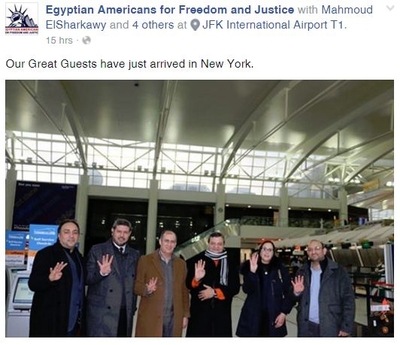
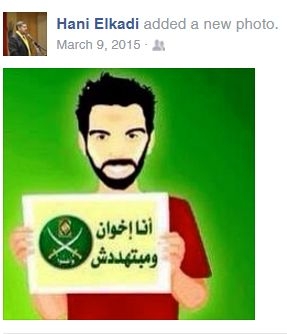


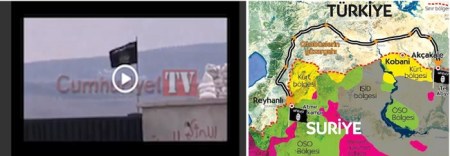

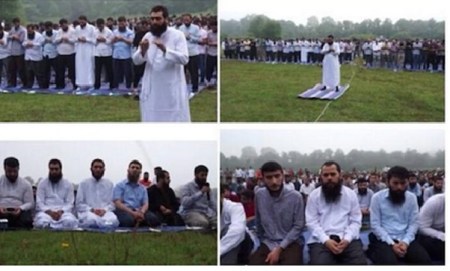
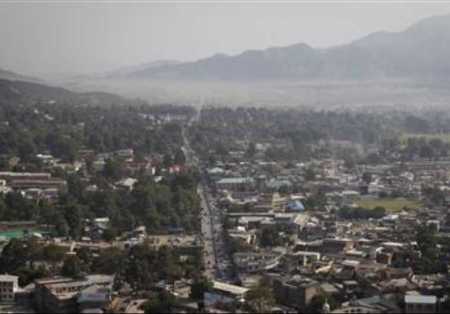


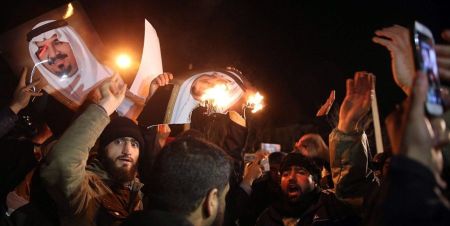





 anneinpt
 artaxes
 danmillerinpanama
 davidking1530
 Peter Hofman
 Joseph Wouk
 Peter
Peter Louisiana Steve
 WarSclerotic

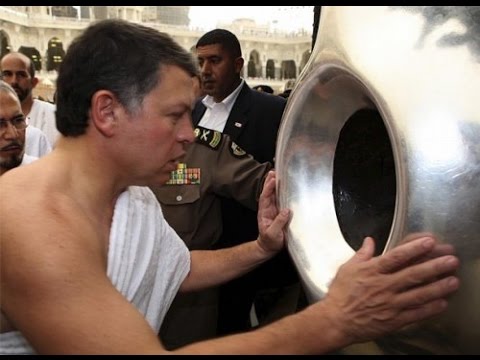
Recent Comments