♦ According to France’s Defense Minister, Jean-Yves Le Drian, 800,000 migrants are currently in Libyan territory waiting to cross the Mediterranean.
♦ The multitude of very costly social problems that Muslim migration into Europe has caused thus far, do not exist in this whitewashed European Union report, where the “research” indicates that migrants are always a boon. Similarly, any mention of the very real security costs necessitated by the Islamization occurring in Europe, and the need for monitoring of potential jihadists, simply goes unmentioned.
♦ Several European states have a less optimistic picture of the prospect of another three million migrants arriving on Europe’s borders than either the Pope or the European Commission do.
Pope Francis, on his recent visit to the Greek island of Lesbos, said that Europe must respond to the migrant crisis with solutions that are “worthy of humanity.” He also decried “that dense pall of indifference that clouds hearts and minds.” The Pope then proceeded to demonstrate what he believes is a response “worthy of humanity” by bringing 12 Syrian Muslims with him on his plane to Italy. “It’s a drop of water in the sea. But after this drop, the sea will never be the same,” the Pope mused.
The Pope’s speech did not contain a single reference to the harsh consequences of Muslim migration into the European continent for Europeans. Instead, the speech was laced with reflections such as “…barriers create divisions instead of promoting the true progress of peoples, and divisions sooner or later lead to confrontations” and “…our willingness to continue to cooperate so that the challenges we face today will not lead to conflict, but rather to the growth of the civilization of love.”
The Pope went back to his practically migrant-free Vatican City — those 12 Syrian Muslims will be hosted by Italy, not the Vatican, although the Holy See will be supporting them — leaving it to ordinary Europeans to cope with the consequences of “the growth of the civilization of love.”
There is nothing quite as free in this world as not practicing what you preach, and what the Pope is preaching is the acceptance of more migration into Europe, and more migration — much more — is indeed what is in the cards for Europe.
At the UN’s Geneva conference on Syrian refugees on March 30, Italy’s Minister of Foreign Affairs, Paolo Gentiloni, put the total number of asylum seekers into Italy in the first three months of 2016 at 18,234. This is already 80% higher than in the same period in 2015.
According to Paolo Serra, military adviser to Martin Kobler, the UN’s Libya envoy, migrants currently in Libya will head for Italy in large numbers if the country is not stabilized. “If we do not intervene, there could be 250,000 arrivals [in Italy] by the end of 2016,” he said. According to France’s Defense Minister, Jean-Yves Le Drian, the number is much higher: 800,000 migrants are currently in Libyan territory waiting to cross the Mediterranean.
Already in November 2015, the European Union estimated — in its Autumn 2015 European Economic Forecast, authored by the European Commission — that by the end of 2016, another three million migrants will have made it into the European Union.
Nevertheless, the European Commission optimistically noted that, “while unevenly distributed among countries, the estimated additional public expenditure related to the arrival of asylum seekers is limited for most EU member states.” It even concluded that the migrant crisis could have a small, positive impact on European economies within a few years citing that “Research indicates that non-EU migrants typically receive less in individual benefits than they contribute in taxes and social contribution.”
This is the classic, politically correct denial of facts on the ground. The multitude of very costly social problems that Muslim migration into Europe has caused thus far do not exist in this whitewashed report, where the “research” indicates that migrants are always a boon. Similarly, any mention of the very real security costs necessitated by the Islamization that is occurring in Europe and the consequent need for monitoring of potential jihadists, simply goes unmentioned. One wonders whether the EU bureaucrats, who authored this report, ever descend from their ivory towers and move about in the real Europe.
Several European states have a less optimistic picture of the prospect of another three million migrants arriving on Europe’s borders than either the Pope or the European Commission do. In February, Austria announced that it would introduce border controls at border crossings along frontiers with Italy, Slovenia and Hungary. On April 12, Austria began preparations for introducing border controls on its side of the Brenner Pass, the main Alpine crossing into Italy, by starting work on a wall between the two countries.
The Austrian decision to close the Brenner pass has received harsh criticism from the EU. European Commission spokeswoman Natasha Bertaud criticized the measure as unwarranted, claiming that “there is indeed no evidence that flows of irregular migrants are shifting from Greece to Italy”. Is Bertaud deliberately misrepresenting the issue? The issue is not whether the migrants are shifting from Greece to Italy after the EU’s unsavory deal with Turkey (they probably will) but the up to 800,000 migrants are already waiting to cross into Italy from Libya.
EU Migration Commissioner Dimitris Avramopoulos joined in the criticism of Austria, saying, “What is happening at the border between Italy and Austria is not the right solution.” He had criticized Austria already in February, when Vienna announced that it would cap asylum claims at 80 per day. At the time, Avramopoulos said,
“It is true that Austria is under huge pressure… It is true they are overwhelmed. But, on the other hand, there are some principles and laws that all countries must respect and apply… The Austrians are obliged to accept asylum applications without putting a cap.”
In response, Austria’s Chancellor Werner Faymann told the EU that Austria could not just let the influx of migrants continue unchecked — nearly 100,000 have applied for asylum in Austria — and he called for the EU to act. The EU has not yet acted.
The EU should hardly be surprised that a sovereign state decides to take matters into its own hands in the face of the EU’s failure to heed that call, and as it anticipates a repeat of last year’s migration chaos — which, given the predicted estimates, is bound to occur this year with even greater force.
Predictably, Italy has also criticized the decision, with Italian Interior Minister Angelino Alfano saying that Austria’s decision to erect the barrier is “unexplainable and unjustifiable.” Italy, however, only has itself to blame for Austria’s restrictions at the Brenner Pass. In 2014 and the first half of 2015, around 300,000 migrants arrived in Italy, mainly from Libya. Despite EU rules that require Italy to register those migrants, Italy simply let most of them pass through the country and continue into Austria. From there, most went further into Germany and Northern Europe. Clearly, Austria does not expect the Italians to change their practices.
Austrian police prepare to hold the line at the Brenner Pass border crossing with Italy, as a crowd tries to break through during a violent protest on April 3, 2016, against Austria’s introduction of border controls to stem the flow of migrants. (Image source: RT video screenshot)
While the bureaucrats of the EU bicker with their member states over those states’ unwillingness to follow EU regulations — evidently not made to cope with a migration crisis of these huge proportions — Turkey’s President, Recep Tayyip Erdogan is threatening to drop his obligations under a recent EU-Turkey migration deal. Those obligations include taking back all new “irregular migrants” crossing from Turkey into Greek islands, as well as taking any necessary measures to prevent the opening of new sea or land routes for migration from Turkey to the EU. “There are precise conditions. If the European Union does not take the necessary steps, then Turkey will not implement the agreement,” Erdogan warned recently in a speech in Ankara.
Erdogan knows that in the current European reality, his words have the effect he intends: When he threatens to flood Europe with migrants unless it does what he wants — in other words, blackmail — EU leaders will do what he says. German Chancellor Angela Merkel, one of the driving forces behind the EU-Turkey deal, also recently bowed to Erdogan’s demands that Germany prosecute the satirist Jan Böhmermann, after he mocked and insulted the Turkish president in a poem. The German criminal code prohibits insults against foreign leaders, but leaves it to the government to decide whether to authorize prosecutors to pursue such cases. Angela Merkel gave her authorization, a decision widely criticized. Her own ministers — Foreign Minister Frank-Walter Steinmeier, and Justice Minister Heiko Maas — said they did not believe that the authorization should have been granted.
Another indication that Erdogan has no reason to fear any misbehavior on the part of the European Union regarding the EU-Turkey deal is that the European Parliament just voted in favor of making Turkish an official European Union language. Ostensibly, the vote came about in order to back an initiative by the president of Cyprus, Nicos Anastasiades, who asked the Dutch EU Presidency to add Turkish to the bloc’s 24 official languages in order to boost attempts to reach a reunification agreement for Cyprus.
In his letter to the EU presidency, Anastasiades noted that Cyprus had already filed a similar request during its EU entry talks in 2002, but, at that time, it “was advised by the [EU] institutions not to insist, taking into account the limited practical purpose of such a development … as well as the considerable cost”. Turkey’s occupation of northern Cyprus, which Turkey invaded in 1974, is one of the issues blocking Turkey’s accession negotiations with the EU.
Making Turkish an official language is seen by Turkey, according to a senior Turkish official, as “a very important, very positive gesture” for the Cyprus peace talks and for EU-Turkish ties more broadly. “If the blockage is lifted because of Cyprus being solved, then we can proceed very quickly,” the Turkish official said.
All of the other official and working languages of the European Union are tied to states which are full members of the EU. Although the vote has to be approved by the European Commission before the decision can come into effect, it speaks volumes about the EU’s deference to Erdogan.
In light of these developments, the granting of visa-free travel to European Union states for 80 million Turks looks as if it is a done deal, despite the 72 conditions, which Turkey, at least on paper, is expected to live up to. These include increasing the use of biometric passports and other technical requirements. So far, Turkey has only met half of these conditions. Perhaps that is why European Commission President Jean-Claude Juncker recently felt the need to mention that, “Turkey must fulfill all remaining conditions so that the Commission can adopt its proposal in the coming months. The criteria will not be watered down.” The question is whether Juncker himself even believes his own words.
With the provisions on visa-free travel for 80 million Turks, the EU may just have gone from the frying pan into the fire. The visa-free admission of Turks into Europe would give Erdogan completely free rein to control the influx of migrants into Europe. Moreover, anyone believing that Erdogan would not take great advantage of this opportunity would have to be dangerously naïve. The European Union may yet conclude that the migrant crisis, in all its enormity, is the far lesser evil.
Migrants cross from Turkey to the Greek island of Lesbos (Photo: Video screenshot)
The Europeans are incapable of negotiating their way out of a paper bag.
In October 2015, they handed Turkey $3.4 billion to stop the flow of refugees into Greece. The flow continued. Six months later, in March 2016, Turkey was demanding another $3.4 billion plus visa-free travel to Europe for Turks and accelerated negotiations for membership of the European Union.
Rather than stopping the flow of migrants, the deal made it official. Europe agreed to accept one legal migrant for every illegal migrant sent back to Turkey.
With its radical Islamic government negotiating this deal, Turkey has demonstrated it is not part of the solution but part of the problem.
Now Libya wants to jump on the European gravy train.
On April 23, 2016, after a meeting in Rome with Italian Interior Minister Angelino Alfano, Libyan Vice President Ahmed Maiteeq stated that his country wants to negotiate a deal with Europe similar to that obtained by Turkey.
He is obviously surfing on the outpouring of humanitarian angst after 500 illegal migrants were drowned in the Mediterranean in a boat that people traffickers had sent from the Libyan port of Tobruk.
Maiteeq was originally elected as prime minister of Libya in 2014 under curious circumstances. On the first day of voting, gunmen opened fire in the parliament. The final vote was tainted with irregularities and on June 9, 2014, the Supreme Court ruled his election was invalid.
Not someone you would want to negotiate a deal with.
On the European side, these deals are being negotiated by unelected officials with no electoral mandate. The people of Europe are thus being ignored. Conspiracy theorists could be forgiven for claiming this is part of a sinster master plan. In fact, they may be right.
On June 21, 2012, former European Commissioner Peter Sutherland said this in a speech to the British House of Lords :
“The United States, or Australia and New Zealand, are migrant societies, and therefore they accommodate more readily those from other backgrounds than we do ourselves, who still nurse a sense of our homogeneity and difference from others. And that’s precisely what the European Union, in my view, should be doing its best to undermine… Anybody who thinks that by erecting borders or fences in some way a particular state can be protected from alleged ‘floods’ of migrants is living in cloud cuckoo land.”
Sutherland is a former attorney-general of Ireland, former Chairman of BP, non-executive chairman of Goldman Sachs International, head of the UN Global Forum on Migration and Development and could be described as the ‘’godfather of globalization.’’
What has been happening to Europe over the past 15 months may well be nothing other than a deliberate strategy to undermine — that is, to destroy — the nation-states of Europe, from Greece to Ireland and from Spain to Finland.
In 1973, Sutherland was a candidate in the Irish general election in Dublin North West constituency, but only 1,968 people voted for him — 6.24% of the poll. This probably accounts for his hatred of democracy as well as his contempt for ordinary British citizens, whom he considers “racist and xenophobic.”
He has no political mandate but has been instrumental in shaping the economic and social future of Europe. An advocate of mass immigration, he believes the European Union should “begin weaving together the two sides of the Mediterranean.”
The results of this policy are literally blowing up in the faces of European citizens in the form of suicide vests and suitcase bombs.
At a ceremony on the fifth anniversary of the promulgation of the Fundamental Law, Prime Minister Viktor Orbán stated that Islamisation is banned by the constitution in Hungary.
The Hungarian government cannot support any mass migration movements which could lead to results conflicting with the National Avowal contained within the Fundamental Law. “Neither the legislature nor the government of the day may pursue such a policy within constitutional boundaries”, he said.
He said that in drafting the “Schengen 2.0” action plan, the Hungarian government is fulfilling its constitutional obligation to protect Hungary’s citizens. The external borders must be protected, and procedures regarding those wishing to come to Europe must be conducted outside the EU, in enclosed and guarded areas, the Prime Minister reiterated.
He said that in drafting the “Schengen 2.0” action plan the Hungarian government is fulfilling its constitutional obligation to protect Hungary’s citizens. Photo: Gergely Botár/kormany.hu
In his view it is likewise reasonable to expect illegal migrants to be sent back without delay to safe transit countries, or to their countries of origin if the latter are safe. He also argued that development and visa agreements with countries outside Europe must be tied to conditions.
Mr. Orbán pointed out that it is important that the responses to demographic and labour market challenges are the sovereign decisions of Member States.
The Prime Minister said that, in order to meet the constitutional obligation of protecting the citizens of Hungary, “we must know who wants to come to our country and why; in other words, we have the right to choose whom we wish to live together with and whom we do not wish to live together with”. He added that this is not in conflict with the principle of the universal protection of refugees.
Hungary and Central Europe are anxious to take action, and are full of energy. Photo: Gergely Botár/kormany.hu
Speaking further on the issue of constitutionality, the Prime Minister said that while the European Union has no workable solutions to its various crises, Hungary and Central Europe “are anxious to take action, and are full of energy”. In his view the reason for this difference can be found in the fact that Hungary has a modern constitution, and the Hungarians are able to define where they come from, where they are and where they are heading. “By contrast, Europe denies where it came from and is reluctant to admit where it is heading”, he said.
Mr. Orbán said that, according to the figures, the EU should be the world’s leading power. By contrast, however, “it only has energy for self-reproach”, which is clearly shown in the attacks against Hungary and Poland, which often refer to their respective constitutions.
In conflict with its founding treaty, he said, the EU is made up of its institutions, and the Member States are being required to assist these. In his view, this is why the EU is unable to explore the opportunities which its existence has created.
The new constitution was not conceived in an academic debate, but in a battle, in a great political struggle. Photo: Gergely Botár/kormany.hu
Mr. Orbán also spoke at length about the circumstances surrounding the drafting of the Fundamental Law five years ago. He said that the new constitution was not conceived in an academic debate, but in a battle, in a great political struggle, of which “we, who are sitting here today, are the winners”. With this victory, he continued, Hungary and its citizens have gained firm foundations for their lives, which can serve as the basis for a period of improvement.
He said that the adoption of the Fundamental Law was preceded by a series of consultations, and the majority views coming from these consultations were all incorporated, without exception. These included some, he said, with which he did not personally agree. As an example he mentioned the plan to grant parents the right to vote on behalf of their children.
The Prime Minister also said that “the siren voices were loud” which sought to prevent Hungary pursuing the idea of creating a new constitution – particularly at the beginning of the government term, as this could have damaged Hungary’s EU presidency. “We would like to thank everyone who resisted those siren voices, and who understood that […] in politics, timing is at least as important as content”, he said.
In politics, timing is at least as important as content. Photo: Gergely Botár/kormany.hu
The Prime Minister added that they knew precisely what kind of attacks would be launched after the drafting of the new constitution. In this context he also thanked the President of Hungary at that time, Pál Schmitt – who also attended the ceremony. Mr. Schmitt, the Prime Minister said, was also aware of the consequences of his signing the document. “External and foreign forces will never forgive him […] for this act. This is important, and it places an obligation on us; because if they never forgive him, we can never forget what he did”, Mr. Orbán said.
The Prime Minister believes that there will always be “debates within the elite” on the constitution, in particular in a country with as sophisticated a culture as Hungary’s. “Our country has some strata of thinkers who always generate more thoughts than can be used”, he said, explaining that debates of this type regarding the constitution can also be expected over the long term.
The Fundamental Law can be solid and durable despite this, he stated, saying that “the foundations for the durability of the constitution can be laid by its tangible political and economic achievements”. In his view, if it is followed by a period of prosperity and improvement, the new constitutional order will strengthen.
The foundations for the durability of the constitution can be laid by its tangible political and economic achievements. Photo: Gergely Botár/kormany.hu
He pointed out that, despite the fact that different intellectual concepts on the foundations of a constitution are mutually exclusive, the possibility of peaceful coexistence in observance of the fundamental law of the day is a question of will. To this end, we must acquire “the culture of peaceful disagreement”, he said, arguing that “in a democracy, opposing parties do not cut off heads, but count them”.
At the same time, the Prime Minister voiced dissatisfaction that the principles laid down in the constitution are being only very slowly realised in lower-level legislation and in public administration and judicial rulings. As an example he mentioned the maintenance and care of parents: we have seen very little of the practical implementation of this, he said.
In response to the words of Péter Darák, President of the Curia, Mr. Orbán remarked that further debates can be expected on the issue of the division of tasks under the constitution. He also mentioned that the legislative amendment of the freedom of assembly would be timely.
As President Obama winds up his farewell tour of Europe, it is appropriate to consider the broader implications of the brouhaha he created in Great Britain. At a joint press conference with Britain Prime Minister, David Cameron, President Obama defended his intrusion into British politics in taking sides on the controversial and divisive Brexit debate. In an op-ed, Obama came down squarely on the side of Britain remaining in the European Union — a decision I tend to agree with on its merits. But he was much criticized by the British media and British politicians for intruding into a debate about the future of Europe and Britain’s role in it.
Obama defended his actions by suggesting that in a democracy, friends should be able to speak their minds, even when they are visiting another country:
“If one of our best friends is in an organization that enhances their influence and enhances their power and enhances their economy, then I want them to stay in. Or at least I want to be able to tell them ‘I think this makes you guys bigger players.'”
Nor did he stop at merely giving the British voters unsolicited advice, he also issued a not so veiled threat. He said that “the UK is going to be in the back of the queue” on trade agreements if they exit the EU.
UK Prime Minister David Cameron and US President Barack Obama take a question at a press conference, on whether it is appropriate for Obama to say whether or not the UK should remain in the European Union, April 22, 2015.
President Obama must either have a short memory or must adhere to Emerson’s dictum that “foolish consistency is the hobgoblin of little minds.” Recall how outraged the same President Obama was when the Prime Minister of a friendly country, Benjamin Netanyahu, spoke his mind about the Iran Deal.
There are, of course, differences: first, Israel has a far greater stake in the Iran Deal than the United States has in whatever decision the British voters make about Brexit: and second, Benjamin Netanyahu was representing the nearly unanimous view of his countrymen, whereas there is little evidence of whether Americans favor or oppose Brexit in large numbers.
Another difference, of course, is that Obama was invited to speak by Cameron, whereas, Netanyahu was essentially disinvited by Obama. But under our tripartite system of government — which is different than Britain’s Unitary Parliamentary system — that fact is monumentally irrelevant. Netanyahu was invited by a co-equal branch of the government, namely Congress, which has equal authority over foreign policy with the president and equal authority to invite a friendly leader. Moreover, not only are the British voters divided over Brexit, but Britain’s Conservative Party itself is deeply divided. Indeed, the leading political figure in opposition to Britain remaining in the European Union is a potential successor to Cameron as leader of the Conservative Party. So these differences certainly don’t explain the inconsistency between Obama’s interference in British affairs and his criticism of Netanyahu for accepting an invitation from Congress to express his country’s views on an issue directly affecting its national security.
So which is it, Mr. President? Should friends speak their minds about controversial issues when visiting another country, or should they keep their views to themselves? Or is your answer that friends should speak their minds only when they agree with other friends, but not when they disagree? Such a view would skew the market place of ideas beyond recognition. If friends should speak about such issues, it is even more important to do so when they disagree.
A wit once observed that “hypocrisy is the homage vice pays to virtue.” It is also the currency of diplomacy and politics. That doesn’t make it right.
The President owes the American people, and Benjamin Netanyahu, an explanation for his apparent hypocrisy and inconsistency. Let there be one rule that covers all friends — not one for those with whom you agree and another for those with whom you disagree. For me the better rule is open dialogue among friends on all issues of mutual importance. Under this rule, which President Obama now seems to accept, he should have welcomed Prime Minister Netanyahu’s advocacy before Congress, instead of condemning it. He owes Prime Minister Netanyahu an apology, and so do those Democratic members of Congress who rudely stayed away from Netanyahu’s informative address to Congress.
(The views expressed in this article are mine and do not necessarily reflect those of Warsclerotic or its other editors. — DM)
Islamization kills entire civilizations and Islam-induced rigor mortis has stricken much of Europe. Anti-blasphemy, anti-islamophobia and inferior status of women teachings, explicit or inherent in Sharia law, are being enforced. This already very long post does not deal with Islamic terrorism, a related but different topic.
Germany – This Year
“If a woman gets raped walking in public alone, then she, herself, is at fault. She is only seducing men by her presence. She should have stayed home like a Muslim woman.” – Dr. Abd Al-Aziz Fawzan Al-Fawzan, Professor of Islamic Law, Saudi Arabia. Source: Front Page Magazine, The Woman Hunt in Germany.
____________________________________
A March 5th article published by The Gatestone Institute commented on Germany’s worsening rape crisis.
A mob of asylum seekers from Afghanistan assaulted three teenage girls at a shopping center in the northern German city of Kiel. The attack — which occurred over two-hours on the evening of February 25, and mirrored the mass assaults of German women in Cologne on New Year’s Eve — shows, once again, that public spaces in Germany are becoming increasingly perilous for women and children.
Police reports show that sexual violence in Germany has skyrocketed since Chancellor Angela Merkel allowed more than one million mostly male migrants from Africa, Asia and the Middle East into the country. But the crimes are being played down by German authorities, apparently to avoid fueling anti-immigration sentiments. [Emphasis added.]
. . . .
Reliable statistics on sexual crimes committed by migrants are notoriously elusive. German authorities have repeatedly been accused of underreporting the true scale of the crime problem in the country. For example, up to 90% of the sex crimes committed in Germany in 2014 do not appear in the official statistics, according to André Schulz, the head of the Association of Criminal Police (Bund Deutscher Kriminalbeamter, BDK).
On February 25, the newspaper, Die Welt, reported that authorities in the German state of Hesse were suppressing information about migrant-related crimes, ostensibly due to a “lack of public interest.” [Emphasis added.]
On January 24, Die Weltreported that the suppression of data about migrant criminality is a “Germany-wide phenomenon.” According to Rainer Wendt, the head of the German police union (Deutschen Polizeigewerkschaft, DPolG), “Every police officer knows he has to meet a particular political expectation. It is better to keep quiet [about migrant crime] because you cannot go wrong.” [Emphasis added]
On January 22, the newsmagazine Focusreported that the Federal Anti-Discrimination Agency (Antidiskriminierungsstelle des Bundes, ADS) put pressure on police in North Rhine-Westphalia (NRW) to remove a reference to “North African criminal groups” in a press release. According to Focus, the ADS wrote: “There is a danger that people from these countries are placed under a general suspicion. We encourage you to delete the reference to the North African origin from the press release.” NRW Police later removed the offending words because “it could not be excluded that our formulation in the press release could be misunderstood as a discriminatory statement.” Interestingly, the original article by Focus has since been removed from the magazine’s webpage.
Some German commentators are downplaying or rationalizing the growing sexual violence against women and children. According to Jakob Augstein, an influential columnist for the newsmagazine Der Spiegel, Germans worried about migrant crimes are presumably motivated by deep-seated racism. [Emphasis added.]
Here’s a lengthy appendix from the same Gatestone article summarizing migrant rapes and other sexual assaults during January and February of this year. Unfortunately, it’s very long. On many days, there were multiple incidents.
Sexual Assaults and Rapes by Migrants in Germany, January-February 2016.
Gatestone Institute first reported about Germany’s migrant rape epidemic in September 2015. The problem has now spread to cities and towns in all 16 of Germany’s federal states. Following are a few cases from just the first two months of 2016:
January 1. More than a thousand migrants sexually assaulted hundreds of German women in the cities of Cologne, Hamburg and Stuttgart.
January 4. A group of migrant youths sexually assaulted a handicapped girl in Bielefeld.
January 5. An Afghan migrant attempted to rape a 15-year-old girl in Burghausen.
January 7. A 36-year-old asylum seeker was arrested for raping a 16-year-old boy inside the city hall of Wolfsburg. A “southerner” (südländisch, arabisch) sexually assaulted a 13-year-old girl near a train station in Ellwangen.
January 8. A 17-year-old Syrian migrant exposed himself to women at a swimming pool in St. Ingbert.
January 9. A 48-year-old woman was raped by three migrants in Dresden. The perpetrators have not been arrested. Also on January 9, a 45-year-old woman was sexually assaulted by an “Arab-speaking” man in Gleidingen, a town near Hanover. A group of five North Africans (Algerians, Moroccans)sexually assaulted five women in Oldenburg. Two North African migrants (Libya, Tunisia) sexually assaulted a 31-year-old woman at the main train station in Leipzig. A migrant attempted to rape a 46-year-old woman in Saarbrücken-Altenkessel.
January 10. A group of “southerners” (südländisches Aussehen) sexually assaulted three girls at a public swimming pool in Ansbach. A 21-year-old West African was arrested for raping a 15-year-old girl at a train station in Wuppertal. A 36-year-old Syrian migrant sexually assaulted a 20-year-old woman in Bornhöved. The woman was showing the man an apartment that had been advertised for rent.
January 11. A 35-year-old migrant from Pakistan sexually assaulted a three-year-old girl at a refugee shelter in Kamen. Eight migrants attempted to rape a woman at a grocery store in Ampfing. She defended herself by using pepper spray. A 20-year-old Moroccan assaulted a 24-year-old woman in Frankenberg.
January 12. A “southerner” (südländisch aussehenden) raped a 16-year-old girl in Wuppertal. Two “Arabic speaking” men assaulted a 37-year-old woman in Fröndenberg.
January 13. Four migrants (südländisch aussehen) attempted to rape a 13-year-old girl in Gelsenkirchen. Three migrants sexually assaulted a 31-year-old woman in Oldenburg. A migrant attempted to rape a woman at a train station in Altötting. She defended herself by using pepper spray. Three “southerners” (südländischer oder arabischer Herkunft) assaulted a woman in Bad Münstereifel.
January 14. Three migrants (südländische Hautfarbe) sexually assaulted a 47-year-old woman in the Bavarian town of Dingolfing. Three “southerners” (Südländer) assaulted a 22-year-old women on a train in Bremerhaven.
January 15. A 36-year-old migrant sexually assaulted an eight-year-old girl at a public park in Hilden near Solingen. A 31-year-old migrant from Tunisia was arrested for attempting to rape a 30-year-old woman in Chemnitz. A 31-year-old migrant from Morocco appeared in court for raping a 31-year-old woman in Dresden. A migrant sexually assaulted a 42-year-old woman inMainz. A migrant (dunkleren Teint) sexually assaulted a 32-year-old woman in Münchfeld. An African migrant sexually assaulted a 55-year-old woman in Mannheim.
Also on January 15, all male migrants over the age of 18 were banned from a public swimming pool in Bornheim, near Bonn, after assaults against female patrons at the facility. The measure was branded as racist by German media outlets.
January 16. A migrant from Syria sexually assaulted a 12-year-old girl inMudersbach. A 36-year-old migrant sexually assaulted an eight-year-old girl in Mettmann. A 36-year-old migrant assaulted an 8-year-old girl in Hilden. A 19-year-old migrant from Afghanistan sexually assaulted four girls between the ages of 11 and 13 at an indoor swimming pool in Dresden. The migrant was arrested but then released. A 25-year-old Moroccan migrant assaulted two woman at a grocery store in Zeithain.
January 17. Three “southerners” (Südländer) attempted to rape a young woman in Kiel. Two migrants (19 and 38 years old) sexually assaulted a 21-year-old woman at a restaurant in the main train station in Nuremberg. A 19-year-old Afghan migrant assaulted four girls (aged 11 to 13) at a public swimming pool in Dresden. Migrants invaded female changing rooms at a swimming pool in Burghausen. Two “southerners” (dunklen/südländischen Typ) attempted to rape a 42-year-old woman at a pharmacy in Altötting.
January 18. A 43-year-old Syrian migrant assaulted a 63-year-old woman inWetzlar. Police say the man also assaulted two other women (aged 62 and 74) in Wetzlar.
January 19. A 17-year-old Eritrean migrant attempted to rape an 18-year-old woman in a parking garage in Bad Oldesloe. After police intervened, the man head-butted an officer, who was hospitalized.
January 20. Migrants invaded female showers and changing rooms at two public swimming pools in Leipzig.
January 21. A “black skinned” (schwarz glänzende Hautfarbe) man attempted to rape a 13-year-old girl in Langenfeld. Two migrants assaulted an 18-year-old woman in Dingolfing.
January 22. A migrant (südländisches Äußeres) attempted to rape a 16-year-old girl in Feuerbach district of Stuttgart, and in downtown Stuttgart, four “Arabic looking” (arabisches Aussehen) men sexually assaulted a 23-year-old woman. Migrants harassed women at public swimming pools in Zwickau.
January 23. Migrants sexually assaulted two 11-year-old girls at a public swimming pool inWilhelmshaven. Two asylum seekers from Afghanistanassaulted two 17-year-old women at a public swimming pool in Straubing. Three 16-year-old migrants from Afghanistan and Syria assaulted two 13-year-old girls at a public swimming pool in Hachenburg.
Also on January 23, a 35-year-old migrant sexually assaulted a woman in a restroom on a train inDüsseldorf. A 22-year-old Syrian migrant exposed himself on a train in Hanover. An 18-year-old Syrian asylum seeker raped a 17-year-old woman in Straubing. Two unidentified men sexually assaulted an 18-year-old woman in Wiesbaden.
January 24. Two men speaking “broken German” attempted to rape a 25-year-old woman in Lehrte as she was walking home from the train station. The men pulled a knife on the woman and ordered her to “spread your legs.”
January 25. A 30-year-old migrant from “North Africa” (nordafrikanischem Erscheinungsbild) exposed himself to a 19-year-old woman on a public bus inMarburg, and then to passersby at the main train station.
January 26. A 35-year-old migrant attempted to rape a young girl in Bochum. Two female passersby intervened and called police.
January 27. Two “southerners” (dunklem Teint) sexually assaulted a 15-year-old girl at a bus stop in Überlingen. A 21-year-old asylum seeker assaulted an 18-year-old woman in a female changing room at a fitness studio in Lahr.
January 28. A migrant from Sudan sexually assaulted a female police officer in Hanover as she was attempting to arrest him for theft. Two “underage refugees” (minderjährige Flüchtlinge) sexually assaulted a 12-year-old girl at a shelter for children in Düsseldorf. It later emerged that one of the perpetrators was a 22-year-old migrant from Iran who claimed he was 16 years old to gain access to the shelter. A 17-year-old Afghan migrant assaulted a 14-year-old girl in Frankenberg. A “southerner” (Südländer) sexually assaulted an 18-year-old woman in Backnang.
January 31. A 30-year-old German, originally from Turkmenistan, raped a seven-year-old girl in Kiel. The man kidnapped the girl from a school playground at 11 AM, took her to his apartment and, after abusing her, set her free. It later emerged that the man had been accused of sexually assaulting a five-year-old girl at another kindergarten in Kiel on January 18, but due to insufficient evidence, the public prosecutors failed to pursue the case.
Also on January 31, four unidentified migrants (ausländischem Aussehen)sexually assaulted a 17-year-old woman in Vilshofen. An unidentified “dark skinned” (dunkelhäutig) man assaulted a woman in Villingen. Two North African migrants sexually assaulted two 15-year-old girls inSalzgitter.
February 1. A 40-year-old asylum seeker from Syria kissed a 7-year-old boy at a bus stop in Gaildorf.
February 2. Two “dark skinned” (dunklere Gesichtsfarbe) men assaulted a 31-year-old woman, who was nine months pregnant, in the parking lot of a supermarket in Schweinfurt. A 26-year-old migrant using several different identities assaulted three women on a train in Berlin. Two “dark skinned” (dunklem Hauttyp) men assaulted a 14-year-old girl on a school bus in Eslohe.
February 3. Three Afghan migrants sexually assaulted two 14-year-old girls from France at a public swimming pool in Munich. A 16-year-old migrantassaulted a 16-year-old girl at a swimming pool in Heidenheim. An 18-year-old Libyan migrant attempted to rape a 25-year-old woman in Leipzig. A “southern looking man” (südländisch aussehend) exposed himself to passengers on a regional train in Harburg.
February 4. A 29-year-old migrant from Nigeria raped a 21-year-old woman at a carnival celebration in Schloß Holte-Stukenbrock. A 25-year-old asylum seeker from Syria assaulted two women at the same carnival. More than 20 women were sexually assaulted during carnival celebrations in Cologne. A Syrian migrant sexually assaulted a 49-year-old woman after a carnival in Bad Reichenhall. A 29-year-old migrant assaulted a woman after a carnival in Dinslaken.
Also on February 4, an African migrant (Schwarzafrikaner) assaulted a woman at a supermarket in Lörrach. When police arrived, the man assaulted the officers, who needed backup to subdue him. Police have been unable to determine the man’s identity; he was carrying a fake ID. An Eritrean migrant who assaulted two women in Zeithain was freed after a judge determined the man was drunk when he committed the crimes. A “southerner” (Südländer)assaulted a young woman in Elsfleth.
February 5. Groups of North African migrants assaulted women at carnival celebrations in downtown Cologne. Two migrants sexually assaulted a 16-year-old girl in Straubing. A migrant assaulted a 19-year-old woman in Villingen-Schwenningen. Two “Arabic looking” (arabisch aussehend) men assaulted a 13-year-old girl in Klietz.
February 6. A group of 30 migrants attempted to rape an 18-year-old woman in Mühldorf am Inn, a town in Bavaria. Three Afghan migrants were arrested for sexually assaulting several women at a carnival celebrations on in Laufenburg. A 28-year-old Iraqi migrant assaulted a woman after a carnival in Bocholt. A 24-year-old migrant assaulted two 15-year-old girls at a carnival celebration in Badorf. A 48-year-old Jordanian migrant assaulted a 16-year-old girl at a carnival parade in Frankfurt. “Five or six” migrants assaulted a 25-year-old woman after carnival celebrations in Cologne. Several “foreigners” (Ausländer) assaulted “numerous” women at a carnival in Konstanz.
Also on February 6, a “southerner” (südländisches Aussehen) sexually assaulted a 19-year-old man in Ravensburg. Four “southerners” (südländisches Aussehen) assaulted and robbed two girls (13 and 14 years old) near the main train station in Bochum. A migrant (dunklen Teint) assaulted a woman in Friedrichstadt. Five migrants sexually assaulted an 11-year-old girl at a public swimming pool in Celle.
February 7. A 24-year-old Algerian migrant assaulted two teenage girls at a carnival in Rietberg. Three “Arab looking” (arabisches Aussehen) men sexually assaulted several women at a carnival in Mainz. Two “dark skinned men” (dunkelhäutige Männer) sexually assaulted a 31-year-old woman at a carnival in Gütersloh. Four Afghan migrants were arrested for assaulting two 14-year-old girls at carnival celebrations in Erfurt. Four Afghan migrants sexually assaulted a 17-year-old woman in Heppenheim. Several women were assaulted at a carnival in Hardheim. A 21-year-old Moroccan migrant sexually assaulted a woman at a carnival in Kranenburg. Two “dark skinned” (dunkelhäutig) men assaulted two women at a carnival in Flieden.
Also on February 7, a 17-year-old Afghan migrant sexually assaulted a 12-year-old girl at a public swimming pool in Landshut. A 16-year-old migrant from Afghanistan sexually assaulted several women at Schillerplatz, a large public square in downtown Mainz. A “dark skinned” (dunklem Hauttyp) man sexually assaulted a 17-year-old woman in Backnang. Three “southern looking” (südländischem Aussehen) assaulted a woman in Offenburg. A group of “dark skinned” (dunklen Teint) migrants sexually assaulted a 16-year-old girl in Ochtrup.
Also on February 7, a “dark skinned” (dunkelhäutig) man sexually assaulted a 24-year-old woman in Mühldorf. Five migrants assaulted a 15-year-old girl in Bernburg. A “southerner” (südländisches Aussehen) assaulted a 37-year-old woman on a bus in Bochum. Two “southerners” (zwei Südländer) sexually assaulted an 18-year-old woman on an express train in Stuttgart. A “southerner” (südländisch Aussehen) assaulted a 39-year-old woman near the train station in Dresden. A migrant assaulted a 46-year-old woman inEppelheim.
February 8. A 35-year-old migrant sexually assaulted a 15-year-old girl at a carnival in Siegburg. Two Moroccans assaulted a 36-year-old woman at a carnival in Brilon. Three migrants assaulted a 49-year-old woman in Andechs.
February 9. North African migrants assaulted a 19-year-old woman during carnival revelry in Opladen, a district of Leverkusen. Several “southerners” (Südländer) assaulted a 23-year-old woman in a supermarket parking lot in Göttingen. Four migrants sexually assaulted three 13-year-old girls at a public swimming pool in Borghorst.
February 11. A 36-year-old asylum seeker raped a 14-year-old girl in Braunschweig.
February 12. A “dark skinned” (dunkle Teint) sexually assaulted a boy at a swimming pool in Nordenham. A migrant assaulted a boy at a swimming pool in Nordenham. Three “dark skinned” (dunkle Hautfarbe) men assaulted a 16-year-old girl in Füssen.
February 13. Several migrants assaulted three girls (aged between 10 and 11) at a swimming pool in Norden. A migrant assaulted a 49-year-old woman in a bakery in Gütersloh.
February 14. Two migrants from Iran and Syria assaulted two girls (aged 10 and 11) at a public swimming pool in Dresden. Four migrants assaulted a 19-year-old woman in Duisburg. Migrants assaulted several women at a discotheque in Mengeringhausen.
February 15. A 17-year-old North African assaulted several women at the main train station in Bremen. A 23-year-old Algerian migrant assaulted a 14-year-old girl on metro train in Frankfurt. Four “dark skinned” (Dunkelhäutige) men assaulted a 35-year-old woman in Künzelsau.
February 16. An “Arabic looking” man assaulted a 14-year-old girl on a bus in Dörzbach.
February 17. A man with a “dark complexion” (dunklem Hautteint) exposed himself to passersby in the Biebrich district of Wiesbaden. A “14 or 15-year-old” boy with “dark skin” (dunkler Teint) exposed himself to several women at a traffic light in Hörstel. Two “southerners” (südländischem Aussehen) assaulted a 25-year-old woman in Dresden.
February 18. Three “southern looking” (südländische Erscheinung) men attempted to rape a woman in Uelzen. At least one of the men was attacked by the woman’s Rottweiler.
February 20. A 34-year-old Iraqi asylum seeker assaulted two girls, aged 13 and 14, at a supermarket in Rotenburg. Two “dark skinned” (dunklen Teint) men speaking broken German raped a 49-year-old woman near a cemetery in Biberach. A 51-year-old Bosnian migrant was arrested for repeatedly raping a 17-year-old woman in the Feuerbach district of Stuttgart. Two “dark brown skinned” males sexually assaulted a 19-year-old woman in Trier. A 28-year-old Afghan migrant attempted to rape a woman in Blankenburg. A “dark skinned” (dunklen Teint) man sexually assaulted a 23-year-old man in Greven.
February 21. Seven migrants from Afghanistan and Iran invaded female changing rooms at a public swimming pool in Aurich. A 35-year-old Syrian migrant assaulted a 14-year-old girl at a pool in Eckernförde. An unidentified migrant raped a 21-year-old woman at the train station in Bad Schwartau. A 44-year-old migrant sexually assaulted a 29-year-old female volunteer at a refugee shelter in Großenlüder. A “southerner” (südländisches Aussehen) assaulted a 14-year-girl on a train in Neubrandenburg. Several days later, the same girl was attacked by the same suspect at a playground in the city.
February 22. A man “speaking German with a foreign accent” sexually assaulted a 20-year-old woman in Asperg. A “southerner” (südländischer Typ) assaulted a 16-year-old girl in Feldkirchen. Two “Turkish or Arab” man attempted to rape a 15-year-old girl in Brandenburg.
February 23. A 16-year-old migrant who raped two boys (9 and 11 years of age) in the town of Glöwen was released from jail. A judge ruled that because the suspect lives with his parents and has no money, he does not pose a flight risk. A 34-year-old Algerian migrant assaulted two women (17 and 22 years of age) at a subway station in Berlin. A migrant touched himself in front of a 19-year-old woman on a public bus in Chemnitz. A migrant touched himself in front of a 21-year-old woman on a subway train in Chemnitz.
February 24. A 31-year-old Nigerian asylum seeker sexually assaulted a 21-year-old woman in a church in Weilheim. Police say the man previously assaulted another woman in the same church. He also assaulted two women in the town hall and another woman at a nursing home. A “southerner” (südländischem Äußeren) assaulted an 18-year-old woman in Kassel.
February 25. A dark skinned (südländische Hautfarbe) man assaulted two girls (13 and 15 years of age) on a city bus in the Mockau-Nord district of Leipzig. An “African” (afrikanischen Typ) man assaulted a 48-year-old woman on a tram in Leipzig.
February 26. Two Afghan migrants were accused of raping a 24-year-old woman in Magdeburg. A 29-year-old man was arrested for assaulting several women at the train station in Mülheim an der Ruhr. A 20-year-old asylum seeker assaulted a 20-year-old woman in Landau.
February 28. Two Afghan migrants (aged 14 and 34) raped two girls (aged 14 and 18) at a public swimming pool in Norderstedt. Two Afghan migrants sexually assaulted a 19-year-old woman in Mannheim. A “southerner” (südländischer Typ) assaulted a 46-year-old woman in front of the city hall in Schwarzenbach. A 19-year-old Algerian migrant assaulted a 21-year-old woman in Hamm
Germany’s Islamic hordes are not shy. Here’s a video of Turkish Muslims in Germany shouting that they will conquer Germany. Perhaps they have already.
The anti-immigrant AfD made strong gains in three regional elections last month, profiting from public fears over an influx of more than one million migrants and refugees who arrived last year. [Emphasis added.]
Another AfD deputy leader, Alexander Gauland, has warned of an “Islamisation of Germany” and said that “Islam is not a religion like Catholic or Protestant Christianity but intellectually always associated with the takeover of the state”.
The secretary general of the Council of Europe, Thorbjorn Jagland, warned that such statements are “contrary to European values”.
“It is right and necessary to have a debate about important issues like integration and education, but to depict Islam as a threat to our society is wrong and hurtful to millions of European Muslims,” he said in a statement. [Emphasis added.]
Shut up, he explained.
“We need to strengthen the respect for common values in Europe, not to create new divisions in society.”
Merkel’s top spokesman Steffen Seibert reiterated Monday the government’s often-stated position that “Islam is now, without doubt, a part of Germany”.
Germany is home to four million Muslims, and many of the country’s most recent arrivals adhere to the faith. [Emphasis added.]
In a cold world, President Barack Obama has found some warmth in Germany.
For the famously reserved commander in chief, German Chancellor Angela Merkel has become his closest global partner, an alliance-turned-friendship forged by mutual political interests and parallel personalities.
Obama arrived in Hanover, Germany, on Sunday to lend Merkel his backing as she faces political blowback over her stance on refugees fleeing war in Syria, a position Obama praised as a matter of moral fortitude.
“She’s on the right side of history on this,” Obama said alongside his German counterpart Sunday, praising Merkel for confronting some “very tough politics” in opening her country’s borders to nearly a million migrants last year. [Emphasis added.]
Officers first advised women not to walk alone at night after a rash of reports of violence against women by migrants.
“Now the police are going out and warning women against travelling alone in the city [altogether]. We have seen a worrying trend,” said regional police chief Stephen Jerand. “This is serious, we care about the protection of women and that is why we are going out and talking about this.”
Prior to the warning, women in Östersund, a picturesque, lakeside town in central Sweden, were subjected to six (recorded) attacks in the two weeks following Feb. 20. All the attacks were perpetrated by gangs of foreign men, ranging from violent assaults while attempting to rape women on the city’s streets to a groping attack of a group of 10-year old girls waiting at a bus stop.
Sweden took in 163,000 migrants last year alone, the highest percentage of migrants per capital than any other European country. The country, which offers one of the best packages of benefits to the newcomers, just recently imposed regulations to limit the number of immigrants pouring through their borders. [Emphasis added.]
615-page survey found that more than 100,000 British Muslims sympathize with suicide bombers and people who commit other terrorist acts. Moreover, only one in three British Muslims (34%) would contact the police if they believed that somebody close to them had become involved with jihadists.
In addition, 23% of British Muslims said Islamic Sharia law should replace British law in areas with large Muslim populations.
On social issues, 52% of the Muslims surveyed said they believe homosexuality should be illegal, compared to 22% of non-Muslim Britons. Nearly half believe it is unacceptable for a gay or lesbian to teach their children. At the same time, almost a third (31%) of British Muslims think polygamy should be legalized. Among 18-to-24-year-olds, 35% think it is acceptable to have more than one wife.
Thirty-nine percent of Muslims surveyed believe women should always obey their husbands, compared to 5% for non-Muslims. One in three British Muslims refuse completely to condemn the stoning of women accused of adultery.
The poll also found that a fifth of British Muslims have not entered the home of a non-Muslim in the past year.
Of the British Muslims surveyed, 35% believe Jewish people have too much power in the UK, compared to 8% of non-Muslims.
In an essay for the Sunday Times, Trevor Phillips, the host of the documentary and a former head of Britain’s Equality and Human Rights Commission, warned of a growing “chasm” between Muslims and non-Muslims in Britain that “isn’t going to disappear any time soon.”
Phillips wrote that the poll reveals “the unacknowledged creation of a nation within the nation, with its own geography, its own values and its own very separate future.” He added: “I thought Europe’s Muslims would gradually blend into the landscape. I should have known better.”
Phillips was referring to his rather ignominious role in commissioning the 1997 report, “Islamophobia: A Challenge for Us All.” Also known as the Runnymede Report, the document popularized the term “Islamophobia” in Britain and had a singular role in silencing criticism of mass immigration from the Muslim world. Twenty years later, Phillips now concedes that he has had a change of heart.
Formerly Great Britain, as a member of the European Union, has little choice as to whether or how many Muslim immigrants to accept. On April 22, Obama advised Britain to remain in the European Union. He said,
We just discussed, for example, the refugee and the migration crisis. And I’ve told my team — which is sitting right here, so they’ll vouch for me — that we consider it a major national security issue that you have uncontrolled migration into Europe — not because these folks are coming to the United States, but because if it destabilizes Europe, our largest trading bloc — trading partner — it’s going to be bad for our economy. If you start seeing divisions in Europe, that weakens NATO. That will have an impact on our collective security. [Emphasis added.]
He did not comment on the extent to which migration to Europe is uncontrolled.
Now, if, in fact, I want somebody who’s smart and common sense, and tough, and is thinking, as I do, in the conversations about how migration is going to be handled, somebody who also has a sense of compassion, and recognizes that immigration can enhance, when done properly, the assets of a country, and not just diminish them, I want David Cameron in the conversation. [Emphasis added.]
Obama offered no insights as to when or how the EU might get around to dealing with immigration “properly” and hence enhance the assets of member nations. The situation continues to worsen.
Obama’s hypocrisy has been noted. Back before the nuke “deal” with Iran was made, Obama criticized Israeli Prime Minister Netanyahu for offering his views on the proposed “deal” to the Congress at the invitation of House Speaker Boehner.
[T]he British are expected to decide via referendum whether or not to remain a part of the European Union. During his recent visit to England, Obama spoke out strongly against Britain’s potential separation from the EU. This was a crude and disproportionate effort to meddle in another state’s affairs — an expression of his desire to evade blame for the collapse of the European Union. In his mind, British citizens are expected to forgo their opinions and best interests in favor of his legacy.
It is therefore unclear why Obama unleashed his fury at Prime Minister Benjamin Netanyahu when the latter made tireless efforts to convince Congress and the American public not be deceived by the dangerous nuclear deal. How much hypocrisy does it take to allow yourself to do things that you reprimand others for doing? Immanuel Kant saw this kind of behavior as a basic moral failure. Luckily for Britain’s citizens, Obama cannot veto their decision.
Conclusions
The Islamisation of Europe is bad for its citizens, as many of them have recognized to the displeasure of its “mainstream” politicians. Those who opposed Islamisation are disparaged as “Islamophobic.”
Despite the continuing and increasing although mainly illegal influx of immigrants, America has thus far not lost most of her freedoms. However, they have already been endangered and degraded by Obama’s persistent catering to Islamist groups such as the Muslim Brotherhood-linked Council on American-Islamic Relations (CAIR) and it many Islamist affiliates.
These pathways can take many forms: not only resettlement, but also more flexible mechanisms for family reunification, including extended family members, labour mobility schemes, student visa and scholarships, as well as visa for medical reasons. Resettlement needs vastly outstrip the places that have been made available so far… But humanitarian and student visa, job permits and family reunification would represent safe avenues of admission for many other refugees as well. [Emphasis added.]
Here’s a link to an article about what Muslims are being taught in many private Islamic schools in America. According to their text books, there is no Israel, only Palestine. Christians are of the very lowest possible status and are forbidden from entering Heaven. What would Obama say if Christian and Jews were provided comparable education about Muslims?
Are Obama and the European nations which have succumbed to Islamisation following Andrew Klavan’s suggestions in this video that Muslims be treated as sub-humans with no moral agency? It seems that they are, so why not acknowledge it?
♦ Ever since the inception of the European Economic Community, British politicians across the entire political spectrum have been perceptive enough to realize that Britain will lose its sovereignty and turn into a vassal of the France-Germany axis.
♦ This month, in March, an official audit reported that EU auditors refuse to sign off more than £100 billion ($144 billion) of EU spending. The Brussels accounts have not been given the all-clear for 19 years in a row.
There is a joke going around the internet it how the European Union works (or doesn’t):
Pythagoras’s theorem – 24 words.
Lord’s Prayer – 66 words.
Archimedes’s Principle – 67 words.
10 Commandments – 179 words.
Gettysburg address – 286 words.
U.S. Declaration of Independence – 1,300 words.
U.S. Constitution with all 27 Amendments – 7,818 words.
EU regulations on the sale of cabbage – 26,911 words.
Why are EU Regulations so long? Maybe because they have to be translated into the 18 official languages? Interpreters also have to be found who can work into and from those languages at the European Parliament. The translation budget is massive. One of the official languages currently is Irish. It can confidently be said that there is no one in the Republic of Ireland who does not speak English; many Irish do not even speak or understand Irish, and certainly none of Ireland’s politicians will be fluent only in Irish. But all of the “acquis,” the body of regulations that are already part of the EU body of laws, also have to be translated into the languages of candidates for EU membership, such as Turkey, thus adding more languages to the tally each time a new regulation is passed. If Catalonia breaks away from Spain and remains a member of the EU, Catalan will need to be added, even though Catalan politicians all speak perfect Spanish.
Corruption and Waste
This month, in March, an official audit reported that EU auditors refuse to sign off more than £100 billion ($144 billion) of EU spending. The Brussels accounts have not been given the all-clear for 19 years in a row. Moreover, the EU is apparently less than incompetent at managing the funds it has.
This is happening at a time when the EU is demanding that the UK pay it £1.7 billion ($2.45 billion). It was reported on September 17, 2015 in the Daily Mail newspaper that Britain had reluctantly paid this sum, which prime minister David Cameron himself, a fan of staying in Europe, has described as “appalling.”
Also reported on September 17 in the Daily Telegraph, was that, according to the annual report of the European Court of Auditors, £5.5 billion ($7.9 billion) of the EU budget last year was misspent because of controls on spending that were deemed by experts to be only “partially effective.”[1]
The audit, published on March 17, 2016, found that £109 billion ($157 billion) out of a total of £117 billion spent by the EU in 2013 alone was “affected by material error” — that is, disappeared into various people’s pockets.
Thanks to the European Union, the Value Added Tax (VAT), the tax which in the UK replaced purchase tax in 1973, is now applied to services as well as goods. Such a tax discriminates against service-based economies, such as those of the developed countries, because such economies are taxed so they cannot compete with services provided outside the EU. Each member country’s tax regime is micro-managed by the European Union. The former purchase tax was specifically designed for taxing luxury goods, but the VAT is now imposed even on essentials needed by the poorest members of society. Furthermore, the VAT discriminates against women because the EU requires the member states to tax products used by only one gender, such as tampons.
The “Traveling Circus”
Few people outside European parliamentary circles are aware that there is an EU “traveling circus.” Once a month, the European Parliament moves from Brussels in Belgium to Strasbourg in France. Even though Members of European Parliament (MEPs) voted to scrap this move, the French government, which initiated this madness in the first place, has the power to block any such decision and is apparently determined to do so. That is another fact which goes unmentioned by those determined to keep the UK in the EU. When this author challenged an MEP, Mary Honeyball, on the subject, she claimed that it was “being dealt with,” but the French government is fiercely opposed to keeping the parliament exclusively in Brussels and it has the power to block any such reform. The cost of the “travelling circus” alone is conservatively estimated at £130 million ($187 million) a year.
Free Movement of Labour
The free movement of labour between EU member states was always going to be a non-starter. Has anyone noticed the hordes of British plumbers and electricians emigrating to Bulgaria and Romania? The movement of skilled and unskilled labour from the poorest countries of the EU to the wealthier ones — those that offer generous benefits to the unemployed and even subsidise low wages — has always been a fact of life, one seriously underestimated by successive British governments. The British suffer most because, of all the countries of the EU, the UK offers the most generous benefits. The so-called “freedom of movement,” which has proved to be just a one-way street, is only one of the reasons why Britain needs to regain control of its own destiny and stop being subservient to laws being made by unelected, overpaid, un-unelectable bureaucrats in Brussels.
But Will There Be a Brexit?
Unfortunately, most voters in the British referendum glean their information from the sound bites of politicians on television. This circumstance leaves the public open to manipulation, uninformed, and ignorant of the facts. One fact, however, that cannot be ignored is that ever since Britain joined the European Economic Community in 1973, British politicians across the entire political spectrum from left (Tony Benn) to right (Enoch Powell) were perceptive enough to realize that Britain would lose the power to make its own laws and turn into a vassal of the France-Germany axis.
Leaving the European Union will give the UK back its sovereignty and leave it free to make alliances not only with its former European partners, but with other Commonwealth countries, to say nothing of the United States, and Central and South America.
Judging by his approach to complex national and international issues, U.S. President Barack Obama is very frustrated. The frustration is natural for someone who made big promises, almost messianic ones, and is now leaving behind nothing more than a trail of shattered dreams. During his eight years in office, the United States has gone from being a leading superpower, a pillar of Western civilization, to a state that is hesitant, indecisive and alarmingly slow to respond. Its domestic economy is faltering, sowing uncertainty and insecurity among the large middle class.
Needless to say, the success enjoyed by Republican presidential candidate Donald Trump is an expression of a great number of Americans who grew up hearing about how their flag was raised on Japan’s Mount Suribachi on the island of Iwo Jima toward the end of World War II, and who are now watching with heartache as their beloved flag is being lowered to half-mast before being taken down altogether.
In an effort to gather up the pieces of his crumbling legacy, Obama set out on his final trip to the Middle East and Europe. America’s long-time allies feel betrayed. Their resentment is clear. Relationships between countries are not disposable. The Obama administration’s deference to Iran has had major implications on its ties with Saudi Arabia and the Gulf States. A divided Egypt is still paying the price for Obama’s support for the Muslim Brotherhood.
The state of Israel, which has led the struggle against a nuclear Iran for a long time, has by now come to terms with the fact that the United States was duped by the fake smiles of Iranian Foreign Minister Mohammad Javad Zarif and his friends in Tehran. Singing Passover songs in Hebrew won’t change the fact that Obama has not changed, after having sided entirely with the mendacious Palestinian narrative of victimhood.
Leaders in the Middle East cannot decide whether Obama is a naive president or one who is willing to sacrifice his fundamental values and his credibility just so he can leave behind what he sees as a positive sentence in the books of history — a sentence that will be erased with record speed.
Europe is also discouraged by the United States. Obama’s indecisiveness regarding the madness in Syria has allowed Russia to take significant steps in the Middle East and Europe. The failed efforts to confront the Syrian problem have contributed to the tsunami of migrants flooding Europe and all the resulting consequences for European society and its security. Add to this, of course, the financial crisis currently threatening to destroy the European Union, the seeds of which were sown in 1992 with the signing of the Maastricht Treaty in 1992.
It is against this backdrop that the British are expected to decide via referendum whether or not to remain a part of the European Union. During his recent visit to England, Obama spoke out strongly against Britain’s potential separation from the EU. This was a crude and disproportionate effort to meddle in another state’s affairs — an expression of his desire to evade blame for the collapse of the European Union. In his mind, British citizens are expected to forgo their opinions and best interests in favor of his legacy.
It is therefore unclear why Obama unleashed his fury at Prime Minister Benjamin Netanyahu when the latter made tireless efforts to convince Congress and the American public not be deceived by the dangerous nuclear deal. How much hypocrisy does it take to allow yourself to do things that you reprimand others for doing? Immanuel Kant saw this kind of behavior as a basic moral failure. Luckily for Britain’s citizens, Obama cannot veto their decision.
♦ The European Union now finds itself in a classic catch-22 situation. Large numbers of Muslim migrants will flow to Europe regardless of whether or not the EU approves the visa waiver for Turkey.
♦ “If visa requirements are lifted completely, each of these persons could buy a cheap plane ticket to any German airport, utter the word ‘asylum,’ and trigger a years-long judicial process with a good chance of ending in a residency permit.” — German analyst Andrew Hammel.
♦ In their haste to stanch the rush of migrants, European officials effectively allowed Turkey to conflate the two very separate issues of a) uncontrolled migration into Europe and b) an end to visa restrictions for Turkish nationals.
♦ “Why should a peaceful, stable, prosperous country like Germany import from some remote corner of some faraway land a violent ethnic conflict which has nothing whatsoever to do with Germany and which 98% Germans do not understand or care about?” — German analyst Andrew Hammel.
♦ “Democracy, freedom and the rule of law…. For us, these words have absolutely no value any longer.” — Turkish President Recep Tayyip Erdogan.
Turkey has threatened to renege on a landmark deal to curb illegal migration to the European Union if the bloc fails to grant visa-free travel to Europe for Turkey’s 78 million citizens by the end of June.
If Ankara follows through on its threat, it would reopen the floodgates and allow potentially millions of migrants from Africa, Asia and the Middle East to flow from Turkey into the European Union.
Under the terms of the EU-Turkey deal, which entered into effect on March 20, Turkey agreed to take back migrants and refugees who illegally cross the Aegean Sea from Turkey to Greece. In exchange, the European Union agreed to resettle up to 72,000 Syrian refugees living in Turkey, and pledged up to 6 billion euros ($6.8 billion) in aid to Turkey during the next four years.
European officials also promised to restart Turkey’s stalled EU membership talks by the end of July 2016, and to fast-track visa-free access for Turkish nationals to the Schengen (open-bordered) passport-free zone by June 30.
Turkish President Recep Tayyip Erdogan (left) has boasted that he is proud of blackmailing EU leaders, including European Commission President Jean-Claude Juncker (right), into granting Turkish citizens visa-free access to the EU and paying Turkey billions of euros.
To qualify for the visa waiver, Turkey has until April 30 to meet 72 conditions. These include: bringing the security features of Turkish passports up to EU standards; sharing information on forged and fraudulent documents used to travel to the EU and granting work permits to non-Syrian migrants in Turkey.
The European Commission, the administrative arm of the European Union, said it would issue a report on May 4 on whether Turkey adequately has met all of the conditions to qualify for visa liberalization.
During a hearing at the European Parliament on April 21, Marta Cygan, a director in the Commission’s migration and home affairs unit, revealed that to date Ankara has satisfied only 35 of the 72 conditions. This implies that Turkey is unlikely to meet the other 37 conditions by the April 30 deadline, a window of fewer than ten days.
According to Turkish officials, however, Turkey is fulfilling all of its obligations under the EU deal and the onus rests on the European Union to approve visa liberalization — or else.
Addressing the Council of Europe in Strasbourg on April 19, Turkish Prime Minister Ahmet Davutoglu said that Turkey has now reduced the flow of migrants to Greece to an average of 60 a day, compared to several thousand a day at the height of the migrant crisis in late 2015. Davutoglu went on to say that this proves that Turkey has fulfilled its end of the deal and that Ankara will no longer honor the EU-Turkey deal if the bloc fails to deliver visa-free travel by June 30.
European Commission President Jean-Claude Juncker has insisted that Turkey must meet all 72 conditions for visa-free travel and that the EU will not water down its criteria. But European officials — under intense pressure to keep the migrant deal with Turkey alive — will be tempted to cede to Turkish demands.
EU Migration Commissioner Dimitris Avramopoulos on April 20 conceded that for the EU it is not a question of the number of conditions, but rather “how quickly the process is going on.” He added: “I believe that at the end, if we continue working like this, most of the benchmarks will be met.”
European officials alone are to blame for allowing themselves to be blackmailed in this way. In their haste to stanch the rush of migrants to Europe, they effectively allowed Turkey to conflate the two very separate issues of a) uncontrolled migration into Europe and b) an end to visa restrictions for Turkish nationals.
The original criteria for the visa waiver were established in December 2013 — more than two years before the EU-Turkey deal — by means of the so-called Visa Liberalization Dialogue and the accompanying Readmission Agreement. In it, Turkey agrees to take back third-country nationals who, after having transiting through Turkey, have entered the EU illegally.
By declaring that the visa waiver conditions are no longer binding because the flow of migrants to Greece has been reduced, Turkish officials, negotiating like merchants in Istanbul’s Grand Bazaar, are running circles around the hapless European officials.
Or, as Turkish President Recep Tayyip Erdogan recently proclaimed: “The European Union needs Turkey more than Turkey needs the European Union.”
The European Union now finds itself in a classic Catch-22 situation. Large numbers of Muslim migrants will flow to Europe regardless of whether or not the EU approves the visa waiver.
Critics of visa liberalization fear that millions of Turkish nationals may end up migrating to Europe. Indeed, many analysts believe that President Erdogan views the visa waiver as an opportunity to “export” Turkey’s “Kurdish Problem” to Germany.
Bavarian Finance Minister Markus Söder, for example, worries that due to Erdogan’s persecution of Kurds in Turkey, millions may take advantage of the visa waver to flee to Germany. “We are importing an internal Turkish conflict,” he warned, adding: “In the end, fewer migrants may arrive by boat, but more will arrive by airplane.”
In an insightful essay, German analyst Andrew Hammel writes:
“Let’s do the math. There are currently 16 million Turkish citizens of Kurdish descent in Turkey. There is a long history of discrimination by Turkish governments against this ethnic minority, including torture, forced displacement, and other repressive measures. The current conservative-nationalist Turkish government is fighting an open war against various Kurdish rebel groups, both inside and outside Turkey.
“This means that under German law as it is currently being applied by the ruling coalition in the real world (not German law on the books), there are probably something like 5-8 million Turkish Kurds who might have a plausible claim for asylum or subsidiary protection. That’s just a guess, the real number could be higher, but probably not much lower.
“If visa requirements are lifted completely, each of these persons could buy a cheap plane ticket to any German airport, utter the word ‘asylum,’ and trigger a years-long judicial process with a good chance of ending in a residency permit.”
Hammel continues:
“There are already 800,000 Kurds living in Germany. As migration researchers know, existing kin networks in a destination country massively increase the likelihood and scope of migration…. As Turkish Kurds are likely to arrive speaking no German and with limited job skills, just like current migrants, where is the extra 60-70 billion euros/year [10 billion euros/year for every one million migrants] going to come from to provide them all with housing, food, welfare, medical care, education and German courses?
And finally, “the most important, most fundamental, most urgent question of all”:
“Why should a peaceful, stable, prosperous country like Germany import from some remote corner of some faraway land a violent ethnic conflict which has nothing whatsoever to do with Germany and which 98% Germans do not understand or care about?”
Turkish-Kurdish violence is now commonplace in Germany, which is home to around three million people of Turkish origin — roughly one in four of whom are Kurds. German intelligence officials estimate that about 14,000 of these Kurds are active supporters of the Kurdistan Workers’ Party (PKK), a militant group that has been fighting for Kurdish independence since 1974.
On April 10, hundreds of Kurds and Turks clashed in Munich and dozens fought in Cologne. Also on April 10, four people were injured when Kurds and Turks fought in Frankfurt. On March 27, nearly 40 people were arrested after Kurds attacked a demonstration of around 600 Turkish protesters in the Bavarian town of Aschaffenburg.
On September 11, 2015, dozens of Kurds and Turks clashed in Bielefeld. On September 10, more than a thousand Kurds and Turks fought in Berlin. Also on September 10, several hundred Kurds and Turks fought in Frankfurt.
On September 3, more than 100 Kurds and Turks clashed in Remscheid. On August 17, Kurds attacked a Turkish mosque in Berlin-Kreuzberg. In October 2014, hundreds of Kurds and Turks clashed at the main train station in Munich.
In an essay for the Financial Times titled “The EU Sells Its Soul to Strike a Deal with Turkey,” columnist Wolfgang Münchau wrote:
“The deal with Turkey is as sordid as anything I have ever seen in modern European politics. On the day that EU leaders signed the deal, Recep Tayyip Erdogan, the Turkish president, gave the game away: ‘Democracy, freedom and the rule of law…. For us, these words have absolutely no value any longer.’ At that point the European Council should have ended the conversation with Ahmet Davutoglu, the Turkish prime minister, and sent him home. But instead, they made a deal with him — money and a lot more in return for help with the refugee crisis.”
U.S. President Barack Obama has penned an opinion column in Britain’s Daily Telegraph newspaper outlining why he believes Britain should remain in the European Union (EU). The core of his arguments are: that Britain’s voice would be lost without Brussels bureaucrats; his failing deal with the largest state sponsor of terrorism; the pro-mass-privatisation TTIP deal; and the fact that dead American servicemen are buried in Europe.
One might argue that he has failed to read the room.
Just as President Obama parodied himself in his multitude of snubs to Britain during his tenure, he has, probably unknowingly, lampooned himself again – which hasn’t gone unnoticed by staff at the Telegraph themselves, when tweeting out his column tonight.
President Obama begins by talking up the United Nations and NATO: institutions that are increasingly being called into question not just in Britain, but across Europe and further afield. And he acknowledges the timing of his visit is poor to say the least, jesting:
“I realise that there’s been considerable speculation – and some controversy – about the timing of my visit. And I confess: I do want to wish Her Majesty a happy birthday in person.”
But his op-ed column takes a turn for the bizarre when he mentions the U.S. servicemen who died defending sovereignty and freedom in Europe. This is perhaps especially concerning when he is effectively backing a new German takeover of the continent. He writes:
“The tens of thousands of Americans who rest in Europe’s cemeteries are a silent testament to just how intertwined our prosperity and security truly are. And the path you choose now will echo in the prospects of today’s generation of Americans as well.”
And then comes the attack on the idea of sovereign nations themselves. President Obama insists that “collective action” is more pressing than the idea of independent countries: a notion that those same American servicemen died fighting against:
“And in today’s world, even as we all cherish our sovereignty, the nations who wield their influence most effectively are the nations that do it through the collective action that today’s challenges demand.”
President Obama then goes on to cite the nuclear deal with Iran that has emboldened the country – the globe’s largest state sponsor of terrorism, and enemy of the Western world and its allies:
“When we negotiated the historic deal to verifiably prevent Iran from developing a nuclear weapon, it was collective action, working together with the permanent members of the UN Security Council and Germany, that got the job done. And the EU’s seat at the table magnified the United Kingdom’s voice.
“When the climate agreement in Paris needed a push, it was the European Union, fortified by the United Kingdom, that ultimately helped make that agreement possible.”
Finally, President Obama discusses the Trans-Atlantic Trade and Investment Partnership (TTIP) deal – now widely known to be a corporate lobbyist effort to privatise Britain’s National Health Service en masse and give corporations the right to sue governments. It is massively unpopular with the socialist left and the nationalist right, yet he says:
“When it comes to creating jobs, trade, and economic growth in line with our values, the UK has benefited from its membership in the EU – inside a single market that provides enormous opportunities for the British people. And the Transatlantic Trade and Investment Partnership with the EU will advance our values and our interests, and establish the high-standard, pro-worker rules for trade and commerce in the 21st century economy.”
Conclusively, one might argue that President Obama’s op-ed is a litany of unpopular, establishment narratives. The most worrying thing about it? Most people aren’t likely to have a clue what he’s talking about.
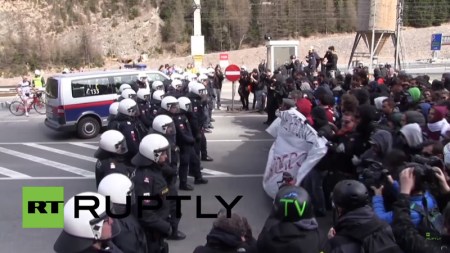 Austrian police prepare to hold the line at the Brenner Pass border crossing with Italy, as a crowd tries to break through during a violent protest on April 3, 2016, against Austria’s introduction of border controls to stem the flow of migrants. (Image source: RT video screenshot)
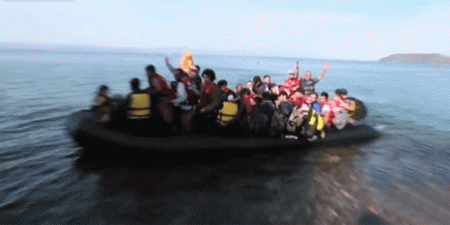


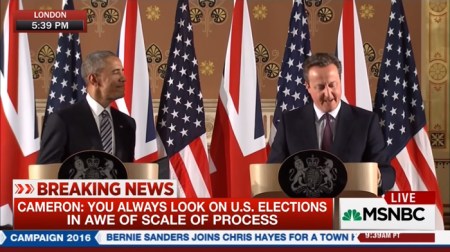

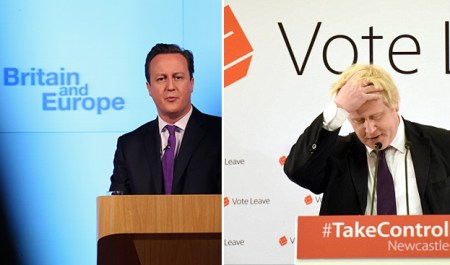





 anneinpt
 artaxes
 danmillerinpanama
 davidking1530
 Peter Hofman
 Joseph Wouk
 Peter
Peter Louisiana Steve
 WarSclerotic
Recent Comments