Archive for the ‘Europe’ category

Migrant Problems Still Threaten Europe

August 20, 2016

Migrant Problems Still Threaten Europe, Gatestone InstituteGeorge Igler, August 20, 2016

♦ In September 2015, a Canadian broadcaster, Ezra Levant, suggested that what Europe was experiencing, was not primarily an influx of “refugees” fleeing conflict, but rather a new Gold Rush, in which young men from the Muslim world were seeking to improve their fortune at Europe’s expense.

♦ Rome-based journalist Barbie Latza Nadeu seriously asked whether Italy was “enabling the ISIS invasion of Europe.”

♦ Profits in the people-smuggling business often flow to terrorist-backed gangs operating in Italy. The numbers drowning in the Mediterranean continue to mount.

Chaotic scenes have erupted on the coastal Mediterranean frontier between Italy and France. On August 4, for instance, hundreds of migrants, chiefly from Eritrea, Ethiopia and the Sudan sought to storm the crossing in their attempts to make it to Northern Europe.

“Both the Italian and French forces at the border were taken by surprise,” remarked Giorgio Marenco, a police commander in Ventimiglia, where tear gas was used to disperse the migrants. Others merely braved the choppy waters of the sea to breach the crossing by swimming towards their goal.

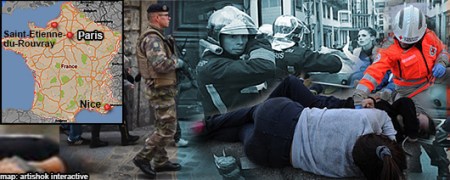
The Italian town contains the last train station in Italy near the border. The besieged terminus lies three miles from the French Riviera. It has been a gathering point for the predominantly Muslim migrants since June 2015. A fractious tent city for migrants has sprung up, mirroring others spread across Italy. The capital of the French holiday district is Nice, which experienced a jihadist massacre on July 14.

Although mercifully free from mass terrorist outrages this year, Italy has already endured several alarming scenes of disorder and protest resulting from the pressure of accepting increasing illegal migrants.

On May 7, violent attempts by “open borders” activists took place, aimed at forcing open the frontier between Italy and Austria. On May 21, various groups in Rome organized mass demonstrations against Italy’s “invasion” by migrants. Apparently the prevalence of populist politics in the country has created movements which do not lie within the usual “Left-Right” political spectrum in which analysts usually classify parties.

The chief example is the presence in Italy of the Five Star Movement, founded in 2009 by the comedian Beppo Grillo, and now considered Italy’s second largest political force. Having taken a back seat after frequently being condemned for his “Islamophobic” anti-mass immigration rhetoric, Grillo’s party nevertheless helped to elect Virginia Raggi, in July, as the new mayor of Rome.

Despite the assurances of Angelino Alfano, the Italian Interior Minister, that Ventimiglia would not turn into “our Calais” — a reference to migrants amassed at the French channel port who are seeking illegal entry into the United Kingdom — the challenges faced by Italy lie not merely in numbers.
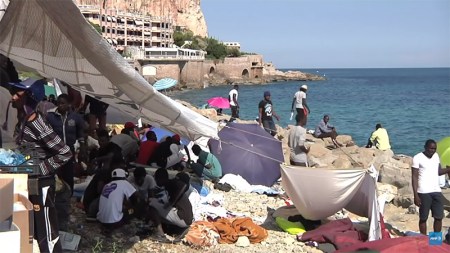
1221 (1)African migrants camp out on the beach in the northern Italian town of Ventimiglia, along the French border, as they wait for the opportunity to cross into France, in 2015. (Image source: AFP video screenshot)

Italy’s terror alert status remains at “Level Two” — the second highest in its security index. On March 30, the Rome-based journalist, Barbie Latza Nadeu, seriously asked whether the country was “enabling the ISIS invasion of Europe.”

After the collapse of Libya — occasioned in 2011 by military intervention masterminded by then French President Nicolas Sarkozy and then UK Prime Minister David Cameron — the North African nation has become the gathering point for those on the continent farther south, who possess the will or resources to push into Europe.

Two separate governments are currently attempting to wrest control from each other in Libya, a former colony of Italy, while ISIS forces also maintain their foothold. It is through this seemingly unresolvable ongoing chaos that people-smugglers ply their lucrative trade.

Waves of migrants heading into Europe, primarily through a corridor beginning in Turkey and resulting in short crossings to nearby Greek islands, are still stranded in the so-called Western Balkan route into the continent.

After the widely derided imposition by the Prime Minister of Hungary of a razor-wire border fence on his country’s southern frontier, other nations nearby, that were subjected to migrant pressure, soon followed suit.

Remaining conscious of Hungarian Prime Minister Viktor Orbán’s analysis, that only half a year’s total migrants come to Europe between January and October, with the other half arriving through the remainder of the year, the steady focus in 2016 is likely to be on Europe’s “soft underbelly” — a term Winston Churchill used during the Second World War to refer to the susceptibility of Italy being invaded by sea — as opposed the susceptibility of the Balkans.

The enthusiasm of the present government of Chancellor Angela Merkel to import Muslims into Germany apparently remains undiminished. As reported by Markus Mahler, a succession of migrant flights into Germany from Turkey are now taking place – in one instance, more than 11 planes landed during the same night at Cologne-Bonn airport – as some analysts predicted last year.

In September 2015, a Canadian lawyer and broadcaster, Ezra Levant, suggested that what Europe was experiencing, was not primarily an influx of “refugees” fleeing conflict, but rather a new Gold Rush, in which young men from the Muslim world were seeking to improve their fortune at Europe’s expense.

Sea crossings from Africa into Italy, which initially targeted the small Italian island of Lampedusa, had begun in 1996. Since then, they have magnified in number year on year, considerably aided between 2013-2014 by the Mare Nostrum program of the Italian navy, which picked up stranded vessels and brought their occupants to Italy, rather than returning migrants to their countries of origin. This program was then superseded by Operation Triton, run by the European Union’s border agency, Frontex.

It is often simpler for migrant ships to send a distress signal while near Italian coastal waters, as happened in January 2015 with the ship Ezadeen, abandoned by its crew of smugglers, after they set the ship on autopilot pointed towards Italy’s southern shore. The ship’s 450 migrant passengers were towed to harbor by a Frontex ship from Iceland.

Profits in the people-smuggling business often flow to terrorist-backed gangs operating in Italy. The numbers drowning in the Mediterranean continue to mount.

Successful migrants from Africa usually then traverse Italy, but can remain stranded if their attempts to penetrate further into Europe become frustrated. That situation frequently leads to violence at migrant camps and outrage at local government level as the migrants are then distributed across the country.

Despite the swelling number of illegal sea crossings, there seems little interest in curtailing them by force, given the existence of international refugee conventions and European legislation on human rights, which some migrants appear to be exploiting.

During four days in July alone, 10,000 illegally crossed by sea into Italy. As in 2015, the vast majority looking for “asylum seeker” status in Europe are military-aged Muslim males seeking eventual European citizenship.

Meanwhile, relations between Italians and their existing established Muslim communities seem to be rapidly eroding. The introduction of gay marriage into Italy on June 5, against fierce opposition in the home of the Roman Catholic Church, has had unforeseen consequences.

As a reciprocal gesture in the spirit of “civil rights,” Hamza Piccardo, the founder of the Union of Islamic Communities and Organizations in Italy, has demanded the legalization of polygamy.

As the pressures grow on the Euro, the currency which binds 19 European nations together both politically and economically, the long-term future of Italy’s banking system has already been called into question.

The picture drawn by the present migration into Europe may fundamentally undermine the “Refugees Welcome” narrative that dominated news reports last year, but the continent-wide economic ramifications of its effects on a country such as Italy, already subject to considerable political tumult, should not be underestimated.

The Real Weak Link in Europe

August 17, 2016

The Real Weak Link in Europe, American ThinkerAlex Alexiev, August 17, 2016

With some weeks now past since the event, the Brexit doom and gloom-mongers have taken a well deserved break from conjuring up the imminent demise of the U.K., the EU, and perhaps the world itself.  This may be an appropriate opportunity to consider whether or not there might be an even better candidate for such end-of-times prognostications: Germany.

On the face of it, this is surely preposterous.  Europe’s largest economy, its most stable government, and the main if not only pillar of the EU and the euro is hardly a destabilizing factor, most would agree.  Germany may indeed be all of that, but only in comparison to the rest of the EU, which has been stagnating economically for a decade and is beset by major political instability and terrorism.  Since 2007, German labor productivity growth has been close to zero, while GDP growth has averaged a miserable 0.8% per annum, even as Germany’s largest company, Volkswagen, is being prosecuted around the world for cheating, while its very symbol of stability, Deutsche Bank, has been called by the IMF “the biggest contributor to risk in global finance.”

Serious as these are, much more disturbing are unmistakable trends that Germany may be going in directions hardly congenial to European and Western policies vis-à-vis Russia.  A case in point is the new Nord Stream 2 pipeline project, designed to bring up to 80% of the Russian gas supply to Europe while bypassing Ukraine and Eastern Europe.  A blatantly political ploy by Mr. Putin and Gazprom, it will guarantee that Moscow can blackmail Eastern Europe at will.  Despite that, the project enjoys support not only among companies likely to profit from Nord Stream 2, but also by significant parts of the German establishment, including Chancellor Angela Merkel, who quite disingenuously claims that it is just a commercial project.

To understand why this is now possible in Germany, one must note the rapid growth of pro-Russian, anti-Western, and anti-American sentiments in all segments of German society of late.  These attitudes often run counter to the official policies of the Merkel government, which may actually make them even more significant.  Mrs. Merkel, for instance, is known as a key supporter and architect of the sanctions regime against Russia following its aggression against Ukraine, yet her government coalition partner, the social-democratic party (SPD), argues ever more forcefully that the sanctions should be lifted or, at the very least, made less onerous.  This not only undermines the authority of the Berlin government, but also makes the continuation of the sanctions when they expire at the end of the year unlikely.  This will please Germany’s export community, but only at the cost of outraging its partners in Eastern Europe.

Even more striking is the emerging anti-Western consensus among radical parties at both extremes of the political spectrum.  The former communist party of East Germany now repackaged as “Die Linke” and the right-wing, anti-immigrant Alternative for Germany (AfD) share essentially identical anti-Western and anti-American platforms that call for disbanding NATO and a new security alliance with Russia.  These parties may be extreme, but they are not without influence.  Die Linke is currently in power in one German state (Thuringia), while the AfD is supported by 12% of German voters according to the latest polls.

NATO is being undermined from yet another side, and that is the renewed EU discussions of the ostensible need for a European army independent of NATO.  Both European Commission president Jean-Claude Juncker and French president François Hollande have publicly supported the idea, and so have German officials, who cite the limited German-Dutch armed forces integration as a model.  The idea is, of course, complete nonsense if for no other reason than because no EU country is even contemplating, let alone seriously considering the massive amounts of money that would have to be spent to bring this about.  It is nonetheless a dangerous bit of nonsense, since nothing will deny NATO’s very raison d’être, and with it American commitment to the defense of Europe, faster than a standing European army outside the alliance command structures.

Finally, the most destabilizing German policy by far continues to be immigration policy.  Despite signs that it is an abject failure, Mrs. Merkel insists on continuing on the same course, leading to even greater conflict with Eastern Europe and others (Brexit) that reject it wholesale.  Poland has already announced that it will refuse to take any migrants, while Czech president Milos Zeman, a socialist, has called for a referendum on EU membership and even urged the Czechs to arm themselves for self-defense.

Merkel government officials have already proclaimed their migrant policies to be a success, but such claims should be taken with a large chunk of salt.  Here are the available statistics.  In 2015, 1.1 million migrants came to Germany after Merkel essentially invited them in on  Sept. 4, 2015.  Of those, 476,649 applied for political asylum.  The rest neither applied nor left the country, and their whereabouts are not known.  According to Eurostat, in the first quarter of 2016, 287,100 migrants, or nearly 100,000 more than in 2015 applied for asylum in the EU, which would mean that even if migrants to Germany have fallen off from the 2015 pace, the EU as a whole will get more than 1 million by the end of the year, and a similar number is expected in 2017.

More important than the sheer numbers is what this massive influx means for society.  Even though German authorities try to suppress such information, there is overwhelming evidence that rape and sexual assault by migrants has reached epidemic proportions in all 16 federal states, as documented in this report by the Gatestone Institute.  More troubling still is evidence that large numbers of terrorists and jihadists have used the migrant wave to organize “hit squads” in Germany.  According to Bavarian intelligence official Manfred Hauser, “irrefutable evidence exists that there is an IS [Islamic State] command structure in place.”

What all of this means for German and European security should not be difficult to foresee.  German officials openly acknowledge that the police cannot handle this massive threat and are now openly discussing setting in place a 400,000-strong “national guard” type of organization.  Before they do that, it might be useful to first consider changing Mrs. Merkel’s failed policies.


Islam’s “Quiet Conquest” of Europe

August 10, 2016

Islam’s “Quiet Conquest” of Europe, Gatestone InstituteGiulio Meotti, August 10, 2016

♦ “Islam is a French religion and the French language is a language of Islam.” — Tariq Ramadan.

♦ In 1989, Dalil Boubakeur, rector of the Grand Mosque of Paris, justified the persecution of Salman Rushdie by Ayatollah Khomeini. Last year, Boubakeur called for the conversion of churches into mosques.

♦ In Britain, mainstream Muslim organizations are “justice” through more than 85 sharia courts attached to mosques.

♦ Civil war in France is what the Islamic State is looking for: unleashing a blind repression so that the Muslim population will show solidarity with the revolutionary minority. Yet, there is still worse possible outcome: that nothing happens and we continue as is.

♦ Real “moderate Muslims” are silenced or murdered.

Last month, the Wall Street Journal published an interview with France’s director of domestic intelligence, Patrick Calvar. “The confrontation is inevitable,” Mr. Calvar said. There are an estimated 15,000 Salafists among France’s seven million Muslims, “whose radical-fundamentalist creed dominates many of the predominantly Muslim housing projects at the edges of cities such as Paris, Nice or Lyon. Their preachers call for a civil war, with all Muslims tasked to wipe out the miscreants down the street.”

These Salafists openly challenge France’s way of life and do not make a secret of their willingness to overthrow the existing order in Europe through violent means, terror attacks and physical intimidation. But paradoxically, if the Islamists’ threat to Europe were confined to the Salafists, it would be easier to defeat it.

There is in fact another threat, even more dangerous because it is more difficult to decipher. It has just been dubbed by the magazine Valeurs Actuelles,the quiet conquest“. It is “moderate” Islam’s sinuous project of producing submission. “Its ambition is clear: changing French society. Slowly but surely”.

That threat is personified in the main character of Michel Houellebecq’s novel, Submission:Mohammed Ben Abbes, the “moderate” Muslim who becomes France’s president and converts the state to Islam. And from where does President Ben Abbes start his Islamization? The Sorbonne University. It is already happening: Qatar recently made a significant donation to this famous university, to sponsor the education of migrants.

In France, the quiet conquest has the face of the Union of the Islamic Organizations of France (UOIF), which a Simon Wiesenthal Center report charged with “anti-Semitism, advocacy and financing of terrorism and call to Jihad… ”

Not only does UOIF not encourage the integration of Moslems in France,” the report states, “it actually provides a nursery for the most radical Islamist positions.”

In Italy we have just witnessed the strategy of this “moderate Islam.” The largest and most influential Islamic organization, l’Unione delle comunità ed organizzazione islamiche in Italia (Ucoii), sponsored Milan’s first Muslim councilwoman, Sumaya Abdel Qader, a veiled candidate of the center-left coalition. Qader’s husband, Abdallah Kabakebbji, openly called for the destruction of the State of Israel: “It is a historical mistake, a scam”, he wrote on Facebook. His solution? “Ctrl + Alt + Delete”.

Qader won the race over a real moderate Muslim, the unveiled Somali activist, Maryan Ismail. I met Mrs. Ismail at a pro-Israel forum in Milan. After losing the election, she broke with Italy’s Democratic Party in an open letter: “The Democratic Party has chosen to dialogue with obscurantist Islam. Once again, the souls of modern, plural and inclusive Islam were not heard”.

Take two “stars” of this French “moderate Islam.” The first one is Tariq Ramadan, the grandson of Hassan al-Banna, the founder of the Muslim Brotherhood, the motto of which is: “Allah is our objective; the Prophet is our leader; the Quran is our law; Jihad is our way; dying in the way of Allah is our highest hope.”

Ramadan does not hide in Raqqa or shoot at French citizens. By applying for French citizenship, he would like to become one of them. His office is in the Parisian suburb of Saint Denis; he has written 30 books and he has two million Facebook followers. Ramadan has academic chairs all over the world, he is the director of the Research Center for Islamic Law in Doha (Qatar) and the president of the European Muslim Network. He publicly campaigns for Islam along with Italy’s former prime minister, Massimo D’Alema. Ramadan recently explained his vision for Europe and France: “Islam is a French religion and the French language is a language of Islam”.

Ramadan’s project is not the hoped-for Europeanization of Islam, but the not-hoped-for frightful Islamization of Europe. He opposes the assimilation of Muslims into French culture and society. A few days before the election in Milan, Ramadan was in Italy to endorse the candidacy of Sumaya Abdel Qader.

The second French “star” is Dalil Boubakeur, the rector of the Grand Mosque of Paris. In 1989, Boubakeur justified the persecution of Salman Rushdie by Ayatollah Khomeini. In 2002, he testified for the prosecution against the writer Michel Houellebecq. In 2006, he sued Charlie Hebdo in court, after the publication of the Danish Mohammed cartoons. Last year, Boubakeur called for the conversion of churches into mosques and asked to “double” the number of mosques in France.

1772Dalil Boubakeur, rector of the Grand Mosque of Paris, last year called for the conversion of churches into mosques and asked to “double” the number of mosques in France. (Image source: TV5 Monde)

In the United Kingdom, mainstream Muslim organizations are dispensing “Islamic justice” through more than 85 sharia courts attached to mosques. Divorce, polygamy, adultery and wife-beating are only some of these courts’ matters of jurisprudence. In Germany, vice-chancellor Sigmar Gabriel criticized Saudi Arabia for financing Islamic extremism in Europe. It is the same kingdom which last year offered to build 200 new mosques in Germany.

Qatar, with its Al Jazeera television megaphone, is also very active in sponsoring Muslim Brotherhood Islamic radicalism all over Europe. The Qatari royal family, for example, in 2015 donated £11 million to Oxford’s St. Anthony’s College, where Tariq Ramadan teaches. Qatar also announced that it was willing to spend $65 million in the French suburbs, home to the vast majority of the six million Muslims in France.

Today in Europe, several scenarios are possible, including the worst. Among them, there is a civil war, which many are beginning to talk about, including Patrick Calvar, the director of domestic intelligence. This is what the Islamic State is looking for: unleashing a blind repression so that the Muslim population will show solidarity with the revolutionary minority. Yet, there is still worse possible outcome: that nothing happens and we continue as is.

The end is more important than the means. The Islamic State has the same goal as most of the members of so-called “moderate Islam”: domination under the sharia. Many supposedly “moderate Muslims”, even if they do not commit violent acts themselves, support them quietly. They support them by not speaking out against them. If they do speak out against them, they usually do so in coded terms, such as that they are “against terrorism,” or that what concerns them about violent acts by Muslims is the possibility of a “backlash” against them.

Violent jihadis, however, are not the only means of transforming Europe, and perhaps are even counterproductive: they could awaken the nations they attack. Soft and more discreet means, such as social pressure and propaganda, are even more dangerous, and possibly even more effective: they are harder to see, such as the West’s acceptance of dual judiciary and legal systems; sharia finance (if there had been a “Nazi finance” system, in which all financial transactions went to strengthening the Third Reich, what effect might that have had on World War II?), and the proliferation in the West of mosques and extremist Islamic websites. Although there are indeed many real “moderate Muslims”, there are also still many who are not.

To conservative Muslims, however, any Muslim who does not accept every word of Allah — the entire Koran — is not a true Muslim, and is open to charges of “apostasy”, the punishment for which is death. According to a leading Sunni theologian, Yusuf al-Qaradawi, based in Qatar, “If they [Muslims] had gotten rid of the punishment for apostasy, Islam would not exist today.”

That is why the late writer Oriana Fallaci once said to The New Yorker: “I do not accept the mendacity of the so-called Moderate Islam”. That is why real “moderate Muslims” are silenced or murdered.

This might summarize the current Islamic mainstream mentality: “Dear Europeans, continue to think about a shorter working week, early retirement, abortion on demand and adultery in the afternoon. With your laws, we will conquer you. With our laws, we will convert you”.

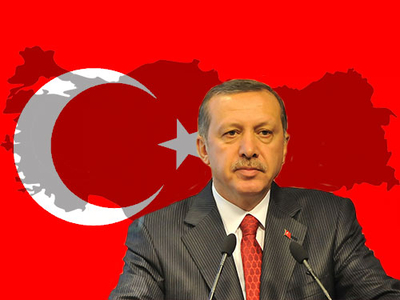
Erdogan-Gulen Power Struggle Divides European Turks

August 8, 2016

Erdogan-Gulen Power Struggle Divides European Turks, Investigative Project on Terrorism, August 8, 2016

(Please see also, Plotting Jihad in the Poconos—Who the Hell is Fethullah Gulen? — DM)

1167

Millions of European Turks – both immigrants and subsequent generations – ally themselves with the Gulenist movement, or Hizmet. While some call it a cult and claim it represents a zealous Islamic religious movement, others view it as a more moderate strain of Islam and praise Gulen for his interfaith initiatives, and for the hospitals, schools and universities he has founded internationally, including over 100 charter schools in the United States. But since the split between the two men, tensions have also emerged between pro-Gulen and pro-Erdogan groups that are far more virulent than the disputes between those who favor Hizmet and those who condemn it.

********************

On the night of July 15, members of the Turkish military stormed the state-run TRT news agency in Ankara and forced an anchorwoman to read a statement calling President Recep Tayyip Erdogan a “traitor.” Within moments, tanks began to drive menacingly through the streets of Ankara and Istanbul as military planes roared over Turkish skies. The Parliament was bombed. The fifth military coup in the history of modern Turkey had begun, taking even the most anti-government Turks by surprise.

But Erdogan regained complete control within hours, thanks to his fervent supporters who took to the streets in his defense. Throughout the night, pro- and anti-Erdogan military and civilians clashed across the country, leaving nearly 300 dead and 2,100 injured by morning.

The attempted coup and its aftermath, however, soon exploded into more than just a national crisis; it has had incendiary repercussions globally, particularly in the Turkish communities of Europe.

Erdogan declared a state of emergency July 16, and began cracking down on suspected members of the coup plot and their allies. By July 20, more than 45,000 people had been arrested, including 2,700 judges and 15,000 teachers. As Erdogan called for reinstating the death penalty, credible reports emerged of prisoners being tortured and raped.

In the meantime, tens of thousands of others have been fired from their jobs as the state takes over or shuts down nearly all the country’s media outlets – including three news agencies, 16 television channels, 45 newspapers and 15 magazines, Reutersreports. And on Monday, more than three weeks after the failed coup, Turkey recalled five senior diplomats from its embassy in The Hague.

All who have been sacked are accused of complicity in the coup, based on their (ostensible) ties to Fethullah Gulen, a powerful cleric now living in self-imposed exile in Pennsylvania. Once one of Erdogan’s closest allies, Gulen has become his most despised enemy in recent years, thanks in large part to Gulen’s criticism of Erdogan during the 2013 Gezi Park demonstrations. Now Turkey’s president accuses Gulen of being behind the coup attempt, demands his extradition from the United States. Meantime, he continues his crackdown on the cleric’s followers.

But those followers are not just in Turkey, and neither are Tayyip Erdogan’s. Millions of European Turks – both immigrants and subsequent generations – ally themselves with the Gulenist movement, or Hizmet. While some call it a cult and claim it represents a zealous Islamic religious movement, others view it as a more moderate strain of Islam and praise Gulen for his interfaith initiatives, and for the hospitals, schools and universities he has founded internationally, including over 100 charter schools in the United States. But since the split between the two men, tensions have also emerged between pro-Gulen and pro-Erdogan groups that are far more virulent than the disputes between those who favor Hizmet and those who condemn it.

As a result, the clashes between the conflicting sides have spilled beyond the Turkish borders into Europe, and have now exploded since the coup. Often, they have been violent, with pro-Erdogan protesters hurling stones into the windows of Gulen organizations in Gelsenkirchen, Germany and Rotterdam, Holland, or calling to set fire to a building housing a Gulenist organization in Beringen, Belgium (“Burn them alive!” the protesters shouted.). Arsonists also attacked several Gulen buildings in the Netherlands.

In other instances, the attacks are quieter but more sinister: members of 70 different Gulen-affiliated groups in the Netherlands report receiving hate messages and death threats. People believed to support the movement – or who fail to support Erdogan – report being banned from mosques and refused entry to restaurants. Dutch children have told each other “I can’t talk to you anymore.” A number of Gulen followers have gone into hiding, fearing for their safety.

And in Germany, home to Europe’s largest Turkish community, estimated at nearly 3 million, some 30-40,000 Erdogan supporters marched through Cologne on July 31. And while the demonstrations went off without incident, they represent a chasm within the country – not just between Germans and Turks, but – as in the Netherlands – among the Turks themselves. Noted Deutsch-Welle‘s Gero Schliess in an editorial, “After the coup attempt in Turkey, divisions have emerged in this country that no one had seen for a long time – or hadn’t wanted to see. The failed coup and President Erdogan’s massive onslaught against civil rights have deeply divided the Turkish community in Germany. The split runs right through families and neighborhoods, regardless of social strata or profession.”

But at least as disturbing is the idea of 30-40,000 people marching in support of the man who has led the profoundly anti-democratic crackdown in Turkey. While it may be understandable to oppose a military coup, it is something else entirely to continue marching in support in light of the abuses that have followed. Moreover, according to Politico, the situation has also “reignited a decade-long debate in Germany about the Turkish state steering public opinion within the German-Turkish community through a web of lobbying groups, religious institutions, media outlets and public figures.”

Religious groups seem to be chief among those, such as the Turkish-Islamic Union for Religious Affairs, sponsored by the Turkish state. That Turkey is therefore subsidizing mosques in Germany demonstrates the strength not only of the country’s influence on the political visions of German Turks, but on their religious ideas as well. And in an increasingly Islamist Turkey, those ideas no longer reflect the secular, humanist values of Ataturk; rather, they are based on an increasingly strict vision of Sunni Islam in which the state and the mosque are one.

Other Turkish religious groups, including Milli Gorüs, an Islamist group headquartered in Cologne, are also believed to hold sway over European Turks, particularly in the Netherlands.

Behind them all, particularly in Belgium, is the Diyanet, the official Turkish Directorate of Religious Affairs .

Ataturk created the Diyanet soon after the founding of the Turkish republic, to help ensure that imams preached moderate interpretations of Islam. They were critical to maintaining the separation between mosque and state. With the rise of Erdogan and his AK Party, however, it has served to do just the opposite: it now promotes Islamist views in Turkey and among the Turkish community abroad. As Istanbul-based journalist David Lepeska noted last year, the Diyanet‘s budget has quadrupled since 2006 to over $2 billion, with a 2015 budget allocation that was “40 percent more than the Ministry of the Interior’s and equal to those of the Foreign, Energy, and Culture and Tourism ministries combined.” In addition to presiding over Turkey’s own mosques, the directorate governs hundreds of mosques across Europe, has increased the number of religious classes in public schools, and, reports Lepeska, “runs a 24-hour television station, Diyanet television, available via satellite, cable, and YouTube, and manages a Facebook page (with nearly 230,000 fans), two Twitter accounts (more than 50,000 followers), and an Islamic lifestyle hotline.”

The result is a toxic mixture of religion and politics that could not be further from the secular ideals of the founder of modern Turkey. Add Erdogan’s and the AKP’s human rights abuses and dictatorial leanings to this and the cauldron boils hotter and more dangerous than ever. Whatever problems existed previously, the post-coup situation bears far too many parallels to the impulses and ideologies of radical Islamism: whoever does not support Erdogan becomes the enemy. And Erdogan, as the leader of Turkey, is the leader of the Diyanet.

The outcome is a kind of tribalism that already infects the rest of the Middle East: to be outside the Erdogan support core is to be outside the realm of the Diyanet – an apostate of sorts, threatened with death.

That this could become the future of Ataturk’s secular democratic republic is tragic. But there is also a very real possibility of the impulse spreading into Europe. Other events this year, such as the attacks on Dutch journalist Ebru Umar and German comedian Jan Bohmermann, both of whom criticized the Turkish president, demonstrate that many European Turks lean towards such a radicalized and tribalist vision. It is a vision Europe’s leaders would do well to extinguish while they still can.

Not Satire | Commander Says Emergence of Takfiris Part of West’s Plot against Islam

August 6, 2016

Commander Says Emergence of Takfiris Part of West’s Plot against Islam, Tasnim News Agency, August 6, 2016

Gen Tafkir

The terrorist groups, which claim to be Islamic but whose actions are anything but, have been committing heinous crimes not only against non-Muslims, but mostly against Muslims in the region.

*********************

TEHRAN (Tasnim) – Lieutenant Commander of the Islamic Revolution Guards Corps (IRGC) Brigadier General Hossein Salami said certain Western countries are behind a plot to prevent the spread of Islam in the West by giving rise to Takfiri terrorist groups.

After the victory of the Islamic Revolution in 1979, Islam began to spread quickly in the West, Brigadier General Salami said in a speech in the western province of Lorestan on Saturday.

He added that nearly 50,000 Britons embraced Islam every year and the number of mosques in Europe rose “from a handful to thousands” during the early years after the revolution.

“The emergence of Takfiris was the West’s scenario to destroy Islam’s attractions, create hatred and stop spread of the religion in the West,” the commander said.

He further deplored the terrorist acts of Takfiri groups committed in the name of Islam, saying that Islam is a completely humane school of thought and regards killing one innocent human being as “killing the entire humanity”.

In recent years, the Middle East region has been plagued with Takfiri terrorist groups like Daesh (also known as ISIS or ISIL), which are believed to have been created and supported by the West and some regional Arab countries.

The terrorist groups, which claim to be Islamic but whose actions are anything but, have been committing heinous crimes not only against non-Muslims, but mostly against Muslims in the region.

Does the First Amendment Protect Warrior Religions?

August 5, 2016

Does the First Amendment Protect Warrior Religions? Front Page MagazineWilliam Kilpatrick, August 5, 2016

wk

Reprinted from CrisisMagazine.com.

After every Islamic terrorist attack, whether in Europe or the U.S., people ask what can be done to prevent it from happening again. But when the obvious solutions are proposed, they are invariably met with the objection that “you can’t do that,” or “that’s unconstitutional,” or words to that effect.

Some of the obvious solutions are to close radical mosques and radical Islamic schools, to monitor suspected mosques, to deport radical imams, and, of course, to restrict Muslim immigration or ban it altogether. If you dare to say such things, however, it quickly becomes apparent that—for many, at least—only politically correct solutions are acceptable. The trouble is, the politically correct crowd doesn’t have any solutions. In the memorable words of French Prime Minister Manuel Valls, “France is going to have to live with terrorism.”

Catholics are frequently in the forefront of those who object to these “drastic” measures for preventing terrorism in the West. Pope Francis, for example, has made generosity to refugees and immigrants a hallmark of his papacy. Christians, he has reminded us on several occasions, should build bridges, not walls. Others, Catholics among them, have objected that restrictions on Islamic immigration would violate the freedom of religion guaranteed by the Constitution—as would surveillance of mosques and Islamic societies.

Catholics are understandably touchy about the subject of religious liberty. But concerns over Christians being forced to bake cakes for same-sex weddings shouldn’t be allowed to overshadow some other basic questions about religious liberty.

One of the questions is this: does a religion that doesn’t believe in religious freedom for others qualify for First Amendment protection? Another, related question might be framed as follows: Is a religion that calls for the subjugation of other religions entitled to the “free exercise” of that mandate? The underlying issue, of course, is whether or not Islam really qualifies as a religion. As any number of authorities have pointed out, Islam is a hybrid—part religion and part a geo-political movement bent on world domination.

The “world domination” bit, by the way, is not confined to the fevered imaginations of right-wing fanatics. In a recent interview with Religion New Service, Cardinal Raymond Burke said “there’s no question that Islam wants to govern the world.” “Islam,” he continued, “is a religion that, according to its own interpretation, must also become the State.”

Here’s what I had to say about the matter four years ago:

Does this [the 1st Amendment] make the exercise of religion an absolute right to do anything in the name of religion? Should the free-exercise clause be extended to protect suicide cults or virgin sacrifice? The First Amendment also prohibits the establishment of a state religion, but one of the main purpose of Islam is to establish itself as the state religion. It can be argued that Islam’s raison d’etre is to be the established religion in every nation. Hence, another question must be asked: does the First Amendment protect its own abolishment?

Cardinal Burke is a canon lawyer—a profession that requires one to choose words carefully. Hence, when he talks about Islam becoming the State, he should be taken seriously. According to him, “when they [Muslims] become a majority in any country then they have the religious obligation to govern that country.” As we have seen, however, long before Muslims become a majority they begin demanding that their fellow citizens comply with sharia laws regarding diet, dress, and blasphemy. Allowing Muslims the full and free exercise of their faith is tantamount to restricting the freedom of others. Or, as Dutch MP Geert Wilders likes to say, “more Islam” means “more intolerance” for everyone else.

Wilders is referring to the consequences that follow upon the mass migration of Muslims into Europe. Although his was once a lonely voice, numerous polls show that the majority of Europeans now believe along with him that Islam does not belong in Europe. Pope Francis, on the other hand, has been in the habit of chiding Christians for their opposition to accepting more Muslim immigrants. He recently went so far as to warn them that they will have to answer to Christ at the Last Judgment because he (in the guise of the migrant) was homeless, and they did not take him in.

But, although charity is the paramount Christian virtue, there is another virtue that governs the exercise of charity. It’s called “prudence.” And prudence would suggest that spiritual leaders and secular leaders should exercise caution when advocating acts of charity that put the lives of others at risk. In Europe, there are now numerous prudential reasons for slowing or halting the flow of Muslim immigration: the Charlie Hebdo massacre, the Bataclan Theater massacre, the massacres at the Brussels airport and subway, the massacre at Nice, the Munich mall massacre, the axe attack aboard a German train, the bomb attack on a wine bar in the city of Ansbach, and the New Year’s Eve sexual assaults which targeted over 1,200 German women.

The most recent outrage was the slaughter of a French priest, Fr. Jacques Hamel, by two Islamic terrorists who burst into a church in Normandy during Mass and slit his throat. Pope Francis condemned the attack, but on the same day in Krakow he spoke once again about the need to welcome refugees. He called for “solidarity with those deprived of their fundamental rights, including the right to profess one’s faith in freedom and safety.”

But how about the right of Christians and Jews to profess their faith “in freedom and safety?” Fr. Hamel is no longer free to profess his faith, and now that the Islamic State has proclaimed its intention to target more churches in Europe, Christians are going to feel considerably less safe at Sunday service. Jews in Europe already know the feeling. Most synagogues in Europe are now protected by security guards during Saturday services.

But if you really want to see the European future, just look at those nations where Muslims are already a majority. In Nigeria, where Muslims make up about 60 percent of the population, Christians are regularly attacked during church services, and on some occasions entire congregations have been burned alive inside their churches.

All of which prompts a question: should Western nations passively stand by as their own population balance shifts in the direction of Nigeria’s? A curtailment or a moratorium on Muslim immigration is one of the obvious solutions to the problem of terrorism in the West. But, as I’ve suggested above, many Americans think that such a moratorium would be unconstitutional. After all, doesn’t the Constitution forbid a “religious test” in scrutinizing immigrants? Indeed today’s top news story concerns the attack on Donald Trump by the father of a slain Muslim soldier. At the Democratic Convention, Khizr Khan challenged Trump’s proposed ban on Muslim immigration by asking: “Have you even read the U.S. Constitution?”

In fact, the Constitution has no ban on a religious test for immigration. In a recent National Review piece, Andrew McCarthy points out that Article VI of the Constitution states that “no religious Test shall ever be required as a Qualification to any Office or public Trust under the United States.” The clause has nothing to do with immigration and, as our bien pensants like to say, it has nothing to do with Islam.

The McCarran-Walter Act of 1952 actually gives the president wide latitude in restricting immigration:

Whenever the president finds that the entry of aliens or any class of aliens into the United States would be detrimental to the interests of the United States, the president may … suspend the entry of all aliens or any class of aliens as immigrants or non-immigrants or impose on the entry of aliens any restrictions he may deem to be appropriate.

One of the main intents of the act was to prevent communist ideologues from entering the country, but it was also invoked in 1979 by President Jimmy Carter to keep Iranians out of the U.S. And—surprise—according to McCarthy, “under federal law, the executive branch is expressly required to take religion into account in determining who is granted asylum.” As McCarthy notes:

We have a right to require scrutiny of the beliefs of aliens who petition for entry into our country … this includes beliefs the alien may regard as tenets of his faith—especially if such ‘faith tenets’ involve matters of law, governance, economy, combat and interpersonal relations that in our culture’s separation of church and state are not seen as spiritual.

In short, if you believe your religion allows you to execute apostates or subjugate infidels, don’t bother to apply.

When Pope Francis visited Poland for World Youth Day, security in Krakow was at its highest level. Forty thousand security personnel were deployed and, according to The Guardian:

Mobile X-ray devices and metal detectors, as well as dogs trained to detect explosives, are in use at railway and bus stations, major road hubs and venues where papal events are due to take place. Police said that gas tankers and large trucks had been banned from Krakow following the use of a 19-ton truck in a terrorist attack in Nice earlier this month.

Does that suggest anything? Are the officials worried that Protestants or Jews are going to attack the Catholic youth? Are they fearful that Buddhist will attempt to bomb the popemobile? Before the era of mass Muslim immigration into Europe, such precautions would have been deemed as overkill. Now they seem like prudent measures to prevent overkill. The heightened security at World Youth Day and all over Europe is a tacit acknowledgement that Islam differs radically from all other religions. This is a point that Cardinal Burke made in his interview when he criticized Catholic leaders who “simply think that Islam is a religion like the Catholic faith or the Jewish faith.” Just so. It’s well past time to question whether a religion with totalitarian ambitions should be treated like all other religions.

In the Guardian story about the Pope’s visit to Poland, he is described as a “modern pope.” But in some respects he, along with many bishops, seems to belong to an earlier era—an era when it seemed that all people desired nothing more than peace and friendship. At a time when the world is faced with the resurgence of a seventh-century warrior religion, that sixties sensibility no longer seems so modern.

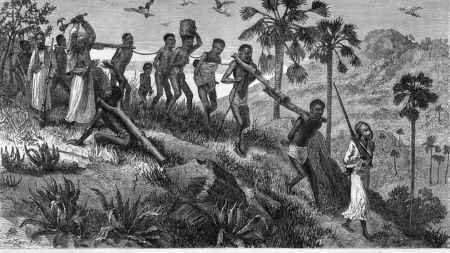
Europeans Abolished Slavery; Africans/Muslims Still Practice it

August 4, 2016

Europeans Abolished Slavery; Africans/Muslims Still Practice it, Front Page MagazineIlana Mercer, August 4, 2016

slaves_ruvuma

First he exposed the History Channel’s miniseries “Roots” as root-and-brunch fiction. Now, the courageous epistolary warrior Kunta (Jack) Kerwick has turned his attention to correcting lies about slavery, promulgated in media and scholarly circles.

A point forcefully made by Kerwick is that although a vibrant, indigenous slave trade was conducted well into the nineteenth century in the interior of West Africa, slavery has become the White Man’s cross to bear.

Also omitted, in the course of the “honest” conversation about race directed by our political masters, is that credit for the demise of the slave trade in Africa belongs to Europeans. In his compact study, The Slave Trade, British historian Jeremy Black (London, 2006), highlights the “leading role Britain played in the abolition of slavery [as]… an example of an ethical foreign policy.” Britain agonized over this repugnant institution, failed to reconcile it with the Christian faith, and consequently abolished it.

Professor Black condemns the exclusive focus on the Atlantic—or transatlantic—slave trade to the exclusion of the robust slave trade conducted by Arabs across the Sahara Desert. Or, across the Indian Ocean and the Red Sea to markets in the Middle East. This exclusive focus on westerners as slave owners and traders, notes Black, “fits with the [political] narrative of Western exploitation” of underdeveloped countries and their people.

The greatest development economist to live was Lord P.T. Bauer. As The Economist quipped, Bauer was to foreign aid what Friedrich Hayek was to socialism: a slayer. In his Dissent on Development (London, 1971), Bauer bolstered Black’s point well before the latter made it: “The slave trade between Africa and the Middle East antedated the Atlantic slave trade by centuries, and far outlasted it. Tens of millions of Africans were carried away—north through the Sahara, and from East Africa, by Arab and Muslim slave traders, well before Europeans took up the trade from West Africa.”

Arab affinity for slavery, ethnic prejudice and purges lives on today in the treatment, for example, of blacks in Darfur and Yazidi Kurds in Iraq.

Considering Europeans were not alone in the slave trade, Black, in particular, questions “the commonplace identification of slavery with racism,” given that, like serfdom, slavery was a device (albeit an inefficient one) “to ensure labor availability and control.”

At its most savage, child slavery still thrives in Haiti in the form of the “Restavec system.” Children are kept in grinding poverty and worked to the bone. In the Anglo-American and European worlds this would be considered perverse in the extreme; in Haiti owning a Restavec is a status symbol. (Haiti, incidentally, is another spot on the globe that “Hillary Clinton’s State Department” “helped ruin,” by ensconcing an illegitimate and corrupt leader, with a preference for corrupt NGOs such as … The Clinton Foundation.)

The savagery of the indigenous slave trade in the interior of West Africa owed a lot to the rivalries and relationships between Africans powers. By Black’s telling, “Both Arabs and Europeans worked in collaboration with native polities that provided the slaves through raids and war carried out against their neighbors.”

For the Atlantic slave trade, contemporary Americans and Britons have been expiating at every turn. But more than engendering a cult of apology, the Atlantic slave trade has been instrumental in the effort to control and define the past as an “aspect of current politics,” not least in shaping the historical treatment of the Civil War, the South, and the American Founding Fathers.

Jeremy Black rejects these ritual apologies as empty ploys, which “all too often conform to fatuous arguments about ‘closure,’ resolution, and being unable to move on until we acknowledge the past.” In reality, this bowing-and-scraping, by obsequious Anglo-Americans, to their black political overlords, entails the opposite of all these, and, instead, involves the reiteration and institutionalization of racial grievance.

The cult of apology that has gripped America and Britain is uniquely Western. What other people would agonize over events they had no part in, personally, for damages they did not inflict?

Grievance is leveled at a collective, all whites, for infractions it did not commit: Africans who were not enslaved are seen as having an ineffable claim against Europeans who did not enslave them.

At its core, the argument against racism, at least as it works to further black interests, is an argument against collectivism. You’re meant to avoid judging an entire people based on the color of their epidermis or the conduct of a statistically significant number of them.

It is, however, deemed perfectly acceptable to malign and milk Europeans for all they’re worth, based on the lack of pigment in their skin and their overall better socio-economic performance.

**

Adapted from Into the Cannibal’s Pot: Lessons for America From Post-Apartheid South Africa (2011) by ILANA Mercer.

Terror strikes London 11 years after July bombings

August 4, 2016

Terror strikes London 11 years after July bombings, DEBKAfile, August 4, 2016

1 (4)

A woman in her 60s was knifed to death Wednesday night, July 3, in a rampage in London’s Russell Square by a 19-year old man, who injured another six people before police brought him down with a Taser electric shock gun. The site near London University and the British Museum, not far from Oxford Street, was close to the scenes of the July 7 attacks eleven years ago, when Islamist bombers murdered 52 people and injured more than 700 on the London underground rail and a bus.

“Early indications suggest that mental health is a significant factor in this case and that is one major line of inquiry,” London Metropolitan Police Assistant Commissioner Mark Rowley told reporters. “But of course… terrorism as a motivation remains but one line of inquiry for us to explore,” said Rowley, who is Britain’s most senior anti-terrorism officer.

That it is a major line of inquiry was demonstrated by police action Thursday morning to cordon off Russell Square and much of London’s West End.

The killer, described by witnesses as wearing a motorbike helmet and attacking people at random,struck less than 24 hours after the Metropolitan London police announcement of an extra 600 armed marksmen for the streets of London against a terror threat. They attack may well be read as a warning that such precautions would be of no avail in preventing a jihadist attack on the British capital.

While holding back the killer’s identity, British anti-terror squads are no doubt searching his residence and other locations connected to his family and friends.

Firearms_officers_London_3.8.16

Tuesday night, shortly before the attack, DEBKAfile carried this report.

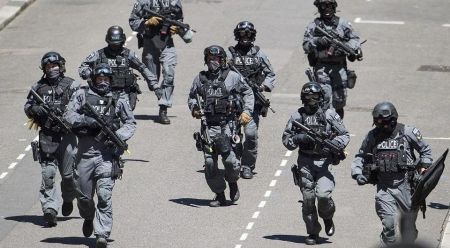
Armed police prepare to deploy from Hyde Park, central London, after Scotland Yard announced Wednesday, Aug. 3 that the biggest police force in Britain is to put its first 600 additional armed officers on public patrols on the main streets and landmarks of London, as part of its anti-terrorism plans.

Metropolitan Police chief Sir Bernard Hogan-Howe said that, following the terror attacks in Europe, more marksmen were trained and operationally ready for public patrol up to a total of 1,500 firearms officers.

Although British cops are proud of traditionally not carrying firearms, the Met chief said “I think people understand that where you are going to have people as enemies who’ve got guns, we’ve got to have guns.”

Already, he added, “They pass through airports where we have armed officers, they pass through railway stations where they see firearms, and in some of our big iconic locations, we’ve already got armed patrols – if you look at Parliament, Downing Street – so it’s not entirely new.”

DEBKAfile’s exclusive counterterrorism sources can name the men behind the upsurge of Islamic terror violence in West Europe last month: the Nice attack on July 14, which left 84 dead; the suicide bombing in Ansbach in Bavaria, Germany, on July 24, which left 15 people injured, and the murder of a French priest at a suburban church in Normandy on July 26.

They are two Frenchmen: Amn al-Kharji (ISIS codename: Abu Sulayman al-Faransi), who is head of the Islamic State’s secretive external operations wing and, under his command, Fabien Clain (ISIS codename: Salim Benghalem), a convert to Islam who heads European terror operations.

It was Benghalem who picked the targets of the Paris raids last November 2015, which left 132 people dead and hundreds wounded, and the Nice truck bombing, which murdered 84 victims on July 14, Bastille Day.

This week, he orchestrated the first known jihadist attack on a Christian place of prayer in Europe after instigating the first ISIS attacks in Germany.

Up until recently, Western intelligence services used ISIS as the generic term for any jihadist attacks in a European city, be it Brussels, Istanbul, Nice, Munich, Wurzburg or Ansbach. But no high-profile ISIS executives were ever named, for fear of impairing their efforts to plant agents or informers inside the murderous organization’s operational ranks in Europe and the Middle East.

These efforts have so far got nowhere. These two top maser-terrorists have been agile enough to stay a step or two ahead of Western counterterrorism agencies. The weeks and months ahead are therefore likely to see more terror outrages at unknown locations, executed with assorted weaponry by unforeseen methods.

Europe is therefore on high terror alert, braced for more jihadist attacks. And the streets of London will see armed cops on patrol.

A Nuclear-Armed Caliphate?

August 3, 2016

A Nuclear-Armed Caliphate? Front Page MagazineWilliam Kilpatrick, August 3, 2016

nuke turkey

Reprinted from CrisisMagazine.com.

Much has been made of the Islamic State’s claim to the caliphate. But the Islamic State is fast losing ground in Syria and Iraq, and without a territorial claim, its claim to the caliphate is a shaky one. According to some sources, ISIS has already been preparing its followers for the fall of the caliphate.

Meanwhile, an Islamist power with a much better claim to the caliphate has been gathering strength. Whether the failed coup in Turkey was the real thing or whether it was staged, as some have claimed, President Erdogan’s hold over the Turkish nation has been immeasurably strengthened. As a result, he is now one giant step closer to doing what, some say, he has always wanted to do—namely, to re-establish the caliphate.

The last time the Muslim world had a caliphate, it was centered in Constantinople. The Turkish sultan (who was also the caliph) was the head of the Ottoman Empire—an empire that controlled far more territory than ISIS does or is ever likely to. Then in 1923, following the disarray left by the First World War, a secular government under the leadership of Kemal Ataturk came to power in Turkey and abolished the caliphate soon after.

To many in the Muslim world, this was a world-changing catastrophe. It flew in the face of Muhammad’s intention that mosque and state should be united, and it undermined the case for Islamic law. Moreover, the overthrow of the caliphate affected not just Turkey, but all of the Muslim world. In the late 1920s in Egypt, Hasan al-Banna founded the Muslim Brotherhood with the intention of reversing what Ataturk had done. The Brotherhood came close to doing this–at least in Egypt—in 2012 with the election of Mohamed Morsi as president. But Morsi showed his hand too early and was soon deposed by the military under General El-Sisi.

In Turkey, also, it was the military that acted as the guardian of the secular state. And so it remained until the election of President Recep Erdogan in 2002. Even then, Erdogan moved slowly in his efforts to re-Islamize Turkey. He gradually removed top military officers and replaced them with his own men; and he did the same with the police, the judiciary, and other key institutions.

By 2012, some twenty percent of the country’s generals were estimated to be behind bars. Then, with this month’s failed coup, Erdogan moved quickly to arrest some 3,000 members of the military and 3,000 members of the judiciary. In addition, his regime sacked 9,000 workers attached to the Interior Ministry. Within a week of the attempted coup, some 50,000 soldiers, police, judges, civil servants, and teachers had been suspended or arrested.

Erdogan’s power is now nearly absolute—not unlike the absolute power of a sultan. According to some, this has been his goal all along. One indication is that Erdogan has built himself a thousand-room presidential palace that is attended by guards dressed in Ottoman-era uniforms.

If Erdogan does try to establish a caliphate, where does that leave ISIS? Would they go quietly into the dark night of oblivion? Or would they find a place in the new caliphate?

As you may have noticed, alliances in the Middle East are constantly shifting. It’s not inconceivable that ISIS would someday pledge allegiance to a neo-Ottoman caliphate—although such an event might have to be preceded by the demise of their current caliph, Abu Bakr al-Baghdadi. The truth is, Erdogan has been something of a friend and benefactor of ISIS. As Caroline Glick observed in the Jerusalem Post:

Erdogan has turned a blind eye to al-Qaida. And he has permitted ISIS to use Turkey as its logistical base, economic headquarters, and recruitment center. Earlier this year, the State Department claimed that all of the 25,000 foreign recruits to ISIS have entered Syria through Turkey.

Turkey is also the gateway between Syria and Europe. It is through Turkey that the bulk of Muslim migrants flow into Europe. This gives Erdogan enormous leverage over the future of Europe—a continent which is already reeling from a flood of migrants and refugees. How is the leverage applied? In March, the European Union reached a deal with Turkey that would in essence turn Turkey into a buffer zone against further immigration. Here’s how Foreign Affairs summarized the bargain:

Turkey has agreed to act as a giant refugee holding center, keeping the millions of migrants fleeing conflict in the Middle East from reaching Europe and accepting those sent back from Greece. In exchange, the EU will pay Turkey three billion euros on top of the three billion pledged last November to help care for the refugees. It will also speed up the approval of visa-free travel to Europe for Turkish citizens and revive stalled negotiations over Turkey’s accession to the EU.

So Turkey will keep the Syrian migrants out of Europe as long as Turkish citizens are allowed almost unlimited access to Europe through visa-free travel. The net result is that the Islamization of Europe will continue. And, of course, there’s nothing to stop Turkey from opening up the refugee floodgate whenever it sees fit. Turkey’s control of Mid-East migration gives it the upper hand in its dealings with Europe.

The other part of the bargain is the revival of negotiations to admit Turkey to the EU. If Turkey is ever successful in that endeavor, it would spell game-over for Europe. If Erdogan wants to re-establish the caliphate, and if he is so keen on union with Europe, it is likely that he envisions Europe as part of the future caliphate. This is something that the Ottoman sultans dreamed of, but were never able to accomplish. But Erdogan might be able to pull it off. There is now a very large contingent of Turks in Germany who seem to bear more allegiance to him than to Germany. And all over Europe there exists a fifth column of active and potential Islamists ready to be activated. As for the other four columns, it’s worth keeping in mind that Turkey has the second largest army in NATO (the U.S. has the largest). And with many of the generals who coordinated with NATO now in jail, Turkey’s loyalty to NATO is very much in question.

There is one other factor to consider. During and after the coup attempt, Erdogan shut down Incirlik Air Base, which is home to 1,500 American soldiers as well as other NATO troops. The Turkish government cut off the base’s electricity supply, temporarily suspended flights, and arrested the base commander, General Ercan Van. The base reportedly houses 50 nuclear warheads. The bombs are controlled by the U.S. forces in Turkey, but could they by means sudden or gradual fall under the control of Turkey? And if they did, would the U.S. dare to do anything about it?

By many accounts, Erdogan is a true believer who, in his own way, is every bit as fanatical as the ayatollahs in Iran. The man who built a thousand-room palace for himself might well believe that a restored caliphate should possess all the weapons that befit a great world power. With Erdogan’s latest consolidation of power, an already dangerous world just became a lot more dangerous.


Fearing reprisal from Muslims, French publisher reverses decision to publish book critical of Islam

July 31, 2016

Fearing reprisal from Muslims, French publisher reverses decision to publish book critical of Islam, Jihad Watch

This is the way the West dies
Not with a bang but a whimper.

This is nothing new, however. Way back in 2002, a French edition of my book Islam Unveiled was canceled for fear of offending Muslims.

Hamed-Abdel-Samad

“Fearing Islamist reprisal, French publisher revises decision to publish book critical of Islam,” by Vijeta Uniyal, Legal Insurrection, July 28, 2016 (thanks to The Religion of Peace):

A Paris-based publishing house has revised its decision to publish a French version of the German bestseller “Der Islamische Faschismus” (The Islamic Fascism). Written by German-Egyptian author Hamed Abdel-Samad, the book was due to hit the French bookstores in September. Piranha Edition reportedly changed its mind after this month’s ISIS-inspired terror attack in Nice that killed 84 people and injured more than 300.

If the objective of Islamist violence in Europe had been to force the continent into submission, it is well on its way to achieving them.

Piranha Edition justified the decision of not going ahead with the publication by citing the threat of Radical Islam as well its desire of not wanting to strengthen the right-wing French groups critical of Islam. Interestingly, the head office of the Piranha Edition is just within a few minutes of walk from Bataclan, the theatre where 89 people were murdered by Islamic terrorists in November 2016.

Earlier this week, Hamed Abdel-Samad revealed the details of the failed book deal in a German-language blog Die Achse des Guten:

First the publisher changed the title from “The Islamic Fascism” to “Is Islam a form of Fascism?” — in order to avoid unnecessary polarisation. But after the attack in Nice, the publishing house decided not to publish the book at all, as it fearful of the consequence — as stated in [their] email — which could have been deadly. There could be another attack like the one at Charlie Hebdo.

Had the publisher ended the email just there, I could understand, as it is a matter of life and death, and I cannot ask everyone to take the risk that I take with my book.

But then came the second argument why the publication was not possible at this point. The book could benefit the right wing [parties]. [Author’s translation]

Whenever Islamic terrorism strikes somewhere in the West, media commentators and politicians always love to talk about the ‘moderate Muslims’ living among us. We are endlessly reminded of the “voices” of moderation, reason and peace within Islam. Hamed Abdel-Samad is just such one such genuine voice being stifled in the West. And he is not alone; Somali-born women’s rights advocate Ayaan Hirsi Ali, Pakistani writer Ibn Warraq, Bangladeshi novelist Taslima Nasrin are just some of the true Muslim voices of reason and sanity of our times.

These few, but brave women and men are not only forced to live like hunted fugitives in the West by Islamists determined to enforce Fatwa placed on their heads, but driven into silence by leftists enforcing accepted speech codes on college campuses and public arena.

Given the almost omnipresent threat of violence inside the Muslim majority countries, we can give up on our hopes of hearing any substantial criticism of Islamist theology from within the Muslim World. But what is happening to Muslim dissenters in the West is no less sinister. The violent campaign to shut down any opposition in the Muslim World is complimented in the West by the activism of the Left.

On the other hand, the mainstream media is more interested in talking to the representatives of Islam who are eager to talk about ‘Islamophobia’, or the Western guilt, but not about the theology behind the ongoing worldwide Jihad….