Archive for the ‘Death to Israel’ category

Nuclear Jihad

September 7, 2015

Nuclear Jihad, Gatestone InstituteDenis MacEoin, September 7, 2015

    • In the year 628, Muhammad, now ruling in Medina, signed the ten-year Treaty of Hudaybiyyah with his long-time enemies, the tribal confederacy of Quraysh, who ruled Mecca. Twenty-two months later, under the pretext that a clan from a tribe allied with the Quraysh had squabbled with a tribe allied to the Muslims, Muhammad broke the treaty and attacked Mecca, conquering it. It is as certain as day follows night, that the Iranian regime will find a pretext to break the deal. Already, on September 3, the Supreme Leader Ayatollah Khamene’i made it clear that he would back out of the deal if sanctions were not completely removed at once.
    • The Iranian regime not only despises democracy; it considers all Western law, including international law, invalid.
    • The Shi’a consider themselves underdogs, who are willing to sacrifice all to establish the rights of their imams and their successors. That was what the 1979 revolution was all about, and it is what present the Iranian regime still insists on as the justification for its opposition to Western intrusion, democracy, women’s rights and all the rest, which are deemed by Iran’s leadership as part of a plot to undermine and control the expansion of the Shi’i faith on the global stage. These are not Anglican vicars.
    • The Iranian Army and the Islamic Revolutionary Guard Corps “have responsibility… for a religious mission, which is Holy War (Jihad) in the path of God and the struggle to extend the supremacy of God’s law in the world.” — Iran’s Constitution, Article “The Religious Army”.
    • A Third World War is already taking place. The Iran deal strengthens the hands of a regime that is the world’s terrorist state, a state that furthers jihad in many places because its clerical hierarchy considers itself uniquely empowered to order and promote holy war.
    • Obama’s trust in Khamene’i’s presumed fatwa of 2013, forbidding nuclear weapons, rests on the assumption that it even exists. It does not. Even if it did,fatwas are not permanent.
    • Why, then, is this deal going ahead at all? Why is one of the world’s most tyrannical regimes being rewarded for its intransigence, and especially for repeatedly violating the Non-Proliferation Treaty?

“[Some] analysts,” writes the historian and former Israeli Ambassador to the United States, Michael Oren, “claimed the president [Barack Obama] regarded Iran as an ascendant and logical power — unlike the feckless, disunited Arabs and those troublemaking Israelis — that could assist in resolving other regional conflicts. I first heard this theory at Georgetown back in 2008, in conversation with think tankers and former State Department officials. They also believed Iran’s radical Islam was merely an expression of interests and fears that the United States could with sufficient goodwill, meet and allay. … Iran, according to Obama was a pragmatic player with addressable interest. For Netanyahu, Iran was irrational, messianic, and genocidal – ‘worse,’ he said, ‘than fifty North Koreas.'”[1]

Since the signing of the deal at the UN, hot-tempered criticisms and defences have gone into overdrive in the political, journalistic, and diplomatic spheres. Acres have been written and are still being written about the deal, making it the hottest political potato of recent years. Expert analysts such as Omri Ceren and, more recently, Joel Rosenberg have cut through the deliberate obfuscation to show the extent of the dangers the deal presents to the Middle East, the United States, Israel, and the world.

The deal’s supporters insist that it will bring peace and calm to the region, while a host of denigrators — chief among them Israeli Prime Minister Binyamin Netanyahu — have exposed the enormous risks it entails. Already, a vast majority of American citizens are opposed to the deal.

Within the U.S. Congress, bipartisan opposition to the deal is high and mounting. Yet, on September 2, President Obama succeeded in winning over a 34th senator, enough that ultimate passage of the deal is a foregone conclusion. That does not, however, mean that the debate will end. In all likelihood, it will grow fiercer as time passes and true consequences become clearer to the public and politicians alike.

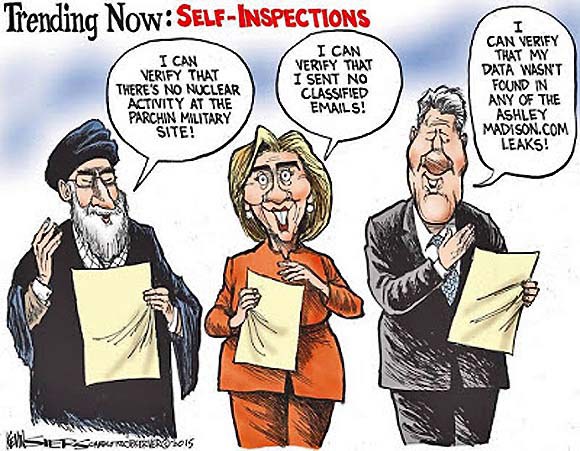
Recent revelations that the International Atomic Energy Agency (IAEA), which oversees nuclear developments worldwide, has agreed that only Iranians will be allowed to inspect the most controversial of Iran’s nuclear sites, have raised anxieties about proper monitoring of the deal. The military complex of Parchin, where Iran is suspected of work on nuclear weapons, will be closed to outside inspection, making it certain that, if Iran decides to cheat (something it has done before), it will be able to do so with impunity. Sanctions will not be re-imposed. And, as we shall see, cheating on the deal can be justified by the Iranians who could always refer to the practice of the prophet Muhammad with the Quraysh tribe in Mecca.

Obama, his Secretary of State John Kerry, and the entire US administration are not merely behind the deal, but almost fanatically so. Many argue that Obama is more interested in securing his “legacy” as the world’s greatest peacemaker (or war-creator, as the case may well turn out to be), the statesman par excellence who alone could bring the theocratic regime of Iran in from the cold and shower the Middle East with true balance in its troubled affairs.

To bring this about, Obama has had to diminish, if not leave totally open to obliteration, American support for Israel, the single country in the world most clearly exposed to a possible genocide should the Iran’s Islamic regime choose to exterminate it, as it has so often threatened to do.

Mahmoud Ahmadinejad’s words mellal-e Eslami bayad Esra’il-ra qal’ o qam’ kard – “the Islamic nations must exterminate Israel” — have been given renewed vigour now that it is highly likely that Iran, evading serious inspections by the IAEA, will soon possess the weapons to do just that.

Even if the treaty is a done deal, it is time to show yet another massive hole in the administration’s strategy. Already, Obama, Kerry and the tightly knit administration have shown themselves remarkably obdurate in turning a blind eye to the many concerns that surround the deal. At the end of the “sunset period,” if not sooner, Iran gets to have, legitimately, as many bombs as it likes. Other problems include breakout times; centrifuge production; centrifuge concealment; uranium enrichment by stealth; refusal to allow the IAEA to inspect military sites; the acquisition of intercontinental ballistic missiles — presumably to be used intercontinentally at guess who. It is no secret that the hardliners in Iran still speak of America as “The Great Satan” and consider it their enemy. That does not even include the implications of lifting sanctions on, and paying billions of dollars to, the world’s main sponsor of terrorism.

As Michael Oren has shown, however, the American president presumably thinks he is doing a deal with a logical and pragmatic regime. Barack Obama, an intelligent, well-read man of Muslim origin, knows almost nothing about Islam; that is the greatest flaw in the Iran deal he has fought so hard to inflict on the human race. With access to platoons of experts, to some of the greatest libraries with holdings in Islamic doctrines and history, and with the Mullahs and Iran’s public still daily promising to destroy America, Obama apparently still believes Islam is a religion of peace and that a theocratic, terror-supporting, medieval regime should have the power to make nuclear bombs. The obverse is that he might like, perhaps not wittingly, to see America, Israel and the West brought to their knees.

This author has previously exposed one aspect of Iran’s serious lack of logic, rationality, or pragmatism — namely the extent to which apocalyptic thinking, messianic prophecy, and dreams of Islamic transcendence through universal conflict pervade the clerical elite, a high percentage of the masses, and even the Islamic Revolutionary Guard Corps. One might assume that this would be especially true when they are flush with cash and nuclear weapons, and the risk to their own survival is substantially lower.

On August 17, just over a month after the signing of the nuclear deal, Iran’s Supreme Leader, ‘Ali Khamene’i, addressed a religious conference, where he expressed his undying hatred for the United States. He said, for example:

We must combat the plans of the arrogance [i.e. the West, led by the U.S.] with jihad for the sake of Allah. … jihad for the sake of God does not only mean military conflict, but also means cultural, economic, and political struggle. The clearest essence of jihad for the sake of God today is to identify the plots of the arrogance in the Islamic region, especially the sensitive and strategic West Asian region. The planning for the struggle against them should include both defense and offense.

The deal has done nothing whatever to stop military threats to Israel, an ally of the United States (though treated with disrespect by America’s president). Speaking on 2 September, the Islamic Revolutionary Guard Corp’s top commander in Tehran province, Brigadier General Mohsen Kazemayni, stated that, “… they [the US and the Zionists] should know that the Islamic Revolution will continue enhancing its preparedness until it overthrows Israel and liberates Palestine.”

There is a simple word for this: warmongering.

Why is the U.S. President insisting on a bad deal with a warmongering regime?

When a military force at its strongest fantasizes about the coming of a Messiah (the Twelfth Imam) to lead them to victory over all infidels, talk of logic, rationality and pragmatism seems acutely out of touch with reality.

Obama’s assumption that there is something solid about the Iranian regime that makes it suitable as a recipient for such largesse and the chance to enrich uranium until kingdom come seems to be based on false consciousness. The regime has been in place for almost forty years, quite a respectable time for a dictatorship. In part, that has been because it has mastered the art of suppression, giving its people a degree of freedom that is missing in several other Islamic countries, such as Saudi Arabia, Sudan, or Afghanistan. These partial freedoms, especially for young people, lull the population into risk-averseness, possibly helped along by the memory in 2009 of pleas for more freedom, which the United States ignored and the mullahs savaged.

Obama, in his ongoing attempt to portray Islam as benign — and a dictatorial regime as a sold basis for peace and understanding in the Middle East — ignores the religious element of the theocracy, as well as the sadistic repression, and in doing so misses a lot.

First of all, Shi’ite Islam is different from its Sunni big brother. It is deeply imbued with features largely absent from Sunni Islam. The most important Shi’i denomination is that of the Twelvers (Ithna’ ‘Ashariyya), who, from the beginning of Islam, have believed themselves to be not only the true version of the faith, but the group destined by God to rule in its name. Beginning with ‘Ali, the son-in-law of the Prophet and the fourth Caliph of the Sunnis, the Shi’a began as his supporters. (Please see the Appendix that follows this article: it contains material that even Barack Obama and his advisors need to know; without it, they simply will not “get” what the ayatollahs are about. It comes to an important conclusion that has considerable bearing on today’s events — and not the one you may expect.)

Beneath the smiles and banter lie the unsmiling masks and the taqiyya-flavoured lies. Beneath the wheeling and dealing and the refusals to compromise lies a sense of destiny for the regime, a belief that it stands on the brink of the realization of the centuries-old Shi’ite dream: that God will finally set his people on the pinnacle of the world and usher in the never-ending reign of the Imam Mahdi, with all injustice gone, the martyrs in paradise, the ayatollahs and mujtahids andmaraji’ in glory, and all the infidels in hell.

It is precisely because Barack Obama and his aides have never got down and dirty to take in hard information that they have remained utterly out of touch with the real springs and cogs of Iranian Shi’ite thinking.

Obama has, when all is said and done, let himself be deluded by the charm offensive of Hassan Rouhani and his henchman Javad Zarif. Obama may not believe in the mystical land of Hurqalyaor the white steed on which the Twelfth Imam will ride to the world’s last battle any more than you or I do. But the clerical elite of Iran, and those who follow them blindly — men and women brought up from birth on these tales, and who travel in the thousands every day to send a message to the Imam at the Jamkaran Mosque near Qom — believe these things with absolute devotion, and that is why this story matters, because it has political consequences.

Shi’i Muslim law enshrines jihad, holy war, as fully as does Sunni law. For Sunnis, jihad has always been possible under the authority of a Caliph, whether fought under his orders or led by kings and governors under his broad aegis.

The Shi’a, however, do not recognize the Caliphate and have often been the victims of Sunni jihads. They may feel impelled to fight a holy war, but under what authority could they do so?

The power of the clergy had waned under the anti-clerical reign of Iran’s Pahlavi dynasty (1925-1979), only to burst out more strongly than ever in the Islamic Revolution, which placed all authority in a new system of government: rule by a religious jurist, a faqih.[2] Overnight, a jihad state was brought into existence; a jihad state with vast oil reserves, modern military equipment, and, at first, the support of almost the entire Iranian population. The clerical hierarchy under Ayatollah Ruhollah Khomeini did not just intend to prepare the way for the coming of the Mahdi. They were now his earthly deputies, in whose hands lay life and death for millions.

The new Shi’ism allowed the clergy to take on powers they had never imagined. More and more economic and legal power came to be concentrated in the hands of a narrow body of scholars, and sometimes a single man could be the source of religious and legal authority for the entire Shi’i world — in Iran, Afghanistan, eastern Arabia, Bahrain, and so on. Thus were the foundations laid for the revolutionary rank of Supreme Leader, taken by the Ayatollahs Khomeini and Khamene’i.

Look for a moment at the preamble to the Constitution of the Islamic Republic of Iran.[3] You will see quickly that this does not read like any other constitution you have seen. The preamble sets the tone. Here, in an account of the circumstances leading to the revolution we read of the clergy as the ruhaniyyat-e mobarez, “the militant or fighting clergy.” These are not Anglican vicars at their prayers or rabbis studying Talmud. A mobarez is a warrior, a champion, a fighter. Not far down the preamble, one encounters a description of their struggle as “The Great Holy War,”jihad-e bozorg. We are not in Obama’s world of logical and pragmatic striving for political and diplomatic coherence. This is made even clearer in one of the constitution’s earlier articles, “The Religious Army.” Here, we read that the Iranian Army and the Islamic Revolutionary Guard Corps “have responsibility… for a religious mission, which is Holy War (Jihad) in the path of God, and the struggle to extend the supremacy of God’s law in the world.”

How do you reach a compromise and a pragmatic deal with a regime that thinks in this way? Are the U.S. administration and the P5+1 blind to something the Iranians have never even bothered to conceal? Do they really take everything in the talks at face value? Perhaps they think references to jihad and fighting clergy are nothing more than pious talk “for domestic consumption,” as they tried to explain — as real and everyday as the myths and legends of other faiths. If they do, then they have far less excuse for their blindness, for the Iranian regime is already at war and is already fighting its jihad.

In Iraq, for example, a country with a majority Twelver Shi’i population, Iranian-backed militias have been at war for many years, first against the Americans, then the Sunnis, and now the hordes of Islamic State. In June 2014, Grand Ayatollah al-Sayyid ‘Ali al-Husayni al-Sistani issued a fatwa calling on Iraqis to fight against Islamic State, justifying their fight as jihad wajib kafa’i: a Jihad that is compulsory for those who choose it, but not for the entire population. The ruling calls for a struggle against ISIS’s irhab – their “terrorism.” Jihad is a religious and legal duty, and even though ISIS may call its fighting jihad, it is here condemned as terror.

Hezbollah, created and backed by Iran, is by far the largest terrorist group in the region. Hezbollah is considered a state within a state, with forces and infrastructure inside Lebanon and Syria. It has used the name “Islamic Jihad Organization” to cover its attacks on Israeli forces in Lebanon. In its 1988 Open Letter (Risala maftuha), it describes its followers as “Combatants of the Holy War” and goes on — in terms similar to those in the Hamas Covenant — “our struggle will end only when this entity [Israel] is obliterated. We recognize no treaty with it, no cease fire, and no peace agreements, whether separate or consolidated.”

Hezbollah and its creator, the Iranian Islamic regime, have a curious link to the Palestinian terror movement, Hamas, despite Hamas being exclusively Sunni. By financing, arming, and defending Hamas, Iran is fighting a strange proxy jihad that serves its own purposes of defying the West, achieving regional hegemony, and winning praise from all Muslims in the world for its own war against Israel. It also furthers the goals of the Muslim Brotherhood (of which Hamas is the Palestinian branch) in the same struggle.

I have dragged you through the briars and mud because it is important here to see another culture through its own eyes. If we insist in pretending that Shi’i Muslims think like Sunni Muslims or, worse still, like Jews or Christians — if we brush all that history and all those doctrines under the carpet of “any deal is better than no deal ” — we will go on making the same mistakes. We will believe that a purely political and diplomatic enterprise to bring Iran in from the cold and create a new trading alliance will transform an evil regime into a land of sweetness and light.

Members of the U.S. Congress must wake up and examine, in however cursory a fashion, these views that motivate the Iranian leadership, and must stop pretending that they are as logical and pragmatic as would be convenient for the wishes of the West.

Not that Obama and Kerry have ever sounded logical or pragmatic in how they have approached this debate and this deal-making process. In an act of supreme folly, the White House has dismissed Ayatollah Khamene’i’s recent call for “Death to America;” they pretend it is just empty rhetoric for the Iranian people.

1169Left: Senior Iranian cleric Ayatollah Mohammad Ali Movahedi Kermani, speaking on July 17 in Tehran, behind a banner reading “We Will Trample Upon America” and “We defeat the United States.” Right: Iran’s Supreme Leader, Ali Khamenei, proclaims “Death to America” on March 2

We are walking with a blindfold toward sure disaster. Forget the dreams of a Messiah if you will, but do not for one moment let yourself be lulled into thinking that only ISIS is serious about waging a jihad.

Despite their oft-expressed delusion that “Islam is a religion of peace,” President Obama, Secretary John Kerry and other leaders are, like it or not, already engaged in a war against jihad. They have already fought it in Afghanistan, Iraq, Libya and elsewhere. However much Obama wants to stand off from involvement in the jihad struggles of the Middle East, he cannot: Western states are fighting jihad, sometimes abroad, increasingly at home.

A Third World War is already taking place, a war the Islamists and Islamic states understand, but which many in the West still refuse to grasp. They are not even willing to respect the true motivations of the enemies against whom they fight. The Iran deal strengthens the hands of a regime that is the world’s terrorist state, a state that furthers jihad in many places because its clerical hierarchy considers itself uniquely empowered to order and promote holy war.

Let us for the moment ignore the nuclear aspect of this deal and look instead on what it offers the world’s leading jihad state. The removal of sanctions coupled with the business deals Europeans and others are rushing to secure, the delivery of perhaps $150 billion to Tehran, and the turning of many blind eyes to both Iran’s internal repression and its jihad wars in Iraq, Syria, Yemen, Gaza, and Lebanon leave the ayatollahs poised to dominate much of the Middle East.

And that is not all. Obama’s belief in the stability of the Iranian regime seems to rest on its endurance since 1979. His trust in Khamene’i’s presumed fatwa of 2013, forbidding nuclear weapons rests on the assumption that it even exists. It does not. No one has ever seen it. Even if the fatwa did exist, fatwas are not permanent. They are always regarded as temporary rulings with Twelver Shi’ism. This is a crucial technical point that the White House seems incapable of — or ill-disposed to — grasping.

Further, Obama’s faith in Iranian President Hassan Rouhani as a reformer and moderate flies in the face of Rouhani’s devotion to the hardline clerical leadership of which he is a part. Here are a few facts:

  • ‘Ali Khamene’i is 76 years old, but his health is poor and he may not live much longer. Already, factions within the hierarchy will be jostling for the Supreme Leadership.
  • In the Usuli Twelver version of Shi’ism, once a Mujtahid dies, his fatwas are no longer valid. A new Mujtahid or, in this case, a new Supreme Leader, has to issue fatwas of his own. A new fatwa may confirm an old one or radically differ from it.
  • A new Supreme Leader is an unpredictable personality.
  • The Iranian nuclear program is already up and running.
  • The breakout time for weapons grade materials may be as short as three months.
  • Iran already has and is acquiring ballistic missiles with an intercontinental range.
  • Jihad is hard-wired into the regime’s philosophy.
  • Iran is already conducting a series of jihad wars abroad.
  • Mahmoud Ahmadinejad has expressed a hope to return to the presidency in 2017. Ahmadinejad and his clique are bent on apocalyptic outcomes and actions to bring the Hidden Imam back to this world.

We only have to get this wrong once. Chants of “Death to America” and “Death to Israel” are not narcotic iterations of slogans but sincerely felt expressions of intent.

Khamene’i last month praised the Iranian people for calling for the deaths of the USA and Israel, and said that he hoped God would answer their prayers because in at most ten years, the Iranian mullahs and their IRGC will possess the power to exterminate Israel, if they and their God so wish.

Why, then, is this deal going ahead at all?

Why are sanctions against the world’s leading exporter of jihadi terrorism being lifted, not strengthened?

Why is one of the world’s most tyrannical regimes being rewarded for its intransigence, and especially for repeatedly violating the Non-Proliferation Treaty?

Why has Israel’s Prime Minister been vilified and sidelined simply for drawing attention to the weaknesses of a deal that could lead to the death of all of his people?

Why have the P5+1 never taken seriously the Shi’ite rule that it is permitted to lie to infidels and conceal one’s own true intentions?

Why are secrets being kept — such as the contents of the two side-deals?

Why is the U.S. Congress being asked to vote without the benefit of full disclosure?

Why is the IAEA banned from spontaneously inspecting only declared Iranian nuclear sites, and why are military sites completely off-limits?

The questions are so many and so critical that we remain in the dark about where this will lead mankind. No one who has ever done a financial or political deal would ever sign on the dotted line until they had answers to all their questions. Far more hangs on this deal than perhaps any deal in history. Yet those who want to make it enforceable under international law are uninformed about the most basic contents of the deal, as well as the beliefs and historical roots of their enemy.

Such folly is almost without precedence, except possibly in the process of appeasement that endeavoured to placate the Third Reich and treat Adolf Hitler as the best friend of democracy.

The Iranian regime not only despises democracy, it considers all Western law — including international law — invalid. This view has several deep roots. For both Sunni and Shi’i Muslims, only rule under God is valid, under a Caliph or a clerical theocracy under a Supreme Ruler. Human beings have no right to interfere. Democracy leads to the making of human laws that may contradict shari’a law, and such effrontery is considered arrogant and presumptuous. The democratic elements in Iran are tightly controlled, and supremacy rests in all areas beneath clerical authority. The same principle applies to international law, UN resolutions, treaties and so forth.

Iran has openly genocidal intent, as well as a devotion to holy war that goes to the very deepest level.

Before we leave the subject of jihad, there is one other factor that everyone has overlooked. It is the Treaty of Hudaybiyyah, the most important agreement in early Islamic history. In the year 628, Muhammad, now ruling in Medina, signed the ten-year Treaty of Hudaybiyyah with his long-time enemies, the tribal confederacy of Quraysh, who ruled Mecca. Twenty-two months later, under the pretext that a clan from a tribe allied with the Quraysh had squabbled with a tribe allied to the Muslims, Muhammad broke the treaty and attacked Mecca, conquering it.

What is important about this is that Muhammad had made the treaty while he was still relatively weak. But in the months after signing it, his alliances and growing conversions meant that he now possessed superior military strength — and that was when he pounced.

In 1994, the treaty became crucial to the issue of peace between Israel and the Palestinians.[4]In September 1993, Palestinian leader Yassir Arafat signed the Oslo Accords along with Israeli Prime Minister Yitzhak Rabin, and the following year the two leaders were awarded the Nobel Peace Prize.

However, even as he awaited that prize, Arafat spoke at a mosque in Johannesburg alluded to the Treaty of Hudaybiyyah and referred to “a jihad to liberate Jerusalem”: “I see this agreement,” he said, “as being no more than the agreement signed between our Prophet Muhammad and the Quraysh in Mecca.”

Non-Muslims may well have misunderstood this as a reference to some early Muslim peace-making. But Arafat made his meaning clear: “We now accept the peace agreement, but [only in order] to continue on the road to Jerusalem.”[5]

The nuclear deal that President Obama and his supporters have imposed will strengthen Iran considerably, removing sanctions and delivering perhaps $150 billion to the country. It is as certain as day follows night, that the Iranian regime will find a pretext to break the deal. Already, on September 3, the Supreme Leader Ayatollah Khamene’i made it clear that he would back out of the deal if sanctions were not completely removed at once.

Whatever happens in the days ahead, the U.S. Congress, backed by a majority of the American public, needs to strike this madcap deal down before it wreaks a storm of tribulations on everyone.

Denis MacEoin has a PhD (Cambridge 1979) in Persian Studies and has written widely on Iran and its religious beliefs.

Appendix

‘Ali became the first in a line of twelve imams, all deemed the true leaders of Islam, but all denied their right to rule and all but one assassinated (or so it is claimed) by the Sunni Caliphs. From this comes the Shi’i sense of suffering, injustice, oppression by despots, neglect and rights — all of which played an important part in the 1979 revolution and continue to play out across society.

The Shi’a are the underdogs who are willing to sacrifice all to establish the rights of their imams and their successors. That was what the 1979 evolution was all about, and it is what present the regime still insists on as the justification for its opposition to Western intrusion, democracy, women’s rights and all the rest, which are deemed by Iran’s leadership as part of a plot to undermine and control the expansion of the Shi’i faith on the global stage.

The twelfth imam, according to Shi’ite legend, was a young boy, Muhammad al-Mahdi, the son of the murdered eleventh imam. Born in 869 in the Iraqi city of Samarra during the reign of the Sunni Abbasid Caliphate, his father, Hasan al-‘Askari, died when Muhammad was born.

It is said that young Muhammad, in order to avoid his enemies, went into something called Occultation (ghayba). Even if this originally was physical, he was never seen alive again and is supposed to have entered the celestial realm of Hurqalya, from which he will one day return as the promised Saviour, the Qa’im bi’l-Sayf, the One Who will Arise with the Sword to do battle with injustice and infidelity.

This belief is what waters modern Shi’i apocalypticism, something promoted intensely by former president Mahmoud Ahmadinejad. This expectation has considerable significance for Iran’s drive to nuclear power. But that is not why I raise the issue here. There is another, more mundane, aspect to the Imam’s disappearance and continued Occultation, and it may be even more relevant to the matters at hand.

The answer to what authority they could fight under was that only the Imam in each generation could order or lead jihad. But when the twelfth Imam vanished from human sight, was jihad to remain in abeyance until his return or could it be fought under another authority? The answer was not at first simple, but one thing started to happen: the Shi’a began to consider their religious scholars to be the intermediaries with the Imam, and this laid the basis for the possibility that they might have the right to order jihad. For some time, this was just conjectural, for the Shi’a had little worldly power.

In 1501, a new dynasty, the Safavids, came to power in Iran, forced most of the population to convert to Shi’ism, and created a line of kings under whom the clerical class became more and more powerful. The Shah could still lead jihad, but the clergy were needed to give permission. The Safavid dynasty lasted till 1722, and an interregnum was followed by the emergence of a new line of Shahs, the Qajars, who ruled from 1796 to 1925.

Under the Qajars, the Shi’i clerical hierarchy underwent deep and lasting changes, producing today’s version of Twelver Islam, the Usulis.

The newly powerful ‘ulama of the 19th century took on the mantle of deputies for the Hidden Imam and ordered jihads in 1809 and 1826 (against Russia), 1836, 1843, and 1856-7 (against the British). In 1914, when the British occupied Iraq at the start of World War I, the Shi’i clergy in the shrine centres there declared jihad to reinforce the call for Holy War by the Ottoman empire.

__________________________________

[1] Ally by Michael Oren

[2] As in Khomeini’s theory and book, Velayat-e Faqih, the Custodianship of the Jurisprudent.

[3] Here in English, here in Persian.

[4] For a detailed discussion of the treaty and its implications for making peace with Muslims, see Daniel Pipes, “Lessons from the Prophet Muhammad’s Diplomacy,” The Middle East Quarterly, September 1999, pp. 65-72.

[5] Natasha Singer, “Arafat Text Raises Ire,” Forward, May 27, 1994.

Iran’s supreme leader: No nuclear deal unless sanctions fully lifted

September 4, 2015

Iran’s supreme leader: No nuclear deal unless sanctions fully lifted, Israel Hayom, Erez Linn, Shlomo Cesana, Yoni Hersch, Associated Press and Israel Hayom Staff, September 4, 2015

144135927674638061a_bSupreme Leader Ayatollah Ali Khamenei speaks in a meeting with members of Iran’s Experts Assembly in Tehran | Photo credit: AP

If Khamenei decides to make good on his word and demand the lifting of sanctions entirely, it will not be possible to implement the snapback mechanism and reimpose sanctions should Iran violate its obligations under the deal.

******************

Iran’s supreme leader said Thursday that “there will be no deal” if world powers insist on suspending rather than lifting sanctions as part of a landmark nuclear agreement and said it is up to Iran’s parliament, and not him, to approve or reject it.

His remarks, read aloud by a state TV anchorman, mark the first official comment on the deal since U.S. President Barack Obama secured enough support to prevent the Republican-led Congress from blocking it.

Ayatollah Ali Khamenei has yet to express a clear opinion on the deal, clinched in July, which would curb Iran’s nuclear activities in exchange for relief from crippling sanctions.

Khamenei said some U.S. officials have spoken of the “suspension” of sanctions, which he said was unacceptable. “If the sanctions are going to be suspended, then we will also fulfil our obligations on the ground at the level of suspension and not in a fundamental way,” he said.

In response, White House press secretary Josh Earnest reiterated the Obama administration’s stance that it would focus on Tehran’s actions and not its words.

Washington has been “crystal clear about the fact that Iran will have to take a variety of serious steps to significantly roll back their nuclear program before any sanction relief is offered,” he said.

However, the snapback plan (reimposing economic sanctions on Iran if it violates the deal), which Iran agreed to as part of the deal, could lose its validation as it is based on the suspension of the sanctions rather than a full removal.

If Khamenei decides to make good on his word and demand the lifting of sanctions entirely, it will not be possible to implement the snapback mechanism and reimpose sanctions should Iran violate its obligations under the deal.

Iran’s supreme leader has traditionally had the final say on all important matters in the country, but on Thursday Khamenei said that Iran’s parliament, the Majlis, known to oppose the agreement, should decide on the deal.

“It is the representatives of the people who should decide. I have no advice regarding the method of review, approval or rejection,” he said.

Either way, according to a Revolutionary Guard senior official, the deal does not detract one bit from the Iranian regime’s rancor toward Israel. “The Islamic revolution will continue to enhance its abilities until it will destroy Israel and liberate Palestine,” he said.

Meanwhile on Thursday, Prime Minister Benjamin Netanyahu told Foreign Ministry officials that most Americans agreed with Israel over dangers posed by Iran. In remarks at a Rosh Hashanah reception at the Foreign Ministry, Netanyahu made no direct mention of President Barack Obama’s victory on Wednesday in securing enough Senate votes to protect the agreement in Congress.

Speaking of a need to preserve Israel’s traditionally close ties with Washington despite what he called “differences of opinion,” Netanyahu told diplomatic staffers: “I must say, however, that the overwhelming majority of the American public sees eye to eye with us on the danger emanating from Iran.”

Israel’s message to ordinary Americans, Netanyahu said, would continue to be that “Iran is the enemy of the United States — it declares that openly — and Israel is a U.S. ally.”

Netanyahu explained that the “ratio of people who oppose the deal to people who support the deal in the U.S. is two to one.”

Ensuring the U.S. public understands that point will have “important ramifications for our security down the line,” Netanyahu said, according to an official statement.

Foreign Ministry Director General Dore Gold, meanwhile, revealed that Iran was transferring advanced weapons from arms depots in Syria to Hezbollah.

Speaking to Israel Hayom, Gold explained that the Iranians want to provide the Shiite terrorist organization with cruise missiles, Yakhont missiles and S2 land-based strategic missile.

Hezbollah’s activity, backed by Iran, has reached Kuwait and is evident in the Golan Heights, as seen in their attempts to launch another battle front with Israel.”

Gold also touched on Iran’s Parchin nuclear facility, saying that the Iranians had paved the floor of the facility with asphalt. He explained that the purpose of the move was to prevent International Atomic Energy Agency inspectors from testing the soil for dangerous substances.

Meanwhile, tensions are running high surrounding the approaching vote in the U.S. Congress. The Wall Street Journal published on Thursday a caustic article, warning the Democratic Party that if the nuclear deal fails, it will be their fault. “Politically, Obama’s victory in Congress makes Democrats hostage to Iran’s behavior. This means that if a nuclear arms race breaks out in the Middle East, democrats are accountable,” the article said.

NATO Allies Making It Easier for Iran to Attack Israel?

September 3, 2015

NATO Allies Making It Easier for Iran to Attack Israel? The Gatestone InstituteBurak Bekdil, September 3, 2015

  • Iran did not go mad and threaten to hit all NATO installations in Turkey because it wanted 3.5 million Turkish citizens to die from the chemical warhead of a Syrian missile. It went mad and threatened because it viewed the defensive NATO assets in Turkey as a threat to its offensive missile capabilities.
  • Iran’s reaction to the NATO assets in Turkey revealed its intentions to attack. It could be a coincidence that the U.S. and Germany (most likely to be followed by Spain) have decided to withdraw their Patriot missile batteries and troops from Turkey shortly after agreeing to a nuclear deal with Iran. But if it is a coincidence, it is a very suspicious one. Why were Assad’s missiles a threat to Turkey two and a half years ago, but are not today?
  • Apparently, NATO allies believe, although the idea defies logic, that the nuclear deal with Iran will discourage the mullahs in Tehran from attacking Israel.

In early 2013, NATO supposedly came to its ally’s help: As Turkey was under threat from Syrian missiles — potentially with biological/chemical warheads — the alliance would build a mini anti-missile defense architecture on Turkish soil. Six U.S.-made Patriot missile batteries would be deployed in three Turkish cities and protect a vast area where about 3.5 million Turks lived.

The Patriot batteries that would protect Turkey from Syrian missiles belonged to the United States, Germany and the Netherlands. In early 2015, the Dutch mission ended and was replaced by Spanish Patriots. Recently, the German government said that it would withdraw its Patriot batteries and 250 troops at the beginning of 2016. Almost simultaneously, the U.S. government informed Turkey that its Patriot mission, expiring in October, would not be renewed. Washington cited “critical modernization upgrades” for the withdrawal.

Since the air defense system was stationed on Turkish soil, it unnerved Iran more than it did Syria. There is a story behind this. First, Patriot missiles cannot protect large swaths of land, but only designated friendly sites or installations in their vicinity. That the six batteries would protect Turkey’s entire south and 3.5 million people living there was a tall tale. They would instead protect a U.S.-owned, NATO-assigned radar deployed earlier in Kurecik, a Turkish town; and they would protect it not from Syrian missiles with chemical warheads, but from Iranian ballistic missiles.

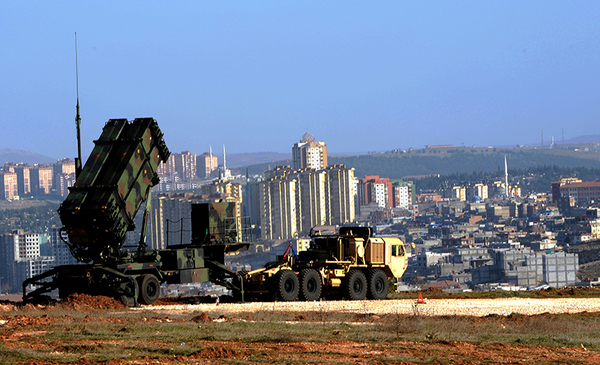
1234 (1)U.S. Patriot missiles, deployed outside Gaziantep, Turkey in 2013. (Image source: U.S. Army Europe/Daniel Phelps)

Kurecik seemed to matter a lot to Iran. In November 2011, Iran threatened that it would target NATO’s missile defense shield in Turkey (“and then hit the next targets,” read Israel) if it were threatened. Shortly before the arrival of Patriots in Turkey, Iran’s army chief of staff warned NATO that stationing Patriot anti-missile batteries in Turkey was “setting the stage for world war.”

What was stationed in Kurecik was an early-warning missile detection and tracking radar system. Its mission is to provide U.S. naval assets in the Mediterranean with early warning and tracking information in case of an Iranian missile launch that might target an ally or a friendly country, including Israel. So, a six-battery Patriot shield to protect the NATO radar in Kurecik against possible Iranian aggression was necessary. And that explains why the Iranians went mad about Kurecik and openly threatened to hit it.

NATO and Turkish officials have always denied any link between the Patriot missiles and the NATO radar in Turkey. They have often pointed out that the Patriot batteries were stationed in the provinces of Adana, Kahramanmaras and Gaziantep, while Kurecik was in nearby Malatya province. But the Patriot is a road-mobile system: It can be dismantled easily and re-deployed in another area in a matter of hours (the road distance between Kurecik and Kahramanmaras is a mere 200 kilometers, or 124 miles).

Clearly, Iran did not go mad and threaten to hit all NATO installations in Turkey because it wanted 3.5 million Turkish citizens to die from the chemical warhead of a Syrian missile. It went mad and threatened because it viewed the defensive NATO assets in Turkey as a threat to its offensive missile capabilities, which the Patriots could potentially neutralize.

Why, otherwise, would a country feel “threatened” and threaten others with starting a “world war” just because a bunch of defensive systems are deployed in a neighboring country? Iran did so because it views the NATO radar in Turkey as an asset that could counter any missile attack on Israel; and the Patriots as hostile elements because they would protect that radar. In a way, Iran’s reaction to the NATO assets in Turkey revealed its intentions to attack.

It could be a total coincidence that the U.S. and Germany (most likely to be followed by Spain) have decided to pull their Patriot batteries and troops from Turkey shortly after agreeing to a nuclear deal with Iran. But if it is a coincidence, it is a very suspicious one. In theory, the Patriot systems were deployed in Turkey in order to protect the NATO ally from missile threats from Syrian President Bashar al-Assad’s regime. Right? Right.

Assad’s regime is still alive in Damascus and it has the same missile arsenal it had in 2013. Moreover, Turkey’s cold war with Assad’s Syria is worse than it was in 2013, with Ankara systematically supporting every opposition group and openly declaring that it is pushing for Assad’s downfall. Why were Assad’s missiles a threat to Turkey two and a half years ago, but are not today?

The Patriot missiles are leaving Turkey. They no longer will “protect Turkish soil.”

Apparently, NATO allies believe, although the idea defies logic, that the nuclear deal with Iran will discourage the mullahs in Tehran from attacking Israel.

It looks as if the potential target of NATO heavyweights’ decision is more a gesture to Iran than to Turkey.

Khamenei: U.S.Is The Enemy’; ‘We Must Combat The Plans Of The Arrogance With Jihad For The Sake Of Allah

September 1, 2015

Khamenei: U.S.Is The Enemy’; ‘We Must Combat The Plans Of The Arrogance With Jihad , MEMRI, September 1, 2015

(Does Iran’s Supreme Leader refer to Obama’s America or to the United States? There’s a difference. — DM)

On August 17, 2015, just over a month after the announcement of the JCPOA in Vienna, Iranian Supreme Leader Ali Khamenei said in a speech at a conference held by the Iranian Shi’ite Ahl Al-Bayt organization that the U.S. is the embodiment of the enemy of the Islamic peoples and of Iran. It must be fought with military, cultural, economic, and political jihad, he said, adding that Islamic Iran is not interested in reconciling with it. He further claimed that the U.S. is attempting to divide the Islamic world into Shi’ite and Sunni camps that will wage a religious war against each other, and in this way gain it will be able to gain control over the peoples of the region.[1]

Iran, he stressed, stands behind the resistance axis, opposes the division of Syria and Iraq, and will continue to support anyone who fights Israel.

Following are excerpts from a report on the speech that was posted on Khamenei’s website (Leader.ir):

“[Khamenei said:] ‘We must combat the plans of the arrogance [i.e. the West, led by the U.S.] with jihad for the sake of Allah.’ The Leader pointed to ‘America’s efforts to exploit the results of the nuclear talks and exert economic, political, and cultural influence in Iran’ and to the plots of the power-hungry order aimed at sowing conflict and gaining influence in the region. The Leader called for ‘adopting the correct plans in order to wisely and consistently fight this plot, in an offense against it and a defense against it.’

“[Khamenei said:] ‘Jihad for the sake of God does not only mean military conflict, but also means cultural, economic, and political struggle. The clearest essence of jihad for the sake of God today is to identify the plots of the arrogance in the Islamic region, especially the sensitive and strategic West Asian region. The planning for the struggle against them should include both defense and offense.

“[He continued:] ‘The plots of the arrogance in the region have continued for a century, but [its] pressure and plotting increased after Iran’s Islamic Revolution [1979], in order to prevent [this Revolution] from spreading to other countries. For 35 years, the regime in Iran has been subjected to threats, sanctions, security pressure, and various political plots. The Iranian nation has grown accustomed to this pressure. After the Islamic awakening movement blossomed in recent years in North Africa [i.e. the Arab Spring], the enemy greatly stepped up its plots in the West Asian region because of its panic.

“‘The enemies thought that they could suppress the Islamic awakening movement, but it cannot be suppressed. It continues, and sooner or later it will prove itself as reality.

“‘The power-hungry order led by the United States of America is the perfectly clear embodiment of “the concept of the enemy.” America has no human morality. It carries out evil crimes under the guise of flowery statements and smiles. The enemy’s plot is two pronged: creating conflict and [exerting] influence. [The enemy sows conflict] among governments, and, worse, among the nations. At this stage, they are using the Shi’a and the Sunna to create conflict among the nations. Britain is an expert in sowing conflict; the Americans are its apprentices.

“‘Establishing violent despicable criminal takfiri circles, which the Americans have acknowledged establishing, is the main means of sowing conflict, ostensibly religious conflict, among [the Muslim] nations. Sadly, some innocent and ignorant Muslims have been fooled by this plot, and have been tricked by the enemy and fallen into its trap. Syria is an obvious example of this. When Tunisia and Egypt, with Islamic slogans, ousted their infidel governments, the Americans and Zionists decided to use this formula to eliminate the countries of the resistance, turning their attention to Syria. After the events in Syria began, some ignorant Muslims were tricked by the enemy and dragged Syria to its current situation. What is happening today in Iraq, Syria, Yemen, and other countries, which some people insist on calling “a religious war,” is in no way a war of religion [i.e. Sunni vs. Shi’ite], but a political war. The most important duty today is to remove these conflicts.

“‘I have explicitly stated that Iran reaches out in friendship to all the Islamic governments in the region, and that we have no problem with Muslim governments. Iran has friendly relations with most of its neighbors. Some still have conflicts with us; they are stubborn, and carry out nefarious acts, but Iran aspires to good relations with its neighbors and with the Islamic governments, especially with the governments in the region. The basis for Iran’s conduct comprises the principles laid out by Imam Khomeini, which he used to bring about victory for the Islamic Revolution, and he led it to a phase of stability.

“‘One of the principles of the [Islamic] regime [in Iran] is to be “forceful against the disbelievers, merciful amongst themselves [Koran 48:29].” On the basis of Imam Khomeini’s lesson, we do not wish to reconcile with the arrogance, but we aspire to friendship with our Muslim brothers. When we support [any of] the oppressed, we ignore the religious element; we provide the same aid to our Shi’ite brothers in Lebanon and to our Sunni brothers in Gaza. We see the Palestinian issue as the chief issue of the Islamic world.

“‘There must be no exacerbation of the conflict in the Islamic world. I oppose any conduct, even by Shi’ite circles, that creates conflict. I condemn the insults against the sanctities of the Sunna.

“‘The U.S. has aspired for decades to infiltrate the region and regain its lost reputation. The Americans wish to infiltrate Iran with the [JCPOA] agreement, whose fate in Iran and in the U.S. is still unknown. But we have decisively blocked this path, and we will do anything to keep them from infiltrating Iran economically, politically, and culturally.

“‘Iran’s regional policy is the opposite of America’s. While [America] seeks to divide the countries of the region and to create statelets that obey it, this will not happen. Some were amazed by statements I made in the past about America’s attempt to divide Iraq, but today the Americans themselves honestly acknowledge this. The Americans’ clear goal is to divide Iraq, and, if they can, Syria as well. But the territorial integrity of the countries of the region – Iraq and Syria – is very important to Iran.

“‘Iran supports the resistance in the region, including the Palestinian resistance, and we will support anyone who struggles against Israel and strikes at the Zionist regime. Iran’s chief policy is a struggle against America’s policy of division and its sowing of conflict. We do not recognize the Shi’a that is based in London and works in the service of the arrogance.

“‘In contrast to unfounded claims, Iran is not interfering in Bahrain and Yemen, but will continue to support the oppressed. The massacre of oppressed Yemenis and the destruction of that country must be strictly condemned. Promoting some [Saudi] political goals via foolish methods results in ongoing crimes against the Yemeni people.

“‘There are also painful events in Pakistan and Afghanistan. Muslims must be wise and vigilant, and thus they will solve these problems.

“‘The Islamic Radio and Television Union [organization in Iran] is an important center in the struggle against the dangerous empire of the sophisticated American-Zionist media mafia. We must strengthen and grow this movement…

“‘The future of the region belongs to the Muslim nations. Islam’s might is clear and will be maintained because of the presence of the fighting men and women.'”[2]

_________________

Endnotes:

[1] It should be noted that in the main Friday sermon in Tehran on August 28, 2015, prayer leader Ayatollah Kazem Seddiqi advised the officials in the government of Iranian President Hassan Rohani not to be misled by the West and the U.S. following the JCPOA, because they are “cannibals, liver-eaters, and anti-religion.” Fars, Iran, August 29, 2015.

[2] Leader.ir, August 18, 2015.

Nuclear Fiascoes: From Diplomatic Failure With North Korea To Debacle With Iran

September 1, 2015

Nuclear Fiascoes: From Diplomatic Failure With North Korea To Debacle With Iran, Forbes, Claudia Rosett, August 31, 2015

(An excellent comparison of the machinations that led to the nuke “deal” with North Korea and those now leading to the “deal” with the Islamic Republic of Iran. — DM)

[B]oth Clinton and Bush purchased the transient gains of North Korean nuclear deals at the cost of bolstering a North Korean regime that has become vastly more dangerous. . . . Kim Jong Un bestrides a growing arsenal of weapons of mass murder, including chemical and biological, as well as nuclear, plus a growing cyber warfare capability. This is the legacy not least of North Korea’s skill at exploiting the feckless nuclear deals offered by U.S. presidents whose real achievements on this front were to hand off a monstrous and rising threat to the next administration.

Now comes the Iran nuclear deal, which President Obama has described as a perhaps once-in-a-lifetime “historic chance to pursue a safer and more secure world.” And from Israel’s Prime Minister Netanyahu, leader of America’s closest ally and Iran’s prime target in the Middle East, comes the warning that this deal is a “stunning historic mistake,” configured not to block Iran’s path to the bomb, but to pave the way.

Like the North Korea Agreed Framework, the Iran nuclear deal pivots narrowly on nuclear issues, as if ballistic missiles, terrorism, arms smuggling, gross violations of human rights, blatant declarations of destructive intent and the malign character of the regime itself were irrelevant to the promised “exclusively peaceful” nuclear program.

[I]f this Iran deal goes through, is that we are about to see the mistakes made with North Korea amplified on a scale that augurs not security in the 21st century, but a soaring risk of nuclear war.

************************

With Congress due to vote by Sept. 17 on the Iran nuclear deal, there’s a warning worth revisiting. It goes like this: The president is pushing a historic nuclear agreement, saying it will stop a terror-sponsoring tyranny from getting nuclear weapons. And up pipes the democratically elected leader of one of America’s closest allies, to say this nuclear deal is mortal folly. He warns that it is filled with concessions more likely to sustain and embolden the nuclear-weapons-seeking despotism than to disarm it.

This critic has more incentive than most to weigh the full implications of the deal, because his country is most immediately in harm’s way — though it has not been included in the nuclear talks. He notes that the nuclear negotiators have sidelined such glaring issues as human rights, and warns that Washington is naive, and the U.S. is allowing itself to be manipulated by a ruthless dictatorship.

No, the critic I’m referring to is not Israel’s Prime Minister Benjamin Netanyahu, though he has warned of precisely such dangers in the Iran nuclear deal. I am citing the warnings voiced 21 years ago by the then-President of South Korea, Kim Young Sam, as the Clinton administration bargained its way toward the 1994 nuclear deal with North Korea known as the Agreed Framework.

As it turned out, Kim Young Sam’s misgivings were right on target. The 1994 Agreed Framework did not stop North Korea’s pursuit of the bomb. Instead, it became a pit stop on North Korea’s road to the nuclear arsenal it is amassing today.

For all the differences between North Korea and Iran, there are parallels enough to suggest that the failed 1994 nuclear bargain with North Korea is an excellent guide to the future trajectory with Iran, if the U.S. goes ahead with the nuclear deal — the Joint Comprehensive Plan of Action — announced by the U.S., France, Britain, Germany, Russia, China and Iran on July 14 in Vienna.

Recall that in 1994, faced with the threat of North Korea producing plutonium for nuclear weapons, the U.S. sought a diplomatic solution. Taking a cue from an exploratory trip to Pyongyang by former President Jimmy Carter, the Clinton administration wooed North Korea with an offer of lightwater nuclear reactors to be used exclusively for the peaceful production of electricity. All Pyongyang had to do was give up its nuclear bomb program.

As this agreement was taking shape, South Korea’s Kim Young Sam laid out his concerns in an hourlong interview with the New York Times. In the resulting article, dated Oct. 8, 1994, the Times reported: “After weeks of watching in silent frustration as the United States tries to negotiate a halt to North Korea’s nuclear program, President Kim Young Sam of South Korea lashed out at the Clinton administration today in an interview for what he characterized as a lack of knowledge and an overeagerness to compromise.”

The Times article described Kim’s concerns that “compromises might prolong the life of the North Korean government and would send the wrong signal to its leaders.” Kim was quoted as denouncing the deal then in the making as a “half-baked compromise” which would lead to “more danger and peril.”

President Clinton rolled right past that warning. On Oct. 21, 1994, less than two weeks after Kim’s concerns hit the headlines, the U.S. signed the Agreed Framework with North Korea. Clinton praised the deal as “good for the United States, good for our allies, and good for the safety of the entire world.” Promising that the Agreed Framework would reduce the threat of nuclear proliferation, Clinton further lauded the deal as “a crucial step for drawing North Korea into the global community.”

South Koreans and their leaders, in the main, disagreed. But with South Korea dependent on the U.S. superpower for defense against North Korea, Kim Young Sam had little choice but to follow Clinton’s lead. Seoul damned the deal with faint praise. The Associated Press reported: “South Korean Foreign Minister Han Sung-joo said that even though the deal fell short of expectations, it met South Korea’s minimum policy goals.”

History now shows that the chief policy goals served by the Agreed Framework were those of Pyongyang, which racked up a highly successful exercise in nuclear extortion, and carried on, first secretly, then overtly, with its nuclear weapons program. As South Korea’s president had predicted, the Agreed Framework helped fortify Pyongyang’s totalitarian regime, rather than transforming it.

Some of the negotiators involved in that 1994 deal have since argued that while the North Korean agreement eventually collapsed, it did at least delay Pyongyang’s progress toward nuclear weapons. What they tend to omit from that select slice of history is that the Agreed Framework helped rescue a North Korean regime which in 1994 was on the ropes. Just three years earlier, North Korea’s chief patron of decades past, the Soviet Union, had collapsed. The longtime Soviet subsidies to Pyongyang had vanished. China did not yet have the wealth to easily step in. And just three months before the nuclear deal was struck, North Korea’s founding tyrant, Kim Il Sung, died. His son and heir, Kim Jong Il, faced the challenge of consolidating power during a period of famine at home and American superpower ascendancy abroad.

But in the game of nuclear chicken, it was America that blinked. In exchange for North Korea’s promise to freeze and eventually dismantle its nuclear weapons program, the U.S. agreed to lead a $4.6 billion consortium to build two lightwater reactors for North Korea, and provide shipments of free heavy fuel oil for heating and electricity production while the new reactors were being built. This was augmented by U.S. security guarantees, easing of sanctions and promises to move toward normalizing diplomatic relations, with generous food aid thrown in.

By the late 1990s, just a few years into the deal, North Korea had become the largest recipient of U.S. aid in East Asia. That did not curb Kim Jong Il’s hostile ways. The Pyongyang regime put the interests of its military and its weapons programs before the needs of its starving population. In 1998, North Korea launched a long-range missile over Japan, a test for which it was hard to discern any purpose other than developing a vehicle to carry nuclear weapons. By that time, as a number of former Clinton administration officials have since confirmed, the U.S. was seeing signs that North Korea was cheating on the nuclear deal by pursuing a secret program for uranium enrichment.

Instead of confronting North Korea, Clinton during his last two years in office tried to double down on his crumbling nuclear deal by pursuing a missile deal with Pyongyang. In 2000, that led to an exchange of high-ranking officials, in which the Clinton administration dignified North Korea with the unprecedented move of welcoming one of its top-ranking military officials, Vice Marshal Jo Myong Rok, to a 45-minute sitdown with Clinton at the White House. Clinton then dispatched Secretary of State Madeleine Albright, together with the administration’s special advisor for North Korea policy, Wendy Sherman, to Pyongyang (yes, the same Wendy Sherman recently employed by Obama as chief negotiator of the Iran nuclear deal). Sherman and Albright brought North Korea’s Kim Jong Il a basketball signed by star player Michael Jordan; Kim entertained them with a stadium flip-card depiction of a long-range missile launch. There was no missile deal.

North Korea continued raking in U.S. largesse until late 2002, when the Bush administration finally confronted Pyongyang over its nuclear cheating. North Korea then walked away from the 1994 deal (on which it had by then been cheating for years), withdrew from the Non-Proliferation Treaty (on which it had also been cheating) and began reprocessing plutonium from the spent fuel rods which despite the 1994 deal had never been removed from its Yongbyon nuclear complex. President Bush then made his own stab at nuclear diplomacy, via the Six-Party Talks. North Korea punctuated that process in Oct. 2006 with its first nuclear test. In 2007, the Bush administration led the way to a Six-Party denuclearization deal with North Korea, bull-dozing ahead even after it became clear that North Korea had been helping Syria build a secret copy of North Korea’s plutonium-producing Yongbyon reactor (destroyed in Sept. 2007 by an Israeli air strike). Once again, North Korea took the concessions, cheated on the deal and in late 2008 walked away.

Since Obama took office, North Korea has carried out its second and third nuclear tests, in 2009 and 2013; restarted its plutonium-producing reactor at Yongbyon; and in 2010 unveiled a uranium enrichment plant, which appears to have since at least doubled in size. Having equipped itself with both uranium and plutonium pathways to the bomb, North Korea is now making nuclear weapons, and developing increasingly sophisticated missiles — including long-range — to deliver them.

In sum, both Clinton and Bush purchased the transient gains of North Korean nuclear deals at the cost of bolstering a North Korean regime that has become vastly more dangerous. When Kim Jong Il died in late 2011, North Korea’s regime managed a second transition of power, to third-generation Kim family tyrant Kim Jong Un — who was described last year by the commander of U.S. Forces in Korea, General Curtis Scaparrotti, as “overconfident and unpredictable.” Kim Jong Un bestrides a growing arsenal of weapons of mass murder, including chemical and biological, as well as nuclear, plus a growing cyber warfare capability. This is the legacy not least of North Korea’s skill at exploiting the feckless nuclear deals offered by U.S. presidents whose real achievements on this front were to hand off a monstrous and rising threat to the next administration.

Now comes the Iran nuclear deal, which President Obama has described as a perhaps once-in-a-lifetime “historic chance to pursue a safer and more secure world.” And from Israel’s Prime Minister Netanyahu, leader of America’s closest ally and Iran’s prime target in the Middle East, comes the warning that this deal is a “stunning historic mistake,” configured not to block Iran’s path to the bomb, but to pave the way.

There are surely dissertations to be written on the intricate differences between the North Korea Agreed Framework and the Iran nuclear deal now before Congress. But important and alarming similarities abound.

Like the North Korea deal, the Iran deal dignifies a despotic, murderous regime, and provides its worst elements with relief from economic distress, via a flood of rejuvenating resources. In North Korea’s case, the main help arrived in the form of aid. In oil-rich Iran’s case, it comes in the far more lucrative form of sanctions relief, including access to an estimated $55 billion or more (by some estimates, two or three times that amount) in currently frozen funds held abroad.

Like the North Korea Agreed Framework, the Iran nuclear deal pivots narrowly on nuclear issues, as if ballistic missiles, terrorism, arms smuggling, gross violations of human rights, blatant declarations of destructive intent and the malign character of the regime itself were irrelevant to the promised “exclusively peaceful” nuclear program.

Like the North Korea deal, the Iran deal comes loaded with incentives for the U.S. administration to protect its own diplomatic claims of success by ignoring signs of cheating. Monitoring of nuclear facilities is shunted to the secretive International Atomic Energy Agency, which has no power of enforcement, and will have to haggle with Iran for access to suspect sites.

Like Clinton with North Korea, Obama chose to frame the Iran deal not as a treaty, but as an executive agreement, performing an end-run around vigorous dissent within Congress by submitting the deal pronto for approval by the United Nations Security Council. In the North Korean case, the Security Council gave its unanimous blessing in the form of a presidential statement. In the Iran case, the Obama administration drafted a resolution which the Security Council unanimously approved. Having hustled the deal directly to the U.N., despite legislation meant to ensure Congress a voice, Obama administration officials are now pressuring Congress to defer to the U.N.

To be sure, there are two highly significant differences between the 1994 North Korea deal and the 2015 Iran deal. Iran, with its oil wealth, location in the heart of the Middle East, messianic Islamic theocracy and global terror networks, is even more dangerous to the world than North Korea. And, bad as the North Korea deal was, the Iran deal is much worse. Along with its secret side agreements and its promises to lift the arms embargo on Iran in five years and the missile embargo in eight, this deal lets Iran preserve its large illicitly built nuclear infrastructure and carry on enriching uranium, subject to constraints that will be problematic to enforce, and are themselves limited by sunset clauses that even North Korea never managed to obtain at the bargaining table.

When Israel’s Netanyahu spoke this past March to a joint meeting of Congress, warning that the Iran nuclear deal would lead to “a much more dangerous Iran, a Middle East littered with nuclear bombs and a countdown to a potential nuclear nightmare,” Obama dismissed that speech as “nothing new.” That’s true, in the sense that we have heard similar warnings before. What’s new, if this Iran deal goes through, is that we are about to see the mistakes made with North Korea amplified on a scale that augurs not security in the 21st century, but a soaring risk of nuclear war.

Report: Hezbollah enlisting West Bank youth to carry out terror attacks against Israel

August 30, 2015
Lebanese Hezbollah supporters march during a religious procession, to mark the burning of the tents that is part of the Ashura religious ceremony, in NabatiehLebanese Hezbollah supporters march during a religious procession in Nabatieh. (photo credit:REUTERS)

Saudi daily quotes Palestinian security source as saying PA concerned by Hezbollah attempts to make inroads with Palestinian youth.

Hezbollah has been working intensively to enlist former operatives from Fatah’s armed wing, the Al Aksa Brigades, in order to carry out terror attacks against Israeli targets in the West Bank and inside Israel, a Palestinian security source was quoted as saying on Sunday.

Saudi daily Okaz quoted the source as saying that “among those Hezbollah members involved in the operation is Kayis Ubayid, who was behind the kidnapping of Col. (res.) Elahanan Tenebaum in 2000.” Tenenbaum was released to Israel from Hezbollah captivity as part of a prisoner exchange in 2004.

The source added that Palestinian security forces believe that recent shootings and the use of explosive devices such as that thrown at an IDF position near Beit Jala, south of Jerusalem, earlier this month, are part of the Lebanese Shi’ite group’s efforts.

The Palestinian source claimed that Israel is well-aware of the Hezbollah activities. He added that some of those Palestinian operatives approached by Hezbollah reported the Shi’ite group’s efforts to Palestinian Authority officials. “We estimate that there are a number of youths who were drawn into joining Hezbollah’s ranks and are now operating in the West Bank, because of economic hardship or the deterioration in the security situation,” the source said.

“We don’t know how many people there are, but there is no doubt that the phenomenon is gaining momentum among former Al Aksa Brigade youths that have been approached by Hezbollah to work in exchange for economic support. The matter is a personal choice of these youth, who have chosen to take action against Israeli targets.”

The Palestinian security source expressed concern that, for the first time, their was a willingness among Palestinian youth to join Hezbollah. “These attempts have not gone unnoticed by us in recent years, but in recent months we feel that the phenomenon has grown, with interest expressed by the youths,” he said. “The number of youths involved can be counted on two hands, but nonetheless this is a dangerous development, which if it manages to carry out just one terror attack – it will change the situation completely. We fear that the issue will become a phenomenon, with more and more youths being seduced into getting money from Hezbollah. When they number in the dozens, handling them will become much more complicated.”

The source said that the matter was a security challenge for the Palestinian Authority, which is also currently acting against Hamas’s efforts to revive its military wing, the Kassam Brigades, in the West Bank.

The source said that in the mid-2000s, Hezbollah had tried to enlist West Bank youth, offering salaries which reached tens-of-thousands of dollars per month. “In the years 2004-2005, the Al Aksa Brigades claimed responsibility for terror attacks which were all funded by Hezbollah, whose main enlister was Kayis Ubayid.

This would not mark the first time that Palestinian security forces have warned of Hezbollah attempts to enlist fighters in the West Bank. The move could potentially be tied to Hezbollah’s patron – Iran.

In January, Iranian Defense Minister Hussein Dehghan warned that Israel “will not escape revenge” for its alleged assassination of Iranian Revolutionary Guards’ General Muhammad Allah-Dadi and of Jihad Mughniyeh in an air strike in the Syrian Golan Heights attributed in foreign reports to the IAF.

Dehghan said at the time that Iran would continue to arm the West Bank and Hezbollah. “Tehran will continue to strengthen the axis of resistance in order to deal with the Zionist entity.”

Israel will Never be a Second Czechoslovakia

August 29, 2015

Israel will Never be a Second Czechoslovakia, American ThinkerShoula Romano Horing, August 29, 2015

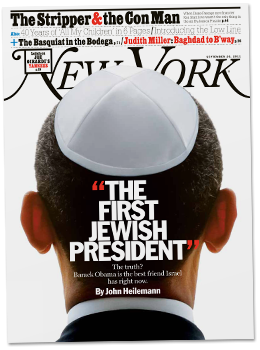
(Obama loves Israel to death. Or tries.

Obama first Jewish president

— DM)

Israel is not like the Czechoslovakia of 1938 and never will be. Israel is an independent military and nuclear power that intends to use its right of self-defense against Iran and its terrorist proxies whether “Emperor” Obama  likes it or not, or tries to stop it.

Obama and his army of Democratic followers in the Congress, progressive groups, and the media repeatedly state their main argument in favor of the agreement, which is that Israel is the only country in the world opposing the Iran nuclear deal. First,  It seems that President  Obama  and his supporters have not paid attention to a recent CNN poll taken on  August 20  that  found that 60 percent of Americans  disapprove of how Obama is handling the Iran deal, and  56 percent  believe that Congress should reject it.

Secondly, like any other self-respecting sovereign country, Israel is against any deal that threatens her own survival by an evil Jihadist Islamic state clearly intent on its annihilation, which is being imposed on her by world powers as a fait accompli.

It seems that Obama and his supporters are delusional, expecting that Israel will allow itself to become a second Czechoslovakia. They are outraged and shocked that Israel has not only refused to quietly accept this very bad deal but dares to fight the deal publicly, loudly, and proudly.

Like Czechoslovakia in 1938, Israel is a small democracy surrounded by hostile nations, and like Czechoslovakia, it was excluded from negotiations that led to a diplomatic deal that shapes its fate and threatens its survival. In 1938, the enlightened democracies in Europe decided to sacrifice Czechoslovakia for a comfortable, temporary solution. The Munich agreement was signed, when Britain and France believed that handing Czechoslovakia to Hitler was the only way to save the world from another war. It is regarded as the shameful culmination of the Allies refusal to confront Nazi aggression and gave Hitler what he wanted in exchange for his verbal promise of “peace in our time” as Neville Chamberlain called it.

In his biography of Franklin Delano Roosevelt, Champion of Freedom, Conrad Black recalls the scene when the poor Czechoslovakian delegates were brought into the room to be informed of their nation’s fate as set out in the Munich Agreement. “No Czech answer was requested. They were handed a fait accompli. The Czechs wept, and Hubert Masarik (Czech diplomat attending the Munich conference) said, prophetically and justly: ‘They don’t know what they are doing to us or to themselves.… These poor, good men were the final players in a macabre and shameful Gothic tragedy.”

The Jewish state has for 67 years been mourning its beloved soldiers who have courageously died defending it from the evil regimes that surround her. However, it will never weep over a deal imposed on it by a morally bankrupt world. Those days of passivity were over when the enormity of the Holocaust was revealed. The Jewish state has been fighting for itself on its own since its independence.

Obama’s threats of a military attack on Iran when violations of the deal occur are not taken seriously by anyone and are a source of laughter for the Iranian regime. Israel does not need  the U.S. or any another party to save her but it does need for Obama and the world powers to move away from Israel’s path and let it do everything in its means to minimize the nuclear threat, and the more menacing conventional  threat resulting from the hundreds of  billions of dollars Iran and its terrorist proxies will get  from the deal.

For the last two years, Obama has been trying to tie Israeli hands and prevent it from practicing its right to self-defense against Iran. Dan Raviv from CBS News reported in March 2014, that the Obama’s administration has asked Israel to stop killing key scientists in the Iranian nuclear program while Obama has been negotiating. In an August interview with the German magazine Der Spiegel, Israeli Defense Minister Moshe Yaalon implicitly warned that the assassinations could be renewed by saying;” I am not responsible for the lives of Iranian scientists.’

But much worse, in Article 10 of the deal, Obama and world powers have agreed that they will assist Iran in thwarting attempts to undermine its nuclear program. The agreement stipulates that they, with the Iranians, will foster “cooperation through training  and workshops to strengthen Iran’s ability to protect against and respond to, nuclear security threats, including sabotage, as well as to enable effective  and sustainable nuclear security  and physical protection systems.”

Recent years have seen various mishaps befall the Iranian nuclear program, from powerful computer viruses to the death of the nuclear scientists, which world media outlets have often attributed to the Israeli intelligence agency, Mossad. According to an audio recording with former Defense Minister Ehud Barak leaked to an Israeli television channel on August 22, Israeli leaders planned to attack military targets in Iran in 2010, 2011, and 2012 but were held back due to the opinions of other government and military leaders.

It is quite disturbing that the U.S. as well as the U.K., Russia, China, France, and Germany will actively try to prevent covert actions against the Iranian nuclear program, as well as any potential military operation against Iran, making such options far more complicated and dangerous for a country like Israel. Congress should ask Obama whether he will order U.S. jets to shoot down Israeli jets intent on destroying an Iranian nuclear weapon facility.

The Congressional Democrats must not repeat the mistakes of the past and sacrifice the future for the present; The Democrats must not ignore Iranian aggression in the hopes of gaining an illusory peace. A vote for the deal is a vote for the beginning of the next war between Israel and Iran and its proxies. The Jewish people can never again remain passive in the face of genocidal enemies.


Evidence mounts that soon-to-be flush Iran already spurring new attacks on Israel

August 28, 2015

Evidence mounts that soon-to-be flush Iran already spurring new attacks on Israel, Fox News, August 27, 2015

An unsettling surge in terrorism by Iranian proxies has many Israelis convinced the release to Tehran of tens of billions of dollars in frozen funds is already putting the Jewish state in danger.

In recent days, rockets have rained down on Israel from Gaza in the south and the Golan Heights to the north, Israeli forces foiled a bomb plot at the tomb of biblical patriarch Joseph, and Gaza-based terrorist groups that also have a presence in the West Bank have openly appealed for aid on Iranian television. Israeli officials fear the terrorist activity is spiking as groups audition for funding from Tehran, which is set to receive the long-frozen funds as part of its deal to allow limited nuclear inspections. They say the international focus on Iran’s nuclear ambitions has left its more conventional methods of attacking regional adversaries unaddressed.

“The nuclear context is just one aspect of the negative Iranian activities in the region,” Emmanuel Nahshon, senior Israeli Foreign Ministry spokesman, told FoxNews.com. “We can see the demonstration of this on a daily basis in Syria, in Yemen, and in Iraq. We see it also when we see the [Iranian] support of Hezbollah and other groups who operate against Israel.”

Last month, National Security Adviser Susan Rice admitted that some of the money due to be released as part of the deal negotiated by the U.S. led P5+1 “would go to the Iranian military and could potentially be used for the kinds of bad behavior that we have seen in the region.”

Aside from the soon-to-be-released billions, Iran’s finances will also be strengthened by the easing of trade embargoes that have seen a horde of major international business – many from P5+1 countries – rushing to sign lucrative deals with the ayatollahs. Earlier this week, British Foreign Minister Philip Hammond scoffed at the fears of Israel and many Arab countries in the Middle East, saying the deal would “slowly rebuild their sense that Iran is not a threat to them.” Less than 24 hours later, the spokesman for Iran’s top parliament member said, “Our positions against [Israel] have not changed at all; Israel should be annihilated.”

If that remains Iran’s intention, terror groups Hezbollah, Hamas, and Palestinian Islamic Jihad are showing a renewed eagerness to continue as its proxies. Four rockets apparently fired by the PIJ from Syria into northern Israel last week – two into the Golan Heights and two more into the Upper Galilee – were the first such attacks since the start of Syria’s bloody civil war more than four years ago. Israel responded with targeted missile strikes, including one which hit a car killing “five or six PIJ terrorists.”

On Aug. 18, Iranian state TV broadcast images of a new, 2.5-mile tunnel leading from Gaza into Israel. Dug by the Fatah-linked terror group the Al Aqsa Martyrs Brigade, and seemingly competing with arch-rivals Hamas for a share of the imminently unfrozen Iranian funds, the terrorists made an unabashed appeal for more cash. In a segment translated by Palestinian Media Watch, the terror group’s representatives said, “This is why we are asking [for money]… especially [from] Iran, which is a known long-time supporter of the resistance and the Palestinian cause.”

On Tuesday, Israeli officials revealed that a joint Israeli internal security and military operation thwarted a potentially lethal bomb attack planned by the Islamic Jihad on visitors to Joseph’s Tomb in Shechem in the Palestinian-controlled West Bank, the resting place of the biblical figure revered by Jews, Christians and Muslims alike.

The pace of attacks, as well as the diversity of their perpetrators, has prompted speculation that terrorist groups are competing for Iranian funding, and trying to show they are capable of giving Tehran bang for its buck. The terrorist groups however operate on budgets that are tiny given the scale of Iran’s financing capability.

“The amount that Iran gives Hezbollah is not very much – around $200 million – not even 1 percent of Iran’s budget last year,” Meir Javedanfar, an Iranian-born Israeli expert on the region who writes at www.middleastanalyst.com, told FoxNews.com. “If you want to stop Iranian support of Hezbollah you would need to have inspectors on the ground in Syria and Lebanon, the most dangerous of places, checking Hezbollah’s arsenal, bank accounts, bases, and Syrian bases which Hezbollah uses. I don’t see any UN force, or anyone else volunteering to do that.”

The Iranian Nuclear Deal Viewed Through the Eyes of ISIS and Iran’s Children

August 27, 2015

The Iranian Nuclear Deal Viewed Through the Eyes of ISIS and Iran’s Children, Accuracy in Media, Lt. Colonel James G. Zumwalt, USMC (Ret.), August 27, 2015

(Assume for the sake of argument that the Islamic Republic is only half as evil as the Islamic State. That’s hardly a persuasive argument in favor of the “deal” with Iran. –DM)

timthumb (1)

As Congress votes next month on whether to support the nuclear agreement Team Obama has negotiated with Iran, two assessments are necessary.

One is content-oriented-looking to the four corners of the document to understand exactly what Iran is being allowed legally to do, as well as the impact it will have on our national security.

Fully understanding that, the other assessment is then to analyze Iranian intentions-looking outside the document to determine the likelihood of full compliance by the mullahs.

As Congress undertakes the first assessment, it seems, unfortunately, to pay less heed to the second. But, as the latter demands understanding what the mullahs’ ultimate goal is, in addition to their commitment to achieving it, it is most relevant.

Interestingly, to better understand the mullahs’ ultimate goal, we need only look to ISIS-a group in pursuit of a similar one.

Before we do so, however, consider the following hypothetical: based on what we know about the group today, would Congress even consider negotiating the same nuclear deal with ISIS that has been negotiated with Iran? We hope it would not. The very thought of any agreement paving the way for a nuclear-armed ISIS would be an interminable nightmare for the world community.

The blatant savagery of ISIS undermines its credibility as a candidate with whom to hold nuclear negotiations. A group whose sole creative contribution to society has been to develop increasingly horrific ways of executing victims (and proudly displaying them on video) does not make for a responsible nuclear negotiating partner.

We may have thought the burning alive of caged Jordanian pilot Mu’ath al-Kaseasbeh earlier this year represented the extreme of ISIS brutality. It did not.

We have seen other victims paraded out, hands tied behind their backs, forced to kneel in front of their ISIS captors who-unbeknownst to the captives had buried explosive devices where they were kneeling-move safely away before detonating them. The sight of flying body parts then met with cries of “Allahu Akbar” from among the ISIS savages.

We have seen videos of Arab Christians similarly being positioned and beheaded by ISIS captors.

We have reports of an ISIS leader who, by night, raped his 11-year-old slave girl and, by day, strapped her to the windshield of his vehicle to afford him concealment from snipers as he drives.

The savagery of ISIS knows no limits. Its soldiers, after executing a Muslim father, strapped an explosive device to the baby child he left behind, detonating it to demonstrate to trainees the weapon’s battlefield impact upon the human body.

ISIS justifies its savagery on a Quranic mandate to pursue Islam’s ultimate goal: a global Caliphate by which to rule all inhabitants under sharia-a system of laws stripping its own believers of human dignity and non-believers of their lives.

But it is interesting that the ultimate goal for Islam sought by ISIS is really no different than that sought by Iran’s mullahs.

The brutality of ISIS, the irrationality of its leadership, the darkness that strips it of any humanity, the avowed purpose of its very being-all of this is mirrored within the mindset of Iran’s mullahs. Iran’s mullahs are ISIS wolves in sheep’s clothing.

ISIS is driven by a virulent Islamic ideology, unprotected by state boundaries, seeking to impose sharia upon the world. Iran is driven by a virulent Islamic ideology, protected by state boundaries, seeking the very same global objective.

The two mindsets evolved from one Islamic tree, branching out into different sects following Muhammad’s death. While differences evolved in culture, political systems, eschatological beliefs concerning the “Twelfth” or “Hidden Imam,” the role economics plays, etc., what we should find disturbing is, regardless of which sectarian branch prevails, for us, the end result is the same. Whether a Sunni ISIS Caliphate or a Shiite Iranian one were to dominate, infidels would be forced either to convert to Islam or die-with death imposed by whatever means available.

It is the commitment to an Iranian Caliphate that should concern us more than the commitment of ISIS to one. The mullahs believe for theirs to evolve, global chaos needs to occur-with man a catalyst in triggering it. Thus, providing them with a path for a nuclear-armed Iran gives the mullahs the means to fulfill the prophecy of Islam to which they adhere.

The Western mind rationalizes Iran would never initiate a nuclear strike for fear of retaliation. But the concept of Mutual Assured Destruction (MAD) that prevented a Cold War from turning hot will have no impact upon Iran. Its mullahs see this life as but a means of ensuring their arrival in the next-a paradise of unlimited sexual desires with “recycled” virgins promised by Muhammad. Such is their reward for striving in this life to make the world an infidel-free one.

We see the evil of ISIS by the sins it commits. Why do we fail to see it in the deeds of Iran’s mullahs who mirror them? Perhaps it is because ISIS boasts about its inhumanity while the mullahs are less vocal about theirs.

To fully understand the mullahs’ commitment to their ultimate goal, we need view it through the most innocent of eyes.

The best insight into the soul of a nation’s leadership is examining how it treats its most treasured asset-its own children.

Peering into the soul of Iran’s leadership, one sees only darkness.

As Iran’s mullahs came to power in 1979, the violence against the Shah was soon redirected against their own people, claiming thousands of lives. Some were children who, lacking knowledge about sharia, were held accountable, nonetheless, for violating it and summarily executed. Sharia was to rule over all, even those of a tender age incapable of its comprehension.

For Supreme Leader Ayatollah Ruhollah Khomeini, the sacrifice of children in this life was deemed acceptable to ensure ascendancy to the next. As he proclaimed in December 1979, “Could anyone wish his child to be martyred to obtain a good house? This is not the issue. The issue is (achieving) another world”-i.e., martyrdom of a child is justified in furtherance of Islam.

The extreme to which Khomeini took this was documented during Tehran’s eight-year war with Iraq.

Seeking to reduce Iranian army losses suffered penetrating Iraqi positions heavily defended by minefields, Khomeini issued a call for children to march through these fields to clear a route of attack. Each child was presented a plastic key beforehand, which, Khomeini promised, unlocked the gates to paradise. An estimated 500,000 children were so sacrificed.

A child’s life today in Iran continues to hold little value-children are still executed for acts deemed criminal under sharia. Accordingly, Tehran fails to comply with the Convention on Rights of the Child-an international commitment it made to protect its own children.

The virulent ideology of both ISIS and Iran’s mullahs merge on the common ground they share in totally devaluing the life of a child, evidenced by their unconscionable willingness to use children as weapons of war-whether it be to clear minefields, to serve as suicide bombers, or to execute prisoners.

The mullahs’ willingness to sacrifice the lives of their children should not be lost on us. If they, in pursuit of their ultimate goal, are unwilling to honor international commitments protecting their own children, only a fool can expect them to honor the international commitments set forth in a nuclear agreement.

He, too, is a fool who accepts President Obama’s claim that the Iranian leadership’s cries of “Death to America” are simply made for domestic consumption, ignoring Iranian President Hassan Rouhani’s recent warning, “Saying death to America is easy; we need to express death with action.” If Congress approves Obama’s nuclear agreement with Iran, Rouhani’s wish to replace hopeful words for America’s death with action to achieve it will take a deadly step forward.

Next month’s vote on the Iranian nuclear deal will reveal to us just how many fools we have in Congress.

Cartoons of the day

August 27, 2015

H/t The Jewish Press

Broken-Telephone1

H/t Vermont Loon Watch

inspectors