Archive for the ‘David Cameron’ category

Thank you, America!

June 25, 2016

Thank you, America! Wattsupwith that, Christopher Monckton of Brenchley via Anthony Watts, June 24, 2016

(This is by far the best address I have read thus far on Brexit. — DM)
head-for-the-brexit

“Your Majesty, with my humble duty, I was born in a democracy; I do not live in one; but I am determined to die in one.”

And now I shall die in one. In the words of William Pitt the Younger after the defeat of Napoleon, “England has saved herself by her exertions, and will, as I trust, save Europe by her example.”

The people have spoken. And the democratic spirit that inspired just over half the people of Britain to vote for national independence has its roots in the passionate devotion of the Founding Fathers of the United States to democracy. Our former colony showed us the way. Today, then, an even more heartfelt than usual “God bless America!”

***************************

For my final broadcast to the nation on the eve of Britain’s Independence Day, the BBC asked me to imagine myself as one of the courtiers to whom Her Majesty had recently asked the question, “In one minute, give three reasons for your opinion on whether my United Kingdom should remain in or leave the European Union.”

My three reasons for departure, in strict order of precedence, were Democracy, Democracy, and Democracy. For the so-called “European Parliament” is no Parliament. It is a mere duma. It lacks even the power to bring forward a bill, and the 28 faceless, unelected, omnipotent Kommissars – the official German name for the shadowy Commissioners who exercise the supreme lawmaking power that was once vested in our elected Parliament – have the power, under the Treaty of Maastricht, to meet behind closed doors to override in secret any decision of that “Parliament” at will, and even to issue “Commission Regulations” that bypass it altogether.

Worse, the treaty that established the European Stability Pact gives its governing body of absolute bankers the power, at will and without consultation, to demand any sum of money, however large, from any member state, and every member of that governing body, personally as well as collectively, is held entirely immune not only from any civil suit but also from any criminal prosecution.

That is dictatorship in the formal sense. Good riddance to it.

I concluded my one-minute broadcast with these words: “Your Majesty, with my humble duty, I was born in a democracy; I do not live in one; but I am determined to die in one.”

And now I shall die in one. In the words of William Pitt the Younger after the defeat of Napoleon, “England has saved herself by her exertions, and will, as I trust, save Europe by her example.”

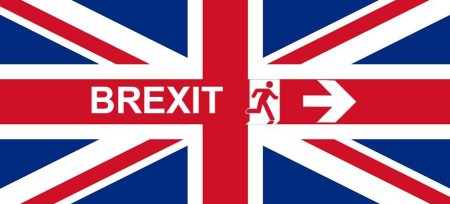
Indeed, No-way and Nixerland having already voted down the EU, Brexit may well be swiftly followed by Frexit, Grexit, Departugal, Italeave, Czechout, Oustria, Finish, Slovakuum, Latviaticum and Byebyegium.  At this rate, soon the only country still participating in the European tyranny-by-clerk will be Remainia.

The people have spoken. And the democratic spirit that inspired just over half the people of Britain to vote for national independence has its roots in the passionate devotion of the Founding Fathers of the United States to democracy. Our former colony showed us the way. Today, then, an even more heartfelt than usual “God bless America!”

All who have studied the Madison papers will grasp the greatness of the Founding Fathers’ vision. They were determined that no law and no tax should be inflicted upon any citizen except by the will of elected representatives of the people in Congress assembled.

They regarded this democratic principle as of such central importance that they wrote it down as Article 1, Section 1 of the Constitution of the United States: “All legislative power herein granted shall be vested in a Congress of the United States, which shall consist of a Senate and House of Representatives.” Period. No ifs. No buts. No exceptions.

Except one. The Constitution establishes that foreign treaties ratified by a two-thirds majority of the Senate shall have the same force of law throughout the United States as enactments of Congress.

It is, therefore possible for any U.S. Government that can muster that Senate majority to ratify any treaty and thereby to thwart the central principle of Congressional democracy: that no Congress may bind its successors.

The Republicans, who are not always as lively in their understanding of the threat to democracy posed by supranational and global institutions such as the EU, the UN and its bloated climate bureaucracy, are too often snared or charmed by determined “Democrats” who fully understand and thirst to exercise the power to inflict perma-Socialism on their nation by bilateral, multilateral or global treaties.

It is astonishing how many of the GOP are willing to be cajoled and schmoozed into supporting monstrosities such as the Transatlatic Trade and Investment Partnership, which on its face sounds like a free-marketeer’s dream but is in its small print a series of outright Socialist measures which, once the Senate has ratified them, cannot be repealed. Its climate provisions, for instance, are highly dangerous.

It is no accident, therefore, that the bankers, the corporate profiteers, the Greens and the National Socialist Workers’ Party of Scotland – the corporatists and the communists together – made common totalitarian cause and heavily promoted the campaign to keep Britain in the EU, that paradise of vested interests and their poisonous lobbyists.

It is likewise no accident that precisely these same national and global vested interests heavily promote the campaign to subject Britain and the world to various unnecessary and damaging measures whose ostensible purpose is to control the climate but whose real ambition is to curb capitalism, fetter freedom, punish prosperity,. limit liberty and deny democracy.

The necessity to protect the flagile flower of democracy from the scythe of Socialism is now surely self-evident. Here are two modest proposals to ensure that the will of the people prevails over the power of the politicians, the Press, and the profiteers.

First, every new treaty, and as many pre-existing treaties as possible, should be made subject to repeal by a national referendum – and not just by a referendum called by the governing party because it thinks it can win it but by the people via the initiative procedure. Britain would have left the EU long before now if we, the people, and not those who govern us, had had the right to put referendum questions on the ballot.

Secondly, the governing bodies of all new supranational or global bodies exercising real sovereign power or spending taxpayers’ money from the states parties to the treaty that establishes them should be elected at frequent intervals by the peoples of those states parties.

Otherwise every international treaty, being a transfer of power from elected to unelected hands, diminishes democracy. Britain’s membership of the European Union effectively took away our democracy altogether, so that three new laws in five (according to the researchers of the House of Commons Library) or five in six (according to the German Government in a submission some years ago to the German Constitutional Court) are inflicted upon us solely because the unelected Kommissars require it.

Till now, our obligation has been to obey, on pain of unlimited fines.

The vote by the people of Britain to break free from this stifling, sclerotic tyranny has sent a shock-wave through every major international governing entity. It was no accident that the the International Monetary Fund, the Organization for Economic Corruption and Devastation, and various world “leaders” including Mr Obama, broke with democratic convention by openly promoting a “Remain” vote in a flagrant attempt to interfere in Britain’s decision.

Mr Obama’s intervention was decisive. The moment he demanded that Britain should remain within the EU, the polls began to swing against it. It was only when, in his maladroit fashion, he had sought to interfere in Britain’s decision that so many undecided voters woke up to the danger that the maneuverings and posturings of the international governing class represent to democracy.

What will Britain’s decision mean for the climate debate? Of course, it will break us free from the EU, whose governing elite had seized upon the climate issue as a purported ex-post-facto justification for the now-hated bloc’s continued existence.

We are left with our own British governing class, which has until now been no less determined than the EU to damage our economic and environmental interests by shutting down vital coal-fired power stations and carpeting our once green and pleasant land with windmills.

Now that the EU and its devoted poodle Mr Cameron have been consigned to the trashcan of history, it is near-certain that any new British Cabinet will take a more alert and less acquiescent stance than the present lot on the climate question.

It may even occur to the new Cabinet to check whether the rate of global warming is anything like what the profiteers of doom had predicted; to count the number of downstream businesses – such as cinder-blocks made from fly-ash out of coal-fired power stations – that have been destroyed by the EU’s war on coal; and even to wonder whether the forest of windmills that infest our once beautiful landscape are now extracting between them so much kinetic energy from passing storms that they are slowing them down, causing far more flash flooding than slightly warmer weather would (if and when it happened).

In the past, there was no point in our politicians asking any such questions, for our policies on all matters to do with our own environment were set for us by the unelected Kommissars of Brussels, whether we liked it or not.

Now that our politicians are going to have to learn to think for themselves again, rather than acting as an otiose, automated rubber stamp for directives from Them in Brussels, perhaps the Mother of Parliaments will begin to calculate the enormous economic advantage that Britain will gain by abandoning all of the climate-related directives that have driven our coal corporations, our steelworks and our aluminum works overseas, and have killed tens of thousands by making home heating altogether unaffordable.

We, the people, are the masters now. Our politicians will have to reacquire the habit of listening not to Them but to us. Here, and in the rest of Europe, and eventually throughout the world, let freedom ring!

Thank you, America, and God save the Queen!
Britain: The “Struggle of Our Generation”

August 10, 2015

Britain: The “Struggle of Our Generation”, The Gatestone InstituteSamuel Westrop, August 10, 2015

  • “We’ve got to show that if you say ‘yes I condemn terror — but the Kuffar are inferior’, or ‘violence in London isn’t justified, but suicide bombs in Israel are a different matter’ — then you too are part of the problem. Unwittingly or not, and in a lot of cases it’s not unwittingly, you are providing succour to those who want to commit, or get others to commit to, violence.” — Prime Minister David Cameron.
  • In a series of religious rulings published on its website, the Islamic Network charity advocated the murder of apostates; encouraged Muslims to hate non-Muslims; stated that when non-Muslims die, “the whole of humanity are relieved;” and described Western civilisation as “evil.”
  • The Charity Commission’s solution, however, was to give the charity’s trustees booklets titled, “How to manage risks in your charity,” and warn them not to do it again.

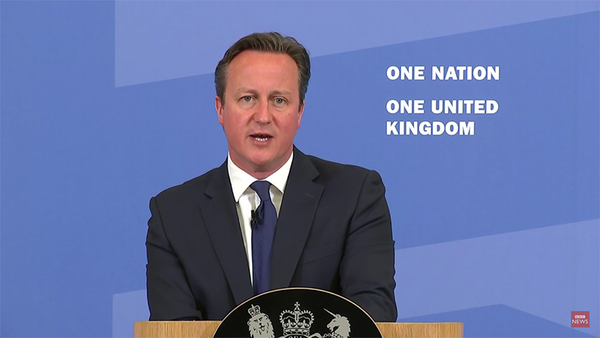
On July 20, Prime Minister David Cameron outlined his government’s plans to counteract Islamic extremism, which he described as the “struggle of our generation.”

In a speech before Ninestiles School, in the city of Birmingham, Cameron articulated a view of the Islamist threat that, just a couple of years ago, few else in British politics would have dared to support.

In a report for BBC Radio 4, the journalist John Ware described Cameron’s speech, and the government’s proposed counter-extremism measures, as “something no British government has ever done in my lifetime: the launch of a formal strategy to recognize, challenge and root out ideology.”

Cameron’s speech was wide-ranging. It addressed the causes, methods and consequences of Islamist extremism.

1199(Image source: BBC video screenshot)

We must recognize, Cameron reasoned, that Islamist terror is the product of Islamist ideology. It is definitely not, he argued, “because of historic injustices and recent wars, or because of poverty and hardship. This argument, what I call the grievance justification, must be challenged. … others might say: it’s because terrorists are driven to their actions by poverty. But that ignores the fact that many of these terrorists have had the full advantages of prosperous families or a Western university education.”

“Extreme doctrine” is to blame — a doctrine that is “hostile to basic liberal values … Ideas which actively promote discrimination, sectarianism and segregation. … which privilege one identity to the detriment of the rights and freedoms of others.” This is a doctrine “based on conspiracy: that Jews exercise malevolent power; or that Western powers, in concert with Israel, are deliberately humiliating Muslims, because they aim to destroy Islam.”

People are drawn to such extremist ideas, Cameron argued, because:

“[Y]ou don’t have to believe in barbaric violence to be drawn to the ideology. No-one becomes a terrorist from a standing start. It starts with a process of radicalisation. When you look in detail at the backgrounds of those convicted of terrorist offences, it is clear that many of them were first influenced by what some would call non-violent extremists.

“It may begin with hearing about the so-called Jewish conspiracy and then develop into hostility to the West and fundamental liberal values, before finally becoming a cultish attachment to death. Put another way, the extremist world view is the gateway, and violence is the ultimate destination.”

To counteract the extremist threat, Cameron concludes, the government will “tackle both parts of the creed — the non-violent and violent. This means confronting groups and organisations that may not advocate violence — but which do promote other parts of the extremist narrative.”

Further, no longer will extremist groups be able to burnish their moderate credentials by pointing to ISIS as the Islamic bogeyman:

“We’ve got to show that if you say ‘yes I condemn terror — but the Kuffar are inferior’, or ‘violence in London isn’t justified, but suicide bombs in Israel are a different matter’ – then you too are part of the problem. Unwittingly or not, and in a lot of cases it’s not unwittingly, you are providing succour to those who want to commit, or get others to commit to, violence.

For example, I find it remarkable that some groups say ‘We don’t support ISIL’ as if that alone proves their anti-extremist credentials. And let’s be clear Al-Qaeda don’t support ISIL. So we can’t let the bar sink to that level. Condemning a mass-murdering, child-raping organisation cannot be enough to prove you’re challenging the extremists.”

Rather radically for a Western leader, Cameron also asserted that, “simply denying any connection between the religion of Islam and the extremists doesn’t work… it is an exercise in futility to deny that. And more than that, it can be dangerous. To deny it has anything to do with Islam means you disempower the critical reforming voices; the voices that are challenging the fusing of religion and politics…”

Cameron’s speech was groundbreaking. No previous Prime Minister in past decades would have dared to make such statements. This is not to say, however, that it is without fault.

Cameron is not just talk. An “Extremism Analysis Unit” has been set up within the Home Office, which will serve to tackle Islamist extremism, including “non-violent” groups. According to the journalist John Ware, the new body is currently preparing lists of extremist preachers and groups.

More importantly, a variety of new legislation is being brought before Parliament. However, some of the proposed laws, critics argue, are draconian. “Banning Orders” will outlaw designated “extremist groups.” “Extremism Disruption Orders,” meanwhile, will restrict designated “extremists” from appearing on television, or publishing without the authorities’ approval. And “Closure Orders” will allow the government to close any institution deemed guilty of promoting extremism.

Cameron has correctly and radically diagnosed the problem of Islamic extremism. His solutions, however, do not appear promising.

A more useful next step would be for the government to tackle its own relationships with extremist groups. Britain’s registered charities offer a particularly vivid example of Islamist extremism going unchallenged.

In 2014, I wrote about the Islamic Network, a group that describes itself as “a da’wah[proselytizing] organisation which aims to promote awareness and understanding of the religion of Islam.”

In a series of religious rulings published on its website, the Islamic Network charity advocated themurder of apostates; encouraged Muslims to hate non-Muslims; stated that when non-Muslims die, “the whole of humanity are relieved;” and described Western civilisation as “evil.” Further, the Islamic Network directed a great deal of hatred towards the Jews. Its website claimed: “The Jews strive their utmost to corrupt the beliefs, morals and manners of the Muslims. The Jews scheme and crave after possessing the Muslim lands, as well as the lands of others.”

In spite of these views, the Islamic Network is a registered charity, which means it is entitled to subsidy from the taxpayer.

As a result of revealing the material published on the Islamic Network’s website, as well as several complaints submitted to the Charity Commission, the government opened an inquiry into the charity. After a year of deliberation, the Charity Commission published its report, which concluded that the Islamic Network had indeed published extremist material.

The Charity Commission’s solution, however, was to give the charity’s trustees booklets titled, “How to manage risks in your charity,” and warn them not to do it again.

Britain may finally have a government that understands the problem of Islamist extremism, but if government bodies fail to challenge extremist charities such as the Islamic Network, then what use is this enlightenment?

The Islamic Network is but one of many dozens of examples. Why is the British organizationInterpal, for example, still allowed to be a registered charity? Interpal is a designated terrorist organization under United States law. Its trustees regularly meet with senior leaders of the terror group Hamas. In 2013, for instance, Interpal trustee Essam Yusuf took part in a ceremony with the Hamas leader Ismail Haniyeh, at which they expressed praise for Hamas’ military wing, the Al Qassam Brigades, and glorified “martyrdom.”

Or what of Islamic Relief, one of Britain’s largest charities? Established by the Muslim Brotherhood, Islamic Relief’s directors have included Ahmed Al-Rawi, a Muslim Brotherhood leader who, in 2004, supported jihad against British and American troops in Iraq; and Essam El-Haddad, who is accused by an Egyptian court of divulging Egyptian state secrets to Hamas, Hezbollah and Iran, and using Islamic Relief to finance global terrorism.

Despite Islamic Relief’s links to Islamist extremism, the charity continues to receive millions of pounds from the British government.

David Cameron’s speech on July 20 should be applauded. If another political party had won the recent general election, no such speech would have been made. But before the Prime Minister turns his hand to censorship, perhaps the government should address extremist groups closer to home.

UK: Politicians Urge Ban on the Term “Islamic State”

July 4, 2015

UK: Politicians Urge Ban on the Term “Islamic State,” The Gatestone InstituteSoeren Kern, July 4, 2015

  • “If we deny any connection between terrorism and religion, then we are saying there is no problem in any of the mosques; that there is nothing in the religious texts that is capable of being twisted or misunderstood; that there are no religious leaders whipping up hatred of the West, no perverting of religious belief for political ends.” — Boris Johnson, Mayor of London.
  • “O Muslims, Islam was never for a day the religion of peace. Islam is the religion of war… Mohammed was ordered to wage war until Allah is worshipped alone… He himself left to fight and took part in dozens of battles. He never for a day grew tired of war. — Abu Bakr al-Baghdadi, leader of the Islamic State.
  • While Western politicians claim that the Islamic State is not Islamic, millions of Muslims around the world — referring to what is approved in the Islamic texts — believe that it is.

The BBC has rejected demands by British lawmakers to stop using the term “Islamic State” when referring to the jihadist group that is carving out a self-declared Caliphate in the Middle East.

Lord Hall of Birkenhead, the BBC’s director general, said that the proposed alternative, “Daesh,” is pejorative and using it would be unfair to the Islamic State, thereby casting doubt upon the BBC’s impartiality.

Prime Minister David Cameron recently joined the growing chorus of British politicians who argue that the name “Islamic State” is offensive to Muslims and should be banned from the English vocabulary.

During an interview with BBC Radio 4’s “Today” program on June 29 — just days after a jihadist with links to the Islamic State killed 38 people (including 30 Britons) at a beach resort in Tunisia — Cameron rebuked veteran presenter John Humphrys for referring to the Islamic State by its name.

When Humphrys asked Cameron whether he regarded the Islamic State to be an existential threat, Cameron said:

“I wish the BBC would stop calling it ‘Islamic State’ because it is not an Islamic state. What it is is an appalling, barbarous regime. It is a perversion of the religion of Islam, and, you know, many Muslims listening to this program will recoil every time they hear the words ‘Islamic State.'”

Humphrys responded by pointing out that the group calls itself the Islamic State (al-Dawlah al-Islamiyah, Arabic for Islamic State), but he added that perhaps the BBC could use a modifier such as “so-called” in front of that name.

Cameron replied: “‘So-called’ or ISIL [the acronym for Islamic State of Iraq and the Levant] is better.” He continued:

“But it is an existential threat, because what is happening here is the perversion of a great religion, and the creation of this poisonous death cult, that is seducing too many young minds, in Europe, in America, in the Middle East and elsewhere.

“And this is, I think, going to be the struggle of our generation. We have to fight it with everything that we can.”

Later that day in the House of Commons, Cameron repeated his position. Addressing Cameron, Scottish National Party MP Angus Robertson said that the English-speaking world should adopt Daesh, the Arabic name for the Islamic State, as the proper term.

Daesh, which translates as Islamic State of Iraq and Sham (Syria), is the Arabic equivalent to ISIL. Daesh sounds similar to the Arabic word “Daes,” which means “one who crushes something underfoot,” and “Dahes,” which means “one who sows discord.” As a result of this play on words, Daesh has become a derogatory name for the Islamic State, and its leaders have threatened to “cut the tongue” of anyone who uses the word in public.

Robertson said:

“You are right to highlight the longer-term challenge of extremism and of radicalization. You have pointed out the importance of getting terminology right and not using the name ‘Islamic State.’ Will you join parliamentarians across this house, the US secretary of state and the French foreign minister in using the appropriate term?

“Do you agree the time has come in the English-speaking world to stop using Islamic State, ISIS or ISIL and instead we and our media should use Daesh — the commonly used phrase across the Middle East?”

Cameron replied:

“I agree with you in terms of the use of Islamic State. I think this is seen as particularly offensive to many Muslims who see, as I see, not a state but a barbaric regime of terrorism and oppression that takes delight in murder and oppressing women, and murdering people because they’re gay. I raised this with the BBC this morning.

“I personally think that using the term ‘ISIL’ or ‘so-called’ would be better than what they currently do. I don’t think we’ll move them all the way to Daesh so I think saying ISIL is probably better than Islamic State because it is neither in my view Islamic nor a state.”

Separately, more than 100 MPs signed a June 25 letter to the BBC’s director general calling on the broadcaster to begin using the term Daesh when referring to the Islamic State. The letter, which was drafted by Rehman Chishti, a Pakistani-born Conservative MP, stated:

“The use of the titles: Islamic State, ISIL and ISIS gives legitimacy to a terrorist organization that is not Islamic nor has it been recognized as a state and which a vast majority of Muslims around the world finds despicable and insulting to their peaceful religion.”

Scottish Nation Party MP Alex Salmond, in a June 29 newspaper column, wrote:

“We should start by understanding that in a propaganda war language is crucial.

“Any description of terrorists which confers on them the image that they are representing either a religion or a state must surely be wrong and an own goal of massive proportions. It is after all how they wish to refer to themselves.

“Daesh, sometimes spelled Daiish or Da’esh, is short for Dawlat al Islamiyah fi’al Iraq wa al Sham.

“Many Arabic-speaking media organizations refer to the group as such and there is an argument it is appropriately pejorative, deriving from a mixture of rough translations from the individual Arabic words.

“However, the real point of using Daesh is that it separates the terrorists from the religion they claim to represent and from the false dream of a new caliphate that they claim to pursue.

“It should become the official policy of the government and be followed by the broadcasting organizations.”

The BBC, which routinely refers to Muslims as “Asians” to comply with the politically correct norms of British multiculturalism, has held its ground. It said:

“No one listening to our reporting could be in any doubt what kind of organization this is. We call the group by the name it uses itself, and regularly review our approach. We also use additional descriptions to help make it clear we are referring to the group as they refer to themselves, such as ‘so-called Islamic State.'”

The presenter of the BBC’s “The World This Weekend” radio program, Mark Mardell, added:

“It seems to me, once we start passing comment on the accuracy of the names people call their organizations, we will constantly be expected to make value judgements. Is China really a ‘People’s Republic?’ After the Scottish referendum, is the UK only the ‘so-called United Kingdom?’ With the Greek debacle, there is not much sign of ‘European Union.'”

London Mayor Boris Johnson believes both viewpoints are valid. In a June 28 opinion article published by the Telegraph, he wrote:

“Rehman’s point is that if you call it Islamic State you are playing their game; you are dignifying their criminal and barbaric behavior; you are giving them a propaganda boost that they don’t deserve, especially in the eyes of some impressionable young Muslims. He wants us all to drop the terms, in favor of more derogatory names such as “Daesh” or “Faesh,” and his point deserves a wider hearing.

“But then there are others who would go much further, and strip out any reference to the words “Muslim” or “Islam” in the discussion of this kind of terrorism — and here I am afraid I disagree….

“Why do we seem to taint a whole religion by association with a violent minority? …

“Well, I am afraid there are two broad reasons why some such association is inevitable. The first is a simple point of language, and the need to use terms that everyone can readily grasp. It is very difficult to bleach out all reference to Islam or Muslim from discussion of this kind of terror, because we have to pinpoint what we are actually talking about. It turns out that there is virtually no word to describe an Islamically-inspired terrorist that is not in some way prejudicial, at least to Muslim ears.

“You can’t say “Salafist,” because there are many law-abiding and peaceful Salafists. You can’t say jihadi, because jihad — the idea of struggle — is a central concept of Islam, and doesn’t necessarily involve violence; indeed, you can be engaged in a jihad against your own moral weakness. The only word that seems to carry general support among Muslim leaders is Kharijite — which means a heretic — and which is not, to put it mildly, a word in general use among the British public.

“We can’t just call it “terrorism”, as some have suggested, because we need to distinguish it from any other type of terrorism — whether animal rights terrorists or Sendero Luminoso Marxists. We need to speak plainly, to call a spade a spade. We can’t censor the use of “Muslim” or “Islamic.”

“That just lets too many people off the hook. If we deny any connection between terrorism and religion, then we are saying there is no problem in any of the mosques; that there is nothing in the religious texts that is capable of being twisted or misunderstood; that there are no religious leaders whipping up hatred of the west, no perverting of religious belief for political ends.”

What does the leader of the Islamic State, Abu Bakr al-Baghdadi, have to say? In a May 2015 audio message, he summed it up this way:

“O Muslims, Islam was never for a day the religion of peace. Islam is the religion of war. Your Prophet (peace be upon him) was dispatched with the sword as a mercy to the creation. He was ordered to wage war until Allah is worshipped alone. He (peace be upon him) said to the polytheists of his people, ‘I came to you with slaughter.’ He fought both the Arabs and non-Arabs in all their various colors. He himself left to fight and took part in dozens of battles. He never for a day grew tired of war.

“So there is no excuse for any Muslim who is capable of performing hijrah [migration] to the Islamic State, or capable of carrying a weapon where he is, for Allah (the Blessed and Exalted) has commanded him with hijrah and jihad, and has made fighting obligatory upon him.”

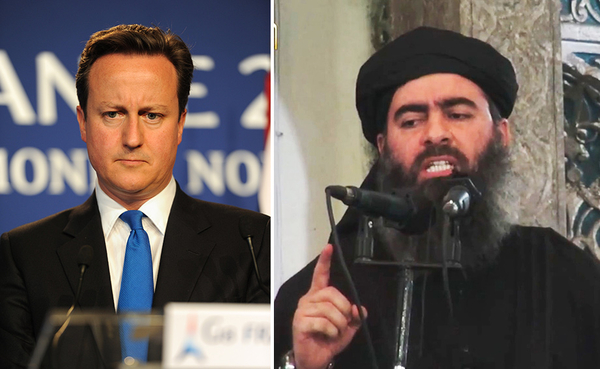
1139Britain’s Prime Minister David Cameron (L) says of the Islamic State, “Islam is a religion of peace. They are not Muslims, they are monsters.” Abu Bakr al-Baghdadi (R), leader of the Islamic State, say, “Islam was never for a day the religion of peace. Islam is the religion of war. Your Prophet (peace be upon him) was dispatched with the sword as a mercy to the creation.”

While Western politicians claim that the Islamic State is not Islamic, millions of Muslims around the world — referring to what is approved in the Islamic texts — believe that it is. While the former are performing politically correct linguistic gymnastics, the latter are planning their next religiously-inspired attacks against the West. A new twist on an old English adage: The sword is mightier than the pen.