Via Latma-TV

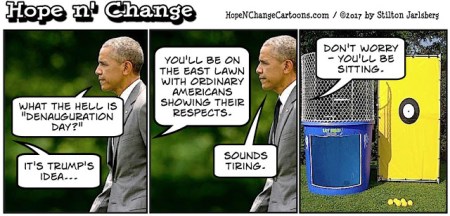

H/t Freedom is Just Another Word


Shock Israeli Poll Finds Only 4% Want a Left-of-Center Prime Minister, PJ Media, Avner Zarmi, January 16, 2017

But nowhere is this more obvious than in Israel, as a recent poll sponsored by the Jerusalem Post clearly demonstrates.
**********************************
The political Left is in full retreat across most of the world.
Certainly, this is obvious in the United States. At present, 33 of the 50 states are governed by Republicans (and one, Alaska, by a fairly conservative independent). Of the twelve most populous states in the union, only one, California, is completely controlled by the Democratic Party. The other eleven are either completely controlled by Republicans or have divided government, including New York, where the state Senate is majority GOP.
This is equally evident across Europe. In the United Kingdom, the Labour Party is a shadow of its former self. The old Liberal Party (now the Liberal-Democratic Party) barely exists, and the Conservatives have a commanding lead in Parliament. The recent government shake-up that resulted in the fall of David Cameron and the rise of Theresa May was a disagreement within the Conservative Party concerning Brexit, an argument which Cameron lost. In France, Socialist President François Hollande is clearly on his way out, and the only real question is whether he’ll be succeeded by the conservative François Fallon or the Populist Marine Le Pen. Similar developments are rocking Germany, the Netherlands, and other European governments.
But nowhere is this more obvious than in Israel, as a recent poll sponsored by the Jerusalem Post clearly demonstrates.
In order to understand the real import of this poll, it is necessary to recount some Israeli history.
Since the founding of Israel in 1948, there have been twenty Knessiyoth (the Hebrew plural of Knesset, Israel’s parliament). Over the years, the number of members has remained stable at 120, but the make-up has changed markedly.
From 1948 to 1977, Israeli politics was completely dominated by the Left. In the first Knesset, parties of the Left (including the Israeli Communist Party) held 74 of the 120 seats. In the second Knesset, elected in 1951, they held 69 seats; in the third Knesset, elected in 1955, they held 70 seats; in the fourth Knesset (1959), they held 81 seats; in the fifth (1961), they held 64 seats; in the sixth (1965), they held 68 seats; in the seventh (1969), they held 66 seats.
In the eighth (December 1973), even after the terrible debacle of the Yom Kippur War, they still held 59 seats, representing the largest single faction in the Knesset.
In 1977, the first political “revolution” (as Israeli television commentators at the time called it) occurred: Likud became the largest faction with 54 seats; the fractured Left still retained 40. Likud continued to dominate until 1984, when the government veered leftward again, and the Leftist contingent had 55 seats. The election of 1988 returned Likud to power at the head of a governing coalition, but parties of the Left still held 53 seats, a balance of power which continued until 1992, when the Left again took power, with 59 seats.
The 1996 election, which saw Benjamin Netanyahu’s first term as prime minister, was a bit anomalous in that for the first time there was an independent election for prime minister. Despite Netanyahu’s victory, the Left still held the largest faction in the Knesset with 48 seats. The dual elections for the Knesset and premiership continued in 1999, when Ehud Barak succeeded Netanyahu and the Left continued to hold the largest faction in the Knesset with 47 seats.
For the 2003 election, the dual system was scrapped. The head of the largest party was invited to form a coalition again and serve as prime minister. This election saw the rise of Ariel Sharon; the Left’s share of the Knesset stood at 46 seats. In 2006 Sharon was succeeded by Ehud Olmert, and the Left’s share dwindled to 27 seats. In 2009 their faction declined to a mere 20 seats; 2013 saw a rebound to 31 seats; and the most recent election, in 2015, saw them rebound again to 42 seats (this includes the new Joint List, an amalgam of three Arab parties and the old Israeli Communist Party, which has both Jewish and Arab members).
Nonetheless, since 2009 the Likud has been the dominant party and Netanyahu has been the prime minister. Now we arrive at the import of the present poll.
Since the so-called “Zionist Union,” a fusion of the old Labor party and Tzipi Livni’s “Movement” party, is the second largest in the Knesset with 24 seats, you might think that its leader Yitzhak Herzog would be the second most popular candidate for prime minister. You would be wrong.
The poll shows — unsurprisingly — that 39% of the Israeli electorate still consider Netanyahu their best option.
But next in line? Five other politicians who do not belong to the left.
The centrist Ya’ir Lapid has 19%, followed by Naftali Bennett of the Bayith Yehudi party at 13%, followed by Gid‘on Sa‘ar of Likud with 10%, then former Defense Minister Moshe Ya‘alon (also Likud) with 8%, and current Defense Minister Avigdor Liberman (Yisrael Beytenu) with 7%.
Herzog is dead last with 4%, falling below the poll’s margin of error of +/- 4.5%.
Even among those who voted for the left-of-center Zionist Union in 2015, 26% favored Lapid and only 15% supported Herzog.
Oh, how the mighty left has fallen in Israel, and seemingly everywhere else.
Part I: Undercover investigation exposes groups plotting criminal activity at Trump inauguration, Project Veritas via YouTube, January 16, 2017
According to the blurb beneath the video,
In this video, Project Veritas investigators uncover a group known as the DC Anti-fascist Coalition plotting to disrupt President-Elect Donald Trump’s inauguration by deploying butyric acid at the National Press Club during the Deploraball event scheduled for January 19th.
The meeting, captured on hidden camera, was held at Comet Ping Pong, a DC pizza restaurant that is better known as the location of the Pizzagate controversy. The coalition members discuss the steps they would need to take to halt the Deploraball event. Project Veritas notified the FBI, Secret Service and DC Metro Police of the content of this video prior to its release.
Conservative Professors at Wake Forest Speak Out, PJ Media, Tom Knighton, January 16, 2017
(Shocking. I never woulda thunk. — DM)

The professors interviewed for the piece argue that they’re basically in hiding, afraid to espouse any conservative or libertarian ideology for fear it will negatively impact their careers:
************************
While so much of what we hear about academia has an extreme leftist bent to it, it’s important to remember that there are a number of conservative professors floating around. They simply tend to remain silent for obvious reasons.
The Wake Forest Review decided to take a look at the situation, and found that — according to North Carolina’s Public Voter Search — about 11 percent of tenured, tenure-track, and teaching professors vote conservative.
They then spoke with some of the professors about their experiences:
“ Politics has replaced the pursuit of truth,” said a professor in the social sciences.
“Ideology gets in the way of the pursuit of truth,” said a professor in literature. “It certainly lacks integrity to say I get to bring my political views to the table but someone else doesn’t,” said a professor in the humanities. Across the undergraduate college, political ideology is getting in the way of academic freedom and intellectual pursuits.
Professors said that there are questions that are not allowed to be asked and assumptions that are not allowed to be challenged for political reasons. “It’s such a flawed way to explore new ideas when you just rule out ideas as beyond the pale when half of the populous has these ideas and act like there are no replies to their own ideas. This is as debilitating to them [professors] as it is to their own students,” said a professor in the social sciences.
A different professor in the social sciences believes that this problem stems from intellectual arrogance: “The problem is that whenever you are on the liberal left, to some degree, you don’t really see conservative ideas as even valid or worth the time and effort to allow because you have a sense that you know more and you know better.” This arrogance creates what another professor described as an “ideological vacuum.” In this vacuum he described, professors do not acknowledge counter-arguments on issues or challenge their own assumptions.
Wake Forest’s provost, Rogan Kersh, notes that 11 percent appears to be a fairly normal percentage of right-leaning professors in academia. The professors interviewed for the piece argue that they’re basically in hiding, afraid to espouse any conservative or libertarian ideology for fear it will negatively impact their careers:
Due to these factors, many of these professors have decided to stay in hiding. One professor said staying in hiding makes it easier to get hired: “Conservatives can’t even get their foot in the door in a ton of disciplines in the social sciences and humanities unless they completely disguise it and fly under the radar.” Another professor believes that disguising his beliefs creates a better work environment: “I would lose harmony and congeniality if I was more open about some of my views.”
One professor has chosen to stay in hiding to avoid association with harmful labels. “There are a lot of things people mean when they say (they) are right of center or conservative, and we all don’t mean the same thing by that, which is important to keep in mind,” she said. She believes assumptions based on these labels “really undermine your career opportunities, your ability to lead effectively and to interact well with others and collaborate because people made a whole bunch of assumptions about you.”
Meanwhile, it’s unlikely to change in the near future. Part of the issue is that certain professions are more attractive to progressives than conservatives or libertarians — and university teaching is most definitely one of those.
Ethics Commissioner launches investigation of PM Trudeau, CIJ News, Ilana Shneider, January 16, 2017
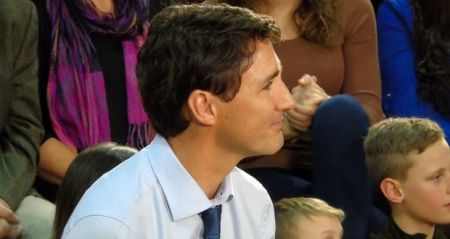 Justin Trudeau. Photo: CIJnews
Aga Khan is the 49th Hereditary Imam of the world’s 15 million Shia Ismaili Muslims, whose Aga Khan Foundation Canada, a registered lobbyist organization, received tens of millions of dollars from the federal government.
“Justin Trudeau acts like the laws don’t apply to people like him”, Interim Conservative leader Rona Ambrose wrote on her Facebook page. “Prime Minister Justin Trudeau knew what he did was against the law. All he had to do was say no, but he couldn’t resist the billionaire lifestyle vacay. He lives in a completely different world.”
Section 14.1 of the Conflict of Interest Act states that “neither a Member nor any member of a Member’s family shall accept, directly or indirectly, any gift or other benefit, except compensation authorized by law, that might reasonably be seen to have been given to influence the Member in the exercise of a duty or function of his or her office.”
******************
An independent parliamentary watchdog has launched an investigation into Prime Minister Trudeau for possible violations of the Conflict of Interest Act, the National Post reported.
It is the first time in Canada’s history that a sitting prime minister will be investigated by the Conflict of Interest and Ethics Commissioner.
By using the private helicopter belonging to Aga Khan during a secret vacation in the Bahamas, Prime Minister Trudeau may have violated federal law and breached the Act which forbids ministers from flying in private or chartered aircraft except under specific conditions, such as an emergency.
Aga Khan is the 49th Hereditary Imam of the world’s 15 million Shia Ismaili Muslims, whose Aga Khan Foundation Canada, a registered lobbyist organization, received tens of millions of dollars from the federal government.
According to Andrew Scheer, MP for Regina-Qu’Appelle and candidate for the leadership of the Conservative Party of Canada, these facts raised a question regarding a possible conflict of interest.
Following the revelations about Trudeau’s stay at Aga Khan’s private island in the Bahamas, which included the Prime Minister’s family, Liberal MP Seamus O’Regan, Liberal Party president Anna Gainey and their respective spouses, the ethics commissioner’s office told the Toronto Star that it has started a “preliminary review” of Trudeau’s tropical vacation.
“Justin Trudeau acts like the laws don’t apply to people like him”, Interim Conservative leader Rona Ambrose wrote on her Facebook page. “Prime Minister Justin Trudeau knew what he did was against the law. All he had to do was say no, but he couldn’t resist the billionaire lifestyle vacay. He lives in a completely different world.”
Section 14.1 of the Conflict of Interest Act states that “neither a Member nor any member of a Member’s family shall accept, directly or indirectly, any gift or other benefit, except compensation authorized by law, that might reasonably be seen to have been given to influence the Member in the exercise of a duty or function of his or her office.”
In addition to a possible violation of the federal law, a group called “Les musulmans du Quebec” (Quebec Muslims) slammed Trudeau for vacationing at a resort owned by a “supporter” of the Syrian regime following a revelation by SANA, Syria’s official news agency, that Aga Khan and Syria’s president Bashar Assad have a close relationship.
“Thanks Trudeau for spending your vacation at Agha Khan, the donor for the criminal Bashar [Assad]. Ignorance has no place in government. Shame”, the group, which has more than 9,400 members, posted on its Facebook page on January 6, 2017.
Giant Weapons Cache of Illegal Arms for Terrorists Discovered, Clarion Project, January 16, 2017
 A victim of the Charlie Hebo shooting in France. The weapons cache discovered in Spain is suspected of supplying the weapons for this and other attacks in Europe. (Photo: © Reuters)
A weapons cache worth over $9 million was discovered in Spain by anti-terror investigators. The cache, which included 12,000 weapons, included “several anti-aircraft guns capable of bringing down aircraft,” according to the interior minister.
Police also confiscated over $70,000 in cash.
The weapons were being sold by a Spanish gang, who would buy used weapons from war-torn areas, repair them and sell them to terror cells or organized crime families.
The gang, which consisted of four men and one woman, set up a sports firm as a front for the weapons trading. They were caught by an operation headed by Europol, the European crime agency, some of which involved undercover work.
More than 8,000 military-caliber weapons were seized, including long and arms, canons and a wide variety of ammunitions.
“This modus operandi used to purchase weapons is the same as the one used for the attacks carried out in Paris on January 7th, 2015, against employees of the satirical weekly ‘Charlie Hebdo’, in which 12 people were killed and another 11 injured, all with recommissioned weapons acquired at the time from a Slovak gunsmith,” said a spokesman for Spanish government.
After the terror attack at a Jewish museum in Brussels in May 2014 in which four people were killed, the Europol operation was set up based on surveillance of the weapons used in that attack.
Abbas threatens to cancel PA recognition of Israel… but the PA has never really recognized Israel, Palestinian Media Watch, Itamar Marcus, January 16, 2017
 PA and Fatah map: PA flag over all of Israel. Text: “The revolution continues”
Fatah Central Committee member:
Abbas’ advisor on Islamic Affairs, Mahmoud Al-Habbash:
On the occasion of yesterday’s peace conference with representatives from 72 countries in Paris, PA Chairman Mahmoud Abbas stated that if the US moves its embassy from Tel Aviv to Jerusalem it might lead the Palestinians to “cancel” their “recognition of Israel:”
“President Abbas said that he wrote to Trump and warned him of the consequences of the transfer of the embassy, and noted that this ‘will not only negate any legitimacy of the US to fill a role in settling the conflict, but will also annihilate the two-state solution.’ He added that the Palestinians will discuss several options for a response, after consultations are held with Arab states, and said: ‘Cancelling our recognition of Israel will be one of them.'”
However, the clear fact is that the Palestinian Authority and Fatah have never really recognized the State of Israel.
For 20 years, Palestinian Media Watch has been exposing that, despite peace negotiations, agreements, and declarations, the Palestinians have never recognized Israel’s right to exist – in any borders. In speeches, at events, and visually, the PA, Fatah, and their leaders have continued to present “Palestine” as including all of Israel and have expressed that the final goal is that all Israel’s land will be in one state: “Palestine.”
Expressing non-recognition in all maps<
One recent example is Fatah’s map above which was posted with the text: “The revolution continues.” It shows all of Israel and the PA areas together as one entity with the Palestinian flag symbolizing political sovereignty over Israel. [Official Fatah Facebook page, Dec. 29, 2016]
Expressing non-recognition: PA goal is elimination of Israel in stages
Palestinian leaders openly say among themselves that a Palestinian state on the pre-1967 lines is merely the first stage of replacing all of Israel with “Palestine.” Fatah Central Committee member Azzam Al-Ahmad recently told PA TV that he is not concerned that land he claims for his family is in the “1948” lands, i.e., in Israel, because he is “certain” that a Palestinian state in the West Bank will lead to “Palestine” erasing Israel – just like North Vietnam took South Vietnam: [Please see video. — DM]
“We agree to a state on territory that is 22%, and perhaps less, of the land of historical Palestine. By the way, I personally – all of our [family’s] lands, thousands of acres in the Jezreel Valley (i.e., Israel) – none are in the 1967 lands (i.e., West Bank), but rather in the 1948 [lands] (i.e., in Israel). Despite this, I am certain that a Palestinian state on the borders of June 4, 1967 will return my historical rights to me in full. I am certain of it. Therefore, I am certain that we need to start. The historical examples of this are many. North Vietnam. There was a North and a South [Vietnam]. What is its name now? Vietnam! Isn’t it?”
Another Fatah Central Committee member, Abbas Zaki, said the same thing to Al-Jazeera already years ago. The goal of PA policy including that of Abbas, he said, is to eliminate all of Israel in stages and it will be achieved by first bringing Israel to the 1967 lines, because then “Israel will come to an end.” He then added: “If I say that I want to remove it from existence, this will be great, great, [but] it is hard. This is not a [stated] policy. You can’t say it to the world. You can say it to yourself.” [Al-Jazeera TV, Sept. 23, 2011]
Expressing non-recognition through terminology
The PA leaders’ use of the euphemism “1948 lands” (see above)instead of saying “Israel,” is another glaring example of their non-recognition of Israel’s right to exist. At other times Israel is referred to as “occupied Palestine.” Palestinian Media Watch has documented hundreds of examples of the use of these terms.
In recent years, the PA and Fatah leaders have added an Islamic prohibition against recognition of Israel to their political refusal to recognize Israel, by which the PA is echoing Hamas ideology. PA and Fatah religious leaders are now teaching that it violates Islamic law to recognize Israel because all of Israel is said to be on “Islamic land” – “Waqf.” Allah demands Palestinians to liberate it and “not give up a single grain” of it.
In December 2016, the PA’s Grand Mufti Sheikh Muhammad Hussein reiterated that Islam prohibits recognition of Israel in any borders while speaking in front of the top PA leadership: Mahmoud Abbas, Prime Minister Rami Hamdallah, Minister of Religious Affairs Sheikh Yusuf Ida’is, and Supreme Shari’ah Judge and Abbas’ advisor on Islamic Affairs Mahmoud Al-Habbash. The Mufti said that “All of Palestine is Islamic land” and encouraged Palestinians to continue religious conflict:

“We will establish the Palestinian state despite the doubts of the doubters, because the Palestinian people has the solid will, the Jihadi and combative will. This people of Ribat (i.e., religious conflict/war over land claimed to be Islamic)… Allah willing, it will continue to carry out Ribat at the gates of the Al-Aqsa [Mosque] and at the gates of Jerusalem. The call of Monotheism, the call to prayer, will remain loud and heard in the Al-Aqsa Mosque plaza, Jerusalem, and all of Palestine, because all of Palestine is Islamic land.”
This Islamic prohibition to recognize Israel in any borders was stated explicitly by a close advisor to Mahmoud Abbas and the PA’s Supreme Shari’ah Judge Mahmoud Al-Habbash:
“The entire land of Palestine is Waqf (an inalienable religious endowment in Islamic law) and is blessed land… It is prohibited to sell, bestow ownership or facilitate the occupation of even a millimeter of it.”

Expressing non-recognition through education
These messages that all of Israel is “Palestine” are a central part of the Palestinian Authority education as well. When the PA Ministry of Education recently launched its First Palestinian School Counseling Committee, it chose a logo displaying the PA map of “Palestine” that includes all of Israel, covered with the PA flag. One member of the committee was Minister of Education and Higher Education Dr. Sabri Saidam (seated third from the left).
Palestinian non-recognition of Israel in any borders is one of the fundamental components of Palestinian Authority ideology that are repeated incessantly to the Palestinian population while PA leaders are careful to hide it from the international community. Abbas’ threat to “cancel recognition” is therefore meaningless for the Palestinian population, as it is well aware that “Palestine” in PA ideology already encompasses all of Israel.
A poll by the Washington Institute for Near East Studies found that for Palestinians a peace treaty with Israel, therefore, would not mean the end of the conflict. Rather, Palestinians would then want to continue working “toward reclaiming all of historic Palestine.” The poll showed that Palestinians understand that this is the PA leaders’ policy as well:
“A clear majority (60% overall, including 55% in the West Bank and 68% in Gaza) say that the five-year goal ‘should be to work toward reclaiming all of historic Palestine, from the river to the sea.’ …
This pattern is confirmed by other questions in the survey. For example, just one-third said that a two-state solution ‘should be the end of the conflict.’ Nearly two-thirds said ‘resistance should continue until all of historic Palestine is liberated.’ And only a third said that ‘it might be necessary to give up some of our claims so that our people and our children can have a better life.’
Similarly, only a third said that a two-state solution would be their leadership’s final goal. Instead, almost two-thirds said it would be ‘part of a “program of stages,” to liberate all of historic Palestine later.’ This remarkable finding helps explain how a plurality or more of Palestinians can support President Mahmoud Abbas and reject a two-state solution at the same time.”
[The Washington Institute for Near East Policy, June 25, 2014]
The international community’s failure to realize that the Palestinian Authority does not recognize Israel and has taught its people and especially its children to reject Israel in all borders, is one of the great failures of international diplomacy, and remains one of the fundamental impediments to peace.
The following is Abbas’ statement about the Palestinian cancellation of their “recognition” of Israel if the US moves its embassy to Jerusalem:
Headline: “The [PA] president [Abbas] calls on participants in the Paris Conference to take tangible steps to implement the international decisions – transferring the American embassy will hinder the peace process, and canceling our recognition of Israel will be one of our options”
“[PA] President Mahmoud Abbas yesterday [Jan. 14, 2017] inaugurated the Palestinian embassy at the Vatican. He met with Pope Francis, and again warned against the plan of US President-elect Donald Trump to transfer the American embassy from Tel Aviv to occupied Jerusalem. During the inauguration of the embassy… the president again emphasized his opposition to the possibility that the American embassy will be transferred to Jerusalem, and said: ‘The Palestinians are waiting to see what will happen. We hope that this is not true, because it will thwart the peace process.’
President Abbas emphasized that he ‘extends his hand to President-elect Trump for cooperation in order to reach peace on the basis of international law.’ He added that ‘any attempt to give legal validity to the illegal annexation of Jerusalem by Israel will eliminate the prospects of the political process, dispel the hopes of a solution based on two states, and encourage the extremism in our region and in the world.’ …
In an interview that was published yesterday in the French paper Le Figaro, President Abbas said that he wrote to Trump and warned him of the consequences of the transfer of the embassy, and noted that this ‘will not only negate any legitimacy of the US to fill a role in settling the conflict, but will also annihilate the two-state solution.’
He added that the Palestinians will discuss several options for a response, after consultations are held with Arab states, and said: ‘Cancelling our recognition of Israel will be one of them, but we hope that we will not reach that, and that instead we will be able to work with the next American administration.'”
The proponents of the “Palestinian” jihad have lost their moral compass entirely. They believe that any atrocity, any egregious human rights violation, as well as the gleeful celebration of the deaths of Israeli civilians, is justified if it advances the jihad against Israel.
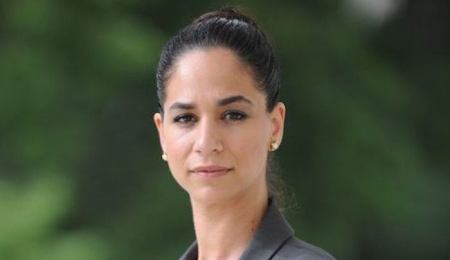
“In Wake of Jerusalem Truck-Ramming, US Professor Says Journalists Must Not Call Arab Attacks on Israeli Soldiers ‘Terrorism,’” by Rachel Frommer, Algemeiner, January 10, 2017:
Following Sunday’s truck-ramming attack in Jerusalem, an American academic took to Twitter to admonish journalists for calling “all acts of Arab violence terrorism,” when the target is Israeli soldiers.
Noura Erakat, assistant professor of international studies at George Mason University in Virginia and a Palestinian rights lawyer, wrote: “Journos, pundits show true colors when they [do this]. Don’t get it twisted. #Jerusalem.”
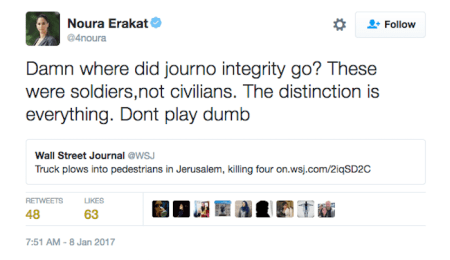
Calling it “irresponsible to elide distinction bw civilians & soldiers,” Erakat — the founder of the online magazine Jadaliyya, which focuses on the Middle East and the Israeli-Palestinian conflict — also criticized a Wall Street Journal headline that read: “Truck plows into pedestrians in Jerusalem, killing four.”
In response, she tweeted:
Eugene Kontorovich, professor of constitutional and international law at Northwestern University, told The Algemeiner that Erakat’s differentiation between the killing of civilians and soldiers is a “valid distinction,” but said it is important to know whether she has condemned the many car-ramming attackers who have killed Israeli civilians….
Update: On Wednesday, Prof Erakat responded to The Algemeiner‘s request for comment.
Asked if she will condemn the perpetrators of car-ramming, stabbing, shooting and bombing attacks that have killed Israeli civilians, Erakat declined to answer yes or no, and said “armed combatants…cannot kill a civilian unless the civilian is a direct participant in hostilities.”
“I don’t think civilians should ever be targeted and sadly the most egregious violators of this principle have been states, including the United States and Israel,” Erakat added.
Asked if those killed on Sunday were legitimate targets of “combatants,” Erakat said that “an active combat soldier, even if not in the field, can be killed.”
Trump Likely to Move Britain to the Front of the Queue, Power Line,
(Despite BREXIT, Britain has been moving with painful slowness and caution in getting out of the EU. Perhaps’s Trump’s assurances will speed things along. — DM)
President Obama famously warned the British that Brexit would put the United Kingdom at the “back of the queue” when it comes to trades deals. Fortunately, Obama will be out of the White House in a few days, and his successor has other ideas.
President-elect Trump, in his first interview with the British press, said:
I will be meeting with [Prime Minister Theresa May]. She’s requesting a meeting and we’ll have a meeting right after I get into the White House and it’ll be, I think we’re gonna get something done very quickly.
We’re gonna work very hard to get it done quickly and done properly. Good for both sides.
Naturally, Boris Johnson, the UK’s foreign minister, was upbeat about this news:
We hear that we are first in line to do a great free trade deal with the United States. So, it’s going to be a very exciting year for both our countries.
Trump may drive a fairly hard bargain. After all, the hostile stance of Britain’s former partners in the EU gives the U.S. considerable leverage.
But Trump seems well-disposed towards the UK — something of an Anglophile — and thus may not be inclined to squeeze too hard. Trade deals aren’t always just about economics. They may also have a diplomatic dimension.
In the case of Britain, Trump says he hopes that a trade deal will “make Brexit a great thing.”And if Brexit turns out to be even a good thing for Britain, it may encourage other nations to leave the EU — something Trump appears to favor.
Bilateral trade agreements will likely be the order of the day under Trump. The demise of the TPP may lead to such deals between the U.S. and certain key Asian nations, starting perhaps with Japan.
When Congress scotched the TPP, it passed a related bill providing “fast-track” trade promotion authority to the White House. This legislation allows a trade deal to be ratified with just a simple majority of votes in Congress during the next six years.
Thus, Trump will be in a strong position when it comes to ratifying whatever deals he reaches.
In any event, it looks like we will very soon will have a president who fully values the “special relationship” between the U.S. and the UK, not just in word but also in deed — a president who reportedly plans to reinstall that bust of Winston Churchill in the oval office.
The optimism of the ‘Obama victims’, Israel Hayom, Dr. Ronen Yitzhak, January 16, 2017
Outgoing U.S. President Barack Obama’s legacy in the Middle East is “one of near-total failure,” Professor Stephen Walt, a renowned Harvard University expert on international affairs, decreed in an interview to Al Jazeera last week. The collapse of the nation-states in the Middle East; the increase of terrorism in Syria, Iraq, Turkey, and Egypt; Israel and the Palestinians’ failure to hold talks; and a drop-off in the traditional friendship between the Persian Gulf states and Egypt and the U.S. are only a small part what the outgoing president is leaving behind.
Unlike the Arab public, which according to polls was wary of President-elect Donald Trump during the election, Arab leaders have not hidden their support for him. They were the first to congratulate him on his win, since they saw it as an opportunity to change U.S. Middle East policy. Indeed, the appointments in the new administration, which Trump recently announced, seem to indicate that the three most influential people in the new administration — Secretary of State Rex Tillerson, Defense Secretary Gen. (ret.) James Mattis, and National Security Adviser Lt. Gen. (ret.) Michael Flynn, along with Trump’s adviser on Middle East affairs Walid Phares — were all some of Obama’s staunchest critics and disagreed with his Middle East policy, especially with regard the Iran nuclear deal.
The Arab leaders of the Middle East have high expectations of Trump once he takes office. The declaration that was voiced in the Egyptian media after he was elected: “now Egypt has a chance to reassume its historic role in the Middle East” illustrates the change that Arab leaders are hoping for. The removal of American support for Islamist movements, particularly the Muslim Brotherhood, which enjoyed the support of the Obama administration, will allow Arab regimes greater room to maneuver, vanquish the challenge of political Islamism, and cement their governments.
The Trump administration might also bring improved relations between the U.S. and the Gulf states, which deteriorated after Obama supported political changes in the Middle East during the Arab Spring, and more so after last year’s Iranian nuclear agreement. Even if Trump does not respond to their urging to cancel the deal, which was approved by the leading nations of the world, he will take care to see that all its stipulations are upheld and prevent the Iranians from cheating and misleading the public about the agreement. Closer U.S. cooperation with Russia could also check Iran’s freedom of activity.
This cooperation, which is expected to grow stronger once Tillerson, an associate of Russian President Vladimir Putin, becomes secretary of state, could actually prove an obstacle to solving the Syrian conflict. In my opinion, Trump will prefer to give Russia a free hand there and not interfere, especially since the civil war has calmed down slightly and the cease-fire is still holding.
Finally, Trump’s support for the policies of the Israeli government and his refusal to foist a peace agreement on both sides bolster the assessment that the Israeli-Palestinian conflict is far from over. This is the only reason why the only Arab leaders to express dismay at Trump’s victory were the Palestinian leaders, who declared that his win was a distressing, not a hopeful, sign.




 anneinpt
 artaxes
 danmillerinpanama
 davidking1530
 Peter Hofman
 Joseph Wouk
 Peter
Peter Louisiana Steve
 WarSclerotic
Recent Comments