Archive for November 2, 2016

Obama’s Secret Muslim List

November 2, 2016

Obama’s Secret Muslim List, Front Page Magazine, Daniel Greenfield, November 2, 2016
muslist

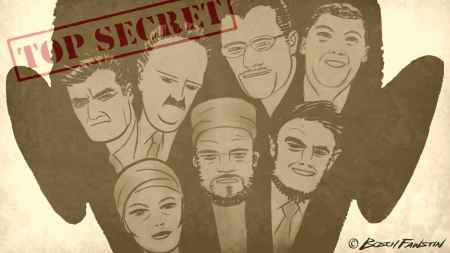
Like a warped Islamic version of Santa Claus, Obama had a secret Muslim list. And his people checked it at least twice. The list was of Muslims who were prospects for important jobs and appointments.

It included a Muslim who had described Israel as an “Apartheid State,” Iran’s “go-to guy in New York financial circles” and a number of figures linked to the Muslim Brotherhood.

It was the ultimate religious test from an administration that had vocally rejected them.

Obama had claimed that having religious tests for migration was “shameful” and “not American.”

“When I hear folks say that, well maybe we should just admit the Christians but not the Muslims,” he huffed from Turkey. His Muslim host country was run by a bigoted sponsor of Islamic terror.

“We don’t have religious tests,” he insisted.

Except we did and we do. Obama also had religious tests. His religious tests excluded Christians and favored Muslims. That is why his Syrian refugees were between 98% and 99% Muslim with only 68 Christians and 24 Yazidis, even though both groups are real victims of the Muslim religious war.

Syria is 10% Christian and hundreds of thousands have been displaced. Yet only 68 have made it past Obama’s iron curtain. That’s either an Islamic religious test or the world’s greatest coincidence.

But would the man who piously lectured us on the evils of religious tests really have a religious test?

Of course he would.

The hacked emails include a list of “Muslim American candidates for top Administration jobs, sub-cabinet jobs, and outside boards/agencies/policy committees.”

The list was sent to John Podesta who headed the Obama-Biden Transition Project. It had been put together by a woman who had sat on the Commission on International Religious Freedom, but boasted that she had, “Excluded those with some Arab American background but who are not Muslim (e.g., George Mitchell). Many Lebanese Americans, for example, are Christian.”

How “shameful.” How “not American” of Barack Hussein Obama.

“Most who are listed appear to be Muslim-American, except that a handful (where noted) may be Arab American but of uncertain religion (esp. Christian),” she assured Podesta.

Religious tests are only out of line when they exclude Muslims. Not when they exclude Christians.

That’s the pattern which emerged from the Obama-Biden Transition Project and Obama’s refugee policy. There has been a clear pattern of administration bias against Christians and Jews. And in favor of Muslims. That bias has been obvious in a foreign policy which backed Islamic supremacist groups such as the Muslim Brotherhood over more moderate governments at the expense of non-Muslim populations.

This policy led to the displacement and death of countless Christians, and the persecution of entire communities, by an administration which then denied safe harbor to the victims of its own policies.

Administration bias replicated that same bigoted policy at home when it favored Islamic candidates.

Obama appointed Farooq Kathwari, the first name on the “Muslim list” sent to Podesta, to the President’s Advisory Commission on Asian Americans and Pacific Islanders.

The “Muslim list” email had warned that, “Kathwari’s then 19-year-old American-educated son Irfan (aka Imran), was killed in 1992 fighting Jihad against the Russians in Afghanistan.” The actions of his son, who may have been with the Mujahedeen but was also apparently outraged over India’s defense of Kashmir, is of less relevance than Kathwari’s appearance at an ISNA conference and another conference co-sponsored by the Muslim Students Association. Both groups are linked to the Muslim Brotherhood.

He co-chaired the American Muslim Task Force whose members included Salam Al-Marayati, Director of the Muslim Public Affairs Council, which has defended Hamas and Hezbollah, Yahya Basha, president of the American Muslim Council and a former board member of the Muslim Public Affairs Council, and assorted other Islamists.  Its report complained that Muslims were inhibited from donating to “charities” run by Islamic terrorist groups such as Hezbollah. Yahya Basha also appeared on Obama’s Muslim list.

Also listed was MPAC’s Aslam Abdullah who had claimed that “Zionists,” Christians and Hindus were behind the War on Terror. He had described Israel as an “apartheid state” and a “racist state.”

The second Muslim on the list, Cyrus Amir-Mokri, was named assistant treasury secretary. He became the first Iranian to be named to such a high position and defended the Iran nuclear sellout. Mokri attended a meeting with members of the Iran Lobby at the White House. He also reportedly advised Obama on Iranian sanctions.

Obama had famously told NASA boss Bolden that one of his three tasks at the space agency was Muslim self-esteem. But Bolden almost didn’t make it in. The Muslim list included two alternative candidates for NASA administrator. One of them, Dr. Charles Elachi of JPL was dismissed as “possibly Christian.” Indeed Elachi, who grew up admiring John Wayne and believes that American success is possible because it isn’t “held back by the long-standing, ingrained systems and beliefs found in the Middle East” would have been a rather poor fit. But it is deeply shameful and un-American that his potential NASA appointment questioned his religion. That is an inappropriate religious test that Obama must apologize for.

The other name on the list however is Firouz Naderi, an Iranian board member of the Public Affairs Alliance of Iranian Americans which advocated in support of the Iran nuke sellout.

Eboo Patel, whose name would frequently appear on lists of Islamists in the Obama administration, first made an appearance on the Muslim List. Despite his Islamist ties, he got the posting at the Advisory Council on Faith-Based Neighborhood Partnerships. Also listed were Keith Ellison, Andre Carson and Larry Shaw. Shaw sits on the board of CAIR.

Dilawar Syed, the first name to appear on the list of possible appointments, was named to Obama’s Advisory Commission on Asian Americans and Pacific Islanders. Syed is a co-founder and chair of the Asian Americans and Pacific Islander Victory Fund which has come out for Hillary Clinton. The secret Muslim list describes him as “animated by policy issues relating to the Muslim world.” A similar description is appended to the bio for Kashif Zafar who served as a Co-Chair of the South Asian American Leadership Council at the DNC.

Also on the list was Hamid Biglari. Bloomberg described Biglari as “Iran’s Man in New York” and as the Iranian president’s “go-to guy in New York financial circles.” Biglari was a key Iran Lobby figure.

The recently revealed secret Muslim list is deeply troubling. There should be no religious test for political appointments. Yet Obama had one. And his people sought to screen out Christians and favor Muslims.

This represents behavior that is in Obama’s own words, “shameful” and “not American.” One can’t help but conclude that, based on his own principles, Obama is shameful and not American.
Netanyahu’s critical foreign tour

November 2, 2016

Source: Netanyahu’s critical foreign tour – Opinion – Jerusalem Post

Caroline Glick

The unraveling of the US electorate comes against the backdrop of the diminution of US military power.

 Prime Minister Benjamin Netanyahu’s upcoming trips to Australia, Singapore, Kazakhstan and Azerbaijan might be the most significant diplomatic visits he makes in his tenure in office. The trips will take place against the backdrop of two major international shifts that cast Israel into uncharted waters as a small state with a dizzying array of strategic threats arrayed against it. The states that he will visit are all well-positioned to help Israel navigate its next moves.

The first shift is the US’s political crackup.

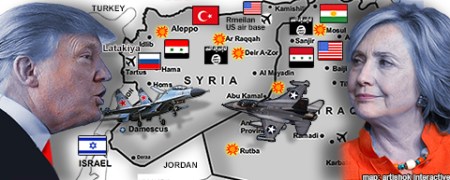
Next week American voters will choose their next president. The major candidates, Democratic nominee Hillary Clinton and Republican nominee Donald Trump, are the weakest candidates to have ever stood for the highest office in the land. Their rise is a testament to the weakening, if not the unraveling of the glue that has held America together since the Civil War.

The unraveling of the US electorate comes against the backdrop of the diminution of US military power. The US’s multi-trillion dollar investment in inconclusive if not failed wars in the Middle East over the past 15 years has come at the expense of military modernization. The F-35 program has sucked up the majority of the remaining research and development funds.

And it has yet to produce a reliable airplane.

Worse, the F-35’s long and problematic gestation period has given Russia and China the time and opportunity to develop air defense systems capable of neutralizing the F-35’s stealth systems.

Those systems were supposed to be its chief advantage as the next generation fighter for the US and its allies.

The deterioration of the US’s military capabilities has gone hand in hand with the US’s apparent loss of strategic rationality.

This is apparent worldwide, but is nowhere more obvious than in the Middle East.

President Barack Obama’s decision to effectively abandon the US’s major allies in the Middle East in favor of cultivating ties with Iran has made the region far more dangerous to the US and its spurned allies than it was eight years ago.

True, in theory, Obama’s decision to prefer the Shi’ites to the Sunnis makes sense given the totalitarian and imperial nature of Sunni jihadism. But in light of the genocidal, totalitarian and imperial nature of the current Iranian regime, his move made no sense and its impact has been massively destructive.

Moreover, Obama’s willingness to rack up the US’s national debt in an unprecedented manner and repress economic growth through overregulation has left a large question mark over the possibility of a military buildup.

In other words, even under the best circumstances, it is hard to imagine that the US will be capable of reestablishing its global primacy over the next four years or even over the next decade.

The implications for Israel are far reaching. For decades, Israel’s strategic posture has been predicated on its ability to depend on US power. This strategic posture is no longer tenable.

The second major international shift is Russia’s sudden rise as the primary global power in the Middle East.

As Channel 2 reported Sunday night, Russia has deployed sophisticated naval and air systems in the region that can detect all of Israel’s air and naval operations. In a matter of months, Israel has lost the air and naval supremacy it has enjoyed for the past four decades.

The air force reportedly is convinced that the F-35’s stealth systems will be able to neutralize Russia’s detection capabilities.

But given the well-documented current problems with the F-35’s stealth systems, this conviction is unwise. And even under the best circumstances, in which Israel has the opportunity to develop its own electronic warfare systems and apply them to its F-35 without American interference, it will take Israel years to surmount the challenge that rapidly improving Russian systems present to our air force.

According to Channel 2’s report, air force and naval commanders are in a panic over the sudden turn of events.

Rather than panicking though, Israel needs to roll with the punches and figure out how best to cope with this new situation. The obvious answer is that we need to quickly expand our capabilities in areas that Russia’s military primacy does not reach.

Specifically, Israel needs to expand massively its capacity for under-the-radar operations. The first area that needs to be massively strengthened is our intelligence capabilities, particularly human intelligence capabilities. Israel should be investing massively in developing and expanding our cultivation and direction of proxies on the ground throughout the region.

Second, Israel needs to adapt its cyber technology capabilities in a manner that diminishes our enemies’ ability to strike us. Israel needs to be able to disrupt and disable command and control and other systems. Israel’s reach needs to extend as low down the line of its enemies’ military chain of command as possible.

If our offensive capabilities are being checked, so must the capabilities of our enemies.

Indeed, our enemies need to be subverted.

Part of the intelligence and cyber capabilities that Israel must develop and deploy must be geared toward destabilizing with the goal of overthrowing the regime in Iran. At the same time, Israel should be empowering anti-regime sectors in Iran in a manner that expands the prospect of developing close ties with a successor regime along the lines of the strategic alliance Israel built with the regime of the shah in the decades which preceded the 1979 Islamic revolution.

Third, Israel needs to expand and diversify the capabilities of our ground forces. Israel needs to be capable of using new means to deploy its fighters at home and on distant shores. It needs to align its both its special and regular forces with the new threat environment. And it needs to be able to utilize its ground forces in manners that can extend the reach and diminish the compromised positions of its air and naval assets in the era of Russian regional primacy.

Fourth, Israel needs to expand its economic growth and diversify its economic ties in a manner that positions it as a regional economic power. It needs to use it natural gas resources specifically as a means to expand and deepen its ties with Asia. Such economic growth and power will positively influence Russia’s willingness to allow Israel to carry out air and naval operations against its enemies – and Russia’s allies in Lebanon, Syria and beyond. In other words, the more economically powerful Israel is, the more Russia will be willing to side with Israel against Hezbollah and others that are currently operating under the Russian umbrella.

This then brings us to Netanyahu’s upcoming trips. Each state that he will visit has something to offer Israel in expanding its intelligence, cyberwarfare and economic capabilities. Australia, a major Western economy, is moving toward China as America has become less engaged in the Pacific. Israel has an acute interest in using Australia as a platform for expanding its ties to China and other Asian countries, both because of the economic advantages such ties convey and due to China’s strategic importance to Russia.

As for Singapore, Israel effectively built the Singaporean military in the 1960s and 1970s. The country remains extremely supportive of Israel. Like Australia, Singapore has close ties to China.

It has technological and other capabilities that can be extremely advantageous for Israel today.

Azerbaijan and Kazakhstan are critically important to Israel today. Their strategic proximity to Iran, and their ties to Russia, along with their ethnic composition and their natural resources make securing good relations with both critical to Israel’s ability to advance and security its strategic interests in every sphere.

Israel has tremendous assets to offer each of the four countries that Netanyahu will visit. These assets must be deployed wisely to ensure that Israel gains as much as possible from his trip and from its future ties with all of them.

Given the dramatic changes in the global power balance, and their implications for Israel, Netanyahu’s decision to fly to visit these four countries just after the US elections tells us that he gets it. At a time of regional and global turbulence and uncertainty, in the context of swiftly multiplying threats, this is no small matter.

Clinton and Trump offer diverse ME scenarios

November 2, 2016

Source: Clinton and Trump offer diverse ME scenarios

DEBKAfile Exclusive Analysis November 1, 2016, 4:34 PM (IDT)


Whoever is elected US president on Nov. 8, he or she will land in the middle of a foreign policy shambles and face a pressing need to rebuild America’s fences in most parts of the world, including the war-ridden, messy Middle East. The Democratic candidate Hillary Clinton and her Republican rival Donald Trump, whose approaches are so different in every respect, will both find it impossible to isolate America from the Middle East

debkafile’s military and intelligence experts postulate divergent developments in response to the alternative results of the Nov. 8 presidential election, depending on the winner.

If it is Hillary Clinton, then –

  • Russia will deepen its expansion in the region, including in Syria and Iraq. The Russian naval units speeding to the Mediterranean at this moment are part of Moscow’s ramped up deployment in readiness for Clinton’s entry to the White House.
  • Vladimir Putin will not forgive the Democratic candidate in a hurry for her anti-Russian campaign gimmicks of depicting Donald Trump as his friend and alleging that Russian intelligence hacked DNC emails to turn the race against her.
    The Russian leader is not the forgiving sort when it comes to his reputation – and still less so when Russian intelligence, his alma mater, is impugned.
  • The high tensions expected to prevail between the Kremlin and the Clinton White House may well ignite a limited military conflagration between US and Russian forces in the Middle East.
  • Syrian rebels are counting on Clinton giving them arms and funds – in contrast to Barack Obama, and are therefore tenaciously holding out, despite their inferior resources against Russian-backed Syrian and pro-Iranian forces. They see her focusing on Bashar Assad’s ouster and, even more, on empowering the rebels to hamper Russia’s military designs in Syria. In this, she will find support from her friends in the Gulf emirates. The Syrian opposition believes that the sharper the tensions between Washington and Moscow, the better for their cause.
  • Clinton has a dilemma with regard to Iran. As co-author of the nuclear deal, she will also try to improve relations with Tehran. But by doing so, she risks alienating her friends, the Arab Gulf leaders.
  • She will soon discover that Iran’s rulers and military chiefs have no wish to cozy up to Washington, certainly not at the expense of their highly profitable ties with Moscow and Beijing.
  •  Clinton will no doubt try to repair the damage to US relations with Israel that piled up during Obama’s term of office.

If it is Donald Trump, then –

  • He will go for a US-Russian summit with Vladimir Putin to lay out a new world power order for the distribution of spheres of influence in different world regions, including the Middle East. He may make the summit trilateral by inviting Xi Jinping of China.
  • This summit will also seek economic understandings, a prospect which is already unnerving international markets. Trump will ask the Russian and Chinese leaders to share wholly or partly in the plans he put before the voter for strengthening the American economy.
  • The Republican candidate has said repeatedly that he would be glad to leave the war on ISIS in the Middle East to Putin and Tehran. In any case, his military advisers, led by Ret. Army Gen. Mike Flynn, perceive Moscow as already in control of the current military situation in consequence of Obama’s policies.
  • This policy however will put the Trump administration at odds with the Arab world, the Gulf emirates and Israel, all of which fear Iran’s continued drive for expansion across the Middle East under a supportive Russian umbrella.
  • He may try to compensate for this lack of equilibrium by taking a strong line against Tehran – even revoking the nuclear deal, which the outgoing president saw as his crowning foreign policy achievement. This could spark a US-Iranian showdown in the Gulf region. On the other hand, Iran is perfectly capable of dumping the nuclear accord on its own initiative.
  • During Trump’s first year as president, the traditional US-Saudi partnership for political, military and economic policies may start crumbling – especial on oil pricing. This alliance between the royal house of Saud and the US dates from the first encounter between President Franklin Roosevelt and King Ibn Saud 71 years ago. debkafile’s Saudi experts estimate that after some initial rough patches, Donald Trump and King Salman will be able to find common ground and so put relations on a firmer footing than before. This would repair the discord with Riyadh engendered by the Obama administration and during Clinton’s term as Secretary of State.
  • Trump will endeavor to improve ties with Israel. In so doing, he will try and contain Binyamin Netanyahu’s ongoing understandings with Putin on the Middle East.