Archive for September 6, 2016

Obama is the Real Turkey in This Scenario

September 6, 2016

Obama is the Real Turkey in This Scenario, Algemeiner, Ruthie Blum, September 6,2016

turkey-turkey

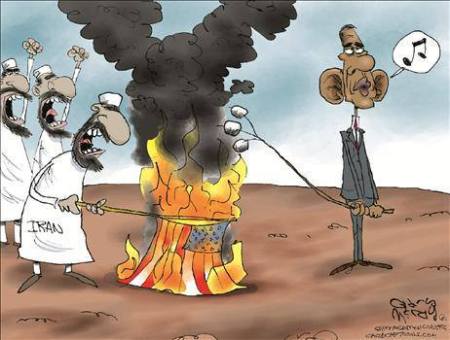
It is typical of Obama to condemn the victims of such a travesty. But to describe the failed coup as a re-affirmation of the Turkish people’s “commitment to democracy and the strength and resilience of democratic institutions inside of Turkey” borders on willful lunacy and blindness.

***********************

US President Barack Obama met with Turkish President Recep Tayyip Erdogan on Sunday at the G-20 summit in China.

Though the purpose of the two-day gathering was for representatives of governments and central banks to discuss policy issues pertaining to international financial stability, the tete-a-tete between Obama and Erdogan on the sidelines of the forum was not about money. It was, rather, a meeting of the minds on a subject close to the hearts of both NATO allies.

With his Cheshire-cat grin and dead eyes, Obama patted his Turkish counterpart on the back and congratulated him on a job well done. Erdogan had not only survived an attempt to oust him, but had quashed it like a true tyrant. Obama could only look on in awe and envy.

Following their little chat, the two leaders addressed the press at the JW Marriott Hotel in Hangzhou.

“By taking to the streets to resist the coup attempt, the Turkish people once again affirmed their commitment to democracy and the strength and resilience of democratic institutions inside of Turkey,” Obama said. “I indicated at the time the unequivocal condemnation of these actions and spoke personally to President Erdogan to offer any support that we might be able to provide in both ending the attempted coup, but also in investigating and bringing perpetrators of these illegal actions to justice.”

One form this help is going to take, Obama hinted, is the possible extradition to Turkey of controversial cleric Fethullah Gulen, whom Erdogan claims orchestrated the failed coup from his home of self-exile in Pennsylvania.

Obama also extended his “deepest condolences” to Turkey’s victims of terrorism, and said that he and his pal “Tayyip” had consented “to continue pursuing a peaceful political transition in Syria.”

Erdogan also made a statement, calling the president of the United States “Barack,” before launching into one of his usual self-serving rants. Typical of a violent Islamist appropriating the moral high ground, the Turkish president agreed that fighting terrorism is of utmost importance. But the “terrorists” to whom he mainly referred were Gulen and the Kurds. Groups like the Muslim Brotherhood and Hamas — which live by the sword, the rifle and the suicide-bomb are just fine, as far as he is concerned.

Obama did not bat an eyelash, however, indicating that the foreign policy of his nearly eight-year administration is firmly intact. And it still involves being on the wrong side of every conflict, while presenting the bad guys in a favorable light. Turkey is but one of many examples.

Let’s start with the failed coup. Erdogan’s paranoia about Gulen is likely unfounded. If any conspiracy theory is in order, it is that Erdogan himself planned the whole thing, in order to strengthen and legitimize his already suffocating stranglehold on the country.

For years prior to the botched attempt, the Turkish president was gradually purging his society of dissent. No institution was exempt from his wrath, with members of the press and academia being placed under a particularly high-powered microscope. Arresting journalists for daring to publish pieces that exposed his behavior was commonplace well before July 15, the date of the coup. But the practice paled in comparison to what has been taking place across Turkey in the weeks since then. Tens of thousands of citizens whom Erdogan deems a threat to his reign of terror have been fired from their jobs, thrown into prison or both. These include people from the military, the police, the judiciary, the political echelon, the media and the universities.

It is typical of Obama to condemn the victims of such a travesty. But to describe the failed coup as a re-affirmation of the Turkish people’s “commitment to democracy and the strength and resilience of democratic institutions inside of Turkey” borders on willful lunacy and blindness. As was the case with the foiled Green Revolution in Iran, when the newly instated administration in Washington watched from afar as the regime in Tehran gunned down protesters trying to extricate themselves from the mullahs dictating their every move, the White House once again simply watched from afar, and let the forces of evil wreak their havoc uninterrupted.

We now fully grasp what Obama was up to in 2009 — a total capitulation to the world’s greatest state sponsor of terrorism, culminating in last year’s signing of the nuclear deal with the ayatollahs. What he has in store for Turkey during his remaining lame-duck tenure in office remains to be seen. But it won’t be good.

This he made clear in his declaration of cooperation with Erdogan on the Syrian front. Referring to a joint “pursuit of a peaceful political transition” in the war-torn country not only made a mockery of the millions of dead and maimed citizens whose plight barely elicits a yawn any more, but served as a signal to Erdogan that he can proceed with the slaughter of America’s Kurdish allies as he sees fit. You know, all in the name of fighting the Islamic State group, the only bogeyman on which there is wide consensus.

Erdogan’s cross-border attack, code-named Operation Euphrates Shield, was launched on Aug. 24 and is still going on. This “peaceful political transition” is being carried out by Turkish planes, tanks and artillery. But Tayyip’s friend Barack — the real turkey in this tale of woe — forgot to mention it.

Cartoons of the Day

September 6, 2016

H/t Freedom is Just Another Word

nuke-codes


resethil


marshmellow

Why it’s Mostly Quiet on the Eastern Front

September 6, 2016

Why it’s Mostly Quiet on the Eastern Front, Front Page MagazineHugh Fitzgerald, September 6, 2016

czech-klc3a1ra-samkovc3a1-1

Almost no one in Eastern Europe is taken in by apologists for Islam, because they have within living memory experienced other enormous curtailments to their freedom.

**************************

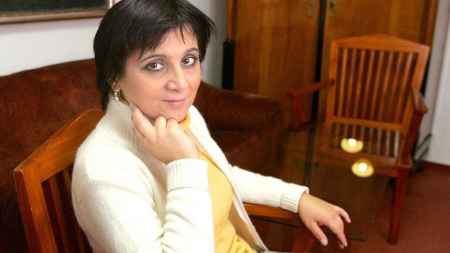
Sometimes life sends along something to cheer us up. It did so for me, when I came across a stemwinder of a speech made in the Czech Parliament a few months ago by one of its members, Klara Samkova. Samkova is a left-of-center — not “far-right,” even if the Western press would like to label her as such — politician mainly known as a defender of minorities, especially the Roma. In the past, she was even prepared to collaborate with the Union of Czech Muslims, though after being mugged by Muslim reality, that collaboration has stopped. Her speech was part of a parliamentary hearing on the topic “Should We Be Afraid Of Islam?” (Imagine any Congressman in Washington daring to frame a debate in that way, given that in this country, whatever explanation we give for terrorist acts committed by Muslims, It Has Nothing To Do With Islam).

There are two alternative answers to that parliamentary question.

Either:

1) No, Islam is being maligned by Islamophobes using scare tactics, so don’t be worried.

2) Yes, Islam is definitely a danger wherever it spreads – be worried!

The first is what we keep being told by political and media elites all over Western Europe and North America, who are willing to mislead because they don’t know how, at this point, to handle the truth about the ideology of Islam. The second is what you are more likely find in countries whose recent history has taught their people, and governments, some tough lessons; in Europe, those countries were formerly under Communist rule.

After the Brussels attack, the head of Poland’s largest party announced that “after recent events connected with acts of terror, [Poland] will not accept refugees, because there is no mechanism that would ensure security.” Victor Orban, Prime Minister of Hungary, declared that “we do not like the consequences of having a large number of Muslim communities that we see in other countries, and I do not see any reason for anyone else to force us to create ways of living together in Hungary that we do not want to see….” Robert Fico, Prime Minister of Slovakia, announced that “Islam has no place in Slovakia.” The Czech Republic, which had in the past taken in a few thousand Muslim migrants, regrets even that, to judge by the remark of its President, Milos Zeman, this January, that “it is practically impossible to integrate Islam into Europe,” and made clear that the Czechs will not be taking any more.

On the Eastern Front of the war of self-defense against Islam, experience has taught people to recognize Islam as what Klara Samkova describes, as not so much a religion as a “totalitarian ideology,” akin to Nazism and Fascism and Communism, that attempts to regulate every facet of a Muslim’s life through the Sharia, or Holy Law of Islam:

“The law [Sharia] is an intrinsic and inseparable part of the Islamic ideology. It constitutes the core of the content of Islam while the rules claimed to be religious or ethical are just secondary and marginal components of the ideology. From the viewpoint of Islam, the concept of religion as a private, intimate matter of an individual is absolutely unacceptable.”

Islam is a collectivist faith (Samkova: “the concept of religion as a private, intimate matter of an individual is absolutely unacceptable”). For those, like the Czechs, whose history includes enduring the collectivism of Nazism and Communism, this aspect of Islam must be particularly troubling. Muslims often pray together in very large numbers, in serried ranks of zebibah-thickening submission, and receive their understanding of Islam together in the madrasa and the mosque. They are taught to defend the Umma, the world-wide community of Believers, and as a community to spread the message of Islam, employing the many instruments of Jihad, from combat [qitaal] to demography.

As for the morality of Islam, Samkova says that this “is not a matter for individual judgment,” but consists in following the rules derived from what was set out long ago in Qur’an, Hadith, and Sira, and codified in the Sharia. Another source of Islamic morality – if it can be called that – is the behavior of Muhammad, as both the exemplary model of conduct, uswa hasana, and the Perfect Man, al-insan al-kamil. Few non-Muslims would agree that the Muslim Prophet’s life – including the murders of those who mocked him, his raid on the Khaybar Oasis, his marriage to little Aisha, the decapitation of bound prisoners – corresponds to their moral code.

According to Samkova, in Islam, the period of the Prophet Muhammad and of the earliest Muslims is that to which devout Muslims must always strive to return:

Islam doesn’t share the Enlightenment’s idea of the social progress associated with the future. According to Islam, the good times have already taken place – in the era of Prophet Mohammed. The best things that could have been done have already been done, the best thing that could have been written has already been written, namely the Quran.

Muslims such as the Wahhabis look not to some imagined future, but back to the Golden Age of Islam – and their mission as Believers is to bring back an Islam that resembles that of its earliest period, to strip Islam of its later, illegitimate excrescences. And for non-Muslims, that “pure” Islam of the early period is even more dangerous than the Islam that, in the centuries since, through accommodation with custom, had its hard edges softened. That belief in a Golden Age of Islam helps explain why, in a recent poll, fully a third of Muslims, though living comfortable and well-subsidized lives in today’s Germany, expressed a desire to live as they did in the earliest days of Islam, the time of the Prophet and the Companions.

Samkova keeps blasting away:

Unfortunately, Islam doesn’t want to be miserable on its own. It wants to take the rest of the world down with it.

Islam doesn’t respect development, progress, and humanity. In its despair, it is attempting to take the rest of the mankind with it because from the Islamic viewpoint, the rest of the world is futile, useless, and unclean.

Islam is a static faith; there is no “progress” in Islam. For the True Believer (and we should, to be fair, recognize that not all Muslims are such True Believers), the just society will attempt to conform to the earliest, truest Islam of Muhammad. Its “morality” is derived not from the workings of the individual conscience, but from taking the Qur’an literally, solving internal contradictions in that book by applying where necessary the interpretative doctrine of naskh (or “abrogation”) and, especially, following as closely as possible the moral example of the Prophet Muhammad as he is depicted, in word and deed, in the Hadith. As for the “rest of the world” – that is, all non-Muslims – they indeed lead “futile, useless, and unclean” lives, in the view of devout Muslims, unless and until they embrace Islam. According to the Qur’an, it is the Muslims who are the “best of peoples,” the non-Muslims who are the “vilest of creatures,” and it is the solemn duty of Muslims to spread Islam until it everywhere dominates, and Muslims rule everywhere. This has nothing to do with naive Western hopes placed on “coexistence” with Muslims; “coexistence” is what Muslims in the West will give lip service to, until such time as they are strong enough to drop even the pretense of wanting to continue that state of affairs.

Samkova is not fooled by the “Muslim” version of the International Declaration of Human Rights — the so-called “Cairo Declaration” – which is presented by Muslims as almost the equivalent of the original, but in its 22nd Article severely limits the free speech rights to that speech which does not violate the principles of the Sharia, or otherwise “violate sanctities and the dignity of Prophets”: “Islam and its Sharia law is incompatible with the principles of the European law, especially with the rights enumerated in the 1950 European Convention on Human Rights (and Freedoms) [or with the International Declaration of Human Rights]:

One has only to compare the International Declaration of Human Rights with its so-called “Islamic” version, the Cairo Declaration of Human Rights, to see how widely they differ on freedom of expression: the latter is based firmly on the Sharia and does not protect freedom of speech and the press as we in the West define it:

“Everyone shall have the right to express his opinion freely in such manner as would not be contrary to the principles of the Sharia.” (Cairo Declaration, Art. 22.a)

“(Information) may not be exploited or misused in such a way as may violate sanctities and the dignity of Prophets, undermine moral and ethical values or disintegrate, corrupt or harm society or weaken its faith.” (Cairo Declaration, Art. 22c)

Samkova observes that Muslims are well-versed at exploiting the much greater freedoms the West offers them than the countries they came from, to undo that very West:

Islam likes to hide behind the religious mask [for] its permanent, deliberate, and purposeful abuse of the Euro-American legal system and values that the civilizations built upon the Judeo-Christian foundations have converged to. There’s nothing better or more efficient than to abuse the value system of one’s enemy, especially when I don’t share that system. And that’s exactly how Islam behaves. It wants to be protected according to our [Western] tradition which it exploits in this way, while it is not willing to behave reciprocally. It relies on our traditions, it claims that the traditions are important, while behind the scenes, it is laughing at us and our system of values.

Muslims in Europe want to have their own relentless assault on Western religions protected by freedom of speech guarantees, but are determined to try to censor, as undeserving of such guarantees, any criticism of Islam, which they are quick to describe as “hate speech” directed at Muslims. The freedom of conscience they have in mind is aimed at non-Muslims only, and only for one thing: they should be “free” to revert to Islam; Muslims, on the other hand, have no freedom to leave Islam. That kind of apostasy is punishable by death. Thus, this “freedom” is distinctly one-sided.

And Samkova is keenly aware that Muslims present themselves as constant “victims” because, having been allowed to settle within the West, they are sometimes thwarted in their multifarious attempts to transform, steadily and systematically, that very West, so that it becomes, ultimately, part of Dar al-Islam. Samkova suggests that we need a lot more of such thwarting, but she believes that the West won’t muster the energy and courage to do what needs to be done, and that force will ultimately be necessary. In that respect, she’s a pessimist. But she thinks the West will in the end rise to the occasion, and ultimately “crush” Islam, the way it crushed, she says, Nazism and Communism. This, I suppose, is a kind of ultimate optimism.

Islam is, Samkova continues, a belief system based on a regressive view of the world. The idea of progress does not exist; in Islam, nothing supersedes the time of the Prophet.

Rather than working with the world – as Judaism and Christianity, or at least the civilizations that have arisen from them do – Islam is filled with hatred for it.

Judaism, Christianity, and the civilization that arose from them have surpassed this unjustifiable skepticism, this contempt of people for themselves. At the same moment, Islam remained a stillborn infant of gnosis, deformed into a monstrously mutated desire to blend with the Universe again, into a retarded obsessively psychopathic paranoiac vision about the exceptional nature of one’s own path towards the reunification of the essence of one’s devotee with God.

Samkova delivered much more in this relentless and ferociously anti-Islamic vein before the Czech Parliament. And it was not only her speech that gave me hope, but even more, the overwhelmingly positive reaction to it by her audience. Instead of denouncing her, as would have happened in Western Europe, and in the United States, too, virtually the entire Czech political establishment and the Czech media endorsed her views. One commentator noted: “The speech was generally applauded by almost all Czech commenters at Internet newspapers of all political colors. But she’s not really exceptional, if you get the logic. It’s a speech that she gave, it was tough …But the underlying ideas are absolutely generically accepted by the Czech society…. what she said simply isn’t taboo in our society.”

No doubt a history of having been betrayed at Munich has made Czechs acutely wary of entrusting their security to others (such as attempts by the E.U. to dictate policy on migrants), and having had to endure both the Nazi occupation and Communist rule has made Czechs aware that all-embracing ideologies must be taken seriously, whatever the post-Christian nullifidians of Western Europe may think. And when you do not take your freedoms for granted, as they do not in the Czech Republic, or in Hungary, or in Poland, or in Slovakia, with their defensive steel tempered in the fires of both Nazism and Communism, you become keenly aware of threats to them early on. And while in Western Europe there are such outstanding personages as Marine Le Pen in France, and Geert Wilders in the Netherlands, and Thilo Sarrazin in Germany, and Magdi Allam in Italy, all of whom have been warning about Islam, these are still regarded as political figures out of the mainstream, who stand out precisely because they still are assumed to speak only for a minority. That is changing, of course, as every day brings fresh news of people becoming firmer in their opposition to Islam, with the general run of politicians far behind those in whose name they claim to govern.

In Western Europe, even as many of the politicians dither, the people seem to have had their fill of aggressive Islam. At the end of August, 67% of the British, and 80% of Germans declared themselves in favor of a burqa ban. In the Netherlands, Geert Wilders’ party, the PVV, is now predicted to come out first in the next elections. In France, despite being struck down by the Conseil d’Etat, the burkini ban remains so popular that many of the mayors continue to flout the court’s finding. But despite these welcome developments, eastern Europe is still far ahead of western Europe in its grasp of the meaning and menace of Islam.

When Klara Samkova speaks in the Czech Parliament on Islam, she speaks for practically everybody in the Czech Republic (“her underlying ideas are absolutely generically accepted by the Czech society”). Almost no one in Eastern Europe is taken in by apologists for Islam, because they have within living memory experienced other enormous curtailments to their freedom. Right now, in Europe, the threat to human freedom comes not from Communists or Nazis, but from the Total Belief-System of Islam. Whatever one makes of Klara Samkova’s own prediction of unavoidable violence in Europe, followed by inevitable for the indigenous non-Muslims – her pessimism morphing into optimism — we should all be grateful to her for stating forthrightly about Islam home-truths that politicians, and not only in Prague, can’t restate often enough.

Clinton Turned Away High-Level Chinese Defector to Assist Beijing Leaders

September 6, 2016

Clinton Turned Away High-Level Chinese Defector to Assist Beijing Leaders, Washington Free Beacon, September 6, 2016

FILE - In this Oct. 21, 2008 file photo, then Chonqing city police chief Wang Lijun speaks during a press conference in Chongqing, southwestern China. A Chinese court sentenced the former police who exposed a murder by a Chinese politician's wife to 15 years in prison Monday, Sept. 24, 2012, in a decision that sets the stage for China's leadership to wrap up a seamy political scandal and move ahead with a generational handover of power. (AP Photo/File) CHINA OUT

FILE – In this Oct. 21, 2008 file photo, then Chonqing city police chief Wang Lijun speaks during a press conference in Chongqing, southwestern China.  (AP Photo/File) CHINA OUT

Former secretary of state Hillary Clinton turned away a high-ranking Chinese defector who sought political asylum after the communist police chief sought refuge in a U.S. consulate in southwestern China four years ago.

Critics say Clinton’s handling of the defection of Wang Lijun, a close aide to a regional Communist Party leader, was a blunder and lost opportunity for U.S. intelligence to gain secrets about the leaders of America’s emerging Asian adversary.

Instead of sheltering Wang and granting him political asylum, Clinton agreed to turn him over to Chinese authorities in Beijing, and claimed he was not qualified for American sanctuary because of his past role as a police chief accused of corruption.

However, the defector’s case highlights Clinton’s policy of seeking to preserve U.S. ties with China’s communist leadership instead of pursuing much-needed intelligence gathering on China at a time when Beijing is emerging as an increasingly threatening power.

Clinton defended the betrayal of Wang in her 2014 memoir, Hard Choices. The former secretary and current Democratic presidential nominee revealed in the book that the U.S. government agreed to keep secret all details of Wang’s sensational defection attempt in order to help Beijing’s Communist rulers avoid public embarrassment over a major internal power struggle and high-level corruption scandal months ahead of then-Chinese leader Hu Jintao’s transfer of power to current supreme leader Xi Jinping.

Details of the mishandling of the Wang defection have been kept secret by the Obama administration, and Clinton’s version of events were contradicted by U.S. officials and the official Chinese account. Instead of gaining long-term access to a valuable defector with inside knowledge of Chinese strategy and policies, Clinton contacted the Chinese government in Beijing and allowed security officials to take Wang into custody outside the U.S. consulate some 30 hours after he entered the property in a daring bid to flee China for the United States.

Weeks later he was charged with “defection” and other crimes, and in September 2012 he was sentenced to 15 years in prison—a lighter sentence than normal based on information he disclosed about his boss, regional Party chief Bo Xilai, the rising senior Communist leader who was later imprisoned for corruption.

Bo was a member of China’s 25-member Politburo Central Committee, a former commerce minister, and former mayor of the northern city of Dalian. He was said to be on track to become part of the nine-member Politburo Standing Committee, the collective dictatorship that is the ultimate authority in China.

Critics say Clinton’s mishandling of the defection raises questions about her handling of China issues and national security affairs in general. She has touted her tenure as secretary of state as a key element of her bid for the presidency.

Intelligence and foreign policy experts said the main problem with the Wang case was the failure of American officials to keep the defection secret from Chinese authorities.

Clinton, the State Department, and the Obama administration in general have regarded such operational secrecy as a nuisance and impediment to their work. Under President Obama, the administration suffered unprecedented leaks of intelligence and foreign policy information, notably from Wikileaks, which disclosed more than 250,000 State Department cables. Clinton also compromised secrets by using a private email server that the FBI believes likely was compromised by foreign spy services that intercepted data from her insecure email system.

Recently disclosed emails from Clinton’s private server reveal the Wang Lijun defection was discussed in communications with aides, raising the possibility that the Chinese could have learned of her internal discussions of the case if they had obtained access to the email server.

“The FBI did find that hostile foreign actors successfully gained access to the personal email accounts of individuals with whom Clinton was in regular contact and, in doing so, obtained emails sent to or received by Clinton on her personal account,” an FBI report states.

Had the defection remained secret, intelligence agencies could have conducted a clandestine “exfiltration” operation to spirit Wang out of the country, current and former intelligence officials said.

Clinton supporters dismissed criticism of the handling of Wang and said his dash to the U.S. consulate was calculated not as an attempt to flee China but to avoid capture by an opposing Communist political faction in Chongqing, and to alert Beijing leaders to Bo’s corruption and illegal activities.

Intelligence windfall on PRC leaders missed

Diplomats at the State Department also were opposed to helping the defector because of Clinton policies that sought to avoid actions that might upset Chinese leadership transitions. The diplomats, as with past transitions of power since the 1980s, argued that new Chinese leaders will produce hoped-for political reform and evolution away from the communist system.

But intelligence and foreign policy analysts say Clinton’s failure to grant asylum or temporary refuge to Wang squandered an opportunity to gain secrets from inside the closed world of China’s Communist leadership structure—intelligence needed in fashioning a U.S. response to China’s increasing aggression in Asia.

“Clinton and Obama do not see the world in geostrategic terms,” said Kenneth E. deGraffenreid, a former White House intelligence director under President Reagan. “Clinton had no sense of the reality of the Communist regime they were dealing with.”

DeGraffenreid, who also was deputy national counterintelligence executive in the George W. Bush administration, said defectors like Wang should be assisted when they can provide valuable secrets.

“Wang would have been pure gold from an intelligence standpoint, given the paucity of sources inside the Chinese government,” he said, adding that Wang’s links to a Chinese political faction should not have disqualified him for asylum or sanctuary.

Defector had documents and cash

Events surrounding the police chief’s dramatic defection resemble the plot of a spy novel. It began in early February 2012, days after Wang informed his boss on Jan. 28 that Bo’s wife, Gu Kailai, had been involved in the poisoning death of British businessman Neil Haywood in a Chongqing hotel room two months earlier. Days later, Wang was fired as chief of the Public Security Bureau in Chongqing, as the police service is called, but remained in his post as vice mayor.

Then three of Wang’s subordinates were placed under investigation, and Wang, because of his contacts in the police, learned that Bo was plotting his death by having him arrested and killing him during what he would say was an escape attempt. Discovery of the plot set in motion Wang’s plan to defect. He slipped free from a Chongqing security surveillance team and drove to the American consulate in Chengdu, several hours west in neighboring Sichuan province.

Wang was able to enter the consulate secretly on Feb. 6, 2012. He was carrying documents and a suitcase containing several hundred thousand dollars in cash, according to officials familiar with the case. He also made several telephone calls while inside.

According to the Chinese court record of the case, Wang initially discussed issues related to environmental protection, education, and science and technology with American diplomats. After the initial exchange, he then explained that he feared for his life and “asked the United States to provide shelter for him, and filled out an application for political asylum,” according to the official Xinhua news agency report on the trial.

American diplomats at the consulate, including intelligence personnel, were unable to keep Wang’s defection secret. The consulate employs several Chinese nationals who are used as informants by the local Chinese security services.

Whether through informants or communications intercepts from within the consulate, within hours Chinese security services learned Wang was inside. Police quickly were dispatched to surround the consulate, including at one point armed Chinese police from Chongqing that were loyal to Bo, the regional Party leader who was desperate to capture Wang. Later, the Chongqing police were replaced by local Chengdu security personnel.

Wang revealed that Bo and his wife, like most senior Party leaders, had amassed illicit fortunes through corruption. However, most details involved the murder of the British businessman, expatriate Neil Haywood, who was involved in financial activities related to Bo and his family and ran afoul of Bo’s wife.

“The stuff he revealed was lurid,” said one former official close to the case.

In addition to information about Bo, Wang told American diplomats he had information regarding the inner workings of the secretive Chinese leadership. Wang claimed to have internal Party and government documents but did not make them available to the consulate interviewers. He suggested the documents were being used as leverage and that he would arrange for their release if captured by the Chongqing police.

Asylum request turned down

Between Feb. 6 and Feb. 7, Wang’s appeal for asylum was turned down by officials in Washington, a decision that led Wang to seek a deal with Beijing authorities.

State Department spokesmen would not say if Clinton made the decision to reject Wang’s asylum request, citing a policy of not discussing asylum issues. State Department spokeswoman Victoria Nuland in Washington and U.S. Embassy Beijing spokesman Richard Buangan both insisted Wang left the consulate of his own volition.

Wang had decided that without political asylum or consulate refuge his sole resource was to bargain with Beijing authorities in exchange for protection from Chongqing police.

Clinton in her memoir and in earlier public remarks sought to portray Wang as corrupt, thuggish, and brutal, an assessment analysts say could be applied to most Chinese police and security officials.

Wang was known as an aggressive fighter of organized crime, first in northeastern Liaoning province and later in Chongqing where he targeted China’s notorious Triad gangs. The private intelligence firm Stratfor reported that the Triads at one point put out a $1 million contract on his life.

“Wang Lijun was no human rights dissident, but we couldn’t just turn him over to the men outside; that would effectively have been a death sentence, and the cover-up [of Bo’s corruption] would have continued,” Clinton wrote in the book. “We also couldn’t keep him in the consulate forever.”

The U.S. Embassy in Beijing in 1989 harbored Chinese dissident Fang Lizhui for over a year when the astrophysicist took refuge there after the military crackdown on unarmed protesters in Tiananmen Square.

Clinton made no mention of Wang’s formal asylum request and instead wrote that consulate officials asked the defector what he wanted before giving him up to Beijing security officials. “We reached out to the central authorities in Beijing and suggested that he would voluntarily surrender into their custody if they would listen to his testimony,” she wrote.

The former secretary of state also stated she did not realize the significance of Wang’s offer to defect or the impact it would have. Additionally, she ordered complete secrecy surrounding the case to help Chinese leaders avoid a scandal during a major leadership transition in the coming weeks.

“We had no idea how explosive his story would prove or how seriously Beijing would take it,” she wrote. “We agreed to say nothing about the matter and the Chinese were grateful for our discretion.”

The “enormous scandal” that followed Wang’s arrest and his disclosures about Bo “shook confidence in the Communist Party’s leadership at a sensitive time,” Clinton wrote, adding that Hu Jintao “badly wanted a smooth transition, not a national furor over official corruption and intrigue.”

Clinton falsely says defector not qualified

Earlier, Clinton said during remarks to Chatham House, a British think tank, that Wang “did not fit any of the categories for the United States giving him asylum.” She said he “had a record of corruption, of thuggishness, brutality” and was “an enforcer for Bo Xilai.”

But a State Department document from 2010 contradicts her assertion. The document, labeled “secret,” outlines in detail how officials at U.S. diplomatic outposts should handle foreign nationals who seek to defect. The foreign nationals are called “walk-ins” and can provide valuable intelligence.

“Walk-ins (1) may be sources of invaluable intelligence; (2) pose numerous security challenges; and (3) may need protection,”states the cable, made public by Wikileaks. “Improper handling of walk-ins can put them and post personnel at risk and result in the loss of important intelligence.”

The document lists all categories of potential defectors expected as walk-ins, including “members of the national police and the military,” as well as “political party officials.”

Wang held several senior positions in Chongqing, including deputy Communist Party chief; deputy chief, party chief, and head of Chongqing police, and vice mayor.

Instead of asylum, Clinton could have helped Wang by authorizing “temporary refuge” at the consulate, but that option also was rejected.

The walk-in handling procedures call for making sure walk-ins are not false defectors sent by foreign intelligence services. They also call for keeping all requests for asylum or temporary refuge secret.

“If a walk-in is of intelligence interest, the case will be handled by the Intelligence Community (IC) once that interest is established, and reporting on the case will occur in IC channels,” the document states.

The instructions also give diplomatic officials wide latitude in dealing with defectors, and call for limiting support if supporting the defector endangers diplomatic personnel.

It could not be learned if Wang was handled as an intelligence defector, but from Clinton’s comments it appears he was not.

However, the CIA gained some valuable data from Wang that is useful for conducting operations in China’s difficult intelligence environment. Chinese security services are known to employ large human and technical surveillance operations against foreign officials.

White House wanted defector thrown out

During the 30 hours Wang stayed inside the consulate, senior Obama administration officials at the White House also intervened. National Security Council staff officials and officials within the office of Vice President Joe Biden were worried that the attempted defection would upset Biden’s upcoming meeting in Washington with then-Vice President Xi Jinping on Feb. 14.

Biden aides, including national security adviser Antony Blinken, viewed the Wang defection as potentially derailing the Xi visit. The aides wanted the State Department to resolve the defector case quickly although it could not be learned if they pressed Clinton to turn Wang over to Beijing officials.

Wang was convicted during a secret trial in a Chinese court in Chengdu on Sept. 24, 2012, of the crime of defection—a charge rarely made publicly in China—for fleeing to the consulate. He also was convicted of abuse of power, bribe-taking, and for helping cover up the murder of Heywood.

The court in Chengdu where the secret trial was held was told that Wang was “a state functionary who knew state secrets,” confirming his successful defection would have been valuable for the United States.

DeGraffenreid, the former White House intelligence director, said American intelligence in the past accepted Soviet defectors who were implicated in criminal activities during their intelligence careers. They include former KGB Gen. Oleg Kalugin, who defected in the 1990s, and Ion Pacepa, a Romanian intelligence chief who defected in 1978.

“The point is we’re not putting these people in for the Nobel Peace Prize,” deGraffenreid said. “We’re trying to find people with insider knowledge. My category for defectors is can we get good intelligence. If that standard is not in [the Obama administration’s] manual, they ought to put it in.”

Exfiltration difficult but not impossible

Intelligence analysts said the difficulties of getting Wang secretly out of China were large but not insurmountable.

Once Chinese security agents had surrounded the consulate, the most likely course of action would have been to get Wang safely out of the diplomatic outpost to another secure location. From there, the CIA could have mounted an operation to provide transit out of the country, operations CIA officers in the past have been trained to carry out.

Another option would have been secretly to assist Wang in getting out of the consulate safely, and then helping him use his own skills and resources to get out of China with a promise of asylum at any U.S. diplomatic post in the region he was able to reach.

John Tkacik, a former State Department official who specialized in China affairs, said exfiltration became impossible once Chinese security was alerted to Wang’s presence at the consulate.

“Wang’s intelligence value was known immediately to the consulate, and Wang’s proffer of information on the murder of a British man by an extremely high-ranking Chinese official apparently was leverage to convince the U.S. consuls that he was worth the effort,” Tkacik said.

The diplomats appear to have hesitated in eliciting even more valuable information from Wang over concerns that getting him out of the country was hopeless, and that prolonged temporary refuge of a senior Communist Party cadre would have severely strained U.S.-China diplomatic relations prior to an upcoming U.S.-China summit, he said.

“In hindsight, the summit was a waste of effort, and China continued to antagonize both the U.S. and America’s allies for the next four years,” he said. “So, if the U.S. had managed to pry more intelligence from Wang over the ensuing weeks, whatever was gleaned would have been a net benefit.”

Continued U.S. government secrecy surrounding the case does not provide any gain for the United States since Wang is now in prison for 15 years, Tkacik added.

Clinton campaign spokesmen did not return emails seeking comment.

Peter Navarro, economics professor at University of California Irvine and adviser to Republican presidential nominee Donald Trump on Asia, said Clinton failed to properly handle the defection.

“The mishandling of the attempted defection of Wang in 2012 reveals either an incompetence on the part of Hillary Clinton as secretary of state or further evidence of the propensity of both Bill and Hillary Clinton to subjugate U.S. interests to the interests of China’s ruling communist party,” Navarro said.

“At a minimum, Wang should have been given temporary refuge status and been debriefed to determine whether his plea met the appropriate criteria for asylum — and what critical information he could have shared.”

Navarro said the fact that the Clinton campaign team refuses to comment on the case “puts another brick in Hillary’s stone wall approach to her failures.”

Our World: The American Inquisition

September 6, 2016

Source: Our World: The American Inquisition – Opinion – Jerusalem Post

This week we caught a glimpse of the advanced state of the disease in an email sent by a Syracuse University professor to an Israeli filmmaker in June.

 Caroline Glick

The cancer of Jew hatred has taken over the body of US academia.

This week we caught a glimpse of the advanced state of the disease in an email sent by a Syracuse University professor to an Israeli filmmaker in June.
As The Atlantic reported, on June 24, Syracuse professor Gail Hamner disinvited Israeli filmmaker Shimon Dotan from screening his film at the university’s film festival, scheduled for March 2017.

Hamner’s decision had nothing to do with the quality of Dotan’s work. She admitted as much, writing, “Obviously, my decision here has nothing to do with you or your work.”

Dotan was disinvited because he is Israeli and because the title of his film, The Settlers, does not make it immediately apparent whether he reviles the half million Israeli Jews who live in Judea and Samaria sufficiently.

Hamner explained, “My SU colleagues, on hearing about my attempt to secure your presentation [at our upcoming film festival], have warned me that the BDS faction on campus will make matters very unpleasant for you and for me if you come.”

She then elaborated on the harm his participation would cause her, personally.

“My film colleague… who granted me affiliated faculty [status] in the film and screen studies program and who supported my proposal to the Humanities Council for this conference, told me point blank that if I have not myself seen your film and cannot myself vouch for it to the council, I will lose credibility with a number of film and women/ gender studies colleagues. Sadly, I have not had the chance to see your film and can only vouch for it through my friend and through published reviews.”

Hamner added, “I feel caught in an ideological matrix and by my own egoic needs to sustain certain institutional affiliations.”

Hamner’s letter to Dotan provides us with a rare opportunity to see something that people generally go to great lengths to hide. Hamner demonstrated how boycott, divestment and sanctions (BDS) activists have enmeshed Jew hatred into the fabric of academic life in America.

The BDS movement is qualitatively different from all other groups that operate on campuses today.

Unlike even the most radical, fringe groups, the BDS movement isn’t seeking to advance or protect the rights of anyone. All it works to accomplish is the obliteration of Jewish rights, and indeed of Jewish existence in Israel.

Like Hamas and Iran, BDS activists seek the annihilation of the Jewish state. Like Hamas and Iran, the BDS movement does not strive to bring peace or to protect the rights of anyone. Rather, like Iran and Hamas, the goal of the BDS movement is the genocide of the largest Jewish population in the world and the annihilation of the only Jewish state in the world.

Bullying is the BDS movement’s preferred tactic.

They bully faculty, administrators and students into becoming anti-Semitic by harassing, ostracizing and persecuting everyone who refuses to actively promote Jew hatred.

To force everyone into line, BDS groups have adopted two complementary tactics. First, they try to banish Israeli Jews entirely from their campuses by bullying their institutions into adopting and implementing anti-Israel boycotts.

Second, they enforce partial bans on Israeli Jews by requiring Israeli and non-Israeli Jews to behave in manners no one would never think of requiring of Israeli Arabs, or Italians or Japanese for that matter.

BDS activists achieve both aims by bullying non-activists into enforcing their anti-Semitic positions – as Hamner did when she disinvited Dotan.

These actions are a clear violation not only of the civil rights of Israeli and non-Israeli Jews. They are also an indisputable violation of the civil rights of all students, administrators and faculty at US universities. They deny everyone the right to hear viewpoints and receive knowledge from Israeli Jews and so limit the academic freedom of everyone.

BDS is a postmodern version of the pure, unrefined Jew hatred of Medieval Europe. Five hundred years ago, the only Jews permitted to enter the public square were Christians. Jews were rejected, ostracized, expelled and killed unless they could enthusiastically and soulfully recite the catechisms.

On university campuses throughout the US today, Jews – Israeli and non-Israeli – are ostracized, silenced, harassed and humiliated unless they enthusiastically, soulfully and contritely declare their support for the annihilation of the Jewish state.

Non-Jews who do not require them to do so are similarly ostracized and otherwise punished.

Case in point is the fate of Milan Chatterjee.

Chatterjee is an Indian-American law student and a Hindu. Last year he was elected president of UCLA’s Graduate Students’ Association. Last week he announced his resignation from the post and his transfer to New York University Law School to complete his degree.

In a letter to UCLA chancellor Gene Block, Chatterjee explained that his decision was the result of relentless attacks, harassment and bullying he has suffered at the hands of BDS activists and their enablers in Block’s administration.

Chatterjee wrote Block: “Your administration has not only allowed BDS organizations and student activists to freely engage in intimidation of students who do not support the BDS agenda, but has decided to affirmatively engage in discriminatory practices of its own against those same students.

“Whether you choose to acknowledge it or not, the fact is that the UCLA campus has become a hostile and unsafe environment for students, Jewish students and non-Jewish, who choose not to support the BDS movement, let alone support the State of Israel.”

Chatterjee got on the wrong side of UCLA’s anti-Semitism enforcers in November 2015 when he adopted a student government policy of strict neutrality on BDS.

Under his leadership, the graduate council would neither support nor oppose BDS. To this end, he allocated funds for a “Diversity Caucus,” with the stipulation that the caucus remain neutral on BDS.

It was for his refusal to actively endorse BDS – rather than any action to oppose BDS – that Chatterjee became a target for the BDS mob. They submitted a bid to impeach him based on frivolous claims.

To its shame, rather than stand by Chatterjee, the administration joined the mob. Chatterjee was censured by the university and subjected to disciplinary proceedings. UCLA’s administration claimed that he had “violated university policy” for refusing to fund BDS groups.

Following Chatterjee’s decision to transfer to NYU, Kenneth Marcus, president of the Louis Brandeis Center, which supported Chatterjee throughout his year of anti-Semitic persecution, issued a statement. Marcus noted, “It is disgraceful that anti-Israel extremists have managed to drive out this courageous and conscientious student leader for failing to capitulate to the demands of the anti-Semitic BDS movement. The Milan Chatterjee affair reflects the insidiousness of the anti-Israel movement’s new strategy, which is to suppress pro-Israel advocacy and intimidate not only Jewish pro-Israel students but anyone who remains neutral.”

Back at Syracuse, the ironic aspect of Hamner’s disinvitation of Dotan is that Dotan actually recites the catechism both personally and in his film. His only mistake was that he failed to make his convictions clear in the title of his movie.

The university administration was embarrassed by the publication of Hamner’s statement. As a result, last Friday Syracuse University provost Michelle Wheatley issued a mass email stating that Dotan had been reinvited to the conference and that Hamner had apologized for her letter.

The most notable aspect of Wheatley’s letter is that it contained no commitment to investigate her allegations of anti-Semitic intimidation on the part of faculty and student BDS goons. It contained no commitment to purge bigoted intimidation from campus or invite Israelis with Zionist views to speak at Syracuse or participate in university events. It contained no mention of any plans to discipline Hamner for engaging in bigoted actions.

Rather, it simply reinvited Dotan, whose anti-Israel credentials were belatedly sorted out.

For nearly eight years, US President Barack Obama’s Justice Department has refused to investigate the flagrant civil rights violations carried out by BDS activists, groups and their faculty and administration allies and enablers. So there is no reason to think that any federal investigation will be conducted any time soon.

Rather, we can expect anti-Jewish prejudice to become ever stronger and more brazen. We can expect Israeli Jews to be shunned to greater and greater degrees and for pro-Israel students, faculty and administrators – Jewish and non-Jewish – to become less and less free to voice their views.

And we can expect the US higher education system to speed up its slide into moral dystopia and intellectual corruption.