Archive for July 13, 2016

New Black Panther Party to Attend Pre-RNC Rallies Carrying Firearms

July 13, 2016

New Black Panther Party to Attend Pre-RNC Rallies Carrying Firearms, PJ MediaLiz Sheld, July 13, 2016

(Doing God’s Obama’s work. — DM)

NewBlackPantherParty2.sized-770x415xt

The chairman of the New Black Panther Party announced the group will attend pre-RNC events carrying firearms for self-defense.

“If it is an open state to carry, we will exercise our second amendment rights because there are other groups threatening to be there that are threatening to do harm to us,” Hashim Nzinga, chairman of the New Black Panther Party, told Reuters in a telephone interview.

“If that state allows us to bear arms, the Panthers and the others who can legally bear arms will bear arms.”

The group says it expects “a couple hundred” members to attend a pre-convention rally called “National Convention of the Oppressed.” The event is scheduled for Thursday and the Panthers said they would leave Cleveland on Sunday before the RNC officially opens.

“We are there to protect … We are not trying to do anything else,” he said. “We are going to carry out some of these great legal rights we have — to assemble, to protest and (to exercise) freedom of speech.”

“I have people literally calling me saying this is the first time in my life I protested and I loved it.” Nzinga told Reuters. “They want to be a part of something. They tried to be a part of the system and the system let them down so they want to be part of a rebellion.”

Meanwhile, police departments are pulling out of RNC security plans. The Mansfield Police Department said “something came up” and the Richland County Sheriff’s department has decided not to attend saying “It’s kind of a long drive.”

The Cincinnati Police announced back in May they would not be assisting with security.

Brexit Disrupts Nonchalant European Union Meddling

July 13, 2016

Brexit Disrupts Nonchalant European Union Meddling, Gatestone InstituteMalcolm Lowe, July 13, 2016

♦ In respect of the Palestinian problem, the European political elites have only the means to destabilize the status quo without installing an alternative. But Israel’s leaders can take heart. Any declarations made at French President François Hollande’s conference will be unenforceable, because the EU on its own lacks the means and because its energies must now focus on stopping its own disintegration.

♦ The underlying reasons for Brexit and for EU disintegration in general have still not been widely understood. Brexit was not merely a vote of no confidence in the EU but also in the UK establishment. Similar gaps between establishment and electorate now exist in several other major European states. In some cases, however, governments are united with their electorates in detesting the EU dictatorship in Brussels.

The June 23 vote by the United Kingdom electorate to leave the European Union should be seen in the context of two other recent European events. Three days earlier, on June 20, the EU’s Foreign Ministers Council decided to solve the Palestinian problem by Christmas with its endorsement of French President François Hollande’s “peace initiative.” Three days after the vote, on June 26, the second election in Spain within a few months failed once again to produce a viable majority for any government. Worse still, the steadily rising popularity of nationalist parties in France, Germany, Austria and the Netherlands suggests that political paralysis in other EU countries is on the way.

In short, the ambitions of the ruling political cliques of Europe to solve the problems of the world are being undermined by their own neglected electorates, which are increasingly furious at the failure of those cliques to solve the problems of Europe itself. Four years ago, we wrote about Europe’s Imminent Revolution. Two years ago, about the attempt and failure of those cliques to turn the EU into a make-believe copy of the United States. Today, that revolution is creeping ahead month by month.

Before threatening Israel’s security and local supremacy, the EU foreign ministers could have recalled the results of their previous nonchalant meddling in the area. We were all rightly horrified by the threat of Muammar Gaddafi to hunt down his enemies “street by street, house by house,” as he began by shooting hundreds in his capital, in February 2011. Hollande’s predecessor, Nicolas Sarkozy, rallied European leaders — first and foremost the UK’s David Cameron — to do something about it. President Obama turned up to give a speech, something that he is good at. More importantly, Obama supplied warplanes from the NATO base in Naples. The idea was to enable victory for the Libyan rebel forces by paralyzing Gaddafi’s own air force and bombing his land forces.

Victory was achieved. But the rebels were united only in their hatred of Gaddafi. So Libya has descended into a chaos that could have been prevented only by a massive long-term presence of European land forces, which Europe — after repeated cuts in army strength — does not have. Now it is the local franchise of the Islamic State, among others, that is hunting down enemies house by house.

Europe was incapable of achieving anything in Libya without the United States, and incapable of replacing a detestable regime with a superior alternative. The lesson could have been learned from Iraq. Here, a massive American military presence accompanied a constitutional revolution and the beginnings of parliamentary rule. But the whole costly achievement collapsed when Obama decided to remove even the residual military presence needed to perpetuate it.

In respect of the Palestinian problem, too, the European political elites have only the means to destabilize the status quo without installing an alternative. But Israel’s leaders can take heart. At Hollande’s conference in December, the UK will be half in and half out, if present at all. Neither Obama nor his by then elected successor will turn up to make a speech. Any declarations made at Hollande’s conference will be unenforceable because the EU on its own lacks the means and because its energies must now focus on stopping its own disintegration.

Of the authors of the Libyan adventure, David Cameron resigned after the vote for Brexit. Obama will shortly leave after what may charitably be called a mixed record in foreign affairs. Sarkozy’s aspiration to be reelected and succeed the unpopular Hollande, whose approval rate is now just 12%, has been challenge by a recent French court decision.

Sarkozy was trying to sue Mediapart, a French investigative agency, for publishing a letter of 2007 from Gaddafi’s intelligence chief about an “agreement in principle to support the campaign for the candidate for the presidential elections, Nicolas Sarkozy, for a sum equivalent to Euro 50 million.” (The maximum individual contribution permitted in French law is 1500 euros.) The judges investigating the corruption case against Sarkozy have ruled that the letter is genuine. The suspicion, then, is that Sarkozy’s campaign to eliminate Gaddafi was at least partly motivated by the need to eliminate the supplier of a bribe.

The underlying reasons for Brexit and for EU disintegration in general have still not been widely understood. Brexit was not merely a vote of no confidence in the EU but also in the UK establishment. Out of 650 members in the House of Commons, only around 150 — nearly all Conservatives — are estimated to have voted for Brexit. Against Brexit was also a clear majority of leading figures in commerce, academia and the churches. Similar gaps between establishment and electorate now exist in several other major European states. In some cases, however, governments are united with their electorates in detesting the EU dictatorship in Brussels.

That glaring discrepancy between the UK establishment and the electorate explains the establishment’s quick acceptance of Brexit, for fear of becoming totally discredited. A contributory reason was the broad consensus on both sides of the debate that the operative style of EU institutions is deeply flawed and often detrimental to UK interests. The concessions obtained by Cameron from the EU before the vote were widely regarded as derisory. Moreover, the President of the European Parliament, Martin Schulz, had loudly proclaimed that he could obtain a vote to cancel those concessions. The real issue, therefore, was whether a Remain vote could help to reform the EU, in cooperation with other member states, or whether the EU was fundamentally unreformable. The UK electorate decided for the latter view and the establishment is committed to implementing it.
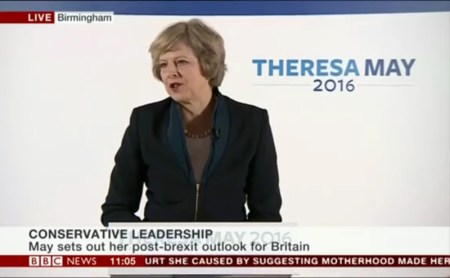
1693The glaring discrepancy between the UK establishment and the electorate explains the establishment’s quick acceptance of Brexit, for fear of becoming totally discredited. Pictured above: Theresa May launches her campaign for leader of the UK Conservative party on July 11, 2016, saying “Brexit means Brexit.”

The two earlier articles mentioned above first spotted the phenomenon of European disintegration and then explained it. Today, the intervening events have made the explanation all the simpler. Basically, the European political elites were correctly convinced, long ago, that considerable European integration was desirable, but their very successes in this area made them grossly overestimate what could and should be done further.

Up to a decade ago, it seemed that a similar pattern was becoming established in one EU country after another: the parliament was dominated by a large center-right party and a large center-left party that alternated in power from one election to another. The parallel to the United States seemed obvious, but the parallel was illusory, as we shall show.

Emboldened, the political parties concerned made the fatal mistake of trying to combine for the purpose of elections to the EU Parliament. Thus emerged a pan-European center-right pseudo-party, the “European People’s Party” (EPP), whose origins go back to a get-together of Christian Democrat parties in 1976. And a pan-European center-left pseudo-party, the “Party of European Socialists” (PES), founded in 1992 as an alliance between old-style Social Democrat parties and the former so-called Eurocommunist parties. The latter first emerged during the decline and discreditation of the Soviet Union in the 1970s and 1980s, then changed their names after its disappearance in December 1991. Thus, the core of Italy’s current Democratic Party derives from the Italian Communist Party (PCI), the major opposition party of post-war Italy.

Curiously but inevitably, the more those parties tried to unite, the more they lost support in their own countries of origin. Thus the Dutch Christian Democrats (CDA) are today a minor party of the right and the Panhellenic Socialist Movement (PASOK) barely crosses the threshold of 5% needed for entry into the Greek Parliament. (Incongruously, the last PASOK Prime Minister of Greece, George Papandreou, continues to be President of the Socialist International.) The reason for this development, however, is not far to seek.

Nationalism, it was forgotten, is an essential component of center-right sentiment. So a center-right party that prefers an international interest at the expense of the national interest of its own country loses credibility among its own core supporters; it becomes vulnerable to the rise of far-right upstart parties. Examples of this process in the EU are now so evident as not to need enumeration.

The attraction of socialism, it was forgotten, is that its core supporters expect increases in government social spending at the expense of financial stability. This becomes more difficult, the more a country is constrained by participation in a shared international framework. It becomes impossible to maintain once a country joins a common currency, since the usual remedy for socialist overspending is devaluation of the national currency. This is why PASOK has been eclipsed in Greece by the far-left SYRIZA, why the Spanish franchise of the PES (the PSOE) has lost severely to the upstart Podemos, and why support for its Dutch franchise (the PvdA) is now down to about the same as for each of two other left-wing parties.

It is also why in Britain, where the electoral system obstructs the rise of new parties, Jeremy Corbyn was voted leader by the Labour Party membership to the horror of the party establishment. Corbyn himself was a pronounced Euroskeptic until recently and only half-heartedly spoke in public for Remain, creating suspicions that he secretly voted for Leave.

A far-right party, like the Freedom Party (OFP) of Austria, has an easy sales pitch. Not so the far-left ones: after they come to power, it quickly and painfully becomes evident that they have no more ability than their derided Social Democrat predecessors to defy the constraints imposed by membership in the Eurozone.

Thus SYRIZA came to power in Greece and won a referendum to end austerity. The result was that all Greeks found that their bank accounts were virtually frozen: they were allowed to withdraw only sixty Euros a day. SYRIZA then split. The larger faction won the resulting general election and accepted the harsh conditions that the referendum had rejected. The paradoxical result in Greece is that the current government is a coalition of an upstart far-left party, SYRIZA, and an upstart nationalist party (the Independent Hellenes) that lies to the right of New Democracy (the Greek franchise of the EPP).

In other EU countries, however, the typical development has been the opposite: the erstwhile competing franchises of the EPP and the PES are in coalition against the motley upstart breakaway parties, since neither of the two gets an absolute majority in parliament any more. That is, their former raison d’être as competing alternatives has been abandoned in the need to survive in power at all. The paralysis in Spain comes from the fact that the two local franchises there are descended from the two sides in the murderous Civil War of 1936-1939. Joint government is still hardly imaginable especially for the losing socialists, who continued to suffer persecution long after the war.

Likewise, in the elections to the EU Parliament in May 2014, the EPP and the PES won only 221 and 191 seats respectively out of 751, each far short of a majority. So they clubbed together to make the top candidate of the EPP, Jean-Claude Juncker, President of the EU Commission and to retain the top candidate of the PES, Martin Schulz, as President of the Parliament. The incredible response of Juncker to Brexit has been to demand even tighter integration: he wants to force into the Eurozone the eight EU member states (other than the UK) that still have independent currencies. He also reiterated his proposal, originally made last March, to unite the armed forces of all states (with the UK gone) into a European army. For this he has the support of Schulz’s home party, the German SPD. That is, they want more and more of what the European electorates want less and less.

Especially in Eastern Europe, there are now also governments that resent the relentless centralizing urges of the EU establishment. In Hungary, for example, the government has rejected the demand of the EU Commission to absorb a quota of the immigrants currently streaming into Europe; it has scheduled a referendum on the matter for October 2. On the same day, Austria will hold a revote for the presidency, which the Freedom Party may narrowly win after narrowly losing the first time around.

These governments are among the new friends of Israel described in a recent Reuters article, titled “Diplomatic ties help Israel defang international criticism.” As it notes:

“Whereas a few years ago Israel mostly had to rely on Germany, Britain and the Czech Republic to defend its interests in the EU, now it can count Italy, Greece, Cyprus, Austria, Hungary and a handful of others among potential allies.”

These allies have no desire to penalize Israel on behalf of increasingly tedious Palestinians. On the contrary:

“Like Turkey, which last week agreed to restore diplomatic ties with Israel after a six-year hiatus, they see a future of expanding business, trade and energy ties.”

By “energy ties” is meant Israel’s recently discovered vast fields of natural gas, the phenomenon that we earlier dubbed “Israel as a Gulf State.” That is: just as governments care little for the human rights record of, say, Qatar in their eagerness to acquire its natural gas, so also the self-righteous moaning of the Palestinian Authority does not deter those governments from going for what Israel has to offer. As the Reuters article quotes a European ambassador: “There’s just no appetite to go toe-to-toe with Israel and deliver a really harsh indictment. No one sees the upside to it.”

Israel’s government is not, of course, gloating over the discontent spreading in the EU. But it surely appreciates some of the side effects.

GOP platform gets Trump-ified

July 13, 2016

GOP platform gets Trump-ified, The Hill, Jonathan Easley, July 13, 2016

CLEVELAND — Donald Trump is putting his stamp on the official policy platform of the Republican Party.

Now, the party has fully embraced one of Trump’s most controversial proposals, explicitly calling for a wall that must cover “the entirety of the Southern Border and must be sufficient to stop both vehicular and pedestrian traffic.”

**********************

Republican Platform Committee members on Tuesday voted to include language calling for the construction of a wall on the U.S.-Mexico border.

And in a nod their presumptive presidential nominee’s support for a temporary ban on Muslim immigration, they also endorsed language that would impose “special scrutiny” of foreign nationals seeking to enter the U.S. from “regions associated with Islamic terrorism.”

Both provisions are departures from the GOP platform of 2012, when Republicans nominated Mitt Romney for president.

That party platform then called for completing “double-layered fencing” on the border, which was ordered by Congress in 2006 but never completed. It was silent on any special scrutiny of Muslims or other people from countries associated with Islamic extremism.

The language on a border wall is a significant shift away from the “autopsy” report written by the Republican National Committee after Romney’s defeat. That report emphasized the need for the party to appeal to Hispanic voters to win back the White House.

Platform Committee members described the endorsement of Trump’s immigration proposals as evidence the party is fully embracing him on the issues that have energized his supporters and infuriated his critics.

“Back on June 16 of 2015, Donald Trump proposed this, and it resonated with the people of America,” said Stephen Stepanek, a committee member and delegate from New Hampshire who endorsed Trump last month.

“So not only is the Platform Committee recognizing the position Donald Trump has held throughout the primary process, it has been endorsed by the American people, who have overwhelmingly supported his positions and overwhelmingly made him the presumptive nominee.”

Trump and his supporters have largely kept a low profile as the committee crafts the policy platform, which delegates will consider at the Republican National Convention next week.

But they have made their marks on issues like immigration and trade that have been the cornerstones of Trump’s campaign.

The only mention of the Trans-Pacific Partnership — the international trade deal crafted by the Obama administration that Trump vehemently opposes — was stricken from an early draft of the platform.

The language on the border wall passed unanimously through a subcommittee and did not attract any opposition or amendments at the full committee hearing.

It passed easily on Tuesday without any additional debate.

The only change to the immigration plank came when Trump supporter Kris Kobach, the Kansas secretary of State who helped write part of Trump’s immigration plan, interjected to ensure the platform would refer to “illegal aliens” rather than “illegal immigrants.”

Getting the wall built into the platform is a big win for the Trump campaign as it seeks normalize the proposals that some party leaders have been loath to embrace.

“The Romney campaign was very heavy handed about influencing the platform,” said Oregon delegate Russ Walker, who was on the Platform Committee in 2012 and this year.

“It’s far less that way this time from the Trump campaign. What’s happened is the current Platform Committee is in sync with Trump and using language in the platform to say the things they’ve wanted to say for some time.”

Trump’s promise to build a wall to keep people from illegally crossing into the U.S. has been one of the primary drivers of his insurgent campaign and a flashpoint for controversy.

And the committee has reworded its policy document to match the presumptive nominee’s campaign promises.

The 2012 platform said the double-layer fencing “must finally be built.”

The working draft of this year’s platform called for “construction of a physical barrier,” but Trump supporters saw that language as being open to weaker interpretations.

Now, the party has fully embraced one of Trump’s most controversial proposals, explicitly calling for a wall that must cover “the entirety of the Southern Border and must be sufficient to stop both vehicular and pedestrian traffic.”

Kelly Armstrong, a Platform Committee member and delegate from North Dakota, told The Hill, “I support the presumptive nominee, and so putting language in there to support his proposals is a good idea.”

“At the end of the day, a strong immigration policy is something Republicans will support, and we’ll support our nominee’s positions on that.”

But some Republican critics of the plan say it’s impossible to build a border wall on the rough terrain along the U.S.-Mexico border.

Rep. Mike Simpson (R-Idaho) told The Hill in an interview on Capitol Hill on Tuesday that adopting the wall into the party’s platform doesn’t make it any more likely to happen.

“It doesn’t really matter,” Simpson said. “You still have to appropriate money for it. Mexico’s not going to pay for it. There are places where a wall is appropriate, but you’re not going to build a wall down the whole 2,300 miles on the border.”

The platform does not address Trump’s promise that Mexico will pay for the wall.

And some Republicans have warned that the proposal will further turn away Hispanic voters.

Following the 2012 elections, the Republican National Committee issued an assessment meant to keep Republicans from losing the White House race again.

The RNC report warned that minorities “wrongly think Republicans do not like them or want them in the country.”

Now some fear Trump’s vow to build the wall, as well as his saying that most Mexican immigrants bring crime over the border, has reversed any progress the party has made.

“I’ve found you can’t look at the Hispanic voters monolithically — there are plenty of folks who came here legally who respect that process and do not appreciate people who ignore that process,” said Giovanni Cicione, a Rhode Island delegate on the Platform Committee. “That being said, those same people probably have relatives here illegally, so it becomes a difficult question.”

But most Republicans on the Platform Committee dismissed those worries.

“I’m not concerned about that,” said Darcie Johnston, a Platform Committee member from Vermont. “That’s more of a press narrative.”

For the most part, delegates on the panel viewed their votes as a reflection of proposals that have widespread support among grassroots conservatives.

They say they believe that bringing the platform in line with Trump on immigration will unite the party and capitalize on enthusiasm from the base.

“By the time we leave the Platform Committee meeting and by the time Republican delegates leave Cleveland, we’ll go home united and ready to support Donald Trump against Hillary Clinton,” said Arkansas Attorney General Leslie Rutledge, a delegate on the committee.

“You’re going to see a very united Republican Party,” she continued. “So many [delegates] have already come around. … A number of individuals are no longer talking about how they wish their candidate had won. They’re talking about what can we do to help Donald Trump.”

Obama’s Obscene Exploitation of the Dallas Massacre

July 13, 2016

Obama’s Obscene Exploitation of the Dallas Massacre, Front Page Magazine, Daniel Greenfield, July 13, 2016

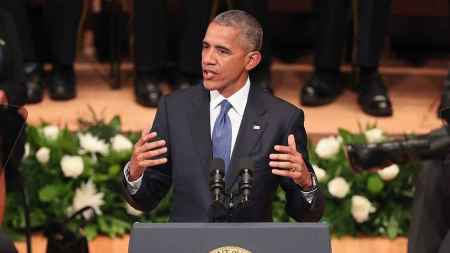
Obama obscene

Not only had Obama’s actions led to the murder of police officers, but he was determined to whitewash their deaths and exploit them as weapons in his war against the police.

****************************8

In Dallas, Obama mentioned the name of dead sex offender Alton Sterling more times than those of the murdered police officers whom he was pretending to memorialize. After quickly dispensing with the formalities of eulogizing the slain officers, Obama demanded that “even those who dislike the phrase ‘black lives matter’” should “be able to hear the pain of Alton Sterling’s family”.

Alton Sterling was a convicted sex offender, burglar and violent criminal who was shot while reaching for a gun. His family may mourn him, just as every criminal’s family mourns their own, but it was obscene to class him together with five police officers who were murdered by a violent racist while doing their duty.

It is even more obscene when Obama’s favorite sex offender displaces the murdered police officers.

And yet that was Obama’s theme in Dallas. Murdered police officers were contrasted with dead criminals. The proper thing for Americans to do, as Obama told us, was to mourn both officers and criminals, to respect the sacrifices of the police and the anti-police accusations of #BlackLivesMatter.

Obama did not come to Dallas to mourn the murdered police officers, but to defend the ideology that took their lives. And this is what he has done from the very beginning.

Before the shootings, Obama expressed his “condolences for the families of Alton Sterling and Philando Castile” and insisted that the criminal justice system was racist. His statements and speeches after the shootings echoed the same talking points and spin complete with the claims that accusing the police of racism is “not to be against law enforcement”.

“When people say ‘Black Lives Matter,’ that doesn’t mean blue lives don’t matter”, he famously said.

That’s true. Black Lives Matter doesn’t mean that blue lives don’t matter. It means that blue lives are evil. As Ta-Nehisi Coates, an author on Obama’s reading list, wrote of the dead police officers who gave their lives on September 11, “They were not human to me.” That’s the kindest thing that the black nationalists whose cause Obama has championed have said of the police.

In a more recent article titled, “The Near Certainty of Anti-Police Violence”, the MacArthur Genius Grant recipient and son of a Black Panther suggests that black resentment of police makes their murder predictable.

“Sanctimonious cries of nonviolence will not help,” Coates writes. “The extent to which we are tolerant of the possibility of more Walter Scotts and Freddie Grays is the extent to which we are tolerant of the possibility of more Micah Xavier Johnsons.”

It’s the core black nationalist message made more palatable for liberal audiences. Underneath the word games, the attempt to treat the ideological justifications for the mass murder of police as inevitable, is the same message delivered by Ismaaiyl Abdullah Brinsley, the #BlackLivesMatter supporter who assassinated two NYPD officers, who had posted, “They take 1 of ours…Let’s take 2 of theirs”.

Obama’s message was even more polished than Coates, but not really so very different. Coates had polished up the radical black nationalist message for liberal audiences. Obama’s speechwriters shaped his for a national audience. But underneath the religiosity and praise of the police was sheer contempt.

In one of the nastily cynical moments, Obama claimed that “to honor these five outstanding officers who we lost” we would have to act on “uncomfortable” truths such as his claim that the police are racist. “Insisting we do better to root out racial bias is not an attack on cops, but an effort to live up to our highest ideals,” he spun.

While the media applauded his “healing”, Obama was just recycling his speeches from before the Dallas shooting. The talking points had not changed. They had only been moved around a little to exploit the police officers murdered by a #BlackLivesMatter supporter in order to promote #BlackLivesMatter.

Indeed this had always been Obama’s first and foremost priority.

After the shooting, his initial response was to emphasize that the anti-police protests were “peaceful”. At Dallas, in his praise of the police officers, he insisted on inserting that same description of a “peaceful” protest “in response to the killing of Alton Sterling of Baton Rouge and Philando Castile of Minnesota”. The choice of words, ‘killing’ rather than ‘death’, is significant.

The “shootings in Minnesota and Baton Rouge” were equated with the murders of police officers in Dallas in a breathtaking bit of moral equivalence. Americans were encouraged to grieve for sex offender Alton Sterling and the murdered police officers at the same time. And, just in case there was any ambiguity about which side he was on, Obama warned that “we cannot simply turn away and dismiss those in peaceful protest as troublemakers or paranoid.”

It was a defense of #BlackLivesMatter at a memorial for their victims.

Obama’s spin was that he was calling for unity when in reality he was pushing the divisive agenda of the hate group whose rhetoric helped lead to the killings. He was not a healer, but an arsonist.

There was nothing unifying about his exploitation of a memorial service to push anti-cop messages or to call for gun control. Neither message is in any way, shape or form unifying. They are as divisive as can be.

Obama did not come to Dallas to mourn, to heal or to unify. His sole purpose was to protect his #BlackLivesMatter hate group from the consequences of its rhetoric. Americans were fed lies about peaceful protests featuring armed members of hate groups who had called for the murder of police.

#BlackLivesMatter draws its inspiration from a cop-killer. It has deliberately targeted white people in much the same fashion that Micah X. Johnson did. The only real difference between Johnson and the black nationalist hate groups frantically trying to distance themselves from him in much the same way that mosques do from the latest Islamic terrorist is that he followed through on a lot of their rhetoric.

Johnson was not trying to get a job writing Black Panther comics or making YouTube videos. He actually did the sort of thing that #BlackLivesMatter role models like Assata Shakur did. He killed police officers.

For Obama, Dallas was a bump in the black nationalist road. It was, like every Islamic terrorist attack, an unfortunate incident from which we shouldn’t draw any conclusions, except perhaps that guns are bad. The goal is to redirect our attention to the next set of #BlackLivesMatter protests or the next celebrity tweeting about gun control and how mean those men with guns who aren’t on their payroll are.

He did not come to Dallas to praise the dead, but to enlist them in the service of his anti-police agenda.

Not only had Obama’s actions led to the murder of police officers, but he was determined to whitewash their deaths and exploit them as weapons in his war against the police.

CAIR Met With Congress 325 Times in 2016

July 13, 2016

CAIR Met With Congress 325 Times in 2016, Clarion ProjectRyan Mauro, July 13, 2016

Cair-Nihad-Awad-Ibrahim-Hooper-HP_31 (1)CAIR founder and executive director Nihad Awad (right) with Ibrahim Hooper, national communications director and spokesperson.

The Council on American-Islamic Relations (CAIR), a group identified by the Justice Department as a Muslim Brotherhood entity and designated as terrorists by the United Arab Emirates, boasts of having 325 meetings with members of Congress or their staff over the last year.

The group says it also enjoyed $3 million worth free advertising through media appearances this year alone, resulting in 50 million views of its work.

A 2007 court filing by federal prosecutors notes how two of CAIR’s founders were wiretapped at a secret Muslim Brotherhood/Hamas meeting in Philadelphia in 1993, where they participated in a robust discussion of how to use deception to influence American public opinion in a direction favorable to the Islamist cause. It states:

From its founding by Muslim Brotherhood leaders, CAIR conspired with other affiliates of the Muslim Brotherhood to support terrorists … the conspirators agreed to use deception to conceal from the American public their connections to terrorists.

CAIR’s fundraising video boasts that there were 14,000 mentions of CAIR on radio or television this year alone, and that it has a database of 1.6 million media contacts to use. The organization said it has 65 trained spokespeople, 29 offices and 35 full-time lawyers.

The White House’s director of community partnerships said in 2012 that there had been “hundreds” of meetings between U.S. government agencies and CAIR. However, CAIR was curiously left out of President Obama’s Countering Violent Extremism Summit in 2015, even though other Islamists were invited.

After participants were made known, CAIR attacked President Obama’s event as Islamophobic.

CAIR’s power can give the impression that it is the leader of the Muslim-American community, but it is, in reality, the manifestation of a well-funded and well-organized Brotherhood network that has been building up its presence in the U.S. since the 1960s. CAIR was born out of this network in 1994 and has prospered with plentiful foreign financing.

A 2011 Gallup poll found that CAIR is most popular Muslim-American organization but only about 12% of Muslim-Americans say CAIR is the organization that most represents them, despite its strong name recognition, media presence and infrastructure.

CAIR’s boasts are a reminder of its power to intimidate, pressure and influence. However, since close to 90 percent of the Muslim-American community says CAIR does not represent them, there is a leadership gap that can be filled by a non-Islamist Muslim group whose values and record more closely reflect those of the Muslim-American community.

Muslims who are against Islamism have a steep hill to climb in competing with CAIR and its allies, but we must remember that they have low name identification and are attacked and excluded by their Islamist competitors who have had much more time and resources to develop.

If CAIR can accomplish all this, then imagine what a genuinely moderate organization could accomplish with time and resources.

Breach of JCPOA to Trigger Iran’s Immediate Response: President

July 13, 2016

Breach of JCPOA to Trigger Iran’s Immediate Response: President, Tasnim News Agency, July 13, 2016

Rouhanh on breach

TEHRAN (Tasnim) – Iranian President Hassan Rouhani reaffirmed Tehran’s commitment to a nuclear deal with six countries, but warned that in case of the other side’s breach of the agreement, Iran will move to regain its previous nuclear achievements immediately.

“Should the (Group) 5+1 want to avoid honoring commitments one day, we will be fully ready, and our nuclear capabilities are in such conditions that we will be able to reach our favorable point in a short period of time,” President Rouhani said at a cabinet session on Wednesday.

The president insisted that the deal, known as the Joint Comprehensive Plan of Action (JCPOA), is good for all countries and serves international peace and security, warning that violation of the accord would be to the detriment of all parties and the first side to breach it will be a loser in the international arena.

Back in June, Leader of the Islamic Revolution Ayatollah Seyed Ali Khamenei also underlined Iran’s commitment to the nuclear deal with the Group 5+1 (Russia, China, the US, Britain, France and Germany), but made it clear that any violation of the deal by the US will trigger Tehran’s harsher response.

Imam Khamenei emphasized that Iran will never be the first side to violate the nuclear deal, but at the same time noted, “If the threats of tearing off the JCPOA made by the US presidential nominees are carried out, the Islamic Republic will set the JCPAO ablaze.”

Obama Never Once Met With His Defense Intelligence Chief

July 13, 2016

Obama Never Once Met With His Defense Intelligence Chief, Daily Caller, Richard Pollock, July 12, 2016

Unlike Obama, Trump has not only met with Flynn but has also spent hours listening to Flynn’s views.

Flynn described Trump as “very refreshing.” The presidential candidate “really thought deeply about the issues of America and its relationships around the world. And also about America,” he said.

************************

President Barack Obama twice appointed former Lt. Gen. Michael T. Flynn to key national security jobs in his administration, including as deputy director of national intelligence and later as director of the Defense Intelligence Agency, yet he never once met with Flynn face to face.

The general, who spent 33 years in the intelligence field, told The Daily Caller News Foundation he was never called in for a face-to-face meeting with Obama to offer his assessment of ISIS as it rampaged through the Middle East, or during the political  meltdown of Libya and Egypt, or on Iran’s efforts to build a nuclear bomb, or of the “Russian reset” that ended in shambles.

In four years, Flynn was never invited to brief the president on any kind of intelligence issue. Ever.

“Here is the crux of my relationship with Obama,” Flynn told TheDCNF in a wide ranging interview Tuesday. “Here I am, running one of the largest intelligence agencies in the world. He appoints me twice — one as the assistant director of national intelligence and one as the director of the Defense Intelligence Agency. I’m also his senior intelligence officer. And I had almost five years in combat.”

He paused, then said, “I never met with him once.”

“He’s a kind of a funny guy when it comes to relationships,” Flynn told TheDCNF. “He’s very aloof and very distant. I wasn’t on his screen at all. I wasn’t on his radar which is really sad. It’s amazing.”

Now in a turn of tables, Flynn is advising presumptive Republican presidential nominee Donald Trump and is widely reported as being on the short list to run as Trump’s vice president.

Unlike Obama, Trump has not only met with Flynn but has also spent hours listening to Flynn’s views.

Flynn’s characteristic answers are candid and direct. On the possible choice as Trump’s vice presidential running mate: “This is an honor to be considered at this level and this mix of talent. The fact that my name is being bantered around in the small group of people for this very distinguished office is something I would give serious consideration to.”

He added that “I have said I want to continue to serve this country in any capacity.”

Like Trump, Flynn is an unconventional figure who abhors political correctness.

He has just published his first book after he was unceremoniously fired by Obama in 2014 for delivering a pessimistic assessment of ISIS before Congress. The presentation went directly against the president’s prediction that ISIS was irrelevant — a “JV team.”

Flynn could have written the typical Washington “Tell All” insider’s book about the Obama administration. Instead, he teamed up with Iran and Middle East expert Michael Ledeen in writing a serious book about the threat of Islamic terrorism titled, “The Field of Flight: How We Can Win the Global War Against Radical Islam and Its Allies.”

Flynn says he is impressed with Trump. “I have met him. We sat down and talked in his offices in New York. The first time was quite a while ago. I’ve been in touch with him and his inner circle since last September,” he told TheDCNF.

“He is very, very serious about the future of this county. He is a great listener. I felt we had a great discussion about the world.”

At the first meeting, “he sort of threw out a couple of questions to me, which I felt were very telling of his insight and his knowledge.”

Then, Flynn said the two of them “walked around the world for about an hour and a half, sort of discussing back and forth.”

Flynn described Trump as “very refreshing.” The presidential candidate “really thought deeply about the issues of America and its relationships around the world. And also about America,” he said.

“My impression — and I have been around many good leaders in my career — and I found him to be a very strong, dynamic leader. And I think that’s why he is so attractive to so many people in this country right now.”

“Trump has a bigger, longer-term vision for this country than just sitting as a President for four years. He really does. And that’s what I was impressed by,” Flynn told TheDCNF.

Flynn is less charitable toward former Secretary of State Hillary Clinton, one of his colleagues in the Obama administration.

“She is somebody that you get the impression that she’s got some other hidden agenda,” he said. “I always felt where there were interactions, there is some other hidden agenda there that doesn’t necessarily have the best interest of the country. Something else is going on.”

He pointed to Clinton’s “Russian reset” as one of her biggest failures. The reset was an initiative from Clinton in an effort to restore positive relations with Russian strongman Vladimir Putin.

“The Russian reset was a complete failure. That was her sort of baby. She lacked the understanding of how Russia deals on the global stage and how Russia deals with people, personalities and also on nation-on nation, and the way they see us,” Flynn said.

“She went into it with a level of arrogance and a lack of understanding.”

Unlike some skeptics in Washington, though, Flynn thought at the time that a Russian “reset” could work. “That Russian reset actually could have turned into something that resulted in some sort of mutual respect. But in fact under her leadership, it completely collapsed.”

He also is blunt about corruption and the Clinton Foundation: “The public corruption between the Clinton Foundation and the State Department may never be discovered. Or it may be discovered well past the election. But it’s a very real issue.”

Flynn challenged the foundation’s acceptance of $100 million in contributions from Persian Gulf Sheiks.

“The fact she takes one dollar from Saudi Arabia as any kind of a donation is a disgrace,” Flynn said. “Any of these countries destroys women’s rights. And then she stands there and claims that she’s for women.”

Hillary Clinton “should give back every red penny that she gets from those guys,” Flynn said. “Then she can talk about women’s rights.”


Illinois Seeks Nation’s First Muslim Advisory Council

July 13, 2016

Illinois Seeks Nation’s First Muslim Advisory Council, Truth RevoltTrey Sanchez, July 12, 2016

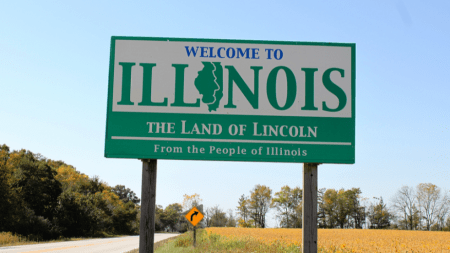
Illinois

Legislation currently pending in the state of Illinois would authorize a special Muslim-only advisory council if signed by Gov. Bruce Rauner.

It would be a permanent 21-member council made up of volunteer members appointed by the governor and House and Senate members to advise the governor and the General Assembly on issues that would impact Muslim-Americans and immigrants. Meetings would be held monthly with two public hearings each year. Members would serve two-year terms and are required to have expertise in business, law, or health care.

The timing of this legislation is a bit curious, as Bruce Cornibe notes at Counter Jihad:

At the end of an especially bloody month of Ramadan, which included the worst terror attack in America since 9/11, some politicians and lawmakers feel the solution is to give Muslim community more of a voice in government.

Not to mention the mixing of religion with official state business.

“This special status for a religious group is surprising in a country that bars an official state religion,” Cornibe states. “Why wouldn’t Illinois require a Christian council? Or how about a Jewish council?”

Cornibe notes that Muslims aren’t the biggest victims of discrimination, and in fact, FBI records show that nearly 60% of crimes against Jews are motivated by anti-Semitism. But that matters little to those screaming “Islamophobia.”

And it’s no surprise to know that those Muslim activists and organizations, like CAIR, who are supporting the bill have known associations with terrorists and the Muslim Brotherhood.

“Just as CAIR and other Brotherhood-linked activist groups weaken the functioning of our government, so too would the Muslim-American Advisory Council in Illinois,” Cornibe writes. “There are no councils to represent the interests of other faiths in Illinois, and the likely leaders of this council are from the same band urging the Federal government towards censorship of criticism.”

Trump Wants Justice Ginsburg to Resign for Attacking Him

July 13, 2016

By: JNi.Media Published: July 13th, 2016

Source: The Jewish Press » » Trump Wants Justice Ginsburg to Resign for Attacking Him

Ginsburg v Trump

“I think it’s highly inappropriate that a United States Supreme Court judge gets involved in a political campaign, frankly,” Republican presumptive nominee Donald Times told the NY Times following a Monday interview with Justice Ruth Bader Ginsburg in which she confessed, “I can’t imagine what this place would be — I can’t imagine what the country would be — with Donald Trump as our president. . . . For the country, it could be four years. For the court, it could be — I don’t even want to contemplate that.” Ginsburg cited something her late husband used to say on such occasions, “Now it’s time for us to move to New Zealand.”

“I think it’s a disgrace to the court and I think she should apologize to the court,” Trump told the Times. “I couldn’t believe it when I saw it.”

Trump then tweeted early Wednesday morning: “Justice Ginsburg of the US Supreme Court has embarrassed all by making very dumb political statements about me. Her mind is shot – resign!”

But Ginsburg, 83, did not seem to shy away from a good bar brawl when she said about Trump on Monday, speaking to CNN “He is a faker. He has no consistency about him. He says whatever comes into his head at the moment. He really has an ego.”

Which could also be said about a Supreme Court Justice shooting her mouth off in the middle of a heated political campaign.

The Justice’s unusual outbursts have not been accepted with approval by the legal community. New York University law professor Stephen Gillers wrote a Times op-ed titled It’s Clearly Not Right for Justices to Say Which Candidate They Support: “Apart from judicial ethics, the structure of the U.S. Constitution makes the judiciary the nonpolitical branch of government. The executive and legislature are the political branches. Members of Congress and presidents have constituents and seek votes. Federal judges do not.”

“Why do we keep judges out of politics? To protect the rule of law,” Gillers continued. “We want the public to view judicial rulings solely as the product of law and legal reasoning, uninfluenced by political considerations. Acceptance of court rulings is undermined if the public believes that judicial decisions are politically motivated. It’s not that judges don’t disagree among themselves. But disagreements must be over legal principles, not a ruling’s effect on a political candidate or party.”

Stetson University law professor Louis Virelli said that “public comments like the ones that Justice Ginsburg made could be seen as grounds for her to recuse herself from cases involving a future Trump administration.”

“I don’t necessarily think she would be required to do that,” Virelli wrote, “and I certainly don’t believe that she would in every instance, but it could invite challenges to her impartiality based on her public comments.”

Republican draft platform calls for undivided Jerusalem

July 13, 2016

Republican draft platform calls for undivided Jerusalem

Source: Republican draft platform calls for undivided Jerusalem – Behind The News

The Republican Party is in the process of changing its platform on Israel to include language that is more in favor of Israel, Israeli media reported Monday.

In advance of the party’s nominating convention, the GOP platform committee held its first meeting Monday in Cleveland, where it discussed reinstating a reference to Jerusalem as Israel’s “undivided” capital and removing a reference to “Palestine.”

This new draft marks a significant change from the platform from four years ago, which did not include the word “undivided” in reference to Jerusalem, but did include mention of “Palestine.”

The 2012 platform read, “We support Israel’s right to exist as a Jewish state with secure, defensible borders; and we envision two democratic states – Israel with Jerusalem as its capital and Palestine – living in peace and security.”

On Monday, CNN reported, the subcommittee reviewing the platform specifically rejected language affirming the party’s commitment to what is known as the two-state solution.

The draft platform could change several times before the start of the Republican National Convention on July 18.

The amendments to the platform are in line with presumptive Republican presidential nominee Donald Trump.

Last month a senior official in the Trump campaign said that if elected president, Trump would back Israel annexing portions of Judea and Samaria.

In an interview with Israeli daily Haaretz, Trump’s co-adviser on Israeli affairs, David Friedman, addressed issues of the Israeli-Palestinian conflict and how the presumptive republican nominee would handle them if elected in November.

“I think there are parts of the West Bank that will stay part of Israel in any peace deal. I am sure he [Trump] wouldn’t have any problem with that at all,” he said.

“Regarding the entire West Bank I think that’s a legal issue. I don’t think he will have a problem with that but he would expect Israel to continue seeking peace. He has no doubt that Israel wants peace,” Friedman continued.

Asked if Trump would support annexing parts of Judea and Samaria, Friedman said that “I would expect that he would. I haven’t had this discussion with him but I expect he would.”

Regarding the Jewish communities in Judea and Samaria, Friedman said that Trump recognizes Israel has a “commitment to its citizens in Judea and Samaria” and says that there is no reason not to continue building.

Achieving peace does not need to focus on land, Friedman said

“There are always creative ways to allow people to live in peace. It is not always about the land. We don’t accept the idea it is only about land. Nobody really knows how many Palestinians actually live there.”

An independent Palestinian state, said Friedman, will not happen without Israel’s consent.

“This is an issue that Israel has to deal with on its own because it will have to deal with the consequences,” Friedman said.

“The Israelis have to make the decision on whether or not to give up land to create a Palestinian state. If the Israelis don’t want to do it, so he doesn’t think they should do it. It is their choice. … He [Trump] does not think it is an American imperative for it to be an independent Palestinian state,” he continued.

Trump’s viewpoint is that Israel shouldn’t have “to wait for another generation for the Palestinians to hold more realistic expectations and show less hostile motivation,” Friedman explained. “Trump’s position is that we have to deal with reality and not hopes and wishes.”