Judge Jeanine: Mitt Romney awoke a sleeping giant, Fox News via You Tube, March 5, 2016
Judge Hopes Muslim who Shouted “Kill the Jews” isn’t Prejudiced, Front Page Magazine, Daniel Greenfield, March 6, 2016

I certainly hope so. Calls for genocide are bad enough. But prejudiced calls for genocide are even worse.
After getting stuck in London traffic, Rashal Miah got out of his Mercedes and started shouting that he would “kill all the Jews” at an Orthodox Jewish school-bus driver in front of a bus full of young children.
During Miah’s sentencing, Judge Murray Shanks in the UK called the driver’s behavior “horrible.”
“I accept this was mainly driven by you being wrongly angry and suffering from road rage, as well as being arrogant about what you were entitled to do on the road,” Shanks told Miah. “I hope it doesn’t indicate some underlying prejudice.”
Surely shouting “Kill all the Jews” because you’re angry at a Jewish bus driver in no way indicates some underlying prejudice.
“If this was the other way around and Muslims were being insulted, I have a good feeling you would feel strongly. You need to understand that before you open your mouth,” the judge said.
Well of course he would feel strongly. But that’s different. Because Muslims are the Master Race.
These condescending liberal lectures are great, but Muslims don’t see themselves as a minority. Our friend Rashal has been informed by the Koran that Jews are accursed by Allah. He recites this every day in his prayers. His preachers tell him the Hadiths that the apocalypse won’t come until Muslims kill all the Jews.
So the “How would you feel” lecture doesn’t work at all because Rashal doesn’t share the universalist premises of Western multiculturalism that other people are basically like him. His religion tells him otherwise. And who is a British judge to argue with Islam?
Miah also reportedly called the bus driver “Yehudi,” the word for “Jew” in Hebrew and similarly in Arabic.
Yahoodi is basically a slur among Muslims. It is used to insult other Muslims and non-Muslims the way they might call a man a dog. But no underlying prejudice. Genocide without prejudice is the Muslim way since we know that Islam is a religion of peace, love and tolerance that kills people without any hatred.
Cleric Sa’d Al-Ateeq Warns Saudis Travelling to the West of the Promiscuity of Modern Girls, MEMRI-TV, March 6, 2016
According to the blurb following the video,
Saudi cleric Sa’d Al-Ateeq warned young Arab men who travel to the West of the promiscuous ways of Western women. He told a story of a Saudi man who defied his mother when she refused to allow him to travel to the West, and almost fell into a trap set by a Western woman. His comments were made on the Saudi Ahwaz TV on November 23, 2015.
Finland’s Immigration Crisis, Gatestone Institute, Dawid Bunikowski, March 6, 2016
♦ The Tapanila gang-rape shocked the quiet Helsinki suburb, and all of Finland. Many wondered why these second-generation Somalis, citizens of Finland, would carry out such a savage attack.
♦ The rapists were eventually brought to trial. One was sentenced to a year and four months imprisonment, two were given one-year prison sentences and two others were acquitted. Penalties were softened due to the age of the rapists.
♦ “1,010 rapes were reported to the police in 2014, according to the Official Statistics of Finland. The number of suspected immigrants in these cases is about three times higher than of the suspected natives in relation to the population.” – Finland Today.
♦ The criminal law prohibiting blasphemy seem archaic in the eyes of many Finns, especially after the attack on the French satirical magazine, Charlie Hebdo. Unsuccessful attempts to decriminalize blasphemy took place between the 1910s until the 1990s. For many critics the concept of prohibited hate speech is problematic: there is no clear definition, a lapse that leads to confusion and acrimony.
Finland — an open country that prides itself on respecting different ways of life, cultures and religions — is being greatly tested by the wave of Middle Eastern asylum seekers.
Finland is a homogenous country that has roughly 5.5 million inhabitants, about 4% of which are foreign[1]. Twenty years ago, thousands of Somalis immigrated to Finland. In the last decade or so, more international students came to study, and more foreigners came to live and work.
Finnish universities and the academia are of a high level, and most Finns speak some English. But it is not easy for foreigners to find jobs. The barrier is the language: Finnish, like Hungarian, is a part of the Finno-Ugric languages, and difficult to learn.
How many asylum seekers from Syria, Iraq, and Afghanistan arrived in Finland in 2015? The figures keep changing. Authorities estimate between 30,000 and 50,000 — significant numbers in terms of the ratio of migrants to the native population.
“Hate speech” (vihapuhe) is defined in Finland as “speech that attacks a person or group on the basis of attributes such as gender, ethnic origin, religion, race, disability, or sexual orientation.” Hate speech is prohibited if such an act is a kind of ethnic agitation. For many critics — including Jussi Kristian Halla-aho, a member of the European Parliament for the True Finns Party — the concept of prohibited hate speech is problematic: there is no clear definition, a lapse that leads to confusion and acrimony.
The criminal law prohibiting blasphemy seem archaic in the eyes of many Finns, especially after the attack on the French satirical magazine, Charlie Hebdo. Many Finns believe that freedom of speech should be absolute. Unsuccessful attempts to decriminalize blasphemy took place between the 1910s until the 1990s. In one extreme case, Halla-aho was fined in 2008 for making links between Islam and paedophilia on his personal blog.
The current immigration situation in Finland is exceptional in nature. Muslims fleeing from the Middle East have opened up a humanitarian crisis the likes of which have not been seen in Europe in a long time. International public opinion and EU policy in the field are being tested. The current flow of Muslims through Sweden to northern Finland is chaotic.
The Ministry of the Interior website states that “Finland is an open and safe country” and explains the country’s policy toward migration:
“The Strategy views migration as an opportunity: mobility creates international networks and brings with it new ways of doing things. Migration will help to answer Finland’s dependency ratio problem, but at the same time, competition for workers between countries will increase. To succeed in this competition, Finland must be able to effectively attract skilled workers who will stay in the country for the longer term. As a responsible member of the international community, Finland is committed to providing international protection to those who need it.”
The ministry also adds that “everyone can find a role to play,” and “diversity is part of everyday life.”
Government officials have taken this strategy personally. Prime Minister Juha Sipilä attracted the attention of the international media last autumn when he offered his second home in Kempele to refugees. He stressed the values of mercy and compassion in the context of immigration.
While the Finnish government can produce liberal policies calling for more openness towards immigration, real politics eventually come into play. When it came time to vote in Brussels on the EU’s quota system for refugees and their relocation in EU countries, Finland abstained.
The ruling center-right political party, the Center Party (Keskusta), is both pragmatic and skeptical towards the European Union. The second most powerful political party, the True Finns (Perussuoamalaiset), is known for its anti-EU, anti-immigration and anti-Muslim rhetoric; its leader, Niko Soini, is the Minister of Foreign Affairs. The political cooperation between the Center Party and the True Finns exemplifies a powerful point on Finnish democracy: consensus is important.
Prior to last year’s election, the True Finns website stated: “Finland is not to make everybody happy in the world. Finland should take care of the Finns first.” The slogan explains much about the seemingly contradictory domestic and international immigration policies of the Finnish government.
The people of Finland have also commented on their government’s stance on immigration by ousting of former Prime Minister Alexander Stubb in the 2015 election.[2] The President of the Republic, Sauli Väinämö Niinistö, said in February 2016 that international commitments are treated too seriously, and that Finland does not the control migration flows. Niinistö’s comments were deemed politically incorrect and censored from public television for two days.
With all of Finland’s talk of multiculturalism and immigration, new narratives about the corrosive effects of both multiculturalism and the wave of asylum seekers have surfaced in the media, shocking both the government and the public. News stories discuss the increase in unemployment, the mounting cost of social benefits during the decline of welfare state, problems in educating foreigners, and issues of assimilation with the majority culture, which respects Finnish values and a secular, liberal and open society — all different from traditional Muslim values.
In Finland, more and more cases of Finnish girls and women being raped by asylum seekers are being widely publicized. Much of Finnish society seems shocked, embarrassed and angry because of the increase in rapes perpetrated by asylum seekers. These crimes have provoked many nationalists, and led to the establishment of a paramilitary movement known as the Soldiers of Odin. Members of the movement view themselves as Finnish patriots, roaming the streets of Finland, protecting against Muslim immigrant offenders.
The Soldiers of Odin are accused of being far-right and may de facto be related to previous skinhead movements from the 1990s. Their uniform is all black attire and their symbol makes reference to the ancient Viking god, Odin.
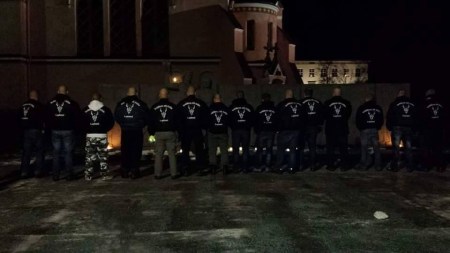 Members of the paramilitary movement known as the Soldiers of Odin view themselves as Finnish patriots, roaming the streets of Finland, protecting against Muslim immigrant offenders. Critics accuse them of being far-right, and they may de facto be related to previous skinhead movements from the 1990s.
The Tapanila Rape
On March 9, 2015, five males gang-raped a young Finnish woman near the Tapanila railway station. The rapists were of Somali heritage and between the ages of 15-18. According to reports, the Somalis boarded the same train as the woman and began harassing her. They followed her off the train and, under cover of darkness, brutally raped her in a nearby park. They were immediately caught.
The Tapanila rape shocked the quiet suburb, which lies on the outskirts of Helsinki, and all of Finland too. Many were left wondering why these second-generation Somali citizens of Finland would carry out such a savage attack.
When news of the attack first came to light, it was published by a far-right website, and many in Finland claimed it was a false report. However, authorities soon confirmed that the rape occurred, and uproar ensued.
According to an article published by Finland Today, the Somali community feared that its members would be unfairly labelled as criminals, and racist attacks would increase. However, the article also noted that
“1,010 rapes were reported to the police in 2014, according to the Official Statistics of Finland. The number of suspected immigrants in these cases is about three times higher than of the suspected natives in relation to the population. There is no unambiguous answer to why this is the case and is yet to be researched.”
The rapists were eventually brought to trial. One was sentenced to a year and four months imprisonment, two were given one-year prison sentences and two others were acquitted. Penalties were softened due to the age of the rapists. Prosecutor Eija Velitski called the sentencing “embarrassing.” The social impact of the attack spread far and wide.
The Kempele Rape
A second attack, the so-called Kempele rape, was met with a reaction by the prime minister himself. Kempele is a small town of roughly 15,000 inhabitants, located near Oulu. It is more famously known for its innovative entrepreneurs and high levels of overall satisfaction and happiness of its residents.
On the evening of November 23, 2015, a 14-year-old girl was walking home in Kempele, when a 17-year-old immigrant from Afghanistan attacked and raped her. She was later found by locals walking through the area.
A police dog led authorities to a nearby refugee center for underage asylum seekers. “The police dog patrol followed the tracks of the suspects, which led to an apartment. From the apartment, the police caught two men who are now suspected of aggravated statutory rape and aggravated child sexual abuse,” the police said in a statement. Police could not immediately interrogate the suspects because a qualified interpreter was unavailable. The 17-year-old denied any involvement in the attack, and the second suspect was eventually freed.
The Kempele rape caused outrage in Finland. Seppo Kolehmainen, the National Police Commissioner, admitted after the attack that Finnish authorities had previously received reports of disturbances, physical altercations, thefts and inappropriate treatment of women from in and around the reception center.
The Tapanila and Kempele rape cases became fertile ground for Finnish nationalists. According to their Finnish Facebook page (their website has been taken down), the Soldiers of Odin blame “Islamist intruders” for the “uncertainty, lack of safety and crime in Finland.” The nationalist movement claims that the police have lost control and keeping order on the streets is now up to them. They say that preventing Muslim immigrants from committing crimes, especially rape, is one of their main priorities.
The Soldiers of Odin recently expanded their patrols to the city of Joensuu, in Eastern Finland. Paradoxically, the National Police Commissioner expressed his support for this type of self-organized behavior by the Finnish people. Some liberal Finns have accused the commissioner of racism and have demanded his dismissal.
Finland is a peaceful society, and many Finns are afraid of the consequences of the latest wave of immigration. However, due to political correctness and their own national character, most Finns abstain from openly expressing their concerns. But now the curtain of silence and political correctness has been fractured.
Finnish culture, law and policy encourage all people to live together despite cultural or ethnic difficulties. However, this can only go so far. Finns are now demanding action. The government must “do something” to show that Finland is still safe and to limit immigration.
________________________
[1] There is also a minority of the Swedish-speaking Finns (about 5% of the population), as well as a Russian minority (about 1.5%). For five centuries, Finland had been occupied by Sweden (by 1809). Later, it was a part of the Russian Empire (until 1917).
[2] The victory of two EU-skeptic parties over the EU-enthusiastic and pro-immigrant Kokoomus Party says much about the feelings of injustice felt by the Finnish public. But while Stubb’s Kokoomus joined the governmental coalition with Soini and Sipilä, its position is weak. Today, the Finnish government is at a crossroads. Tensions are running high and beginning slowly to fracture the nationalists, led by Soini’s party.
Can the establishment trump Trump? Israel Hayom, Boaz Bismuth, March 6, 2016
Some in the Republican establishment are playing with fire. It is plain obvious that they would like to deny Donald Trump the party’s nomination, and they have every right to try to do so.
But this onslaught on Trump — led by GOP big guns, along with its two most recent presidential nominees, Mitt Romney and John McCain — could backfire and turn the real estate mogul into a political martyr. They face an excruciating dilemma: how to drive home the notion that Trump is unfit to be president even as the public rallies behind him?
Some in the GOP establishment failed to pick up the political undercurrents among rank-and-filed Republicans during the first few months of the campaign. This helped Trump’s ascent. But the establishment may still be oblivious to what GOP voters want. As a result of this disconnect, they may actually help him seal the deal. Saturday’s votes in Kansas, Kentucky, Louisiana and Maine could provide insight on the way forward. Remember, so far every attack on Trump has helped him.
Unlike the Democratic front-runner, Hillary Clinton, Trump has yet to run away with the delegates, despite having momentum on his side and winning 10 of the 15 states that held primaries (not including Saturday’s votes).
Before there was Trump, it was Texas Sen. Ted Cruz who was hated by the party’s big wigs. In fact, Cruz has yet to be endorsed by any of his colleagues in the Senate because of the bad rapport he has with the people in Washington. Nevertheless, in states where primaries have been closed (meaning, only registered Republicans can vote, like those on Saturday), Cruz has fared well.
At first, the establishment couldn’t decide between Florida Sen. Marco Rubio and former Florida Governor Jeb Bush; then it came out against Cruz; and all the while, it ignored Trump. Now the establishment has a conundrum on its hands: How do you attack two unwanted front-runners (the first of the two is the most pressing problem)? Former Arkansas Governor Mike Huckabee, an also-ran in this cycle and in 2008, has warned the establishment not to meddle with the process. “Let’s remember, we have an election process and not a selection process,” he said recently.
Republican voters have viewed the GOP establishment’s efforts with scorn and may very well set the house ablaze. In fact, 78% of Trump supporters say they would continue to back him no matter what he does. On Super Tuesday, Trump garnered almost 70% of the vote among those who said they wanted an outsider as their next president.
Rubio is not an outsider; neither is Cruz. The outsider is Trump. Trump has bested his opponents in virtually every possible measure. This only adds to his success and exacerbates the party’s headache.
The establishment’s efforts may very well be a case too much, too late. Perhaps the Republican voters truly are fed up with Washington; perhaps they truly are disappointed by the economy and view the billionaire as their savior (or at the very least, someone who can punish Washington). The establishment enlisted the help of Romney, who has become the face of the anti-Trump campaign. But Romney, lest you forget, lost to President Barack Obama in 2012 and to McCain in 2008.
These elections are about being a winner. They are about making America win again. Romney is not quite the right person. Perhaps the establishment has no choice but to attack. It is now or never. We are likely to see more surprises in this race, but for the time being, the campaign to stop Trump is the biggest story.
Let’s hope the Republican leaders don’t forget who their real adversary is. Judging from how they have conducted themselves, they could very well start viewing Hillary Clinton as their big savior. By doing so, they will have severed their ties with the GOP rank and file for good.
Former UK Ambassador To Syria: US/UK Foreign Policy Is Doomed, Even Corrupt Tyler Durden’s picture
by Tyler Durden on 03/04/2016 22:25 -0500
Source: Former UK Ambassador To Syria: US/UK Foreign Policy Is Doomed, Even Corrupt | Zero Hedge
Authored by Eric Zuesse,
Peter Ford, who was the UK’s Ambassador in Syria during 2003-2006, was asked by the BBC in their “The Big Questions” interview on February 14th, whether the current Syrian President Bashar al-Assad would have to be a part of the solution in that country after the war is over, and Ambassador Ford said:
“I think sadly, but inevitably, he is. Realistically, Assad is not going to be overthrown. This becomes more clear with every day that passes. Western analysts have been indulging in wishful thinking for 5 years; it’s time to get real, we owe it to the Syrian people to be much more realistic and hard headed about this. The West has to stop propping up the so-called ‘moderate opposition’, which is not moderate at all.”
This was quoted by Almasdar News on February 18th, which went on to note that,
“The frustrated interviewer asked Mr. Ford about ‘what we should have done,’ and he responded that ‘we should have backed off, we should have not tried to overthrow the regime.’ Mr. Ford eloquently added that this policy has been ‘like a dog returning to vomit.’”
The video of the interview below showed him making that statement in this context:
The interviewer was clearly anti-Assad, and Ford responded with evident anger by noting (starting at 2:55 on the video) the shocking fact that:
“In Aghanistan, Iraq, Libya, like a dog returning to vomit, we go back to [and the audience already was started to clap here], we never saw a secular Arab regime that we didn’t want to overthrow.”
He was saying there that we support only non-secular regimes, sectarian regimes, in Arabia, this meaning fundamentalist Sunni governments — especially Saudi Arabia, Qatar, Kuwait, UAE, the very same regimes that even the U.S. Secretary of State acknowledged in a 2009 cable that was wikileaked, are the chief regimes that are funding Al Qaeda, ISIS and other jihadist groups. Ford was noting that the United States and UK strive to keep in power those governments, the ones that are led by royal families that supply the bulk of funding for jihadist groups — jihadists who perpetrate terrorism in the United States and Europe. “We never saw a secular Arab regime that we didn’t want to overthrow”: Ambassdor Ford was so bold as to imply that our governments are supporting, under the table, the very same ruling families that they know to be funding (as that cable only vaguely referred to them) “Sunni terrorist groups worldwide” (which includes in Western countries, too).
The BBC’s interviewer ignored that statement; he wasn’t struck by it, such as to ask: “Why are we supporting the chief funders of Islamic jihad? Why are we overthrowing (or in Syria are trying to overthrow) a secular regime, against which we join foreign jihadist groups in order to overthrow that non-sectarian regime; why are these dogs, as you call the U.S. and UK, returning time and again to that vomit?”
This was a live interview program, and so the BBC censors weren’t able to eliminate Ambassador Ford’s responses from the interview; but, instead, the interviewer did his best to interrupt and to talk over Ford’s shocking — and shockingly truthful — assertions about the government (ours) that supposedly represent our interests (and not the interests of Western oil companies etc.). Ford will probably not be invited again to be on live television in the West to air his views about Syria.
Ford’s evident anger at what’s going on, and at the media’s resistance to letting the public know about the reality, appeared to reach near to the edge of his blurting out that ulterior motives have to be behind this addiction to “vomit” — but he was a professional diplomat, and so he was able to restrain himself there.
The U.S. Secretary of State who had specifically requested the fundamentalist-Islamic Arab ‘allies’ to stop funding terrorism was Hillary Clinton, the leading candidate now contending for the Democratic Party’s Presidential nomination. Here she was, expressing her current view regarding Syria, in a recent debate against her Democratic Party opponent, Senator Bernie Sanders:
QUESTIONER: In respect to when you take out Syrian President Bashar al-Assad. Right now or do you wait? Do you tackle ISIS first? You have said, Secretary Clinton, that you come to the conclusion that we have to proceed on both fronts at once. We heard from the senator just this week that we must put aside the issue of how quickly we get rid of Assad and come together with countries, including Russia and Iran, to destroy ISIS first. Is he wrong?
CLINTON: I think we’re missing the point here. We are doing both at the same time.
QUESTIONER: But that’s what he’s saying, we should put that aside for now and go after ISIS.
CLINTON: Well, I don’t agree with that.
She’s still (now after five years, and even though she knows that we’re supporting jihadist-backing Arabic royal families and their Shariah-law regimes) comes back to that “vomit”: that “we never saw a secular Arab regime that we didn’t want to overthrow.” She’s an example of this addiction, to that “vomit.”
She does this even though, in October 2014, the man who had collected the mega-donations to Al Qaeda (all of which had been in cash) had detailed, under oath, in a U.S. court proceeding, that the Saud family were the main people who paid the “salaries” of the 9/11 terrorists. The Saud family are now the chief backers of the overthrow-Assad campaign. Do politicians such as Clinton actually represent the Sauds? It’s not only the Bush family who do.
What’s exhibited here is a double-scandal: first, that a person such as that would even be a Democratic Party candidate for the U.S. Presidency (and Jeb Bush shares Hillary Clinton’s foreign policy prescriptions, though he’s virtually certain not to win the Republican Presidential nomination); and, second, that the Western press try to avoid, as much as possible, to expose the fact that this is, indeed, “vomit,” and avoid to explain to their audience the very corrupt governmental and news-media system that enables people such as Ms. Clinton to become and remain a leading Presidential candidate in the United States. Clearly, a person like that isn’t qualified to be in government at all; she’s corrupt, or else incredibly stupid. And no one thinks she’s that stupid. But lots of people accuse her of being corrupt.




 anneinpt
 artaxes
 danmillerinpanama
 davidking1530
 Peter Hofman
 Joseph Wouk
 Peter
Peter Louisiana Steve
 WarSclerotic
Recent Comments