Eliminate Top Muslim Jihadi Threat with Sensible Trampling Laws Now, Scott Ott at PJ TV via You Tube, December 18, 2015
Islamic Jihad: Symptom of a Western Cause, Raymondibrahim.com, December 16, 2015
First published at PJ Media
Islam is terrorizing the world, not because it can, but because the West allows it to.
************************
As someone specializing in Islamic jihadism, one would expect I’d have much to say immediately after jihadi attacks of the sort that recently occurred in San Bernardino, or Paris, or Mali, where a total of about 180 dead. Ironically, I don’t: such attacks are ultimately symptoms of what I do deem worthy of talk, namely, root causes. (What can one add when a symptom of the root cause he has long warned against occurs other than “told you so”?)

So what is the root cause of jihadi attacks? Many think that the ultimate source of the ongoing terrorization of the West is Islam. Yet this notion has one problem: the Muslim world is immensely weak and intrinsically incapable of being a threat. That every Islamic assault on the West is a terrorist attack—and terrorism, as is known, is the weapon of the weak—speaks for itself.
This was not always the case. For approximately one thousand years, the Islamic world was the scourge of the West. Today’s history books may refer to those who terrorized Christian Europe as Arabs, Saracens, Moors, Ottomans, Turks, Mongols, or Tatars[1]—but all were operating under the same banner of jihad that the Islamic State is operating under.
No, today, the ultimate enemy is within. The root cause behind the nonstop Muslim terrorization of the West is found in those who stifle or whitewash all talk and examination of Muslim doctrine and history; who welcome hundreds of thousands of Muslim migrants while knowing that some are jihadi operatives and many are simply “radical”; who work to overthrow secular Arab dictators in the name of “democracy” and “freedom,” only to uncork the jihad suppressed by the autocrats (the Islamic State’s territory consists of lands that were “liberated” in Iraq, Libya, and Syria by the U.S. and its allies).
So are Western leaders and politicians the root cause behind the Islamic terrorization of the West?
Close—but still not there yet.
Far from being limited to a number of elitist leaders and institutions, the Western empowerment of the jihad is the natural outcome of postmodern thinking—the real reason an innately weak Islam can be a source of repeated woes for a militarily and economically superior West.
Remember, the reason people like French President Francois Hollande, U.S. President Barack Hussein Obama, and German Chancellor Angela Merkel are in power—three prominent Western leaders who insist that Islam is innocent of violence and who push for Muslim immigration—is because they embody a worldview that is normative in the West.
In this context, the facilitation of jihadi terror is less a top down imposition and more a grass root product of decades of erroneous, but unquestioned, thinking. (Those who believe America’s problems begin and end with Obama would do well to remember that he did not come to power through a coup but that he was voted in—twice. This indicates that Obama and the majority of voting Americans have a shared, and erroneous, worldview. He may be cynically exploiting this worldview, but that doesn’t change the fact that it’s because this warped worldview is mainstream that he can exploit it in the first place.)
Western empowerment of the jihad is rooted in a number of philosophies that have metastasized into every corner of social life, becoming cornerstones of postmodern epistemology. These include the doctrines of relativism and multiculturalism on the one hand, and anti-Western, anti-Christian sentiment on the other.
Taken together, these cornerstones of postmodern, post-Christian thinking hold that there are no absolute truths and thus all cultures are fundamentally equal and deserving of respect. If any Western person wants to criticize a civilization or religion, then let them look “inwardly” and acknowledge their European Christian heritage as the epitome of intolerance and imperialism.
Add to these a number of sappy and silly ideals—truth can never be uttered because it might “hurt the feelings” of some (excluding white Christians who are free game), and if anything, the West should go out of its way to make up for its supposedly historic “sins” by appeasing Muslims until they “like us”—and you have a sure recipe for disaster, that is, the current state of affairs.
Western people are bombarded with these aforementioned “truths” from the cradle to the grave—from kindergarten to university, from Hollywood to the news rooms, and now even in churches—so that they are unable to accept and act on a simple truism that their ancestors well knew: Islam is an inherently violent and intolerant creed that cannot coexist with non-Islam (except insincerely, in times of weakness).
The essence of all this came out clearly when Obama, in order to rationalize away the inhuman atrocities of the Islamic State, counseled Americans to get off their “high horse” and remember that their Christian ancestors have been guilty of similar if not worse atrocities. That he had to go back almost a thousand years for examples by referencing the crusades and inquisition—both of which have been completely distorted by the warped postmodern worldview, including by portraying imperialist Muslims as victims—did not matter to America’s leader.
Worse, it did not matter to most Americans. The greater lesson was not that Obama whitewashed modern Islamic atrocities by misrepresenting and demonizing Christian history, but that he was merely reaffirming the mainstream narrative that Americans have been indoctrinated into believing. And thus, aside from the usual ephemeral and meaningless grumblings, his words—as with many of his pro-Islamic, anti-Christian comments and policies—passed along without consequence.
—–
Once upon a time, the Islamic world was a super power and its jihad an irresistible force to be reckoned with. Over two centuries ago, however, a rising Europe—which had experienced over one millennium of jihadi conquests and atrocities—defeated and defanged Islam.
As Islam retreated into obscurity, the post-Christian West slowly came into being. Islam didn’t change, but the West did: Muslims still venerate their heritage and religion—which impels them to jihad against the Western “infidel”—whereas the West learned to despise its heritage and religion, causing it to be an unwitting ally of the jihad.
Hence the current situation: the jihad is back in full vigor, while the West—not just its leaders, but much of the populace—facilitates it in varying degrees. Nor is this situation easily remedied. For to accept that Islam is inherently violent and intolerant is to reject a number of cornerstones of postmodern Western thinking that far transcend the question of Islam. In this context, nothing short of an intellectual/cultural revolution—where rational thinking becomes mainstream—will allow the West to confront Islam head on.
But there is some good news. With every Islamic attack, the eyes of more and more Western people are opened to the true nature of Muhammad’s religion. That this is happening despite generations of pro-Islamic indoctrination in the West is a testimony to the growing brazenness of the jihad.
Yet it still remains unclear whether objective thinking will eventually overthrow the current narrative of relativism, anti-Westernism, and asinine emotionalism.
Simply put, celebrating multiculturalism and defeating the jihad is impossible.
However, if such a revolution ever does take place, the Islamic jihad will be easily swept back into the dustbin of history. For the fact remains: Islam is terrorizing the world, not because it can, but because the West allows it to.
Column One: Rubio, Cruz and US global leadership, Jerusalem Post, Caroline Glick, December 17, 2015
For the first time in a decade, Americans are beginning to think seriously about foreign policy; But are they too late?
At some point between 2006 and 2008, the American people decided to turn their backs on the world. Between the seeming futility of the war in Iraq and the financial collapse of 2008, Americans decided they’d had enough.
In Barack Obama, they found a leader who could channel their frustration. Obama’s foreign policy, based on denying the existence of radical Islam and projecting the responsibility for Islamic aggression on the US and its allies, suited their mood just fine. If America is responsible, then America can walk away. Once it is gone, so the thinking has gone, the Muslims will forget their anger and leave America alone.
Sadly, Obama’s foreign policy assumptions are utter nonsense. America’s abandonment of global leadership has not made things better. Over the past seven years, the legions of radical Islam have expanded and grown more powerful than ever before. And now in the aftermath of the jihadist massacres in Paris and San Bernadino, the threats have grown so abundant that even Obama cannot pretend them away.
As a consequence, for the first time in a decade, Americans are beginning to think seriously about foreign policy. But are they too late? Can the next president repair the damage Obama has caused? The Democrats give no cause for optimism. Led by former secretary of state Hillary Clinton, the Democratic presidential hopefuls stubbornly insist that there is nothing wrong with Obama’s foreign policy. If they are elected to succeed him, they pledge to follow in his footsteps.
On the Republican side, things are more encouraging, but also more complicated.
Republican presidential hopefuls are united in their rejection of Obama’s policy of ignoring the Islamic supremacist nature of the enemy. All reject the failed assumptions of Obama’s foreign policy.
All have pledged to abandon them on their first day in office. Yet for all their unity in rejecting Obama’s positions, Republicans are deeply divided over what alternative foreign policy they would adopt.
This divide has been seething under the surface throughout the Obama presidency. It burst into the open at the Republican presidential debate Wednesday night.
The importance of the dispute cannot be overstated.
Given the Democrats’ allegiance to Obama’s disastrous policies, the only hope for a restoration of American leadership is that a Republican wins the next election. But if Republicans nominate a candidate who fails to reconcile with the realities of the world as it is, then the chance for a reassertion of American leadership will diminish significantly.
To understand just how high the stakes are, you need to look no further than two events that occurred just before the Wednesday’s Republican presidential debate.
On Tuesday, the International Atomic Energy Agency voted to close its investigation of Iran’s nuclear program. As far as the UN’s nuclear watchdog is concerned, Iran is good to go.
The move is a scandal. Its consequences will be disastrous.
The IAEA acknowledges that Iran continued to advance its illicit military nuclear program at least until 2009. Tehran refuses to divulge its nuclear activities to IAEA investigators as it is required to do under binding UN Security Council resolutions.
Iran refuses to allow IAEA inspectors access to its illicit nuclear sites. As a consequence, the IAEA lacks a clear understanding of what Iran’s nuclear status is today and therefore has no capacity to prevent it from maintaining or expanding its nuclear capabilities. This means that the inspection regime Iran supposedly accepted under Obama’s nuclear deal is worthless.
The IAEA also accepts that since Iran concluded its nuclear accord with the world powers, it has conducted two tests of ballistic missiles capable of carrying nuclear weapons, despite the fact that it is barred from doing so under binding Security Council resolutions.
But really, who cares? Certainly the Obama administration doesn’t. The sighs of relief emanating from the White House and the State Department after the IAEA decision were audible from Jerusalem to Tehran.
The IAEA’s decision has two direct consequences.
First, as Iranian President Hassan Rouhani said Wednesday, it paves the way for the cancellation of the UN’s economic sanctions against Iran within the month.
Second, with the IAEA’s decision, the last obstacle impeding Iran’s completion of its nuclear weapons program has been removed. Inspections are a thing of the past. Iran is in the clear.
As Iran struts across the nuclear finish line, the Sunni jihadists are closing their ranks.
Hours after the IAEA vote, Turkey and Qatar announced that Turkey is setting up a permanent military base in the Persian Gulf emirate for the first time since the fall of the Ottoman Empire a century ago. Their announcement indicates that the informal partnership between Turkey and Qatar on the one side, and Hamas, the Muslim Brotherhood and Islamic State on the other hand, which first came to the fore last year during Operation Protective Edge, is now becoming a more formal alliance.
Just as the Obama administration has no problem with Iran going nuclear, so it has no problem with this new jihadist alliance.
During Operation Protective Edge, the administration supported this jihadist alliance against the Israeli-Egyptian partnership. Throughout Hamas’s war against Israel, Obama demanded that Israel and Egypt accept Hamas’s cease-fire terms, as they were presented by Turkey and Qatar.
Since Operation Protective Edge, the Americans have continued to insist that Israel and Egypt bow to Hamas’s demands and open Gaza’s international borders. The Americans have kept up their pressure on Israel and Egypt despite Hamas’s open alliance with ISIS in the Sinai Peninsula.
So, too, the Americans have kept Egyptian President Abdel Fattah al-Sisi at arm’s length, and continue to insist that the Muslim Brotherhood is a legitimate political force despite Sisi’s war against ISIS. Washington continues to embrace Qatar as a “moderate” force despite the emirate’s open support for the Muslim Brotherhood, Hamas and ISIS.
As for Turkey, it appears there is nothing Ankara can do that will dispel the US notion that it is a credible partner in the war on terror. Since 2011, Turkey has served as Hamas’s chief state sponsor, and as ISIS’s chief sponsor. It is waging war against the Kurds – the US’s strongest ally in its campaign against ISIS.
In other words, with the US’s blessing, the forces of both Shi’ite and Sunni jihad are on the march.
And the next president will have no grace period for repairing the damage.
Although the Republican debate Wednesday night was focused mainly on the war in Syria, its significance is far greater than one specific battlefield.
And while there were nine candidates on the stage, there were only two participants in this critical discussion.
Sens. Marco Rubio and Ted Cruz faced off after weeks of rising contention between their campaigns.
In so doing, they brought the dispute that has been seething through their party since the Bush presidency into the open.
Rubio argued that in Syria, the US needs to both defeat ISIS and overthrow President Bashar Assad.
Cruz countered that the US should ignore Assad and concentrate on utterly destroying ISIS. America’s national interest, he said, is not advanced by overthrowing Assad, because in all likelihood, Assad will be replaced by ISIS.
Cruz added that America’s experience in overthrowing Middle Eastern leaders has shown that it is a mistake to overthrow dictators. Things only got worse after America overthrew Saddam Hussein and supported the overthrow of Muammar Gaddafi and Hosni Mubarak.
For his part, Rubio explained that since Assad is Iran’s puppet, leaving him in power empowers Iran. The longer he remains in power, the more control Iran will wield over Syria and Lebanon.
The two candidates’ dispute is far greater than the question of who rules Syria. Their disagreement on Syria isn’t a tactical argument. It goes to the core question of what is the proper role of American foreign policy.
Rubio’s commitment to overthrowing Assad is one component of a wider strategic commitment to fostering democratic governance in Syria. By embracing the cause of democratization through regime change, Rubio has become the standard bearer of George W. Bush’s foreign policy.
Bush’s foreign policy had two seemingly contradictory anchors – a belief that liberal values are universal, and cultural meekness.
Bush’s belief that open elections would serve as a panacea for the pathologies of the Islamic world was not supported by empirical data. Survey after survey showed that if left to their own devices, the people of Muslim world would choose to be led by Islamic supremacists. But Bush rejected the data and embraced the fantasy that free elections lead a society to embrace liberal norms of peace and human rights.
As to cultural meekness, since the end of the Cold War and with the rise of political correctness, the notion that America could call for other people to adopt American values fell into disrepute. For American foreign policy practitioners, the idea that American values and norms are superior to Islamic supremacist values smacked of cultural chauvinism.
Consequently, rather than urge the Islamic world to abandon Islamic supremacism in favor of liberal democracy, in their public diplomacy efforts, Americans sufficed with vapid pronouncements of love and respect for Islam.
Islamic supremacists, for their part stepped into the ideological void without hesitation. In Iraq, the Iranian regime spent hundreds of millions of dollars training Iranian-controlled militias, building Iranian-controlled political parties and publishing pro-Iranian newspapers as the US did nothing to support pro-American Iraqis.
Although many Republicans opposed Bush’s policies, few dared make their disagreement with the head of their party public. As a result, for many, Wednesday’s debate was the first time the foundations of Bush’s foreign policy were coherently and forcefully rejected before a national audience.
If Rubio is the heir to Bush, Cruz is the spokesman for Bush’s until now silent opposition. In their longheld view, democratization is not a proper aim of American foreign policy. Defeating America’s enemies is the proper aim of American foreign policy.
Rubio’s people claim that carpet bombing ISIS is not a strategy. They are right. There are parts missing from in Cruz’s position on Syria.
But then again, although still not comprehensive, Cruz’s foreign policy trajectory has much to recommend it. First and foremost, it is based on the world as it is, rather than a vision of how the world should be. It makes a clear distinction between America’s allies and America’s enemies and calls for the US to side with the former and fight the latter.
It is far from clear which side will win this fight for the heart of the Republican Party. And it is impossible to know who the next US president will be.
But whatever happens, the fact that after their seven-year vacation, the Americans are returning the real world is a cause for cautious celebration.
Source: Kerry’s Misguided Fury Against Netanyahu – Opinion – Haaretz – Israeli News Source Haaretz.com
( Note: This is from the ultra-leftist Haaretz… – JW )
The failures of U.S. foreign policy are, to quite an extent, the failures of this diligent man, who has been revealed as a stubborn and naïve doctrinaire.
Israel Harel Dec 18, 2015 1:21 AM

U.S. Secretary of State John Kerry has been venting his fury at Prime Minister Benjamin Netanyahu. AP
About two years ago, at the height of the Sisyphean efforts to renew negotiations between Israel and the Palestinians, a frustrated United States Secretary of State John Kerry arrived in Munich, where the annual “security conference” was taking place. In a tough speech, he warned that if talks between Israel and the Palestinians fail, Israel will run up against harsh international responses, including boycott.
Since the failure of his efforts to bring Palestinian Authority President Mahmoud Abbas back to the negotiating table, Kerry has vented his fury against Prime Minister Benjamin Netanyahu. He spilled a little of this bile on Netanyahu about two weeks ago at the Saban Forum: Immune to the radical changes in the region, which are obviously in Israel’s favor, Kerry once again prophesied loss of identity and boycott. This week, in an interview with the New Yorker, he raised the rhetoric and said, in fury: “You’re going to be one big fortress?” That came precisely on the day when Sultan Erdogan took his first step on the Walk to Canossa.
The failures of foreign policy – in all realms – of the world power with such great responsibility for the world’s fate are, to quite an extent, the failures of this diligent man, who has been revealed as a stubborn and naïve doctrinaire.
The week during which Kerry presented his vision of isolation and boycott, the United Arab Emirates established official ties with Israel. State Department intelligence can surely tell him that additional Arab countries, larger and more important than the UAE, have contacts with Israel. The prediction (of which the Israeli media is fanning the flames with masochistic pleasure) of the “world boycott against Israel” has disappeared. A good many of the largest firms in the world, especially in high tech, alternative energy and advanced agriculture, are clamoring at the door of the “apartheid state.” The academic world, too, with some exceptions, has utterly rejected any form of academic boycott against Israel.
The resolutions at last week’s climate conference strengthened us significantly in the international arena, where we were to already have turned white as snow with leprosy. If the resolutions regarding alternative energy are implemented, Israel’s bitter rivals (like Iran), as well as those who are no longer significant rivals, such as Saudi Arabia, stand to lose, not only petro-dollars but diplomatic influence and domestic stability. To survive, some of these regimes will find a way – some of them already have – to obtain assistance from Israel in the security realm.
Syrian President Bashar Assad, Kerry told The New Yorker, had been ready for peace in exchange for the Golan. Let’s say. According to Kerry, Netanyahu was, once again, the obstinate one. It is easy to imagine what hell would have been let loose if Islamic State, Hezbollah and the rest of the lovers of Israel were to have dipped their feet in the Sea of Galilee.
Sitting and waiting, Kerry continues, will only make Israel’s international situation worse. As has been proven above, Israel’s international situation is actually getting better – and dramatically so. Instead of conceding this, Kerry and many in the world and Israel, are conveying frustration. The prophecies of boycott and destruction have been shown to be baseless, while precisely Netanyahu’s policy in Judea and Samaria of “sit and do nothing,” which I do not support either, is proving itself. When the survival of regimes is at stake, the “occupation” no longer constitutes a significant impediment to utilitarian ties between Arab countries and Israel. The world, especially the Arab world, is changing before our very eyes, but the prophets of boycott and isolation in the world and in Israel are preaching the same old message.
Will The West Ease The Sanctions Even Though Iran Is Not Meeting Its JCPOA Obligations? MEMRI, A. Savyon and Y. Carmon* December 17, 2015
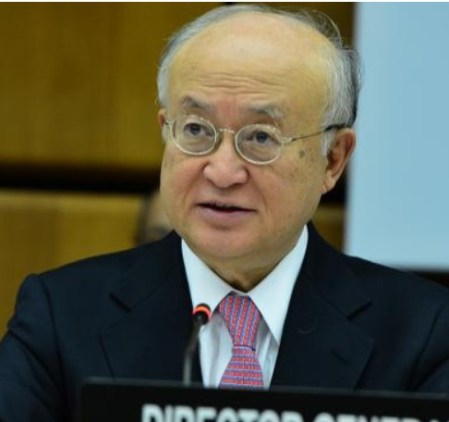
According to various reports, Iran is holding contacts with the U.S. vis-à-vis implementation of the JCPOA. On November 29, 2015, Iranian Foreign Minister Javad Zarif announced that the U.S. must do its part, that is, lift the sanctions, even before Iran meets its obligations – expressly contradicting the JCPOA.
*********************
Introduction
With the International Atomic Energy Agency (IAEA) Board of Governors’ closure, on December 15, 2015, of Iran’s PMD (Possible Military Dimensions) dossier, the JCPOA is now back on track for the implementation that began on Adoption Day, October 18, 2015.
It is now Iran’s turn to meet its JCPOA obligations, which include removing nine tons of low-level enriched uranium from the country, dismantling centrifuges so that only 6,000 active ones remain, pouring concrete into the core of the nuclear reactor at Arak in a way that will prevent it from being used for producing plutonium, adopting the Additional Protocol of the Nuclear Non-Proliferation Treaty, and more.
Once the IAEA confirms that Iran has done this, Implementation Day will be declared; under it, the lifting of some of the sanctions on Iran and the suspension of others will take place, as promised by the U.S. and European countries on October 19, 2015.
However, at this point, Iran is providing only a show of making progress in its implementation of its obligations. Inactive centrifuges are being transferred from site to site, and not a single active centrifuge has yet been dismantled. Iran has reached agreements with Russia to store its enriched uranium, and documents have been signed with the superpowers for changing the designation of the Arak reactor. But so far Iran has actually met none of its obligations.[1]
Holding back Iran’s implementation is the October 21, 2015 letter from Iranian Supreme Leader Ali Khamenei to Iranian President Hassan Rohani setting nine new conditions that must be met first.
According to various reports, Iran is holding contacts with the U.S. vis-à-vis implementation of the JCPOA. On November 29, 2015, Iranian Foreign Minister Javad Zarif announced that the U.S. must do its part, that is, lift the sanctions, even before Iran meets its obligations – expressly contradicting the JCPOA.[2] Zarif also announced, upon his arrival in New York on December 17, 2015, that there is a possibility that he will meet with U.S. Secretary of State John Kerry “for discussions on the implementation of the JCPOA.”[3]
Could The U.S. And Europe Ease Or Lift Sanctions Even If Iran Does Not Meet Its JCPOA Obligations?
U.S. representatives have given no indication that the sanctions will be eased or lifted if Iran does not meet its obligations under the JCPOA. However, in his December 15, 2015 statements, when he presented his PMD report to the IAEA Board of Governors, IAEA secretary-general Yukiya Amano hinted at such a possibility. He said: “First, Iran needs to complete the necessary preparatory steps to start implementing its nuclear-related commitments under the Joint Comprehensive Plan of Action agreed with the E3/EU+3 countries. JCPOA Implementation Day will occur when the Agency has verified that Iran has implemented measures specified in that agreement. I will inform the Board promptly when the Agency has verified that the preparatory steps have been completed [emphasis MEMRI’s].”[4]
The term “preparatory steps” does not appear in the JCPOA. It is not reasonable to suppose that the West would be satisfied with mere “preparatory steps” on Iran’s part instead of full implementation of its obligations before sanctions are eased.
It should also be noted that Amano said on the same occasion: “All parties must fully implement their commitments under the JCPOA.”[5]
At this stage, it is unclear whether Amano’s use of the words “preparatory steps” instead of the words “fully implement… commitments under the JCPOA” represents intentions on the part of the U.S. administration; it could be nothing more than a general statement. This will become clear in the near future.
In the meantime, in his December 16, 2015 address to the nation, Iranian President Rohani effusively praised the JCPOA and Iran’s gains under it, and stated that in “January” the sanctions on Iran would be lifted.[6]
However, “January” is not a reasonable time frame. Iran would not succeed in completing all its tasks in such a short time, and IAEA would certainly not be able to submit a report verifying it had done so by then.
*A. Savyon is Director of the MEMRI Iran Media Project; Y. Carmon is President of MEMRI.
Endnotes:
[1] MEMRI Inquiry & Analysis No. 1209, Power Struggle Between Iranian Supreme Leader Khamenei’s Ideological Camp And Rafsanjani’s Pragmatic Camp Intensifies – Part I: Khamenei Blocks Iran’s Implementation Of The JCPOA, December 11, 2015.
[2] See Zarif’s statements in MEMRI Inquiry & Analysis No. 1209, Power Struggle Between Iranian Supreme Leader Khamenei’s Ideological Camp And Rafsanjani’s Pragmatic Camp Intensifies – Part I: Khamenei Blocks Iran’s Implementation Of The JCPOA, December 11, 2015.
[3] ISNA (Iran), December 17, 2015. It was also reported that secret talks were held in Oman in November 2014 between U.S. Energy Secretary Ernest Moniz and Atomic Energy Agency of Iran (AEAO) director Ali Akbar Salehi, on the possibility that Kazakhstan would be the country to which Iran would sent its enriched uranium, instead of Russia. The Wall Street Journal, December 8, 2015.
[4] Iaea.org/newscenter/statements/introductory-statement-board-governors-67, December 15, 2015.
[5] Iaea.org/newscenter/statements/introductory-statement-board-governors-67, December 15, 2015.
[6] President Rohani said: “I announce to the Iranian people that in January the sanctions will be lifted; thus, one of the 11th government’s election promises to the people will be kept, the sanctions will be lifted from the feet of the Iranian economy, and the way will be opened for more cooperation with the world.” President.ir (Iran), December 16, 2015.
US continues to push for negotiations with Taliban despite direct ties to al Qaeda, Long War Journal, Bill Roggio and Thomas Joscelyn, December 17, 2015
 Images of Siraj Haqqani, one of the Taliban’s two deputy emirs, from a US government wanted poster.
The US government and military continue to seek a negotiated settlement with the Afghan Taliban despite the group’s continuing support for al Qaeda and the increased leadership role the Haqqani Network plays in the Afghan insurgency.
The Department of Defense asserts in its biannual Enhancing Security and Stability in Afghanistan report, released earlier this week, that “reconciliation and a political settlement with the Taliban” is a key part of its strategy to end the conflict in Afghanistan.
“The U.S. and Afghan governments agree that the best way to ensure lasting peace and security in Afghanistan is reconciliation and a political settlement with the Taliban,” the report says in its very first section, titled US Strategy in Afghanistan.
The report then states that to achieve a political settlement, the Taliban must take the very steps the group has refused for 15 years: denounce al Qaeda and submit to Afghanistan’s constitution.
“Success of an Afghan-led peace process will require the Taliban and other armed opposition groups to end violence, break ties with international terrorist groups, and accept Afghanistan’s constitution, including its protections for the rights of women and under-represented groups.”
The Pentagon report continues to advocate for reconciliation with the Taliban despite the fact that al Qaeda’s emir, Ayman al Zawahiri, swore and oath of allegiance to the new leader of the Taliban, Mullah Akhtar Mohammad Mansour, after he was publicly named successor to Mullah Omar over the summer. Mansour accepted Zawahiri’s oath just days after it was given.
Shockingly, the Pentagon report made no mention of Zawahiri’s oath and Mansour’s acceptance in its 90-page report. The report did note that the emir of the Islamic Movement of Uzbekistan swore allegiance to the Islamic State’s leader, Abu Bakr al Baghdadi.
The Pentagon also continues to press for negotiations despite the fact that Sirajuddin Haqqani, the operational commander of the Haqqani Network – a powerful Taliban subgroup that is closely tied to al Qaeda and backed by Pakistan’s military and intelligence establishment – was appointed as one of Mansour’s two deputies. Siraj is effectively the Taliban’s military commander. The US military does recognize that Siraj’s “elevation” in the Taliban leadership is problematic.
“The elevation of Haqqani Network leader Siraj Haqqani as Taliban leader Mullah Mansour’s deputy signals that the Haqqani Network will remain a critical and lethal component of the overall Taliban-led insurgency,” the report states.
“Of the groups involved in the Taliban-led insurgency, the Haqqani Network remains the greatest threat to U.S., coalition, and Afghan forces and continues to be the most critical enabler of al Qaeda,” the report continues. “Haqqani Network leader Siraj Haqqani’s elevation as Taliban leader Mullah Mansour’s deputy has further strengthened the Haqqani Network’s role in the Taliban-led insurgency. The Haqqani Network and affiliated groups share the goals of expelling U.S. and coalition forces, overthrowing the Afghan government, and re-establishing an Islamic Emirate of Afghanistan.”
Siraj’s tight working relationship with al Qaeda has been confirmed by multiple sources. Files recovered in Osama bin Laden’s Abbottabad compound revealed the depth of the collusion. [See LWJ report, The Taliban’s new leadership is allied with al Qaeda.]
Since accepting Zawahiri’s oath of loyalty and appointing Siraj as a top deputy, the Taliban have not backed off from either party. In early September the Taliban released a video that highlighted Siraj’s importance to the group as well as Mansour’s accepting Zawahiri’s pledge. In early September, the Taliban also devoted significant space to al Qaeda leaders and pro-al Qaeda clerics eulogizing its former emir in that month’s edition of Al Sumud, the group’s official magazine.
Carson demands CAIR probe, Front Page Magazine, Matthew Vadum, December 16, 2015

GOP presidential candidate Ben Carson is demanding the federal government investigate the links that the notorious Council on American-Islamic Relations has to Islamic terrorism.
“The Department of State should designate the Muslim Brotherhood and other organizations that propagate or support Islamic terrorism as terrorist organizations, and fully investigate the Council on American-Islamic Relations as an offshoot of the Muslim Brotherhood and a supporter of terrorism,” Carson wrote in a policy paper in which he also called for a formal declaration of war against Islamic State (a.k.a. ISIS, ISIL, and Daesh).
Although political correctness prevents Democrats and many Republicans from admitting it, it is already well established that CAIR has ties to terrorism.
CAIR, which masquerades as America’s largest Muslim civil rights group, is an outpost of international jihadism. It is an enemy propaganda organization whose longstanding ties to the terrorist underworld have been exhaustively documented at DiscoverTheNetworks and elsewhere. CAIR aims to influence America’s domestic and foreign policies. CAIR wants to make America safe for Sharia law by bullying Americans into not questioning Islam, a religion-centered ideology that has been generating a body count for 1,400 years.
Accusing critics of so-called Islamophobia, a term invented by Islamists, is CAIR’s favorite method of silencing critics and opponents. It is part of a dangerous effort to discourage Americans from thinking freely and arriving at their own conclusions about Islam and mainstream the tenets of Islam in our society. The idea is to eventually make it as difficult and uncomfortable as possible to criticize the faith founded by Muhammad in the seventh century after the birth of Christ.
In the words of one critic, CAIR exists to undermine law enforcement and U.S. national security. The group’s goal “is to create as much self-doubt, hesitation, fear of name-calling, and litigation within police departments and intelligence agencies as possible so as to render such authorities ineffective in pursuing international and domestic terrorist entities.”
CAIR was founded in 1994 by Nihad Awad, Omar Ahmad, and Rafeeq Jaber. The three men, reports DiscoverTheNetworks, “had close ties to the Islamic Association for Palestine (IAP), which was established by senior Hamas operative Mousa Abu Marzook and founded as Hamas’ public relations and recruitment arm in the United States.” CAIR opened an office in the nation’s capital with a $5,000 grant from the Marzook-founded Holy Land Foundation for Relief and Development (HLF), a charity that the Bush administration shuttered in 2001 for collecting money “to support the Hamas terror organization.” CAIR called the action “unjust” and “disturbing.” In 2004 Marzook was indicted on racketeering charges related to his pro-Hamas activities. Ahmad was named as an unindicted co-conspirator in the Holy Land Foundation trial.
Ghassan Elashi, a co-founder of the Texas branch of CAIR, was convicted in 2005 of terrorism-related offenses and sentenced to 80 months in prison. CAIR civil rights director Randall Todd Royer was sentenced to 20 years imprisonment on federal weapons and explosives charges in 2004. Bassem Khafagi, a community affairs director at CAIR, was convicted in 2003 on bank and visa fraud charges and agreed to be deported to Egypt. Rabih Haddad, a fundraiser for CAIR’s chapter in Ann Arbor, Mich., was detained in 2001 after overstaying his tourist visa. Authorities found a firearm and boxes of ammunition in his home. He served 19 months in prison and was deported to Lebanon in 2003. CAIR board member Abdurahman Alamoudi was sentenced to 23 years imprisonment for funneling at least $1 million to al-Qaeda. CAIR was founded in 1994 by Nihad Awad, Omar Ahmad, and Rafeeq Jaber. The three men, reports DiscoverTheNetworks, “had close ties to the Islamic Association for Palestine (IAP), which was established by senior Hamas operative Mousa Abu Marzook and founded as Hamas’ public relations and recruitment arm in the United States.”
This is just the latest in a series of run-ins that Carson has had with CAIR.
In October, Carson called for the IRS to revoke the tax-exempt status of CAIR after it demanded he withdraw as a candidate. “CAIR is a tax-exempt nonprofit, and the IRS rules explicitly prohibit such groups from intervening in political campaigns on behalf of – or in opposition to – a candidate,” Carson said in an email to supporters.
CAIR, which labeled Carson a bigot and an Islamophobe, was upset because Carson said a Muslim should not be elected president.
“We find it interesting that Dr. Carson seeks to use a federal government agency to silence his critics and wonder if that tactic would be used to suppress First Amendment freedoms should he become president,” CAIR said at the time.
“CAIR is not in violation of any IRS regulation in that we did not ‘participate in’ or ‘intervene in’ any political campaign. We, as mandated by our mission as a civil rights organization, merely expressed the opinion of our community” that Carson’s views made him “unfit for public office.”
Obama White House press secretary Josh Earnest attacked Carson at the time saying his statement was “entirely inconsistent with the Constitution.”
“Ultimately, there will be consequences and those views will be taken into account by voters, not only in the primary, but also the general election,” Earnest said.
Anti-Islamism activist Pamela Geller defended Carson. “Electing a Muslim president would be dangerous. We have seen the Islamic pattern of previously moderate Muslims becoming devout and then aiding and abetting jihad. How could we be sure a Muslim president would not do the same?”
But at least three Republican presidential contenders took shots at Carson back then.
“You know, the Constitution specifies there shall be no religious test for public office, and I am constitutionalist,” Cruz said, citing Article VI of the Constitution, which forbids the use of a “religious test” for a candidate who sees public office.
Sen. Rand Paul (R-Ky.), echoed Cruz, and Sen. Lindsey Graham (R-S.C.) said Carson’s comments were evidence he is “not ready to be commander in chief.”
On Dec. 2 CAIR hastily arranged a press conference while the bodies of 14 American victims of jihadism in San Bernardino, Calif. were still warm in order to push a media narrative that exonerated Islam in the attack.
CAIR, which the United Arab Emirates designated a year ago as a terrorist group, got to work crafting a storyline about the mass-murdering Muslim married couple, Syed Rizwan Farook and Tashfeen Malik. As they fashioned a template for lazy, gullible, or sympathetic reporters to embrace, CAIR officials behaved as if Farook and Malik were strange outliers and bad Muslims.
CAIR-LA Executive Director Hussam Ayloush pretended Islam didn’t inspire the attack.
“We don’t know the motive. Is it work, rage-related? Is it mental illness? Is it extreme ideology? At this point it’s really unknown to us and it is too soon for us to speculate.”
Two days later, Ayloush changed his tune, blaming America for the shootings. “Let’s not forget that some of our own foreign policy, as Americans, as the West, have fueled that extremism,” he told CNN’s Chris Cuomo. “We are partly responsible. Terrorism is a global problem, not a Muslim problem. And the solution has to be global. Everyone has a role in it.”
CAIR definitely has a role in it.
The Salafis’ Daddy Warbucks: Saudi Arabia, Front Page Magazine, Rachel Ehrenfeld, December 17, 2015
(Please see also, Germany: Salafist “Aid Workers” Recruiting Refugees. — DM)

[T]he most important obstacle is the West’s decades-long willful blindness to name and shame Saudi Arabia as the biggest terror financier, as well as the Saudis’ role in the development and spread of opaque Sharia finance institutions and Islamic charities.
The spread of Salafist radical groups, such as the global Hizb ut–Tahrir,Tablighi Jamaat, and ISIS proves the effectiveness of the decades-long, $2 trillion’s worth of Saudi funding to indoctrinate Muslims everywhere, creating a large base of followers ready for further radicalization of what the West has erroneously labeled “self-radicalization.”
***********************
The first-ever global meeting of the Financial Action Task Force (FATF) network of some 200 jurisdictions over the weekend in Paris “to discuss actions…to combat the financing of the Islamic State of Iraq and the Levant (ISIL) …and to combat the financing of terrorism ” will probably make the participants feel good, but will do little to cut-off state sponsorship of the fast growing radical Islamist movement.
The development of new technologies and encryption of online communications, financial transactions and other non-traditional methods to transfer money present serious obstacles to monitoring funding of large number of terrorists and their supporters. But the most important obstacle is the West’s decades-long willful blindness to name and shame Saudi Arabia as the biggest terror financier, as well as the Saudis’ role in the development and spread of opaque Sharia finance institutions and Islamic charities.
Thus, Germany’s Vice Chancellor Sigmar Gabriel‘s recent condemnation of Saudi Arabia’s ongoing funding of the spread of radical Islam in the West was surprising. “Wahhabi mosques all over the world are financed by Saudi Arabia. Many Islamists who are a threat to public safety come from these communities,” he told Bild am Sonntag, the largest-selling German Sunday paper. Even more unexpected was his statement: “We have to make clear to the Saudis that the time of looking away is over.”
The Saudi role in fostering Islamic terrorism is no secret. Before it came under some criticism after the al Qaeda’s 9/11 attack on the World Trade Center and the Pentagon, the Saudi Kingdom used to openly brag about its large donations to build, maintain and supply mosques, Islamic centers and madrassas, stocking them with Wahhabi Imams and ulemas (religious teachers) and covering expenses such as salaries, pensions, and “terrorcare” that included hospitals and other public services.
Directed by Muslim Brotherhood advisors who championed the oxymoron ‘Political Islam’ to deceive the infidels, the Kingdom funded Western tax exempt Islamic organizations engaged in dawah (proselytization for Islam). Among them were networks of charitable organizations that provide financial aid to prisoners (including non-Muslims to lure them to Islam) in Western jails, lavishly funded academic chairs in Middle East Studies in universities around the world, student-exchange programs and spending many millions of dollars to increase Saudi political influence in the West — even contributing $100 million to coordinate and assist the United Nations international counterterrorism efforts.
Saudi efforts to bring Wahhabi Islam to global dominance began in earnest in 1962, with the establishment of the first international Saudi charity, the Muslim World League (MWL). Influenced by exiled Egyptian Muslim Brotherhood members, then-Crown Prince Faisal bin Abdul Aziz used growing oil revenues to fund MWL, which in turn established many other Islamic charities and nonprofits that helped directly and indirectly create the global jihadist movement. Successive Saudi kings have created additional “charitable” organizations to fund the worldwide spread of Wahhabism and have on occasion organized several national campaigns encouraging their subjects to support Sunni terror organizations outside the country, including the PLO, Hamas and al Qaeda. Thus it would be wrong to distinguish between contributions to radical Sunni organizations by the Saudi theocratic monarchy, its government and its wealthy subjects.
But Saudi support for terrorism extends much beyond direct deposits to openly radical elements. Direct financing of terrorist activities is but one of several means to further their agenda.
Indeed, little has changed since then-Under Secretary for Terrorism and Financial Intelligence Stuart Levey’s testimony before the Senate Finance Committee in 2008 that Saudi Arabia is “serious about fighting Al Qaeda in the kingdom…[but] the seriousness of purpose with respect to the money going out of the kingdom is not as high” (emphasis added).
The spread of Salafist radical groups, such as the global Hizb ut–Tahrir, Tablighi Jamaat, and ISIS proves the effectiveness of the decades-long, $2 trillion’s worth of Saudi funding to indoctrinate Muslims everywhere, creating a large base of followers ready for further radicalization of what the West has erroneously labeled “self-radicalization.”
Saudi Arabia’s role in initiating and fomenting worldwide Muslim riots to curtail Western free speech has been mostly ignored. However, Muslims riots following the October 2005 publication of the Muhammad cartoons in Denmark’s largest daily, Jyllands-Posten, began only after Saudi Arabia recalled its ambassador to Denmark; after Sheikh Osama Khayyat, imam of the Grand Mosque in Mecca, praised on national Saudi television the Saudi government for its action; and after Sheikh Ali Al-Hudaify, imam of the Prophet’s Mosque in Medina, called “upon governments, organizations and scholars in the Islamic world to extend support for campaigns protesting the sacrilegious attacks on the Prophet.” The Saudi-controlled Organization of Islamic Conference (OIC) initiated and coordinated Muslim rioting worldwide after the Danish Muhammad cartoon publications.
Moreover, to wield more control over Muslim communities worldwide, better orchestrate “spontaneous demonstrations,” and better allocate funds for them, the Saudi-backed OIC established the clerical International Commission for Zakat (ICZ) on 30 April 2007. Previously, there were more than 20,000 organizations that collected zakat. Now, however, the Islamic clerics’ centralized “expert committee” based in Malaysia also supervises and distributes zakat funds globally. Yet, President Obama and his former Secretary of State and current Democratic presidential candidate Hillary Clinton, describe Malaysia as a “moderate Muslim country” and Saudi Arabia as an ally.
The public outrage and rejection of Saudi King Salman’s offer to fund 200 new mosques for more than 800,000 new Muslim refugees in Germany, and the Vice Chancellor’s statement: “We have to make clear to the Saudis that the time of looking away is over” point in the right direction. But don’t hold your breath. Germany, the United States and the rest of the West have been turning a blind eye to Saudi funding of thousands of mosques, madrassas and Islamic centers that have propagated radical Islamic ideology for decades and are unlikely to face reality anytime soon.
Tehran biennial to grant $50,000 cash prize to best cartoon on Holocaust, Tehran Times, December 17, 2015
[A] contest focusing on the portrait of Israel’s Prime Minister Benjamin Netanyahu, has been arranged on the sidelines of the competition.
**********************
TEHRAN – Organizers of the 11th Tehran International Cartoon Biennial has allocated a cash prize of $50,000 for the best cartoon on the Holocaust, the organizers announced on Wednesday.
Three other cartoonists will also receive cash prizes of 12,000, 8,000 and 5,000 dollars respectively, the secretary of the biennial, Masud Shojai-Tabatabai, told the Persian service of MNA.
He added that the competition will be held in June 2016 in Mashhad with cartoonists participating from 50 countries.
“We do not mean to approve or deny the Holocaust, however, the main question is that why is there no permission to talk about the Holocaust despite their (the West) belief in freedom of speech.
“Moreover, why should the oppressed people of Palestine pay the price for the Holocaust? We are also worried about the contemporary holocausts in which a great number of women and children are being killed in Iraq, Yemen and Syria,” he added.
Shojai-Tabatabai also said that a contest focusing on the portrait of Israel’s Prime Minister Benjamin Netanyahu, has been arranged on the sidelines of the competition.
The Palestine Museum of Contemporary Art will be hosting an exhibition of the works at the time of the competition.
By: Lori Lowenthal Marcus
Published: December 17th, 2015
Source: The Jewish Press » » Paris Jews Intentionally Poisoned

Vandalized synagogue in Bonneuil-sur-Marne, southeastern Paris.
Photo Credit: Google map
The electronic lock to a synagogue in southeastern Paris was coated with poison which led to 14 Jews being sickened.
The incident took place on Monday evening, Dec.14, in the community of Bonneuil-sur-Marne.
Women arrived at the closed shul at around 9:00 p.m. to participate in a meeting. Ralph Botbol, president of the synagogue, said that just after arrival, two women began experiencing itchy hands, and one woman’s face “swelled significantly.”
Several more congregants began experiencing intense burning sensations in their eyes and itchy rashes on their skin, at which time emergency services were called.
More than a dozen fire fighters responded to the call and treated those affected. It was then that the problem was traced to the poison discovered on the lock.
They learned that the digital lock had been sprayed with the poison, and every woman who had come in contact with the lock experienced the burning sensations.
Although the shul is typically under police and military protection when open, the violent act of vandalism is believed to have taken place when the building was closed and no guards present. The vandals presumably knew when they could strike.
Initial analyses conducted on Tuesday disclosed that the poison used was “tear gas, very diluted with water.”
The president of the synagogue filed a complaint for this “anti-Semitic act.” He said: “We will not close our eyes, we checked, it is the only street to have been sprayed.”
The Creteil prosecutor on Tuesday opened an investigation for “aggravated violence,” which was handed over to the local police station.




 anneinpt
 artaxes
 danmillerinpanama
 davidking1530
 Peter Hofman
 Joseph Wouk
 Peter
Peter Louisiana Steve
 WarSclerotic
Recent Comments