Archive for October 2015

Diplomacy: Looking for ways to douse the spark

October 23, 2015

Diplomacy: Looking for ways to douse the spark, Jerusalem PostHerb Keinon, October 23, 2015

(They “dance around in a ring and suppose, but the secret sits in the middle and knows,” with apologies to Robert Frost. — DM)

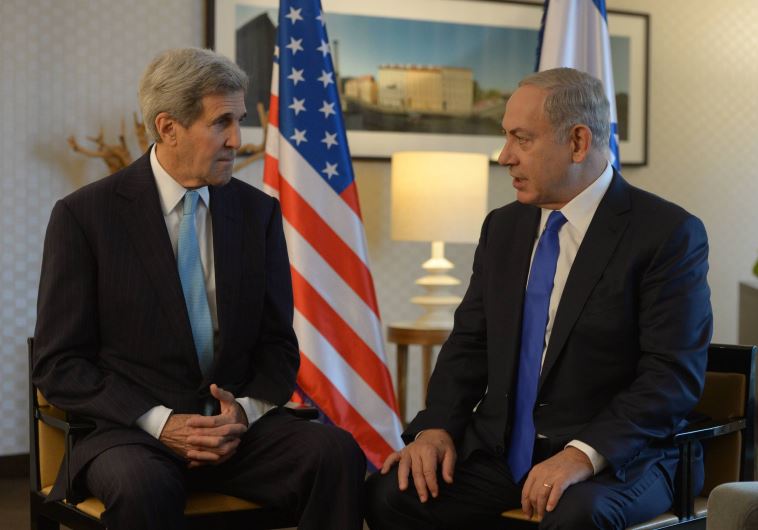
ShowImage (15)Netanyahu and Kerry meeting in Berlin. (photo credit:AMOS BEN-GERSHOM/GPO)

And now the diplomatic dance begins, again.

After three weeks of runaway terrorism on the streets, UN Secretary-General Ban Ki-moon arrived for a quick visit midweek; US Secretary of State John Kerry – after meeting with Prime Minister Benjamin Netanyahu on Thursday in Berlin – is expected to meet on Saturday with Palestinian Authority President Mahmoud Abbas in Amman, along with Jordan’s King Hussein; EU foreign policy chief Federica Mogherini is doing the same; and the French are floating various proposals to take to the UN Security Council.

All predictable, all the traditional steps taken in a time of Mideast crisis.

Ban did what Ban does in these situations – he comes, meets with both sides, issues platitudes about the need for both sides to show restraint, and declares how important it is to keep that light of hope burning.

The UN secretary-general dutifully fulfilled his role in the script. Netanyahu obliged by meeting politely with Ban, who then went on to meet politely with Abbas, to what appears to be absolutely no effect. It’s a dance whose steps – and way of ending – are known far in advance.

Jerusalem does not take Ban’s efforts overseriously, as the organization that he heads is seen as a big part of the problem rather than the solution.

Witness Wednesday’s one-sided resolution adopted by UNESCO, the UN’s cultural heritage agency, condemning “Israeli aggression” on the Temple Mount and declaring that the Jewish holy sites of Rachel’s Tomb and the Cave of the Patriarchs are an “integral part of Palestine.”

Similar disdain, to a certain extent, characterizes Israel’s view of the EU’s efforts. Netanyahu will listen to Mogherini, and lament both Abbas’s incitement and the EU’s acceptance of it, but will place little stock in the EU’s ability to play a constructive role in calming down the situation.

Brussels is not seen in Jerusalem as a particularly honest broker on all things Palestinian but, rather, as the institution that nurtures – perhaps more than any other – the hope among the Palestinians that if they press long enough and hard enough, the international community will deliver to them what they publicly say they want: a Palestinian state along the pre-1967 borders with east Jerusalem as its capital, and some kind of “fair and just” accommodation for the refugees.

The very skeptical Israeli view of the EU in any diplomatic process is reinforced by steps taken by France, which this week considered bringing a resolution to the UN Security Council to place international observers on the Temple Mount.

This idea, which Israel would never accept, and which even Jordan and the Palestinians have apparently rejected, is born of a burning French diplomatic desire to always do something, anything, in the Mideast – especially when there seems to be a stalemate or vacuum.

It is also the product of sour relations currently prevailing between Paris and Jerusalem, as well as a lingering French hope for the internationalization of Jerusalem – for the establishment of a corpus separatum in Jerusalem under a special international regime – which France hopes to be a part of.

So with the UN out, the EU out, and France out, that leaves the US.

But it is not as if Jerusalem is harboring any hopes that Kerry will be able to ride in and save the day.

From Jerusalem’s perspective the US track record in the region is not sterling, and though it appreciates Washington’s desire to help, there is little illusion that high-profile, high-level meetings will have any immediate effect on the ground.

And while Jerusalem is not waiting for Kerry with baited breath, it was clear from the beginning that he would get involved. An uptick in terrorism and violence leads to a well-worn pattern in Washington: condemnations of the terrorism, then statements that anger Israel about proportionality or settlements, followed by calls for restraint on both sides, and then meetings with the leaders.

But this current spurt of terrorism and violence is different from previous rounds, in that there is no identifiable organization – such as Hamas and Fatah’s Tanzim militia – to hold directly responsible for the bloodshed. This time it is more amorphous, individual terrorists incited by calls for Jewish blood on Facebook and from various leaders, going out to kill Jews.

The lack of a clear organizational structure behind the terrorism makes it more difficult for the security services to stop, because it is much more difficult to gather intelligence on an individual who grabs a knife and goes out to kill than on attacks directed by an organization.

Also, there is not one person seemingly in control who may be pressured to cease the violence.

It is not as if Kerry can talk to Abbas and convince him to issue a call to his people to “hold your horses,” and the horses will obediently be held. Abbas does not have anything near that type of control – many of the horses simply do not heed him.

This time around, thankfully, neither the State Department nor Kerry are inflating expectations; they are not talking about Kerry’s separate meeting with the leaders as a potential breakthrough for restarting the diplomatic talks and bringing a peace deal in a number of months.

Washington, it should be remembered, is still engaged in its own Mideast policy reassessment, a policy reassessment brought about after the breakdown of the Kerry-led peace talks in April 2014, and re-announced after Netanyahu’s preelection statement – which he later retracted – of less than full fealty to the notion of a two-state solution.

Rather, this time the bar has been set low, with the goals very limited.

State Department spokesman John Kirby said on Wednesday that the meetings would deal with “practical ways in which political breathing space can be had to help end the violence.”

No overreaching there, just looking for breathing space. The breathing space that Kirby mentioned but did not elaborate upon is likely to be an attempt – in discussions with Netanyahu, Abbas and especially Jordan’s King Abdullah – to come up with a clear set of procedures for governing the Temple Mount.

The Temple Mount has – like so many times over the last century – been the spark to violence against Jews. To douse the fire, there will be some need to deal with the spark, but this has to be done in a way where both Israel and the Palestinians can say that they have not given in.

In recent days Kerry has spoken about the need for clarity. Everyone talks about the status quo on the Temple Mount, but there is little understanding of what that entails.

“Israel understands the importance of the status quo and… our objective is to make sure that everyone understands what that means,” Kerry said at press conference on Monday in Madrid, adding that “we are not seeking a new change or outsiders to come in; I don’t think Israel or Jordan wants that, and we’re not proposing it. What we need is clarity.”

The new “clarity” is expected to involve enhanced coordination and cooperation with Jordan, possibly even more Jordanian representatives on the site, in such a way as to undercut the spurious charge that Israel is somehow threatening al-Aksa Mosque.

Former National Security Council head Yaakov Amidror said in an Israel Radio interview this week that he had little expectation regarding Kerry’s meeting with Netanyahu or Abbas, because the US has little impact on the Palestinians – which is true.

But the US does have leverage on Jordan, and this leverage may now be needed to get Abdullah to take a greater role in day-to- day administration and involvement at the site – if only as a way to suck the oxygen out of the lie propelling the current round of terrorism: that Israel is endangering al-Aksa.

US, Russia, Turkey, Saudi explore political solution on Syria

October 23, 2015

US, Russia, Turkey, Saudi explore political solution on Syria

VIENNA, A quartet of key actors in the Syria quagmire meet in Vienna to discuss the future of the country and President Bashar al-Assad

Friday,October 23 2015, Your time is 11:59:39

Source: US, Russia, Turkey, Saudi explore political solution on Syria – DIPLOMACY

hegelian dialectic

Ain’t it nice ? what have Turkey, USA and Saudi to do with regime change in Syria ?

Can you imagine if Russia , Swahili , Belgian, and iran wants and works on a regime change in the USA ?

From left, Turkey’s Minister of Foreign Affairs, Feridun Sinirlioğlu, U.S. Secretary of State John Kerry, Saudi Arabia’s Minister of Foreign Affairs Arabia Adel al-Jubeir and Russia’s Foreign Minister Sergey Lavrov pose for a photo, during a meeting in Vienna, Friday, Oct. 23, 2015. AP Photo


The United States, Russia, Turkey and Saudi Arabia met Oct. 23 to explore a political solution to the Syrian civil war despite basic disagreements over Syrian President Bashar al-Assad’s fate and disputes over the ongoing strikes in the war-ridden country.

The summit came just days after a surprise visit by al-Assad to Moscow, which hit the nerves of both the U.S. and Turkey.

There were no outward signs of progress toward ending the four-year conflict as U.S. Secretary of State John Kerry met Russian Foreign Minister Sergei Lavrov, after which they held four-way talks with Turkish Foreign Minister Feridun Sinirlioğlu and Saudi Foreign Minister Adel al-Jubeir.

Russia’s three-week-old campaign of air strikes against Islamist groups opposed to al-Assad has halted a summer offensive by rebels, including some backed by Washington and its allies, which had eroded al-Assad’s control in the heavily populated west of the country.

Russia has rejected Western calls for al-Assad to step down, saying Syria’s leadership can only be decided by the Syrian people via elections, and in the clearest sign of its backing, Russian President Vladimir hosted him in Moscow this week.

Speaking in Berlin on Oct. 22, Kerry said al-Assad himself was the central obstacle to resolving a conflict that has driven an estimated 4 million refugees into Turkey, Lebanon, Jordan and Iraq.

“One thing stands in the way of being able to rapidly move to implement that, and it’s a person called Assad – Bashar al-Assad,” Kerry told reporters before he held talks with German Foreign Minister Frank-Walter Steinmeier.

For his part, Steinmeier suggested the U.S. and Russia were still far apart. “We all know that ultimately the first steps into political solutions depend on whether Washington and Moscow find bridges towards each other,” he said.

Putin said his Syrian counterpart had told him he was ready to talk to armed opposition groups if they are genuinely committed to dialogue and to combating the Islamic State of Iraq and the Levant (ISIL).

“I will pull open the curtain a little on my talks with President al-Assad,” Putin said at a forum in the Russian resort of Sochi on Oct. 22.

“I asked him: ‘What view would you take if we found, now in Syria, an armed opposition which nonetheless was ready to oppose and really fight against terrorists, against Islamic State? What would be your view if we were to support their efforts in fighting Islamic State in the same way we are supporting the Syrian army,’” Putin said.

“He answered: ‘I would view that positively,’” Putin said of al-Assad.

The Russian president went on: “We are now thinking about this and are trying, if it works out, to reach these agreements.”

Putin also said that, at the root of the Syrian conflict was not just Islamist militancy but also internal tensions – a recognition that at least some of the people who rebelled against al-Assad’s rule had a legitimate grievance.

Several Russian lawmakers arrived in Syria on Oct. 23 for a meeting with al-Assad.

Local residents and refugees were ecstatic about Russia’s military help, chanting “Thank you!” to a bus carrying Moscow-based journalists.

The White House issued a scathing attack on Russia’s “red carpet” welcome for al-Assad, accusing Moscow of impeding progress towards a political transition by propping up the strongman.

White House Deputy Press Secretary Eric Schultz told journalists the U.S. viewed “the red carpet welcome for al-Assad, who has used chemical weapons against his own people, as at odds with the stated goal by the Russians for a political transition in Syria.” Moscow’s actions in the war-torn Middle-Eastern state were “counterproductive,” he added.

The U.S. blasted Russia’s military strikes in Syria on Oct. 22, saying they were strengthening ISIL militants, killing dozens of civilians, forcing tens of thousands more from their homes, and destroying schools and markets.

During a United Nations Security Council meeting on the Middle East, U.S. Ambassador to the U.N. Samantha Power referred to a Reuters analysis of Russian Defense Ministry data that found almost 80 percent of Russia’s declared targets in Syria had been in areas not held by ISIL.

“By attacking non-extremist groups Russia has boosted, perversely, the relative strength of [ISIL], which has taken advantage of this campaign by seizing new territory in rural Aleppo,” Power said.

Turkish Prime Minister Ahmet Davutoğlu said a peaceful transition could start in Syria if al-Assad “stayed in Moscow.”

“We need to work on formulae” for al-Assad’s exit, he said Oct. 21, adding he wished al-Assad “hadn’t returned.”

The Russian and Jordanian militaries, meanwhile, have agreed to coordinate actions on Syria via a special working mechanism in Amman, Lavrov was quoted as saying by Rossiya-24 TV channel out of Vienna.

Lavrov added that other countries may join this mechanism.

Russia’s top diplomat also said Moscow would back talks between al-Assad’s government and the “full spectrum” of the Syrian opposition.

“Our common position is that we need to boost efforts for the political process in the Syrian settlement,” Lavrov said. “This foresees the start of full-scale talks between representatives of the Syrian government and the full spectrum of the Syrian opposition, both domestic and external – with the support of outside players.”
Jordan is a member of a U.S.-led coalition that is targeting ISIL in neighboring Syria.

October/23/2015

GAZA University Dean of Quranic Studies tells students tha ALL Jews are fair game for killing, even the children

October 23, 2015

GAZA University Dean of Quranic Studies tells students tha ALL Jews are fair game for killing, even the children

Source: GAZA University Dean of Quranic Studies tells students tha ALL Jews are fair game for killing, even the children | BARE NAKED ISLAM

Dr. Subhi Al-Yaziji, Dean of Quranic Studies at the Islamic University of Gaza, recently said: “All Jews in (Muslim-occupied) ‘Palestine’ today are fair game – even the women.” “Every single Jew in Palestine is a combatant, even the children,” and says that terror attacks “should be carried out in the very heart of the enemy – in Haifa, Jaffa, Tel Aviv, and Hadera.”

Germany: Asylum Seekers Make Demands

October 23, 2015

Germany: Asylum Seekers Make Demands, Gatestone InstituteSoeren Kern, October 23, 2015

(How long can parasites survive when they demand more blood than their hosts can provide? —  DM)

  • “Human traffickers and the media in their home countries are making promises that do not correspond to reality.” — Hans-Joachim Ulrich, regional refugee coordinator.
  • The migrants said they were angry they were being asked to sleep in a huge warehouse rather than in private apartments. Hamburg officials say there are no more vacant apartments in the city. “The city lied to us. We were shocked when we arrived here,” said Syrian refugee Awad Arbaakeat.
  • “One of the men, who spoke broken German, said they [a family of asylum seekers from Syria] were not interested in viewing the property because I am a woman… I was taken aback. You want to help and then are sent away, unwanted in your own country.” — Aline Kern, real estate agent.
  • “A constitutional state cannot allow itself to be blackmailed.” — Marcel Huber, Bavarian politician.
  • “I man. You woman. I go first.” — Muslim male with a full shopping cart at the supermarket.
  • An asylum seeker from Somalia successfully sued the German Agency for Migration and Refugees for taking too long to process his application — 16 months. The agency said it currently has a backlog of 250,000 unprocessed applications.
  • Seventy percent of migrants from Afghanistan, Iraq and Syria who were offered apprenticeships fail to complete them. According to the director of the Munich Chamber of Trade, many young migrants believe apprenticeships are beneath them.

Asylum seekers are increasingly using tactics such as hunger strikes, lawsuits and threats of violence in efforts to force German authorities to comply with an ever-growing list of demands.

Many migrants, unhappy with living conditions in German refugee shelters, are demanding that they immediately be given their own homes or apartments. Others are angry that German bureaucrats are taking too long to process their asylum applications. Still others are upset over delays in obtaining social welfare payments.

Although most asylum seekers in Germany have a roof over their head, and receive three hot meals a day, as well as free clothing and healthcare, many are demanding: more money, more comfortable beds, more hot water, more ethnic food, more recreational facilities, more privacy — and, of course, their own homes.

Germany will receive as many as 1.5 million asylum seekers in 2015, including 920,000 in the last quarter of 2015 alone, according to government estimates. This figure is nearly double the previous estimate, from August, which was 800,000 for all of 2015. By comparison, Germany received 202,000 asylum seekers in all of 2014.

With refugee shelters across the country already filled to capacity, and more than 10,000 new migrants entering Germany every day, Germany is straining to care for all the newcomers, many of whom are proving to be ungrateful and impatient guests.

In Berlin, 20 asylum seekers sued the State Agency for Health and Social Welfare (Landesamt für Gesundheit und Soziales, Lageso) in an effort to force local authorities to speed up their welfare payments.

Berlin expects to receive 50,000 asylum seekers in 2015. German taxpayers will spend 600 million euros ($680 million) this year to pay for their upkeep.

Also in Berlin, more than 40 migrants, mostly from Pakistan, seized control over the observation deck of the city’s television tower and demanded stays of deportation, jobs, and exemptions from mandatory residence (Residenzpflicht), a legal requirement that asylum seekers reside within certain boundaries defined by local immigration authorities. More than 100 police were deployed to the tower to remove the protesters. After a brief questioning, they were set free. Police said no crime had been committed because the migrants had purchased tickets to the observation deck, some 200 meters (650 feet) above the Berlin.

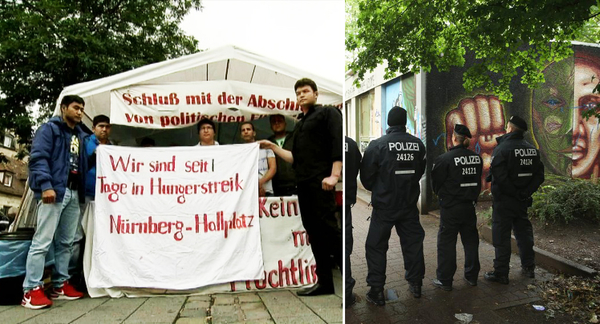
In the Kreuzberg district of Berlin, more than 400 migrants, mostly from Africa, occupied an abandoned school because they no longer wanted to live in tents in a nearby square. When 900 police arrived to clear the building, some migrants poured gasoline inside the structure and threatened to set themselves on fire, while others threatened to jump off the roof of the building. “We are currently negotiating with local authorities about how to proceed,” a Sudanese migrant named Mohammed said. “We will not leave until our demands [amending German asylum laws so they can remain in the country] are met.”

In Dortmund, 125 migrants complained about the “catastrophic conditions” at the Brügmann sports facility, which now serves as a refugee shelter. The list of complaints included: bad food, uncomfortable beds and not enough showers.

Just hours after arriving in Fuldatal, 40 asylum seekers from Afghanistan, Pakistan and Syria complained about conditions at a refugee shelter there and demanded that they be given their own homes. The regional refugee coordinator, Hans-Joachim Ulrich, said that migrants are coming to Germany with unrealistic expectations. “Human traffickers and the media in their home countries are making promises that do not correspond with reality,” he said.

In Hamburg, more than 70 asylum seekers went on a hunger strike in an effort to pressure local authorities to provide them with better housing. “We are on a hunger strike,” said Syrian refugee Awad Arbaakeat. “The city lied to us. We were shocked when we arrived here.” The migrants said they were angry they were being asked to sleep in a huge warehouse rather than in private apartments. Hamburg officials say there are no more vacant apartments in the city, the second-largest in Germany.

Also in Hamburg, more than 100 migrants gathered in front of the city hall to protest the lack of heating in their tent shelters. City officials said they were caught off guard by the early frost and that all tents would have heating before the winter sets in. According to Hamburg Mayor Olaf Scholtz, some 3,600 migrants would be spending the coming winter in tents due to the lack of alternative housing in the city.

According to Hamburg officials, 35,021 migrants arrived in the city during the first nine months of 2015. During this same period, Hamburg police were dispatched to the city’s refugee shelters more than 1,000 times, including 81 times to break up mass brawls, 93 times to investigate physical and sexual assaults, and 28 times to prevent migrants from committing suicide.

Meanwhile, a confidential document that was leaked to the German newspaper Bild reveals that the Hamburg transit authority (Hamburger Verkehrsverbund, HVV) has ordered ticket inspectors to “look the other way” whenever they encounter migrants who are using public transportation without a ticket. The move ostensibly aims to protect the HVV against “bad press.”

According to the leaked document, ticket inspectors should be lenient with asylum seekers because many migrants are “the victims of professional counterfeit ticket scammers” and many others have “barely comprehensible knowledge” of the HVV’s tariff structure.

The CDU’s transportation expert, Dennis Thering, said the HVV’s policy cannot be left unchallenged. “This ‘look-the-other-way’ policy must be withdrawn. In Hamburg there is the opportunity to purchase discounted HVV tickets, explicitly also for persons who receive benefits under the Asylum Seekers Benefits Act.” Every newly arrived refugee receives 149 euros in pocket money every month. This includes 25.15 euros that have been earmarked for the purchase of transport tickets.

In Halle, four security guards were injured when they tried to stop a mob of asylum seekers from Africa and Syria from entering the city’s social welfare office before opening hours. The migrants, who were there to pick up their welfare payments, became angry when it appeared to them as though some migrants cut in front of the line. It later turned out that some migrants were there for other business, and thus were not required to stand in line.

In Munich, 30 migrants went on a hunger strike to protest shared accommodations in refugee shelters. Two of the men were rushed to the hospital after losing consciousness. “A constitutional state cannot allow itself to be blackmailed,” Bavarian politician Marcel Huber said. “We have zero tolerance for this action.”

In Nürnberg, six migrants from Afghanistan, Ethiopia and Iran went on a hunger strike to protest the rejection of their asylum applications. The men, who are living in a tent in downtown Nürnberg for several months, demanded to speak to local authorities. The asylum applications were rejected six years ago, but the men are still living in Germany.

In Osnabrück, an asylum seeker from Somalia successfully sued the German Agency for Migration and Refugees (Bundesamt für Migration und Flüchtlinge, BAMF) for taking too long to process his application. A judge ordered the BAMF to make a decision on his application within three months or provide him with financial compensation.

The man said he had been waiting for 16 months to get an answer from the BAMF. In its defense, the BAMF said it currently has a backlog of 250,000 unprocessed applications, and this number is expected to skyrocket as more asylum seekers arrive in Germany.

A spokesperson for the court said the ruling set a precedent, and that many more asylum seekers likely would file lawsuits against the BAMF in the near future.

1312Groups of migrants across Germany have been launching hunger strikes, demanding more money, more comfortable beds, more hot water, more ethnic food, more recreational facilities, and their own homes. In Berlin (right), 900 police were needed to remove more than 400 migrants who had occupied an abandoned school.

In Walldorf, a town in the state of Baden-Württemberg, a group of migrants demanded that local authorities immediately provide them with private apartments because they were tired of living in a refugee shelter with 200 other asylum seekers. The leader of the group, a 46-year-old refugee from Syria, said he expected more from Germany. It was high time for Germans to begin to “treat us like human beings,” he said.

Following up on the complaints, state and local authorities inspected the shelter and found that conditions there were “absolutely acceptable,” with cubicles for privacy and plenty of food and clothing.

In Wetzlar, a city in the state of Hesse, migrants threatened to go on a hunger strike in an effort to force local authorities to move them into permanent housing. Local authorities said they delays were due to a quarantine after several migrants were found to be infected with Hepatitis A.

In Zweibrücken, 50 asylum seekers from Syria went on a hunger strike to protest the slow pace of the application approval process. “We can accept the living conditions in the refugee camp, but we need hope,” one of the men said. Local officials said the process has collapsed because of the large number of applicants.

Asylum seekers have also gone on hunger strikes in Birkenfeld, Böhlen, GelsenkirchenHannover, Walheim, and Wittenberg.

Meanwhile, teachers at Gemeinschaftsschule St. Jürgen, a grade school in the northern German city of Lübeck, ordered eighth graders to spend a morning at a local refugee shelter and “actively help” the migrants by making their beds, sorting their clothing and working in the kitchen.

Some parents complained that their children are also being asked to bring gifts and food for the migrants, who are already receiving handouts financed by German taxpayers. A woman wrote: “Sometimes I do not even know how I am going to put food on my own table.”

Another woman wrote: “This is going too far. Students are supposed to make beds and do cleaning work at a refugee shelter. My friend’s 14-year-old son is being asked to do this!!! I am not an agitator and I am tolerant, but this is going way too far. Is there now a new course in Lübeck schools called: Slavery???

The school’s principal, Stefan Pabst, said the negative reaction was a “catastrophe.” He said that having the children work in a refugee shelter was the best way for them to “understand social behavior.” The German newsmagazine, Stern, complained that the dissenting parents belonged to “right-wing circles” and are “spreading their stupid slogans.”

In Bad Kreuznach, a family of asylum seekers from Syria made an appointment to view a four-room rental property but refused to view the house because the real estate agent was female. According to real estate agent Aline Kern:

“One of the men, who spoke broken German, said they were not interested in viewing the property because I am a woman, I am blonde, and because I looked the men into their eyes. This was inappropriate. My company should send a man to show the property.

“I was taken aback, annoyed. One wants to help and then are sent away unwanted in your own country.”

In Idar-Oberstein, a town in the German state of Rhineland-Palatinate, an imam at a refugee shelter refused to shake the hand of Julia Klöckner, a visiting dignitary, because she is a woman. After Klöckner, the vice-chairwoman of the Christian Democratic Union (CDU), shared her experience with the German newsmagazine Focus, she received more than 800 emails from women across the country describing how they, too, have been mistreated by Muslim migrants.

One woman described how Muslim men repeatedly cut in front of her at the supermarket checkout line. “Twice while shopping at a German supermarket I was shown that I am a second-class citizen,” she wrote. In one instance, an adult Muslim male with a full shopping cart cut in front of her. In broken German, he said: “I man. You woman. I go first.” In another instance, a young Muslim male elbowed the woman while cutting in front of her. “When I said that I would let him go ahead of me if he asked me for permission, I was instructed by his sister that boys do not need to ask, they just demand.”

A teacher at a vocational school wrote: “The most problematic students are Muslim males, who do not acknowledge the authority of female teachers and who disrupt the classes.”

A mother reported that during a visit to her daughter’s school, she approached a fully-veiled female refugee and asked her if she could be of help to her. “A man with a fancy suit and a three-day beard, he seemed like out of a Hugo Boss fashion magazine, said: ‘My wife does not speak the language of the unclean.’ When I asked him who here was unclean, he said I was. I asked him what that means. He said it was nothing against me personally, because all German women are unclean, and that his wife should not speak the language of the unclean, so that she can remain clean.”

Klöckner is now calling for Germany to pass a new law that requires migrants and refugees to integrate into German society. She said: “We need an integration law. We are a liberal and free country. If we give up the foundations of our liberality, we will wake up in a different country.”

Klöckner insists that migrants must be informed about German “rules of the game” from the first day they arrive in the country. “The people who want to stay here must, from the first day, accept and learn that in this country religions coexist peacefully and that we cannot use force to resolve conflicts,” she said.

In Berlin, more than 150 migrant youths from North Africa and Eastern Europe are occupied as full-time purse-snatchers and pickpockets. Also known as the klau-kids (thief kids), they post their plunder (smart phones, laptops, designer sunglasses) on the Internet to taunt police. A 16-year-old known as Ismat O. has been detained more than 20 times on suspicion of theft, but each time he has been released, only to continue his trade. Walid K. has been arrested more than 10 times, and is also free.

According to the director of the police union in Berlin, Bodo Pfalzgraf, “it is incomprehensible that such serial offenders do not remain in pre-trial detention.” Police say the youths are released because German judges are not prepared to issue arrest warrants for so-called petty crimes such as purse-snatching. The youths can only be deported if they have been sentenced to at least three years in prison.

In Bavaria, the Munich Chamber of Trade (Handwerkskammer München und Oberbayern)reported that 70% of migrants from Afghanistan, Iraq and Syria who have been offered apprenticeships fail to complete them. The normal washout rate is 25%. According to the director of the chamber, Lothar Semper, many young migrants believe the apprenticeships are beneath them. “We have to make a tremendous effort to convince young people that they should even begin an apprenticeship,” he said. “Many have the expectation of quickly earning a lot of money in Germany.”
Germany to push for compulsory EU quotas to tackle refugee crisis

October 23, 2015

Germany to push for compulsory EU quotas to tackle refugee crisis Merkel is said to want hundreds of thousands of refugees brought directly from Middle East to control numbers and avoid perilous journeys

Source: Germany to push for compulsory EU quotas to tackle refugee crisis | World news | The Guardian

Germany is to push for more ambitious and extensive common European Union policies on the refugee crisis, according to policymakers in Berlin, with compulsory and permanent quotas for sharing the distribution of probably hundreds of thousands of people who will arrive directly from the Middle East.

Also on Berlin’s agenda are new European powers replacing some national authority over border control, and the possible raising of a special EU-wide levy to fund the policies.

The plans, being prepared in Berlin and Brussels, are certain to trigger bitter resistance and major clashes within the EU. Berlin backs European commission plans to make the proposed scheme “permanent and binding”. But up to 15 of 28 EU countries are opposed.

The plans will not apply to the UK as it is not part of the EU’s passport-free Schengen zone and has opted out of EU asylum policy, saying it will not take part in any proposed European refugee-sharing schemes.

Angela Merkel appears determined to prevail, as she grapples with a crisis that will likely define her political legacy. The German chancellor is said to be angry with the governments of eastern and central Europe which are strongly opposed to being forced to take in refugees. She is said to resent that these EU member states are pleading for “solidarity” against the threats posed by Russia and Vladimir Putin while they resist sharing the burdens posed by the refugee crisis.

EU government leaders agreed last month to share responsibility for 160,000 asylum seekers already in the EU, redistributing them from Greece and Italy over two years. But the decision had to be pushed to a majority vote, overruling the dissenters, mainly in eastern Europe, and with the Hungarian prime minister, Viktor Orban, accusing Merkel of “moral imperialism”.

It is highly unusual in the EU for sensitive issues with such deep national political impact to be settled by majority voting. But Berlin appears prepared to do this if no consensus can be reached.

The opponents of quotas insist last month’s decision was a one-off. But according to policymakers in Berlin, Merkel now wants to go further, shifting the emphasis of burden-sharing from redistribution of refugees inside the EU to those collecting en masse in other countries, notably Turkey, where more than 2 million Syrians are being hosted.

Under one proposal being circulated in Berlin, the EU would strike pacts with third countries, such as Turkey, agreeing to take large but unspecified numbers of refugees from them directly into Europe. In return, the third country would need to agree on a ceiling or a cap for the numbers it can send to Europe and commit to keeping all other migrants and refugees, and accommodate them humanely. This effectively means Europe would be financing large refugee camps in those third countries, which will also be obliged to take back any refugees who are not granted asylum in Europe.

Merkel returned from talks on the issue with the Turkish leadership on Sunday seemingly convinced that Ankara was the key to her winning some relief on the toxic immigration issue. She is being criticised for ignoring human rights problems in her dealings with Turkey’s authoritarian leader, President Recep Tayyip Erdoğan. But according to people familiar with her thinking, she has concluded that, in terms of Turkey, the main third country source of migrants heading for Europe, interests trump values.

Pinterest
We walk together: a Syrian family’s journey to the heart of Europe

The plans being developed in Berlin and Brussels also include moves to “Europeanise” control of the EU’s external borders. This would entail national governments surrendering some of their powers on those frontiers and granting at least some authority over refugee admissions, detentions and deportation to EU bodies such as Frontex, the fledgling borders agency.

Some senior diplomats and officials in Brussels say this is an intrusion into national sovereignty which will be difficult for some governments to accept. Policymakers in Berlin are aware of the sensitivities, but appear of a mind to proceed by stealth in small steps.

They take the view that the refugee crisis is by definition a Europe-wide emergency that can only be tackled by broader and concerted European policies. The new approaches being considered are also likely to prove expensive. In Bavaria, in southern Germany, for example, the influx of newcomers means the authorities are scrambling to create 3,000 extra school classes with all the attendant staffing and space problems.

Merkel is said to appreciate the sensitivity and the difficulty of the plans being drawn up and is likely to proceed cautiously in phases. She is understood to believe that the crisis will get worse and that the deterioration will bring her opponents round to the merits of her arguments.

Berlin expects at least 1 million refugees in Germany this year and Merkel is facing growing domestic criticism of her open-door policies.

The European commission is calling for a “permanent mechanism” for refugee sharing across Europe. Berlin appears to stand 100% behind the commission president, Jean-Claude Juncker, on this. But an EU summit last week avoided discussing the permanent scheme because it is too divisive and contentious.

Forced to bow to the sharing of 160,000 refugees last month, several EU leaders took the view that this was a limited and temporary move that would not be repeated. But for Berlin, it is but a beginning in the formulation of pan-European asylum and immigration policies.

On Wednesday Juncker called a Brussels summit for Sunday for some EU and Balkan leaders to tackle the crisis in Croatia, Slovenia, and Austria since Hungary closed its borders to those arriving in the EU from Turkey and Greece via the Balkans.

The German push for taking people directly from places such as Turkey has the merit of cutting out of many of the smuggling rackets prospering from the mass movements and reducing the numbers of those risking the hazardous journeys from the Middle East to the borders of Europe. But it is far from clear that the plan to persuade third-country governments to agree to enforce a ceiling on the numbers allowed to go to the EU can work.

According to the thinking in Berlin, if the new package of policies must involve a European solution rather than a mish-mash of national strategies, it will also have to be financed at the European level, possibly through a special levy, since the billions involved would blow a gaping hole in the existing EU budget and national governments would balk at footing the bills.

Palestinian terrorism is not random

October 23, 2015

Palestinian terrorism is not random, Israel Hayom, Yoram Ettinger, October 23, 2015

Unlike national liberation movements, Palestinian terrorism has deliberately, institutionally, and systematically targeted Arab and Israeli noncombatants, sometimes hitting combatants.

Palestinian terrorism has haunted Arab societies in Jordan (especially during the 1968-1970 era of PLO terrorism), Lebanon (particularly during the 1971-1982 civil wars), Kuwait (during the 1990 invasion by Saddam Hussein), Iraq (until 2002, as an arm of Saddam Hussein’s ruthless domestic oppression), Syria (until 2012, bolstering Bashar Assad’s regime) and currently in Egypt (collaborating with the Muslim Brotherhood terror organization). Pro-U.S. Arab regimes consider Palestinian terrorism a clear and present danger, never fighting on behalf of Palestinians. Sometimes these regimes launch severe military blows (1970 Black September in Jordan) and expulsions (300,000 expelled from Kuwait), showering them with rhetoric, but not resources.

Since the establishment of the Palestinian Authority in 1993, Palestinian terrorism has afflicted the Arabs of Judea, Samaria and Gaza, denying the Palestinians civil liberties and instituting a corrupt, oppressive reign of horror. It prompted most Christians to flee from Ramallah (home of Palestinian Authority President Mahmoud Abbas’ headquarters), Bethlehem and Beit Jallah. In addition, Muslim emigration from the Palestinian Authority has increased since 2000. While Egypt prevents emigration from Gaza through Sinai, Gaza’s Arabs have emigrated, in increasing numbers, via the Mediterranean. Moreover, Palestinians flow across Jerusalem’s municipal lines, escaping Abbas’ tyranny to receive Israeli residency, social benefits and human rights.

Palestinian terrorists have targeted pro-U.S. Arab regimes and “the arrogant, infidel, Great Satan,” the U.S., joining the ayatollahs in Iran (since the toppling of the shah in 1979), Taliban, al-Qaida, Islamic State and other Islamic terror organizations. Osama bin Laden’s role model and spiritual mentor, Abdullah Azam, was from a village in Samaria.

Palestinian terrorism is a modern-day branch of Islamic terrorism, which has plagued the Middle East — and beyond — since the appearance of Islam in the seventh century. The current intensification of Islamic terrorism throughout the Middle East provides a tailwind to Palestinian terrorism.

Palestinian terrorism has inspired terror cells in Europe, Africa, Asia and the American continent, including sleeper cells in the U.S.

Anti-Jewish Palestinian terrorism has been a Middle East fixture since at least the 1920s, well before the 1948 establishment of Israel and the 1967 return of Jewish communities to Judea and Samaria. It’s well-documented collaboration with Nazi Germany sought to prevent the existence — not reduce the size — of the Jewish state. The political guideline of contemporary Palestinian terrorism, the Palestinian Covenant, was published in 1964, three years before the reunification of Jerusalem.

Palestinian terrorism is nurtured by 23 years of Palestinian hate education in kindergartens, schools, mosques and media — the most effective means of producing terrorists. It was established by Abbas (then Yasser Arafat’s chief deputy) in 1993, highlighting the fundamentals of Islam that serve to intensify Palestinian terrorism: the supremacy of Islam over all other religions; the permanent state of war between the abode of Islam and the abode of the “infidel”; the inadmissibility of “infidel” sovereignty over Waqf lands, which are divinely ordained to Islam; the sublime honor of sacrificing one’s life on behalf of Islam’s war against the “infidel”; and the provisional nature of agreements concluded with “infidels.”

Palestinian terrorism has been encouraged by Abbas’ systematic policy of naming streets, squares, monuments and sport tournaments in honor of terrorists, and extending generous financial assistance to their families.

Palestinian terrorism, an endemic feature in the Middle East, represents writing on the wall, warning us all of the destabilizing, anti-Western, terroristic nature of the proposed Palestinian state. An Israeli withdrawal from the mountain ridge of the Golan Heights would provide a platform for Islamic terrorists to traumatize northern Israel. But an Israeli withdrawal from the mountain ridges of Judea and Samaria would provide Muslim terrorists a platform to topple the Hashemite regime in Jordan and target Tel Aviv, Jerusalem, Ben-Gurion Airport and 80% of Israel’s population and infrastructure.

Palestinian terrorism is fueled by the inherently immoral “moral equivalence” between Israeli counterterrorism and Palestinian terrorism, which grossly misrepresents Middle East reality. It is fueled by foreign aid to the Palestinian Authority, which funds hate education. It is rewarded by calls to negotiate with the Palestinian Authority, while Abbas promotes hate education. It is emboldened by Western pressure for further Israeli concessions and Western denial of Israel’s moral high ground in the physical high ground of Judea and Samaria.

In order to defeat Palestinian terrorism, it is necessary to defy political correctness and shift gears, instead of chasing individual terroristic mosquitoes, the terroristic swamp needs to be drained. A large-scale, disproportionate, pre-emptive military operation needs to be launched throughout Judea and Samaria and Arab neighborhoods in Jerusalem. Any (U.S. and Israeli) direct or indirect contact with and assistance to the Palestinian Authority needs to be conditioned upon an end to hate education. Families and communities of terrorists need to be severely punished for failing to exercise communal responsibility.

To frustrate Palestinian terrorism, which aims to set Israel on a path of retreat, Israel should proclaim a constructive response, expanding Jewish construction in Jerusalem, Judea and Samaria. While it would trigger short-term international pressure, it would yield long-term strategic respect, as documented by the legacy of Prime Ministers David Ben-Gurion, Levi Eshkol, Golda Meir, Menachem Begin and Yitzhak Shamir, who defied much more severe international pressure with slimmer military and commercial resources at their disposal.

‘The mufti planned to build crematorium in Dotan Valley’

October 23, 2015

‘The mufti planned to build crematorium in Dotan Valley’, Israel Hayom, Daniel Siryoti, Erez Linn, October 23, 2015

144559783633038330a_bGrand Mufti Haj Amin al-Husseini with Adolf Hitler in Berlin | Photo credit: AFP

Journalists and historians say Jerusalem Grand Mufti Haj Amin al-Husseini’s contribution to encouraging Hilter to pursue the extermination of Jews in Europe cannot be disregarded • White House: Inflammatory accusations on both sides need to stop.

The controversy over Prime Minister Benjamin Netanyahu’s remarks on Jerusalem Grand Mufti Haj Amin al-Husseini’s role in the extermination of European Jewry has promoted veteran journalist Haviv Kanaan to recall the malicious plan the mufti devised.

Kanaan published an article in Haaretz in 1970 in which he reviewed the senior Muslim clergyman’s actions in 1942, when the Jewish community in then-British Mandate Palestine was preparing for the possibility of a Nazi invasion. Kanaan said that in 1968, while researching his article, he met with Faiz Bay Idrisi, a senior Arab officer in the Mandate Police, who spoke of al-Husseini’s intention to build a crematorium in the northwest Samarian hills.

“Even today, as I recall what I heard from police officials and mufti supporters, chills go through my body,” Idrisi told Kanaan at the time, recalling how in case of a German invasion “Haj Amin Husseini was gearing to enter Jerusalem at the head of the Muslim Arab Legion squadron he’d created for the Third Reich. The mufti’s plan was to build a huge Auschwitz-like crematorium in the Dotan Valley, near Nablus, to which Jews from Palestine, Iraq, Egypt, Yemen, Syria, Lebanon, and North Africa would be imprisoned and exterminated, just like the Jews in the death camps in Europe.”

This should come as no surprise in light of al-Husseini’s known views and actions during the Holocaust, and prior to it.

Haj Amin al-Husseini was born in Jerusalem in 1895 to a wealthy family of landowners. His father also served as the grand mufti of Jerusalem and his uncles headed the Arab Higher Committee in British-Mandate Palestine.

Al-Husseini was appointed grand mufti in 1921. An inflammatory address he gave in August 1929 sparked mass anti-Jewish violence, which resulted in the massacre of dozens of Jews by Arab mobs.

John Chancellor, the British high commissioner at the time, held al-Husseini responsible for the massacres.

Shortly after Hitler’s rise to power, al-Husseini sent a message to the German envoy in Jerusalem, expressing support for the new Nazi regime. He received generous funding from the Nazis in return.

In 1937, al-Husseini was ousted from office. He fled to Lebanon, and from there to Syria, all while maintaining his ties with the Nazi regime. In 1941, the Muslim clergyman arrived in Berlin, where he met with Hitler and the senior Nazi leadership, who assured him that once the Middle East is conquered, “Germany’s sole purpose would be to obliterate the Jewish population occupying the Arab space under the auspices of the British.”

Another voice lending merit to Netanyahu’s remark is author Wolfgang Schwanitz, who penned the book “Nazis, Islamists, and the Making of the Modern Middle East.” Schwanitz also argues that Hitler’s meeting with al-Husseini played a critical role in inspiring the Holocaust.

“It’s a historical fact that the grand mufti was an accomplice in this. … He was the top non-European adviser to Hitler on the process of eliminating Europe’s Jews,” Schwanitz said. “It would be absurd to discount the mufti’s role in encouraging Hitler and other Nazi officials to carry out the final solution.”

Meanwhile, the White House on Thursday addressed the controversial remarks surrounding the mufti’s role in the Holocaust.

“There was no doubt as to who was responsible for the Holocaust, which involved the systematic murder of six million Jews,” said White House Deputy Press Secretary Eric Schultz. “Inflammatory actions and accusations on both sides could fuel the violence even further. This needs to stop.”

Hizballah is creeping up on Israel’s Golan border, relying on Russian military cover

October 23, 2015

Hizballah is creeping up on Israel’s Golan border, relying on Russian military cover, DEBKAfile, October 23, 2015

nasrallah-putin_10.15Hassan Nasrallah believes he has Putin behind him.

Wholly preoccupied with the ferocious Palestinian terror campaign washing over their country, Israelis have scarcely noticed that Hizballah forces, believing they are protected by the Russian military presence in Syria, are creeping toward Israel’s northeastern Golan border. DEBKAfile reports: The Lebanese group thinks it is a step away from changing the military balance on the Golan to Israel’s detriment and gaining its first Syrian jumping-off base against the Jewish state – depending on the Syrian-Hizballah forces winning the fierce battle now raging around Quneitra opposite Israel’s military positions.

For two years, Hizballah, egged on intensely by Iran, has made every effort to plant its forces along the Syrian border with Israel. For Tehran, this objective remains important enough to bring Al Qods Brigades chief, Gen. Qassem Soleiman, on a visit last week to the Syrian army’s 90th Brigade Quneitra base, which is the command post of the battle waged against Syrian rebel forces.

Soleimani, who is commander-in-chief of Iran’s military operations across the Middle East, is acting as military liaison in Syria between Tehran and Moscow.

DEBKAfile’s military sources report that the Iranian general inspected the Quneitra battle lines no more than 1.5-2 km from the Israeli Golan border. He arrived a few days after Revolutionary Guards Col. Nader Hamid, commander of Iranian and Hizballah forces in the region, died there fighting against Syrian rebels.

His death betrayed the fact that not only are Hizballah forces gaining a foothold on the strategic Golan enclave, but with them are Iranian servicemen, officers and troops.

While in Quneitra, the Iranian general also sought to find out whether Col. Hamid really did die in battle or was targeted for assassination by Israel to distance Iranian commanders from its border.

Just 10 months ago, on Jan. 18, Israel drones struck a group of Iranian and Hizballah officers who were secretly scouting the Quneitra region for a new base. Iranian Gen. Ali Mohamad Ali Allah Dadi died in that attack.

But Tehran and Hizballah are again trying their luck. During his visit to Quneitra, Soleimani called up reinforcements to boost the 500 Hizballah fighters in the sector.

Seen from Israel, the Syrian conflict is again bringing enemy forces into dangerous proximity to its border.

The Iranian general and Russian Air Force commanders agree that the drawn-out battle for Quneitra will not be won without Russian air strikes against the rebels holding out there. A decision to extend Russia’s aerial campaign from northern and central Syria to the south would be momentous enough to require President Vladimir Putin’s personal approval.

This decision would, however, cross a strong red line Israel laid down when Binyamin Netanyahu met Putin on Sept. 21 in Moscow and when, last week, a delegation of Russian generals visited Tel Aviv to set up a hot line for coordinating Israeli and Russian air operations over Syria.

Israeli officials made it very clear that Iranian and Hizballah forces would not be permitted to establish a presence opposite the Israeli Golan border and that any Russian air activity over southern Syria and areas close to its borders was unacceptable.

The possibility of Israeli fighter jets being scrambled against Russian aerial intervention in the Quneitra battle was not ruled out.

This state of affairs was fully clarified to Gen. Joseph Dunford, Chairman of the Joint US Chiefs of Staff, when he was taken on a trip this week to the southern Golan under the escort of IDF Chief of Staff Gen. Gady Eisenkot and OC Northern Command Gen. Avivi Kochavi. He visited the command post of Brig. Yaniv Azor, commander of the Bashan Division, which will be called upon for action if the hazard to Israel’s security emanating the Quneitra standoff takes a dangerous turn.

Do Palestinian Lives Matter?

October 23, 2015

Source: Do Palestinian Lives Matter?

Huffington Post

( The view from the American left… – JW )

Lawmakers seem incapable of grasping the fact that Palestinians are suffering, too.

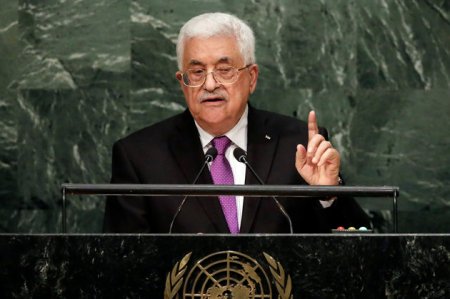
<span class='image-component__caption' itemprop="caption">Palestinian President Mahmoud Abbas addresses the 70th session of the United Nations General Assembly on Sept. 30, 2015.</span> Richard Drew/Associated Press Palestinian President Mahmoud Abbas addresses the 70th session of the United Nations General Assembly on Sept. 30, 2015.

WASHINGTON — It came as no surprise that the House Foreign Affairs Committee meeting on the current wave of violence in Jerusalem and the occupied West Bank was a decidedly one-sided discussion.

In a hearing titled “Words Have Consequences: Palestinian Authority Incitement to Violence,” committee Chairman Ed Royce (R-Calif.) and ranking member Eliot Engel (D-N.Y.) reached a similar conclusion: The current instability is caused by Palestinian leaders encouraging their people to kill Israelis.

Royce cited Palestinian President Mahmoud Abbas’ quote, “We welcome every drop of blood spilled in Jerusalem.” Engel said the past month of stabbings, shootings and vehicular assaults is “the product of years and years of anti-Israel propaganda and indoctrination — some of which has been actively promoted by Palestinian Authority officials and institutions.”

“It’s heartbreaking,” said Engel, “to wake up seemingly every morning to a new report of a stabbing or a shooting of an innocent civilian in Israel.”

But there was no mention of the 21 Palestinians killed by Israeli security forces since Oct. 1, despite having no identifiable connection to terrorist attacks.

Lawmakers did not talk about the Israeli teen who stabbed four Arabs earlier this month in southern Israel because of his belief that “all Arabs are terrorists.”

No one mentioned that between January and July of this year, settler violence caused 42 casualties, according to the United Nations Office for the Coordination of Humanitarian Affairs.

In fact, one of the few lawmakers to mention settlements was Rep. Ileana Ros-Lehtinen (R-Fla.), who accused the international community of applying a “false moral equivalence between the Palestinian Authority and Israel.”

“Some, very lamely, blame settlement activity by Israel as the justification for increased violence, instead of putting the blame where it should be — with the Palestinian Authority, with Abu Mazen,” she said, using another name for Abbas.

The congresswoman’s comments were likely a swipe at Secretary of State John Kerry, who suggested last week that Palestinian frustration over settlement expansion is fueling the violence.

No one in the House Foreign Affairs Committee seemed aware that a senior official at Shin Bet — Israel’s secret service — recently refuted claims that Abbas is inciting Palestinians to attack Israelis. As Haaretz reported earlier this month, the Shin Bet official said that Abbas is “instructing his security forces to prevent terror attacks as much as possible.”

Also absent from Thursday’s debate was any mention of Israeli Prime Minister Benjamin Netanyahu’s speech at the Zionist Congress on Wednesday, where he accused the Palestinian grand mufti of Jerusalem of inspiring Hitler’s decision to exterminate the Jewish people during the Holocaust.

Historians and the Anti-Defamation League have refuted Netanyahu’s version of history. His statement also compelled German Chancellor Angela Merkel to reiterate that Germans were responsible for the Holocaust. Arab-Israeli Knesset member Ayman Odeh accused Netanyahu of “rewriting history in order to incite against the Palestinian people.”

But the House Foreign Affairs Committee members’ omissions aren’t surprising — this was, after all, a hearing to address Palestinian incitement.

Much to the chagrin of several members of the committee, the State Department has avoided assigning blame to either side. “We want to stress publicly and privately the importance of preventing inflammatory rhetoric, accusations, or actions on both sides that can lead to violence,” State Department spokesman John Kirby said on Wednesday.

Report: Israeli aircraft flew over Iran on attack test flight

October 23, 2015

Report: Israeli aircraft flew over Iran on attack test flight The Wall Street Journal reports Israel executed a test flight over Iran in 2012 as part of plan to attack Iran’s nuclear facility in Fordow; US sent a second aircraft carrier to the area fearing an outbreak of war.

Yitzhak Benhorin

Published: 10.23.15, 12:45 / Israel News

Source: Report: Israeli aircraft flew over Iran on attack test flight – Israel News, Ynetnews

Israeli aircraft entered and left Iranian airspace in 2012 as part of a test flight for a possible attack on Iran’s nuclear facility at Fordow, the Wall Street Journal reported Friday

The report stated that “nerves frayed at the White House after senior officials learned Israeli aircraft had flown in and out of Iran in what some believed was a dry run for a commando raid on the site.” As a result, the US sent a second aircraft carrier to the area and put fighter jets on alert.

The newspaper wrote a comprehensive investigative report on the crisis of confidence that developed between the US and Israel under President Barack Obama and Prime Minister Benjamin Netanyahu. As part of the investigation, intelligence officials and analysts that spoke with the newspaper revealed the Israeli flight over Iran.

Iran's Fordow nuclear facility (Photo: AFP)
Iran’s Fordow nuclear facility (Photo: AFP)

One official said that the US monitored Israeli military activity and eavesdropped on Israeli bases in 2012 after they learned about the flight. New information came in every day but US officials said that some of the information was classified and US security agencies were unable to receive the majority of the messages.

The report states that US Air Force analysts came to the conclusion that Israel did not have the necessary armament and aircraft to demolish the Iranian reactors. This conclusion was transferred to the Israelis, who in response gave the Americans an outline of its own plan: transport aircraft would land in Iran with commando teams to blow the front doors of the nuclear plant at Fordow and sabotage it. Pentagon officials thought it was a suicide mission and pressured Israel to give early warning to the United States, but Israel did not commit itself to doing so.

The V-22 Osprey plane-helicopter the Israelis requested from the US (Photo: EPA)

US intelligence agencies intensified their satellite tracking of IAF planes according to the report. They found out that pilots were put on alert to attack on dark nights without moonlight. They tracked the IAF training for combat missions, including examinations of Iran’s air defense system in an attempt to trick it.

The Wall Street Journal (WSJ) which cited senior White House and Pentagon officials, wrote that in 2012 there was a sense that Israel was about to attack and the White House felt that there was an urgent need to promote a diplomatic solution.

The White House, the report noted, decided to leave Prime Minister Netanyahu in the dark regarding secret negotiations that were being conducted by the US with Iran in Oman. The fear was that Netanyahu would leak the existence of the talks and undermine them. Obama’s aides had very little good will towards Netanyahu who was perceived as a supporter of Republican candidate Mitt Romney during the 2012 elections. Obama left a meeting with Netanyahu with a sense that he wanted to attack on the eve of the presidential elections.

The WSJ cited defense sources in Washington who stated that Israeli officials discussed with their US counterparts the possibility of obtaining weapons for a possible attack. Topping the list was the V-22 Osprey, a plane-helicopter which fits in well with the Israeli plan to land commandos. Israeli officials were also interested in the possibility of procuring the Massive Ordnance Penetrator designed by the US to destroy bunkers at the Fordow facility.

Netanyahu wanted “somebody in the administration to show acquiescence, if not approval” for a military strike, said Gary Samore, who was Obama’s top adviser on the Iran nuclear issue during his first term. But the Americans replied that this was a serious error and the administration refused to supply Israel with military equipment required for attack.

The US tried hiding from Israel the first Oman conversations, revealing them only once Hassan Rouhani became president of Iran. Samore believed that it was wrong to leave Israel out of the picture for so long. The State Department’s nuclear expert Robert Einhorn said that it had a negative impact on Israel’s attitude towards the talks.

It was reported that following the incident the US government decided to send a second aircraft carrier to the region and put fighter jets on alert in case an Israeli attack will led to a regional war. However, the government now admits that the exceptional flight over Iran made them draw mistaken conclusions.