Archive for October 10, 2015

Egypt will begin construction of church dedicated to ISIS martyrs

October 10, 2015

Egypt will begin construction of church dedicated to ISIS martyrs, BreitbartThomad D. Williams, PH.D., October 10, 2015

(The church will be dedicated to those murdered by the Islamic State. In what other Muslim nation would that happen? — DM)
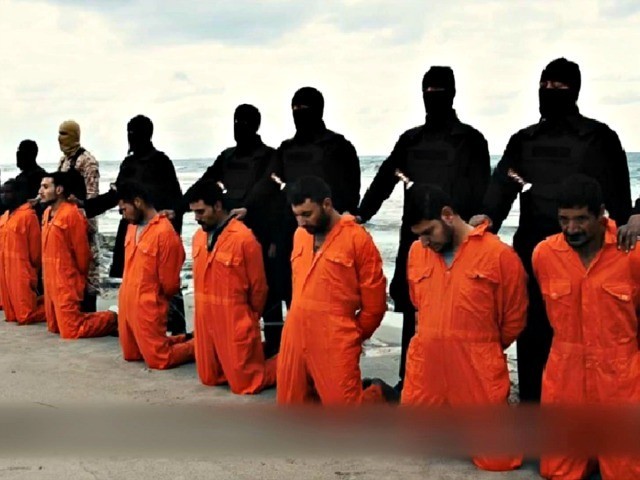
ISIS-21-Christians-YouTube-via-NBC-640x480YouTube via NBC News

President al-Sisi has asked Christians for a greater commitment in politics, urging them to vote and to run for office, to ensure a Christian presence in Parliament.

***********************

In the coming days, construction will commence on a new church in Egypt dedicated to the martyred Coptic Christians beheaded by the Islamic State in Libya in February.

The new church, bearing the name “Church of the Libyan Martyrs,” will be built in the Minya Governorate, south of the capital, Cairo. The church will cost $1.3 million, half of which has already been raised.

Egyptian President Abdel Fattah al-Sisi granted permission for the construction of the church last February after Islamic State militants murdered 21 Coptic Christians on a Libyan beach.

According to Father Rafic Greiche, spokesman for the Catholic Church in Egypt, the construction is indicative of a slow but noticeable shift taking place in Egyptian culture as well as among state officials. The change comprises improving attitudes toward Christians, but also resistance to Islamic extremism.

Until now, Fr. Greiche said, the procedure involved in getting a church building permit was extremely complex, involving a series of authorizations and approvals, which have been streamlined in this case. The decision also indicates that the government wished to send a strong message against religious discrimination, he said.

Greiche says that there have also been timid attempts at exegesis of the Koran and Islamic texts, accompanied by a ban on women teachers wearing a burka in the classroom and struggles against fundamentalism and extremist sermons in mosques.

Last week, the president of the University of Cairo, Dr. Hossam Kamel, prohibited teachers from wearing the burka in the classroom. They may continue to wear it, if they choose, at home or on the street, but not during teaching time.

Egypt’s top Islamic school, Al-Azhar, followed suit by banning women from wearing the burka in all its affiliate schools after a leading cleric said the burka was only a “tradition” and not necessary in Islam.

With general elections in late October and a possible reform of the Constitution, some expect a greater presence and visibility of Christians in society and in national politics as a result. While a transformation of the mentality naturally takes time, Greiche said, the fact remains that Christians are far more accepted in Egyptian society now than in the past.

President al-Sisi has asked Christians for a greater commitment in politics, urging them to vote and to run for office, to ensure a Christian presence in Parliament.

The High Electoral Commission also decided that at the first stage of the elections on October 17, women wearing the full veil must show their faces if they want to cast their vote.

For some time, there has been a greater determination to limit fundamentalism and extremism in mosques. The priest spoke of a “greater secularism without renouncing the religious element.”

Fast-roping toward war in the Middle East

October 10, 2015

Fast-roping toward war in the Middle East, Washington Times, Ken Allard, October 8, 2015

(Oh well,


Not on our side

— DM)


Home to the Arab world’s largest population and the region’s geopolitical crossroads, Egypt had been a key American strategic ally ever since Anwar Sadat. But Mr. Obama backed the Islamist dictatorship of Mohammed Morsi, even after 30 million Egyptians took to the streets in July, 2013 to force his overthrow. When Mr. Obama cut off military ties with the new Egyptian regime of President Abdel Fattah al-Sisi, the Russians swiftly stepped in to reverse a generation of American statecraft. Unlike the amateurs in the West Wing, Russian strategists and diplomats have no difficulty connecting dots or reading maps.

Neither do our few remaining allies in the Middle East, who can be forgiven for drawing their own conclusions, given the Egyptian reversal, those Syrian red-lines, the recent Iranian arms control deal and the steady expansion of Iranian influence throughout the region.

*****************************

The Russians are rapidly reinforcing their bridgehead in Syria, adding ground troops to their air, marine and naval forces. It is a classic air, land and sea intervention by a military establishment that understands how combined arms build synergies and broaden capabilities. As Jed Babbin pointed out in these pages on Wednesday, the broad-shouldered Russian intervention is the direct counterpoint to the “inaction, indecision and dithering” that have long characterized President Barack Obama’s foreign policy.

Russian President Vladimir Putin has called Mr. Obama’s bluff. He has also deployed a Russian expeditionary force bristling with robust anti-aircraft and ground-attack weapons, even firing cruise missiles from warships in the Caspian Sea. Such a deployment is precisely what Mr. Putin believes necessary to insure that Russian jets and helicopters dominate the skies over Syria. Fox News reports that Russian jets have already shadowed U.S. Predator drones on three occasions, a quiet but unsubtle message that the unmanned aircraft are flying only because of Russian forbearance.

Depending solely on Mr. Putin’s strategic objectives, that prevailing restraint can vanish in an instant. Union and Confederate commanders, for example, routinely practiced counter-reconnaissance throughout the Shenandoah Valley campaign of 1864. When planning a surprise attack or defending a vulnerable position, their first objective was to prevent enemy cavalry from having an unobstructed view of one’s own dispositions. What cavalry did back then, air forces and satellites do today.

Updating an ancient principle for the digital age, Norman Schwarzkopf destroyed Saddam Hussein’s radars, reconnaissance systems and intelligence assets before American airpower launched the opening salvos of Operation Desert Storm. Today’s Russian generals grew up practicing the basic principles of Soviet electronic warfare: Intercept the enemy’s communications, jam him or destroy him. Above all: Use the electromagnetic spectrum and state-of-the-art Russian air defenses to offset hi-tech American airpower. In Syria, that campaign has already begun.

Pandering to an American public that is militarily and strategically illiterate, some presidential candidates have reflexively called for “no-fly zones” to be set up in Syria. Predictably, Donald Trump has even expressed enthusiasm for Mr. Putin’s alleged intent to combat ISIS. But seriously, folks, why would Vladimir Putin go to the considerable trouble of staging the largest foreign deployment of Russian forces since the Cold War only to cater to western conceits about no-fly zones? Even if he did, who would set up and enforce them? Having made a power play to control Syria (and therefore a major chunk of the Middle East) why on earth would Mr. Putin content himself solely with attacking ISIS? (If you are having trouble following this logic, then you probably are a member of the White House staff “perplexed” by Russian objectives.

As a highly trained KGB apparatchik, Syria is not Mr. Putin’s first rodeo. While it has become obligatory in Washington policy salons to deplore Crimea and eastern Ukraine, Egypt’s recent history offers a better clue to Russia’s long-range goals.

Home to the Arab world’s largest population and the region’s geopolitical crossroads, Egypt had been a key American strategic ally ever since Anwar Sadat. But Mr. Obama backed the Islamist dictatorship of Mohammed Morsi, even after 30 million Egyptians took to the streets in July, 2013 to force his overthrow. When Mr. Obama cut off military ties with the new Egyptian regime of President Abdel Fattah al-Sisi, the Russians swiftly stepped in to reverse a generation of American statecraft. Unlike the amateurs in the West Wing, Russian strategists and diplomats have no difficulty connecting dots or reading maps.

Neither do our few remaining allies in the Middle East, who can be forgiven for drawing their own conclusions, given the Egyptian reversal, those Syrian red-lines, the recent Iranian arms control deal and the steady expansion of Iranian influence throughout the region. Because it is a tough and unforgiving neighborhood, where would you place your bets if you lived there? Do you ally yourself with the rising regional power or the one seemingly intent only on defeat and retreat? As a friend points out, “Obama only attacks oilmen, Wall Street, the police, pro-lifers, the NRA, Christians, conservative Republicans, and traditional U.S. allies. Remember when they were the good guys?”

In this confusing world, it is important to remember that things can get worse, particularly given the fog of war with lots of heavily armed aircraft moving at high speeds over surprisingly small operating areas. War is justly famed for confounding the best intentions, for proving that the only assumption which holds true is the one you were certain could never happen.

How ironic that the place where three of the world’s great religions were born might yet spark a global confrontation where no holds are barred.

“Early signs of Russian intent”

October 10, 2015

“Early signs of Russian intent” Power LinePaul Mirengoff, October 10, 2015

That’s the front page headline of today’s Washington Post (paper edition). The story is about signs in August that Putin was mobilizing for a military offensive in Syria. Despite these signs, the Obama administration was “caught flat-footed” when the Russian offensive materialized two months later.

In a larger sense, “Russian intent” has long been clear. Putin has said he consider the fall of Soviet power a geopolitical catastrophe. He wants to restore Russian influence to the maximum extent feasible.

With Obama’s ascent to the White House, the “maximum extent feasible” increased dramatically. Putin figured this out in 2009 when Obama visited Russia. As I wrote at the time, his visit left the Russians giddy with the realization that they could steal the American president’s pants.

Russia isn’t the only American adversary whose “intent” Obama has failed to grasp. Iran is an equally dramatic case. Obama somehow came to believe that reaching a nuclear deal favorable to Iran would lead to improved relations with the mullahs and to arrangements to help “stabilize” the region.

But this week, as Scott has discussed, Iran’s “Supreme Leader” banned any further negotiations with the United States. What’s left to negotiate? They already have Obama’s pants.

Let’s return, though, to the Post’s story about signs in August that Russia was preparing to take military action in Syria. According to Post reporters Greg Miller and Karen DeYoung:

Among the first clues that Russia was mobilizing for a military offensive in Syria were requests Moscow began making in ­mid-August for permission to cross other countries’ territory with more and larger aircraft.

“We were getting the word the Russians were asking for inordinate overflights,” a senior Obama administration official said, referring to reports from U.S. allies receiving the requests. Russia was seeking clearance for not only cargo planes but also “fighter aircraft and bombers” that Syrian pilots had never been trained to fly, the official said. “It was clear that something pretty big was up.”

Something big was, in fact, up. By October, the Russians were pounding Syria rebels with air strikes.

Among those pounded were rebels trained and armed by the U.S. According to the Post, these rebels — our proxies — “appeared to get no warning” from the U.S. “that they were in the Russian jets’ cross hairs.”

This is how the U.S. treats its friends and allies in the Age of Obama.

Here’s perhaps the most shocking passage in the the Post’s depressing account:

Hesitation to take stronger action against the Russian move, [some White House official] said, stemmed in part from the administration’s belief, based on an interpretation of signs earlier in the year, that Russian President Vladimir Putin was moving toward withdrawing support from Assad and supporting talks that would lead to his departure.

They have got to be kidding. Putin is a bully. He has repeatedly demonstrated that, in the absence of serious resistance, he doesn’t withdraw, he advances.

So jarring is Obama’s naivety (or willful blindness) that his former Secretary of Defense Robert Gates called him on it in a Washington Post op-ed this week (co-written by Condollezza Rice). Among the zingers were these:

President Obama and Secretary of State John F. Kerry say that there is no military solution to the Syrian crisis. That is true, but Moscow understands that diplomacy follows the facts on the ground, not the other way around.

and, even more pointedly:

Putin’s move into Syria is old-fashioned great-power politics. (Yes, people do that in the 21st century.)

Meanwhile, according to the Post, the Pentagon says it is “sharply scaling back its effort to build a force to battle the Islamic State.” And our regional partners in the fight against the Islamic State (ISIS) have deepening (and well-founded) doubts about the “coalition” Obama purports to lead.

The Post reports that CIA director John Brennan has gone to the Middle East “amid concerns that the coalition might be fraying, worries that intensified after allies including the Saudi defense minister and Jordan’s King Abdullah II made summer visits to Moscow.” (Emphasis added)

I wonder whether Brennan will even be able to look Saudi and Jordanian officials in the eye. I’m almost sure he wouldn’t be able to do so with the rebels his agency trained, the Russians pummeled, and Obama apparently now is turning his back on.

Curfews and Internet restrictions can’t be avoided for reining in Palestinian street terror

October 10, 2015

Curfews and Internet restrictions can’t be avoided for reining in Palestinian street terror, DEBKAfile, October 10, 2015

Nablus_Gate10.10.15Holding the line at Nablus Gate, Jerusalem

After nearly a month of rampant Palestinian violence and murder, Israel’s leaders and its forces of law and order were Saturday, Oct. 10, fast approaching an unavoidable decision to impose a curfew on the Old City of Jerusalem – both to bring the stabbing attacks at every corner under control, and to isolate this source of contagion from the disorders spreading in the West Bank and across Israeli Arab coummunities.

Once a curfew is in place, the security authorities – whose forces are stretched to the limit by the multiple outbreaks proliferating across the country – will be able to deal quietly and systematically with the disorders.

A major hindrance until now has the refusal of the heads of government, especially Prime Minister Binyamin Netanyahu and Defense Minister Moshe Ya’alon, to realistically appreciate the dynamic of the wave of terror, and their insistence on playing down its eruption in one place after another as random and uncontrolled.

They keep on harping on the incitement and lies spread by Mahmoud Abbas and radical Israeli Muslim leaders, although the street has since taken over.

Friday night, Ya’alon commented in a television interview that terrorists had committed “only” four fatal stabbings out of a population of four million.

This challenge was taken up with a vengeance. That night, Israeli Arabs staged riotous disturbances from northern Israel to the south, attacking security forces and blocking highway traffic on Routes 6, 444 and 65, with rocks and burning tires.

The following morning, the focus of violence switched back to Jerusalem and the Palestinians: A 16-year old Palestinian stabbed and badly injured two elderly religious Jews wrapped in prayer shawls.

He was shot dead when he brandished the knife against approaching police officers. A second Palestinian was killed after stabbing three police officers at Damascus Gate.

This sequence of events indicates that, while there is no single controlling hand behind them, they are nonetheless orchestrated in a way that keeps every Israeli constantly looking over his or her shoulder for fear of being taken off guard by the next attack – whether on an Israeli highway or town like Afula or Petach Tikva, or in Judea and Samaria. But Jerusalem remains the constant focal point because it is a powerful unifier.

Official Israeli spokesmen have tried relaying messages to Abbas and putting out reports that he has responded favorably to appeals. Saturday, Netanyahu asked US Secretary of State John Kerry to intercede with the Palestinian leader for help to quieten things down. However, none of the three, any more than Jordan’s Abdullah, holds the levers for controlling current events.

That is because they are being orchestrated to a large extent through messages of incitement and false inflammatory information which bounce back and forth between the cell phones and social media networks of young Palestinian and Israeli Arabs hungry for trouble.

In the latest example, the networks were flooded all day with calls to torpedo the international soccer match between Israel and Cyprus taking place Saturday night at the Teddy stadium in Jerusalem – even to setting the arena on fire.

This move had two objects: to dilute police strength in the Old City in order to reinforce security at the stadium and to terrify the public into staying away from the game.

Israel’s security authorities are finding they can no longer avoid stepped up measures, such as a curfew on the Old City of Jerusalem and blocking selected Palestinian cell phone networks and Internet connections and IPs of known inciters. This method was used by Turkish President Erdogan to stem the rising tide of opposition against him in 2014.

These measures are far from pleasant and will be frowned on by many people including Israelis. But they may possibly calm the turbulence and save Israeli and Palestinian lives.

Time is running out. Wednesday, Oct. 14, members of the Middle East Quartet are due to arrive in Israel. The Netanyahu government can’t afford to be found at a loss in the face of a major threat to its authority in Jerusalem. The ineffectual measures applied till now no longer serve.

What’s Behind Carter’s Claim That Russia Will Suffer Casualties in Syria?

October 10, 2015

What’s Behind Carter’s Claim That Russia Will Suffer Casualties in Syria?

18:26 10.10.2015

(updated 18:27 10.10.2015)

Source: What’s Behind Carter’s Claim That Russia Will Suffer Casualties in Syria?

When US Defense Secretary Ash Carter said that he expects Russia will soon suffer casualties, his phrase sparked the question whether the Pentagon has a Soviet-Afghanistan redux in mind for Syria, Germany-based political scientist and analyst Phil Butler remarks.

The real life “war on ISIL” conducted by the US is completely different from what Washington’s tame media sources are telling the public: in fact it is a part of a US strategy of widespread regime change across much of the world, Germany-based American political scientist and analyst Phil Butler notes.

“Without expanding our story too far, the Arab Spring we heard so much about is not finished yet. As Barack Obama and other Western leaders have made abundantly clear, Bashar Assad’s government must be overthrown by whatever means. ISIL, or even al-Qaeda, they’re only bit players in an overall strategy to shift world affairs,” Butler pointed out in his article for New Eastern Outlook.

The US’ large-scale project in the Middle East is supported by its partners and NATO allies, such as Australia, Saudi Arabia, Qatar, Jordan, Bahrain, the UAE, Morocco, Canada, Turkey and the United Kingdom. Also allied with the coalition are the Kurdish administration in Northern Iraq, the so-called “Syrian opposition,” and, rather surprisingly, America’s bitter enemy al-Qaeda, along with numerous jihadist extremist groups like al-Nusra, the political scientist underscored.And here comes Russia…

“Russia is now flying support for a massive Syrian Army push to regain territory and control. The short story being, ISIL has suffered more losses in the last few days than throughout the US/Coalition campaign supposedly designed to eradicate these terrorists,” Butler emphasized.

It goes without saying that Russia has largely upset the US and Co.’s applecart in the region.

Butler quoted US investigative reporter Jeffrey Silverman, who told him that Washington has invested too much in this Middle Eastern project to allow Russia “to just fly in and sort out the terrorists once and for all.”

“We can expect that the US, its proxies, including Turkey, Jordan and Israel, will provide all necessary covert material support to try to save their joint project,” Silverman emphasized.

The question remains open how far Washington will go to halt the Russo-Syrian advance in the war zone.Commenting on the issue, Butler called attention to US Defense Secretary Ash Carter’s recent remarks over Russia’s involvement in Syria.

“This will have consequences for Russia itself. And I also expect that in the coming days, the Russians will begin to suffer casualties in Syria,” Carter said.

Furthermore, less than a week ago Barack Obama declared that Syria would become a “quagmire” for Russia, the US analyst highlighted.

Carter and Obama’s words were not just casual comments, according to Butler. The political scientist referred to the fact that about three decades ago the Reagan administration provided the Afghani Mujaheddin, the would-be Taliban fighters, with Stingers to inflict serious damage on the USSR’s Air Force in Afghanistan. So, is this the option Carter and Obama are hinting at?

“At this juncture, if Obama gives a green light to jihadists shooting down Russian planes, America will be exposed in the game. With millions of lives at stake in the region, and hundreds of millions more affected by the refugee crisis, sanctions, and America polarizing the world, the string pullers of Washington have few options,” the analyst pointed out.

“If I were Ash Carter, I’d make damn sure Russian pilots had an American wing man or two. Even a lucky hit on an SU-34 sends a signal — Afghanistan Redux — America is guilty of chaos again,” Phil Butler stressed.

‘Russia’s Success in Syria Pushes Europe From US Stance Into Kremlin Line’

October 10, 2015

Russia’s Success in Syria Pushes Europe From US Stance Into Kremlin Line’

15:57 06.10.2015 (updated 16:02 06.10.2015)

Source: ‘Russia’s Success in Syria Pushes Europe From US Stance Into Kremlin Line’

A DC think tank has proposed another narrative regarding Russia’s involvement in Syria; having failed to sell the idea of Moscow’s anti-ISIL campaign being a ruse for bombing ‘friendly’ militants, it now claims that “Putin aims to drive a wedge between the US and Europe”, coaxing the latter to embrace closer ties with the Kremlin.

Two research fellows from the Hudson Institute, a conservative DC-based think tank, have laid out their vision of what Russia is up to in the skies above Syria.

The real reason for Russia’s presence, they claim, is not to assist in the fight against the Islamic State, but rather to “drive a wedge between Europeans and Americans”.In their article, which was published on the institute’s website and in Foreign Policy, the authors insist that Europe certainly can’t manage on its own and should be shepherded, if not by the US, then by Russia.

“Should Russia’s narrative on Syria carry the day, the consequences will test the reliability of US leadership,” they say.

The authors reiterate that the true purpose of the US-led coalition in Syria is to oust its legitimate president rather than to merely fight a terrorist group, and lament that the fight against the Islamic State has now taken precedence.

“European governments that have spent political capital supporting Washington’s position from the start of the Syrian crisis, now pressured to prioritize the fight against the Islamic State instead of ousting Assad, are left to ponder if Putin has been right all along.”

“Is he a more reliable ally than Washington? In any case, Russia’s move is less of an enigma to European policymakers than it is to the White House. “If I [were] Russia and Iran, I would act exactly the same way,” they quote a senior European diplomat as telling Foreign Policy.

“Even more worrisome for the future of European liberal polities, Putin’s moves in Syria will only embolden the voices that turn to Moscow as an alternative to Washington and Brussels.”

The authors then get down to the real business of worrying that if President Putin hasn’t been wrong all along, then perhaps the anti-Russian sanctions should be called into question: “more dangerously, this goes beyond Syria. Russian involvement in Syria is inextricably linked to the ongoing conflict in Ukraine.”

“Should the Ukrainian situation remain calm, European leaders will have a hard time explaining why they must maintain sanctions on the very country they’re counting on to solve the Syrian problem.”

“Sanctions don’t come cheap for European economies. The European Commission projects that Ukraine-related sanctions cost European economies 0.3 GDP points in 2014 and 2015 — a non-negligible cut, when eurozone GDP is only expected to grow by 1.5 percent in 2015. In short, the sanctions regime is expensive, divisive, and European leaders are beginning to make noise about their desire to rebuild trade relations with Russia. Their business communities demand it, and Europe’s attention span for the conflict in Ukraine is waning.”

With these ‘grim’ prognostications, the authors conclude that “after his recent move, Vladimir Putin seems like a more coherent, reliable player than Washington,” warning that the “cost of American restraint may damage European and transatlantic unity for many years to come.”

What could a “harsh” Iranian reaction to Riyadh constitute?

October 10, 2015

What could a “harsh” Iranian reaction to Riyadh constitute? Al-MonitorAli Omidi, October 9, 2015

[A]s history has shown, a country’s desire to start a military campaign is not always logical. Iran might decide that no matter what, it must launch a military campaign against Riyadh in order to punish Saudi Arabia.

**********************

TEHRAN, Iran — Hundreds of Iranian pilgrims were killed in the Sept. 24 stampede in Mina, near Mecca. The incident was followed by Saudi negligence in reporting the situation on time, and failure to collaborate with Iranian authorities. This prompted Iran’s Supreme Leader Ayatollah Ali Khamenei to call on Saudi Arabia to apologize to the “Muslim world” and Iran. Ayatollah Khamenei also accused Riyadh of not fulfilling its obligations in returning the bodies of the Iranian pilgrims, and behaving “maliciously.” He further warned, “The slightest disrespect to tens of thousands of Iranian pilgrims in Mecca and Medina as well as the Saudi government’s refusal to fulfill its duties with regard to the transfer of the pure corpses [of those killed during the hajj] will elicit a harsh and tough reaction from Iran.”

Meanwhile, upon the Oct. 3 return of the bodies of 104 Iranian pilgrims, President Hassan Rouhani issued an additional warning. He said, “So far, our language has been one of brotherhood. When necessary, we have used the language of diplomacy; however, if needed, the language of authority will be used as well.”

Indeed, on the very same day, Maj. Gen. Mohammad Ali Jafari, the commander of the Islamic Revolutionary Guard Corps (IRGC), said, “The IRGC has prepared all its possible potentials in order to fulfill the will of the great leader of the Islamic Revolution and make the Saudi dynasty answer for the crimes it committed in Mina and restore the rights of the victims. We are ready and are awaiting orders.” Jafari added, “The Muslim World is tired of the Saudis’ betrayals and ignorance, which reminds us of Abu Lahab, including the massacre of the people of Yemen, displacement of the poor people of Syria, repression of the people of Bahrain, ethnic massacres in Iraq, creation of ethnic tension and support of terrorism. The Saudis shall melt in the anger of the Muslims.”

Lastly, former IRGC Cmdr. Mohsen Rezaei, who is also adviser to Ayatollah Khamenei, warned Riyadh, “Don’t play with fire, because the fire will burn you … don’t follow the example of Saddam [Hussein], who in the middle of the Iraq-Iran War had no way out.”

In response, Saudi Arabia has accused Iran of playing politics with the stampede. “I think the Iranians should think of more productive activities than to play politics with a tragedy that has befallen those people who were performing their most sacred religious duty,” Saudi Foreign Minister Adel al-Jubeir told the UN General Assembly. Mindful of the increasingly hostile rhetoric, the question arises of what the “harsh and tough reaction” that Iran has warned of could potentially constitute.

In general, harsh reaction translates into military action. Iran has just finished its negotiations with the six world powers over its nuclear program, and thus considers itself to be in a stronger position. Separately, Iran also assesses that Saudi Arabia is in a desperate situation in Yemen. Therefore, in the case of a possible military confrontation with Saudi Arabia, there are several scenarios that Tehran could consider:

    • A ground campaign. For this kind of campaign to be possible, Iran would need to cross both Iraq and Kuwait. Neither of these countries will allow Iran to enter their territory in order to attack Saudi Arabia. Therefore, this option is not on the table. In addition, such a military campaign requires a large and well-equipped army as well as logistical, financial and economic abilities enjoyed by a superpower. Iran is only considered a mid-level power in the region. There is also the historical example of the US reaction to Iraq’s 1991 invasion of Kuwait for Iran to consider.


    • A naval campaign. This would mean that Iran has to travel a distance of 200 miles to reach the eastern coast of Saudi Arabia. Such a campaign is impossible considering the Iranian armed forces’ lack of strategic depth vis-a-vis Saudi Arabia, as the latter has the advantage of controlling the sea from land.


    • Supporting allies in proxy wars. This would mean that Iran will, more determinedly than ever, support Syrian President Bashar al-Assad in his fight against opposition forces. Tehran would also support Hezbollah against pro-Saudi elements of the Lebanese government, as well as in Israel, and the Houthis in Yemen. Of course, while supporting Hezbollah and Assad is possible and easy, it is more difficult to give military support to the Houthis since Yemen is under naval blockade. Moreover, UN Resolution 2216 forbids provision of military support to the Houthis. Iran can, however, achieve this goal via smugglers and private contractors.


    • Restricting Saudi access to the Strait of Hormuz. Considering Iran’s familiarity with the Strait of Hormuz and the military advantages that it enjoys in this regard, this option is possible. The problem, however, is that this scenario can lead to a battle of tankers, as it did toward the end of the 1980-88 Iran-Iraq War. Indeed, Saudi ships could be prompted to raise a third party flag. In addition, this scenario will give an excuse to world powers to increase their military presence in the Persian Gulf, which runs counter to Iran’s objectives.


    • Destroying the bridge that connects Saudi Arabia to Bahrain. The King Fahd Causeway, which is 25 kilometer (15.5 miles) long, was used for the first time in December 1986. If the bridge is destroyed by high-explosives missiles from the air, the Saudi military support for Bahrain is likely to decrease, which will in turn weaken the Bahraini regime. If such an attack is carried out, and Iran at the same time manages to provide opposition groups in Bahrain with logistic and military support, the Bahraini regime is likely to collapse. However, considering that the United States maintains a military presence in Bahrain, it is not possible for Iran to conduct a direct military campaign against Bahrain.


    • Supporting the Shiite population of Qatif, in Saudi Arabia’s Eastern Province, with the condition that in case of receiving military and logistic support, the Shiites of Saudi Arabia will rebel with the aim of toppling the Saudi government. Considering that Saudi Arabia has built a very long wall on its border with Iraq, and also considering the distance between the Shiite-inhabited region of Saudi Arabia and Iran, this is hardly a probable option. In addition, there are doubts about whether Saudi Shiites will in fact rebel against their government if provided with such support.


  • Firing missiles at Saudi Arabia. As Iran is equipped with multiple types of missiles, it can hit a variety of targets inside Saudi Arabia. Since Saudi Arabia does not have the necessary infrastructure for an effective air defense, such as an Iron Dome, an Iranian missile attack will be effective. The problem, however, is that in such a scenario, Saudi Arabia and its allies will destroy Iran’s oil infrastructure in retaliation.

Considering the options above, and existing limitations, any “harsh” response on the part of Iran will likely be limited to options three through six above. Of course, in case of any kind of confrontation between Iran and Saudi Arabia, all the Arab states of the Persian Gulf — minus Oman — and more than likely the United States and Israel, will offer their complete support to Saudi Arabia. Nevertheless, as history has shown, a country’s desire to start a military campaign is not always logical. Iran might decide that no matter what, it must launch a military campaign against Riyadh in order to punish Saudi Arabia. It is therefore more beneficial, for both Iran and Saudi Arabia, to solve their problems via diplomatic means. However, the current exchange of harsh words between Saudi and Iranian officials shows that the situation will either get critical, or the current cold war will continue.


A word from their Supreme Leader

October 10, 2015

A word from their Supreme Leader, Power LineScott Johnson, October 10, 2015

We have yet to see the fatuous fatwa allegedly promulgated by Iranian Supreme Leader Ali Khameni denouncing the development of nuclear weapons. Yet it has repeatedly been cited by President Obama and others in support of the deadly arrangement into which we have entered with Iran regarding its nuclear program. See, e.g., MEMRI’s reports here and here. The foreboding John Fogerty/Creedence Clearwater Revival song could be put to good use: “I want to know, have you ever seen the fatwa?”

Obama seems to have premised the agreement on hopes for an opening to Iran. Perhaps he doesn’t understand the nature of the Iranian regime. He has an unending train of excuses to mitigate the meaning of their terrorist ventures and ceaseless hostility to the United States. To the extent that Obama can distinguish America’s friends from America’s enemies, he weakens our friends and props up our enemies.

This week Reuters highlighted words actually spoken by their Supreme Leader that tend to belie Obama’s train of thought. In the translation provided in the video Reuters posts with the story, Khamenei states that “negotiation with the U.S. is forbidden[.]” It sounds something like a fatwa of the nonmythical variety. Reuters reports:

Iran’s Supreme Leader Ayatollah Ali Khamenei on Wednesday banned any further negotiations between Iran and the United States, putting the brakes on moderates [sic] hoping to end Iran’s isolation after reaching a nuclear deal with world powers in July.

Khamenei, the highest authority in the Islamic Republic, already said last month there would be no more talks with the United States after the nuclear deal, but has not previously declared an outright ban.

His statements directly contradict those of moderate Iranian President Hassan Rouhani, who says his government is ready to hold talks with the United States on how to resolve the conflict in Syria, where the two countries back opposing sides.

“Negotiations with the United States open gates to their economic, cultural, political and security influence. Even during the nuclear negotiations they tried to harm our national interests.,” Khamenei was quoted as saying on his website.

Khamenei asserts that in the negotiations leading to the arrangement “the Americans took advantage of a few chances.” I’m thinking those “chances” are of the same nature as the fatuous fatwa, i.e., mythical.

Khamenei’s remarks came in an address Revolutionary Guards Navy commanders. Obama hasn’t been asked about them yet. When asked, he will undoubtedly dismiss them as offered for domestic political consumption, as he has done with the Supreme Leader’s “Death to America” routine. Taking Obama’s interpretation at face value, we have Obama presenting a pure case of projection if there ever was one.

A Few Thoughts on Syria From a Famous Russian Journalist (Vladimir Mamontov)

October 10, 2015

A Few Thoughts on Syria From a Famous Russian Journalist (Vladimir Mamontov)

Source: A Few Thoughts on Syria From a Famous Russian Journalist (Vladimir Mamontov)

Vladimir Mamontov is one of the best known journalists in Russia.  Formerly Editor-in-chief of Izvestia, Russia’s largest daily newspaper, he is currently the CEO of a large radio station and a popular blogger.  

The ideas in this short post, which originally appeared on Facebook, accurately reflect what a wide majority of Russians are saying about Syria, their response to Western reactions conveyed in the media.

Translated by Vladimir Gavryushin.

No sooner had the dust settled after the first strikes against terrorists in Syria, it became clear that:

1. The Syrian army will provide Russia with the identities of killed ISIS fighters, to the extent that this is possible.  These notices will contain the names of people who joined ISIS out of zealotry, greed or stupidity. At least 4000 ISIS troops come from countries of the former Soviet Union.

2. Our opponents will go above and beyond their usual efforts to “prove” that we are bombing the wrong people and that we are “bombing civilians or moderate opposition”. What do we have to say to that? – With all due respect ladies and gentlemen, piss off!

3. Assessing the validity of the oxymoron “military positions of the moderate opposition” will now be the responsibility of the Russian armed forces, who will gladly take over the task from the chattering classes.

4. Projecting power with our armed forces beyond our borders is from now on going to be a daily reality for Russian foreign policy, joining that other pillar of Russian power, our nuclear deterrent. This is not very pretty, but that’s the world we live in today.

5. People can argue about the legality of Russia’s action in Crimea, but in Syria we are acting in the strictest possible compliance with international law. This returns Russia to the moral high ground. Claims about “Assad’s tyranny” have become meaningless because he is fighting (with the support of our Air Force and Iran which is in a new phase of cooperation and raprochement with the West) against those who decapitate Christians and other ordinary civilians.

6. Boneheaded John McCain, who seemingly didn’t get enough war during his Vietnam captivity era, is now bawling that the US has lost the initiative. You had the place to yourself for three years!  What the hell were you doing all this time, playing footsie?

7. Amidst all the developments in Syria, Poroshenko (who at the UN was hanging on to Obama for dear life, while Obama spitefully reproached him with: “Well, Petro, when are you going to invite me to your Crimean resort?”) is now in a serious jam. I doubt the recent increase in the sales of his chocolate company will be enough to compensate the bitterness of the rest of his life.  As Alexander Lukashenko (the president of Belarus) pointed out in his speech to the UN, “God sees it all”.

8. Russia is waging a pre-emptive war in Syria.  It’s about time!

9. Guys, be careful, and fly with the angels!

Deadly explosions hit rally in Turkey’s Ankara

October 10, 2015

Deadly explosions hit rally in Turkey’s Ankara Blasts at peace rally in the centre of the capital kill at least 30 people, injure dozens, interior ministry says.

10 Oct 2015 11:08 GMT

Source: Deadly explosions hit rally in Turkey’s Ankara – Al Jazeera English

Update, German press ,86 dead,186 wounded .

http://www.focus.de/politik/ausland/nach-zwei-explosionen-zahl-der-toten-bei-anschlag-in-ankara-steigt-auf-86_id_5004946.html

An online video showed the moment one of the blasts at the peace rally in Ankara [Via @dokuz8haber]

Two explosions have rocked a road junction in the centre of the Turkish capital Ankara, killing at least 30 people and injuring dozens of others, the interior ministry said.

The blasts took place several minutes apart, with the first going off at around 10:00am (0700 GMT),  local media reported.

A video on social media showed the moment of one explosion: young people were dancing and waving banners as a massive fireball erupts.

The explosions occurred near a train station where people were gathering for a peace march to protest against the conflict between the state and Kurdish fighters in southeast Turkey.

Video footage on social media showed several bodies lying on the ground, as survivors tried to give first aid to the wounded.

Emergency crews were at the scene, responding to the injuries, with ambulances rushing off to several local hospitals. There were reports of shortages of blood and calls for donations.

‘Barbaric attack’

“We heard one huge blast and then one smaller explosion and then there was a a great movement and panic. Then we saw corpses around the station,” said Ahmet Onen, 52.

“A demonstration that was to promote peace has turned into a massacre, I don’t understand this,” he said, in floods of tears.

Demonstrators angered by the attack on their fellow activists shouted “police murderers!” at the scene of the blasts but were then dispersed as the security forces intervened.

The rally was organised by several leftist groups, including the pro-Kurdish Peoples’ Democratic Party (HDP).

“We are faced with a huge massacre. A barbaric attack has been committed,” said the HDP’s leader Selahattin Demirtas.

The attack came with Turkey on edge ahead of November 1 polls and a wave of unrest over the past few months.

An attack in the predominantly Kurdish town of Suruc on July 20 targeting pro-HDP activists and blamed on Islamic State of Iraq and the Levant (ISIL) fighters killed 32 people and wounded a hundred others.

The armed Kurdistan Workers’ Party (PKK) accused Ankara of collaborating with ISIL and resumed attacks on the Turkish security forces after observing a two-year ceasefire.

Over 140 members of the security forces have since been killed while Ankara claims to have killed over 1,700 Kurdish fighters in weeks of bombardments of PKK targets in southeast Turkey and northern Iraq.

‘Upcoming elections’

There had been suggestions that the PKK was about to announce a new ceasefire to help the HDP boost its score in the upcoming election.

The HDP performed strongly in the last vote on June 7, winning 80 seats to deprive President Recep Tayyip Erdogan’s ruling Justice and Development Party (AKP) of an outright majority for the first time since it came to power in 2002.

The AKP then failed to form a coalition in months of talks, prompting Erdogan – who had been hoping for a large majority to push through reforms to boost his powers – to call another election on November 1.

Initial reports on Saturday’s blasts spoke of a single explosion but Turkish media said later there had been two separate blasts in short sequence.

The authorities were exploring the possibility that the blasts could have been caused by a suicide bomber, the official Anatolia news agency said.

Prime Minister Ahmet Davutoglu had been briefed over the blast by Health Minister Mehmet Muezzinoglu, Anatolia said.

“We are investigating the explosion and will share our findings with the public as soon as possible,” a Turkish official said, without giving further details.

Source: Al Jazeera And Agencies


