(Why, other than the likely embarrassment of the Obama Administration, would such a matter be “classified?” — DM)
John Kerry rebukes fellow Democrat Robert Menendez for revealing what he says is a “classified” clause in the Iran nuclear deal stating that Iran will be the one to provide the UN atomic agency with samples from sites with suspected nuclear activity.
“That is a classified component of this,” Kerry says when the New Jersey senator asks about the section of the deal. Menendez says it is “the equivalent of the fox guarding the chicken coop.”
UPDATE
Here is a video of Sen. Menendez questioning Secretary Kerry and others about the “deal.” The relevant question and answer begin at 10:oo into the video.
(This event was virtually blacked out by the media. Listen to Caroline’s message. Listen to her declaration of America’s support. Listen to our great alliance. May God bless America and Israel. – LS)
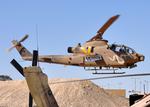
In the first publicized Israeli military hardware transaction with an Arab nation, Israel has handed over “around 16 Cobra” combat helicopters in support of Jordan’s war on the Islamic State. This was confirmed Thursday, July 23, by a US official close to the transfer. It was also the first time US-Jordanian-Israeli military cooperation in the struggle against ISIS was publicly disclosed.
“These choppers are for border security,” said the unnamed US official. DEBKAfile’s military and counter-terror sources disclose that the Cobras are needed for a large-scale Jordanian aerial-commando operation launched in the western Iraqi province of Anbar, which borders on the Hashemite Kingdom. This operation is designed to carve out a security belt tens of kilometers deep inside Iraq as a barrier against Islamic State’s encroachment.
Amman approached Washington for combat helicopters to back the operation and was told that the US is short of these items and would turn Israel to pitch in. The US first provided mechanical overhauls for the aircraft before they were incorporated free of charge in Jordan’s existing Cobra fleet.
The transfer was announced while US Defense Secretary Ashton Carter was touring the Middle East. He arrived in Amman Tuesday, July 21,after talks in Israel, and visited Baghdad unannounced Thursday, July 23 for an update on the war on ISIS
The mounting Islamist threat to Jordan is coming now from two directions – the Iraqi province of Anbar and Syria. ISIS forces have grabbed positions in southern Syria near the intersection of the Jordanian, Iraqi and Syrian borders. They have also moved up to the eastern Syrian town of Abu Kamal on the Iraqi border and, since mid-May, have gradually detached small groups from the captured central Syrian town of Palmyra and quietly built up positions in the south near Jabal Druze.
This buildup has been tracked by US, Jordanian and Israeli surveillance.
The Islamist domestic threat to the Hashemite Kingdom is no less acute. Jihadist sleeper cells have been planted in Jordan ready to strike strategic targets for a reign of terror to coincide with the onset of external Islamic State attacks staged from Iraq and Syria.
Our military sources report that US-Israeli-Jordanian cooperation is channeled through the US Central Command Forward-Jordan from its headquarters north of Amman. It is staffed by US, British, Jordanian, Saudi and Israeli officers working together to defeat ISIS.
Iran’s negotiations with the P5+1 powers are narrowly defined to include only the Islamic Republic’s nuclear program. However, Tehran’s abysmal record on human rights should reveal to the world what to expect by way of compliance on any nuclear deal.
In facilities under their control, both the IRGC and the MOIS are permitted to execute prisoners without trial or effectively any judicial proceeding.
Iran will also have permission to import or develop Intercontinental Ballistic Missiles (ICBMs) with the ability to deliver a nuclear weapon to other continents, including to the United States.
The Islamic Republic of Iran’s human rights record is among the earth’s worst. Iran’s horrific treatment of its own citizens, however, has long been obscured by headlines of the ongoing nuclear negotiations, from which human right issues have been excluded.
Lost in the daily detailed reporting about nuclear talks is the regime’s increased rate of executions of its own citizens during the negotiations. Iran now has overtaken China as having the highest per capita rate for inflicting capital punishment.
While the Islamic Republic dons a reasonable and sophisticated face to the world as it negotiates with P5+1 powers in Switzerland, the authoritarian theocracy’s intelligence services continue to arrest journalists, Bahai and Sunni religious minorities as well as ethnic minorities like Kurds from Kordestan Province and Arabs from Khuzestan Province.[1]
The regime runs such a vast network of prisons and detention centers, many of them still secret, that it has taken on the dimension of a state within a state.[2] This “Prison Archipelago,” similar in relative size and brutality as the network once run by the Soviet KGB, is the primary instrument of terror that keeps the Iranian ruling class in power.
To grasp the magnitude of this domestic terror apparatus, one has only to consult the semi-annual reports on the human rights record of Iran published by United Nations Special Rapporteur Ahmad Shaheed.[3] While Westerners are treated to the smiling countenance of Iran’s President Hassan Rouhani and the sophisticated, reasonable, Westernized image of Foreign Minister Mohammad Javad Zarif, Iran’s citizens must contend with the visage of the real Iran: the face of the Islamic Revolution Guard Corps (IRGC) storm-trooper.
The IRGC and the Ministry of Intelligence and Security (MOIS) run their own network of prisons, detention centers and separate wards within certain jails. Ward 209, for instance, of Iran’s infamous Evin Prison in Tehran, is run by the MOIS.[4] Prison 59, also known as Detention Center #59, in Tehran, is run by the IRGC.
In facilities under their control, both the IRGC and the MOIS are permitted to execute prisoners without trial or effectively any judicial proceeding. Hundreds of extra-judicial executions have been carried out by the regime at Mashhad’s Vakilabad Prison.[5] Although many of those executed at Vakilabad are reported to be drug offenders and smugglers, some are ethnic Baluch irredentists and Sunni Muslims living in Sistan-Baluchistan Province, in Iran’s Far East.[6]Moreover, occasionally, regular prison guards initiate raids in which prisoners are beaten and sometimes killed — especially those inmates who have managed to embarrass the regime by secretly passing information to the Western media concerning human rights violations. [7]
In contrast to the media’s “soft image” portrayal of Hassan Rouhani since his election to Iran’s presidency in June 2013, the rate of executions in Iran has increased dramatically.[8] Moreover, among those executed last year were human rights campaigners, political activists, and religious and ethnic minorities.[9]
Eyewitness accounts, many of them testimonies by former “citizens” of the prison archipelago state, have attested to the use of widespread torture in Iran’s prisons. One type of torture noted by a former victim of the technique is called “the chicken” (jujeh kabob): an individual’s arms are bent back and tied to his ankles while being suspended in mid-air. Karaj’s Gohardasht Prison has a suite of cells called Section 1, referred to by veterans of Iran’s Prison Archipelago as “Khane Sag” or the “Dog House,” where prisoners are usually subjected to constant torture, sometimes resulting in death. [10]
Rape of female prisoners increased after the arrests young people who protested the results of the 2009 presidential elections, which returned former President Mahmoud Ahmadinejad to office for a second term.[11] Rape in Iranian prisons is also visited upon young males, a practice referred to as “under-bedding.” Homosexual males in Iranian prisons are referred to as “vach” a slang word that connotes sexual slavery.[12]
In the archipelago, the prisons are overcrowded, with many inmates forced to sleep on the floors of hallways outside the filthy cells. Detention centers, meant only to hold people for a few days while they are processed to prisons, often have only a couple of toilets for hundreds of detainees. Moreover, access to medical care is usually denied, leading to many unnecessary deaths of prisoners whose offenses may have only been minor.[13] Conditions were so bad in Ghezel Hasr Prison in Karaj — with cells holding four times their capacity — that inmates staged a revolt in March 2011, resulting in as many as 50 deaths.[14]
Iran’s Prison Archipelago reflects the core of the true nature of the Islamic Republic — not the Javad Zarif tableau that Kerry & Co. and the compliant media would evidently have us imagine,
If Congress wants to insert itself more effectively in defining what U.S. policy should be toward the Islamic Republic, it might borrow a page from the era that produced the Jackson-Vanik legislative initiative of 1975, which promised economic trade benefits to the USSR that were linked to the Soviets allowing their captive citizens to leave the country. This legislation helped liberation of hundreds of thousands of Russian Jews.
Iranian-Americans possess the potential to mobilize to achieve the same result for thousands of political prisoners in Iran, while educating American citizens about the real nature of the Islamic Republic.
Moreover, the Islamic Republic of Iran — until it completely changes its behavior, should not be permitted to pursue nuclear research that could lead to the development of a nuclear weapon or the capability to deliver one. The deal made with Iran will give it permission to import or develop Intercontinental Ballistic Missiles (ICBMs) with the ability to deliver a nuclear weapon to other continents, including to the United States.
Such an outcome would leave in tatters any worthy legacy of the current U.S. administration and of the politicians who support the deal.
[3] March 2015 Report on the Situation on Human Rights in Iran by the United Nations Special Rapporteur Ahmad Rasheed. See Rasheed’s exhaustively detailed reports on Human Rights in Iran published every six months as commissioned by the UN Secretary General.
[4] Ward 209, Former Inmate Report that it is run by VEVAK-the MOIS. See also report of journalists and bloggers Faribah Pajoh and Nafiseh Zareh Kohan, both of whom were arrested in August 2009 and who have been subsequently released.
[5] The International Campaign for Human Rights in Iran, Reporting on Executions in Vakilabad Prison. See testimony of former inmates, such as that of Ahmad Ghabel. Executions carried out in Vakilabad Prison have been primarily for drug-related crimes.
[6] Sistan-Baluchistan Province is where Sunni Religious and Baluch ethnic minorities are most concentrated in Iran. But it is also the center of drug smuggling routes into Iran from Afghanistan’s vast expanse of opium poppy fields.
[7] “Letters from Iran’s Hellish Prisons” by Jason Shams, 19 September 2010. On 17 April 2014, guards at Evin Prison in an event described as “Black Thursday,” Evin Prison guards attacked prisoners in Ward 350.
[8] See Amnesty International Statistics for 2013 and 2014.
[9] Report of Secretary-General on the Situation of Human Rights in the Islamic Republic of Iran. Human Rights Council 11 March 2014.
[13] Advance Unedited Version of the 11 March 2014 Report of the Secretary General on the Situation of Human Rights in the Islamic Republic of Iran. P.6. Rights Disregarded: Prisons in the Islamic Republic of Iran.
[14] Rahana Human Rights News Agency 17 March 2011. Report on Massacre of Inmates in Zaidan-e-Ghezel Hesar.
European Union-American acceptance of the lie of “Arab Susiya” is a twisted anti-Semitic libel on which the entire Arab claim to all of Israel is based.
Arab girls with sign promoting the lie that they have lived there for decades. Aerial maps prove no Arabs lived there.
A fictional Palestinian Authority village is on the throes of becoming a reality that threatens a Jewish presence next to the Talmudic-period Jewish village of Susiya and would be a catalyst to support the blood libel that all of Israel was stolen from Arabs.
Arab Susiya, with several dozen tents and structures, has been built like a Broadway stage, complete with props that enable the Arabs to spin the yarn that it has existed for centuries but that the mean IDF is trying to destroy their ancient lifestyle.
The U.S. State Dept., the European Union and lazy and inherently biased international media have swallowed the tale that is chock full of romanticism and anti-Zionism.
The southern Hebron Hills until recent years was a forgotten rural region. Archaeological evidence clearly proves that Jews lived in Biblical and Talmudic times until as late as the 9th century, coinciding with the birth and rise of Islam.
Modern aerial photographs and academic researchers have categorically established that Arabs never lived in Susiya, but the world prefers to believe starry-eyed fairy tales that Jews are land thieves.
For centuries, only a few thousand Arabs populated the relatively vast southern Hebron Hills. Other Arabs came from the Hebron area to stay in caves for two months during the season for planting and reaping wheat or to grave sheep and goats.
Other than that, they were never to be seen because their homes were elsewhere.
All of that changed soon after the early 1980s when the Jews returned after 1,500 years.
The presence of Jews in the southern Hebron Hills woke up the Arab neglect of the region, where the Ottoman Empire, the British Mandate and the Jordanian occupation after the War for Independence in 1948 never issued a solitary deed of land ownership.
Yasser Arafat in Ramallah and Arabs in Hebron started getting antsy about the Jews moving into a strategic area from which Arabs staged several deadly terrorist attacks before the Six-Day War in 1967, but they had a problem. Arabs did not want to move from the urban areas of Hebron and adjacent Halhoul and Yatta and into the mountain desert where the biggest crop is rocks.
The European Union and leftist organizations came to the rescue. They pay Arabs to live in the region and to claim that their families have done so for centuries.
B’Tselem, the EU and other pro-Arab group built structures for Arabs, give them tents, solar power and water purification systems.
They have built new villages that never existed before, dotting the hillsides with a nearly contiguous presence trumpeted with a fictitious “historical claim.” For the record, the Jews have an older historical claim, as evidenced by the ancient synagogues in Susiya and in neighboring Samoa.
The focus of the creation of this lie has been Susiya, the largest Jewish community in the area, although less than 200 families live there. It is located several hundred yards from the Talmudic city, which is protected as a natural park.
The European Union and leftist groups have invested tens of thousands of dollars to bring Arabs to the narrow stretch of land separating modern and ancient Susiya. The IDF, with the approval of the Supreme Court, has issued demolition orders for some – but not all – of the illegal Arabs structures.
Most of them exist with the classic Bedouin and Arab ruse of cement buildings covered by tents to give the romantic impression they are inhabited by a group of Arabs whose love for the land is greater than the temptations to live a life of convenience in the city.
Their love for money and the love for hating Zionists are even greater.
The EU and leftists fund the Arabs to allow them to live through cold, windy and sometimes snowy winters, as well as the hot and sultry days of summer.
There are aerial photographs from two decades ago showing that not one Arab lived in Susiya, but the European Union is giving away free tickets to a play that is being billed as reality.
It has all of the elements that the anti-Israel establishment needs to beat their breasts and berate Israel for being so cruel as to destroy the lifestyle of Arabs and expel them from their ancient lifestyle, which in truth dates back to approximately 10 years.
The spokesman for the fake Arab Susiya is Nasser Nawaja, the author of today’s fiction presented as “opinion” by The New York Times. He wrote, and is quoted over and over by dummy journalists, that his mother was born in Khirbet Susiya.
And I was born in Antarctica, and you, dear reader, were born in Saudi Arabia.
Nawaja makes his living as a paid servant for B’Tselem and the European Union and whose job is to dupe the United States to adopt the illusion on which is based the Palestinian Authority claim to the rest of Judea and Samaria as well as all of Israel.
The oft-documented reports that the Palestinian Authority teaches that Haifa and Jaffa (Yafo) are part of “ancient Palestine” always were laughable and ridiculous, so thought the Israel government.
It now has woken up, years too late, and Foreign Minister spokesman Emmanuel Nachson shared with The JewishPress.com a directive it issued to its emissaries around the world to put a finger in the dike to stop the flood of fabrication.
Unfortunately, the Foreign Ministry is using logic, which is of no use, and rests its case on “long-standing agreements between Israel and the Palestinian Authority, including the Oslo agreements,” which no longer are a reference point for anything except for a study of idiocy.
The Foreign Ministry also told its foreign staff:
These clusters of structures… were built illegally and adjacent to an ancient Jewish archeological site.
Contrary to Palestinian claims that these structures have been permanently inhabited for decades, in fact, only a handful of families resided there in the 1980s and they only used the structures on a seasonal basis….
On 4 May 2015, the Supreme Court declined to issue another temporary injunction preventing demolitions.
The government is not taking to heart Deputy Foreign Minister Tzipi Hotovely’s advice to emissaries when she took office two months ago and said that the world needs to be reminded that Israel – all of Israel – belong to Jews by Biblical birthright. Anyone who does not agree can take his complaint to God.
The European Union the United Nations and especially the Obama administration do not care about the logic of legal or illegal buildings because they have adopted the entire Palestinian Authority hate libel that Israel is an “occupier” and that Jews have no right to live where Arabs want to live.
This has nothing to do with the “West Bank.” It has to do with all of Israel.
The “government of Tel Aviv” has closed its eyes for decades to the Bedouin and Arab rape of the Negev, well inside the “Green Line.” The squatters, many of whom have been imported from Judea and Samaria, have stolen tens of thousands of acres of state land – their “ancient land” – and the government has done nothing except to pay them to procreate their population bomb by winking an eye at polygamy and doling out outrageous child benefits.
“Arab Susiya” will be Israel’s Waterloo if it falls to international ignorance, in which the State Dept. has a stake.
When Indian reporter Goyal Raghubir, supposedly one of the better journalists covering Foggy Bottom, asked State Dept. spokesman John Kirby last week if he has “a reaction to reports that Israel may demolish part of a village called Susiya in the West Bank for expanding settlements,” the spokesman was ready with a prepared answer:
We’re closely following developments in the village of Susiya in the West Bank, and we strongly urge the Israeli authorities to refrain from carrying out any demolitions in the village. Demolition of this Palestinian village or of parts of it, and evictions of Palestinians from their homes would be harmful and provocative. Such actions have an impact beyond those individuals and families who are evicted. We are concerned that the demolition of this village may worsen the atmosphere for a peaceful resolution.
A “peaceful resolution” in the eyes of the Palestinian Authority, the European Union and the Obama administration is the expulsion of every Jew from all of Judea and Samaria, the Golan Heights and half of Jerusalem.
The “peaceful resolution” is build on the foundation of the lies of the “Palestinian people” and of Israel as “ancient Palestine.”
The international community has hidden its inherent anti-Semitism under propaganda spewed out as the truth by such groups as B’Tselem and Rabbis for Human Rights, who hand out to the media a perfume bottle full of a poisonous potion.
The Palestinian Authority-based Ma’an News Agency, one of the foreign media’s favorite sources for lies, told its readers last week that “Susiya villagers reportedly built homes in 1986 on agricultural land they owned, after being evicted by Israel from their previous dwellings on land declared as an archaeological site.”
Horse manure.
I have been living in this area since 1991 and frequently visited the archaeological site of Susiya. There never was a single structure in “Arab Susiya” until the late 1990s.
The State Dept. will not believe me. The European Union will not believe me. The United Nations will not believe me.
Why?
It is not because I am an “occupier;” it is not because I am a “settler’” and it is not because they care about Arabs, or “Palestinians.”
“Mr. Bean” has the answer in his portrayal of someone at the entrance to Hell, where the devil tells the Christians, “Yes, I am sorry. I am afraid the Jews were right,”
The world cannot admit it, and that is why it adopts the lie of an “Arab Susiya.”
2004 satellite image of the military complex at Parchin, Iran. (AP/DigitalGlobe-Institute for Science and International Security)
WASHINGTON — As top administration officials prepared for what will be their first day of unclassified testimony in Congress Thursday in support of the Iran nuclear deal, a very public row erupted Wednesday over whether the administration could — and would — disclose what some lawmakers called the “secret side deals” of the agreement.
Even as the White House deployed Secretary of State John Kerry and Energy Secretary Ernest Moniz to Capitol Hill for a series of classified briefings Wednesday meant to shore up support for the Iran deal in a dubious legislature, lawmakers demanded more details on agreements reached between the International Atomic Energy Agency (IAEA) and Iran with the consent of the P5+1 group of world powers. Those agreements were not previously revealed to Congress as part of the 60-day review process required under law.
One day after Senator Tom Cotton and Representative Mike Pompeo said that an IAEA official in Vienna had told them about the agreements with Iran, administration officials denied these constituted “secret side agreements” that were kept out of the nuclear agreement presented to Congress for review.
“There’s no side deals, there’s no secret deals, between Iran and the IAEA, that the P5+1 has not been briefed on in detail. These kinds of technical arrangements with the IAEA are a matter of standard practice, that they’re not released publicly or to other states, but our experts are familiar and comfortable with the contents, which we would be happy to discuss with Congress in a classified setting,” State Department Spokesman John Kirby said during his daily press briefing.
Tom Cotton (Courtesy United States Congress)
Kirby explained that the so-called “side deals” involved “issues between Iran and the IAEA,” referring to them as “technical agreements” and emphasizing that such agreements “are never shared outside the state in question in the IAEA.” At the same time, the US had been briefed on the agreements and administration officials were willing to discuss them with lawmakers.
US National Security Adviser Susan Rice during an interview with Charlie Rose on the Public Broadcasting Service, February 24, 2015. (screen capture/YouTube/Charlie Rose)
National Security Adviser Susan Rice on Wednesday confirmed the existence of the side agreements, telling reporters that they dealt with Iran’s documentation of previous military dimensions of its nuclear program, a key aspect of intelligence about the program that enabled a better assessment of its scope and purpose.
Although Rice claimed that the arrangements between the IAEA and Iran were “no secret,” the firestorm began when Cotton and Pompeo, following a meeting in Vienna Friday with representatives of the IAEA, said officials from the watchdog group had told them the agreements would remain secret.
“The agency conveyed to the lawmakers that two side deals made between the Islamic Republic of Iran and the IAEA as part of the Joint Comprehensive Plan of Action (JCPOA) will remain secret and will not be shared with other nations, with Congress, or with the public,” the lawmakers said in a statement.
Senate Foreign Relations Committee Chairman Sen. Bob Corker (R-Tennessee), left, shakes hands with ranking member Sen. Ben Cardin (D-Maryland) during a committee markup meeting on the proposed nuclear agreement with Iran on April 14, 2015. (JTA/Win McNamee/Getty Images)
One of the agreements covers inspection of the Parchin military complex, a site that the IAEA suspects was being used for experiments related to weaponization of Iran’s nuclear technology. The second details how the IAEA and Iran will resolve outstanding issues in determining the possible military dimensions of Iran’s nuclear program, Cotton and Pompeo said.
Although Rice and Kirby claimed that US negotiators were familiar with the contents of the IAEA-Iran agreements, Cotton and Pompeo said that they were told that the agreements would not be released even to the P5+1 member states who negotiated the broader deal.
Under the terms of the Iran Nuclear Agreement Review Act passed earlier this year, the administration is required to provide Congress with all documents related to the agreement, including “annexes, appendices, codicils, side agreements, implementing materials, documents, and guidance, technical or other understandings and any related agreements, whether entered into or implemented prior to the agreement or to be entered into or implemented in the future.”
On Wednesday, the author of the law, Senator Bob Corker, a Republican, teamed up with Senator Ben Cardin, a Democrat, to write their second letter to the administration in as many weeks expressing concern over whether it had adhered to the law’s requirements.
This time, the bipartisan duo reportedly requested that Kerry provide them any available documents related to the IAEA-Iran agreements.
Cardin is one of many Democratic senators who have yet to say whether they will support or oppose the deal with Iran when it comes to key Senate and House votes on deal-killing legislation that will likely be placed before Congress within the allotted 60 days. The administration needs to win over at least 34 senators or 146 House members to ensure President Barack Obama’s veto of any such legislation cannot be overturned.
House Democratic leader Nancy Pelosi, an announced supporter of the deal, has expressed optimism that the White House can prevail, and Senator Dick Durbin, a member of the Senate Democratic leadership, declared his support for the agreement this week.
The ISIS Kornet missile attack on Egyptian Navy vessel
Islamic State affiliates in Sinai and Libya have banded together with the Palestinian Hamas rulers of the Gaza Strip for the shared goals of capturing northern Sinai from the Egyptian army and staging an assassination coup against President Abdel-Fatteh El-Sisi, DEBKAfile’s exclusive military and intelligence sources report.
They are in the throes of four steps for promoting their objectives:
1. Monday, June 29, a rogue group of Egyptian Special Forces accessed the heavily-guarded upscale Cairo district of Heliopolis to plant a bomb car, which they remotely detonated as the convoy of their target, Egypt’s general prosecutor Hisham Barakat, went by. He was killed on the spot. The assassins were members of the Egyptian elite force which had defected to the Islamic State of Iraq and the Levant.
Three weeks later, on July 16, notwithstanding reinforced security in Heliopolis, ISIS killers reached inside the neighborhood once again and planted a roadside bomb. It was detonated as an Interior Ministry special forces security patrol moved past.
Because of the tight official blackout on the event, there are no reliable accounts on casualties. The authorities in Cairo reported that one Egyptian soldier was injured, but this is no doubt only part of the picture.
The following day, July 17, a violent clash erupted In the Talibiya neighborhood of Giza near the pyramids between Egyptian Special Forces and Muslim Brotherhood’s underground cells. Five MB adherents were reported killed, but again no word on military losses.
2. On July 1, ISIS forces launched their most ambitious offensive to date against Egyptian military and police facilities in northern Sinai. Still ongoing three weeks later, the losses the Egyptian military have sustained to date are estimated at 120 dead and hundreds injured. Though fighting fiercely, Egyptian troops have not been able to repel the continuous Islamist assault or contain its advance through the northeastern section of the peninsula.
Tuesday, July 21, Hamas terrorists arrived at ISIS positions in northern Sinai for a joint assault on the base of the Multinational Observer Force at El Gorah, not far from the embattled town of Sheik Zuwaid. It was the first major attack on the US-led force that was installed in Sinai to monitor the 1979 Egyptian-Israeli peace accord – and is still going on..
Here, too, the MFO command and Cairo have combined to impose a blackout on the situation in the camp and the extent of casualties..
3. On July 17, the Islamic state of Sinai sank an Egyptian coast guard vessel with a sophisticated guided Kornet anti-tank missile. The ship was patrolling the Mediterranean shore of Rafah to prevent the smuggling of arms and fighters from Egypt proper and Libya into northern Sinai. This was a landmark incident in that it was the first time ISIS is known to have sunk an adversary’s vessel at sea.
Cairo reported at first that a fire broke out on the ship and there were no casualties.
4. On July 22, an audio message began making the rounds in Cairo and other Egyptian cities claiming to be the voice of Hisham al-Ashmawy, an Egyptian Special Forces officer who defected to ISIS. He said the country had been “overpowered by the new pharaoh” and called on all Egyptians “to come together to confront the enemy.” The message concluded with the words: “Do not fear them, but fear Allah if you are true believers.”
Western and Middle East counter-terror experts have concluded that it was Hisham al-Ashmawy who orchestrated the assassination of the general prosecutor last month. They tag him as the leader of the group of Egyptian officers and men who defected to ISIS. Egypt’s elite military units would appear therefore to be heavily penetrated by the Islamic State.
For Egyptian rulers this is a recurring menace. Thirty-years ago in October 1981, President Anwar Sadat was assassinated by a senior Egyptian intelligence officer who had secretly joined the radical Egyptian Islamic Jihad, one of Al Qaeda’s two parent groups, and went AWOL a short time earlier.
The Iran nuclear agreement includes two secret side deals covering a key Iranian military site and other past arms activities, according to two lawmakers who are demanding that Congress be granted access to the documents.
The secret agreements were reached between Iran and the International Atomic Energy (IAEA) on Tehran’s past nuclear arms work and are a central component of the Vienna accord reached by Iran, the United States, and five other states.
A key part of the nuclear agreement requires Iran to disclose all military nuclear arms work before international sanctions are lifted. The IAEA has until December to report on the past military activities.
Rep. Mike Pompeo, (R., Kan.), a member of the House Permanent Select Committee, said in an interview he first learned of the secret side deals by questioning IAEA officials.
Pompeo, who first revealed the agreements along with Sen. Tom Cotton, (R., Ark.), said there may be additional secret pacts the Obama administration has not disclosed to Congress as required by legislation covering congressional review of the Iran nuclear agreement.
The agreements deal with access to Iran’s military facility at Parchin, a military site that was excluded from the public text of the Vienna agreement reached July 14. A second secret accord outlines how past nuclear arms work by Iran will be addressed.
“It’s outrageous,” said Pompeo of the secret agreements, noting that other members of the six-nation agreement may already have been briefed on the side deals.
“We have asked for information from the intelligence community and the State Department about these agreements,” Pompeo said.
At the State Department Wednesday, spokesman John Kirby disputed the lawmakers claims and said “Congress has what we have.” The side agreements in question are “IAEA documents” that are not part of the formal agreement, the spokesman told reporters.
“There’s no side deals. There’s no secret deals between Iran and the IAEA that the P5- plus-1 has not been briefed on in detail,” Kirby said.
Kirby called the IAEA accords “technical arrangements” that are standard practice by the agency. The documents will not be released publicly or to other states.
“But our experts are familiar and comfortable with the contents, which we would be happy to discuss with Congress in a classified setting,” Kirby said.
The issue was expected to be raised during closed-door briefings on Capitol Hill on Wednesday, Kirby said.
Rep. Robert Pittenger, a member of the House Financial Services Committee and vice chairman of the panel’s Task Force to Investigate Terrorism Financing, voiced concerns about the Iran deal after a closed-door meeting with Secretary of State John Kerry, Energy Secretary Ernest Moniz, and Treasury Secretary Jack Lew.
“Nothing they talked about gave me confidence the administration has adequately addressed the issue of inspections or sanctions relief [for Iran],” Pittenger (R-N.C.) told the Free Beacon.
Iran has been receiving $700 million a month for the past several months and will get a windfall of over $100 billion in frozen funds as part of the deal, he said, while at the same time Tehran continues to support terrorism and backs Syria.
“A zebra’s stripes don’t change,” he said. “This administration is under the erroneous assumption that Iran will be different today than it was from yesterday.”
Congress has been provided with copies of all materials related to what is dubbed the Joint Comprehensive Plan of Action, including annexes and a verification assessment, he said.
White House National Security Adviser Susan Rice echoed Kirby’s comments that all Iran deal documents were given to Congress.
“These [IAEA-Iran] documents are not public, but nonetheless, we have been briefed on those documents, we know their contents, we’re satisfied with them and we will share the contents of those briefings in full in a classified session with the Congress,” Rice said. “So there’s nothing in that regard that we know that they won’t know.”
Pompeo said the administration may be seeking to provide Iran with a face-saving measure after Iran publicly announced all its military facilities would be off-limits to international nuclear inspectors.
“It may well be that this was an attempt to give political cover for Iranian negotiators, but in some sense, that’s not my problem,” he said.
Diplomacy is no excuse for preventing Congress, as representatives of the American people, from fully understanding what has taken place in the past at Iran’s nuclear facility at Parchin and other verification issues, Pompeo said.
“This is one of the central questions of the agreement,” he added. “We need to see these agreements before we vote.”
Parchin is the location near Tehran where, according to the IAEA, Iran is suspected of carrying out nuclear arms testing, and specifically high-explosives testing of the type needed to create a nuclear blast.
Cotton, a member of the Senate Intelligence Committee, said the secret deals must be disclosed to Congress.
“The administration says this deal isn’t about trusting Iran, but that is exactly what it’s asking Congress and the American people to do if side deals related to the Parchin military facility and possible military dimensions of Iran’s nuclear program are kept secret,” Cotton told the Washington Free Beacon.
“My colleagues and I are demanding that the president produce these side agreements for congressional review,” he said. “It is hard to see how Congress can fulfill its duties if it’s kept in the dark about significant portions of the nuclear deal.”
IAEA Director Yukiya Amano announced July 14 that Iran had agreed to a “road-map” accord that would resolve past nuclear arms work.
Pompeo and Cotton said the IAEA secret side agreements govern Parchin inspections and terms for how Iran will satisfy the IAEA’s questions about past nuclear arms work.
Those question are outlined in a November 2011 IAEA report. The report lists the following outstanding nuclear weapons questions:
Procurement of nuclear and dual-use civilian-military equipment and materials by the Iranian military;
Development of undeclared methods for producing nuclear material;
Acquisition of nuclear weapons information and documents from a secret nuclear supplier network; and,
Indigenous design work on a nuclear weapons and testing of components.
Congress passed the Iran Nuclear Agreement Review Act that requires the administration to provide Congress with all documents, including “annexes, appendices, codicils, side agreements, implementing materials, documents, and guidance, technical or other understandings and any related agreements, whether entered into or implemented prior to the agreement or to be entered into or implemented in the future,” according to the law signed by the president.
Pompeo called the agreement “the worst of backroom deals.”
Not providing access to the side deals violates the law and indicates the administration is “asking Congress to agree to a deal that it cannot review.”
Said Cotton: “That we are only now discovering that parts of this dangerous agreement are being kept secret begs the question of what other elements may also be secret and entirely free from public scrutiny.”








 anneinpt
 artaxes
 danmillerinpanama
 davidking1530
 Peter Hofman
 Joseph Wouk
 Peter
Peter Louisiana Steve
 WarSclerotic
Recent Comments