H/t The Jewish Press
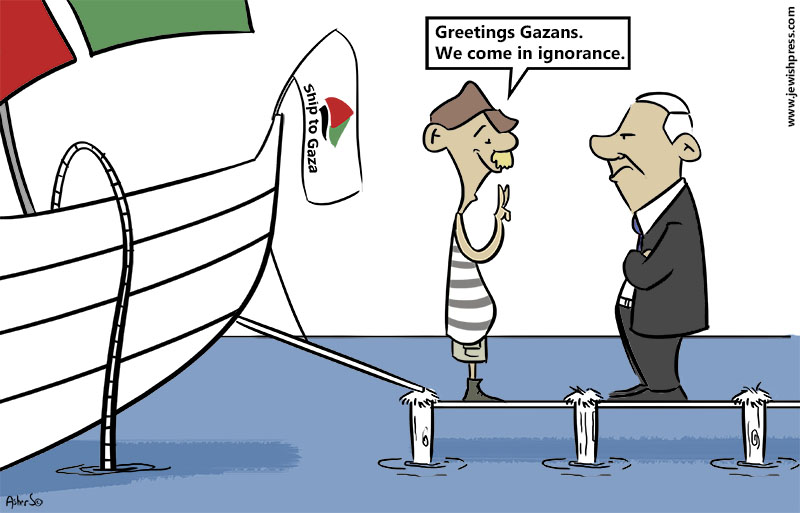
H/t The Jewish Press
Putin Calls Obama to Talk ISIS, Iran and Ukraine
via Putin Calls Obama to Talk ISIS, Iran and Ukraine – NBC News.
Russian President Vladimir Putin called President Barack Obama and discussed continued tensions in eastern Ukraine and the fight against ISIS in the Middle East.
In a statement, the White House said the two leaders addressed continued bloodshed in Syria and agreed on the importance of unity among the six world powers that are negotiating to restrict Iran’s nuclear capabilities.
As for Ukraine, the White House said Obama told Putin Russia needs to meet commitments it made in Minsk, Belarus, earlier this year, including the removal of troops and equipment from Ukrainian territory.

The call came on the same day NATO’s supreme allied commander cited a continuous flow of ammunition and other military supplies from Russia across the border to Ukraine.
According to a posting on the Kremlin’s official English website, “significant attention” was given to the topic of ISIS and terrorism in the Middle East.
“Vladimir Putin and Barack Obama agreed to instruct Russian Foreign Minister Sergei Lavrov and U.S. Secretary of State John Kerry to hold a meeting to discuss this issue,” the Kremlin said.
NATO Build up on Russia Border Will Only Heighten Tensions
This build up has no precedent in the old cold war when NATO was parked in Western Germany
via NATO Build up on Russia Border Will Only Heighten Tensions.

Armed NATO allies in Estonia, March 22, 2015 (Reuters/Ints Kalnins)
This article originally appeared in The Nation
NATO defense ministers, meeting in Brussels this week, rushed headlong into a new and potentially more dangerous cold war with Russia by taking the unprecedented decision to station men and matériel directly on Russia’s western border.
NATO’s decision, which has no precedent in the history of the last cold war, will only serve to heighten tensions with Russia and may well be the catalyst for ever more violence in the breakaway regions of eastern Ukraine.
Meanwhile, transatlantic efforts to undermine last February’s Minsk II cease-fire accords continue without surcease. On Monday, June 22, the European Union extended sanctions against Russia in the financial, energy, technological, and defense sectors until January 2016. The decision was made at the EU’s foreign ministers meeting in Luxembourg. Russia quickly retaliated, banning food imports from the EU, the United States, Canada, Norway, and Australia for the next 12 months.
The controversy surrounding the tit-for-tat sanctions was followed in short order by US Defense Secretary Ashton Carter’s weeklong trip to Europe. A senior defense department official claimed that Carter would spend his time urging NATO allies to “dispose of the Cold War playbook.”
Yet ditching the “playbook” obviously didn’t entail jettisoning Cold War–style rhetoric, since Carter went on to denounce Russian President Vladimir Putin as a “malign influence” in Eastern Europe.
Senator John McCain, as usual, went even further. Delivering comments redolent of Dwight D. Eisenhower’s famously hawkish Secretary of State John Foster Dulles’s “rollback” rhetoric last weekend in Kiev, McCain said it was in the interests of the West to “reverse” Russian aggression. According to McCain, only the deluded “still cling to the Minsk cease-fire.” He declared that he and the Ukrainians he met with “know this cease-fire is a fiction.”
Later in the week Secretary Carter participated in the NATO defense ministers’ meeting in Brussels. And the summit’s—please forgive the bureaucratese—“deliverables” indicate that the alliance has taken Carter’s directive to heart, with plans to triple the number of troops in its Response Force to 40,000 troops. Troops, armored vehicles and up to 250 tanks will be stationed across Europe’s eastern frontier, with plans to station them in Bulgaria, Estonia, Latvia, Lithuania, Poland, and Romania.
Taking this perhaps fateful step is, in fact, going far beyond the “Cold War playbook” and has no parallel in Cold War history.
These maneuvers precede what will be NATO’s largest joint exercise of the post–Cold War era, Trident Juncture 2015, which is planned to take place September 28 to November 6.
More worrying still is the fact that the NATO meeting took place amidst a rash of nuclear posturing from both sides. On June 16, President Putin made headlines throughout the West when he announced that Russia would add 40 additional intercontinental ballistic missiles to its nuclear deterrent. His announcement was, in turn, denounced in short order by Secretaries Kerry and Carter as well as by NATO Secretary General Jens Stoltenberg.
Such was the import of Putin’s comments that the House Armed Services Committee held a hearing on Thursday on nuclear deterrence. The ostensible focus of the hearing was the increasingly aged state of the US nuclear arsenal, but the hearing also served, not surprisingly, as occasion for hard-line Republicans to sound the alarm over Russia’s nuclear “provocations.”
Questions over just how to shore up the US nuclear deterrent in the face of a resurgent Russia have also been a priority of Washington’s think tanks. The Center for Strategic and International Studies just released a report, Project Atom, which urges the Pentagon to add, among other things, a carrier-based nuclear deterrent to the arsenal. The defense journalist Tyler Rogoway explains that the “strategy emanates from the idea that a deterrent is more effective when it’s forward deployed to positions in and around an ally’s geographical area.”
Yet, according to Council on Foreign Relations expert Adam Mount, for all the hand-wringing over Russia’s nuclear arsenal, Putin’s recent announcement was “entirely in line with previous expectations and did not add major new capabilities to his nuclear arsenal.” Russia, according to Mount, continues to be in full compliance “with the New START treaty, which limits strategic launchers like ICBMs.”
Nevertheless, all the Sturm und Drang over the sanctions, NATO troop buildups, and nuclear saber rattling masks the uncomfortable fact that it is our clients in Kiev who are acting as the primary—though, of course, not only—obstacles to implementing Minsk II.
In Brussels, NATO signally failed to address Kiev’s ongoing economic and financial blockade of the Donbas region of eastern Ukraine, its firing of GRAD rockets into crowded residential blocks in eastern Ukrainian cities, and its refusal to negotiate with the rebel leaders as stipulated by the Minsk accords. Meanwhile, President Obama is said to continue to insist that it is the Russian-separatist side alone that is refusing to implement the accords.
And so the events of this week have extinguished any glimmer of hope that may have been sparked by John Kerry’s diplomatic parley with the Russians in Sochi this past May. All the while, the administration, aided and abetted by a compliant Congress and a complacent media, stands idly by as the war parties on both sides of the Atlantic march on, unencumbered and virtually unopposed.
For more about an organization dedicated to opposing this rush toward a new Cold War please visit EastWestAccord.com
On eve of Iran deal, US retreats on inspections of nuclear past, speeds up sanctions relief, DEBKAfile, June 29, 2015
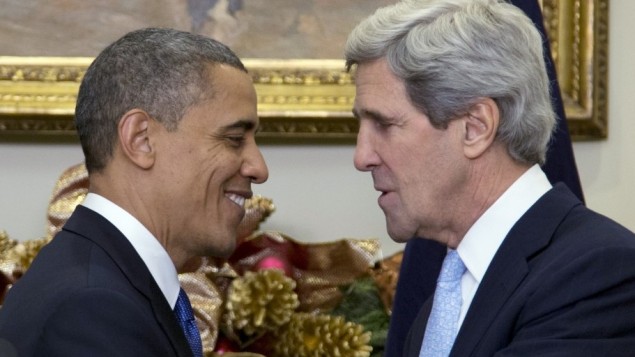 Obama and Kerry upbeat over concessions to Iran
Nothing is therefore left of the original US pledges to link sanctions relief to Iran’s compliance with its commitments or President Obama’s solemn vow to “snap back” sanctions any time for any Iranian violations. The IAEA is virtually left without teeth.
******************
Prime Minister Binyamin Netanyahu said Sunday, June 28: “We are seeing a clear retreat from the red lines that the world powers set recently and publicly.” Addressing the weekly cabinet meeting in Jerusalem and later the Knesset, he added: “There is no reason to rush to sign this bad agreement which is getting worse every day.”
Netanyahu was referring to three major concessions approved by President Barack Obama and Secretary of State John Kerry in the final stage of negotiations for a comprehensive nuclear accord with Iran.
They are outlined here by DEBKAfile:
1. After barring International Atomic Energy Agency (IAEA) inspections of suspect sites for years, Tehran will now be allowed to submit a paper with answers to queries about its past clandestine activities at those military sites, such as suspected tests of nuclear bomb detonators and explosives. That document would effectively draw a line on Iran’s suspect past
DEBKAfile: Iran has submitted countless documents to the IAEA, none of which gave specific replies to specific questions. The UN Security Council accordingly passed a number of resolutions requiring Tehran to come clean on the military aspects of its nuclear program. Tehran ignored them. Now Obama and Kerry are letting Tehran off the hook on its past secrets.
2. Obama and Kerry have withdrawn the “any time, anywhere” stipulation for snap inspections of suspect nuclear facilities, as mandated by the Additional Protocol signed by Iran. They now agree that international monitors must first submit a request to an “Iranian Committee” (not even a joint US-Iranian committee) for advance permission to inspect nuclear facilities.
This would leave Tehran free to approve, deny, or delay permission for inspections.
3. Washington has backed down on its insistence on predicating sanctions relief on Iran’s compliance with its obligations under the final accord. After Tehran countered with a demand for the sanctions to be lifted immediately upon the signing of the accord, the Obama administration agreed to remove them in three stages:
a) Straight after the deal is signed.
b) After ratification of the accord by the US Congress and Iranian Majlis.
This process is expected to take place by the end of 2015, and so Iran will win two multibillion windfalls this year without being required to meet any obligations beyond its signature
Obama counts on the support of 34 US senators. In any case, Congress is not empowered to reject or delay the deal
c) All remaining sanctions will be lifted when implementation of the accord begins.
Nothing is therefore left of the original US pledges to link sanctions relief to Iran’s compliance with its commitments or President Obama’s solemn vow to “snap back” sanctions any time for any Iranian violations. The IAEA is virtually left without teeth.
Pentagon accuses Russia of ‘playing with fire’ over nuclear threats towards Nato
by Mary Chastain 28 Jun 2015 Via Breitbart
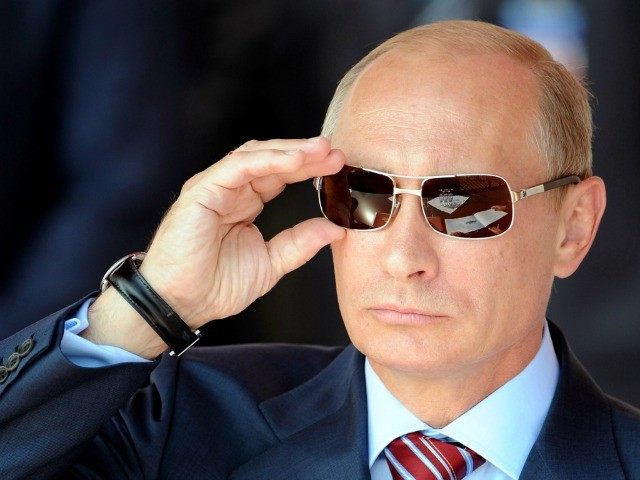
Cool sunglasses. [Photo Credit: AFP]
(Yeah, well good luck with that one Putin. Just remember the last time your predecessors tried to outspend the good old USA. – LS)
“Currently, Russia continues to deploy a group of troops in close vicinity to border and in the occupied territory of Ukraine, consisting of 45 battalion tactical groups, 17 company tactical groups, with a total number of servicemen exceeding 54,000 people, with all weapons and equipment,” stated the Anti-Terrorist Organization press office.
Putin promised new military graduates plans “to spend 22 trillion rubles (over $400 billion) through 2020 to give the armed forces dozens of navy ships, hundreds of new planes and missiles and thousands of tanks and other weapons.” But his nuclear-armed intercontinental missile program has been delayed, which means the first missile will not be available for several months. There are no specific details regarding why it is taking so long.
“The plant is doing its work,” one defense industry source told The Moscow Times. “Everything now depends on whether or not contractors deliver the [remaining] components on time. The red line that cannot be crossed is the end of October.”
Tensions between the West and Russia continue to rise on an almost weekly basis. Russia’s neighbors pleaded for more protection after Moscow invaded eastern Ukraine and illegally annexed Crimea in case Putin targets them next.
America recently announced more defense for NATO allies in Eastern Europe. It is the first time America has increased its presence in Europe since the end of the Cold War. The U.S. will spread weapons and 5,000 troops in Bulgaria, Estonia, Latvia, Lithuania, Romania, and Poland. All of these countries were once Soviet states or satellite states. Russian officials warned of retaliation if America places tanks and weapons near Russian borders.
“If heavy U.S. military equipment, including tanks, artillery batteries and other equipment really does turn up in countries in eastern Europe and the Baltics, that will be the most aggressive step by the Pentagon and NATO since the Cold War,” declared General Yuri Yakubov, the Russian defense ministry official. “Russia will have no option but to build up its forces and resources on the Western strategic front.”
In mid-June, Putin sent waves through the West when he announced that Russia will own 40 new intercontinental ballistic missiles in 2015. The move forced NATO to review its nuclear weapon policy.
“There is very real concern about the way in which Russia publicly bandies around nuclear stuff,” explained a NATO diplomat. “So there are quite a lot of deliberations in the alliance about nuclear [weapons], but it is being done very slowly and deliberately. We need to do due diligence on where we are.”
Putin also caused a panic when he told the world that Moscow can plant nukes anywhere in their territory, including Crimea. Under the Non-Proliferation Treaty (NPT), five countries, including Russia, may plant “nuclear weapons anywhere in its territory.” However, the United Nations and NATO still consider Crimea a part of Ukraine. In May, NATO lashed out against Russia’s buildup in Crimea. They also repeated to Moscow that none of them recognize their annexation of Crimea.
Israel Approves Security Fence on Jordan Border
Security Cabinet backs Netanyahu’s proposal to build 30 km barrier from Eilat to planned Timna airport, as Jordan ties continue to flag.
By Arutz Sheva Staff
First Publish: 6/29/2015, 2:47 PM
via Israel Approves Security Fence on Jordan Border – Defense/Security – News – Arutz Sheva.

The Security Cabinet on Sunday adopted Prime Minister Binyamin Netanyahu’s proposal to build a 30-kilometer (over 18-mile) long security barrier on the eastern border with Jordan in the very south of Israel.
The fence, which is to stretch from the southern port city of Eilat to the site designated for the Timna airport, comes after Israel completed work on the border fence with Sinai and improved the security barrier with Syria on the Golan Heights.
In addition the Security Cabinet approved the allocation of resources for building the fence.
Tensions have been high between Israel and Jordan, after the latter has threatened to revoke the 1994 peace treaty on several occasions recently to pressure Israel to allow the Jordanian Waqf to continue denying Jews their rights to pray at the Temple Mount.
Perhaps responding to those tensions, the Israeli government clarified in a statement that it has been in contact with the Jordanian government about the security fence, noting it won’t infringe on Jordan’s national interests.
At the start of a meeting of the Knesset Foreign Affairs and Defense Committee on Monday, Netanyahu referred to the Cabinet decision.
“Yesterday in the Security Cabinet, we made a very important decision to continue a section of fence along our southern border, this time from Eilat, 30 kilometers north to past the Timna airport that is under construction,” explained the prime minister. “This is important. It is part of our national security.”
“It joins the fence that we built along the length of our border with Sinai, which blocked the entry of illegal migrants into Israel and – of course – the various terrorist movements. This step also joins the fence that we built on our border on the Golan Heights.”
Speaking about possible complications with Jordan, Netanyahu said, “I would like to make it clear that this fence will be entirely within the territory of the State of Israel. It will not, in any way, infringe on the sovereignty of the Hashemite Kingdom of Jordan and its national interests.”
Peaceful neighbors?
Tensions have been openly sour between Israel and Jordan of late; Jordanian Ambassador to Israel Walid Obeidat was recalled to Jordan last November until February in an act of protest over talk in Israel of allowing Jews to pray on the Mount, which is the holiest site in Judaism but remains under the discriminatory de facto control of the Waqf.
Last November the Jordanian parliament held a special prayer session for the two Arab terrorists who committed a brutal attack on a Jerusalem synagogue, murdering four Jews at prayer and beheading two of them, as well as murdering a police officer.
Jordan’s Prime Minister Abdullah Nsur also sent a letter of condolence to the families of the two murderous terrorists. Aside from its threats regarding the Temple Mount, Jordan also has been leading the Palestinian Authority’s (PA) “diplomatic war” against Israel at the UN.
Jordan itself is made up of a majority of Palestinian Arabs, and nearly all Arab residents of Judea and Samaria hold Jordanian citizenship, leading many to suggest creating a “Palestine” in Jordan.
That suggestion has been given further backing by none other than PA Chairman Mahmoud Abbas, who said earlier this month that Jordanian and Palestinian Arabs are “one people living in two states.”




 anneinpt
 artaxes
 danmillerinpanama
 davidking1530
 Peter Hofman
 Joseph Wouk
 Peter
Peter Louisiana Steve
 WarSclerotic
Recent Comments