Posted tagged ‘U.S. Congress’

Obama goes nuclear on Iran deal opponents

July 31, 2015

Obama goes nuclear on Iran deal opponents, Front Page Magazine, Daniel Greenfield, July 31, 2015

(Please see also, Obama tells liberals: I can’t carry Iran deal on my own and The Iran Nuke Documents Obama Doesn’t Want You to See.– DM)
of

Obama will do anything to protect his legacy. And the fight has only begun.

***********************

Obama has decided that two wildly unpopular policies, one foreign and one domestic, will be the final legacy of his wildly unpopular administration. The domestic policy is gun control. The foreign policy is Iranian nukes. While Americans will be disarmed, Iran will be getting ready for its ballistic missiles.

Ramming through wildly unpopular policies is what this administration does best. More than anything else, this administration will be remembered for the mix of bullying, smears, pop culture distractions, outright lies, bureaucratic sabotage and blatant lawbreaking with which it achieved its policy goals.

Iran is no different.

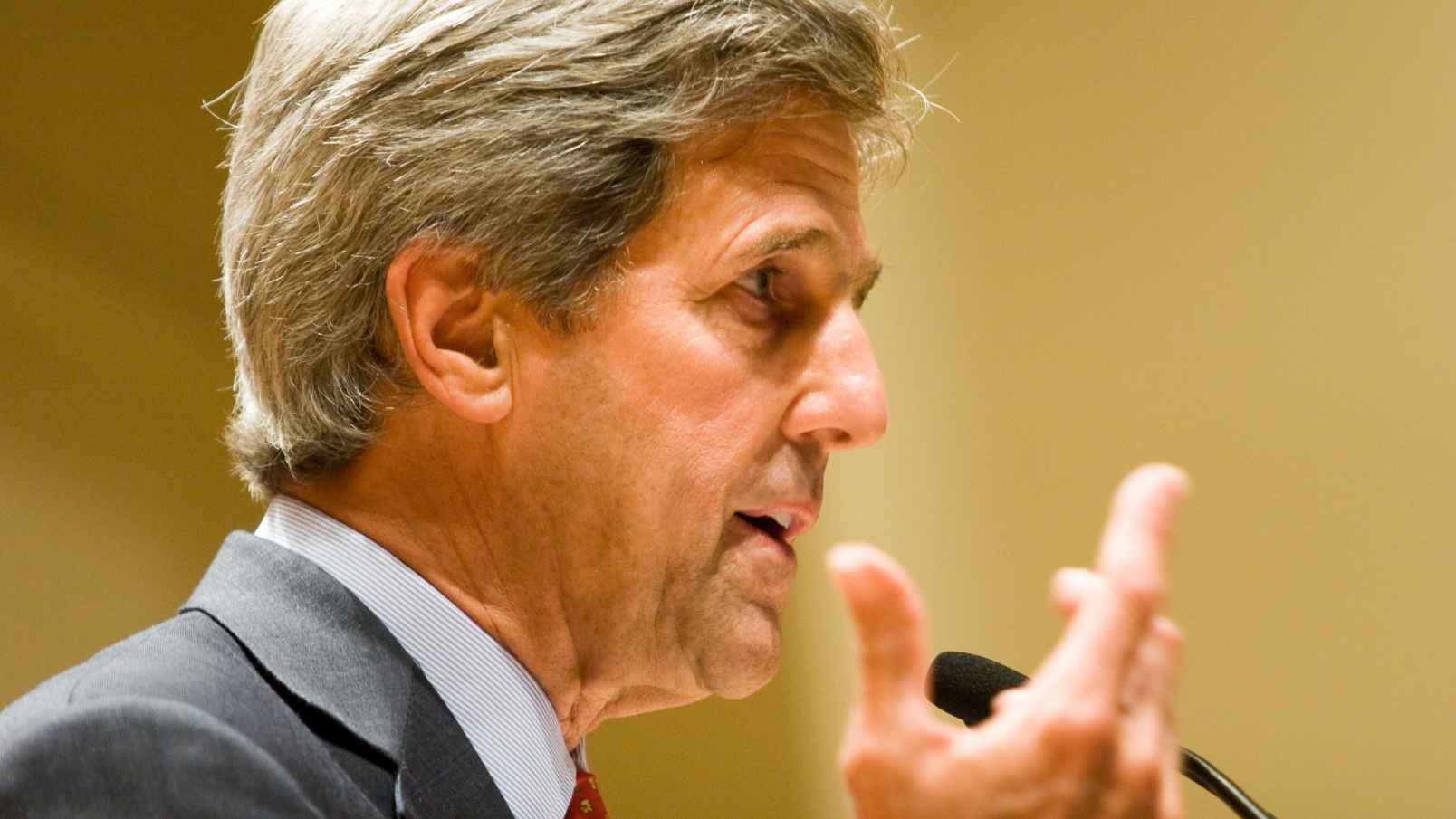
The sales pitch is going badly. John Kerry has probably managed to dissuade more senators by testifying than he would have if he had taken the fifth. A viral video featuring the Iran lobby’s Thomas Pickering lecturing failed movie star Jack Black on the importance of the deal earned all the wrong kind of laughs.

Too many Democrats are still sitting on the fence. Some have come out against the deal. So the White House is looking for weak points in a potential coalition against the deal.

Its opening move is a classical “Divide and Conquer” strategy that tries to split pro-Israel Democrats from Republicans. The Democrats are being told that a rejection of the deal means war with Iran. If they don’t back the deal, they will be warmongers. Those who oppose the deal with Iran will face the same anti-war coalition that targeted those Democrats who supported Bush’s overthrow of Saddam.

The deal is too unappealing to be sold on its merits, so it is instead being presented as the only alternative to a war. Obama and Kerry love nuance when it comes to finding all the positive sides to making deals with Iran or the Taliban, but quickly abandon it at home in favor of a polarized argument in which opponents of their latest terrorist appeasement are warmongers and traitors.

Jewish Democrats, in particular, are being told that Israel and Jews will be blamed for such a war.

John Kerry has already come out and said that Israel will be blamed. That’s nothing new for the Democratic Party. It wasn’t that long ago when Senator Hollings was claiming that Bush had invaded Iraq and passed tax cuts for the “Jewish vote”. To Jon Stewart, Obama referenced the Iraq War and suggested that the people against the deal “are not going to be making sacrifices” if there is a war.

That type of rhetoric sounded better coming from politicians who had served in the military, instead of a career community organizer who refers to a “Corpse-man” and uses Marines as umbrella stands.

Jewish Democrats who oppose the deal will be “Senator Lieberman-ed”, primaried by the left, smeared and added to the list of neo-con warmongers. Non-Jewish Democrats may be allowed a place at the table, like Kerry or Hillary, but only after they serve a penal term of appeasement as Secretary of State.

The Pollard release meanwhile begins the process of splitting Republicans from a pro-Israel coalition. The leverage is once again accusations of treason. Obama’s supporters showed where their argument was bound to end up when they spread the #47Traitors hashtag targeting Senators opposed to the deal.

Israel certainly hadn’t arranged for Pollard’s release. The administration isn’t being accommodating or trying to win over anyone. It’s calculatedly turning a former spy into a talking point during a debate involving Israel to add weight to the treason talking point.

Democrats who oppose the deal will be smeared as warmongers. Republicans who oppose it will be tarred as traitors.

Pollard’s shelf life as a talking point will be limited, but it won’t be hard to manufacture further scandals. An official here or there will be investigated for inappropriate contacts with Israeli officials or pro-Israel groups. The charges will fall apart on any real scrutiny, but the story will have achieved its results.

The last time the left wanted to kneecap pro-Israel opposition to Iran, it manufactured the Rosen-Weissman case targeting two AIPAC officials heavily involved in lobbying for sanctions on Iran. The case fell apart, but not before AIPAC offices had been raided and the media had written up a spy drama. But the real goal had been to link AIPAC to Feith, Wolfowitz and other Republican enemies of the left.

Now that the left controls the White House, it has even more leeway for its political witch hunts.

Reviving the Pollard case sends Republicans the message that national security and pro-Israel policies are a contradiction in terms. It also intimidates Jewish critics of the deal on both sides of the aisle. This is an administration that has used the IRS against its political opponents, including pro-Israel opponents like Z Street, and will not hesitate to use every arm of government against its domestic political enemies.

While the “Israel Lobby” is an incessant topic, the Iran lobby which, until Hagel’s resignation, controlled the offices of the Vice President, the Secretary of State and the Secretary of Defense is a black topic. Just about every critic is passed off as a pawn of an Israeli or Jewish organization, but mentioning that Secretary of State John Kerry has an Iranian son-in-law with reported connections to Iran’s Foreign Minister is off limits.

Obama welcomed in people like Charles W. Freeman, a Chinese state oil company board member and apologists for PRC atrocities from Tiananmen Square to Tibet, and Hamas fan Robert Malley, who wouldn’t have passed a security check to be dogcatchers in a dogless town. But now suddenly everyone else will be held to standards that Obama’s people don’t recognize or abide by for themselves.

The White House and its allies define any opposition as treason. Unwilling to force Iran to abandon its nuclear program, they are instead going nuclear on opponents of the deal. If they can split up the burgeoning coalition in Congress against the deal with accusations of treason, their own treasonous efforts to let Iran go nuclear and force the United States out of the Middle East will succeed.

And even if the tactic alone doesn’t win the day, it’s still an effective distraction.

ObamaCare was even more unpopular than the Iran deal, but Obama and his media allies kept up a barrage of distractions, attacks, smears and publicity stunts. Pollard is another way to swallow up airtime with a counter-topic while keeping opponents off balance. If Obama can’t sell the deal on its merits, he can always keep shifting the conversation to keep opponents on the defensive.

Selling the Iran deal on its merits has failed. It’s now being sold as the only alternative to war. Obama and Kerry had insisted, “No deal is better than a bad deal”, but now argue that their bad deal is better than no deal. And they demand that critics of their deal take responsibility for the alternative.

The entire line of argument is an admission that the deal is indefensible. The only possible defense of it is an attack on critics. Some of these attacks are crude. Others are subtle. Some attack directly, while others induce doubt, apathy and division.

Right now the biggest threat to Obama is the possibility that enough Democrats will join Republicans in shutting the deal down. If that happens, one of Obama’s sunset policy agendas will die. Coming off a defeat on Iran will leave him in poor shape for a fight over gun control. It will hand him a major defeat and finish off his unilateral foreign policy of signing treaties and starting wars without Congress.

Obama will do anything to protect his legacy. And the fight has only begun.
The Iran Nuke Documents Obama Doesn’t Want You to See

July 31, 2015

The Iran Nuke Documents Obama Doesn’t Want You to See, The Daily Beast, Tim Mak, July 30, 2015

(Most transparent administration ever.

–DM)

47943959.cachedKevin Lamarque/Reuters

Congress passed a law called the Iran Nuclear Agreement Review Act, also known as Corker-Cardin, requiring the administration to formally submit the Iran nuclear deal, an unclassified verification assessment with any secret annexes, and other relevant materials to Congress.

The intention of that provision was for unclassified materials to be freely available so that an open debate on the public interest could occur. Members of Congress are pointing out that this is not what is happening—and are urging the Obama administration to allow their release.

******************

Seventeen unclassified Iran deal items have been locked in ultra-secure facilities ordinarily used for top secret info. Why is the Obama administration trying to bury this material?

Scattered around the U.S. Capitol complex are a series of Sensitive Compartmentalized Information Facilities, or SCIFs, which are typically used to hold Top Secret information.But today in these deeply secure settings are a series of unclassified documents—items dealing with the Iran nuclear deal that are not secret, but that the Obama administration is nevertheless blocking the public from reading.

The Obama administration delivered 18 documents to Congress on July 19, in accordance with legislation requiring a Congressional review of the nuclear deal. Only one of these documents is classified, while the remaining 17 are unclassified.

Yet many of these unclassified documents cannot be shared with the public or discussed openly with the press. The protocol for handling these documents, set by the State Department and carried out by Congress, is that these unreleased documents can only be reviewed ‘in camera’—a Latin term that means only those with special clearance can read them—and must be held in various Congressional SCIFs.

Most staffers were hesitant to discuss—let alone share—a number of these documents, even though they’re not classified, because they require security clearances to view. By mixing a classified document with unclassified documents, critics of this arrangement contend, important facts are being kept from the public just as Congress is deciding whether to support or oppose the Iran deal.

“The unclassified items… should be public. This is going to be the most important foreign policy decision that this Congress will make,” a Republican Senate aide told The Daily Beast. “This is the administration that once said it would be the most transparent administration in history. They’re not acting like it.”

“Many in Congress view the administration’s tactic of co-mingling unclassified documents with classified documents and requiring Congressional staffers to have secret clearances just to view certain unclassified documents as an attempt by the administration to limit open debate,” a second senior Republican Congressional staffer said.

Among the 17 unclassified documents are important texts related to the Iran nuclear deal: One document, titled “Elements of Iran’s R&D Plan,” is based on the “safeguards confidential plan [between] Iran and the IAEA,” a State Department official said, and so it can’t be released publicly. The document describes how Iran’s research and development on its nuclear program, including on its centrifuges, could progress over time.

Other unclassified documents may be diplomatically sensitive: One is a letter from the foreign ministers of France, Germany and the U.K. to Secretary of State John Kerry; another is a letter from Kerry to the three foreign ministers and his Chinese counterpart as well.

The set includes a discussion paper written before the final agreement, on how sanctions would be dealt with in the interim. Yet another is a draft statement by the U.S. government, to be issued on a future Iran deal implementation day.

Bloomberg View’s Eli Lake and Josh Rogin previously reported the existence of the 18 documents submitted by the Obama administration to Congress, as well as some descriptions of what the set contained.

The Iran nuclear deal is unlike other arms control agreements “because it’s so complex and has so many moving parts,” said Jeffrey Lewis, Director of the East Asia Nonproliferation Program at the James Martin Center for Nonproliferation Studies. “It goes into jaw-dropping detail.” So it’s not a complete surprise that there might be some sensitive ancillary documents to go along with the arrangement. Iran might not want the particulars of its nuclear research program in full public view, for instance.

The unreleased, unclassified documents are informative for Congress but not for public consumption, the State Department contends.

“Some of the documents are the types of documents which, like State Department cables and other internal USG documents, we would not post publicly but would share with Congress in appropriate circumstances. Others are documents that, while not part of the [Iran nuclear agreement] itself, pertain to it and we were clear with the other P5+1 members and Iran that we would be sharing those documents with Congress, and we have,” a State Department official said.

Added the official, “Congress has every document that we have, and every Member of Congress and every staff [member] with the necessary security clearance can review all of the documents.”

Some Democrats were supportive of the administration’s hush-hush approach. The documents are part of a sensitive diplomatic process involving Iran’s nuclear program, they argue, so it’s not surprising that there are some restrictions to the level of transparency the government will allow.

“The essential elements to make the decision on the deal are out there,” a senior Democratic aide said. “I don’t think there’s a lack of transparency or discussion on [the Iran deal], because you’ve had very detailed briefings and every member of Congress has been able to view these documents… The way they are stored is consistent and not unreasonable, and I don’t think there’s anything nefarious.”

Open government advocates, on the other hand, were appalled that unclassified documents this important were being kept both from public view—and, in a real way, from serious Congressional scrutiny.

“Keeping unclassified documents in a SCIF is overkill, even if the documents are sensitive or confidential. They simply don’t need the kind of sophisticated protection against clandestine surveillance that SCIFs are intended to provide,” said Steven Aftergood, a senior research analyst at the Federation of American Scientists, working to reduce government secrecy.

“The primary obstacle to congressional review that is created by this arrangement is the requirement to physically be present in the SCIF. Members of Congress cannot review the material in their offices, or share it with trusted colleagues or with subject matter experts. It is a significant hindrance to review,” he added.

Congress passed a law called the Iran Nuclear Agreement Review Act, also known as Corker-Cardin, requiring the administration to formally submit the Iran nuclear deal, an unclassified verification assessment with any secret annexes, and other relevant materials to Congress.

The intention of that provision was for unclassified materials to be freely available so that an open debate on the public interest could occur. Members of Congress are pointing out that this is not what is happening—and are urging the Obama administration to allow their release.

“A lot of both documents and discussion that have been held in a classified setting doesn’t have classified characteristics to it… to the extent that many [documents aren’t classified,] they should be made totally public, as far as I’m concerned, so that the public can evaluate for themselves,” Democratic Sen. Bob Menendez told The Daily Beast.

Republican Sen. Bob Corker, the chairman of the Senate Foreign Relations Committee, agrees. His spokesperson told The Daily Beast that he “believes that the administration should make these unclassified documents available to the public so the American people can see the details of the Iran nuclear deal.”

Iran’s Expendable President Rouhani

July 31, 2015

Iran’s Expendable President Rouhani, World Affairs JournalAli Alfoneh, July 30, 2015

7.30.15.alfoneh_0

In Washington the agreement is being sold in part as an effort to bolster the president against more hardline forces. The opposite, however, may well play out. By achieving a nuclear deal with Iran, Washington may have invested the entirety of its agreement and relations with Iran on an expendable politician.

**********************

While Iranian President Hassan Rouhani and Foreign Minister Mohammad-Javad Zarif celebrate their recent nuclear negotiating triumph, neither they nor their Washington-based fans should pop the Zamzam cola just yet. Back in Tehran, Rouhani and Zarif are encountering increasing resistance. With the Joint Comprehensive Plan of Action (JCPOA) in hand, Supreme Leader Ali Khamenei no longer needs the duo and is likely to cease shielding them from domestic criticism as he has in their first two years in office. Worse, fearing their popularity, Khamenei may encourage the Islamic Revolutionary Guards to launch a political attack against the president and his allies.

Rouhani is perhaps in a better position to defend himself than his “pragmatic” forerunners. Today, team Rouhani is not a one-man operation that emerged from nowhere but the product of the large “technocratic” and clerical network built by his mentor, former president Ali Akbar Hashemi-Rafsanjani.

Rouhani intends to mobilize the public for his cause. After all, he has come close to delivering his single major campaign pledge — solving the crisis over Iran’s nuclear program and eliminating the international sanctions regime. Seeing some economic promise, the average voter may vote Rouhani’s allies into parliament and the Assembly of Experts in February 2016, and eventually re-elect Rouhani in presidential elections the following year.

That scenario, however, would seem optimistic. In the past, Rafsanjani and Rouhani seldom reciprocated the loyalty of their protégés, and nor can they expect their former allies’ support in troubled times. The two mullahs did not lift a finger to save their friends when opponents, which sometimes included Khamenei, began to attack Rafsanjani’s too-powerful network during his presidency in the 1990s. When Gholamhossein Karbaschi, a reformist mayor of Tehran and a Rafsanjani ally, was targeted by a politically-motivated judiciary in 1998, Rafsanjani and Rouhani (then-secretary of the Supreme National Security Council) remained silent. If Khamenei unleashes the Guards against the president, Rouhani’s network of friends is vastly smaller and weaker than was Rafsanjani’s a decade earlier and, thus, would likely scatter in difficult times.

It is also near certain that Rouhani will be incapable of capitalizing on the sanctions relief to liberalize Iran’s economy and improve living standards for the average Iranian. To date, Rouhani has already repeatedly tried, and failed, to push the Guards (upper or lower case. I’m not sure?) out of the economy. Their intransigence probably received the tacit support of Khamenei, who can’t afford to lose his praetorians’ support. After all, it was the guards who brutally suppressed the pro-democracy Green Movement in 2009. The money from sanctions relief remains more likely to find its way to the companies owned by the IRGC and the semi-public foundations controlled by Khamenei than to state coffers, and the ordinary citizen.

At the street level, the nuclear deal remains immensely popular. But the Islamic Republic isn’t a democracy, and Khamenei has feared competition from the Rouhani-Rafsanjani camp. He has before successfully curtailed the political power of Rafsanjani, once the major domo of revolutionary mullahs, and occasionally tormented his children to remind the cleric of his place. The Supreme Leader will likely ensure that the Guardian Council, which approves candidates for public office, disqualifies candidates favored by the president and his allies. The purging of candidates will be intended to keep Rouhani’s supporters home, and allow anti-Rouhani forces to score huge electoral triumphs, thus checking the popular power of the executive branch.

Simultaneously, ever more belligerent statements by Khamenei and the hardline elite of the IRGC are gradually drowning out Rouhani and Zarif’s charm offensive towards the United States.

The cumulative impact of these efforts could be disastrous for Rouhani and his team.

In Washington the agreement is being sold in part as an effort to bolster the president against more hardline forces. The opposite, however, may well play out. By achieving a nuclear deal with Iran, Washington may have invested the entirety of its agreement and relations with Iran on an expendable politician.

ObameDeal Exposed: It’s not ‘Secret’ from Congress but not in Writing

July 31, 2015

State Dept. claims Congress is “looped in,” but IAEA head refuse to testify at Senate hearings.

By: Tzvi Ben-Gedalyahu

Published: July 31st, 2015

via The Jewish Press » » ObameDeal Exposed: It’s not ‘Secret’ from Congress but not in Writing.

Matt Lee of the Associated Press at the State Department press briefing.

Matt Lee of the Associated Press at the State Department press briefing.
Photo Credit: StateDept.Gov

The State Dept. was caught in yesterday’s press briefing claiming there were not “secret deals” with Iran but admitted that it has no written copy of arrangements it is defending.

Associated Press journalist Matt Lee questioned spokesman Mark Toner at Thursday’s press briefing about many Congressmen’s concerns over IAEA access to Iran’s nuclear sites under the nuclear agreement.

Republican Sen. Bob Corker has said that IAEA director Dr. Yukiya Amano did not accept an invitation to testify at Senate Foreign Relations Committee hearings on the deal.

Toner declined to say whether Dr. Amano should testify but added:

There’s [sic] no secret deals, and we heard that expression thrown out constantly over the last couple of days. That couldn’t be farther from the truth. The IAEA, which is the one that verifies – will verify this deal, does create arrangements with countries under what’s called the Additional Protocol.

And Under Secretary Sherman has already had a secure briefing with the House leadership talking about this arrangement, and we’ve continued to provide or we will continue to provide those briefings in a classified setting, as needed….

So the perception that this has somehow been – that Congress hasn’t been looped in on this, and what we know about these arrangements is, frankly, incorrect. But they’ve had to take place in a classified setting.

Fine and dandy, but the reasonable assumption is that someone knows about the arrangements.

Lee told the spokesman:

But the notion – you said the notion that Congress hasn’t been looped in, but you haven’t been looped in because you guys haven’t read it.

Toner admitted:

We haven’t received a written copy of it, but we have been briefed on the contents.

And Lee retorted:

So someone with a photographic memory has looked at it and copied everything down in their brain and then repeated it up on the Hill?

Toner fidgeted and explained that “nuclear experts with much bigger degrees than I can ever attain have looked at this and their comfort level with it is good.”

But that does not answer the question, “If there is no secret deal, why isn’t a written version available?

Iran: Obama Admin Lying About Nuclear Deal for ‘Domestic Consumption’

July 30, 2015

Iran: Obama Admin Lying About Nuclear Deal for ‘Domestic Consumption’ Washington Free Beacon, July 30, 2015

( It’s clear that the Obama administration is lying, but what lies do the Iranian officials claim are being told? Do they involve the secret deals? — DM)

AP

Senior Iranian officials are accusing the Obama administration of lying about the details of the recent nuclear accord in order to soothe fears among U.S. lawmakers and Americans about the implications of the deal, which will release billions of dollars to the Islamic Republic while temporarily freezing its nuclear program, according to reports from Iran’s state-controlled media.

As Secretary of State John Kerry and other senior Obama administration figures launch a full-court press to convince Congress to approve the  deal, Iranian leaders are dismissing the rhetoric as “aimed at domestic consumption.”

Kerry and other top administration officials have been defending the deal on Capitol Hill in recent days, claiming that it will rein in the Islamic Republic’s contested nuclear program and fix its nuclear “breakout” period, the time required for it to obtain the amount of highly enriched uranium necessary for a nuclear weapon, at one year.

Critics have noted that the deal provides Iran with billions of dollars in sanctions relief that could be spent on terrorism and lifts bans on Iran’s export of weapons and construction of ballistic missiles.

When addressing claims this week by the administration that the deal shuts down Tehran’s nuclear infrastructure, Iranian officials scoffed and said that the Obama administration is misleading the public in order to sell the deal.

Hamid Baeidinejad, an official in the Iranian foreign ministry and one of the country’s nuclear negotiators, scoffed on Wednesday at the Obama administration’s comments, saying that they were meant to placate an American domestic audience.

“The remarks by the western officials are ambiguous comments which are merely uttered for domestic use and therefore we should say that there is no ambiguity in this (nuclear) agreement,” the Fars news agency quoted Baeidinejad saying in an interview with state-controlled radio.

Baeidinejad said that the Obama administration is misleading Americans about the deal in order to “calm opponents in the Congress and Zionist lobbies to soothe the internal conditions prevailing over debates on the nuclear agreement in that country,” Fars, which is also run by the Iranian state, reported.

As Congress spends 60 days reviewing the deal, which it may reject, the Iranian parliament is undertaking the same task.

During a meeting on Wednesday with Laurent Fabius, the French foreign minister, President Hassan Rouhani of Iran urged world powers to keep its commitments under the deal.

These includes lifting sanctions on the nearly $100 billion dollar financial empire of the Iranian Supreme Leader Ali Khamenei and agreeing to bar American inspectors from all Iranian nuclear sites.

“The Iranian government is standing strong on the path of (implementing) the agreement and we will remain committed to our undertakings as long as the other side remains loyal to its obligations,” Rouhani was quoted as saying during a meeting in Tehran with Fabius, who served as a key negotiator for the French.

Rouhani said the agreement could help Iran become a key player on the international stage.

“This agreement is not against any country and our cooperation and consultations to settle the regional problems, including fight against terrorism, humanitarian aids, and materialization of nations’ demands can prove it,” Rouhani was quoted as saying.

Meanwhile, Fabius was met at the airport by Iranian protestors who accused him of serving as an Israeli spy.

“The protesters chanted slogans such as ‘Aids, A French Gift to Iran’, ‘We Neither Forgive nor Forget’, ‘Fabius, Servant of the US, Spy of Israel’ and ‘No Welcome to Aids Lord,’” according to Fars.

John Kerry is blowing the Iran nuke deal

July 29, 2015

John Kerry is blowing the Iran nuke deal, Front Page Magazine, Daniel Greenfield, July 29, 2015

john_kerry_senator_from_ma-2

Kerry doesn’t care about Iran’s nukes or its breakout times and he resents having to memorize this stuff. What excites him is giving the finger to America and meeting up with enemies of this country. It’s how he began his career and it’s how he’s ending it now.

********************

Want to buy a used nuclear Armageddon from Hanoi John?

It’s hard to imagine a worse salesman for the Iran deal than John Kerry. Kerry couldn’t sell himself to Americans as a presidential candidate. Now he has to sell a nuclear Armageddon to Americans.

National security was Kerry’s undoing during his presidential campaign. He had shot American soldiers in the back during Vietnam to build a base for his own political future. He had eagerly pandered to Marxist-Leninist terrorists who massacred native peoples and burned their churches. He had been for the Iraq War before he was against it and for Assad’s Syrian dictatorship before he was against it.

Now Kerry is supposed to sell the most controversial and explosive national security issue since the Cold War to a skeptical nation. And he’s doing just about as well as you would expect.

John Kerry’s tour of the Senate Foreign Relations Committee and the Council on Foreign Relations came with all the nervous tics, the stumbling statements and erratic claims that everyone has come to expect from the only man who could have possibly made Hillary Clinton’s Secretary of State tenure look good.

Asked whether he really believed that Iran, which is sitting on a mountain of oil and gas, just wants a peaceful nuclear program “to generate electricity”, Kerry admitted that it already has a military program.

Then he insisted that we had to go through with the deal anyway so he wouldn’t be embarrassed in front of the ayatollah.

“I mean, do you think the ayatollah is going to come back to the table if Congress refuses this and negotiate again?… I mean, please. I would be embarrassed to try to go out—I mean, what am I going to say to people after this as secretary of State?,” Kerry whined.

The Secretary of State for the greatest nation in the world had been reduced to complaining that he would be too embarrassed to renegotiate the deal. Congress had to play it cool and stop embarrassing him in front of his cool new ayatollah friends.

Kerry couldn’t offer a direct answer to the question because he had already argued that Iran “believed deeply that they had a right to… have a peaceful nuclear program; because they resented the fact the United States had supported Saddam Hussein in Iraq”. Iran did restart its nuclear program during the war with Iraq, and, like most nuclear programs during wartime, it was as peaceful as a bomb.

“O Allah, for your satisfaction, we sacrificed the offspring of Islam and the revolution,” Ayatollah Khomeini wrote after the Iran-Iraq War. The letter quoted the need for “atomic weapons” and evicting America from the Persian Gulf.

Iran’s current Supreme Leader had told top officials that Khomeini had reactivated Iran’s nuclear program, vowing that it would prepare “for the emergence of Imam Mehdi.”

Imam Mehdi was never going to be impressed with a slightly lower electric bill.

Kerry had contradicted himself in a single response, admitting that the nuclear program had reemerged during the Iran-Iraq War while claiming that it was peaceful.

But Kerry’s real focus was always on empathizing with the enemy.

“I know, the degree to which Iran felt isolated by that and the sort of impact of the choices that were made during that period of time. So we’re trying to make up for that now. We’re where we are. We’re not blaming anybody,” he offered in his new role as the Ayatollah’s infidel therapist.

He insisted that 24 days was plenty of time just to get access to an Iranian rogue nuclear site while admitting that, “The breakout time goes down to always somewhere in the vicinity of a month or two.” And he suggested that Iran would become peaceful because he had “friends” who had been to Tehran and told him it was “teeming with young people who all have smartphones.”

And Kerry just wanted to go to Tehran and hang out with all the teeming cool young people and their smartphones.

The need for approval from enemies of the United States was quintessential Kerry. Utterly unwilling to acknowledge that there was a different worldview on the other side of the table, he namedropped his opposite number as “Foreign Minister Zarif, who lived here in New York” as if a man who lived in the city couldn’t possibly be a fanatical enemy of the United States.

That would have come as a surprise to Mahmud Abouhalima or Leon Trotsky.

But Kerry had just begun embarrassing himself.

Challenged on welcoming back a terrorist state to the international arena, Kerry claimed that he had told the Iranians that their chants of “Death to America” were not helpful. Asked about other states getting nuclear weapons to compete with Iran, Kerry quipped that, “You can’t just go out and buy a nuclear weapon. You don’t ship them FedEx, you know.”

If Kerry had been paying attention in the Senate, he would have known that the Khan nuclear network which shipped kits of nuclear equipment and bomb plans, had been caught by Bush shipping crates to Libya. It wasn’t FedEx, but it was close. Bush had managed to achieve a complete shutdown of Libya’s nuclear program, while Kerry had legalized the other beneficiary of the Khan network in Iran.

This would have been a month’s worth of gaffes for any other politician, but for John Kerry, it was just one question and answer session gone wrong.

Kerry had already told PBS that Iran isn’t “allowed” to transfer any of the $140 billion in sanctions relief to terrorists because of a UN resolution, before admitting that Iran would probably do it anyway. Then he had backpedaled by claiming that money wouldn’t make much of an impact on terrorism anyway.

When asked about Iranian Supreme Leader Ayatollah Ali Khamenei’s threats to America and announcement that he would continue funding terrorists, Kerry spluttered that he doesn’t “know how to interpret it at this point in time”.

“Death to America” can be surprisingly nuanced when analyzed by a master of nuance like John Kerry.

Kerry had managed to torpedo a plan for air strikes on Syria through his own inept statements. Now he’s sabotaging another administration policy goal.

The more Kerry talks, the more he comes off as a car salesman pushing the latest gently used nuclear Armageddon. He stumbles unconvincingly from one rationalization to another, revealing more about his insecurities than his policies.

Every Kerry argument is a thread and it doesn’t take much tugging on it for the whole dirty garment to come apart in a snarl of rationalizations and half-truths. Like a bad liar, he instinctively contradicts himself. And like a worse liar, he follows it up with false choices and false accusations.

His every argument comes down to some version of “Well what’s your alternative” or “If we walk away now, we lose all credibility”. It’s the argument you expect to hear from a man who has sent his fortune off to a Nigerian prince, not the Secretary of State of the United States.

The conclusion to every Kerry argument is the desperate pessimism of, “We have no other choice.” While Iran’s leadership gleefully celebrates, Kerry tells us that there are no other options. The more he talks, the more he convinces everyone who listens that the United States lost.

Underneath it all is a persistent whine. It’s the tone of an overgrown teenager who just wants to hang out with all the cool Marxist-Leninist rebels, Islamic terrorists and Viet Cong bosses. Somewhere in his mind, Kerry is still a petulant teenager resentful that he has to justify his fun times with Zarif, who used to live in New York and probably knows lots of teenagers with smartphones, by testifying to Congress.

Kerry doesn’t care about Iran’s nukes or its breakout times and he resents having to memorize this stuff. What excites him is giving the finger to America and meeting up with enemies of this country. It’s how he began his career and it’s how he’s ending it now. The more questions he has to answer, the more flustered he becomes because we’re the mean parents embarrassing him in front of the cool ayatollah.

John Kerry’s ugly warning to Israel

July 28, 2015

John Kerry’s ugly warning to IsraelPaul Mirengoff, July 28, 2015

Issues of blame pale in comparison to issues of security — Israel’s, the wider Middle East’s, and ultimately our own. If Kerry had a strong case that his deal promotes security, he probably wouldn’t be resorting to thinly veiled threats against Israel.

*********************

Secretary of State John Kerry has warned that if Congress rejects the Obama administration’s nuclear deal with Iran, Israel will be blamed. “I fear that what could happen is if Congress were to overturn it, our friends Israel could actually wind up being more isolated and more blamed,” Kerry told the Council of Foreign Relations.

The question is: “more blamed” by whom?

The answer, I think, is “more blamed” by the Obama administration. As Jennifer Rubin says:

Kerry does not “fear” Israel would be blamed; he is threatening to blame Israel if U.S. lawmakers decide that the deal is not in the interests of the United States. Not only is he inciting anti-Israel fervor, but he also is repeating another canard, namely that Israel controls Congress.

In doing all this, the administration echoes ancient tropes against the Jews and not-so-ancient ones against an Israeli government that won’t meekly assent to its death.

Israel will indeed be blamed if Congress rejects the Iran deal. It will be blamed by the usual suspects, among whom the Obama administration features prominently, who blame Israel for a wide range of ills, including the rise of anti-Semitism in Europe and the break down of peace talks between Israel and Palestine.

As Michael Oren says, “the threat of the Secretary of State who, in the past, warned that Israel was in danger of becoming an apartheid state, cannot deter us from fulfilling our national duty to oppose this dangerous deal.” Nor should it deter Israel’s friends in Congress (and elsewhere).

The Obama administration is on its way out. The other “usual suspects” will continue to blame Israel for whatever, but their utterances have never counted for much.

Issues of blame pale in comparison to issues of security — Israel’s, the wider Middle East’s, and ultimately our own. If Kerry had a strong case that his deal promotes security, he probably wouldn’t be resorting to thinly veiled threats against Israel.

Obama’s Gamble with Iran’s Theocratic Regime

July 28, 2015

Obama’s Gamble with Iran’s Theocratic Regime, The Gatestone InstituteRobert D. Onley, July 28, 2015

[T]he gravest consequence of Obama’s Iran deal, and the most damning of its continued defense, is that the world bestowed ideological legitimacy on the Islamic Republic’s radical theocracy, and in so doing has consigned the people of Iran to near permanent rule under the iron fist of Twelver Shi’a Islamism.

************************

  • Obama’s Iran deal is a direct manifestation of the President’s fundamentally misguided worldview, one that wishes away danger and then believes in the wishes.
  • Even more concerning is that the Iran deal may directly conflict with U.S. obligations as a signatory of the Non-Proliferation Treaty. The Iran deal may be unconstitutional, violate international law and feature commitments that President Obama could not otherwise lawfully make. By seeking approval of the deal under the UN Security Council, Obama has bound the U.S. under international law without Senate consent.
  • The gravest consequence of Obama’s Iran deal is that the world bestowed ideological legitimacy on the Islamic Republic’s radical theocracy, and in so doing has consigned the people of Iran to near permanent rule under the iron fist of Shi’a Islamism.
  • A total reversal of the Iranian regime’s behavior should have been, and still can be, a precondition for the removal of any sanctions related to Iran’s nuclear program. An end to Iran’s financial and material support for terrorist forces such as Hezbollah and Hamas must be demanded, along with the return of the four American hostages Iran is holding.
  • There is still time for a better deal that can be had.

As President Obama and Secretary Kerry dominated the airwaves with rounds of media interviews to defend the Iran deal last week, German Vice Chancellor and Economic Minister Sigmar Gabriel flew straight to Tehran for the first of what are certain to be countless meetings by P5+1 leaders to capitalize on new business opportunities in Iran.

In Europe, it seems, there is no debate to be had over the Iran deal; rather, it is a fait accompli.

But in the United States, the domestic debate is heating up, fueled by a Presidential primary campaign and increasingly justified bipartisan anxiety over the bill.

Independent of these political realities, however, the immediacy and tenacity of the White House’s defense of the Iran deal (which now has its own @TheIranDeal Twitter account, no less), betrays an acute unspoken discomfort by many Democrats with the practical flaws and global security dangers that the deal presents.

Obama’s Iran deal is a direct manifestation of the President’s fundamentally misguided worldview, one that wishes away danger and then believes in the wishes.

Haunted by his electorally-motivated premature withdrawal from Iraq in 2011; his refusal in 2013 to confront Syria’s Bashar Assad when he used chemical weapons on his own people; his betrayal by Russia’s Vladimir Putin to whom he had offered a reset button, and his impotence in failing to respond to the aggressive expansionist moves of Russia, ISIS, Iran and China, the President and Democrat Party, in signing the Iran deal, seem to be trying to absolve the United States of its role at the forefront of the global fight against Islamic radicalism and other threats.

Citing the failed EU-led negotiations with Iran in 2005, which resulted in Iran’s massive expansion of centrifuge production, defenders of the deal, such as Fareed Zakaria, have painted a bleak and zero-sum counterfactual argument. It is claimed that the result of Congress’s opposition will be an international community that forges ahead on renewed trade relations with Iran, while leaving the United States outside the prevailing global reconciliation and supposed love-in with the Islamic Republic.

There are several serious problems with this defense, and similarly with the White House’s blitzkrieg public relations campaign to fend off detractors of the Iran deal, with Secretary of State John Kerry commanding the preemptive, and often totally inaccurate, strikes against Congress. In consideration of the colossal failure represented by the North Korea nuclear precedent, let us consider the issues unique to Iran.

Foremost, opponents of the Iran deal are not universally suggesting the Iran deal be killed outright or immediately resort to “war.” This is simply disingenuous. Instead, the opponents’ fundamental premise is that a better deal was left on the table, and thus remains available. The very fact that the Iranian regime was at the negotiating table was indeed a sign of Iran’s weakness; any timelines for the P5+1 to “close” the deal were artificial constraints that surely erased further achievable concessions.

Second, much ink has already been spilled about the technical weaknesses of the Iran deal. Namely: that Iran’s vast nuclear infrastructure remains in place; that the most important restrictions expire in 10 years (a mere blip for humanity); that Iran’s uncivilized domestic and regional behavior was a naughty unmentionable; and finally, that the deal undoubtedly initiated a regional nuclear arms race while supercharging the Iranian regime’s finances.

Third, the gravest consequence of Obama’s Iran deal, and the most damning of its continued defense, is that the world bestowed ideological legitimacy on the Islamic Republic’s radical theocracy, and in so doing has consigned the people of Iran to near permanent rule under the iron fist of Twelver Shi’a Islamism.

This capitulation occurred precisely at a time when the West and the broader Middle East are facing off against the Islamic State — a terrorist force which, when stripped of its social media allure, is ultimately a Sunni-branded spin-off of the extremist Shi’a Islamism that has ruled in Iran since 1979.

The Iranians may be convenient allies as enemies of our enemies today, but not for one second have Iran’s rulers suggested their ultimate intent is anything other than the all too familiar “Death to America” and “Death to Israel” propaganda seen for the past 36 years. In what is objectively and wholly a strange deadly obsession, the Supreme Leader of Iran, Ayatollah Khamenei, has been rousing crowds with calls for the destruction of two nation-states both during and after nuclear negotiations.

In spite of this public malice, defenders of the deal suggest that “the [Obama] administration is making a calculated bet that Iran will be constrained by international pressure.” Why exactly then is Khamenei making clear the opposite?

1173

President Obama’s willingness to concede Iran’s new-found normalized membership in the community of nations on the basis of this nuclear deal is an affront to the liberal, free, democratic principles that have stood against the forces of tyranny throughout American history.

It is also an affront the American political system and to the members of both parties who are now being cornered by the President into supporting, or not supporting, such an intrinsically dangerous and needlessly flawed bargain with an avowed enemy.

Even more concerning is that the Iran deal may directly conflict with U.S. obligations as a signatory of the Non-Proliferation Treaty (NPT). As a number of critics have pointed out, the Iran deal may be unconstitutional, violate international law and feature commitments that President Obama could not otherwise lawfully make.

By seeking approval of the deal under the UN Security Council, President Obama has bound the United States under international law without Senate consent.

If the United States is to remain the vanguard of human liberty, President Obama must distinguish between the vain pursuit of his legacy, and the civilized world’s deepest need at this consequential hour for the American President to defend comprehensively the fundamental principles that underpin the modern order. Unless his desired legacy is actually to destroy it.

As opponents of the Iran deal have noted, there is still time for a better deal that can be had.

To start, a total reversal of the Iranian regime’s behavior should have been, and still can be, a precondition for the removal of any sanctions related to Iran’s nuclear program. Congress can lobby for this change, and should maintain American sanctions and applicable provisions in the U.S. Treasury Department’s SWIFT terrorist tracking finance program.

Next, while Iran’s regional malignancy may run deep in the regime’s veins (through the many twisted arms of Tehran’s Islamic Revolutionary Guards Corps), an end to Iran’s financial and material support for terrorist forces such as Hezbollah and Hamas must be demanded, along with the return of the four American hostages Iran is holding.

Third, those who argue that Iran’s human rights record was not “on the table” in Geneva have needlessly abdicated the West’s moral and intellectual high ground to the forces of barbarism and hate that are now waging war across the region. Respect for international humanitarian norms should never be discarded in such negotiations.

At the end of the day, the deeper questions for Obama and the entire P5+1 are this: By whose standards were negotiations conducted? And whose worldview will rule the 21st century?

In defense of Obama’s approach, the deal’s supporters point out that the Iranians are a “proud, nationalistic people,” which is undoubtedly true, but irrelevant, just as it was for the leadership of Germany’s Third Reich.

The Iranian regime, by virtue of its radical religious nature, weak economy and political experiment with theocracy, should have borne the burden of coming to the negotiating table with the most to lose. Instead, President Obama, on behalf of the free world, is allowing this pariah state to guarantee its place among the nations, lavishly rewarded for having violated the Non-Proliferation Treaty, and in all its about-to-be-well-funded lethality.

Iran: Nuke Deal Permits Cheating on Arms, Missiles

July 27, 2015

Iran: Nuke Deal Permits Cheating on Arms, Missiles

Deal puts ‘Zionist regime in irrecoverable danger’

BY:
July 27, 2015 3:16 pm

via Iran: Nuke Deal Permits Cheating on Arms, Missiles | Washington Free Beacon.


Iran’s foreign minister and lead negotiator in nuclear talks said that under the terms of the recently inked accord, the Islamic Republic is permitted to violate current embargoes on the shipment of arms and construction of missiles, according to recent comments made before Iran’s parliament.

Zarif, who spoke to the country’s parliament about the terms of the nuclear deal, also bragged that the finalization of the accord “puts the Zionist Regime in an irrecoverable danger,” according to an independent translation of his Persian language remarks provided to the Washington Free Beacon.

Zarif insisted that “violating the arms and missiles embargo” placed on Iran by the United Nations “does not violate the nuclear agreement.”

U.S. officials and analysts have become increasingly concerned about portions of the deal that will unilaterally lift current restrictions on Iran’s importation and exportation of weapons, as well as its missile construction programs.

While these restrictions still apply, they would be completely lifted in five to eight years under the agreement.

Zarif also took aim at Israel in his remarks, claiming that the deal has isolated Israel as it never has been before.

“Benjamin Netanyahu is ready to kill himself if it helps to stop this nuclear agreement because this agreement puts the Zionist regime in an irrecoverable danger,” Zarif was reported as saying. “The abominable Zionist Regime has never been so isolated among its allies.”

The recent approval of the deal by the United Nations Security Council has solidified Iran’s right to enrich and operate a nuclear program, Zarif went on to say.

“Our biggest accomplishment is that the U.N. Security Council has endorsed our enrichment, this has never happened in the last 70 years,” Zarif said.

“Permit me not to mention the names, but many countries close to the U.S. have agreed to relinquish their enrichment rights, they all envy us today,” he added.

Speaking of the Iran deal (7)

July 27, 2015

Speaking of the Iran deal (7), Power LineScott Johnson, July 27, 2015

Omri Ceren writes to comment on Jay Solomon’s Wall Street Journal article “White House says Iran unlikely to address suspicions of secret weapons program” (accessible here via Google. Omri writes:

The WSJ gained access to some of the documents on the Iran deal that the administration filed with Congress to meet its obligations under the Corker legislation. Two of the documents – both of which are secret and one of which is fully classified (!) – are about the verification process. They reveal that the Obama administration has completely collapsed on the long-standing demand that Iran come clean on the possible military dimensions (PMDs) of its atomic program:

On Iran’s alleged past weapons work, the Obama administration said it concluded: “An Iranian admission of its past nuclear weapons program is unlikely and is not necessary for purposes of verifying commitments going forward…. U.S. confidence on this front is based in large part on what we believe we already know about Iran’s past activities… The United States has shared with the IAEA the relevant information, and crafted specific measures that will enable inspectors to establish confidence that previously reported Iranian [weaponization] activities are not ongoing.”

There’s a history to this collapse. Secretary Kerry made this exact argument to reporters the week before Vienna, but it was a disaster and the State Department immediately retreated: spokesman John Kirby spent the next week telling reporters that they had simply misunderstood Kerry. Ad yet Kerry’s statement is almost word for word what made its way into the documents provided to Congress. Except this time there can’t be a public debate about the stance, because the filing was done in secret and the administration went so far as to classify one of the documents. They’ve made sure that this time there won’t be – there can’t be – any transparency debate over their claims.

Given how the last time went, it’s easy to understand why the administration would want to avoid a robust public discussion over the stance.

On June 11 – a Thursday – the Associated Press revealed that the Obama administration intended to provide Iran with sanctions relief without Tehran resolving the IAEA’s PMD concerns. Instead the Iranians would just have to agree to provide access to inspectors, and the threat of snapback would in theory prevent the them from backsliding [a]. Critics characterized the concession as tantamount to leaving PMD concerns permanentely unresolved, because if current sanctions were inadequate to force Iranian disclosure, how could threatening to restore some of those sanctions later be adequate?

For the next two days – Friday and Monday – the State Department tried arguing that the sequencing would work. They also tried to gaslight reporters by claiming that the administration had always sought access not resolution, leading to exchanges like “our position on this remains the same” vs. “it doesn’t remain the same… you’re lowering the bar even further from address to just agree to give access to” [b].

That wasn’t working so on Tuesday Secretary Kerry teleconferenced into the briefing and introduced a brand new argument: instead of claiming that the Iranians would keep providing PMD-related access after sanctions relief, he declared that the U.S didn’t need to resolve PMDs at all: “We know what they did. We have no doubt. We have absolute knowledge with respect to the certain military activities they were engaged in” [c].

That talking point was even worse. Caving on PMDs guts the verification regime: the IAEA needs to know what the Iranians did and have, so that inspectors can verify they’ve stopped doing those things and given up those assets, and it needs to know how close the Iranians came to a bomb, so that analysts can know how far the Iranians are now [d]. Kerry’s argument – that the West doesn’t need more knowledge because the West already has sufficient knowledge – was indefensible: IAEA chief Amano had said just 3 months before that the agency still lacked adequate insight into Iran’s undeclared activities and former CIA director Michael Hayden published on Wednesday that the same was true of U.S. intelligence community [e][f].

So the rest of the week was retreat. The Obama administration fell back to claiming that reporters had misunderstood Kerry, and that of course the Iranians would still be forced to answer outstanding U.S. and IAEA questions. But since reporters had understood Kerry just fine, the briefings were bloodbaths. On Wednesday seven reporters piled on Kirby, who nonetheless insisted that the plain interpretation of Kerry’s comments was “incorrect” and that “it’s very clear what the expectations are of Iran… we have to resolve our questions about it with specificity. Access is very, very critical” [g]. Ditto for Thursday: “I don’t want to have to rehash this all again today… we were straightforward yesterday about it… nothing has changed about our policy with respect to the possible military dimensions” [h]. Ditto for Friday: “we’ve talked about this before… before there can be a deal, it needs to be determined… that the IAEA will have the access that they need to resolve their concerns” [i].

The converage from Friday to Monday explained why the State Department had retreated. Rep. Devin Nunes, the chair of the House Permanent Select Committee on Intelligence, told Bloomberg View: “My only thought here is that the secretary misspoke or did not understand the question… We clearly don’t have the picture that we need of Iran’s capabilities.” [j]. Veteran diplomat James Jeffrey wrote that “by essentially telling the international community that “the past is past,” Washington and the P5+1 would undercut the arms-control regime that the IAEA is tasked with maintaining globally… there is a term for this that folks all over the region understand, and which Iran greatly values: ‘winning.’ [k]. Politico quoted former IAEA verification chief Olli Heinonen explaining “you need to know how far they got” to calculate breakout [l].

And yet the administration went ahead and put the original Kerry argument, which was crushed when they rolled it out publicly, into the Iran deal.

_________________

[a] http://bigstory.ap.org/article/add1fc3326d74ab08de652e58a5f3060/officials-nuke-deal-wont-answer-iran-weapons-qs-day-1
[b] http://www.state.gov/r/pa/prs/dpb/2015/06/243728.htm
[c] http://www.state.gov/secretary/remarks/2015/06/243892.htm
[d] http://online.wsj.com/news/articles/SB10001424052702304081804579559630836775474
[e] http://www.pbs.org/newshour/bb/iaea-monitoring-irans-nuclear-program/
[f] http://www.washingtontimes.com/news/2015/jun/17/michael-hayden-john-kerrys-unreliable-words-underm/?page=all
[g] http://www.state.gov/r/pa/prs/dpb/2015/06/243942.htm
[h] http://www.state.gov/r/pa/prs/dpb/2015/06/243983.htm
[i] http://www.state.gov/r/pa/prs/dpb/2015/06/244038.htm
[j] http://www.bloombergview.com/articles/2015-06-19/no-u-s-doesn-t-have-absolute-knowledge-on-iran-s-nukes
[k] http://www.washingtoninstitute.org/policy-analysis/view/behind-the-non-flub-on-irans-weaponization-program
[l] http://www.politico.com/story/2015/06/iran-nuclear-deal-ayatollah-fatwa-complication-119244.html