Posted tagged ‘Turkey’

Turkey’s Official “Cocktail Terror”

August 28, 2016

Turkey’s Official “Cocktail Terror”, Gatestone Institute, Burak Bekdil, August 28, 2016

♦ In its latest attack in Turkey, ISIS used a child suicide bomber to attack a wedding ceremony. More than 50 victims were killed, of whom 26 were less than 18 years old.

♦ This is premeditated, officially-tolerated murder. Evidence? Two opposition parties appealed to parliament five times asking for a parliamentary investigation into ISIS and its activities in Turkey. All five requests were rejected by the votes of the ruling AKP Party, Erdogan’s powerful political machine.

♦ The opposition claims SADAT International Defense Consultancy, which was established by soldiers dismissed from the military due to Islamist activities, offers ISIS operatives training in “intelligence, psychological warfare, sabotage, raiding, ambushing and assassination.” Erdogan this month appointed the owner of SADAT, retired Brigadier General Adnan Tanriverdi, as his chief presidential advisor.

Failing to name Islamic terror has cost Turkey hundreds of lives and will likely cost it hundreds more, as the country’s leaders — and many others, especially in the West — are still too demure to call Islamic terror by its name. Without a realistic diagnosis, the chances of a successful treatment are always close to nil, and Turkey’s leaders stubbornly remain on the wrong side of the right diagnosis.

President Recep Tayyip Erdogan’s theory that “there is no Islamic terror,” coupled with his persistent arguments that Islamist radicals hit Europe because of Islamophobia in the Western world, are not only too remote from reality but have now become a curse in his own country.

As early as 2014, cars began to be seen in the streets of Istanbul sporting the black flag of the Islamic State of Iraq and Syria (ISIS). The same year, Islamists opened a shop selling T-shirts featuring the same flag. ISIS-related magazines went ahead with open hate content even though, in March 2014, ISIS spilled its first blood in Turkey when an ISIS team ambushed a police checkpoint and killed one police officer, one soldier and one civilian.

In its first suicide attack on June 5, 2015, ISIS targeted a pro-Kurdish rally in Diyarbakir, killed four people and injured 279. It targeted, once again, a pro-Kurdish gathering in July 2015 in Suruc, a small town bordering Syria, killed more than 30 people and injured more than 100.

When, in October 2015, Islamists attacked the main train station in Ankara and killed more than 100 civilians in the worst terror attack in Turkey’s history, Turkish officials were once again too demure to blame it on radical Islamists. Instead, they invented an unconvincing concept, “cocktail terror,” putting the blame on a mixture of various terror groups.

In a span of just one year, starting with the Suruc suicide bomb attack in July 2015, ISIS terror attacks in Turkish soil have killed 265 people and injured 1,256.

In its latest attack in Turkey on August 21, ISIS did something it had not done before: it used a child suicide bomber with explosives detonated by a remote controller. The target was a wedding ceremony in the southern city of Gaziantep; most of the victims were children, like the suicide bomber himself. More than 50 victims were killed, of whom 26 were less than 18 years old. Two of the victims had just turned four.

1816On August 21, ISIS terrorists used a child suicide bomber to kill more than 50 people, mostly children, at a wedding in Gaziantep. (Image source: ABC News video screenshot)

This is premeditated, officially-tolerated murder. Evidence? Between Aug. 14, 2014 and June 29, 2016, two opposition parties, the social democrat Republican People’s Party (CHP) and the pro-Kurdish People’s Democratic Party (HDP), appealed to parliament five times asking for a parliamentary investigation into ISIS and its activities in Turkey. All five requests were rejected by the votes of the ruling Justice and Development Party (AKP), Erdogan’s powerful political machine. Why would a ruling party vote down an investigation request into a barbaric terror group that has killed hundreds of people in its own country? But there is more.

In July, slightly more than a month before the ISIS’s child bomber was blown up along with more than 50 others in Gaziantep, a court in the same city reduced the jail sentence of an ISIS militant due to “good conduct.” Good conduct?! The man did not even stand before the court, as the police were unable to apprehend him.

At the end of June, the main opposition party, CHP, made a parliamentary inquiry into the activities of an Istanbul-based defense company accused of having links to ISIS. The opposition claims the SADAT International Defense Consultancy, established in the early 2000s by soldiers dismissed from the military due to Islamist activities, offers “irregular warfare training” in various fields including “intelligence, psychological warfare, sabotage, raiding, ambushing and assassination.” The inquiry said: “…that special commissioned and non-commissioned officers have begun working at this company with high salaries, and that in camps irregular warfare training has been given to ISIS and its derivatives.”

SADAT’s owner and chief official is retired Brigadier General Adnan Tanriverdi widely known for his close relations with Erdogan and the AKP.

Since the opposition made the parliamentary inquiry, it has not heard from the government benches about its request for an investigation into SADAT. But, after the inquiry, the government made a move. In August Erdogan appointed Tanriverdi as his chief presidential advisor.

Turkey’s war with radical jihadists is a too demure and reluctant one — if not fake altogether.

Up to 75 Kurds said killed in Turkish bombardment in Syria

August 28, 2016

Up to 75 Kurds said killed in Turkish bombardment in Syria Scores reported injured in attacks on areas used by US-backed forces, as Ankara steps up its cross-border offensive

By Layal Abou Rahal and Stuart Williams

August 28, 2016, 11:54 am Updated: August 28, 2016, 2:55 pm

Source: Up to 75 Kurds said killed in Turkish bombardment in Syria | The Times of Israel

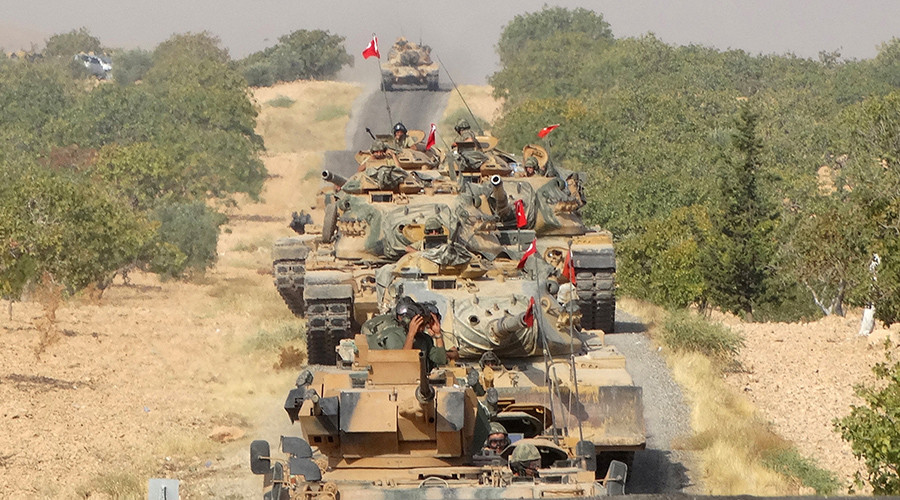
A Turkish army tank and an armored vehicle are stationed near the border with Syria, in Karkamis, Turkey, August. 23, 2016. (IHA via AP)

BEIRUT, Lebanon (AFP) — Turkish shelling and airstrikes killed at least 40 Syrians on Sunday, a monitor said, in the first significant civilian casualties in Turkey’s intensifying campaign in northern Syria.

Turkey’s state-run Anadolu news agency said the army had killed 25 Kurdish “terrorists” in airstrikes as part of its unprecedented operation inside Syria.

The bombardments came after Ankara suffered its first military fatality since it launched the two-pronged offensive against the Islamic State group and Syrian Kurdish militia inside Syria on Wednesday.

At least 20 civilians were killed and 50 wounded in Turkish artillery fire and airstrikes on the village of Jeb el-Kussa early on Sunday, the Syrian Observatory for Human Rights monitoring group said.

Another 20 were killed and 25 wounded, many seriously, in Turkish airstrikes near the town of Al-Amarneh, it said.

The monitor also said at least four Kurdish fighters had been killed and 15 injured in Turkish bombardment of the two areas.

A spokesman for the local Kurdish administration said 75 people had been killed in both villages.

The Britain-based Observatory said the bombardment targeted an area south of the former IS border stronghold of Jarabulus, which Turkish-led forces captured on the first day of the incursion.

Fighting has since intensified south of the town, where clashes erupted between Turkish troops and forces belonging to the Kurdish Democratic Union (PYD) party, which Ankara considers a terrorist group linked with Kurdish militants in Turkey.

US-backed Kurdish forces have also been fighting IS in Syria but Turkey fiercely opposes any move by Kurds to expand into territory lost by the jihadists.

Funeral for Turkish soldier

The latest fighting is likely to raise deep concerns for Turkey’s NATO ally the United States, which supports the Kurdish militia — known as the People’s Protection Units (YPG) — as an effective fighting force against IS.

The Turkish soldier was killed and three more wounded on Saturday in a rocket attack by Kurdish militia on two tanks taking part in an offensive against the pro-Kurdish forces south of Jarabulus.

Turkish media named the dead soldier as Ercan Celik, 28, and said a funeral for him would be held on Sunday in Gaziantep.

President Recep Tayyip Erdogan was due to visit the city on Sunday to express condolences for last weekend’s suicide bombing there at a Kurdish wedding that left 54 dead.

Turkey’s NTV television reported that Turkish artillery had struck YPG targets throughout the night and that Turkish warplanes had carried out new bombing sorties on Sunday morning.

Turkish forces carried out their first airstrikes on pro-Kurdish positions on Saturday as part of what Ankara is calling “Operation Euphrates Shield”.

Turkey says that the YPG — which it regards as the Syrian branch of the outlawed Kurdistan Workers’ Party (PKK) — has failed to stick to a promise to return across the Euphrates River after advancing west this month despite guarantees given by Washington.

Ankara fears the emergence of a contiguous autonomous Kurdish region in Syria would bolster the PKK rebels across the border in southeast Turkey.

Ankara’s military intervention in Syria has added another dimension to the country’s complex multi-front war, a devastating conflict that has killed more than 290,000 people and forced millions from their homes since it began in March 2011.

Much of the heaviest fighting this summer has focused on second city Aleppo, which is roughly divided between rebel forces and President Bashar Assad’s troops.

Push for 48-hour ceasefire

Global powers have been pushing for 48-hour humanitarian ceasefires in the embattled city and UN Syria envoy Staffan de Mistura has urged warring parties to announce by Sunday whether they will commit to a pause in the fighting.

The UN says it has “pre-positioned” aid to go to the city for some 80,000 people.

Russia, which backs Assad’s forces, has endorsed the proposal.

But some rebel groups have rejected the plan unless aid passes through opposition-held areas and the ceasefire applies to other areas of Syria under siege.

Opposition groups have repeatedly called for an end to regime sieges of rebel-held areas, accusing Assad’s government of using “starve or surrender” tactics.

On Saturday, the last rebel fighters were evacuated from the town of Daraya just outside Damascus, under a deal that followed a brutal four-year government siege.

Hundreds of fighters and their families were bused north into rebel-held territory in Idlib province, with other civilians transferred to government territory near Damascus for resettlement.

The Syrian army said it was in complete control of the town, from which roughly 8,000 civilians were due to be evacuated.

Netherlands FM warns Ankara against meddling in Holland’s internal affairs

August 28, 2016

Netherlands FM warns Ankara against meddling in Holland’s internal affairs

Published time: 27 Aug, 2016 17:39 Edited time: 27 Aug, 2016 20:53

Source: Netherlands FM warns Ankara against meddling in Holland’s internal affairs — RT News


Turkey should refrain from trying to interfere in the Netherland’s internal affairs, Holland’s Foreign Minister said in response to a controversial letter sent by the Turkish consul to Dutch mayors instructing them on how to control anti-Ankara sentiment.

“The Netherlands deals with Dutch society and that is nothing to do with the Turkish government,” FM Bert Koenders said, according to Dutch News.

“We understand the emotions which stem from the terrible attempted coup, but let us solve our differences here… We are free to talk about Turkey and they are free to talk about us, but ultimately, this is a question of national responsibility here in the Netherlands,” Koenders said.

The Foreign Minister is set to pay a one-day visit to Turkey next week to meet with his Turkish counterpart, according to Dutch ANP news agency.

The letter was sent by Turkish Consul General Sadin Ayyildiz to the mayors of several Dutch towns not far from Rotterdam. It contained instructions on how to curb protests organized by those opposed to the Turkish government and also called for action to be taken against the “terrorist group” led by self-exiled cleric Fethullah Gulen, who is accused by Ankara of orchestrating the thwarted coup in July, Dutch News reported.

The entire contents of the letter have not been made public, however.

Koender’s statement echoes a quite similar opinion voiced by Rotterdam Mayor Ahmed Aboutaleb, who also said that Turkey should not meddle in Dutch politics.

Read more

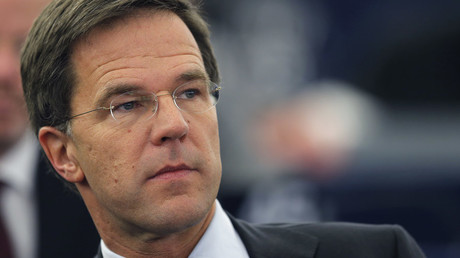
The Netherland's Prime Minister Mark Rutte © Vincent Kessler

Aboutaleb invited the Turkish consul for a discussion, which had been scheduled for Friday, but it was later cancelled without explanation, Dutch Telegraaf reported.

Threats and tensions have been running high in Holland’s Turkish community, which is mostly loyal to Ankara, according a significant number of reports appearing in local media.

“Turkey is trying to install a one-sided political regime. There may by some discussions in the Turkish-Dutch community and Turkey wants to control these discussions, wants to control the opinions,” Laszlo Maracz, an expert for the University of Amsterdam’s department of the European studies, told RT.

This is not the first time Turkey and the Netherlands have gotten into a political spat. In April, the Turkish consulate in the Netherlands allegedly called on local Turks to report on those who insult President Erdogan, sparking outrage among some Dutch lawmakers, who claimed the “long arm of Erdogan” was reaching into the Netherlands. However, the appeal to Dutch Turks was later branded as a mistake by the Ankara.

Turkish army shells Kurds ‘refusing to retreat’ near Jarablus

August 26, 2016

Turkish army shells Kurds ‘refusing to retreat’ near Jarablus – state media Published time: 26 Aug, 2016 01:57

Source: Turkish army shells Kurds ‘refusing to retreat’ near Jarablus – state media — RT News

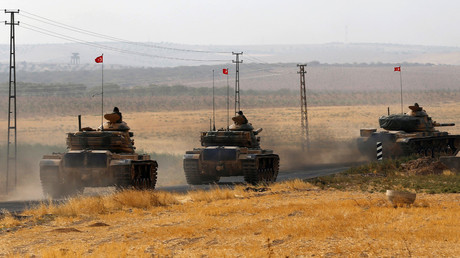
Turkish army tanks make their way towards the Syrian border town of Jarablus, Syria August 24, 2016. © Revolutionary Forces of Syria Media Office / Reuters

Turkish military have targeted US-backed Kurdish YPG militia with artillery fire south of the Syrian border town of Jarablus on Thursday, Anadolu state agency reported, citing a security source. The units allegedly refused to withdraw from the area despite warnings.

The group of YPG fighters were attacked with howitzers at about 6pm local time after they were spotted by Turkish intelligence advancing to Jarablus from the north of Manbij, the report said. Earlier, Washington assured Ankara that the US-backed Kurdish formations have been pulling out forces from the area to the east of the Euphrates River as demanded by Turkey.

READ MORE:Women burn burqas, men cut beards: Manbij celebrates liberation from ISIS (VIDEO, PHOTOS) 

“Kerry [US State Secretary John Kerry] emphasized that the PYD/YPG forces have been withdrawing to the east of the Euphrates,” a Turkish security source was quoted by Hürriyet Daily News as saying following a telephone conversation between the US top diplomat and Turkey’s foreign minister Mevlut Cavusoglu on Thursday morning.

While on a visit to Ankara on August 24, US Vice President Joe Biden pledged to withdraw the support of American forces to Kurdish fighters battling terrorists in Syria if they did not comply with Turkey’s request to remain east of the river.

READ MORE:Turkey shells ISIS & Kurdish positions in Syria

“They cannot, will not and under no circumstances get American support if they do not keep that commitment. Period,” Biden said at a joint news conference with Turkish PM Binali Yildirim.

Read more

Turkish army tanks drive towards to the border in Karkamis on the Turkish-Syrian border in the southeastern Gaziantep province, Turkey, August 25, 2016. © Umit Bektas

Turkey has been conducting Operation Euphrates Shield since Wednesday after its troops entered the borderline territory in the north of Syria with the focus on retaking Jarablus from the Islamic State (IS, ISIS/ISIL) terrorists, which has been occupying it since July 2013. Justifying the incursion, which had not been authorized by the Syrian government, Turkey’s President Recep Tayyip Erdogan said it is aimed at stopping frequent cross-border attacks and repelling “terror groups which constantly threaten our country like Daesh [Arabic derogatory name for IS] and the PYD [the Democratic Union Party of Syria]”.

READ MORE:‘Blatant violation of sovereignty’: Damascus condemns Turkish operation in Jarablus

Meanwhile, Damascus slammed the offensive as “a blatant violation of sovereignty.”

The shelling follows a statement by YPG command saying that Kurdish militia under its control had left Manbij and returned to its bases, turning over the control over the city to the Manbij Military Council, according to Al-Masdar News.

On Wednesday, the YPG denounced the Turkish military offensive in Syria as “a hostile intervention,” refusing to cave in to pressure coming from Turkey.

“We won’t listen to the demands of Turkey or powers outside of Turkey. Turkey cannot impose its own agenda, its own interests on us. Our forces are there. We will not withdraw from west of the Euphrates,” YPG spokesman Redur Xelil said, as cited by Rudaw.

“Its main goal, more than ISIS, is the Kurds,” he pointed out.

Read more

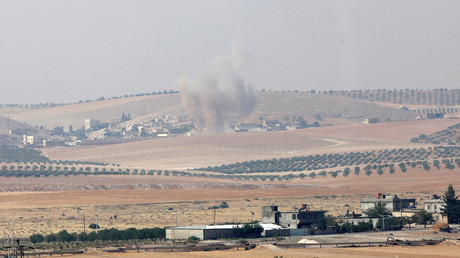
Smoke rises from the Syrian border town of Jarablus as it is pictured from the Turkish town of Karkamis, in the southeastern Gaziantep province, Turkey, August 24, 2016. © Stringer

At the moment, at least 20 Turkish tanks are taking part in operation inside Syria with more armored vehicles are expected to join the effort in the coming days as the Syrian rebels supported by Turkish forces are “cleansing” the city from jihadists.

The former IS stronghold of Manbij was freed by Kurdish-led SDF from jihadists just two weeks ago after months of intense fighting.

The Kurdish People’s Protection Units (YPG) are the armed wing of the Kurdish Democratic Union Party (PYD), close to the Kurdistan Workers’ Party, which Ankara considers a terrorist organization. Turkey has been leading a military campaign against PKK insurgency in the country’s south-eastern Kurdish-populated regions, which has been criticized by rights groups for its brutality. Numerous reports have also suggested that Ankara bombed Kurdish targets inside Syria while allegedly sparing Islamist militants that the YPG have been in bitter battle with.

What’s the Plan for Winning the War?

August 25, 2016

What’s the Plan for Winning the War?, Counter Jihad, August 25, 2016

Who is even thinking about how to win the war?  Will the legacy of the Obama administration be a shattered NATO, a Turkey drawn into Russia’s orbit, an Iranian hegemony over the northern Middle East, and a resurgent Russia?  It certainly looks to be shaping up that way.  Russia is playing chess while the US is playing whack-a-mole.  The absence of a coherent governing strategy is glaring.

**********************

Michael Ledeen makes a clever observation:

Everyone’s talking about “ransom,” but it’s virtually impossible to find anyone who’s trying to figure out how to win the world war we’re facing.  The two keystones of the enemy alliance are Iran and Russia, and the Obama administration, as always, has no will to resist their sorties, whether the Russians’ menacing moves against Ukraine, or the Iranians’ moves against us.

The moves are on the chessboard, sometimes kinetic and sometimes psychological warfare.  Like a chess game, we are in the early stages in which maneuver establishes the array of forces that will govern the rest of the game.  Russia’s deployment of air and naval forces to Syria stole a march on the Obama administration.  Its swaying of Turkey, which last year was downing Russian aircraft, is stealing another.  Its deployment of bombers and advanced strike aircraft to Iran is another.  That last appears to be in a state of renegotiation, as Ledeen notes, but that too is probably for show.  The Iranians have too much to gain in terms of security for their nuclear program, at least until they’ve had time to build their own air force.

Iran is making strategic moves as well.  Ledeen notes the “Shi’ite Freedom Army,” a kind of Iranian Foreign Legion that intends to field five divisions of between twenty and twenty-five thousand men each.  Overall command will belong to Quds Force commander Qassem Suliemani, currently a major figure in the assault on Mosul, having recovered from his injury in Syria commanding Iranian-backed militia in the war there.  The fact of his freedom of movement is itself a Russian-Iranian demonstration that they will not be governed by international law:  Suliemani is under international travel bans for his assassination plot against world diplomats, but was received in Moscow and now travels freely throughout the northern Middle East.

Turkey, meanwhile, has been effectively cut off by Iran’s and Russia’s success in the opening game of this global chess match.  As late as the Ottoman Empire, the Turks looked south through Iran and Iraq to power bases as far away as Arabia.  Now the Ayatollahs are going to control a crescent of territory from Afghanistan’s borders to the Levant, leaving the Turks locked out.  One might have expected the Turks to respond by doubling their sense of connection to Europe and NATO.  Instead, the purge following the alleged coup attempt is cementing an Islamist control that leaves the Turks looking toward a world from which they are largely separated by the power of this new Russian-Iranian alliance.  The Turks seem to be drifting toward joining that alliance because being a part of that alliance will preserve their ties to the Islamic world.

For now, the Obama administration seems blind to the fact that these moves are closing off America’s position in the Middle East.  This is not a new policy.  Eli Lake reports that the Obama administration told the CIA to sever its ties to Iranian opposition groups in order to avoid giving aid to the Green revolution.  Their negotiation of last year’s disastrous “Iran deal” has led to Iran testing new ballistic missiles and receiving major arms shipments from Russia.  Yet while all these moves keep being made around them, the Obama administration proceeds as if this were still just an attempt to crush the Islamic State (ISIS).  The commander of the XVIIIth Airborne Corps has been given a task that amounts to helping the Iranians win.  Our incoherent policy has left us on both sides in Syria.  Our only real ally in the conflict, the Kurds, stand abandoned by America.

Who is even thinking about how to win the war?  Will the legacy of the Obama administration be a shattered NATO, a Turkey drawn into Russia’s orbit, an Iranian hegemony over the northern Middle East, and a resurgent Russia?  It certainly looks to be shaping up that way.  Russia is playing chess while the US is playing whack-a-mole.  The absence of a coherent governing strategy is glaring.

Turkish tanks roll into Syria to confront Islamic State

August 24, 2016

Turkish tanks roll into Syria to confront Islamic State President Erdogan says operation aims to uproot jihadist group and Syrian Kurdish rebels, ‘put an end’ to border problems

By AP and AFP August 24, 2016, 12:23 pm

Source: Turkish tanks roll into Syria to confront Islamic State | The Times of Israel

A Turkish army tank drives toward Syria in the Turkish border city of Karkamis, in the southern region of Gaziantep, August 24, 2016. (AFP/BULENT KILIC)

ANKARA, Turkey — Turkey’s military launched an operation before dawn Wednesday to clear a Syrian border town of its Islamic State militants, and the country’s state-run news agency said Turkish tanks had crossed into Syria as part of the offensive.

In its report, the Anadolu Agency, which cited unnamed military officals, did not say how many tanks entered Syria. The private NTV television said as many as 20 tanks had crossed into Syria and that clashes were taking place at the border. Earlier in the day, NTV said that a small number of Turkish special forces had crossed into Syria as part of the operation.

NTV television said it was an “intruder mission” to carry out “pinpoint operations” against IS as part of the operation to clear the town of Jarablus of the extremists.

President Recep Tayyip Erdogan said the Turkish operation inside Syrian territory was aimed not just against jihadists but also Kurdish militia and should permanently put an end to problems on the border.

“From 4:00 am (0100 GMT) our forces began an operation against the Daesh (IS) and PYD (Kurdish Democratic Union Party) terror groups,” Erdogan said in a speech in Ankara, adding the move was aimed at “putting an end” to problems on the border.

As he spoke, Turkey’s state-run Anadolu news agency reported that pro-Ankara Free Syrian Army (FSA) rebels had already penetrated three kilometers (two miles) inside Syria toward the IS-held town of Jarabulus.

The office of Turkish Prime Minister Binali Yildirim said the operation, carried out by Turkish and US-backed coalition forces, began at 4 a.m. (0100 GMT), with Turkish artillery launching intense cross-border fire on the town of Jarablus, followed by Turkish warplanes bombing IS targets in the town, Anadolu said.

Smoke billows following air strikes by a Turkish Army jet fighter on the Syrian Turkish border village of Jarabulus during fighting against Islamic S State group targets, August 24, 2016 . (AFP/BULENT KILIC)

Smoke billows following air strikes by a Turkish Army jet fighter on the Syrian Turkish border village of Jarabulus during fighting against Islamic S State group targets, August 24, 2016 . (AFP/BULENT KILIC)

Just a few hours after the operation started, Vice President Joe Biden landed in Ankara for talks that include developments in Syria.

The visit comes at a difficult time for ties between the two NATO allies. Turkey is demanding that Washington quickly extradite a US-based cleric blamed for orchestrating last month’s failed coup. The United States is asking for evidence against the cleric and asking that Turkey allow the extradition process to take its course.

In Syria, Turkey is concerned about the growing power of US-backed Syrian Kurdish forces, who it says are linked to Kurdish groups waging an insurgency in southeastern Turkey. Wednesday’s operation puts Turkey on track for a confrontation with the Kurdish fighters in Syria.

Biden is scheduled to meet with Erdogan and Prime Minister Binali Yildirim.

The operation in Jarablus is meant to safeguard Turkey’s own security, according to Turkish Interior Minister Efkan Ala, who said Ankara “cannot sit and watch.”

“It is Turkey’s legal right, it is within its authority” to take action, the minister said, adding that Wednesday’s operation aimed to support the moderate Syrian opposition and was being carried out in coordination with the US-led coalition forces.

A Turkish army tank and an armored vehicle are stationed near the border with Syria, in Karkamis, Turkey, August. 23, 2016. (IHA via AP)

A Turkish army tank and an armored vehicle are stationed near the border with Syria, in Karkamis, Turkey, August. 23, 2016. (IHA via AP)

Turkey’s Hurriyet newspaper quoted Turkish sources as saying Turkish howitzers and rocket launchers had fired 224 rounds at 63 targets within an hour and 45 minutes, and that the Turkish air raids started just after 6 a.m.

The London-based Syrian Observatory for Human Rights also said Turkish ground troops had entered Syria. The activist group, which tracks the war through a network of local residents and fighters, said Turkish tanks and anti-mine vehicles crossed into Syria and were heading to Jarablus on Wednesday morning.

The Turkish government said the border area had been declared a “special security zone,” and asked journalists not to try to access it, citing safety concerns and threats posed by IS.

The assault followed Turkish Foreign Minister Mevlet Cavusoglu’s pledge on Tuesday of “every kind” of support for operations against IS along a 100-kilometer (62-mile) stretch of Syrian frontier. He said Turkey would support twin operations stretching from the Syrian town of Afrin in the northwest, which is already controlled by Kurdish forces, to Jarablus, in the central north, which is held by the Islamic State group.

Turkish army tank driving towards Syria in the Turkish-Syrian border city of Karkamis, in the southern region of Gaziantep, August 24, 2016. (AFP/BULENT KILIC)

Turkish army tank driving towards Syria in the Turkish-Syrian border city of Karkamis, in the southern region of Gaziantep, August 24, 2016. (AFP/BULENT KILIC)

Jarablus, which lies on the western bank of the Euphrates River where it crosses from Turkey into Syria, is one of the last important IS-held towns standing between Kurdish-controlled areas in northern Syria.

Located 20 miles (33 kilometers) from the town of Manbij, which was liberated from IS by Kurdish-led forces earlier this month, taking control of Jarablus and the IS-held town of al-Bab to the south would be a significant step toward linking up border areas under Kurdish control east and west of the Euphrates River.

In recent days Turkey has increased security measures on its border with Syria, deploying tanks and armored personnel carriers. On Tuesday, residents of the Turkish town of Karkamis, across the border from Jarablus, were told to evacuate after three mortars believed to be fired by IS militants landed there, Turkey’s Dogan news agency said.

Turkey has vowed to fight IS militants at home and to “cleanse” the group from its borders after a weekend suicide bombing at a Kurdish wedding in southern Turkey killed at least 54 people, many of them children. Turkish officials have blamed IS for the attack.

Ankara is also concerned about the growing power of US-backed Syrian Kurdish forces, who it says are linked to Kurdish groups waging an insurgency in southeastern Turkey.

A Turkish army tank and an armored vehicle are stationed near the border with Syria, in Karkamis, Turkey, Tuesday, Aug. 23, 2016. (IHA via AP)

A Turkish army tank and an armored vehicle are stationed near the border with Syria, in Karkamis, Turkey, Tuesday, Aug. 23, 2016. (IHA via AP)

The Kurdish-led group known as the Syria Democratic Forces, or SDF, recaptured Manbij from IS earlier this month, triggering concerns in Ankara that Kurdish forces would seize the entire border strip with Turkey. The US says it has embedded some 300 special forces with the SDF, and British special forces have also been spotted advising the group.

The Kurds’ outsized role in the Syrian civil war is a source of concern for the Syrian government as well. Fierce clashes erupted between the two sides over control of the northeastern province of Hasakeh last week, and Syrian warplanes bombed Kurdish positions for the first time, prompting the US to scramble its jets to protect American troops in the area.

The Syrian government and the Kurds agreed on a ceasefire Tuesday, six days after the clashes erupted. The Kurdish Hawar News Agency said government forces agreed to withdraw from Hasakeh as part of the truce.

Syrian state media did not mention any withdrawal, saying only that the two sides had agreed to evacuate the wounded and exchange detainees. Government and Kurdish forces have shared control of Hasakeh since the early years of the Syrian war.

Proxy Wars Between Turks and Kurds in Vienna

August 21, 2016

Proxy Wars Between Turks and Kurds in Vienna, Gates of Vienna, , August 21, 2016

(Rather than just provide links to the videos, as the article does, I have taken the liberty of embedding them. — DM)

turkdemovienna

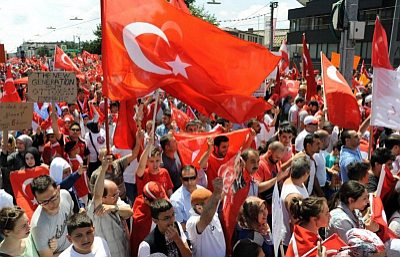
One might easily mistake the above photo for a scene from Istanbul or Ankara. But it was taken at a pro-Turkish demonstration in Vienna in 2013.

Turks stage these demos every week now in downtown Vienna, providing an occasion for near-warfare between Turkish-Austrians and Kurdish-Austrians. Last weekend the situation deteriorated even further than usual.

Many thanks to Nash Montana for translating this article from Politically Incorrect:

Turks in Vienna — Allahu Akhbar — “Like in a war”

More and more often there are conflicts that resemble civil war between leftist Kurdish PKK supporters and Turkish fascists, the Grey Wolves, on Austrian as well as on German ground. For quite a while now Kurds have been demonstrating every Saturday on the Stephansplatz to raise awareness of Turkish politics. But as soon as the demonstration begins, the Vienna city center becomes a danger zone. Tourists, residents, and business people are running the gauntlet. The people are in fear. Last weekend the situation escalated. Sonja, Prousek, the owner of the bakery Aida situated next to the Cathedral, was horrified: “It was like in the war.” The Stephansplatz became a bubbling cauldron. Hundreds of people fled in panic into surrounding areas, sought protection in hotels, stores and bars.

The Café Aida saw the most damage. Sonja Prousek told Zeitung Österreich: “Old people cried, children lost their parents. Dishes, drinks and food landed on the floor. We had to close up because customers and employees fled all the way to the other franchise down on Bognergasse.”

The Vienna police were present in full gear for security, but admit that these demonstrations, attended by 300 to 400 people, are increasingly becoming a serious problem. But also that there is the freedom to demonstrate.

Already on Friday evening 15 Kurds tried to invade the ORF-center at Vienna’s Küniglberg to force the channel to broadcast a message about Abdullah Öcalan, the PKK leader who is imprisoned in Turkey. Some of them made it all the way to the reception area. But that’s where the terror ended. The SEK WEGA (Special commando department Vienna) and trained dogs ended the chaos and escorted the Turkish mob out the exit. Once again, no one was arrested. There was merely one report for “disturbance of peace”.

In the upper Austrian Weis two young PKK supporters threw Molotov cocktails at a Turkish community center.

By now proxy wars on European ground, not just among these groups, are in full bloom thanks to unconscionable and brainless immigration politics. The escalation was programmed. The colorful future will become a nightmare.

Turkey: At least 30 killed in terror attack

August 21, 2016

Southern Turkey: At least 50 killed, 90 injured in suicide bombing A suicide bomber blew himself up in the lobby of an event venue while a wedding was taking place, killing at least 50 people and injuring more than 90. According to the Turkish authorities, ISIS is responsible for the attack. However, no terrorist organization has claimed responsibility yet.

Aug 21, 2016, 9:40AM

Becca Noy

Source: Turkey: At least 30 killed in terror attack – World News | JerusalemOnline

Photo Credit: Sky News/Channel 2 News

At least 50 people were killed and more than 90 were injured when an explosive device detonated last night (Saturday) in the Turkish city of Gaziantep. The explosion occurred in a lobby filled of people who were celebrating a wedding. Turkish officials believe that this was a terror attack carried out by ISIS against Kurdish targets. However, no organization has claimed responsibility for the attack. Turkish President Recep Tayyip Erdoğan sent his condolences to the families of the victims and said that ISIS is most likely the perpetrator.

Gaziantep Governor Ali Yerlikaya said to a local news outlet that the explosion was most likely caused by a suicide bomber who blew himself up in the lobby of an event venue that was filled of guests.

According to some news reports, the wedding was connected to the Kurdistan Workers Party (PKK), a claim that strengthens the Turkish authorities’ assertion that ISIS is responsible for the attack. “There is no difference between ISIS, the likely perpetrator of the attack in Gaziantep, and the PKK or Fethullah Gülen,” stated Erdoğan yesterday.

image description
Photo Credit: CNN/Channel 2 News

Horrific pictures and videos documenting the scene of the attack flooded social media. In response, the Turkish authorities banned the publication of the documentations of the area and threatened to sue those who violated this restriction.

“The purpose of terror attacks are to scare people but we will not allow this to happen,” said Deputy Prime Minister Mehmet Simsek. “It’s barbaric to attack a wedding.” Simsek represents the city of Gaziantep in the Turkish Parliament.

No ISIS There – Are U.S. Troops In Hasakah “Advising” Kurds To Attack The Syrian Army?

August 20, 2016

No ISIS There – Are U.S. Troops In Hasakah “Advising” Kurds To Attack The Syrian Army?

August 19, 2016

Source: M of A – No ISIS There – Are U.S. Troops In Hasakah “Advising” Kurds To Attack The Syrian Army?

Yesterday a fight broke out between Syrian Arab Army troops and local Kurdish forces in the predominately Kurdish city of Hasakah in north-eastern Syria. Hasakah, with some 200,000 inhabitants, has held a SAA garrison for years. There is some enmity between the Kurds and the soldiers but the situation is generally peaceful.

There have been earlier fights but these were local rivalries between Syrian auxiliary National Defense Forces from local Arab (Christian) minorities and some gangs who form a Kurdish internal security force under the label Asayish. Such fights usually ended after a day or two when grown-ups on both sides resolved the conflict over this or that checkpoint or access route.

The Islamic State (grey on the map) once threatened Hasakah but that danger is now far away.


Map via ISW

Yesterday another fight broke out, but got serious. The Syrian air force was called in to defend against direct attacks on the SAA garrison and minority quarters:

Syrian government warplanes bombed Kurdish-held areas of the northeastern city of Hasaka on Thursday for the first time in the five-year-old civil war, the Syrian Kurdish YPG militia and a monitoring group said.

The Syrian government still has footholds in the cities of Qamishli and Hasaka, both in Hasaka governorate, co-existing largely peacefully with YPG-held swathes of territory.The cause of this week’s flare-up was unclear.

Xelil said government forces were bombarding Kurdish districts of Hasaka with artillery, and there were fierce clashes in the city.

The Syrian Observatory for Human Rights, which tracks the war using a network of activists, said warplanes had targeted Kurdish security forces’ positions in the northwest and northeast of the Hasaka city.

The reason that fighting started might have to do with U.S. troops who, for whatever reason, seem to be in Hasakah. The U.S. military now laments that these troops came under Syrian air force fire:

The Syrian airstrikes took place in the northeastern city of Hasaka, an area that has seen increasing ground clashes between the Kurdish YPG fighters present and the Syrian regime forces. There was a small number of U.S. Special Operators acting as advisers to the YPG when the Syrian airstrikes began.After the Syrian Su-24s began to strike, the U.S. immediately contacted the Russians, Davis said, and made clear that American aircraft would respond if coalition forces were under attack.

The Russians explained that they were not the ones conducting the strikes and the U.S. scrambled manned fighter aircraft to the area to protect the Americans and allies under attack.

By the time the U.S. and coalition aircraft arrived the Syrian attack jets had left.

There is no Islamic State in the area which is now far away from the front line.

  • Why are U.S. troops, who have zero legal grounds of being in Syria at all, in Hasakah city or the wider area?
  • Who are they “advising” there and for what purpose?
  • Why does rare local fighting starts to get serious just when U.S. troops are in the area?

The U.S. has the chutzpah to “warn” the Syrians of defending their own troops on Syrian grounds:

Additional U.S. combat air patrols have been sent to the area yesterday and have been flying there today, as well.Davis said that the Syrians would be “well-advised” not to interfere with coalition forces on the ground in the future.

Syrian government forces are attacked by Kurdish troops who are “advised” by U.S. special forces. According to the U.S. spokesperson the Syrian air force is not allowed to defend them? What has this to do with “fighting ISIS” in eastern Syria which is allegedly the sole reason for U.S. troops being in Syria?

The Syrian air force was back over Hasakah today and continued to bomb position from which the Syrian army was attacked. They would not be flying there without Russian consent. Does the U.S. military want to start a fight with the Syrian air force and its Russian backers?

The YPG Kurds claim they are now evacuating civilians from some city quarters. They seem to expect a prolonged conflict.

Any move against the Syrian army in Hasakah will be watched carefully from Ankara. Turkey fears, with valid reason, that the U.S. supports the Kurdish aim of a  national entity in Syria and Iraq. This would endanger Turkey with its own large Kurdish minority.

If the Kurds expel the Syrian forces from Hasakah with U.S. support, Turkey would know that any U.S. claim to not work against its Turkish ally interest is false. This would deepen already high Turkish animosity against the U.S. and would accelerate its move towards some alliance with Russia and Iran.

US moves nuclear weapons from Turkey to Romania

August 19, 2016

US moves nuclear weapons from Turkey to Romania Home | Global Europe | News

By Georgi Gotev, Joel Schalit | EurActiv.com

18 aug. 2016 (updated: 18 aug. 2016)

Source: US moves nuclear weapons from Turkey to Romania – EurActiv.com


EXCLUSIVE/ Two independent sources told EurActiv.com that the US has started transferring nuclear weapons stationed in Turkey to Romania, against the background of worsening relations between Washington and Ankara.

According to one of the sources, the transfer has been very challenging in technical and political terms.

“It’s not easy to move 20+ nukes,” said the source, on conditions of anonymity.

According to a recent report by the Simson Center, since the Cold War, some 50 US tactical nuclear weapons have been stationed at Turkey’s Incirlik air base, approximately 100 kilometres from the Syrian border.

During the failed coup in Turkey in July, Incirlik’s power was cut, and the Turkish government prohibited US aircraft from flying in or out. Eventually, the base commander was arrested and implicated in the coup. Whether the US could have maintained control of the weapons in the event of a protracted civil conflict in Turkey is an unanswerable question, the report says.

Another source told EurActiv.com that the US-Turkey relations had deteriorated so much following the coup that Washington no longer trusted Ankara to host the weapons. The American weapons are being moved to the Deveselu air base in Romania, the source said.

Deveselu, near the city of Caracal, is the new home of the US missile shield, which has infuriated Russia.

US activates Romanian missile defence site, angering Russia

The United States switched on an $800 million missile shield in Romania yesterday (12 May) that it sees as vital to defend itself and Europe from so-called rogue states but the Kremlin says is aimed at blunting its own nuclear arsenal.

EurActiv.com

Romania was an ally of the Soviet Union during the Cold War, but it never hosted nuclear weapons during that period. Stationing tactical US nuclear weapons close to Russia’s borders is likely to infuriate Russia and lead to an escalation. The stationing of Russian nuclear missiles in Cuba in 1962 was the closest the Cold War came to escalating into a full-scale nuclear war.

EurActiv has asked the US State Department, and the Turkish and the Romanian foreign ministries, to comment. American and Turkish officials both promised to answer. After several hours, the State Department said the issue should be referred to the Department of Defense. EurActiv will publish the DoD reaction as soon as it is received.

In the meantime, NATO sent EurActiv a diplomatically worded comment which implies that allies must make sure that US nuclear weapons deployed in Europe remain “safe”.

“On your question, please check the Communiqué of the NATO Warsaw Summit (published on 9 July 2016), paragraph 53: “NATO’s nuclear deterrence posture also relies, in part, on United States’ nuclear weapons forward-deployed in Europe and on capabilities and infrastructure provided by Allies concerned. These Allies will ensure that all components of NATO’s nuclear deterrent remain safe, secure, and effective,” a NATO spokesperson wrote to EurActiv.

The NATO summit took place a few days before the failed coup in Turkey. At that time, the risks for the US nukes in Incirlik were related to the proximity of the war in Syria and the multiple terrorist attacks that have taken place in Turkey in recent months. For some of the attacks, Ankara blamed Islamic State, and for others the PKK, the Kurdish military organisation that appears on the EU and US terrorist lists.

Strong denial by Romania

The Romanian foreign ministry strongly denied the information that the country has become home of US nukes. “In response to your request, Romanian MFA firmly dismisses the information you referred to,”  a spokesperson wrote.

According to practice dating from the Cold War, leaked information regarding the presence of US nuclear weapons on European soil has never been officially confirmed. It is, however, public knowledge that Belgium, the Netherlands, Germany and Italy host US nuclear weapons.

After the failed putsch, relations between Washington and Ankara are at their worst since Turkey joined NATO in 1952. Ankara believes the US government supports the Turkish US-exiled cleric Fethullah Gülen, whom it accuses of having masterminded the failed coup. Turkey is demanding Gülen’s extradition, and the issue is expected to take center stage when US Vice President Joe Biden visits Turkey on 24 August.

Arthur H. Hughes, a retired US ambassador, wrote in EurActiv yesterday (17 August) that Gülen has indeed received considerable assistance from the CIA.

Will Ankara take aim at Patriarch Bartholomew?

Against the background of the failed coup in Turkey and the ongoing crackdown on sympathisers of Fethullah Gülen, Ankara might take aim at the Orthodox patriarch of Constantinople, or try to win him, writes the US Ambassador (retired) Arthur H. Hughes.

EurActiv.com

Russia has capitalised on the stained US-Turkey relations and there are fears in Western capitals that NATO-member Turkey could draw even closer to Moscow – with Turkish President Recep Tayyip Erdoğan bluntly making it clear he feels let down by the United States and the European Union.

Turkey and Russia decide to ‘reset’ their relationship

Russian President Vladimir Putin and Turkish counterpart Recep Tayyip Erdogan on Tuesday (9 August) pledged to boost their cooperation and forget the “difficult” moments of the past.

Erdogan’s visit to Putin’s hometown of Saint Petersburg is also his first foreign trip since the failed coup against him last month that sparked a purge of opponents and …

EurActiv.com

Positions

Asked today (18 August) by Romanian journalists to comment the EurActiv article, Mihnea Motoc, Romania’s Minister of Defense, has stated that there was is no thinking, or plans, toward hosting US nuclear weapons in Romania.

“There is no thinking, no plans in this direction. We can only call this information a speculation”, Motoc said.