Posted tagged ‘Trump and Iran’

The factors of a U.S. embassy in Jerusalem

January 18, 2017

The factors of a U.S. embassy in Jerusalem, Center for Security PolicyJacub Gorski, January 17, 2017

President-elect Trump’s recently announced plans to have the incoming U.S. ambassador to Israel live in Jerusalem. The Jerusalem Embassy Act of 1995 already recognizes Jerusalem as the capital of Israel and instructs the executive branch to move the embassy or file a national security waiver. With the U.S ambassador to Israel living in Jerusalem what would be the implications for the region if the U.S. moved its embassy to the city as well?

Critics warn that moving the embassy to Jerusalem will spark international protests and cause more instability in the region. Secretary John Kerry warned that “you would have an explosion, an absolute explosion” in the Middle East. The head of the Palestinian Authority (PA) Mahmoud Abbas in a letter to Trump wrote that moving the embassy will “have destructive consequences on the peace process, the two state solution and the safety and security of the region.”

By “explosion” Secretary Kerry probably means an increase in the frequency and strength of Islamic terrorist attacks on the Israelis, Arab states cutting off relations with the U.S. and Israel, or Israel’s neighbors declaring war on the country.

Israel suffered Hamas rocket attacks in the past and is currently undergoing a wave of terror perpetrated by Palestinians. It is the stated goal of the Palestinian terrorists to attack Israel. In its charter Hamas promises to wage jihad against the country and the Israeli Defense Minister suspects that the organization is trying to develop new offensive capabilities in order to do so. So Israel will probably continue to see a spike in terrorist attacks regardless of whether the U.S. moves its embassy to Jerusalem.

Arab states will likely issue condemnations if the U.S. moves its embassy, but they would not cut off ties with America or Israel. Middle Eastern regimes need U.S. help in fighting ISIS and finance their own military operations. Given Arab dependence on U.S. aid it is unlikely they would want to jeopardize their relations with Washington over an embassy.

There is no fear of Arab economic boycotts because Israel’s neighbors have maintainedsanctions on the country for decades.

Also, given Israel’s success in the Six Day and Yom Kippur Wars and the subsequent military strength the Arab states are unlikely to ever declare war on the country.

Israel’s neighbors need its help in countering the growing Iranian influence in the region. With Iran and Hezbollah giving military aid to the Assad regime, Israel’s Sunni neighbors might want to consider possible cooperation with Tel-Aviv. In a move that might signal cooperation, the former intelligence chiefs of Saudi Arabia and Israel held a public meeting. If the Arabs want Israeli help then they are unlikely to jeopardize their already fragile relations over the U.S. embassy.

Despite Abbas’ warnings, moving the U.S. embassy to Jerusalem could make the peace process easier. It would send a clear message to the PA that the U.S. considers Jerusalem to be part of Israel. Instead of having our embassy located in Jerusalem U.S. issue waivers that have delayed the move. To the PA this probably looks like America wavering in its support to Israel because the U.S. is failing to keep up its promise. Moving the embassy will send a message that Washington keeps its promises and does not waiver in support of its allies.

Senior National Security Experts Calling for Working with the Iranian Opposition Applauded by Iranian Americans

January 18, 2017

Senior National Security Experts Calling for Working with the Iranian Opposition Applauded by Iranian Americans, Iran News Update, January 18, 2017

noi2-750

This bi-partisan urge to the incoming Trump administration “to establish a dialogue with Iran’s exiled resistance, the National Council of Resistance of Iran (NCRI),” who have called for free elections to establish a secular, democratic, non-nuclear republic in Iran, as well as to end to Tehran’s “religious dictatorship.”

Successive US administrations, offering concessions in a futile attempt to moderate the behavior of the totalitarian regime, have failed, and ignored 80 million freedom loving people in Iran.

***************************

In an article published in the PR Newswire, a Cision Company on Jan. 16, 2017, the Organization of Iranian American Communities-US (OIACUS), the largest, most active and enduring grass root organization of Iranian-Americans in the United States welcomes the letter initiated by nearly two dozen bi-partisan former senior U.S. government officials who have urged President-elect Donald Trump to work with the Iranian opposition, as an integral part of a new policy on Iran.

Signed by 23 former top officeholders during the past five administrations the letter to the president-elect states, “To restore American influence and credibility in the world, the United States needs a revised policy based on universally shared norms and principles reflecting the ideals of peace and justice. A policy highlighting, and demanding an end to, Iran’s domestic human rights violations and malevolent regional actions will attract broad support and generate needed leverage against Iran’s threatening behavior.”

This bi-partisan urge to the incoming Trump administration “to establish a dialogue with Iran’s exiled resistance, the National Council of Resistance of Iran (NCRI),” who have called for free elections to establish a secular, democratic, non-nuclear republic in Iran, as well as to end to Tehran’s “religious dictatorship.”

Successive US administrations, offering concessions in a futile attempt to moderate the behavior of the totalitarian regime, have failed, and ignored 80 million freedom loving people in Iran.

The OIAC calls on the new administration to reach out to the Iranian people and their well-organized opposition movement, saying that foreign military intervention is not the answer, and that the United States should recognize the aspirations of Iranian people for a free and democratic future as the only effective and viable policy.

Our members have a range of political and party affiliations. However the members are unified in the belief that democracy and human rights in Iran are imperative to the national security of America, peace in the Middle East, and beyond. “In this honorable endeavor, we shall welcome your engagement and decisive decision-making.”

At a January 24th Congressional briefing, Iranian Americans will also join their representatives to present their policy recommendations on Iran with their representatives in Washington, DC.

Domestic Protests and Trump Inauguration Both Threaten Iran’s Relations with Russia

January 14, 2017

Domestic Protests and Trump Inauguration Both Threaten Iran’s Relations with Russia, Iran News Update, January 13, 2017

(Fascinating article. Please see also, Mystery blasts in Damascus: Syria accuses Israel. “The Russians have taken charge of the Syrian war and no longer bother to consult with the Syrian president or Iran on its conduct.” — DM)

deadmullah

With the US and Russia strongly at odds, it was understood that Moscow would defend its Iranian partners in disputes over the nuclear deal. But if the US and Russia begin to reconcile and engage in greater political coordination under the Trump administration, this situation could be threatened, especially at a time when Iran’s partnership with Russia is also being openly challenged at home.

*****************************

On Wednesday, Voice of America News published an article detailing some of the protests that were seen in Iran on the occasion of the state-organized funeral of former President Ali Akbar Hashemi Rafsanjani. Various slogans were heard to be shouted as part of those protests, and Iranian state media muted the television broadcast of the funeral as a result. These included calls for the release of political prisoners including the Green Movement leader Mir Hossein Mousavi and Mehdi Karroubi. But the funeral also served as an outlet for critical sentiments about the Iranian regime’s relationship with Russia and the associated interventions in the Syrian Civil War.

VOA News noted that demonstrators could be heard shouting “Death to Russia” and “the Russian embassy is a den of spies,” in mimicry of slogans that have been used against the United States by supporters of the Islamic theocracy. The report suggested that these demonstrations reflected both a change in the Iranian government’s view of Russia and widespread popular anxiety about that change. That anxiety in turn adds to questions about the durability of the Iran-Russia alliance, which some analysts have characterized not as an alliance but as a tenuous “partnership of convenience.”

Although Iran and Russia have both been backing Syrian dictator Bashar al-Assad virtually since the outset of the civil war aimed at ousting his government, it has frequently been suggested that the two countries’ interests in the region could begin to diverge in a way that threatened their cooperation. Russia’s partnership with Iran was already threatened by its friendly relations with Iran’s bitter enemy, Israel. And as the Syrian Civil War has dragged on, that threat has apparently intensified with Iran providing anti-Israeli Shiite paramilitary Hezbollah a permanent base in Syria.

Leaving aside the different perceptions of this situation by Tehran and Moscow, it has also been suggested that the latter could be more willing to accept a future for Syria in which Assad is not a long-term player. This difference is arguably reflected in the different degrees of hostility with which the two countries pursue moderate Syrian rebels. Although both have been accused of focusing their efforts on those moderate rebels instead of militant groups like ISIL, Russia guaranteed safe passage to the rebels and to civilians in rebel-controlled territory following the recent conquest of Aleppo. Iran, on the other hand, stopped fleeing Syrians at its own checkpoints and demanded concessions from the rebels to secure their release.

If such differences do reflect broader tensions in the Iran-Russia partnership, it is possible that these could be exploited by other interested parties, particularly incoming US President Donald Trump. Since winning election in November, Trump has continued to advocate for improved relations with Russia, while also maintaining a hard line on such issues as the Iran nuclear agreement.

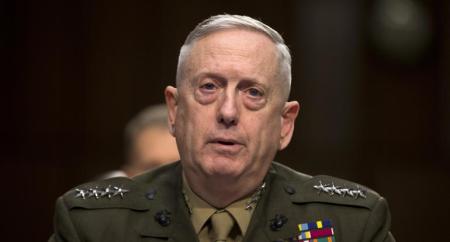
His prospective Cabinet appointees have largely maintained this same line. The Weekly Standardreports that Trump’s choice for Secretary of State, Rex Tillerson, has called for a thorough review of the nuclear agreement, in the interest of strengthening its enforcement mechanisms and making sure that Tehran is held accountable to its provisions to a greater extent than it was under the Obama administration. Meanwhile, UPI reports that Trump’s Secretary of Defense pick, James Mattis, underscored the importance of such a review when he referred to Iran as the worst destabilizing force in the Middle East.

Speaking more concretely during his Senate confirmation hearing, Mattis described Iran’s “malign influence” as having grown as a result of recent policies, and suggested that it would be the responsibility of the incoming presidential administration to see that the United States counters that influence, particularly in Iraq and Afghanistan. And of course this objective, if adopted by the administration itself, will have serious bearing on its strategy with regard to Syria, where improved relations with Russia could also play a part.

Although Mattis also expressed an interest in taking a fairly hard line on Russia, his comments to this effect are at odds with those of the president elect and in any event, they would have to be reconciled with the desire to undermine the power of a Middle Eastern government that could be significantly constrained by Russia.

The Voice of America article indicated that some Iranian officials are noticeably worried about the effects that improved relations between Moscow and Washington could have on Iran’s plans for its Russian partnership. These effects would probably not be limited to the Syrian Civil War but would also include changes in the ways in which the Iran nuclear deal, or Joint Comprehensive Plan of Action, is understood and enforced.

Earlier this week, the seven parties that had negotiated that agreement met in Geneva, for the last time before US President Barack Obama leaves office and Donald Trump is sworn in. There was some danger of Iran using this meeting to initiate conflict-resolution mechanisms built into the agreement, following comments by the Iranian Foreign Ministry promising “retaliation” and demanding “compensation” from the US for its reauthorization of the Iran Sanctions Act.

The provisions of that act remain suspended under the JCPOA, but US congressmen almost universally considered it important to keep the law in effect for the next ten years, so as to retain a credible threat of the “snap back” of economic sanctions in the event that Iran is caught cheating on the deal. The Iranians, on the other hand, had insisted that any additional sanctions activity – even unenforced activity – would be regarded as a violation of the spirit of the deal.

However, Reuters reported on Wednesday that Tehran had effectively backed down from its previous threats in the context of the meeting. This apparent change in tone may support a conclusion put forward in a previous Iran News Update article, which suggested that Iran was beginning to reorient its strategies regarding the JCPOA, so as to account for the change in prospective responses under the Trump administration as compared to the Obama administration.

Trump’s own threats to tear up or undermine the nuclear deal are one aspect of this, and they may necessitate that Tehran act differently in order to preserve that deal. Previously, the Iranians themselves had suggested a willingness to tear up the agreement, but some analysts took this to be a ploy to gain further concessions at a time when the Obama White House was paranoid about losing its foreign policy legacy. Some also viewed that ploy as successful, considering that Iran made several perceived violations, including two instances of exceeding heavy water limits, but faced no serious consequences under the deal.

But in times to come, the Iranian regime may have to treat more lightly if it wishes to preserve the agreement, which provided Iran with tens of billions of dollars in unfrozen assets, plus unspecified benefits from sanctions relief and new international business. The changing circumstances reflect not only the loss of a conciliatory opponent in the Obama administration, but also the prospective loss of a strong international backer in the Russian government.

With the US and Russia strongly at odds, it was understood that Moscow would defend its Iranian partners in disputes over the nuclear deal. But if the US and Russia begin to reconcile and engage in greater political coordination under the Trump administration, this situation could be threatened, especially at a time when Iran’s partnership with Russia is also being openly challenged at home.

Iran Steps Up Threats to Israel, U.S.

January 11, 2017

Iran Steps Up Threats to Israel, U.S., Gatestone InstituteMajid Rafizadeh, January 11, 2017

(This can’t be accurate. Obama has told us that Islam is the religion of peace and tolerance. Isn’t it odd that he has not told us that the Islamic Republic has “nothing to do with Islam?” — DM)

“En Sha’a Allah [God willing], there will be no such thing as a Zionist regime in 25 years. Until then, struggling, heroic and jihadi morale will leave no moment of serenity for Zionists.” — Iran’s Supreme Leader, Ayatollah Ali Khamenei, September, 2015.

“If the Supreme Leader’s orders [are] to be executed, with the abilities and the equipment at our disposal, we will raze the Zionist regime in less than eight minutes.” — Ahmad Karimpour, a senior adviser to the Iranian Revolutionary Guards’ elite unit, the Quds Force.

Iran is also attempting to intimidate Donald Trump from taking a tough stance against Iran. Trump ought to be wary of falling into Iran’s tactical game of fear-mongering. For Iran, US concessions and silence in the face of Iran’s threats mean weakness and fear. On the other hand, when Iran sees that the US is taking a robust stance and that the military option is always on the table, Tehran retreats.

As long as Iran’s Supreme Leader is alive and as long as the ruling clerics preserve the political establishment, Iran will maintain the core pillars of its foreign policies and revolutionary principles: these are anchored in anti-Israeli, anti-American and anti-Semitic politics. Iranian politicians across the political spectrum totally agree on these fundamentals.

Iran’s threats against Israel and the US are becoming bolder and louder. Iran’s Supreme Leader, Ayatollah Ali Khamenei, is now repeatedly threatening Israel’s annihilation relatively soon.

According to Iran’s Press TV, Khamenei recently stated:

“The Zionist regime — as we have already said — will cease to exist in the next 25 years if there is a collective and united struggle by the Palestinians and the Muslims against the Zionists.”

In addition, Iranian officials are warning President-elect Donald Trump that if he makes any wrong move, it would lead to a World War, wiping Israel from the face of earth and destroying the smaller Gulf states.

Iranian leaders are adopting their classic tactics and strategy of threatening in advance — and frequently — probably to obtain concessions, push the next US administration to pursue policies of appeasement, and, more importantly, to drive the US to abandon Israel.

In addition, through anti-Israeli and incendiary statements, Khamenei and Iran’s Islamic Revolutionary Guards Corps (IRGC) are inciting Palestinians and the Muslim world to use violence against the Israeli nation. As a result, Khamenei heightens even further his anti-Israeli and anti-Semitic sentiments. Many who follow his beliefs consider it their Islamic duty to fulfill his policies, religious doctrines and prophesies.

Ahmad Karimpour, a senior adviser to the Revolutionary Guards’ elite unit, the Quds Force, previously said that Iran is ready to follow Khamenei’s orders once the leader gives the green light. According to the semi-official Fars News Agency, Karimpour said, “If the Supreme Leader’s orders [are] to be executed, with the abilities and the equipment at our disposal, we will raze the Zionist regime in less than eight minutes.”

In order to project himself as the leader of the Muslim world (both Shia and Sunni) and to mobilize opposition to Israel and the US, Khamenei reaffirmed the Islamic Republic’s support for groups that stand against Israel and America:

“Despite being engaged in certain regional issues, the Islamic Republic has always announced explicitly that Palestine is the number one issue in the Muslim world and has fulfilled its obligations in this regard.”

Iran’s leader then went on to lash out at the United States as “the most arrogant [power] and the Great Satan.”

Khamenei is correct that his generals and he have previously threatened Israel’s destruction.

In July 2016, the deputy commander of the (IRGC) warned that Iran possesses tens of thousands of missiles outside Iran to hit Israel. According to Iran’s state-owned news agency Tasnim, General Hossein Salami pointed out:

“Hezbollah has 100,000 missiles ready to hit Israel to liberate the occupied Palestinian territories if the Zionist regime repeats its past mistakes… today, the grounds for the annihilation and collapse of the Zionist regime are (present) more than ever.”

In addition, Khamenei has already published a 9-point plan on how to destroy Israel. In September 2015, he called on violence and jihad against Israel, until it is completely destroyed:

“En Sha’a Allah [God willing], there will be no such thing as a Zionist regime in 25 years. Until then, struggling, heroic and jihadi morale will leave no moment of serenity for Zionists.”

Beside exploiting people’s grievances and inciting violence against Israel, Khamenei primarily relies on Hezbollah, Hamas and the IRGC to pursue his anti-Israel agenda.

Hassan Nasrallah, the leader of Lebanon’s Hezbollah, previously disclosed that Iran is lifeline of Hezbollah. In a speech broadcast by the Shiite party’s Al-Manar TV station, he said:

“We do not have any business projects or investments via banks… We are open about the fact that Hezbollah’s budget, its income, its expenses, everything it eats and drinks, its weapons and rockets, come from the Islamic Republic of Iran. We have no money in Lebanese banks, neither in the past nor now. We do not transfer our money through the Lebanese banking system…. We totally reject this [U.S.] law until the Day of Judgment. … Even if the law is applied, we as a party and an organizational and jihadi movement, will not be hurt or affected”.

Nasrallah also insisted that, “as long as Iran has money, we have money… Just as we receive the rockets that we use to threaten Israel, we are receiving our money. No law will prevent us from receiving it.”

Notably, there are no differences across Iran’s political spectrum when it comes to opposing and threatening Israel. Moderates, reformist, principalists [in Farsi, Osolgarayan: ultra revolutionary and conservatives] and hardliners all pursue the core anti-Israel pillar of the Islamic Republic’s foreign policy.

The so-called moderate Iranian president, Hassan Rouhani, said previously:

“The Zionist regime (Israel) is a regional base for America and the global arrogance … Disunity and discord among Muslim and terrorist groups in the region … have diverted us from the important issue of Palestine… We stand with the dispossessed Palestinian nation.”

Iranian leaders believe that arming groups and people who oppose Israel is critical. Khamenei tweeted that “I announced and it will absolutely happen that, just like #Gaza, the #WestBank must also be armed…”

Iran is also attempting to intimidate Trump from taking a tough stance against Iran. Trump ought to be wary of falling into Iran’s tactical game of fear-mongering. For Iran, US concessions and silence in the face of Iran’s threats mean weakness and fear. The fact is that whenever the US surrenders to Iran’s threats, Iranian leaders become louder and bolder in their threats. On the other hand, when Iran sees that the US is taking a robust stance and that military option is always on the table, Tehran retreats.

2204

Finally, at least as long as Iran’s Supreme Leader is alive, and as long as the ruling clerics preserve the political establishment, the Islamic Republic of Iran will maintain the core pillars of its foreign policies and revolutionary principles: these are anchored in anti-Israel, anti-American and anti-Semitic politics. Iranian politicians across the political spectrum totally agree on these fundamentals.

Straun Stevenson Blames President Obama for the Legacy of Death and Destruction in Middle East

January 8, 2017

Straun Stevenson Blames President Obama for the Legacy of Death and Destruction in Middle East, Iran News Update, January 8, 2017

(Please see also, In its Last Days, Obama Administration Clings to Hope of a Positive Role for Iran. — DM)

obama-750

Struan Stevenson, president of the European Iraqi Freedom Association, former member of the European Parliament representing Scotland (1999-2014), president of the Parliament’s Delegation for Relations with Iraq (2009-14) and chairman of Friends of a Free Iran Intergroup (2004-14), writes in his January 6, 2017 article for UPI, that the legacy of President Barack Obama will be death and destruction in the Middle East. His vision cooperation between  the United States and Iran “has unlocked a Pandora’s box of conflict and sectarian strife across the zone.”

During the closing days of the Obama administration the controversial nuclear deal with Iran and his policies regarding that ruthless regime have allowed the mullahs to threaten the security of the Middle East, and perhaps, while Saudi Arabia, the Gulf states and Turkey have tried to prevent Iran’s aggressive expansionism in the region.

The U.S. and other countries is the West failed the Syrian opposition and allowed a civil war to continue into its seventh year, costing hundreds of thousands of lives, and setting off the huge migration crisis in Europe.

$150 billion of frozen assets were released to Iran by the U.S. as part of the nuclear deal, which the Tehran government was expected to use to shore up their economy, on the brink of collapse. Instead, the regime redouble its spending the Islamic Revolutionary Guards Corps and Quds Force, both of which are listed terrorist organizations in the West and are involved in many conflicts in the Middle East. Not only does Iran support Bashar al-Assad in Syria, and Yemen’s Houthi rebels, it funds and supplies Hezbollah in Lebanon and the brutal Shi’ia militias in Iraq.

The nuclear deal has been breached, which Stevenson says demonstrates Iran’s complete disdain for the West. Two Qadr-H missiles were fired last March, in defiance of a U.N. Security Council resolution tied to the agreement. “Israel must be wiped out” was marked on the missiles, and the test firing took place on the day that the U.S. Vice President Joe Biden was visiting Israel. Vladimir Putin sent the first shipment of Russian S-300 surface-to-air missiles to Iran last August.

President Obama attempted to make deals with the so-called “moderate” and “smiling” Iranian President Hassan Rouhani, which he interpreted as having a green light for Tehran’s expansionist policy. Rouhani is in fact in charge of a government which has executed around 3,000 people since he took office in 2013, ten just this year. Mass hangings are now carried out in public, even in football stadiums. Many of the officials in his government were complicit in the 1988 massacre of some 30,000 political prisoners, most of whom were part of the opposition People’s Mojahedin of Iran. In fact, it was supervised by Mostafa Pour-Mohammadi, who is Rouhani’s justice minister.

Obama began his administration by agreeing with Iran, and backing Nouri al-Maliki as prime minister in Iraq. Stevenson writes, “Maliki was a puppet of the mullahs, doing their bidding by opening a direct route for Iranian troops and equipment heading to Syria to bolster the murderous Assad regime. Iran’s support for Maliki in Iraq and for Assad in Syria, two corrupt dictators who repressed and brutalized their own people, resulted in the rise of Daesh, also known as the Islamic State.Thanks to U.S. acquiescence over Tehran, Daesh grew and became a threat to the whole world.”  He continues, “Obama compounded this grievous mistake by providing American military support and air cover for the genocidal campaign being waged by pro-Iranian Shi’ia militias in Iraq. Once again Iran exploited its role in ousting Daesh as a means for implementing its ruthless policy of ethnic cleansing to annihilate the Sunnis in Iraq’s al-Anbar Province. Horrific sectarian atrocities were committed during the so-called “liberation” of the ancient cities of Fallujah and Ramadi. The Shi’ia militias, who formed the main part of the force fighting to recapture these cities from Daesh and are now engaged in the battle to recapture Mosul, are led by Gen. Qasem Soleimani, commander of the Iranian terrorist Quds Force. Soleimani has also played a key role in Syria and the massacre in Aleppo.”

Tehran is gaining strength in Iraq. The Iraqi army is poorly trained, and the Iranian has Prime Minister Haider al-Abadi’s agreement to allowing Iranian-funded militias to take control of military operations. Political disarray in Baghdad, has paved the way for Iran to consolidate its hold in Iraq.

The unenviable task of trying to sort out the Middle East mess will be left to President-elect Donald Trump. Many people on his team believe that Iran is the main source of conflict in the Middle East and poses a greater threat to the West than North Korea or even Russia. It will be interesting to see how Trump will fare.


In its Last Days, Obama Administration Clings to Hope of a Positive Role for Iran

January 8, 2017

In its Last Days, Obama Administration Clings to Hope of a Positive Role for Iran, Iran News Update, January 7, 2017

(Iran News Update 

Iran News Update (INU) features news, analysis, and commentary on events inside Iran and the Iranian Diaspora around the world.  News and information is provided in cooperation with the National Council of Resistance of Iran (NCRI), the parliament in exile of the Iranian Resistance, and the People’s Mojahedin Organization of Iran (PMOI/MEK).

— DM)

hstaee-750

Kerry’s remarks seem to imply that the Obama administration’s early claims about Iranian moderation will continue to be repeated until it departs the office. But the incoming administration cannot be expected to pick up that thread. And articles like the above-mentioned Fox News editorial indicate that on such issues as Iran’s coordination with America’s enemies, Donald Trump and his advisors will recognize the continuance of Tehran’s worst behaviors.

**********************

On Friday, Fox News published an editorial on the topic of recent nuclear threats from North Korea. As well as being a longstanding thorn in the side of the United States, the Korean dictatorship’s obsession with nuclear weapons development has also variously exposed the cooperation between Iran and other enemies of Western democracies.

This cooperation was highlighted in the Fox News article, with specific reference to a number of instances of Iran helping North Korea with its nuclear program. In the view of the author and other critics of recent US foreign policy, this assistance has effectively been further enabled by a conciliatory approach to dealing with the Iranian nuclear program. As well as failing to address this alleged cooperation while negotiating the 2015 Iran nuclear agreement, the Obama administration has also taken very little punitive action against Iran following its post-agreement ballistic missile tests, which were conducted in defiance of UN Security Council resolutions on the matter.

This has arguably given North Korea the impression that the United States is presently either unwilling or unable to react to such tests, of which the Fox News article says the east Asian dictatorship conducted 20 in the past year alone. But to whatever extent Obama-era permissiveness encouraged these activities, that permissiveness is all but certain to end when Donald Trump assumes the presidency on January 20. And the Fox News article concludes with recommendations as to what Trump can do to prevent North Korea’s nuclear development and missile testing.

Those recommendations include bolstering US defensive capabilities along the West Coast, and also constraining “enablers” of North Korean development, chiefly the Islamic Republic of Iran. However, the appropriate means for such constraint remain a serious topic of dispute. On the campaign trail, Trump frequently accused the Obama administration of handing the Iranians a nuclear agreement that brought little benefit to the West. He also threatened to tear it up – a measure that theoretically would have taken the world community back to the drawing board and allowed it to pursue a more comprehensive suite of Iranian concessions.

But subsequent to his election, Trump has taken a different tack, promoting renegotiation of the existing deal instead of its cancellation. Even some Republicans who opposed the deal or viewed it as seriously flawed have taken a similar view. As an example, The Guardian featured an article on Friday that detailed the input offered to Trump by Bob Corker, the Republican head of the Senate Foreign Relations Committee. He has been insistent that tearing up the nuclear deal would create more problems than it would solve, and that the best way forward is to enforce its existing provisions much more strictly than the Obama administration has done.

Iran has at various times been caught in the midst of small violations of the Joint Comprehensive Plan of Action, including two instances of exceeding the deal’s defined limits on Iranian stockpiles of heavy water, a nuclear byproduct. The absence of consequences for these violations has gone a long way toward promoting the perception of the outgoing administration’s permissiveness. And there has been a great deal of associated speculation and analysis of the reasons for this. The most natural explanations deal with the administration’s fear of endangering Iranian participation in the agreement. But the situation may also be more complex than this and include worries about antagonizing Iran at a time when its participation in regional conflicts is occasionally viewed as a positive thing.

Real Clear Politics points out that this perspective was explicitly expressed by Obama’s Secretary of State John Kerry in an interview with MSNBC’s Andrea Mitchell. “Together, Iran and Russia had to prop [Assad] up, and save him from the possibility that the extremists might take over the country,” Kerry said, apparently deviating from previous US positions calling for Assad’s ouster and promoting the possibility of a victory by moderate rebel groups led by the Free Syrian Army.

Iran and Russia have widely been credited with not only preventing Assad’s fall to these groups, but also with damaging them so severely as to push the Syrian Civil War toward a situation in which the only choices for the country’s future are the established Assad dictatorship and the militant rebels affiliated with ISIL and the Al Nusra Front. Meanwhile, Iran has done its best to advance the notion that its own interests in the region are adverse to Islamic extremism. But Tehran’s pro-democratic opposition the National Council of Resistance of Iran has often referred to the Islamic Republic as the “prototype” for Islamic extremism throughout the world.

On Friday, The Iran Project pointed to recent statements by Alaeddin Boroujerdi, the chairman of Iran’s National Security and Foreign Policy Commission, claiming that Iran has always been committed to a political solution in Syria. If taken at face value, those comments can be expected to encourage Kerry’s notion that under current circumstances, a victory for Iran in Syria is a defeat for Islamic terrorism. But the trouble with this claim is that it can only be reasonably defended if one takes “Islamic terrorism” to refer only to “Sunni terrorism.”

As a major part of Iran’s strategy not only in Syria but also in Iraq and Yemen, it has directed recruitment and deployment of multitudes of Shiite militant groups to those battlefields. Previous reports have confirmed that many of these groups swear allegiance to the Islamic Republic over and above the governments of the countries in which they are operating. In this way, Iran is evidently extending its Hezbollah model of foreign influence into other part of the region. And in Syria, it is a well-known fact that Iran is actually utilizing the Lebanese paramilitary group to strengthen its operations and build a large-scale network that spans several nearby countries.

On Thursday, Xinhua News Agency pointed out that the Iranian leadership had fervently disputed rumors that Hezbollah would be withdrawing from the Syrian Civil War. It is not clear what the ultimate source of those rumors was. But they are possibly rooted in Turkey’s demands for such a withdrawal as part of a political solution to the crisis, or else in the outgoing US administration’s optimism about Iranian “moderation” and willingness to cooperate over important foreign affairs. But although Boroujerdi’s comments about a desire for a political solution promote this perception, they are belied by the Iranian leadership’s clear unwillingness to withdraw its militant proxies, even as they continue to violate ceasefire agreements negotiated by Turkey, Russia, and others.

Nevertheless, Kerry’s remarks seem to imply that the Obama administration’s early claims about Iranian moderation will continue to be repeated until it departs the office. But the incoming administration cannot be expected to pick up that thread. And articles like the above-mentioned Fox News editorial indicate that on such issues as Iran’s coordination with America’s enemies, Donald Trump and his advisors will recognize the continuance of Tehran’s worst behaviors.

Bye Bye, Obama

December 26, 2016

Bye Bye, Obama, PJ Media, Michael Ledeen, December 25, 2016

(Please see also, Is real change coming to Iran? Get ready for March 15, 2017. — DM)

maddog

What would President Trump do if Khamenei passed from the scene, and millions of Iranians took to the streets again?  The president-elect has said he’s not a great enthusiast of regime change, but it’s hard to imagine he’d abandon the Iranians as Obama did seven years ago.  He ought to be thinking it through.

Yes, I know good news is hard to swallow, but we are living in a revolutionary moment, of which the Trump election is a dramatic symptom.  The crisis of the Islamic Republic would be a fitting end to the Obama era. He dreamt of a glorious strategic alliance with Iran, and a definitive lethal blow against Israel. How fitting with the Divine sense of humor to have the Palestinians and Iranians to wreck their own enterprises.

***********************

As I promised, as the days of Obama draw down, the jihadis are stepping up the terror tempo.  They know that there will be no reprisals from the Oahu links, and they fear Trump’s lineup of tough guys in the cabinet, so they’re in a hurry to kill infidels while the killing’s good. Therefore we, along with the other Western nations, are at maximum risk right now, until roundabouts January 20th.

And the killing’s plenty good, isn’t it?  Berlin,  Zurich, Ankara, Moscow, with a very nasty plot uncovered in Melbourne, and yet another involving terrorists in Detroit, Maryland, and Virginia.  Not to mention the ongoing slaughter in Syria, and, on Christmas day, Cameroon.

What does the “western world” do in response?  Declare the Western Wall “occupied territory.” This is no accident, since the jihadis believe that they have unleashed holy war against infidels.  That war will not end, in their view, until we infidels have been crushed and subjected to the will of a caliph.  They’ve got plenty of support from the Russians, without whom thousands of Iranians and Iranian proxies would have been killed in Syria and Iraq, and the Assad regime would have been destroyed.

That would have been a better world, but Obama did not want that world.  Nor did the feckless Europeans, who act as if profits on Iran trade compensate for the open subversion of public order.  Indeed, as Christmas arrived we were treated to the spectacle of the bishop of Rome—aka Pope Francis–blaming material misery for the jihadist assault on the West. Thus the first Jesuit pontiff surrenders the moral high ground to his mortal enemies.

Maybe Obama should convert and run for pope.

Paradoxically, the jihadis and their secular allies are launching their new assault just as they are suffering systematic setbacks on the battlefield, their own internal conflicts are intensifying, and there are signs of a religious and patriotic revival within the boundaries of their archenemy, the United States. Walter Russell Mead neatly catches the irony that, just as Obama handed the Palestinians a resounding political victory, a sober look at the situation suggests that the Palestinians have not been this weak, this divided, or this helpless in many decades.

In like manner, the Iranian regime, flush with its success in Aleppo, is increasingly riven.  Supreme Leader Ali Khamenei has had two medical events in the past 10 days, and the scrambling for the succession has resumed.  You may have noticed that General Qasem Soleimani has returned to the front pages, which invariably happens when the leader is ill; the Revolutionary Guards want him as the strongman of the next regime (he can’t be supreme leader for lack of theological standing, but he could still be a dominant figure). And it isn’t all peaches and cream for Soleimani, as recent demonstrations in Tehran against the rape of Aleppo make clear. Iranian apologists love to tell us that Persian nationalism  overwhelms internal tribal and sectarian divisions, but Iran has lost thousands in Syria, and the Persian nationalists don’t like their husbands and sons dying to save Bashar Assad.

What would President Trump do if Khamenei passed from the scene, and millions of Iranians took to the streets again?  The president-elect has said he’s not a great enthusiast of regime change, but it’s hard to imagine he’d abandon the Iranians as Obama did seven years ago.  He ought to be thinking it through.

Yes, I know good news is hard to swallow, but we are living in a revolutionary moment, of which the Trump election is a dramatic symptom.  The crisis of the Islamic Republic would be a fitting end to the Obama era. He dreamt of a glorious strategic alliance with Iran, and a definitive lethal blow against Israel. How fitting with the Divine sense of humor to have the Palestinians and Iranians to wreck their own enterprises.

You never know. Life is full of surprises.

How Iran actually lost in Aleppo

December 26, 2016

How Iran actually lost in Aleppo, American ThinkerHeshmat Alavi, December 26, 2016

For 16 years America has failed to adopt a correct policy in the Middle East despite having huge opportunities to make significant changes. The 2003 war literally gift-wrapped Iraq to Iran, parallel to the highly flawed mentality of preferring Shiite fundamentalism to Sunni fundamentalism. This allowed Iran take full advantage of such failures and resulting voids.

Aleppo will be a short-lived success story for Iran. The tides are changing across the globe and Iran will no longer enjoy opportunities from West rapprochement. Understanding this very well, this is exactly why Tehran has resorted to such atrocities and sought to massacre all in Aleppo.

In contrast to how the U.S. handed Iraq in  a silver plate to Iran, Russia never entered the Syria mayhem to hand it over to Iran. The roots of Aleppo remain in the hearts of all Syrians. As world powers, especially the U.S. and Russia review their future objectives, Iran will be the first and ultimate party to suffer.
***********************************

Following a historic period of perseverance, Syrian rebels and their families were forced to evacuate eastern Aleppo after its liberation back in 2012. An unjust, intense war was launched upon Aleppo by Iran’s Revolutionary Guards (IRGC) and its proxy forces on the ground: Russia with its indiscriminate air strikes, and a lame-duck Syrian army of less than 20,000 deployable forces.

After more than 15 months continuous air raids and a long-lasting inhumane siege, Syrian rebels and civilians sealed an international agreement to depart Syria’s once economic and cultural hub.

In the past few weeks widespread bombing campaigns continued relentlessly on civilian areas. No Aleppo hospital was spared. The IRGC and its foot-soldiers, numbering at the tens of thousands, spearheaded the military of Syrian dictator Bashar Assad in horrific mass executions of innocent people. The United Nations reported 82 individuals, including women and children, were murdered on the spot in the streets and in their homes. God knows how many more incidents have gone unreported.

The amazing perseverance shown by Aleppo locals for years now in the face of atrocious airstrikes and artillery shelling is unprecedented to say the least. Amidst all this, the silence and inaction seen from the West, especially the United States, will remain forever a source of shame.

Conflict of Interests

In the pro-Assad camp there are three decision-makers. First Russia, second Iran, and third the Syrian regime. The role played by Assad and his military in such scenes is next to nothing.

The West and Turkey became frantic for a ceasefire in Aleppo in the early days of the war due to the negative public opinion resulting from shocking crimes. They sought to have the rebels and remaining civilians transferred to other Syrian opposition controlled areas.

On December 13th, Washington and Moscow reached what can be described a ceasefire agreement. Intense negotiations between Turkey and Russia were started afterwards, resulting in an agreement between the Syrian opposition with Russia and Turkey to evacuate Aleppo. Practically, the parties involved in the talks were Aleppo representatives and Russia, hosted by Turkey. All necessary preparations were made to begin evacuating the city from the morning of Wednesday, December 14th.

However, Iran disrupted this agreement and the IRGC hindered the evacuation process. It was crystal clear Russia and Iran were pursuing different objectives and sets of interests. Iran sought not to have Aleppo evacuated but to exterminate all Syrian rebels and civilians.

Twenty-four hours later, pressure from the international community forced the implementation of the Russia-Syrian rebel agreement on December 15th. On the morning of that day the first convoy carrying the wounded exited Aleppo, only to face roadblocks imposed by Iran-backed forces and the Assad military.

Iran raised certain conditions for the evacuation. Russia later threatened to airstrike any party hindering the evacuation, an obvious warning to Iran. Tehran was forced to wind back under Moscow pressure.

As a result, the last phase of this war and the method chosen to evacuate Aleppo was a defeat for Iran and a victory for the Syrian opposition. Especially since the conflict of interest between Iran/Assad and Russia became crystal clear. Politically speaking, Iran has become a secondary party in Syria.

“For Putin, a political settlement now makes sense. Staying involved in an ongoing insurgency does not. But for that, he needs the opposition — which is fractured — to accept a political outcome, and there is little prospect of that so long as Assad remains in power,” as explained by Dennis Ross, who served as the Director of Policy Planning in the State Department under President George H. W. Bush, the special Middle East coordinator under President Bill Clinton, and was a special adviser for the Persian Gulf and Southwest Asia (which includes Iran) to the former Secretary of State Hillary Clinton.

Is this the end?

The turn of events does not spell the end of the Syrian opposition. The opposition controls large swathes of Syria, with areas over ten times larger than Aleppo and millions of residents. Idlib Province has at a three million strong population; the western coast of the Euphrates in the Turkish border, recently liberated by the Free Syrian Army from Daesh (ISIS/ISIL); large portions of Deraa Province neighboring Jordan; a strategically important section in the north in Latakia Province on the Turkish border; large portions of areas in the Damascus vicinity and large portions in the Aleppo vicinity.

In contrast to Western mainstream media reporting, the Syrian opposition enjoys the capability to rise once again.

Despite all its differences, a comparison made to the Iran-Iraq War may help. In 1986, Iran made significant advances taking control over the Faw peninsula in southern Iraq. Western media and think-tanks all forecasted further advances by Iran and a defeat for Iraq. In 1988 Iran was forced into a U.N.-brokered ceasefire agreement.

Deep divisions between the Syrian nation and the Assad regime have reached the point of no return. Nearly 500,000 have been killed and more than half of the Syrian population displaced. The Syrian nation will never accept the continuation of this regime. Despite sporadic military advances, Assad has no place in Syria’s future.

Where Iran stands in Syria

Iran will not be the final victor in Syria.

First — For Iran, it is vital to maintain Assad in power. His fall will mark the end of Iran’s crusades in Syria. Even if the Syrian opposition becomes weaker, the overall crisis will continue while Assad remains in power. Assad is no longer acceptable in the international stage with an international consensus over his resort to war crimes and crimes against humanity.

Second — While Iran is financing and providing the ground forces, in this war, it no longer enjoys the first and final word. Russia calls the shots now with stark differences in interest, as seen in Aleppo.

Trump’s America

U.S. President Barack Obama’s weak foreign policy, especially the failed engagement with Iran, prolonged the Syrian crisis, allowed Tehran to take advantage, Russia to take the helm and America be sidelined.

Where will developments lead with Donald Trump in the White House? What will be the new U.S. foreign policy vis-à-vis Syria, Iran and the Middle East? How can we define Washington’s relationship with Moscow, and what practical measures will Trump take against Daesh (ISIS/ISIL)? Time will tell.

Good relations between the U.S. and Russia will at least not have a negative impact on the region, and this is good news for the Syrian opposition. Russia has weighable interests in Syria. However, what will Trump do with Iran? Considering Trump’s harsh tone on Iran to this day, far more positive outcomes can be forecasted for the Syrian opposition.

Second, Trump and secretary of state nominee Rex Tillerson have the potential of eventually convincing Russia to provide concessions. This is not in Iran’s interests, as Tehran remembers Russia ditching Libyan the dictator Muammar Qaddafi.

Lesson learned in Syria

For 16 years America has failed to adopt a correct policy in the Middle East despite having huge opportunities to make significant changes. The 2003 war literally gift-wrapped Iraq to Iran, parallel to the highly flawed mentality of preferring Shiite fundamentalism to Sunni fundamentalism. This allowed Iran take full advantage of such failures and resulting voids.

Aleppo will be a short-lived success story for Iran. The tides are changing across the globe and Iran will no longer enjoy opportunities from West rapprochement. Understanding this very well, this is exactly why Tehran has resorted to such atrocities and sought to massacre all in Aleppo.

In contrast to how the U.S. handed Iraq in a silver plate to Iran, Russia never entered the Syria mayhem to hand it over to Iran. The roots of Aleppo remain in the hearts of all Syrians. As world powers, especially the U.S. and Russia review their future objectives, Iran will be the first and ultimate party to suffer.
 

UNSC resolution promotes Mid East war

December 24, 2016

UNSC resolution promotes Mid East war, DEBKAfile, December 24, 2016

obama_bibi2480-1

The United States did not abandon Israel by its abstention from vetoing the UN Security Council resolution condemning settlements that was passed Friday, Dec. 23, 2016.

The one who abandoned Israel was US President Barack Obama – and not for the first time. During his eight years in office, Obama let Israel down at least three times on issues that jeopardized its security:

One of the first consequences of his 2011 “Arab Spring” initiative was the overthrow of Hosni Mubarak as Egyptian president and his direct promotion of the Muslim Brotherhood’s takeover of power in Cairo.

Four years later, Obama turned his back on Israel to award Iran favored status. Iran was allowed to retain the infrastructure of its military nuclear program as well as continuing to develop ballistic missiles, with the help of an infusion of $250 billion in US and European sanctions relief.

The horror of the carnage in Syria overshadowed the fact that President Obama allowed Tehran to pump Revolutionary Guards forces into the country through Iraq in order to fight for the brutal Assad regime. The president made no effort to halt the influx of pro-Iranian Shiite groups, including the Lebanese Hizballah, into Syria, as though it was perfectly natural and his policies had nothing to do with bringing Israel’s arch-foes to its back door.

In 2015, too, when Obama tried to wash his hands of the Middle East at large, he opened the war for the Islamic State and its leader Abu Bakr Al-Baghdadi to walk in and commandeer large swathes of Iraq and Syria virtually unopposed.

From those vantage points, the jihadists sent out a tentacle to Egyptian Sinai – close to another Israeli border.

Of late, the Obama has claimed he was not aware of ISIS’ potential for expansion, implying that US intelligence was at fault.

All the same, Obama never tired of emphasizing that he had done more than any US president before him to support Israel’s security, mainly in the form of advanced US weapons systems supplied for its defense. Because of the close military and intelligence ties between the two countries, no voice was raised to contradict him.

It is now time to point to the hypocrisy of the incumbent president’s posture: Had he invested less in granting benefits and free rein to the Jewish state’s closest enemies, Israel would perhaps have been less dependent on American hardware.

In the latest UN Security Council resolution, Israel is reprimanded on the score that “all Israeli settlement activities in the Occupied Palestinian Territory, including east Jerusalem, are illegal under international law and constitute a major obstacle to the achievement of peace on the basis of the two-state solution.”

Before anyone else, Barack Obama and his Secretary of State John Kerry are in a position to attest to the falseness of this equation.

On Nov. 25, 2009, Prime Minister Binyamin Netanyahu announced that Israel would impose a 10-month freeze on construction in the West Bank and east Jerusalem as a concession to ease the US peace initiative. Israel gave way further on its demand for direct negotiations, when Palestinian leader Mahmoud Abbas dug his heels in against meeting Israeli officials face to face. John Kerry was forced to engage in shuttle diplomacy.
Even after those concessions for peace, the Obama initiative fell flat when it came up against Palestinian resistance.

The departing US president seems determined to use his last weeks in office to teach the Israeli prime minister a painful lesson he won’t forget in a hurry after his White House exit on Jan. 20.

But he is getting it wrong one more time. The UN SC resolution will soon be reduced to a piece of paper. The Palestinians will wave it gladly in the face of the international community, but Israel won’t remove a single settlement or stop building new housing estates in Jerusalem. The Prime Minister’s Office made it clear that Israel is not bound by the resolution and rejects it.
The only concrete result will be to make peace more elusive than ever

The notion that Donald Trump will come riding to Israel’s rescue as soon as he moves into the Oval Office is foolish. He was elected to rebuild America as a global power. That would necessarily include restoring US influence in the Middle East, but how he proposes to accomplish this is not generally known.

If he decides to call on Israel for support and assistance, it stands to reason that he will introduce radical changes in Obama’s steps – especially the nuclear deal with Iran and the peace process with the Palestinians.

Not all those changes can be achieved peacefully. They may well entail the use of military force by the United States and Israel. In this sense, Security Council Resolution 2334 may turn out to be the real obstacle to peace, tending rather to promote belligerence in the Middle East, because the Palestinians and other hardliners and rejectionists will use the resolution as their justification for bashing Israel and more acts of terror.

Former ‘Al-Sharq Al-Awsat’ Editor ‘Abd Al-Rahman Al-Rashed: ‘Which Muslims Are Against Trump?’

December 14, 2016

Former ‘Al-Sharq Al-Awsat’ Editor ‘Abd Al-Rahman Al-Rashed: ‘Which Muslims Are Against Trump?’ MEMRI, December 14, 2016

In his December 13, 2016 column in Al-Arabiya, titled “Which Muslims Are Against Trump?” senior Saudi journalist ‘Abd Al-Rahman Al-Rashed, former editor of the London-based Saudi daily Al-Sharq Al-Awsat and also former director of Al-Arabiya TV, expressed satisfaction that U.S. President-elect Donald Trump is putting together an administration that is aware of the Iranian danger. It is “Iran, Al-Qaeda, and Islamic groups like the Muslim Brotherhood” that object to Trump’s choice of top officials, and that seek to depict him as anti-Muslim, he wrote, adding that the Muslim Brotherhood was angered by Trump’s friendly stance towards Egyptian President Al-Sisi. He underlined that Trump’s national security advisor pick, Lt.-Gen. Michael Flynn, is only saying “what we ourselves say – that there is a dangerous virus inside Islamic society called extremism.”

The following is his column, in the original English: [1]

al-rashedAl-Rashed (source: Alarabiya.net)

“We must understand the motives behind the groups that launch incitement campaigns against the new American administration. Iran knows that two of the appointed generals know it through expertise and personal experience. ISIS knows that the phase of truce will end with President Barack Obama’s exit. The Muslim Brotherhood, which enjoyed Obama’s support and bet on Clinton’s election as president, is now before a new phase that may not be in its interest.

************************

“Extremist powers in our region have declared war against President-elect Donald Trump under the excuse that he has a project to fight Islam and Muslims. They are trying to incite around one billion Muslims against the new U.S. administration and against the U.S. Those performing this task are doing so through religious and media platforms affiliated with extremist Islamic parties, including the Muslim Brotherhood and the Iranian regime.

“Is Trump really hostile to Muslims in general? Do his secretaries of state [sic] really have hostile stances against Islam as a religion?

“Ever since Trump announced the appointments of major secretaries of state [sic], many in our region spoke out against them, claiming Washington was willing to launch war on one billion Muslims. General James Mattis, whom Trump chose as secretary of defense, has in fact clearly and frankly voiced hostility – but against terrorist organizations like Al-Qaeda. He also has frank stances against what Iran is doing in Iraq, Syria and Lebanon.

“General Michael Flynn, Trump’s new national security advisor, has also made outspoken speeches against extremist Islamic groups. Many have used these speeches to indicate that he is hostile against Islam and Muslims. Truth be told, what General Flynn said is what we ourselves say, that there is a dangerous virus inside Islamic society called extremism that has killed Muslims and threatened them everywhere and harmed them more than it even harmed the West and followers of other religions.

“The ‘Dangerous Disease’

“Doesn’t this dangerous disease exist in Muslims’ societies across the world? It certainly exists. Look at what happened in Turkey and Egypt during the past few days and what had happened in Saudi Arabia, Morocco and Jordan. Hideous crimes were committed by extremist groups – the same ones which Flynn and Mattis call for confronting. Mike Pompeo, whom Trump chose to manage the most important foreign security institution, the CIA, has the same opinions about the necessity of confronting extremism and he’s aware of Iran’s sabotaging role in the region and the world.

“If we realize that those who are angered by these three appointments are Iran, Al-Qaeda, and Islamic groups, like the Muslim Brotherhood, we can understand that the problem is not in Trump’s choices, but in these men’s project to confront terrorism which the former parties sponsor or at least benefit from. The majority of Islamic countries agree with these state secretaries’ proposals and vision of the crisis that threatens the entire world. We, as Muslims, have for a decade and half now been engaged in a war against extremism and extremists, as an ideology and groups, and want the world to differentiate between Muslims and not put them all in one category and to stand with the majority of peaceful Muslims against this evil minority. It’s in our interest to deter regimes like Iran that supports terrorist groups, be it Sunni or Shi’ite, and allies with them and engages in regional wars under dishonest slogans such as defending Islam or standing against the West.

“We understand that Hillary Clinton’s defeat in the elections angered the Muslim Brotherhood. What fueled the latter’s anger was how Trump received Egyptian President Abdel-Fattah Al-Sisi in New York earlier this year. It’s on this basis that they try to picture Trump’s administration as racist and as an enemy of Islam and Muslims. They want to establish a popular bloc that exerts pressure to confront the new American government in order to intimidate it and force it to alter its stances and they are doing so by entrenching themselves behind Islam and Muslims.

“Iran’s Leadership Of Extremists

“However, the Muslim Brotherhood must realize that we don’t agree with them and don’t care about their aspirations for power and don’t want to stand with them. At the same time, we support any government in the world that’s willing to ally with us against extremism and terrorism as this has always been our desire, even before Trump entered the political arena. These groups must realize the threat of media, political and religious incitation against Trump and the West and how it will cause new waves of violence under false justifications.

“For 40 years now, Iran has led extremist groups, whether armed or politicized or Sunni or Shiite, in Lebanon, Palestine and the Gulf, and it continues to do so. It’s currently guilty when it comes to Iraq and the sectarian chaos across it and it’s responsible for the rivers of blood in Syria. It’s for the first time that we see Washington officials who realize the facts on the ground and frankly declare that they will not accept blackmail or keep silent over extremist and terrorist regimes’ and groups’ practices.

“We must understand the motives behind the groups that launch incitement campaigns against the new American administration. Iran knows that two of the appointed generals know it through expertise and personal experience. ISIS knows that the phase of truce will end with President Barack Obama’s exit. The Muslim Brotherhood, which enjoyed Obama’s support and bet on Clinton’s election as president, is now before a new phase that may not be in its interest.

“These are the reasons behind the anger and quick judgments against the new American administration, and they reflect the stance of all three groups, i.e. Iran, ISIS and the Muslim Brotherhood, and those who sympathize with them. Meanwhile, the majority of Islamic countries will be very happy if he who arrives to the White House desires to fight extremism and terrorism.”


[1] English.alarabiya.net, December 13, 2016.