Posted tagged ‘Sanctions’

UN: US, other nations strangely silent on Iranian sanctions violations

June 10, 2015

UN: US, other nations strangely silent on Iranian sanctions violations, Hot Air, Ed Morrissey, June 10, 2015

(Please see also, US finds peeling back the Iran sanctions onion no easy task.– DM)

It’s not that they’re likely to cheat. Even the Obama administration admits that much, but their answer has been that the deal will have strict requirements for verification. That’s the problem. If the Obama administration won’t call out cheating that actually takes place now, why would anyone trust that they’ll call out violations that take place after a deal is cut — when those violations will make Obama and other world leaders look like saps?

**********************

How tough will the Obama administration be on Iran when it comes to holding them to the terms of a deal on nuclear development? If the track record on reporting sanctions violations gives any indication, we’re all in big trouble. Sanctions violations have become so brazen that even the United Nations wonders why other countries are not reporting Iran. They even have pictures showing the head of the Quds force flouting a travel ban to meet up with Tehran’s proxies, Bloomberg reports:

“The current situation with reporting could reflect a general reduction of procurement activities by the Iranian side or a political decision by some member states to refrain from reporting to avoid a possible negative impact on ongoing negotiations” between Iran and six world powers, said a panel of experts for the UN committee on Iran sanctions in its latest report, dated June 1 and made public Tuesday.

While the panel found that Iran “implemented its commitments” under an interim framework easing economic sanctions in return for curbs on its nuclear activities, the report raised questions about whether countries, including the U.S. and its European allies, have looked the other way on some sanctions violations.

No country reported that General Qassem Suleimani, commander of the elite Quds force of the Islamic Revolutionary Guard Corps, violated a UN-mandated travel ban despite “a number of media reports with photographs and videos” showing him in Iraq, Syria and Lebanon, “reportedly organizing and training militia and regular forces in those countries.” The report included examples of such photos.

The Quds force operates the proxies by which Iran invests in terrorism in the region. Thats why the UN placed a travel ban on Suleimani as part of the overall sanctions on Iran, a sanction that applied directly to their support for international terrorism. Nor is that the only blatant violation cited by the UN; Iran has also established a “nuclear procurement network” linked to UN-blacklisted firms, a violation that the UK did report.

In short, the UN report establishes that Iran intends on continuing its nuclear-weapons program and expanding its proxy terror operations. Why are other nations remaining silent about this? It seems as though Barack Obama isn’t alone in desiring his Neville Chamberlain moment.  Small wonder that Israel has declined to quietly play the role of Czechoslovakia in this replay of Munich:

The report provides fresh ammunition for critics, including Israeli Prime Minister Benjamin Netanyahu and members of both parties in the U.S. Congress who say that President Barack Obama and America’s allies are too eager for a deal with Iran. The Islamic Republic, they say, is likely to cheat on any nuclear accord reached in negotiations that face a self-imposed June 30 deadline.

It’s not that they’re likely to cheat. Even the Obama administration admits that much, but their answer has been that the deal will have strict requirements for verification. That’s the problem. If the Obama administration won’t call out cheating that actually takes place now, why would anyone trust that they’ll call out violations that take place after a deal is cut — when those violations will make Obama and other world leaders look like saps?

Even if the Iranians don’t build a nuclear weapon, the lifting of sanctions will keep Suleimani et al busy enough spending the windfall of cash Iran will receive on expanded terror operations. Joint Chiefs chair Gen. Martin Dempsey told Israelis on his recent visit to expect that outcome, but they’ll just have to prepare for it:

U.S. General Martin Dempsey, on a visit to Israel, said he shared a core Israeli fear that sanctions relief for Iran following a nuclear agreement would allow Tehran to give more money to its military and its guerrilla proxies.

“My assessment is that I share their concern. If the deal is reached and results in sanctions relief … it’s my expectation that it’s not all going to flow into their economy,” he said.

“I think that they will invest in their surrogates. I think they will invest in additional military capability,” Dempsey, the chairman of the Joint Chiefs of Staff, told a small group of reporters in Jerusalem.

But Dempsey said the long-term prospects were “far better” with an Iran that was not a nuclear weapons power.

Sure, but that assumes that sanctions relief precludes nuclearization. That would only happen if the West provides dire consequences for violations of the deal. Given the track record, it looks much more likely that Iran will get both the cash and the nuclear weapons, prospects that are far worse than what we had a year ago, both in the near- and long-term.
US finds peeling back the Iran sanctions onion no easy task

June 10, 2015

US finds peeling back the Iran sanctions onion no easy task, Israel Hayom, June 10, 2915

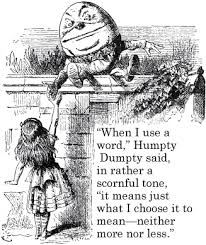
(For Obama, principles are as flexible as words.

Humpty words

— DM)

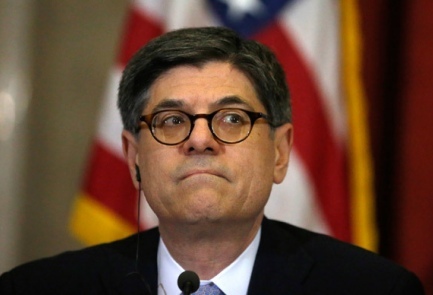
143393177342310791a_bU.S. Treasury Secretary Jacob Lew | Photo credit: Reuters

Under the sanctions developed over decades, hundreds of companies and individuals have been penalized not only for their roles in the country’s nuclear program but also for ballistic missile research, terrorism, human rights violations and money laundering.

Officials say the administration can meet its obligations because of how it interprets nuclear sanctions.

For example, they say measures designed to stop Iran from acquiring ballistic missiles are nuclear-related because they were imposed to push Iran into the negotiations. Also, they say sanctions that may appear non-nuclear are often undergirded by previous actions conceived as efforts to stop Iran’s nuclear program.

***********************

The Obama administration may have to backtrack on its promise that it will suspend only nuclear-related economic sanctions on Iran as part of an emerging nuclear agreement, officials and others involved in the process told The Associated Press Tuesday.

The problem derives from what was once a strong point of the broad U.S. sanctions effort that many credit with bringing Iran to the negotiating table in the first place.

Administration officials vehemently reject that any backtracking is taking place, but they are lumping sanctions together, differently from the way members of Congress and critics of the negotiations separate them.

Under the sanctions developed over decades, hundreds of companies and individuals have been penalized not only for their roles in the country’s nuclear program but also for ballistic missile research, terrorism, human rights violations and money laundering.

Now the administration is wending its way through that briar patch of interwoven economic sanctions.

The penalties are significant. Sanctioned foreign governments, companies or individuals are generally barred from doing business with U.S. citizens and businesses, or with foreign entities operating in the American financial system. The restrictions are usually accompanied by asset and property freezes as well as visa bans.

Negotiators hope to conclude a final nuclear deal by June 30. According to a framework reached in April, the U.S. will be required to lift sanctions that are related to Iran’s nuclear program but could leave others in place. President Barack Obama can suspend almost all U.S. measures against Iran, though only Congress can revoke them permanently.

“Iran knows that our array of sanctions focused on its efforts to support terrorism and destabilize the region will continue after any nuclear agreement,” Treasury Secretary Jack Lew told a gathering of American Jews in a weekend speech. U.S. officials will “aggressively target the finances of Iranian-backed terrorist groups and the Iranian entities that support them,” he said, including the Lebanese militant group Hezbollah and Iran’s Quds Force.

The Treasury Department’s sanctions point man, Adam Szubin, has been tasked with sorting out the mess, according to U.S. officials, though no clear plan has yet been finalized.

Officials say the administration can meet its obligations because of how it interprets nuclear sanctions.

For example, they say measures designed to stop Iran from acquiring ballistic missiles are nuclear-related because they were imposed to push Iran into the negotiations. Also, they say sanctions that may appear non-nuclear are often undergirded by previous actions conceived as efforts to stop Iran’s nuclear program.

The officials who provided information for this story spoke only on condition of anonymity because they were not authorized to speak publicly on the private discussions.

After years of negotiations, U.S. officials believe a deal is within reach that for a decade would keep Iran at least a year from being able to build a nuclear weapon.

In return, the U.S. would grant billions of dollars in relief from sanctions that have crippled Iran’s economy. But the whole package risks unraveling if the U.S. cannot provide the relief without scrapping sanctions unrelated to Iran’s nuclear program.

Administration officials say they are examining a range of options that include suspending both nuclear and some non-nuclear sanctions, a step that would face substantial opposition in Congress and elsewhere. Under one scenario, the U.S. could end non-nuclear restrictions on some entities, then slap them back on for another reason. But Iran could then plausibly accuse the U.S. of cheating on its commitments.

U.S. President Barack Obama has spoken about Iran potentially recouping up to $150 billion in assets trapped overseas. The process for how that would take place is still being worked through, said officials.

The Iranian Central Bank may prove the most glaring example of the administration’s dilemma, and officials acknowledge there is no way to give Iran the sanctions relief justified by its compliance without significantly easing restrictions on the institution.

The bank underpins Iran’s entire economy, and for years the U.S. avoided hitting it with sanctions, fearing such action would spread financial instability and raise oil prices. By late 2011, with Iran’s nuclear program advancing rapidly, Obama and Congress did order penalties, declaring the bank a “primary money laundering concern” and linking its activity to ballistic missile research, terror financing and support for Syrian President Bashar Assad.

The effects were far-reaching: Petroleum exports fell by 60%, Iran suffered runaway inflation, cash reserves dried up and industrial output in several sectors plummeted. And Iran agreed to talk about its nuclear program with the United States and five other world powers.

Now that the nuclear agreement is so close, Iran wants these sanctions lifted. The administration officials say all sanctions on the bank are nuclear-related.

Lew told the Jewish conference in New York that a nuclear accord would include the suspension of all “secondary” oil, trade and banking restrictions — those that apply to U.S. and non-U.S. banks, as well as foreign governments.

Many of these measures overlap with American sanctions tied to Iran’s nuclear program, and that has officials considering new sanctions to keep certain Iranian institutions under pressure.

Eliminating the secondary sanctions across the board could have wide-ranging implications, making it easier for Iran’s Revolutionary Guard Corps and its police, intelligence services and paramilitary groups to do business.

That possibility has Iran’s rivals in the region, including Israel and the Sunni monarchies of the Middle East, gravely worried.

“I share their concern,” Gen. Martin Dempsey, the Joint Chiefs of Staff chairman, said Tuesday in Jerusalem.

“If the deal is reached and results in sanctions relief, which results in more economic power and more purchasing power for the Iranian regime, it’s my expectation that it’s not all going to flow into the economy to improve the lot of the average Iranian citizen,” he said.

“I think they will invest in their surrogates. I think they will invest in additional military capability.”

Iran’s Revolutionary Guard is under U.S. sanctions because of its proliferation of weapons of mass destruction. But because the U.S. views the corps as so pernicious, the administration is considering new measures to help block it from meddling in the internal conflicts of Iraq, Lebanon, Syria and Yemen.

Of the 24 Iranian banks currently under U.S. sanctions, only one — Bank Saderat, cited for terrorism links — is subject to clear non-nuclear sanctions. The rest are designated because of nuclear and ballistic missile-related financing, while several are believed to be controlled by the Revolutionary Guard.

Will they be cleared for business with the world? U.S. officials still cannot say one way or another. Congress, too, has not received a list of banks and institutions that would be released from sanctions under the deal.

If the United States cannot deliver on its promises, it could take the blame for a collapse of the years-long negotiations toward a nuclear deal, putting the world — in the words of Obama and other U.S. officials — on a path toward military confrontation. At the same time, an Iran unburdened by sanctions could redouble efforts toward nuclear weapons capacity, while international unity and the global sanctions architecture on Tehran fray.

Rouhani: Saving environment starts with sanctions removal

June 9, 2015

Rouhani: Saving environment starts with sanctions removal, Al-MonitorArash Karami, June 8, 2015

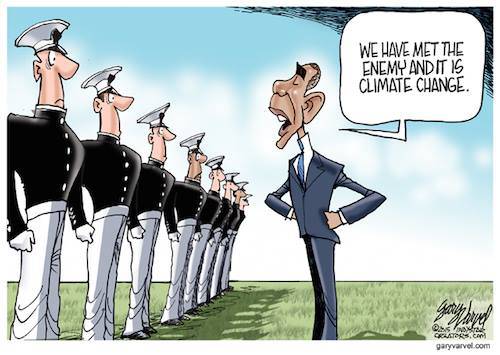
(Human rights, Iranian missiles, Iranian threats, Iranian proxies, theocratic dictatorship? Those are not relevant to the deal. But whatever may help the environment and therefore stop climate change is my top priority — Obama.

enemy

— H/t Freedom is just another word. — DM)

Rouhani’s comments linking the country’s various environmental problems and employment woes to the nuclear negotiations and sanctions relief have upset conservatives, who believe the administration is too eager to resolve the dispute and too optimistic about what the deal means for the country.

**********************

Iranian President Hassan Rouhani has been criticized for suggesting that once a comprehensive nuclear deal is made it will open the door to improving the country’s environmental problems. “The oppressive sanctions must be removed so that investment can come and the problems of the environment, employment, industry and drinkable water are resolved,” Rouhani said at a ceremony on June 7 commemorating Environment Week in Iran.

Rouhani described the sanctions as “a small fever … that at the beginning no attention was paid to this fever, but when the sick person fell ill and was not able to move anymore, we sought a remedy for the illness. Some did not know the reason of the sanctions but step by step, the problems became larger.”

Rouhani added that while “the oppressive sanctions must be removed,” this does not mean “that we must submit to the unreasonable wants of others.”

Iran and five permanent members of the UN Security Council plus Germany (P5+1) are working through the final details of a comprehensive deal that would see Iran reduce its nuclear activity in return for sanctions relief, particularly banking sanctions that have hurt the country’s ability to sell its oil and conduct trade and have prevented Western investment in the country.

But Rouhani’s comments linking the country’s various environmental problems and employment woes to the nuclear negotiations and sanctions relief have upset conservatives, who believe the administration is too eager to resolve the dispute and too optimistic about what the deal means for the country.

In an article titled, “The water, wind, soil and forests have also been tied to sanctions,” the conservative Javan newspaper criticized Rouhani’s latest comments. The article said, “Despite experts warning of not connecting domestic issues of the country to the nuclear issue and negotiations, at this ceremony Rouhani once again suggested that with the removal of sanctions not only will investment become fluid in Iran but the issues of the environment, youth employment, water and banking will be [resolved].”

The article continued that Rouhani’s comments “resulted in many experts becoming surprised and a few hours afterward many hostile Western networks and media … took this point and broadcast this to show [that] sanctions have brought Iran to its knees.”

In an article sarcastically titled, “Solving all the problems is tied to the negotiations, even drinking water,” the Kayhan newspaper also criticized Rouhani. Kayhan repeated Javan’s warning that analysts have warned of not tying the nuclear negotiations to domestic issues and cast doubt that so many problems could be resolved with the removal of sanctions. Kayhan wrote, “Stranger than anything else, Rouhani said the removal of sanctions would increase the water levels.”

Kayhan said, “The issue of sanctions is one the most important obstacles for the negotiators because the Americans do not want to remove sanctions, which is a tool to apply pressure on Iran.”

According to his previous statements, Iran’s Supreme Leader Ayatollah Ali Khamenei, who has final say on the nuclear program, has warned Iranian officials about being optimistic regarding the sanctions and has emphasized focusing on domestic capabilities instead.

On April 29, he said, “The key to solving economic issues is not in Lausanne, Geneva or New York,” three locations where the Iran and P5+1 nuclear talks have taken place under the Rouhani administration. “Without a doubt, sanctions and pressure cannot stop organized and planned efforts to increase domestic production.”


Leaked Information: Khamenei’s Lies Exposed

June 9, 2015

Leaked Information: Khamenei’s Lies Exposed, Front Page Magazine, June 9, 2015

(?????????????????? — DM)

1.29.13-Ayatollah-Ali-Khamenei-431x350

[W]hat the ayatollah is announcing to the media — that basically the Islamic Republic does not desire to seal a final nuclear deal with the six world powers — is not the truth.  The leaked information (in Persian language) indicates that the Supreme Leader has already instructed the nuclear negotiating team and his advisors to ignore his public statements and seal the final nuclear deal.

******************

Iran’s paramount religious leader can be described as one of the longest-ruling dictators in the Middle East who still enjoys the throne. An ideologue and a Shiite Islamist, he is also a shrewd Machiavellian politician.

Although he attempts to project himself to the Muslim world as a united religious leader who pursues truth, faith, and honesty, his double-faced character can easily be detected in the discrepancies among his statements and policies.

When Khamenei came to power, he lacked the charisma of his predecessor, Ayatollah Ruhollah Khomeini. To rule, he continued the major policies of his predecessor, relying on hard power and hardliners to suppress domestic opposition, making different statements to the public than in private, and funding Shiite or non-Shiite extremists groups in the region such as Hezbollah and the Houthis.

In addition, he created the Office of the Supreme Leader, comprised of close advisors and excluding the presidential and other major offices in order to further consolidate his power and prevent the leaking of information. The Islamic Republic’s major domestic and foreign policy decisions are made in the small gilded circle of his office and he is the final decision-maker of the country.

To rule, the ayatollah began wielding power without being held accountable. In order to do so, his government pre-select a handful of candidates to become president. Presidents do not have any actual power, but would be held accountable, blamed for any gaffes such as economic mismanagements and failure in nuclear talks, among other things. This system has so far worked for the ayatollah.

His predecessor and founder of the Islamic Republic came to power by promising people that oil revenues will be distributed among the population and that people do not have to pay for major bills such as electricity or water (in a speech that he gave in Behesht e Zahra). The videos and audios of that speech were removed from public access. Now, one can even be punished or executed by the Islamic Republic if the government finds that particular speech in one’s possession.  Ayatollah Khamenei also continued this dual policy of deceiving the public.

Most recently, with regards to the marathon nuclear negotiations, Mr. Khamenei’s double standards have become more obvious due to leaked information.

In less than a month, the six world powers (known as the P5+1; the United States, China, Germany, United Kingdom, France, and Russia) and the Islamic Republic will be reaching the deadline for their marathon nuclear talks, marking one the lengthiest international negotiations of our generation.

The position and opinion of the Islamic Republic’s paramount leader, Ayatollah Ali Khamenei, on the nuclear negotiations and the terms of the final nuclear deal can be characterized as the most crucial factor in determining whether a final deal will be reached by the end of June or not.

Khamenei recently stated, “We will never yield to pressure… We will not accept unreasonable demands… Iran will not give access to its (nuclear) scientists,” he added, “They say we should let them interview our nuclear scientists. This means interrogation… I will not let foreigners talk to our scientists and to interrogate our dear children… who brought us this extensive (nuclear) knowledge… We will not allow the privacy of our nuclear scientists or any other important issue to be violated.”

Nevertheless, what the ayatollah is announcing to the media — that basically the Islamic Republic does not desire to seal a final nuclear deal with the six world powers — is not the truth.  The leaked information (in Persian language) indicates that the Supreme Leader has already instructed the nuclear negotiating team and his advisors to ignore his public statements and seal the final nuclear deal.

The Supreme Leader’s double-standards and the difference in what he states publicly and what he instructs behind the scenes, indicate that he indeed needs the final nuclear deal and he will be more likely willing to allow inspections in order to obtain the deal. Ayatollah Khamenei is cognizant of the fact that the final nuclear deal is geopolitically, economically, and ideologically a win for him. Iran’s nuclear infrastructure will not be dismantled, Iran’s break-time to become a nuclear state will shrink from one year to zero in the next few years, Iran’s economy will be strengthened, and the US will likely ignore Iran’s increasing influence and their proxy wars in the region because of the nuclear deal.

Khamenei is being disingenuous with the public and other nations for several reasons. First of all, The fact that Iran’s negotiating team are continuing with the talks, sitting at the same table with Obama administration’s diplomats, and the fact that there is contradiction between what the Supreme Leader and his advisors stated publicly and behind the scenes indicates that Khamenei is giving a green light to the nuclear team to get a nuclear agreement from the White House, the major player in the talks.  Secondly, by showing that Iran is not in need of such a deal, Khamenei is giving leverage to the Iranian negotiating team to obtain more concessions from the West.

Khamenei attempts to publicly show that he is a strong religious and nationalistic leader who is totally against foreign inspection and monitoring of his country. Finally, he desires to project the picture that he is not desperate for the final nuclear deal in order to get as many concessions as he can from the Obama’s administration. And so far, his tactics and dual policies have worked for him in further strengthening his throne and power.

Super Power Poker – Live From Iran

June 9, 2015

Super Power Poker – Live From Iran, Clarion Project via You Tube, June 9, 2015

The stakes are the highest they’ve ever been. Nuclear Iran. The US, Iran, Saudi Arabia and Israel play for the security of the world. This is the ultimate hold’em game. Who holds the aces, who will go all in, who is bluffing and who has a tell that will leave them with nothing but a mushroom cloud. No nukes for Iran.


Shoshana Bryen: The Kurds: A Guide for U.S. Policymakers

June 7, 2015

Shoshana Bryen: The Kurds: A Guide for U.S. Policymakerssecurefreedom via You Tube, June 5, 2015

Shoshana Bryen, Senior Director, Jewish Policy Center; Former Senior Director for Security Policy, Jewish Institute for National Security Affairs (JINSA):


Forfeiting America’s Military Leverage

June 6, 2015

Forfeiting America’s Military Leverage, American ThinkerAbraham Katsman, June 6, 2015

International diplomacy, it is said, is the art of letting the other party have your way.  While there are numerous diplomatic strategies to accomplish that, one of history’s more effective means of pursuing foreign policy goals was for a superior power to conspicuously display naval forces in the waters of the weaker power, posing a military threat until satisfactory terms with the weaker nation could be reached. Such “gunboat diplomacy” could be remarkably persuasive.

But if there is such a thing as the opposite of gunboat diplomacy, we are witnessing it in the nuclear negotiations with Iran.  There will be repercussions.

The United States and other leading nations taking part in the negotiations have military capabilities that dwarf those of Iran, at best a second-rate power. Yet, in spite of the huge military advantages — not to mention the moral gulf between the U.S and Iran, or the huge stakes of allowing Iran to go nuclear — negotiations have proceeded as if between equals.

U.S. military spending is greater than that of the next seven countries combined. Superpower America has a near-monopoly on those gunboats, as well as military aircraft and cruise missiles. But that power is only useful if there is a willingness to use it — or, more precisely, if America’s enemies believe that that there is such a willingness.

If there were ever thoughts that the U.S. under Obama would lay down the law with Iran and order, under overt military threat, the “voluntary” dismantling of the mullah’s nuclear program, they have passed quietly. Sure, President Obama occasionally makes some perfunctory mention that the military option is still on the table, but no one takes his half-hearted warning seriously, least of all the Iranians.

It doesn’t help matters when Obama says, as he did on Israeli TV this week, “A military solution will not fix [the Iranian nuclear problem]. Even if the United States participates, it would temporarily slow down an Iranian nuclear program but it will not eliminate it.”

Obama has effectively forfeited America’s military leverage. He has taken the position that the only alternative to his Iranian appeasement approach is war, and that war is not an outcome acceptable to him under any circumstances.

No Iranian misconduct disrupts Obama’s pacifism. Against American interests and those of America’s allies, Iran has expanded its reach into Syria, Lebanon, Iraq, and Yemen, ethnically cleansing Sunni communities in Iraq. It has seized a cargo ship under U.S. protection, and holds several Americans hostage (complete with an ongoing farcical “trial” against Washington Post reporter Jason Rezaian for espionage). It has increased its nuclear stockpile and violated its existing international agreements, including regarding type and number of centrifuges it may operate, and announced that it will build additional reactors with the help of China and Russia.

In fact, America’s gunboats notwithstanding, it is Iran that has been dictating the terms of a prospective agreement. Iran’s intransigence in the nuclear negotiations has been rewarded: the U.S. has already backed off demands regarding Iranian nuclear enrichment, centrifuges, missile technology, and duration of the prospective agreement — and gotten nothing in return.

Not only is the United States administration going along with all this, but it has released some $11 billion in cash assets to the Islamic Republic. On top of that, it is offering a “signing bonus” of tens of billions of additional dollars to Iran for coming to a nuclear agreement, irrespective of Iranian behavior, support for terror or holding Americans prisoners.

In this context, with no credible American military threat on the table, we should not be surprised that Iran is getting everything it wants from the negotiations at no cost and no risk. As a bonus, it gets to show the world how unserious its American arch-enemy has become.

For the last century, the United States has asserted a global foreign policy, the core of which is being ready, willing, and able to impose its military might to protect its vital interests. Is there a more compelling current American interest than to keep nuclear weapons out of the reach of a rabidly anti-American, anti-Semitic, destabilizing, theocratic, apocalyptic regime, which also threatens the world’s major oil suppliers and is the world’s greatest supporter of terror? If Obama cannot even consider the military protection of that interest, he has rendered American foreign policy impotent, and its military capabilities irrelevant.

That abandonment of longstanding American projection of military power to protect global interests does not go unnoticed, by either friend or foe. The American military’s deterrent effect has been eroded; its security umbrella to its allies looks a lot less secure. The effect on alliances both current and future is corrosive.

From Riyadh to Taipei to Jerusalem, from Moscow to Beijing to Pyongyang, the world is paying close attention. As much as these nuclear negotiations are about Iran, they are even more about America.


Six powers agree on UN sanctions ‘snapback’ in push for Iran deal, sources say

May 31, 2015

Six powers agree on UN sanctions ‘snapback’ in push for Iran deal, sources say, Jerusalem Post, May 31, 2015

(Obviously, the tentative “deal” raises more questions than it answers, including its “non-binding” nature and whether Russia, China and even Iran would have vetoes.– DM)

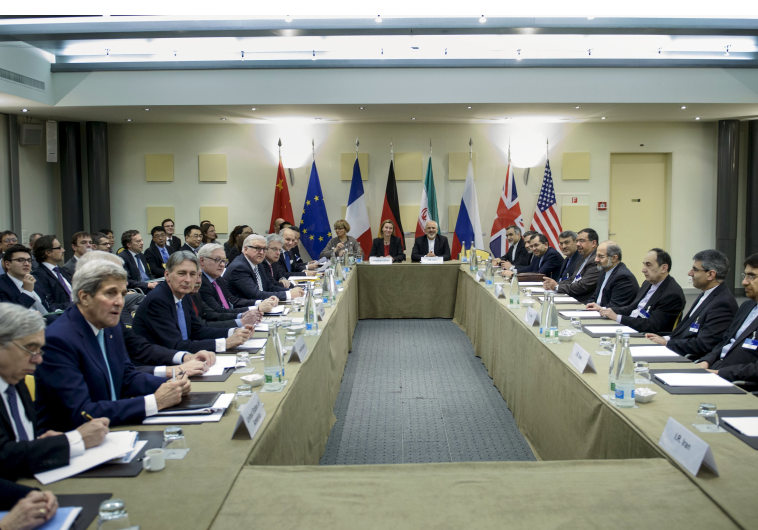
P5+1 meetingOfficials wait for a meeting with officials from P5+1, the European Union and Iran at the Beau Rivage Palace Hotel in Lausanne March 31, 2015.. (photo credit:REUTERS)

As part of the new agreement on sanctions snapback, suspected breaches by Iran would be taken up by a dispute-resolution panel, likely including the six powers and Iran, which would assess the allegations and come up with a non-binding opinion, the officials said.

As part of the new agreement on sanctions snapback, suspected breaches by Iran would be taken up by a dispute-resolution panel, likely including the six powers and Iran, which would assess the allegations and come up with a non-binding opinion, the officials said.

It was unclear exactly how the snapback mechanism would function, and the officials did not discuss the precise details. It was also unclear how the proposal would protect the United States and other permanent Council members from a possible Chinese or Russian veto on sanctions restoration.

**********************

New York, Paris, Ankara – Six world powers have agreed on a way to restore UN sanctions on Iran if the country breaks the terms of a future nuclear deal, clearing a major obstacle to an accord ahead of a June 30 deadline, Western officials told Reuters.

The new understanding on a UN sanctions “snapback” among the six powers – the United States, Britain, France, Germany, Russia and China – brings them closer to a possible deal with Iran, though other hurdles remain, including ensuring United Nations access to Iranian military sites.

The six powers and Iran struck an interim agreement on April 2 ahead of a possible final deal that would aim to block an Iranian path to a nuclear bomb in exchange for lifting sanctions. But the timing of sanctions relief, access and verification of compliance and a mechanism for restoring sanctions if Iran broke its commitments were among the most difficult topics left for further negotiations.

US and European negotiators want any easing of UN sanctions to be automatically reversible if Tehran violates a deal. Russia and China traditionally reject such automatic measures as undermining their veto power as permanent members of the UN Security Council.

As part of the new agreement on sanctions snapback, suspected breaches by Iran would be taken up by a dispute-resolution panel, likely including the six powers and Iran, which would assess the allegations and come up with a non-binding opinion, the officials said.

The International Atomic Energy Agency (IAEA) would also continue regularly reporting on Iran’s nuclear program, which would provide the six powers and the Security Council with information on Tehran’s activities to enable them to assess compliance.

If Iran was found to be in non-compliance with the terms of the deal, then UN sanctions would be restored.

The officials did not say precisely how sanctions would be restored but Western powers have been adamant that it should take place without a Security Council vote, based on provisions to be included in a new UN Security Council resolution to be adopted after a deal is struck.

“We pretty much have a solid agreement between the six on the snapback mechanism, Russians and Chinese included,” a Western official said. “But now the Iranians need to agree.”

Another senior Western official echoed his remarks, describing the agreement as “tentative” because it would depend on Iranian acceptance.

A senior Iranian diplomat said Iran was now reviewing several options for the possible “snapback” of Security Council sanctions against Tehran.

It was unclear exactly how the snapback mechanism would function, and the officials did not discuss the precise details. It was also unclear how the proposal would protect the United States and other permanent Council members from a possible Chinese or Russian veto on sanctions restoration.

US Ambassador to the United Nations Samantha Power has made it clear that Washington does not want Russia’s and China’s recent slew of vetoes on resolutions related to Syria to be repeated with an Iran nuclear agreement.

France’s Ambassador to the United States Gerard Araud said in Washington last week that, under a French idea, sanctions would be reinstated automatically in the event of non-compliance, avoiding the threat of a veto.

Under that idea, which Araud said had not to date been approved by the six powers, the onus would be on Russia or China to propose a Security Council vote not to re-impose sanctions.

Russian and Chinese officials did not respond immediately to requests for confirmation that they signed off on the snapback mechanism.

REVIEWING THE OPTIONS

US Secretary of State John Kerry met with Iranian Foreign Minister Mohammad Javad Zarif in Geneva on Saturday. They discussed progress and obstacles to an agreement in the Iran nuclear talks a month before the deadline for a deal aimed at reducing the risk of another war in the Middle East.

Restoring US and EU sanctions is less difficult than UN sanctions because there is no need for UN Security Council involvement.

For their part, Moscow, Beijing and Tehran have wanted assurances that Washington cannot unilaterally force a sanctions snapback – a risk they see rising if a Republican wins the US presidency in 2016.

A senior Iranian diplomat confirmed that discussions of specific snapback options were underway. He told Reuters Tehran was preparing its own “snapback” in the event the Western powers fail to live up to their commitments under the agreement.

“At least three or four different suggestions have been put on the table, which are being reviewed,” he said. “Iran also can immediately resume its activities if the other parties involved do not fulfill their obligations under the deal.”

He added that it was “a very sensitive issue.”

If Iran accepts the proposed snapback mechanism, there are other hurdles that must be overcome, including IAEA access to Iranian military sites and nuclear scientists and the pace of sanctions relief.

Iran says its nuclear program is entirely peaceful and rejects allegations from Western countries and their allies that it wants the capability to produce atomic weapons. It says all sanctions are illegal and works hard to circumvent them.

Top Iranian Negotiator: We Reached Solution with P5+1 on Site Inspection, But Khamenei Rejected It

May 28, 2015

Top Iranian Negotiator: We Reached Solution with P5+1 on Site Inspection, But Khamenei Rejected It, MEMRI-TV videos, May 28, 2015

In an Iranian TV interview, Iranian Deputy Foreign Minister Abbas Araqchi, who is Iran’s top nuclear negotiator, revealed that the Iranian negotiating team had reached possible solutions with the P5+1 on the issue of inspection of Iranian nuclear facilities, but that Iranian Supreme Leader Ali Khamenei had decisively rejected them. Inspection of the facilities is one of the key issues remaining in the nuclear talks. The interview aired on Iran’s Channel 2 TV on May 25.


Site inspections must be part of Iran deal: IAEA

May 27, 2015

Site inspections must be part of Iran deal: IAEA, Times of IsraelCECILE FEUILLATRE, May 27, 2015

(France’s foreign minister has also stated that France will not back any deal “unless it provided full access to all installations, including military sites.” – DM)

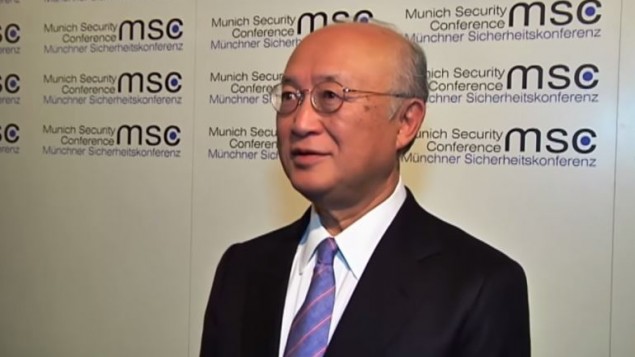
amino-e1432728404999-635x357Director-General of the International Atomic Energy Agency Yukiya Amano. (screen capture: YouTube/FRANCE 24 English)

UN nuclear agency chief Yukiya Amano says months needed to assess military aspects of Iranian nuclear sites.

PARIS, France (AFP) — If Iran signs a nuclear deal with world powers it will have to accept inspections of its military sites, the head of the UN’s atomic watchdog Yukiya Amano told AFP in an interview.

The question of inspections is shaping up to be one of the thorniest issues as world powers try to finalize a deal by June 30 to prevent Iran from developing a nuclear bomb.

Amano said Tehran has agreed to implementing the Additional Protocol of the Nuclear Non-Proliferation Treaty (NPT) that allows for snap inspections of its nuclear facilities, and if required, military sites.

However, differences have emerged over the interpretation of the protocol and the issue is far from resolved.

Iran’s supreme leader Ayatollah Ali Khamenei last week ruled out allowing nuclear inspectors to visit military sites or the questioning of scientists.

And Foreign Minister Mohammad Javad Zarif has said the protocol allows “some access” but not inspections of military sites, in order to protect national “military or economic secrets.”

In an interview with AFP and French daily Le Monde, Amano said that if a deal is reached, Iran will face the same inspections from the International Atomic Energy Agency (IAEA) as any of the 120 countries implementing the additional protocol.

“When we find inconsistency or when we have doubts we can request access to the undeclared location for example, and this could include military sites,” said the Japanese diplomat.

“Some consideration is needed because of the sensitiveness of the site, but the IAEA has the right to request access at all locations, including military ones.”

Iran and the so-called P5+1 group — Britain, China, France, Russia, the United States plus Germany — have been engaged for nearly two years in negotiations on Tehran’s nuclear drive.

The deal is aimed at preventing Iran from developing the atomic bomb in exchange for an easing of crippling economic sanctions.

The two sides signed a framework agreement on April 2 and began meeting in Vienna on Wednesday to start finalizing a deal which is due by June 30.

Possible military dimension

Iran has long asserted its nuclear program is for peaceful energy purposes, and that international concern about it seeking a nuclear bomb is misplaced.

According to the United States, Iran has agreed to cut the number of its centrifuges, used for enriching uranium, by two thirds from 19,000 to about 6,000, and will put excess nuclear equipment into storage monitored by the IAEA.

Iran has also reportedly agreed not to build any new facilities for enriching uranium for 15 years, cut back its stockpile of enriched uranium and mothball some of its plants.

However, Tehran is sensitive over the IAEA’s stringent oversight demands as the agency is at the same time trying to probe allegations that Iran tried to develop nuclear weapons prior to 2003, and possibly since.

Iran denies the allegations, saying they are based on hostile intelligence provided by the US Central Intelligence Agency (CIA) and Israel’s Mossad.

Western officials stress that these claims of “possible military dimensions” need to be cleared up before sanctions can be lifted, but the IAEA’s probe has been stalled since last August.

‘A huge operation’

Amano said that once there is a deal, “several months will be needed” to investigate whether there were any military dimensions to Iran’s research.

“It depends very much on the pace and the intensiveness of the cooperation from Iran. We have identified 12 areas to clarify.”

One notable area the IAEA is interested in is the Parchin military base, where they suspect tests relating to the development of nuclear weapons have taken place.

The IAEA has already visited the sprawling military base near Tehran but wants to return for another look.

Amano said it could take years “to give the credible assurance that all activities in Iran have a peaceful purpose”.

If a deal is reached with the P5+1, the IAEA will be charged with overseeing it and reporting back to the UN Security Council.

“This will be the most extensive safeguard operation of the IAEA. We need to prepare well, we need to plan well, it is a huge operation,” said Amano.

Currently the watchdog has between four and 10 inspectors in Iran at any given time, and if a deal is reached at least 10 will need to be on the ground daily.

The agency will also need to install cameras and seals on sensitive equipment.