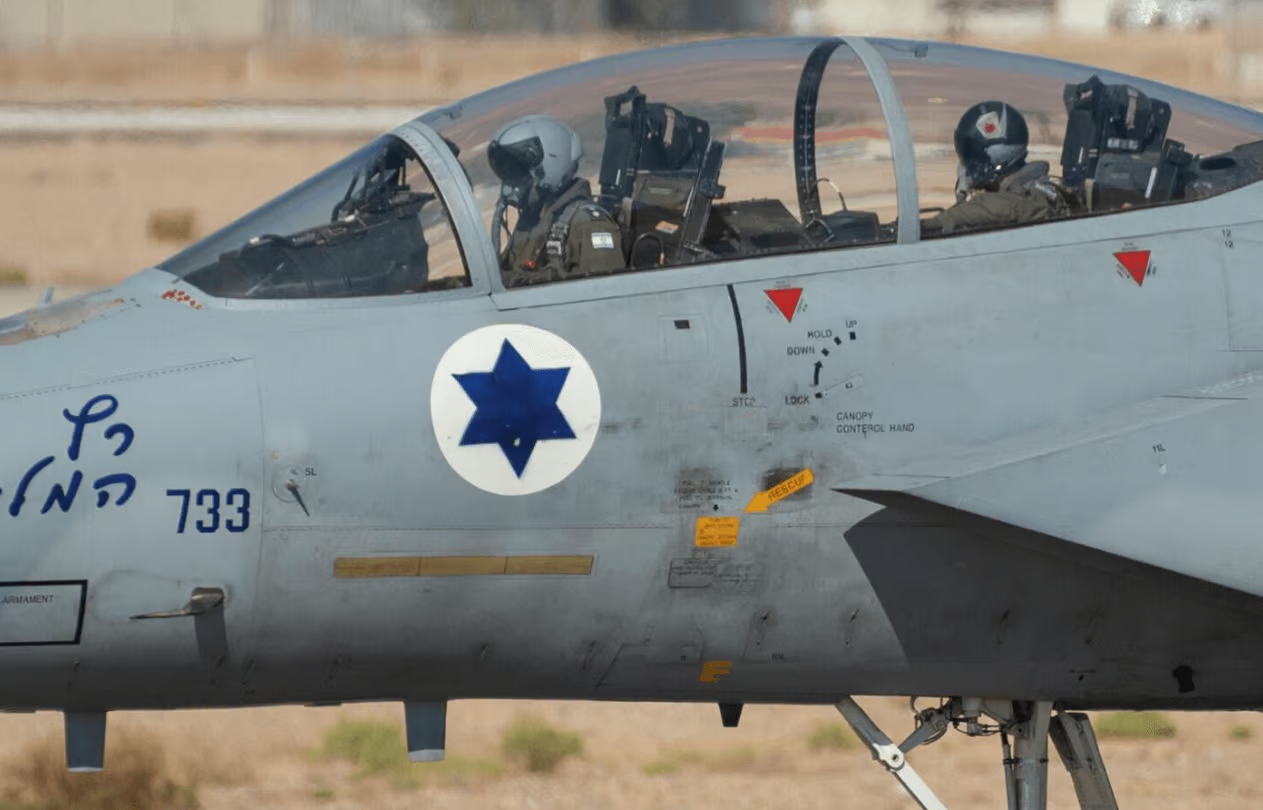
Posted tagged ‘Politics’

Yahya Sinwar studied Israel in mission to destroy it

October 18, 2024

Yahya Sinwar spent two decades in Israeli prisons studying the country and trying to identify its weaknesses before emerging to assemble a powerful militia dedicated to toppling it.
https://www.theaustralian.com.au/business/the-wall-street-journal/yahya-sinwar-studied-israel-in-mission-to-destroy-it/news-story/076c7dcbd1e9fb41c04596abfc57ba01

Yahya Sinwar, the Hamas leader who was killed by Israeli forces, spent two decades in Israeli prisons studying the country and trying to identify its weaknesses before emerging to assemble a powerful militia dedicated to toppling it.

That mission culminated on Oct. 7 last year, when at his command Hamas led the deadliest attack in Israel’s more than 75-year history. It triggered a war with Israel in Gaza, and now Lebanon, that has upended the Middle East, reignited the Palestinian cause and left more than 40,000 people dead.

Israel vowed to hunt down the wiry and silver-haired Sinwar after the Oct. 7 attacks that killed 1,200 people and left 250 people held hostage, and his death fulfills one of Israel’s main goals of the Gaza war. For more than a year, he evaded the Israeli military, hiding in underground tunnels from where he directed Hamas’s war effort. On Thursday, Israeli officials announced his Wednesday death.

“I prefer to be a fighter among the army and soldiers, and I will die as a fighter,” Sinwar told a Palestinian news website in 2011.

Sinwar, who for years led Hamas in Gaza, took full control of the US-designated terrorist organisation in August after Israel killed its political leader, Ismail Haniyeh, in Iran.

Sinwar’s ascension, which took the group in an even more violent direction, followed a years-long internal struggle over how Hamas should achieve its political and military ambitions. A hardliner, Sinwar believed Israeli and Palestinian civilian deaths were necessary to destabilise Israel.

He launched the attacks last year in the hope that Iran and Hezbollah militants in Lebanon would join the fighting. But those allies initially offered only limited help, with Iran-backed Hezbollah firing rockets at Israel in tit-for-tat exchanges that began the day after the Hamas attacks from Gaza. In April, after the death of an Iranian general in Damascus, Iran launched around 300 missiles and drones at Israel in retaliation for the killing.

Israel this fall launched an air-and-ground campaign against U.S.-designated terrorist group Hezbollah, killing its leader Hassan Nasrallah in Lebanon as it sought to deter attacks into its north. Iran, in response, fired some 200 missiles at Israel, an assault to which Israel has promised to respond. The escalating conflict has left the region on the brink of all-out war.

Sinwar was detained by Israel in 1988, and later told Israeli interrogators that he strangled a suspected Palestinian collaborator, according to a transcript of his confession.

Later convicted, he devoted his time in prison to getting to know Israeli society. He learned Hebrew, watched Israeli news and read books on Jewish history. He was released in 2011 in a prisoner exchange in which Israel gave up more than 1,000 Palestinian prisoners for one Israeli soldier.

Sinwar once said that what Israel considers its strength – that most Israelis serve in the army and soldiers hold a special status in society – was a weakness that could be exploited. One of the goals of the Oct. 7, 2023, attacks was to capture Israeli soldiers who could be traded for Palestinian prisoners. What became clear later was that Sinwar could also use them as insurance to keep himself alive.

But he ultimately miscalculated how Israel would respond to the unprecedented attacks, as Israeli Prime Minister Benjamin Netanyahu vowed to destroy Hamas and dismantle its military. While Israel engaged in talks to free hostages, Netanyahu gave priority to a military campaign against Hamas that eventually led to Sinwar’s killing.

The war has wiped out much of Hamas’s top leadership, including Sinwar, Haniyeh and military commander Mohammed Deif in July.

Netanyahu hasn’t presented a plan for who should govern Gaza after the war. He has ruled out Washington’s proposal that the Palestinian Authority, which runs parts of the West Bank, be put in charge of the enclave.

Some Arab states have pushed for Hamas to retain a role in governing the strip to avert an insurgency by the group’s remaining fighters. Sinwar could be succeeded by his deputy in Gaza, Khalil al-Hayya, who has represented Hamas in ceasefire negotiations with Israel, or by former Hamas leader, Khaled Meshaal.

Sinwar launched the Oct. 7 attacks in part over frustration with the paralysis in the long-running Israeli-Palestinian conflict and the fading global diplomatic importance of the Palestinian cause. The atrocities in southern Israel and subsequent destruction wrought in Gaza have undoubtedly refocused attention back on the issue.

Sinwar grew up in a refugee camp in Khan Younis in Gaza, the son of refugees who fled what is now Israel during the 1948 war with Arab states. In the 1980s, Sinwar became close to the founder of Hamas, Sheikh Ahmed Yassin, and worked with his mentor to hunt Palestinian informants suspected of collaborating with Israel. The internal police force was a forerunner to Hamas’s military wing, the Izz ad-Din al-Qassam Brigades.

During a series of interrogations after his 1988 detention and charge, Sinwar explained how he rounded up a suspected Palestinian collaborator with Israel while the man was in bed with his wife, according to a transcript of his confession.

He blindfolded the Palestinian, called Ramsi, and drove him to an area with a freshly dug grave before strangling him with a scarf known as a kaffiyeh, a symbol of the Palestinian cause.

“I was sure that Ramsi knew he deserved to die for what he did,” Sinwar said in his confession.

Sinwar’s reputation as one of the founders of Hamas and as its chief enforcer immediately propelled him through the hierarchy of Hamas prison inmates.

By the mid-1990s, Sinwar was already the most important Hamas prisoner held by Israel, according to Ehud Ya’ari, an Israeli broadcast journalist who interviewed him in prison. “It was not in question at all that he was the guy in charge,” said Ya’ari.

While Sinwar had a reputation as a violent enforcer, he also had a more cerebral, academic side. He hand wrote hundreds of pages of his thoughts and conclusions upon reading Jewish and Zionist history, demonstrating a curiosity about his enemy that stunned Israelis who met him at the time, Ya’ari added.

He also penned a coming-of-age novel about life in Gaza and a nonfiction book about his experience setting up Hamas’s internal police force.

In 2004, he appeared to develop neurological problems, speaking unclearly and struggling with walking. Doctors examined him, finding an abscess in the brain, and rushed him to hospital for surgery. After a successful operation, Sinwar returned to prison and thanked the doctors for saving his life. He also spent hours in conversation with one of his jailers.

Following his exchange in 2011, Sinwar quickly rose through Hamas’s political leadership. He became Hamas’s leader in Gaza in 2017 and for a time signalled to Israel that he was seeking a long-term quiet in the conflict between the militants and the Israeli military.

“The truth is that a new war is in no one’s interest,” Sinwar told an Italian journalist writing in 2018 in an Israeli daily.

But he became increasingly frustrated with Hamas’s diplomatic isolation, and began to deepen relations with Israel’s arch-enemy Iran and its proxy Hezbollah.

In the months leading up to Oct. 7, the anti-Israel allies discussed ways that they could attack their joint enemy. But while Iran’s proxies have attacked Israel and U.S. forces in the Middle East since the start of the war in Gaza, Tehran and its allies have for the most part avoided an all-out escalation, a decision that frustrated Sinwar.

Once the war began, Sinwar knew that success for Hamas would depend on him surviving and outlasting Israel, forcing a permanent ceasefire that would leave Hamas intact.

For a time, Sinwar believed that he might emerge victorious. His messages to his Hamas colleagues and ceasefire mediators became increasingly confident, even grandiose, according to Arab ceasefire mediators. During negotiations for a temporary pause in fighting earlier in the war, he urged Hamas’s political leadership outside Gaza not to make concessions and to push for a permanent end to the war.

Sinwar believed high civilian casualties in Gaza would create worldwide pressure on Israel to stop the war, according to messages he sent to mediators. But even as the U.S. repeatedly pushed the two sides to agree to a ceasefire, Israel proposed conditions that would likely have led to Hamas’s demise, and Sinwar dug in.

At the end of July, Israel assassinated Haniyeh in Tehran, and Sinwar was officially elevated to run the broader group, his de facto role since the war began.

In September, Hamas raised the stakes, suggesting it had killed six high-profile hostages, including an Israeli-American, amid Israeli military pressure in Gaza. The group threatened to kill more hostages if Israel tried to rescue others, illustrating how much pressure Sinwar was under. The hostages were a valuable bargaining chip to force a ceasefire, but he was also willing to kill some of them as leverage over Israel’s government to force a deal.

Ultimately, Israel’s intelligence and military capabilities proved too much for Sinwar.

In a message to Hezbollah before he was killed, the Hamas leader thanked the Shia militant group for its support and invoked a 7th-century battle in Karbala, Iraq, where the grandson of the Prophet Muhammad was slain, causing a schism in Islam.

“We have to move forward on the same path we started,” Sinwar wrote to Hezbollah. “Or let it be a new Karbala.”
Eliminated: How Israel killed the Hamas mastermind of terror, Yahya Sinwar

October 18, 2024

For more than a year, Israeli soldiers scoured the scorched earth of Gaza in search of Yahya Sinwar, who was thought to be hiding in a vast tunnel network. Then, by pure chance, they found him.

https://www.theaustralian.com.au/world/the-times/most-wanted-man-eliminated-how-israel-killed-the-hamas-mastermind-of-terror-yahya-sinwar/news-story/8800ee91ef3932d057c24e564e4a732d

For more than a year, Israeli soldiers scoured the scorched earth of Gaza in search of the leader of Hamas, Yahya Sinwar, who was thought to be hiding in a vast tunnel network. Then, by chance, they found him.

Late on Wednesday in the southern city of Rafah, trainee Israeli troops from the 828th Battalion, a mixture of novice soldiers and reservists, spotted three suspicious figures moving “home to home on the run”, the military said.

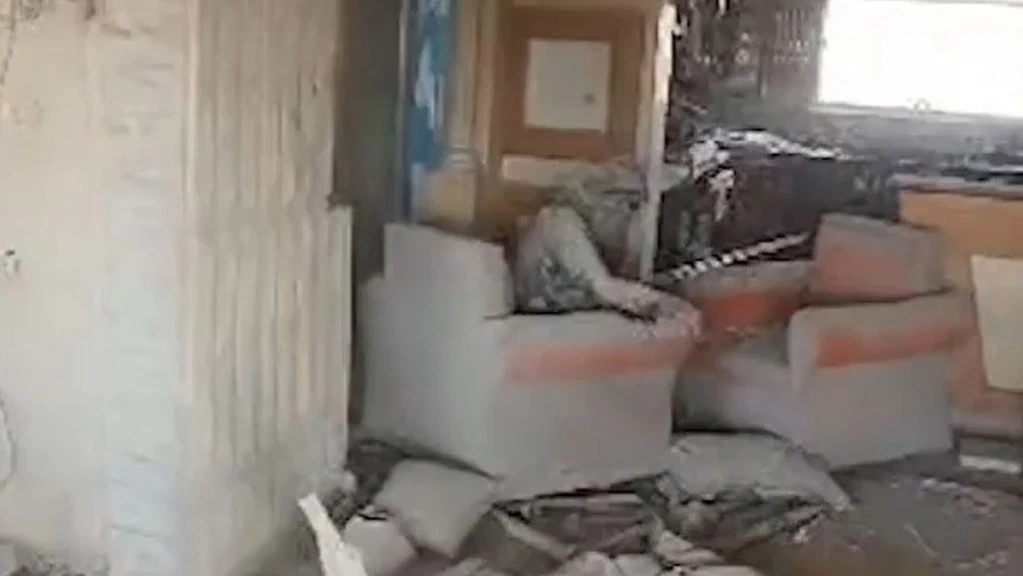
The soldiers fired on the group, apparently wounding one of them, who fled alone into a building. They sent in a small drone in pursuit, and through its camera saw a figure sitting among debris, his face covered by a scarf, who hurled a stick at it in defiance.

Deciding it was too dangerous to enter, they called in tank fire instead. The building was hit by two 120mm shells, with shrapnel scything across the upper floors.

When the trainee soldiers piloted a drone back into the wreckage, they discovered something remarkable.

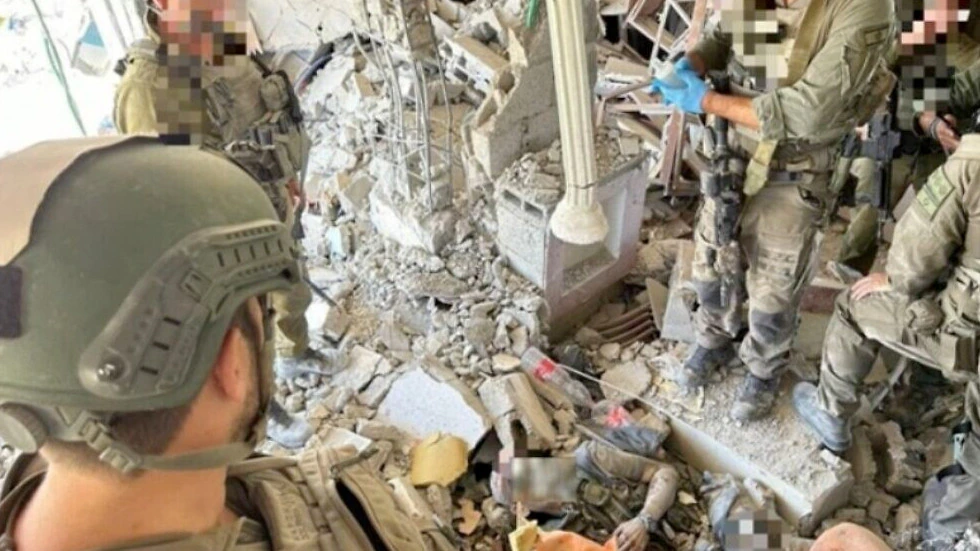
Entombed in the rubble was a body. The head was partially shattered, the face covered in ash, but the corpse was instantly recognisable: it was Israel’s No 1 enemy. His lips slightly parted in death, Sinwar, 61, was given away by his distinctive ears.

Even though it looked exactly like him, it seemed scarcely believable that the troops would stumble across the leader of Hamas in the middle of a city repeatedly cleared by the Israel Defence Forces over months of heavy fighting. Soldiers from the 450th infantry battalion were ordered to storm the building for a closer look.

Wearing gloves to protect the forensic evidence, they took pictures of the corpse, wearing combat fatigues, and sent them to the Israeli police. Specifically, they needed to get images of his yellowing teeth.

Using a wooden stick, they pushed back the man’s upper lip to reveal an identifiable gap between his front incisors. Investigators had the Hamas leader’s DNA from the 22 years he spent in Israeli jails. “We had Sinwar’s dental data on file, and the match was clear,” Aliza Raziel, head of the police’s Forensic Identification Division, said, describing it as “one of the most significant moments this year”.

The seismic discovery was quickly communicated up the chain of command until, in the skies above Israel, two of its most senior security officials held an impromptu meeting in a military helicopter to assess the information. Examining classified documents spread out on a makeshift table, Herzi Halevi, Israel’s top general, and Ronen Bar, head of Shin Bet, the domestic intelligence agency, pored over the details of Sinwar’s apparent assassination.

At the same time, grisly photos of Sinwar’s corpse were leaked online, forcing the IDF to issue a statement. By this stage they were confident enough to assert with a “high” degree of confidence that Sinwar was dead. Four hours later, the military issued a simple message on social media: “Eliminated: Yahya Sinwar.”

Unlike the planned assassination of Hassan Nasrallah, the leader of Hezbollah, in Beirut last month, it appears that Sinwar’s demise owed much more to luck than design. Releasing drone footage of Sinwar’s last moments, Rear Admiral Daniel Hagari, the IDF spokesman, confirmed the soldiers “identified him as a terrorist in a building” but did not know who it was.

“We fired on the building and went in to search. We found him with a flak jacket and a gun and 40,000 shekels [pounds 8,200],” he added.

Sinwar began terrorising the people of Gaza in the 1980s, when as head of the al-Majd, the morality police of Hamas, he was responsible for murdering suspected Palestinian collaborators and torturing those accused of supposed sins such as homosexuality or indulging in vices such as alcohol, drugs and fornication.

As rumours spread in Gaza of his demise, Palestinians expressed tentative hope that his death would mark the beginning of the end of the war, after another bloody day in which 28 people were killed in an Israeli airstrike on a school in Jabalia in the north.

Displaced from his home, Osama al-Kafarna, 43, now living in Khan Yunis, blamed both Sinwar for starting the war and Israel for its retributive, year-long campaign that has left more than 42,000 dead, according to the Hamas-run health ministry.

“Israel has always accused Sinwar of being the one who obstructs the deal, but now after his death we hope that we will not hear more lies from Israel and the war will end as soon as possible,” he said.

For Israelis and Palestinians alike, Sinwar’s death is a decisive moment. At least 97 hostages remain unaccounted for, 33 of whom are believed to be dead. And it remains unclear how Israel intends to quash the radical Sunni ideology that fuels Hamas.

“We’ve closed the account with the arch murderer Sinwar,” said Einav Zangauker, the mother of the hostage Matan Zangauker and one of the most vocal campaigners for a ceasefire, in a video statement. “But now, more than ever, the lives of my son Matan and the other hostages are in tangible danger.”

Israel had claimed that Sinwar had been hiding in tunnels under Gaza, using hostages as human shields. Hagari said he had been “running away” before he died but Hamas will try to paint him as a martyr, defiant to the last.

Binyamin Netanyahu, the Israeli prime minister, addressed the nation in a speech intended to capture the history of the moment. “Evil has been delivered a blow,” he said, before adding: “But our task is not yet complete.”

Hezbollah operatives were duped into holding pagers with 2 hands, causing worse injuries

October 11, 2024

Disclosing details of alleged Mossad operation, sources tell Washington Post detonation signal was an encrypted message that required double-button press to reveal contents

6 October 2024

https://www.timesofisrael.com/hezbollah-operatives-were-duped-into-holding-pagers-with-2-hands-causing-worse-injuries/

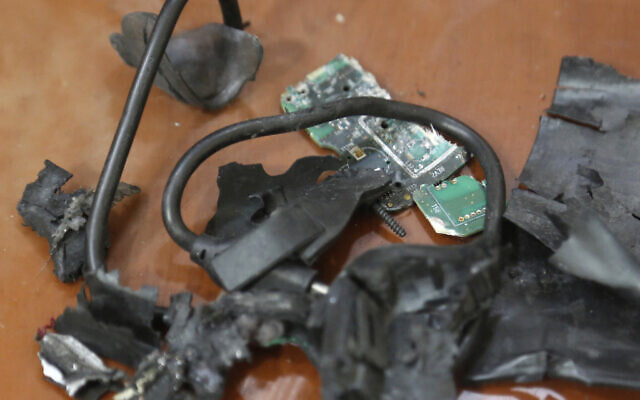
The signal that detonated thousands of Hezbollah pagers last month was an encrypted message that required users to hold the devices with both hands, maximizing the chances of causing debilitating injuries, sources said in a Saturday report.

An alleged Israeli operation blew up pagers and walkie-talkies used by the Lebanese terror group on September 17 and 18, kicking off an ongoing series of Israeli airstrikes that have dealt immense blows to Hezbollah, including the killing of its leader, Hassan Nasrallah.

Israeli, US, and Middle Eastern officials estimate that up to 3,000 Hezbollah members were killed or injured by the pagers, as well as an unknown number of civilians, the Washington Post reported on Saturday.

The Post report — which cited Israeli, Arab, and American security officials, politicians and diplomats, as well as Lebanese sources close to Hezbollah, all of them anonymous — said the pagers were made in Israel and conceived by the Mossad spy agency.

After Mossad officials revealed the capability to elected officials on September 12 and the operation was allegedly okayed by Prime Minister Benjamin Netanyahu’s cabinet, thousands of Hezbollah operatives got a message telling them they had received an encrypted message that required pressing two buttons — effectively forcing them to use both hands, and to be injured in both hands when the blasts occurred as they pushed the buttons.

“You had to push two buttons to read the message,” one official explained, so that the blast would likely “wound both their hands,” rendering the user “incapable to fight.”

The report also revealed that hundreds of booby-trapped walkie-talkies — which were detonated a day later — had been used by Hezbollah since 2015, providing Israel continued real-time access into the terror group’s communications for many years before the devices were weaponized in a more literal way.

Hezbollah had purchased pagers to avoid Israeli communications surveillance. Earlier this year, a sales pitch convinced the group to buy large-battery AR924 pagers from Apollo, a known Taiwanese brand.

The contact came from a woman who had in the past been a Middle East sales agent for Apollo and who was trusted by Hezbollah. Officials declined to reveal her identity. According to the Washington Post report, she had set up her own company to sell pagers under the Apollo brand.

Previous media reports tracked down a woman called Cristiana Bársony-Arcidiacono, the CEO of Budapest-based BAC Consulting, which the Taiwanese trademark holder of the pagers said was responsible for manufacturing the devices.

Among the touted advantages of the pagers was their waterproof design and a large battery that enabled months of use without charging.

The terror group bought 5,000 devices and manufacture was outsourced. Unknown to Hezbollah — and apparently Apollo and the saleswoman — they were assembled in Israel with a small amount of explosive added to each battery.

The pagers were eventually distributed to what the report described as Hezbollah’s “mid-level fighters and support personnel” in February.

The tiny explosives in the pagers and the walkie-talkies were concealed in a way that taking apart the device — or even X-raying it — could not reveal the danger to Hezbollah members, who readily embraced the Israeli-designed and -manufactured gadgets, sources told the Post. Israeli officials assess that some of the devices did in fact undergo such examinations, the report said.

The existence of the pager setup was only revealed to senior Israeli cabinet members on September 12, when Netanyahu held a meeting with security advisers about dealing with Hezbollah, the Israeli officials said.

US officials said that Washington was not told about the pagers or the discussions about exploding them.

Alongside using the pagers, Israeli officials also discussed targeting Hezbollah leader Nasrallah, whose movements and location Israel had known for years despite his furtive lifestyle, officials said.

Killing Nasrallah was expected to lead to an open war with Hezbollah and, possibly, Iran. In addition, the US had been pushing Nasrallah to agree to a ceasefire in Lebanon that would satisfy Israel’s demand that Hezbollah withdraw its fighters from border areas.

US and Middle Eastern officials said that while Israel had supported the US plan, Nasrallah refused, insisting that a halt in the fighting only come after a ceasefire in Gaza.

On September 17, the signal was sent to detonate the pagers and a message in Arabic appeared on their screens reading, “You received an encrypted message.”

When the operators pressed the two required buttons to read the message, the pagers exploded. Less than 60 seconds later, the Post reported, thousands of other pagers also exploded even without the pair of buttons being used.

The following day, hundreds of Hezbollah walkie-talkies also exploded, causing deaths and injuries.

Nasrallah was killed on September 27 in a massive attack on his Beirut bunker.

The fighting with Hezbollah began when the Iran-backed terror group started to launch cross-border rocket and drone fire last October 8, one day after Palestinian terror group Hamas led a devastating attack on Israel that opened the ongoing war in the Gaza Strip. Hezbollah has since carried out near-daily attacks in support of Hamas.

The fighting has also drawn in direct rocket barrages from Iran. Last week the Islamic Republic fired around 200 rockets at Israel, causing some damage, though most were either intercepted or hit open areas.

One of the apparent targets of the barrage was Mossad headquarters near Tel Aviv.

The Air Force Team Behind the Operation to Eliminate Hassan Nasrallah

October 7, 2024

My bolding in article.

A pivotal mission marks a turning point in the conflict, impacting Hezbollah and the future of the Middle East.

30 September 2024

https://israfan.com/p/air-force-eliminates-hassan-nasrallah

In a historic and high-stakes operation, Israel’s Air Force has successfully eliminated Hezbollah Secretary-General Hassan Nasrallah, marking a critical milestone in the ongoing conflict. Brig. Gen. Amichai Levin, commander of Hatzerim Air Force Base, confirmed the strategic importance of this mission during a joint interview with Lt. Col. M, commander of the elite 69th “Hammers” Squadron, responsible for executing the strike.

Despite the complex situation on the northern front, Levin stressed that Israel remains focused on three main objectives: returning hostages held by Hamas, dismantling the terrorist organization, and ensuring the safe return of northern residents. “The base, the squadron, and the entire Israeli Air Force (IAF) continue to operate intensively in Gaza, but separating the northern front from Gaza is essential to achieving these goals,” Levin stated.

The elimination of Nasrallah, who had long orchestrated Hezbollah’s activities against Israel, is being hailed as a game-changer for the entire region. According to Levin, “Nasrallah’s death will have a profound impact that extends beyond Lebanon’s borders. This operation moves us closer to our war objectives, sending a clear message to all those who threaten Israel.”

The mission was a culmination of years of intelligence gathering and operational planning. It showcased the exceptional coordination between the IDF’s Military Intelligence Directorate and the Air Force. “The intelligence we received was of the highest caliber. Without such precise information, an operation of this magnitude would not have been possible,” said Levin. “It also highlighted the Air Force’s initiative, audacity, and determination.”

Lt. Col. M, the 37-year-old commander of the 69th Squadron, revealed the depth of personal connection many of his team members have with the northern front. M’s family, including his wife’s relatives, were among the thousands evacuated from kibbutzim near the Lebanese border, placing the mission into even sharper focus for the squadron.

The operation took place in the heart of Beirut, targeting Nasrallah’s stronghold in the Dahiya district. “We knew exactly who we were going after, and we made sure everything went according to plan,” M said. He detailed how the mission involved a diverse formation of pilots, from seasoned veterans to younger members, flying together to ensure its success. “There were no hitches neither in the intelligence aspect, nor in the planes or the execution itself. It was flawless.”

M described the emotional aftermath of the mission, sharing the profound sense of accomplishment that came after landing back in Israel. “We gave three hugs: one to the aircrews, realizing we had just completed something historic; one to our technical officer, whose family has been directly affected by Hezbollah’s violence; and the third, of course, to my wife.”

Levin also underscored the importance of deception and strategy to ensure that Nasrallah remained unaware of the strike until it was too late. “Keeping the target stable and preventing any early warning to Hezbollah was a major challenge, but we’ve refined these techniques over time with the help of some of our brightest young officers.”

While the mission was a significant blow to Hezbollah, both Levin and M stressed that Israel’s work is far from over. The northern front remains volatile, with continued rocket fire from Hezbollah, and the threat from Hamas in Gaza persists. “We still have a long road ahead. The hostages are still in Gaza, and Hamas has yet to be dismantled. But Nasrallah’s death brings us closer to securing Israel’s borders and ensuring the safety of our people,” said Levin.

Despite the operational success, Levin also addressed questions about the protests that rocked Israel in 2023, some of which involved reservists from the 69th Squadron. He was quick to emphasize that these events do not reflect any lack of commitment from the squadron’s personnel. “Let there be no doubt about their dedication to Israel. Many of those involved in the protests are the same people who have flown countless missions, risking their lives for the country,” Levin remarked.

As Israel continues its campaign on multiple fronts, the elimination of Nasrallah stands as a testament to the capabilities of the Israeli Air Force and the unity of purpose among its military forces. The mission not only struck a major blow to Hezbollah but also demonstrated Israel’s unwavering resolve to defend its people.

Israel’s Air Force will continue its relentless pursuit of peace and security. With each operation, the IDF gets closer to achieving its objectives, ensuring a brighter future for Israel and its citizens.

The mission may be over, but the fight for Israel’s security continues.

Destroying Donald Trump is all that matters in the newsrooms of the mainstream media

May 19, 2017

Destroying Donald Trump is all that matters in the newsrooms of the mainstream media, Washington Times,

(America can survive, and probably prosper, under President Trump. The “mainstream media?” Maybe not. — DM)

ANALYSIS/OPINION:

Now anything goes. All restraints are loosened, all self-discipline trashed. There’s no cure or even treatment for Trump Derangement Syndrome, a disease as wild and as swiftly lethal as anything imported from the Ebola River valley of the dark continent. The rules and taboos that once guided even the sleaziest excuse for a newspaper no longer apply.

Destroying Donald Trump is all that matters in the newsrooms of the mainstream media, so called, and by any means necessary. Rarely have so many hysterics contributed so much of the national conversation.

A columnist in The New York Times, ground zero in the epidemic of Trump Derangement Syndrome, suggests that a mutiny at the White House is the “more appropriate” way to rid the nation of the legitimate 46th duly elected president of the United States. Why waste time on impeachment? Mike Pence, Paul Ryan and Mitch McConnell could organize the ambush. The columnist likens them to “stewards for a syphilitic emperor.”

Ross Douthat is regarded as a “conservative” at The New York Times, and he thinks impeachment would take too long, be too messy, and recommends invoking the Twenty-fifth Amendment, which permits the president’s Cabinet to remove the president if a majority of the secretaries tells Congress that the president can no longer perform his duties.

Ultimately, he writes in the newspaper once known as “the old gray lady” and which has become “the old crazy lady,” he does not believe “our president sufficiently understands the nature of the office he holds, the nature of the legal constraints that are supposed to bind him, perhaps even the nature of normal human interactions, to be guilty of obstruction of justice in the Nixonian or even Clintonian sense of the phrase.”

A half-century ago a certain magazine thought a long-distance psychiatric examination of a presidential candidate was in order, and asked 12,000 psychiatrists (who knew there were so many headshrinkers on the fruited plain?) whether they thought Barry Goldwater was crazy, and 1,189 responded with a diagnosis: Mr. Goldwater, the Republican nominee for president in 1964, was nothing less than nuts. The American Psychiatric Association, sensitive to the public outrage that followed, told their members never to do it again.

But since the psychiatrists wouldn’t do it, Ross Douthat was fitted out with degrees in medicine and psychiatry (honorary degrees, we must hope), and told to get to work. (He is expected to retire his shingle once President Trump has been dispatched to the nut house, but who knows? On the Upper East Side there’s never enough psychiatrists.) Dr. Douthat writes that the president has no aides, friends and confidantes who have any remaining regard for him. “They have no respect for him, indeed they seem to palpate with contempt for him, and to regard their mission as equivalent to being stewards for a syphilitic emperor.”

Since impeachment would take so long, Dr. Douthat would “respectfully ask Mike Pence and Paul Ryan and Mitch McConnell to reconsider their support for a man who never should have had his party’s nomination, never should have been elevated to this office, never should have been endorsed and propped up and defended by people who understood his unfitness all along.”

It’s hard to imagine anything more calculated to invoke a Second Amendment answer to such a Twenty-fifth Amendment coup, and it would be nothing less than a coup by the Republican elites and the press that so many Americans believe have “rigged” the elections meant to express the nation’s will. You don’t have to be a Trump friend, supporter or voter to see where this would inevitably lead. The United States has never been a banana republic or a third world dump where elections are ultimately determined in the streets, but this would be the ultimate national indignity, wrought by just those who would go to civil war to depose an indignity.

The two stories that have dominated the news this week were the work of the very two newspapers, The Washington Post and The New York Times, that have become the not-so-loyal opposition, drivers of the coup with tales told in every edition. The Post accuses the president of dispensing national secrets to the Russians, based on the word of an anonymous source who concedes he wasn’t in the meeting, and denied by those who were. The New York Times says it heard a passage read from a memo written by James Comey, telling how the president asked him go easy on Mike Flynn, and denied by the White House.

All this to support tales of Trump campaign collusion with the Russians, which Democrats and Republicans agree that no one has yet found any evidence of. There’s no fire and only a few wisps of something that might be smoke, or more likely, the passing of partisan gas.

Justice with Judge Jeanine | Fox News | May 13, 2017 – President Trump Full Interview

May 14, 2017

Justice with Judge Jeanine | Fox News | May 13, 2017 – President Trump Full Interview, Fox News via YouTube

(The wide-ranging interview of President Trump and others touches on such topics as the firing of James Comey, his replacement, the media and press conferences and President Trump’s accomplishments which the “mainstream” media have failed to cover. — DM)

https://www.youtube.com/watch?v=W2FUG4o5i70


The Trump method

April 29, 2017

The Trump method, Washington Examiner, W. James Antle III, April 29, 2017

President Trump has been more measured toward China, despite near-constant criticism of that burgeoning strategic rival during the presidential campaign. “President Xi wants to do the right thing,” Trump said of his Chinese counterpart in a press conference. “We had a very good bonding. I think we had a very good chemistry together.” (Graeme Jennings/Washington Examiner)

When President Trump held a reception for conservative media at the White House in April, he was asked whether he was being tough enough on China. Beijing was dumping steel, his interlocutor said, and should also be designated a currency manipulator.

Trump responded, according to several attendees, with a certain incredulity, asking why he would label China a currency manipulator while it is helping to contain North Korea’s increasingly belligerent behavior. It’s a variant of a line he debuted on Twitter earlier in the month.

“No, it’s not going to be the Trump doctrine,” Trump memorably said of his foreign policy approach during the campaign. “Because in life, you have to be flexible. You have to have flexibility. You have to change. You know, you may say one thing and then the following year you want to change it, because circumstances are different.”

The president has come under fire from some of his fiercest defenders for saying one thing while running for office and then a year later wanting to “change it” on the core issues that got him elected. He relented on funding of the border wall with the continuing resolution to avert a government shutdown. He hasn’t fully rescinded former President Obama’s immigration executive actions. He ordered strikes on Syria after promising a less interventionist “America First” foreign policy.

Trump spoke favorably of Federal Reserve Chairwoman Janet Yellen. He declared NATO was no longer obsolete. He signaled support for the Export-Import Bank, even as he nominated a conservative critic to run it. He endorsed a GOP healthcare bill that seemed to advance few of his campaign policy goals.

All these position changes came shortly after there were ubiquitous reports of White House palace intrigue suggesting the populist, nationalist faction associated with chief strategist Stephen Bannon was being marginalized in favor of Trump’s centrist son-in-law and senior adviser Jared Kushner.

“We may as well have had Jeb,” lamented conservative columnist Ann Coulter, author of the election yearbook In Trump We Trust. She now tweets daily about the number of miles of border wall completed since Inauguration Day. The number is always zero. “Do you want war with Russia, all of you idiots, all of you fools who are pounding the war drums?” protested pro-Trump veteran radio talk show host Michael Savage after the Syria intervention.

Some Trump supporters think all this is a misreading of the president. Washington is used to ideologues, they say. Trump is a pragmatist. They maintain he is a master negotiator straight out of The Art of the Deal and there is a method even to his apparent Twitter madness.

“When President Trump negotiates, nothing is off the table,” said a former Republican national security official. “He leverages the full resources of the American government. He brings the economy into the picture even when doing diplomacy. He outright says, ‘If you want a better trade deal, you will help us with North Korea.'”

The new president is, in other words, making a bonfire of the pieties, discarding the idea, perhaps the pretense, of principled consistency, and instead does piecemeal what he believes will work at that moment.

Asked if this wasn’t par for the course in presidential negotiations, the official agreed but said there were two important caveats that make Trump different: “Trump says it publicly instead of dancing around it. And don’t underestimate how much our people try to make humanitarian arguments to foreign governments that just aren’t very humanitarian.”

A Republican diplomat concurred, saying there was an overreliance on moral arguments in difficult negotiations with foreign countries sometimes led by people who do not share our values. “These moral arguments don’t work with China or Russia,” the diplomat said. “They’re hit or miss with Egypt or Saudi Arabia. They’re not working with Turkey.”

So Trump took a harder line on Russia, or at least allowed his appointees to do so. This isn’t surprising from United Nations Ambassador Nikki Haley, for example, but Secretary of State Rex Tillerson is a past recipient of the Russian Order of Friendship, and yet he said Moscow was “complicit or simply incompetent” when it came to Syria’s use of chemical weapons.

And Trump has been more measured toward China, despite near-constant criticism of that burgeoning strategic rival during the presidential campaign. “President Xi wants to do the right thing,” Trump said of his Chinese counterpart in a press conference. “We had a very good bonding. I think we had a very good chemistry together.”

On the North American Free Trade Agreement, Trump floated an executive order terminating the United States’ participation in the pact, and almost immediately received phone calls from the president of Mexico and prime minister of Canada. Having got their attention, he walked back his threat while speaking magnanimously about those two allies.

“I decided rather than terminating NAFTA, which would be a pretty big, you know, shock to the system, we will renegotiate,” Trump told reporters. He had previously issued a statement praising the leaders of Mexico and Canada: “It is an honor to deal with both President Pena Nieto and Prime Minister Trudeau, and I believe that the end result will make all three countries stronger and better.”

To some, this reflects the “strategic ambiguity” Trump promised last year and a willingness to make a deal wherever possible. Others regard it as the kind of incoherence one might expect from a politically inexperienced president who hasn’t shown much interest in policy. The New York Times described Mexican elites as increasingly seeing Trump as a poker table “bluffer.”

This is a debate that dates back to before Trump was in office and extends to domestic policy as well. Is Trump simply more flexible than your average politician or is he less aware of what he is doing?

“What elitists misinterpret as uneven principles, entrepreneurs understand as adaptability,” SkyBridge Capital founder Anthony Scaramucci argued in the Wall Street Journal. He went on to claim, “Mr. Trump would be the greatest pragmatist and deal maker Washington has ever seen.”

“In the political sense, pragmatists reject the traditional left/right binary, which they may derisively view as dogma,” Christopher Scalia wrote in a Washington Post piece on Trump’s ideological flexibility. “They are willing to sample widely from the smorgasbord of political ideas to find the best solution to a pressing problem.”

Trump’s critics have also described him as a pragmatist. “I … think that he is coming to this office with fewer set, hard-and-fast policy prescriptions than a lot of other presidents might be arriving with. I don’t think he is ideological,” Obama told reporters at the White House after the election. “I think ultimately he’s pragmatic in that way, and that can serve him well as long as he’s got good people around him and he has a good sense of direction.”

Ben Shapiro argued in National Review that Trump was pragmatic, but that wasn’t necessarily a good thing. “That’s because pragmatism is a progressive philosophy,” he wrote. “There is no clear consensus on ‘what works.’ This is why elections matter, and why political ideology matters. It’s an empty conceit of arrogant politicians that they alone can determine, based on expert reading of facts, the best solution; they can’t.”

This tendency hampered Trump’s first attempt to repeal and replace Obamacare. He negotiated with the conservative Freedom Caucus, occasionally driving a hard bargain. “I’m coming after you,” Trump quipped to the group’s chairman, Rep. Mark Meadows, R-N.C., at one point during the talks.

But Trump’s jibes against the conservative lawmakers got more serious. The president tweeted that the Freedom Caucus would “hurt the entire Republican agenda” if they failed to get on board and that they needed to be fought as well as the Democrats in 2018.

“Tweets, statements and blame don’t change facts,” said Rep. Jim Jordan, R-Ohio. Meadows said Trump’s scathing comments made it “harder” to arrive at a healthcare compromise. A Republican congressional aide said Trump’s tactics merely “emboldened” GOP holdouts.

Trump and the Freedom Caucus have since reconciled on Obamacare. Some even stick up for his handling of the early healthcare discussions.

“I think he did everything he could on healthcare in round one,” said Faith and Freedom Coalition chairman Ralph Reed. “The president was speed dialing members of Congress on their cellphones.”

“The biggest problem you had under Bush and under Obama is that each party on the Hill thought the White House didn’t talk to them,” said Americans for Tax Reform president Grover Norquist, who added that all the feedback he has gotten has indicated improved communications under this administration. “Trump’s leadership is to talk about the Reagan agenda in terms of creating jobs.”

Nevertheless, Trump had difficulty out of the gate because he did not understand how to strike a deal that was only partly about dollars and cents. Freedom Caucus members dissented from the first version of the American Health Care Act because of values and ideology too. Trump’s pragmatic language made no allowance for that.

“He had nothing to sell us,” said a GOP legislative assistant. Trump’s arguments centered on Republican political survival, the need to fulfill campaign promises on Obamacare but relatively little to say about the merits of the bill.

Debates over the efficacy of Trump’s methods often break down over a question that has hung over him ever since the national media began to hang on his every tweet, upending politics as we know it: is he clever or just lucky?

“Occasionally, Trump displays moments of pure genius with his use of Twitter to change the subject away from bad storylines,” said Republican strategist Liz Mair. “Frequently, however, he uses Twitter to keep what are, for him, extremely bad narratives alive and to beclown himself in the eyes of most observers who are vaguely politically astute. Sometimes, he also just gets lucky and does something stupid on Twitter that coincidentally detracts from something bad, news-wise, but where you’re pretty confident it wasn’t intentional, it was just random.”

Maybe Trump’s luck will eventually run out. For now, however, when this pragmatist walks into a roomful of ideologues, he sits at the head of the table.

EU seeks to help prosecute Marine Le Pen for… Tweeting

March 3, 2017

EU seeks to help prosecute Marine Le Pen for… Tweeting, Hot Air, Jazz Shaw, March 3, 2017

The horrible, dangerous activity which Le Pen engaged in was the tweeting of an “image of violence” last year. The picture in question was one of James Foley, the journalist who was beheaded by ISIS. 

The law in question is one which forbids the publication of violent images but this is where the true irony comes in. Le Pen was considered in violation of a rule which was designed to stop people from distributing such images as a way to recruit terrorists. She was doing precisely the opposite, drawing attention to the barbaric nature of the enemy, but now may run afoul of the law.

***********************************

Clearly French presidential candidate Marine Le Pen is making all the right enemies in high places. The established political class in France clearly despises her but the European Union is now getting in on the act, no doubt because of her less than favorable opinions of the continental organization. In one of the stranger stories to come out of the French election cycle, the EU has moved to suspend Le Pen’s standard immunity from prosecution over images which she posted on her Twitter account. If that sounds to you like something out of a George Orwell novel, fasten your seat belts because it gets even more strange. (Washington Post)

On Thursday, the European Parliament voted to lift Marine Le Pen’s immunity from prosecution for tweeting violent images, a crime that in France can carry up to three years in prison.

As Le Pen, the leader of France’s far-right National Front party, rises in the polls ahead of France’s presidential election next month, authorities will now be able to pursue a case against her. Speaking on French television Thursday morning, she was quick to condemn her European colleagues for what she called “a political inquiry.”

Apparently in France the phrase “political inquiry” is the European equivalent to what we in the United States would call “an obvious witch hunt.”

This question of immunity is the first one to sort out because the entire concept will no doubt sound like something from an alien planet to most Americans. The European Union Parliament provides immunity to its members in matters of free speech so that they will be free to express their opinions in public debate. That sentence alone is a chilling reminder of precisely how different things are across the pond if you grew up taking American rights to freedom of speech for granted. Yes, in Europe you can frequently be prosecuted for thought crimes.

The horrible, dangerous activity which Le Pen engaged in was the tweeting of an “image of violence” last year. The picture in question was one of James Foley, the journalist who was beheaded by ISIS. Such images are no doubt disturbing to some people, in this case the Foley family in particular. After a complaint was raised by relatives, Le Pen apologized and deleted the tweet but the damage had already been done.

Keep in mind that one of Marine Le Pen’s main selling points in the election is her outrage over attacks by violent Islamic extremists and her insistence that the nation do more to protect its citizens. The law in question is one which forbids the publication of violent images but this is where the true irony comes in. Le Pen was considered in violation of a rule which was designed to stop people from distributing such images as a way to recruit terrorists. She was doing precisely the opposite, drawing attention to the barbaric nature of the enemy, but now may run afoul of the law.

It’s simply impossible to deny that this is a political hit job. By lifting Le Pen’s immunity, the European Union is paving the way for France to prosecute her over a tweet. This prosecution is taking place (assuming it happens) just as the final stages of the presidential election are kicking into high gear. You don’t need the world’s best detective to figure that one out. Of course, it would be nice to pretend that this is somehow a unique situation, but it’s obviously not. You’ll recall that Dutch candidate Geert Wilders was actually taken to trial and convicted for chanting a slogan at a political rally. Wilders did not wind up serving any time for his “crime” and the trial lead to a surge in sympathetic support for him in the polls. But it still underscores the fact that freedom of speech in Europe is largely a joke.

The thing to watch for now and over the next few weeks is whether or not Marine Le Pen receives the same sort of boost in her popularity which Wilders experienced previously. Are the French truly such a nation of sheep that they want to stand by idly and watch a presidential candidate be dragged into court over a tweet expressing a political position? If not, and if they are truly disgusted by this effort to stifle Le Pen’s opinions, there may be another upset brewing in the European electoral races.

marinelepen-300x159

Dear Hollywood: Shut Up and Act. Or Sing. Whatever

January 6, 2017

Dear Hollywood: Shut Up and Act. Or Sing. Whatever, PJ MediaMichael Walsh, January 6, 2017

hollyweedDon’t Bogart that joint, my friend (AP Photo/Damian Dovarganes)

Sick and tired of being lectured by Hollywood celebrities? In that case, this one’s for you:


If you can stand the smug sanctimony — but might appreciate the cluelessness — here’s what they’re mocking:

https://www.youtube.com/watch?v=-6mfjJIxgSM


Didn’t we just have an election that settled this?


Angela Merkel: False Prophet of Europe

December 4, 2016

Angela Merkel: False Prophet of Europe, Gatestone InstituteVijeta Uniyal, December 4, 2016

With his initiative for tighter gun laws, to prevent weapons getting into “the wrong hands,” Justice Minister Maas does not mean to target the Islamists who pose an existential threat to Germany, but an obscure German group called the “Reichsbürger.”

As the German newspaper Bild describes the law proposed by Maas, “a 13-year-old child bride would have to testify against her husband, saying that her well-being as a child is under threat. If neither the child nor the Child Welfare Service lodges a complaint, for all practical purposes the marriage would be declared legitimate.” This law clearly does not take into account the possibility of private coercion against a child, let alone the blinding likelihood of outright threats.

Justice Minister Maas evidently cares more about “gender image” than he cares about truly oppressed women and vulnerable children. In a recently drafted new law by his ministry, Mass refused to ban child marriage.

With both France and Germany going to polls next year, there is the possibility of a democratic, peaceful “European Spring.”


In her first message to President-elect Donald Trump, German Chancellor Angela Merkel lectured him on gender, racial and religious equality. As the New York Times put it, Merkel “named a price” for Germany’s cooperation with the Trump-led administration, namely the “respect for human dignity and for minorities from a man who has mocked both.”

If this was anything more than political posturing, and Chancellor Merkel truly cared about “human dignity” or the rights of those most vulnerable, she might have started closer at home.

After a year-long investigation into the mass-sexual attacks in Cologne, where an estimated 2,000 migrant men — mostly from Arab and Muslim countries — molested at least 1200 women, almost all the men have managed to walk free.

Last week, the Interior Minister of North Rhine-Westphalia, Ralf Jäger, confirmed this outcome when he said that “most of the cases [of rape and sexual assault in Cologne] will remain unsolved.” Similar coordinated sexual assaults by migrants also took place in other German cities, including Hamburg, where over 500 such cases were reported. They are expected to remain “unsolved” too.

Merkel, who lectured Trump on gender, did not even bother to visit the women who were raped and assaulted in Cologne or other German cities — even though these women were victims of her own failed open-border policy.

As New Year’s Eve approaches again, Merkel’s “Multikulti” paradise looks more and more like a police state. According to leaked, confidential police reports published by Germany’s Expressnewspaper, Cologne will be turned into a fortified city to avoid a repeat of last year’s mass sexual assaults. Security forces will monitor the streets with helicopters, surveillance cameras, observation posts and mounted units. The city of Hamburg has also reportedly taken similar steps.

While the Merkel government arms the police, efforts are underway to tighten gun laws for the citizenry. As the German state-run broadcaster Deutsche Welle reported on November 28: “Justice Minister Heiko Maas called for tighter weapons laws to prevent guns from falling in to the wrong hands.” With this latest initiative, Minister Maas does not mean to target the Islamists who pose an existential threat to Germany and the rest of the Western World, but an obscure German group called the “Reichsbürger.”

The Justice Minister apparently shares Merkel’s skewed worldview. After the New Year’s Eve sexual assaults in Germany, Maas, to “cure” the country’s rape epidemic, proposed a ban on “sexist advertising.” In April, Deutsche Welle reported:

The aim of the proposal – which is reportedly in response to the sexual assaults in Cologne on New Year’s Eve – is to create a “modern gender image” in Germany… In future, posters or ads which “reduce women or men to sexual objects” could be banned. In the case of dispute, a court would have to decide.

Justice Minister Maas evidently cares more about “gender image” than he cares about truly oppressed women and vulnerable children. In a recently drafted new law by his ministry, Mass refused to ban child marriage. Official German statistics estimate the number of married children in Germany at 1,475, of whom 361 are under the age of 14 — a rising trend thanks to uncontrolled migration from Muslim countries.

As the German newspaper Bild describes the law proposed by Maas:

“a 13-year-old child bride would have to testify against her husband, saying that her well-being as a child is under threat. If neither the child nor the Child Welfare Service lodges a complaint, for all practical purposes the marriage would be declared legitimate.”

This law clearly does not take into account the possibility of private coercion against a child, let alone the blinding likelihood of outright threats.

In Merkel’s Germany, the rights of an able-bodied migrant man trump the rights of a sexually assaulted woman and subdued child.

Following the electoral victory of Donald Trump, liberals all over are pinning all their hopes on Merkel. The “orphaned” liberals, in essence actually authoritarian, are probably looking for a new leader behind whom to rally. Many in the mainstream in the West are already calling the German Chancellor the “Leader of the Free World.” Following Clinton’s loss, the U.S. online magazine Politico described Merkel in almost messianic terms as “Global Savior.”

As Merkel seeks re-election to a fourth term in the autumn of 2017, she is counting on extremely favourable media coverage and glowing celebrity endorsements to enable her to win again.

2094(Image source: Tobias Koch/Wikimedia Commons)

After Democratic candidate Hillary Clinton’s presidential bid went south, President Barack Obama flew to Germany to endorse Merkel’s re-election bid. After Britain’s Brexit vote and Trump’s White House win, the liberal establishment and its rank and file in the mainstream media seem frantic to keep Merkel in power. Merkel’s defeat at the hands of a resurgent nationalist party such as the Alternative for Germany (AfD) would strike their “globalist project” right at the heart of Europe.

Next year’s German elections will be first and foremost a referendum on Merkel’s open-border policy. It was her suspension of border controls — or the Dublin Protocol — in September 2015 that opened the floodgates for Arab and Muslim mass-migration in the first place.

If Merkel’s Christian Democrats (CDU) emerge as the largest party and she manages to head the next ruling coalition, it will be sold by the media and the elites as a vindication of her “Refugees Welcome” policy.

An upset defeat for Merkel, however, could spell doom not only for her policy of mass-migration but for the entire Brussels-based “European project” — a German “Brexit” (“Dexit”?).

With both France and Germany going to the polls next year, there is the possibility of a democratic, peaceful “European Spring.”