Posted tagged ‘P5+1’

Thinking About the Unthinkable: An Israel-Iran Nuclear War

August 23, 2015

Thinking About the Unthinkable: An Israel-Iran Nuclear War, Amerian Thinker, John Bosma, August 23, 2015

(We live in “interesting times.” — DM)

The signing of a Munich-class agreement with Iran that hands it more than it ever hoped to pull off represents a shocking, craven American capitulation to an apocalyptic crazy state: a North Korea with oil. Nothing in Western history remotely approaches it, not even Neville Chamberlain’s storied appeasement of another antisemitic negotiating partner.

But it also augurs the possibility of a nuclear war coming far sooner than one could have imagined under conventional wisdom worst-case scenarios. Following the US’s betrayal of Israel and its de facto detente with Iran, we cannot expect Israel to copy longstanding US doctrines of no-first-nuclear-use and preferences for conventional-weapons-only war plans. After all, both were premised (especially after the USSR’s 1991 collapse) on decades of US nuclear and conventional supremacy. If there ever were an unassailable case for a small, frighteningly vulnerable nation to pre-emptively use nuclear weapons to shock, economically paralyze, and decapitate am enemy sworn to its destruction, Israel has arrived at that circumstance.

Why? Because Israel has no choice, given the radical new alignment against it that now includes the US, given reported Obama threats in 2014 to shoot down Israeli attack planes, his disclosure of Israel’s nuclear secrets and its Central Asian strike-force recovery bases, and above all his agreement to help Iran protect its enrichment facilities from terrorists and cyberwarfare – i.e., from the very special-operations and cyber forces that Israel would use in desperate attempts to halt Iran’s bomb. Thus Israel is being forced, more rapidly and irreversibly than we appreciate, into a bet-the-nation decision where it has only one forceful, game-changing choice — early nuclear pre-emption – to wrest back control of its survival and to dictate the aftermath of such a survival strike.

Would this involve many nuclear weapons? No – probably fewer than 10-15, although their yields must be sufficiently large to maximize ground shock. Would it produce Iranian civilian casualties? Yes but not as many as one might suppose, as it would avoid cities. Most casualties would be radiological, like Chernobyl, rather than thermal and blast casualties. Would it spur a larger catalytic nuclear war? No. Would it subsequently impel Russia, China and new proliferators to normalize nuclear weapons in their own war planning? Or would the massive global panic over the first nuclear use in anger in 70 years, one that would draw saturation media coverage, panic their publics into urgent demands for ballistic missile self-defense systems? Probably the latter.

The Iranian elite’s ideology and controlling political psychology is inherently preferential towards nukes and direct population targeting as a way to implement Shi’ite messianism and end-times extremism. Iran is a newly nuclear apocalyptic Shi’ite regime that ranks as the most blatantly genocidal government since the Khmer Rouge’s Sorbonne-educated leaders took over Cambodia in April, 1975. Senior Iranian officials have periodically tied nuclear war to the return of the Twelfth Imam or Mahdi, which Iran’s previous president anticipated within several years. This reflects not just the triumphalist enthusiasm of a new arriviste nuclear power that just won more at the table than it dared to dream. It also reflects a self-amplifying, autarchic end-days theology that is immune to both reality testing and to Western liberal/progressive tenets about prim and proper nuclear behavior.

Admittedly, Iranian leaders have lately resorted to envisioning Israel’s collapse in more restrained terms through Palestinian demographic takeover of the Israeli state and asymmetric warfare. Still there remains a lurid history of Iranian officials urging the elimination of Israel and its people, of allocating their nukes to Israeli territory to maximize Jewish fatalities, of Iranian officials leading crowds in chants of “Death to Israel!” Iran’s government also released a video game allowing players to target various kinds of Iranian ballistic missiles against Israeli cities – this as part of intensive propaganda drumming up hatred of Jews. A more recent video game envisions a massive Iranian ground army marching to liberate Jerusalem. In all, Iran’s official stoking of genocidal Jew hatred is far beyond what Hitler’s government dared to advocate before the 1939 outbreak of World War 2.

The deliberate American silence over Iran’s genocidal intentionality sends an unmistakable signal to Israel that the US no longer recognizes a primordial, civilizational moral obligation to protect it from the most explicit threats imaginable. It is truly on its own, with the US in an all-but-overt alliance with its worst enemy. The shock to Israel’s leaders of this abrupt American lurch into tacitly accepting this Iranian intentionality cannot be understated. Iran is violating the core tenets of the 1949 Geneva Conventions, a US initiative after the Tokyo and Nuremberg war-crimes trials to codify genocide as a crime against humanity. Now the US is silent.

But this shift is also recent. Every US government prior to President Obama would have foresworn nuclear talks with such a psychopathic regime or would have walked out in a rage upon such utterances. Yet Iran’s genocidal threats have had no discernible effect on Obama’s canine eagerness for a deal. It’s as if 75 years ago a US president had cheerfully engaged in peace talks with Hitler and his SS entourage despite learning the details of the Nazis’ secret Wannsee Conference where Hitler signed off on the Final Solution for the Jews. But whereas Hitler had the sense in that era to keep that conclave secret, Iran’s Wannsee intentionality toward Israel and world Jewry has for years been flamboyantly rude-and-crude and in-your-face. That this Iranian advocacy of a second Holocaust drew no objection from the US negotiators of this deal should make moral pariahs out of every one of them – including our president and Secretary of State.

These two factors alone, especially the abrupt evaporation of the US’s ultimate existential bargain with Israel through Obama’s de facto alliance with the mullahs, would drive Israel to the one attack option it can unilaterally use without running short of munitions and experiencing the massive US coercion embedded in that dependence. But there are other reasons why early Israeli nuclear pre-emption is not only justified but almost mandatory.

First, it is too late to stop Iran’s bomb-making momentum with conventional weapons or sanctions. That nation’s science and technology base is robust and improving. It has learned to domestically produce high-performance gas centrifuges whose uranium gas output is such that smaller numbers of them are needed for breakout. The US spent decades and many billions at labs like Oak Ridge National Laboratory on composites, software-controlled magnetic bearings, gas flow separations, thermal controls and ultra-precision manufacturing for these thin-wall, very-high-speed devices. Yet Iran has come up the centrifuge learning curve with surprising speed. Its metallurgists are familiar with a novel aluminum forging method that may yield nanophase aluminum shells so strong that they approach the centrifugal strength usually associated with more demanding composite-shell gas centrifuges. Also, Iran’s bomb engineering and physics can tap the sophisticated bomb designs and re-entry vehicle (RV) skills of North Korea, which is reducing the weight and mass of its H-bombs to fit on ballistic missiles and whose collaboration with Iran reportedly included Iranian technicians at North Korean bomb tests.

Other technology sources in the Nuclear Bombs R Us cartel for wannabe proliferators set up by rogue nuclear scientist A.Q. Khan of Pakistan include China, Russia and Pakistan. Worst of all, under the US-Iran deal, Iran’s ballistic missiles can improve their reliability, accuracy, throw-weight and their post-boost RV-release thrusters.

Second, Iran’s underground nuclear targets are likely harder than American and Israeli hard-target munition (HTM) developers have assumed. Why? Because Iranian engineers have perfected the world’s toughest concrete, developing mixtures using geopolymers, quartz powders (called fume) and metal and ceramic fibers. The result is hardness levels reportedly up to 50,000-60,000 psi in experimental samples. This means that even shallow “cut and cover” hard targets like the Natanz centrifuge enrichment plant, an armored complex in an excavated pit that is then covered, can resist destruction by the US’s most lethal hard-target bomb: the 30,000-lb “Massive Ordnance Penetrator.” Only the B-2 and the B-52 can carry the MOP. Yet while the MOP can penetrate ~200 ft into 5000-psi targets, it only reaches 25 feet into 10,000-psi concrete – and Iranian cement for new or up-armored underground bunkers has likely progressed well beyond that.

US and Israeli HTM alternatives include staged-warhead penetrators and – high on the wish list – novel energetic chemistries with orders-of-magnitude more power than current HTMs. Tactical HTMs with up to four sequential warheads use precursor warheads to blast an initial opening for larger follow-through charges to destroy tanks, fortifications and bridge piers. But these impact at slow speeds compared to what’s needed to kill deep hard targets. The latter need superhard casings (probably single-crystal metals) and packaging to keep their sequenced charges intact during violent impacts of thousands of feet/second (fps). One benchmark is the Department of Energy’s Sandia lab’s success years ago in firing a simulated hard-target RV into rock at 4400 fps. Similarly, reactive-material (RM) munitions and next-generation HEDM (high-energy-density material) explosives and energetic chemistries with orders-of-magnitude more power look promising for the future. But these require years of iterative fly-redesign-fly testing to assure they’ll survive impact with their deep targets.

Bottom line: with even the US’s best non-nuclear HTMs marginal against Iran’s critical deep targets, Israel’s HTMs probably wouldn’t do the job either, being lower in kinetic energy on target. Alternatives like using HTMs to destroy entrances to such targets and ventilation shafts may work – but unless Iranian military power and recovery are set back months or years, this damage would be repaired or worked round. Moreover, nuclear facilities tunneled into mountains would be almost impossible to destroy with conventionals.

Still, the brains behind Iran’s nuclear bomb, missile and WMD is concentrated in soft targets like the Iranian universities run by the IRGC (Iran Revolutionary Guard Corps), custodian of the bomb program). These can be hit by conventionals under a Peenemunde targeting strategy to kill as many weapon scientists and technicians as possible. (This recalls Prime Minister Winston Churchill’s directive for British bombers to target the residential housing on the small Baltic island where Hitler had sited his V-2 rocket program.) Alternatively, conventional or nuclear EMP (electromagnetic pulse) or HPM (high-power microwave) weapons could destroy for months all the computers and communications that support university-hosted bomb work. This would keep these scientists and surrounding urban populations alive.

Third, Obama’s decision to provide Iran “training courses and workshops to strengthen Iran’s ability to prevent, protect and respond to nuclear security threats, including sabotage, to nuclear facilities and systems as well as to enable effective and sustainable nuclear security and physical protection systems” is the clearest indicator that this accord is aimed squarely at Israel. Why? It eliminates the sole option Israel has left now that it lacks the US-supplied conventional HTMs to destroy unexpectedly hard deep targets, forcing it at best into a slow-motion conventionals-only campaign. This would expose it to brutal political and military blowback by Iran and its Chinese, Russian and European suppliers – and by an enraged American president. In essence, it appears that the Obama regime has under the accord deliberately stripped Israel of every option except nuclear pre-emption – which Obama, in typically liberal-progressive fashion, assumes would never happen. Ergo, Israel would be forced to accommodate Iranian military supremacy.

Fourth, what may drive an early Israeli nuclear attack are two considerations: (a) Russian S-300 ATBM/SAMs (anti-tactical ballistic missile/surface-to-air missile) in Iranian hands; and (b) Hezb’allah’s thousands of missiles. Russia’s agreement to supply Iran four batteries of its fearsome S-300 by late August for defending priority targets would make it very difficult for Israel to mount the complex precision bombing strategies needed for tough targets. The S-300, the world’s best, can knock down high-speed aircraft from near ground level to almost 100,000 feet. It can also engage some ballistic missiles.

Meanwhile, Hezb’allah’s arsenal of more than 60,000 rockets (by some estimates) is a much greater threat to Israel, especially its air force, than is appreciated. Hezb’allah has retrofitted an unknown fraction of these missiles, whose range now covers almost all of Israel, with GPS and precision guidance, allowing them to hit critical targets. Unfortunately, Israel’s Iron Dome and David’s Sling interceptors were designed on the assumption that most incoming missiles would be inaccurate and so the interceptors could be saved only for those approaching critical targets. The result? Hezb’allah rocket campaigns targeting Israeli airbases and other military targets could quickly run Israel out of interceptors. Iran could easily order such a campaign to throw Israel off balance as it focuses on the deadly US-abetted nuclear threat from Iran.

An Israeli nuclear pre-emption is thus eminently thinkable. Every other option has been stripped away by Obama’s decision, concealed from Israel, Congress and our allies until it was too late to challenge, to let Iranian bomb-making R&D run free and to harden Iran’s bomb-making infrastructure against Israel – while imposing lethal restrictions on Israeli countermeasures and forswearing any US and allied military attacks, such as B-2’s and B-52’s dropping MOP bombs.

The die is now cast. Nuclear pre-emption becomes attractive to a nation in extremis, where Israel is now:

…Israel needs to impart a powerful, disorganizing shock to the Iranian regime that accomplishes realistic military objectives: digging out its expensive underground enrichment plants, destroying its Arak plutonium reactor and maybe Bushehr in the bargain, killing its bomb and missile professionals, scientists and technicians, IRGC bases, its oil production sites, oil export terminals and the leaders of the regime where they can be found.

…its initial strike must move very fast and be conclusive within 1-2 hours, like the Israeli air attack opening the 1967 Six-Day War. The goal is to so stun the regime that Israel controls the first and subsequent phases of the war and its ending. This means that Israel must hit enough critical targets with maximum shock – and be willing to revisit or expand its targets – so as to control blowback and retaliation from Iran’s allies. In essence, this involves a very fast-paced Israeli redesign of the Middle East in the course of a nuclear war for survival.

…what is poorly appreciated is that nuclear weapons from 10 to 300 kilotons (KT) – depending on accuracy – can destroy deep hard targets to 200+ meters depth by ground coupling if they penetrate merely 3 meters into the ground (Effects of Nuclear Earth Penetrators and Other Weapons: National Research Council / National Academy Press, 2005, pp. 30-51). Israel could lower bomb yields or achieve deeper target kills by its reported tests of two-plane nuclear attacks in which the first plane drops a conventional HTM like a GBU-28 to open up a channel; the second plane drops its tactical nuclear bomb into that ‘soft’ channel for greater depth before bursting. This unavoidably would produce fallout on cities downwind. Fortunately, the same medical countermeasures used for radiological accidents (Chernobyl accidents, etc.)  – potassium iodide pills (available domestically from www.ki4u.com) – can be airdropped for use by exposed urbanites.

…the more important objective, however, is decapitation and economic paralysis by EMP and HPM effects that destroy all electronic, electrical and electromechanical devices on Iranian territory. While a high-altitude nuclear burst would affect most of Iran’s territory, it may not be necessary if smaller, lower-altitude weapons are used.

…A small number of nuclear weapons (10-15?) may suffice: one each for known underground hard targets, with one held in reserve pending bomb-damage assessments; several low-yield bombs for above-ground bomb-related depots; and low-yield neutron weapons to hit IRGC and regime targets while avoiding blast and fallout. Reactors can be hit with conventional HPM pulse weapons to burn out electrical, electronic and electromechanical systems for later reactor destruction by Special Forces. A targeting priority (using antipersonnel conventionals) would be university-hosted bomb/missile scientists.

…Israeli F-15s and F-16s provide the most accurate delivery for the initial phase – assuming that the S-300 batteries can be decoyed, jammed or destroyed (where Israeli air force experience is unmatched). The small stock of Jericho-2 ballistic missiles probably would be held in reserve. They can’t be used against buried targets unless their re-entry vehicles (RVs) are fitted with penetrator casings and decelerators like ribbon parachutes (used to slow down US test RVs for shallow-water recovery at Pacific atolls) to avoid disintegrating on impact. (Both methods require flight-testing, which is detectable.) Israel’s Dolphin subs in the Red Sea and Indian Ocean can launch nuclear or (probably) conventional cruise missiles with cluster munitions for IRGC targets.

The final issue is how Israeli and US leaders would operate in these conditions. An Israeli decision to go nuclear would be the most tightly held decision in history, given the prospect of out-of-control blowback by our current president if that was leaked. Still, Israel sees itself being driven into a Second Holocaust corner, possibly within weeks as the S-300s begin deploying around Iran’s nuclear targets. Once it decides nukes are its only way out, it would simulate and map out all possible event chains and surprises once it launches. Unavoidably, it would also have to decide what to do if it learns the US is feeding its pre-launch mobilization information to Iran, using its electronic listening posts and missile-defense radars in the region. It may have to jam or destroy those US sites.

For the US, however, this no-warning nuclear war would land like a thunderbolt on an unprepared White House that would likely panic and lash out as Obama’s loudly touted “legacy” goes up in smoke. The characteristic signatures of nuclear bursts would be captured and geolocated by US satellite. The commander of NORAD (North American Aerospace Defense Command) under Cheyenne Mountain in Colorado Springs would call the White House on the famous red phone. (As one of the few civilians who sat through a red phone alert at NORAD in July 1982, after a Soviet missile sub launched two test missiles off the Kamchatk Peninsulaa, I can testify it is a frightening experience for which nothing prepares you.) Given the psychology of our current president and his emotional investment in his Iran deal, what might follow could challenge the military chain of command with orders that previously were unthinkable.

Now retired, John Bosma draws on a 40-year background in nuclear war-gaming and strategic arms control (SALT 1 and 2, Soviet arms-racing and SALT violations, US force upgrades) at Boeing Aerospace (1977-1980); congressional staff and White House experience (1981-1983) in organizing the “Star Wars” ballistic missile defense (BMD) program and proposing its “defense-enforced strategic reductions” arms-control model adopted by the Reagan State Department; military space journalism (1984-1987); and technology scouting in conventional strategic warfare, rapid (1-2 hours) posture change in space, novel BMD engagement geometries with miniature air-launched interceptors, counter-WMD/terrorism, naval BMD and undersea warfare. Clients included DARPA (Defense Advanced Research Projects Agency), the Missile Defense Agency, the Office of Secretary of Defense (OSD) Advanced Systems and Concepts Office, the Navy and the  He follows Israeli forces and BMD and has studied Iran’s nuclear R&D programs. All of his work is open-source

 

Inspector Clouseau was unavailable (4)

August 22, 2015

Inspector Clouseau was unavailable (4), Power LineScott Johnson, August 21, 2015

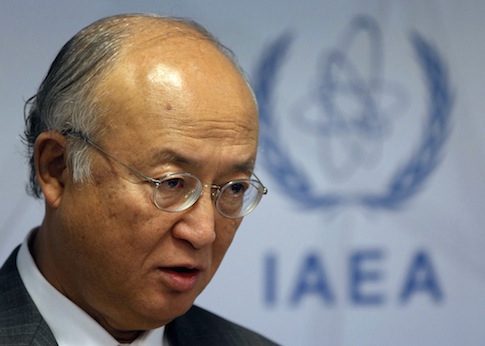
Amano’s defense of the Parchin side deal comes amid speculation that the IAEA is being subject to overwhelming pressure by the Americans and the Iranians. On the American side, the leverage is straightforward: Amano is up for reelection next year, and he perennially relies on Western nations to provide him with slim majorities [r].

************************

Omri Ceren emails an update on the IAEA side deal with Iran on Parchin. I think that readers who have followed this important story so far will find this of interest as well. Omri writes:

As was more or less inevitable, today was all about the AP scoop describing the secret IAEA-Iran side deal on Parchin, the military base where Iran conducted hydrodynamic experiments relevant to the detonation of nuclear warheads. The IAEA has been trying to get access to the facility for years to figure out how far the Iranians got, as a prerequisite to setting up a verification regime preventing them from going further. The Obama administration told lawmakers throughout the Iran talks there could be no deal without the Iranians providing that access, but the AP yesterday published the text of a side deal between the IAEA and Iran indicating that the West had caved on that demand.

The document, titled “Separate arrangement II” – which was referenced in a Wednesday AP story and published Thursday – indicates that Iranians will be allowed to inspect themselves for evidence of the nuclear work they conducted at Parchin [a][b]. Instead of allowing IAEA inspectors to collect evidence from the facility, samples will be collected by the Iranians using Iranian equipment. Instead of allowing the IAEA to collect everything it wants, only seven samples will be handed over from mutually agreed upon areas. Instead of giving inspectors access to facilities, photos and videos will be taken by the Iranians themselves, again only from mutually agreed upon areas.

Iran deal supporters haven’t settled on just one response. As of last night administration liaisons were playing for time by telling lawmakers that the earlier AP story about the side deal was just a rumor. Then the AP published the actual draft. So this morning White House allies – including groups that have worked with the administration in lobbying Congress – tweeted around the theory that maybe the AP document was forged, at one point even referencing Israeli Prime Minister Benjamin Netanyahu [c][d][e]. Other validators have been trying to argue that the IAEA can still do its work even without access [f]. The White House will end up taking that latter claim – the IAEA stuff, not the Parchin Truther insanity – and insulating it with the argument that past work doesn’t matter anyway because what matters is the verification regime for future inspections. State Department spokesman Kirby was already floating that claim at yesterday’s press briefing [g].

That talking point might work on a political level. Administration officials can simply assert that the side deal is adequate and then – when pressed for details – declare that they can’t reveal their reasoning because it’s classified. They’ll heavily leverage yesterday’s statement from IAEA chief Amano saying that, for all sorts of classified reasons, the IAEA can live with the arrangement [h]. The opacity might well get the White House through the next month and a half of Congressional review.

But on a policy level, the side deal guts the JCPOA’s verification regime for future violations, which the administration has put at the center of the Iran deal. Administration officials really had no choice: once they gave up on any demands that would physically preclude the Iranians from going nuclear – dismantling centrifuges, mothballing facilities, etc – verification was all they had left. But it’s difficult to see how the pretense of verification can be sustained now that the Parchin side deal has been detailed:

(1) The side deal will become the precedent for future inspections of military sites — The Parchin arrangement – no physical access, restricted sampling, restricted video surveillance, etc. – will likely be used at least in part as a precedent for inspections of future sites. There is at least one other secret side deal out there: the AP’s Parchin document describes itself as “Separate arrangement II,” so presumably there’s a ‘Separate arrangement I’ that isn’t public and that may describe the verification arrangements. The Iranians were already saying that the future verification regime will not include inspector access to military sites, which would track with the Parchin precedent [j][k][l]. David Albright, president of the Institute for Science and International Security, told CNN about the Parchin arrangement “you have to worry that this would set a bad precedent in the Iran context and in the context of other countries” [m]. Rep. Royce sent Kerry a letter a few weeks ago that was even more explicit: the “side deals of today will become central to the agreement’s verification provisions tomorrow” [n] [quote omitted].

(2) IAEA sign-off suggests the agency has bent to political pressure — The Parchin arrangement is a humiliation for the IAEA. Heinonen told CNN that “It is very unusual… I find it really hard to understand why you would let someone else take the samples and only see through the camera” while Albright said “It’s really not normal… I don’t know why they accepted it. I think the IAEA is probably getting a little desperate to settle this” [o]. Until very recently Amano was explicit that the agency required further access to Parchin to resolve PMD issues: last March he “what we don’t know [is] whether they have undeclared activities or something else. We don’t know what they did in the past… we cannot tell we know all their activities” and last June he reiterated “the Agency is not in a position to provide credible assurance about the absence of undeclared nuclear material and activities in Iran” [p][q].

Amano’s defense of the Parchin side deal comes amid speculation that the IAEA is being subject to overwhelming pressure by the Americans and the Iranians. On the American side, the leverage is straightforward: Amano is up for reelection next year, and he perennially relies on Western nations to provide him with slim majorities [r]. On the Iranian side, there are several mechanisms that are getting attention. Some are overt: this week Iran’s Fars News Agency published a boast that Amano knew he “would have been harmed” had he disobeyed Iranian wishes and revealed details of the side deal to Congress (the threat was scrubbed after it garnered international attention; some Iran defenders have suggested that Fars published the threat due to a mistranslation of a speech, though it’s unclear why having a state-controlled vehicle go out of its way to mistranslate and publish a threat is supposed to be reassuring [s][t]). Other Iranian pressure mechanisms are more subtle: for the first eight years of the JCPOA Iran is only bound to provisionally apply, rather than to ratify, the Additional. Even JCPOA supporters describe the concession as being “all about Iran keeping some leverage over the IAEA… it wants to be able to keep the option of revoking its provisional implementation, and not ratifying the AP, as leverage” [u].

[a] http://bigstory.ap.org/article/d8bfeff00c8341caab084841f44d9cde/what-secret-agreement-between-iran-and-un-says
[b] http://bigstory.ap.org/article/bedd428e26924eed95c5ceaeec72d3a4/text-draft-agreement-between-iaea-iran
[c] https://twitter.com/jstreetdotorg/status/634743999597801472
[d] https://twitter.com/tparsi/status/634743163467526144
[e] https://twitter.com/Max_Fisher/status/634726697263349761
[f] http://www.nbcnews.com/id/57764838/ns/msnbc-all_in_with_chris_hayes/#.VdeLL_mrT4Y
[g] http://www.state.gov/r/pa/prs/dpb/2015/08/246211.htm
[h] https://www.iaea.org/newscenter/pressreleases/statement-iaea-director-general-yukiya-amano-1
[i] http://www.powerlineblog.com/archives/2015/07/speaking-of-iran-6.php
[j] http://english.farsnews.com/newstext.aspx?nn=13940429001105
[k] http://en.mehrnews.com/news/108760/No-military-sites-inspections-Velayati
[l] http://www.latimes.com/world/middleeast/la-fg-iran-deal-zarif-20150722-story.html
[m] http://edition.cnn.com/2015/08/20/politics/iran-inspections-report-nuclear-deal-experts/index.html
[n] http://foreignaffairs.house.gov/sites/republicans.foreignaffairs.house.gov/files/Parchin%20side%20deal_0.pdf
[o] http://www.cnn.com/2015/08/20/politics/iran-inspections-report-nuclear-deal-experts/index.html
[p] http://www.pbs.org/newshour/bb/iaea-monitoring-irans-nuclear-program/
[q] https://www.iaea.org/newscenter/statements/introductory-statement-board-governors-63
[r] http://carnegieendowment.org/2012/11/20/plan-for-iaea-safeguards
[s] http://freebeacon.com/national-security/iran-threatened-harm-to-top-nuke-inspector-to-prevent-disclosure-of-secret-deal/
[t] http://english.farsnews.com/newstext.aspx?nn=13940526000960
[u] http://armscontrollaw.com/2015/07/15/much-much-more-on-the-jcpoa/

Inspector Clouseau was unavailable (3)

August 22, 2015

Inspector Clouseau was unavailable (3), Power LineScott Johnson, August 21, 2015

I think it is very likely the side-deal documents were drafted by the United States and given to the IAEA, which agreed to make them into secret agreements with Iran to finalize the main agreement.

***********************

The pushback against George Jahn’s AP scoop on the IAEA side deal with Iran now includes the allegation that the draft of the side deal posted by the AP is a forgery — perhaps an Israeli forgery. Fred Fleitz has reported the relevant details with links and evidence here at NR’s Corner. Fleitz’s knowledgeable assessment seems reasonable to me:

First, the errors and non-IAEA prose in the AP’s transcribed document appear to indicate a first draft written by a party other than Iran or the IAEA to resolve the Parchin issue. This is consistent with my assessment that the side deal documents were drafted by the United States and handed to the IAEA to finalize after U.S. diplomats were unable to resolve the issues of the Parchin military base and possible military dimensions of Iran’s nuclear program during the talks. The AP says it was told by two anonymous officials that this document is a draft and “does not differ from the final, confidential agreement between the IAEA and Iran.” I believe it probably is a first draft written by a political appointee at the State Department or an NSC staffer.

Second, to believe this is a forgery one has to believe George Jahn and the Associated Press were deceived by two anonymous diplomats or U.S. officials. I doubt this could happen to a reporter as experienced as Jahn. (MSNBC believes otherwise and attacked Jahn as “not a real reporter” for his article.) The AP is standing by this story and I doubt it would put its reputation on the line if it did not believe Jahn’s article was rock solid.

Third, claims by backers of the Iran deal that this is an Israeli forgery are nonsense. If the Israelis wanted to do a forgery like this it would be perfect. An Israeli foreign ministry or intelligence officer would never use the wrong terminology for Iran.

My bottom line is that the side-deal document transcribed by the AP is not a forgery but a first draft written by a third party that is essentially the same as the final version agreed to by the IAEA and Iran. The outstanding question is who wrote this initial draft. Given Secretary Kerry’s efforts in May and June to drop the issues of the Parchin base and possible military dimensions, I think it is very likely the side-deal documents were drafted by the United States and given to the IAEA, which agreed to make them into secret agreements with Iran to finalize the main agreement.

Fleitz adds in the final paragraph of his post that “what [Jahn] reported apparently is consistent with classified briefings provided to Congress on the secret side deals[.]”

I trust that all will become clear in time. The relevant self-inspection provisions of the side deal are so absurd that they should be fraudulent. Consistent with Fleitz’s conclusion, however, I believe they will prove to be an integral part of the finalized side deal. Neither the administration nor the IAEA disputes the accuracy of Jahn’s reportage. I conclude that the terms of the side deal reported by Jahn are a joke, but not a forgery.

Cartoon of the day

August 22, 2015

H/t Conservative Tree House


Cong-Sign-600-LI

Not Satire | White House Allies Suggest Israel Forged Iran-IAEA Agreement Document

August 22, 2015

White House Allies Suggest Israel Forged Iran-IAEA Agreement Document, Washington Free Beacon, August 21, 2015

"Director

Trita Parsi, the head the National Iranian American Council (NIAC), another White House-allied group, hinted that Israeli President Benjamin Netanyahu might have forged the document himself. (Huh? — DM)

*********************

Top White House allies are mounting a campaign to discredit recent reports Iran will be responsible for investigating its own military facility for evidence of nuclear activities under an agreement between international inspectors and Tehran.

The International Atomic Energy Agency will rely on Iran to collect its own environmental samples and turn over photos and videos from its suspected nuclear military site Parchin, according to a draft of a secret side-deal between the agency and the Iranian government published by the Associated Press on Thursday.

White House allies rushed to denounce the report, accusing the AP of publishing a phony document and suggesting that the Israeli government forged it to undermine the Obama administration’s Iran deal.

J Street, one of a number of groups that has been meeting with White House officials as part of a lobbying push to support the nuclear deal, questioned the accuracy of the document obtained by the AP on Friday and suggested that it was forged by Israel.

“The AP report should be thoroughly investigated and verified,” J Street tweeted. “Very worrying if there is any doubt of authenticity.”

Obama administration officials and the IAEA have not disputed the authenticity of the document. The existence of the Parchin side deal was first mentioned publicly by Sen. James Risch (R., Idaho) at a Senate Foreign Relations Committee hearing last month.

Trita Parsi, the head the National Iranian American Council (NIAC), another White House-allied group, hinted that Israeli President Benjamin Netanyahu might have forged the document himself.

Parsi noted that the draft document published by AP referred to the “Islamic State of Iran” in one instance, instead of the “Islamic Republic of Iran.”

“The only one who refers to Iran as ‘Islamic State of Iran’ is Netanyahu. And strangely, @AP‘s dubious ‘draft’ of the IAEA-Iran agreement…” wrote Parsi on Twitter.

Others also floated the idea that Israel fabricated the document and leaked it to the AP.

“Could it be that #Israel stands behind leaking this document to #AP?” tweeted Said Arikat, the Washington bureau chief for Al Quds daily newspaper.

Jeffrey Lewis, a professor at the Middlebury Institute of International Studies at Monterey (MIIS) who tweets under the name ArmsControlWonk, also questioned the accuracy of the report on Twitter.

MIIS, J Street, and NIAC have all received funding from the Ploughshares Fund, one of the top financers of the lobbying campaign to support the Iran deal.

The pushback against the AP story, and insinuations about Israeli sabotage, follow a months-long campaign to discredit Jewish lawmakers and others who have announced their opposition to the deal.

These attacks include charges of “dual loyalty” against Jewish politicians, which pro-Israel groups said crossed the line into anti-Semitism.

Vox blogger Max Fisher also argued that the AP story was “badly flawed,” noting that an ex-IAEA official questioned its authenticity and that some details were removed from the story after it was posted. The AP later added those details back into the article and said it had been shorted for brevity and not due to accuracy issues.

“As with many AP stories, indeed with wire stories generally, some details are later trimmed to make room for fresh info so that multiple so-called ‘writethrus’ of a story will move on the AP wire as the hours pass,” AP spokesperson Paul Colford told Fisher. “It was unfortunate that some assumed (incorrectly) that AP was backing off.”

AP reporters noted that the Obama administration and the IAEA have not disputed the document’s authenticity.

“If you don’t want to believe the report, so be it. But I would look for someone to actually deny what’s in it,” said AP diplomatic reporter Matt Lee in a tweet to Fisher.

“I am curious if you have managed to find a current official anywhere to back up the fraud claim,” Lee later added. As of Friday afternoon, Fisher had not.

The original AP article was written by Vienna bureau chief George Jahn.

According to the report, a draft of a side deal between the IAEA and Iran would allow the Iranian government to police its own military site for nuclear activities.

Iran has been accused of conducting nuclear detonations testing at the Parchin military facility, and supporters of the nuclear agreement said the site would be opened to international inspectors under the deal.

But according to the AP, the IAEA side agreement would not allow independent inspections of Parchin. Instead the Iranian government would turn over photographs and videos of the military site to the IAEA.

Under the deal, Iran would collect its own environmental samples from the Parchin military facility, which international inspectors would then test for nuclear residue.

Iran has been accused of conducting nuclear detonations testing at Parchin, and supporters of the nuclear deal said the facility would be opened to international inspectors under the recently signed agreement.

Inspector Clouseau was unavailable (2)

August 21, 2015

Inspector Clouseau was unavailable (2), Power LineScott Johnson, August 21, 2015

Today the juicebox leftists at Vox and their fellow lefties elsewhere in the media took a stab at discrediting George Jahn’s August 19 AP story reporting the self-inspection provisions of the IAEA side deal with Iran applicable to the Parchin facility. The AP has now posted the text of the original draft of the side deal here. The side deal shows President Obama and administration officials to be voluble liars on critically important matters inherent in the deal with Iran. Omri Ceren emails to provide the relevant background and bring the story up to date as of tonight. Omri writes:

The Obama administration spent the last 2 years telling lawmakers and reporters that any deal with Iran would require the Iranians to provide IAEA inspectors robust access to the Parchin military base, where the Iranians conducted hydrodynamic experiments relevant to the detonation of nuclear warheads. The IAEA needs the access to determine how far the Iranians got as a prerequisite to establishing a verification regime. Sherman in 2013: the JPOA requires Iran to “address past and present practices… including Parchin” [a]; Sherman in 2014: “as part of any comprehensive agreement… we expect, indeed, Parchin to be resolved” [b]; Harf in 2015: “we would find it… very difficult to imagine a JCPA that did not require such [inspector] access at Parchin” [c]; etc.

Last month Sen. Risch suggested in an open SFRC hearing that the West had collapsed on the requirement, and that instead the Iranians had worked out a secret side deal with Iran under which the Iranians would be trusted to collect their own samples for the IAEA [d]. Kerry refused to confirm the arrangement citing classification issues, but the AP’s Vienna reporter locked it down anyway [e].

White House officials and validators continued to declare that no way would the IAEA ever agree to that kind of arrangement, since it would preclude the agency from securing a chain of custody over the evidence. But the administration refused to transmit the side deal to Congress – which would have resolved the debate – and instead claimed that the U.S. couldn’t get the text because it was a confidential Iran-IAEA bilateral agreement. Business Insider confirmed that in fact U.S. diplomats can call for the agreement at any time because Washington sits on the IAEA’s Board of Governors [f]. Nonetheless Kerry told Congress that not only did the U.S. not have the text, but that he hadn’t even seen the final wording, though he added that maybe “Wendy Sherman may have” (she subsequently clarified she hadn’t either [g]).

Yesterday the AP revealed that its reporters had – in contrast – seen a draft reflecting the final language, and that they were in a position to confirm the concessions made to Iran [h]. Instead of allowing IAEA inspectors to collect evidence from Parchin, samples will be collected by the Iranians using Iranian equipment. Instead of allowing the IAEA to collect everything it wants, only seven samples will be handed over from mutually agreed upon areas. Instead of giving inspectors access to facilities, photos and videos will be taken by the Iranians themselves, again only from mutually agreed upon areas.

After yesterday’s article was published someone – presumably an overeager AP editor – tried to save some space by cutting several somewhat redundant paragraphs from the original draft. That triggered a flood of conspiracy theories about the AP retracting the story, and this morning there were a flood of snarky attacks on the outlet: “The AP’s controversial and badly flawed Iran inspections story, explained” (Vox [i]), “BREAKING: Nuclear Stuff Really Complicated” (TPM [k]), “Revised AP report… overwrites some of the more troubling aspects” (Haaretz [l]), “Potentially Deal-Shattering Report About Iran Inspections Has Some Issues” (HuffPo [j), etc.

As the news cycle unfolded today it became clear that the AP had the goods on the collapse to Iran. The AP restored the cut paragraphs and added a Washington angle [n]. AP reporters started listing specific concessions confirmed by the document [o][p][q][r] – and publicly daring critics to deny them [s]. Meanwhile IAEA chief Amano put out a statement that sought to defend the deal, but very much did not deny the AP report [m]. Then the afternoon press briefing happened, and again – as with Amano – State Department spokesman Kirby pointedly declined to back the White House validators who had attacked the AP’s report [t]:

QUESTION: … The points in the article that Iran would take the soil samples, Iran would take the videos; there would be seven points within Parchin, two points outside; that there wouldn’t necessarily be any IAEA inspectors in the facility… you don’t challenge those per se?
MR KIRBY: Well, as I said yesterday, Brad, I’m not going to comment about the contents of a draft document between the IAEA and Iran. Even the director general wouldn’t go so far as to reveal the details of what is a confidential agreement…

QUESTION: … was there any specific item in the story that – factual item in the story that was wrong? I don’t want to know which one it is, but there are times when you guys will say this was inaccurate without saying specifically what because you can’t comment on the specifics. So was there anything you can specifically say without identifying it that was inaccurate…
MR KIRBY: Well, as I said to Brad, I’m not going to get into speaking about the details of a draft document between —
QUESTION: I’m not asking about the details.
MR KIRBY: Arshad, I know, if you’d just let me finish.
QUESTION: Yep.
MR KIRBY: I’m not going to get into speaking about the details between – of a draft document between the IAEA and Iran or any other nation for that matter…

Then finally the AP just published the full text of the side deal, confirming the previous reporting [linked above].

After you read the side deal – which is short – you should also read another article the AP published this afternoon, which is an explainer on the substance of the Parchin debate now that the side deal is public. I wanted to make sure you caught the part about some of the policy and policy angles that are going to get reported out over the next few days:

The document on Parchin…will let the Iranians themselves look for signs of the very activity they deny — past work on nuclear weapons… Any indication that the IAEA is diverging from established inspection rules could weaken the agency… and feed suspicions that it is ready to overly compromise in hopes of winding up a probe that has essentially been stalemated for more than a decade. Politically, the arrangement has been grist for American opponents of the broader separate agreement to limit Iran’s future nuclear programs, signed by the Obama administration, Iran and five world powers in July. Critics have complained that the wider deal is built on trust of the Iranians, while the administration has insisted it depends on reliable inspections.

On a policy level, the side deal effectively trusts Iran to investigate its own violations, something that comes off as a bit absurd on its face (“will let the Iranians themselves look for signs of the very activity they deny”). On a political level, that absurdity will confirm suspicions that the IAEA has been pressured by parties who want to put aside substantive concerns over the viability of the nuclear deal in order to preserve it at all costs.

[a] http://www.gpo.gov/fdsys/pkg/CHRG-113shrg87828/html/CHRG-113shrg87828.htm
[b] http://www.shearman.com/~/media/Files/Services/Iran-Sanctions/US-Resources/Joint-Plan-of-Action/4-Feb-2014–Transcript-of-Senate-Foreign-Relations-Committee-Hearing-on-the-Iran-Nuclear-Negotiations-Panel-1.pdf
[c] http://www.state.gov/r/pa/prs/dpb/2015/04/240324.htm
[d] https://youtu.be/N4TK8hOLrNA?t=9m44s
[e] http://bigstory.ap.org/article/e1ccf648e18a4788ac94861a3bc1b966/officials-iran-may-take-own-samples-alleged-nuclear-site
[f] http://www.businessinsider.com/secret-part-of-the-iran-agreement-2015-7#ixzz3hVReKYZ0
[g] http://thehill.com/policy/defense/250306-obama-iran-deal-negotiator-says-she-didnt-see-final-side-deals
[h] http://bigstory.ap.org/article/a9f4e40803924a8ab4c61cb65b2b2bb3/ap-exclusive-un-let-iran-inspect-alleged-nuke-work-site8
[i] http://www.vox.com/2015/8/20/9182185/ap-iran-inspections-parchin
[j] http://www.huffingtonpost.com/entry/ap-story-iran-inspections_55d50eeee4b0ab468d9fce0c%5D
[k] http://talkingpointsmemo.com/edblog/breaking-nuclear-stuff-really-complicated
[l] http://www.haaretz.com/news/middle-east/1.672049
[m] https://www.iaea.org/newscenter/pressreleases/statement-iaea-director-general-yukiya-amano-1
[n] https://twitter.com/wbenjaminson/status/634374928435970048
[o] https://twitter.com/bklapperAP/status/634386430542880770
[p] https://twitter.com/bklapperAP/status/634386158030594048
[q] https://twitter.com/bklapperAP/status/634385484232433664
[r] https://twitter.com/bklapperAP/status/634385265046487040
[s] https://twitter.com/bklapperAP/status/634405116859318272
[t] http://www.state.gov/r/pa/prs/dpb/2015/08/246211.htm#IRAN

Iran to Stage Ballistic Missile Maneuver Soon: Commander

August 21, 2015

Iran to Stage Ballistic Missile Maneuver Soon: Commander, Tasnim News Agency, August 21, 2015

13930122190429352508783

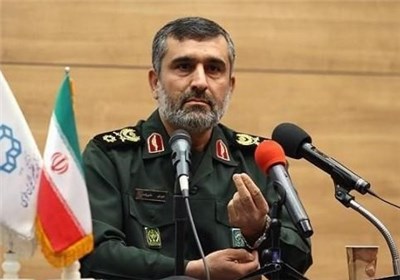
(Tasnim) – Commander of the Islamic Revolution Guards Corps (IRGC) Aerospace Force Brigadier General Amir Ali Hajizadeh announced on Friday that the country plans to hold a ballistic missile maneuver in the near future.

In a speech in the northern city of Qaem Shahr on Friday, Brigadier General Hajizadeh rejected as untrue some claims that the IRGC has halted the ballistic missile program over the past two years, saying that missile tests are on the agenda.

“Such measures (war games and ballistic missile tests) are on the agenda and huge successes have been achieved over the past two years,” the commander stressed.

He further pointed to the IRGC’s plan to stage a massive war game to test-fire ballistic missiles in the near future, adding that its details will be announced soon.

Earlier this month, Chief of Staff of the Iranian Armed Forces Major General Hassan Firouzabadi underlined that the country’s missile tests will be carried out on schedule, according to plans endorsed by Supreme Leader of the Islamic Revolution Ayatollah Seyed Ali Khamenei.

During the nuclear negotiations between Iran and the Group 5+1 (Russia, China, the US, France, Britain and Germany), the United States and its allies exerted pressure on Iran over its military capabilities.

Iran, however, said it would only discuss its nuclear program as its missiles are solely employed as a deterrent against any potential foreign aggression.

Since the successful conclusion of the nuclear negotiations in Vienna on July 14, Iranian officials have time and again stressed that the country’s military capabilities would not be affected by the finalized text of the nuclear agreement- known as the Joint Comprehensive Plan of Action (JCPOA)- or a resolution that the United Nations Security Council passed later to endorse the JCPOA.

Jihad, Iranian-style

August 21, 2015

Jihad, Iranian-style, Israel Hayom, Ruthie Blum, August 21, 2015

The new twist in the controversy surrounding the nuclear agreement is an argument over the veracity of a report on a side deal giving Iran the right to inspect its own nuclear facilities for potential violations. The idea is so preposterous that it must be true, judging by the rest of the top-secret document on which the U.S. Congress is going to vote in September.

But as the debate heats up over whether the deal furthers or hinders Iran’s nuclear weapon capabilities, an equally serious issue keeps being marginalized. This is the more immediate and tangible danger posed by Iran’s terrorist proxies, and the sudden financial and ideological boost the deal is providing them.

The reason it is crucial to keep an eye on their activities is that they constitute Iran’s global army — the boots on the ground, so to speak — who perform the legwork necessary for the ultimate aim of regional and global jihadist hegemony. Their role is to set the stage for that time in the not-so-distant future when Iran’s power and reach are so extensive that its leaders won’t need to waste their nuclear warheads by firing them.

This is where Israel comes in. As the only democracy in the Middle East, an ally of the West and a Jewish state, it has key strategic value. It is like the central card in a house of cards, whose removal topples the whole structure.

It is also tiny and surrounded by rogue states with an endless supply of Muslim would-be “martyrs” willing to die in the “holy” endeavor to take it down.

On Thursday, Israel received its latest message to this effect, when four rockets, launched from Syria, landed in the Upper Galilee and the Golan Heights. The Iran-backed Islamic Jihad terrorist organization was behind the attack, which spurred Israel to retaliate.

Also on Thursday, Israel deployed anti-missile Iron Dome batteries in the south of the country, in the areas between Ashkelon and Ashdod, as well as in Beersheba. This was in response to threats of rocket fire by Iran-baked terrorists in Gaza — whose excuse was the worsening condition of hunger-striking Palestinian terror suspect Mohammed Allan.

A review of recent Iranian rhetoric and activity, released by the Investigative Project on Terrorism, puts all of the above in context.<

Last month, the General Assembly of Islamic Resistance Ulema (scholars) held a weekend conference titled “Unity for Palestine.”

At the gathering, Hezbollah chief Hassan Nasrallah said, “We believe with certainty that Israel, this cancerous tumor, is headed for extinction, and that Palestine and Jerusalem will be returned to their people. It is only a matter of time and is linked to the will, action, jihad, and sacrifices of the Ummah [Islamic nation], according to the principle: If you achieve victory for Allah, Allah will lead you to achieve victory.”

From Iran, Ayatollah Mohsen Araki, secretary general of the World Forum for Proximity of Islamic Schools of Thought, agreed.

“Annihilation of the Zionist regime is a sure thing and Quranic pledge,” he said, adding that it is important to unify “Muslims in countering the regime of Zionism and the arrogant world.”

Muhammad Hasan Zamani, a former Iranian cultural attache in Egypt who heads the Department of International Islamic Madrasas (educational institutions) for the General Assembly of Islamic Resistance Ulema, reiterated this position.

“Israel must be erased from the map of the world,” he said. “These are the golden words Imam Khomeini, may God have mercy on him, uttered.”

Sheikh Abdel Halim Qadhi, a professor at Zahedan University in Iran, said, “The holy Quran makes it known that Jews are the enemies of Islam and the Muslims and their holy places and rites. … Jihad is the most powerful and only way to liberate Palestine and defend Jerusalem. … God loves those who fight in his way.”

Earlier this month, Iranian Supreme Leader Ali Khamenei published “Palestine,” a 416-page tome devoted to the issue of Israel’s inevitable demise, with a blurb on its back cover calling the author the “flagbearer of jihad to liberate Jerusalem.”

This week, Khamenei gave an abbreviated version of this on Twitter: “We spare no opportunity to support anyone #FightingTheZionists,” he wrote.

At the same time, a clip produced by the Islamic Revolution Design House, a media outlet associated with the Iranian Revolutionary Guard Corps, began to circulate on YouTube. The minute-and-a-half animated video depicts an Islamist invasion of Jerusalem.

The brief silent film shows soldiers from the Revolutionary Guards, Shia Badr, Hezbollah, Hamas and Qassam Brigades, clad in military gear and keffiyehs, marching to and standing on a hill overlooking the Temple Mount, as thousands upon thousands of additional terrorists amass.

An inscription in Farsi on a black screen at the end says: “Israel must be erased from the annals of history, and the youth will definitely see that day when it comes.”

Lest anyone imagine the mullahs pulling the strings in Iran don’t mean business, all one has to do is observe how they are executing their grand plan, part of which is the nuclear deal with the “Great Satan” and the other P5+1 countries. Among these is Russia, which confirmed on Wednesday that it will supply Iran with four upgraded batteries of S-300 surface-to-air missiles as soon as the deal is finalized.

Such missiles give Iran the extra benefit of being able to stave off attack. At that point, will it really matter if Iran is in charge of its own inspections?

Netanyahu: ‘You Rush to Embrace Iran, They Fire Rockets at Us’

August 21, 2015

Netanyahu: ‘You Rush to Embrace Iran, They Fire Rockets at Us’, Israel National News, August 21, 2015

The attack ordered by Iran comes after a report in April, when  Iranian officials reportedly told the Syrian regime to strike Israel and open a war front on the Golan Heights.

**************************

PM warns ‘we’ll harm those who try to harm us,’ slams world powers for nuclear deal after ‘Iranian commander ordered rocket strike.’

Prime Minister Binyamin Netanyahu released a statement on Friday, shortly after the IDF airstrike that took out the Islamic Jihad terror cell backed by Iran that launched four rockets into Israel from Syria the day before.

“I said this week that those who try to harm us – we will harm them. And that’s what we did,” said the prime minister.

“The IDF struck the cell that conducted the (rocket) fire, and the Syrian forces that enabled it. We don’t intend to escalate the incidents, but our policy remains as it was,” he said. At least 14 targets were hit by the IDF overnight, including a strike on an army post which Syria said killed one soldier.

Turning his attention to the IDF reports that Iranian military sources funded and directed the Islamic Jihad cell, Netanyahu condemned the world powers that sealed a nuclear deal with Iran just last month and are now advancing economic trade and diplomatic ties.

“The countries that rush to embrace Iran need to know that an Iranian commander is the one who gave the cover and direction to the cell that fired on Israel,” he said.

As noted by Netanyahu, the one who gave the order for the rocket strike was said to be the head of the Palestinian department in Iran’s Al-Quds force, the covert foreign operations unit of the Iranian Revolutionary Guards.

Netanyahu on Friday ordered the Foreign Ministry to send an official letter to Western governments, saying Israel has “reliable information that this attack was carried out by the Palestinian Islamic Jihad, ordered directly by the Iranian terrorist Said Izadhi of the Iranian Revolutionary Guards.”

“This is further clear indication of Iran’s increasing involvement in attacks against Israel in particular and against regional targets in general. The ink on the nuclear agreement has not yet dried, and this attack shows clearly how Iran plans to act the moment after the international sanctions are removed.”

The attack ordered by Iran comes after a report in April, when  Iranian officials reportedly told the Syrian regime to strike Israel and open a war front on the Golan Heights.

Inspector Clouseau was unavailable

August 20, 2015

Inspector Clouseau was unavailable, Power LineScott Johnson, August 20, 2015

President Obama purports to have a sophisticated theory of international relations supporting his catastrophic deal with Iran.

Dealing with the world’s foremost sponsor of state terrorism and an avowed enemy of the United States, Obama is lavishly funding the regime and leaving Iran’s nuclear program on the path of development to nuclear-tipped intercontinental ballistic missiles.

He proclaims the deal a famous victory, but with the AP’s report on the, ah, unusual arrangement for the self-inspection of the Parchin research facility, it has descended into self-evident farce. Even Stevie Wonder could see that.

Why self-inspection? With the death of Peter Sellers, Inspector Clouseau was unavailable.

For the United States, the self-inspection is one more humiliation among a long train of humiliating concessions. It represents a sort of reductio ad absurdum, a piece of black humor in the style of Joseph Heller. The secret side deal could be a sequel to Catch-22. From President Obama’s perspective, the humiliation of the United States must be an added advantage of the deal.

The revelation of the terms of the Parchin side deal prompts me to think back to the comments of senior Iranian presidential adviser and former intelligence minister Ali Younesi this past fall. The comments were offered for domestic political consumption to the official Iranian news agency.

There was something to offend everyone in Younesi’s comments. Most striking to me, however, was Younesi’s perception of Obama. Younesi had Obama’s number. Younesi’s contempt for Obama shone through his comments and it surely reflects the consensus of the regime. Obama has worked hard to earn it.

The fact that Younesi made these comments on the record for public consumption was striking and newsworthy. The Washington Free Beacon’s Adam Kredo had the story:

The Iranian president’s senior advisor has called President Barack Obama “the weakest of U.S. presidents” and described the U.S. leader’s tenure in office as “humiliating,” according to a translation of the highly candid comments provided to the Free Beacon.

The comments by Ali Younesi, senior advisor to Iranian President Hassan Rouhani, come as Iran continues to buck U.S. attempts to woo it into the international coalition currently battling the Islamic State (IS, ISIL, or ISIS).

And with the deadline quickly approaching on talks between the U.S. and Iran over its contested nuclear program, Younesi’s denigrating views of Obama could be a sign that the regime in Tehran has no intent of conceding to America’s demands.

“Obama is the weakest of U.S. presidents, he had humiliating defeats in the region. Under him the Islamic awakening happened,” Younesi said in a Farsi language interview with Iran’s semi-official Fars News Agency.

“Americans witnessed their greatest defeats in Obama’s era: Terrorism expanded, [the] U.S. had huge defeats under Obama [and] that is why they want to compromise with Iran,” Younesi said.

Younesi followed up with comments that were somewhat offensive to conservatives like us, but the substance wasn’t unflattering. We believe Israel is our friend and Iran has been our mortal enemy since, you know, around about 1979. In assessing Iran our enemy, we have taken them at their word and judged them by their actions. They have a voluminous amount of American blood on their hands.

Younesi is to some extent on the same page with President Obama. He said of American conservatives: “Conservatives are war mongers, they cannot tolerate powers like Iran. If conservatives were in power they would go to war with us because they follow Israel and they want to portray Iran as the main threat and not ISIS.”

Well, Iran is the main threat. ISIS doesn’t have a nuclear program or the trappings of a state and I would like to think we would support military action against Iran if necessary, though a president whose strength they respected would make it unnecessary.

Younesi also had the Democrats’ number. He deemed them “no threat.” He got that right, though you don’t have to be a former intelligence minister to figure that out.

Younesi’s comments foretold our rendezvous with destiny, Obama style: “We [the Islamic Republic] have to use this opportunity [of Democrats being in power in the U.S.], because if this opportunity is lost, in future we may not have such an opportunity again.”